Searching for Locations: The Eiffel Tower, Paris, France

Sorry, reminiscing again…

It was a cold but far from a miserable day.  We were taking our grandchildren on a tour of the most interesting sites in Paris, the first of which was the Eiffel Tower.

We took the overground train, which had double-decker carriages, a first for the girls, to get to the tower.

We took the underground, or Metro, back, and they were fascinated with the fact the train carriages ran on road tires.

Because it was so cold, and windy, the tower was only open to the second level. It was a disappointment to us, but the girls were content to stay on the second level.

There they had the French version of chips.

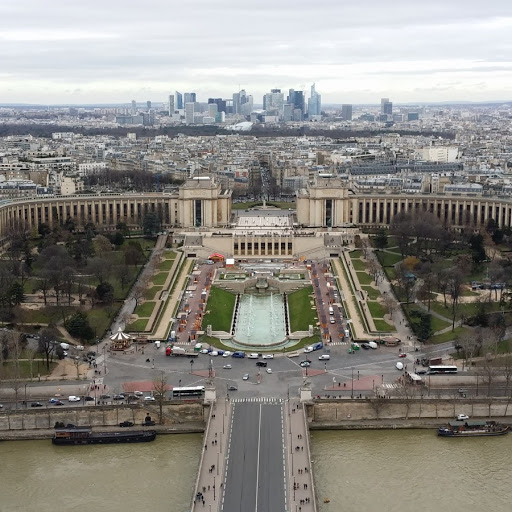
It was a dull day, but the views were magnificent.

20140107_132225

A view of the Seine

20140107_132859

20140107_132208

Sacre Coeur church at Montmartre in the distance.

Another view along the river Seine

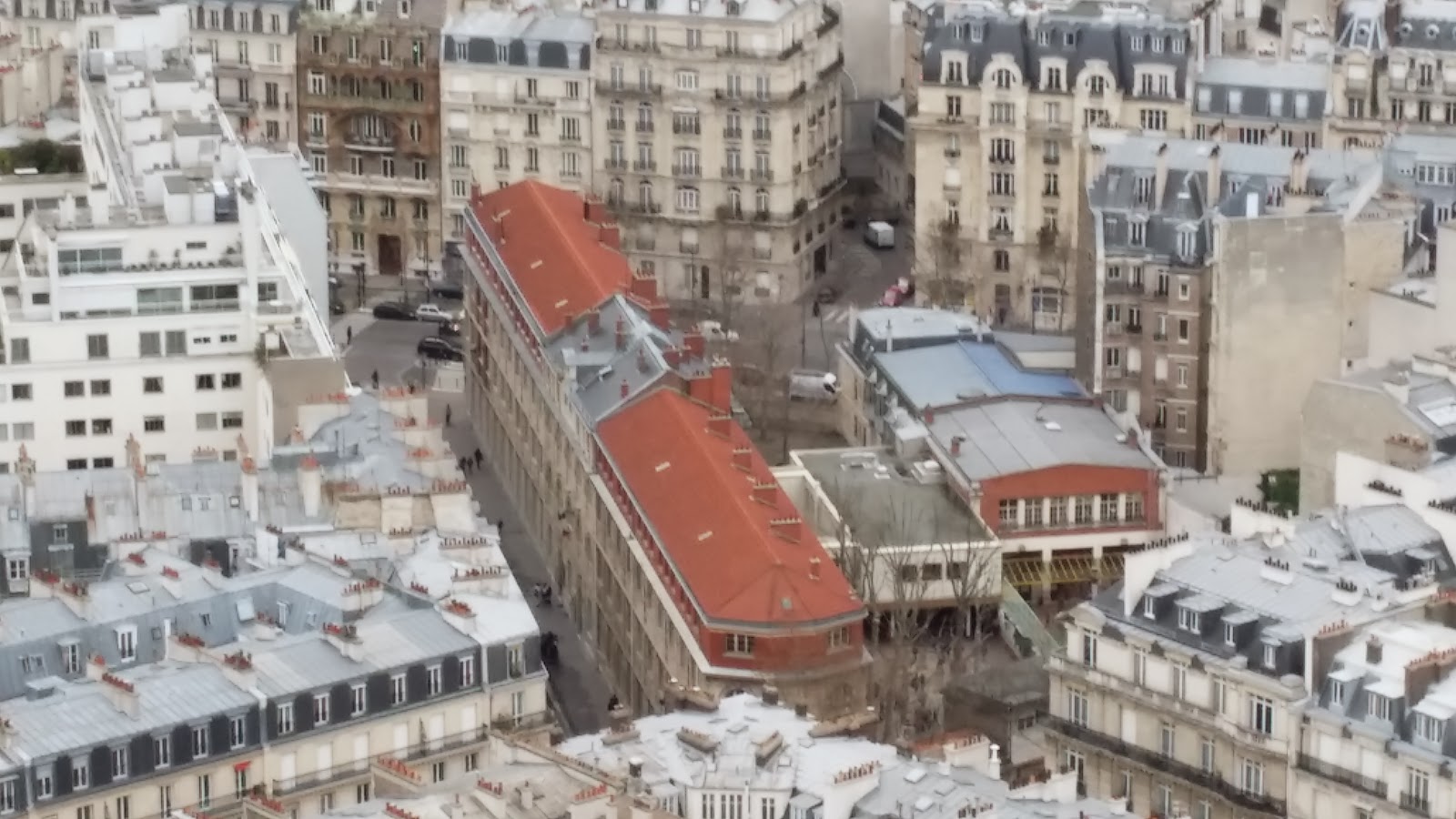
Overlooking the tightly packed apartment buildings

Looking along the opposite end of the river Seine

In a word: Spark

So, as far as I’m concerned the word ‘spark’ is something that is created by a fire, and can create havoc.

But…

Another meaning is that a ‘spark’ is created by a ‘spark plug’ in order to force the pistons of an engine to drive the crankshaft

This leads to…

There is no spark in this relationship, so perhaps it’s going nowhere.  No, we’re not looking for a fiery spark, but a small amount of very intense feeling

Spark?

I was watching God Friended Me last night and I’m sure like many others we were waiting to see that spark that would change their relationship from the friend zone, to something else.

And…

I think it was there.  Of course, we’ll have to wait till next week to find out.

As for the word spark, well there several different meanings, one of which I am familiar with when I was young.

Being called a ‘bright spark’

Depending on who used that remark, it could either mean you were clever or you were a smart ass, which I suspect was the reference to me.

Then, moving on

Saying something inflammatory ‘sparked’ the crowd into action.  A single remark can be equated to a literal ‘spark’ that can ignite a reaction.

A lynching perhaps?

And what about, once upon a time, a ship’s radio officer, he was called ‘sparks’ or ‘sparkie’, also a name that sometimes refers to an electrician.

I can see plenty of uses for this word in a story.

In a word: Incline

When you first think of this word, it is with a slippery slope in mind.

I’ve been on a few of those in my time.

And while we’re on the subject, those inclines measured in degrees are very important if you want a train to get up and down the side of a mountain.

For the train, that’s an incline plane, the point where traction alone won’t get the iron horse up the hill.

Did I say ‘Iron Horse’?  Sorry, regressed there, back to the mid-1800s in the American West for a moment.

It’s not that important when it comes to trucks and cars, and less so if you like four-wheel driving; getting up near vertical mountainsides often present a welcome challenge to the true enthusiast

But for the rest of us, not so much if you find yourself sliding in reverse uncontrollably into the bay.  I’m sure it’s happened more than once.

Then…

Are you inclined to go?

A very different sort of incline, ie to be disposed towards an attitude or desire.

An inclination, maybe, not to go four wheel driving?

There is another, probably more obscure use of the word incline, and that relates to an elevated geological formation.  Not the sort of reference that crops up in everyday conversation at the coffee shop.

But, you never know.  Try it next time you have coffee and see what happens.

Follow that cab… – A short story

Nothing ever good comes from eavesdropping.

Or, so my mother said, once, with such feeling that I suspect she had some experience of having done so. It might explain the enmity between her and her older sister, the aunt we never saw.

Except all that changed when I received an odd email from a woman who claimed to be that very aunt.

We had all been warned about scams that came from dubious sources online, and this initially struck me as one. I would need more information before I answered.

That meant poking the bear, that is, asking my mother about her sister.

And coming right out with the words she hoped she’d never heard.

“Aunt Guenivere sent me an email, asking if we could meet. It seems she wants to meet the nephew she hasn’t seen since I was born. What happened to you two?”

It brought a look of total hatred in return.

“You would be wise not to respond. That woman is just plain evil.”

“You do realize that a statement like that makes it even more imperative that I should meet her. If you’re not going to tell me what happened, I’m sure she will.”

“Then if you must, you must.”

It wasn’t resignation but suppressed rage. Whatever had happened, it was something she believed no one would believe her, or understand, least of all me.

With that, she stood, and walked out of the room, leaving me with the ominous feeling that it would be the last time I saw her.
After verifying that my so-called aunt was Aunt Guenivere, I arranged a meeting in a public place, a tea room in the next town to where I lived. And it wasn’t going to be hard to recognize her, she would just an older version of my mother.

I knew this because I had found a photograph of my mother and her two sisters, all of who looked very much alike. I’d know about the younger sister, she had died in an accidental car crash many years before, and what my mother regarded as a wasted life.

I saw her about the same time she saw me.

And she just made it to the table when her cell phone rang. She smiled, put a hand up and asked for a moment, and then went back outside. I watched her walk up and down, slowly at first, but I could see the conversation was getting heated.

After a few minutes, I went outside to see if I could be of any assistance.

Apparently not. One look was enough, and I knew what it meant. At least her sister and my mother shared the same facial expressions when angry.

Then the conversation ended. I thought, for a moment, she was going to throw the phone on the ground, and only just managed to stop herself.

Instead, she came over and said. “I’m sorry but something has come up and I have to go. I’ll call you.”

With that, she waved down a taxi, one stopped, and she jumped in.

Another pulled in behind her taxi and on the spur of the moment, and said with a flourish, “Follow that cab.”

The driver turned to look at me, and then said, “You’re kidding.”

I held up a hundred dollar note and said, seriously, “This is yours if you don’t lose them.”

Incentive enough.

It was a lot easier to follow that taxi than I thought. We caught up and the first set of lights and then proceeded to miss every second intersection as if the universe knew I needed to keep her in sight.

All the way to the upper west side and a very expensive apartment block. I paid the cabbie and jumped out, just in time to see a very familiar figure join my aunt.

My father.

And they didn’t look like people who didn’t know each other, or who were at war.

They remained outside the apartment block, and I could see my father had arrived by cab, and it was waiting for him.

I got as close as I could, hidden effectively behind the bushes that lined the building entrance. They were speaking loudly, which surprised me

“What the hell were you thinking,” he said, not angrily, but I could tell he was agitated.

“I was thinking it was time someone told him the truth.”

What truth?

“You know what Evelyn thinks of that, and I do too. You made an agreement.”

“I’ve changed my mind. After all, he is my son, not hers.”

—–

© Charles Heath 2020-2021

A door that is always open

My opinions are my own

It’s always a good thing to get that across especially if you work for an organization that could misinterpret what that opinion is, or generally have an opposing opinion.  Of course, by saying your opinions are your own, you’re covering yourself from becoming unemployed, but is this a futile act?

Perhaps it’s better to not say anything because everything you say and do eventually finds its way to those you want most not to hear about it, perhaps one of the big negatives of the internet and social media.

And…

It seems odd to me that more often than not you can’t have an opinion of your own, even if it is contrary to that of the organization you work for, and especially if their opinion has changed over time.  An opposing opinion, not delivered in a derogatory manner, would have the expectation of sparking healthy debate, but it doesn’t always end up like that.

I’m sure there are others out there that will disagree, and use the overused word, ‘loyalty’.   Perhaps their mantra will be ‘keep your opinions to yourself’.

This, too, often crops up in personal relationships, and adds weight to the statement, ‘you can pick your friends but not your relatives’.

I’m told I have an opinion on everything, a statement delivered in a manner that suggests sarcasm.  Whether it’s true or not, isn’t the essence of free speech, working within the parameters of not inciting hate, bigotry, racism or sexism, a fundamental right of anyone in a democracy?

Seems not.

There’s always someone out there, higher up the food chain, with an opinion of their own, obviously the right one, and who will not hesitate to silence yours.  But, isn’t it strange that in order to silence you, they have to use leverage, like your job, to get theirs across.

Well, my opinions are in my writing, and whether or not you agree with them or not, I’m sure you will let me know.  In a robust but respectful manner.

Unlike some, my door is always open.

In a word: There

Yes, the dog is over there. It’s a place somewhere other than where you are currently.

Or, you could say, there was a brave man, but he couldn’t help so there was no hope. It doesn’t refer to a place.

Or I’m taking you to the border, but from there you’re on your own.

Confused yet?

Let’s try by adding a similar word, their

It means belonging to a group as in, it was their dog that caused the damage.

Of course, this can be twisted a little, and you could say, everyone has to bring their own pack, meaning at times it could refer to one, or many,

Then just when you thought it was safe to go back into the water, there’s they’re.

This is a contraction for they are, so it’s they’re not going to fo as their told.

Wow, it starts getting complicated when you use two or more of those similar words in the same sentence.

Confusing?

That’s why it always pays to have a dictionary handy.

Just in case autocorrect fails, which it seems to quite often for me. I’m not sure why.

Jump Now – A short story

It was 2 am, the ideal time to assemble a team that would be clandestinely boarding a vessel.

Dark and moonless, it was fortuitous rather than planned, and, dressed in black from head to toe, it was hard to see the others in the inky darkness.  At least something was on our side.

Up until this point, we’d had nothing but bad luck, though I was more of the opinion we had a traitor in our midst because some of the events could not have any other explanation.

It had caused me to be far more selective in who I gave details of the mission to.

Each of the four team members had arrived and let themselves into the shed.  It was not far from the ocean, and a small pier where there was a landing craft waiting.  From there, it would be a half-hour trip out to the ship in question, where, if we got close enough, we would either have to go over the side and swim, or pull alongside, but either way we’d have to go up a rope.

A lot depended on the crew member we had recruited getting a rope overboard, and given the luck we had so far, if there was a flaw in the plan, that was it.

Aside from the four people sitting in front of me, there were only three others privy to what was about to happen.  Now, with recent events, it was hard to imagine that one of them could betray us. That’s why I hadn’t completely told them what they were about to do, just that they needed to be prepared to get wet.

“I’m sure, now we’re here, you can tell us what’s going on.”  Robert was the most trusted of my team and my best friend.

“And why all the hush-hush,”  Linda added.  She had been amused at the secrecy and my explanation.

I was never very good at spinning a story.  She knew that but had not questioned why.

“It’s been touch and go for the last week.  It’s why we’ve all been on standby, with this last-minute call out.  We’ve been waiting for a particular ship to leave port, and now it has.  So, without further ado, let’s get to it.  A boat ride, just enough time to gather the courage to the sticking point, and then with any luck we won’t have to go into the water and swim, but a short shimmy up a rope.  I hope you’ve all been working out.”

The boat ride was in silence.  I’d worked with this group before and they were not big on talking.  Aside from the fact that noise traveled over water, and since we had a specially silenced motor on the boat, there was not going to be any unnecessary conversation.

We could see the ship once we reached the headland, and aside from it’s running lights, there were lights where I presumed the bridge was, and several in the crew quarters.  Closer again, I got the impression it was not moving, or if it was, it was very slow.  It was hard to tell in the darkness.  That same darkness aided our approach.

When we were within several hundred yards I could see that the ship was not moving, and, in fact, had the anchor out.

That was not expected.  Were they waiting for us?  Had they discovered the cream member who was working with us?  We’d know soon enough if there was no rope in the designated point, not far forward of the stern, a spot where we could maneuver the boat under the hull curvature.

The driver piloted the boat slowly to the designated point and the rope was there.  He would stay with the boat and wait.  The four of us would go up and collect what we came for.

I watched the three go up the rope before me, waiting for the last to stop at the top and then go over the side onto the deck.  It took nearly a minute before I got the signal it was clear to follow.

It had been too easy.

I went up the rope slowly, slower than the others, something else other than the object of the exercise on my mind.  Not three days before I had a conversation with my boss, telling him that I’d been doing the job too long and that it was time to retire.  Approaching forty wasn’t exactly retirement age, but in this job, lasting that long was almost a miracle.  The places I’d been, the sights I’d seen, and the people I’d met.  And how many lives I’d used up.

It was a dangerous thing, thinking about anything other than the job when you’re on the job.

I reached the top and pulled myself over the railing and onto the deck.  A little off balance it took a moment to stand.  By then it was too late.

Two of the three other members of the team were sitting by the superstructure, heads on their heads, two members of the crew were watching them, guns at the ready, and Linda had one pointing at me.

“I can’t imagine how MacIntyre thought he was going to convince Petra to defect.  Or how this charade of a rescue attempt was ever going to work.”

I put my hands up.  Not entirely unexpected.  “It was not the mission objective.”

“What…”

I was surprised that she had made her move so early.  If it was my operation, I would wait until we were well into the superstructure, heading to the cabin where Petra would be waiting, and then make the move.

Three seconds, three shots, two guards taken out, and Linda incapacitated.  She would not be moving or fighting back any time soon.  The Petra came out of the shadows, and I collected Linda’s gun and stood near her, just in case Petra missed the target.

Petra cut the two other’s bindings, and said, “get to the side and jump now.”

Linda looked up at me.  “What now?”

I shrugged.  “Time for us to leave.”  I gave Petra a nod, and she went over to the side, took one look back at Linda, shook her head, then jumped.

“You’re just going to leave me here?”

“If it were up to me, I’d shoot you, but MacIntire is getting a little soft in his old age.  But yes, I’m leaving you here.  Now, I really must go.”

I took a last look at Linda, who realized that if she moved it would only worsen her injury, and jumped, not exactly my preferred way of leaving the ship.

The boat came up alongside me and two hands dragged me on board, at the same time we could hear the sound of the anchor chain being pulled up, and the propellers creating a wash as the ship started moving.

Job done, and not one that pleased me.  “Let’s go home,” I told the driver, “it’s past my bedtime.”

—-

© Charles Heath 2020-2021

“Knowledge can be dangerous…” – A short story

It was, perhaps, the saddest week of my life.

It started with a phone call, and then a visit by two police officers.  It was about my parents, but the news could not be imparted over the phone, only in person.  That statement alone told me it was very bad news, so I assumed the worst.

The two police officers, standing at the front door, with grim expressions on their faces, completed the picture.  The news, my parents were dead, killed in a freak car accident.

At first, it didn’t sink in.  They were on their way back from another of their extensive holidays, one of many since my father had retired.  I’d seen them probably six months out of the last five years, and the only reason they were returning this time was that my mother needed an operation.

They hadn’t told me why, not that they ever told me very much any time since the day I’d been born, but that was who they were.  I thought them eccentric, being older when I’d come along, and others thought them, well, eccentric.

And being an only child, they packed me off to boarding school, then university, and then found me a job in London, and set me up so that I would only see them weekends if they were home.

I had once wondered if they ever cared about me, keeping me at arm’s length, but my mother some time ago had taken me aside and explained why.  It was my father’s family tradition.  The only part I’d missed was a nanny.

It most likely explained why I didn’t feel their passing as much as I should.

A week later, after a strange funeral where a great many people I’d never met before, and oddly who knew about me, I found myself sitting in the sunroom, a glass of scotch in one hand, and an envelope with my name on it, in the other.

The solicitor, a man I’d never met before, had given it to me at the funeral.   We had, as far as I knew an elderly fellow, one of my father’s old school friends, as the family solicitor, but he hadn’t shown at the funeral and wasn’t at home when I called in on my way home.

It was all very odd.

I refilled the glass and took another look at the envelope.  It was not new, in fact, it had the yellow tinge of age, with discolouration where the flap was.  The writing was almost a scrawl, but identifiable as my father’s handwriting, perhaps an early version as it was now definitely an illegible scrawl.

I’d compared it with the note he’d left me before they had embarked on their last adventure, everything I had to do while caretaking their house.  The last paragraph was the most interesting, instructing me to be present when the cleaning lady came, he’d all but accused her of stealing the candlesticks.

To be honest, I hadn’t realized there were candlesticks to steal, but there they were, on the mantlepiece over the fire in the dining room.  The whole house was almost like being in an adventure park, with stairs going up to an array of rooms, mostly no longer used, and a staircase to the attic, and then another going down to the cellar.  The attic was locked and had been for as long as I could remember, and the cellar was dank and draughty.

Much like the whole house, but not surprisingly, it was over 200 years old.

And perhaps it was now mine.  The solicitor, a man by the name of Sir Percival Algernon Bridgewater, had intimated that it might be the last will and testament and had asked me to tell him if it was.  I was surprised that Sir Percival didn’t have the document in question.

And equally. so that the man I knew as his solicitor, Lawerence Wellingham, didn’t have a copy of my father’s last will and testament either.

I finished the drink, picked up the envelope, and opened it.

It contained two sheets of paper, the will, and a letter.  A very short letter.

“If you are reading this I have died before my time.  You will need to find Albert Stritching, and ask him to help you find the murderer.”

Even the tenor of that letter didn’t faze me as it should have, because at this point nothing would surprise me.  In fact, as I  unfolded the document that proclaimed it was the will, I was ready for it to say that the whole of his estate and belongings were to be left to some charity, and I would get an annual stipend of a thousand pounds.

In fact, it didn’t.  The whole of his estate was left to my mother should she outlive him, or in the event of her prior decease, to me.

I had to put all of those surprises on hold to answer a knock on the door.

Lawerence Wellingham.

I stood to one side, let him pass, closed the door, and followed him into the front room, the one my mother called the ‘drawing room’ though I never knew why.

He sat in one of the large, comfortable lounge chairs.  I sat in the other.

I showed him the will.  I kept the other back, not knowing what to make of it.

“No surprise there,” Wellingham said.

“Did you have any idea what my father used to do, beyond being, as he put it, a freelance diplomat?”

I thought it a rather odd description but it was better than one he once proffered, ‘I do odd jobs for the government’.

“I didn’t ask.  Knowledge can be dangerous, particularly when associated with your father.  Most of us prefer not to know, but one thing I can tell you.  If anyone tries to tell you what happened to your parents was not an accident, ignore them.  Go live your life, and keep those memories you have of them in the past, and don’t look back.  They were good people, Ken, remember them as such.”

We reminisced for the next hour, making a dent in the scotch, one of my father’s favourite, and he left.

Alone again, the thoughts went back to the second note from my father.  That’s when the house phone rang.

Before I could answer it, a voice said, “My name is Stritching.  Your father might have mentioned me?  We need to talk.”

—-

© Charles Heath 2020-2021

“Trouble in Store” – Short Stories My Way:  The re-write – Part 5

Now that I’ve gone through the story and made quite a few changes, it’s time to look at the story

Alphonse, the shopkeeper, had stayed too long missing his opportunity to sell up and retire.

By the time he had been ready to call it a day, his wife had got sick with cancer, and it had taken all their retirement funds to keep her alive for another six months, when despite the doctor’s best efforts, she died.

There was nothing left, and unable to find a buyer for the business he could not just close the door and leave.

There were complications.

Like right now.

The sideline he’d basically forced his way into was always going to come back and bite him.  Selling a little weed on the side to the upper classes forced them to downsize after the global meltdown had turned into a range of products, the worst of which was ice, the result of taking too much very evident by the boy on the floor.

It was only a matter of time when one of the more edgy clients came in and started making demands with threats.  He was asked to sell low to get the customers hooked then forced to raise the price and stop supplying those who couldn’t pay.

It might be a good plan from their perspective but from his, at the coalface, it meant nothing but trouble.

Which is why he was now looking down the barrel of a gun.

This wasn’t the shopkeeper’s first hold-up.  In fact, over the years there had been a dozen.  But only one got reported to the police, and that was only because the robber was shot and killed.

He’d taken a bullet that night, too, which, from the police point of view, made him a concerned citizen simply defending himself.

The rest had been scared off by the double-barrel shotgun he kept under the counter for just such emergencies.

The young punk who came into the shop with his girlfriend had pulled out the pistol and told him if he reached for the shotgun he’d shoot him.  The kid looked unstable, and he’d backed away.

When the kid collapsed, he should have gone for the shotgun, but instead, he thought he could get to the gun before the girl realised what had happened.  She wasn’t an addict and clearly looked like she was only along for the ride.  Her look when the kid pulled out the gun told him she’d known nothing about her partner’s true intentions.

But, he wasn’t fast enough, and she had the gun pointing at him before he’d got past the counter.

From one pair of unpredictable hands to another.

Like the girl, he was just as surprised when the customer burst in the door, just before closing time.

The situation might have been salvageable before the customer came in the door, getting the girl to go along with the robbery being about money, but there was no denying what the kid on the floor’s problem was.

Damn.

He had to try and salvage the situation simply because there was a lot of money involved, and other people depending on him.  He looked at the boy, on the floor, then the girl.

“Listen to me, young lady, you would be well advised to let this man go as he suggests.  And, please put the gun down before someone gets hurt.  Your friend needs medical help, and I can call an ambulance.”

The girl switched her attention back to him.  “No one’s going anywhere, so just shut the hell up and let me think.”

The storekeeper glanced over at the customer.

He’d seen him come into the shop once or twice, probably lived in the neighbourhood, the sort who’d make a reliable witness, either a lawyer or an accountant.  Not like most of the residents just beyond the fringe of respectability.

If only he hadn’t burst into the shop when he did.

© Charles Heath 2016-2024

A score to settle – The Second Editors Draft – Day 5

The time has come to work on the second draft for the editor, taking into account all of the suggested changes, and there are quite a few. So much for thinking I could put in an almost flawless manuscript.

Today is another day for character development, and this time it is Inspector Delacrat.

The question is, how do you maintain that air of honesty and integrity in a country that is run by a cruel and murderous military junta.

How do you explain the disappearance of ordinary citizens during the night, when they are reported as missing?

There is, of course, something about the man that makes you think twice about whether he is to be tarred with the same brush as that of the military, or he’s just an Inspector in the police trying to do his job to the best of his ability, without running foul of the junta.

We’ll just have to wait and see.

Something else to be aware of, there are rebels, dissidents, and revolutionaries, all lurking in the background, some overt, some invisible, all working towards the removal of the junta.

The conference is a means to get an international eye on the plight of the country, so will something happen?

Will the rebels make their move?

Will Delacrat find out, and will he try to stop it?

Is our main character’s real reason for being in the country to aid the rebels, or just ensure the safety of one of the delegates?

These are all questions that will be looked at as the story progresses.