Writing a book in 365 days – 15

Day 15

Set yourself a reading list, and don’t limit yourself to the sort of genre of books that you wish to write. But, I have to admit I’m guilty of not necessarily reading everything because there are genres that I do not like.

But, for the purposes of this exercise, what you are looking for are:

  • Descriptions of locations, the methods by which the author conveys the setting, whether, dark, light, eerie, scary, dripping with menace, or inspiring fear. A dark room can be just a dark room, but it can be so much more.
  • Descriptions of people. If anyone who witnessed a crime was asked to describe the guilty, ten different people would give ten different descriptions and unless there was a distinguishing factor like he only had one arm, it might describe a quarter to half the population. Your job is to see how others do it and refine it for your characterisations.
  • Conversation. We all have conversations but when it comes to writing them down and making them sound plausible, that’s another story. Conversation is the hardest part of this writing thing, or at least I think so.
  • Writing style. You will eventually get your own, but to begin with, it might be a little strange. Reading many similar-themed or genre books will give you some idea of what the publisher’s editors are looking for.

You will have to read quite a few, I have a library with about 3,000 books, having accumulated them over 50 years. And I think I have learned a thing or two from reading nearly all of them.

Searching for locations: The Henan Museum, Zhengzhou, Henan Province, China

The Henan Museum is one of the oldest museums in China.  In June 1927, General Feng Yuxiang proposed that a museum be built, and it was completed the next year.  In 1961, along with the move of the provincial capital, Henan Museum moved from Kaifeng to Zhengzhou.

It currently holds about 130,000 individual pieces, more of which are mostly cultural relics, bronze vessels of the Shang and Zhou Dynasties, and pottery and porcelain wares of the various dynasties.

Eventually, we arrive at the museum and get off the bus adjacent to a scooter track and despite the efforts of the guide, there’s no stopping them from nearly running us over.

We arrive to find the museum has been moved to a different and somewhat smaller building nearby as the existing, and rather distinctively designed, building is being renovated.

While we are waiting for the tickets to enter, we are given another view of industrial life in that there is nothing that resembles proper health and safety on worksites in this country, and the workers are basically standing on what looks to be a flimsy bamboo ladder with nothing to stop them from falling off.

The museum itself has exhibits dating back a few thousand years and consist of bronze and ceramic items.  One of the highlights was a tortoiseshell with reportedly the oldest know writing ever found.

Other than that it was a series of cooking utensils, a table, and ceramic pots, some in very good condition considering their age.


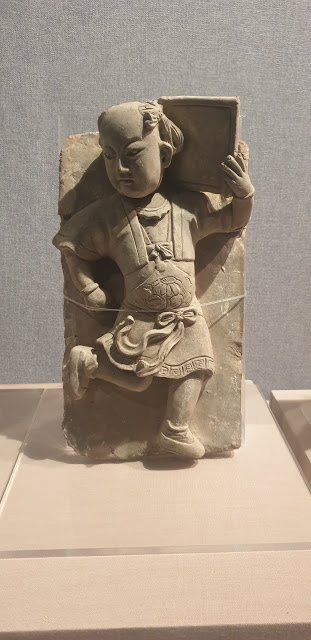
There were also small sculptures

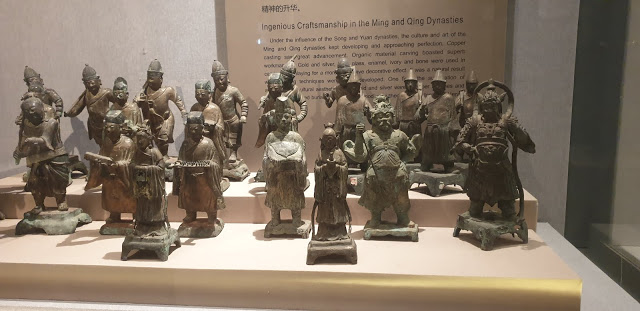
an array of small figures

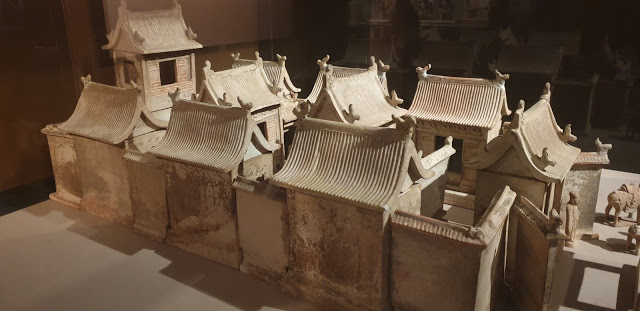
and a model of a settlement

20 minutes was long enough.

Writing a book in 365 days

Day 14

Writing is nothing more than a guided dream. So says Jorge Luis Borges in Doctor Brodies report.

Wow! If only I could guide my dreams.

They are a mess at the best of times and always end before I get to the good part.

That’s why I am writing a series called The Cinema of My Dreams. I lie awake at night staring at the ceiling, and instead of seeing darkness, I see the plots of my stories playing out. They never go where I want them to, but that’s because life doesn’t always play ball.

It’s the way my stories are written, an episode at a time, and not fully knowing what’s going to happen, as I write. i am writing like I’m the reader, hanging on every word, leaping from cliffhanger to cliffhanger.

Admittedly it can be nerve wracking especially when an idea for the next episode doesn’t materialise, but I get there. Inspiration sometimes comes from anywhere at any time.

But most people like to have a plan, and that to me, means you know every aspect of the story before you write it. I don’t like that because it would take too like to create the outline.

Searching for locations: The Henan Museum, Zhengzhou, Henan Province, China

The Henan Museum is one of the oldest museums in China.  In June 1927, General Feng Yuxiang proposed that a museum be built, and it was completed the next year.  In 1961, along with the move of the provincial capital, Henan Museum moved from Kaifeng to Zhengzhou.

It currently holds about 130,000 individual pieces, more of which are mostly cultural relics, bronze vessels of the Shang and Zhou Dynasties, and pottery and porcelain wares of the various dynasties.

Eventually, we arrive at the museum and get off the bus adjacent to a scooter track and despite the efforts of the guide, there’s no stopping them from nearly running us over.

We arrive to find the museum has been moved to a different and somewhat smaller building nearby as the existing, and rather distinctively designed, building is being renovated.

While we are waiting for the tickets to enter, we are given another view of industrial life in that there is nothing that resembles proper health and safety on worksites in this country, and the workers are basically standing on what looks to be a flimsy bamboo ladder with nothing to stop them from falling off.

The museum itself has exhibits dating back a few thousand years and consist of bronze and ceramic items.  One of the highlights was a tortoiseshell with reportedly the oldest know writing ever found.

Other than that it was a series of cooking utensils, a table, and ceramic pots, some in very good condition considering their age.


There were also small sculptures

an array of small figures

and a model of a settlement

20 minutes was long enough.

Writing a book in 365 days

Day 13

The bible, believe it or not, is just a collection of stories handed down over the years, from one language to the next, ending up in English so we English-speaking people could read it.

But, originally, these stories were told by people, not written down and read out, not for a long time when someone thought it would be a good idea to get them down before they were lost in the mists of time.

It’s not unlike the stories we tell our children about those who came before them, of what we knew about them, and sometimes a few embellishments to make them sound larger than life. I mean, who wants to have boring relatives?

Coming from another angle, when writing a story, sometimes it’s a good idea to read it out aloud. That will tell you if there are any problems. The first time I did this, I had to ask myself what I was thinking … people didn’t talk like that!

Now I get the text-to-voice feature working on the words, which is just as good. It tries to interpret the badly and wrongly spelled words. AI is good but not that good.

Then, if you write a good enough story, you can hold readings in bookstores and libraries, and not have storage looks cast in your direction when something is not quite right.

Everybody’s a critic, yes?

Searching for locations: The Pagoda Forest, near Zhengzhou City, Henan Province, China

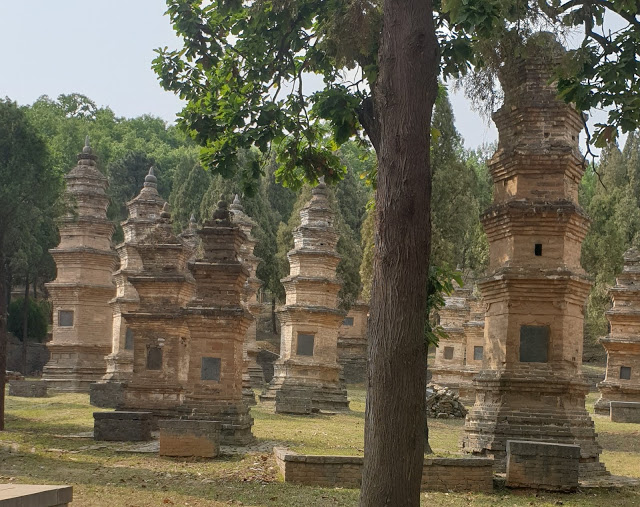
The pagoda forest

After another exhausting walk, by now the heat was beginning to take its toll on everyone, we arrived at the pagoda forest.

A little history first:

The pagoda forest is located west of the Shaolin Temple and the foot of a hill.  As the largest pagoda forest in China, it covers approximately 20,000 square meters and has about 230 pagodas build from the Tang Dynasty (618-907) to the Qing Dynasty (1644-1911).

Each pagoda is the tomb of an eminent monk from the Shaolin Temple.  Graceful and exquisite, they belong to different eras and constructed in different styles.  The first pagoda was thought to be built in 791.

It is now a world heritage site.

No, it’s not a forest with trees it’s a collection of over 200 pagodas, each a tribute to a head monk at the temple and it goes back a long time.  The tribute can have one, three, five, or a maximum of seven layers.  The ashes of the individual are buried under the base of the pagoda.

The size, height, and story of the pagoda indicate its accomplishments, prestige, merits, and virtues. Each pagoda was carved with the exact date of construction and brief inscriptions and has its own style with various shapes such as a polygonal, cylindrical, vase, conical and monolithic.

This is one of the more recently constructed pagodas

There are pagodas for eminent foreign monks also in the forest.

From there we get a ride back on the back of a large electric wagon

to the front entrance courtyard where drinks and ice creams can be bought, and a visit to the all-important happy place.

Then it’s back to the hotel.

Writing a novel in 365 days – 6e

Day 6 Continued – It’s all in the detail

While we get to talk about characters and characteristics later, part of what sets the scene is the details, those little things about people, places, and sometimes just everyday items that will make a story from routine to, well, slightly more interesting.

For others to find these details relatable makes it even better.

I’ve been to the Eiffel Tower, but I’m sure there’s a detail that can transform words on a page into a picture in the reader’s mind.

Walking across a meadow isn’t just walking, it’s watching the swirling grass as the breeze pushes it one way then another, all around the sounds of birds, and insects.

For added colour you could add a dog, about the same height as the grass, one minute bounding through the grass, the next hot on the trail of a small animal like a field mouse or rabbit.

Above, the sky is blue, the sun is shining, not a hot day, but warm, the sort you don’t need a jumper.

It could be the first day or the last day of the holidays, or you could be staying with an aunt or uncle on a farm in the countryside, in the distance the farmhouse sitting in a familiar position overlooking the valley before it.

There could be a babbling brook, a small bridge to cross, even though it is not very deep, and hiding in the rocks, fish waiting to be caught, taken back to the house, and later become part of supper.

And tying the elements together:

It was almost the end of the holidays and I didn’t want to go back to the city. The last few weeks had opened my eyes to a world I had never known existed.

Sitting under the apple tree on the edge of the grove I looked out across the meadow that fell gently down towards the creek when the other day I had taken my aunt’s advice and went for a dip to cool off.

Now, looking out and trying to put a permanent image of the scene before me in my mind so I could remember it in the coming weeks and months, there was something new, different, than the other days.

Yes, the grass, as high as Cyclops, my aunt’s dog, was swirling in the breeze, and was bounding as he always did through the grass, searching for a rabbit, or he just caught a scent. Yes, the sky was blue, though now there were whispy clouds in the distance, perhaps an omen the weather was about to change, but that was not it.

A different sound from the birds chirping and the insects buzzing, someone singing not loudly but as they would to themselves when they knew no one else was around.

And, then I saw her, a girl my age, long blonde hair tousled by the breeze, in a summery dress with flowers and birds. The elusive Erica, the girl from the next farm, who, my aunt said, sometimes came to pick some apples to take back to her mother to bake apple pie.

Apple pie that was to die for.

When she reached the grove she saw me and stopped. The happy, cheerful expression turned to one of curiosity.

“Who are you?”

“Andy. I’m staying with my aunt. How come I haven’t seen you before?”

“I’ve been here. You have not or I would have seen you.”

True. I had spent most of my time, up until this day working with my uncle in the barn and on the tractor ploughing other fields. I was only here because my aunt had sent me to get some apples fresh from the tree.

“I have been helping my uncle.”

It started out as an awkward conversation because I was not very comfortable around girls. Those that I knew, in the city, were not very nice. By the end, I had found a new friend, and it made it all the more impossible that I had to go home.

And, although I didn’t know it then, it was the start of a relationship that would continue until the day we both died.

It of course needs refinement and more interweaving of the elements around us, but it;s a start.

©  Charles Heath  2025


Writing a book in 365 days

Days 11 and 12

It’s a writing exercise, not one I particularly like, but it’s another step – building characters

This one, a car lover, has more interest in his car than anything else. We’re looking to gauge his reactions when various events occur.

I must say, I don’t really know anyone like this.

Firstly, the car was stolen but returned a week later undamaged and a full tank of petrol.

Well, it’s certainly not a group of 12 to 14-year-olds stealing cars, they’d wrap it around a lamp post and kill everyone but the driver who would be unscathed, taken to the station, charged, let out because he’s a juvenile, and get caught the following week doing the same thing.

But that’s not the brief.

What really happened? A relative borrowed the vehicle. Who else would do such a thing?

Second, a tree falls on it and wrecks it, and the son of the car lover thinks it’s funny.

It probably is, to a certain degree. The irony of someone who so lovingly cares for it, watches it get destroyed with such ease? There’s always insurance, isn’t there?

Third, While cleaning the truck he finds a secret compartment and a note.

Yes, this is the stuff to feed a fertile imagination. My reaction, a note left by a previous lover after they made out on the back seat, advising him he’s a father. The fact he had a girlfriend, married her, and had children already, this has to be a shock.

There is a dozen other scenarios, and maybe it might fuel a story … one day.

Searching for locations: The Pagoda Forest, near Zhengzhou City, Henan Province, China

The pagoda forest

After another exhausting walk, by now the heat was beginning to take its toll on everyone, we arrived at the pagoda forest.

A little history first:

The pagoda forest is located west of the Shaolin Temple and the foot of a hill.  As the largest pagoda forest in China, it covers approximately 20,000 square meters and has about 230 pagodas build from the Tang Dynasty (618-907) to the Qing Dynasty (1644-1911).

Each pagoda is the tomb of an eminent monk from the Shaolin Temple.  Graceful and exquisite, they belong to different eras and constructed in different styles.  The first pagoda was thought to be built in 791.

It is now a world heritage site.

No, it’s not a forest with trees it’s a collection of over 200 pagodas, each a tribute to a head monk at the temple and it goes back a long time.  The tribute can have one, three, five, or a maximum of seven layers.  The ashes of the individual are buried under the base of the pagoda.

The size, height, and story of the pagoda indicate its accomplishments, prestige, merits, and virtues. Each pagoda was carved with the exact date of construction and brief inscriptions and has its own style with various shapes such as a polygonal, cylindrical, vase, conical and monolithic.

This is one of the more recently constructed pagodas

There are pagodas for eminent foreign monks also in the forest.

From there we get a ride back on the back of a large electric wagon

to the front entrance courtyard where drinks and ice creams can be bought, and a visit to the all-important happy place.

Then it’s back to the hotel.

Writing a book in 365 days

Day 10

Apparently, we are still discussing the implements with which we choose to put words on paper, and it seems that choice of implement might make a difference.

I have a degree of scepticism because I generally get words down on my phone, the only implement that is nearby at all times., no matter where I am.

Of course, many years ago I always travelled with little pocket-sized notebooks and a pen, rather than a pencil, to write. I still have all of these, several hundred in fact, in several shoeboxes in the cupboard in my writing room.

Over the years I have accumulated many A5-sized notebooks I bought where there were stationery sales, and now use these to both make notes or write. I tend not to use the smaller notebooks now, but I have a hundred or so sitting in a drawer just in case.

But do you like to write using a biro, with smudgy ink, a pen with a rollerball tip with less smudge, a felt-tip pen, which, depending on the paper type, can leach through, making it difficult to write on both sides, a fountain pen with ink, the old-fashioned way of writing letters, and some of the older writers back in the day?

I remember my early days I’m school, grade three in primary school, when we switched from pencil to pen and ink. It was very messy, to begin with, but I remember vividly being the ink monitor, the one who filled the ink wells, and discovering my schoolmate’s prelidiction for stuffing bits of blotting paper into the well for whatever reason.

Even now it would be a messy way to write.

But the choice is yours.

Tomorrow, at last, we get to do some more writing.