Typing those words ‘The End’ isn’t exactly ‘The End’, is it?

Can you actually say you know the exact moment a story is done, finished, and that’s it?

For me, the end never quite seems to be the end, that point where you finally draw a line in the sane and say, that’s it, I’m done, step away from the typewriter.

But are we ever satisfied the story is done, can we not make one more change, it’s just a little tweak, it won’t take long.

Please!

My editor tolerated three ‘minor’ changes.

Firstly, a change of name for a character

Secondly, consistency of word use, such as times and contractions

Thirdly, I wasn’t happy with the overall story, and it needed some more action.  More writing, more editing, more prevaricating.

It took three weeks to sort out all of those issues, and last night I send the final draft to the Editor.

It’s like watching your child go to school on their first day.  Not knowing what will happen but expecting everything will be fine.

This morning I sat in front of the computer, a blank sheet of paper on the screen.  I know it’s not a matter of starting the next story from scratch; I have so many started and finished, sitting in the wings to be ‘tinkered with’.

It’s my way of savoring the moment.

Just before I dive back into the murky waters.

Conversations with my cat – 3

20160902_123201

This is Chester.  Back on the bed.

Another argument lost, another smug ‘I’ve got the better of you, again’ look.

Time to move on, pick a battle I think I can win.

Food.  There’s the old wives tale, that cats love fish, and it’s true to a certain extent.

Chester doesn’t believe fish live in cans or plastic packets, despite how it’s dressed up.  Fresh fish, he’s into it, but there always seems to be a measured reluctance to eat something out of a can.

I think he regards us humans with disdain when our food comes out of a can or packet.

He refuses to eat the leftovers!

Then there’s chicken, or its more expensive neighbor, turkey.

He loves turkey.

I’m sure he’d eat quail and spatchcock too, but no, he’s a cat, and cats have to get used to eating chicken.  We’ve had this discussion, one too many times.

And just for good measure, I told him if he thinks he’s coming to Italy with us, he’d better get used to the idea of eating pasta.

Of course, always with the last word, he said, quite nonchalantly, ‘then you’d better call me Garfield’.

Grrrrrrr.

I am my own worst enemy!

I think most authors are.

Just when you think that the story is done, and you’re on the third re-read, just to make sure…

Damn!

I don’t like the way that scene reads.

It doesn’t matter the last three times you read it, it was just fine, or, the editor has read it and the scene passed without comment.

What is the matter with me?

I find sometimes after leaving a finished story for a month before the next reading, the whole picture must formulate itself in my head, so when I re-read, there was always a problem, one I didn’t want to think about until the re-read.

Even then it might survive a second pass.

I know the scene is in trouble when I get to it and alarm bells are going off.  I find anything else to do but look at it.

So, here I am, third re-read, making major changes.

At least now I am satisfied with it.

Only 325 pages to go!

Conversations with my cat – 2

20160902_094127

This is Chester.  T for Tonkinese, capital T for trouble.

If you think you can win an argument with a Tonkinese you are sadly mistaken!

So, we got over the abandonment issues, and have moved onto the sleeping arrangements.  There seems to be some misconceptions on Chester’s part.

He thinks the bed is his domain.

Right.

We have provided him with several very comfortable, warm, and inviting places about the house where is he quite welcome to sleep, or keep a watchful eye over his domain.

That’s right, I thought I owned the house.

He has his own bed in our room where he can stay when he feels lonely, but it seems he has to be near us.

When he’s not walking across the bed, and us, or ‘resting’ on our feet.

And if we move, you’d think we’d taken a big stick to him.

Come to think of it …

Just to show his displeasure at his bed, the blankets always seem to be on the floor, and when I ask what happened, it was, of course, Mr Nobody.

After I’ve picked them up six times in a day, I ask him what his last slave died of?

And there’s the Siamese coming out, a snarl, and then aloof dismissal.

There is banishment to the great outdoors, but that’s another story.

“The Price of Fame” – a Short Story

I’ve been toiling away and this is the result.  My stories are usually longer, but I thought I’d try my hand at writing a piece of short fiction.


I looked at the invitation, a feeling of dread coming over me.  It was not entirely unexpected but like a great many things that had suddenly come into my life, it caused equal measures of fear and excitement.

The gold edging and the perfect script displaying my name in the exact center of the envelope made it almost unique.  Very few people ever received such an invitation.

I held it in my hand for a longer than necessary, then put it down on the desk carefully, as if it would explode if I dropped it.

My first instinct, driven by fear, was not to accept.

But, fear or not, there was no question of me not attending.  Circumstances had painted me into a corner; I’d agreed to go a long time ago when I thought there was no chance it would come to pass.

Way back then, I had been compared to the aspiring painter in an attic having to die before I made any sort of impression.  In those days people thought it amusing.  I thought it was amusing.  Kirsty, in particular, had thought it was as impossible as I had.

Now it was not amusing.  Not even remotely.


My life was once quiet, peaceful, sedate, even boring.  That didn’t mean I lacked imagination, it was just not out on display for everyone to see.  Inspired by reading endless books, I had the capacity to transport myself into another world, divorced from reality, where my boring existence became whatever I wanted it to be.

It was also instrumental in bringing Kirsty into my life.  In reality, I thought she’d never take a second look at me, let alone a first.  So I pretended to be someone else.  Original, witty, charming, underneath more scared than I’d ever known.

And yet she knew, she’d always known and didn’t care.

As we spent more time together, she discovered I liked to write, not finish anything, just start, write a hundred pages, then lose interest.  Like everything I did.  Start, and never finish.

Why not?  It would never be published.  It would never succeed.

So she bribed me.  If I didn’t finish my first book and send it away, I couldn’t marry her.  It didn’t matter if it was rejected, all I had to do was finish a book, and send it.

The thought of marrying her had not entered my mind, because I hadn’t thought she would.  Incentive enough, I picked out one of the unfinished manuscripts and humored her.  She read bits of it, not saying a word.  Sometimes she’d put a note or two on the manuscript, her equivalent to sweet nothings, and with it I gained an inner confidence in my own ability, not only to write but in many other aspects of my life.

When it was finished, it was Kirsty who sent it off.  She read it, packaged it, addressed it, and sent it before I had a chance to change her mind.  Once gone, I heaved a huge sigh of relief.  It was done. That was, as far as I was concerned, the end of it.


It was not possible that one letter could change a person’s life so dramatically.  I came home to the all-knowing smile and mischievous whimsicality that had always suggested trouble.

Trouble indeed!

My book was accepted.  With a cheque called an advance.  For more money than I knew what to do with.

This was followed not long after by publication.  And a dramatic change to my life, one I didn’t want.  To become a public person, to face an enormous number of people, people I didn’t know.

I went back to being scared.


Kirsty smiled at me and told me how wonderful I looked in my monkey suit.  Why couldn’t I go in jeans and a dress shirt?  All the best actors in Hollywood did it.

“This is not Hollywood.  You’re not an actor.”  It was a simple, practical, answer.

The hell I wasn’t.  I could act sick, dying, fake a heart attack, anything.  “What am I going to say?”

“You could talk about books.”  Quiet, efficient, oozing the confidence I didn’t feel.

She didn’t fuss.  She took it in her stride.  She dressed in her usual simple elegance, in a manner that made me love to be seen with her.  I couldn’t tie my tie, so she did it for me.  She straightened my jacket because I couldn’t do that either.  Nerves.  Can’t live with them, can’t live without them.  Or was that a reference to wives, or mistresses, or something else?

The palms of my hands were sweating.  Meatball hands, I thought, the sort of palms that betrayed the pretenders.  Me, I was the pretender.  My neck felt too large for the shirt.  Beads of sweat formed on my brow.  Where was a sponge when you needed one?

“I can’t do this.”

“You can.”

We hadn’t even left the hotel yet.

“How long before the execution.”

She looked at me with her whimsical smile.  “Long enough for me to give you a hard time.”


I lost count of the number of times I had to go to the bathroom, for one thing, or another.  Nerves I said.  Perhaps a dozen Valium or something similar.  Did I have any?  Had she hidden them?  Why did she keep smiling?

In the car, I looked at my watch at least a dozen times.  I couldn’t breathe.  It was too hot, too cold.  She held my hand, and it served best to stop the trembling that had set in.  Why did I agree to this?  Why?

We were greeted by the Events Manager, who was polite and genuinely interested.  He took us inside where he introduced the interviewer, another woman who oozed confidence and charm, who went over the format and generally tried to set me at ease.

I didn’t let Kirsty’s hand go.  Not yet.  She was my lifeline, the umbilical cord.  When it was severed, I knew I was going to die.

Bathroom?  Where was the bathroom?  Hell, five minutes to go, and I felt like passing out.  No, Kirsty couldn’t come in.  Comb my hair.  Straighten my tie, no it was straight.  Maybe I could hide in here?  I looked around.  No, maybe not.

Time.

The cue man was standing beside me, hand gently on my back.  He knew the score.  He knew I would turn and run the first chance I got.  Kirsty was on the other side, smiling.  Did she know too?

Then the announcement, my cue to walk on.

The gentle shove, the bright lights, the deafening applause, the seemingly endless walk to the chair, dear God, would I make it without tripping over?

How many times had I made this trip?  I stood, facing the audience, waved, then sat.  It was the fifteenth.  You’d think I’d learned by now.

There was nothing to it.


© Charles Heath 2016-2018


Upstanding citizens and double standards

It’s amazing just how many shows on TV throw around the statement ‘double standard’ with little attention being paid to what it really means.

Like statistics, words can be used in any manner to support or debunk what someone else will call a fact.

‘Fact’, of course, is another word that’s thrown around like a football.

But ‘double standard’, what does it really mean: “a rule or principle which is unfairly applied in different ways to different people or groups”

Put simply, if you own a cat, and I hate cats, I’m likely to say to you I like cats because of who you are and what I might want from you.

It has far more reaching consequences in reality because some of us might profess they regard everyone as being equal ‘in the eyes of the Lord’ but have a very different private view, politicians and the legal fraternity in particular.

Personally, I believe everyone should be treated equally.  The problem is, a great many people around me do not, and it seems that I am slowly becoming a minority in my own country.

How do we rectify this?

I don’t think we can.

Politicians are now running scared in their own constituencies because of the increasing multicultural population, and cannot be seen to favor one group or another, and when it comes to making a stand, they don’t; until lobby groups come into play, campaign funding to the politician is discussed, and very subtly, votes are bought.

How many instances of people having a ‘double standard’ do you know of?


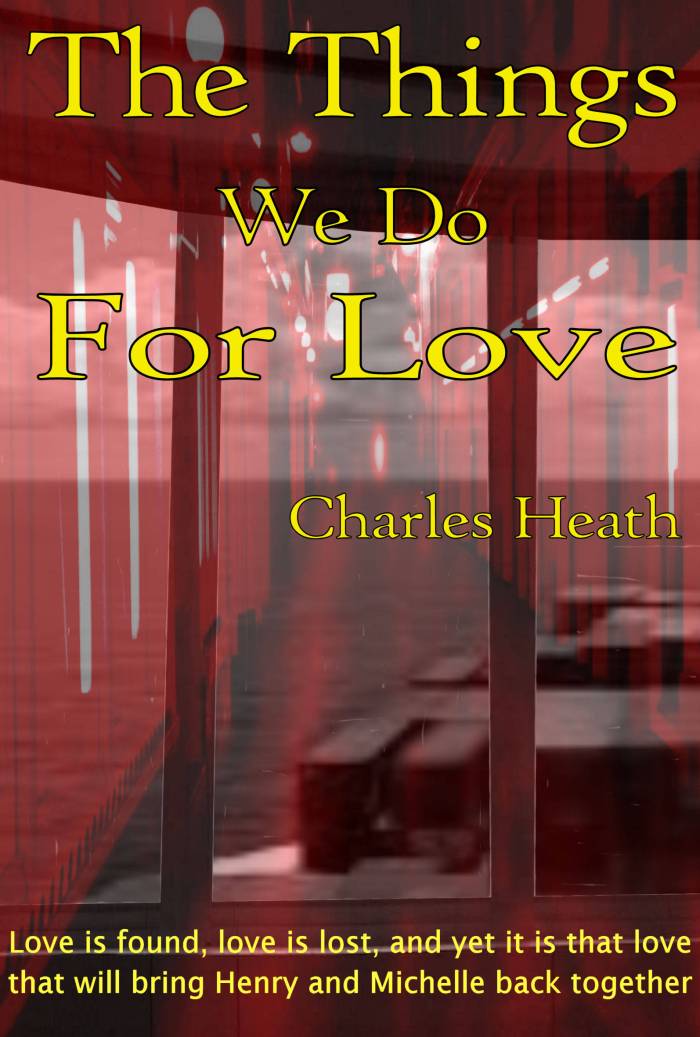
“The Things We Do For Love” – Coming soon

Like Sunday in New York, this is another attempt at writing a romance novel.  I’m one of those deluded fools who believe in happy endings.

I guess that was a ‘spoiler’!

This is the description I’m currently working with.


Is love the metaphorical equivalent to ‘walking the plank’; a dive into uncharted waters.

For Henry the only romance he was interested in was a life at sea, and when away from it, he strived to find sanctuary from his family and perhaps life itself.  Tonbright, a small village by the sea, is one such a place, but he never expected to find another, Michelle, whom he soon discovers is as mysterious as she is beautiful.

Henry had long since given up the notion of finding romance, and Michelle couldn’t get involved for reasons she could never explain, but in the end both acknowledge that something had happened.  Plans were made, plans were revised, and hopes were shattered.

A chance encounter causes Michelle’s past to catch up with her, and whatever hope she had of having a normal life with Henry, or anyone else, is gone.  To keep him alive she has to destroy her blossoming relationship, an act that breaks her heart and shatters his.

But can love conquer all?

It takes a few words of encouragement from an unlikely source to send Henry and his friend Radly on an odyssey into the darkest corners of the red light district in a race against time to find and rescue the woman he finally realizes is the love of his life.


The cover, at the moment, looks like this:

lovecoverfinal1


I thought I had all the time in the world

Funerals are by definition sad occasions.  It is a time to reflect on the life of the deceased, a time when everyone who knew them to come together to celebrate their life.

It is also usually a time when the whole family comes together, like births and weddings, and can take an interesting turn given the right set of circumstances.

And, depending on how old you are at the time, you could start reflecting on your own mortality, and how much or how little time you have left, and, quite possibly, what it is you have or haven’t done with your life.

Perhaps the question should be, are you going to put off till tomorrow what you can do today.

The sad fact is, we all do.  We all believe we will have plenty of time to get things done, with a motto of, old enough to know better and young enough not to care.

What happens when you die at 44?

It’s one of those questions that we face when attending the funeral of the daughter of one of my in-laws.

It’s a well-known fact that a great many of us look forward to retirement, and having reached that age, generally in the mid to late 60’s, that we will be settled in our life, all major commitments completed, we will be in reasonably good health, our children will be old enough to look after themselves, and we have an adequate retirement plan to see us through to old age.

Until then, we sacrifice a great deal, spending our time either working, or helping our children on their way to an equally successful life.

There never seems to be time for those holidays overseas or doing those things near and dear to us, putting it off till ‘tomorrow’.

No one realizes ‘tomorrow’ never comes.

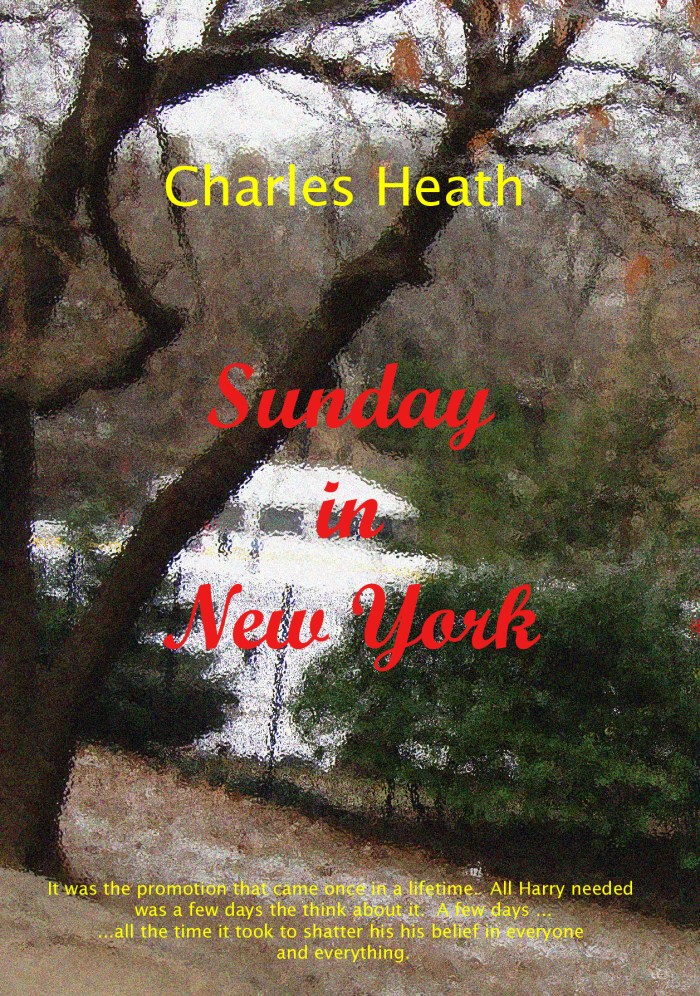
“Sunday in New York”, it’s a bumpy road to love

“Sunday in New York” is ultimately a story about trust, and what happens when a marriage is stretched to its limits.

When Harry Steele attends a lunch with his manager, Barclay, to discuss a promotion that any junior executive would accept in a heartbeat, it is the fact his wife, Alison, who previously professed her reservations about Barclay, also agreed to attend, that casts a small element of doubt in his mind.

From that moment, his life, in the company, in deciding what to do, his marriage, his very life, spirals out of control.

There is no one big factor that can prove Harry’s worst fears, that his marriage is over, just a number of small, interconnecting events, when piled on top of each other, points to a cataclysmic end to everything he had believed in.

Trust is lost firstly in his best friend and mentor, Andy, who only hints of impending disaster, Sasha, a woman whom he saved, and who appears to have motives of her own, and then in his wife, Alison, as he discovered piece by piece damning evidence she is about to leave him for another man.

Can we trust what we see with our eyes or trust what we hear?

Haven’t we all jumped to conclusions at least once in our lives?

Can Alison, a woman whose self-belief and confidence is about to be put to the ultimate test, find a way of proving their relationship is as strong as it has ever been?

As they say in the classics, read on!

Purchase:

http://tinyurl.com/Amazon-SundayInNewYork

Sunday In New York

It’s a new dawn, it’s a new day…

OK, I’m sure I’ve heard these words before, like the rhythm of a song you can’t get out of your head, perhaps because the guy next door won’t stop playing it over and over.

There’s a story there, but it can wait.

I’ve just been reading the news, and there’s a lot of plotlines in the offing, but I’ve changed the names even though you will have no trouble recognizing the perpetrators.


Plotline 1

It’s a conspiracy doosie, beleaguered President realizes that if he can get a particular candidate into the Supreme Court, all his troubles with his extramarital affairs, and one in particular, will go away.  It happens and changes the course of history forever.

No, hang on, it’s removed the past 200 years of history and we’re back where we started from, the dark ages.  The Vatican is in the process of posting help wanted ads, “soldiers required for inquisition”.

Talk about a blockbuster time travel novel that doesn’t just shift one, two, or even three people, but the whole world…


Plotline 2

Why is it that every journalist that disappears had to be a ‘dissident’?  Journalists disappear all the time, some on long boozy lunches, some down the rabbit hole called taking a hiatus, but it’s only a story if there are a few ‘so-called’ secret agents flying in around about the same time.

Of course, it works better if it isn’t necessarily a journalist, but some rocket scientist that’s suddenly dropped dead in the street, particularly if it is one from a perceived ‘enemy’ country.
Plotline 3

Space travel for the common man, well, a common man who will be able to afford it.  Seems HG Wells stories are about to come true.

Will a real-life Star Trek be next?  I kind of like the idea of being instantly beamed from one place to the next.  I’m sure it will be far less than a plane ticket, and thank the Lord, there’ll no longer be a ‘middle’ seat!