Over the last few weeks I’ve been lamenting the loss of many things that once existed, once upon a time.
All children have memories of their childhood, but some dissipate over time and become forgotten, almost to the pointwhere it is as if they never existed.
Like my grandmothers house in the country, bulldozed to widen a main highway. I have a lot of difficulty in remembering it even though we had spent many Christmas holidays there.
Other, more insignificant items just simply disappeared into the mists of time, as the manufacturers were slowly bought out by overseas companies and in their desire for globalisation, parochial items made for what seems, to them, to be too small for their economies of scale were no longer made.
No thought is ever given to the consumer. Nor does it matter that the item, made in this country for a hundred years, is especially attuned to the tastes of the people of this country, and therefore have a continuous core market.
Of course, as a child over 60 years ago, most of thise items were confectionary. Names of brands such as Hoadleys and Rowntree have long since disappeared. Products like licorice squares, polly waffles, toscas and crispins have gone too.
Some products like Kit Kats still exist, but are made by new manufacturers like Nestle but with the change no longer taste anything like they used to.
But what started of this lament for the old days was triggered by seeing an old, old favourite called Life Savers, which came in friut flavours, peppermint, and musk. My all time favourite was musk and walking through the supermarket I saw the words Life Savers on a box almost hidden on the bottom shelf and lo and behold they had musk.
The packaging had changed, the manufacturer had changed, but that timeless confectionary had reappeared. Given its shelf location, I don’t think it will be for long.
Now, if only they could bring back Toscas, and Tarax soft drinks in small bottles. Raspberry and cola were my all time favourites.
We have stayed in two different types of accommodation in Coffs Harbour, New South Wales, Australia, as a timeshare owner who can trade their week for a week anywhere in the world.
Both are resorts, but different sorts of resorts. The first was a typical RCI resort, where everything is laid back and relaxing, with all the amenities one can expect from a resort.
The other, this one, the Wyndham in Coffs Harbour, is very different, and you notice it when you walk in the front door. You are virtually assaulted by hard-nosed timeshare sales staff who really don’t take no for an answer, and then when you finally escape, ring you every day to make an appointment.
I left the phone off the hook.
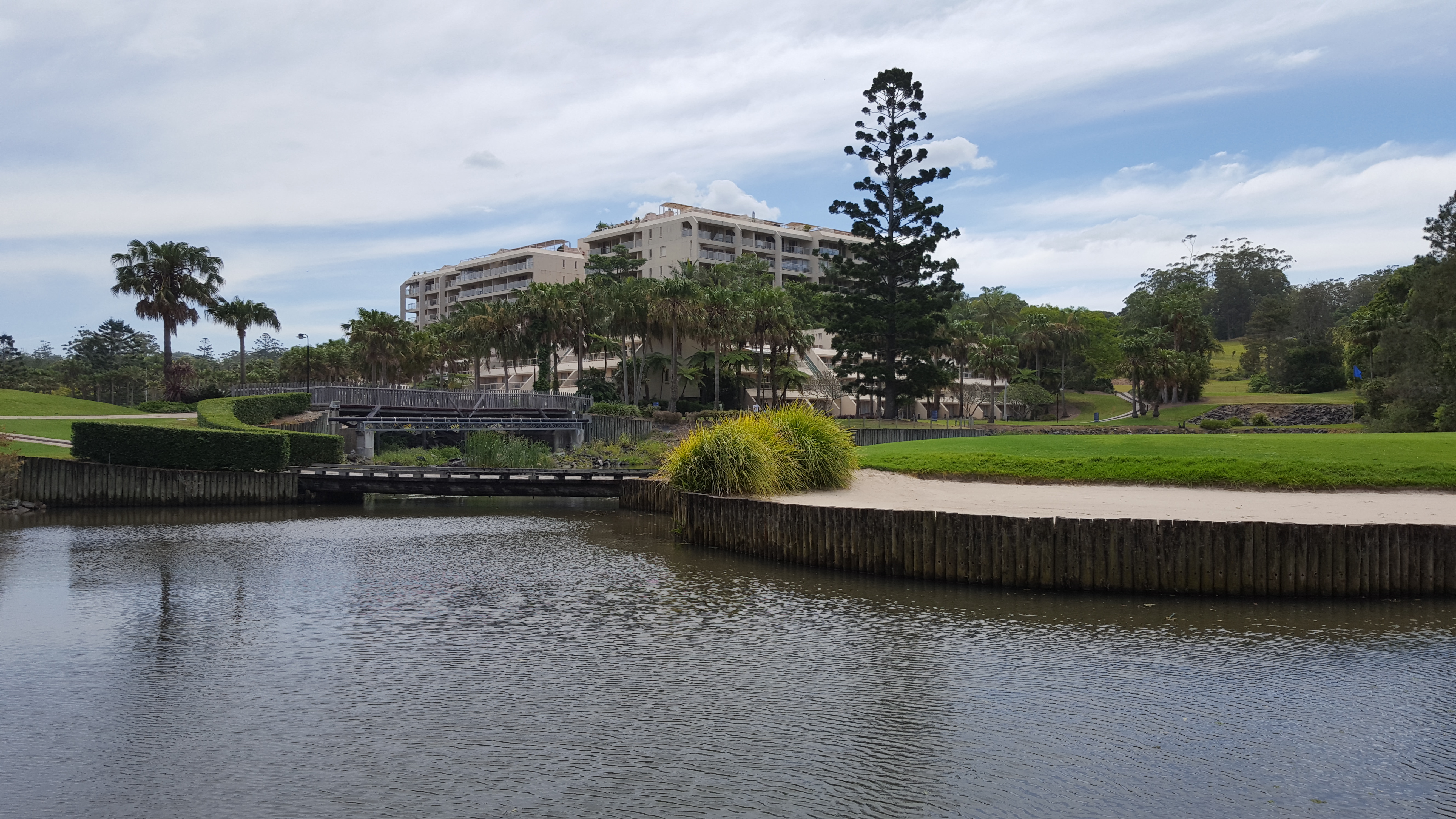
Aside from that, the place is excellent, the accommodation very good, and the situation one of the best with what could be called a private beach. There are also a number of bushwalks that cater to old people like me.
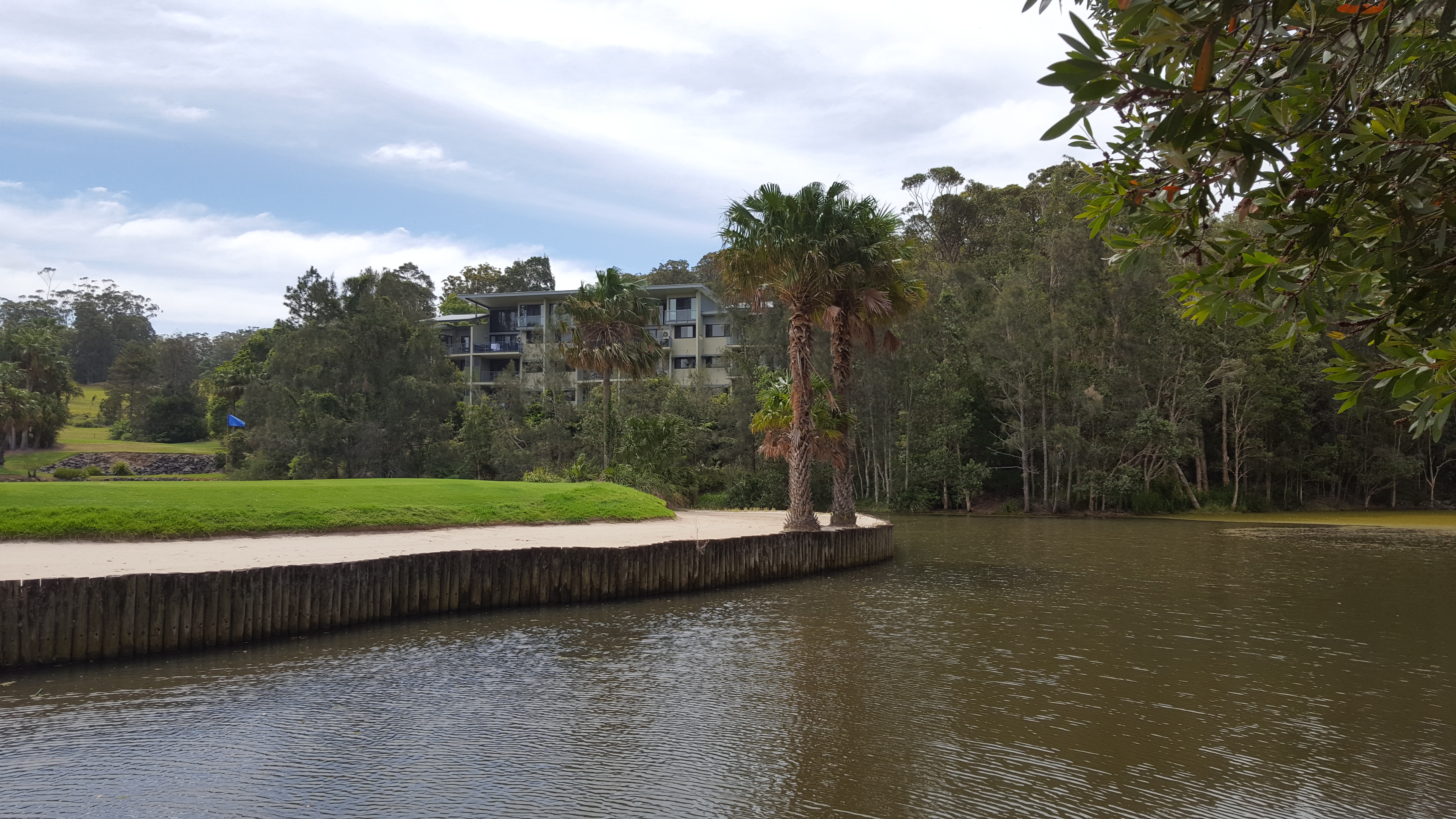
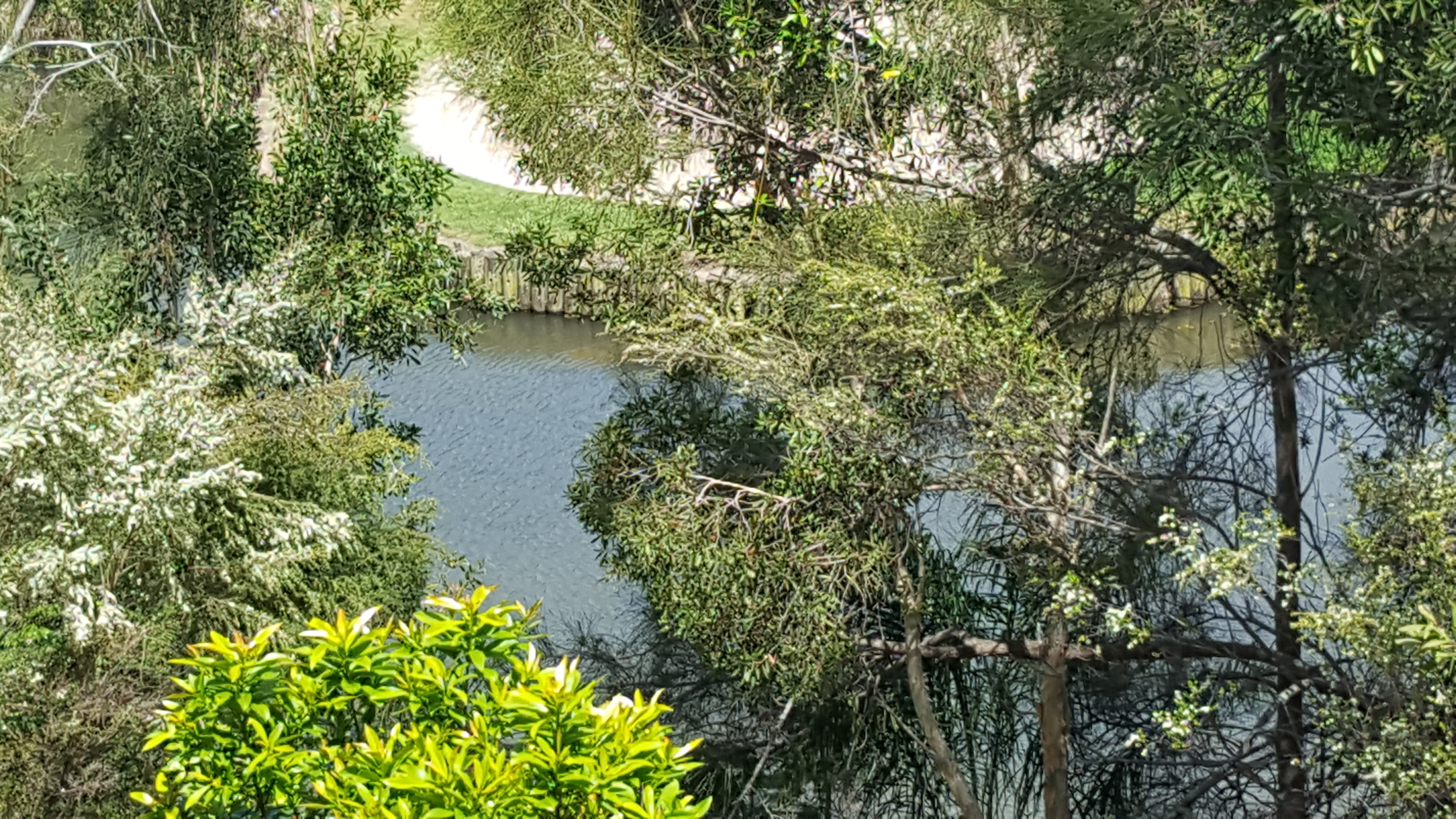
As you can see, lakes and greenery, and even a putting green.
And in places, they try very hard to hide the ugly multi-story buildings in amongst the trees
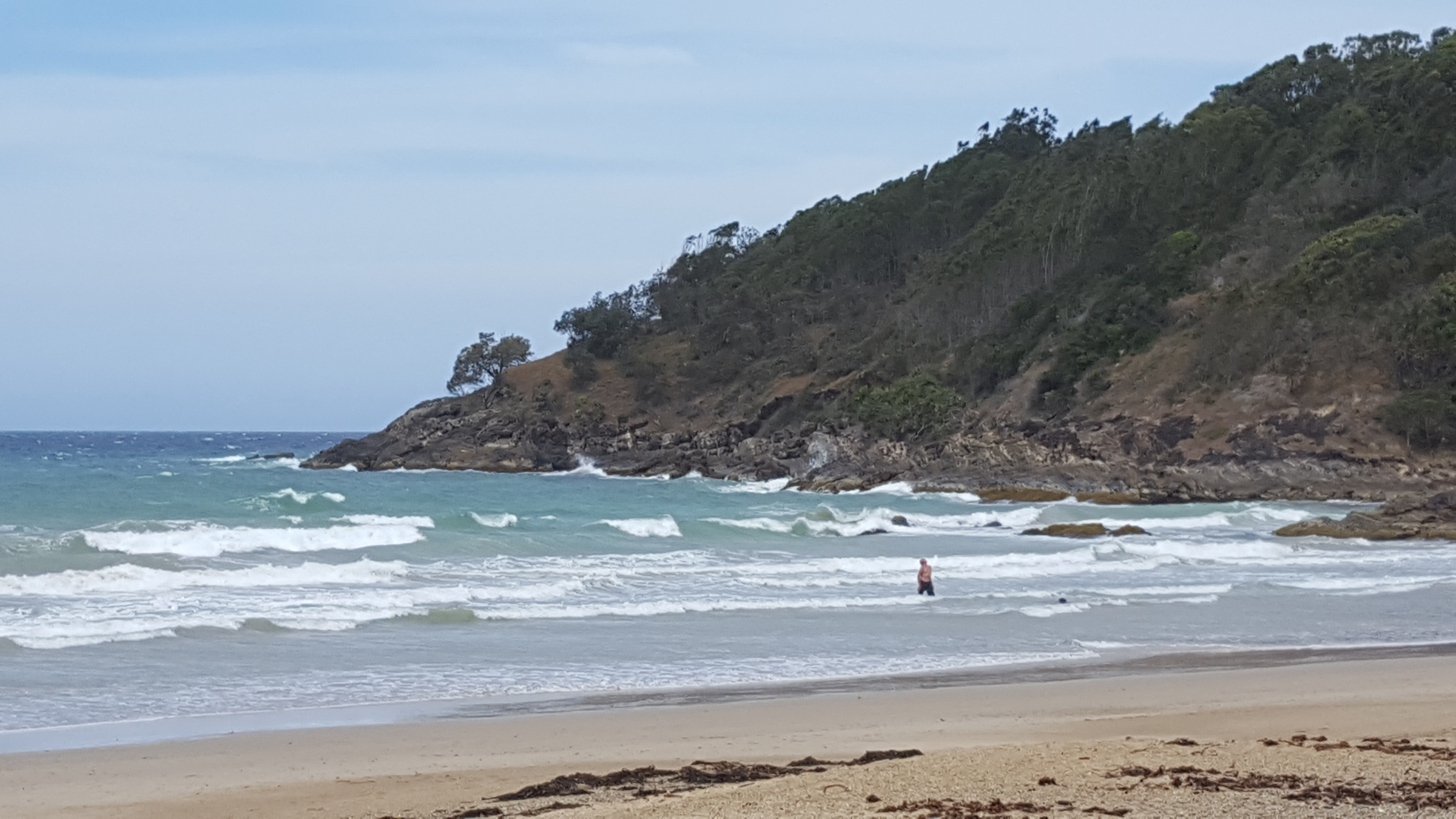
It is only a short walk to the ‘private beach’ and it is sufficiently long enough for a morning walk before breakfast. You could even try to catch some fish for breakfast, though I’m not sure if anyone actually caught anything
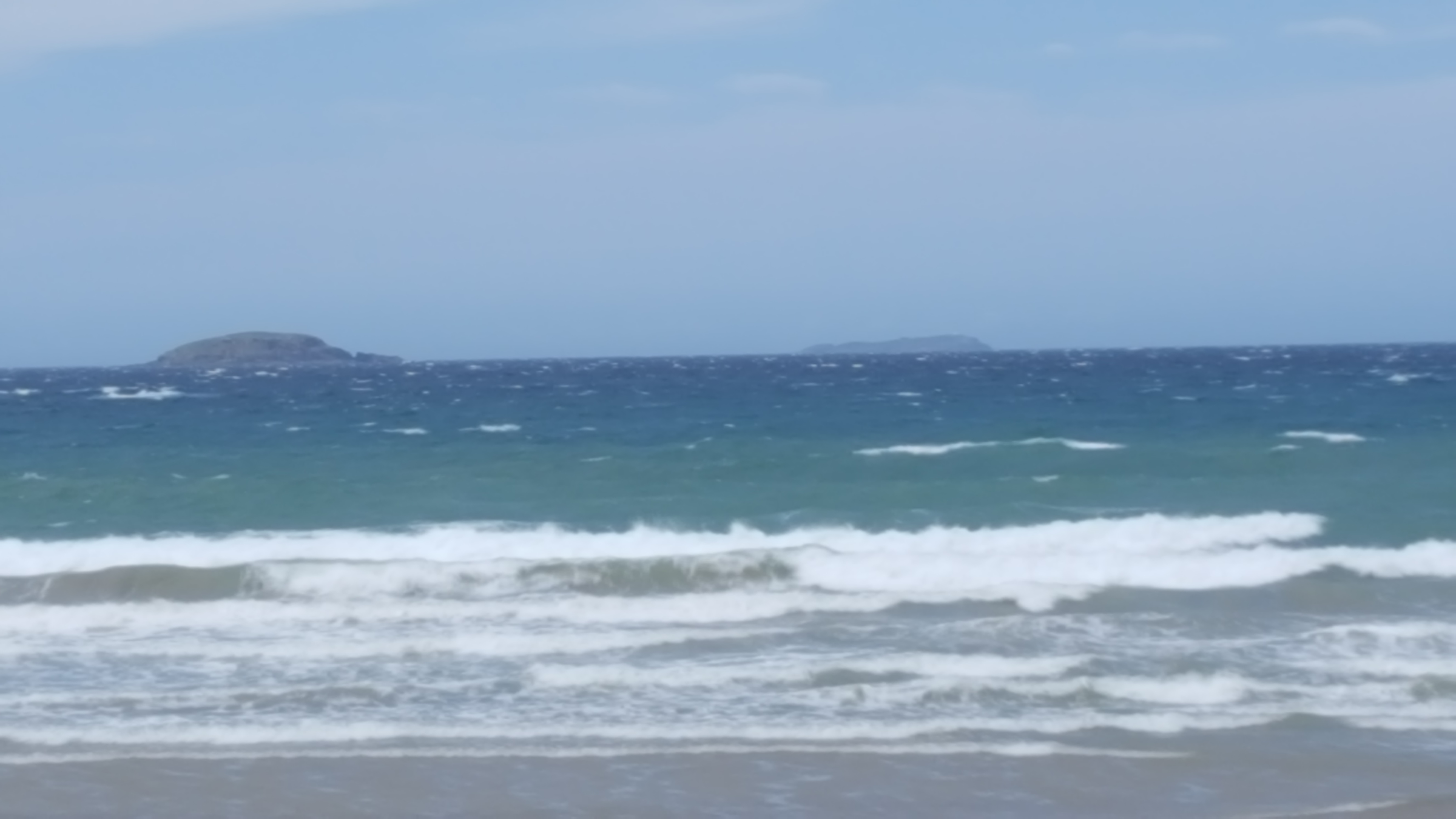
Or you can just stare out to sea
And, back in the room, this is the view we had from our verandah
Of course, it could easily be Collingwood depending on who you barrack for in the local football competition, as it is Fitzroy, but the map and my GPS tells me the street is, for all intents and purposes, in Fitzroy.
Not that there is a football team for Fitzroy any more, that moved north to Queensland a long, long time ago.
But…
Going for a wander up and down the street shows two or three very different sides to inner suburban living, and the effect that comes from a diverse range of cultures, the city has acquired over the past few decades.
Once viewed as almost the slums of Melbourne, these inner suburban areas have moved upscale to become havens for the more wealthy middle classes and a home for many diverse outlets, not the least of which are eateries.
And. In just this small section of Smith Street, there are a lot of eating establishments, from the Old Kingdom Peking duck restaurant to a small place selling Falafel, and then everything in between. It says a lot about how Australian eating habits have changed in a single generation, where back in those infamous old days you would be lucky to have a fish and chips/ hamburger shop and one or two Chinese restaurants.
Now, intermingled with gourmet bakeries and cozy coffee shops, there are a plethora of other eating establishments that cater to any cuisine you can imagine. In fact, it’s possible to dine out on a different cuisine every night for a fortnight and only traverse about half a kilometre up and down the street. It could be ideal if you lived in one of the small fronted houses just off the main carriageway in a leafy narrow side street or laneway.
And, as you would expect in an inner-city suburb, the streets are narrow and made more hazardous for traffic because of the trams, a familiar sight in many of the streets in this area, and a much-used form of transport for workers making the short trip into the city. It’s almost possible to take the extra half hour, and walk.
The street is lined with old buildings, some dating back to about 1868, there’s around the turn of the century, but most are not inhabited except for the street level where there is an eclectic mixture of furniture, haberdashery, and clothing stores catering to a particular group of people, what some call yuppies or upwardly mobile men and women who are between 25-35, with high paying jobs, and preferably no children.
Then there a subgroup walking there streets, homosexual men, some wheeling adopted children in pushers, others walking hand in hand out for a Saturday afternoon stroll where they can feel safe among many others. It’s very different from other places I’ve been, but one can imagine there are places like this in every city all over the world.
But as a backdrop to the appearance of wealth, the shopfronts that cater to those upwardly mobile upper middle classes, there’s that exact opposite in full view, the homeless, and beggars, sitting on the ground outside the more run down shops soliciting alms, asking for a spare dollar, and even one asking for a cigarette.
Everyone walks past them, imagining no doubt there are not there, or that if they ignore them, they will go away. I think not. And, I suspect, more will come out of their daytime hiding places and take up residence in Smith Street itself.
The only surprise is that the local council has not asked the police to move them on. It’s an interesting juxtaposition of inhabitants in an area that no doubt can only attract the upper middle classes, as anything and everything is relatively expensive, particularly real estate, and permit driven parking spaces.
Would I live here? No.
Would I come here to wine and dine?
Maybe, if I could get parking, which there appear to be very few spots or any other form of parking such as under the local supermarket which can be very expensive. And if you are lucky enough to find a spot, who has the time or the memory if continually feeding a parking meter every two hours, particularly if you’re having a good time.
Equally, it’s a place I would not feel comfortable, even if it was once a safe haven, which up to a few years ago, I’d probably think it not. In fact, at times I was not sure what to make of some of the people on the street, but I guess if I lived here, it would no doubt be the norm.
Would I recommend people to come here?
Of course. One of the more interesting places in Melbourne to experience grassroots cuisine that is incredibly diverse in it range and price, and even from a place with tables and chairs that may have seen better days, but you haven’t come to see the furniture.
And to my mind, the dining is definitely better, here than perhaps Carlton, which in itself is Mecca to a plethora of university types, both teachers and students alike, and the coffee culture that pervade that area of Melbourne.
I have no doubt you will come and leave with a very good opinion of the place.
As for me, I came here for an engagement party held at the Hotelito de Jesus, a Mexican restaurant, serving a variety of Mexican dishes. As I’m no expert of that particular cuisine, everything was going to be new.
It was. It’s spicy but not too spicy, the pork belly excellent, the canapés delicious, and both the mushroom-based and shredded beef based mini tacos were equally scrumptious.
All of this was washed down with two particular Mexican beers, two of several available in bottles, cans, or by the glass.
Oh, and you can get sangria by the jug too if you like. I would have, but my passion for trying different beers won out.
I have a passion for visiting transport museums, to see old trains, planes, buses, cars, even ships if it’s possible.
This has led to taking a number of voyages on the TSS Earnslaw in Queenstown, New Zealand.
Many, many, many years ago on Puffing Billy, a steam train in the Dandenongs, Victoria, Australia.
The steam train in Kingston, New Zealand, before it was closed down, but hopefully it will reopen sometime in the future.
The London Transport Museum in London England, which had a lot of buses.
The Workshops Railway Museum in Ipswich, Queensland, where once the many steam engines were built and maintained, and now had only a handful of engines remaining.
However, in the quest for finding and experiencing old transportation methods, we came across the Mary Valley Rattler, which runs out of Gympie, Queensland, Australia.
The ride begins in Gympie at the old Gympie Railway station, and as can be seen below, is one of the relics of the past, and, nothing like the new more modern stations. Thankfully.
If you’re going to have a vintage train, then you have to have a vintage station.
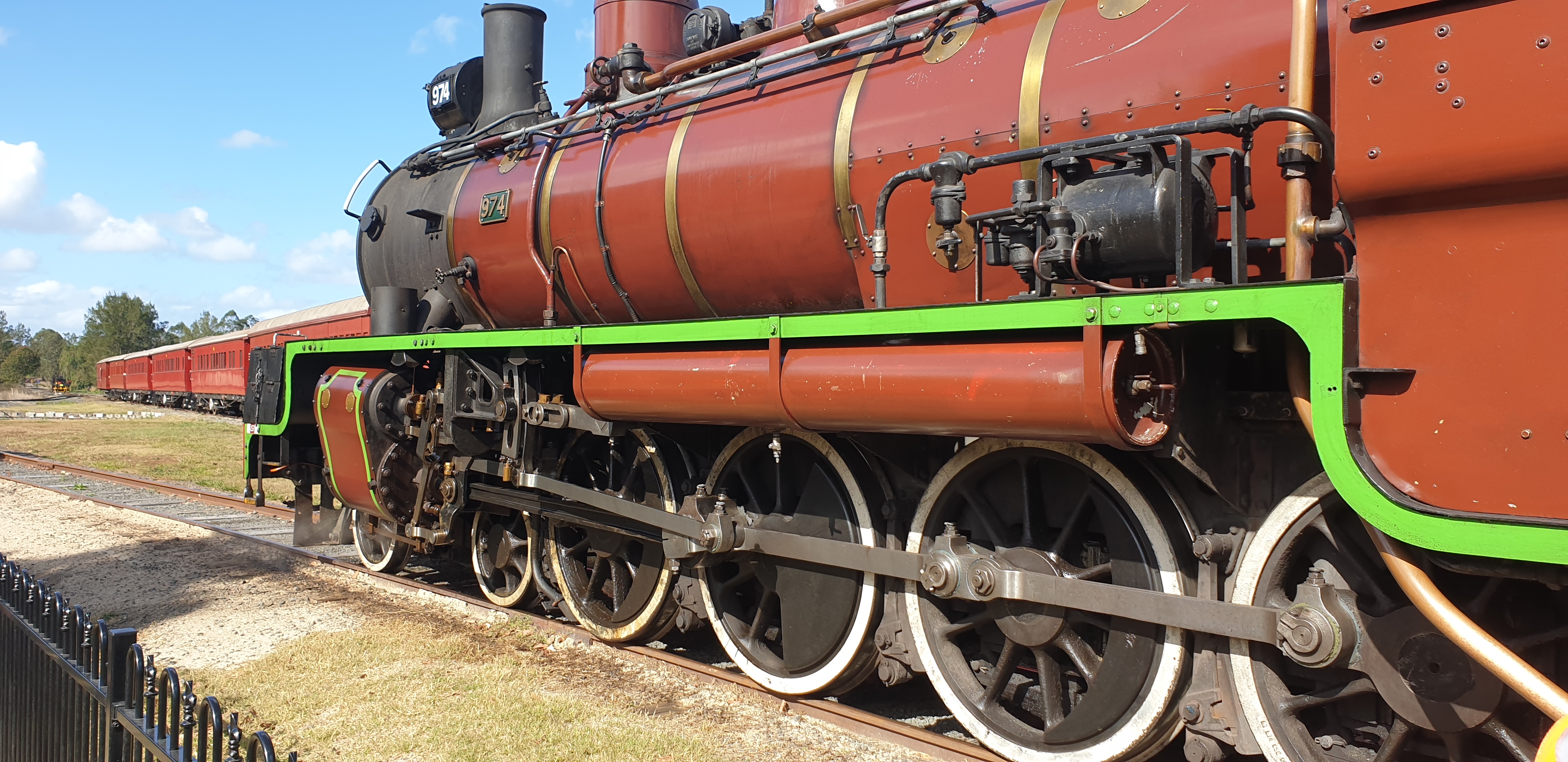
The Class of engine, seen below, is the C17, a superheated upgrade to the C16 it was based on, and first run in 1903. This particular engine was built in 1951, although the first of its type was seen in 1920 and the last of 227 made in 1953. It was the most popular of the steam engines used by Queensland Railways.
The C designation meant it had four driving axels and 17 was the diameter of the cylinder, 17 inches. It is also known as a 4-8-0 steam locomotive and nicknamed one of the “Brown Bombers” because of its livery, brown with green and red trimming.
Also, this engine was built in Maryborough, not far from Gympie by Walkers Limited, one of 138.
This photo was taken as the train returned from Amamoor, a trip that takes up to an hour.
The locomotive is detached from the carriages, then driven to the huge turntable to turn around for the return journey to Amamoor.
This is the locomotive heading down to the water station, and then taking on water. After that, it will switch lines, and reverse back to reconnect the carriages for the trip to Amamoor.
The carriages are completely restored and are extremely comfortable. It brings back, for me, many memories of riding in older trains in Melbourne when I was a child.
The trains, then, were called Red Rattlers.
This is the locomotive climbing one of the hilly parts of the line before crossing over the Mary River on a trestle bridge.
This is the engine at Amamoor near the picnic area where young children and excited parents and grandparents can get on the locomotive itself and look inside where the driver sits.
And, no, I didn’t volunteer to shovel coal.
This particular locomotive spent most of its working life between Townsville and Mount Isa and was based in Cloncurry, Charters Towers, and Townsville, before being sent, at the end of its useful days in the late 1960s, to the Ipswich Railway Workshops.
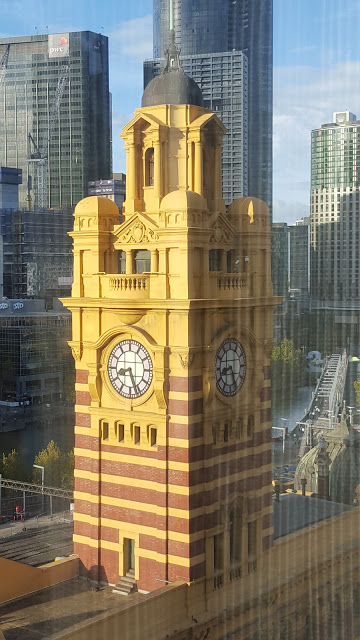
This is the famous clock tower of the Flinders Street Station (the main train station for suburban trains) in Melbourne.
We were staying in a hotel (The Doubletree) directly opposite to the station and our room overlooked the station and the clock tower. I took photos of it during the day:
and this one, at night. It came out better than I thought it would.








 Thrills, Spills, and just a dash of Romance