Writing about writing a book – Day 5 continues – Those annoying people called characters

Whilst it is always an idea to sit down and write and keep going, not worrying too much about the narrative, there’s always the problem of ideas about characters, and relationships that come back and need to be addressed.

I have issues with Jennifer in that we will need to know something about her, and need a little backstory.

Jennifer is the second most important character in this novel and one that has more talents than what my main character, or anyone else for that matter, thinks she has.  Of course, that is deliberate on her part for a number of reasons that will be introduced at the appropriate time.

But, at the start, all we will have to work with, is the introduction provided by the narrator.

It may go something like this:


Jennifer Pennington Smythe was, as you might expect, very English, very reserved, and very private.  She was the definitive ‘don’t judge a book by its cover’, and I was guilty, at first, of suspecting she had once been a schoolmistress due to the severity of dress, demeanor, and expression.

HR had sent her to me when I’d requested an IT Specialist, though of what particular discipline it was never divulged, neither by HR nor by her.  She arrived one morning, told me she was to ‘help resolve our technical difficulties’, moved into an office that had been used as a storeroom, and worked hard to prove her worthiness in the role.

My first attempt at conversation was rebuffed, the second met with a very cold stare.  Everyone, including me, learned very quickly that any other topic of conversation than work would be ignored.  At the time it suited me, there was trouble in paradise and I didn’t want anything more on my plate to deal with.


So, what is this trouble?

There are three distinct stages of this relationship between the two most important characters, and it is the actions of one of the protagonists that brings them together.  This particular protagonist, of course, is the main character’s wife, a woman that is on the periphery for the period the novel covers, but a little background will be needed at some point before we reach this part of the narrative.

This now means that I will have to put together a back story for Bill and his ex-wife Ellen, not too much yet but enough to explain the next part of the evolving relationship between Bill and Jennifer.


I’m sure this topic is going to raise it’s head again and again…

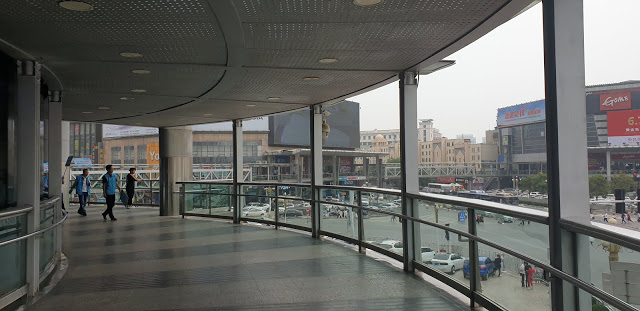
Searching for locations: The Erqi Memorial Tower, Zhengzhou, China

A convoluted explanation on the reasons for this memorial came down to it being about the deaths of those involved in the 1923 Erqi strike, though we’re not really sure what the strike was about.

So, after a little research, this is what I found:

The current Erqi Tower was built in 1971 and was, historically, the tallest building in the city. It is a memorial to the Erqi strike and in memory of Lin Xiangqian and other railway workers who went on strike for their rights, which happened on February 7, 1923.

It has 14 floors and is 63 meters high. One of the features of this building is the view from the top, accessed by a spiral staircase, or an elevator, when it’s working (it was not at the time of our visit).

There seems to be an affinity with the number 27 with this building, in that

  • It’s the 27th memorial to be built
  • to commemorate the 27th workers’ strike
  • located in the 27th plaza of Zhengzhou City.

We drive to the middle of the city where we once again find traveling in kamikaze traffic more entertaining than the tourist points

When we get to the drop-off spot, it’s a 10-minute walk to the center square where the tower is located on one side. Getting there we had to pass a choke point of blaring music and people hawking goods, each echoing off the opposite wall to the point where it was deafening. Too much of it would be torture.

But, back to the tower…

It has 14 levels, but no one seemed interested in climbing the 14 or 16 levels to get to the top. The elevator was broken, and after the great wall episode, most of us are heartily sick of stairs.

The center square was quite large but paved in places with white tiles that oddly reflected the heat rather than absorb it. In the sun it was very warm.

Around the outside of two-thirds of the square, and crossing the roads, was an elevated walkway, which if you go from the first shops and around to the other end, you finish up, on the ground level, at Starbucks.

This is the Chinese version and once you get past the language barrier, the mixology range of cold fruity drinks are to die for, especially after all that walking. Mine was a predominantly peach flavor, with some jelly and apricot at the bottom. I was expecting sliced peaches but I prefer and liked the apricot half.

A drink and fruit together was a surprise.

Then it was the walk back to the meeting point and then into the hotel to use the happy house before rejoining the kamikaze traffic.

We are taken then to the train station for the 2:29 to our next destination, Suzhou, the Venice of the East.

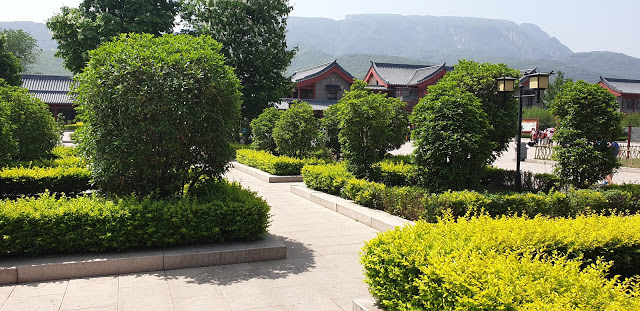
Searching for locations: The Pagoda Forest, near Zhengzhou City, Henan Province, China

The pagoda forest

After another exhausting walk, by now the heat was beginning to take its toll on everyone, we arrived at the pagoda forest.

A little history first:

The pagoda forest is located west of the Shaolin Temple and the foot of a hill.  As the largest pagoda forest in China, it covers approximately 20,000 square meters and has about 230 pagodas build from the Tang Dynasty (618-907) to the Qing Dynasty (1644-1911).

Each pagoda is the tomb of an eminent monk from the Shaolin Temple.  Graceful and exquisite, they belong to different eras and constructed in different styles.  The first pagoda was thought to be built in 791.

It is now a world heritage site.

No, it’s not a forest with trees it’s a collection of over 200 pagodas, each a tribute to a head monk at the temple and it goes back a long time.  The tribute can have one, three, five, or a maximum of seven layers.  The ashes of the individual are buried under the base of the pagoda.

The size, height, and story of the pagoda indicate its accomplishments, prestige, merits, and virtues. Each pagoda was carved with the exact date of construction and brief inscriptions and has its own style with various shapes such as a polygonal, cylindrical, vase, conical and monolithic.

This is one of the more recently constructed pagodas

There are pagodas for eminent foreign monks also in the forest.

From there we get a ride back on the back of a large electric wagon

to the front entrance courtyard where drinks and ice creams can be bought, and a visit to the all-important happy place.

Then it’s back to the hotel.

The cinema of my dreams – Was it just another surveillance job – Episode 41

I’m back home and this story has been sitting on the back burner for a few months, waiting for some more to be written.

The trouble is, there are also other stories to write, and I’m not very good at prioritizing.

But, here we are, a few minutes opened up and it didn’t take long to get back into the groove.

Chasing leads, maybe

—

I gave it about five minutes before I think I started breathing again and then headed back to Jennifer.

Or where I thought I had left her.

She wasn’t there. I think, in the end, it didn’t surprise me. She had been reluctant from the start so if I had to guess, she had done a bunk. This was not her fight, nor mine, but she had a ticket out. Why would you want to come back after being betrayed by the likes of Severin and Maury?

I hope she left the car behind.

Now that I was here there was no point leaving, so I took a few minutes to search the surrounding area, just in case she was still here, just someplace else, and when she wasn’t, I quickly and silently made my way back to the side of the house with the open door from a different direction.

There was another set of French doors, these curtained, and with an overhead light above the doorway, so I kept my distance in case there was a movement activator, another which looked to be a servant’s entrance at the back. Neither door looked to be an easy viable entrance.

The original side door was still unlocked, with no lights or movement inside.

I waited, then opened the door wide enough to slip through. Again, I waited in case there was a silent alarm, then when nothing stirred, slipped through and closed the door behind me.

On the other side of the door, it was quite dark, except now I could see, on one wall, the dying embers of a fire. Someone had been in the room earlier and most likely gone to bed.

It meant the house was occupied.

It also meant I had to be careful.

On the other side of the doors, it was a lot warmer. Again I waited a few minutes, just in case someone came, and, when they didn’t, I pulled out a small torch and turned it on.

In front of me were two chairs and a table, one I would have walked into without a light. The walls had shelves and those shelves were filled with books. Some behind glass doors, others not. There was another chair by the fire, and beside it, a stack of cooks, and a table with had an empty glass and a bottle, and a pair of reading glasses.

The downstairs reading room.

I cross the room slowly, hoping there were no squeaky floorboards, to be expected in an old house like this one. The timber flooring was exposed only at the edges of the room, the rest of the floor covered in a large, discolored, and fraying carpet square.

It was old, like everything else in the room.

I was tempted to have a look at how far the books dated back to but resisted the urge. I was looking for information on the owner.

At the doorway to what looked like a passage, I turned off the torch and peered out. It was not exactly dark, my eyes had adjusted to the low-level light from low wattage lights about a foot above the floor.

Lights to help guide the way at night.

Left, rooms, right, rooms, at the end of the passage a wide doorway leading towards the other side of the house. Larger rooms perhaps.

I turned right and headed towards the front, and they stopped at the doorway to the next room. I’d deliberately walked on the carpet runner in the middle of the passage, and just managed to catch my foot when one part of the floor creaked softly.

The room next door was almost the same as the one I’d entered by, with chairs and shelves but only on two sides. This room had a long window and no French doors.

On one side there was a writing desk, open, with papers scatted on the writing surface. I quickly crossed the room to it, switched on the light, and checked.

Bills. In the name of Mrs. Marianne Quigley. This had to be Adam Quigley’s mother, and by deduction, O’Connell’s mother.

Proof I was in the right place.

Then I heard the squeak of a floorboard followed by the clicking sound of a gun being cocked.

“Don’t move, or I’ll shoot. Hands in the air. And don’t make me ask twice.”

Hands up it was.

—

© Charles Heath 2020-2022

Writing about writing a book – Day 5

6:30 am, can’t sleep.  Too many notes to self!

Time to read 101 things you need to be a writer, and 101 items to consider when writing a book.

You need:

Pen, check.  Paper, check.  Enthusiasm, not the greatest at this hour, but check.  Writing software, I’ve got Scrivener, what have you got?  Word?  So have I, so I see you, and raise it with Y-Writer.  Not sure how to use either yet, but some proficiency with Word.  Still using pen, paper, and typewriter.  Till I run out of ribbons … do they actually make ribbons anymore?

Writing the book:

The plot, well that will evolve as I’m writing, like the reader I don’t want to know the end yet.  Well, I have an idea how it will end, but that could change.

Characters, yes, they are works in progress.

Oh, while I remember, Bill has a past which he doesn’t remember, the events so traumatic, he knows something happened, spent time in the hospital, but was not sure what it was.  It will come back, triggered by another traumatic event.  It will also fuel dreams or nightmares.

And we need a master criminal, and he is going to be a character called Colonel Davenport.  A career soldier turned disillusioned and finds a way to make a living out of the war.  A very good living.  Led a group, some of whom still exist as his henchmen, the sort who kill without conscience.

Outline, isn’t that written after the book is complete?  No?  Ok, then the story so far:

1 – Bill is on holidays

2 – Benton calls, emergency, the network is down – Company name Transworld (PK, boring)

3 – Other problems – a dead body for one (Richardson, the Accountant), departmental members unavailable

4 – Police – introduce a new character, Chief Inspector Gator

5 – Arrival at work, meeting with Managers, discuss the situation – new character Aitchison – he is involved somehow ??  The first suggestion is, there is a network within a network

6 – Locating the problem – Introduce Giles the IT officer, Bill meets with Gator, speak about files on servers gone missing (ok, a bit of geek speak here)

7 – Introduce Jennifer, explore their relationship – more geek speak with added humor

8 – Lunch – then Aitchison calls, and everything goes to hell in a handbasket.

So far so good.


8:00 am, coffee in hand, to the writing room (well, desk anyway!)

A little more profiling on Bill, now with the last name Chandler.  Still not sure if I want to keep up the first person narrative, but I’ll worry about that later …


Looking at the mess constituting my room and my life, slob may have been an appropriate description.  I considered myself old, overweight though not necessarily fat, hair greying at the edges, and few wrinkles around the eyes, there were no real plusses in my description.

Some said I had a kindly face, but perhaps I had the look of a paternalistic grandfather.  There were several men in the office who were the same age and had grandchildren.  And some who had children at a time when they should be planning for retirement, not parenthood.

World-weary and perpetually tired, I’d passed mid-life crisis, wondering what it was that affected other men my age.  I’d never had the desire for fast cars and even faster women.  I had trouble keeping up with Ellen.

I used to think I’d missed a lot in half a lifetime.

Now, I didn’t know what to think.

Did I deserve pity?  No.

Did I deserve sympathy?  No!

The only person who could get me out of the rut was myself.  For years I’d traded on Ellen’s good nature.  She deserved better, left me, and was now happier in the arms of a man who I wanted to believe treated her far better than I.  She had told me so herself, and judging by her manner, it had to be true.  Only recently had she got her smile back, the one that lit her face up, one that infectiously spread happiness to anyone near her.

There were reasons why I became the person I was now.  Some might say they were valid.  In the cold, hard light of dawn, I could see it was time I stopped using my past as a crutch and got on with the business of living.

Perhaps today would be the first day of the rest of my life.


OK, Jennifer is there, and things are about to change.


© Charles Heath 2016 – 2019

Memories of the conversations with my cat – 65

As some may be aware, but many not, Chester, my faithful writing assistant, mice catcher, and general pain in the neck, passed away some months ago.

Recently I was running a series based on his adventures, under the title of Past Conversations with my cat.

For those who have not had the chance to read about all of his exploits I will run the series again from Episode 1

These are the memories of our time together…

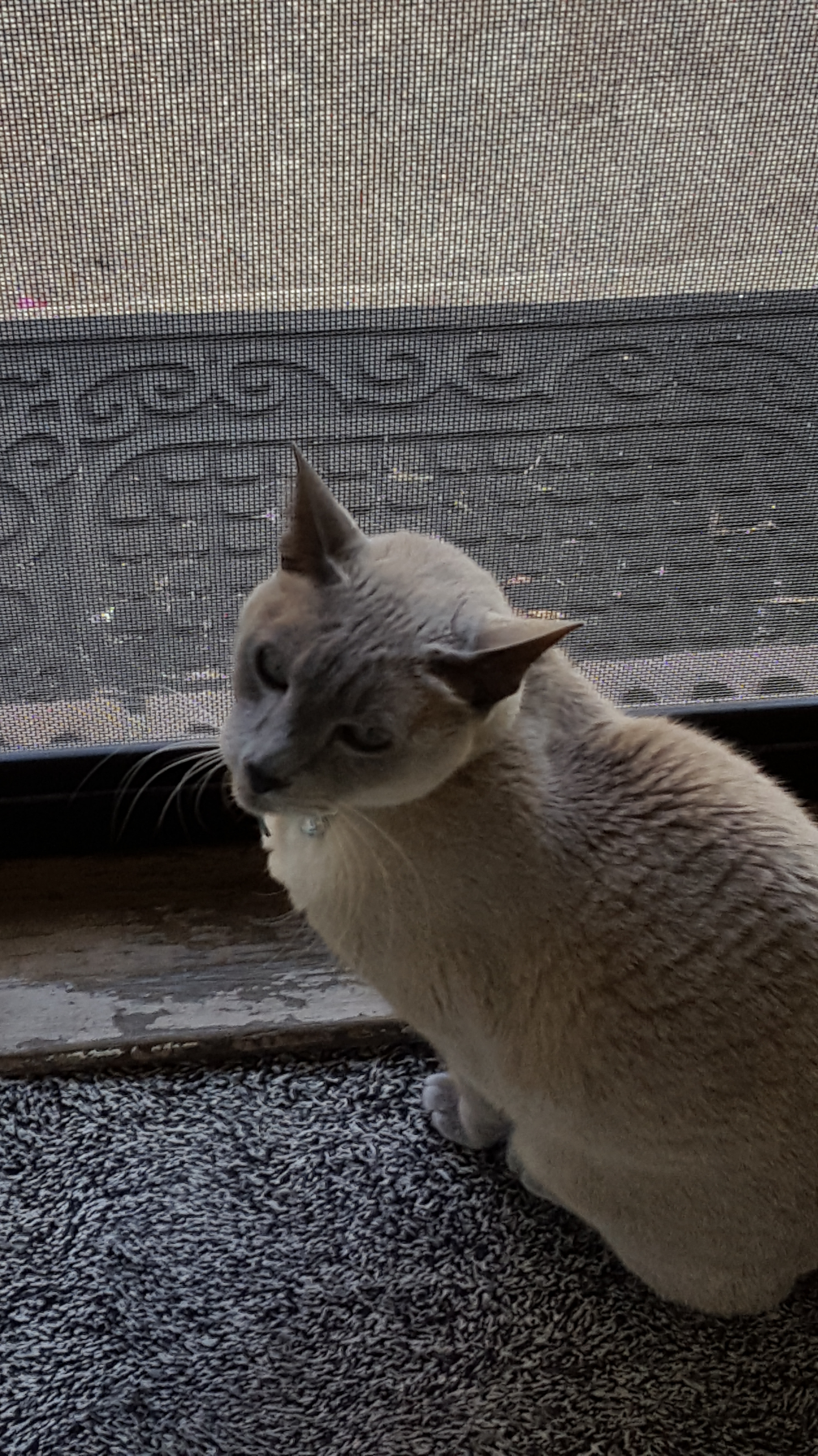
20160903_123228

This is Chester.  We both agree that summer has come early.

But that’s about all we can agree on.   I’m going to start calling him a cranky cat.

For the last week or so the temperature has been hovering in the low 30-degree Celcius mark, and we have been subjected to the constant aroma of smoke from bushfires raging north and south of us.

Normally, the hot weather doesn’t arrive until after the middle of November, and then the temperatures are around 30 degrees with moderate humidity.

Now, it is hot, with Sunday being about 36 degrees Celcius, and not a day to venture outside the airconditioning.

And, that’s where the cranky cat and I disagree.

He likes to sit at the back door and collect the breeze that flows from the front door to the back door and hates it when I run the airconditioning because I have the doors closed.

When that happens, he comes into the office and sits on the table next to the printer with his angry face on.

I figure using the printer might disturb his protest, but it doesn’t.

And to ignore him is at your own peril because, after a few minutes of silent protest, he comes over and starts pushing keys on the keyboard.

One day I expect he will type ‘you are a very bad servant’ for that I am.

Now, where’s the food he really hates!

The fourth attempt, let’s look at the main character

So there are words on paper, and three times I’ve tried to fix it, or, perhaps just make it sound better because reading it in my head, there’s too little background and too many questions.

The flow of the story isn’t working for me, so I guess it’s time to sit down and work out what it is I’m trying to say.

The notion that our main character, Graham, is a loser seems to shine through, and that’s not what I’m trying to portray him as.  No, far from it, it’s been a lifetime of bad choices that have put him where he is, and he knows it.

So, in part, this is about owning your mistakes, and it’s my job to make him come across as a hero in waiting.  There’s good in him, perhaps too much, but there is also that attitude that led to all those bad choices, the one that can get him into trouble, and a sort of intransigence inherited from his father, that has more or less got him ostracised from the family. 

I want this character to be a chop off the old block, both of whom are the type not to back down, not to say sorry, and, to quote a rather apt allegory, would cut their nose off to spite their face.

Graham’s intransigence led to his refusal to follow his father into business, refusal to go to University despite having the necessary qualifications, and just to round out the defiance, his choice of women whom he knew would meet with family disapproval.

And these factors, over a period of time, saw him bounce from a low-paying job to jobs with no prospects, and a string of failed relationships, until this moment in time, where he was basically on his own, working the graveyard shift as a security guard.  The sort of job where qualifications weren’t looked for and workmates looked like and probably were ex-cons.

There are a few more details like the older brother, Jackson, politician and schemer, the same as his father before him (the seat was passed down through the family), like the younger sister who is a highly successful surgeon, married into immense wealth.  His brother had been less successful in the marital stakes but what he lacked in a wife was more than made up with a string of highly eligible and beautiful women.

And, no, he doesn’t resent the fact they’re rich, or that his parents were, too, just that they treated him with contempt.

It was almost five years since the last time he had seen any of them, that last time he attended the family Christmas in Martha’s Vineyard, the ‘Stockdale Residence’ an ostentatious sprawling fifty-room mansion that, in a drunken rage, he’s tried to burn down.

Once again, he had not received an invitation to the next, due in a few days, and it was not entirely unexpected.

Graham has his faults, but that even, five years ago, had pulled him off the road to self-destruction, helped along by a year stint in jail where he learned a great many lessons about life itself, and survival.

The four years since?

A lot of regrets, and a lot of repentance.  Life after jail was a lot worse than life trying to defy the family and the system.  There were two roads he could have gone down, and thankfully for him, it was not the wrong one.

So, he’s back on the path, a whole lot wiser, a whole lot tougher.

That might not have been exactly what I was thinking for him over the first three attempts.  I don’t think any character really begins to shine until halfway through, as you find him meeting various challenges in ways even you, as the writer, find quite unexpected.

Is that the end result of being a pantser over being a planner?

I don’t think, even as a planner, you can create a character that’s not going to change, or even surprise you, as the story evolves.

And somehow I don’t think I’m about to change from one to the other.

Well, not completely.

But there’s more, and no, it’s not steak knives!

…

© Charles Heath 2020-2021

The cinema of my dreams – Was it just another surveillance job – Episode 40

I’m back home and this story has been sitting on a back burner for a few months, waiting for some more to be written.

The trouble is, there are also other stories to write, and I’m not very good at prioritizing.

But, here we are, a few minutes opened up and it didn’t take long to get back into the groove.

Chasing leads, maybe

…

Darkness fell in a noticeably short time, and we left the pub at about six. In the hour so we have been there I’d been keeping a close eye on the comings and goings, and in particular, if O’Connell came in, or someone else that might look like him.

He hadn’t, nor had any mythical family members.  Well, it had been a long shot.

Jennifer hadn’t volunteered anything more to the conversation and sat working her way through a piece of fried fish and a bowl of chips.  Neither had looked appetizing.  I would have bet she’d have the chicken, but I was wrong, and probably it wasn’t going to be the first time.

“Do you have a gun?”

It was after ten minutes of silence.  It worried me that she didn’t ask how far it was or how long it would take.  And then, out of nowhere, the gun question.

“No.  Why would I have a gun.?”

“We were issued with weapons.  I still have mine.”

“Did you bring it with you?”

“No.  Like I told you, I didn’t think I was still working for the Department.  They didn’t ask for it back, so I didn’t give it to them.”

“Or the identities?”

“No.  It was odd though; they didn’t ask about them either.”

“Maybe they were going to wait a while and then ask you back.”

This was a weird conversation to be having.  By this time we were in Peaslake Lane, and not far from the house I pulled over to the side of the road, under a tree.

The houses were set back in a rural setting.  Between the darkness and the undergrowth, the chances were we could get to the house without being seen.  From where I was sitting, no windows or doors were visible.

I made sure the car’s internal light didn’t go on the moment the door was open.

“Are you bringing your cell phone?”

“Why.  I’m not envisaging having to call anyone, nor am I expecting a call.”

I shrugged, and slipped mine into a pocket where I could easily reach it I needed to.

I got out of the car, and she followed.  She left he bag in the car.  The first sign of training kicking in; eave all un-necessary baggage behind.  Perhaps having a gun might have been a good option if we ran into trouble.

Oddly enough, now that I thought about it, Monica hadn’t asked for mine back either, but it was sitting at home in a safe, along with the five other identities Severin had issued each of us with.

I locked the car, equally as silent and invisible as she joined me.

“Which house?”

“Three along.  Follow me and keep your eyes and ears peeled.”

I didn’t have to tell her, but it didn’t hurt to emphasize the importance of stealth.  There were people home in other houses, lights in windows just discernible through the trees, one house a window without a curtain, a view into the dining room, but there was no one at the table.

If we were visiting them, perhaps we’d be in time for dinner.

The house we were looking for was in darkness from our approach.

“You keep an eye open this side, and I’ll go around the other, then come back.  I’ll see if there’s an easy entry point.”

“What if someone is home?”

“Doesn’t look like it from here, and I’ll be surprised if there is.”

A moment later she had disappeared into the shrub line and I was heading across the front of the house, heading for the other side.  I kept well away from the front door, just in case there was a motion light, or worse, a motion detector that might set off a silent alarm.

But, that might already have happened, and if it had, no one had made a move inside.

Down the side was walls and windows, no doors or French doors leading out into the garden.  None of the windows were at a decent height for us to clamber through, and if we had to, it was going to be difficult.

I continued on, around the back, where there was more success.  French doors leading onto a patio, and then the lawn.  In the corner was a greenhouse, and next to that a rose garden.  Or at least that was what both looked like in the dark.

The moon, for the moment, was hidden by dark clouds.

Perhaps it would rain, though it had not been in the forecast, but, this was England, and it could rain at any time, especially when you didn’t want or need it.  There was no light, or motion sensor over the French doors, so I crossed the patio and looked through the doors.

I had expected curtains, but these hadn’t been completely drawn.  No large light or lamp on, but there were indicator lights, several red and one a particularly bright blue, casting a rather long shadow over furniture and what looked to be a carpet square.

Out of curiosity, I tried the door.

It was open.

Then I had the blind panic moment of thinking it might be alarmed.

I shut it again and waited.

…

© Charles Heath 2020

Writing about writing a book – Day 4

Of course, by this time, a lot has changed and what I had discussed before now needs a few changes, so I have made the necessary amendments where required to the narrative, but that doesn’t mean I won’t revisit it sometime in the future.


It was a late night last night, reading and rereading, considering plot lines, new characters, and demolishing a six-pack.

It’s debatable if it is helping the creative process.  It has left me with a slight headache.

I drag myself out of bed and look out the window.  Bright sunshine, blue sky, slight breeze.

11:00 am.  Half the day is gone.

My stomach rumbles, I need something to eat.  I stagger out to the kitchen and look in the fridge.  OK, too busy to go shopping, time to make time.  A writer has to eat!


Three hours have passed and it’s mid-afternoon.  A new plan is required.  I need to make sure I don’t waste the day and write a certain number of words, otherwise, this book will never get written.

Bed: midnight

Rise: 7:00 am, go for a run to clear the head

Breakfast: 8:00 am

Writing: 9:00 am to ??

Let’s just see if that works tomorrow.


I sit down and stare at the pad.

Plotting:  Our main character is an IT department manager, whose main responsibility from the start, and at that time, he was alone and not the manager of anything, was setting up and keeping the network running.  These were the early days of Ethernet, token ring, and 3-Com, in moving from mainframes to desktops and servers.

I remember it well, and my first client/server network was 3-Com and Ethernet.

In the story scenario, Bill literally is indispensable because the job he performs is single point sensitive, even though Benton refuses to act on employing another network engineer.  This is art imitating life because so many places have similar situations.

So the reason why Benton is calling Bill; there is a crisis.

Some accountant is found shot dead at his desk, novel but not unheard of.  I know a few accountants who deserve just that.

That’s not the problem though, it’s the fact the network is down, and Benton is almost hysterical (after he makes a promise to his superiors that he can’t keep!).  Nothing unusual there with the sort of person he is, and like many in similar situations.


Scribble, scribble …


Another five minutes, then the phone began its shrill insistence again.  Before it rang again, I’d moved it from the floor to the bed.  I counted the rings, to ten, and then picked up the receiver.

“Bill?  Don’t hang up.”  Almost pleading.

“Why?  You said I should go, away from work, away from the phones, away to recharge my batteries, I believe you said.”

“That was Friday.  This is Monday. You’re needed.  Richardson has been found shot dead by his desk.  All hell has broken loose!”  Benton rarely used adjectives, so I assumed when he said all hell had broken loose, it meant something had happened he couldn’t fix.  His flowery language and telegram style had momentarily distracted my attention from Richardson’s fate.

Harold Richardson was an accountant, rather stuffy, but good at his job.  I’d spoken to him probably twice in as many years, and he didn’t strike me as the sort who would kill himself.  So why did I think that?  Benton had only said he was shot.

Benton’s voice went up an octave, a sure sign he was going into meltdown.  “It’s a circus down here.  Jennifer is missing, Giles is not in yet, the network is down, and that bunch of nincompoops you call support staff are running around the office like headless chooks.”

It all came out in a nonstop sentence, followed by a gasp for air.  It gave me time to sift the facts.  Jennifer, the Assistant Manager, and responsible for data entry and accounts maintenance, was not there, which in itself was unusual, because she kept longer hours than me, Peter Giles, my youthful assistant, just out of university and still being beaten into shape was also not in, and that was usual, so it could only mean one thing.

The network was down.

It was my responsibility since I’d recommended it and then won the support of management over his objections, and following that it had become a point of continual contention, a petty war neither of us was going to win.

I tried to keep the joy out of my voice. 

He’d also vetoed my recommendation for an extra full-time network engineer as my alternative, and in doing so Benton had made my job become single point sensitive.  There was no one to replace me if anything went wrong.


Richardson has nothing to do with the plot, he just happened to be in the wrong place at the wrong time, but someone else further up the chain of command will be.  That’s something to look forward to, though I’ve yet to decide what happens.

As for Benton, he will linger around for a while, but has no real part to play, except perhaps as the comic light relief.  He will get a rude awakening at the end.

Try not to make it too technical, no one really wants to know about computer systems, just the machinations of the people who are creating the problems and why.


© Charles Heath 2016 – 2020

Memories of the conversations with my cat – 64

As some may be aware, but many not, Chester, my faithful writing assistant, mice catcher, and general pain in the neck, passed away some months ago.

Recently I was running a series based on his adventures, under the title of Past Conversations with my cat.

For those who have not had the chance to read about all of his exploits I will run the series again from Episode 1

These are the memories of our time together…

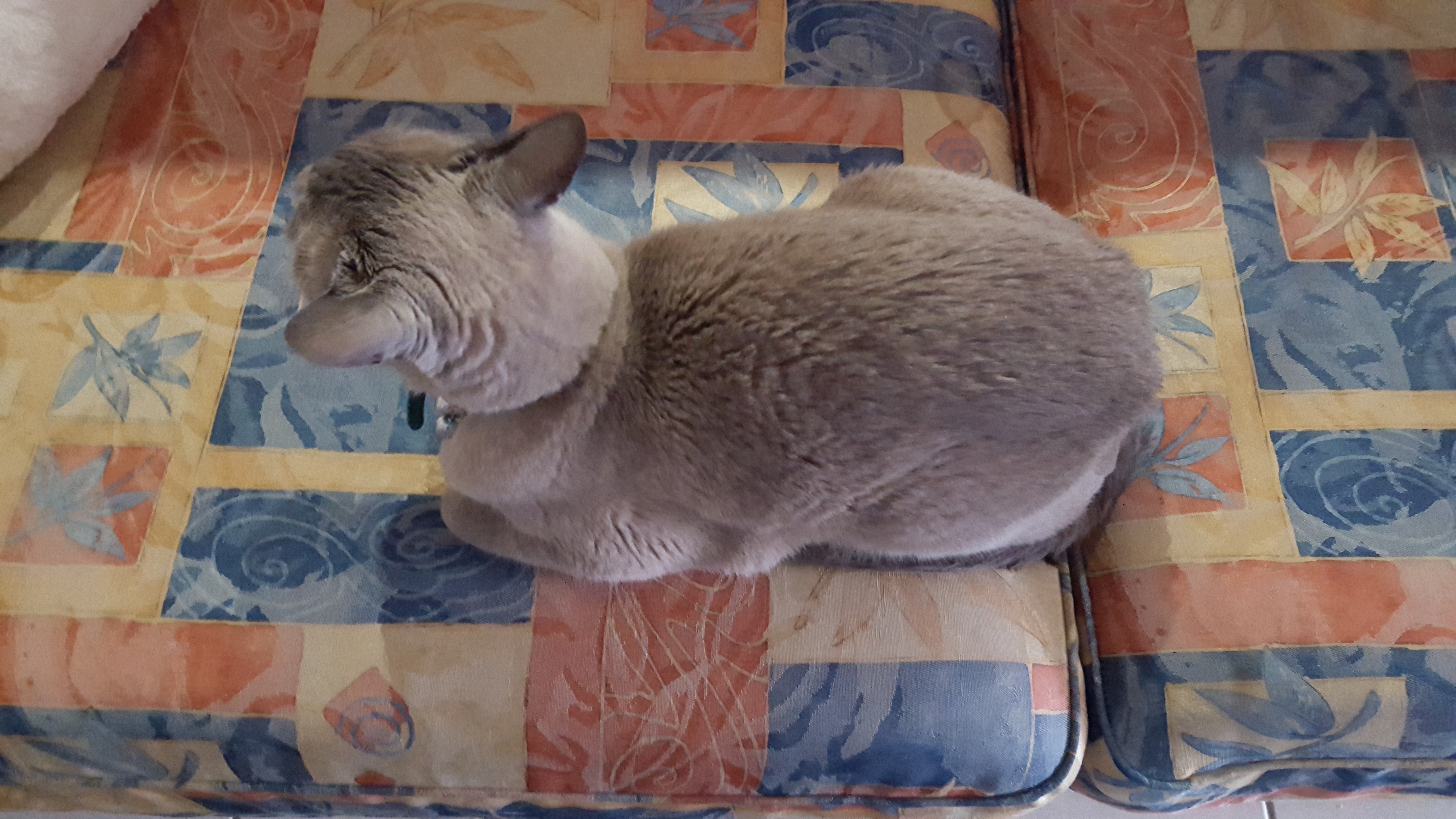
20161008_135120

This is Chester.  He’s decided to look the other way.

We are not on very good terms.  Three times in a row he’s decided to wake me at some ungodly hour of the morning on the pretence that he needs feeding, and three times he’s sniffed it and walked haughtily away.

If that was not bad enough, he’s now barracking for any other team than the Maple Leafs.  And to make matters worse, he’s now calling them losers, which technically is correct, but we are missing Marner, and Tavares needs more time to get back into it, and I can’t tell you where Mathews is, but he needs to come back real soon.

On top of this, I’m starting to feel for Anderson because they got rid of Hutchinson as a backup goalie and I didn’t think he was that bad.

Trust Chester to say that Hutchinson hadn’t been in a winning side for a while.  Obviously, he’s a keen observer of the game, or he’s figured out how to use my phone and the NHL / Maple Leafs apps.

OK, enough of the boring stuff.

I’m in need of some mood music so I put on Vivaldi’s Four Seasons.  Yes, it’s definitely annoying Chester.

Karma!