Short story writing – Adding a catalyst


Just when there’s enough complication in the story, we could leave it there with the current three protagonists and see what happens.

But I like mayhem.

So rather than another customer, it’s time to add a complication; an off duty policeman, or more to the point, policewoman.  A beat cop, if they still exist.

Her back story in a sentence or so:

“It had been another long day at the office for Officer Margaret O’Donnell, or, out in the streets, coping with people who either didn’t know or didn’t care about the law.

People who couldn’t cross the road where there were crossings and lights to protect them, silly girls shoplifting on a dare, and boys who thought they were men and could walk on water.

The one they scraped of the road would never get to grow up, and his mother, well, she was not doing another call on a family to give them bad news.

That was her day.  So far.”

What is she doing near the shop?  She lives around the corner.  Perhaps she knows the reputation of the shopkeeper or perhaps not.  It’s not relevant, then, as it is a place she avoids.

Now, she may not have the option.  She sees the shop is still open, past the usual closing time.

Let’s continue:

She came around the corner into the street where she lived and saw the lights were on in the corner store.

“She looked at her watch and saw it was ten minutes to midnight.  Long past closing time.  She looked through the window but from the other side of the road and could only see three heads and little else.

Damn, she thought, I’m going to have to check it out.  There were rumors, and she hoped they were not true.”

Meanwhile, back in the shop how are the others faring?

The shopkeeper is in an invidious position, he can’t supply the kids with the drugs and get them out, not in front of the customer.

The fact the girl has a gun makes the situation almost impossible.  What would happen if he suggests the customer leave?  Without him the situation would be simpler.

Alphonse had only a few moments to sum up the situation, and the sum of those deliberations was the remove the only problem, the customer.

He could still salvage this:

“The shopkeeper changed his expression to one more placatory, and said quietly to the girl, ‘Look, this is not this chap’s problem.’  He nodded in the direction of the customer.  ‘I’m sure he’d rather not be here, and you would glad of one less distraction.’

He could see she was wavering, she was not holding the gun so steadily, and the longer this dragged on, the more nervous and unpredictable she would become.

And in the longer game, the customer would sing his praises no matter what happened after he left.

The girl looked at Jack.  The shopkeeper was right.  If he wasn’t here this could be over.  But there was another problem.  It didn’t look like Simmo was in any shape to get away.  In fact this was looking more like a suicide mission.

She waved the gun in his direction.  ‘Get out now, before I change my mind.’

As the gun turned to the shopkeeper, Jack wasn’t going to wait to be asked twice and started sidling towards the door.”

What happens next?


And the story for this section, with a few minor changes:


It had been another long day at the office for Officer Margaret O’Donnell, or, out in the streets, coping with people who either didn’t know or didn’t care about the law.

People who couldn’t cross the road where there were crossings and lights to protect them, silly girls shoplifting on a dare, and boys who thought they were men and could walk on water.

The one they scraped of the road would never get to grow up, and his mother, well, she was not doing another call on a family to give them bad news.

That was her day.  So far.  For now she was glad to be getting home, putting her feet up, and forgetting about everything until the next morning when it would start all over again.

Coming around that last corner, the home stretch she called it, she was directly opposite the corner shop, usually closed at this hour of the night.  It was not.  The lights were still on.

She looked at her watch and saw it was ten minutes to midnight, and long past closing time.  She looked through the window but from the other side of the road and could only see three heads and little else.

Damn, she thought, I’m going to have to check it out.  There were rumors, and she hoped they were not true.


The shopkeeper changed his expression to one more placatory, and said quietly to the girl, ‘Look, this is not this chap’s problem.’  He nodded in the direction of the customer.  ‘I’m sure he’d rather not be here, and you would glad of one less distraction.’

He could see she was wavering, she was not holding the gun so steadily, and the longer this dragged on, the more nervous and unpredictable she would become.

And in the longer game, the customer would sing his praises no matter what happened after he left.

The girl looked at Jack.  The shopkeeper was right.  If he wasn’t here this could be over.  But there was another problem.  It didn’t look like Simmo was in any shape to get away.  In fact this was looking more like a suicide mission.

She waved the gun in his direction.  ‘Get out now, before I change my mind.’

As the gun turned to the shopkeeper, Jack wasn’t going to wait to be asked twice and started sidling towards the door.


Next:  Actions have consequences


© Charles Heath 2016
Short story writing – Revision 2

The story fleshed out for the second section, discussed in Point of View


Annalisa looked at the two men facing her, a shopkeeper who, despite his protestations, was a dealer, and the other man, a customer scared shitless.

The poor bastard was not the only one scared. 

It was meant to be simple, arrive at the shop just before closing, force the shopkeeper to hand over the shit, and leave.

What had happened?

The shopkeeper laughed at them and  told them to get out.  Simmo started ranting and waving the gun around, then all of a sudden collapsed. 

There was a race for the gun which spilled out of Simmo’s hand, and she won.  No more arguments, the shopkeeper was getting the stuff when the customer burst into the shop.

This was worse than any bad hair day, or getting out of the wrong side of bed day, this was, she was convinced, the last day of her life.

Her mother said she would never amount to anything, and here she was with a drug addict coming apart because she had been cut off from her money and could no longer pay for his supply, which had led them to this inevitable ending.

She heard a strange sound come from beside her and looked down.  Simmo was getting worse, like he had a fever, and was moaning.


If Alphonse had thought his day was going to get any better after the delivery disaster earlier that day, he was wrong.

If he thought he could maintain his real business and his under the counter business with no one finding out, in that he was wrong too.  He’s know, inevitably, some useless punk would come and do exactly what Simmo was doing.

It might have been salvageable before the customer came in the door, but now it was not.  The customer had heard the words, and given him ‘the look’.  A drug addict telling the cops he was a dealer, it was his word against an  unreliable addict, but this local chap, he had that air of respectability the cops would listen too.

Damn.

But he had to try and salvage the situation, there was a lot of money involved, and other people depending on him.  He looked at the boy, on the floor, then  the girl.

“Listen to me, young lady, I have no idea what you are talking about.  Please, put the gun down before someone gets hurt.  Your friend needs medical help and I can call an ambulance.”

The girl switched her attention back to him.  “Shut up, let me think.  Shit.”

The storekeeper glanced over at the customer.  He’s been in once or twice, probably lived in the neighborhood, but looked the sort who’d  prefer to be anywhere but in his shop.  More so now.  If only he hadn’t burst in when he did.  He would have the gun, called the police, and brazened his way out of trouble.  Now, that remedy was off the table.

Now he had to deal with the fallout, especially if the girl started talking.


Next, adding a catalyst to heighten the tension


© Charles Heath 2016

Short story writing – Revision

Like all stories as they progress they go through a number of rewrites, and sometimes because of what follows.

This is the rewrite of the first section of the short story I’m undertaking, adding some new details:


Jack was staring down the barrel of a gun.

He had gone down to the corner shop to get a pack of cigarettes.

He had to hustle because he knew the shopkeeper, Alphonse, liked to close at 11:00 pm sharp.  His momentum propelled him through the door, causing the customer warning bell to ring loudly as the door bashed into it, and before the sound had died away, he knew he was in trouble.

It took a second, perhaps three, to sum up the situation. 

Young girl, about 16 or 17, scared, looking sideways at a man on the ground, then Alphonse, and then Jack.  He recognized the gun, a Luger, German, relic of WW2, perhaps her father’s souvenir, now pointing at him then Alphonse, then back to him.

Jack to another second or two to consider if he could disarm her.  No, the distance was too great.  He put his hands out where she could see them.  No sudden movements, try to remain calm, his heart rate up to the point of cardiac arrest.

Pointing with the gun, she said, “Come in, close the door, and move towards the counter.”

Everything but her hand steady as a rock.  Only tell tale sign of stress, the bead of perspiration on her brow.  It was 40 degrees Fahrenheit in the shop.

Jack shivered, and then did as he was told.  She was in the unpredictable category.

“What’s wrong with your friend?”  Jack tried the friendly approach, as he took several slow steps sideways towards the counter.

The shopkeeper, Alphonse, seemed calmer than usual, or the exact opposite spoke instead, “I suspect he’s an addict, looking for a score.  At the end of his tether, my guess, and came to the wrong place.”

Wrong time, wrong place, in more ways than one Jack thought, now realizing he had walked into a very dangerous situation.  She didn’t look like a user.  The boy on the ground, he did, and he looked like he was going through the beginnings of withdrawal.

 “Simmo said you sell shit.  You wanna live, ante up.”  She was glaring at Alphonse. 

The language, Jack thought, was not her own, she had been to a better class of school, a good girl going through a bad boy phase. Caught in a situation she was not equipped to deal with.


© Charles Heath 2016

Short story writing – Point of view

Point of view / Perspective


If this story was being written the first person the only perspective or point of view would be that of the narrator.

Since we need to have a number of perspectives it is better done in the third person so we can change between characters and try to understand their motivation.

We might look at first person perspective for each of characters later.

The second of the protagonists is the girl with the gun.  How did she get it?  How did the situation deteriorate so quickly?   What is she going to do?

This is a short story and we need to know something about her, so we have to get to the heat of the matter quickly, so let’s start with: “Her mother said she would never amount to anything, and here she was, with a broken drug addict coming apart because she had been cut off from her money, dragged into coming to this shop to leverage drugs from his dealer at the end of a gun.

It was her fault, Jerry said, and made her feel responsible, much the same as her parents and everyone else in her life.”

One of life’s losers or just a victim?  This theme can go in any direction.

Then a moment to reflect on why she was here:  “Why had she agreed to go with Jerry?  In that moment when she picked up the gun off the floor she realized it was not out of responsibility or fault, it was out of fear.”

That gives us the why, he had obviously tried to make her feel responsible and when that failed, he threatened her.  But now there’s a bigger issue, the gun and a situation spiraling out of control.  The thing is, she has the gun and the power to walk away or make matters worse.

The problem was, she has outed the shopkeeper as a dealer in front of someone who had not known.  That now made him a victim as much as she was.

“She looked at the two men facing her, a shopkeeper who was a dealer and a customer scared shitless.  As much as she was.  Her gun hand was shaking.”

The scene is set, something has to give.

Time for the shopkeeper to weigh in.

“I have no idea what you are talking about.  Please, put the gun down before someone gets hurt.”

It’s a typical response from a man who realizes he’s in trouble, and is trying to make time while he thinks of how to rescue himself from a potentially dangerous situation.

Time to change the perspective again and explore the shopkeeper.

“If only Jack hadn’t come in when he did.  He would have the gun, called the police, and brazened his way out of trouble.  Who would the police believe a pair of addicts or a respectable shopkeeper?

Now he had to deal with the fallout, especially if the girl started talking.”


Next, actions have consequences, building the tension.


This section rewritten, moving from Jack as the narrator to the girl, and then to the shopkeeper:


Annalisa looked at the two men facing her, a shopkeeper who, despite his protestations, was a dealer and a customer scared shitless.

The poor bastard was not the only one.  This was meant to be simple, arrive at the shop just before closing, force the shopkeeper to hand over the shit, and leave.  Simple.

Except …

The shopkeeper told them to get out.  Simmo started ranting waving the gun around, then collapsed.  A race for the gun which spilled out of his hand, she won.

He was getting the stuff when the customer burst into the shop.

Shit, shit, shit, shit, she thought.

Why had she agreed to go with Jerry?  It was her fault, Jerry said, and made her feel responsible for his problems, much the same as her parents and everyone else in her life.

Her mother said she would never amount to anything, and here she was, with a drug addict coming apart because she had been cut off from her money, dragged into coming to this shop to pick up his score from his dealer at the end of a gun.

She heard a strange sound come from beside her and looked down.  Simmo was getting worse, like he had a fever, and was moaning.


The shopkeeper saw an opportunity.  “Listen to me, young lady, I have no idea what you are talking about.  Please, put the gun down before someone gets hurt.  Your friend needs medical help and I can call an ambulance.”

The girl switched her attention back to him.  “Shut up, let me think.  Shit.”

The storekeeper glanced over at the customer.  He’s been in once or twice, probably lived in the neighborhood, but looked the sort who’d prefer to be anywhere but in his shop.  More so now.  If only he hadn’t burst in when he did.  He would have the gun, called the police, and brazened his way out of trouble.  Who would the police believe a pair of addicts or a respectable shopkeeper?

Now he had to deal with the fallout, especially if the girl started talking.


© Charles Heath 2016


Short Story Writing – Setting the scene

I used to like writing short stories, somewhere between two and five thousand words, but, in the end, it was too much hard work.

No chance of getting into stride with a location description, no real chance of giving a background to a character, it was simply a case of diving straight in.

But …

I’ve been thinking about writing a short story, starting it with a short succinct sentence that will set the tone.

Something like:  “Jack was staring down the barrel of a gun”

What them?

Should he start analyzing what sort of gun it was, did it have a light trigger, was the person holding it shaking, a man or a woman, or a child?

Location, in a house, a disused factory, a shop, a petrol station, the side of the road.

So, where was Jack?

Something like:  “He had gone down to the corner shop to get a pack of cigarettes.”

For himself or someone else?  Is it day, is it night, or somewhere in between?

Something like:  “He had to hustle because he knew the shopkeeper, Alphonse, liked to close at 11:00 pm sharp, and came through the door, the sound of the bell ringing loudly and the door bashed into it.”

So, Jack’s state of mind, he is in a hurry, careless coming through the door, not expecting anything out of the ordinary.

How would you react when you saw a gun, pointed at Alphonse until the sound of the door warning bell attracted the gunman’s attention?

Is it a gunman?

Something like:  “It took a second, perhaps three, to sum up the situation:  a young girl, about 16 or 17, scared, looking sideways at a man on the ground, Alphonse, and then Jack.  A Luger, German, a relic of WW2, perhaps her father’s souvenir, now pointing at him.”

The punch line:  Cigarettes can kill in more ways than one.

The revelation:  The corner store also supplied the local drug addicts.


The revised start is now:


Jack was staring down the barrel of a gun.

He had gone down to the corner shop to get a pack of cigarettes.

He had to hustle because he knew the shopkeeper, Alphonse, liked to close at 11:00 pm sharp.  His momentum propelled him through the door, causing the customer warning bell to ring loudly as the door bashed into it, and before the sound had died away, he knew he was in trouble.

It took a second, perhaps three, to sum up the situation:  a young girl, about 16 or 17, scared, looking sideways at a man on the ground, Alphonse, and then Jack.  He recognized the gun, a Luger, German, relic of WW2, perhaps her father’s souvenir, now pointing at him then Alphonse, the back to him.

Another second or two to consider if he could disarm her.  No, the distance was too great.

“Come in, close the door, and move towards the counter.”

Everything but her hand steady as a rock.  Only tell-tale sign of stress, the bead of perspiration on her brow.  It was 40 degrees Fahrenheit in the shop.

Jack shivered and then did as he was told.  She was in the unpredictable category.

“What’s wrong with your friend?”  Jack tried the friendly approach.

“He’s an addict, looking for a score.  At the end of his tether, my guess, and came to the wrong place.”

Wrong place, Jack thought.  Wrong place for what?

“Simmo said you sell shit.  You wanna live, ante up.”  She was glaring at Alphonse. 

The language was not her own, she had been to a better class of school, a good girl going through a bad boy phase.

She didn’t look like a user.  The boy on the ground, he did.  Going through the beginnings of withdrawal. 


Next time, we will look at point of view.


© Charles Heath 2016-2018

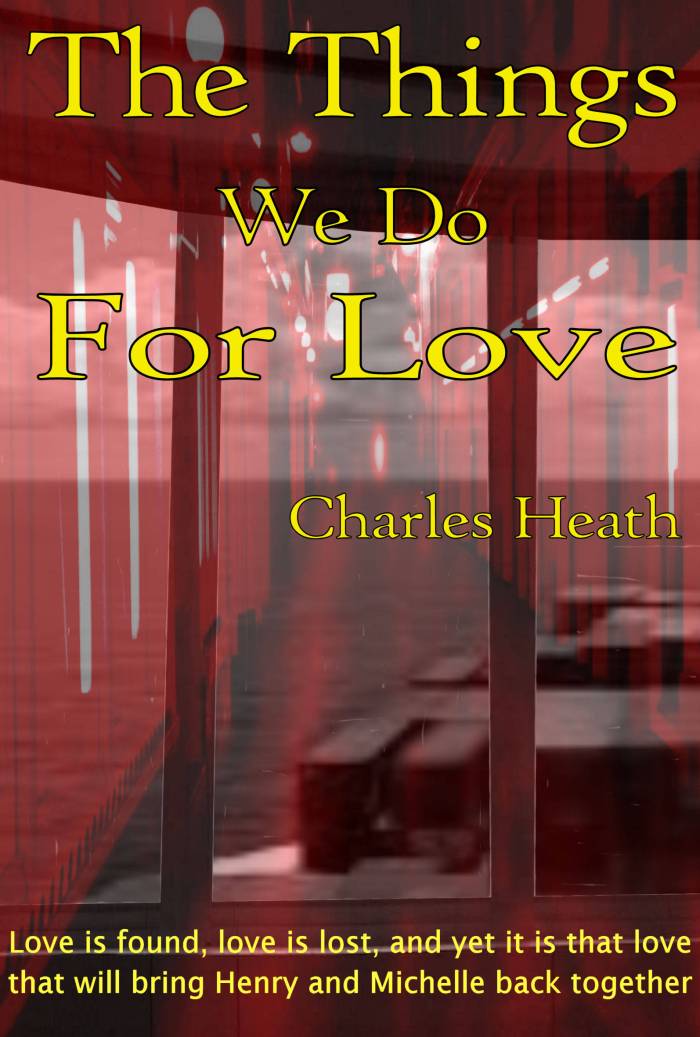
The Things We Do For Love

Like Sunday in New York, this is another attempt at writing a romance novel.  I’m one of those deluded fools who believes in happy endings.

I guess that was a ‘spoiler’!

This is the description I’m currently working with.


Is love the metaphorical equivalent to ‘walking the plank’; a dive into uncharted waters.

For Henry the only romance he was interested in was a life at sea, and when away from it, he strived to find sanctuary from his family and perhaps life itself.  Tonbright, a small village by the sea, is one such a place, but he never expected to find another, Michelle, whom he soon discovers is as mysterious as she is beautiful.

Henry had long since given up the notion of finding romance, and Michelle couldn’t get involved for reasons she could never explain, but in the end both acknowledge that something had happened.  Plans were made, plans were revised, and hopes were shattered.

A chance encounter causes Michelle’s past to catch up with her, and whatever hope she had of having a normal life with Henry, or anyone else, is gone.  To keep him alive she has to destroy her blossoming relationship, an act that breaks her heart, and shatters his.

But can love conquer all?

It takes a few words of encouragement from an unlikely source to send Henry and his friend Radly on an odyssey into the darkest corners of the red light district in a race against time to find and rescue the woman he finally realizes is the love of his life.


The cover, at the moment looks like this:

lovecoverfinal1


Strangers We’ve Become

This is the sequel to ‘What Sets Us Apart’ and a continuation of the story of David and Susan, and their relationship which, as always, seems to be teetering on the edge of a precipice.

Following is a preliminary description for the book, and it will most likely change by the time it is published.


How well do you know your partner?

David had just moved heaven and earth to rescue his wife, Susan, from her evil father.

After a short re-acquaintance in Greve, Italy, they return to London where Susan becomes immediately immersed in her new role as Lady Featherington.  It was a life she was destined to inherit, but for David he is still not quite sure if he is ready for it.

A trip to Russia to confirm a suspicion, David meets with an old acquaintance, and becomes the target of an assassin. In the fallout from this, he discovers a secret Susan is hiding from him, one that could cause an end to their marriage.

How could she change so much in such a short time?

Reunited with Alisha, they join forces to find out why, discovering once again that Prendergast is running his own agenda, and Susan’s new bodyguards are not what they seem.


At the moment the cover is still under construction!


Writing Update – March

Just a short note to tell everyone where I am.

Other than slowly going crazy, because I think I have over-committed myself to too many projects.

Number one:  Strangers We’ve Become

This is the sequel to ‘What Sets Us Apart’, the continuing story of David and Susan, two people who should be together, but there just seems to be too many obstacles, and people in their way.

Of course, I had the first draft done about six months ago, and several re-writes since then, but one night, while the whole of the story was running around in my head (actually I was at page 317 on the most recent edit, when I realized I was not happy with how the story was progressing.

That’s right, five re-writes and four edits, and a very cranky editor who views complete re-writes as, well, let’s not go there.

I’ve now written all bu the last few pages of the part I felt was missing, and I’m feeling better about it.

It’s supposed to be published this month.  Oops!

Number two:  The things we do for love

This is essentially done and just requires me to re-read and make small amendments so that it can go to the editor.

Number three:  PI Walthenson

PI Walthenson Website

This was another of my many unfinished stories, and the first thirty odd episodes were written in the the early eighties when I worked at an IT company called Ferntree.  I let one of the receptionists at the time read the pages after I told her I was a wannabe writer, and she started posting them as an email every morning.

The staff loved in but the bosses hated the traffic it caused on the network, distributing it to over a large number of employees every morning.  These were the days before Outlook and we were using a stodgy mainframe based email program.

Since then I have continued to write episodes, each getting bigger, or around a page an a half, and the story is about to become deeper and darker.

But it takes a lot of effort to write each episode.

Number four:  Writing a book about writing a book.

Writing a book about writing a book website

This is my fun exercise, and based on a work that I wrote, also in the early eighties.  The original manuscript ran to 400 odd typewritten pages, and now that I’ve taken an interest in it again, I’m taking the opportunity to re-write it whilst transcribing it onto the computer from the typewritten pages.

I have also create a web site for the novel and will be updating it with information about each of the characters, the plot, and a blow by blow synopsis as it develops.

At the moment I’m working on the main characters back story and once this is done I will be publishing it as a novella, along with new material that will not make the final book.

I am hoping the project will be finished by the end of this year, and the backstory novella about June this year.

Number five:  First Dig Two Graves

This is the sequel to the Zoe the assassin novel and is about three quarters finished.  I have written several sections, as I do, separately in Notepad, but I cannot find the files, and this is impeding progress.  It is sitting on the back burner, and will be the next book after the previous two mentioned above are published.


Travel is part of the story – Rome

We visited Rome in August

It was hot.

It was verrrry hot.

We flew into Rome’s Leonardo di Vinci-Fiumicino airport after a rather bumpy flight from London.  Unlike most other airports the plane parked at a satellite terminal and after we disembarked we had to catch a train to the main terminal.

The most notable memory of this airport was my daughter’s discovery of a salami shop.

We had booked a transfer to take us to the hotel the Roma Corso Trieste Mercure in Via Gradisca from the airport.  It was a white air conditioned van and so far we had avoided the heat.

One of the rooms had a faulty air conditioning an absolute must as the rooms were very hot without it and necessitated a room change which was done quickly and efficiently.

The hotel was in the suburbs and without a car we were dependent on public transport.  According to the reception staff there was a bus stop nearby, and a longer walk to the tram or light railway.  The bus seemed to be the best option as it would take us to the central terminal near the railway station, where all tour buses also operated from, and particularly the open top buses that went to all the major tourist attractions.

That first day basically given over to travelling, arriving by plane and settling into the hotel, thus we didn’t get to feel the force of the heat.  That came the next day.

After a walk around the hotel precinct to get our bearings and see what shops and restaurants were available, on returning to the hotel we were faced with the limited choices of room service or to go out for dinner.

My daughter and l go for a long walk up Via Nomentana to find several shops and a restaurant.  We went into the restaurant and sat down.   We waited for 10 minutes and got no service nor did anyone come and ask us if we wanted to order food so instead we left somewhat disappointed and go next door to what seems to be the Italian version of a delicatessen and order sandwiches and beer.   I bought a half dozen cans of Moretti beer two of which I drank on the way home.

It was still very hot even at eight at night and the sandwiches are delicious.  It just might be by that time we were starving and anything would have tasted great.

The next morning we are up and ready to chance the weather and some history.  Breakfast at the hotel is limited but very good.

We were going to use public transport and I’d studied up on the Internet.

Travelling on the bus required pre purchase of tickets which could be bought in certain shops and locally when exploring the area near the hotel, l found a tobacconist.

Next we needed to understand how to use the tickets. There was no one on the bus who could help so when l tried to scan the tickets and it failed, l gave up.  We had the same issue each day and in the end the tickets never got used.

The trip to central Rome by bus took about 15 minutes.  In the morning it was reasonably cool and showed us a little of suburban Rome.  We also saw the trams but we would not be able to use them because our hotel not on a direct route.

That first full day we decided to go and see the Vatican.

Not understanding buses and which one we needed to get to the Vatican, we took a taxi.

Wow.  It was the metaphorical equivalent of driving over the edge of a cliff with a daredevil.  It was quite literally terrifying.

Or maybe we just didn’t know that this was probably the way people drove in Rome.

Shaken but delivered in one piece we found ourselves in the square opposite St Peters Basilica.

The square is impressive, with the statues atop a circular colonnaded walkway.  The church is incredible, and took a few hours to take in, and to top off the day we did a tour of the Vatican museum which took the rest of the afternoon.

Then it was back to the delicatessen for more sandwiches and beer, and an interesting discussion with several elderly Italian ladies, of which I did not understand one word.

The second full day we decided to use one of the open top bus tours and eventually decided on the hop on hop off tour simply because the bus was at the central transport terminal for trains and buses and it was getting hotter.

Our first stop was the colosseum.  There were other monuments nearby, such as the Arch of Constantine, but as the heat factor increased we joined the queue to go into the colosseum and gladly welcomed the shade once we got inside.

The queue was long and the wait equally so, but it was worth the wait.  It would be more interesting if they could restore part of it to its former glory so we could get a sense of the place as it once was.  But alas that may never happen, but even so, it is still magnificent as a ruin.

Outside in the heat it was off to the ruins which was a longish walk from the colosseum, taking Via Sacra, not far from the Arch of Constantine.  This day in the walkway there were a number of illegal vendors, selling knockoff goods such as handbags and watches, and who, at the first sight of the police, packed up their wares in a blanket and ran.

Included in these ruins were, The Roman Forum, or just a few columns remaining, the Palatine Hill, Imperial Fori, including the Forum of Augustus, the Forum of Caesar, and more specifically the Forum of Trajan.  It was, unfortunately very hot and dusty in the ruins the day we visited.

We walked all the way to the Foro Romano and the Septimus Severo Arch at the other end of the ruins, past the Temple of Caesar.  I found it very difficult to picture what it was like when the buildings were intact, so I bought a guide to the ruins which showed the buildings as ruins and an overlay of how they would have looked.  The buildings, then, would be as amazing as the colosseum, and it would have been interesting to have lived back then, though perhaps not as a Christian.

I lost count of the number of bottles of water we bought, but the word ‘frizzante’ was ringing in my ears by the end of the day.  Fortunately water did not cost a lot to buy.

At the end of the day, we caught the hop on hop off bus at the colosseum and decided not to get off and see any more monuments but observe them from the bus.  The only one I remember seeing was Circo Massimo.  Perhaps if we’d know it was going to be twice as hot on the bus, yes, there was no air-conditioning; we may have chosen another form of transport to get back to the hotel.

The third and last day in Rome we decide to go to the Trevi Fountain, see the pantheon and walk up the Spanish Steps.  We spent most of the morning in the cool of a café watching the tourists at the fountain.  By the time we reached the top of the Spanish Steps, we were finished.

It was time to move on to Paris.

Light at the end of the tunnel

It’s a long-standing joke that the light at the end of the tunnel is the headlight of an express train coming right at you.

Metaphorically speaking this is quite often true if you are a pessimist, but since I’ve converted to being an optimist, a bit like changing religions, l think I’ve seen the ‘light’.

It’s a lot like coming up from the bottom of a deep pool, breaking the surface and taking that first long gulp of air.

Along with that elated feeling that you’re not going to drown.

What’s this got to do with anything, you ask?

Perhaps nothing.

As an allegory, it represents, to me, a time when l finally got over a period of self-doubt, a period where a series of events started to make me question why l wanted to be a writer.

I mean, why put yourself through rejections, sometimes scathing criticism, and then have the people whom you thought were your friends suddenly start questioning your choices after initially wholeheartedly supporting them.

Are we only successful or supportable if we are earning a sufficient wage?

Or sold a million copies?

Is this why so many people don’t give up their day job and then find themselves plying the ‘other’ trade into the dark hours of the night, only to find themselves being criticized for other but no less disparaging reasons?

It seems like a no-win situation, but these are the times when your mettle is tested severely.  But, in the end, it is worth it when the book is finished and published, even if it is only on Amazon.

You can sit back and say with pride; l did that.

That metaphorical light, you may ask.

When you make that first sale.