Short story writing, don’t try this at home (5)

This is not meant to be a treatise on short story writing.  Far be it for me to advise anyone on the subject.  I prefer to say how it is that I do it so you can learn all of the pitfalls in one go.

Now, there’s this thing called continuity, but it covers a whole range of writing sins, most of which I eventually get caught out.  Films sometimes miss a few items, like back in the roman days, there are plane trails in the sky, in a 1920’s period piece, there’s a mobile phone sitting on a desk.

Like one minute the hero has a gun, and the next he’s fighting for his life with a knife, and, hey presto, there’s that gun again.  The error might not be that big but you can’t pull out a weapon you don’t have or wasn’t there in the first place.

Similarly, the hero pulls out a mobile phone, but there’s only one problem, it’s 1980, and there are no mobile phones.  Our problem might be that we are so used to doing and using certain things that we might forget, for a minute or two, that were not available in the past.

The same goes for the fashion of the day.

And my all-time favourite, getting the right make and model of car.

Oh, and just for good measure, back in the old days they used acoustic couplers to attach to phones via a serial port to dial-up not a server, but a BBS, Bulletin Board Service, at a rate of 300 baud, or a little while later, 1,200 baud.

There was no internet in general use.  If you wanted to call the office when out, use a telephone box.  Or carrier pigeon.

And the use of language, there’s a lot of stuff relevant today that was not used back then, and there was a lot of stuff back then that isn’t tolerated now.  Some of it might be hard to get your head around.  It isn’t for me, because I can remember the 1970s and 1980s, but I’m not too sure about allowing some of what happened then to creep into my work.

So, you get the picture.  Try to use the past as the past, or leave it in the past.

Unless it’s a book about time travel, then all bets are off.

There ain’t no mountain high enough

If only it was as easy to write one line of a song as it is to write a sentence, a paragraph, or a page of a book.  Of course, if you were to ask a songwriter the same question, he or she would probably twist it around, and not without reason.

The bottom line in all scenarios, whether writing a story, writing a song, or writing a letter, at times it feels like it is like climbing a mountain.

It’s why we have waste paper bins, and imaginary shooting practice sessions.  By the way, I don’t get very many scrunched paper balls in.

Curiously, we seem to categorize almost insurmountable problems in terms of climbing mountains.  Of course, I’ve yet to attempt to climb the north face of Mount Everest, but I suspect I’ll have to do a lot of practice to do so.

Maybe that’s what I need to do as a writer.  Practice, not climbing mountains.

Mountains have always been part of the metaphor for overcoming obstacles.  So, metaphorically, to overcome this ‘obstacle’, we can choose to climb over it, blow it up, or tunnel through it.

But the salient point is the same in all cases, obstacles, metaphorical or not, are not insurmountable, they just need time to find a solution.

So, in my case, there are two items to note when it comes to mountains, the first, I prefer to go through a tunnel, and the second, there’s not a mountain I’ve been up that hasn’t had a magnificent view.  Of course, getting to the top has been easy, I just hopped on the tram or the gondola.

After all, isn’t that what they’re there for?

Ok, flippancy aside, I have had to climb a few mountains of my own over the years, and, yes, it’s hard work, and, at times, I’ve wanted to give up.

But, not today.  Today is a good day.

And as the title says, ‘There ain’t no mountain high enough!’


“The Things We Do For Love” – Coming soon

Is love the metaphorical equivalent to ‘walking the plank’; a dive into uncharted waters?

For Henry the only romance he was interested in was a life at sea, and when away from it, he strived to find sanctuary from his family and perhaps life itself.  It takes him to a small village by the sea, s place he never expected to find another just like him, Michelle, whom he soon discovers is as mysterious as she is beautiful.

Henry had long since given up the notion of finding romance, and Michelle couldn’t get involved for reasons she could never explain, but in the end both acknowledge that something happened the moment they first met.  

Plans were made, plans were revised, and hopes were shattered.

A chance encounter causes Michelle’s past to catch up with her, and whatever hope she had of having a normal life with Henry, or anyone else, is gone.  To keep him alive she has to destroy her blossoming relationship, an act that breaks her heart and shatters his.

But can love conquer all?

It takes a few words of encouragement from an unlikely source to send Henry and his friend Radly on an odyssey into the darkest corners of the red light district in a race against time to find and rescue the woman he finally realizes is the love of his life.

The cover, at the moment, looks like this:

lovecoverfinal1

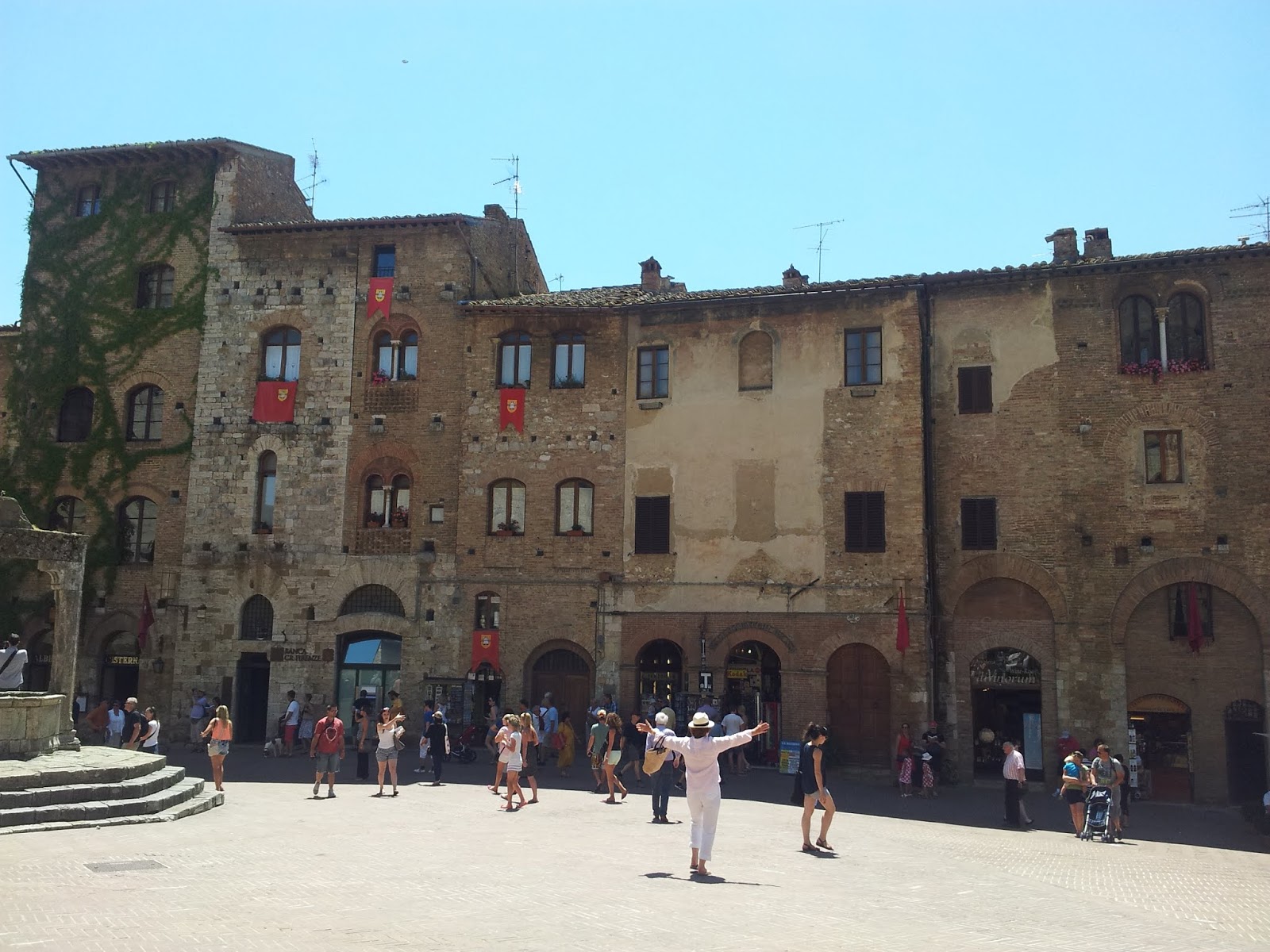
Searching for locations: San Gimignano, Italy

We have visited this town on a hill, famous for its fourteen towers, twice.  The first time we stayed in a hotel overlooking the main piazza, and the second time, for a day visit, and return to a little restaurant tucked away off the main piazza for its home cooking.

No cars are allowed inside the town and parking is provided outside the town walls.  You can drive up to the hotel to deliver your baggage, but the car must return to the carpark overnight.

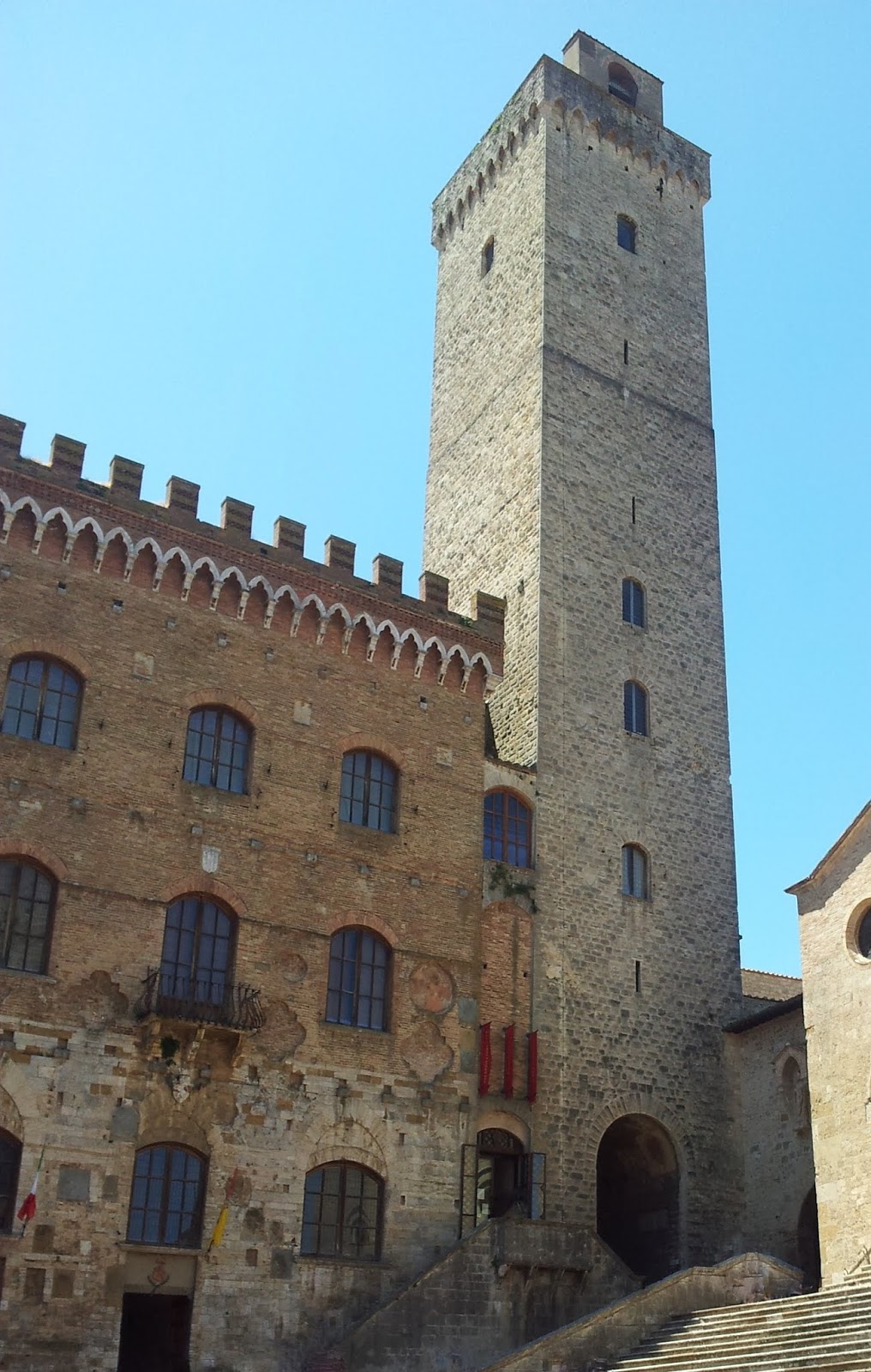
This is one of the fourteen towers

I didn’t attempt to climb to the tower, which you can do in some of them, just getting up the church steps was enough for me.  Inside the building was, if I remember correctly, a museum.

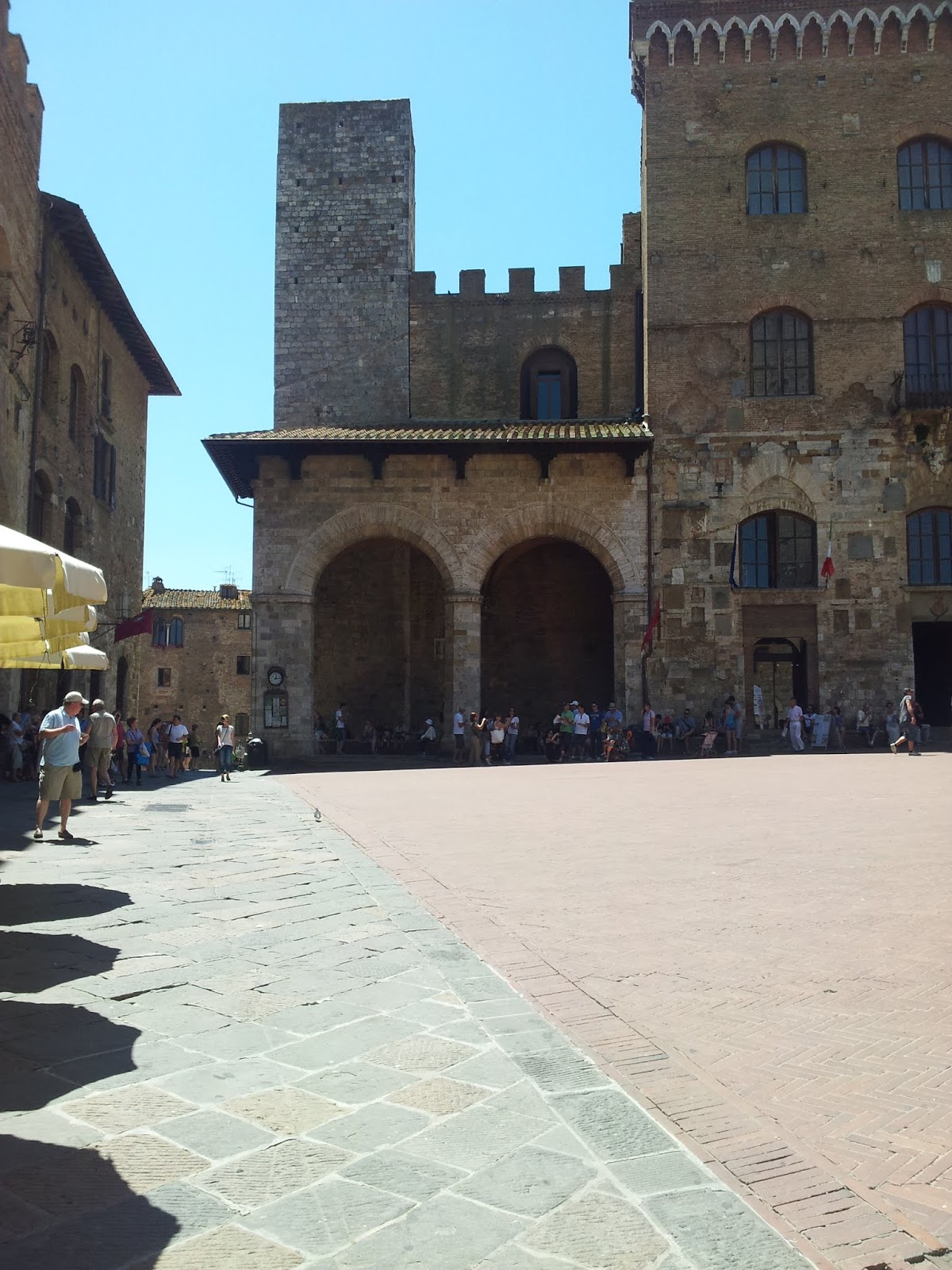
Looking up the piazza towards some battlements, and when you reach the top and turn left, there is a small restaurant on the right-hand side of the laneway that had the best wild boar pasta.

Another of the fourteen towers, and through the arch, down a lane to the gated fence that surrounds the town.  The fortifications are quite formidable and there are several places along the fence where you can stand and look down the hill at the oncoming enemy (if there was one).

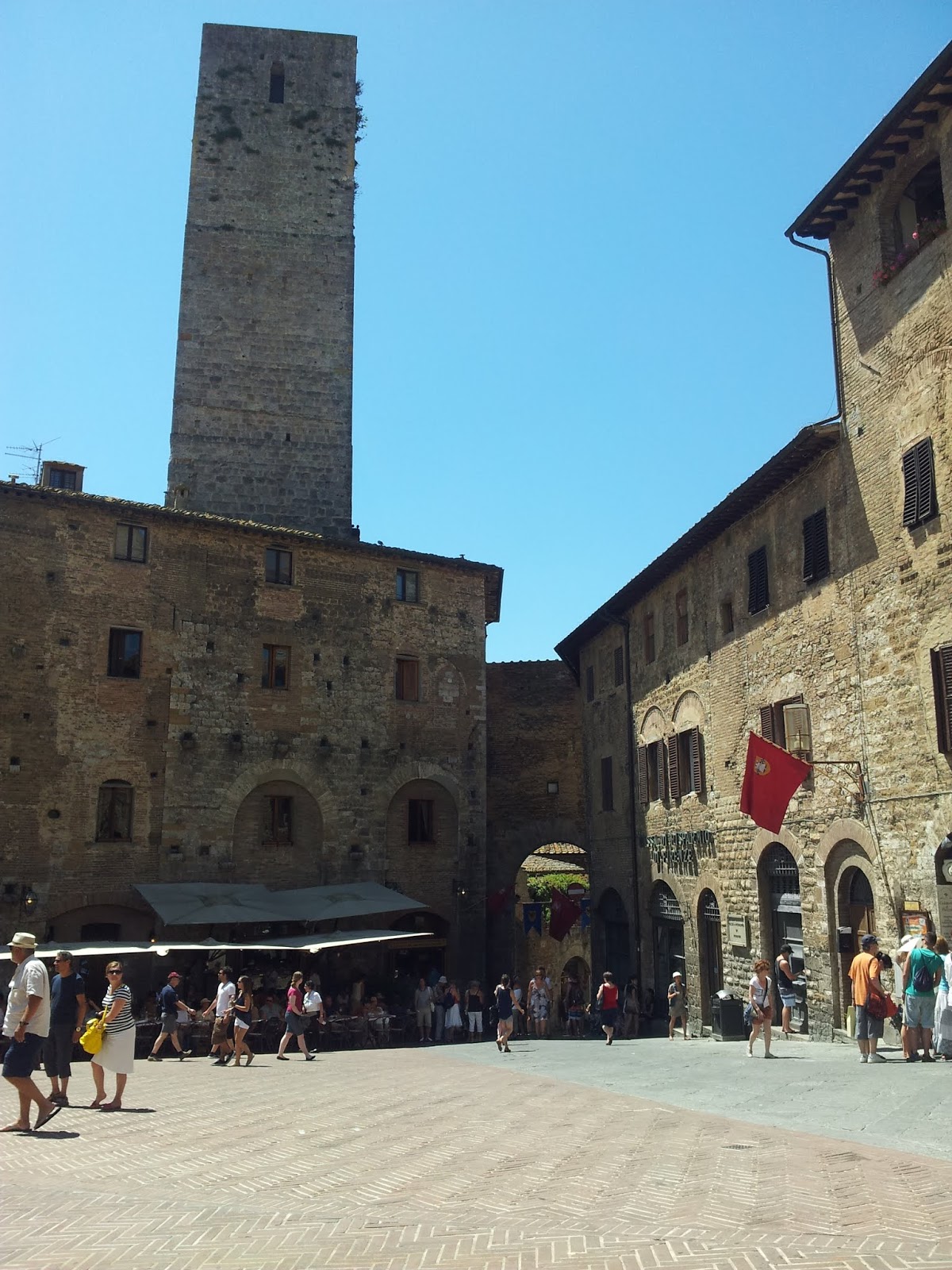
Part of the main piazza which is quite large, and on the right, the wishing well where my wish for a cooler day was not granted.

Officially, the Piazza della Cisterna is the most beautiful square of the town, San Gimignano.  The well was built in 1273 and enlarged in 1346 by Podestà Guccio dei Malavolti.

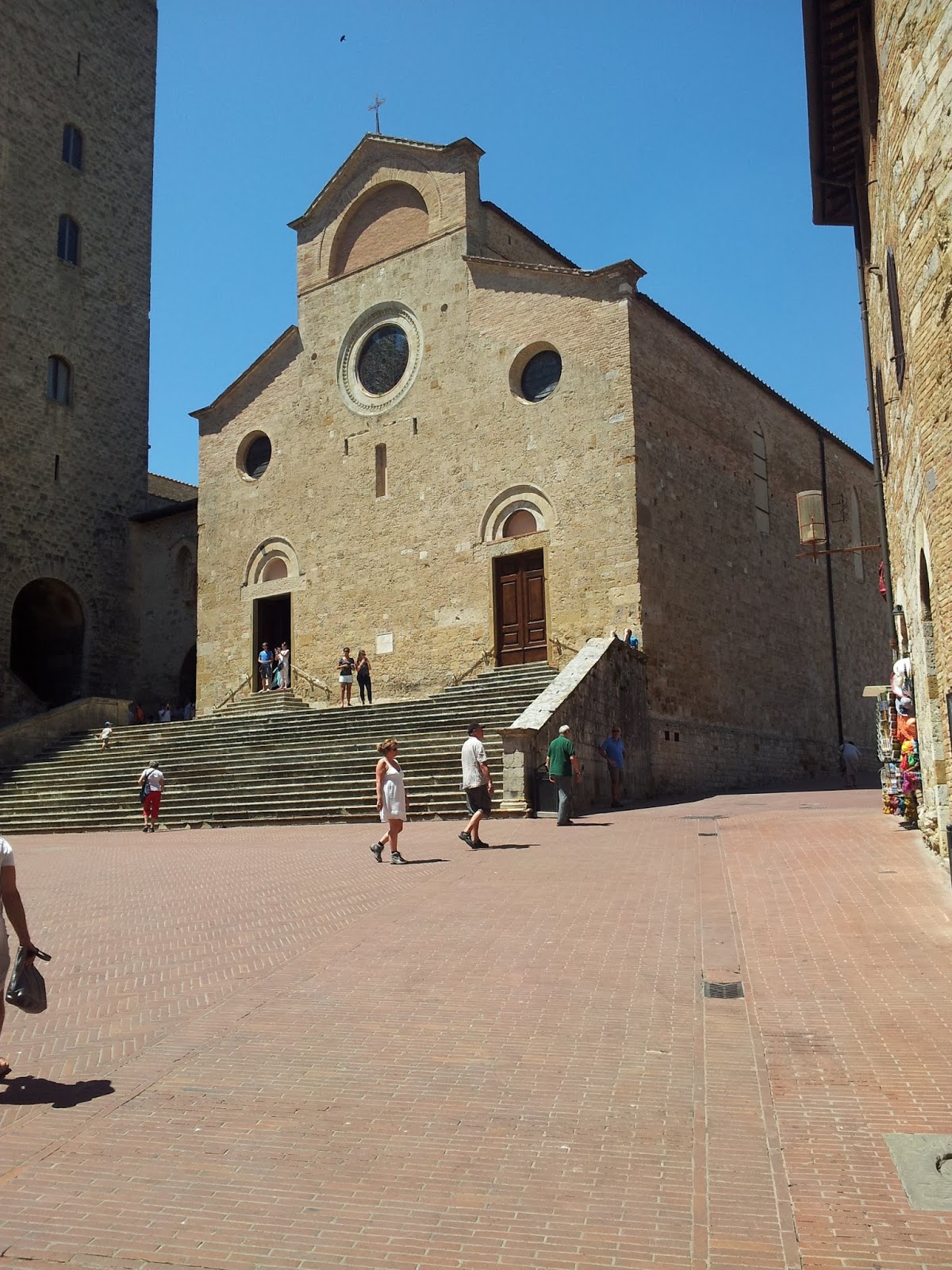
And not to be outdone by any other the other old towns, there is an old church, one of several.  It is the Collegiate Church or the Duomo di San Gimignano, a monument of Romanesque architecture built around 1000 and enlarged over time.

Next door is the Museum of Sacred Art.

And I guess it’s rather odd to see television aerials on top of houses that are quite literally about a thousand years old.  I wonder what they did back then for entertainment?

What’s that coming out of left field?

Why is it ideas come at the least expected and most inconvenient time?

I thought I’d trained my thoughts to assemble when I was having a shower.

Then there’s that quiet spot down in the lounge, by the window, away from everything.  But now it seems that will not work all that well because the telephone rings regularly with scammers, threatening to cut off my internet, my telephone, just about every wire that comes into the house.

Don’t you hate that?

I wasn’t considering a new idea for yet another book; I have so many on the go already.  But, the sad truth is, you have no control over it.

When I sit down, listening to Ravel, or some other classical music, I close my eyes and drift along to the music, waiting for the imagination to kick in.

Can’t force it, can you?

But, five minutes to three, after a frantic call announcing yet another storm in a teacup, I’m racing out the door, setting the alarm, locking the door, and …

… bing …

The idea is there, out of left field, in front of me.

Good thing my phone is now a recording device enabling me to speak and drive and solve all manner of crises on the go.

Try and beast that superman, batman, spiderman…


Trying to get off, or is that on, the merry-go-round

Self-published authors are fully aware that perhaps the easiest part of the writing journey is the actual writing.  Well, compared to the marketing aspect I believe it is.

I have read a lot of articles, suggestions and tips and tricks to market the book to the reading public.  It is, to say the least, a lot harder to market eBooks than perhaps their hard or paper-covered relatives.

This is despite the millions of eReaders out there.

Then there is that other fickle part of the publishing cycle, the need for reviews.

Proper reviews of course.

As we are learning, reviews can be bought, and in more ways than one.  What happened to finding writers of the same genre and offering to buy one copy and write a review in return for a buy one copy and write a review.

I’ve noticed that all the current best selling novelists do the same for their fellow novelists though I guess when you get to be a best-seller, you might not have to buy a copy, so I can only dream of attaining such lofty heights in the publishing world.

But until I reach such rarefied air, I guess I have to figure out how to appeal to my fellow writers, and, of course, hope that my work is good enough.

It might be a start in getting through that difficult cycle, more reviews means more sales, etc.  And getting those first sales and reviews  …

Therein lies the conundrum.  It is a question of paying for advertising or working it out for ourselves.  I guess if I were to get more sales, I could afford the advertising … yes, back on the merry-go-round!

And yet, the harder the road, the more I enjoy what I do.  It is exhilarating while writing, it is a joy to finish the first draft, it is an accomplishment when it is published, but when you sell that first book, well, there is no other feeling like it.

I am inspired.

Bow as for that advertisement and where to post it…

In a word: There

Yes, the dog is over there. It’s a place somewhere other than where you are currently.

Or, you could say, there was a brave man, but he couldn’t help so there was no hope. It doesn’t refer to a place.

Or I’m taking you to the border, but from there you’re on your own.

Confused yet?

Let’s try by adding a similar word, their

It means belonging to a group as in, it was their dog that caused the damage.

Of course, this can be twisted a little, and you could say, everyone has to bring their own pack, meaning at times it could refer to one, or many,

Then just when you thought it was safe to go back into the water, there’s they’re.

This is a contraction for they are, so it’s they’re not going to fo as their told.

Wow, it starts getting complicated when you use two or more of those similar words in the same sentence.

Confusing?

That’s why it always pays to have a dictionary handy.

Just in case autocorrect fails, which it seems to quite often for me. I’m not sure why.

A matter of life and … what’s worse than death? – Episode 21

For a story that was conceived during those long boring hours flying in a steel cocoon, striving to keep away the thoughts that the plane and everyone in it could just simply disappear as planes have in the past, it has come a long way.

Whilst I have always had a fascination in what happened during the second world war, not the battles or fighting, but in the more obscure events that took place, I decided to pen my own little sidebar to what was a long and bitter war.

And, so, it continues…


Chiara knew the moment she told Martina that one of the Germans was dead, she would be in trouble.  Not only from the resistance but from the British or whoever they were, up at the castle.

The man’s name was Eric Carmichael, and he was a nice man, more of a boy really, having not suffered the full effects of a front line.  He wanted to, but the Gods, as he called them, were against it.

Now he was dead.

He had come to the farm, told she was not there and had left again.  The pity of it, on any other occasion, nothing would have happened.  Nobody went out at night, so no one knew of their association.

Of course, if he did tell her anything, which he hadn’t so far, she would pass it on to Martina.  And, perhaps the only annoying thing about him was that he kept asking about the resistance as if it was still operational.  It was one of the reasons who Martina kept her at arm’s length, so she had nothing useful to tell them if they took her in for questioning.

Now it was a matter of seeing if he had told anyone about this affair, and if he did, she would not be safe at the farm.  It was why she was in hiding, waiting, and watching to see if anyone came.

Along with Carlo, and the new man, Atherton.

Not far from where the soldier’s body lay in the ditch, one that no one had yet found.

Until now.

A car was coming along the road quite fast, heading towards her farm.  Atherton recognised it as one of the staff cars from the castle, and as it slowed to turn the corner, Atherton could see it contained three men, the driver, and the two men who had followed him down the stream.

Suddenly the car skidded to a stop.  All three got out and went over to the ditch.  The driver had seen the bicycle.


It was an interesting conversation.

“The fool looks like he run off the side of the road and into a tree, fell off and hit his dead on the rocks.”

It was the man who had set me free.  I’d recognise him anywhere.

“Or maybe some ‘innocent bystander’ shoved a wrench in the wheel and he went over the handlebars.”

The big man turned to him.  “You have a story that implicates every member of the enemy population, don’t you?  Where’s the wrench?”

“They could have tossed it away or thrown it into the bushes.”

“The kid’s an idiot.  He was out for some fun and had his mind everywhere but on the job.  If she’s that tempting, maybe I’ll go and have a look in myself.”

The driver took a closer look, then suddenly bolted for the bushes and threw up.  I’d expected more seasoned soldiers in the group of paratroopers, but maybe they were late recruits with only half the training, and barely out of school.  He didn’t look all that old.  Neither had the lad in the ditch.

The tall guy yelled out, “when you finish puking, get over here and help us get him into the car.  Then we’ll meander down to this farm.”


Carlo knew a quicker way across the country to their farm.  It didn’t take a rocket scientist to work out what he was intending to do.

Three fewer Germans, three fewer problems.

I followed, trying to keep up.

“You got weapons hidden away?”

“Several rifles and a handgun.”

“It’ll do.  When we get there, you say out of sight.  Me and the new laddie here will take care of them.”

A look in my direction told me I’d just been recruited into the killing force.  Exactly what I’d been hoping to avoid.  I guess it was time to make a stand.

A few minutes later we were in the large shed out the rear of the farmhouse, retrieved the rifles, of which one was a sniper rifle, a rather interesting trophy, and not the sort of gun any soldier would leave lying around.

I was tempted to ask where she got but decided against it.  I had an awful feeling the previous owner had met a gruesome if not a sticky end.  Chiara was not just a pretty face.

“You know what to do with this thing?” Carlo said, holding it out in my direction.

“Vaguely, but I think I can manage.”

With it was a carton of shells, rather long and ugly and very deadly, even at long range.  But this time, we were not that far from the target area so wind and external conditions would not be a factor.

Also, I was hoping the sight had been calibrated.

After getting a feel for the weapon I took up a position on top of some hay bales and could see through a large enough crack when I put the barrel, and stretching out, found a comfortable position, and aimed for the back door.

It was like putting out my hand and touching it.  This was going to kick like a mule on the recoil, but I would only have time to worry about reloading for the next target.  Then I realised the driver might be a problem, especially when the shooting started, so I swivelled around to the back end of the house where a vehicle might come, and, saw the blue, altered the sight, and then saw the car approaching slowly.

I was hoping it would remain in sight, so if anything happened, I would be able to pick him off.  It would be all that much harder if he managed to try driving away.

I tracked the car to the point where it stopped, just pat the corner, with only the back half displayed in my sight.

Damn.

In the distance, we heard two car doors slam shut.

The driver was staying put.

Double damn.

A minute later we could hear pounding on the front door, then nothing.  My guess, they kicked in the front door.  There was no one at home, Chiara’s parents were away because they had no crops in the ground.  Their problem was water, and the river was running low this year.  Aside from the fact they were not going to feed the enemy soldiers who would simply take everything and give them nothing in return.

I heard rather than saw Carlo stiffen and resight the back door.  His shots would be far more difficult than mine.

The tall man came out the back door, stood on the ground not far from the door, his head filling my scope.

“Now,” Carlo said softly.

A pull of the trigger and the man’s head exploded, at just the same time as the other man came out.  A reload and another shot.  I missed the head, winged him, and Carlo finished him off.  Once shot at an impossible range.

Another reload, and swivel towards the car, now reversing, and making it very hard to see his face or body to get a clear shot.  Back, around and driving off, in a panic.  He’d heard the two shots.

“The fuel,” Carlo said, “shoot the fuel.”

I lined up where I thought the fuel tank was and squeezed the trigger.

Almost instantaneously the car exploded in a ball of fire.  Just under my line of sight, Carlo was running.  If the driver escaped…

I put the scope on Carli and then to the side.  I saw him raise his gun and fire twice.  The drive must have miraculously thrown clear of the car, only to find himself in Carlo’s sights.

Chiara had appeared behind me.  “We have to go,” she said.

I picked up the gun and took it with me.  It could come in handy later on.

Carlo was already heading back to the shortcut through the woods and we met him on the path about twenty yards along.

“That’s going to stir up a hornet’s nest,” he said.

More than that, I thought.  Now Johannsson knew he had a real problem.  There would be a price to pay for this exercise, and the villagers were the ones who would be paying it.


© Charles Heath 2019

Are these really random events?

We read newspapers on the train or at home by the fire, or outside on the patio, each person has a different idea on what it is they want to read.

It could be local news, national news, international news, commentary, editorials, features, or investigative exposes.

But how many of us scour the paper for the not so noticeable news, items that are brushed off with a paragraph or two, with no definitive conclusion?

So, as examples;

Somewhere in the north of London, a body is found in a car. The car is stolen, the body unidentified, dressed like a homeless person, so the death is being treated as predictable given age and circumstances, and not suspicious.

In the east of the London, a middle-aged woman’s body is found in the room of an apparently abandoned house, with a needle in her arm. Death is considered to be an overdose by a regular user.

In Manchester a body is found floating in a canal, that of a man in his mid-twenties, dressed in greasy overalls and looks like a mechanic who fell of a barge while trying to repair it, after having too much to drink. It could happen to anyone.

In Canterbury, in a copse bordering a field, a man is found with a knife in his stomach, dead. A preliminary report advises it was suicide.

In reality, none of these events has any connection with the other, just four random deaths, out of a great many others within a short period of time.

Perhaps we can add one detail for each,

The person in the car does not exhibit the outward signs of being a homeless person, but of an elderly man in relatively good condition.

The woman is middle-aged, who looked after herself and had none of the usual signs of a drug addict, despite several similar puncture marks in her arm.

The man was not wearing the usual underclothes of a mechanic, and there was no sign of ingrained grease on the tips of his fingers or under his nails.

The last person had a dislocated shoulder.

Still no connection between the four, but start considering the possibilities.

We’ll come back to this later because there’s more.

A trip down memory lane

I am constantly reminded of how curious grandchildren can be when they are not asking you what it was like to live with dinosaurs!

The eldest, now 16, thought it interesting that I was a writer, and having just met a ‘real’ author who came to visit them at school, asked me a few questions, some of which sounded like she had asked my ‘real’ counterpart.

The first, how old I was when I first wrote a story, and what was that story about.

OK, that sent me back a long way into the distant past.

There was also a trick question; “What was the first story you read that put you on the path to wanting to become a writer”.

That was easy, Alistair Maclean’s HMS Ulysses.  I showed her a copy of the book.

But, back to the main question.  When did I start writing?

That required a little thought, and there were several triggers that gave me a date, where I lived at the time, the fact I used my mother’s old portable typewriter, and the fact I had not been long out of school.  I was, in fact, about 17.  It was nearly 50 years ago; I’ll let you do the math!

What was it about; that I couldn’t tell her, but I said I had rescued a lot of old scribbling of mine and put them in a box to look at later when I had the time.

I guess that time has arrived.

And, yes, there was the book, the individually typed pages, some with corrections, unfinished.

The pages were brown with age.

The story, well, I read the first few pages, and it seems I’d started down the thriller path then, the story so far, an agent comes ashore from a trawler to a bleak and isolated village, perhaps on the Scottish coast,

The next question, understandably; “What was the first book you ever finished?”  That was The Starburst Conspiracy.

It also led to a few more discoveries, including a book I had forgotten I’d written. And all of the short stories I’d written when at University.

There were more questions, but like all children, her attention was soon distracted.

But, for me, the memories it brought back about my earliest forays into the world of writing were priceless.