I have to stop thinking…

Have you ever wondered what you might have been back in the 1700s, or the 1800s in England, or whatever country you reside.

I live in Australia, so I suspect I would be a convict or the descendant of a convict. Certainly in those past years, there is nothing to suggest that I would have been much else, based on the fact I used to be a tradesman, and later a computer programmer, only one of which existed back then.

In England I have often imagined what it would be like for the underclasses, and very definitely where I;pd finish up. A servant maybe, like a stable boy or footman, or an agricultural worker before the industrial resolution, or a coal miner after it. Poor people it seemed had no prospects.

In the 1900s, my time on earth, and before the computer era, I trained in a trade school, doing woodwork, machine shop practise, and sheet metal. There was also farming. For the select few there was Accounting and business studies, but to be a clerk you had to go to a different school.

My family couldn’t afford it.

When I left school, as soon as I could, and therefore without the benefit of a good education, my prospects for work didn’t amount to much, and among my first jobs was mail sorter, telegram delivery boy, a packer for a book wholesaler, an odd job boy in an abattoir, and later a clerk.

Perhaps then I formed an idea that one day I might be a writer. I certainly had a go, but never did anything with it. I guess, even then, I knew my limitations borne from what I perceived was my station in life.

What did I want to do though? It didn’t matter. People from our social strata couldn’t afford university fees so I was never going to get a tertiary education. That just about ruled out everything.

So what happpened to change all that?

Reading.

From as young as I could, I read. Not only stories about people who lived so very different lives to me, but reference books about everything. It gave me an understanding of what it might be like to be something else, then gave me the impetus to actually apply for what I would call ‘a real job’.

Whether I could do it or not was irrelevant. I just wanted the chance.

It took a wile but then someone gave me that chance. That door was prised open just a little, enugh for me to get a foot in.

I had several tenets to abide by, don’t speak unless your spoken to, respect your elders, and don’t say anything unless it’s relevant.

First job was mail boy under a very crotchety old man who thought I was a waste of space. I learned everything he knew, listened to everything he said, and did everything I was told, better than everyone else.

I moved up to shipping clerk, creating manifests for ships cargo. It was the golden age just before computers, the days of the mainframes that had the computing power of an IBM XT.

They fascinated me.

My next job was for a new company, working for a mining and shipping company, as a distribution clerk maintaining a shipping timetable. That led to a role in communications, the days of telexes and internal couriers and memos, and memorandums for board meetings.

It wasn’t heady stuff, but I was in management, learned communications, and understood accounting.

When I left there, I became a computer programmers. It was dumb luck, my brother in law was an insurance salesman, created listings of investment outcomes using insurance products, and his individualised reports used to take in a week or so, restricting the number of clients he had.

This was the days of the first Apples, and IBM’s. I had a small personal computer, and told him I could create a program to work out his calculations in seconds not days, and he gave me the opportunity.

The rest is history.

So, it makes me wonder had I been back in those 1700s and 1800s, whether or not I may have started small, and made something of myself. A lord of the manor I would not be, but perhaps something more comfortable than a coal miner maybe.

I guess I’ll never know.

The cinema of my dreams – I never wanted to go to Africa – Episode 17

Our hero knows he’s in serious trouble.

The problem is, there are familiar faces and a question of who is a friend and who is foe made all the more difficult because of the enemy if it was the enemy, simply because it didn’t look or sound or act like the enemy.

Now it looks like he’s been renditioned by his own people.


Seeing Colonel Bamfield made my blood run cold.

This wasn’t an old commanding officer coming to see one of his protégés after being almost killed in a bad accident.

This was a man checking up on me, and whether or not I had relayed any of the details of my incarceration at the mystery camp in the desert.

The thing is, he didn’t have to come calling if I had said anything Breeman would have reported it directly to her superiors.

No, he was here for another reason, and one I had no doubt I was not going to like.

Firstly, it was apparent the feelings of dislike and mistrust ran deep between the two, and I could see, on first sight, there had been something between them once, and it had exploded on someone, and I suspect it was Breeman.

Male officers of Bamfield rank rarely got into trouble for fraternising with lower ranked female officers.  It was, I was told once, a man’s army, not for women.

And I expect Bamfield was old school.

He looked at me then at her.  “How is our patient?”

Our patient?  How did he have anything to do with me, unless he was reclaiming me for his command.

“Sergeant Digwater has a name, and he is not your patient.”  The accompanying look on her face told me that Bamfield better be ready for war.

“Perhaps that might be the case for now, but I have given orders to temporarily detach Sergeant Digwater from this command and assign him temporally to mine so that he can be sent to our medical facility in Germany before being sent home.  The sergeant has done enough for his country.”

Had I?  It was customary to patch soldiers like me up if the injuries were not life-threatening, and then send them back to the front line.  I had, as far as I was aware, a few broken bones, and nothing that a month or two of physical therapy wouldn’t put straight.

Besides, as a loner, I had made the Army my home, and where most of the people I knew were.  As a civilian, I would be like a fish out of water.

“Do I get to choose what happens to me?”  I spoke for the first time, directly at both of them.

Bamfield answered.  “No.”  Then gave me a genial look.  “How are you, Sam.  I’ve spoken to the doctors, and they say all you need is rest and recuperation and you’ll be as good as new.  But I want to know how you feel?”

I gave him a measured look.  “I would have to say a lot worse than a few days ago.”

His expression changed as a result of those words.  Breeman’s expression was a lot more interesting, processing what that statement might mean.

She was about to ask when he interrupted her.  “Understandable, since you were found unconscious in the cabin of the crashed aircraft.  A case perhaps of a delayed reaction.  You should tell the medics you need more pain killers.”  He then turned to Breeman.  “The sergeant will be evacuated at 0800 hours tomorrow morning.  Until then, no one is to visit him until he is debriefed.  Am I clear?”

Breeman stood.  She was a good six inches shorter than Bamfield in stature, and at least 100 pound in weight.  Still, she projected a formidable opponent.

“I take it that does not include me?”

“What part of everyone did you not understand?”

Fighting words and she was ready to take up the battle.  Except, I think she knew she was outranked, and if push came to shove, it was not worth losing her command over the visiting of a lowly Sergeant.  This was pulling rank at its worst.

“Something’s not right here,” she said.  “And you can be assured I will get to the bottom of it.”  A final glare in his direction and she left, almost slamming the ward door behind her.

Bamfield waited a moment to make sure she had left, then addressed me.

“What have you said about your time missing?”

“Nothing.  If anything I was almost sure you’d turn up.  I had no intention of telling her what happened to me because I’m not sure myself.  I don’t remember having any broken bones.”

“You had to look like you were in a crash, not sitting in a cell for the time you were missing.  I suggest you keep our discussion to yourself, and remember, we could have sent you back in a body bag.  The debriefing crew will be here in an hour or so.”

“What am I supposed to tell them?”

“Whatever you want.  It won’t go any further than them because they are assigned to me.  Now, I have to work to get back to.  I might see you again in Germany, but if I don’t, enjoy the rest of your life.”

The way he said it, I didn’t think this visit would be the last time I saw him.  Like Breeman said, something was not right.

He had a brief word to the guard, another soldier he had brought with him, and left him on guard outside the ward door.  It looked to me like he didn’t take Breeman at her word she wouldn’t return.


© Charles Heath 2019

Wishful thinking will not get us there any faster!

My phone, being smart and all, has been creating a notification that tells me I have some memories stored on it for this day a year ago, or two years, or many years.

The pictures it is showing are of our trip to China a few years ago.

Not much chance of going back, and, back then, neither of us could imagine that everything that has happened in the last two years could happen.

But, it did.

And one of the effects of those events is no more overseas travel whilst COVIS is still alive and kicking.

No travel of any sort can be contrmplated at the moment with the Omicron variant is running almost rampant.  We can’t even fly to another state because such close proximity to someone with it, fully vaccinated or not, would be dangerous for my state of health which is compromised.

Travel, of course, is the main escape, where we can get away from our daily lives, and go somewhere quite different from where we live and experience a different world.  The people, the food, the sights.

What is probably more significant is that we might not be able to go away again, now it’s been assumed there is no cure for the virus, just the varying degrees of seriousness.  I for one, would not want to risk catching it in another country, simply because of the medical expenses, and the chances are that travel insurance will not cover me for the Coronavirus because of my compromised immune system.  We all know insurance companies love to find loopholes to not pay.

And no cover means no travel, even if you are able to.

So, it means that any travel we will be doing, when we can, will be in our own country when it is safe to do so.  So too for New Zealand, and we may be able to travel there.

One day.

Until then, my smartphone is going to keep sending me gentle reminders of what it was like in another lifetime.

In a word: Park

We mostly understand that a park is an area set aside for recreation, and can have trees, flowers, a lake, and vast lawns.  These parks are also sometimes called ‘gardens’.

A great example of a park is Central Park in New York.

Nearly every city has a park or some sort, some have more than one.

But the word park has a number of other uses.  For instance,

You can park a car, or bike, or yourself; in other words, it’s a place where you stop for a while.  For cars, it is a carpark.

You could say ‘it’s just a walk in the park’, which means that the job is going to be easy.  I never understood that analogy because quite a lot of parks have walks that are difficult, and not so much ‘a walk in the park’.

It is also used to describe a place where animals are kept, other than calling it a zoo, it can go by the name of a wildlife park.  Zoos though are more for cities.  Wildlife parks can be quite huge and many are found in Africa.

A park can also be used to describe a sporting arena or field.

You can park a bag in a locker.

You can park an idea in the back of your mind and come back to it later, or if you are like me, it disappears into the ether.

It can be an area of land around a manor house, but there are very few of those left now.  The most notable of these are in England, and were designed by a man called Capability Brown.


The cinema of my dreams – I never wanted to go to Africa – Episode 16

Our hero knows he’s in serious trouble.

The problem is, there are familiar faces and a question of who is a friend and who is foe made all the more difficult because of the enemy if it was the enemy, simply because it didn’t look or sound or act like the enemy.

Now he faces questions, not only his own but that of his commanding officer.

And the answers might not be what he wants to hear.

Breeman returned later that day, an agitated look on her face, the sort that reminded me she was having a bad day, and more often than not after a secure video conference with the powers that be at the Pentagon.

At least this time I was about to speak but had still not made the decision on whether I should tell her anything.  It depended on if she had any questions for me, and how specific they were.  I would tell her the truth.

She sat and head hunched forward in her hands, she rubbed her eyes and looked at the floor for a minute before looking back up at me.

“Your disappearance has set off a shit storm.”

“Because we were in the no-fly zone?”

“You knew where you were?”

“No.  One part of the sky over the desert is the same as any other.  I had no idea where we were when we were shot down, but I figured there are not many civilians armed with rocket launchers, particularly wandering around in the middle of the normal desert just waiting for a US military helicopter.”

“I would tend to agree with you.  Did Jerry tell you why he was there?”

“Jerry doesn’t talk to us enlisted me, nor deems it any of our business where he goes.  He did say, however, he was on a training run to supplement his flying hours.  But, whatever he was doing or where he was going, he needed your signoff.”

Did I just say that in an angry manner?  Not the way to speak to your commanding officer, friend or not.  I should apologize quickly, and did.  It didn’t change her expression, in fact, to me, it now looked more severe.

“There’s a flight plan with my signature on it, but it’s not my signature, but a very good counterfeit.”

“Any idea who the forger is?”

“No.  But they are on the base, here, what could possibly be a traitor.”

“Does it show whether the pilot intended to cross into the no-fly some?”

“No.  It was a usual path on our side, following the boundary.  It doesn’t explain the wreckage 60 miles inside the border.  Did you see anyone?”

Now it gets tricky.

“Just a rocket launcher out the side of a Toyota aimed at us followed quickly by a rocket coming straight at us.  There wasn’t much time to think.”

“You jumped.  It’s the sort of thing I’d expect from you.”

“Aside from hitting the sand, that’s about all I remember.”  It was a direct lie, but it could be modified or rescinded later.  This room was not secure.

“Did you see anything else?”

“Other than desert and sky?  No.”

She gave me a very long and considered look, and yes, I blinked first.  I had the awful feeling she knew I was lying to her.

“There’s a camp out there, somewhere, and what happened to you proves it.”

It was as far as she got with that statement, whether of fact or supposition, she didn’t tell me.

Colonel Bamfield just walked into my hospital room.

© Charles Heath 2019

We’re out in the country

Or almost

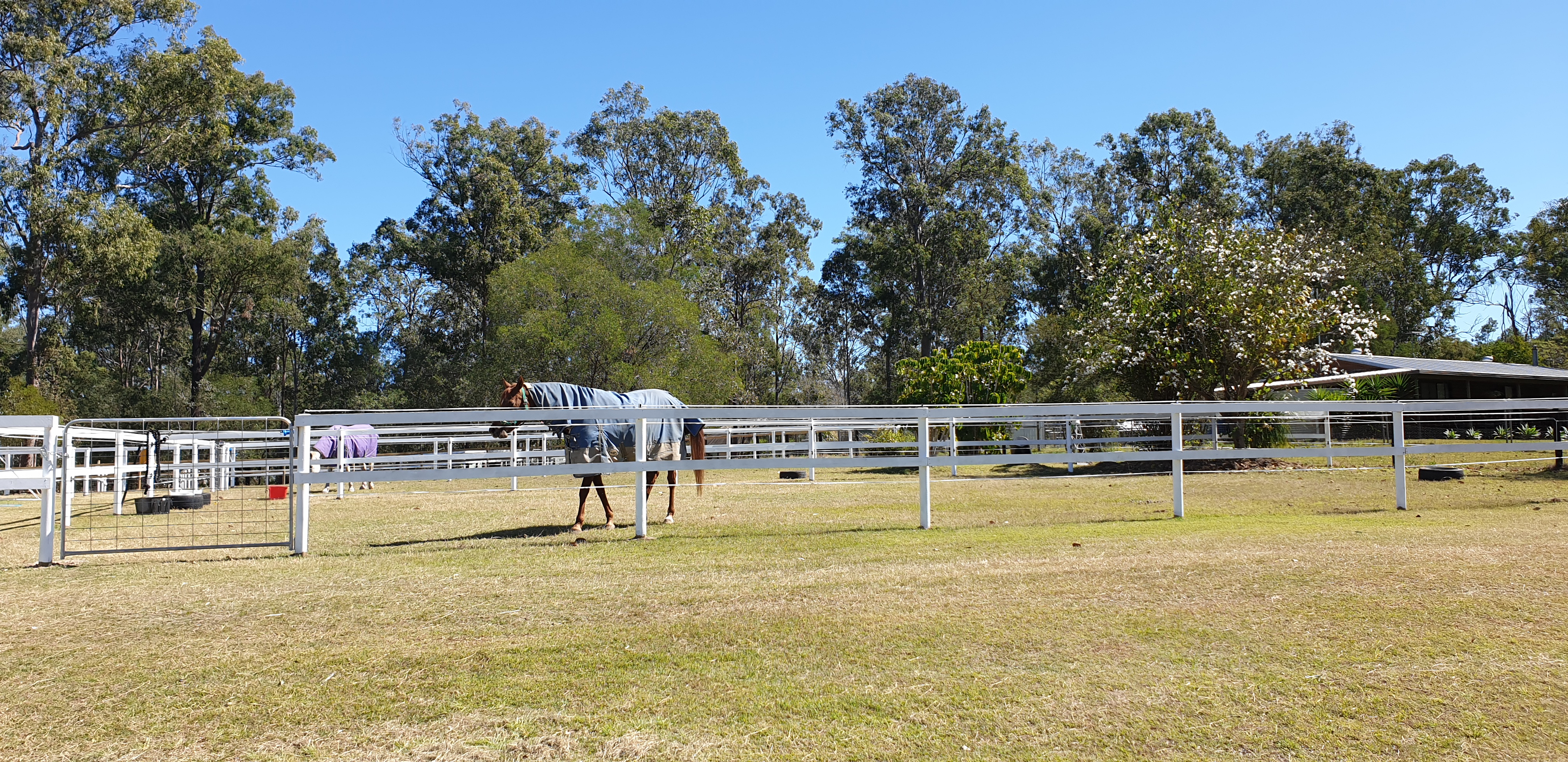
When you venture out from the city, particularly, this city, you find yourself among the blocks that run to several acres, allotments that are ideal for keeping a horse or two.

Inner suburban living often runs to high rise apartment blocks, with no gardens, except perhaps on the roof.

Outer suburban living runs to individual houses on allotments that are from 600 to 2,000 square meters. We have not yet gone into mass building of duplexes or terrace housing because for the time being, we don’t have the population.

And, this is why you only have to go about 35 kilometres from the centre of the city to be able to buy acreage.

So, we are visiting, and on such a glorious end of winter day, it’s a pleasure to sit on the back verandah, spending some time soaking up the sunshine, breathing the country fresh air, and let the inspiration flow into writing.

It works.

I’ve manage to write another photograph inspired story, number 124, which will be published on my writing blog in the next day or so.

Also being tackled will be the next chapter of PI Walthensen’s second case.

Unfortunately though, the inspirational location didn’t afford me a title for this new case but it will have the opening three words “A Case Of…’

The rest, I’m sure, will come as the story unfolds.

The perils of traveling: the last plane out on Friday night

Everyone knows that if you are on the last flight out on a Friday night the chances of you getting away on time are remote.

Yep.

We’re on the last flight out.

Yep.

There’s no way in hell we’re leaving on time.

But, here’s the thing.

Our incoming plane arrives 6 minutes late, so there’s every hope of getting away on time.

We are, of course, delusional.

Planes can’t fly without a crew, and part of our crew on another incoming plane, which is, yep,
delayed.

In fact, the whole arrivals board is lit up with the word “delayed” for every flight but our incoming plane and one other from Sydney.

And, no, our missing crew members are not on either.

So, it becomes a waiting game and placating messages from the gate crew first to tell us we’re waiting for crew and two more times to tell us we will be boarding soon.

The look on some faces says they’ve been through all this before.

Then, one of the gate staff, communicator in hand goes out to see if the errant crew members are coming. She waits a few minutes but it probably takes longer than that for them to finalize their duties on the incoming plane and get to our gate.

She returns to the gate counter just as an electric car comes towards us from one of the satellites.

Crew found.

Boarding starts.

We leave 35 minutes late. About the average time, all the delayed planes were, well, delayed.

Ah, the joys of traveling on a Friday night

“Sunday in New York”, a romantic adventure that’s not a walk in the park!

“Sunday in New York” is ultimately a story about trust, and what happens when a marriage is stretched to its limits.

When Harry Steele attends a lunch with his manager, Barclay, to discuss a promotion that any junior executive would accept in a heartbeat, it is the fact his wife, Alison, who previously professed her reservations about Barclay, also agreed to attend, that casts a small element of doubt in his mind.

From that moment, his life, in the company, in deciding what to do, his marriage, his very life, spirals out of control.

There is no one big factor that can prove Harry’s worst fears, that his marriage is over, just a number of small, interconnecting events, when piled on top of each other, points to a cataclysmic end to everything he had believed in.

Trust is lost firstly in his best friend and mentor, Andy, who only hints of impending disaster, Sasha, a woman whom he saved, and who appears to have motives of her own, and then in his wife, Alison, as he discovered piece by piece damning evidence she is about to leave him for another man.

Can we trust what we see with our eyes or trust what we hear?

Haven’t we all jumped to conclusions at least once in our lives?

Can Alison, a woman whose self-belief and confidence is about to be put to the ultimate test, find a way of proving their relationship is as strong as it has ever been?

As they say in the classics, read on!

Purchase:

http://tinyurl.com/Amazon-SundayInNewYork

An excerpt from “The Things We Do For Love”; In love, Henry was all at sea!

In the distance he could hear the dinner bell ringing and roused himself.  Feeling the dampness of the pillow, and fearing the ravages of pent up emotion, he considered not going down but thought it best not to upset Mrs. Mac, especially after he said he would be dining.

In the event, he wished he had reneged, especially when he discovered he was not the only guest staying at the hotel.

Whilst he’d been reminiscing, another guest, a young lady, had arrived.  He’d heard her and Mrs. Mac coming up the stairs, and then shown to a room on the same floor, perhaps at the other end of the passage.

Henry caught his first glimpse of her when she appeared at the door to the dining room, waiting for Mrs. Mac to show her to a table.

She was about mid-twenties, slim, long brown hair, and the grace and elegance of a woman associated with countless fashion magazines.  She was, he thought, stunningly beautiful with not a hair out of place, and make-up flawlessly applied.  Her clothes were black, simple, elegant, and expensive, the sort an heiress or wife of a millionaire might condescend to wear to a lesser occasion than dinner.

Then there was her expression; cold, forbidding, almost frightening in its intensity.  And her eyes, piercingly blue and yet laced with pain.  Dracula’s daughter was his immediate description of her.

All in all, he considered, the only thing they had in common was, like him, she seemed totally out of place.

Mrs. Mac came out of the kitchen, wiping her hands on her apron.  She was, she informed him earlier, chef, waitress, hotelier, barmaid, and cleaner all rolled into one.  Coming up to the new arrival she said, “Ah, Miss Andrews, I’m glad you decided to have dinner.  Would you like to sit with Mr. Henshaw, or would you like to have a table of your own?”

Henry could feel her icy stare as she sized up his appeal as a dining companion, making the hair on the back on his neck stand up.  He purposely didn’t look back.  In his estimation, his appeal rating was minus six.  Out of a thousand!

“If Mr. Henshaw doesn’t mind….”  She looked at him, leaving the query in mid-air.

He didn’t mind and said so.  Perhaps he’d underestimated his rating.

“Good.”  Mrs. Mac promptly ushered her over.  Henry stood, made sure she was seated properly and sat.

“Thank you.  You are most kind.”  The way she said it suggested snobbish overtones.

“I try to be when I can.”  It was supposed to nullify her sarcastic tone but made him sound a little silly, and when she gave him another of her icy glares, he regretted it.

Mrs. Mac quickly intervened, asking, “Would you care for the soup?”

They did, and, after writing the order on her pad, she gave them each a look, imperceptibly shook her head, and returned to the kitchen.

Before Michelle spoke to him again, she had another quick look at him, trying to fathom who and what he might be.  There was something about him.

His eyes, they mirrored the same sadness she felt, and, yes, there was something else, that it looked like he had been crying?  There was a tinge of redness.

Perhaps, she thought, he was here for the same reason she was.

No.  That wasn’t possible.

Then she said, without thinking, “Do you have any particular reason for coming here?”  Seconds later she realized she’s spoken it out loud, had hadn’t meant to actually ask, it just came out.

It took him by surprise, obviously not the first question he was expecting her to ask of him.

“No, other than it is as far from civilization, and home, as I could get.”

At least we agree on that, she thought.

It was obvious he was running away from something as well.

Given the isolation of the village and lack of geographic hospitality, it was, from her point of view, ideal.  All she had to do was avoid him, and that wouldn’t be difficult.

After getting through this evening first.

“Yes,” she agreed.  “It is that.”

A few seconds passed, and she thought she could feel his eyes on her and wasn’t going to look up.

Until he asked, “What’s your reason?”

Slight abrupt in manner, perhaps as a result of her question, and the manner in which she asked it.

She looked up.  “Rest.  And have some time to myself.”

She hoped he would notice the emphasis she had placed on the word ‘herself’ and take due note.  No doubt, she thought,  she had completely different ideas of what constituted a holiday than he, not that she had actually said she was here for a holiday.

Mrs. Mac arrived at a fortuitous moment to save them from further conversation.


Over the entree, she wondered if she had made a mistake coming to the hotel.  Of course, there had been no possible way she could know than anyone else might have booked the same hotel, but realized it was foolish to think she might end up in it by herself.

Was that what she was expecting?

Not a mistake then, but an unfortunate set of circumstances, which could be overcome by being sensible.

Yet, there he was, and it made her curious, not that he was a man, by himself, in the middle of nowhere, hiding like she was, but for very different reasons.

On discreet observance whilst they ate, she gained the impression his air of light-heartedness was forced and he had no sense of humor.

This feeling was engendered by his looks, unruly dark hair, and permanent frown.  And then there was his abysmal taste in clothes on a tall, lanky frame.  They were quality but totally unsuited to the wearer.

Rebellion was written all over him.

The only other thought crossing her mind, and rather incongruously, was he could do with a decent feed.  In that respect, she knew now from the mountain of food in front of her, he had come to the right place.

“Mr. Henshaw?”

He looked up.  “Henshaw is too formal.  Henry sounds much better,” he said, with a slight hint of gruffness.

“Then my name is Michelle.”

Mrs. Mac came in to take their order for the only main course, gather up the entree dishes, then return to the kitchen.

“Staying long?” she asked.

“About three weeks.  Yourself?”

“About the same.”

The conversation dried up.

Neither looked at the other, rather at the walls, out the window, towards the kitchen, anywhere.  It was, she thought, almost unbearably awkward.


Mrs. Mac returned with a large tray with dishes on it, setting it down on the table next to theirs.

“Not as good as the usual cook,” she said, serving up the dinner expertly, “but it comes a good second, even if I do say so myself.  Care for some wine?”

Henry looked at Michelle.  “What do you think?”

“I’m used to my dining companions making the decision.”

You would, he thought.  He couldn’t help but notice the cutting edge of her tone.  Then, to Mrs. Mac, he named a particular White Burgundy he liked and she bustled off.

“I hope you like it,” he said, acknowledging her previous comment with a smile that had nothing to do with humor.

“Yes, so do I.”

Both made a start on the main course, a concoction of chicken and vegetables that were delicious, Henry thought, when compared to the bland food he received at home and sometimes aboard my ship.

It was five minutes before Mrs. Mac returned with the bottle and two glasses.  After opening it and pouring the drinks, she left them alone again.

Henry resumed the conversation.  “How did you arrive?  I came by train.”

“By car.”

“Did you drive yourself?”

And he thought, a few seconds later, that was a silly question, otherwise she would not be alone, and certainly not sitting at this table. With him.

“After a fashion.”

He could see that she was formulating a retort in her mind, then changed it, instead, smiling for the first time, and it served to lighten the atmosphere.

And in doing so, it showed him she had another more pleasant side despite the fact she was trying not to look happy.

“My father reckons I’m just another of ‘those’ women drivers,” she added.

“Whatever for?”

“The first and only time he came with me I had an accident.  I ran up the back of another car.  Of course, it didn’t matter to him the other driver was driving like a startled rabbit.”

“It doesn’t help,” he agreed.

“Do you drive?”

“Mostly people up the wall.”  His attempt at humor failed.  “Actually,” he added quickly, “I’ve got a very old Morris that manages to get me where I’m going.”

The apple pie and cream for dessert came and went and the rapport between them improved as the wine disappeared and the coffee came.  Both had found, after getting to know each other better, their first impressions were not necessarily correct.

“Enjoy the food?” Mrs. Mac asked, suddenly reappearing.

“Beautifully cooked and delicious to eat,” Michelle said, and Henry endorsed her remarks.

“Ah, it does my heart good to hear such genuine compliments,” she said, smiling.  She collected the last of the dishes and disappeared yet again.

“What do you do for a living,” Michelle asked in an off-hand manner.

He had a feeling she was not particularly interested and it was just making conversation.

“I’m a purser.”

“A what?”

“A purser.  I work on a ship doing the paperwork, that sort of thing.”

“I see.”

“And you?”

“I was a model.”

“Was?”

“Until I had an accident, a rather bad one.”

“Oh, I’m sorry.”

So that explained the odd feeling he had about her.

As the evening had worn on, he began to think there might be something wrong, seriously wrong with her because she didn’t look too well.  Even the carefully applied makeup, from close up, didn’t hide the very pale, and tired look, or the sunken, dark ringed eyes.

“I try not to think about it, but it doesn’t necessarily work.  I’ve come here for peace and quiet, away from doctors and parents.”

“Then you will not have to worry about me annoying you.  I’m one of those fall-asleep-reading-a-book types.”

Perhaps it would be like ships passing in the night and then smiled to himself about the analogy.

Dinner now over, they separated.

Henry went back to the lounge to read a few pages of his book before going to bed, and Michelle went up to her room to retire for the night.

But try as he might, he was unable to read, his mind dwelling on the unusual, yet the compellingly mysterious person he would be sharing the hotel with.

Overlaying that original blurred image of her standing in the doorway was another of her haunting expressions that had, he finally conceded, taken his breath away, and a look that had sent more than one tingle down his spine.

She may not have thought much of him, but she had certainly made an impression on him.


© Charles Heath 2015-2020

lovecoverfinal1

Searching for locations: An old country homestead, Canungra, Australia

Or to be more precise, the homestead at what is now O’Reilly’s vineyard, where there is a pleasant lawn out back running down to the river for picnics, an alpaca farm next door, and the homestead plays host to functions, and wine tastings.

My interest was that we had assumed there was a restaraunt, and we were going to have lunch. There might be one, but not the day we visited, it was just cafe food or a picnic available.

I was more interested in the old homestead, because it was a fine example of the homesteads built in the ‘outback’.

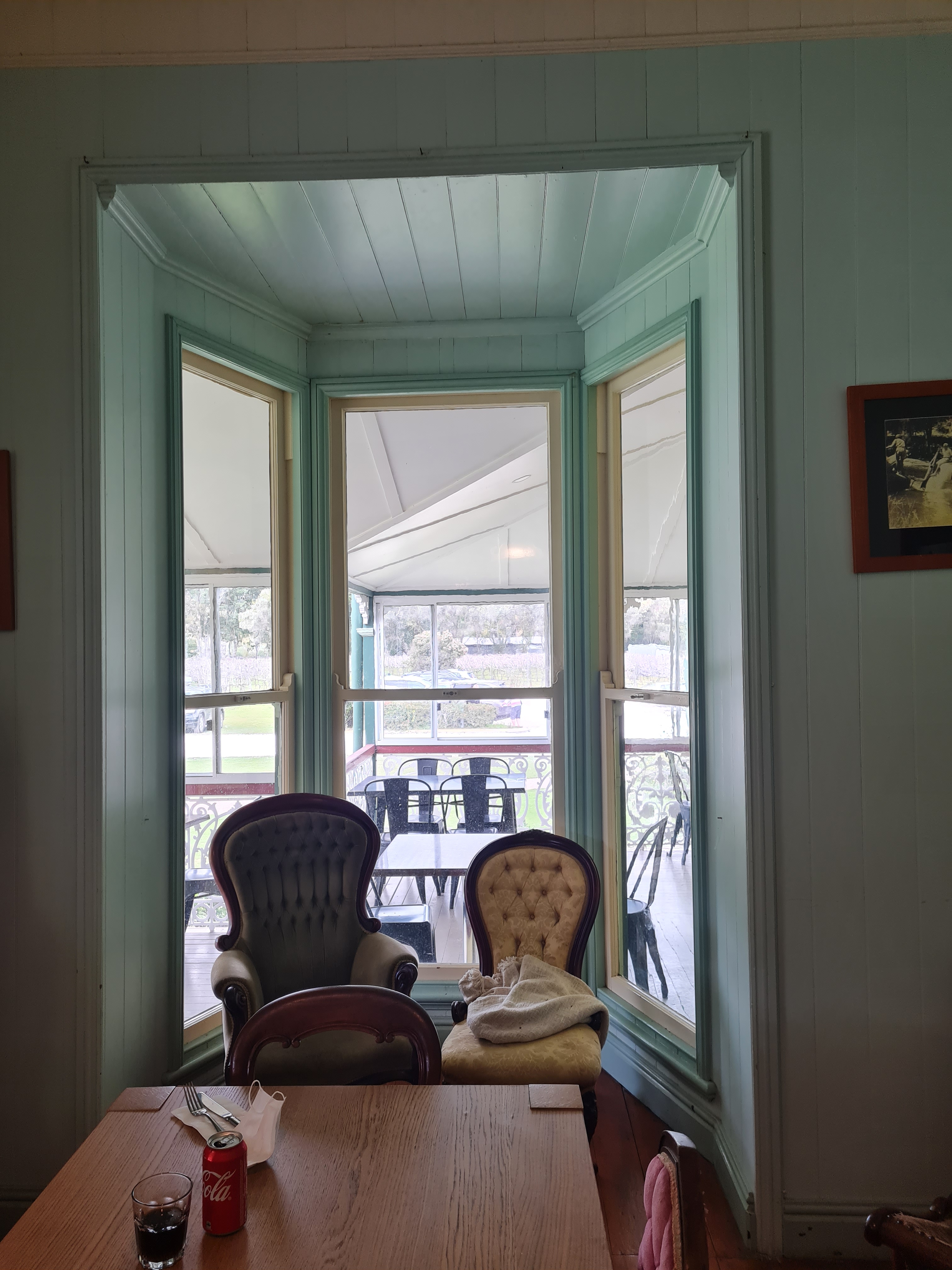
Today we are having lunch in the Platypus room, in the O’Reilly’s vineyard farmhouse, which, if you close your eyes and let your imagination run free, could see it as the master bedroom of a homestead.

Certainly the building is old, made completely of timber, inside and out, with the traditional high ceilings to keep the heat at bay.

At one end, a large bay window, which would be ideal to sir and view the outside, past the sweeping verandah.  There is a small lawn and a rotunda, but beyond that what might have been extended gardens, is the vineyard.

The homestead is in an ideal position midway between the main road and the river, has the traditional surrounding verandah, and shows signs of being extended on almost all sides.

On the other side of the wide corridor that leads you to the bar, and, coincidentally, down the centre of the house, is a smaller bedroom, also used as a dining room, and ubiquitously named the library.

It may be small but it does have a fireplace.  Which the assumed master bedroom does not, but now I’m thinking that room might have been the morning room.

Behind the room we’re in is another bedroom, or perhaps this might be the master, because it does have a fireplace and is quite large.  And a name, the Ambassador room.  Now it serves as the pick up place for picnic baskets.

There is another room on the opposite side of the corridor called the Drawing Room, but is not open to the public.  But, going into the room with the fireplace adjacent to it, you can sell the aroma of pizzas, so it’s probably an extension of the kitchen, and, walking around the outside that side of the house proves it to be case.

After all, they do catering for weddings and need a very large food preparation area which I discovered runs down the whole of that side of the house.

At the end of the corridor I’d the bar and spare space, and running off that and behind that is where there is a large dining area, perhaps prior to COVID, the restaurant.

It’s not hard to imagine that area as a very large entertaining area, either for very large dinner parties, or dancing.

As for the food, it’s either a picnic basket, or pizzas.  We chose the latter, not realising the bases were not home made, but bought in.  

The toppings however were both plentiful and tasty.  It could have been hotter, because it was a cold day, and it was cold in the room.

As for something to do other than taste the wine, and buy a few bottles, you can get up close to the vines, which, at this time of the year gave been pruned back and look quite dead, look at or walk an alpaca, even feed it, or all of them, or go down to the river and see if you can spot a Platypus.

Perhaps next time we’ll have a picnic down by the river.