Searching for locations: Hotels can be a mine of information for a story

Hotels can be one of the major letdowns of a holiday.

They can also be extensive fodder for writing material.  For the main stories I write, hotel stays feature prominently, and so each experience, no matter how insignificant, is another paragraph in my book of experiences.

So…

If you are going to use a travel agent to pick a hotel for you, make sure you check as much as you can before you see them, because no matter how it is described, seeing it, in reality, is always completely different than the pictures in a brochure and sometimes on the Internet.  It requires research and a good look at TripAdvisor.

Or word of mouth by someone you know and trust who have stayed there.

Take, for instance, staying in a five-star hotel, the usual stomping ground of the rich and famous.  It is always interesting to see how the less privileged fare.  Where hotel staff is supposed to treat each guest equally, it’s not always the case.  Certainly, if you’re flashing money around, the staff will be happy to take it, though you may not necessarily get what you’re expecting.

We were once lucky enough to be in the highest hotel loyalty level and this gave us a number of privileges; at times working in our favor, but even then not always.

Privilege can sometimes count for nothing.  It often depends on the humor of the front desk clerk, or the guest services manager, and woe betide you if you get the receptionist from hell.

Been there, done that, more than once.

Then there is the room.

There is such a wide variety of rooms available, even if the hotel site or brochure has representative pictures, the odds are you can still get a room that is nothing like you’re expecting or were promised.

Believe me, there are rooms with a view, overlooking pigeon coops or air-conditioning vents.  And if you’re lucky, at Niagara Falls, it might be that six inches of window space that allows a very limited view of the falls.

Still, why should I complain, you can see the Falls … can you not?

A bone of contention often can be the location of the hotel and sometimes parking facilities, not the least of which is the cost of Valet parking; given the extortion some hotels charge, it’s better to just forget a car.

It is nothing like the movies, you just do not drive up to the front entrance, get out, hand the keys to the concierge, and expect everything else to happen by magic.

It doesn’t.

One time we waited for over an hour for our luggage to be delivered, and that was after three phone calls to the concierge desk.

Sometimes you can be reasonably near transport, yes, if you could walk the distance (which feels like the length of a marathon) to the nearest bus or tram stop.

The problem is we both have trouble with knees and ankles and walking distances are difficult at the best of times, and for us, it is a long, long way when you can’t walk and that’s when the hotel starts to feel like a prison.  Taxis may be cheap but when you have to use them three or four times a day it all adds up.

Also, be wary when a hotel says it is close to public transport.  While that may be true in London, anywhere else and especially in Europe, you could find yourself in the middle of nowhere.

It’s when you discover your travel agent didn’t exactly lie but it is why that weekly rate was so cheap.  In the end, the sum of the taxi fares and the accommodation turns out to be dearer than if you stayed at the Savoy.

So, those front line experiences are fodder for the travel blogger, and people who are also known as road warriors, the true frequent flyers.

There is a very large gulf between five stars and three and sometimes three can be very generous.  And of course, l now have a list of hotels l would never stay in again, the names of which might surprise you.


The January update…

So, where am I in the greater scheme of things?

Still scribbling frantically.  January is usually the time of the year we go jetting off to somewhere exotic, or, rather, somewhere very cold because here it is usually 36 degrees centigrade plus 100 percent humidity, day after day after day.

Well, this is me, stuck in the endless heat, slowly melting away.

And writing.

I have had a few great ideas springing out of the void, while I’m trying very hard not to think about how hot it is, or how recalcitrant Chester can be when he is hot.  What I don’t get is that in winter he will sit on top of the fire where it is about 2000 degrees and yet in 34-degree heat, he complains.

But enough about the cat…

With one of my stories, back in WW2, I’ve finally got to the back story of the man on the run from the Reich, a rocket scientist seeking a better life.  He is heading for the castle in southern Italy, not knowing that there’s a bunch of Nazi’s waiting for him to send him back home.

Of course, there is a hero, but he’s with the resistance and doesn’t know who the high-value target is that he’s supposed to save.

Where it is now, the scientist is stuck at Brenner Pass in the forest freezing and waiting for the Germans to find him.  Or not.

It’s still a work in progress, but the last episode is here:  http://bit.ly/2R6Dgiu

On another front, there is the Treasure story, one that I’ve been meaning to write ever since I read Stevenson’s Treasure Island.  My characters are not quite as colorful, but…

Our intrepid searchers are now up to the part where they’re trying to work out which part of the Florida coastline matches their map, and that’s no mean feat.

Especially when there are others, two groups in fact, who are also trying to find it.

This will all play out over the next few episodes but for the latest:

http://bit.ly/2RiseIa

Yes, there are two other stories, but I’ll let you know about them later.


Conversations with my cat – 81

20160903_163902

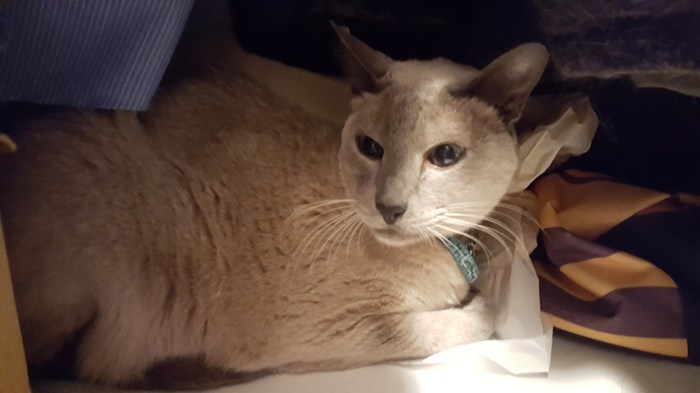
This is Chester.  Today we’re looking at the tennis.

Well, I’m looking at the tennis, and he’s pontificating over the climate change crisis.

I’m not sure if he actually knows what climate change is all about because I seem to be missing the point.

Down here where fires are raging in various parts of the country, it seems that everyone wants to jump on the climate change bandwagon, looking for something or someone to blame.

Yes, the Prine Minister has copped his fair share, because it seems he doesn’t quite agree there is such a thing, but that seems to be the mantra of any conservative political party because at their heart is the promise to benefit industry rather than what’s best for the people.

This seems to be Chester’s view too but slightly amended to include the cats.

If only cats could vote!

That thought, of course, scares the living daylights out of me, because as you know we belong to cats, not the other way around.

Would we all become slaves?

“Aren’t you already?  It seems to me nothing will change.”

So how did this conversation veer off the path of tennis, to climate change, to voting, to slaves?

This is like being at a party with too much alcohol flowing.

Come to think of it, there is a half bottle of scotch missing, and Chester has been acting strange lately…


In a word: Bore, or is that boar

I’ve had the ubiquitous pleasure of being called one, and that is, a bore.

Probably because I spend so much time telling people about the joys and woes of being a writer.

You can be a tedious bore, cooking could be a bore, and then you could bore someone to death, and then you will bore the responsibility of, yes, doing just that.

Would it be murder or manslaughter?

But, of course, there are other meanings of the word, such as, on my farm I have a bore.

No, we’re not talking about the farmhand, but where artesian water is brought to the surface, in what would otherwise be very arid land.

Or, could be the size of a drill hole, and in a specific instance the measurement of the circular space that piston goes up and down.  And if you increase the size of the bore, the more powerful the engine.

Or it could refer to the size of a gun barrel, for all of you who are crime fiction writers.

But, let’s not after all of that, confuse it with another interpretation of the word, boar, which is basically a male pig.

It could also just as easily describe certain men.

Then there is another interpretation, boor, which is an extremely rude person, or a peasant, a country bumpkin or a yokel.

I’ve only seen the latter in old American movies.

There is one more, rather obscure interpretation, and that is boer, which is a Dutch South African, who at the turn of the last century found themselves embroiled in a war with the British.

Short story writing, don’t try this at home! (3)

This is not meant to be a treatise on short story writing.  Far be it for me to advise anyone on the subject.  I prefer to say how it is that I do it so you can learn all of the pitfalls in one go.

My main characters are quite often me.

Not the real me, because I’m boring.  No, those characters are what I would like to be, that imaginary superhuman that can do everything.

Until, of course, reality sets in, and the bullets start flying.  In reality, we should be looking to run or at the very least get under cover, not walk into a hail of bullets, with a huge grin, staring down the enemy.

Hang on, that never happens except in superman comics.

What’s really needed here is a little vulnerability, a little humility and a lot of understanding, qualities at times I don’t have.

So, in order to create a more believable character, I start dragging traits from others I’ve met, or know, or really don’t want to know.  In a writer’s environment, there are a plethora of people out there that you can draw on for inspiration.

Like a piano player in a restaurant.  It was not so much the playing was bad, it was the way he managed to draw people into his orbit and keep them there.  The man has charisma, but sadly no talent for the instrument.

Like an aunt I met only twice in a lifetime, and who left a lasting impression.  Severe, angry looking, speaking a language I didn’t understand, even though it was English.  It was where I learned we came from England, and she was the closest thing I came to as an example of nineteenth-century prim and proper.  And, no, she didn’t have a sense of humour or time for silly little boys.

Like one of my bosses, a man of indeterminate age, but it had to be over 100, or so it seemed to my sixteen-year-old brain, who spoke and dressed impeccably, and yes, he did once say that I would be the death of him.

I can only hope I wasn’t.

Like a Captain of a ship I once met, a man who didn’t seem to have time for the minions, and a man who reeked authority and respect.  I’ve always wanted to be like him, but unfortunately, it was not in the genes.

Those are only a few, there are thousands of others over the years, a built-in library, if you will, of characters waiting to be taken off the shelf and used where necessary or appropriate.  We all have one of these banks.

You just have to know when to use them.

What happens after the action-packed start – Part 35

Our hero knows he’s in serious trouble.

The problem is, there are familiar faces and a question of who is a friend and who is foe made all the more difficult because of the enemy, if it was the enemy, simply because it didn’t look or sound or act like the enemy.

Now, it appears, his problems stem from another operation he participated in, and because of it, he has now been roped into what might be called a suicide mission.


04:00 in Africa was an interesting time of the morning, especially after a few hours of intense rain during the night.  I could see what the Colonel meant if it had been raining because outside the barracks it was very wet.

Whilst the others appeared to get some sleep, in a much better environment than the back of an aircraft, I lay awake, at first waiting for the sound of the aircraft leaving, and then listening to the rain that started an hour or so later, followed by the sounds that came afterward.  It was never silent, and there was always that suspicion of being attacked when you’re at your most vulnerable.  I had a weapon ready, just in case.

Outside the cloud cover had gone and it looked like it would be a fine day.

When I did the headcount, I noticed Mobley was missing as agreed, and by the time we had assembled, the cars had arrived.  We would be driving ourselves in a convoy behind Monroe and the Colonel, who was no longer dressed in army fatigues, along with Jacobi and one of his guards.

For the trip, we had been supplied with the western notion of jungle wear, safari suits, that identified us not only garrulous visitors, but typical tourists hardly prepared for what was to come.  It made a good cover for a group of ‘fools’ making a documentary.  

All we had to do was get to the location for the exchange of the hostages reportedly between Aba, a town in the Democratic Republic of the Congo, and somewhere on the outskirts of the Park.  It was going to be an easy drive from Uganda to Aba, then the situation might change.

I was going to be in the rear vehicle, with Leslie Davies.  The more I thought about her being assigned to this mission, it seemed she was here solely for her ability to fly anything with wings.  It was the part that was missed on her resume, perhaps for a reason, but whatever that reason was, it would become clear eventually.


We left at 04:05.  Monroe had a slight problem starting her car.

Other than exchanging a few words before getting on the plane and then getting off the plane, Davies and I had not spoken.  After half an hour of driving in silence, I decided to break the ice.

“What did you do to get nominated for this mission?”

A glance sideways gave me no indication of her thoughts, or what look was hidden behind the aviator sunglasses.  I hadn’t seen her smile, or talk to any of the other team members other than a few brief words with Monroe, likely because she was the only other female.

Even then, I didn’t get the impression they were going to be best friends.

“Best you don’t know.”

Her reply came about three minutes after I’d asked, and at a point where I assumed she was going to ignore me.

“Let’s say I’m curious.”

“Curiosity killed the cat.”

“I’m not a cat.”

Another two minutes of silence, then, “Disobeyed a direct order.”

Not as bad as killing your immediate superior because you didn’t like him.  And I could sympathize.  Some orders were utterly ridiculous.

“Not a bad thing.”

“Not what the court-martial thought.”

I noticed she didn’t use sir.  I could live with that.

“You volunteer?”

“In a manner of speaking.  You?”

She raised her glasses slightly and gave me a sideways glance.

“In a manner of speaking.  Been here before, not that it was for very long, and in a different part of the country, but the powers that be deemed my experience adequate for the mission.”

“I take it the mission isn’t to take pictures of animals?”

It might.  Just not the animals you’re expecting.”


It was our lucky day.  At the Vurra customs post we were met by a Ugandan official who had been forewarned of our arrival, and whom I expect was well compensated for his work, and after going through a half-hour of paperwork, we were taken to the Congo counterpart with whom Jacobi weaved his magic.

I say lucky because the border crossing was often closed, either because of the weather, the road conditions, or the fact neither country was talking to the other, though it was more to do with the Congo villagers and their dispute over lands that stretched into Uganda.

We arrived with a number of trucks, to join a long line waiting to cross, and included were several United Nations vehicles.

Everyone seemed to take the delays and administrative diligence in their stride.

We were moving again, behind several tracks, almost an hour and a half after arriving.  All of the crates of equipment had been opened and inspected, as had our packs, and the raft of documents Monroe had been supplied.  She had a satellite phone at the ready in case we needed to make any calls, though I was not sure what Bamfield would have been able to do.

But, after a few tense moments, everyone lost interest in the documentary crew and moved onto the next vehicle.

Jacobi said it was the easiest crossing he’d made.

About a half-hour, after we had driven on our way, then my radio crackled, and Mobley reported in.  He had just crossed over and was behind us, and a number of trucks.

I got a strange look from Davies.

“Insurance,” was all I said.  “Which no one else needs to know about.”

The road was not exactly in the best of condition in places and having four-wheel drives was a help.  The lie of the land was quite flat, and we passed a lot of small villages and curious looks from the villagers.  Some parts of the road were quite bad, and we had to drive very slowly, especially where it was damp, but for the most part, it was reasonably dry and the roads were navigable.

Other times, Jacobi said, after the rains, those same roads were impossible to drive on and would often see villagers out trying to help the truck drivers keep moving.

I had expected to run into a number of soldiers, but for the first few hours after leaving the border, there wasn’t a lot to see other than flat land, villages, and people on the side of the road, along with the occasional vehicle, belying the fact it was a major road between the border and a town called Aba, a distance that was measured at about 170 kilometers.

Anywhere else in the world it would have taken about an hour and a half, but here, it was early afternoon and finally on a stretch of reasonable road into Aba.  A refuel and we’d be on our way quickly.  The first of the kidnappers appointed times was 16:00 hours and I was hoping the roads would get us there by that time.


© Charles Heath 2019-2020

An excerpt from “What Sets Us Apart”, a mystery with a twist

See excerpt from the story below, just a taste of what’s in store…

http://amzn.to/2Eryfth

whatsetscover


McCallister was old school, a man who would most likely fit in perfectly campaigning on the battlefields of Europe during the Second World War.  He’d been like a fish out of water in the army, post-Falklands, and while he retired a hero, he still felt he’d more to give.

He’d applied and was accepted as head of a SWAT team, and, watching him now as he and his men disembarked from the truck in almost military precision, a look passed between Annette, the police liaison officer, and I that said she’d seen it all before.  I know I had.

There was a one in four chance his team would be selected for this operation, and she had been hoping it would be one of the other three.  While waiting for them to arrive she filled me in on the various teams.  His was the least co-operative, and the more likely to make ad-hoc decisions rather than adhere to the plan, or any orders that may come from the officer in charge.

This, she said quite bluntly, was going to end badly.

I still had no idea why Prendergast instructed me to attend the scene of what looked to be a normal domestic operation, but as the nominated expert in the field in these types of situations, it was fairly clear he wasn’t taking any chances.  It was always a matter of opinion between us, and generally I lost.

In this case, it was an anonymous report identifying what the authorities believed were explosives in one of the dockside sheds where explosives were not supposed to be.  The only reason why the report was given any credence was the man, while not identifying himself by name, said he’d been an explosive expert once and recognized the boxes.  That could mean anything, but the Chief Constable was a cautious man.

With his men settled and preparing their weapons, McCallister came over to the command post, not much more than the SUV my liaison and I arrived in, with weapons, bulletproof vests, and rolls of tape to cordon off the area afterward.  We both had coffee, steaming in the cold early morning air.  Dawn was slowly approaching and although rain had been forecast it had yet to arrive.

A man by the name of Benson was in charge.  He too had groaned when he saw McCallister.

“A fine morning for it.”  McCallister was the only enthusiastic one here.

He didn’t say what ‘it’ was, but I thought it might eventually be mayhem.

“Let’s hope the rain stays away.  It’s going to be difficult enough without it,” Benson said, rubbing his hands together.  We had been waiting for the SWAT team to arrive, and another team to take up their position under the wharf, and who was in the final stages of securing their position.

While we were waiting we drew up the plan.  I’d go in first to check on what we were dealing with, and what type of explosives.  The SWAT team, in the meantime, were to ensure all the exits to the shed were covered.  When I gave the signal, they were to enter and secure the building.  We were not expecting anyone inside or out, and no movement had been detected in the last hour since our arrival and deployment.

“What’s the current situation?”

“I’ve got eyes on the building, and a team coming in from the waterside, underneath.  Its slow progress, but they’re nearly there.  Once they’re in place, we’re sending McKenzie in.”

He looked in my direction.

“With due respect sir, shouldn’t it be one of us?”  McCallister glared at me with the contempt that only a decorated military officer could.

“No.  I have orders from above, much higher than I care to argue with, so, McCallister, no gung-ho heroics for the moment.  Just be ready to move on my command, and make sure you have three teams at the exit points, ready to secure the building.”

McCallister opened his mouth, no doubt to question those orders, but instead closed it again.  “Yes sir,” he muttered and turned away heading back to his men.

“You’re not going to have much time before he storms the battlements,” Benson quietly said to me, a hint of exasperation in his tone.  “I’m dreading the paperwork.”

It was exactly what my liaison officer said when she saw McCallister arriving.


The water team sent their ‘in position’ signal, and we were ready to go.

In the hour or so we’d been on site nothing had stirred, no arrivals, no departures, and no sign anyone was inside, but that didn’t mean we were alone.  Nor did it mean I was going to walk in and see immediately what was going on.  If it was a cache of explosives then it was possible the building was booby-trapped in any number of ways, there could be sentries or guards, and they had eyes on us, or it might be a false alarm.

I was hoping for the latter.

I put on the bulletproof vest, thinking it was a poor substitute for full battle armor against an exploding bomb, but we were still treating this as a ‘suspected’ case.  I noticed my liaison officer was pulling on her bulletproof vest too.

“You don’t have to go.  This is my party, not yours,” I said.

“The Chief Constable told me to stick to you like glue, sir.”

I looked at Benson.  “Talk some sense into her please, this is not a kindergarten outing.”

He shrugged.  Seeing McCallister had taken all the fight out of him.  “Orders are orders.  If that’s what the Chief Constable requested …”

Madness.  I glared at her, and she gave me a wan smile.  “Stay behind me then, and don’t do anything stupid.”

“Believe me, I won’t be.”  She pulled out and checked her weapon, chambering the first round.  It made a reassuring sound.

Suited up, weapons readied, a last sip of the coffee in a stomach that was already churning from nerves and tension, I looked at the target, one hundred yards distant and thought it was going to be the longest hundred yards I’d ever traversed.  At least for this week.


A swirling mist rolled in and caused a slight change in plans.

Because the front of the buildings was constantly illuminated by large overhead arc lamps, my intention had been to approach the building from the rear where there was less light and more cover.  Despite the lack of movement, if there were explosives in that building, there’d be ‘enemy’ surveillance somewhere, and, after making that assumption, I believed it was going to be easier and less noticeable to use the darkness as a cover.

It was a result of the consultation, and studying the plans of the warehouse, plans that showed three entrances, the main front hangar type doors, a side entrance for truck entry and exit and a small door in the rear, at the end of an internal passage leading to several offices.  I also assumed it was the exit used when smokers needed a break.  Our entry would be by the rear door or failing that, the side entrance where a door was built into the larger sliding doors.  In both cases, the locks would not present a problem.

The change in the weather made the approach shorter, and given the density of the mist now turning into a fog, we were able to approach by the front, hugging the walls, and moving quickly while there was cover.  I could feel the dampness of the mist and shivered more than once.

It was nerves more than the cold.

I could also feel rather than see the presence of Annette behind me, and once felt her breath on my neck when we stopped for a quick reconnaissance.

It was the same for McCallister’s men.  I could feel them following us, quickly and quietly, and expected, if I turned around, to see him breathing down my neck too.

It added to the tension.

My plan was still to enter by the back door.

We slipped up the alley between the two sheds to the rear corner and stopped.  I heard a noise coming from the rear of the building, and the light tap on the shoulder told me Annette had heard it too.  I put my hand up to signal her to wait, and as a swirl of mist rolled in, I slipped around the corner heading towards where I’d last seen the glow of a cigarette.

The mist cleared, and we saw each other at the same time.  He was a bearded man in battle fatigues, not the average dockside security guard.

He was quick, but my slight element of surprise was his undoing, and he was down and unconscious in less than a few seconds with barely a sound beyond the body hitting the ground.  Zip ties secured his hands and legs, and tape his mouth.  Annette joined me a minute after securing him.

A glance at the body then me, “I can see why they, whoever they are, sent you.”

She’d asked who I worked for, and I didn’t answer.  It was best she didn’t know.

“Stay behind me,” I said, more urgency in my tone.  If there was one, there’d be another.

Luck was with us so far.  A man outside smoking meant no booby traps on the back door, and quite possibly there’d be none inside.  But it indicated there were more men inside, and if so, it appeared they were very well trained.  If that were the case, they would be formidable opponents.

The fear factor increased exponentially.

I slowly opened the door and looked in.  A pale light shone from within the warehouse itself, one that was not bright enough to be detected from outside.  None of the offices had lights on, so it was possible they were vacant.  I realized then they had blacked out the windows.  Why hadn’t someone checked this?

Once inside, the door closed behind us, progress was slow and careful.  She remained directly behind me, gun ready to shoot anything that moved.  I had a momentary thought for McCallister and his men, securing the perimeter.

At the end of the corridor, the extent of the warehouse stretched before us.  The pale lighting made it seem like a vast empty cavern, except for a long trestle table along one side, and, behind it, stacks of wooden crates, some opened.  It looked like a production line.

To get to the table from where we were was a ten-yard walk in the open.  There was no cover.  If we stuck to the walls, there was equally no cover and a longer walk.

We needed a distraction.

As if on cue, the two main entrances disintegrated into flying shrapnel accompanied by a deafening explosion that momentarily disoriented both Annette and I.  Through the smoke and dust kicked up I saw three men appear from behind the wooden crates, each with what looked like machine guns, spraying bullets in the direction of the incoming SWAT members.

They never had a chance, cut down before they made ten steps into the building.

By the time I’d recovered, my head heavy, eyes watering and ears still ringing, I took several steps towards them, managing to take down two of the gunmen but not the third.

I heard a voice, Annette’s I think, yell out, “Oh, God, he’s got a trigger,” just before another explosion, though all I remember in that split second was a bright flash, the intense heat, something very heavy smashing into my chest knocking the wind out of me, and then the sensation of flying, just before I hit the wall.


I spent four weeks in an induced coma, three months being stitched back together and another six learning to do all those basic actions everyone took for granted.  It was twelve months almost to the day when I was released from the hospital, physically, except for a few alterations required after being hit by shrapnel, looking the same as I always had.

But mentally?  The document I’d signed on release said it all, ‘not fit for active duty; discharged’.

It was in the name of David Cheney.  For all intents and purposes, Alistair McKenzie was killed in that warehouse, and for the first time ever, an agent left the Department, the first to retire alive.

I was not sure I liked the idea of making history.
Writing about writing a book – Day 20

It is a day of rest although writers are ready and able to work on any given day at any hour of the day or night when an idea or thought comes to them.

I’m trying not to think, but that’s not working.

I’ve been going over the reasons for writing the first draft of the book 30 odd years ago and it had something to do with the fact I was working with personal computers and local area networking when both were in their infancy, and I wanted to blend this knowledge into a story.

Of course, I’d always wanted to write thrillers, and this presented the opportunity to use computers as a basis for a worldwide conspiracy.  How easy it is these days to do just that, but back in those days, it was a lot of hard work.

I remember sitting in a meeting when the company I was working for at the time had just implemented a network and personal computer to replace the mainframe and dumb terminals, also looking to leverage the new technologies of spreadsheets and word-processing, effectively making accounts staff more productive, and removing typists and moving into the world of centralized word processing.  It was not a new idea with Wangwriter, but using PC’s was.

One of the departmental managers got up to give his take on the new technology, this about six months after implementation, and after a lot of teething troubles caused mainly by people who were vehemently resisting change, and his message was, it should not be called ‘networking’, but ‘not working’, in reference to the number of times the network went down.

But this is a digression.  Computers are only a part of the story.

The story also goes back to a time when there was a clear demarcation between the management levels.  Management offices were oasis’s whereas the staff worked in a stark desert-like environment.  When one came to work for such an organization, it was with the belief that you start at the bottom, and over time, you work your way up the ladder.  There was, very definitely, class distinction, and the various management levels never mixed, at work or socially, except within their own level.

There were Managers, Assistant Managers, and Manager’s Assistants, a typing pool, a secretary, that young, or old, lady who did so many jobs for their boss, that these days it would be considered demeaning.  They were dedicated to their jobs and irreplaceable.  There was no such person as a Personal Assistant.

Nor was such a thing as sexual harassment.  One company I worked in where one of the Assistant Managers was sexually abusing an office girl, her complaints didn’t get a prosecution as it would now, it just had him transferred to another branch.  Reprehensible, yes, and thankfully no longer a problem, except of course, in Fifty Shades of Grey which apparently condones such behavior.

There were department heads, General Managers, and Board Members.  The upper management level and participants were in a world of their own, one few could ever aspire to.  This is the world in which Transworld, my fictitious (but based on a very real) company lives.

I have to work on my company structure to make sure it is right.

Now I have two charts.  A timeline, for both Bill, and the story, and a hierarchy for the office management and staff.

This is beginning to be more complicated than I thought.


© Charles Heath 2016-2020

“The Devil You Don’t”, be careful what you wish for

Now only $0.99 for a short time at  https://amzn.to/2Xyh1ow


John Pennington’s life is in the doldrums.  Looking for new opportunities, prevaricating about getting married, the only joy on the horizon was an upcoming visit to his grandmother in Sorrento, Italy.

Suddenly he is left at the check-in counter with a message on his phone telling him the marriage is off, and the relationship is over.

If only he hadn’t promised a friend he would do a favour for him in Rome.

At the first stop, Geneva, he has a chance encounter with Zoe, an intriguing woman who captures his imagination from the moment she boards the Savoire, and his life ventures into uncharted territory in more ways than one.

That ‘favour’ for his friend suddenly becomes a life-changing event, and when Zoe, the woman who he knows is too good to be true, reappears, danger and death follows.

Shot at, lied to, seduced, and drawn into a world where nothing is what it seems, John is dragged into an adrenaline-charged undertaking, where he may have been wiser to stay with the ‘devil you know’ rather than opt for the ‘devil you don’t’.

newdevilcvr3

Searching for locations: Toronto, Canada

The touristy things

On the way to the Hall of Fame, we found an ice skating rink

The Hockey hall of fame

The hockey hall of fame is a very large exhibition which would take a whole day to see everything.  We sat through a very informative history of the game and the origins of the NHL, which for people who do not have hockey as a sport in their country, is saying something.

We follow the Maple Leafs, coincidentally Toronto’s franchise in the NHL, and we have been here before for a game, which they lost.  It didn’t matter, I was staggered by the energy and enthusiasm both the players and the fans put into making it a memorable experience.

I’m hoping for a repeat experience.
St Lawrence Market

We walked 1.8 km to the market and it was closed which is about right for us as we have a knack for turning up and the place is closed, for instance, the Canadian club distillery in Windsor, Canada.

Perhaps tomorrow, before or after the game.
Red Lobster

Ok, we’ve been here before and it was beyond any expectations anyone could have for a restaurant chain.

This was no different from the last.

What more could you want, scallops, shrimp, and a fried lobster tail all drowned in a superb garlic butter sauce.

Add a side of mash potatoes, and a 20oz glass of beer, and there is the definition of heaven on a plate.
St Lawrence Market, again

Snowing, but not heavily

St Lawrence market, everything is very expensive, crab legs $120 per kg, lobster, $50 to $80 per kg.  Oddly everything is quoted per pound, and it’s a good thing that we can convert lbs to kg.

It is, to say the least, a disappointment.
Ice Hockey at the Scotiabank Arena

There was a definite buzz in the air, and heading towards the stadium was both us, and many other Toronto supporters.  Blue Maple Leaf jerseys were in abundance.

We’ve been before, and the last time the Leafs lost.

What else is new?

They have had a very good season so far, and are second on the ladder overall, so it was not without the expectation that they might win this one.


Never have an expectation.

They lost.

But…

It was an incredible game that was none stop action.  It seems to me that you require a lot of skill and skating talent to play this game.  I certainly couldn’t, and freely admit that I’d probably last about five minutes.

The score didn’t reflect the play, but in the end, the Leafs lost 4 – 3, at the end of the three periods.
Souvenir hunting and other stuff

I woke tired and exhausted, not looking forward to walking around Toronto.

Got up early to do the walking.

Oh, did I tell you, this hotel has a laundry and it is the bugbear of staying in major hotels, not being able to wash clothes?

Breakfast is included, but it is the main meal of the day so we feast.  The selection is incredible.

We had to go back to the Maple Leafs franchise shop to exchange a Maple Leafs Jersey, which was no trouble.

So near to the CN tower, we go in to shop for souvenirs, of which there were plenty.  I liked the stuffed mooses and beavers.

We’ve been up the tower so it’s back to the Union Station and a short stay at upstairs, a little bar overlooking the Toronto Pearson train line.

Time for tasting some Canadian ales, the first a Mill Street tank house ale, the second a Mill Street hopped and confused.  Seriously, that’s what they were called.

The drinking mood music was old hits like Queen and a little bit of country and western.

good view of the trains, too.

Union Station

Like all main stations very large very tall ceilings and openings that lead to the tracks of which there are about 24, and an underground system

Much the same as all large railway terminals and probably far busier in times gone by.
Dining, but not necessarily dinner

Not far from the station, and opposite to clock tower belonging to the old city hall was a restaurant called Bannock.

There I had a Moosehead Cracked Canoe lager, a light ale, and a house special since 1929, a chicken pot pie, and it was very good.