The first case of PI Walthenson – “A Case of Working With the Jones Brothers”

This case has everything, red herrings, jealous brothers, femme fatales, and at the heart of it all, greed.

See below for an excerpt from the book…

Coming soon!

PIWalthJones1


An excerpt from the book:


When Harry took the time to consider his position, a rather uncomfortable position at that, he concluded that he was somehow involved in another case that meant very little to him.

Not that it wasn’t important in some way he was yet to determine, it was just that his curiosity had got the better of him, and it had led to this: sitting in a chair, securely bound, waiting for someone one of his captors had called Doug.

It was not the name that worried him so much, it was the evil laugh that had come after the name was spoken.

Doug what?  Doug the ‘destroyer’, Doug the ‘dangerous’, Doug the ‘deadly’; there was any number of sinister connotations, and perhaps that was the point of the laugh, to make it more frightening than it was.

But there was no doubt about one thing in his mind right then: he’d made a mistake.  A very big. and costly, mistake.  Just how big the cost, no doubt he would soon find out.

His mother, and his grandmother, the wisest person he had ever known, had once told him never to eavesdrop.

At the time he couldn’t help himself and instead of minding his own business, listening to a one-sided conversation which ended with a time and a place.  The very nature of the person receiving the call was, at the very least, sinister, and, because of the cryptic conversation, there appeared to be, or at least to Harry, criminal activity involved.

For several days he had wrestled with the thought of whether he should go.  Stay on the fringe, keep out of sight, observe and report to the police if it was a crime.  Instead, he had willingly gone down the rabbit hole.

Now, sitting in an uncomfortable chair, several heat lamps hanging over his head, he was perspiring, and if perspiration could be used as a measure of fear, then Harry’s fear was at the highest level.

Another runnel of sweat rolled into his left eye, and, having his hands tied, literally, it made it impossible to clear it.  The burning sensation momentarily took his mind off his predicament.  He cursed and then shook his head trying to prevent a re-occurrence.  It was to no avail.

Let the stinging sensation be a reminder of what was right and what was wrong.

It was obvious that it was the right place and the right time, but in considering his current perilous situation, it definitely was the wrong place to be, at the worst possible time.


It was meant to be his escape, an escape from the generations of lawyers, what were to Harry, dry, dusty men who had been in business since George Washington said to the first Walthenson to step foot on American soil, ‘Why don’t you become a lawyer?” when asked what he could do for the great man.

Or so it was handed down as lore, though Harry didn’t think Washington meant it literally, the Walthenson’s, then as now, were not shy of taking advice.

Except, of course, when it came to Harry.

He was, Harry’s father was prone to saying, the exception to every rule.  Harry guessed his father was referring to the fact his son wanted to be a Private Detective rather than a dry, dusty lawyer.  Just the clothes were enough to turn Harry off the profession.

So, with a little of the money Harry inherited from one of his aunts, he leased an office in Gramercy Park and had it renovated to look like the Sam Spade detective agency, you know the one, Spade and Archer, and The Maltese Falcon.

There’s a movie and a book by Dashiell Hammett if you’re interested.

So, there it was, painted on the opaque glass inset of the front door, ‘Harold Walthenson, Private Detective’.

There was enough money to hire an assistant, and it took a week before the right person came along, or, more to the point, didn’t just see his business plan as something sinister.  Ellen, a tall cool woman in a long black dress, or so the words of a song in his head told him, fitted in perfectly.

She’d seen the movie, but she said with a grin, Harry was no Humphrey Bogart.

Of course not, he said, he didn’t smoke.

Three months on the job, and it had been a few calls, no ‘real’ cases, nothing but missing animals, and other miscellaneous items.  What he really wanted was a missing person.  Or perhaps a beguiling, sophisticated woman who was as deadly as she was charming, looking for an errant husband, perhaps one that she had already ‘dispatched’.

Or for a tall, dark and handsome foreigner who spoke in riddles and in heavily accented English, a spy, or perhaps an assassin, in town to take out the mayor.  The man was such an imbecile Harry had considered doing it himself.

Now, in a back room of a disused warehouse, that wishful thinking might be just about to come to a very abrupt end, with none of the romanticized trappings of the business befalling him.  No beguiling women, no sinister criminals, no stupid policemen.

Just a nasty little man whose only concern was how quickly or how slowly Harry’s end was going to be.

© Charles Heath 2019


What happens after the action packed start – Part 36

Our hero knows he’s in serious trouble.

The problem is, there are familiar faces and a question of who is a friend and who is foe made all the more difficult because of the enemy, if it was the enemy, simply because it didn’t look or sound or act like the enemy.

Now, it appears, his problems stem from another operation he participated in, and because of it, he has now been roped into what might be called a suicide mission.


The next stretch of road was from Aba to Nagero, the gateway to the Garamba National Park.  This was a road where we would have to be more careful because it was possible, now we were off the main road, even though it was designated a highway, or perhaps that was a little too optimistic since it had a number N26, which ran into the R240 at a place nominally named Faradje, but did have a place to stay called the Residence Robert Ball.

I guess I missed that.

Beyond Faradje the road was a little more intense, but something else that worried me, there was more scope for us to be ambushed.  To be honest, I had expected trouble for the last 100 kilometers, but trucks and people were plentiful enough to keep any surprises away.  Now, that element of safety had gone and for quite some distance now we’d been moving slowly, and everyone was on alert.

My fears were not misplaced.

We’d hit a rather rough patch and had to slow down, and coming into a creek crossing the road narrowed, and the trees came down to the side of the road, providing any would-be attacker plenty of cover.  I had been considering how I would arrange an ambush when, suddenly the car in front stopped suddenly, and we, caught unawares, slid almost into the back of them.

My other radio crackled, Monroe was reporting in.  “Houston, we’ve got a problem.”

A flooded creek that was impassable, or a rockfall.  There had been one of each so far, but both had been relatively easy to negotiate.

Then she added, “A gentleman in army gear with a gun.  He’s brought a few friends to the party.”

“Real army, or…”

“The or, I think.  Some of his ‘men’ are, well, not men.”

A local militia.  Ahead I could see several more of the ‘soldiers’ filtering down to cover each of the vehicles until a real soldier stopped near ours, gun aimed and ready to fire.

“Send in our guide and get him to sort the matter out.”

No one was asking us to leave the vehicles yet, so this might but just a ‘request’ for a passing fee.  Jacobi had said this might happen once we left the mainstream roads.  I had hoped, the Garamba National Park is internationally known, all roads in and out would be ‘protected’.  Perhaps that was only for convoys protected by Government troops, a service we had to forego due to the nature of our business.

Five minutes passed, then the next update.

“Jacobi is going now.  We’ve finally got past any possible misunderstandings.  Good thing he knows the language.”

Mindful of where the soldier covering us was standing and his line of sight into the car, I said into the other radio, “Mobley?”

“Sir?”

“Where are you?”

“About a k behind you.”

“Stop.  Park, and approach on foot.  We have a small problem, about 10 militiamen have stopped us at a choke point.”

“Done.  I will be there shortly.  Take them out?”

“Get a position and standby.”

Forward of us little was happening.  I could now see Jacobi and the group commander standing to one side of the lead vehicle, talking.  Jacobi was gesturing, and the soldier was looking defensive.

Seconds dragged by like they were minutes.

Davies came back to life.  “Why have we stopped?”

“Checkpoint.”

“There isn’t meant to be a checkpoint here, is there?”

“No.”

Before we started out Davies had hidden a sidearm under her seat, in a place where I had hoped would not be checked by the border officials.  They had made a cursory scan in the front of the car but hadn’t seen it.  Now she had reached down and had it in her hand, at the same time making sure she had eye contact with the militiaman on her side of our car.

Our personal detail had doubled in the last minute or so.  I had just watched Jacobi return to the lead vehicle, get in, but leave the door open.

The radio crackled again.  “They want five thousand US dollars, and we can proceed.”

“We got five thousand.”

“Jacobi says two should do it.”

“Give it a go.”

I watched and waited as it took a few more minutes before Jacobi, with a bulky envelope, got out of the car and walked towards the soldier.

Showing we had money and were willing to hand it over might lead to further demands, particularly if the soldier though he was being disrespected.  It all depended on Jacobi’s negotiating skills.

Mobley reported in.  He had a position where he could see the men at the head of the convoy.

I spoke into the radio to the others, “Has everyone got a clear shot on their covering guards, just in case this goes sideways.”

“They’re not exactly soldiers,” I heard Barnes say.

“But they’ll shoot to kill you all the same.  Unfortunately, we’re on a mission-critical timeline here, and whilst I don’t like it, it’s going to be one of those at all costs decisions.”

A series of ‘ready’ came over the radio.

Several more minutes passed, and more animated conversation between Jacobi and the commander, then Jacobi returned to the car, minus the envelope.

Was it successful?

Monroe.  “Seems he wants ten thousand now.  Orders?”

“Negotiations are over.”

Several shots rang our, taking down the three men at the front of the convoy in quick succession, the signal for the others to take out their guards almost simultaneously.  It was a miracle none of the guards got a shot off, but, then, they were standing a little too close for their own good.


Five minutes later we were back on the road, the militiamen having their arms removed, and removed from sight, just in case anyone came looking for them.  It might be a forward group from the kidnappers, looking for some extra cash, or, if the negotiations had dragged on, looking to take the ransom and then demand another when we turned up empty-handed.

Whatever had happened, it was over.

Ten minutes later Mobley had re-joined the convoy behind me.


© Charles Heath 2019-2020
Searching for locations: The Kingston Flyer, Kingston, New Zealand

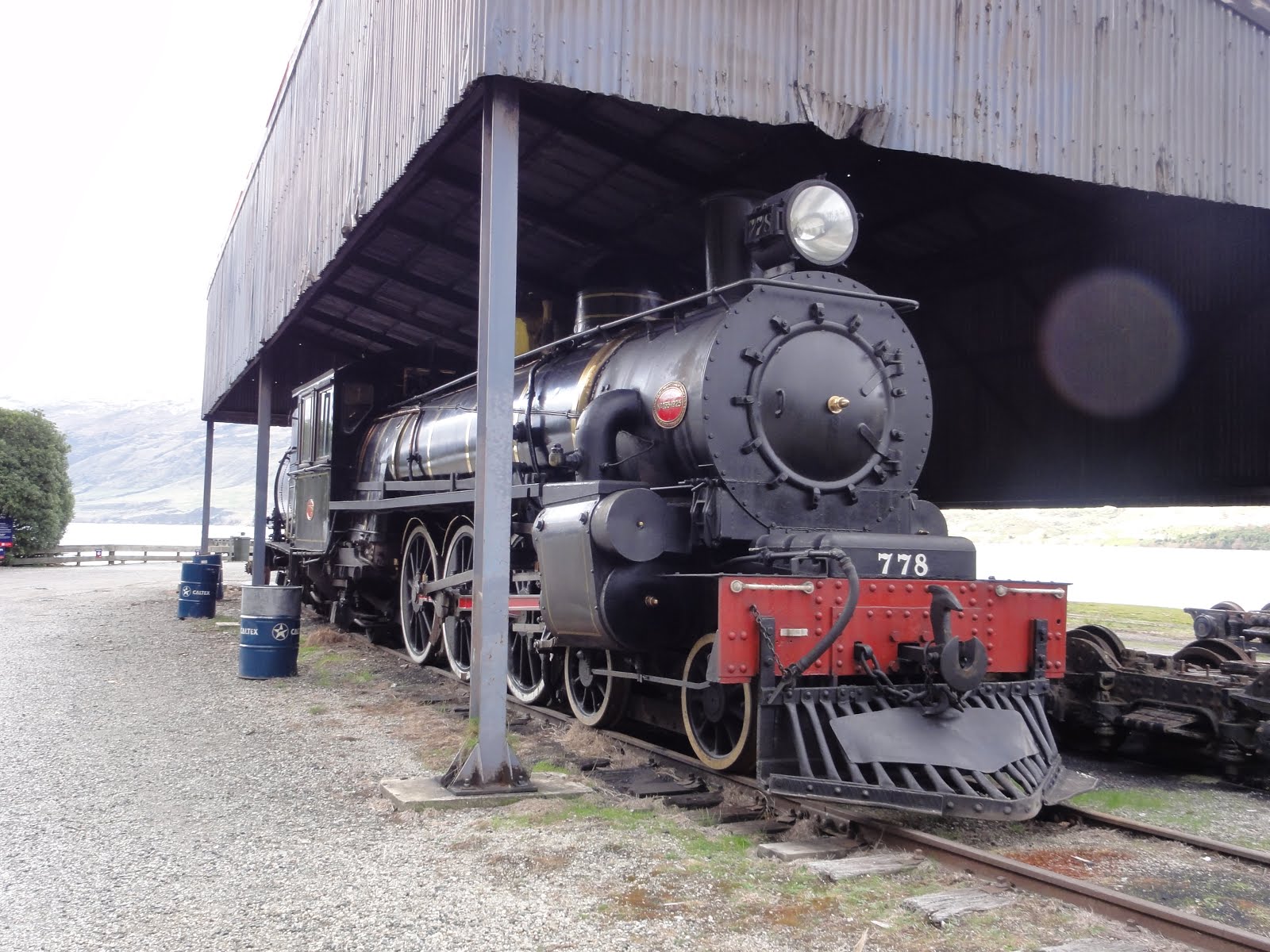
The Kingston Flyer was a vintage train that ran about 14km to Fairlight from Kingston, at the southern end of Lake Wakatipu, and back.

This tourist service was suspended in December 2012 because of locomotive issues.

However, before that, we managed to go on one of the tours, and it was a memorable trip.  Trying to drink a cup of tea from the restaurant car was very difficult, given how much the carriages moved around on the tracks.

The original Kingston Flyer ran between Kingston, Gore, Invercargill, and sometimes Dunedin, from the 1890s through to 1957.

There are two steam locomotives used for the Kingston Flyer service, the AB778 starting service in 1925, and the AB795 which started service in 1927.

The AB class locomotive was a 4-6-2 Pacific steam locomotive with a Vanderbilt tender, of which 141 were built between 1915 and 1927 some of which by New Zealand Railways Addington Workshops.

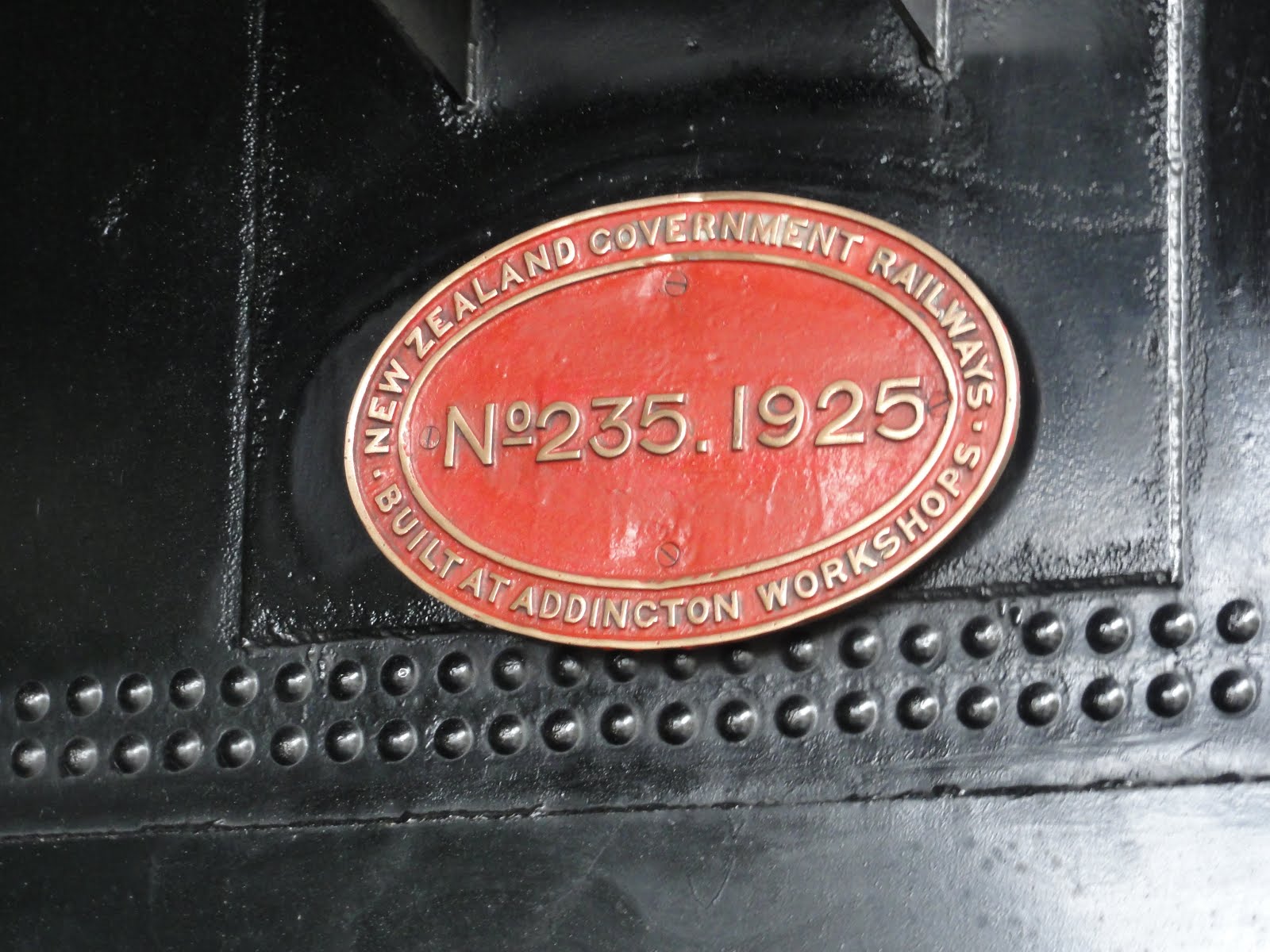
No 235 is the builder’s number for the AB778

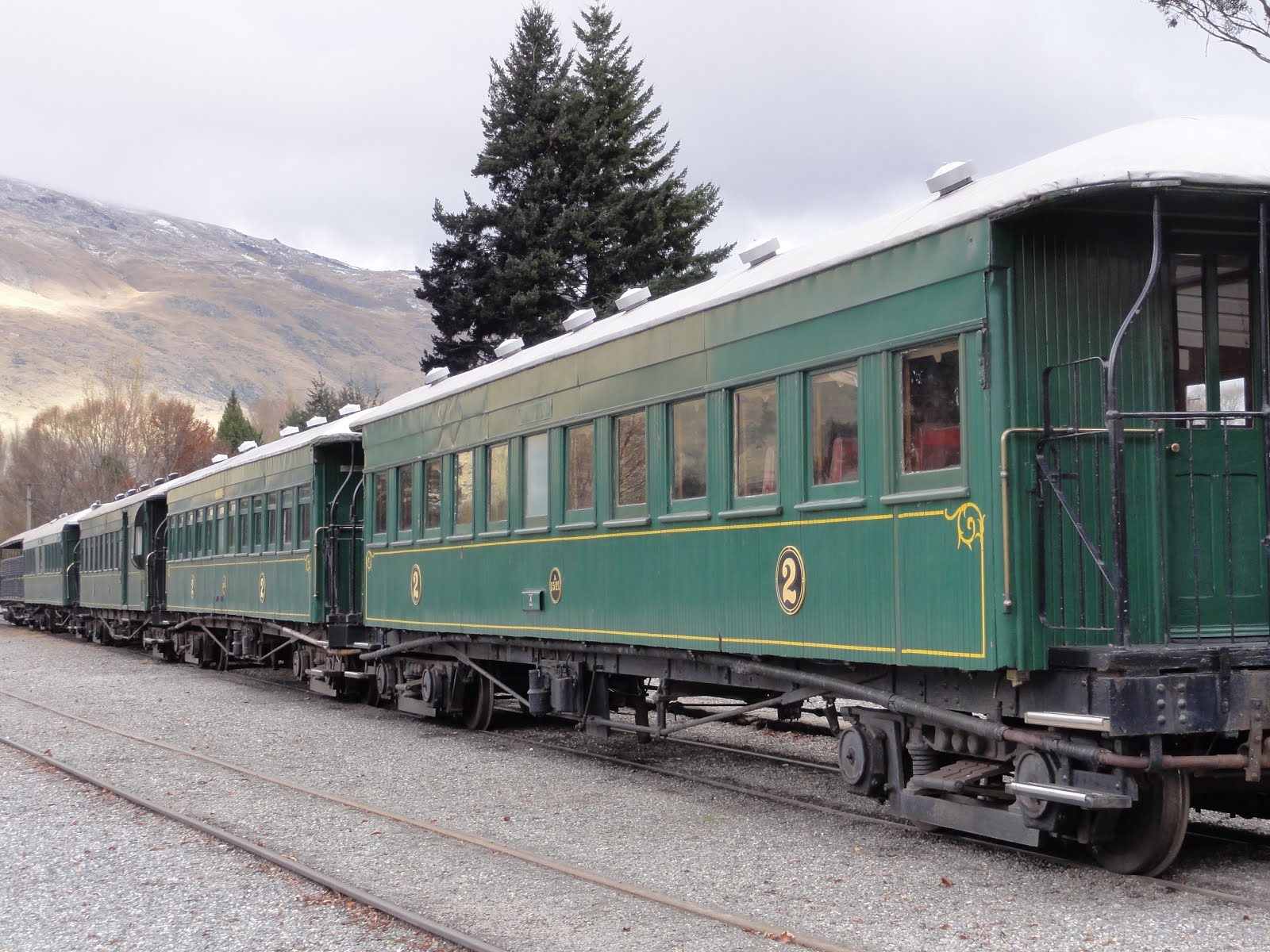
There were seven wooden bodied passenger carriages, three passenger coaches, one passenger/refreshments carriage and two car/vans.  The is also a Birdcage gallery coach.  Each of the rolling stock was built between 1900 and 1923.  They were built at either of Addington, Petone, or Hillside.

I suspect the 2 on the side means second class

The passenger coach we traveled in was very comfortable.

This is one of the guard’s vans, and for transporting cargo.

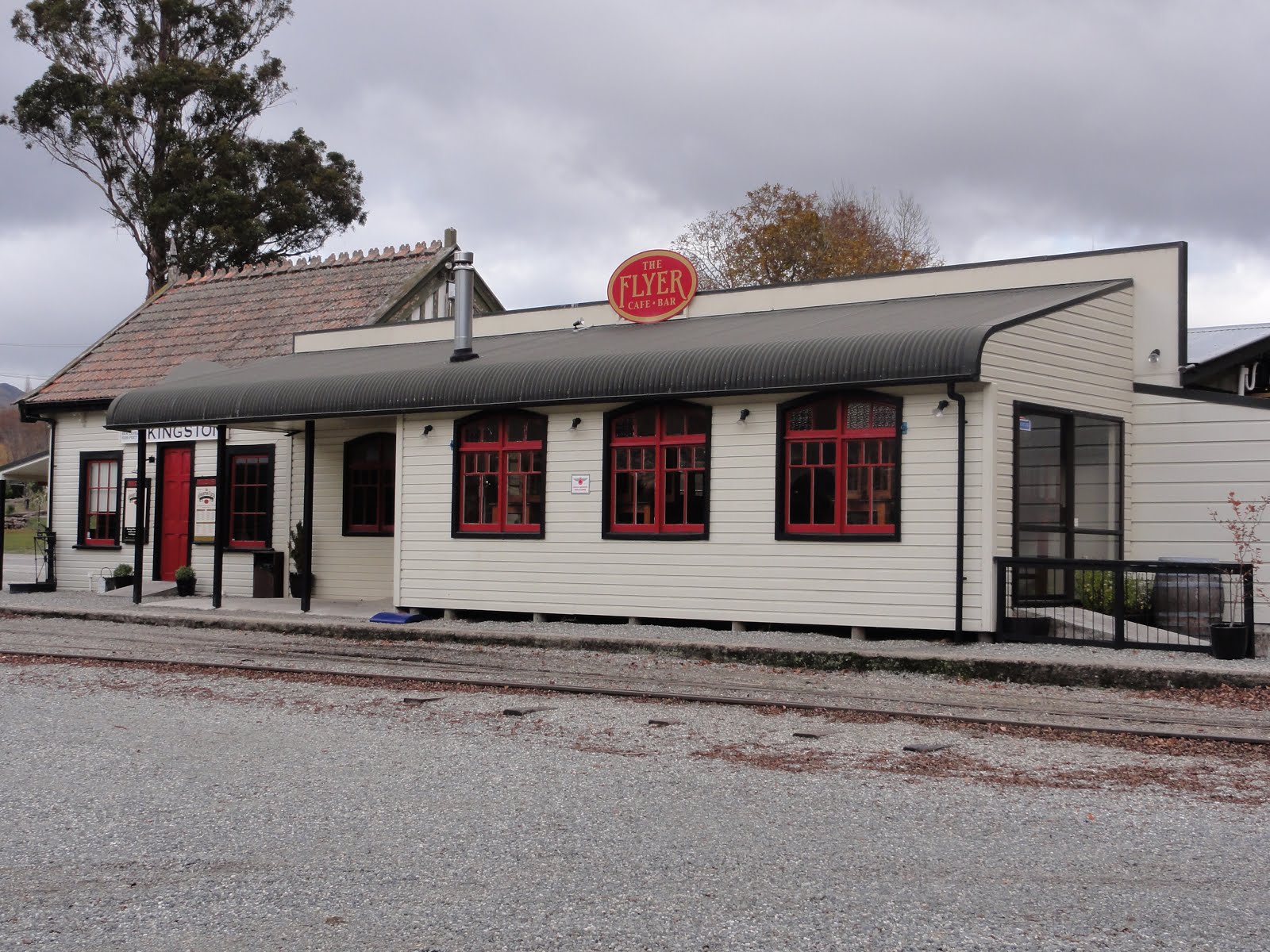
The Kingston Railway Station

and cafe.

A poster sign advertising the Kingston Flyer

The running times for the tourist services, when it was running.

In a word: Steal

You know how it goes, somebody breaks into your house and they steal the family jewels, which means, they’ve taken something that’s not theirs.

Baseballers will be well familiar with the term steal a base because that sneaky second base runner is trying to get to third, before the pitcher fires in a curveball.

But then there’s that same thief trying to rob you is stealing his way downstairs.

You come across a bargain, that is the seller doesn’t quite know what they’ve got and assumed it’s junk, that’s a steal.

On stage, one actor can steal the limelight from another.  if a film, an actor with a lesser part, can, if their good enough, steal the scene.

And if you’re lucky enough, you might steal a kiss, or just get slapped.

Then there’s the government, using a certain event to change the laws, and it might just steal your liberty.

This is not to be confused with the word steel, which means something else entirely, like a very malleable metal that’s low in carbon.

Or like most of our heroes, they have nerves of steel, or if they are like us, they need to steel themselves with a suitable fortification, rum is my choice.

But for me, I like the phrase, he had a steely look on his face and it was hard to tell if that was good or bad.

Searching for locations: Florence, Italy

Florence is littered with endless statues, and we managed to see quite a few,

If those statues came to life I wonder what they might tell us?

Like castles on the shores of the Rhine, there are only so many statues you can take photos of.  Below are some of those I thought significant

2013-06-17 09.16.14

Michelangelo’s David directs his warning gaze at someone else.

2013-06-17 09.16.24

The impressive muscles of Baccio Bandinelli’s Hercules from 1533. The worked-out demi-god is pulling the hair of Cacus, who will be clubbed and strangled.

2013-06-17 09.17.13

Achilles with Polyxena in arm, stepping over her brother’s body

2013-06-17 09.18.08

Menelaus supporting the body of Patroclus, in the Loggia dei Lan

2013-06-17 09.18.28

Statue of Hercules killing the Centaur by Giambologna in Loggia dei Lanzi. Piazza della Signoria.

On the back of the Loggia there are six marble female statues, probably coming from the Trajan’s Foro in Rome, discovered in 1541 and brought to Florence in 1789

Figures of speech

I found this explanation on the internet: ‘a word or phrase used in a non-literal sense for rhetorical or vivid effect.’

We as writers should not use these in our writing because most people might not understand their use.  I think it sometimes adds a degree of whimsy to the story.

I remember some years ago when I working with a Russian chap who’d not been in the country very long, and though he had a reasonable use of English, it was not quite up with our figures of speech.

And made me realize when he kept asking me what they meant, just how many I used in everyday use.

Most of these figures of speech use descriptions that do not necessarily match the word being described, such as ‘I dance like I have two left feet’.

And that pretty much sums up how good I can dance.  But …

‘Like a bat out of hell’, not sure how this got into the vernacular

‘Like a bull in a china shop’, describes a toddler let loose, no, you had the securely in their pram but somehow they got loose while you weren’t looking

‘More front than Myers’, as my mother used to say, but in context, Myers is the Australian version of the English Selfridges or Harrods or Paris Galleries Lafayette.  It refers to the width of street frontage of the stores, which in fact stretched for a whole block

‘As mad as a hatter’, though not necessarily of the millinery kind, but, well, you can guess, it’s from Alice in Wonderland

‘As nutty as a fruitcake’, provided your fruitcake has nuts in it

And, ‘I haven’t heard from him in donkey’s years’ which means you haven’t heard from someone for a long time, or perhaps as long as it takes donkey’s ears to fully grow.

Yes, someone made a minor adjustment and added a y to ears, because it used to be ‘donkey’s ears’, believe it or not.

You can see, if you get the references, they are somewhat apt, and, yes, they sometimes creep into my stories.


Writing about writing a book – Day 21 continues

I’m still working on Bill’s backstory, and how he got mixed up in the war, and as a general background to his situation, and life before Davenport.

This is still in his own words:


But whether we were stupid or naive, or completely mad, we were all eager to get into battle, filled with the sort of hate only Army propaganda films could fill you with.  They were our enemy, and they deserved to concede or die.

A fresh face in a hardened platoon, I was eager to get on with it.  They looked knowingly, having seen it all before.  No idea of the reality, and no time to tell us.  Have a few beers to celebrate, and then, the next morning, go out on patrol.  No problem.

There was camaraderie, but it was subdued.  We walked single file, the seasoned campaigners in front and at the rear, treading carefully, demanding quiet, and a general cautiousness.  In the middle of nowhere, where only the sound of rain, or the animals and birds for company, we were naive enough to think this was going to be a doddle.

Then it happened, six hours out, and just before we reached a small clearing.  I thought to myself it was odd there should be such a clear space with jungle all around it.  There must be a reason.

There was.

We had walked into an ambush, and everyone hit the ground.  I was bringing up the rear with another soldier, a veteran not much older than myself whose name was Scotty, a little farther back from the main group.  Bullets sprayed the undergrowth, pinging off trees and leaves.  I buried my face in the dirt, praying I would not die on my first patrol.

We became separated from the others, lying in a hollow, with no idea how far away help was.  He was muttering to himself.  “God, I hate this.  You can never see the bastards.  They’re out there, but you can never bloody well see them.”  Then he crawled up the embankment, gun first.

He let off a few rounds, causing a return of machine-gun fire, spattering the dirt at the top.  Next thing I knew he was sliding down the hill with half his face shot away.  Dead.  I threw up there and then.  What an initiation.

Then one of the enemy soldiers came over the hill to check on his ‘kill’.  I saw him at the same time he saw me and aimed my gun and shot.  It was instinct more than anything else, and I hadn’t stopped to think of the consequences.  He fell down, finishing up next to me, staring at me from black, lifeless eyes. 

Dead. 

I’ll never forget those lifeless eyes.  I just got up and ran, making it back to the rest of the group without getting hit.  No one could explain how I made it safely through the hail of gunfire, from our side and theirs.

Back in the camp later, the veterans remarked on how unlucky Scotty was and how lucky I was to shoot one of the enemies, and not be killed myself.  They all thought it was worth a celebration.

Before we went out the next day to do it all again.

I spent the night vomiting, unable to sleep, haunted look on his face, one I finally realized that reflected complete astonishment.


There will be more, as the story develops.


© Charles Heath 2016-2020

Short story writing, don’t try this at home (5)

This is not meant to be a treatise on short story writing.  Far be it for me to advise anyone on the subject.  I prefer to say how it is that I do it so you can learn all of the pitfalls in one go.

Now, there’s this thing called continuity, but it covers a whole range of writing sins, most of which I eventually get caught out.  Films sometimes miss a few items, like back in the roman days, there are plane trails in the sky, in a 1920’s period piece, there’s a mobile phone sitting on a desk.

Like one minute the hero has a gun, and the next he’s fighting for his life with a knife, and, hey presto, there’s that gun again.  The error might not be that big but you can’t pull out a weapon you don’t have or wasn’t there in the first place.

Similarly, the hero pulls out a mobile phone, but there’s only one problem, it’s 1980, and there are no mobile phones.  Our problem might be that we are so used to doing and using certain things that we might forget, for a minute or two, that were not available in the past.

The same goes for the fashion of the day.

And my all-time favourite, getting the right make and model of car.

Oh, and just for good measure, back in the old days they used acoustic couplers to attach to phones via a serial port to dial-up not a server, but a BBS, Bulletin Board Service, at a rate of 300 baud, or a little while later, 1,200 baud.

There was no internet in general use.  If you wanted to call the office when out, use a telephone box.  Or carrier pigeon.

And the use of language, there’s a lot of stuff relevant today that was not used back then, and there was a lot of stuff back then that isn’t tolerated now.  Some of it might be hard to get your head around.  It isn’t for me, because I can remember the 1970s and 1980s, but I’m not too sure about allowing some of what happened then to creep into my work.

So, you get the picture.  Try to use the past as the past, or leave it in the past.

Unless it’s a book about time travel, then all bets are off.

In a word: Port

So, I wonder if it’s true, any port in a storm, except perhaps Marsailles

Or, if you are a lothario type sailor, you would have a girl in every port.

Yes, the most common definition of a port is a place where ships dock.

And, while talking of ships we don’t call the sides left and right, we call them port and starboard.  Just in case you didn’t know, port is the left side of the ship when facing forward.

And of course, ships have portholes, ie windows, traditionally round and rather small.


It could be an alcoholic drink, imbibed mostly after dinner with coffee and cigars, though no one seems to smoke cigars any more.

There is still coffee, for now.  No doubt sometime in the future someone will link it to death and dying, and it will fall out of favour, like sugar, weedkillers and asbestos.

The best port seems to come from Portugal, strange about that.


You can port a program (app in phone speak) from one platform to another, which basically means from Android to Apple IOS, but not without a reasonable amount of work.

It can also be an outlet plug on a computer that accepts cables from other devices (USB) and many years ago, a printer port, and a serial port.


In certain places in the world a port is a child’s schoolbag, a definition I was not aware of until we moved to a different state.

I’m still having a problem with it 30 years on.

Conversation with my cat – 82

This is Chester.

It’s been a long summer, and it’s not only the heat that’s been bothering him.

It’s been school holidays, and along with many households where it’s not possible for parents to go on holidays, it falls to the grand parents to mind children. It’s a job I take seriously, and also a time to be spent with them before they grow up and disappear into the adult world.

Chester, however, only sees it from a cat’s point of view. To him, they’re trouble, but perhaps not without reason. They did torment him something terrible when they were young.

Of course, what he fails to realise is that children when young don’t quite understand animal etiquette, that is they should be treated with care.

But, I said in their defence, when you were a kitten you were an absolute monster, sinking your claws into everything, ruined lounge chairs and curtains, unravelled balls of wool, and, this was the cruncher, refused to chase mice.

Of course, as usual, when the arguement goes against him, those eyes close, and he pretends he’s asleep. It doesn’t fool me. But once that happens, no one scores any points.

And something else I’ve noticed, his memory is fading.

Of course, I didn’t tell him that they don’t officially go back till Wednesday, so he’s in for a surprise tomorrow morning.