Writing a book in 365 days – 42

Day 42

A writing exercise

…

She spent the first weekend of the month dreaming about the things she was too afraid of doing every other weekend of every other month of her life.

And those dreams did not include her using her real name Doris, but of someone more sophisticated, Delores, or Delilah, or Darcy, the name she was going to use for her firstborn daughter, not that it was ever going to happen.

It was just another one of those dreams, of dressing up, going out to a bar, sitting at the counter sipping on a long cool cocktail when a tall dark mysterious handsome man slipped into the seat beside her…

“Doris!”

The grating sound that resembled her name came from another room, a voice that was the product of a lifetime of smoking 50 cigarettes a day, a voice belonging to her mother, the woman who was stealing the very days of her life away from her.

Doris was never going to see 30, we’ll 35, alright then 41, again.

“What?”

She should not have yelled back, but it was the umpteenth time that day, and she was tired.  Her mother’s harking cough had kept her awake all night, and it wasn’t getting better.  She refused to go into palliative care where they could look after her, preferring to burden her youngest daughter with her care.  Payback, she said, for all the years she had to look after Doris.

Not the two older sisters who were married with children, who also got the same care as Doris, which basically amounted to zero.  The other two couldn’t wait to get away from home knowing what was going to happen.

“I need my pills.  Where are they?”

“In the yellow bottle next to the bed.”

The old woman knew exactly where they were.

“There isn’t any cold water!”

Doris shrugged.  It would be the third time she had refilled the water bottle.  What was she doing with it?

She waited another minute and then went to the refrigerator and got the jug of water, then went into the room.

It was hot and stuffy, and the window closed.  When she had last been in the room, it had been open.  There was also a slight hint of cigarette smoke in the room.  She had been smoking again, very much against doctors’ orders.

It meant her mother could move around and quite easily have come out.  Certainly, she could go to the window and put her head out, attempting to disperse smoke outside.

Doris filled the bottle.  “Next time, come out yourself.  You’re quite capable of walking and the exercise will do you good.”

“You heard the doctor.  No excessive movement.”

“Doesn’t stop you from breaking the rules and smoking.  You have emphysema, and smoking won’t help it.”

“I’m dying anyway. What do you care what I do?”

“More than you can obviously comprehend.  Do whatever you’re going to anyway.”

She turned and walked towards the door.  This battle of wills was never going to end, and she knew neither of them was going to win.

“What’s for dinner?”

She stopped and turned around.  At first, she was sympathetic, but that was before she realised her mother could be very manipulative.   “What do you care.  You won’t eat it anyway.”

“That’s because it tastes horrible.”

“That’s because of your treatment.  I’m just giving you what the doctor and dietician recommended.”

“Then I’d rather starve to death.”

Doris gave her a glare and left.  There was no point arguing with her.  All that would do was upset them both.

Respite came once a month when Doris was able to escape for a weekend, which inevitably ended up just staying at a small hotel not far from home, dining in the restaurant, and rising late to have breakfast in bed.

Just not having to wake to the barked sound of her name, “Doris,” reverberating through the passageways of their tiny house was reward enough.

But, there she gave free rein to her imagination and wondered what adventures she could get up to in just the course of one day.

This Saturday, she had arrived at the hotel and the proprietor, Jason Prederfield greeted her in his usual cheery manner, asked her the same question she had no doubt she asked all the guests on arrival then gave her the key to the room.

It was the same room each week, overlooking the park and playing fields, which in summer were hosting cricket matches and in winter soccer matches.  Sometimes she should go over and watch, but more often, just sat in the very comfortable old leather lounger chair near the window and read.

She was an avid reader of Mills and Boon romance novels and had brought three with her. 

More than once, she had wished that her life would be like a Mills and Boon, but there was no fairy godmother as there wasn’t a three-wish-granting genie.

If only there was.

She woke with a start, the sound of the book plopping on the ground after it slipped out of her hands waking her.

It was just beginning to get dark, and soon night would set in.  Time to dress for dinner.  This time, instead of going down to the hotel dining room, she was going to treat herself at an upmarket fish restaurant not far from the hotel.

She had seen in when out on a morning walk the last few weeks and decided it was time for something different.

She showered, went through the rigorous of applying her ‘face’ more carefully, added style to her email, then brought her special occasion dress, her version of a little black dress that was less revealing than it could be but just enough to make her feel at least five years younger.

An examination of the finishing product in the mirror told her that her life was not over yet, and maybe something might just happen.

And, even if it didn’t, she had, at the very least, felt a spark of excitement she hadn’t for a long time.

At the bottom of the stairs, she collected her coat from the rack and Jason helped her put it on and said that he had not seen her look better, in a tone that sent a shiver down her spine.

At the restaurant, she had made the booking in the name of Delores Sparks, using her surname but a change in the first.  Doris sounded plain, the name of a woman who would never frequent this restaurant.

While being escorted to her table, she noticed there were about a dozen other diners, married or not, couples, and she could feel the eyes of the men on her.

She ordered a glass of French Champagne, Bollinger, one she had seen advertised, and perused the menu.  For some odd reason, it was written in French, perhaps a mistake, but she smiled to herself.

She had taught herself French back in school and was now fluent.  One of those dreams was to visit France, but she never quite found the courage to go alone. 

Perhaps, after tonight…

The waitresses came, stood beside her, and waited patiently.  She gave her order in French and then had a quick conversation with the waiter, surprisingly able to speak the language.

It seemed to captivate some of the people around her.

A few minutes later, the maitre’d came over.  “Excuse me, madam.”

She looked up, wondering what the problem could be.

“We have a slight problem which you may be able to help us with.  We are fully booked and just realised we have a regular guest whom we can not accommodate…”

She glanced over to the front door and saw a middle-aged well-dressed man who looked on her opinion, either a banker, a lawyer, or an accountant.  He was a rather good-looking man at that.  Probably married, the good ones she discovered early on were always taken.

“Would it be possible to share a table?  He says he is prepared to pay for your dinner.  I will be happy to cover your drinks.  He has been here many times and I can vouch for his good character.”

Another glance, then back to the maitre’d.

“Of course.  I accept your kind offer.”

“Very good.  This will not be forgotten Madam, when you return.”

She deliberately didn’t turn around to watch as he was escorted to the table but as he appeared in front of her she rose to greet him.  In that moment she felt a little weakness in her knees, a strange reaction indeed.

“I must thank you, Miss, Mrs…”

“Just call me Delores.”

“Delores, what an interesting name.  My name is Jackson Courtney, Jack for short.”

They shook hands, a rather peculiar thing to do for her, perhaps not him, but the touch of hands was almost electric.  She had to quell her imagination or she might start blushing.

“Please, sit.”

They did and the waitresses came over for his drink order.

“I’ll have what Delores is having.”

The waiter nodded and left.

Delores smiled inwardly, noticing how he pronounced her name had that edge to it that might give a little shiver.

“What brings you to this restaurant?  I have to say I am somewhat surprised that you are dining alone.”

Oh, God.  She hadn’t quite thought that far ahead that she would have to give a proper and sensible conversation, one that didn’t include her telling him she was a full-time carer for her sick mother.

Delores was far more sophisticated.  She took in a deep breath and slowly exhaled.  “I try to find a small hotel and a different restaurant every so often after the hustle and bustle of London.”

“There’s no Mr Delores?”

“Is there no Mrs Courtney?”  Better to answer a question with a question and work on that air of mystery.

He smiled and it made all the difference to his expression.  Tanned, signs of being an outdoor type, hair lightly receding, but no greying.  There was more but that would do for now.

“Touche.  We should not dance on the boundaries.  Do you prefer the weather or our health as suitable topics?”

A sense of humour.  “Latest movies perhaps, a book, news that doesn’t involve politics, religion or that swamp on the other side of the Atlantic.”

“You don’t like America?”

“Oh, I love the country, I just don’t like half the people.  But that’s a woman’s perspective.  I suspect a man’s opinion would be different.”

And she swore to herself she was not going to talk politics.  “Sorry.  My personal opinions are mine and best left in my head.  Sometimes I speak without thinking, or perhaps it sounded better in my head.”

“You and me both.  I can and have put my foot in my mouth.”

His champagne came and they decided to focus on the menu.  He didn’t speak French.

…

©  Charles Heath 2025

An excerpt from “The Things We Do For Love”; In love, Henry was all at sea!

In the distance, he could hear the dinner bell ringing and roused himself.  Feeling the dampness of the pillow, and fearing the ravages of pent-up emotion, he considered not going down but thought it best not to upset Mrs. Mac, especially after he said he would be dining.

In the event, he wished he had reneged, especially when he discovered he was not the only guest staying at the hotel.

Whilst he’d been reminiscing, another guest, a young lady, had arrived.  He’d heard her and Mrs. Mac coming up the stairs and then shown to a room on the same floor, perhaps at the other end of the passage.

Henry caught his first glimpse of her when she appeared at the door to the dining room, waiting for Mrs. Mac to show her to a table.

She was in her mid-twenties, slim, with long brown hair, and the grace and elegance of a woman associated with countless fashion magazines.  She was, he thought, stunningly beautiful with not a hair out of place, and make-up flawlessly applied.  Her clothes were black, simple, elegant, and expensive, the sort an heiress or wife of a millionaire might condescend to wear to a lesser occasion than dinner.

Then there was her expression; cold, forbidding, almost frightening in its intensity.  And her eyes, piercingly blue and yet laced with pain.  Dracula’s daughter was his immediate description of her.

All in all, he considered, the only thing they had in common was, like him, she seemed totally out of place.

Mrs. Mac came out of the kitchen, wiping her hands on her apron.  She was, she informed him earlier, chef, waitress, hotelier, barmaid, and cleaner all rolled into one.  Coming up to the new arrival she said, “Ah, Miss Andrews, I’m glad you decided to have dinner.  Would you like to sit with Mr. Henshaw, or would you like to have a table of your own?”

Henry could feel her icy stare as she sized up his appeal as a dining companion, making the hair on the back of his neck stand up.  He purposely didn’t look back.  In his estimation, his appeal rating was minus six.  Out of a thousand!

“If Mr. Henshaw doesn’t mind….”  She looked at him, leaving the query in mid-air.

He didn’t mind and said so.  Perhaps he’d underestimated his rating.

“Good.”  Mrs. Mac promptly ushered her over.  Henry stood, made sure she was seated properly and sat.

“Thank you.  You are most kind.”  The way she said it suggested snobbish overtones.

“I try to be when I can.”  It was supposed to nullify her sarcastic tone but made him sound a little silly, and when she gave him another of her icy glares, he regretted it.

Mrs. Mac quickly intervened, asking, “Would you care for the soup?”

They did, and, after writing the order on her pad, she gave them each a look, imperceptibly shook her head, and returned to the kitchen.

Before Michelle spoke to him again, she had another quick look at him, trying to fathom who and what he might be.  There was something about him.

His eyes, they mirrored the same sadness she felt, and, yes, there was something else, that it looked like he had been crying?  There was a tinge of redness.

Perhaps, she thought, he was here for the same reason she was.

No.  That wasn’t possible.

Then she said, without thinking, “Do you have any particular reason for coming here?”  Seconds later she realized she’d spoken it out loud, had hadn’t meant to actually ask, it just came out.

It took him by surprise, obviously not the first question he was expecting her to ask of him.

“No, other than it is as far from civilization, and home, as I could get.”

At least we agree on that, she thought.

It was obvious he was running away from something as well.

Given the isolation of the village and lack of geographic hospitality, it was, from her point of view, ideal.  All she had to do was avoid him, and that wouldn’t be difficult.

After getting through this evening first.

“Yes,” she agreed.  “It is that.”

A few seconds passed, and she thought she could feel his eyes on her and wasn’t going to look up.

Until he asked, “What’s your reason?”

Slightly abrupt in manner, perhaps, because of her question and how she asked it.

She looked up.  “Rest.  And have some time to myself.”

She hoped he would notice the emphasis she had placed on the word ‘herself’ and take due note.  No doubt, she thought, she had completely different ideas of what constituted a holiday than he, not that she had said she was here for a holiday.

Mrs. Mac arrived at a fortuitous moment to save them from further conversation.

Over the entree, she wondered if she had made a mistake coming to the hotel.  Of course, there had been no conceivable way she could know that anyone else might have booked the same hotel, but realized it was foolish to think she might end up in it by herself.

Was that what she was expecting?

Not a mistake then, but an unfortunate set of circumstances, which could be overcome by being sensible.

Yet, there he was, and it made her curious, not that he was a man, by himself, in the middle of nowhere, hiding like she was, but for quite varied reasons.

On discreet observance, whilst they ate, she gained the impression his air of light-heartedness was forced, and he had no sense of humour.

This feeling was engendered by his looks, unruly dark hair, and permanent frown.  And then there was his abysmal taste in clothes on a tall, lanky frame.  They were quality but totally unsuited to the wearer.

Rebellion was written all over him.

The only other thought crossing her mind, and incongruously, was he could do with a decent feed.  In that respect, she knew now from the mountain of food in front of her, he had come to the right place.

“Mr. Henshaw?”

He looked up.  “Henshaw is too formal.  Henry sounds much better,” he said, with a slight hint of gruffness.

“Then my name is Michelle.”

Mrs. Mac came in to take their order for the only main course, gather up the entree dishes, and then return to the kitchen.

“Staying long?” she asked.

“About three weeks.  Yourself?”

“About the same.”

The conversation dried up.

Neither looked at the other, rather at the walls, out the window, towards the kitchen, anywhere.  It was, she thought, unbearably awkward.

Mrs. Mac returned with a large tray with dishes on it, setting it down on the table next to theirs.

“Not as good as the usual cook,” she said, serving up the dinner expertly, “but it comes a good second, even if I do say so myself.  Care for some wine?”

Henry looked at Michelle.  “What do you think?”

“I’m used to my dining companions making the decision.”

You would, he thought.  He couldn’t help but notice the cutting edge of her tone.  Then, to Mrs. Mac, he named a particular White Burgundy he liked, and she bustled off.

“I hope you like it,” he said, acknowledging her previous comment with a smile that had nothing to do with humour.

“Yes, so do I.”

Both made a start on the main course, a concoction of chicken and vegetables that were delicious, Henry thought when compared to the bland food he received at home and sometimes aboard my ship.

It was five minutes before Mrs Mac returned with the bottle and two glasses.  After opening it and pouring the drinks, she left them alone again.

Henry resumed the conversation.  “How did you arrive?  I came by train.”

“By car.”

“Did you drive yourself?”

And he thought, a few seconds later, that was a silly question, otherwise she would not be alone, and certainly not sitting at this table. With him.

“After a fashion.”

He could see that she was formulating a retort in her mind, then changed it, instead, smiling for the first time, and it served to lighten the atmosphere.

And in doing so, it showed him she had another more pleasant side despite the fact she was trying not to look happy.

“My father reckons I’m just another of ‘those’ women drivers,” she added.

“Whatever for?”

“The first and only time he came with me I had an accident.  I ran up the back of another car.  Of course, it didn’t matter to him the other driver was driving like a startled rabbit.”

“It doesn’t help,” he agreed.

“Do you drive?”

“Mostly people up the wall.”  His attempt at humour failed.  “Actually,” he added quickly, “I’ve got a very old Morris that manages to get me where I’m going.”

The apple pie and cream for dessert came and went and the rapport between them improved as the wine disappeared and the coffee came.  Both had found, after getting to know each other better, their first impressions were not necessarily correct.

“Enjoy the food?” Mrs. Mac asked, suddenly reappearing.

“Beautifully cooked and delicious to eat,” Michelle said, and Henry endorsed her remarks.

“Ah, it does my heart good to hear such genuine compliments,” she said, smiling.  She collected the last of the dishes and disappeared yet again.

“What do you do for a living,” Michelle asked in an off-hand manner.

He had a feeling she was not particularly interested, and it was just making conversation.

“I’m a purser.”

“A what?”

“A purser.  I work on a ship doing the paperwork, that sort of thing.”

“I see.”

“And you?”

“I was a model.”

“Was?”

“Until I had an accident, a rather bad one.”

“Oh, I’m sorry.”

So that explained the odd feeling he had about her.

As the evening wore on, he began to think there might be something wrong, seriously wrong with her because she didn’t look too well.  Even the carefully applied makeup, from close, didn’t hide the very pale, and tired look, or the sunken, dark-ringed eyes.

“I try not to think about it, but it doesn’t necessarily work.  I’ve come here for peace and quiet, away from doctors and parents.”

“Then you will not have to worry about me annoying you.  I’m one of those fall-asleep-reading-a-book types.”

Perhaps it would be like ships passing in the night and then smiled to himself about the analogy.

Dinner over, they separated.

Henry went back to the lounge to read a few pages of his book before going to bed, and Michelle went up to her room to retire for the night.

But try as he might, he was unable to read, his mind dwelling on the unusual, yet compellingly mysterious person he would be sharing the hotel with.

Overlaying that original blurred image of her standing in the doorway was another of her haunting expressions that had, he finally conceded, taken his breath away, and a look that had sent more than one tingle down his spine.

She may not have thought much of him, but she had certainly made an impression on him.

…

© Charles Heath 2015-2024

lovecoverfinal1

In a word: Anonymous

Which is how I feel sometimes.

It can be a paradox in that an ordinary man may strive to be recognised, that is, to rise above his inherent anonymity simply because he feels he has something more to offer mankind than just making up the numbers.

But sadly, that desire will often be met with staunch resistance, not because there’s an active campaign against him, it’s just the way of the world.

The fact is, most of us will always be anonymous to the rest of the world, but in being so in that respect it’s that anonymity we can live with.  However, it’s far more significant if we become anonymous to those around us.  And, sadly, it can happen.

It’s when we take someone for granted.

At the other end of the scale, there is the celebrity, who has finally found fame, discovers that fame is not all it’s cracked up to be.  You find that meteoric rise from obscurity an adrenaline rush, and you’re no longer anonymous.

But all that changes when you are constantly bailed up in the street by well-meaning but annoying fans when you are being chased by the paparazzi and magazine reporters who thrive not on the fact that you are famous but watching and waiting for you to stumble.

Some often forget that there’s always a camera on them, or there’s a reporter lurking in the shadows, looking for the next scoop, capturing that awkward inexplicable moment when the celebrity is seen with someone who’s not their spouse, or worse, if it could be that, they get drunk and make a fool of themselves.

Do I really want to lose that anonymity that I have?

Not really.  It seems to me like it might be the lesser of two evils.

An excerpt from “If Only” – a work in progress

Investigation of crimes doesn’t always go according to plan, nor does the perpetrator get either found or punished.

That was particularly true in my case.  The murderer was incredibly careful in not leaving any evidence behind, to the extent that the police could not rule out whether it was a male or a female.

At one stage the police thought I had murdered my own wife though how I could be on a train at the time of the murder was beyond me.  I had witnesses and a cast-iron alibi.

The officer in charge was Detective First Grade Gabrielle Walters.  She came to me on the day after the murder seeking answers to the usual questions like, when was the last time you saw your wife, did you argue, the neighbors reckon there were heated discussions the day before.

Routine was the word she used.

Her fellow detective was a surly piece of work whose intention was to get answers or, more likely, a confession by any or all means possible.  I could sense the raging violence within him.  Fortunately, common sense prevailed.

Over the course of the next few weeks, once I’d been cleared of committing the crime, Gabrielle made a point of keeping me informed of the progress.

After three months the updates were more sporadic, and when, for lack of progress, it became a cold case, communication ceased.

But it was not the last I saw of Gabrielle.

The shock of finding Vanessa was more devastating than the fact she was now gone, and those images lived on in the same nightmare that came to visit me every night when I closed my eyes.

For months I was barely functioning, to the extent I had all but lost my job, and quite a few friends, particularly those who were more attached to Vanessa rather than me.

They didn’t understand how it could affect me so much, and since it had not happened to them, my tart replies of ‘you wouldn’t understand’ were met with equally short retorts.  Some questioned my sanity, even, for a time, so did I.

No one, it seemed, could understand what it was like, no one except Gabrielle.

She was by her own admission, damaged goods, having been the victim of a similar incident, a boyfriend who turned out to be an awfully bad boy.  Her story varied only in she had been made to witness his execution.  Her nightmare, in reliving that moment in time, was how she was still alive and, to this day, had no idea why she’d been spared.

It was a story she told me one night, some months after the investigation had been scaled down.  I was still looking for the bottom of a bottle and an emotional mess.  Perhaps it struck a resonance with her; she’d been there and managed to come out the other side.

What happened become our secret, a once-only night together that meant a great deal to me, and by mutual agreement, it was not spoken of again.  It was as if she knew exactly what was required to set me on the path to recovery.

And it had.

Since then, we saw each about once a month in a cafe.   I had been surprised to hear from her again shortly after that eventful night when she called to set it up, ostensibly for her to provide me with any updates on the case, but perhaps we had, after that unspoken night, formed a closer bond than either of us wanted to admit.

We generally talked for hours over wine, then dinner and coffee.  It took a while for me to realize that all she had was her work, personal relationships were nigh on impossible in a job that left little or no spare time for anything else.

She’d always said that if I had any questions or problems about the case, or if there was anything that might come to me that might be relevant, even after all this time, all I had to do was call her.

I wondered if this text message was in that category.  I was certain it would interest the police and I had no doubt they could trace the message’s origin, but there was that tiny degree of doubt, about whether or not I could trust her to tell me what the message meant.

I reached for the phone then put it back down again.  I’d think about it and decide tomorrow.

© Charles Heath 2018-2020

The Cinema of My Dreams – It ended in Sorrento – Episode 55

Watching the prime suspect

…

I joined Cecelia on the side of a hill about 500 yards from the front of the main entrance to the Burkehardt residence.  On one side there were several outbuildings, and beyond those, the vines, acres and acres of them.  On the other side, where we were, there was more vines and gardens.

It was warm, but we were under the trees and had a hedgerow to hide behind, so we were quite safe from being seen.

Cecelia had picked her spot with care.  Clear sight to the front entrance, clear sight of the driveway from the road to the house, and the opportunity to like up targets with the rifle, already set out.

It was not loaded.  She was using the sight to home in on those at home.

“A mother, a father, two girls and a boy.  The parents fight a lot.  Th mother and the three children left about a half hour ago, and the old man is sitting at a table reading the newspaper.  You’d think he’d be out working.”

“Anyone call?”

“One.  The man answered a cell phone, spoke for a minute then went back to the paper.  If he starts doing the crossword, I’m going to shoot him.”

She took another look, then sat up.  She had brought a hamper with food and drinks.  No wine.  We needed to remain focused.

It was a fine day, and just started to get hot, despite the fact we were quite buried by the surrounding trees.  The heat was tempered by a slight breeze, and the sound of it rustling the leaves was oddly soothing.

One of the more pleasant stake outs I’d been on.

My phone buzzed.  A message.

‘One of the phones called a man named Dicostini about twenty minutes ago and said they were on their way, there was a problem.’

As I suspected, the fake countess was working with Dicostini.

“And…?”  Cecelia looked at me expectantly.

“Expect to see the fake countess.  They are on their way.”

We didn’t have to wait very long.  I had expected they would arrive about an hour after I had, but then, the countess did have some disconcerting news.  What surprised me was the fact she just didn’t tell him over the phone.  If I were Dicostini, I would have told her to stay away for fear of being linked together, and that was still a possibility if there were other people in the house, loyal to the Dicostini or not.

Cecelia had picked up the gun and was pointing it at every car that passed the driveway entrance, checking on the drivers and passengers if there were any.

“Got them.”

I saw the car stop at the driveway entrance for a minute, and then start slowly along the driveway.

“Juliet is driving the car.  The two women are in the back.  Odd.”

“Perhaps they’re practising being wealthy dowagers.”

She put the gun back facing the house.

“You got your phone?”

“Why?

“Alfie would have put an app on it so you can listen to the conversation.  I didn’t think about it until now otherwise we could have listened to them on the way here.”

I gave it to her, and she fiddled with it for a minute, handing it back and the car stopped outside the house.

“You think it would be that riveting?”

“No.  But it might give us some idea what they’re up to?”

Then a voice came over the speaker, not too loud but loud enough for us to hear.

“You stay in the car, Juliet.  The fewer people who know about this the better.”  I could not put a face to the voice.

“Distinction for the uninvolved.  I will not be breaking you out of prison just so you know.”

“Don’t be such a spoilt brat.”

I heard two doors slam and then silence, other than feet crunching on the gravel.  Cecelia lined them up in her sights and said, “Just say the word.”

At the top of the stairs, I could just see them stop at the door and rang the bell.  It took several minutes before Dicostini answered.

“This is not a good idea, coming here,” he said.

“Well, the phones aren’t safe.  We disabled the GPS, and I sure as hell aren’t going to tell you anything using one.  Let’s go inside.”

“You shouldn’t be here.  If anyone sees, you…”

“Not if we come, say our piece, and go.  Arguing is only making it more dangerous.”

He stood to one side and let them pass.

Three minutes later I heard Cecelia say, “Got them again.”

The vices came back.

“What’s so pressing you have to come here.”

“The signing had been delayed.”

“The Burkehardt’s.  The suspect something.  You?  What do you do wrong?”

“I’ve seen the solicitor, and the family in London, even that fool Rodby insisted I use as an escort.  They all think I’m the countess.”

“Except now you are missing, they’re worried.  Rodby should have kept out of it, but you going missing the way you did, has only caused us trouble.  The Burkhardt’s called him and then he had to do something about it.”

“You know that was for effect, to get away from the family because the longer I’m with them the more chance they’ll discover the truth.  Rodby should be happy to know I have been found, which is exactly as it was planned, and that his man will be taking me to the signing.  Rodby will do as he’s told.”

“A week’s a long time for things to go wrong.  You have to say in hiding.”

“It’s another week and I have people pressing me for money.”  Vittoria wasn’t happy.

“You know the deal.  The countess signs the papers, and you get your payment.  I can’t help it if it’s been delayed.  They can’t delay it forever.  You’ve delivered the message, now go, before anyone finds you here.”

© Charles Heath 2023

The cinema of my dreams – Was it just another surveillance job – Episode 56

This story is now on the list to be finished so over the new few weeks, expect a new episode every few days.

The reason why new episodes have been sporadic, there are also other stories to write, and I’m not very good at prioritizing.

But, here we are, a few minutes opened up and it didn’t take long to get back into the groove.

Things are about to get complicated…


“Turn around and head towards the trees, we’re not very far from you,” the voice in my head said.

I turned, saw the trees and moved towards them.

“Straight ahead.”

Then I could just see her, beside one of the tree trunks, under the cover of the canopy.

For the moment we would not be seen, but if someone was looking intently, we would be seen.

Jennifer was kneeling, her knees and weight keeping the assailant on the ground.  She handed me the gun, a silenced Baretta, with the distinct aroma of a discharged bullet.

Jennifer had pulled off the balaclava.  Jan.

Not working for Severin, but Dobbin.  Or someone else?

“Who ordered the hit?”

“Go fuck yourself.”

Not entirely unexpected.

I pulled out my phone and dialled the number for the Detective Inspector that had been at Maury’s crime scene.  I knew there was going to be a need to call her in the not-too-distant future.  And Jan needed to be in a safe place where she couldn’t be got at.

“Who is this?”

My number would have come up as a ‘private number’.

“We met at the hotel where Maury died.”

“The spy?”

“Of sorts.  I’m sorry to say that his companion, Severin, is also now very dead in the rotunda at the Italian Gardens at Hyde Park.  I’d get someone down here before the body is removed or found by a member of the public.”

I heard a scream and deduced it came from the rotunda.

“Too late.  Hurry before the crime scene is contaminated.”

“Where are you?”

“Nearby.  And if you’re especially quick, we have a surprise for you.”

Two constables arrived in four minutes, most likely nearby for another reason.  The Detective Inspector and her Sergeant arrived within 20 minutes, but by that time Jennifer and Jan had retreated to the car, parked away from the gardens.

Anyone seeing us heading away would have picked us for three drunken fools escorting a friend who had passed out.  Jan had struggled to get free, and it had been necessary to subdue her.

I had wanted to ask further questions, but circumstances didn’t allow it.  Not yet.

Leaving Jennifer with Jan, securely tied up, but looking like she was sleeping of a long drinking session, I went back to the crime scene just as the Detective Inspector was coming out of the rotunda.

She recognised me and called me over to the tape that separated the public from the scene.  The forensic team had just arrived and was setting up.  I doubted she would let me into the crime scene area, but I had seen enough when I’d been there with Severin.

“Why are you here, and give me a good reason not to take you into custody.”

“He called me earlier and wanted to talk.  I think he found out Maury was dead, and he was next.  I didn’t kill him, but I know who did, but I’m not sure we’re going to be able to prove it.”

“That weedy little man that saved your ass the last time?”

“Richards or Dobbin?  Either or together or one of their henchmen.  Not sure, to be honest.  All I knop is it’s possible Maury was killed during an intense interrogation.  I suspect Severin was killed to silence him.”

“Because of what?”

“I believe it is about the existence of a formula for a biological weapon.”

…

© Charles Heath 2020-2023

A photograph from the inspirational bin – 53

What story does it inspire?

…

…

While in reality, this is just an ordinary lake at a resort we stayed at a while back and can be used for canoeing.

During summer the surrounding undergrowth is a haven for snakes, and it is not a good idea to wander too close.

Hardly the place to spur the imagination…

Unless, of course, you start thinking about the ethereal aspects it could possess. For instance, it might be the place where the ghosts of those who drowned come out to play at night.

It might be a lake in the middle of what was once an experimental site that needed a lot of water, and that tainted water might be the haven for mysterious creatures.

Ot it just might be part of a disused government secret site, long abandoned, with buildings and infrastructure just waiting for the right explorer to visit. Again, the ghosts of those who once were there could just be the reason why no one goes near the place.

And, what if there was an extensive, and invisible network of underground rooms. Above ground, just a pond and surrounding overgrown gardens, underneath, well, that’s up to you.

Writing a book in 365 days – 41

Day 41

Writing about what you know and your opinion’s relevance

The thought that someone reading your world, be it an article, a short story, a technical diatribe, a novel, or a work of nonfiction, would think at some point that it’s boring would be unthinkable.

But…

You know the subject, you know the bits that interest you; you do not find it boring, no, not in the least.

And yet lost in your own world, it’s fascinating stuff, and it pours out on the pages as liquid gold.

You can not forget that relevant or not the subject matter had to engage the reader and keep them reading until the last pages.

That adage, wiring about what you know, is a good one, but it only goes so far.

So clearly, when writing a novel, the story has to engage the reader at pages 1, paragraph 1, and sentence 1. And believe me, that’s not an easy thing to do.

We’ve been talking about the art of keeping the reader’s attention for a few days now, with various quotes coming from authors who have tackled the problem themselves.

It happens.

It’s why my stories go through half a dozen, if not more, rewrites and edits. I find the first edit after writing a complete story better to be done after leaving it for six months. Then it’s like reading it for the first time, and it’s very easy to pick up the lapses and boring bits.

If there are any.

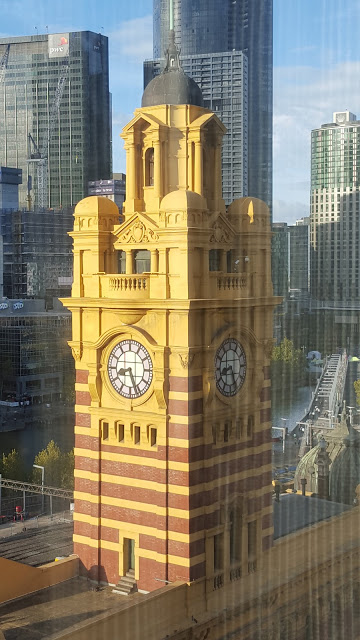
Searching for locations: Flinders Street Station, Melbourne, Australia

This is the famous clock tower of the Flinders Street Station (the main train station for suburban trains) in Melbourne.

We were staying in a hotel (The Doubletree) directly opposite the station and our room overlooked the station and the clock tower.  I took photos of it during the day:

and this one, at night.  It came out better than I thought it would.

20160302_215639

I just want to be finished

Just when you think that the story is done, and you’re on the third re-read, just to make sure…

Damn!

I don’t like the way that chapter reads, and what’s worse, it’s about the tenth time I’ve looked at it.

It doesn’t matter the last three times you read it, it was just fine, or, the editor has read it and the chapter passed without any major comment.

I think the main problem I have is letting go.  For some odd reason, certain parts of a story sometimes seem to me as though they are not complete, or can be missing a vital clue or connection for the continuity of the story.

That, of course, happens when you rewrite a section that is earlier on in the story, and then have to make ongoing changes.

Yes, I hear the stern warnings, that I should have made a comprehensive outline at the beginning, but the trouble is, I can change the ending, as I’m writing it and then have to go back and add the hooks earlier on.  Not the best method, but isn’t that what an editor is for, to pick up the missed connections, and out of the blue events that happen for no reason?

I find that often after leaving a finished story for a month before the next reading, the whole picture must formulate itself in my head, so when I re-read, there was always a problem, one I didn’t want to think about until the re-read.

Even then it might survive a second pass.

I know the scene is in trouble when I get to it and alarm bells are going off.  I find anything else to do but look at it.

So, here I am, making major changes.

But, at least now I am satisfied with where it’s going.

Only 325 pages to go!