“Going out of my mind…” – a short story


Accidents can happen.

Sometimes they’re your fault, sometimes they’re not.

The accident I was in was not. Late at night driving home from work, a car came speeding out of a side street and T-boned my car.

It could have been worse, though the person who said it had a quite different definition of the word worse than I did.

To start with, I lost three months of my life in a coma, and even when I surfaced, it took another month to realize what had happened. Then came two months of working out my recovery plan.

If that wasn’t trial enough, what someone else might describe as the ‘last straw that broke the camel’s back’, my wife of 22 years decided to send me a text that morning, what was six months in hospital, to the day.

“I’m sorry, Joe, but enough is enough. I cannot visit you anymore, and for the sake of both our sanity, I think it’s time to draw a line in the sand. I know what happened isn’t your fault but given the prognosis, I don’t think I can cope with the situation. I need time to think about what will happen next and to do so, I’ll be going home to spend some time with family. Once again, I’m so sorry not to be doing this in person. I’ll let you know what I decide in due course. In the meantime, you have my best wishes for your recovery.”

In other words, goodbye. Her family lived in England, about 12,000 miles away in another hemisphere, and the likelihood of her returning was remote. We had meant to visit them, and had, in fact, booked the tickets shortly before the accident. I guess she couldn’t wait any longer.

My usual nurse came in for the first visit on this shift. She had become the familiar face on my journey, the one who made it worth waking up every morning.

“You look a little down in the dumps this morning. What’s up?”

She knew it couldn’t be for medical reasons because the doctor just yesterday had remarked how remarkable my recovery had been in the last week or so. Even I had been surprised given all the previous negative reports.

“Ever broken up by text?”

“What do you mean?”

“Frances has decided she no longer wants to be involved. I can’t say I blame her, she has put her whole life on hold because of this.”

“That’s surprising. She’s never shown any disappointment.”

“Six months have been a long time for everyone. We were supposed to be going home so she could see her family. Maybe that’s what it’s all about.”

I gave her the phone and she read the message.

Then she handed it back. “That’s goodbye, Tom. I’m sorry. And no, I’ve never had a breakup by text, but I guess there could always be a first time.”

She spent the next ten minutes going through the morning ritual, then said, “I’ve heard there’s a new doctor coming to visit you. Whatever has happened in the last few days had tongues wagging, and you might just become the next modern miracle. Fame and fortune await.”

“Just being able to walk again will be miracle enough.”

That had been the worst of it. The prognosis that it was likely I’d never be able to walk again, or work, and the changes to our lives that would cause. I knew Frances was bitterly disappointed that she might become the spouse who had to spend the rest of her life looking after me, and though she had said it didn’t matter, that she would be there for me, deep down I knew a commitment like that took more internal fortitude than she had.

She ran her own business, managed three children into adulthood, and had a life other than what we had together. When I was fit and able, and nothing got in the way, it had worked. Stopping everything to cater to my problems had severely curtailed her life. Something had to give, and it had.

But, as I said, I didn’t blame her. She had tried, putting in a brave face day after day but once the daily visits slipped to every other day, to once a week, I knew then the ship was heading towards the rocks.

This morning it foundered.

I pondered the situation for an hour before I sent a reply. “I believe you have made the right decision. It’s time to call it, go home and take some time to consider what to do next is right. In normal circumstances, we would not be considering any of this, but these are not normal circumstances. But, just in case you are worried about the effect of all of this on me, don’t. I will get over it, whatever the result is, and what you need to do first and foremost is to concentrate on what is best for you. If that means drawing a line on this relationship, so be it. All I want for you is for you to be happy, and clearly, having to contend with this, and everything else on your plate, is not helping. I am glad we had what time we had together and will cherish the memories forever, and I will always love you, no matter what you decide.”

It was heartfelt, and I meant it. But life was not going to be the same without her.

I’d dozed off after sending the message, and only woke again when my usual doctor came into the room on his morning rounds, the usual entourage of doctors and interns in tow. I’d been a great case for sparking endless debate on the best route for my recovery among those fresh out of medical school. Some ideas were radical, others pie in the sky, but one that seemed implausible had got a hearing, and then the go-ahead, mainly because there was little else that apparently could be done.

That doctor, and now another I hadn’t seen before was standing in the front row, rather than at the back.

The doctor in charge went through the basics of the case, as he did every day, mainly because the entourage changed daily. Then, he deferred to the radical doctor as I decided to call her.

She went through the details of a discovery she had made, and the recommendation she’d made as a possible road to recovery, one which involved several radical operations which had been undertaken by the elderly man standing beside her. When I first met him, I thought he was an escaped patient from the psychiatric ward, not the pre-eminent back surgeon reputed to be the miracle worker himself.

It seemed, based on the latest x-rays, that a miracle had occurred, but whether it was or not would not be known for another week. Then, if all went well, I would be able to get out of bed, and, at the very least, be able to stand on my own. In the meantime, I had endless sessions of physio in the lead-up to the big event. Six months in bed had taken its toll on everything, and the week’s work was going to correct some of that.

It meant there was hope, and despite what I said and thought, hope was what I needed.

There had been ups and downs before this, fuelled by a morning when I woke up and found I could wriggle my toes. It was after the second operation, and I thought, given the number of painkillers, it had been my imagination.

When I mentioned it, there was some initial excitement, and, yes, it was true, I wasn’t going out of my mind, it was real. The downside was, that I couldn’t move anything else, and other than an encouraging sign, as the days passed, and nothing more happened, the faces got longer.

Then, the physiotherapist moved in and started working on the areas that should be coming back to life. I felt little, maybe the painkillers again, until the next, and perhaps the last operation. I managed to lift my left leg a fraction of an inch.

But we’d been here before, and I wasn’t going to hold my breath.

Annabel, the daughter who lived on the other side of the country, finally arrived to visit me. I had thought, not being so far away she might have come earlier, but a few phone calls had sorted out her absence. Firstly, there was not much use visiting a coma patient, second, she was in a delicate stage of her professional career and a break might be the end of it, and thirdly, she accepted that I didn’t want to see her until I was much better.

She was not very happy about it, but it was a costly venture for her, in terms of time, being away from a young family, and just getting there.

Now, the time had come. She had a conference to attend, and I was happy to play second fiddle.

After the hugs and a few tears, she settled in the uncomfortable bedside chair.

“You don’t look very different than the last time I saw you,” she said.

“Hospitals have perfected the art of hiding the worst of it, but it’s true. The swelling had receded, the physios have revived the muscles, and I have a little movement again.”

“The injuries are not permanent?”

“Oh, they’re permanent but not as bad as first thought.”

“Pity my mother isn’t here.”

“She was day after day, through the darkest period. I wouldn’t wish that on anyone. But your mother is an independent woman, and she has always been free to do what she wants, and I would not have had it any other way.”

“But deserting you in the middle of all this…”

“It’s been very debilitating on her. I can understand her reasons, and so should you. She will still be your mother no matter what happens to us.”

There had been a number of phone calls, from each of the children, decrying her actions after she had sent a text message to each of them telling them what she was doing. She had not told them she was leaving, in so many words, but leaving the door ajar, perhaps to allay their fears she was deserting them too. Annabel had been furious. The other two, not so much.

“And this latest development?”

I had also told her about the miracle worker, and the possibilities, without trying to get hopes up.

“On a scale of one to ten, it’s a three. We’ve been here before, so I’m going to save the excitement for when it happens, if it happens.”

“And if it doesn’t?”

It was a question I’d asked myself a number of times, one that I didn’t want an answer to. Hope was staving it off, each day a new day of discovery, and a day closer to the idea I might walk again. I had to believe it would happen, if not the next day, the next week, month, year, that it would eventually happen.

For now, all I had to do was stand on my own two feet.

It was ironic, in a way, that simple statement. ‘Stand on your own two feet’. Right then, it seemed so near, and yet, at the same time, so far away.

I didn’t answer that question, but did what I usually did with visitors, run a distraction and talk about everything else. This visit was no exception. I had a lot of catching up to do.

It’s odd how some call the day of momentous events D-Day because to me nothing would be more momentous than the invasion of France during the Second World War.

Others were not quite of the same opinion. It was going to be a momentous day.

It started the same as any other.

The morning routine was when the duty nurse came to do the checks. Then the physio, now a permanent fixture mid-morning, just after the tea lady arrived. Deliberate, I thought, to deprive me of my tea break, and some unbelievably delicious coconut cookies.

Then the routine changed, and the escort arrived to take me down to the room where the physio had set up an obstacle course. It looked like one, and I’d told him so when I first saw it, and he had said by the time he was finished with me, I’d be able to go from start to finish without breaking a sweat.

In my mind perhaps, but not with this broken body. I didn’t say that because I was meant to be positive.

An entourage arrived for the main event. I would have been happier to fail in front of the doctor, the miracle worker, and the physio, but it seemed everyone wanted a front-row seat. If it worked, the physio confided in me, there was fame and fortune being mentioned in Lancet, which was a prestigious medical journal.

Expectations were running high.

The physio had gone through the program at least a hundred times, and the previous day we had got to the point where I was sitting on the side of the bed. We’d tried this ordinary maneuver several times, previously without success under my own steam but this morning, for some reason it was different.

I was able to sit up, and then, with a struggle move my legs part of the way, and with a little help for the rest.

What was encouraging, was being able to swing my legs a short distance. It was those simple things that everyone could do without thinking, that had seemed impossible not a month before, that got people excited. I didn’t know how I felt other than I missed those simple things.

Then the moment had arrived. Hushed silence.

There was a structure in place. All I had to do was pull myself across, at the same time sliding off the bed and into a standing position. There was a safety harness attached so that if my grip slipped it would prevent me from falling.

It was probably not the time to tell them the pain in my lower back was getting worse.

So, like I’d been instructed, and going one step further than the day before, I reached out, grabbed the bars, and pulled myself up and over, at the same time, sliding off the side of the bed. I could feel the tug of the safety harness which told me I had left the safety of the bed, and was in mid-motion.

I could feel my legs straightening, and then a very softly landing on the floor, the safety harness letting my body drop down slowly.

The pain increased exponentially as the weight came down onto my legs, but my body had stopped moving. I could not feel the tightness of the harness, but a rather odd sensation in my legs.

All that time I had been concentrating so hard that I had heard nothing, not even the encouraging words from the physio.

Until I realized, from the noise around me, that it had worked. I was standing on my own two feet, albeit a little shakily.

And I heard the physio say, in his inimitable way, “Today you just landed on the moon. Tomorrow, it’s going to be one small step for mankind. Well done.”

© Charles Heath 2021

NANOWRIMO – 2024 – Day 16

Behind the Green Door

We discover just how much Michael knows about the world he lives in from the cases he has been assigned. He thinks that management wanting to know what he knows is a waste of time since in a few days he will no longer exist.

He wonders why they gave him the cases they did, if they were worried about what he might find out, considering they knew he was their best investigator.

Alternatively, he begins to realise that some of the cases he had been given were simply because he would find out what happened, and report it back, which in the beginning he did, until he realised that those people were disappearing.

That’s where he realised that those who made trouble for management were best removed. There were no jails, the punishment was removal. He later discovers that there is a specific cleaning squad attached to janitorial services.

And then, in the current circumstances, there were still perpetrators they would want to punish, but he was not going to let them. Up till now, management was still a bunch of invisible people he had glimpsed but never really seen, except for Elsie whom he never told he knew. Oh, and a man named Pemberton, who doesn’t really say who he is, but he is elderly, so by inference, Michael realises Rule 71 doesn’t apply to them.

But he knows if he holds out, management will eventually come, taking him to interrogation, and that last few days would take on a whole new meaning.

Word written today 2,337, making a total of 30,243 words

Searching for locations: Coffs Harbour, New South Wales, Australia, and resorts Wyndham style

We have stayed in two different types of accommodation in Coffs Harbour, New South Wales, Australia, as a timeshare owner who can trade their week for a week anywhere in the world.

Both are resorts, but different sorts of resorts.  The first was a typical RCI resort, where everything is laid back and relaxing, with all the amenities one can expect from a resort.

The other, this one, the Wyndham in Coffs Harbour, is very different, and you notice it when you walk in the front door.  You are virtually assaulted by hard-nosed timeshare sales staff who really don’t take no for an answer, and then when you finally escape, ring you every day to make an appointment.

I left the phone off the hook.

Aside from that, the place is excellent, the accommodation very good, and the situation one of the best with what could be called a private beach.  There are also a number of bushwalks that cater to old people like me.

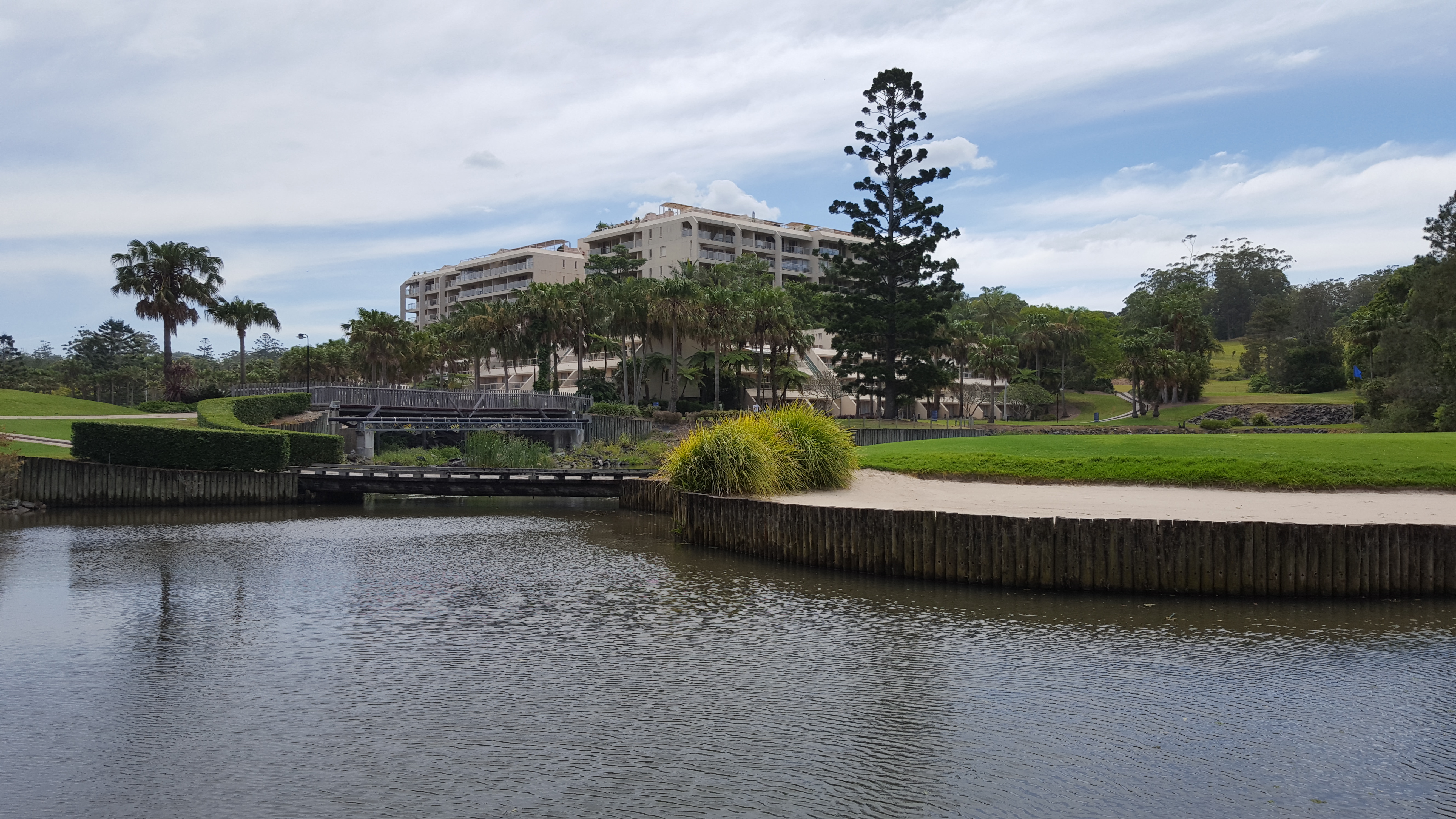
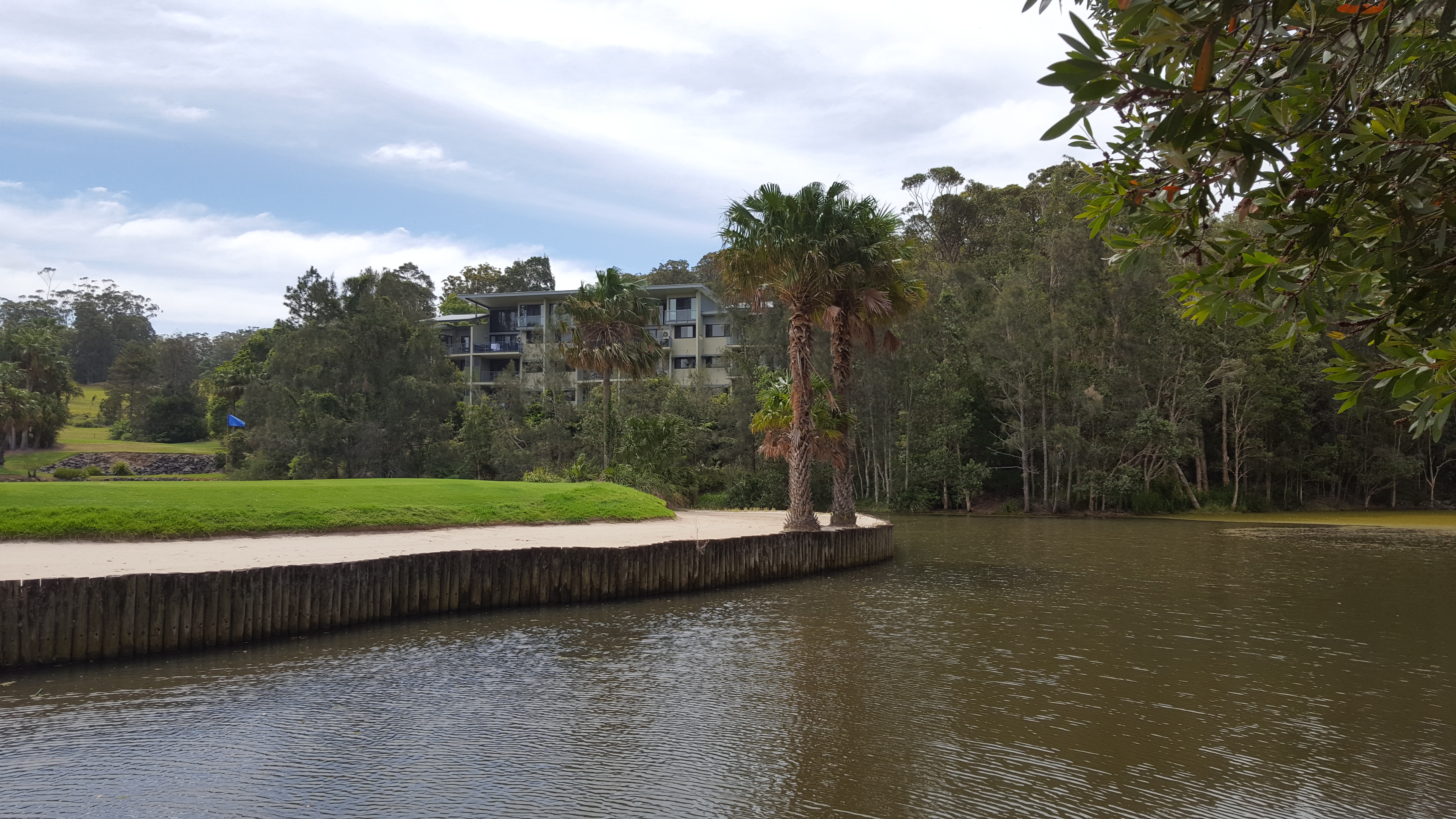
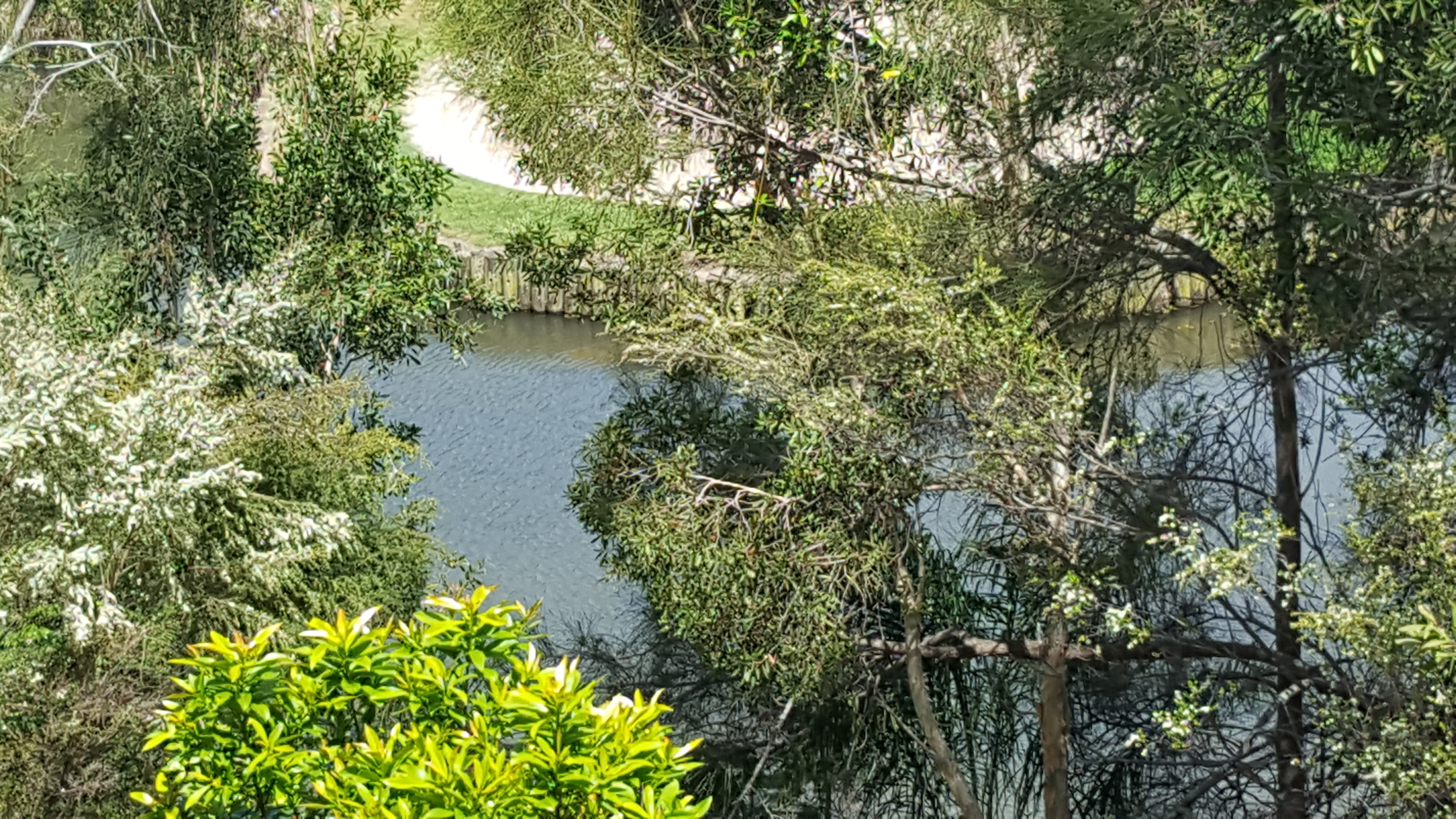
As you can see, lakes and greenery, and even a putting green.

20161030_141653

And in places, they try very hard to hide the ugly multi-story buildings in amongst the trees

20161030_141706

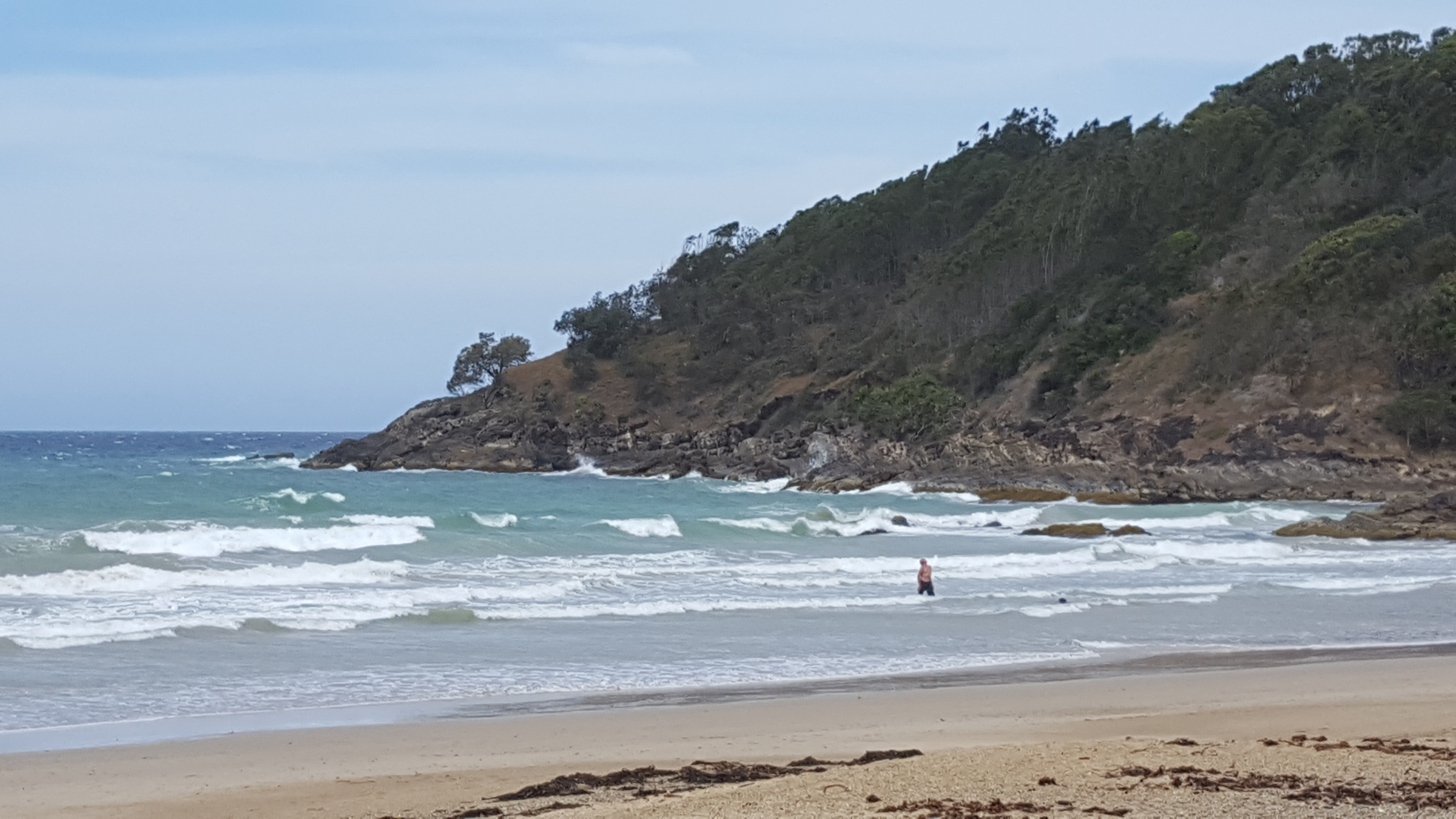
It is only a short walk to the ‘private beach’ and it is sufficiently long enough for a morning walk before breakfast.  You could even try to catch some fish for breakfast, though I’m not sure if anyone actually caught anything

20161030_142237

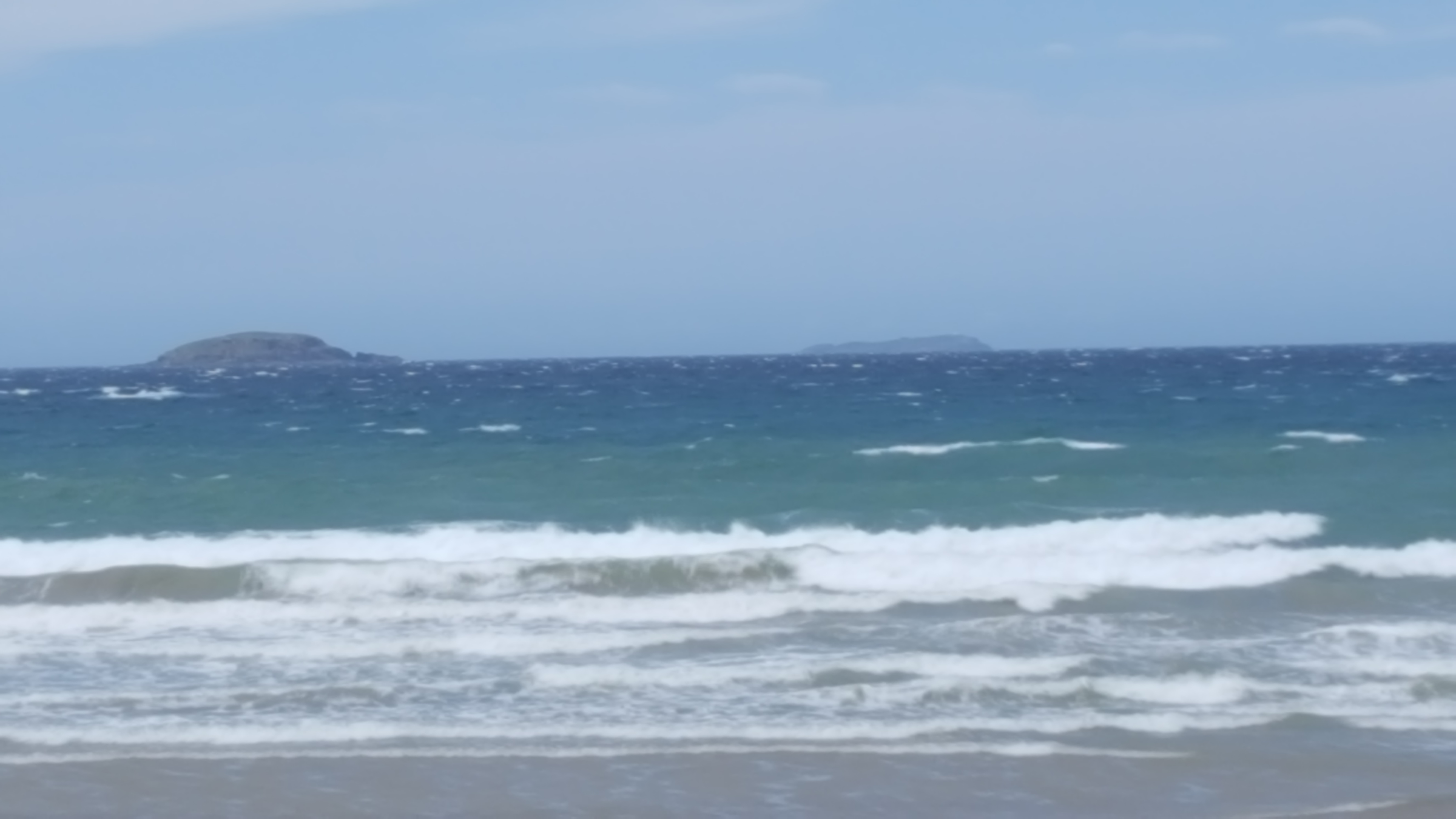
Or you can just stare out to sea

20161030_142225

And, back in the room, this is the view we had from our verandah

20161030_134910 - Copy

I should have paid more attention…

When I was back in school in what seems like a lifetime ago, I realise I should have paid more attention.

Why?

Because for some odd reason, we were taught more about American and English history than that of our own country, Australia.

We cannot use the excuse that we haven’t been around all that long, because we have, something like 1770, which led to settlement by the English in 1788 or so, but the first landing was in 1606 by a Dutchman.

Of course, these are vague memories of a social studies lesson that briefly touched on our origins, but only to re-affirm our allegiances to Britain. While it wasn’t the Empire when I was in school, it was the Commonwealth and our atlases still had the ‘wherever the map is red is where the British claimed as theirs’, and there were quite a lot of red countries.

But, hey, that pales into insignificance the stuff we learned about England, from the time of William the Conqueror in 1066 through to the modern day. I could at one stage of my life relate from memory all of the kings and queens of England.

I know all about the industrial revolution, and travel between Australia and England from the days of sailing, right through to the Airbus A380.

It’s why I have a preference for reading the English classics of Jane Austen and others of that golden era and watching period TV, recreated so lavishly by the BBC and ITV in England.

And of course, we were brought up on a steady diet of American TV shows, and films, like our country never existed, and was notorious for producing laughable TV shows of the poorest quality, despite the actors who tried very hard to make it seem believable.

I could not name one Australian prime minister and have trouble telling who is the current prime minister. Well maybe not, this Covid thing has had his face on the TV every day for nearly a year, but he’s the first. I couldn’t tell you who he took over from, nor who the leader of the opposition is.

It’s probably the reason why over the years people have often said we should become one of the states of the US.

Nowadays we’re trying to put a wall between us and them so China might not see us as an outpost of the US, and come in and attack us. The trouble is 28 million people versus 1.6 billion doesn’t give us any leverage. Come to think of it, the 360 million Americans wouldn’t stand a chance against an invasion of 1.6 billion either.

I’m not sure why it matters any more, because we’ll soon be back to the heady heights of the cold war days in the 50s and 60s, where the only deterrent to perceived enemies was the threat of nuclear annihilation.

It’s the one option where 360 million people could defeat an enemy of 16. billion.

But … there’s only one small problem …

We’ll all be dead.

As horrifying as that might sound, there is one other problem that might just do the same but not destroy any infrastructure. A pandemic. A virus that can’t be cured, a virus that can mutate and adapt so there is no effective vaccine.

Dystopian? It’s sure a great idea for a story. There’s been a few, but those always have a few survivors, ready willing and able to get along and rebuild the world having learned the lessons of past failures.

This time? I don’t think the next story will have a happy ending. In it though, the aggressors are not going to be better off than the rest, because they forget to build in a fail-safe, or couldn’t. Or it just got out before they finished perfecting it and synthesizing an antidote.

That’s something else we learned a lot about. Nuclear holocausts, and their effect. It reminds me of the day our class was taken to see a movie about the effects of a nuclear war. Was it to scare us, or prepare us? Back then, a nuclear war was more likely than a change of government in this country.

If it was to educate my generation of people who are now the in the government and positions of power, they failed.

So, if I had my time over, I would insist on learning about my country, and the people who have inhabited it for tens of thousands of years, without the need for cars, houses, cigarettes and booze, and definitely without the need for nuclear weapons and ideals of aggression towards other countries.

Now, where’s that pesky time machine…

Coming soon – “Strangers We’ve Become”, the sequel to “What Sets Us Apart”

Stranger’s We’ve Become, a sequel to What Sets Us Apart.

The blurb:

Is she or isn’t she, that is the question!

Susan has returned to David, but he is having difficulty dealing with the changes. Her time in captivity has changed her markedly, so much so that David decides to give her some time and space to re-adjust back into normal life.

But doubts about whether he chose the real Susan remain.

In the meantime, David has to deal with Susan’s new security chief, the discovery of her rebuilding a palace in Russia, evidence of an affair, and several attempts on his life. And, once again, David is drawn into another of Predergast’s games, one that could ultimately prove fatal.

From being reunited with the enigmatic Alisha, a strange visit to Susan’s country estate, to Russia and back, to a rescue mission in Nigeria, David soon discovers those whom he thought he could trust each has their own agenda, one that apparently doesn’t include him.

The Cover:

strangerscover9

Coming soon


Searching for locations: Smith Street, Fitzroy (Once part of what was known as Marvellous Melbourne)

Of course, it could easily be Collingwood depending on who you barrack for in the local football competition, as it is Fitzroy, but the map and my GPS tells me the street is, for all intents and purposes, in Fitzroy.

Not that there is a football team for Fitzroy any more, that moved north to Queensland a long, long time ago.

But…

Going for a wander up and down the street shows two or three very different sides to inner suburban living, and the effect that comes from a diverse range of cultures, the city has acquired over the past few decades.

Once viewed as almost the slums of Melbourne, these inner suburban areas have moved upscale to become havens for the more wealthy middle classes and a home for many diverse outlets, not the least of which are eateries.

And. In just this small section of Smith Street, there are a lot of eating establishments, from the Old Kingdom Peking duck restaurant to a small place selling Falafel, and then everything in between. It says a lot about how Australian eating habits have changed in a single generation, where back in those infamous old days you would be lucky to have a fish and chips/ hamburger shop and one or two Chinese restaurants.

Now, intermingled with gourmet bakeries and cozy coffee shops, there are a plethora of other eating establishments that cater to any cuisine you can imagine.  In fact, it’s possible to dine out on a different cuisine every night for a fortnight and only traverse about half a kilometre up and down the street.  It could be ideal if you lived in one of the small fronted houses just off the main carriageway in a leafy narrow side street or laneway.

And, as you would expect in an inner-city suburb,  the streets are narrow and made more hazardous for traffic because of the trams, a familiar sight in many of the streets in this area, and a much-used form of transport for workers making the short trip into the city.  It’s almost possible to take the extra half hour, and walk.

The street is lined with old buildings, some dating back to about 1868, there’s around the turn of the century, but most are not inhabited except for the street level where there is an eclectic mixture of furniture, haberdashery, and clothing stores catering to a particular group of people, what some call yuppies or upwardly mobile men and women who are between 25-35, with high paying jobs, and preferably no children.

Then there a subgroup walking there streets, homosexual men, some wheeling adopted children in pushers, others walking hand in hand out for a Saturday afternoon stroll where they can feel safe among many others.  It’s very different from other places I’ve been, but one can imagine there are places like this in every city all over the world.

But as a backdrop to the appearance of wealth, the shopfronts that cater to those upwardly mobile upper middle classes, there’s that exact opposite in full view, the homeless, and beggars, sitting on the ground outside the more run down shops soliciting alms, asking for a spare dollar, and even one asking for a cigarette.

Everyone walks past them, imagining no doubt there are not there, or that if they ignore them, they will go away.  I think not.  And, I suspect, more will come out of their daytime hiding places and take up residence in Smith Street itself.

The only surprise is that the local council has not asked the police to move them on. It’s an interesting juxtaposition of inhabitants in an area that no doubt can only attract the upper middle classes, as anything and everything is relatively expensive, particularly real estate, and permit driven parking spaces.

Would I live here?  No.

Would I come here to wine and dine?

Maybe, if I could get parking, which there appear to be very few spots or any other form of parking such as under the local supermarket which can be very expensive.  And if you are lucky enough to find a spot, who has the time or the memory if continually feeding a parking meter every two hours, particularly if you’re having a good time.

Equally, it’s a place I would not feel comfortable, even if it was once a safe haven, which up to a few years ago, I’d probably think it not.  In fact, at times I was not sure what to make of some of the people on the street, but I guess if I lived here, it would no doubt be the norm.

Would I recommend people to come here?

Of course.  One of the more interesting places in Melbourne to experience grassroots cuisine that is incredibly diverse in it range and price, and even from a place with tables and chairs that may have seen better days, but you haven’t come to see the furniture.

And to my mind, the dining is definitely better, here than perhaps Carlton, which in itself is Mecca to a plethora of university types, both teachers and students alike, and the coffee culture that pervade that area of Melbourne.

I have no doubt you will come and leave with a very good opinion of the place.

As for me, I came here for an engagement party held at the Hotelito de Jesus, a Mexican restaurant, serving a variety of Mexican dishes.  As I’m no expert of that particular cuisine, everything was going to be new.

It was.  It’s spicy but not too spicy, the pork belly excellent, the canapés delicious, and both the mushroom-based and shredded beef based mini tacos were equally scrumptious.

All of this was washed down with two particular Mexican beers, two of several available in bottles, cans, or by the glass.

Oh, and you can get sangria by the jug too if you like.  I would have, but my passion for trying different beers won out.

The story behind the story – Echoes from the Past

The novel ‘Echoes from the past’ started out as a short story I wrote about 30 years ago, titled ‘The birthday’.

My idea was to take a normal person out of their comfort zone and led on a short but very frightening journey to a place where a surprise birthday party had been arranged.

Thus the very large man with a scar and a red tie was created.

So was the friend with the limousine who worked as a pilot.

So were the two women, Wendy and Angelina, who were Flight Attendants that the pilot friend asked to join the conspiracy.

I was going to rework the short story, then about ten pages long, into something a little more.

And like all re-writes, especially those I have anything to do with, it turned into a novel.

There was motivation.  I had told some colleagues at the place where I worked at the time that I liked writing, and they wanted a sample.  I was going to give them the re-worked short story.  Instead, I gave them ‘Echoes from the past’

Originally it was not set anywhere in particular.

But when considering a location, I had, at the time, recently been to New York in December, and visited Brooklyn and Queens, as well as a lot of New York itself.  We were there for New Years, and it was an experience I’ll never forget.

One evening we were out late, and finished up in Brooklyn Heights, near the waterfront, and there was rain and snow, it was cold and wet, and there were apartment buildings shimmering in the street light, and I thought, this is the place where my main character will live.

It had a very spooky atmosphere, the sort where ghosts would not be unexpected.  I felt more than one shiver go up and down my spine in the few minutes I was there.

I had taken notes, as I always do, of everywhere we went so I had a ready supply of locations I could use, changing the names in some cases.

Fifth Avenue near the Rockefeller center is amazing at first light, and late at night with the Seasonal decorations and lights.

The original main character was a shy and man of few friends, hence not expecting the surprise party.  I enhanced that shyness into purposely lonely because of an issue from his past that leaves him always looking over his shoulder and ready to move on at the slightest hint of trouble.  No friends, no relationships, just a very low profile.

Then I thought, what if he breaks the cardinal rule, and begins a relationship?

But it is also as much an exploration of a damaged soul, as it is the search for a normal life, without having any idea what normal was, and how the understanding of one person can sometimes make all the difference in what we may think or feel.

And, of course, I wanted a happy ending.

Except for the bad guys.

Get it here:  https://amzn.to/2CYKxu4

newechocover5rs

NANOWRIMO – 2024 – Day 15

Behind the Green Door

Why do people build robots?

We’ve discussed this, but it is coming back to haunt me. Perhaps it’s a place where I should not go because when I think about it, and the fact humans have a terrible streak in them, that a seemingly wonderful idea will without any doubt be turned into something devious or murderous.

The first that comes to mind – taking into account Blade Runner, sex workers and soldiers. Lets save the human versions from a fate worse than death. i guess if you don’t give them the ability to think for themselves and simply program their responses, it might be an idea.

But should we not give them the right to be a sentient being?

In my utopian world, as some might call it, I would like to think that in 200 years, we will have become better people. The problem is, the creator of this new, amazing, lifeform realised that her work was going to be manipulated into something more horrific.

That might have hastened her demise, and then more or less a certainty when she did what she did. Miranda is all that survives from her work, other than several earlier prototypes, and there is no means of replicating her.

Yes, management was looking at prolonging their lives if not forever, much like the Asguard on Stargate. As I said, I’m using bits and pieces of a great many Sci-Fi shows over the years as a guide.

The problem is, even if they could, not all of their soul could be transferred (Miranda only has some of Elsie’s personality, memories of Michael, and traits in her), and Miranda has a specific timeline and will grow old and die like a normal human being. After all, she is mostly real.

Michael is beginning to think there might be some of Elsie in Miranda, and the more they talk, the closer they seem to get. Sometimes the lines between them get blurry, and he has to think twice before he makes a mistake.

Word written today 2,112, making a total of 27,906 words

The first case of PI Walthenson – “A Case of Working With the Jones Brothers”

This case has everything, red herrings, jealous brothers, femme fatales, and at the heart of it all, greed.

See below for an excerpt from the book…

Coming soon!

PIWalthJones1

An excerpt from the book:

When Harry took the time to consider his position, a rather uncomfortable position at that, he concluded that he was somehow involved in another case that meant very little to him.

Not that it wasn’t important in some way he was yet to determine, it was just that his curiosity had got the better of him, and it had led to this: sitting in a chair, securely bound, waiting for someone one of his captors had called Doug.

It was not the name that worried him so much, it was the evil laugh that had come after the name was spoken.

Doug what? Doug the ‘destroyer’, Doug the ‘dangerous’, Doug the ‘deadly’; there was any number of sinister connotations, and perhaps that was the point of the laugh, to make it more frightening than it was.

But there was no doubt about one thing in his mind right then: he’d made a mistake. A very big. and costly, mistake. Just how big the cost, no doubt he would soon find out.

His mother, and his grandmother, the wisest person he had ever known, had once told him never to eavesdrop.

At the time he couldn’t help himself and instead of minding his own business, listening to a one-sided conversation which ended with a time and a place. The very nature of the person receiving the call was, at the very least, sinister, and, because of the cryptic conversation, there appeared to be, or at least to Harry, criminal activity involved.

For several days he had wrestled with the thought of whether he should go. Stay on the fringe, keep out of sight, observe and report to the police if it was a crime. Instead, he had willingly gone down the rabbit hole.

Now, sitting in an uncomfortable chair, several heat lamps hanging over his head, he was perspiring, and if perspiration could be used as a measure of fear, then Harry’s fear was at the highest level.

Another runnel of sweat rolled into his left eye, and, having his hands tied, literally, it made it impossible to clear it. The burning sensation momentarily took his mind off his predicament. He cursed and then shook his head trying to prevent a re-occurrence. It was to no avail.

Let the stinging sensation be a reminder of what was right and what was wrong.

It was obvious that it was the right place and the right time, but in considering his current perilous situation, it definitely was the wrong place to be, at the worst possible time.

It was meant to be his escape, an escape from the generations of lawyers, what were to Harry, dry, dusty men who had been in business since George Washington said to the first Walthenson to step foot on American soil, ‘Why don’t you become a lawyer?” when asked what he could do for the great man.

Or so it was handed down as lore, though Harry didn’t think Washington meant it literally, the Walthenson’s, then as now, were not shy of taking advice.

Except, of course, when it came to Harry.

He was, Harry’s father was prone to saying, the exception to every rule. Harry guessed his father was referring to the fact his son wanted to be a Private Detective rather than a dry, dusty lawyer. Just the clothes were enough to turn Harry off the profession.

So, with a little of the money Harry inherited from one of his aunts, he leased an office in Gramercy Park and had it renovated to look like the Sam Spade detective agency, you know the one, Spade and Archer, and The Maltese Falcon.

There’s a movie and a book by Dashiell Hammett if you’re interested.

So, there it was, painted on the opaque glass inset of the front door, ‘Harold Walthenson, Private Detective’.

There was enough money to hire an assistant, and it took a week before the right person came along, or, more to the point, didn’t just see his business plan as something sinister. Ellen, a tall cool woman in a long black dress, or so the words of a song in his head told him, fitted in perfectly.

She’d seen the movie, but she said with a grin, Harry was no Humphrey Bogart.

Of course not, he said, he didn’t smoke.

Three months on the job, and it had been a few calls, no ‘real’ cases, nothing but missing animals, and other miscellaneous items. What he really wanted was a missing person. Or perhaps a beguiling, sophisticated woman who was as deadly as she was charming, looking for an errant husband, perhaps one that she had already ‘dispatched’.

Or for a tall, dark and handsome foreigner who spoke in riddles and in heavily accented English, a spy, or perhaps an assassin, in town to take out the mayor. The man was such an imbecile Harry had considered doing it himself.

Now, in a back room of a disused warehouse, that wishful thinking might be just about to come to a very abrupt end, with none of the romanticized trappings of the business befalling him. No beguiling women, no sinister criminals, no stupid policemen.

Just a nasty little man whose only concern was how quickly or how slowly Harry’s end was going to be.

© Charles Heath 2019-2024

In a word: Nobody

This is sometimes how we must feel when overlooked or ignored, like a nobody.

And some people will treat you like a nobody, i.e. someone who is just not important.

That’s just one use of the word.

Another might be…

Who did that to your room?

‘Nobody’ is the plaintiff’s reply.  The infamous Mr Nobody.  We’ve never met him, but he’s always there.  And, what’s more, he seems to be able to be in more than one place at a time.

Then there’s that time when there’s nobody in the room, nobody agreed with me, hell, that happens all the time, and when I rang your phone nobody answered.

Nobody?  Was I expecting Mr Nobody to answer?  Surely the response should have been, ‘and you didn’t answer’.

Of course, let’s not delve too deep here, lest we might find out something we didn’t want to know.

I went to your house last night, but nobody was home.

How is it we refer to the people whom we know live in that house as ‘nobody’.  Shouldn’t we be saying, ‘none of you was at home’?

It seems nobody is one of those words we often use in vain.