Once Upon a Time… – A short story

Everyone knows someone who has a child that will not go to sleep.

You can set the bedtime at whatever early hour you like, but by the time they actually fall asleep, there have been two or three hours of up and down, in and out of bed, and at least one episode of a scary monster lurking under the bed, or, worse, outside the window.

After exhausting every method of achieving a result and failing, I thought I’d try reading.

The first book I picked up was, yes, you guessed it, about monsters. In fact, nearly every book for kids was about monsters, witches, ogres, dragons, and vampires.

I put them back and sighed. I would have to come up with a story of my own.

It started with, “Once upon a time…”

“But that,” Mary said, “only applies to fairy tales.”

“Well, this is going to be a fairy tale of sorts. Minus the fire-breathing dragons, and nasty trolls under drawbridges.”

“It’s not going to be much of a story, then. In fairy tales, there’s always a knight who slays the dragon and rides off with the princess.”

This was going to be a tough ask. I thought of going back to the book pile, but then, I could do this.

“So,” I began again, “Once upon a time there was a princess, who lived in a castle with her father, the king, her mother, the queen, and her brother, the steadfast and trusty knight in shining armour.”

“Why is their armour always shining?”

I was going to tell her to save the questions until after the story, by which time I had hoped I’d bored her enough to choose sleep over criticism. I was wrong.

“Because a knight always has to have shiny armour, otherwise the king would be disappointed.”

“Does the knight spend all night shining his armour?”

“No. He has an apprentice called a squire who cleans the armour and attends to anything else the knight needs.”

“And then he becomes a knight?”

“In good time. The apprentice is usually a boy of about 11 or 12 years old. First, he learns what it means to be a knight, then he has to do years of training until he comes of age.” I saw the question coming, and got in first, “When he is about 21 years old.”

She looked at me, and that meant I had to continue the story.

“The princess was very lucky and lived a very different life than her subjects, except she wished she had their freedom to play, and do ordinary things like cooking or collecting food from the markets. Because she was a princess, she had to stay in the castle and spend most of her time learning how to be a princess, and one day a queen, because when it was time, she would marry a prince who would become a king.”

“Doesn’t sound too lucky to me, being stuck at home. I like the idea of getting somebody to do everything for me though. She does have maids, doesn’t she?”

“Yes. And you’re right, she has everything done for her, including getting dressed. A maid to clean, a maid to dress her, a maid to bring her snacks. And it was these maids she envied.”

Maybe I should not make the story too interesting, or she’ll never go to sleep.

“Well, one day, she decided to change places with one of her maids. They were almost identical and when they exchanged clothes, the other maids could not tell they had changed places. At the end of the day, when the maids went home, the princess headed to the house where the maid she had taken the place of lived.

It was very different from the castle, and the room she usually had. The mother was at home, cooking the food for the evening meal, and it was nothing like what she usually had. A sort of soup with scraps of meat in it. There was a loaf of bread on the table. The father came home after working all day in the fields, very tired. They ate and then went to bed. Her bed was straw and a piece of cloth that hardly covered her. At least, by the fire, it was warm. It didn’t do anything for the pangs of hunger because there had barely been enough for all of them.

The next morning, she returned to the castle and changed places back again. When the maid she changed places with asked about her experience of what it was like in their life, the princess said she was surprised. She had never been told about how the people who served the king lived, and she had assumed that they were well looked after. Now she had experienced what it was like to be a subject, she was going to investigate it further.

After all, she told the maid, I must have all the facts if I’m going to approach the king.

And she thought to herself, a lot more courage than she had.

But, instead of lessons today, she was going to demand to be taken on a tour outside the castle and to see the people.

“This sounds like it’s not going to have a happy ending.”

No, I thought. Maybe I’ll get the dragon that her brother failed to slay to eat her.

“It will. Patience. But that’s enough for tonight. If you want to know what happens, you’ll have to go to sleep and then, tomorrow night, the story continues.”

I tucked her in, turned down the night light so it was only a glow, just enough to see where I was going, and left.

If I was lucky, she would go to sleep. The only problem was, I had to come up with more of the story.

Outside the door, her mother, Christine, was smiling. “Since when did you become an expert on Princesses?”

“When I married one.”

—-

© Charles Heath 2020-2023

Writing about writing a book – Day 5 continues – Those annoying people called characters

Whilst it is always an idea to sit down and write and keep going, not worrying too much about the narrative, there’s always the problem of ideas about characters, and relationships that come back and need to be addressed.

I have issues with Jennifer in that we will need to know something about her, and need a little backstory.

Jennifer is the second most important character in this novel and one that has more talents than what my main character, or anyone else for that matter, thinks she has.  Of course, that is deliberate on her part for a number of reasons that will be introduced at the appropriate time.

But, at the start, all we will have to work with, is the introduction provided by the narrator.

It may go something like this:


Jennifer Pennington Smythe was, as you might expect, very English, very reserved, and very private.  She was the definitive ‘don’t judge a book by its cover’, and I was guilty, at first, of suspecting she had once been a schoolmistress due to the severity of dress, demeanor, and expression.

HR had sent her to me when I’d requested an IT Specialist, though of what particular discipline it was never divulged, neither by HR nor by her.  She arrived one morning, told me she was to ‘help resolve our technical difficulties’, moved into an office that had been used as a storeroom, and worked hard to prove her worthiness in the role.

My first attempt at conversation was rebuffed, the second met with a very cold stare.  Everyone, including me, learned very quickly that any other topic of conversation than work would be ignored.  At the time it suited me, there was trouble in paradise and I didn’t want anything more on my plate to deal with.


So, what is this trouble?

There are three distinct stages of this relationship between the two most important characters, and it is the actions of one of the protagonists that brings them together.  This particular protagonist, of course, is the main character’s wife, a woman that is on the periphery for the period the novel covers, but a little background will be needed at some point before we reach this part of the narrative.

This now means that I will have to put together a back story for Bill and his ex-wife Ellen, not too much yet but enough to explain the next part of the evolving relationship between Bill and Jennifer.


I’m sure this topic is going to raise it’s head again and again…

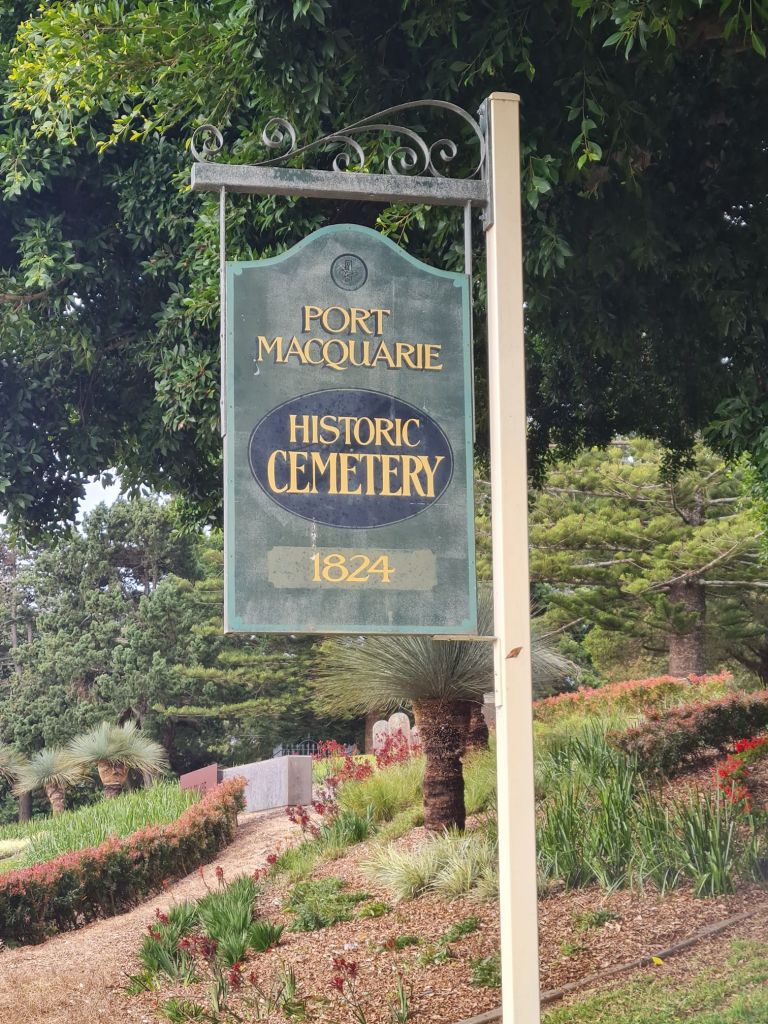
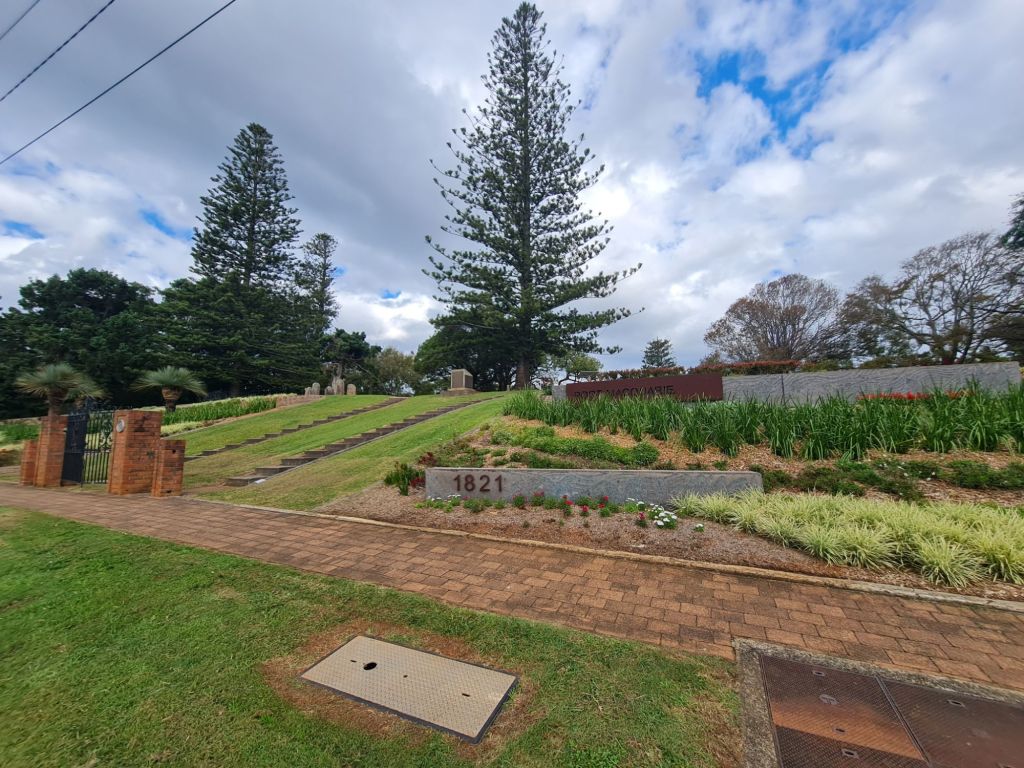
Port Macquarie – Day 1 – Part 3

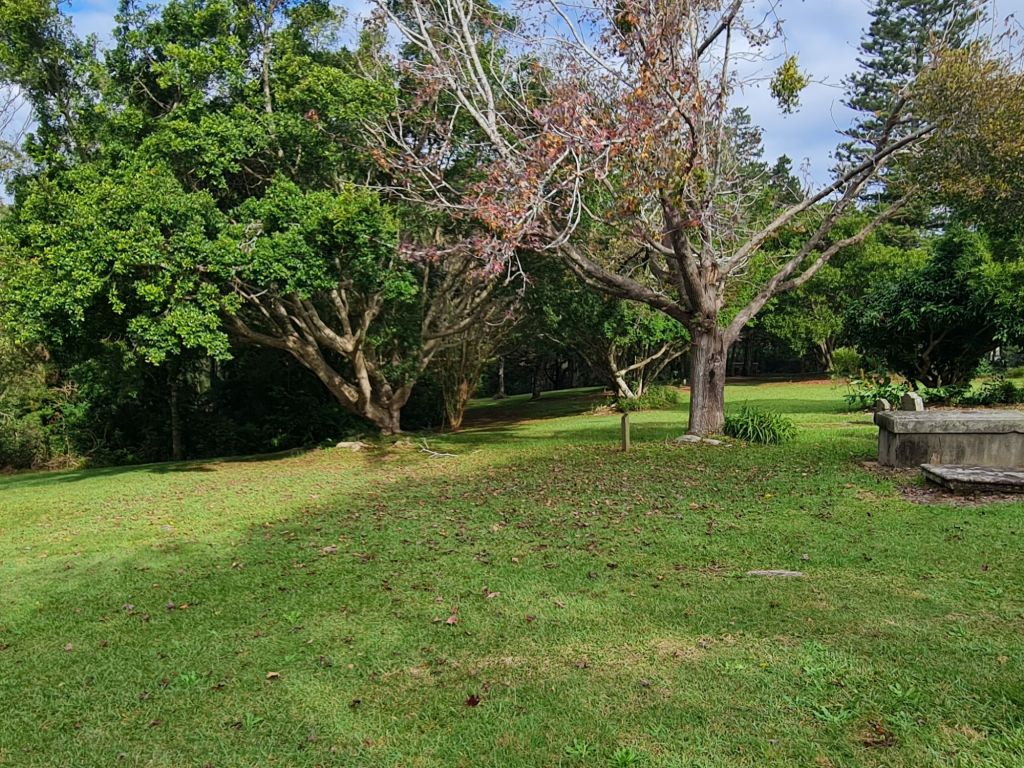
The old cemetery

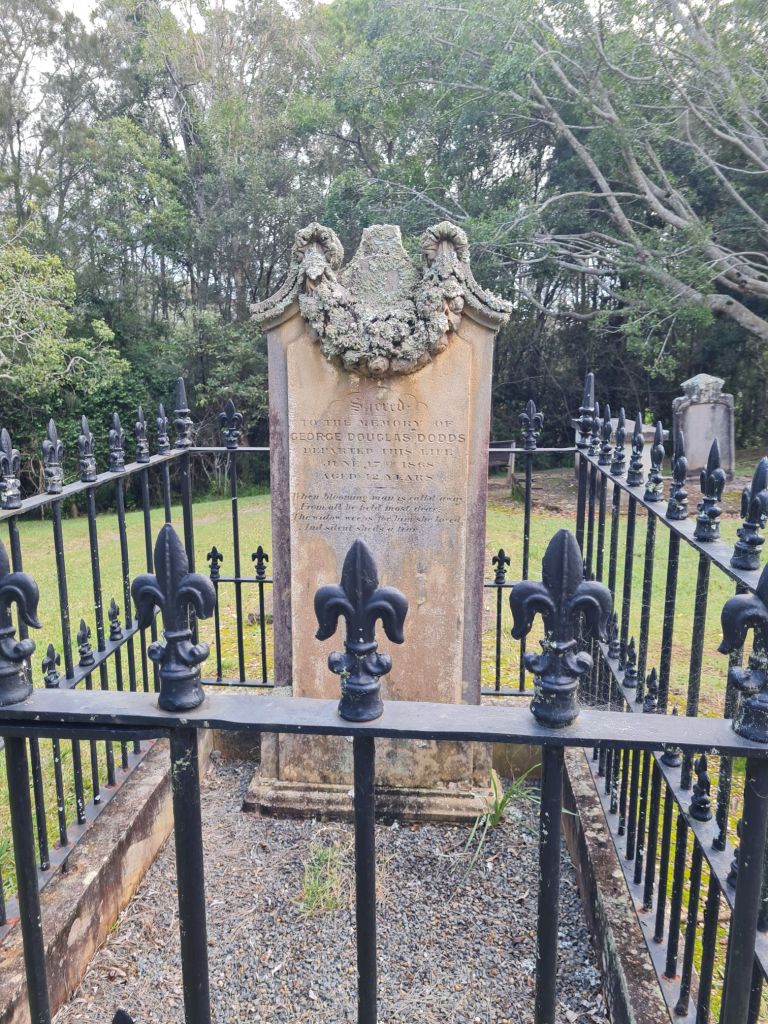
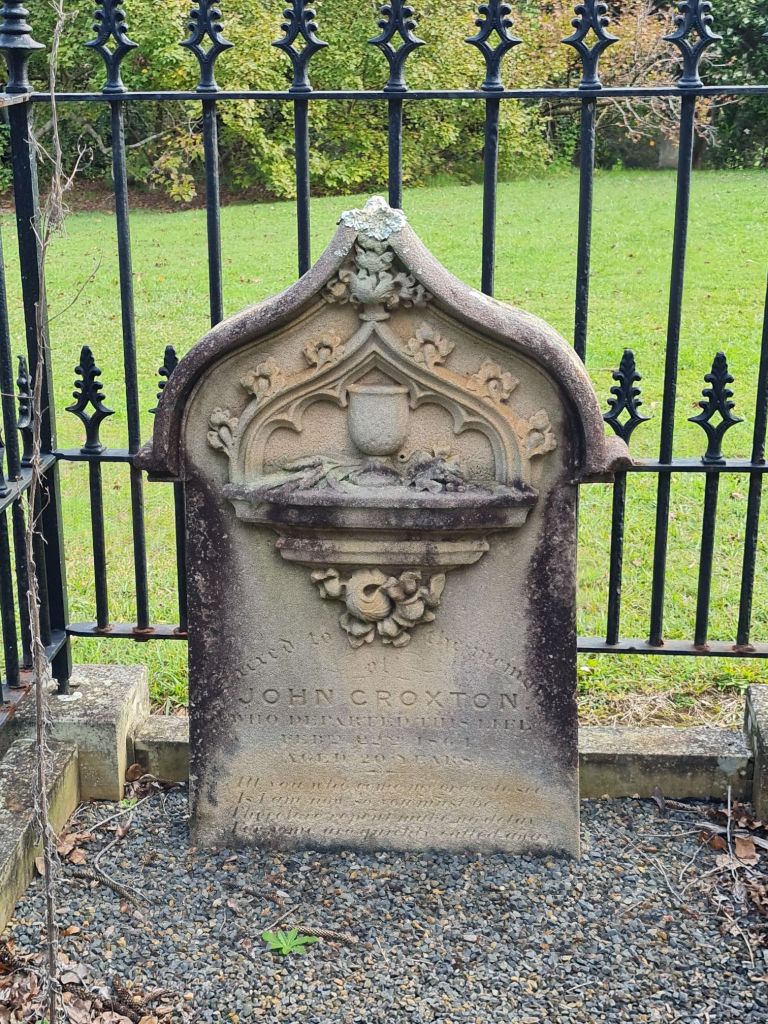
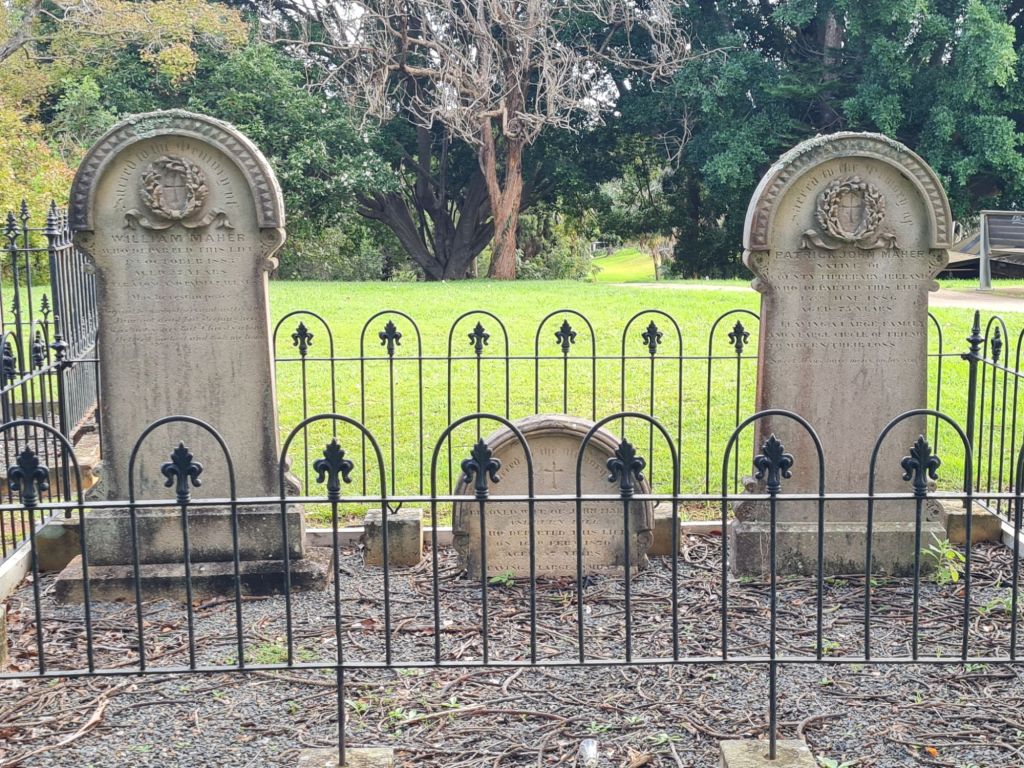
This cemetery, no longer used, has graves dating back as far as 1821. 

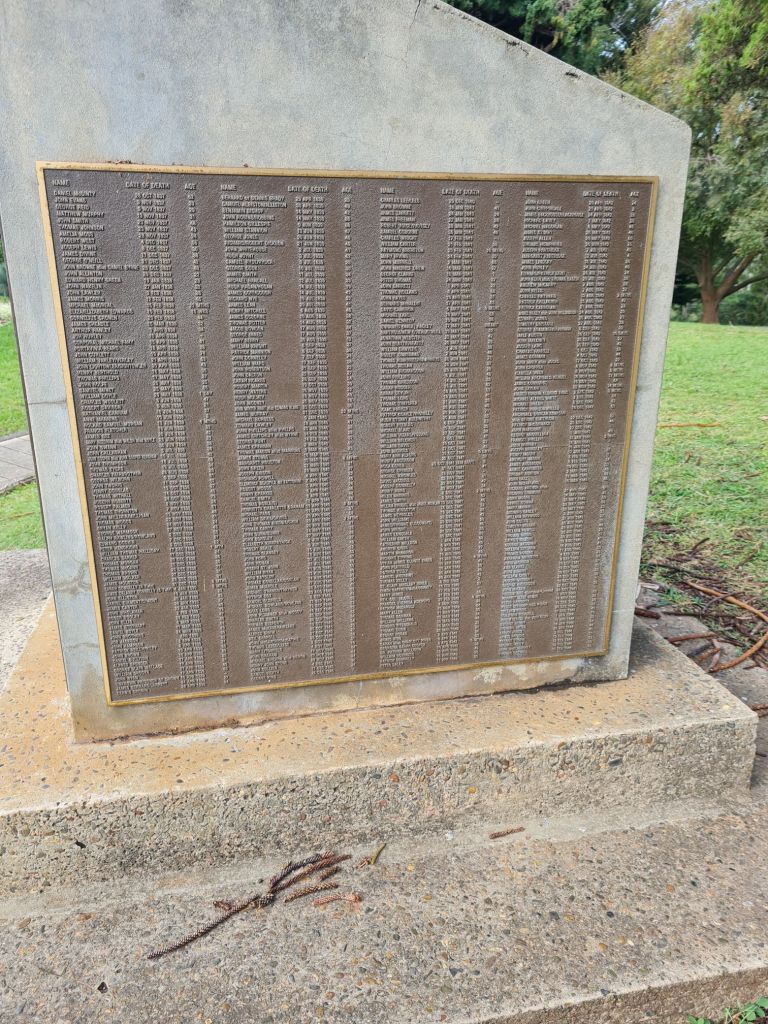
Not all of the graves are identified, but there is a monument that has the names of everyone interred there.

This monument has the names of those buried and the date they were buried

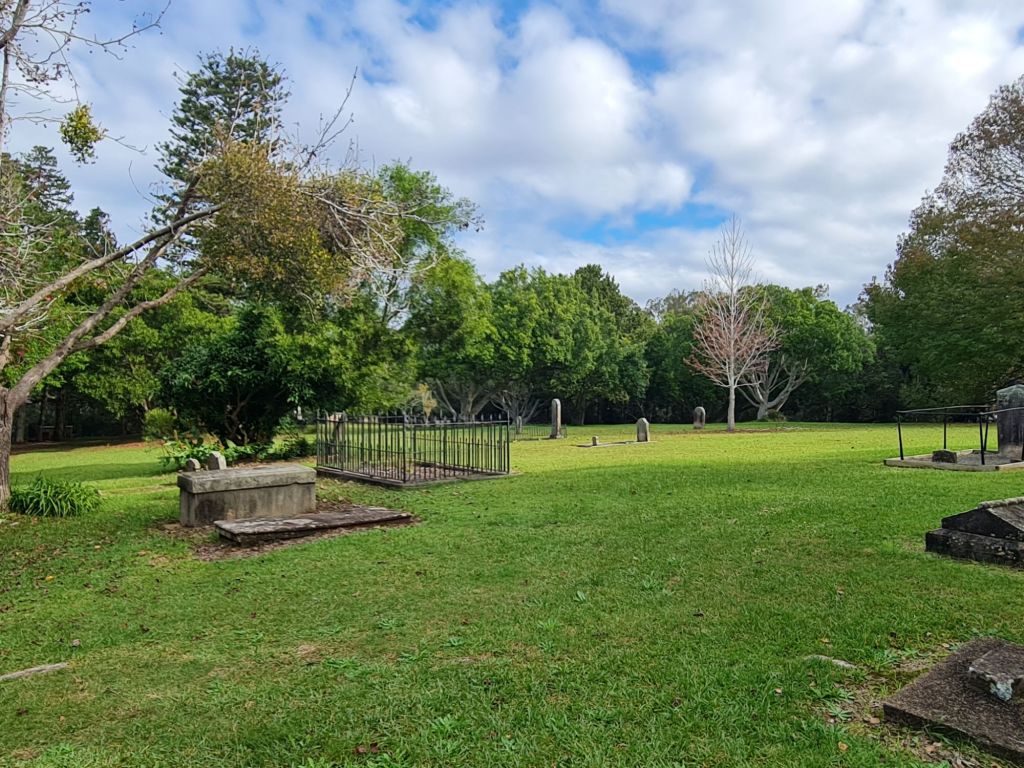
Unfortunately, there are not many headstones left, and those that are there are not necessarily readable.

Questions, sometimes without answers

At what point does a writer become a journalist?

Quite often journalists become writers because of their vast experience in observing and writing about the news, sometimes in the category of ‘truth is stranger than fiction’.

I did journalism at University and thought I would never get to use it.  I had to interview people, write articles, and act as an editor.  The hardest part was the headlines.

How much does that resemble the job of coming up with a title for your book?

Well, several opportunities arose over the last few months to dig out the journalist hat, put it on, and go to work.

Where?

Hospital.  I’ve had to go there a few times more in the last few months than I have in recent years.

And I’d forgotten just how hospitals are interesting places, especially the waiting room in Emergency.

After the second or third visit, I started to observe the people who were waiting and ran through various scenarios as to the reason for their visit.  None may have been true, but it certainly was an exercise in creative writing and would make an excellent article.

Similarly, once we got inside the inner sanctum, where the real work is done, there is any number of crises and operations going on, and plenty of material for when I might need to include a hospital scene in one of my stories.

Or I could write a volume in praise of the people who work there and what they have to endure.  Tending the sick, injured and badly injured is not a job for the faint-hearted.

Research, if it could be called that, turns up in the unlikeliest of places.  Doctors who answer questions, not necessarily about the malady, nurses who tell you about what it’s like in Emergency on nights you really don’t want to be there, and other patients and their families, all of whom have a story to tell, or just wait patiently for a diagnosis and then treatment so they can go home.

We get to go this time at about four in the morning.  Everyone is tired.  More people are waiting.  Outside it is cool and the first rays of light are coming over the horizon as dawn is about to break.

I ponder the question without an answer, a question one of the nurses asked a youngish doctor, tossed out in conversation, but was there a more intent to it; what he was doing on Saturday night.

He didn’t answer.  Another crisis, another patient.

I suspect he was on duty in Emergency.

“The Things We Do For Love”

Would you give up everything to be with the one you love?

Is love the metaphorical equivalent to ‘walking the plank’; a dive into uncharted waters?

For Henry, the only romance he was interested in was a life at sea, and when away from it, he strived to find sanctuary from his family and perhaps life itself.  It takes him to a small village by the sea, a place he never expected to find another just like him, Michelle, whom he soon discovers is as mysterious as she is beautiful.

Henry had long since given up the notion of finding romance, and Michelle couldn’t get involved for reasons she could never explain, but in the end, both acknowledge that something happened the moment they first met.  

Plans were made, plans were revised, and hopes were shattered.

A chance encounter causes Michelle’s past to catch up with her, and whatever hope she had of having a normal life with Henry, or anyone else, is gone.  To keep him alive she has to destroy her blossoming relationship, an act that breaks her heart and shatters his.

But can love conquer all?

It takes a few words of encouragement from an unlikely source to send Henry and his friend Radly on an odyssey into the darkest corners of the red-light district in a race against time to find and rescue the woman he finally realizes is the love of his life.

The cover, at the moment, looks like this:

lovecoverfinal1

Is love the metaphorical equivalent to ‘walking the plank’; a dive into uncharted waters?

For Henry the only romance he was interested in was a life at sea, and when away from it, he strived to find sanctuary from his family and perhaps life itself.  It takes him to a small village by the sea, s place he never expected to find another just like him, Michelle, whom he soon discovers is as mysterious as she is beautiful.

Henry had long since given up the notion of finding romance, and Michelle couldn’t get involved for reasons she could never explain, but in the end both acknowledge that something happened the moment they first met.  

Plans were made, plans were revised, and hopes were shattered.

A chance encounter causes Michelle’s past to catch up with her, and whatever hope she had of having a normal life with Henry, or anyone else, is gone.  To keep him alive she has to destroy her blossoming relationship, an act that breaks her heart and shatters his.

But can love conquer all?

It takes a few words of encouragement from an unlikely source to send Henry and his friend Radly on an odyssey into the darkest corners of the red light district in a race against time to find and rescue the woman he finally realizes is the love of his life.

The cover, at the moment, looks like this:

lovecoverfinal1

Port Macquarie – Day 1 – Part 2

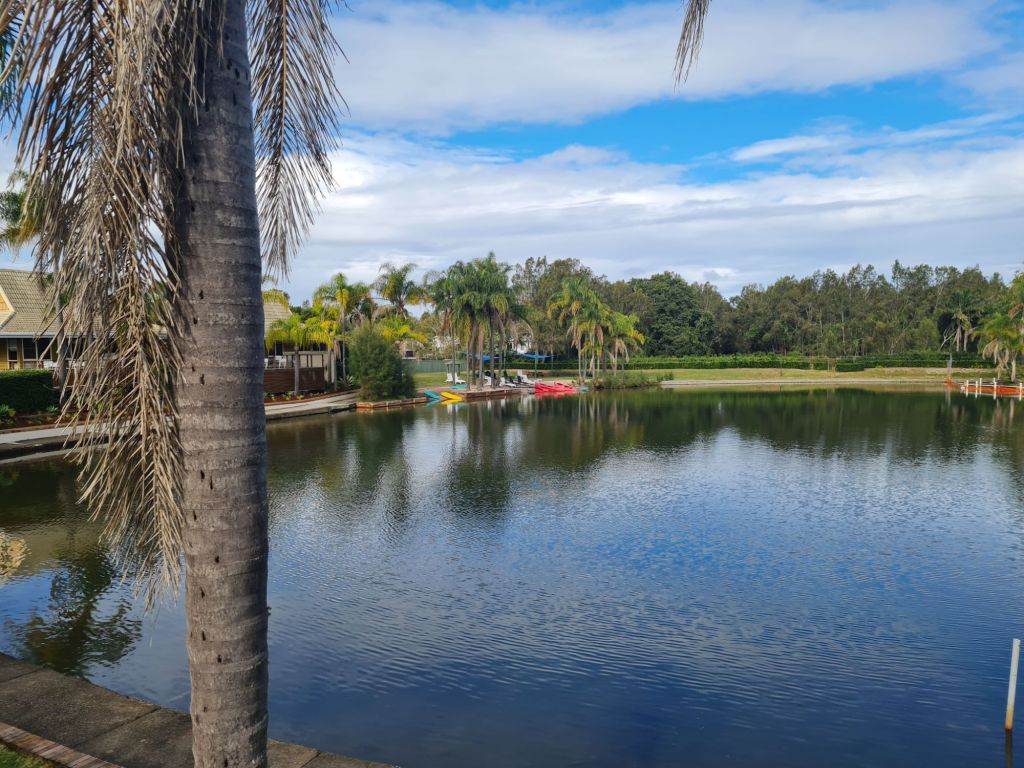
The resort had all the bungalows nestled in a tropical garden setting

And a number of the bungalows border on the lagoon, which looks great first thing in the morning.

There is also a clubhouse and indoor swimming pool.

And surprise, surprise, there are fish in the lagoon

Of course, a resort wouldn’t be the same without some friendly birds

“One Last Look”, nothing is what it seems

A single event can have enormous consequences.

A single event driven by fate, after Ben told his wife Charlotte he would be late home one night, he left early, and by chance discovers his wife having dinner in their favourite restaurant with another man.

A single event where it could be said Ben was in the wrong place at the wrong time.

Who was this man? Why was she having dinner with him?

A simple truth to explain the single event was all Ben required. Instead, Charlotte told him a lie.

A single event that forces Ben to question everything he thought he knew about his wife, and the people who are around her.

After a near-death experience and forced retirement into a world he is unfamiliar with, Ben finds himself once again drawn back into that life of lies, violence, and intrigue.

From London to a small village in Tuscany, little by little Ben discovers who the woman he married is, and the real reason why fate had brought them together.

It is available on Amazon here:  http://amzn.to/2CqUBcz

Writing about writing a book – Day 5 continues – Those annoying people called characters

Whilst it is always an idea to sit down and write and keep going, not worrying too much about the narrative, there’s always the problem of ideas about characters, and relationships that come back and need to be addressed.

I have issues with Jennifer in that we will need to know something about her, and need a little backstory.

Jennifer is the second most important character in this novel and one that has more talents than what my main character, or anyone else for that matter, thinks she has.  Of course, that is deliberate on her part for a number of reasons that will be introduced at the appropriate time.

But, at the start, all we will have to work with, is the introduction provided by the narrator.

It may go something like this:


Jennifer Pennington Smythe was, as you might expect, very English, very reserved, and very private.  She was the definitive ‘don’t judge a book by its cover’, and I was guilty, at first, of suspecting she had once been a schoolmistress due to the severity of dress, demeanor, and expression.

HR had sent her to me when I’d requested an IT Specialist, though of what particular discipline it was never divulged, neither by HR nor by her.  She arrived one morning, told me she was to ‘help resolve our technical difficulties’, moved into an office that had been used as a storeroom, and worked hard to prove her worthiness in the role.

My first attempt at conversation was rebuffed, the second met with a very cold stare.  Everyone, including me, learned very quickly that any other topic of conversation than work would be ignored.  At the time it suited me, there was trouble in paradise and I didn’t want anything more on my plate to deal with.


So, what is this trouble?

There are three distinct stages of this relationship between the two most important characters, and it is the actions of one of the protagonists that brings them together.  This particular protagonist, of course, is the main character’s wife, a woman that is on the periphery for the period the novel covers, but a little background will be needed at some point before we reach this part of the narrative.

This now means that I will have to put together a back story for Bill and his ex-wife Ellen, not too much yet but enough to explain the next part of the evolving relationship between Bill and Jennifer.


I’m sure this topic is going to raise it’s head again and again…

An excerpt from “Mistaken Identity” – a work in progress

The odds of any one of us having a doppelganger are quite high. Whether or not you got to meet him or her, or be confronted by them was significantly lower. Except of course, unless you are a celebrity.

It was a phenomenon remarkable only for the fact, at times, certain high-profile people, notorious or not, had doubles if only to put off enemies or the general public. Sometimes we see people in the street, people who look like someone we knew, and made the mistake of approaching them like a long lost friend, only to discover an embarrassed individual desperately trying to get away for what they perceive is a stalker or worse.

And then sometimes it is a picture that looms up on a TV screen, an almost exact likeness of you. At first, you are fascinated, and then according to the circumstances, and narrative that is attached to that picture, either flattered or horrified.

For me one turned to the other when I saw an almost likeness of me flash up on the screen when I turned the TV on in my room. What looked to be my photo, with only minor differences, was in the corner of the screen, the newsreader speaking in rapid Italian, so fast I could only translate every second or third word.

But the one word I did recognize was murder. The photo of the man up on the screen was the subject of an extensive manhunt. The crime, the murder of a woman in the very same hotel I was staying, and it was being played out live several floors above me. The gist of the story, the woman had been seen with, and staying with the man who was my double, and, less than an hour ago, the body had been discovered by a chambermaid.

The killer, the announcer said, was believed to be still in the hotel because the woman had died shortly before she had been discovered.

I watched, at first fascinated at what I was seeing. I guess I should have been horrified, but at that moment it didn’t register that I might be mistaken for that man.

Not until another five minutes had passed, and I was watching the police in full riot gear, with a camera crew following behind, coming up a passage towards a room. Live action of the arrest of the suspected killer the breathless commentator said.

Then, suddenly, there was a pounding on the door. On the TV screen, plain to see, was the number of my room.
I looked through the peephole and saw an army of police officers. It didn’t take much to realize what had happened. The hotel staff identified me as the man in the photograph on the TV and called the police.

Horrified wasn’t what I was feeling right then.

It was fear.

My last memory was the door crashing open, the wood splintering, and men rushing into the room, screaming at me, waving guns, and when I put my hands up to defend myself, I heard a gunshot.

And in one very confused and probably near-death experience, I thought I saw my mother and thought what was she doing in Rome?

I was the archetypal nobody.

I lived in a small flat, I drove a nondescript car, had an average job in a low profile travel agency, was single, and currently not involved in a relationship, no children, and according to my workmates, no life.

They were wrong. I was one of those people who preferred their own company, I had a cat, and travelled whenever I could. And I did have a ‘thing’ for Rosalie, one of the reasons why I stayed at the travel agency. I didn’t expect anything to come of it, but one could always hope.

I was both pleased and excited to be going to the conference. It was my first, and the glimpse I had seen of it had whetted my appetite for more information about the nuances of my profession.

Some would say that a travel agent wasn’t much of a job, but to me, it was every bit as demanding as being an accountant or a lawyer. You were providing a customer with a service, and arguably more people needed a travel agent than a lawyer. At least that was what I told myself, as I watched more and more people start using the internet, and our relevance slowly dissipating.

This conference was about countering that trend.

The trip over had been uneventful. I was met at the airport and taken to the hotel where the conference was being held with a number of other delegates who had arrived on the same plane. I had mingled with a number of other delegates at the pre conference get together, including one whose name was Maryanne.

She was an unusual young woman, not the sort that I usually met, because she was the one who was usually surrounded by all the boys, the life of the party. In normal circumstances, I would not have introduced myself to her, but she had approached me. Why did I think that may have been significant? All of this ran through my mind, culminating in the last event on the highlight reel, the door bursting open, men rushing into my room, and then one of the policemen opened fire.

I replayed that last scene again, trying to see the face of my assailant, but it was just a sea of men in battle dress, bullet proof vests and helmets, accompanied by screaming and yelling, some of which I identified as “Get on the floor”.

Then came the shot.

Why ask me to get on the floor if all they were going to do was shoot me. I was putting my hands up at the time, in surrender, not reaching for a weapon.

Then I saw the face again, hovering in the background like a ghost. My mother. Only the hair was different, and her clothes, and then the image was going, perhaps a figment of my imagination brought on by pain killing drugs. I tried to imagine the scene again, but this time it played out, without the image of my mother.

I opened my eyes took stock of my surroundings. What I felt in that exact moment couldn’t be described. I should most likely be dead, the result of a gunshot wound. I guess I should be thankful the shooter hadn’t aimed at anything vital, but that was the only item on the plus side.

I was in a hospital room with a policeman by the door. He was reading a newspaper, and sitting uncomfortably on a small chair. He gave me a quick glance when he heard me move slightly, but didn’t acknowledge me with either a nod, or a greeting, just went back to the paper.

If I still had a police guard, then I was still considered a suspect. What was interesting was that I was not handcuffed to the bed. Perhaps that only happened in TV shows. Or maybe they knew I couldn’t run because my injuries were too serious. Or the guard would shoot me long before my feet hit the floor. I knew the police well enough now to know they would shoot first and ask questions later.

On the physical side, I had a large bandage over the top left corner of my chest, extending over my shoulder. A little poking and prodding determined the bullet had hit somewhere between the top of my rib cage and my shoulder. Nothing vital there, but my arm might be somewhat useless for a while, depending on what the bullet hit on the way in, or through.

It didn’t feel like there were any broken or damaged bones.

That was the good news.

On the other side of the ledger, my mental state, there was only one word that could describe it. Terrified. I was looking at a murder charge and jail time, a lot of it. Murder usually had a long time in jail attached to it.

Whatever had happened, I didn’t do it. I know I didn’t do it, but I had to try and explain this to people who had already made up their minds. I searched my mind for evidence. It was there, but in the confused state brought on by the medication, all I could think about was jail, and the sort of company I was going to have.

I think death would have been preferable.

Half an hour later, maybe longer, I was drifting in an out of consciousness, a nurse, or what I thought was a nurse, came into the room. The guard stood, checked her ID card, and then stood by the door.

She came over and stood beside the bed. “How are you?” she asked, first in Italian, and when I pretended I didn’t understand, she asked the same question in accented English.

“Alive, I guess,” I said. “No one has come and told what my condition is yet. You are my first visitor. Can you tell me?”

“Of course. You are very lucky to be alive. You will be fine and make a full recovery. The doctors here are excellent at their work.”

“What happens now?”

“I check you, and then you have a another visitor. He is from the British Embassy I think. But he will have to wait until I have finished my examination.”

I realized then she was a doctor, not a nurse.

My second visitor was a man, dressed in a suit the sort of which I associated with the British Civil Service.  He was not very old which told me he was probably a recent graduate on his first posting, the junior officer who drew the short straw.

The guard checked his ID but again did not leave the room, sitting back down and going back to his newspaper.

My visitor introduced himself as Alex Jordan from the British Embassy in Rome and that he had been asked by the Ambassador to sort out what he labelled a tricky mess.

For starters, it was good to see that someone cared about what happened to me.  But, equally, I knew the mantra, get into trouble overseas, and there is not much we can do to help you.  So, after that lengthy introduction, I had to wonder why he was here.

I said, “They think I am an international criminal by the name of Jacob Westerbury, whose picture looks just like me, and apparently for them it is an open and shut case.”  I could still hear the fragments of the yelling as the police burst through the door, at the same time telling me to get on the floor with my hands over my head.

“It’s not.  They know they’ve got the wrong man, which is why I’m here.  There is the issue of what had been described as excessive force, and the fact you were shot had made it an all-round embarrassment for them.”

“Then why are you here?  Shouldn’t they be here apologizing?”

“That is why you have another visitor.  I only took precedence because I insisted I speak with you first.  I have come, basically to ask you for a favour.  This situation has afforded us with an opportunity.  We would like you to sign the official document which basically indemnifies them against any legal proceedings.”

Curious.  What sort of opportunity was he talking about?  Was this a matter than could get difficult and I could be charged by the Italian Government, even if I wasn’t guilty, or was it one of those hush hush type deals, you do this for us, we’ll help you out with that.  “What sort of opportunity?”

“We want to get our hands on Jacob Westerbury as much as they do.  They’ve made a mistake, and we’d like to use that to get custody of him if or when he is arrested in this country.  I’m sure you would also like this man brought into custody as soon as possible so you will stop being confused with him.  I can only imagine what it was like to be arrested in the manner you were.  And I would not blame you if you wanted to get some compensation for what they’ve done.  But.  There are bigger issues in play here, and you would be doing this for your country.”

I wondered what would happen if I didn’t agree to his proposal.  I had to ask, “What if I don’t?”

His expression didn’t change.  “I’m sure you are a sensible man Mr Pargeter, who is more than willing to help his country whenever he can.  They have agreed to take care of all your hospital expenses, and refund the cost of the Conference, and travel.  I’m sure I could also get them to pay for a few days at Capri, or Sorrento if you like, before you go home.  What do you say?”

There was only one thing I could say.  Wasn’t it treason if you went against your country’s wishes?

“I’m not an unreasonable man, Alex.  Go do your deal, and I’ll sign the papers.”

“Good man.”

After Alex left, the doctor came back to announce the arrival of a woman, by the way she had announced herself, the publicity officer from the Italian police. When she came into the room, she was not dressed in a uniform.

The doctor left after giving a brief report to the civilian at the door. I understood the gist of it, “The patient has recovered excellently and the wounds are healing as expected. There is no cause for concern.”

That was a relief.

While the doctor was speaking to the civilian, I speculated on who she might be. She was young, not more than thirty, conservatively dressed so an official of some kind, but not necessarily with the police. Did they have prosecutors? I was unfamiliar with the Italian legal system.

She had long wavy black hair and the sort of sultry looks of an Italian movie star, and her presence made me more curious than fearful though I couldn’t say why.

The woman then spoke to the guard, and he reluctantly got up and left the room, closing the door behind him.
She checked the door, and then came back towards me, standing at the end of the bed. Now alone, she said, “A few questions before we begin.” Her English was only slightly accented. “Your name is Jack Pargeter?”

I nodded. “Yes.”

“You are in Rome to attend the Travel Agents Conference at the Hilton Hotel?”

“Yes.”

“You attended a preconference introduction on the evening of the 25th, after arriving from London at approximately 4:25 pm.”

“About that time, yes. I know it was about five when the bus came to collect me, and several others, to take us to the hotel.”

She smiled. It was then I noticed she was reading from a small notepad.

“It was ten past five to be precise. The driver had been held up in traffic. We have a number of witnesses who saw you on the plane, on the bus, at the hotel, and with the aid of closed circuit TV we have established you are not the criminal Jacob Westerbury.”

She put her note book back in her bag and then said, “My name is Vicenza Andretti and I am with the prosecutor’s office. I am here to formally apologize for the situation that can only be described as a case of mistaken identity. I assure you it is not the habit of our police officers to shoot people unless they have a very strong reason for doing so. I understand that in the confusion of the arrest one of our officers accidentally discharged his weapon. We are undergoing a very thorough investigation into the circumstances of this event.”

I was not sure why, but between the time I had spoken to the embassy official and now, something about letting them off so easily was bugging me. I could see why they had sent her. It would be difficult to be angry or annoyed with her.

But I was annoyed.

“Do you often send a whole squad of trigger happy riot police to arrest a single man?” It came out harsher than I intended.

“My men believed they were dealing with a dangerous criminal.”

“Do I look like a dangerous criminal?” And then I realized if it was mistaken identity, the answer would be yes.

She saw the look on my face, and said quietly, “I think you know the answer to that question, Mr. Pargeter.”

“Well, it was overkill.”

“As I said, we are very sorry for the circumstances you now find yourself in. You must understand that we honestly believed we were dealing with an armed and dangerous murderer, and we were acting within our mandate. My department will cover your medical expenses, and any other amounts for the inconvenience this has caused you. I believe you were attending a conference at your hotel. I am very sorry but given the medical circumstances you have, you will have to remain here for a few more days.”

“I guess, then, I should thank you for not killing me.”

Her expression told me that was not the best thing I could have said in the circumstances.

“I mean, I should thank you for the hospital and the care. But a question or two of my own. May I?”

She nodded.

“Did you catch this Jacob Westerbury character?”

“No. In the confusion created by your arrest he escaped. Once we realized we had made a mistake and reviewed the close circuit TV, we tracked him leaving by a rear exit.”

“Are you sure it was one of your men who shot me?”

I watched as her expression changed, to one of surprise.

“You don’t think it was one of my men?”

“Oddly enough no. But don’t ask me why.”

“It is very interesting that you should say that, because in our initial investigation, it appeared none of our officer’s weapons had been discharged. A forensic investigation into the bullet tells us it was one that is used in our weapons, but…”

I could see their dilemma.

“Have you any enemies that would want to shoot you Mr Pargeter?”

That was absurd because I had no enemies, at least none that I knew of, much less anyone who would want me dead.

“Not that I’m aware of.”

“Then it is strange, and will perhaps remain a mystery. I will let you know if anything more is revealed in our investigation.”

She took an envelope out of her briefcase and opened it, pulling out several sheets of paper.

I knew what it was. A verbal apology was one thing, but a signed waiver would cover them legally. They had sent a pretty girl to charm me. Perhaps using anyone else it would not have worked. There was potential for a huge litigation payout here, and someone more ruthless would jump at the chance of making a few million out of the Italian Government.

“We need a signature on this document,” she said.

“Absolving you of any wrong doing?”

“I have apologized. We will take whatever measures are required for your comfort after this event. We are accepting responsibility for our actions, and are being reasonable.”

They were. I took the pen from her and signed the documents.

“You couldn’t add dinner with you on that list of benefits?” No harm in asking.

“I am unfortunately unavailable.”

I smiled. “It wasn’t a request for a date, just dinner. You can tell me about Rome, as only a resident can. Please.”

She looked me up and down, searching for the ulterior motive. When she couldn’t find one, she said, “We shall see once the hospital discharges you in a few days.”

“Then I’ll pencil you in?”

She looked at me quizzically. “What is this pencil me in?”

“It’s an English colloquialism. It means maybe. As when you write something in pencil, it is easy to erase it.”

A momentary frown, then recognition and a smile. “I shall remember that. Thank-you for your time and co-operation Mr. Pargeter. Good morning.”

© Charles Heath 2015-2021
In a word: well

At first, you would think this word has something to do with your health.

You’d be right.  “Are you well?” or “Are you well enough?”

Of course, it can cause some confusion, because how do you measure degrees of wellness.

Reasonably well, very well, not well, or just well.  Not a good descriptive word for the state of your health, maybe.

How about what if the team played well.  Not health this time, but a standard.

There’s ordinary, mediocre, as a team, brilliantly, and then there’s well.

It seems it can be used to describe an outcome.

Well, well.

Hang on, that’s something else again.

What about, then, we use the word to describe a hole in the ground with water at the bottom.

Or not if it is a drought.

A lot of people get water from a well, in fact in the olden days that was a common sight in a village.

What about those environment destroyers, oilmen.  They have oil wells, don’t they?

And when I went to school, there were ink wells on every desk.

Messy too, because I was once the ink monitor.

But if the well’s dried up?

It becomes a metaphor for a whole new bunch of stuff.

OR what about a stairwell?

And at the complexity of it all, for such a small word, tears well up in my eyes.