Under by itself is a rather boring word, you know, under the moon, under the sea, under the influence, which is not hard to be if you’ve been hypnotised or after a few drinks.
Under is anything beneath something else.
But let’s add it to some other words like,
Underrated, which means it is better than what others give it credit for.
Underwear is what you would wear underneath your clothes.
An understudy is a person who takes over a lead role when the lead is incapacitated. And how many understudies are guilty of harming the lead, in order to get a big break?
And not get away with it?
Understood, an agreement that might or might not be in writing that something will happen, that is, it is understood that I will be the next president.
Or not. Who on earth would really want to be president of anything?
So in the spirit of trying to confuse everyone all of the time, I have a conundrum in the form of a question, what is the difference between under and underneath?
To me there is none, you can be under the sea or underneath the sea, or under the table or underneath the table, but then there’s another, you can be under the influence but not underneath the influence, though technically you could, if you wanted to use confusing English.
And, just to add to the confusion further, I can say that the submarine sailed under the sea, underneath the sea, but, in actual fact, it doesn’t.
What is under the sea is the sand, or sea bed, and a submarine does not plough its way through the sand, does it?
What we really should be saying is that a submarine moves through the water.
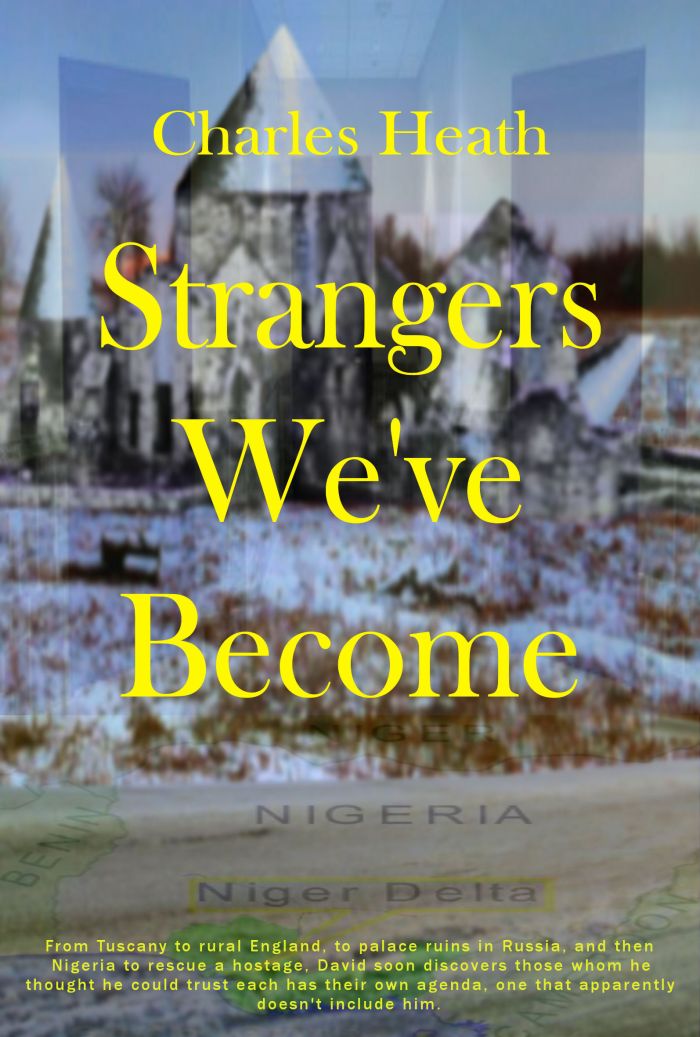
Stranger’s We’ve Become, a sequel to What Sets Us Apart.
The blurb:
Is she or isn’t she, that is the question!
Susan has returned to David, but he is having difficulty dealing with the changes. Her time in captivity has changed her markedly, so much so that David decides to give her some time and space to re-adjust back into normal life.
But doubts about whether he chose the real Susan remain.
In the meantime, David has to deal with Susan’s new security chief, the discovery of her rebuilding a palace in Russia, evidence of an affair, and several attempts on his life. And, once again, David is drawn into another of Predergast’s games, one that could ultimately prove fatal.
From being reunited with the enigmatic Alisha, a strange visit to Susan’s country estate, to Russia and back, to a rescue mission in Nigeria, David soon discovers those whom he thought he could trust each has their own agenda, one that apparently doesn’t include him.
Before the COVID-19 pandemic, a time that is rapidly disappearing in our collective memories, we came down from Brisbane to Melbourne for a wedding, perhaps the last for this family for quite some time, this being my wife’s brother’s last daughter to tie the knot, so to speak.
And like someone said, as with births, weddings and funerals, it turned into a family reunion on my wife’s side of the family.
But there were extra benefits…
We got to meet the extended family of the groom.
And, we got an insight into their friends, the thirty-something, footloose and fancy-free acquaintances that had been off and on a part of the bride and groom’s life for about 15 or so years, and most of who had been to London, for various stints, and who are now scattered across Australia, and other international destinations.
I have to say that these people were quite interesting.
As an older person, I didn’t have much in common, so I followed one of my father’s old adages, if you’ve got nothing to say, shut up and listen.
And as a writer, I did something else, observe.
It was an eye-opening experience if nothing else, and a rather interesting look into what it might be like as an unmarried reasonably well-off thirty-something. For starters, you didn’t have to worry about the price of drinks, or how much you drank. You can just up and go anywhere in the world at the drop of a hat. For a few minutes there I was starting to feel envious.
It was sometimes overindulgence, but I noticed it was never to the point of becoming what some refer to as legless. Noisy perhaps, crude at times, yes, but in reminiscing, it was a curious phenomenon that they had all “hooked up” at some time or other.
Aside from learning what appeared to be a new “language”, there was also a running theme that at one time or another nearly all of them had lived with the groom in London for a period.
It got me thinking.
It would make a good story.
It was just trying to find a context, other than a wedding, that would bring them together, one where a series of vignettes that involved each of them, in turn, could bring the story of that person to life.
In this case, but not so much the reminiscing, it was the wedding.
What if it was an untimely funeral?
Trying to find joy in the midst of a very sad occasion.
I’m sure this has been done to death many times, but after hearing a lot of happy memories, it seems to me that in this case, it could be uplifting.
Yes, the ideas need a little work, but it’s firmly there in my mind.
Perhaps when I get back home, I might just start writing.
As soon as I stepped off the shuttle in the cargo bay, the third officer was waiting for me.
“The captain asked me to escort you up to his day room.”
Unusual. The captain could have just called me on the private communicator if there was a need for secrecy, if that was what this was.
“Any reason why he would send you?”
“Didn’t want you getting lost, sir.”
I knew I should not have admitted to him that I had got a little confused finding my way around, but that was because the dockyard people had blocked off several passageways.
“No. I guess not.”
The Third was a man of little humour, and particularly didn’t think any of my jokes were funny. On station, he was all serious and unamused.
Now, he had his serious face on, and I thought it best not to ask what to expect.
He took a different route to the bridge than what I would have taken, a much shorter and more direct route. It was obvious he had studied the plans of the ship and knew it backwards. I on the other hand, was not that prepared, but it meant I would have to.
He went as far as the door to the day room, and left me there. I didn’t need to announce myself, the doors just opened, whisper quiet, showing me the room I could expect one day when I got my own ship.
Or at the very least, I could dream.
The doors closed behind me, and I walked forward into the room proper, and first saw the captain sitting at his desk, and then a figure standing beside and back a step, behind him.
There was a weapon in his hand, but it was by his side.
And something else I noticed, the figure looked just like the three I’d seen on the other ship.
The captain saw me looking at him.
“This is the captain from the vessel that just arrived as those assailants on the cargo ship were ‘rescued’.
He, or she, looked human under the clothes and helmet, but could be almost anything.
“Does he…”
“Speak our language, yes, and a lot of others. And he would like our help.”
This is like so many roads off in what is known as the Gold Coast hinterland, that tract of land between the ocean and the mountain range that runs along the eastern side of the country, known as the Great Dividing Range.
This is the road that runs behind where friends of ours live, and runs on down into a valley where a river runs, and when the rains come down, floods.
It’s hard to imagine that a few hundred years ago all of this would have been tropical jungle, and intrepid explorers would be making their way north or west, just to see what was there.
I imagine in another 100 years, all of this will be gone, given over to housing, shopping malls, and factories, and anything that resembles country living will have been moved out to far beyond the mountain range and towards the what is called the ‘red’ centre.
Or over that time there is a reckoning with mother nature, and if there is, I know who I’d put my money on.
But, as for a story…
…
It was quite literally the road to nowhere.
You just had to follow it until it disintegrated into a dirt track, and then for another 20 miles before you finished up at a rusty gate attached to a dilapidated fence that surrounds the a house that was cleverly hidden behind a grove of trees, the only place I knew as home. We had no phones, no television or radio, no real contact with the outside world.
Until, one day, my fairy godmother came and rescued me.
Yes, it felt like that.
Little had I realized that there were any other people in our family, and it took until the death of my parents to find out I had grandparents, and a much larger extended family.
There had been, according to my father, no reason to leave. Or for anyone else to come, and the few that ventured to end of the road, found there was nothing to see, and no reason to stay.
For all intents and purposes we didn’t exist, and, oddly, I was content with that.
Until I decided to venture further afield, run into two people, a man and a woman, both of whom said they were related to my father, and ask me to take them back with them to meet my father,
A bad choice, but I didn’t know it at the time.
Not until my father ran them off at the point of the gun he always had with him.
He knew who they were, and it surprised me to see the change in him, from the strong silent type, to a man greatly afraid, though he would not tell me of what.
He just told me to lock myself in my room, and not to come out for anything.
I heard him leave, but not come back.
It took three days before I left that room, to find I was completely alone in the house. Outside, it was a different story. There, half way between the back door and the barn were the two people I’d brought home, both dead. A little further away were my parents, also dead.
And another man, who was leaning over my father.
I stopped when he looked up in my direction.
“You must be Jake.”
How did he know my name? I nodded, warily watching him in case I had to run.
He went from body to body, checking to see if they were still alive, then stood and turned around to look at me.
“Do you know what happened?”
“No.”
“Do you know who the other two are?”
I assumed he was referring to the visitors.
“No. The man said he was a relative, asked me to bring them here.”
“How did you…”
Escape? “My father told me to hide and not come out.” If this man was associated with the other two…
Perhaps he saw my trepidation.
“I’m a friend of your father’s, a policeman. You were supposed to be safe here.”
We were, until I brought the harbingers of death. “Not any more,” I said.
The ship took what seemed a long time from the ship’s last approach to being tied up at the wharf in Mombasa, Kenya.
I had watched the proceedings from the upper deck, the wharf swarming with people servicing other ships, and the groups waiting to take the ropes and tie us in between two similar ships to our own.
I had come for a safari, intrigued with the notion of coming face to face with a place called the Serengeti, to see native Africans and rich British and American tourists here to hunt wild animals.
By all accounts, they’d killed all their own and were branching out to new pastures.
We’d come from Southampton via the Mediterranean through the Suez Canal and down the Pacific side of Africa, what I would have called a wonderful voyage, but for others a torturous trek.
If you travelled steerage. For those with money, it was the perfect way to spend a month away from the hectic life of living in a city.
For me, even though I’d travelled steerage, it was an experience, culminating in the arrival, enjoying the breeze that tempered the heat and the exhausting conditions that had prevailed after we left Port Said.
The moment I walked down the gangplank and onto the wharf, the heat suddenly increased in intensity. It was only going to get worse.
I looked back on board and saw Louisa Bently, Lord and Lady Bently’s eldest daughter, along with the governess and two sisters. He was here to join the Embassy.
She had wanted to stay in England and resented the fact she had to leave all her friends and acquaintances to come to some ‘God forsaken he’ll hole’. She looked thoroughly miserable.
I was going to give her a wave, we had become friends of a sort during the voyage, but at her insistence, a secret from her parents and limited to stolen moments. It was a friendship that would not go anywhere; we were from different ends of the social spectrum. I saw her glance in my direction, then back to taking instructions from the governess. Their car had just arrived on the dock.
There were four other American families who were here for a safari, the safari that I had been requested to join as one of three security officers.
There were rumours of a war between the natives and troubles along the way in the villages, and reported reprisals against the whites, trouble borne of interfering missionaries, and railway magnates trying to open up parts of the country.
It wasn’t the first time or the last that the native might attach their so-called British superiors.
The Americans had disembarked and were filing into a coach arranged to take them to their hotel. I had to find my own way to the first campsite with the other officers. My overnight hotel would not be posh, but it was not far from the wharf.
They would be taken to Mombasa itself.
The recruiting agent in London had told me that Africa was mostly hot and dusty, the cities bustling, the countryside wide open, grassy and limited shade. It was hot, he said, but moderately so with temperate breezes, and sometimes it rained, sometimes torrential. It was no worse than the Midwest of America in summer.
It was like that overnight, raining heavily, and when dawn came, the sky had cleared and the sun was bearing down, a hint of a hot, dry day to follow. It didn’t take long for the water to disappear.
I had just enough time to get to the agent’s office and collect my ticket on what was known as the lunatic express from Mombasa to Kimusu on Lake Victoria, the gateway for the safari. I joined the advance party heading to set up the first camp. Five other men were there, fellow security guards, and a catering staff.
It promised to be two days of travel from British South Africa to Uganda, the perfect introduction to the conditions we would experience. However, after a few hours, once we left the coastal city and headed deeper inland, the heat and desolation increased noticeably.
Perhaps it would be the heat, the dry, dusty air and the look on the faces of the natives who all looked quite fierce, that would be more of a problem than the wild animals. Those thoughts occupied my mind for most of the morning of that first day.
Every time I close my eyes, I see something different.
I’d like to think the cinema of my dreams is playing a double feature but it’s a bit like a comedy cartoon night on Fox.
But these dreams are nothing to laugh about.
Once again there’s a new instalment of an old feature, and we’re back on the treasure hunt.
…
Rather tired and bleary eyes, I made it to the fishing store five minutes late. I had a lot on my mind, woken late, and then had to battle traffic. I longed for the day I could afford a car, though riding the bike kept me fit.
It also took my mind of the encounter last night, the one that had kept me away, my imagination almost getting the better of me.
Boggs was there, and he didn’t look happy.
“Where were you last night? I tried to get you, but you weren’t answering.”
I had the phone on silent. Ringing phones had a way of bringing unwanted attention.
“I had something I had to do.”
“You went to the Lantern without me.”
What? Does he have a network of spies I knew nothing about? “So, I heard it went respectable and had to check it out.” And hoping Boggs didn’t know who was in attendance, other than me.
“We said we would go there together.”
“You apparently had something else on last night.”
“It’s not what you think. I had to go with my mother to the hospital for her 6 monthly checks.”
It was easy to forget. She’d had a cancer scare a few years back, and had undergone chemo for a few months, sending it into remission. But it came with 6 monthly checks, and both Boggs and his mother were constantly worried it might come back. It seemed it always did when you least expected it.
“And what was the verdict.”
He relented a little. “Good.”
“Then, I assure you that was more important.” No point in telling Boggs what I was doing, just in case it backfired, or he disagreed. “And I can assure you the place is not worth it anymore. Boring as shit.”
He shook his head. Not pleased, but at least not angry.
“Has Rico shown his face?” I asked.
“Yes, about an hour back, some of those people he associates with came and they went off together.”
Perhaps he was annoyed that I hadn’t been there because I’m sure Boggs would follow him.
“You’ve been here all this time?”
“He came to our place last night. I’m sure it was him who searched in my room. Not much of a professional thief, he left a mess behind. Went through the outhouse as well.”
“Looking for the map?”
“Seems so. He didn’t find it.”
No, he wouldn’t, because Boggs had it with him. At least that was what I thought he intimated a day or two ago.
“Copies?”
He reached for his back pocket and pulled out some folded paper. “Thought you might like to keep a copy for yourself.”
I tried hard to keep the excitement out of my manner. It saved me having to make up an excuse as to why I wanted a copy of the map, and I didn’t want to tell him about the plan involving Nadia, not unless I had to.
The novel ‘Echoes from the past’ started out as a short story I wrote about 30 years ago, titled ‘The birthday’.
My idea was to take a normal person out of their comfort zone and led on a short but very frightening journey to a place where a surprise birthday party had been arranged.
Thus the very large man with a scar and a red tie was created.
So was the friend with the limousine who worked as a pilot.
So were the two women, Wendy and Angelina, who were Flight Attendants that the pilot friend asked to join the conspiracy.
I was going to rework the short story, then about ten pages long, into something a little more.
And like all re-writes, especially those I have anything to do with, it turned into a novel.
There was motivation. I had told some colleagues at the place where I worked at the time that I liked writing, and they wanted a sample. I was going to give them the re-worked short story. Instead, I gave them ‘Echoes from the past’
Originally it was not set anywhere in particular.
But when considering a location, I had, at the time, recently been to New York in December, and visited Brooklyn and Queens, as well as a lot of New York itself. We were there for New Years, and it was an experience I’ll never forget.
One evening we were out late, and finished up in Brooklyn Heights, near the waterfront, and there was rain and snow, it was cold and wet, and there were apartment buildings shimmering in the street light, and I thought, this is the place where my main character will live.
It had a very spooky atmosphere, the sort where ghosts would not be unexpected. I felt more than one shiver go up and down my spine in the few minutes I was there.
I had taken notes, as I always do, of everywhere we went so I had a ready supply of locations I could use, changing the names in some cases.
Fifth Avenue near the Rockefeller center is amazing at first light, and late at night with the Seasonal decorations and lights.
The original main character was a shy and man of few friends, hence not expecting the surprise party. I enhanced that shyness into purposely lonely because of an issue from his past that leaves him always looking over his shoulder and ready to move on at the slightest hint of trouble. No friends, no relationships, just a very low profile.
Then I thought, what if he breaks the cardinal rule, and begins a relationship?
But it is also as much an exploration of a damaged soul, as it is the search for a normal life, without having any idea what normal was, and how the understanding of one person can sometimes make all the difference in what we may think or feel.
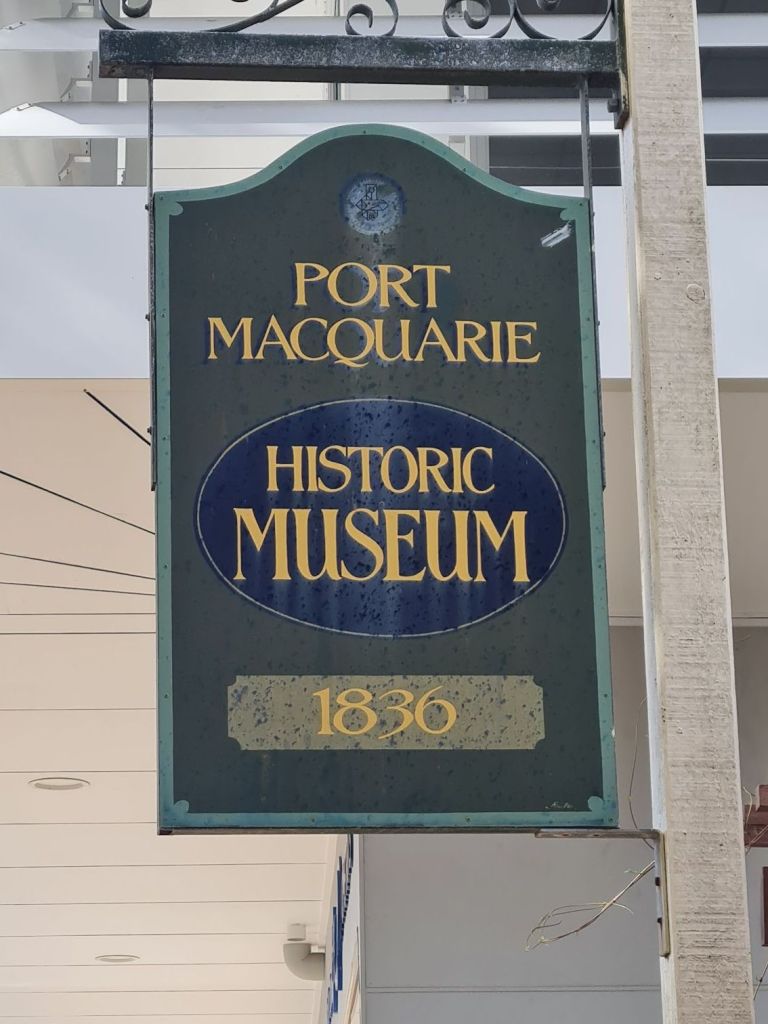
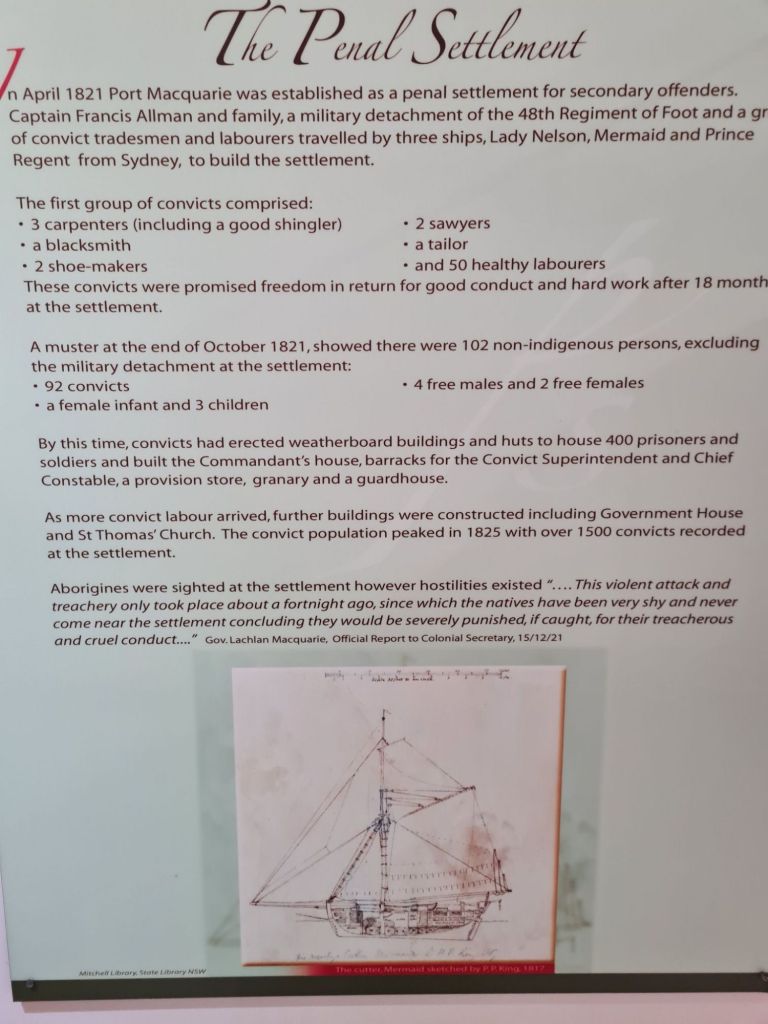
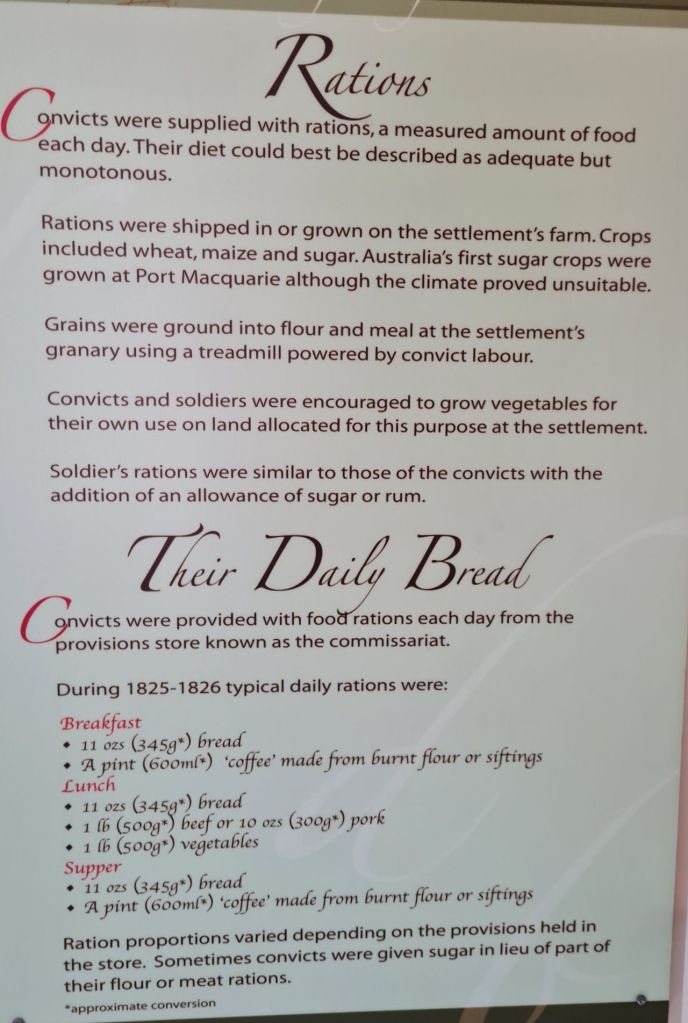
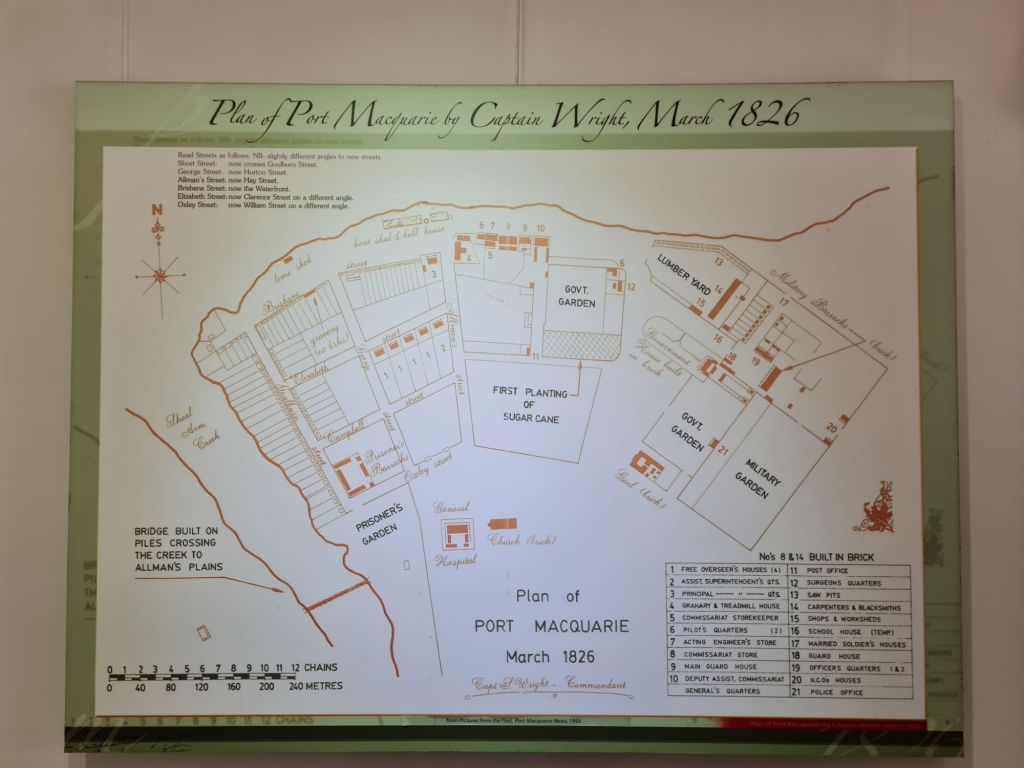
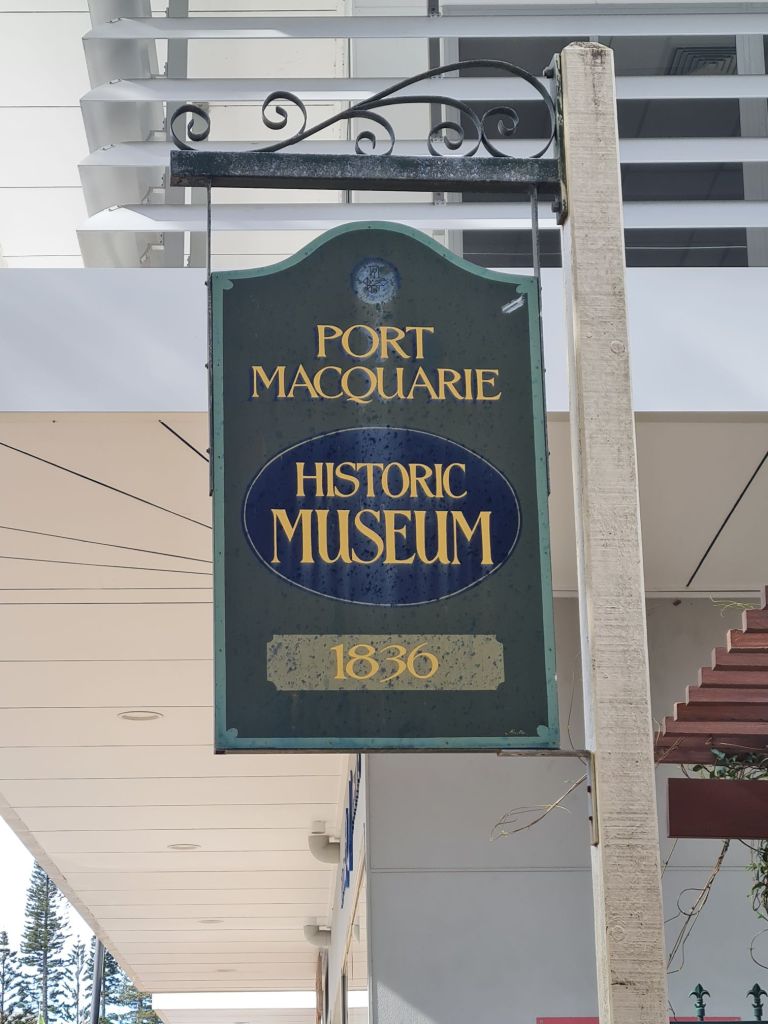
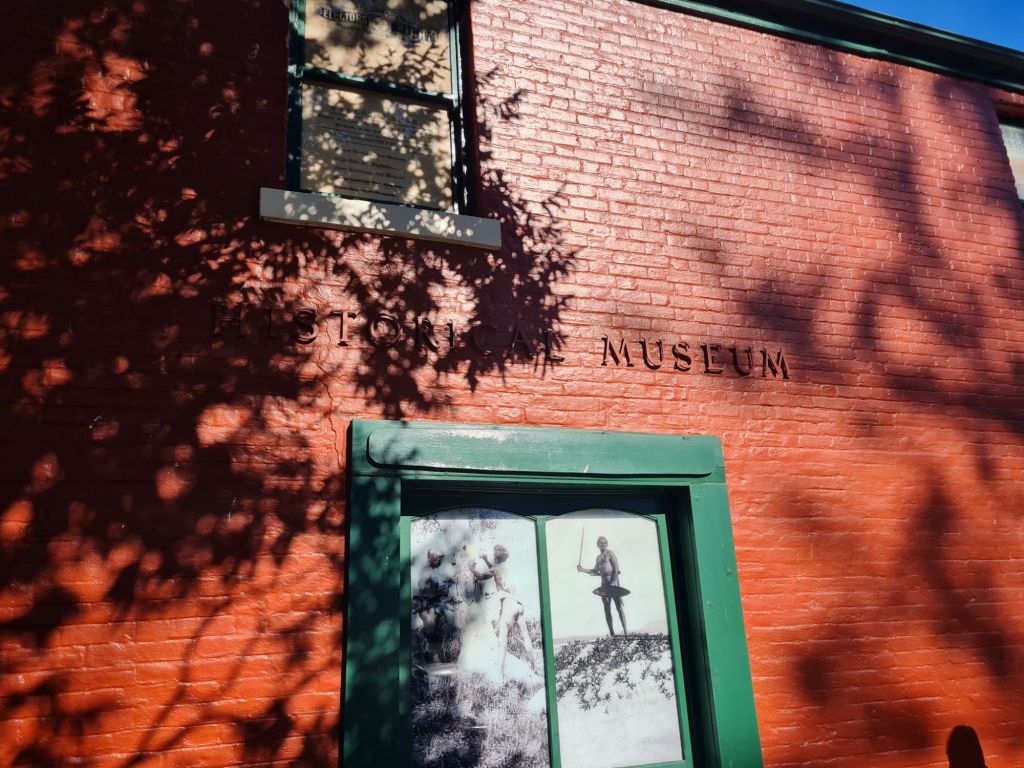
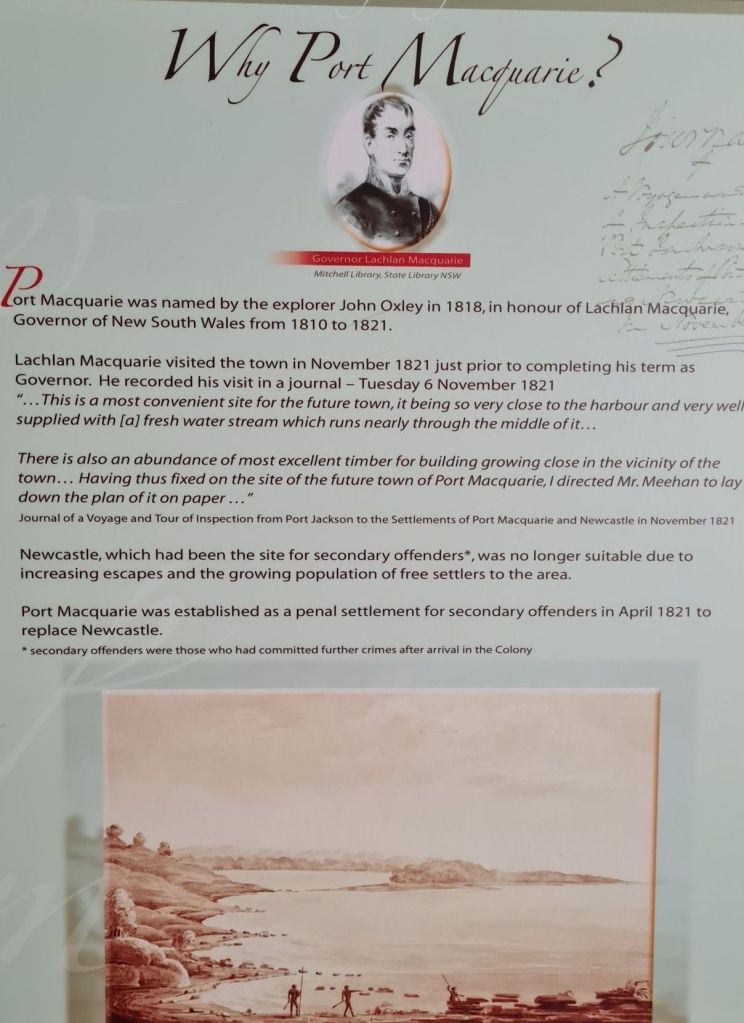
The first section of this museum relates the history, from the beginning, and through the 1800s, firstly as a convict settlement, and then for free settlers, to farm and wood logging.
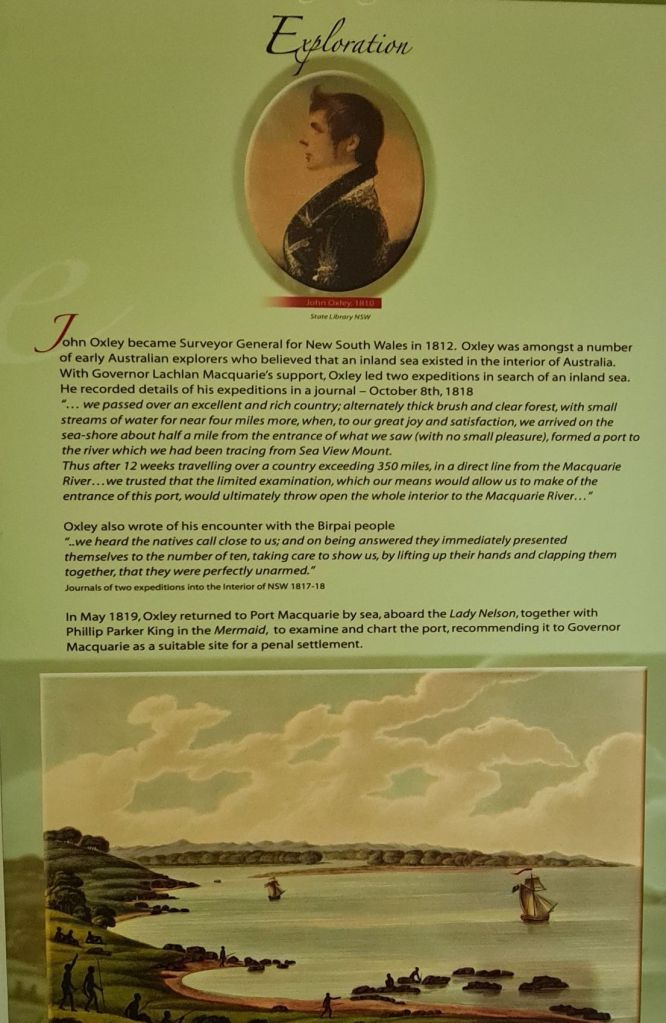
The Hastings River was named after the Governor General of India in 1818, but it was not explored until 1819 by John Oxley who recommended the site suitable for farming and logging.
In 1821, Governor Macquarie sent Captain John Allman, 40 soldiers, and 60 convicts on three ships, the Lady Nelson, the Mermaid, and the Prince Regent to establish a penal settlement.
Normally a three-day voyage the weather kept the ships 14 days at Port Stephens and more than a week at Trial Bay. It was not until almost 28 days after leaving Sydney they arrived and then wrecked the ships trying to cross the shallow sandbar across the Hastings River entrance.