Skeletons in the closet, and doppelgangers

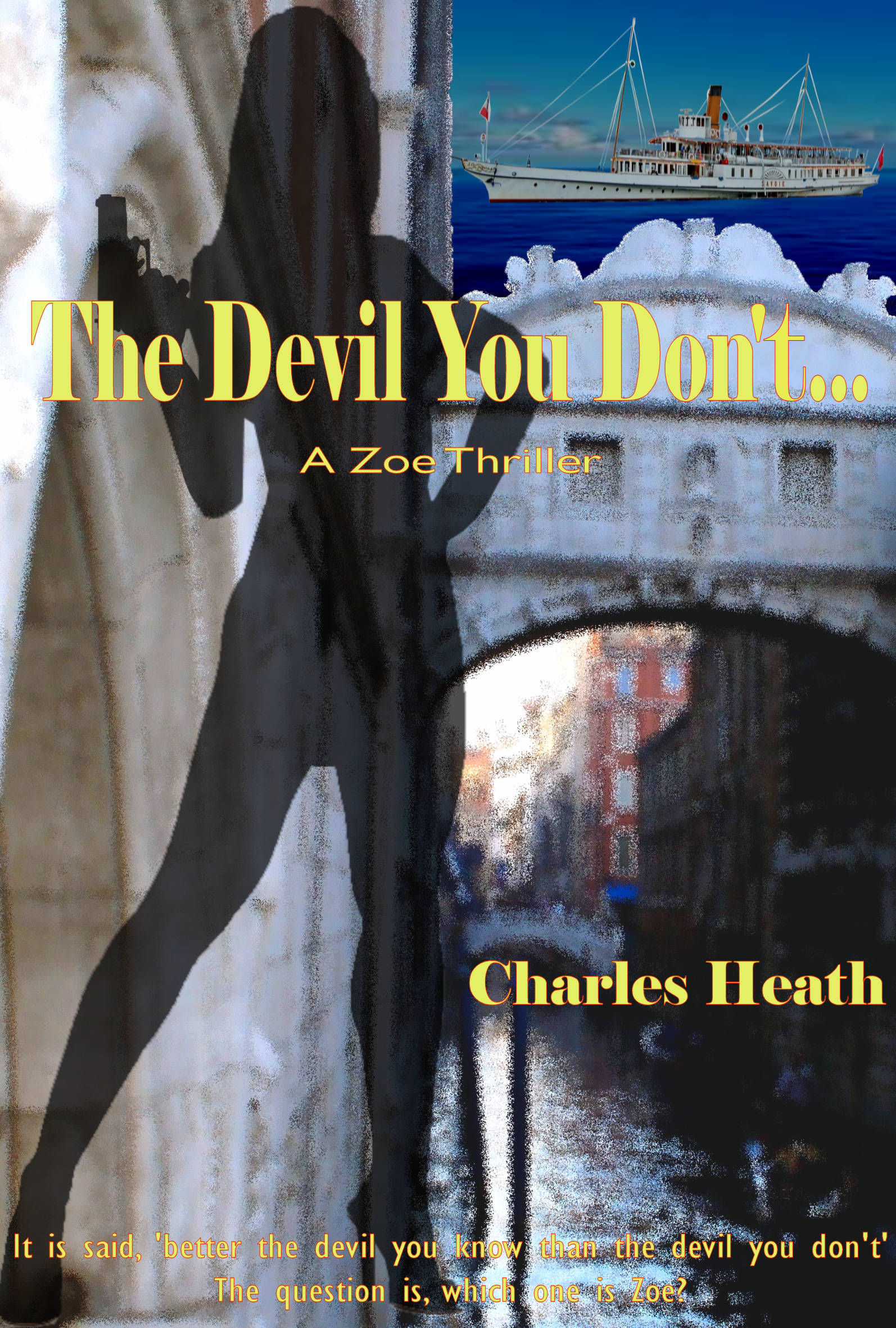
A story called “Mistaken Identity”

How many of us have skeletons in the closet that we know nothing about? The skeletons we know about generally stay there, but those we do not, well, they have a habit of coming out of left field when we least expect it.

In this case, when you see your photo on a TV screen with the accompanying text that says you are wanted by every law enforcement agency in Europe, you’re in a state of shock, only to be compounded by those same police, armed and menacing, kicking the door down.

I’d been thinking about this premise for a while after I discovered my mother had a boyfriend before she married my father, a boyfriend who was, by all accounts, the man who was the love of her life.

Then, in terms of coming up with an idea for a story, what if she had a child by him that we didn’t know about, which might mean I had a half brother or sister I knew nothing about. It’s not an uncommon occurrence from what I’ve been researching.

There are many ways of putting a spin on this story.

Then, in the back of my mind, I remembered a story an acquaintance at work was once telling us over morning tea, that a friend of a friend had a mother who had a twin sister and that each of the sisters had a son by the same father, without each knowing of the father’s actions, both growing up without the other having any knowledge of their half brother, only to meet by accident on the other side of the world.

It was an encounter that in the scheme of things might never have happened, and each would have remained oblivious of the other.

For one sister, the relationship was over before she discovered she was pregnant, and therefore had not told the man he was a father. It was no surprise the relationship foundered when she discovered he was also having a relationship with her sister, a discovery that caused her to cut all ties with both of them and never speak to either from that day.

It’s a story with more twists and turns than a country lane!

And a great idea for a story.

That story is called ‘Mistaken Identity’.

The cinema of my dreams – It all started in Venice – Episode 9

Watching the watchers

My day’s entertainment was spotting the surveillance and then watching the surveillance.  It was an aspect of my job that was really strange, but it was important to keep an eye on your enemies, if only to be ready for the unexpected.

I didn’t expect anything to happen, for the time being, taking Larry at his word that, for some reason, he needed Juliet to win my trust before he made an approach.

And yet there was always an air of unpredictability in these matters, so I decided that if the opportunity arose, I’d surprise him.  In any case, I had a feeling Larry might get impatient and arrive with a small army before too long.

The librarian, to all those who didn’t know who she was, was the quintessential librarian on holiday.  She was very much a loner, who was quite capable of appearing like a lost schoolgirl on one hand, and someone very much at home, and at ease, in her environment.

She also had an air of danger about her, so she would be when push came to shove, a formidable opponent.

I couldn’t say the same for the Frenchman because there were times, I didn’t quite believe he was anything other than an abrasive Frenchman.  The only thing that kept me interested was the fact I couldn’t shake him.

I’d managed to lose the librarian several times, long enough to observe her, before I let her find me again.  Until the last time when she lost me, I came up behind her.

I’m not sure what I was thinking, but surprise often brought out a person’s true character.

When she turned around, his sixth sense finally kicking in, she jumped

“We have to stop meeting like this,” I said.

“We haven’t met before.”

“You were at the hotel this morning, and I got an icy look from you just before you left.  From them 9n, every time I turn around, there you are.”

“Coincidence, I assure you.”

“I hope so, because I cannot for the life of me wonder what your interest could be in me.”

“None.”

“Are you staying at the hotel?”

There had to be a point where. If she was a normal person, she would find this encounter creepy, and begin to think I was a stalker.  Not so far, which meant that she hadn’t time to formulate the proper response to our first meeting, outrage. Or at least genuine fear.

She had fallen back on training, training that I was familiar with.  The question then was, she might not be working for Larry, but Rodby.

“I can’t see that it’s any of your business.”

“Well or might be.  If you are a tourist, I live here, and know the city well, and could be at the very least an English-speaking guide.”

“I’m not in need of a guide.  I’m only here a few days and talking to you is wasting time.  If you’re following me, don’t.”

A last look up and down, definitely checking out what sort of threat I was, she then wandered off, cool and calm demeanor reacquired.

And, I thought, cover blown.  One down and one to go.

It might have been disconcerting to fund the Frenchman and Juliet having coffee at a small Cafe opposite a church on one of the wider streets in Venice.

After running into the librarian in St Mark’s square, I decided to walk a large circuitous route to Rio Terra Foscarini, at the end of which was a church and a Vaporetto terminal.

I was at the top of Campo Morosini, and saw them before they saw me, which left me with two options.  Crash the party, or leave them alone.  The latter seemed the best idea, and I doubled back and decided to check out the film festival events for the days.

Something else, which might be a worry, I had noticed the Frenchman had stopped following me.  At least now I knew who she was working for.

Changing my mind again, I decided to go home and contemplate my next meeting with Juliet.

Waiting, not far from the doorstep, was Alfie.

“Knew you’d get around to coming home sometime today.  How are you?”

“Confused.”

“Well, that’s not a good state to be in.”

I opened the door and let him pass in front of me.  A quick look to see if anyone was watching, there was no one that I could see, then closed the door.

If only that could shut out all the problems.

“Why are you confused?”

“Has Rodby put another dog on my tail?”

“You mean that woman you accosted in the souvenir shop?  Not aware of one, but you know Rodby, trusts no one and tells you only what he thinks you want to hear.”

So Alfie was not above telling me lies.  Or maybe he didn’t know, but I found that hard to believe.  And it was disconcerting to learn he knew of my every movement.  Was her surveilling me too, or just tracking me.  And how did he know about the librarian?

“She’s just one of two keeping an eye on me.  The other is a Frenchman, and I just saw him and Juliet having coffee.”

“Details.  What’s your plan for tonight?  You should be taking Cecilia.”

“She’s busy.”

“Not that busy that our affairs cone first.”

“It’s not that important.  I’m sure when she’s finished, she’ll be crashing the party.  But, in any case, there is no plan.  I’m not sure whether I want to interrogate her, or just play along.  Where’s Larry?”

“Still in Sorrento.”

“You will tell me the moment he leaves?”

“Of course.  If you want me to take care of the woman and the Frenchman, let me know.”

“Won’t that alert Larry that we’re on to him?”

“Possibly, but people disappear here all the time.”

“I don’t think we need to be that drastic.  Yes.  Let’s see what happens tonight.”

“Have fun then “

I was not sure who I had to worry about the most.  Rodby or Larry.  They both seemed overly obsessive.

© Charles Heath 2022

Writing a book in 365 days

Day 10

Apparently, we are still discussing the implements with which we choose to put words on paper, and it seems that choice of implement might make a difference.

I have a degree of scepticism because I generally get words down on my phone, the only implement that is nearby at all times., no matter where I am.

Of course, many years ago I always travelled with little pocket-sized notebooks and a pen, rather than a pencil, to write. I still have all of these, several hundred in fact, in several shoeboxes in the cupboard in my writing room.

Over the years I have accumulated many A5-sized notebooks I bought where there were stationery sales, and now use these to both make notes or write. I tend not to use the smaller notebooks now, but I have a hundred or so sitting in a drawer just in case.

But do you like to write using a biro, with smudgy ink, a pen with a rollerball tip with less smudge, a felt-tip pen, which, depending on the paper type, can leach through, making it difficult to write on both sides, a fountain pen with ink, the old-fashioned way of writing letters, and some of the older writers back in the day?

I remember my early days in school, grade three in fact, when we switched from pencil to pen and ink. It was very messy, to begin with, but I remember vividly being the ink monitor, the one who filled the ink wells, and discovering my schoolmate’s prelidiction for stuffing bits of blotting paper into the well for whatever reason.

Even now it would be a messy way to write.

But the choice is yours.

Tomorrow, at last, we get to do some more writing.

The cinema of my dreams – Was it just another surveillance job – Episode 11

I’m back home and this story has been sitting on a back burner for a few months, waiting for some more to be written.

The trouble is, there are also other stories to write, and I’m not very good at prioritising.

But, here we are, a few minutes opened up and it didn’t take long to get back into the groove.

Just the person to see next


I couldn’t imagine what those details were.  But if it was a setup, it was a very elaborate one, by people who knew our systems and procedures.  Naturally, the first thought that sprang to mind, someone who was working here, or used to.

Then I had another thought, what if none of us was meant to survive the operation, and hat we had been selected specifically because we were new to field operations.  At the briefing, we had been told this was simple surveillance, observe and report, nothing more.

Usually we had one experienced member and three new team members, the experienced member was there to continue on the job training and evaluation.  What worried me was that an experienced member could be taken out apparently as easy as the others.

And my money was not on the guy I’d cornered.  Of course, I could be wrong, and no doubt circumstantial evidence would go a long way towards proving that, but in my estimation, a cornered man like he was, with a thirst and talent for killing, would not have hesitated to kill me before I’d got three words out.

I believed him.  He was scared and, now that I thought about it, confused.  That was anything but the m.o. of a conscienceless killer.

The wrinkle that hadn’t been accounted for was the explosion.  No one could have predicted that, or its effect on the operation.  It might well have saved him, except that I didn’t play by the rules and reconnected with him.  Maybe he had felt safe after taking out the others, and assuming I’d been taken down by the explosion.

Except, if I didn’t think he did the killing, who did, and why?  Severin?  Just who the hell is this Severin?  There’s been no indication he wasn’t one of us.

I was pondering that question when the woman returned and sat down again.  This time her stare wasn’t quite as glacial.

“Describe this Severin.”

She opened her notebook, and had her pencil ready.  Odd that she should be taking notes in pencil.

I described him.  Five feet eight inches tall, 250 pounds, thinning black hair, making him anywhere between 35 and 50, though I thought he was mid-forties.  He wore a tweed suit, rather an odd choice for the climate, and had the aroma of cigarette smoke hanging about him.

Every free moment I saw him, he had a cigarette, so I thought he was quite possibly a chain smoker, and from that, perhaps a man with bad nerves, or who worried a lot.  Now I knew he was not one of us, that could be interpreted as thinking he might get caught.

But he was confident, and outgoing, which meant he was quite sure he wouldn’t get caught, and that meant, quite possibly there was someone within our department that was working for or with him and had covered his comings and goings.  Either that or he had a universal passcode key to come and go as he pleased.

When I finished the description I could see a flicker of recognition.  IT was possible she knew who he might be, and if so, I was betting she knew him by another name.  I asked if that was the case.

“You know who this man is, don’t you?”

The stern reproving look returned.  “What makes you think that?”

“I read faces.  Yours is not a poker face.”

“Well, that disappoints me because I like to play poker.  Perhaps the people I play with have a different view.”

“I’m usually a good judge of character.”

“It’s let you down this time.”  She stood.  “Before you go, one of the supervisors here would like a word with you.  His name is Nobbin.  He works out of another office and is coming here directly.  After that, you’re free to go.”

She didn’t wait to say goodbye, and I was glad I managed to keep a straight face long enough.

Nobbin.  Just the man I wanted to see.


© Charles Heath 2019

A photograph from the inspirational bin – 6

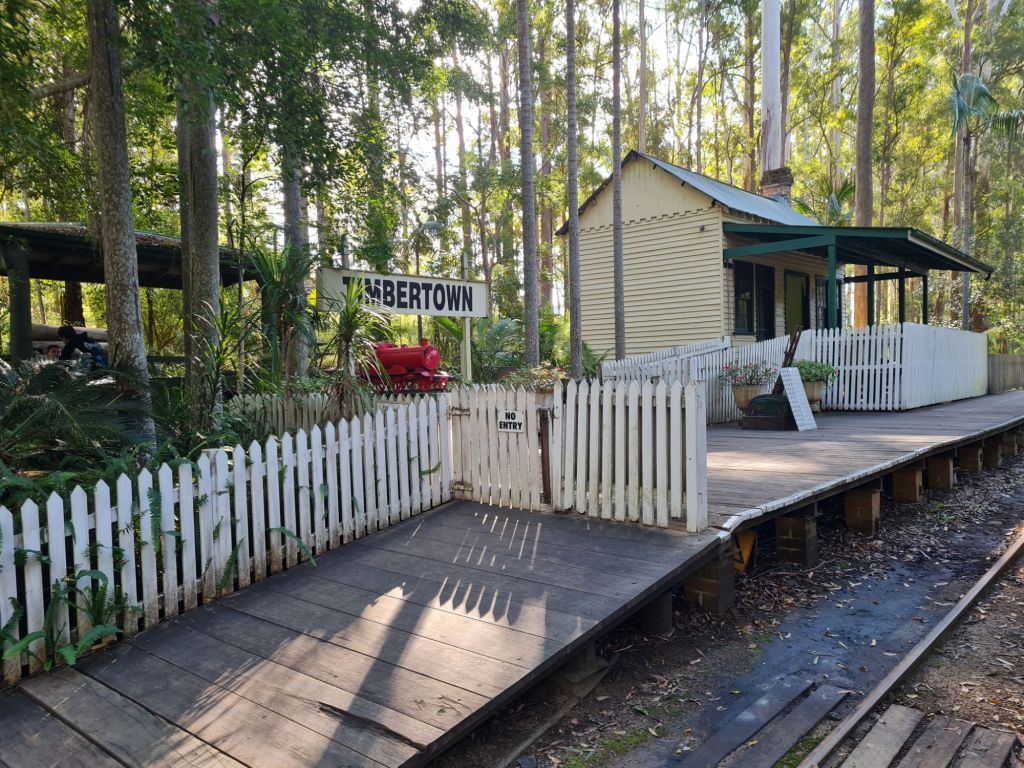
For those who are wondering what this is a photograph of, it is a tree bordered stream that runs along a long valley that runs from outside Canungra, in Queensland, to the Lamington National Park.

It’s near a place we like to stay for a few days when we want to get away from everything, and I mean everything. There is no television, and cell phone reception is awful if not non existent.

So, you can see the benefits.

Sitting at the table on the veranda overlooking the fields, and this stream, you have time to just think, or not, about what it might have been like before the settlers came.

What is was like when the explorers we seeking new places to live, and they chanced upon this valley. It it was me back then, I would have followed the stream.

But, as for a story…

I have read a great many stories for the explorers of this country, and the hazardous nature of their treks.

What seemed to be the most common theme was crossing from south to north, that is from Melbourne to the Northern most tip of Queensland, or from Adelaide to the Northern Territory. In both cases they would have to traverse a very dry, very hot outback where the sight of a stream, or river, like above, would have been very welcome.

For some, it became an impossible quest, and stuck in the desert, they eventually perished. That in itself, the trials and tribulations of an early explorer would make a great story.

Australia is a very fertile country around the coastal regions, but one you start venturing inland, it is dry, dusty and almost uninhabitable. Unless there’s water from rivers, streams, or underground, or mining settlements, there is very little else to see.

The exceptions to this are Uluru and Kakadu National Park, in the Northern Territory, Shark Bay and The Pinnacles in Western Australia, MacKenzie Falls in Victoria, The Simpson Desert, the Boodjamulla (Lawn Hill) National Park, and the Carnarvon Gorge in Queensland, to name a few.

One day I might get to see them.

Writing about writing a book – Day 30

I’m having fun with chapter one.

Can you reach a point where you are never satisfied with what you’ve written?

What more can I say?

Looking at the mess constituting my room and my life, slob may have been an appropriate description.  I considered myself old, overweight though not necessarily fat, hair graying at the edges, and few wrinkles around the eyes, there were no real pluses in my description.

Some said I had a kindly face, but perhaps I had the look of a paternalistic grandfather.  There were several men in the office who were the same age and had grandchildren.  And some who had children at a time when they should be planning for retirement, not parenthood.

World-weary and perpetually tired, I’d passed the mid-life crisis, wondering what it was that affected other men my age.  Twenty-odd years later, I was still wondering.

I used to think I’d missed a lot in half a lifetime.

Now, I didn’t know what to think.

Did I deserve pity?  No.

Did I deserve sympathy?  No!

The only person who could get me out of the rut was myself.  For years I’d traded on Ellen’s good nature.  She deserved better, left me, and was now happier in the arms of a man who I wanted to believe treated her far better than I.  She had told me so herself, and judging by her manner, it had to be true.  Only recently had she got her smile back, the one that lit her face up, one that infectiously spread happiness to anyone near her.

There were reasons why I became the person I was now.  Some might say they were valid.  In the cold, hard light of dawn, I could see it was time I stopped using my past as a crutch and got on with the business of living.

Perhaps today would be the first day of the rest of my life.

I took the bus rather than drove.  At that hour of the morning, the traffic would be bad, and there would be no parking spaces left.  And I was using public transport more and more, have become accustomed to the convenience.  Time to read the paper, or a good book, or just dream about a different life.

This morning I thought about Ellen.  I hadn’t for a while, but that might have been fueled by the arrival of the divorce papers she wanted me to sign.  I’d had my time to be angry, and disappointed, she’d said, and she was right.  It was time to move on.

And she had stuck by me through thick and thin, coming back from overseas service a basket case after nine months in a POW camp, after a war that was more horrible than anyone could imagine.  Two mental breakdowns, periods of indolence and lassitude, leaving her to bring up the girls on her own.  I had not been a great father, and much less a husband.

I remembered that argument word for word.

I could see the looks of pain in the girl’s faces.

I remembered the hug, the kiss on the cheek, the tears.  It had not been out of hate, but a necessity.  For her and the children.  Until I found some lasting peace, they were better off at arm’s length.  Away from the arguing, the silences, the absences.

And disappointment.

After she left I tried to get my life in order.  Drugs, professional help, alcohol, meditation, then work.

Over ten years ago, it took a year, perhaps a little more before sanity returned.

She did not.

By then I knew she had found someone else, a mystery man, whom neither she would tell me who, and the girls honestly didn’t know.  She’d promised that much, any new man in her life would not get to meet the girls.  And she would tell me, and then when she was ready.

Then, suddenly, the children were no longer children but young adults and out in the world on their own, and I had become more a banker than a father, an observer rather than a participant, and it was as if we were more like ships passing in the night.  And overnight, the ships had sailed to the other side of the world.

My own fault, of course, and a bit late now to change history.  I could see Ellen’s influence over them, her prejudices and dislikes, and their contempt, like their mother, for me, simmering beneath the surface but in fairness to them, I really hadn’t been much of a help as a parent should be.

And now I was getting my life back in order, perhaps I could try and make it up to them, and that first meeting, with them and Ellen, nearly a month ago, had been a step in the right direction.  They’d agreed to see me again, without her, during the holidays, which had now arrived.  All I had to do was make the call and get on a plane.

This mess I was heading into, it would not take long.  I pulled out my phone and after searching for a travel agent near where I worked, I made an appointment to see about going overseas.

She had spoken to me about the divorce papers several days ago, alternately pleading with, and then abusing, me.  There had been some very strong language in the conversation, words I’d thought her incapable of using, but I confess, finally, I didn’t really know her all that well anymore.

Since then I had been calling her to arrange a meeting.  She had not yet replied.  With some distance to go before I reached the office, I tried calling her again.  I was almost glad when she didn’t answer.

I never realized just how hard it was to revise and re-write, and how much time it takes.

Perhaps that’s why first novels take so long to write!

© Charles Heath 2016-2025

Searching for locations: From X’ian to Zhengzhou dong by bullet train, China

Lunch and then off on another high-speed train

We walked another umpteen miles from the exhibition to a Chinese restaurant that is going to serve us Chinese food again with a beer and a rather potent pomegranate wine that had a real kick.  It was definitely value for money at 60 yuan per person.

But perhaps the biggest thrill, if it could be called that, was discovering downstairs, the man who discovered the original pieces of a terracotta soldier when digging a well.  He was signing books bought in the souvenir store, but not those purchased elsewhere.

Some of us even got photographed with him.  Fifteen minutes of fame moment?  Maybe.

After lunch, it was off to the station for another high-speed train ride, this time for about two and a half hours, from X’ian to Zhangzhou dong.

It’s the standard high-speed train ride and the usual seat switching because of weird allocation issues, so a little confusion reigns until the train departs at 5:59.

Once we were underway it didn’t take long before we hit the maximum speed

Twenty minutes before arrival, and knowing we only have three minutes to get off everyone is heading for the exit clogging up the passageway.  It wasn’t panic but with the three-minute limit, perhaps organized panic would be a better description.

As it turned out, with all the cases near the door, the moment to door opened one of our group got off, and the other just started putting cases on the platform, and in doing so we were all off in 42 seconds with time to spare.

And this was despite the fact there were about twenty passengers just about up against the door trying to get in.  I don’t think they expected to have cases flying off the train in their direction.

We find our way to the exit and our tour guide Dannie.  It was another long walk to the bus, somewhat shabbier from the previous day, with no leg room, no pocket, and no USB charging point like the day before.  Disappointing.

On the way from the station to the hotel, the tour guide usually gives us a short spiel on the next day’s activities, but instead, I think we got her life history and a song, delivered in high-pitched and rapid Chinglish that was hard to understand.

Not at this hour of the night to an almost exhausted busload of people who’d had enough from the train.  Oh, did I forget the singing, no, it was an interesting rendition of ‘You Are My Sunshine’.

The drive was interesting in that it was mostly in the dark.  There was no street lighting and in comparison to X’ian which was very bright and cheerful, this was dark and gloomy.

Then close to the hotel, our guide said that if we had any problems with the room, she would be in the lobby for half an hour.

That spoke volumes about the hotel they put us in.

We all need a little attention now and then

When I was last in Europe we decided to get the Eurostar, from London, through the Chunnel, to Paris Disneyland.  Not exactly as fast as the Japanese bullet trains, but faster than anything we have in this country.

You are hurtling along at up to 160 kph, though it feels a lot faster, and then you begin to brake, and it seems like nothing is happening, except for some outside friction noise, and the speed dropping.

I feel like that now, on my way to the bottom of the abyss.

At the end of that fall, it is something referred to as hitting rock bottom.

I’m told once you hit rock bottom the only way is up.

The question is, who do you know that has fallen into the abyss and come back to tell you about it?

Put into layman’s terms, hurling down the abyss is like having a severe episode of depression.  There are different types, some worse than others.  Hitting the ground is roughly the equivalent of looking for a way out that eases the pain and not finding one, and that, for some people, is a quite drastic answer.

But the sign that the free fall is braking, like the express train slowing down, is a sign that you’ve seen the light, that there are external forces that can render assistance.

I see them now, the hands of friends, the hands of people I don’t know, but who are concerned.

Writers like any other professional people are the same as everyone else, but with one rather interesting difference.  It is a profession where a lot of the time you are on your own, alone with your thoughts, your characters, your fantasy world, which sometimes so frighteningly drifts into your reality.

Some of us will make a fortune, some of us will make an adequate living, and live the ‘dream’ of doing the one job they always wanted to, and most will not.

I’m not rich, I’m not one who gets an adequate income, yet.

But I will get out of this abyss.

I can feel the brakes.

My eldest granddaughter, who is 15, tells me the fantasy story where she is a princess I’m writing for her is brilliant.

The free fall has stopped.  I step out into the sunshine.

All I needed was a little praise.

An excerpt from “Amnesia”, a work in progress

I remembered a bang.

I remembered the car slewing sideways.

I remember another bang, and then it was lights out.

When I opened my eyes again, I saw the sky.

Or I could be underwater.

Everything was blurred.

I tried to focus but I couldn’t. My eyes were full of water.

What happened?

Why was I lying down?

Where was I?

I cast my mind back, trying to remember.

It was a blank.

What, when, who, why and where, are questions I should easily be able to answer. These are questions any normal person could answer.

I tried to move. Bad, bad mistake.

I did not realise the scream I heard was my own. Just before my body shut down.

“My God! What happened?”

I could hear, not see. I was moving, lying down, looking up.

I was blind. Everything was black.

“Car accident; hit a tree, sent the passenger flying through the windscreen. Pity to poor bastard didn’t get the message that seat belts save lives.”

Was I that poor bastard?

“Report?” A new voice, male, authoritative.

“Multiple lacerations, broken collar bone, broken arm in three places, both legs broken below the knees, one badly. We are not sure of internal injuries, but ruptured spleen, cracked ribs and pierced right lung are fairly evident, x-rays will confirm that and anything else.”

“What isn’t broken?”

“His neck.”

“Then I would have to say we are looking at the luckiest man on the planet.”

I heard the shuffling of pages.

“OR1 ready?”

“Yes. On standby since we were first advised.”

“Good. Let’s see if we can weave some magic.”

Magic.

It was the first word that popped into my head when I surfaced from the bottom of the lake. That first breath, after holding it for so long, was sublime, and, in reality, agonising.

Magic, because it seemed like I’d spent a long time underwater.

Or somewhere.

I tried to speak but couldn’t. The words were just in my head.

Was it night or was it day?

Was it hot, or was it cold?

Where was I?

Around me, it felt cool.

It was incredibly quiet. No noise except for the hissing of air through an air-conditioning vent. Or that was the sound of pure silence.  And with it the revelation that silence was not silent. It was noisy.

I didn’t try to move.

Instinctively, somehow, I knew not to.

A previous unpleasant experience?

I heard what sounded like a door opening, and noticeably quiet footsteps slowly came into the room. They stopped. I could hear breathing, slightly laboured, a sound I’d heard before.

My grandfather.

He had smoked all his life until he was diagnosed with lung cancer. But for years before that he had emphysema. The person in the room was on their way, down the same path. I could smell the smoke.

I wanted to tell whoever it was the hazards of smoking.

I couldn’t.

I heard a metallic clanging sound from the end of the bed. A moment later the clicking of a pen, then writing.

“You are in a hospital.” A female voice suddenly said. “You’ve been in a bad accident. You cannot talk, or move, all you can do, for the moment, is listen to me. I am a nurse. You have been here for 45 days and just came out of a medically induced coma. There is nothing to be afraid of.”

She had a very soothing voice.

Her fingers stroked the back of my hand.

“Everything is fine.”

Define fine, I thought. I wanted to ask her what ‘fine’ meant.

“Just count backwards from 10.”

Why?

I didn’t reach seven.

Over the next ten days, that voice became my lifeline to sanity. Every morning, I longed to hear it, if only for the few moments she was in the room, those few waking moments when I believed she, and someone else who never spoke, were doing tests. I knew it had to be someone else because I could smell the essence of lavender. My grandmother had worn a similar scent.

It rose above the disinfectant.

She was another doctor, not the one who had been there the day I arrived. Not the one who had used some ‘magic’ and kept me alive.

It was then, in those moments before she put me under again, that I thought, what if I was paralysed? It would explain a lot. A chill went through me.

The next morning, she was back.

“My name is Winifred. We don’t know what your name is, not yet. In a few days, you will be better, and you will be able to ask us questions. You were in an accident, and you were very severely injured, but I can assure you there will be no lasting damage.”

More tests, and then when I expected the lights to go out, they didn’t. Not for a few minutes more. This was how I would be integrated back into the world. A little bit at a time.

The next morning, she came later than usual, and I’d been awake for a few minutes. “You have bandages over your eyes and face. You had bad lacerations to your face, and glass in your eyes. We will know more when the bandages come off in a few days. Your face will take longer to heal. It was necessary to do some plastic surgery.”

Lacerations, glass in my eyes, car accidents, plastic surgery. By logical deduction, I knew I was the poor bastard thrown through the windscreen. It was a fleeting memory from the day I was admitted.

How could that happen?

That was the first of many startling revelations. The second was the fact I could not remember the crash. Equally shocking, in that same moment was the fact I could not remember before the crash either, or only vague memories after.

But the most shattering of all these revelations was the one where I realised, I could not remember my name.

I tried to calm down, sensing a rising panic.

I was just disoriented, I told myself. After 45 days in an induced coma, it had messed with my mind, and it was only a temporary lapse. Yes, that’s what it was, a temporary lapse. I will remember tomorrow. Or the next day.

Sleep was a blessed relief.

The next day I didn’t wake up feeling nauseous. I think they’d lowered the pain medication. I’d heard that morphine could have that effect. Then, how could I know that but not who I am?

Now I knew Winifred the nurse was preparing me for something unbelievably bad. She was upbeat, and soothing, giving me a new piece of information each morning. This morning, “You do not need to be afraid. Everything is going to be fine. The doctor tells me you are going to recover with little scarring. You will need some physiotherapy to recover from your physical injuries, but that’s in the future. We need to let you mend a little bit more before then.”

So, I was not going to be able to leap out of bed and walk out of the hospital any time soon. I don’t suppose I’d ever leapt out of bed, except as a young boy. I suspect I’d sustained a few broken bones. I guess learning to walk again was the least of my problems.

But there was something else. I picked it up in the timbre of her voice, a hesitation, or reluctance. It sent another chill through me.

This time I was left awake for an hour before she returned.

This time sleep was restless.

Scenes were playing in my mind, nothing I recognised, and nothing lasting longer than a glimpse. Me. Others, people I didn’t know. Or I knew them and couldn’t remember them.

Until they disappeared, slowly like the glowing dot in the centre of the computer screen, before finally fading to black.

The morning the bandages were to come off she came in early and woke me. I had another restless night, the images becoming clearer, but nothing recognisable.

“This morning the doctor will be removing the bandages over your eyes. Don’t expect an immediate effect. Your sight may come back quickly, or it may come back slowly, but we believe it will come back.”

I wanted to believe I was not expecting anything, but I was. It was human nature. I did not want to be blind as well as paralysed. I had to have at least one reason to live.

I dozed again until I felt a gentle hand on my shoulder. I could smell the lavender; the other doctor was back. And I knew the hand on my shoulder was Winifred’s. She told me not to be frightened.

I was amazed to realise at that moment, I wasn’t.

I heard the scissors cutting the bandages.

I felt the bandage being removed, and the pressure coming off my eyes. I could feel the pads covering both eyes.

Then a moment when nothing happened.

Then the pads are gently lifted and removed.

Nothing.

I blinked my eyes, once, twice. Nothing.

“Just hold on a moment,” Winifred said. A few seconds later I could feel a cool towel wiping my face, and then gently wiping my eyes. There was ointment or something else in them.

Then a flash. Well, not a flash, but like when a light is turned on and off. A moment later, it was brighter, not the inky blackness of before, but a shade of grey.

She wiped my eyes again.

I blinked a few more times, and then the light returned, and it was like looking through water, at distorted and blurry objects in the distance.

I blinked again, and she wiped my eyes again.

Blurry objects took shape. A face looking down on me, an elderly lady with a kindly face, surely Winifred, who was smiling. And on the opposite side of the bed, the doctor, a Chinese woman of indescribable beauty.

I nodded.

“You can see?”

I nodded again.

“Clearly?”

I nodded.

“Very good. We will just draw the curtains now. We don’t want to overdo it. Tomorrow we will be taking off the bandages on your face. Then, it will be the next milestone. Talking.”

I couldn’t wait.

When morning came, I found myself afraid. Winifred had mentioned scarring, there were bandages on my face. I knew, but wasn’t quite sure how I knew, I wasn’t the most handsome of men before the accident, so this might be an improvement.

I was not sure why I didn’t think it would be the case.

They came at mid-morning, the nurse, Winifred, and the doctor, the exquisite Chinese. She was the distraction, taking my mind off the reality of what I was about to see.

Another doctor came into the room before the bandages were removed, and he was introduced as the plastic surgeon who had ‘repaired’ the ravages of the accident. It had been no easy job, but, with a degree of egotism, he did say he was one of the best in the world.

I found it hard to believe, if he were, that he would be at a small country hospital.

“Now just remember, what you might see now is not how you will look in a few months.”

Warning enough.

The Chinese doctor started removing the bandages. She did it slowly and made sure it did not hurt. My skin was very tender, and I suspect still bruised, either from the accident or the surgery, I didn’t know.

Then it was done.

The plastic surgeon gave his work a thorough examination and seemed pleased with his work. “Coming along nicely,” he said to the other doctor. He issued some instructions on how to manage the skin, nodded to me, and I thanked him before he left.

I noticed Winifred had a mirror in her hand and was reticent in using it. “As I said,” she said noticing me looking at the mirror, “what you see now will not be the result. The doctor said it was going to heal with little scarring. You have been extremely fortunate he was available. Are you ready?”

I nodded.

She showed me.

I tried not to be reviled at the red and purple mess that used to be my face. At a guess, I would have to say he had to put it all back together again, but not knowing what I looked like before, I had no benchmark. All I had was a snippet of memory that told me I was not the tall, dark, and handsome type.

And I still could not talk. There was a reason, he had worked in that area too. Just breathing hurt. I think I would save up anything I had to say for another day. I could not even smile. Or frown. Or grimace.

“We’ll leave you for a while. Everyone needs a little time to get used to the change. I suspect you are not sure if there has been an improvement in last year’s model. Well, time will tell.”

A new face?

I could not remember the old one.

My memory still hadn’t returned.

©  Charles Heath  2024

Searching for locations: Terracotta Warriors and Horses Museum, X’ian, China

Terracotta Warriors and Horses Museum

A little history, and anecdotal advice first:

In 1974 a 26-year-old farmer, Yang Jide, was drilling a well and found fragments of the terracotta soldiers and bronze weapons.

What was discovered later was one of the biggest attended burial pits of China’s first feudal Emperor, Qin Shi Huang.  In the following years remains had been found in 3 pits, yielding at least 8,000 soldiers and horses, and over 100 chariots.  The soldiers were infantry, cavalry, and others.

Emperor Qin was born in 259 BC and died in 210 BC.  He began building a mausoleum for himself at the foot of Mount Li when he was 13.  Construction took 38 years, from 247 BC to 208 BC.  It was divided into 3 stages and involved 720,000 conscripts.

The pits of pottery figures are 1.5 km east of Emperor Qin’s mausoleum.  Pit 1 has about 6,000 terracotta armored warriors and horses and 40 wooden chariots.  Pit 2 is estimated to have over 900 terracotta warriors and 350 terracotta horses with about 90 wooden chariots.  Pit 3 had so far yielded only 66 pottery figures and one chariot drawn by four horses.

Official records say it was discovered later that it was likely Xiang Yu, a rebel, intentionally damaged the Mausoleum and the soldiers in the pits, by setting fire to the wooden roof rafters, and these fell on and broke the warriors into pieces.

However, we were told that after the terracotta warriors were completed, the Emperor ordered the builders to be killed so that they would not tell anyone about the warriors, and then of those that remained alive deliberately smashed all of the artifacts.

The thing is, all of the terracotta figures that have been found are in pieces, and they need computers to piece them back together again.

The visit:
The first impression is the size of the car park and the number of buses parked in the lot, and a hell of a lot more outside up the road an off on side streets.  Obviously, it costs money to park in the parking lot.

The other first impressions; the numbers waiting to get in were not as many as yesterday outside the forbidden city, in fact, a lot less.

Be warned there’s a long walk from the entrance gate where your bags are scanned and a body scan as well, before admittance.  This walk is through a landscaped area which it is expect might sometime in the future reveal more soldiers, or other artifacts.

At the end of the walk that takes about ten minutes, you can get a one-way ride to the second checkpoint, but we opted not to as no one else in our group did.

That walk is the warm-up exercise to an organized viewing of the exhibits after going through a second ticket checkpoint.  On the other side, we had to hand our tickets back to the tour guide which was disappointing not to end up with a memento of actually having been there.

So, on the other side in the courtyard, the guide told us the most important parts of the exhibition, that we should spend most of the time looking at pit 1, and then spent a little time in 2 which is only there in the first stages of excavation.  Then move onto the museum if only to see the replica chariots.

We do.

The chariots were small but interesting

The horses were better and intricately detailed

These are soldiers, perhaps complete examples of those types found in the end pit.

This is one of the archers.  You can tell by the way he wears his hair.

Pit 2

The excavation of this pit has only just begun, so it is possible to see where they have carefully removed the top cover, and you can see the broken parts of the warriors lying in a heap.

Some parts of the warriors are more discernible closer up

These parts are carefully extracted and taken to the ‘hospital’ where they are digitised and the computer will match each part with the warrior it belongs to.

Pit 1

This has quite a number of standing soldiers that have been glued back together, but not necessarily complete and I notice a number if the statues were incomplete. And if they cannot find the missing pieces, then they are not added to or filled in.

The scale of the pit is enormous, and they have hardly scratched the surface in the restoration process.

What is there is a number of horses as well.

That’s at the front of the pit, a long line of statues, and what is clear is the location of the well where the first fragments were found by a farmer.

There are about eight lines of soldiers, and some lining the sides.

Midway down there is a large area currently under excavation

At the back is the hospital where the soldiers are reassembled.  There’s nearly a hundred in the various stages of rebuilding.  These days the soldiers are rebuilt using computer imaging.

The hospital area is where they are put back together

And these are some of the statues in various stages of reconstruction

Another two views of the size and scale of the reconstruction project

The coffee shop is also a sales centre, but there are too many people waiting for coffee and too few places to sit down.