An excerpt from “If Only” – a work in progress

Investigation of crimes doesn’t always go according to plan, nor does the perpetrator get either found or punished.

That was particularly true in my case.  The murderer was incredibly careful in not leaving any evidence behind, to the extent that the police could not rule out whether it was a male or a female.

At one stage the police thought I had murdered my own wife though how I could be on a train at the time of the murder was beyond me.  I had witnesses and a cast-iron alibi.

The officer in charge was Detective First Grade Gabrielle Walters.  She came to me on the day after the murder seeking answers to the usual questions like, when was the last time you saw your wife, did you argue, the neighbors reckon there were heated discussions the day before.

Routine was the word she used.

Her fellow detective was a surly piece of work whose intention was to get answers or, more likely, a confession by any or all means possible.  I could sense the raging violence within him.  Fortunately, common sense prevailed.

Over the course of the next few weeks, once I’d been cleared of committing the crime, Gabrielle made a point of keeping me informed of the progress.

After three months the updates were more sporadic, and when, for lack of progress, it became a cold case, communication ceased.

But it was not the last I saw of Gabrielle.

The shock of finding Vanessa was more devastating than the fact she was now gone, and those images lived on in the same nightmare that came to visit me every night when I closed my eyes.

For months I was barely functioning, to the extent I had all but lost my job, and quite a few friends, particularly those who were more attached to Vanessa rather than me.

They didn’t understand how it could affect me so much, and since it had not happened to them, my tart replies of ‘you wouldn’t understand’ were met with equally short retorts.  Some questioned my sanity, even, for a time, so did I.

No one, it seemed, could understand what it was like, no one except Gabrielle.

She was by her own admission, damaged goods, having been the victim of a similar incident, a boyfriend who turned out to be an awfully bad boy.  Her story varied only in she had been made to witness his execution.  Her nightmare, in reliving that moment in time, was how she was still alive and, to this day, had no idea why she’d been spared.

It was a story she told me one night, some months after the investigation had been scaled down.  I was still looking for the bottom of a bottle and an emotional mess.  Perhaps it struck a resonance with her; she’d been there and managed to come out the other side.

What happened become our secret, a once-only night together that meant a great deal to me, and by mutual agreement, it was not spoken of again.  It was as if she knew exactly what was required to set me on the path to recovery.

And it had.

Since then, we saw each about once a month in a cafe.   I had been surprised to hear from her again shortly after that eventful night when she called to set it up, ostensibly for her to provide me with any updates on the case, but perhaps we had, after that unspoken night, formed a closer bond than either of us wanted to admit.

We generally talked for hours over wine, then dinner and coffee.  It took a while for me to realize that all she had was her work, personal relationships were nigh on impossible in a job that left little or no spare time for anything else.

She’d always said that if I had any questions or problems about the case, or if there was anything that might come to me that might be relevant, even after all this time, all I had to do was call her.

I wondered if this text message was in that category.  I was certain it would interest the police and I had no doubt they could trace the message’s origin, but there was that tiny degree of doubt, about whether or not I could trust her to tell me what the message meant.

I reached for the phone then put it back down again.  I’d think about it and decide tomorrow.

© Charles Heath 2018-2020

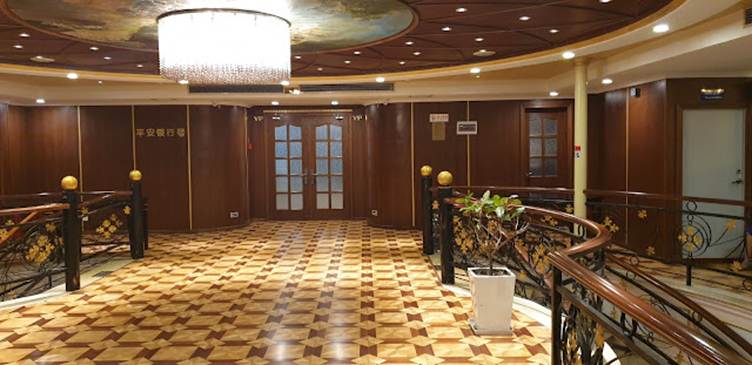
Searching for locations: The Golden Mask Dynasty Show, Beijing, China

The Golden Mask Dynasty Show was located at the OCT Theatre in Beijing’s Happy Valley. 

The theatre was quite full and the seats we had were directly behind the VIP area; as our guide told us, we had the best seats in the house. 

The play has 20 different dance scenes that depict war, royal banquets, and romance.  There are eight chapters and over 200 actors, and throughout the performance we were entertained by dancers, acrobats, costumes, lighting, and acoustics.

The story:

It is of romantic legend and historical memories, the Golden Mask Queen leads her army in defeating the invading Blue Mask King’s army, and afterwards the lands return to a leisurely pastoral life until the Queen forges a ‘mysterious tree’.  When the tree has grown, the Queen has a grand celebration, and releases the captured Blue soldiers, much to the admiration of the Blue Mask King.
This is followed by monstrous floods, and to save her people, and on the advice from the ‘mysterious tree’, the Queen sacrifices herself to save her people.  The Queen then turns into a golden sunbird flying in the sky blessing the people and that of the dynasty.

Billed as the best live show in China, described as a large scale dramatic musical, “The Golden Mask Dynasty” it lived up to its reputation and was thoroughly enjoyed by all.

It was not just singing dancing and acrobatics, it had a story and it was told so that language and cultural issues aside, it worked.  There was a narration of the story running beside the stage, but it was hard to divide attention between what was happening, and what was being related.

Then came the peacock dance, with live peacocks

And this was followed by a waterfall, well, I don’t think anyone in that audience could believe what they were seeing.

I know I was both astonished and in awe of the performance.

What a way to finish off our first day in Beijing.

Oh, sorry, that high was dented slightly when we had to go back to our room.

‘What Sets Us Apart’ – A beta readers view

There’s something to be said for a story that starts like a James Bond movie, throwing you straight in the deep end, a perfect way of getting to know the main character, David, or is that Alistair?

A retired spy, well not so much a spy as a retired errand boy, David’s rather wry description of his talents, and a woman that most men would give their left arm for, not exactly the ideal couple, but there is a spark in a meeting that may or may not have been a setup.

But as the story progressed, the question I kept asking myself was why he’d bother.

And, page after unrelenting page, you find out.

Susan is exactly the sort of woman to pique his interest.  Then, inexplicably, she disappears.  That might have been the end to it, but Prendergast, that shadowy enigma, David’s ex-boss who loves playing games with real people, gives him an ultimatum, find her or come back to work.

Nothing like an offer that’s a double-edged sword!

A dragon for a mother, a sister he didn’t know about, Susan’s BFF who is not what she seems or a friend indeed, and Susan’s father who, up till David meets her, couldn’t be less interested, his nemesis proves to be the impossible dream, and he’s always just that one step behind.

When the rollercoaster finally came to a halt, and I could start breathing again, it was an ending that was completely unexpected.

I’ve been told there’s a sequel in the works.

Bring it on!

The book can be purchased here:  http://amzn.to/2Eryfth

Writing a book in 365 days – 74/75

Days 74 and 75

Write about a character through dress, expressions, gait, and mannerisms and what makes them memorable. Then, who do they love or fear, where are they going, and do they have a secret?

If there was one definable item about Jacqueline Bennet, it would be that she could not disappear in a crowd.

I know, I was sent by head office to collect her from the railway station, with the only identification, the fact she was wearing a red coat.

If only…

For the last six months it had been my assignment to collect people. From the airport, from the bus station, from the train station. The least favourite was the train station.

I had to try and find the new interns in the throngs of people who all got off the train and swelled up into a swirling mass of bodies so thick sometimes all I could see was heads.

Today was no exception, except…

Jacqueline was wearing a hat, purple, almost the shape of a peacock, and as large. I saw the hat before the red coat. That, itself, was so bright it hurt my eyes.

It took three attempts to introduce myself and convince her I was not trying to kidnap her and have her sent to some harem in Arabia. I said there was no such place as Arabia, and it elicited one of seven expressions which by the time I got her to the office I’d worked out to be, incredulous, surprised, dismayed, disappointed, happy, sad, and angry. These expressions were accompanied by little mannerisms, a tic in her left eye, blinking excessively, pursing her lips and sighing. There was a nervous giggle, but I was not sure where that fitted.

She was mostly disappointed, mainly because Mr Brightman, the CEO, had not come to greet her, and instead it was some minion.

I knew this much about her before we got out the main entrance to Grand Central Station, and it was more than I cared to know.

Outside the station, we caught a cab to the office and then spent the next thirty-five minutes in traffic. For some reason, it was unusually bad because the normal time it took was between ten and fifteen minutes.

The first five minutes were rather tense, so I thought I would lighten the atmosphere by asking, “Where did you come from?”

At first, I thought she was going to ignore me, but then, after a sideways glance that suggested she didn’t tell minions such personal things about herself, she said, “Bridgewater, Ohio.”

When I asked if it was big or small, she said it was a place no one had heard of because it wasn’t a real town. It was a hell hole that everyone wanted to escape. I can’t imagine any place, especially your hometown, as being somewhere you would want to leave willingly, but apparently, the highway that passed through and kept all the businesses going had its route changed and had now bypassed the town. It was the reason for her move, the cafe she worked at had closed, as did just about everything else.

Then there was the toxic relationship with her high school sweetheart, which had been affected by everything else and forced her to make the decision to get away. New city, new start. Our employment agency was recommended by one of her friends who had also made the decision to leave, and had found a happy situation in Florida. Jacqueline was hoping for California.

I had lived in New York all my life and had never suffered the problems that seem to plague the Midwest. Jacqueline was not the first or the last person who had fled their previous existence, but the story seemed to the the same.

But listening to her story tumble out in short, breathless sentences, I felt there was something more behind her move. It was that one statement, thrown in there among the others, that if you were not listening, you would have missed it. “Big cities, they provide an anonymity that can give you that ability to reinvent yourself.”

They could. But equally, a person could simply disappear and never be found again. It had happened to several of the people who had come to us for employment, and this girl, who was under all of that bravado and camouflage, people who had come from abusive homes or relationships, the production of bad education, wasted opportunities, and economic downturn. Anything had to be better than what they had.

“Don’t do it,” I said. We were about five minutes away from the office.

“Don’t do what?”

“Walk in the door, go and see Mr Brightman, accept the job he has picked out for you. Don’t.”

She picked up on the urgency in my tone. I knew what was going to happen, as much as I told myself over and over, it wouldn’t.

“Why? Why on earth would you say such a thing?”

“Because I think you were right when you said you’d finish up in a harem in one of those Arab states. Girls come and girls go, but when I try to find out where they’ve gone, they either never arrived or left soon after they started.”

She looked at me like she thought I was an axe murderer, not a messenger.

“How come you’re telling me this?”

“I don’t know. He’s going to kill me when he finds out, but I don’t like this job any more, and talking to you, hearing what it is he is using to lure people like you, that idea that ‘it’s too good to be true’ just reverberates in my head. I was like you three years ago. Small town boy with big aspirations, running away from an abusive father and a town full of bullies. I’m still that boy, big town, small town, the fears are the same, only here, it can swallow you up.”

I’d walked out of the boarding house that morning with nothing but the money I had saved and the notion that I could get on a train to anywhere, that I would not meet the girl, and hope that she would think she had been abandoned and do something else. Then, at the station, like the times before, I lost my nerve.

I pulled out the money and divided it into two. “Take this, find somewhere to stay, and don’t go to Mr Brightman. You can’t trust him. I’m not going back.”

“Now you’re scaring me.”

“You should be. Stop the cab. We’ll get out here.”

“But…”

“If you make one right decision in your life, let it be this one. Take the money. Please.”

The cab stopped, and I paid the fare. I got out and held the door. In that moment, I could see all of the fears that I had myself the first day I arrived, and the girl that Mr Bightman had sent to fetch me. If I’d known then what I know now…”

“Please.”

Finally, she stepped out of the cab. We both watched it drive off.

“Now what?”

“Take the money, and believe that it is the first day of the rest of your life.”

The sun chose that moment to finally come out from behind the clouds and transform that cold, wintry morning into a world filled with possibilities. She looked at me and smiled, the look of a woman who had made a decision.

“Did you have a plan when you left home this morning?”

“Other than I was not going to work for Mr Brightman any more, no. I was going to the station, but I was going to get on a train to anywhere but here.”

She shrugged. “I always wanted to go to California, but I didn’t want to go there alone. Fancy joining me? I mean, I still don’t trust you completely, but I can tell if you are telling me the truth or not.”

“Are you sure?”

“No. But what’s the alternative if your suspicions are right?”

Decisions are made, rightly or wrongly, based sometimes on reality, but often on a hunch.

We went back to the station on foot, taking the opportunity to talk. I think it was her idea that if I was an axe murderer, I would lose patience and simply move on or show my true colours. That I
was willing to talk, tell her all my hopes and aspirations, and how I’d settled for three years in a rut that felt safe.

We had lunch and spent the afternoon getting ourselves from Grand Central to Penn station, and then the next three days sewing the seeds of a friendship that lasted the rest of our lives.

It was interesting to read a small article in the paper about three weeks later, as I settled into a new job working for a large distribution centre as dispatch clerk, the arrest of Mr Brightman, aka Chuck Sentry, aka Walter Winsome, aka Jonathon Bentley on charges relating to the disappearance of at least fourteen people.

They were all the names I could remember, and I wrote them down in a letter and sent it anonymously to the NYPD.

©  Charles Heath  2025

The story behind the story: A Case of Working With the Jones Brothers

To write a private detective serial has always been one of the items at the top of my to-do list, though trying to write novels and a serial, as well as a blog, and maintain a social media presence, well, you get the idea.

But I made it happen, from a bunch of episodes I wrote a long, long time ago, used these to start it, and then continue on, then as now, never having much of an idea where it was going to end up, or how long it would take to tell the story.

That, I think is the joy of ad hoc writing, even you, as the author, have as much idea of where it’s going as the reader does.

It’s basically been in the mill since 1990, and although I finished it last year, it looks like the beginning to end will have taken exactly 30 years.  Had you asked me 30 years ago if I’d ever get it finished, the answer would be maybe?

My private detective, Harry Walthenson

I’d like to say he’s from that great literary mold of Sam Spade, or Mickey Spillane, or Phillip Marlow, but he’s not.

But, I’ve watched Humphrey Bogart play Sam Spade with much interest, and modelled Harry and his office on it.  Similarly, I’ve watched Robert Micham play Phillip Marlow with great panache, if not detachment, and added a bit of him to the mix.

Other characters come into play, and all of them, no matter what period they’re from, always seem larger than life.  I’m not above stealing a little of Mary Astor, Peter Lorre or Sidney Greenstreet, to breathe life into beguiling women and dangerous men alike.

Then there’s the title, like

The Case of the Unintentional Mummy – this has so many meanings in so many contexts, though I imagine that back in Hollywood in the ’30s and ’40s, this would be excellent fodder for Abbott and Costello

The Case of the Three-Legged Dog – Yes, I suspect there may be a few real-life dogs with three legs, but this plot would involve something more sinister.  And if made out of plaster, yes, they’re always something else inside.

But for mine, to begin with, it was “The Case of the …”, because I had no idea what the case was going to be about, well, I did, but not specifically.

Then I liked the idea of calling it “The Case of the Brother’s Revenge” because I began to have a notion there was a brother no one knew about, but that’s stuff for other stories, not mine, so then went the way of the others.

Now it’s called ‘A Case of Working With the Jones Brothers’, finished the first three drafts, and at the editor for the last.

I have high hopes of publishing it in early 2021.  It even has a cover.

PIWalthJones1

In a word: Arm

Like leg, arm is a word that is mostly associated with a body part.

Like being legless, another description for being drunk, being rendered ‘armless’ means you are no threat, in a rather awful but funny way by saying it.

I guess we all have a dash of ‘sick’ humour in all of us.

However, arm can also be used to describe a part of a structure too.

It could also describe the arm of an ‘armchair’.

But…

Arm also means to give people weapons like guns, usually from an armoury.

I’m guessing that a whole lot of people with arms is an army!

You can also say that taking those weapons away would be to disarm them.

It might take the long arm of the law to do it, too.

And to disarm someone doesn’t necessarily mean to take away their arms, but to ‘charm’ them with your wit and humour.

An arm can also be a river or streams tributary, so I could say instead of staying on the main river, I’ll take the ‘named’ arm, but just remember, sometimes this can be dangerous, getting off the main route.

On a boat, there is a yardarm, and this was once used to hang seamen who committed serious crimes such as mutiny.

A call to arms was to declare war,

And lastly, an arm of the defence services could be any one of Army, Navy, Marines or Airforce.

Just steer clear of the Navy for the aforementioned reasons.


An excerpt from “The Devil You Don’t”

Available on Amazon Kindle here:  https://amzn.to/2Xyh1ow

By the time I returned to the Savoie, the rain had finally stopped, and there was a streak of blue sky to offer some hope the day would improve.

The ship was not crowded, the possibility of bad weather perhaps holding back potential passengers.  Of those I saw, a number of them would be aboard for the lunch by Phillippe Chevrier.  I thought about it, but the Concierge had told me about several restaurants in Yvoire and had given me a hand-drawn map of the village.  I think he came from the area because he spoke with the pride and knowledge of a resident.

I was looking down from the upper deck observing the last of the boarding passengers when I saw a woman, notable for her red coat and matching shoes, making a last-minute dash to get on board just before the gangway was removed.  In fact, her ungainly manner of boarding had also captured a few of the other passenger’s attention.  Now they would have something else to talk about, other than the possibility of further rain.

I saw her smile at the deckhand, but he did not smile back.  He was not impressed with her bravado, perhaps because of possible injury.  He looked at her ticket then nodded dismissively, and went back to his duties in getting the ship underway.  I was going to check the departure time, but I, like the other passengers, had my attention diverted to the woman in red.

From what I could see there was something about her.  It struck me when the light caught her as she turned to look down the deck, giving me a perfect profile.  I was going to say she looked foreign, but here, as in almost anywhere in Europe, that described just about everyone.  Perhaps I was just comparing her to Phillipa, so definitively British, whereas this woman was very definitely not.

She was perhaps in her 30’s, slim or perhaps the word I’d use was lissom, and had the look and manner of a model.  I say that because Phillipa had dragged me to most of the showings, whether in Milan, Rome, New York, London, or Paris.  The clothes were familiar, and in the back of my mind, I had a feeling I’d seen her before.

Or perhaps, to me, all models looked the same.

She looked up in my direction, and before I could divert my eyes, she locked on.  I could feel her gaze boring into me, and then it was gone as if she had been looking straight through me.  I remained out on deck as the ship got underway, watching her disappear inside the cabin.  My curiosity was piqued, so I decided to keep an eye out for her.

I could feel the coolness of the air as the ship picked up speed, not that it was going to be very fast.  With stops, the trip would take nearly two hours to get to my destination.  It would turn back almost immediately, but I was going to stay until the evening when it returned at about half eight.  It would give me enough time to sample the local fare, and take a tour of the medieval village.

Few other passengers ventured out on the deck, most staying inside or going to lunch.  After a short time, I came back down to the main deck and headed forward.  I wanted to clear my head by concentrating on the movement of the vessel through the water, breathing in the crisp, clean air, and let the peacefulness of the surroundings envelope me.

It didn’t work.

I knew it wouldn’t be long before I started thinking about why things hadn’t worked, and what part I played in it.  And the usual question that came to mind when something didn’t work out.  What was wrong with me?

I usually blamed it on my upbringing.

I had one of those so-called privileged lives, a nanny till I was old enough to go to boarding school, then sent to the best schools in the land.  There I learned everything I needed to be the son of a Duke, or, as my father called it in one of his lighter moments, nobility in waiting.

Had this been five or six hundred years ago, I would need to have sword and jousting skills, or if it had been a few hundred years later a keen military mind.  If nothing else I could ride a horse, and go on hunts, or did until they became not the thing to do.

I learned six languages, and everything I needed to become a diplomat in the far-flung British Empire, except the Empire had become the Commonwealth, and then, when no-one was looking, Britain’s influence in the world finally disappeared.  I was a man without a cause, without a vocation, and no place to go.

Computers were the new vogue and I had an aptitude for programming.  I guess that went hand in hand with mathematics, which although I hated the subject, I excelled in.  Both I and another noble outcast used to toss ideas around in school, but when it came to the end of our education, he chose to enter the public service, and I took a few of those ideas we had mulled over and turned them into a company.

About a year ago, I was made an offer I couldn’t refuse.  There were so many zeroes on the end of it I just said yes, put the money into a very grateful bank, and was still trying to come to terms with it.

Sadly, I still had no idea what I was going to do with the rest of my life.  My parents had asked me to come back home and help manage the estate, and I did for a few weeks.  It was as long as it took for my parents to drive me insane.

Back in the city, I spent a few months looking for a mundane job, but there were very few that suited the qualifications I had, and the rest, I think I intimidated the interviewer simply because of who I was.  In that time I’d also featured on the cover of the Economist, and through my well-meaning accountant, started involving myself with various charities, earning the title ‘philanthropist’.

And despite all of this exposure, even making one of those ubiquitous ‘eligible bachelor’ lists, I still could not find ‘the one’, the woman I wanted to spend the rest of my life with.  Phillipa seemed to fit the bill, but in time she proved to be a troubled soul with ‘Daddy’ issues.  I knew that in building a relationship compromise was necessary, but with her, in the end, everything was a compromise and what had happened was always going to be the end result.

It was perhaps a by-product of the whole nobility thing.  There was a certain expectation I had to fulfill, to my peers, contemporaries, parents and family, and those who either liked or hated what it represented.  The problem was, I didn’t feel like I belonged.  Not like my friend from schooldays, and now obscure acquaintance, Sebastian.  He had been elevated to his Dukedom early when his father died when he was in his twenties.  He had managed to fade from the limelight and was rarely mentioned either in the papers or the gossip columns.  He was one of the lucky ones.

I had managed to keep a similarly low profile until I met Phillipa.  From that moment, my obscurity disappeared.  It was, I could see now, part of a plan put in place by Phillipa’s father, a man who hogged the limelight with his daughter, to raise the profile of the family name and through it their businesses.  He was nothing if not the consummate self-advertisement.

Perhaps I was supposed to be the last piece of the puzzle, the attachment to the establishment, that link with a class of people he would not normally get in the front door.  There was nothing refined about him or his family, and more than once I’d noticed my contemporaries cringe at the mention of his name, or any reference of my association with him.

Yet could I truthfully say I really wanted to go back to the obscurity I had before Phillipa?  For all her faults, there were times when she had been fun to be with, particularly when I first met her when she had a certain air of unpredictability.  That had slowly disappeared as she became part of her father’s plan for the future.  She just failed to see how much he was using her.

Or perhaps, over time, I had become cynical.

I thought about calling her.  It was one of those moments of weakness when I felt alone, more alone than usual.

I diverted my attention back to my surroundings and the shoreline.  Out of the corner of my eye, I could see the woman in the red coat, making a move.  The red coat was like a beacon, a sort of fire engine red.  It was not the sort of coat most of the women I knew would wear, but on her, it looked terrific.  In fact, her sublime beauty was the one other attribute that was distinctly noticeable, along with the fact her hair was short, rather than long, and jet black.

I had to wrench my attention away from her.

A few minutes later several other passengers came out of the cabin for a walk around the deck, perhaps to get some exercise, perhaps checking up on me, or perhaps I was being paranoid.  I waited till they passed on their way forward, and I turned and headed aft.

I watched the wake sluicing out from under the stern for a few minutes, before retracing my steps to the front of the ship and there I stood against the railing, watching the bow carve its way through the water.  It was almost mesmerizing.  There, I emptied my mind of thoughts about Phillipa, and thoughts about the woman in the red coat.

Until a female voice behind me said, “Having a bad day?”

I started, caught by surprise, and slowly turned.  The woman in the red coat had somehow got very close me without my realizing it.  How did she do that?  I was so surprised I couldn’t answer immediately.

“I do hope you are not contemplating jumping.  I hear the water is very cold.”

Closer up, I could see what I’d missed when I saw her on the main deck.  There was a slight hint of Chinese, or Oriental, in her particularly around the eyes, and of her hair which was jet black.  An ancestor twice or more removed had left their mark, not in a dominant way, but more subtle, and easily missed except from a very short distance away, like now.

Other than that, she was quite possibly Eastern European, perhaps Russian, though that covered a lot of territory.  The incongruity of it was that she spoke with an American accent, and fluent enough for me to believe English was her first language.

Usually, I could ‘read’ people, but she was a clean slate.  Her expression was one of amusement, but with cold eyes.  My first thought, then, was to be careful.

“No.  Not yet.”  I coughed to clear my throat because I could hardly speak.  And blushed, because that was what I did when confronted by a woman, beautiful or otherwise.

The amusement gave way to a hint of a smile that brightened her demeanor as a little warmth reached her eyes.  “So that’s a maybe.  Should I change into my lifesaving gear, just in case?”

It conjured up a rather interesting image in my mind until I reluctantly dismissed it.

“Perhaps I should move away from the edge,” I said, moving sideways until I was back on the main deck, a few feet further away.  Her eyes had followed me, and when I stopped she turned to face me again.  She did not move closer.

I realized then she had removed her beret and it was in her left side coat pocket.  “Thanks for your concern …?”

“Zoe.”

“Thanks for your concern, Zoe.  By the way, my name is John.”

She smiled again, perhaps in an attempt to put me at ease.  “I saw you earlier, you looked so sad, I thought …”

“I might throw myself overboard?”

“An idiotic notion I admit, but it is better to be safe than sorry.”

Then she tilted her head to one side then the other, looking intently at me.  “You seem to be familiar.  Do I know you?”

I tried to think of where I may have seen her before, but all I could remember was what I’d thought earlier when I first saw her; she was a model and had been at one of the showings.  If she was, it would be more likely she would remember Phillipa, not me.  Phillipa always had to sit in the front row.

“Probably not.”  I also didn’t mention the fact she may have seen my picture in the society pages of several tabloid newspapers because she didn’t look the sort of woman who needed a daily dose of the comings and goings, and, more often than not, scandal associated with so-called celebrities.

She gave me a look, one that told me she had just realized who I was.  “Yes, I remember now.  You made the front cover of the Economist.  You sold your company for a small fortune.”

Of course.  She was not the first who had recognized me from that cover.  It had raised my profile considerably, but not the Sternhaven’s.  That article had not mentioned Phillipa or her family.  I suspect Grandmother had something to do with that, and it was, now I thought about it, another nail in the coffin that was my relationship with Phillipa.

“I wouldn’t say it was a fortune, small or otherwise, just fortunate.”  Each time, I found myself playing down the wealth aspect of the business deal.

“Perhaps then, as the journalist wrote, you were lucky.  It is not, I think, a good time for internet-based companies.”

The latter statement was an interesting fact, one she read in the Financial Times which had made that exact comment recently.

“But I am boring you.”  She smiled again.  “I should be minding my own business and leaving you to your thoughts.  I am sorry.”

She turned to leave and took a few steps towards the main cabin.

“You’re not boring me,” I said, thinking I was letting my paranoia get the better of me.  It had been Sebastian on learning of my good fortune, who had warned me against ‘a certain element here and abroad’ whose sole aim would be to separate me from my money.  He was not very subtle when he described their methods.

But I knew he was right.  I should have let her walk away.

She stopped and turned around.  “You seem nothing like the man I read about in the Economist.”

A sudden and awful thought popped into my head.  Those words were part of a very familiar opening gambit.  “Are you a reporter?”

I was not sure if she looked surprised, or amused.  “Do I look like one?”

I silently cursed myself for speaking before thinking, and then immediately ignored my own admonishment.  “People rarely look like what they are.”

I saw the subtle shake of the head and expected her to take her leave.  Instead she astonished me.

“I fear we have got off on the wrong foot.  To be honest, I’m not usually this forward, but you seemed like you needed cheering up when probably the opposite is true.  Aside from the fact this excursion was probably a bad idea.  And,” she added with a little shrug, “perhaps I talk too much.”

I was not sure what I thought of her after that extraordinary admission. It was not something I would do, but it was an interesting way to approach someone and have them ignoring their natural instinct.  I would let Sebastian whisper in my ear for a little longer and see where this was going.

“Oddly enough, I was thinking the same thing.  I was supposed to be traveling with my prospective bride.  I think you can imagine how that turned out.”

“She’s not here?”

“No.”

“She’s in the cabin?”  Her eyes strayed in that direction for a moment then came back to me.  She seemed surprised I might be traveling with someone.

“No.  She is back in England, and the wedding is off.  So is the relationship.  She dumped me by text.”

OK, why was I sharing this humiliating piece of information with her?  I still couldn’t be sure she was not a reporter.

She motioned to an empty seat, back from the edge.  No walking the plank today.  She moved towards it and sat down.  She showed no signs of being cold, nor interested in the breeze upsetting her hair.  Phillipa would be having a tantrum about now, being kept outside, and freaking out over what the breeze might be doing to her appearance.

I wondered, if only for a few seconds if she used this approach with anyone else.  I guess I was a little different, a seemingly rich businessman alone on a ferry on Lake Geneva, contemplating the way his life had gone so completely off track.

She watched as I sat at the other end of the bench, leaving about a yard between us.  After I leaned back and made myself as comfortable as I could, she said, “I have also experienced something similar, though not by text message.  It is difficult, the first few days.”

“I saw it coming.”

“I did not.”  She frowned, a sort of lifeless expression taking over, perhaps brought on by the memory of what had happened to her.  “But it is done, and I moved on.  Was she the love of your life?”

OK, that was unexpected.

When I didn’t answer, she said, “I am sorry.  Sometimes I ask personal questions without realizing what I’m doing.  It is none of my business.”  She shivered.  “Perhaps we should go back inside.”

She stood, and held out her hand.  Should I take it and be drawn into her web?  I thought of Sebastian.  What would he do in this situation?

I took her hand in mine and let her pull me gently to my feet.  “Wise choice,” she said, looking up at the sky.

It just started to rain.

© Charles Heath 2015-2023

newdevilcvr6

The cinema of my dreams – I never wanted to go to Africa – Episode 22

Our hero knows he’s in serious trouble.

The problem is, there are familiar faces and the question of who is a friend and who is a foe is made all the more difficult because of the enemy, if it was the enemy, simply because it didn’t look or sound or act like the enemy.

Now, it appears, his problems stem from another operation he participated in.

Lallo was gone ten minutes, perhaps a specific amount of time that was supposed to make me sweat.  It was warm in the ward so it wasn’t his presence or the questions that made me feel uncomfortable.

It was fear of the unknown.

If anything, it was more likely I’d be going to a black site rather than rest and recuperation in Germany.  And apparently, over an operation, I had little or no knowledge of its inception or execution beyond being used for target practice.

Unless the army in its infinite wisdom was looking for a scapegoat, they’d tried pinning it on Treen, but he didn’t play ball, so now it was my turn.  However, just to complicate that thought, why didn’t they just kill me on the ground when they had the chance?

Because they needed me alive.

My mind went back to that fateful operation.

I went over as many of the crew as I could remember.  Ledgeman, Sergeant, explosives expert, he was with me until he was shot, caught in the crossfire, which now made me consider my first assessment of what has happened to him, that it might have been one of us who shot him, was the likely outcome.

Willies, a Corporal, also an explosives expert, sent with Mason, Gunnery Sergeant like me, who was providing cover for Willies.

Breen, Lieutenant, Leader, although it didn’t exactly appear to be the case, the more I thought about it, there seemed an undertone of indifference from the team towards its leader, one I should have picked up on.  Informal command never worked when push came to shove.

Andrews, Cathcar, Edwards and Sycamore, regular soldiers with combat experience along for protection, Andrews and Sycamore were with us and had worked together before, their camaraderie didn’t extend to me, but they were professional soldiers.

Of all the people in that entire group, why did Treen survive?  In putting the pieces together now in my mind, and if what I remembered was right, he should have been the first to die.

I mean, drugs and paranoia aside, that was the one single damning conclusion I could draw from events.  If he had, then a lot of the others might have survived.

But time was up; Lallo was back, squirming in his seat, and armed with a different coloured notebook.

First question, “What was your opinion of Treen?”

Relevance?  “Competent, but perhaps not truly in charge of his men.”

“How so?”

“I got the impression it was a case of familiarity breeds contempt.”

“You question his ability to command?”

“Just his style.”

Groups who worked together in close combat as a unit, from the top to the bottom, acquired a level of camaraderie that transcended rank.  It was not supposed to, but it did.  It was built on mutual respect and got to a point where everyone knew what they were doing without being asked, or ordered.  I got the impression that had been the case for Treen and his team up till that operation.  Perhaps the loss of one of the team had changed the dynamic.

“He’s there to lead, not be liked.”

“Then why ask me what I thought?  You’d know what I meant by that if you were out on the front line and your life depended on your team.  Something was not right.”

“How did you fit in,” he asked, with an emphasis on the word ‘fit’.

I didn’t, but I was not going to tell him that.  In the end, I just didn’t trust them.  You can get a measure of a man in that first meeting with or speaking with them, and they closed me out from the start.

“I had a job to do and I did it.”

And, it was probably the reason why I walked away.

© Charles Heath 2019-2023

A to Z Blog Challenge – April 2025 – Theme Reveal

As I was last year, I’m hard at work getting 26 stories done

And I have to ask myself, why?

It is a great deal of work to write 26 stories of about 2,000 words in 30 days, but I have managed to do it for the last two years.

It takes a lot of people a month, sometimes, to write just 2,000 words.

Others will tell you they get 500 to 2,000 words down every day, but often the quality or the relevance is questionable.

Over the last two years, I’ve been rather slack, and the desire to sit down and write has taken a back seat. On the whole, I’ve been feeling rather lazy and would rather find something else to do.

However, the last three months have seen an attitude readjustment, and I’m writing again more than one book at a time, and a series of episodic stories.

It seems my mind functions better when it has to juggle a lot of different stories.

So, look out, sometimes a character from one will turn up in another.

A bit like where FBI, FBI Most Wanted, and FBI International use the same characters across the three series, something I think is called a ‘crossover’.

So, expect to see a story every day but Sunday.

The cinema of my dreams – I always wanted to write a war story – Episode 22

For a story that was conceived during those long boring hours flying in a steel cocoon, striving to keep away the thoughts that the plane and everyone in it could just simply disappear as planes have in the past, it has come a long way.

Whilst I have always had a fascination in what happened during the second world war, not the battles or fighting, but in the more obscure events that took place, I decided to pen my own little sidebar to what was a long and bitter war.

And, so, it continues…


When we arrived back at the underground site Martina was waiting, and it was clear she was extremely annoyed.  Word, somehow, had filtered back of what just happened.

“Are you totally mad?” she snarled.  “You know what’s going to happen now?”

I had a good idea but chose not to speak.

“They got what they deserved,” Carlo said.  “They found the missing man that you left on the side of the road, by the way, and it was lucky we were there when they found him.  Whether they believed it was an accident or not, they were heading to Chiara’s, and we had to do something about that.”

“And you didn’t think that might have consequences?”

I think all of us had considered what would happen as a result of what could only be described as an ambush.  And, while I thought, as no doubt the others had also, it might lead to retribution killings, it might not.  Wallace could not afford to be seen acting like the Germans, who certainly would have lined up a dozen villagers and shot them and might not do anything.

But, when he realised I was involved, and that the so-called remnants of the resistance could and were willing to cause him trouble, he would have to do something about it.  Especially with a high-value defector coming his way.

“Wallace certainly can’t do anything about it, other than come and ask questions.  He can’t afford to be seen acting as anything but a British officer.”

“But he could get Leonardo and his men to do it for him.”

“Surely he wouldn’t kill the same people he’s lived with all his life.”

“Leonardo’s allegiance’s go to anyone who hands him a free meal ticket.  Until the so-called British arrived at the castle, it was fine to be the resistance because he was being paid handsomely for his help.  When the Germans left the castle, he considered his job was over, and we all went our different ways, hoping the war was over for us.  Of course, that was only wishful thinking.  Even when the British turned up at the castle, with the express intention of capturing and repatriating to England any Germans who wanted to defect, his advice was to let them do what they want.”

“What changed?”

“The man in charge, Wallace you call him, sent out a message for those who had been in the resistance to come up to the castle to talk.  Leonardo thought it might be an opportunity to get back on the payroll.  Carlo and I and several others didn’t go.  There they were told they would be paid for each defector they collected and brought to the castle.”

“Didn’t he think that might be a little suspicious since it was just as easy for Wallace to send his own people to collect them, and not have to pay anything?”

“Now that we know they are Germans masquerading as British, it makes sense.  But Leonardo is little more than a fool and greedy.  He doesn’t care who pays so long as they pay.  I suspect he has no idea who he’s working for, or what happens to the people he collects.  Anyone who opted out of the new arrangement seems to have disappeared.”

“Many?”

“Three that we know of.  They’re probably locked in the dungeons with the others you saw there.”

“How come he hasn’t come after you?”

“Too much trouble, and possibly because it’s a fight he can’t necessarily win.”

“He might not have a choice now.  Wallace is going to have to do something about us, simply because he can’t let the defectors fall into our hands, and especially now that we know that’s why he’s here.”

“Then if it’s a fight he’s looking for, then we’ll have to give him one.”

“On that, I just had a thought on how we might be able to even up the odds a little, but I have to give it a bit more thought.”  

An idea came to me, one that might just work because I was counting on the fact Wallace would have to do something and depending on… “In the meantime, we have to do something about the rest of the villagers, just in case I’m wrong about Wallace.  How many people are left in the village?”

“About twenty.  All the rest scattered when the Germans came the first time, and half of those that remained were killed for one reason or another.  The previous commander of the castle frequently lost it when any of us refused to co-operate.”

“Then send Carlo out to round them up and put them somewhere safe.”

“There are no safe places anymore,” Carlo said, “None that they don’t know about.”

“What about here?”

“It’s the only place we have left that no one knows about.”

“Well, you don’t have much of a choice.”

Martina was not happy.  Her isolated resistance effort was steadily becoming a large-scale attack, not the sort of operation she had intended.  But I don’t think it would have stayed that way for very long, given Carlo’s actions.

She turned to Carlo.  “Go and round them up and bring them here.”

“And if they refuse?”

“Then we’ve done all we can for them.  But tell them that it’s a distinct possibility they will die if they stay where they are.  Take Chiara, and hurry.  I doubt it will be very long before the castle finds out what happened to their men.”

Carlo and Chiara grabbed a weapon each and left.  When they returned, it would be to formulate a plan to take down Wallace and the others at the castle, hopefully before the defector arrived.

That plan that was evolving in my mind didn’t exactly involve the villagers, but the three or four remaining members I was now working.  Leonardo might not know of all of them, or even if he did, one of them would be Wallace’s first calling point.  It just depended on who he sent.

And if I was a betting man, and if he knew that one of his men was ‘seeing’ Chiara, then that’s where they would go.

The only question to be asked at this point, would we be too late to take advantage of an opportunity to reduce the odds?

© Charles Heath 2019