“People have a way of surprising you…” – A short story

Last days were supposed to be joyous, the end of your working life and the start of the rest of your life.

I’d spent the last 35 years working for the company, navigating through three buyouts, five name changes, and three restructures. I was surprised I was still employed after the last, only two years before.

But, here I was, sitting in the divisional manager’s office, my office for one more day, with my successor, Jerry, and best friend, sitting on the other side.

“Last day, what are you thinking?” He asked casually.

It might have been early, but we both had a glass of scotch, a single malt I’d kept aside for an important occasion and this seemed like one.

I picked up the glass and surveyed the contents, giving myself a few moments to consider an answer to what could be a difficult question. To be honest, the thinking had started on the subway on the way in, when I should have been working on the crossword, but instead, I was lamenting the fact that the next chapter of my life would be without Ellen.

We would have been married, coincidently, 43 years ago today, had she been alive. Unfortunately, she had died suddenly about four months ago, after a long battle with cancer.

And I still hadn’t had time to process it. Truth is, it had been work that kept me together, and I was worried about what was going to happen when it would no longer there.

To a certain extent, I was still on autopilot, her death coming in the middle of a major disaster concerning the company, one that had finally, and successfully, been brought to a conclusion with favorable results for everyone.

But what was I thinking right then, at that precise moment in time? Not something he would want to hear, so I made the necessary adjustment. “That I’m basically leaving you a clean slate, so don’t screw it up.”

I could see that was not what he wanted to hear.

He decided to take a different tack. “What have you got planned for the first day of retirement.”

He knew about Ellen and had been there for me, above and beyond what could have been expected from anyone. I owed him more than a platitude.

“Sleep in, probably, but I’m going to be fighting that body clock. It’s going to be difficult after so many years getting up the same time, rail hail or shine. But we had plans to go away for a few months, you know, the trip of a lifetime, then move. Ellen wanted to go back home for a while, now, I’m not sure what I’m going to do.”

“Then perhaps you should, or at the very least, go home for a while. You said you both come from there; who knows, being back among family might just be what you need.”

It was something I had been thinking about and had been issued an open-ended invitation from her parents to come and stay for as long as I wanted, one that I was seriously considering.

But, before I could tell him that, the phone rang.

Never a dull day…
The day went quickly, and as much as it was expected I’d hand over anything that happened to my successor, I couldn’t quite let go. There was the proverbial storm in a teacup, but it was a good opportunity to watch the man who was taking over in action. He had a great teacher, even if I said so myself.

But it was the end of the day and the moment I had been dreading. I’d asked the personnel manager not to make a big deal out of my departure, and that I didn’t want the usual sendoff, where everyone in the office came and I would find myself at a loss of words and feel like I had to speak to a lot of people I didn’t really know.

There were only about a dozen that I really knew, a dozen that had survived the layoffs and restructuring, and although there were others, I didn’t have anything to do with them. My last job took me out of the office more than being there, and so many of the other people were from offices scattered all up and down the east coast.

I’d mostly said my goodbyes to them on the last quarterly visit. Sixteen offices, fifty-odd employees who were as much friends as they were staff who worked for me. There had been small dinners and heartfelt moments.

This I was hoping would be the same.

Jerry had been charged with the responsibility of getting me to the presentation; they called it a presentation because I had no doubt there would be a presentation of some sort. I had told the CEO a handshake and a couple of drinks would suffice, and he just congenially nodded.

Jerry had taken the manager’s chair and I was sitting on the other side of the table. We’d finished off the last of the single malt, and dirt was time to go. I closed the door to the office for the last time, and we walked along the passage towards the dining room. It was a perk I’d fought hard to keep during the last restructure when the money men were trying to cut costs.

It was one of the few battles I won.

He opened the door and stood to one side, and ushered me through.

It was a very large space, usually filled with tables, chairs, and diners. Now it was filled with people, leaving a passageway from the door to a podium that had been set up in front of the servery, where a large curtain stretched across the width of the building with the company logo displayed on it.

There were 2,300 people who worked in this office and another 700 from the regional offices. By the look of the crowd, every single one of them was there.

It took fifteen minutes to get from the door to the podium. Faces of people I’d seen every day, faces I’d seen a few times a year, and faces I’d never seen before. On the podium there was a dozen more, faces I’d only seen in the Annual Accounts document, except for the General Manager and the CEO.

“You will be pleased to know everyone here wanted to come and bid you farewell,” the General Manager said.

“Everyone? Why?”

“Well, I’ve learned a lot about this company and its people over the last week, and frankly, people have a way of surprising you. And given the impact you have had on each and every one of them, I’m not surprised. So much so, they wanted to give you something to remember them by.”

A nod of the head and the curtains were pulled back, and behind them was an original 1968 XJ6 Jaguar, fully restored, a very familiar XJ6. The car had belonged to Helen and I had to sell it to help pay the medical bills. It had been a gut-wrenching experience, coming at a time when everything that was happened to her almost overwhelmed me.

“Jerry told us about this particular car, so all of your friends thought, as a fitting memory to you and of her, that we should find it and restore it. Everyone here contributed. It is our gift to you for everything you have done for us.”

So much for the usual sendoff…

—-

© Charles Heath 2020-2021

Memories of the conversations with my cat – 78

As some may be aware, but many not, Chester, my faithful writing assistant, mice catcher, and general pain in the neck, passed away some years ago.

Recently I was running a series based on his adventures, under the title of Past Conversations with my cat.

For those who have not had the chance to read about all of his exploits I will run the series again from Episode 1

These are the memories of our time together…

20160903_163858

This is Chester.  He doesn’t like stormy weather, particularly at night.

We’ve been having a lot of hot days with no relief in temperatures.  From mid-morning, the air conditioning had been running until midnight.

But, Chester’s usual hiding place has been in the non-aircoditioned part of the house, so he’s had to come down to join me.

There’s been no rain for weeks and although some days are cloudy all it does is worsen the humidity which at times even the airconditioning can’t relieve.

But when the storms come, after a long dry period, they are intense, and when the lightning strikes the thunder is particularly loud, and the cat jumps.

Never let a scaredy-cat sit on your lap in a storm.  I did.  Once.  Never again.

I put him on the chair next to me and covered him up.  It helps.

An hour later the storm has passed, and he goes back to lying on the floor.

Oops, was that another crack of lightning?

The cinema of my dreams – Was it just another surveillance job – Episode 44

I’m back home and this story has been sitting on the back burner for a few months, waiting for some more to be written.

The trouble is, there are also other stories to write, and I’m not very good at prioritizing.

But, here we are, a few minutes opened up and it didn’t take long to get back into the groove.

Chasing leads, maybe


I leaned back in the chair and shuddered.  It was not so much the cold as the stark realization before me, well, before all of us really.

The USB was gone.

But it was going to be impossible to convince any or all of Severin, Maury, and Nobbin.  Or for that matter Monica.  None of them were going to believe the explosion in the café was a deliberate act.  

But it did raise a question.

“How did whoever placed the bomb in the café know you and your contact were going to be there, and, for that matter, that either of you might have the USB?”

O’Connell seemed lost in thought.  After prodding him, I asked the question again.  His hesitation seemed to suggest that what he’d told me might be a lie, or a half-truth because the more I thought about it, the more implausible it sounded.  The other side of that was, what did he have to gain by lying?  Of no doubt, there was more to this story.

“There are more people involved in this than what you know.  Dobbin had me looking into a biological laboratory, one that was reportedly doing research on cures for various coronaviruses, like SARS.  The thing is, they had a store of nasties they were using as candidates for finding cures.

“The laboratory had been getting funding from the military so that to me meant they’d been working on weaponizing one of those nasty viruses, but there had been containment breach leading to a review, and they lost their funding.

“That, in turn, leads to the head of the company seeking funding from elsewhere, and that it was going to be an overseas government institution, one which they claimed commercial confidence so the donor could not be released.  Of course, our intelligence services went into a spin, thinking the worst, that it was either Russia or the Chinese, or some other rogue regime, and if they got their hands on those candidates, well, you can imagine the paranoia.

“There was also the problem of hacking, where various countries and/or individuals are looking for information to use for their own benefit, or to sell to the highest bidder.  That as far as I can tell is what happened here; it was not a case of external hacking, this was internal by one of the staff, downloading sensitive information onto the USB and smuggling it out.

“As soon as the breach was discovered, it triggered an internal review, which had a member of the military on the panel, and it concluded it was one of three ex-employees.  Dobbin gave me the three names, and I tracked them down.  One of the three had stolen the data, but far from stealing it to sell to the highest bidder, he had stolen it to pass on to a newspaper reporter, the person I was going to see.

“He could see the information was not the sort to be disseminated to the general public and wanted it returned.  I was going to get it.

“So, in answer to your question, it was possible that someone else had done the same as I had after I had visited each of the three, and decided to deal with the problem decisively.  But it would have required planning and an organization with infinite resources to pull it off.  Top of my list is the owners of the laboratory, simply because, they were not interested in getting the copy back, and the fact they didn’t want to have any witnesses, which meant the reporter and had to be silenced.”

“And the person who stole the information?”

“Burned to death in a house fire.  The fire department concluded it was a gas leak.”

“Helped by a person or persons unknown.”

“Given the distribution list of that final report, unless Dobbin has been moonlighting as an assassin, there’s only one other name on the list.”

No need to say it out loud.  That left one question, and probably a hundred others that wouldn’t get answers.

“What’s it to do with Severin and Maury?”

“That’s not their names.  Severin is really David Westcott, and Maury is Bernie Salvin.  Both used to be in the security detail at the company about three years ago when several biological entities were being researched, both of whom were assigned by the military to keep an eye on their investment.

“When the accident occurred, they were reassigned, but I suspect, at the time, they knew exactly what had happened, and what is involved.  It’s not a leap to come to the conclusion they had a shift in allegiance and may have helped the person who stole the information because there was no way the person who stole it had the knowledge to get it out.

“It was not something he would tell me.  That, he said, if he told me, would sign his death warrant.”

Which it did.  Was the original thief killed before or after the explosion?

“Do we Assume Severin is the man in charge?”

“No.  They’re basically blunt instruments, giving orders, and doing what they’re told.  We all are, to a certain extent.  This operation had someone else, someone far more clever, and connected.”

“But they did create a whole unit and train them in an existing facility without anyone knowing.”

“Is that you they told you?  And you believed them?  Nothing goes on in that place with an official sanction.  No.  Your operation was created on the books, but on the quiet so if anything went wrong, they could disavow any knowledge of it.  It went south and what happened?”

“They disavowed any knowledge of it.”

“And kept you on, only reassigned?”

“Those of us who survived, yes.”

“Then I suggest you watch your back and keep all of them at arm’s length.  You’ll only be useful until the USB is found, so you have to keep them believing it’s missing.”

“We’re not going to be able to do that forever.”

“No.  Which makes it imperative we find out who Severin and Maury’s bosses are and chop of the head.”

All while pretending he was dead.  Easier said than done.


© Charles Heath 2020-2021

Writing a book in 365 days – 241

Day 241

Why don’t I like poetry, and why can’t I write it

…

The Poetry Puzzle: Why We Don’t Always ‘Get’ It (And Why That’s Perfectly Normal)

Ever stared at a page of poetry, felt a distinct lack of comprehension, and then wondered if there’s something fundamentally wrong with you? You’re not alone. Many of us grapple with poetry, feeling a disconnect between the words on the page and any meaningful understanding.

If you’ve ever thought, “Why don’t I like poetry, and why can’t I write it?” then this post is for you. Let’s unpack those very common, very valid feelings.

“I Just Don’t Understand It!” – The Heart of the Matter

This is perhaps the biggest barrier. We’re often taught that language should be direct, clear, and efficient. Poetry, however, often delights in the opposite.

  • It speaks in whispers, not shouts: Unlike a news report or a textbook, poetry often communicates through suggestion, metaphor, imagery, and symbolism. It’s less about telling you something directly and more about making you feel something, imagine something, or see something in a new way.
  • The “Strange Rhymes” vs. “Endless Lines”: You mentioned getting a short ditty but feeling lost with longer pieces that resemble short stories. This highlights the vast spectrum of poetry. Some poems are indeed like mini-stories, but they often use poetic devices (like rhythm, line breaks, compressed language) to elevate the narrative beyond simple prose. Other poems eschew traditional narrative altogether, focusing purely on an image, an emotion, or a moment.
  • Haiku and the Rules Conundrum: And then there are the rules! Haiku, sonnets, villanelles, limericks… each comes with its own set of constraints. For many, these rules feel like handcuffs, making the poem impenetrable or, worse, stifling any potential enjoyment. Why restrict yourself when you could just say what you mean?

Why Do People Who Do Like It, Like It?

This is the million-dollar question! When something feels elusive to you, it’s natural to wonder about its appeal to others.

  1. Emotional Resonance: Poetry often taps into universal human emotions – love, loss, joy, grief, wonder, anger – in a way that feels incredibly personal and raw. It can articulate feelings we’ve had but haven’t found the words for.
  2. Beauty of Language: For some, the sheer craft of language is exhilarating. The rhythm of the words, the sound of the rhymes (or the effective lack thereof), the surprising juxtaposition of images, the perfect word choice – it’s an art form akin to music or painting.
  3. Fresh Perspectives: A good poem can make you see an everyday object or concept in an entirely new light. It makes the familiar strange and the strange familiar, jolting us out of our habitual ways of thinking.
  4. Conciseness and Power: Poetry often distills complex ideas or deep emotions into a few potent lines. It’s a powerful punch in a small package, inviting repeated readings to unlock its layers.
  5. A Shared Secret: Unlocking a poem can feel like cracking a code, discovering a hidden meaning that connects you to the poet and the broader human experience.

Think about song lyrics – many of them are poetry set to music. We don’t always fully “understand” every line, but we feel the emotion, appreciate the imagery, and connect to the rhythm.

“Why Can’t I Write It?” – Demystifying Creation

The idea of writing poetry can be incredibly intimidating, especially if you feel you don’t “get” reading it. But here’s a truth: you don’t need to be a literary genius to write poetry.

  • Forget the “Rules” (Initially): If rules feel like a barrier, ignore them! Start with free verse. This form has no set rhyme scheme, meter, or length. It’s about expressing an idea, an image, or an emotion as authentically as possible.
  • Focus on Observation: Poetry often begins with paying close attention to the world around you. What do you see, hear, smell, taste, feel? What small detail catches your eye?
  • Explore an Emotion: What are you feeling right now? Joy, frustration, peace, anxiety? Try to describe that feeling without explicitly naming it. What does it feel like? What images come to mind when you experience it?
  • Play with Language: Think of words as building blocks. Try different combinations. Don’t worry about sounding “poetic” – worry about being honest and curious.
  • It’s for You: The first poems you write don’t have to be shared or even understood by anyone else. They can be a private form of expression, a way to process thoughts and feelings.

It’s Okay Not to “Get” It All

Ultimately, it’s perfectly normal not to connect with every poem, or even most poems. Just like not everyone loves abstract art or classical music, poetry isn’t a one-size-fits-all experience.

Rather than forcing yourself to “understand” it in a purely logical sense, try approaching it differently:

  • Read for sound and rhythm: How do the words feel in your mouth?
  • Read for images: What pictures pop into your mind?
  • Read for emotion: What does the poem make you feel, even if you can’t explain why?
  • Don’t worry about the “meaning”: Sometimes, the experience is the meaning.

So, if you find yourself staring blankly at a stanza, remember you’re in good company. Poetry can be a puzzle, a challenge, a mystery. But sometimes, in simply acknowledging that mystery, we open ourselves up to a different kind of appreciation. And who knows? Maybe one day, a little ditty or even an “endless line” will click into place, and you’ll find a poem that speaks directly to you.

What’s your relationship with poetry? Share your thoughts in the comments below!

Searching for Locations: The Eiffel Tower, Paris, France

Sorry, reminiscing again…

It was a cold but far from a miserable day.  We were taking our grandchildren on a tour of the most interesting sites in Paris, the first of which was the Eiffel Tower.

We took the overground train, which had double-decker carriages, a first for the girls, to get to the tower.

We took the underground, or Metro, back, and they were fascinated with the fact the train carriages ran on road tires.

Because it was so cold, and windy, the tower was only open to the second level. It was a disappointment to us, but the girls were content to stay on the second level.

There they had the French version of chips.

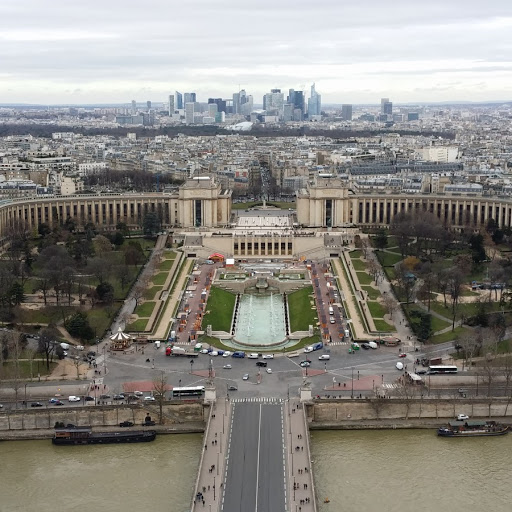
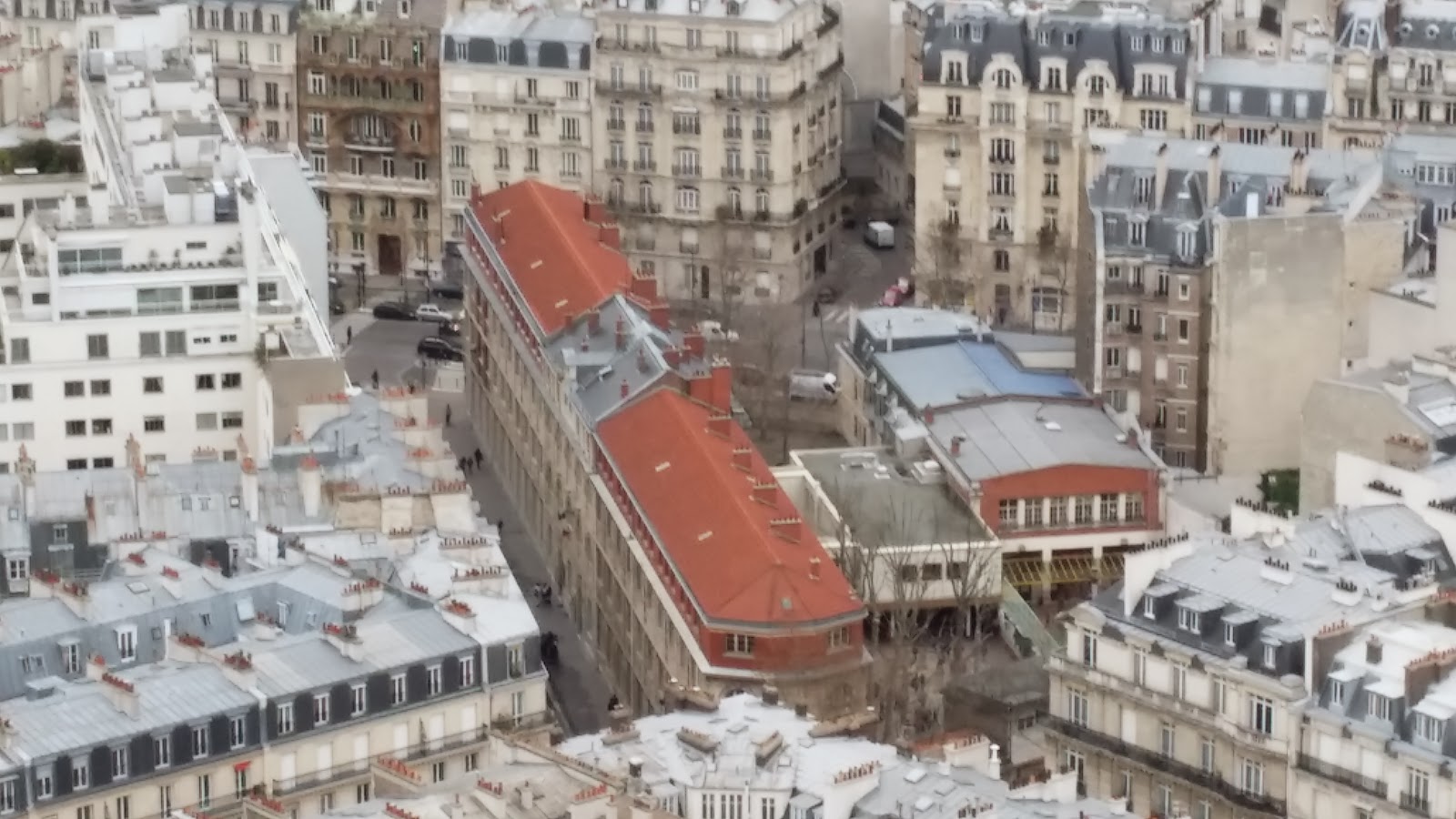
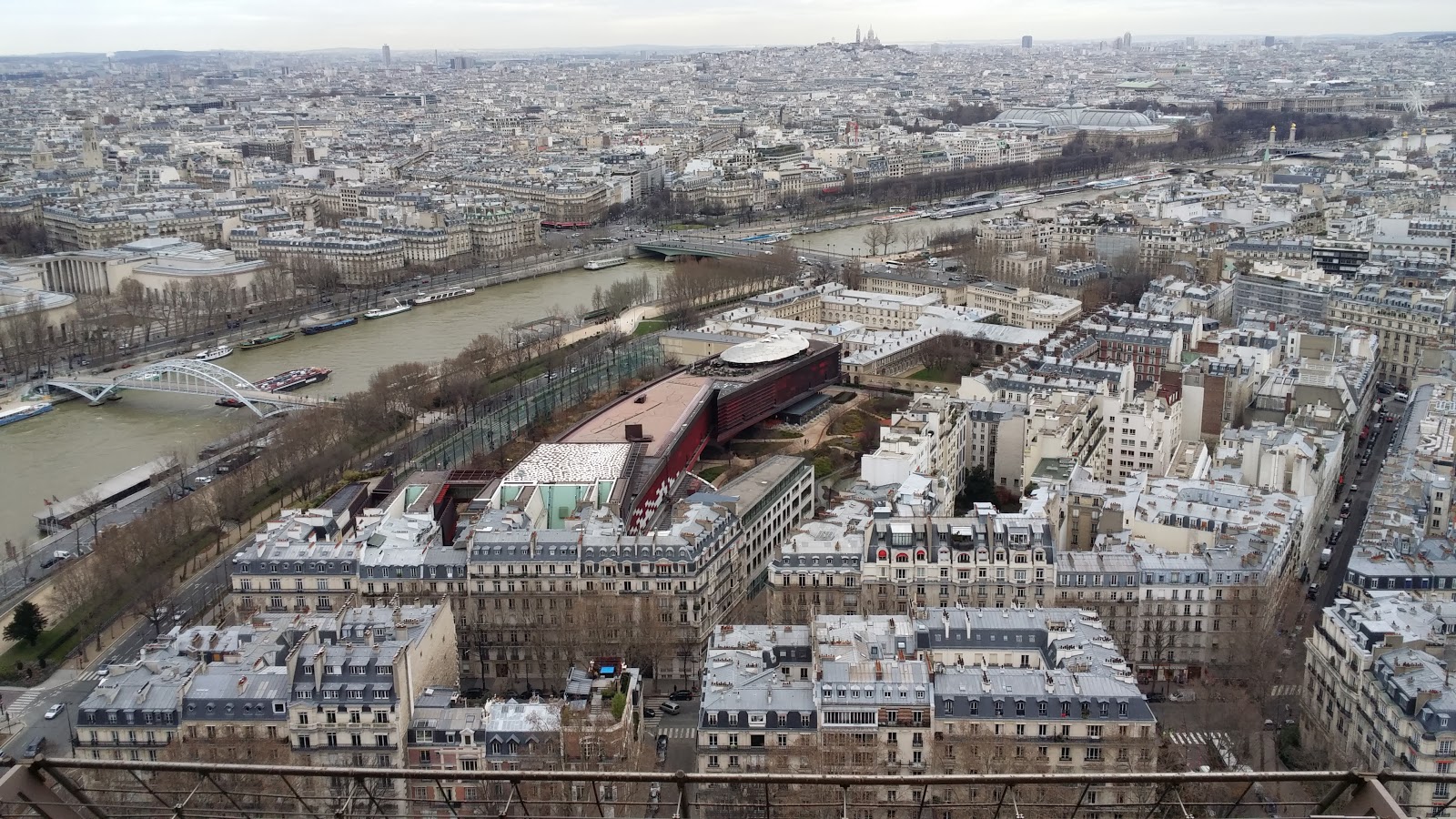
It was a dull day, but the views were magnificent.

20140107_132225

A view of the Seine

20140107_132859

20140107_132208

Sacre Coeur church at Montmartre in the distance.

Another view along the river Seine

Overlooking the tightly packed apartment buildings

Looking along the opposite end of the river Seine

I am making progress, really…

It’s been a long time, or what seems to be a long time.

A few weeks ago I was sitting in front of the computer screen, the ever-pervasive cursor flashing on a blank piece of digitized paper, and that was as far as I got.

No, the house didn’t burn down, no major catastrophe nor family member or friend was in dire need of my help.

I just didn’t know what to write next.

I have been writing, but not necessarily in the normal sense.  I have SomNote on my phone, and when I’m waiting, usually for doctors or Government offices, I write.  A bit of this, a bit of that, but sometimes the YA novel I’m writing for, and not necessarily about, my 19-year-old granddaughter.  Other times it might be a blog post about the experience, or someone who stands out in the crowd.

I find SomNote excellent for just putting words down quickly, as narrative, or just points, emailing it my myself and rehashing it later.  It has basically been used to write the first 37 chapters of the YA novel.

But as for the other writing?

Strangers We’ve Become, the follow-up to What Sets Us Apart took a new direction.  As this is the next book to be published, and I have completed the revisions the editor asked for. we might see this finally get to the publisher.

Never let anyone tell you there’s not something else to be done after 10 edits, and re-writes.

The Things We Do For Love, a little story I wrote many years ago, is finally through its last edit and ready for the final approval from the editor, and will be ready for publication.  It will be categorized as Romantic Suspense, along with Sunday In New York.

Look for those to be released in June or July this year.

My other story, the tales of PI Walthenson, private detective, had taken a back burner for a while, as I continue to muddle through the second case, now at about 60 episodes, of which 40 odd have been published.

I have no idea how it will end, but it’s going to be fun getting there.

This is a link to the latest episode here:  https://www.walthensonpi.com/

After that, Zoe will be back.  After the trials and tribulations in The Devil You Don’t, she finds that the past she tried to leave behind had come back to bite her, in the tentatively titled ”First Dig Two Graves’, because it is about revenge and whether or not it’s best served cold.  And whether or not John’s romantic aspirations are fulfilled.

Now, I guess, it’s back to work!

Coming soon – “Strangers We’ve Become”, the sequel to “What Sets Us Apart”

Stranger’s We’ve Become, a sequel to What Sets Us Apart.

The blurb:

Is she or isn’t she, that is the question!

Susan has returned to David, but he is having difficulty dealing with the changes. Her time in captivity has changed her markedly, so much so that David decides to give her some time and space to re-adjust back into normal life.

But doubts about whether he chose the real Susan remain.

In the meantime, David has to deal with Susan’s new security chief, the discovery of her rebuilding a palace in Russia, evidence of an affair, and several attempts on his life. And, once again, David is drawn into another of Predergast’s games, one that could ultimately prove fatal.

From being reunited with the enigmatic Alisha, a strange visit to Susan’s country estate, to Russia and back, to a rescue mission in Nigeria, David soon discovers those whom he thought he could trust each has their own agenda, one that apparently doesn’t include him.

The Cover:

strangerscover9

Coming soon


Searching for locations: Paris, France: Place de la Republique

Whilst a rather important place for the French, for us visitors, it has a convenient hotel located just behind the square, and an underground, or Metro station, underneath.

2014-01-07 11.43.05

Added to that was equally convenient cafes, one of which, The Cafe Republique, we had dinner every night.  The service and food were excellent, and we had no problems with the language barriers.

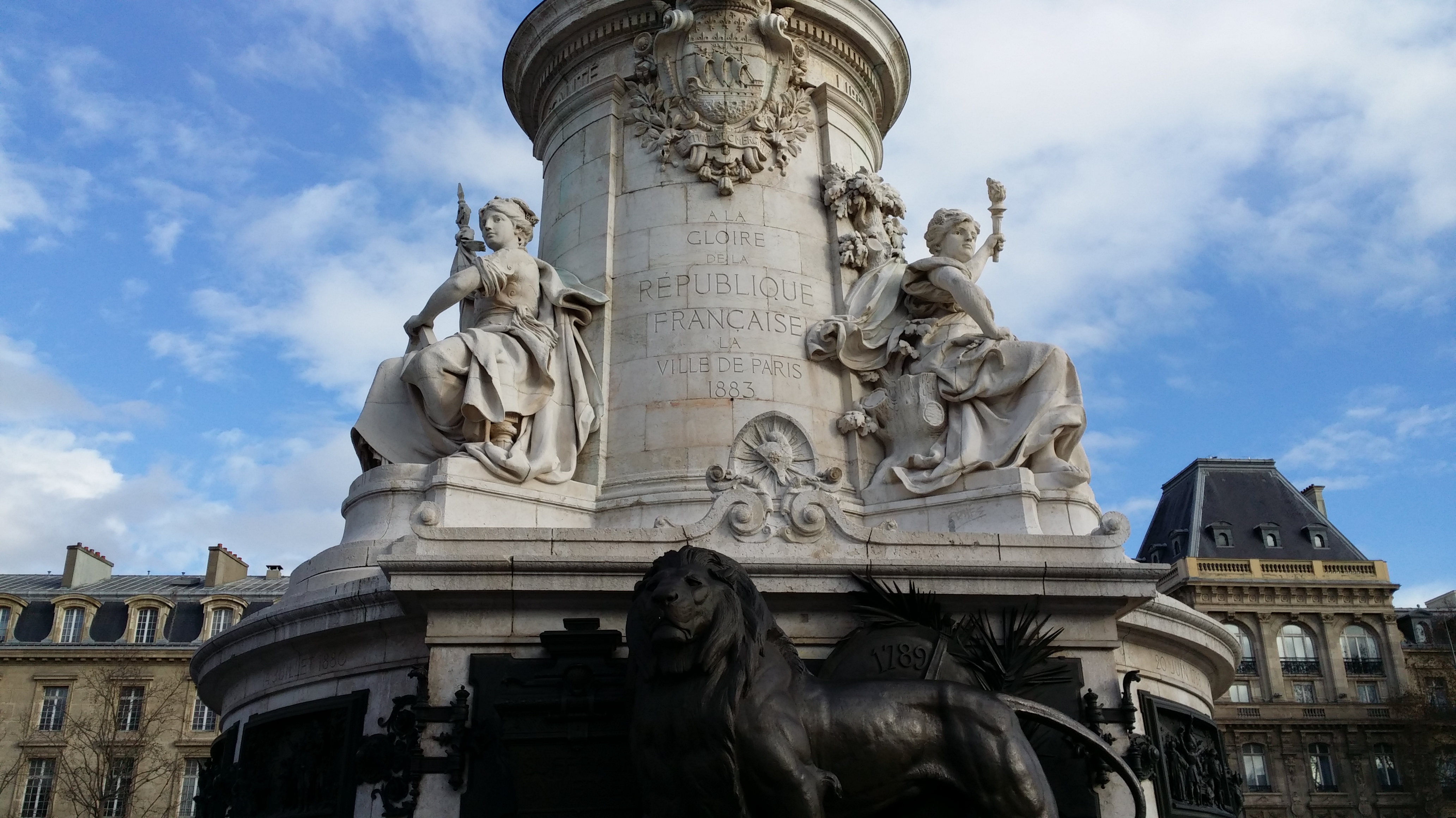
At the top of the monument is a bronze statue of Marianne, said to be the personification of France.

2014-01-07 11.43.41

Surrounding Marianne is three more statues, representing liberty, equality, and fraternity.

2014-01-07 11.43.32

At the base is a lion guarding what is said to be a ballot box.

The story behind the story – Echoes from the Past

The novel ‘Echoes from the past’ started out as a short story I wrote about 30 years ago, titled ‘The birthday’.

My idea was to take a normal person out of their comfort zone and led on a short but very frightening journey to a place where a surprise birthday party had been arranged.

Thus the very large man with a scar and a red tie was created.

So was the friend with the limousine who worked as a pilot.

So were the two women, Wendy and Angelina, who were Flight Attendants that the pilot friend asked to join the conspiracy.

I was going to rework the short story, then about ten pages long, into something a little more.

And like all re-writes, especially those I have anything to do with, it turned into a novel.

There was motivation.  I had told some colleagues at the place where I worked at the time that I liked writing, and they wanted a sample.  I was going to give them the re-worked short story.  Instead, I gave them ‘Echoes from the past’

Originally it was not set anywhere in particular.

But when considering a location, I had, at the time, recently been to New York in December, and visited Brooklyn and Queens, as well as a lot of New York itself.  We were there for New Years, and it was an experience I’ll never forget.

One evening we were out late, and finished up in Brooklyn Heights, near the waterfront, and there was rain and snow, it was cold and wet, and there were apartment buildings shimmering in the street light, and I thought, this is the place where my main character will live.

It had a very spooky atmosphere, the sort where ghosts would not be unexpected.  I felt more than one shiver go up and down my spine in the few minutes I was there.

I had taken notes, as I always do, of everywhere we went so I had a ready supply of locations I could use, changing the names in some cases.

Fifth Avenue near the Rockefeller center is amazing at first light, and late at night with the Seasonal decorations and lights.

The original main character was a shy and man of few friends, hence not expecting the surprise party.  I enhanced that shyness into purposely lonely because of an issue from his past that leaves him always looking over his shoulder and ready to move on at the slightest hint of trouble.  No friends, no relationships, just a very low profile.

Then I thought, what if he breaks the cardinal rule, and begins a relationship?

But it is also as much an exploration of a damaged soul, as it is the search for a normal life, without having any idea what normal was, and how the understanding of one person can sometimes make all the difference in what we may think or feel.

And, of course, I wanted a happy ending.

Except for the bad guys.

Get it here:  https://amzn.to/2CYKxu4

newechocover5rs

Writing a book in 365 days – 241

Day 241

Why don’t I like poetry, and why can’t I write it

…

The Poetry Puzzle: Why We Don’t Always ‘Get’ It (And Why That’s Perfectly Normal)

Ever stared at a page of poetry, felt a distinct lack of comprehension, and then wondered if there’s something fundamentally wrong with you? You’re not alone. Many of us grapple with poetry, feeling a disconnect between the words on the page and any meaningful understanding.

If you’ve ever thought, “Why don’t I like poetry, and why can’t I write it?” then this post is for you. Let’s unpack those very common, very valid feelings.

“I Just Don’t Understand It!” – The Heart of the Matter

This is perhaps the biggest barrier. We’re often taught that language should be direct, clear, and efficient. Poetry, however, often delights in the opposite.

  • It speaks in whispers, not shouts: Unlike a news report or a textbook, poetry often communicates through suggestion, metaphor, imagery, and symbolism. It’s less about telling you something directly and more about making you feel something, imagine something, or see something in a new way.
  • The “Strange Rhymes” vs. “Endless Lines”: You mentioned getting a short ditty but feeling lost with longer pieces that resemble short stories. This highlights the vast spectrum of poetry. Some poems are indeed like mini-stories, but they often use poetic devices (like rhythm, line breaks, compressed language) to elevate the narrative beyond simple prose. Other poems eschew traditional narrative altogether, focusing purely on an image, an emotion, or a moment.
  • Haiku and the Rules Conundrum: And then there are the rules! Haiku, sonnets, villanelles, limericks… each comes with its own set of constraints. For many, these rules feel like handcuffs, making the poem impenetrable or, worse, stifling any potential enjoyment. Why restrict yourself when you could just say what you mean?

Why Do People Who Do Like It, Like It?

This is the million-dollar question! When something feels elusive to you, it’s natural to wonder about its appeal to others.

  1. Emotional Resonance: Poetry often taps into universal human emotions – love, loss, joy, grief, wonder, anger – in a way that feels incredibly personal and raw. It can articulate feelings we’ve had but haven’t found the words for.
  2. Beauty of Language: For some, the sheer craft of language is exhilarating. The rhythm of the words, the sound of the rhymes (or the effective lack thereof), the surprising juxtaposition of images, the perfect word choice – it’s an art form akin to music or painting.
  3. Fresh Perspectives: A good poem can make you see an everyday object or concept in an entirely new light. It makes the familiar strange and the strange familiar, jolting us out of our habitual ways of thinking.
  4. Conciseness and Power: Poetry often distills complex ideas or deep emotions into a few potent lines. It’s a powerful punch in a small package, inviting repeated readings to unlock its layers.
  5. A Shared Secret: Unlocking a poem can feel like cracking a code, discovering a hidden meaning that connects you to the poet and the broader human experience.

Think about song lyrics – many of them are poetry set to music. We don’t always fully “understand” every line, but we feel the emotion, appreciate the imagery, and connect to the rhythm.

“Why Can’t I Write It?” – Demystifying Creation

The idea of writing poetry can be incredibly intimidating, especially if you feel you don’t “get” reading it. But here’s a truth: you don’t need to be a literary genius to write poetry.

  • Forget the “Rules” (Initially): If rules feel like a barrier, ignore them! Start with free verse. This form has no set rhyme scheme, meter, or length. It’s about expressing an idea, an image, or an emotion as authentically as possible.
  • Focus on Observation: Poetry often begins with paying close attention to the world around you. What do you see, hear, smell, taste, feel? What small detail catches your eye?
  • Explore an Emotion: What are you feeling right now? Joy, frustration, peace, anxiety? Try to describe that feeling without explicitly naming it. What does it feel like? What images come to mind when you experience it?
  • Play with Language: Think of words as building blocks. Try different combinations. Don’t worry about sounding “poetic” – worry about being honest and curious.
  • It’s for You: The first poems you write don’t have to be shared or even understood by anyone else. They can be a private form of expression, a way to process thoughts and feelings.

It’s Okay Not to “Get” It All

Ultimately, it’s perfectly normal not to connect with every poem, or even most poems. Just like not everyone loves abstract art or classical music, poetry isn’t a one-size-fits-all experience.

Rather than forcing yourself to “understand” it in a purely logical sense, try approaching it differently:

  • Read for sound and rhythm: How do the words feel in your mouth?
  • Read for images: What pictures pop into your mind?
  • Read for emotion: What does the poem make you feel, even if you can’t explain why?
  • Don’t worry about the “meaning”: Sometimes, the experience is the meaning.

So, if you find yourself staring blankly at a stanza, remember you’re in good company. Poetry can be a puzzle, a challenge, a mystery. But sometimes, in simply acknowledging that mystery, we open ourselves up to a different kind of appreciation. And who knows? Maybe one day, a little ditty or even an “endless line” will click into place, and you’ll find a poem that speaks directly to you.

What’s your relationship with poetry? Share your thoughts in the comments below!