Writing a book in 365 days – 247

Day 247

Making sense out of formless rubble

…

Taming the Chaos: How Art Builds Sanctuaries in a World of Rubble

We’ve all felt it, haven’t we? That creeping sense of overwhelm. The news cycle churns relentlessly, a tidal wave of disconnected events. Our personal lives can feel like a jumble of unfinished tasks and fuzzy anxieties. The world, in its raw, unedited state, can seem like a vast, formless expanse, a “mass of senseless rubble” threatening to swallow us whole.

It’s this very formlessness, this inherent chaos, that I believe lies at the heart of a profound motive for creating art. Whether it’s a sprawling epic novel, a defiant abstract painting, a haunting melody, or even a meticulously arranged bouquet of flowers, art, in its myriad manifestations, is our deeply human act of defiance against the shapeless void.

Think about it. The world, left to its own devices, is a wild, untamed thing. It doesn’t adhere to our neat narratives or our tidy classifications. It’s a messy, unpredictable storm of emotions, events, and experiences – some beautiful, some brutal, and many simply baffling. Trying to grasp it all, to make sense of its sheer scale and complexity, can be an exhausting, and frankly, demoralizing endeavor.

And here’s where the artist steps in, armed not with a bulldozer, but with a brush, a pen, a chisel, or a musical score. The deep motive, as I see it, is to defeat the formlessness of the world. It’s a declaration that we can impose order, that we can find patterns, and that we can create meaning where none immediately presents itself.

Consider the act of storytelling. A novelist takes a stream of consciousness, a tangle of potential plotlines, a cast of characters with complicated motivations, and weaves them into a coherent narrative. A beginning emerges, a middle unfolds, and an end, however bittersweet, is reached. The chaos of human experience is channeled, shaped, and channeled into a form that we can understand, digest, and even learn from. We read a book and, for a time, the bewildering mess of life is held at bay, replaced by the carefully constructed architecture of a fictional universe.

The visual artist does something similar. They stare at a blank canvas, a lump of clay, or a digital void, and begin to impose their vision. They choose colors, shapes, textures, and compositions. They translate the abstract feelings and observations that swirl within them into tangible forms. A Rothko painting, with its vast fields of color, doesn’t necessarily depict a specific object, but it evokes an emotional landscape. It gives form to the ineffable, allowing us to engage with feelings that might otherwise remain formless and elusive.

And this act of creation isn’t just about imposing order on the external world; it’s profoundly about cheering oneself up by constructing forms out of what might otherwise be a mass of senseless rubble. When we feel lost, overwhelmed, or insignificant, the act of creation is an act of empowerment. It’s taking a piece of the formless, the chaotic, the seemingly senseless, and wrestling it into something beautiful, something resonant, something that serves as a small, but potent, sanctuary.

Think of the artist who, after experiencing profound loss, picks up their instrument and composes a lament. They aren’t erasing the pain, but they are giving it a shape, a melody, a rhythm. This act of formalizing grief can be incredibly cathartic, transforming raw emotion into something that can be shared, understood, and perhaps, in time, healed. It’s building a small, sturdy structure of sound against the howling wind of sorrow.

In our own lives, we don’t all need to be professional artists to tap into this motive. Organizing a messy desk, planning a meal, or even meticulously tending a garden are all small acts of form-making. They are ways of bringing order to our immediate surroundings, of saying, “This chaos will not defeat me.”

So, the next time you find yourself staring at the bewildering vastness of the world, feeling a bit lost in the rubble, remember the power of form. Remember that art, in all its glorious diversity, is our innate human response to that formlessness. It’s our way of building beautiful, meaningful sanctuaries, one carefully crafted line, one resonant chord, one poignant word at a time. It’s our quiet, persistent, and ultimately triumphant declaration that even in the face of overwhelming chaos, we can create. And in that creation, we find not only order, but also a much-needed dose of cheer.

Searching for locations: Flinders Street Station, Melbourne, Australia

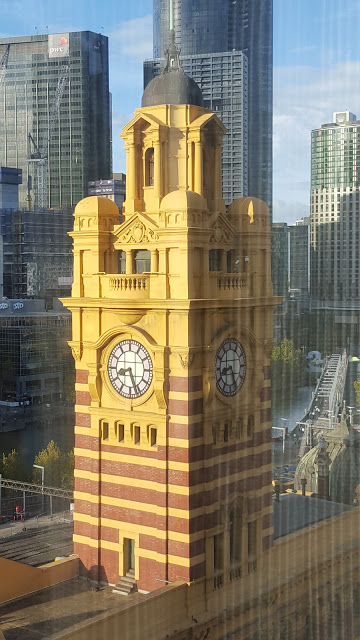
This is the famous clock tower of the Flinders Street Station (the main train station for suburban trains) in Melbourne.

We were staying in a hotel (The Doubletree) directly opposite the station and our room overlooked the station and the clock tower.  I took photos of it during the day:

and this one, at night.  It came out better than I thought it would.

20160302_215639

A door that is always open

My opinions are my own


It’s always a good thing to get that across, especially if you work for an organisation that could misinterpret what that opinion is, or generally have an opposing opinion.  Of course, by saying your opinions are your own, you’re covering yourself from becoming unemployed, but is this a futile act?

Perhaps it’s better to not say anything because everything you say and do eventually finds its way to those you want most not to hear about it, perhaps one of the big negatives of the internet and social media.

And…

It seems odd to me that more often than not, you can’t have an opinion of your own, even if it is contrary to that of the organisation you work for, and especially if their opinion has changed over time.  An opposing opinion, delivered in a non-derogatory manner, would be expected to spark a healthy debate, but it doesn’t always end up that way.

I’m sure there are others out there that will disagree and use the overused word, ‘loyalty’.   Perhaps their mantra will be ‘keep your opinions to yourself’.

This, too, often arises in personal relationships, adding weight to the statement, ‘you can pick your friends but not your relatives.’

I’m told I have an opinion on everything, a statement delivered in a manner that suggests sarcasm.  Whether it’s true or not, isn’t the essence of free speech, working within the parameters of not inciting hate, bigotry, racism or sexism, a fundamental right of anyone in a democracy?

Seems not.

There’s always someone out there, higher up the food chain, with an opinion of their own, obviously the right one, and who will not hesitate to silence yours.  But, isn’t it strange that to silence you, they have to use leverage, like your job, to get theirs across?

Well, my opinions are in my writing, and whether or not you agree with them or not, I’m sure you will let me know.  In a robust but respectful manner.

Unlike some, my door is always open.


“Sunday in New York”, a romantic adventure that’s not a walk in the park!

“Sunday in New York” is ultimately a story about trust, and what happens when a marriage is stretched to its limits.

When Harry Steele attends a lunch with his manager, Barclay, to discuss a promotion that any junior executive would accept in a heartbeat, it is the fact his wife, Alison, who previously professed her reservations about Barclay, also agreed to attend, that casts a small element of doubt in his mind.

From that moment, his life, in the company, in deciding what to do, his marriage, his very life, spirals out of control.

There is no one big factor that can prove Harry’s worst fears, that his marriage is over, just a number of small, interconnecting events, when piled on top of each other, points to a cataclysmic end to everything he had believed in.

Trust is lost firstly in his best friend and mentor, Andy, who only hints of impending disaster, Sasha, a woman whom he saved, and who appears to have motives of her own, and then in his wife, Alison, as he discovered piece by piece damning evidence she is about to leave him for another man.

Can we trust what we see with our eyes or trust what we hear?

Haven’t we all jumped to conclusions at least once in our lives?

Can Alison, a woman whose self-belief and confidence is about to be put to the ultimate test, find a way of proving their relationship is as strong as it has ever been?

As they say in the classics, read on!

Purchase:

http://tinyurl.com/Amazon-SundayInNewYork

Searching for locations: Toowoomba Flower Festival, Toowoomba, Queensland, Australia

The Toowoomba Carnival of Flowers is held in September, and generally runs for ten days at the end of the month.

We visited the Laurel Bank Park, where there are beds of many colorful flowers,

open spaces,

statues,

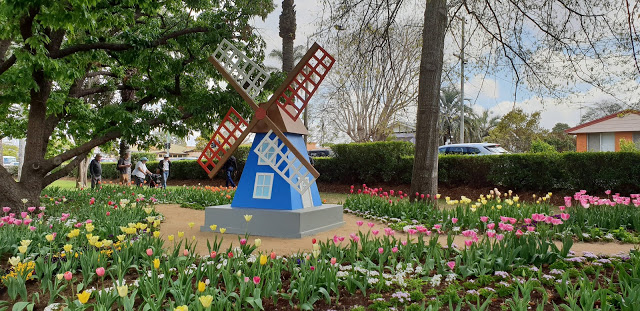
an area set aside for not only tulips but a model windmill

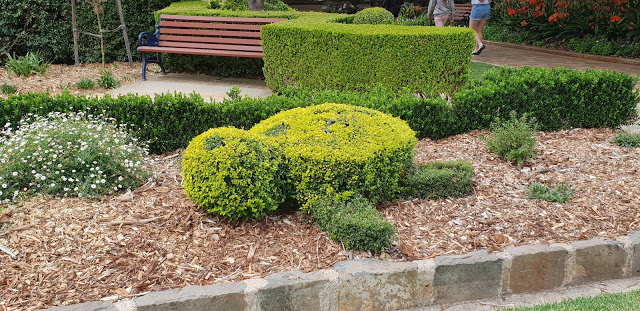
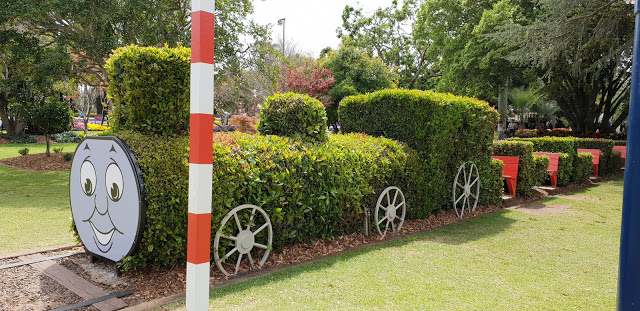
and quite a number of hedge sculptures

There was also the opportunity to go on a morning or afternoon garden tour which visited a number of private gardens of residences in Toowoomba.

“Echoes From The Past”, the past doesn’t necessarily stay there


What happens when your past finally catches up with you?

…

Christmas is just around the corner, a time to be with family. For Will Mason, an orphan since he was fourteen, it is a time for reflection on what his life could have been, and what it could be.

Until a chance encounter brings back to life the reasons for his twenty years of self-imposed exile from a life only normal people could have. From that moment Will’s life slowly starts to unravel and it’s obvious to him it’s time to move on.

This time, however, there is more at stake.

Will has broken his number one rule, don’t get involved.

With his nemesis, Eddie Jamieson, suddenly within reach, and a blossoming relationship with an office colleague, Maria, about to change everything, Will has to make a choice. Quietly leave, or finally, make a stand.

But as Will soon discovers, when other people are involved there is going to be terrible consequences no matter what choice he makes.

https://amzn.to/2CYKxu4

newechocover5rs

Writing a book in 365 days – 247

Day 247

Making sense out of formless rubble

…

Taming the Chaos: How Art Builds Sanctuaries in a World of Rubble

We’ve all felt it, haven’t we? That creeping sense of overwhelm. The news cycle churns relentlessly, a tidal wave of disconnected events. Our personal lives can feel like a jumble of unfinished tasks and fuzzy anxieties. The world, in its raw, unedited state, can seem like a vast, formless expanse, a “mass of senseless rubble” threatening to swallow us whole.

It’s this very formlessness, this inherent chaos, that I believe lies at the heart of a profound motive for creating art. Whether it’s a sprawling epic novel, a defiant abstract painting, a haunting melody, or even a meticulously arranged bouquet of flowers, art, in its myriad manifestations, is our deeply human act of defiance against the shapeless void.

Think about it. The world, left to its own devices, is a wild, untamed thing. It doesn’t adhere to our neat narratives or our tidy classifications. It’s a messy, unpredictable storm of emotions, events, and experiences – some beautiful, some brutal, and many simply baffling. Trying to grasp it all, to make sense of its sheer scale and complexity, can be an exhausting, and frankly, demoralizing endeavor.

And here’s where the artist steps in, armed not with a bulldozer, but with a brush, a pen, a chisel, or a musical score. The deep motive, as I see it, is to defeat the formlessness of the world. It’s a declaration that we can impose order, that we can find patterns, and that we can create meaning where none immediately presents itself.

Consider the act of storytelling. A novelist takes a stream of consciousness, a tangle of potential plotlines, a cast of characters with complicated motivations, and weaves them into a coherent narrative. A beginning emerges, a middle unfolds, and an end, however bittersweet, is reached. The chaos of human experience is channeled, shaped, and channeled into a form that we can understand, digest, and even learn from. We read a book and, for a time, the bewildering mess of life is held at bay, replaced by the carefully constructed architecture of a fictional universe.

The visual artist does something similar. They stare at a blank canvas, a lump of clay, or a digital void, and begin to impose their vision. They choose colors, shapes, textures, and compositions. They translate the abstract feelings and observations that swirl within them into tangible forms. A Rothko painting, with its vast fields of color, doesn’t necessarily depict a specific object, but it evokes an emotional landscape. It gives form to the ineffable, allowing us to engage with feelings that might otherwise remain formless and elusive.

And this act of creation isn’t just about imposing order on the external world; it’s profoundly about cheering oneself up by constructing forms out of what might otherwise be a mass of senseless rubble. When we feel lost, overwhelmed, or insignificant, the act of creation is an act of empowerment. It’s taking a piece of the formless, the chaotic, the seemingly senseless, and wrestling it into something beautiful, something resonant, something that serves as a small, but potent, sanctuary.

Think of the artist who, after experiencing profound loss, picks up their instrument and composes a lament. They aren’t erasing the pain, but they are giving it a shape, a melody, a rhythm. This act of formalizing grief can be incredibly cathartic, transforming raw emotion into something that can be shared, understood, and perhaps, in time, healed. It’s building a small, sturdy structure of sound against the howling wind of sorrow.

In our own lives, we don’t all need to be professional artists to tap into this motive. Organizing a messy desk, planning a meal, or even meticulously tending a garden are all small acts of form-making. They are ways of bringing order to our immediate surroundings, of saying, “This chaos will not defeat me.”

So, the next time you find yourself staring at the bewildering vastness of the world, feeling a bit lost in the rubble, remember the power of form. Remember that art, in all its glorious diversity, is our innate human response to that formlessness. It’s our way of building beautiful, meaningful sanctuaries, one carefully crafted line, one resonant chord, one poignant word at a time. It’s our quiet, persistent, and ultimately triumphant declaration that even in the face of overwhelming chaos, we can create. And in that creation, we find not only order, but also a much-needed dose of cheer.

An excerpt from “What Sets Us Apart”, a mystery with a twist

See the excerpt from the story below, just a taste of what’s in store…

http://amzn.to/2Eryfth

whatsetscover

McCallister was old school, a man who would most likely fit in perfectly campaigning on the battlefields of Europe during the Second World War. He’d been like a fish out of water in the army, post-Falklands, and while he retired a hero, he still felt he’d more to give.

He’d applied and was accepted as head of a SWAT team, and, watching him now as he and his men disembarked from the truck in almost military precision, a look passed between Annette, the police liaison officer, and I that said she’d seen it all before. I know I had.

There was a one in four chance his team would be selected for this operation, and she had been hoping it would be one of the other three. While waiting for them to arrive she filled me in on the various teams. His was the least co-operative, and the more likely to make ad-hoc decisions rather than adhere to the plan, or any orders that may come from the officer in charge.

This, she said quite bluntly, was going to end badly.

I still had no idea why Prendergast instructed me to attend the scene of what looked to be a normal domestic operation, but as the nominated expert in the field in these types of situations, it was fairly clear he wasn’t taking any chances. It was always a matter of opinion between us, and generally I lost.

In this case, it was an anonymous report identifying what the authorities believed were explosives in one of the dockside sheds where explosives were not supposed to be.

The only reason why the report was given any credence was the man, while not identifying himself by name, said he’d been an explosive expert once and recognized the boxes. That could mean anything, but the Chief Constable was a cautious man.

With his men settled and preparing their weapons, McCallister came over to the command post, not much more than the SUV my liaison and I arrived in, with weapons, bulletproof vests, and rolls of tape to cordon off the area afterward. We both had coffee, steaming in the cold early morning air. Dawn was slowly approaching and although rain had been forecast it had yet to arrive.

A man by the name of Benson was in charge. He too had groaned when he saw McCallister.

“A fine morning for it.” McCallister was the only enthusiastic one here.

He didn’t say what ‘it’ was, but I thought it might eventually be mayhem.

“Let’s hope the rain stays away. It’s going to be difficult enough without it,” Benson said, rubbing his hands together. We had been waiting for the SWAT team to arrive, and another team to take up their position under the wharf, and who was in the final stages of securing their position.

While we were waiting we drew up the plan. I’d go in first to check on what we were dealing with, and what type of explosives. The SWAT team, in the meantime, were to ensure all the exits to the shed were covered. When I gave the signal, they were to enter and secure the building. We were not expecting anyone inside or out, and no movement had been detected in the last hour since our arrival and deployment.

“What’s the current situation?”

“I’ve got eyes on the building, and a team coming in from the waterside, underneath. Its slow progress, but they’re nearly there. Once they’re in place, we’re sending McKenzie in.”

He looked in my direction.

“With due respect sir, shouldn’t it be one of us?” McCallister glared at me with the contempt that only a decorated military officer could.

“No. I have orders from above, much higher than I care to argue with, so, McCallister, no gung-ho heroics for the moment. Just be ready to move on my command, and make sure you have three teams at the exit points, ready to secure the building.”

McCallister opened his mouth, no doubt to question those orders, but instead closed it again. “Yes sir,” he muttered and turned away heading back to his men.

“You’re not going to have much time before he storms the battlements,” Benson quietly said to me, a hint of exasperation in his tone. “I’m dreading the paperwork.”

It was exactly what my liaison officer said when she saw McCallister arriving.

The water team sent their ‘in position’ signal, and we were ready to go.

In the hour or so we’d been on site nothing had stirred, no arrivals, no departures, and no sign anyone was inside, but that didn’t mean we were alone. Nor did it mean I was going to walk in and see immediately what was going on. If it was a cache of explosives then it was possible the building was booby-trapped in any number of ways, there could be sentries or guards, and they had eyes on us, or it might be a false alarm.

I was hoping for the latter.

I put on the bulletproof vest, thinking it was a poor substitute for full battle armor against an exploding bomb, but we were still treating this as a ‘suspected’ case. I noticed my liaison officer was pulling on her bulletproof vest too.

“You don’t have to go. This is my party, not yours,” I said.

“The Chief Constable told me to stick to you like glue, sir.”

I looked at Benson. “Talk some sense into her please, this is not a kindergarten outing.”

He shrugged. Seeing McCallister had taken all the fight out of him. “Orders are orders. If that’s what the Chief Constable requested …”

Madness. I glared at her, and she gave me a wan smile. “Stay behind me then, and don’t do anything stupid.”

“Believe me, I won’t be.” She pulled out and checked her weapon, chambering the first round. It made a reassuring sound.

Suited up, weapons readied, a last sip of the coffee in a stomach that was already churning from nerves and tension, I looked at the target, one hundred yards distant and thought it was going to be the longest hundred yards I’d ever traversed. At least for this week.

A swirling mist rolled in and caused a slight change in plans.

Because the front of the buildings was constantly illuminated by large overhead arc lamps, my intention had been to approach the building from the rear where there was less light and more cover. Despite the lack of movement, if there were explosives in that building, there’d be ‘enemy’ surveillance somewhere, and, after making that assumption, I believed it was going to be easier and less noticeable to use the darkness as a cover.

It was a result of the consultation, and studying the plans of the warehouse, plans that showed three entrances, the main front hangar type doors, a side entrance for truck entry and exit and a small door in the rear, at the end of an internal passage leading to several offices. I also assumed it was the exit used when smokers needed a break. Our entry would be by the rear door or failing that, the side entrance where a door was built into the larger sliding doors. In both cases, the locks would not present a problem.

The change in the weather made the approach shorter, and given the density of the mist now turning into a fog, we were able to approach by the front, hugging the walls, and moving quickly while there was cover. I could feel the dampness of the mist and shivered more than once.

It was nerves more than the cold.

I could also feel rather than see the presence of Annette behind me, and once felt her breath on my neck when we stopped for a quick reconnaissance.

It was the same for McCallister’s men. I could feel them following us, quickly and quietly, and expected, if I turned around, to see him breathing down my neck too.

It added to the tension.

My plan was still to enter by the back door.

We slipped up the alley between the two sheds to the rear corner and stopped. I heard a noise coming from the rear of the building, and the light tap on the shoulder told me Annette had heard it too. I put my hand up to signal her to wait, and as a swirl of mist rolled in, I slipped around the corner heading towards where I’d last seen the glow of a cigarette.

The mist cleared, and we saw each other at the same time. He was a bearded man in battle fatigues, not the average dockside security guard.

He was quick, but my slight element of surprise was his undoing, and he was down and unconscious in less than a few seconds with barely a sound beyond the body hitting the ground. Zip ties secured his hands and legs, and tape his mouth. Annette joined me a minute after securing him.

A glance at the body then me, “I can see why they, whoever they are, sent you.”

She’d asked who I worked for, and I didn’t answer. It was best she didn’t know.

“Stay behind me,” I said, more urgency in my tone. If there was one, there’d be another.

Luck was with us so far. A man outside smoking meant no booby traps on the back door, and quite possibly there’d be none inside. But it indicated there were more men inside, and if so, it appeared they were very well trained. If that were the case, they would be formidable opponents.

The fear factor increased exponentially.

I slowly opened the door and looked in. A pale light shone from within the warehouse itself, one that was not bright enough to be detected from outside. None of the offices had lights on, so it was possible they were vacant. I realized then they had blacked out the windows. Why hadn’t someone checked this?

Once inside, the door closed behind us, progress was slow and careful. She remained directly behind me, gun ready to shoot anything that moved. I had a momentary thought for McCallister and his men, securing the perimeter.

At the end of the corridor, the extent of the warehouse stretched before us. The pale lighting made it seem like a vast empty cavern, except for a long trestle table along one side, and, behind it, stacks of wooden crates, some opened. It looked like a production line.

To get to the table from where we were was a ten-yard walk in the open. There was no cover. If we stuck to the walls, there was equally no cover and a longer walk.

We needed a distraction.

As if on cue, the two main entrances disintegrated into flying shrapnel accompanied by a deafening explosion that momentarily disoriented both Annette and I. Through the smoke and dust kicked up I saw three men appear from behind the wooden crates, each with what looked like machine guns, spraying bullets in the direction of the incoming SWAT members.

They never had a chance, cut down before they made ten steps into the building.

By the time I’d recovered, my head heavy, eyes watering and ears still ringing, I took several steps towards them, managing to take down two of the gunmen but not the third.

I heard a voice, Annette’s I think, yell out, “Oh, God, he’s got a trigger,” just before another explosion, though all I remember in that split second was a bright flash, the intense heat, something very heavy smashing into my chest knocking the wind out of me, and then the sensation of flying, just before I hit the wall.

I spent four weeks in an induced coma, three months being stitched back together and another six learning to do all those basic actions everyone took for granted. It was twelve months almost to the day when I was released from the hospital, physically, except for a few alterations required after being hit by shrapnel, looking the same as I always had.

But mentally? The document I’d signed on release said it all, ‘not fit for active duty; discharged’.

It was in the name of David Cheney. For all intents and purposes, Alistair McKenzie was killed in that warehouse, and for the first time ever, an agent left the Department, the first to retire alive.

I was not sure I liked the idea of making history.

© Charles Heath 2016-2020
In a word: Mark

A teacher will mark a test in order to give the student a mark out of 100.  Yes, to mark a test means to ascertain right and wrong answers and score it accordingly, and getting a mark out of 100 could determine a great many different outcomes at school.

Whereas a mark on your clothes could mean you’ve been playing with fire, rolled in the mud or if much older having a salacious affair with an unexplainable lipstick mark on your collar.

A mark is someone that a con man believes will be easily deceived.

A mark is a catch in certain types of football.

You can have an identifying mark on some item of property.

it’s literally the x marks the spot for someone who cannot write, i.e. make your mark

There can be a mark on a rope that indicates the depth of water.

And many, many more…

But not to be confused with marque, which could be the make or model of a particular type of car

Or marc which is the refuse of grapes after being pressed


PI Walthenson’s second case – A case of finding the ‘Flying Dutchman’.

Known only to a few, there is a legend that a ship named the ‘Flying Dutchman’ left Nazi Germany in the last weeks of the war and set sail for America, escorted by U-boats, under a different name. Aboard was a trove of treasure and gold worth a ‘king’s ransom’.

It was said that it had been sent to a group of American Nazis to create the Fourth Reich at an appropriate time. Over the years since many expeditions off the coast had searched, but found no trace of the vessel or the treasure.

In other words, it was just a legend created to boost tourism.

…

Fast forward to 2024. Our intrepid private detective, Harry Walthenson, overhears a conversation at Grand Central Station. It was the oddness of the message that caught his attention. An investigation turned up nothing out of the ordinary, and he thinks no more about it.

Then Harry is kidnapped, interrogated, and asked questions over and over about a date and a place, why he went there, and when he could not give satisfactory answers, he was beaten half to death and left for dead on a rubbish heap. He was lucky that it was a living space for homeless men; otherwise, he would have died.

In the aftermath, he once again gives it no more thought.

…

After resolving his first case successfully, there’s no rest. Harry’s angry mother comes to his office and demands that he find out where his father has gone. She believes he has run off with a mistress, not for the first time.

Perhaps it was not the wisest decision she has made, because Harry promises to investigate, and adds that she might not like what he finds.

He soon discovered he does not like what he finds, that his father’s friends, a cabal formed at University, have two who are his mother’s current lovers, and another, a criminal blackmailing his father.

Felicity, now his partner, working on a different case, and trying to get answers, uncovers a crime family involved in guarding a disused warehouse on the docks, where she believes Harry had been taken for interrogation, and subsequently dumped nearby to die.

Why are they up to? What is so important that the empty warehouse needs guarding? Who is employing them?

Harry, following up on the death of the blackmailer, traces his death back to an enforcer employed by his grandfather. His mother’s grandfather was a pre-war industrialist who made his fortune in war munitions and shipbuilding.

He was also a member of the American Nazi party.

When Harry also discovers a logbook belonging to a so-called wartime Liberty ship the “Paul Revere” in brackets ‘Freiheitskämpfer’, hidden by his father, and written in a code that is not readily identifiable.

It is no longer a matter of a father who has run off with his mistress; it is a very frightened man in fear of his life, running from a group who will stop at nothing to get the logbook back. And when Harry discovers a family connection to the group, it becomes a race against time to decode the log and find his father before his grandfather does.

…

Coming soon: Harry Walthenson’s new adventure – A case of finding the ‘Flying Dutchman’