The second attempt looks a little better, but not much

The process of writing is rewriting editing and more rewriting.

The other day l wrote some words.  I didn’t like them.  But it had laid the groundwork for a second draft.

Here it is:


Growing up I did not believe l had one of those lovable faces.

My brother, known in school as the best-looking boy of his graduating class, said it was a face only a mother could love.

He was mean.

Simone, a girl who was a friend, not a girlfriend, said my face had character.

She was charming and polite.

Looking now, in the mirror, l decided I’d aged gracefully.

I could truthfully say my brother had not, but that was as far as the comparison went.

My overachieving brother was the epitome of business success, a veritable god-zillionaire.  Everything he touched turned to gold.

My ultra-successful sister, Penelope, had married into the right family perhaps by chance, but she was also a very learned scholar whose life was divided between her chair and the university and her social life with the rich and famous.

Then there was me.

I gave up on my chance at university because l was not the scholarly sort and didn’t last long.  Sadly, l was the first of my family to be sent down from Oxford.

Instead, l took on a series of professions such as seasonal labourer, farmhand, factory worker, and lastly, night watchman.  At least now I had a uniform and looked like I’d made something of myself.

It would not be enough for my parents who every year didn’t say it out loud, but the disappointment was always there in their expressions.

My brother in his usual blunt manner said l was a loser and would never change.

My sister was not so blunt.  She simply said it was disappointing so much potential was going to waste.  I only asked her once what she meant and lost me after the first four-syllable word.

Finally, I’d taken their comments to heart and decided l would not be going home to the family Christmas holiday reunion.

I told my boss that l was available to work the night shift over the holidays, the shift no one else wanted.

It was he said the time for reflection.  He hated his family as much as I did so we would be able to lament our bad luck through the long cold hours from dusk till dawn.

It was 3 a.m. and it was like standing on the exact epicenter of the North Pole.  I’d just stepped from the warehouse into the car park.

The car was covered in snow.  The weather was clear now, but more snow was coming.

It was going to be a white Christmas, all I needed.  I hoped I remembered to put the antifreeze in my radiator this time.

As I approached my car, the light went on in an SUV parked next to mine.  The door opened and what looked like a woman was climbing down from the driver’s seat.

She closed the door and leaned against the side of the car.  “Graham?”

It was a voice I was familiar with, though I hadn’t heard it for a long time, my ultra-successful sister, Penelope.  From what I could see, she didn’t look too well.

“What do you want?”

“Help.”

My help, I was the last person to help her or anyone for that matter.  But curiosity got the better of me.  “Why?”

“Because my husband is trying to kill me.”

The instant the last word left her lips I saw her jerk back into the car and then start sliding down to the ground.  There was no mistaking the red streak following her as she fell.

She’d been shot by what could be a sniper rifle, which meant …

…

It still needs work, but I’ve got the gist of where I want to go.

The idea is not to make a character so loathsome no one would want to read about him.

This will evolve and you can if you like come along for the ride!


© Charles Heath 2024

Writing about writing a book – Day 8

I am painfully reminded that I need to have a Social Media presence.

Marilyn told me that if I were on ‘Facebook’, I would have been able to follow her ‘adventures’.  If I were on Twitter, now called X, I could acquire reading followers, and on Instagram, to share photos of book covers and my travels.

I drag out the dusty laptop computer, the one that had an email account that goes back to the early days of the internet, and used a VT52 mainframe interface, or at least that was what I think it was called, and fire it up.  The operating system is out of date, with error messages on top of error messages.  Thankfully, the desktop works, but it too is out of date, running Windows 97.

Even my mobile phone is more powerful and sophisticated than both my boat anchors.

Time to get into the ‘real’ world!

My writing is now on hold.  Shopping for a new computer and updating operating system software is a priority.

I am pleasantly surprised at just how inexpensive, reasonably good laptop computers are.  I looked at tablets from Apple, Samsung, and Microsoft.  All very nice, but a computer, as big and cumbersome as it is, is still the cheapest option.

My afternoon is taken up with installing Windows 10 or 11 these days, setting up a Gmail email account, investigating, and signing up for Twitter, Instagram, and Facebook.  I also take out a cheap subscription to Microsoft Office.  I need Word for manuscripts, Excel to budget, and PowerPoint to dazzle.

I take to reading the information about ‘creating an author presence on the internet’ and see that perhaps I need to have a ‘blog’, whatever that is, and a website.

There’s free and there’s not so free.

Damn.  A day wasted in computer and social media land.  They even had something called the ‘cloud’.  I think I have been out of the computer world too long, having transferred into middle management just as the next phase of computer technology started making an impact.

Tomorrow, I tackle blogging.

I can’t sleep, not without writing something for the day.  My thoughts have been swirling around Bill and Jennifer, and it’s time to bring them together, and by, guess what, a calamity!

I start scribbling:

Hospitals were places I rarely visited.  Like others who shared my fear, it would take a rather compelling reason to get me there.  On this occasion, it had been a compelling reason.  If I hadn’t got to the hospital when I did, I would now be dead.

When I woke, it was to disorientation and confusion.  I didn’t remember much of anything that had happened after having lunch with Jennifer, and running into Aitchison.

When I finally came from the depths of unconsciousness and returned to whatever version of reality that was running at the time, I found myself in a position where any movement, including breathing, was painful.

It was dark, the shapes were blurry, and some moved.  As objects slowly came into focus, activity increased, and more people arrived.  My major concern at that time was the sensation of immobility, and of how difficult it was to breathe, or, more to the point, how painful.  Muffled voices spoke in a strange language.  After a short time, consciousness slipped away, as, mercifully, did the pain.

It was another week, though it seemed like a month before I realized where I was.  It had taken a while, but it was definitely a hospital.  One of the shadowy figures also became recognizable.

Jennifer.

She, too, had a number of bandages, and the black and blue look of a person who’d just survived a hit and run.

Then I remembered.

Aitchison.

Outside the restaurant.

When my eyes finally came into focus I looked at her and saw her smile.  Another realization, though it became clearer sometime later, was that my hand was in hers, and as she squeezed it gently, I felt it give me strength.

“Welcome back.”  She was quite close, close enough for her perfume to overpower the clinical disinfectant.

“Where did I go?”  My voice was barely above a whisper, my throat dry.

“We’re not sure.  You died once.  Now you only have eight lives left.”

It was odd that I’d heard it before, somewhere in the distant past, so I believed I had fewer lives to spare.  I looked at her.  “Aitchison?”

“He didn’t make it.”

“You?”

“I got caught in the crossfire.  So did you.  The police said Aitchison was the target.  We were in the wrong place at the wrong time.”

I’d heard that before, too.  I think that was Richardson’s problem, and he’d suffered the same fate, but his end result was terminal.

The conversation had exhausted me, and the pain returned.  It was still difficult to breathe, and I dared not look where most of the tubes were going.  Tears ran down my cheeks as the pain became unbearable.  I heard her call a nurse, and not long after the pain receded.  So did my consciousness.

Enough, it’s time for sleep.

© Charles Heath 2016-2025

The cinema of my dreams – I never wanted to go to Africa – Episode 12

It’s still a battle of wits, but our hero knows he’s in serious trouble.

The problem is, there are familiar faces and a question of who is a friend and who is foe made all the more difficult because the enemy if it is the enemy, doesn’t look or sound or act like the enemy.

If at first, you don’t succeed, try a few threats, or leverage


He took a deep breath, gave me a look a parent would give a miscreant child, and started again.

“What’s the deal with you and Commander Breeman?”

Yes, he does know about her proclivities, but he was hardly in a position to condemn her.  He, too, had a ‘thing’ for the female trainees under his command, and one in particular.

“She has to eat, I have to eat, in the same mess as it happens.”

He gave me another of his penetrating glares.

“Nothing else?”

“That would be against regulations, as I think you are fully aware.”  I returned his glare but with more intensity.

“What did you discuss over the dinner table?”

Odd question.  Not operational matters, if that was what he wanted to hear.  But what we spoke about had little relevance to work.

“Cars.”

It was true.  She liked restoring old cars from the mid-war period, some of which had been used as props in period movies.  I had an old Cadillac, the sort that would fail any fuel economy test.

I could see it was not the answer he was looking for.  He would have to ask a specific question in order to get a specific answer one way or the other.

“Did she mention the no-fly zone?”

I thought about it for a moment, and then said, “No, there are no cars out there to speak of.”

“Flippancy doesn’t become you, Alan.”

Perhaps not, but it was all he was going to get.

And for added emphasis, I said, “Like I said to your predecessor, I don’t know how or why you would have to ask the pilot.”

He stood abruptly, nearly knocking the chair over.  Angry.

“You know something, Alan, otherwise you would not have been on that helo.  She threw you under the bus, and the quicker you realize that the better.”

Then he walked out, slamming the door behind him.


© Charles Heath 2019

Writing a book in 365 days – 276

Day 276

Making it manageable

…

The Epic Dream & The First Word: Conquering Your Biggest Writing Projects (One Step at a Time)

Picture this: You’ve got an incredible idea brewing – a sprawling fantasy epic, a gritty crime trilogy, a non-fiction deep dive into a complex subject that demands multiple volumes. Your imagination soars, your fingers itch… and then, a tidal wave of overwhelm crashes over you.

The sheer scale of it. The endless pages, the character arcs, the world-building, the research, the plot twists across three (or more!) books… it feels less like a project and more like a mountain range you’re expected to scale in a single bound. It’s daunting, terrifying even. The dream of “a three-book series” can quickly paralyse you before you’ve even written a single chapter of the first.

But here’s the quiet wisdom that veteran writers (and anyone who’s ever tackled a seemingly insurmountable task) learn: No one climbs Everest in a single leap. They take one step, then another, then another.

The secret isn’t to think about writing a three-book series; it’s to write this sentence. Then this paragraph. Then this scene. Then this chapter.

Eating the Elephant, One Bite at a Time

Our brains, wonderful as they are, struggle with “massive.” They crave manageable chunks. When you stare at the blank page with “Book One” echoing in your mind, your brain screams, “Impossible!” But when you tell it, “Today, we’re just outlining Chapter 3,” or “Let’s focus on nailing this one dialogue exchange,” suddenly, it feels achievable.

This isn’t just about managing the external task; it’s about managing your internal self-talk. Breaking down an overwhelming project into small, actionable pieces transforms it from an insurmountable beast into a series of achievable tasks.

  • A book series? Break it into individual books.
  • A single book? Break it into acts, then chapters.
  • A chapter? Break it into scenes.
  • A scene? Break it into beats, key actions, or dialogue exchanges.
  • A page? Break it into paragraphs.

You get the idea. Each small victory builds momentum, chipping away at that intimidating mountain until, suddenly, you’re at the summit, looking back at the path you’ve forged.

The Power of the First Step

And this is where that timeless piece of wisdom rings so profoundly true: “The secret of getting ahead is getting started.” (Attributed to Mark Twain, and eternally valid).

It’s not about the perfect first sentence, or having the entire plot mapped out in glorious detail. It’s about showing up. It’s about putting anything down. That blank page, that empty document, is the biggest hurdle. Once there’s something on it, no matter how rough, how imperfect, how far from your grand vision, you’ve begun. You’ve broken the spell of inaction.

Think of it:

  • You can’t edit a blank page.
  • You can’t refine a scene that doesn’t exist.
  • You can’t finish a series you haven’t started.

The act of starting generates its own energy. It creates a tiny gravitational pull that helps you take the next step, and the next. That first word, that first paragraph, that first outline sketch – it’s the anchor that stops you from drifting in the sea of “what ifs” and pulls you towards “what is.”

Your Action Plan for Tackling Giants:

  1. Deconstruct Your Dream: Don’t just see “Book One.” See “Book One, Part 1, Chapter 1, Scene 1, Character X enters the room.”
  2. Set Micro-Goals: Instead of “write a book,” try “Today, I’ll write 250 words” or “I’ll outline the next three scenes” or “I’ll spend 15 minutes brainstorming character names.”
  3. Embrace Imperfection: Your first draft is meant to be bad. Get it done, then make it good. Don’t let the fear of not being perfect stop you from being prolific.
  4. Celebrate Small Wins: Finished a chapter? High five yourself! Outlined a whole book? Treat yourself to a nice coffee. These small acknowledgments reinforce positive habits.

So, if you’re standing at the foot of your own literary Everest, feeling the chill of overwhelm, remember these two powerful truths: Break it down, and just start. Your masterpiece isn’t waiting for perfection; it’s waiting for your first word.

What will it be?

What I learned about writing – That I should be more organised

Well, toss that baby out with the bathwater.

It’s something that I have never been able to get a handle on, and I seem to stagger from one day to the next without getting anything done.  I guess I’m one of those freeform sorts of people and I guess it goes with the star sign, Gemini.

Over the years many people tried, some with limited success, others completely failing.

I’ve created outlines and created chapters as sections, and scenes within chapters, as best I could.   Once upon a time, I used to teach Microsoft Project, and having this application on hand, I used this to create a timeline, using ‘slack’ time to make up for my inability to keep to a schedule.

This is like taking a sledgehammer to a tack.

Just the time to set it up took longer than it would to just sit down and write the blasted novel.

But, I’m a fly by the seat of my pants writer.  The book starts, often with a start and a finish, and the rest fills itself in, not necessarily in the order of final events.  Of course, this means some backwards revision from time to time, but I get there in the end.

Perhaps a little longer than it should but at least I don’t get halfway and suddenly decide on going in a different direction because I’ve suddenly got writers’ block.  That doesn’t happen.  It usually plays out as the start of another story, and then I mull over the changes necessary to get the original story back on track.

Yes, I’ve been to those time management courses with the books and diaries to seem to want you to time manage your life.  it works to a certain extent, but you live your like inside another type of book.

Nor do I work well with deadlines.

But oddly enough most of the jobs I’ve had over the years have involved time management of one sort or another and I have survived.

Now, in retirement, I really need something to organize my days so something gets done.  As a writer allocating 12 midnight to 2am for writing doesn’t seem to be a good idea.

Unfortunately, it is the best time for me to write.

Anyone else out there with the same problem, and if so what was your answer to getting stuff done?

Searching for locations: The Longjing Pearl Factory, Beijing, China

The Longjing Pearl Factory is located at:
No.2 Zuoan Gate Inner Street, ChongWen District, Beijing 100061 China.

This Pearl Center specializes in both freshwater and seawater pearls, with a reputation backed by the government of China, with a big selection and of the highest quality.  There were all kinds of jewelry made of pearls in different colors, shapes, and sizes.

They also had, as an interesting sideline, famous Chinese traditional cosmetics such as pearl cream and pearl powder, reputed to make your skin smoother, tendered and most importantly, younger.

We were advised of all of this well before we arrived at the factory, and of course, one suspected the glowing review, with emphasis on the fact it was a government operation and therefore trustworthy, suggested we should buy, meant the tour guide would receive a commission on each sale.

This is nothing new, it’s the same the world over, so it’s up to the visitor to buy or not to buy.

As soon as you get in the door you are taken to the group’s guide for the tour (and afterward, available for help on making purchases). who gives you a rundown on the different types and colors of pearls.  This briefly is,

Pearls come in two main categories: freshwater cultured pearls and saltwater cultured pearls. Various types of pearls are the result of the environment in which they live, and different cultivation techniques used by the pearl farmers. 

Freshwater cultured pearls are grown in lakes and rivers, whereas saltwater cultured pearls are grown in bodies of saltwater such as bays.  The most commonly used pearls are Freshwater pearls. 

Freshwater Pearls come in various pastel shades of white, pink, peach, lavender, plum, purple, and tangerine.  
South Sea cultured pearls come in shades of lustrous white, often with silver or rose overtones. 

Black pearls are known as Tahitian pearls and come most often in shades of black and gray. While a Tahitian pearl has a black body color, it will vary in its overtones, which most often will be green or pink.

Then there’s a demonstration, where one of the tour group is selected to pick an oyster out of the tank, and then there’s the guessing game as to how many pearls are in the shell, with the winner getting a pearl.

Guesses ranged from 1 to 23 and the answer was 26.  Nearest wins, and one for the person who picked the oyster out of the tank.  After this demonstration, we move on to the ways we can tell the difference between real and fake pearls.

It seems strange that they would, but we were guaranteed by both the tour guide and the lady delivering the lecture that the pearls we were about to buy were real, so how could we suspect there was anything dodgy about them?  Besides, now we could tell real from fake!

We then move onto the showroom floor where there are casements of pearl products, in the form of necklaces, earrings, and any number of variations and uses.  And, just to let you know, the prices are very, very expensive, even if they say they have a special.

Perhaps the best products, and those that found favor with many of the women on the tour, was the pearl cremes and powders.  These were not expensive, and, as we discovered later, actually worked as described.

“What Sets Us Apart”, a mystery with a twist

David is a man troubled by a past he is trying to forget.

Susan is rebelling against a life of privilege and an exasperated mother who holds a secret that will determine her daughter’s destiny.

They are two people brought together by chance. Or was it?

When Susan discovers her mother’s secret, she goes in search of the truth that has been hidden from her since the day she was born.

When David realizes her absence is more than the usual cooling off after another heated argument, he finds himself being slowly drawn back into his former world of deceit and lies.

Then, back with his former employers, David quickly discovers nothing is what it seems as he embarks on a dangerous mission to find Susan before he loses her forever.

Find the kindle version on Amazon here:  http://amzn.to/2Eryfth

whatsetscover

Searching for locations: Tiananmen Square, Beijing, China

Some interesting facts before we get out of the bus…

Tiananmen Square or Tian’anmen Square is in the centre of Beijing name after the Gate of Heavenly Peace, a gate that one separated the square from the Forbidden City.

The Square contains,

   the Monument to the People’s Heroes
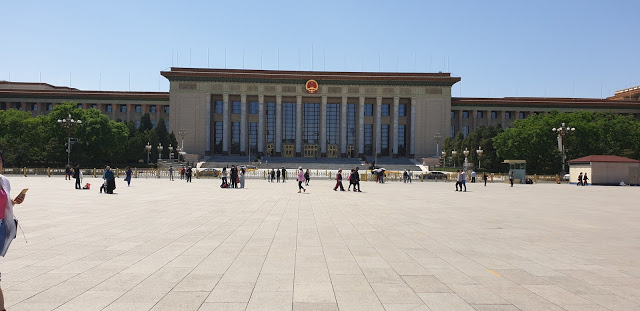
   the Great Hall of the People
   the National Museum of China
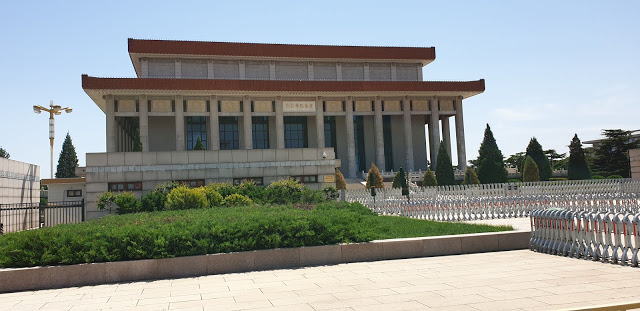
   the Mausoleum of Mao Zedong.

The square is about 109 acres and was designed and built in 1651, and since then been enlarged four times since, the most recent upgrade in the 1950s.

The Monument to the People’s Heroes

This is a ten-story obelisk built to commemorate the matters of the revolutions.  It was built between August 1952 and May 1958.  On the pedestal are reliefs depicting the eight major revolutionary episodes.

The Great Hall of the People

This was opened in September 1959, and covers 171809 square meters.  The Great Hall is the largest auditorium in China and can seat up to 10,000 people.  The State Banquet Hall can seat up to 5,000 diners.

The National Museum of China

This is one of the largest museums in the world and the second most visited museum in the world after the Louvre in Paris.   It was completed in 1959, and sits on 65 hectares, and rises four floors.  It has a permanent collection of over 1,000,000 items.

The Mauseloum of Mao Zedong

This was built shortly after his death, and completed on May 24th, 1977.  The embalmed body of the Chairman is preserved and on display in the center hall.

My own observations
This is huge; one of the largest public squares in the world, and if you’re going to walk it, like we did, make sure you’ve been exercising before you go.  It covers 44 hectares, borders on the Forbidden City, and has a memorial to Chairman Mao in the center of it.  But you cannot go near it, it’s fenced off, and it is guarded.

That’s both the statue and the square as there are random guards marching in random directions all the while watching us to see that we don’t misbehave.No one wants to find out what would happen if you jumped the fence around the statue, but I’m guessing you’ll have a few years to contemplate the stupidity of your actions with some very unhappy government officials.

Around the edges of the square are huge buildings, on one side is the museum 

and on the other is the Chinese equivalent of parliament.

Around the sides are also large gardens

At one end, where the Forbidden City borders on the square, there’s a huge flag pole flying the Chinese flag, and this too like the monument is fenced off, and guarded by members of all of their armed services.  No tanks rolled out during our visit much to our disappointment.  There is no entrance to the Forbidden City from the square

At the other end is the Mausoleum of Mao Zedong, which was closed the day we were there, as was the museum. 

There are four sculptural groups installed outside the mausoleum.

Other than that, it’s just another square, albeit probably one of the largest in the world.  It can, we were told, hold about a million people.

The story behind the story: A Case of Working With the Jones Brothers

To write a private detective serial has always been one of the items at the top of my to-do list, though trying to write novels and a serial, as well as a blog, and maintain a social media presence, well, you get the idea.

But I made it happen, from a bunch of episodes I wrote a long, long time ago, used these to start it, and then continue on, then as now, never having much of an idea where it was going to end up, or how long it would take to tell the story.

That, I think is the joy of ad hoc writing, even you, as the author, have as much idea of where it’s going as the reader does.

It’s basically been in the mill since 1990, and although I finished it last year, it looks like the beginning to end will have taken exactly 30 years.  Had you asked me 30 years ago if I’d ever get it finished, the answer would be maybe?

My private detective, Harry Walthenson

I’d like to say he’s from that great literary mold of Sam Spade, or Mickey Spillane, or Phillip Marlow, but he’s not.

But, I’ve watched Humphrey Bogart play Sam Spade with much interest, and modelled Harry and his office on it.  Similarly, I’ve watched Robert Micham play Phillip Marlow with great panache, if not detachment, and added a bit of him to the mix.

Other characters come into play, and all of them, no matter what period they’re from, always seem larger than life.  I’m not above stealing a little of Mary Astor, Peter Lorre or Sidney Greenstreet, to breathe life into beguiling women and dangerous men alike.

Then there’s the title, like

The Case of the Unintentional Mummy – this has so many meanings in so many contexts, though I imagine that back in Hollywood in the ’30s and ’40s, this would be excellent fodder for Abbott and Costello

The Case of the Three-Legged Dog – Yes, I suspect there may be a few real-life dogs with three legs, but this plot would involve something more sinister.  And if made out of plaster, yes, they’re always something else inside.

But for mine, to begin with, it was “The Case of the …”, because I had no idea what the case was going to be about, well, I did, but not specifically.

Then I liked the idea of calling it “The Case of the Brother’s Revenge” because I began to have a notion there was a brother no one knew about, but that’s stuff for other stories, not mine, so then went the way of the others.

Now it’s called ‘A Case of Working With the Jones Brothers’, finished the first three drafts, and at the editor for the last.

I have high hopes of publishing it in early 2021.  It even has a cover.

PIWalthJones1

Writing a book in 365 days – 276

Day 276

Making it manageable

…

The Epic Dream & The First Word: Conquering Your Biggest Writing Projects (One Step at a Time)

Picture this: You’ve got an incredible idea brewing – a sprawling fantasy epic, a gritty crime trilogy, a non-fiction deep dive into a complex subject that demands multiple volumes. Your imagination soars, your fingers itch… and then, a tidal wave of overwhelm crashes over you.

The sheer scale of it. The endless pages, the character arcs, the world-building, the research, the plot twists across three (or more!) books… it feels less like a project and more like a mountain range you’re expected to scale in a single bound. It’s daunting, terrifying even. The dream of “a three-book series” can quickly paralyse you before you’ve even written a single chapter of the first.

But here’s the quiet wisdom that veteran writers (and anyone who’s ever tackled a seemingly insurmountable task) learn: No one climbs Everest in a single leap. They take one step, then another, then another.

The secret isn’t to think about writing a three-book series; it’s to write this sentence. Then this paragraph. Then this scene. Then this chapter.

Eating the Elephant, One Bite at a Time

Our brains, wonderful as they are, struggle with “massive.” They crave manageable chunks. When you stare at the blank page with “Book One” echoing in your mind, your brain screams, “Impossible!” But when you tell it, “Today, we’re just outlining Chapter 3,” or “Let’s focus on nailing this one dialogue exchange,” suddenly, it feels achievable.

This isn’t just about managing the external task; it’s about managing your internal self-talk. Breaking down an overwhelming project into small, actionable pieces transforms it from an insurmountable beast into a series of achievable tasks.

  • A book series? Break it into individual books.
  • A single book? Break it into acts, then chapters.
  • A chapter? Break it into scenes.
  • A scene? Break it into beats, key actions, or dialogue exchanges.
  • A page? Break it into paragraphs.

You get the idea. Each small victory builds momentum, chipping away at that intimidating mountain until, suddenly, you’re at the summit, looking back at the path you’ve forged.

The Power of the First Step

And this is where that timeless piece of wisdom rings so profoundly true: “The secret of getting ahead is getting started.” (Attributed to Mark Twain, and eternally valid).

It’s not about the perfect first sentence, or having the entire plot mapped out in glorious detail. It’s about showing up. It’s about putting anything down. That blank page, that empty document, is the biggest hurdle. Once there’s something on it, no matter how rough, how imperfect, how far from your grand vision, you’ve begun. You’ve broken the spell of inaction.

Think of it:

  • You can’t edit a blank page.
  • You can’t refine a scene that doesn’t exist.
  • You can’t finish a series you haven’t started.

The act of starting generates its own energy. It creates a tiny gravitational pull that helps you take the next step, and the next. That first word, that first paragraph, that first outline sketch – it’s the anchor that stops you from drifting in the sea of “what ifs” and pulls you towards “what is.”

Your Action Plan for Tackling Giants:

  1. Deconstruct Your Dream: Don’t just see “Book One.” See “Book One, Part 1, Chapter 1, Scene 1, Character X enters the room.”
  2. Set Micro-Goals: Instead of “write a book,” try “Today, I’ll write 250 words” or “I’ll outline the next three scenes” or “I’ll spend 15 minutes brainstorming character names.”
  3. Embrace Imperfection: Your first draft is meant to be bad. Get it done, then make it good. Don’t let the fear of not being perfect stop you from being prolific.
  4. Celebrate Small Wins: Finished a chapter? High five yourself! Outlined a whole book? Treat yourself to a nice coffee. These small acknowledgments reinforce positive habits.

So, if you’re standing at the foot of your own literary Everest, feeling the chill of overwhelm, remember these two powerful truths: Break it down, and just start. Your masterpiece isn’t waiting for perfection; it’s waiting for your first word.

What will it be?