Searching for locations: West Lake, Hangzhou, China

West Lake is a freshwater lake in Hangzhou, China. It is divided into five sections by three causeways. There are numerous temples, pagodas, gardens, and artificial islands within the lake.

Measuring 3.2 kilometers (2 miles) in length, 2.8 kilometers (1.7 miles) in width, and 2.3 meters (7.5 feet) in average depth, the lake spreads itself in an area totaling 6.5 square kilometers (2.5 square miles).

The earliest recorded name for West Lake was the “Wu Forest River”, but over time it changed to two distinct names.  One is “Qiantang Lake”, due to the fact that Hangzhou was called “Qiantang” in ancient times.  The other, “West Lake”, due to the lake being west of the city

It’s about to get busy, with a number of activities planned, and the warmth of the day is starting to make an impact.

The tour starts in the car park about a kilometer away, but the moment we left the car park we were getting a taste of the park walking along a tree-lined avenue.

When we cross the road, once again dicing with death with the silent assassins on motor scooters.

We are in the park proper, and it is magnificent, with flowers, mostly at the start hydrangeas and then any number of other trees and shrubs, some carved into other flower shapes like a lotus.

Then there was the lake and the backdrop of bridges and walkways.

.

And if you can tune out the background white noise the place would be great for serenity and relaxation.

That, in fact, was how the boat ride panned out, about half an hour or more gliding across the lake in an almost silent boat, by an open window, with the air and the majestic scenery.

No, not that boat, which would be great to have lunch on while cruising, but the boat below:

Not quite in the same class, but all the same, very easy to tune out and soak it in.

It was peaceful, amazingly quiet, on a summery day

A pagoda in the hazy distance, an island we were about to circumnavigate.

Of all the legends, the most touching one is the love story between Bai Suzhen and Xu Xi’an. Bai Suzhen was a white snake spirit and Xu Xi’an was a mortal man.

They fell in love when they first met on a boat on the West Lake, and got married very soon after.

However, the evil monk Fa Hai attempted to separate the couple by imprisoning Xu Xi’an. Bai Suzhen fought against Fa Hai and tried her best to rescue her husband, but she failed and was imprisoned under the Leifeng Pagoda by the lake.

Years later the couple was rescued by Xiao Qing, the sister of Baisuzhen, and from then on, Bai Suzhen and Xu Xi’an lived together happily.

The retelling of the story varied between tour guides, and on the cruise boat, we had two.  Our guide kept to the legend, the other tour guide had a different ending.

Suffice to say it had relevance to the two pagodas on the far side of the lake.

There was a cafe or restaurant on the island, but that was not our lunch destination.

Nor were the buildings further along from where we disembarked.

All in all the whole cruise took about 45 minutes and was an interesting break from the hectic nature of the tour.

Oh yes, and the boat captain had postcards for sale.  We didn’t buy any.

Lunch

At the disembarkation point there was a mall that sold souvenirs and had a few ‘fast food’ shops, and a KFC, not exactly what we came to China for, but it seemed like the only place in town a food cautious Australian could eat at.

And when tried to get in the door, that’s where at least 3 busloads were, if they were not in the local Starbucks.  Apparently, these were the places of first choice wherever we went.

The chicken supply by the time we got to the head of the line amounted to pieces at 22.5 RMB a piece and nuggets.  Everything else had run out, and for me, there were only 5 pieces left.  Good thing there were chips.

And Starbucks with coffee and cheesecake.

At least the setting for what could have been a picnic lunch was idyllic.

Searching for locations: On the road to Tiananmen Square, Beijing, China

One the first things you notice when driving around Beijing, other than the roads are congested with traffic, is the number of trees and flowers that have been planted, in the median strip as well as along the edges of the road.

What you also notice is the large number of multi-story apartment blocks, which are needed to house the millions of Beijing residents.  What we have, so far, rarely seen, is single-story houses.
These continuous areas of trees and rose bushes are, every now and then, broken up by very colorful garden beds:

Nearer to the square we are able to get up close to the flowers.  These, we are told, are a variation on the rose, one that flowers for nine months of the year.

They come in a variety of colors.

And they are literally everywhere you go, on the side of the roadway, often blotting out the concrete jungle behind them.

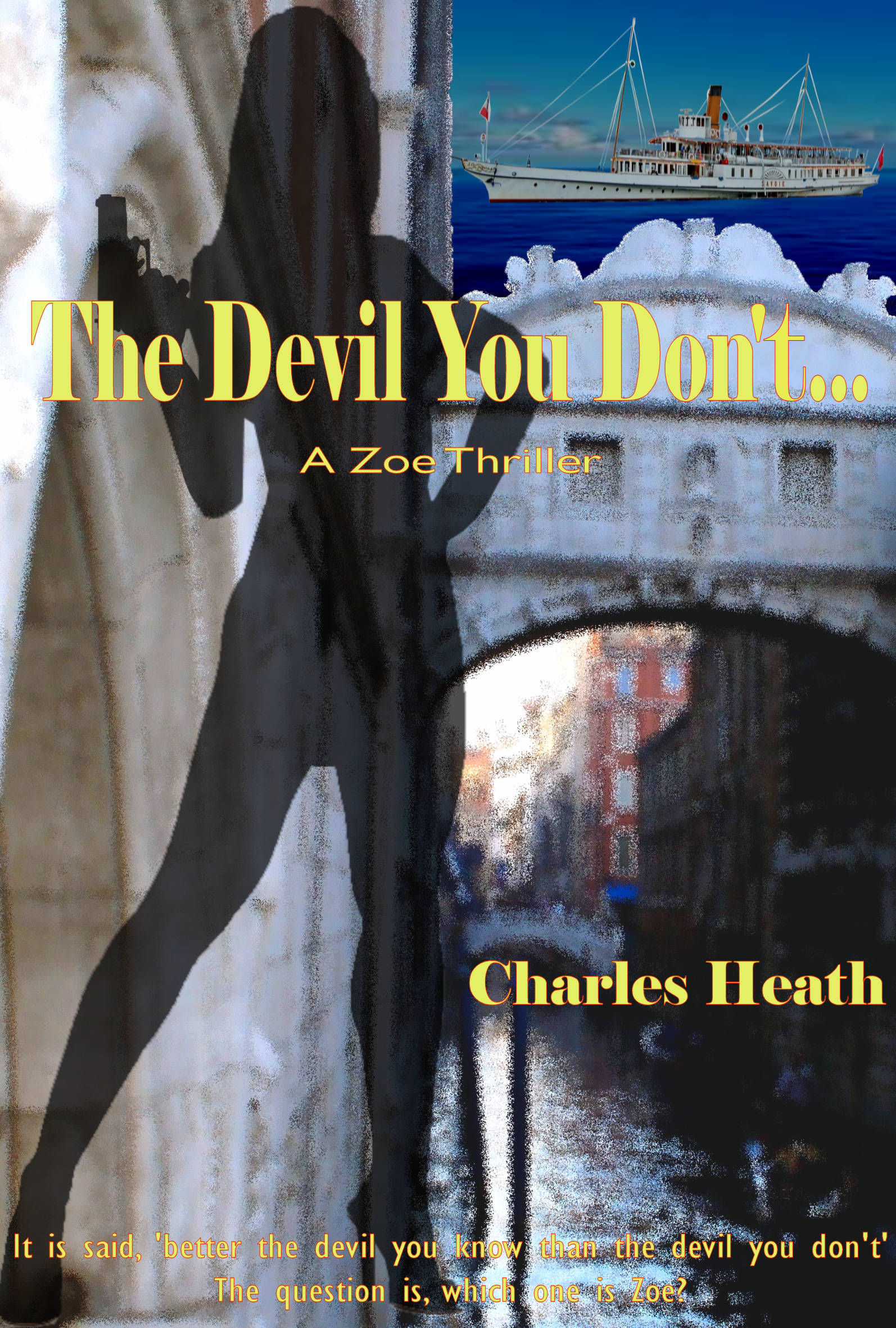
First Dig Two Graves

A sequel to “The Devil You Don’t”

Revenge is a dish best served cold – or preferably so when everything goes right

Of course, it rarely does, as Alistair, Zoe’s handler, discovers to his peril. Enter a wildcard, John, and whatever Alistair’s plan for dealing with Zoe was dies with him.

It leaves Zoe in completely unfamiliar territory.

John’s idyllic romance with a woman who is utterly out of his comfort zone is on borrowed time. She is still trying to reconcile her ambivalence after being so indifferent for so long.

They agree to take a break, during which she disappears. John, thinking she has left without saying goodbye, refuses to accept the inevitable and calls on an old friend for help in finding her.

After the mayhem and being briefly reunited, she recognises an inevitable truth: there is a price to pay for taking out Alistair; she must leave and find them first, and he would be wise to keep a low profile.

But keeping a low profile just isn’t possible, and enlisting another friend, a private detective and his sister, a deft computer hacker, they track her to the border between Austria and Hungary.

What John doesn’t realise is that another enemy is tracking him to find her too. It could have been a grand tour of Europe. Instead, it becomes a race against time before enemies old and new converge for what will be an inevitable showdown.

365 Days of writing, 2026 – 113

Day 113 – Writing behind closed doors – alone

The Solitary Craft: The Pros and Cons of Writing Behind a Closed Door

Every writer has their own ritual. Some prefer the hum of a bustling coffee shop, while others find their flow in the company of a critique group. But for many, the “true” work happens in the sanctuary of isolation—behind a closed door, away from the noise, the glare of the world, and the distractions of daily life.

Writing in isolation is a double-edged sword. It is both a monastic devotion and a potential trap. If you’ve ever wondered whether you should be retreating to your home office for days on end, here’s a look at the trade-offs of the solitary craft.


The Pros: The Sanctity of the Flow State

For many authors, isolation isn’t just a preference; it’s a necessity for deep work. When you shut the door, you are creating a workspace where you are the sole arbiter of your world-building.

1. Uninterrupted Deep Work (The “Flow”) It takes approximately 20 minutes to re-enter a deep state of concentration after an interruption. By closing your door, you minimise the “ping” of notifications and the “hey, do you have a second?” that kill momentum. Isolation allows you to sink into the flow state where time disappears, and the prose begins to sing.

2. Psychological Safety Writing often requires vulnerability. When you are alone, you don’t face the subconscious filter of “what will people think?” You are free to write the messy, embarrassing, or radical first draft without an audience. This isolation acts as an incubator for risk-taking and authentic expression.

3. Total Control Over Environment: Your workspace is your cockpit. You control the lighting, the silence (or the specific playlist), and the temperature. This sensory control helps signal to your brain that it is time to work, turning your “closed door” into a psychological trigger for productivity.


The Cons: The Perils of the Echo Chamber

While the hermit life can produce great work, it also comes with significant risks. Writing in a vacuum can lead to stagnation, both in your craft and your mental well-being.

1. The “Echo Chamber” Effect When you write in total isolation, you lose the invaluable feedback loop. You may unknowingly fall into repetitive tropes, develop plot holes that you are too close to see, or misuse language in ways that are obvious to an outsider but invisible to you. Without the “fresh eyes” of a peer or editor, you run the risk of becoming your own worst champion—or your own worst critic.

2. The Erosion of Perspective: Writers are observers of humanity. To write realistic characters, you need to hear how people speak, observe their body language, and understand the tensions of social dynamics. If you spend too much time behind a closed door, your world may start to feel “airless.” Your dialogue can become wooden, and your understanding of cultural shifts may lag.

3. The Psychological Toll Writing is a lonely profession by default. By choosing to physically isolate yourself for long stretches, you risk burnout and the “writer’s blues.” Without the grounding influence of the outside world, the internal struggles of the writing process—self-doubt, imposter syndrome, and creative blocks—can become mountainous and overwhelming.


Finding the Balance: The “Hybrid” Approach

The goal isn’t to choose between total isolation and total social immersion. The most successful writers often use a hybrid model:

  • The Sprint: Use the closed door for the “heavy lifting”—the drafting phase, where you need pure, uninterrupted focus.
  • The Inhale: Once the draft is down, open the door. Seek out writers’ groups, beta readers, or even just a busy cafe to recalibrate your senses.
  • The Observation: Use your time outside the room to “fill the well.” Listen to conversations in line at the grocery store, read books by different authors, and engage with the world so you have something to write about when you return to your desk.

The Verdict

Writing behind a closed door is a powerful tool, but it is a tool meant to be used in cycles. Use your isolation to create, but remember to occasionally unlock the door. Your best work often happens at the intersection of deep, focused thought and the messy, human world you are writing for.

How do you handle your writing environment? Do you crave the isolation, or do you find you need the buzz of the world to keep your words fresh? Let me know in the comments.

An excerpt from “Strangers We’ve Become” – Coming Soon

I wandered back to my villa.

It was in darkness.  I was sure I had left several lights on, especially over the door so I could see to unlock it.

I looked up and saw the globe was broken.

Instant alert.

I went to the first hiding spot for the gun, and it wasn’t there.  I went to the backup and it wasn’t there either.  Someone had found my carefully hidden stash of weapons and removed them.

Who?

There were four hiding spots and all were empty.  Someone had removed the weapons.  That could only mean one possibility.

I had a visitor, not necessarily here for a social call.

But, of course, being the well-trained agent I’d once been and not one to be caught unawares, I crossed over to my neighbor and relieved him of a weapon that, if found, would require a lot of explaining.

Suitably armed, it was time to return the surprise.

There were three entrances to the villa, the front door, the back door, and a rather strange escape hatch.  One of the more interesting attractions of the villa I’d rented was its heritage.  It was built in the late 1700s, by a man who was, by all accounts, a thief.  It had a hidden underground room which had been in the past a vault but was now a wine cellar, and it had an escape hatch by which the man could come and go undetected, particularly if there was a mob outside the door baying for his blood.

It now gave me the means to enter the villa without my visitors being alerted, unless, of course, they were near the vicinity of the doorway inside the villa, but that possibility was unlikely.  It was not where anyone could anticipate or expect a doorway to be.

The secret entrance was at the rear of the villa behind a large copse, two camouflaged wooden doors built into the ground.  I move aside some of the branches that covered them and lifted one side.  After I’d discovered the doors and rusty hinges, I’d oiled and cleaned them, and cleared the passageway of cobwebs and fallen rocks.  It had a mildew smell, but nothing would get rid of that.  I’d left torches at either end so I could see.

I closed the door after me, and went quietly down the steps, enveloped in darkness till I switched on the torch.  I traversed the short passage which turned ninety degrees about halfway to the door at the other end.  I carried the key to this door on the keyring, found it and opened the door.  It too had been oiled and swung open soundlessly.

I stepped in the darkness and closed the door.

I was on the lower level under the kitchen, now the wine cellar, the ‘door’ doubling as a set of shelves which had very little on them, less to fall and alert anyone in the villa.

Silence, an eerie silence.

I took the steps up to the kitchen, stopping when my head was level with the floor, checking to see if anyone was waiting.  There wasn’t.  It seemed to me to be an unlikely spot for an ambush.

I’d already considered the possibility of someone coming after me, especially because it had been Bespalov I’d killed, and I was sure he had friends, all equally as mad as he was.  Equally, I’d also considered it nigh on impossible for anyone to find out it was me who killed him because the only people who knew that were Prendergast, Alisha, a few others in the Department, and Susan.

That raised the question of who told them where I was.

If I was the man I used to be, my first suspect would be Susan.  The departure this morning, and now this was too coincidental.  But I was not that man.

Or was I?

I reached the start of the passageway that led from the kitchen to the front door and peered into the semi-darkness.  My eyes had got used to the dark, and it was no longer an inky void.  Fragments of light leaked in around the door from outside and through the edge of the window curtains where they didn’t fit properly.  A bone of contention upstairs in the morning, when first light shone and invariably woke me up hours before I wanted to.

Still nothing.

I took a moment to consider how I would approach the visitor’s job.  I would get a plan of the villa in my head, all entrances, where a target could be led to or attacked where there would be no escape.

Coming in the front door.  If I was not expecting anything, I’d just open the door and walk-in.  One shot would be all that was required.

Contract complete.

I sidled quietly up the passage staying close to the wall, edging closer to the front door.  There was an alcove where the shooter could be waiting.  It was an ideal spot to wait.

Crunch.

I stepped on some nutshells.

Not my nutshells.

I felt it before I heard it.  The bullet with my name on it.

And how the shooter missed, from point-blank range, and hit me in the arm, I had no idea.  I fired off two shots before a second shot from the shooter went wide and hit the door with a loud thwack.

I saw a red dot wavering as it honed in on me and I fell to the floor, stretching out, looking up where the origin of the light was coming and pulled the trigger three times, evenly spaced, and a second later I heard the sound of a body falling down the stairs and stopping at the bottom, not very far from me.

Two assassins.

I’d not expected that.

The assassin by the door was dead, a lucky shot on my part.  The second was still breathing.

I checked the body for any weapons and found a second gun and two knives.  Armed to the teeth!

I pulled off the balaclava; a man, early thirties, definitely Italian.  I was expecting a Russian.

I slapped his face, waking him up.  Blood was leaking from several slashes on his face when his head had hit the stairs on the way down.  The awkward angle of his arms and legs told me there were broken bones, probably a lot worse internally.  He was not long for this earth.

“Who employed you?”

He looked at me with dead eyes, a pursed mouth, perhaps a smile.  “Not today my friend.  You have made a very bad enemy.”  He coughed and blood poured out of his mouth.  “There will be more …”

Friends of Bespalov, no doubt.

I would have to leave.  Two unexplainable bodies, I’d have a hard time explaining my way out of this mess.  I dragged the two bodies into the lounge, clearing the passageway just in case someone had heard anything.

Just in case anyone was outside at the time, I sat in the dark, at the foot of the stairs, and tried to breathe normally.  I was trying not to connect dots that led back to Susan, but the coincidence was worrying me.

A half-hour passed and I hadn’t moved.  Deep in thought, I’d forgotten about being shot, unaware that blood was running down my arm and dripping onto the floor.

Until I heard a knock on my front door.

Two thoughts, it was either the police, alerted by the neighbors, or it was the second wave, though why would they be knocking on the door?

I stood, and immediately felt a stabbing pain in my arm.  I took out a handkerchief and turned it into a makeshift tourniquet, then wrapped a kitchen towel around the wound.

If it was the police, this was going to be a difficult situation.  Holding the gun behind my back, I opened the door a fraction and looked out.

No police, just Maria.  I hoped she was not part of the next ‘wave’.

“You left your phone behind on the table.  I thought you might be looking for it.”  She held it out in front of her.

When I didn’t open the door any further, she looked at me quizzically, and then asked, “Is anything wrong?”

I was going to thank her for returning the phone, but I heard her breathe in sharply, and add, breathlessly, “You’re bleeding.”

I looked at my arm and realized it was visible through the door, and not only that, the towel was soaked in blood.

“You need to go away now.”

Should I tell her the truth?  It was probably too late, and if she was any sort of law-abiding citizen she would go straight to the police.

She showed no signs of leaving, just an unnerving curiosity.  “What happened?”

I ran through several explanations, but none seemed plausible.  I went with the truth.  “My past caught up with me.”

“You need someone to fix that before you pass out from blood loss.  It doesn’t look good.”

“I can fix it.  You need to leave.  It is not safe to be here with me.”

The pain in my arm was not getting any better, and the blood was starting to run down my arm again as the tourniquet loosened.  She was right, I needed it fixed sooner rather than later.

I opened the door and let her in.  It was a mistake, a huge mistake, and I would have to deal with the consequences.  Once inside, she turned on the light and saw the pool of blood just inside the door and the trail leading to the lounge.  She followed the trail and turned into the lounge, turned on the light, and no doubt saw the two dead men.

I expected her to scream.  She didn’t.

She gave me a good hard look, perhaps trying to see if I was dangerous.  Killing people wasn’t something you looked the other way about.  She would have to go to the police.

“What happened here?”

“I came home from the cafe and two men were waiting for me.  I used to work for the Government, but no longer.  I suspect these men were here to repay a debt.  I was lucky.”

“Not so much, looking at your arm.”

She came closer and inspected it.

“Sit down.”

She found another towel and wrapped it around the wound, retightening the tourniquet to stem the bleeding.

“Do you have medical supplies?”

I nodded.  “Upstairs.”  I had a medical kit, and on the road, I usually made my own running repairs.  Another old habit I hadn’t quite shaken off yet.

She went upstairs, rummaged, and then came back.  I wondered briefly what she would think of the unmade bed though I was not sure why it might interest her.

She helped me remove my shirt, and then cleaned the wound.  Fortunately, she didn’t have to remove a bullet.  It was a clean wound but it would require stitches.

When she’d finished she said, “Your friend said one day this might happen.”

No prizes for guessing who that friend was, and it didn’t please me that she had involved Maria.

“Alisha?”

“She didn’t tell me her name, but I think she cares a lot about you.  She said trouble has a way of finding you, gave me a phone and said to call her if something like this happened.”

“That was wrong of her to do that.”

“Perhaps, perhaps not.  Will you call her?”

“Yes.  I can’t stay here now.  You should go now.  Hopefully, by the time I leave in the morning, no one will ever know what happened here, especially you.”

She smiled.  “As you say, I was never here.”

© Charles Heath 2018-2022

strangerscover9

The cinema of my dreams – I never wanted to go to Africa – Episode 4

How did I get into this mess in the first place?

I had a few moments for reflection…

When I opened my eyes, it was a revelation that I was still alive.

Whether or not I was still on one piece was not exactly the first thought that crossed my mind.

It was, oddly enough, how I got into this situation.

So, two days earlier…

Someone once told me it was not a good idea to ask your commander out to dinner. Not a date, just the fact you’d like to get to know her better.

Yes, my commanding officer was a woman.

I thought the dinner went well, we found some common ground, ice hockey, and baseball, albeit barracking for different teams.

Then, the next day when I went into ‘the office’, the operations officer called me aside.

“Who’d did you piss off?”

Good question, had I, and who? And asked, “You tell me.”

“Apparently the Commanding Officer. She asked me to put you on patrol, where nothing ever happens and it’s as boring as shit.”

Usually, I was in the front line, what they called in the army, cannon fodder. Some said I had a death wish.

I shrugged. “No doubt she has her reasons. I could think of worse assignments.”‘

“Well, till then you’re on standby. Make the most of it.”

Of course, the question I should be asking is why she had put me on patrol, where I was rostered for front line recovery.

When I got back to my quarters, I called her.

Her assistant answered, “The commanding officer is not available at the moment and has advised me that she will remain so for the next forty-eight hours.”

That was the end of the conversation.

How come she had not told me? Probably none of my business, but it was worrying.

© Charles Heath 2019-2021

Another excerpt from ‘Betrayal’; a work in progress

My next destination in the quest was the hotel we believed Anne Merriweather had stayed at.

I was, in a sense, flying blind because we had no concrete evidence she had been there, and the message she had left behind didn’t quite name the hotel or where Vladimir was going to take her.

Mindful of the fact that someone might have been following me, I checked to see if the person I’d assumed had followed me to Elizabeth’s apartment was still in place, but I couldn’t see him. Next, I made a mental note of seven different candidates and committed them to memory.

Then I set off to the hotel, hailing a taxi. There was the possibility that the cab driver was one of them, but perhaps I was slightly more paranoid than I should be. I’d been watching the queue, and there were two others before me.

The journey took about an hour, during which time I kept an eye out the back to see if anyone had been following us. If anyone was, I couldn’t see them.

I had the cab drop me off a block from the hotel and then spent the next hour doing a complete circuit of the block the hotel was on, checking the front and rear entrances, the cameras in place, and the siting of the driveway into the underground carpark. There was a camera over the entrance, and one we hadn’t checked for footage. I sent a text message to Fritz to look into it.

The hotel lobby was large and busy, which was exactly what you’d want if you wanted to come and go without standing out. It would be different later at night, but I could see her arriving about mid-afternoon, and anonymous among the clientele the hotel attracted.

I spent an hour sitting in various positions in the lobby simply observing. I had already ascertained where the elevator lobby for the rooms was, and the elevator down to the car park. Fortunately, it was not ‘guarded’, but there was a steady stream of concierge staff coming and going to the lower levels, and, just from time to time, guests.

Then, when there was a commotion at the front door, what seemed to be a collision of guests and free-wheeling bags, I saw one of the seven potential taggers sitting by the front door. Waiting for me to leave? Or were they wondering why I was spending so much time there?

Taking advantage of that confusion, I picked my moment to head for the elevators that went down to the car park, pressed the down button, and waited.

There was no car on the ground level, so I had to wait, watching, like several others, the guests untangling themselves at the entrance, and keeping an eye on my potential surveillance, still absorbed in the confusion.

The doors to the left car opened, and a concierge stepped out, gave me a quick look, then headed back to his desk. I stepped into the car, pressed the first level down, the level I expected cars to arrive on, and waited what seemed like a long time for the doors to close.

As they did, I was expecting to see a hand poke through the gap, a latecomer. Nothing happened, and I put it down to a television moment.

There were three basement levels, and for a moment, I let my imagination run wild and considered the possibility that there were more levels. Of course, there was no indication on the control panel that there were any other floors, and I’d yet to see anything like it in reality.

With a shake of my head to return to reality, the car arrived, the doors opened, and I stepped out.

A car pulled up, and the driver stepped out, went around to the rear of his car, and pulled out a case. I half expected him to throw me the keys, but the instant glance he gave me told him he was not the concierge, and instead he brushed past me like I wasn’t there.

He bashed the up button several times impatiently and cursed when the doors didn’t open immediately. Not a happy man.

Another car drove past on its way down to a lower level.

I looked up and saw the CCTV camera, pointing towards the entrance, visible in the distance. A gate that lifted up was just about back in position, then clunked when it finally closed. The footage from the camera would not prove much, even if it had been working, because it didn’t cover the lift lobby, only what was in the direction of the car entrance.

The doors to the other elevator car opened, and a man in a suit stepped out.

“Can I help you, sir? You seem lost.”

Security, or something else. “It seems that way. I went to the elevator lobby, got in, and it went down rather than up. I must have been in the wrong place.”

“Lost it is, then, sir.” I could hear the contempt for Americans in his tone. “If you will accompany me, please.”

He put out a hand ready to guide me back into the elevator. I was only too happy to oblige him. There had been a sign near the button panel that said the basement levels were only to be accessed by the guests.

Once inside, he turned a key and pressed the lobby button. The doors closed, and we went up. He stood, facing the door, not speaking. A few seconds later, he was ushering me out to the lobby.

“Now, sir, if you are a guest…”

“Actually, I’m looking for one. She called me and said she would be staying in this hotel and to come down and visit her. I was trying to get to the sixth floor.”

“Good. Let’s go over to the desk and see what we can do for you.”

I followed him over to the reception desk, where he signalled one of the clerks, a young woman who looked and acted very efficiently, and told her of my request, but then remained to oversee the proceeding.

“Name of guest, sir?”

“Merriweather, Anne. I’m her brother, Alexander.” I reached into my coat pocket and pulled out my passport to prove that I was who I said I was. She glanced cursorily at it.

She typed the name into the computer, and then we waited a few seconds while it considered what to output. Then, she said, “That lady is not in the hotel, sir.”

Time to put on my best-confused look. “But she said she would be staying here for the week. I made a special trip to come here to see her.”

Another puzzled look from the clerk, then, “When did she call you?”

An interesting question to ask, and it set off a warning bell in my head. I couldn’t say today, it would have to be the day she was supposedly taken.

“Last Saturday, about four in the afternoon.”

Another look at the screen, then, “It appears she checked out Sunday morning. I’m afraid you have made a trip in vain.”

Indeed, I had. “Was she staying with anyone?”

I just managed to see the warning pass from the suited man to the clerk. I thought he had shown an interest when I mentioned the name, and now I had confirmation. He knew something about her disappearance. The trouble was, he wasn’t going to volunteer any information because he was more than just hotel security.

“No.”

“Odd,” I muttered. “I thought she told me she was staying with a man named Vladimir something or other. I’m not too good at pronouncing those Russian names. Are you sure?”

She didn’t look back at the screen. “Yes.”

“OK, now one thing I do know about staying in hotels is that you are required to ask guests with foreign passports their next destination, just in case they need to be found. Did she say where she was going next?” It was a long shot, but I thought I’d ask.

“Moscow. As I understand it, she lives in Moscow. That was the only address she gave us.”

I smiled. “Thank you. I know where that is. I probably should have gone there first.”

She didn’t answer; she didn’t have to, her expression did that perfectly.

The suited man spoke again, looking at the clerk. “Thank you.” He swivelled back to me. “I’m sorry we can’t help you.”

“No. You have more than you can know.”

“What was your name again, sir, just in case you still cannot find her?”

“Alexander Merriweather. Her brother. And if she is still missing, I will be posting a very large reward. At the moment, you can best contact me via the American Embassy.”

Money is always a great motivator, and that thoughtful expression on his face suggested he gave a moment’s thought to it.

I left him with that offer and left. If anything, the people who were holding her would know she had a brother, that her brother was looking for her, and equally that brother had money.

© Charles Heath – 2018-2025

The cinema of my dreams – It continued in London – Episode 26

I have a small job

The trek from the car, along the red carpet, the flashing cameras, and reporters with microphones shoved in faces, was the longest 50 yards I’d ever taken.

To say I’d prefer to negotiate a minefield was an understatement.  She was polite, smiling, answering questions, and doing the red-carpet thing if that was what it was. 

I remained in the background adopting the bodyguard stance, not that of a partner or escort, guiding her on at the appropriate moment, and they left me alone.

Bodyguards were not news just an accouterment to the rich and famous.  I was glad that I fitted into the suit and didn’t look out of place.

On the other side, in that magical land of peace and quiet, an area that was reserved for the VIPs, I got a momentary look into a world that few were ever privy to.

Being a Royal Command Performance, I also got the unexpected surprise of being introduced to members of the Royal family, scary stuff indeed.  I’d only ever seen them in the papers and on TV, and oddly never in a good light.

How different they were in person.

Rodby seemed ill at ease, Martha in her element, and the countess took it all in her stride, perhaps showing that she was born into that life rather than acquiring it.

I’d found a quiet corner and Rodby it seemed had too.

“Another of your white lies comes home to roost.  You ask why I won’t come back, and this evening is all the proof you need.”

“It wasn’t anything to do with me.  Orders from above.”

“You don’t answer to anyone.”

The wry grin said otherwise.  “We all have our masters.”

“Who is she?”

At the moment she was across the room deep in conversation with one of the Royal party.

“A woman with a problem.”

And then it all became clear.  “This is low, even for you.”

“Not me.  This is Martha’s doing.  She has this unaccountable belief in you, which is surprising since I’ve never told her what it was you used to do.”

“And yet here we are.”

I was going to make a point of talking to Martha if only to dispute his account.  He could have chosen any one of a hundred more qualified people and yet here I was.  I had to believe it was not Martha’s intention for me to be here other than as a prospect for her friend the Countess.

“Indeed.”

The accompanying sigh was due to Martha making her way over to us. His brief moment of solitude was over.  I doubted Rodby had any time for what he called schmoozing, nor would he suffer the protection types that were in abundance in that room.  It reeked of wealth and privilege.

“There you two are.”

“I don’t like crowds,” I said.  At least I had a viable excuse.

She glared at Rodby.  “Go and make yourself amenable.  I want a moment with Evan.”

His dismay was complete.  I could tell he would rather face down a horde of enemy soldiers than face those people currently in the room.

After a moment where he might have considered an entirely different scenario, he thought the better of it and meandered off in the direction of the bar.

This was a Rodby I’d never seen before.

“Now, what are you doing with yourself these days?  Alan tells me you are adrift now Violetta is not there.”

How kind of him to say so.  Had I completely misjudged him, and this was going to be his pitch, by someone he knew I couldn’t say no to.

“I would not call in exactly adrift.”

“You know what I mean.  I’m sorry that I haven’t managed to catch up but I’ve been working on getting him to decide it’s time to retire.”

“I’m not sure what I could do to help you in that regard.”

“You don’t have to.  I have something else I would like you to do for me.  Heidi is one of those formidable forces that have the ability to take on the world, and beat it, but not when it comes to handling problems of her own.  The count, God bless him, used to take care of all that nonsense, but he’s not here, so, given what Alan has told me about you, nothing but glowing references I have to say, could you help her out?”

What could Rodby possibly say about me when he was sworn to secrecy?  In fact, why would he mention me to Martha above anyone else?  I was just an errand boy in terms of acquaintances.

“What exactly did he say?”

“Nothing of any importance other than to say you were a good man in a crisis.”  She smiled. “And we both know that could mean almost anything from catching a mug of coffee before it splashed over a tetchy diplomat to saving a pilotless plane about to crash into a mountain.  What I’m asking will not involve either of these scenarios or at least I hope not.”  Perhaps she just saw my expression, a mixture of curiosity and dismay.  “I’m not selling this very well, am I?”

“I’m not sure what you’re trying to sell.”

The bell rang to signify the audience to head for their seats, or in our case, a box.  Opera was so much better from the boxes, particularly when those below looked up in awe, expecting to see a celebrity.

“We’re having drinks after the opera.  We’ll talk more then.” 

Rodby was walking over with the countess.

The look on his face was priceless

© Charles Heath 2022

The 2am Rant: All I wanted was a cup of coffee

How can something so simple become so complicated and complex?

In New York, it seemed impossible to get exactly what you would like.  The coffee there is driven by what the machine interprets you want, aside from the language constraints due to the fact that English (or American) comes in a zillion different flavours.

So, what do I like (you notice I don’t say ‘want’)

A double shot Latte with two sugars and half a shot of vanilla.  That’s in a large cup.

As we all know coffee can come in a regular, large, or extra-large cup, but hang on, these cup sizes sometimes have names, and you need to know what these names are.

My efforts to point out the cup size in New York often had horrendous consequences when the cup piles were close together.  Sometimes it was a double shot in a regular cup and a single shot in an extra-large cup.

One even had the name benti, or bento, or something like that.

Being old and decrepit, my memory for cup sizes isn’t all that great, so using a name in one shop that doesn’t have that size, well, you get it.

It seems not only coffee makers in New York have a problem producing consistent coffee.

Perhaps, then, that’s half the charm of drinking it, the fact that no cup is ever the same.

And, when an outlet gets it right, finally, they go and change the coffee bean supplier, and all of a sudden, it’s bitter, or it’s lighter, as coffee shops try to reduce their costs and maximise profits.

Six dollars is a lot of money for a cup of coffee unless of course, you have to feed that addiction, in which case, you’ll have a cup at whatever the cost.

I need coffee right now, so it’s off to the cupboard to see what’s available.

Maccona instant, which is not bad

A Nespresso long black – ok, don’t get me started with Nespresso because they have numbers from 1 to 12, possibly more, recognising strengths, and I usually have a double shot using a 10 and a 12.

And, yes, they fool around with the type of beans they use because there seem to be inconsistencies in potency from time to time.

Then there are coffee bags, much the same as tea bags, which produces and interestingly flavoured brew which I’m still trying to figure out.  It tastes like coffee, but there’s something else there, like … paper?

I opt for an instant.

Yes, I needed a coffee after writing this.

What I learned about writing – Cliches

So, standard practice tells us that as writers we must avoid cliches at all costs.

It’s a great idea. Because you are writing to potentially a great many people, the notion that most of them will have no idea what you are talking about, or understand the relevance, it’s best not to leave them perplexed when they read something they don’t understand.

A great example of this was many years ago when I worked with a chap who was a recent immigrant from Russia. His English was reasonable, that is, he could speak in a manner I could understand, but there were times when he stopped, searching for the English equivalent.

I would have called it a quaint accent. Others would be less accommodating.

But…

I found that I tended to speak with a lot of English idioms and cliches, some of which he did not understand, and so I spent a lot of time translating them. He was not at all ashamed of not knowing them, but wanted to.

Thus, for a few months, I became an ESL teacher and found it quite amusing, especially when he told me what the Russian equivalents were. And, yes, Russians do have their own cliches, and we westerners cop a few really interesting ones.

And, yes, I use cliches in stories, or at least until the third draft when I realise that they don’t belong, and even when they last a little longer, the editor’s blue pencil gets them every time.

But, and there’s always a but…

What if your protagonist speaks in cliches?