Top 5 sights on the road less travelled – Brisbane, Australia

Hidden Gems of Brisbane: 5 Uncrowded Attractions That Still Pack a Punch

If you’ve already ticked off the South Bank promenade, the Story Bridge, and the Lone Pine Koala Sanctuary, you might be wondering where the next unforgettable experience lies. Good news – Brisbane is a fairly compact city, and beyond the usual tourist radar, several spots feel almost secret. Below are five standout attractions that never feel overrun, yet each offers a distinctive slice of Queensland life. (All are easily reachable by public transport or a short drive.)


1. Mount Coot-tha Lookout & the Hidden Botanic Trail

Why it’s special: Most visitors head straight for the panoramic city view from the Lookout’s car park, but the adjoining Mount Coot-tha Botanic Trail is a quiet 2‑km loop that winds through native rainforest, exotic gardens, and a series of small waterfalls.

FeatureDetails
ViewsThe classic vista over the Brisbane River and skyline is still there, but from the trail’s higher ridge you’ll spot a rarely‑photographed sunrise over the Glass House Mountains.
FloraA living collection of rare cycads, native ferns, and a small Bunya Pine grove (the “grandfather of pines”).
WildlifeSpot sugar gliders, brushtail possums, and the occasional rainbow lorikeet. Early morning is the best time for birdwatching.
How to get thereTake the Bus 450 from the City to the Mount Coot-tha Lookout stop (≈30 min). Parking is free for the first hour; the trailhead is a short walk from the car park.
Best time to visitEarly morning (sunrise) or late afternoon (golden‑hour light). Weekdays are especially quiet.

Insider tip: Bring a small portable coffee mug. There’s a tiny café at the Lookout that sells “mountain‑fresh” espresso – you can enjoy a brew while watching the city glow.


2. Kangaroo Point Cliffs – The Lesser‑Known Rock Garden

Why it’s special: While the cliffs are a hotspot for climbers and joggers, tucked behind the main promenade is the Rock Garden, a secluded series of basalt boulders artfully landscaped with native succulents and a modest waterfall.

FeatureDetails
SeclusionOnly a narrow footpath leads to the garden, keeping it largely free of crowds.
DesignCreated by local artist‑landscaper Mina Yates in 2015, the garden incorporates reclaimed stone and a repurposed rainwater tank that feeds the waterfall.
Photo opsThe garden frames the river in a way you won’t see from the main cliff edge – perfect for minimalist shots of water against stone.
How to get thereFrom the Kangaroo Point train station, walk 5 minutes north along River Terrace; the footpath entry is marked by a small wooden sign.
Best time to visitLate afternoon when the setting sun catches the water spray.

Insider tip: Bring a sketchbook – many local artists set up easels here to capture the ever‑changing light on the basalt.


3. The Old Windmill (Spring Hill) – A Time‑Travel Escape

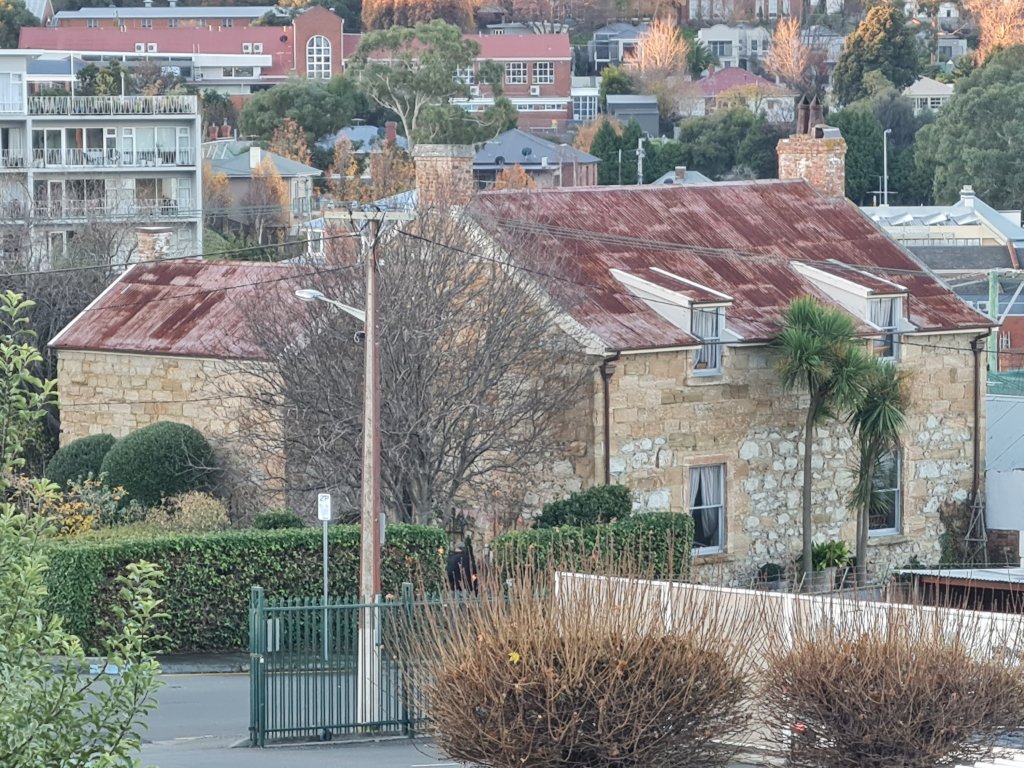
Why it’s special: Brisbane’s oldest surviving structure dates back to 1828. It’s a modest stone windmill tucked in a quiet pocket of Spring Hill, surrounded by a small park and a historic “windmill cottage” that now serves as a community arts space.

FeatureDetails
HistoryBuilt by the first commandant of the Moreton Bay penal colony, it once ground wheat for the settlement. Only the stone tower remains, but it still spins on windy days.
ArchitectureRough‑hewn sandstone with a timber cap – an excellent example of early colonial engineering.
Cultural useThe adjacent cottage hosts rotating exhibitions of local Indigenous art and occasional acoustic concerts.
How to get thereCatch the Bus 230 to Spring Hill (stop: “Old Windmill”) or take a short 10‑minute walk from Spring Hill train station.
Best time to visitEarly morning or late afternoon when the wind is gentle enough to spin the sails.

Insider tip: Stop by the Windmill Café (a tiny kiosk on site) for a slice of marble‑cream cake named “The Settler.” It’s an Instagram‑worthy treat that few tourists know about.


4. Redlands’ Amity Point – The Secluded Lighthouse Walk

Why it’s special: A 45‑minute drive south of Brisbane, Amity Point on Bribie Island boasts a small but striking lighthouse (operational since 1966) perched on a quiet headland. The surrounding Coastal Reserve offers a gentle boardwalk through mangroves, a hidden sandy cove, and spectacular night‑time star gazing.

FeatureDetails
LighthouseAn octagonal concrete tower with a rotating beacon visible for 20 km. Tours are offered on the first Saturday of each month.
NatureThe boardwalk passes through black mangrove and cabbage palm stands; look out for crabs, egrets, and occasional dolphins offshore.
Night skyBecause the area is far from city lights, it’s a prime spot for astrophotography; the Milky Way arches over the water on clear nights.
How to get thereDrive via the M1 → Coomera → Bribie Island (follow signs for Amity Point). Parking is free at the reserve.
Best time to visitSunrise for pastel reflections on the water, or after dark for the lighthouse beam and stargazing. Weekdays are virtually empty.

Insider tip: Pack a portable telescope or a pair of binoculars. The Queensland Star Party sometimes holds informal meet‑ups here, and they’re always happy to share tips.


5. The Brisbane City Botanic Gardens – The Forgotten ‘Rose Garden’

Why it’s special: While the Botanic Gardens are a popular daytime spot, tucked behind the main lawns sits the Rose Garden – a secluded, Victorian‑style enclave restored in 2018. It’s a fragrant, low‑traffic haven of heritage roses, a small pergola, and a historic iron fountain.

FeatureDetails
RosesOver 200 varieties, including the rare ‘Souvenir de la Malmaison’ and a modern hybrid “Brisbane Blush.”
ArchitectureThe pergola is made from locally sourced ironbark timber, and the fountain dates back to 1904 (originally supplied to the Toowoomba Show).
Quiet cornersBenches hidden among shrubbery provide intimate reading spots; the garden is often used by local poets for “tide‑of‑silence” sessions.
How to get thereFrom Roma Street station, walk north 8 minutes across the River; the garden entrance is marked by a bronze plaque.
Best time to visitMid‑morning (when the roses are at peak fragrance) or late spring (when the roses are in full bloom).

Insider tip: Join the Botanic Gardens’ “Rose Hour” on the first Saturday of each month – a free guided walk where a horticulturist explains the history and care of each rose variety.


How to Make the Most of These Hidden Spots

StrategyWhy it works
Visit on weekdaysAlmost all five sites see a steep drop in foot traffic from Monday to Thursday.
Go early or lateSoft light enhances photography, and cooler temperatures make walking comfortable.
Pack a reusable water bottleBrisbane’s subtropical climate can be humid; most locations have water refill points.
Use public transport or park‑&‑rideTraffic around the city can be unpredictable, especially on weekends.
Bring a light snackMany of these spots have limited food options; a small picnic makes the experience more relaxed.

A Quick Map for the Curious Explorer

#AttractionApprox. Distance from CBDRecommended Transport
1Mount Coot‑tha Lookout & Botanic Trail7 km (west)Bus 450 or bike (bike lanes available)
2Kangaroo Point Cliffs – Rock Garden2 km (south)Train to Kangaroo Point + 5‑min walk
3Old Windmill (Spring Hill)3 km (north)Bus 230 or walk from Spring Hill
4Amity Point Lighthouse (Bribie Island)45 km (south)Car (approx. 45‑min drive)
5Botanic Gardens – Rose Garden1 km (north)Train to Roma Street + short walk

Final Thoughts

Brisbane may be famed for its bustling riverfront and iconic skyline, but the city’s real charm often hides in quiet corners where locals unwind and history whispers. By venturing off the typical tourist trail, you’ll discover a softer, more intimate side of Queensland’s capital – one where you can breathe in native scents, hear the distant hum of the windmill sails, and watch the city glow from secret viewpoints.

So next time you find yourself packing for “Brisbane in a nutshell,” remember: sometimes the best stories are told by the places few people know exist. Happy exploring!

The first case of PI Walthenson – “A Case of Working With the Jones Brothers”

This case has everything, red herrings, jealous brothers, femme fatales, and at the heart of it all, greed.

See below for an excerpt from the book…

Coming soon!

PIWalthJones1

An excerpt from the book:

When Harry took the time to consider his position, a rather uncomfortable position at that, he concluded that he was somehow involved in another case that meant very little to him.

Not that it wasn’t important in some way he was yet to determine, it was just that his curiosity had got the better of him, and it had led to this: sitting in a chair, securely bound, waiting for someone one of his captors had called Doug.

It was not the name that worried him so much, it was the evil laugh that had come after the name was spoken.

Doug what? Doug the ‘destroyer’, Doug the ‘dangerous’, Doug the ‘deadly’; there was any number of sinister connotations, and perhaps that was the point of the laugh, to make it more frightening than it was.

But there was no doubt about one thing in his mind right then: he’d made a mistake. A very big. and costly, mistake. Just how big the cost, no doubt he would soon find out.

His mother, and his grandmother, the wisest person he had ever known, had once told him never to eavesdrop.

At the time he couldn’t help himself and instead of minding his own business, listening to a one-sided conversation which ended with a time and a place. The very nature of the person receiving the call was, at the very least, sinister, and, because of the cryptic conversation, there appeared to be, or at least to Harry, criminal activity involved.

For several days he had wrestled with the thought of whether he should go. Stay on the fringe, keep out of sight, observe and report to the police if it was a crime. Instead, he had willingly gone down the rabbit hole.

Now, sitting in an uncomfortable chair, several heat lamps hanging over his head, he was perspiring, and if perspiration could be used as a measure of fear, then Harry’s fear was at the highest level.

Another runnel of sweat rolled into his left eye, and, having his hands tied, literally, it made it impossible to clear it. The burning sensation momentarily took his mind off his predicament. He cursed and then shook his head trying to prevent a re-occurrence. It was to no avail.

Let the stinging sensation be a reminder of what was right and what was wrong.

It was obvious that it was the right place and the right time, but in considering his current perilous situation, it definitely was the wrong place to be, at the worst possible time.

It was meant to be his escape, an escape from the generations of lawyers, what were to Harry, dry, dusty men who had been in business since George Washington said to the first Walthenson to step foot on American soil, ‘Why don’t you become a lawyer?” when asked what he could do for the great man.

Or so it was handed down as lore, though Harry didn’t think Washington meant it literally, the Walthenson’s, then as now, were not shy of taking advice.

Except, of course, when it came to Harry.

He was, Harry’s father was prone to saying, the exception to every rule. Harry guessed his father was referring to the fact his son wanted to be a Private Detective rather than a dry, dusty lawyer. Just the clothes were enough to turn Harry off the profession.

So, with a little of the money Harry inherited from one of his aunts, he leased an office in Gramercy Park and had it renovated to look like the Sam Spade detective agency, you know the one, Spade and Archer, and The Maltese Falcon.

There’s a movie and a book by Dashiell Hammett if you’re interested.

So, there it was, painted on the opaque glass inset of the front door, ‘Harold Walthenson, Private Detective’.

There was enough money to hire an assistant, and it took a week before the right person came along, or, more to the point, didn’t just see his business plan as something sinister. Ellen, a tall cool woman in a long black dress, or so the words of a song in his head told him, fitted in perfectly.

She’d seen the movie, but she said with a grin, Harry was no Humphrey Bogart.

Of course not, he said, he didn’t smoke.

Three months on the job, and it had been a few calls, no ‘real’ cases, nothing but missing animals, and other miscellaneous items. What he really wanted was a missing person. Or perhaps a beguiling, sophisticated woman who was as deadly as she was charming, looking for an errant husband, perhaps one that she had already ‘dispatched’.

Or for a tall, dark and handsome foreigner who spoke in riddles and in heavily accented English, a spy, or perhaps an assassin, in town to take out the mayor. The man was such an imbecile Harry had considered doing it himself.

Now, in a back room of a disused warehouse, that wishful thinking might be just about to come to a very abrupt end, with none of the romanticized trappings of the business befalling him. No beguiling women, no sinister criminals, no stupid policemen.

Just a nasty little man whose only concern was how quickly or how slowly Harry’s end was going to be.

© Charles Heath 2019-2024

365 Days of writing, 2026 – 15

Day 15 – How to keep on track

Staying on Track: How to Maintain Focus and Resist the Siren Call of Tangents in Your Writing

You’ve got the premise. The spark that ignited your novel, screenplay, or short story still glows brightly. You’ve outlined your plot, mapped your protagonist’s arc, and maybe even written the first few scenes. But then it happens—midway through chapter three, an exciting new character pops into your head. Or a fascinating subplot about ancient runes in the protagonist’s attic. Or a sudden urge to write a 1,000-word scene about your main character’s favourite coffee shop barista who definitely has a secret past.

Welcome to the writing life. Welcome to the beautiful, messy temptation of going off track.

Every writer knows this battle: the lure of the tangent. That moment when your imagination gallops ahead, eager to explore new territory—often at the expense of the story you set out to tell. So how do you stay focused? How do you keep your story on course when creativity keeps offering enticing detours?

Here’s how.


1. Remember Your “Why” — Revisit Your Premise

When the urge to veer strikes, pause. Take a breath. And re-read your original premise. Why did you start this story? What core idea, theme, or emotional journey drives it?

Ask yourself: Does this new idea serve the heart of the story? If the answer is no, no matter how brilliant the idea seems, it might be a distraction. You can always save it—more on that later.

Your premise is your anchor. Let it ground you when shiny new ideas try to pull you off course.


2. Use Your Outline as a Compass—Not a Cage

Even if you’re a discovery writer (“pantser”), having even a loose roadmap helps. Your outline doesn’t need to be rigid, but it should act as a compass pointing you toward your story’s destination.

When a tempting subplot or character appears, first consider: Where would this fit in the outline? Does it move the plot forward or deepen character development? Or is it just… interesting?

If it doesn’t serve a structural or emotional purpose, it’s probably a tangent. Not all tangents are bad, but they should earn their place in the narrative. If it doesn’t advance the plot, theme, or character arc—tread carefully.


3. Create a “Someday” Folder

Here’s the secret no one tells you: You don’t have to kill your darlings. You just have to postpone them.

Keep a “Someday” document—a digital notebook, a folder, a journal—where you stash every brilliant idea that doesn’t belong in this story. Character backstories, alternate endings, intriguing subplots, random world-building details—dump them here.

When you add to this folder, you’re honouring your creativity without derailing your progress. Later, you might realise this idea belongs in your next book, a side project, or a short story. You’ve just built a reservoir of inspiration.


4. Set Incremental Goals and Deadlines

Distraction often thrives in aimlessness. If you don’t have clear daily or weekly goals, your mind naturally wanders. “Write something” is too vague. “Write 500 words advancing the inciting incident” is focused.

Break your project into small, manageable tasks:

  • Flesh out Act 2 turning point
  • Rewrite the hospital scene with higher emotional stakes
  • Clarify the antagonist’s motivation

These micro-goals create momentum—and momentum keeps digressions at bay.

If you catch yourself daydreaming about a new character’s origin story during writing time, jot down one sentence in your “Someday” folder and return to your task. Reward focus with curiosity later.


5. Practice the “So What?” Test

When you’re tempted to add a scene, character, or subplot, ask: So what? What does this add to the story? What changes because this exists?

If the answer is: “It’s cool,” “It’s mysterious,” or “I just really like this idea”—that’s not enough.

Great stories thrive on cause and effect. Every element should ripple through the narrative. If your new subplot doesn’t change the outcome or deepen understanding, it might be excess baggage.


6. Schedule “Exploration Time”

Ironically, the best way to avoid constant veering is to allow veering—on purpose.

Set aside time—maybe 30 minutes every Friday—to explore side ideas. Write that barista’s backstory. Sketch the ancient runes. Flesh out the alternate timeline.

When you give your imagination a designated outlet, it stops demanding attention during drafting hours. It learns: Creativity has a time. Now is for focus.


7. Trust the Power of Revision

One of the biggest reasons writers go off track is fear—fear that their story isn’t interesting enough. So they add more: more drama, more mystery, more characters.

But here’s the truth: A strong, focused story is often more powerful than a sprawling one. You can enrich a solid core in revision. You can’t fix a scattered narrative by piling on more layers.

Write the story you meant to tell first. Then, in edits, ask: What’s missing? What needs depth? That’s when you decide whether to weave in some of those saved ideas—intentionally, not impulsively.


Final Thought: Focus Is a Muscle

Like any skill, focus strengthens with practice. The more you train yourself to return to your premise, honour your outline, and defer distractions, the easier it becomes.

You don’t have to suppress your creativity to stay on track. You just have to channel it wisely.

So the next time inspiration calls you down a winding path—smiling, promising adventure—smile back, take a note, and say:
“Not now. But maybe later.”

Then return to the road. Your story is waiting.

‘Sunday in New York’ – A beta reader’s view

I’m not a fan of romance novels but …

There was something about this one that resonated with me.

This is a novel about a world generally ruled by perception, and how people perceive what they see, what they are told, and what they want to believe.

I’ve been guilty of it myself as I’m sure we all have at one time or another.

For the main characters Harry and Alison there are other issues driving their relationship.

For Alison, it is a loss of self-worth through losing her job and from losing her mother and, in a sense, her sister.

For Harry, it is the fact he has a beautiful and desirable wife, and his belief she is the object of other men’s desires, and one in particular, his immediate superior.

Between observation, the less than honest motives of his friends, a lot of jumping to conclusions based on very little fact, and you have the basis of one very interesting story.

When it all comes to a head, Alison finds herself in a desperate situation, she realises only the truth will save their marriage.

But is it all the truth?

What would we do in similar circumstances?

Rarely does a book have me so enthralled that I could not put it down until I knew the result. They might be considered two people who should have known better, but as is often the case, they had to get past what they both thought was the truth.

And the moral of this story, if it could be said there is one, nothing is ever what it seems.

Available on Amazon here: amzn.to/2H7ALs8

In a word: birth

The most common use of the word, giving birth to a child, is perhaps one of the more miraculous and inspiring events ever to be witnessed.

But it can be used similarly in giving birth to an idea. More generally it could be said that it is the coming into existence of something, animate or inanimate.

It can be used to state lineage or descent, i.e. he was Italian by birth, or he was a Duke by birth, but a politician by trade.

You could use birth pain in other expressions like trying to get a club or team together, those initial stages where everything goes wrong.

And that old favourite, wanted by every man and his dog, what is your date of birth?

On the other hand, a berth is a place where a ship or boat ties up after a long or short voyage.

It’s also a bed on a ship, not necessarily in a stateroom, but could be in one of those shared cabins below the waterline that do not cost a lot, and only a place to sleep, or for some, to recuperate. It doesn’t necessarily have to be on a ship, it could be on a train.

It could be the distance between two ships or the shore.

You could also use it to describe your job or position in the company.

Then, you could say you gave the enemy’s camp a wide berth, or just a group of people we don’t want to pass in the street.

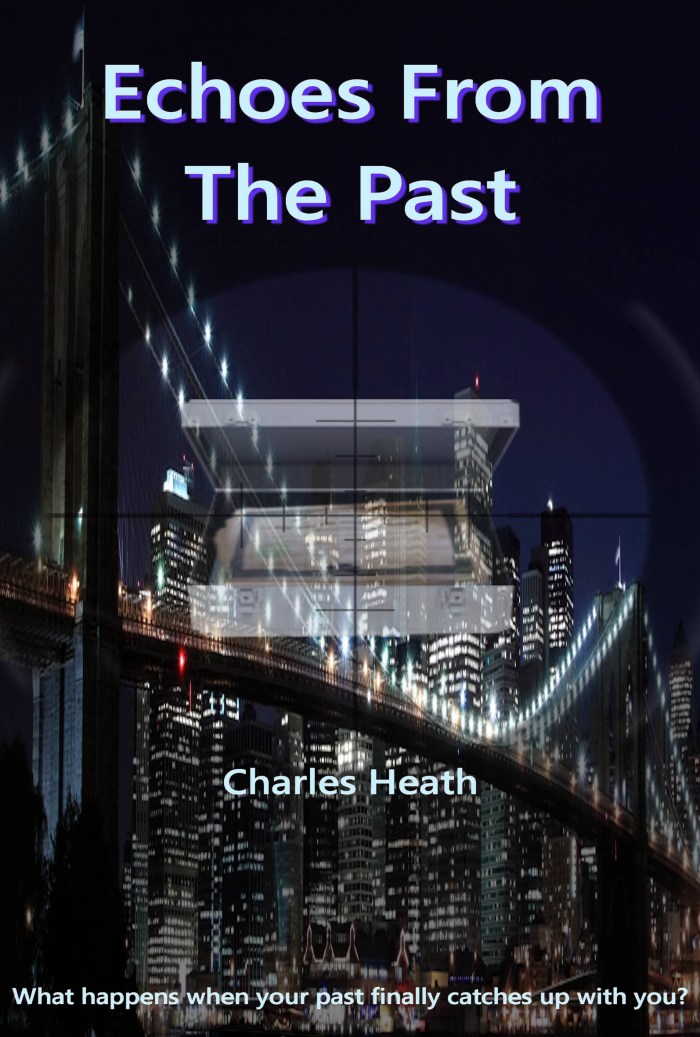
An excerpt from “Echoes from the Past”

Available on Amazon Kindle here:  https://amzn.to/2CYKxu4

With my attention elsewhere, I walked into a man who was hurrying in the opposite direction.  He was a big man with a scar running down the left side of his face from eye socket to mouth, and who was also wearing a black shirt with a red tie.

That was all I remembered as my heart almost stopped.

He apologized as he stepped to one side, the same way I stepped, as I also muttered an apology.

I kept my eyes down.  He was not the sort of man I wanted to recognize later in a lineup.  I stepped to the other side and so did he.  It was one of those situations.  Finally getting out of sync, he kept going in his direction, and I towards the bus, which was now pulling away from the curb.

Getting my breath back, I just stood riveted to the spot watching it join the traffic.  I looked back over my shoulder, but the man I’d run into had gone.  I shrugged and looked at my watch.  It would be a few minutes before the next bus arrived.

Wait, or walk?  I could also go by subway, but it was a long walk to the station.  What the hell, I needed the exercise.

At the first intersection, the ‘Walk’ sign had just flashed to ‘Don’t Walk’.  I thought I’d save a few minutes by not waiting for the next green light.  As I stepped onto the road, I heard the screeching of tires.

A yellow car stopped inches from me.

It was a high powered sports car, perhaps a Lamborghini.  I knew what they looked like because Marcus Bartleby owned one, as did every other junior executive in the city with a rich father.

Everyone stopped to look at me, then the car.  It was that sort of car.  I could see the driver through the windscreen shaking his fist, and I could see he was yelling too, but I couldn’t hear him.  I stepped back onto the sidewalk, and he drove on.  The moment had passed and everyone went back to their business.

My heart rate hadn’t come down from the last encounter.   Now it was approaching cardiac arrest, so I took a few minutes and several sets of lights to regain composure.

At the next intersection, I waited for the green light, and then a few seconds more, just to be sure.  I was no longer in a hurry.

At the next, I heard what sounded like a gunshot.  A few people looked around, worried expressions on their faces, but when it happened again, I saw it was an old car backfiring.  I also saw another yellow car, much the same as the one before, stopped on the side of the road.  I thought nothing of it, other than it was the second yellow car I’d seen.

At the next intersection, I realized I was subconsciously heading towards Harry’s new bar.   It was somewhere on 6th Avenue, so I continued walking in what I thought was the right direction.

I don’t know why I looked behind me at the next intersection, but I did.  There was another yellow car on the side of the road, not far from me.  It, too, looked the same as the original Lamborghini, and I was starting to think it was not a coincidence.

Moments after crossing the road, I heard the roar of a sports car engine and saw the yellow car accelerate past me.  As it passed by, I saw there were two people in it, and the blurry image of the passenger; a large man with a red tie.

Now my imagination was playing tricks.

It could not be the same man.  He was going in a different direction.

In the few minutes I’d been standing on the pavement, it had started to snow; early for this time of year, and marking the start of what could be a long cold winter.  I shuddered, and it was not necessarily because of the temperature.

I looked up and saw a neon light advertising a bar, coincidentally the one Harry had ‘found’ and, looking once in the direction of the departing yellow car, I decided to go in.  I would have a few drinks and then leave by the back door if it had one.

Just in case.

© Charles Heath 2015-2020

newechocover5rs

The cinema of my dreams – I always wanted to write a war story – Episode 37

For a story that was conceived during those long boring hours flying in a steel cocoon, striving to keep away the thoughts that the plane and everyone in it could just simply disappear as planes have in the past, it has come a long way.

Whilst I have always had a fascination with what happened during the second world war, not the battles or fighting, but in the more obscure events that took place, I decided to pen my own little sidebar to what was a long and bitter war.

And, so, it continues…

Johannsen hadn’t signed up for this. He’d been in the room when Leonardo reported to Wallace, to tell him that the villagers had been neutralised, and he brought the ring leaders of the so-called resistance to the castle.

By his reckoning, Leonardo and his men had killed probably 20 or so people who had nothing to do with the war, other than try to live around the war going on in their backyard.

In fact, when he had arrived at the castle, the intention was to work with the locals and the resistance to facilitate the onward movement of prized defectors. Until Jackerby arrived, and the dynamic changed.

Johannsen hadn’t realised that Wallace was a double agent, not until it was too late.

The thing of it was, Wallace thought he was a double agent too, a belief Johannsen had taken extreme care not to dispel. And, where it was possible, he had tried to help those caught up in Wallace’s trap.

Wallace was already in situ at the castle when Johannsen arrived with another four men to join those already there, on order from London to vet the incoming defectors. Those four he had met at the plane, and he hadn’t realised they were not who they were supposed to be. By the time the four who had been replaced were found, it was too late to stop the mission.

That brought the complement to 10 including Wallace and himself. Then he received a message, one he assumed was from Thompson, advising the arrival of a further 5, Jackerby and four soldiers.

He soon discovered that those orders were false.

When Jackerby reported to Wallace, and the fact Wallace sent him out of the room, he stayed behind, hidden, to listen to the conversation. There he discovered he was in the midst of an enemy operation that had enlisted a number of double agents across Euprope from the German Army.

He then tried to warn Thompson in a coded message, but that had been substituted by Wallace with another, causing another lamb to be sent to the slaughter, Atherton. When Jackerby first arrived, he advised Wallace, not Johannsson, that Atherton was not one of them, so an attempt was made on,his life, but failed.

For a while that was the equivalent of throwing a cat among the pigeons.

By the time the paratroopers arrived, there was no effort to hide who they were or what they were doing. The castle was, for all intents and purposes, a Nazi stronghold, there to collect and execute defectors. All he had to do was play his part, and try not to rouse the suspicions of Jackerby, whom, it seemed, trusted no one.

Wallace wasn’t all that interested in being as suspicious as Jackerby, who had to be gestapo, or worse, one of the SS.

But luck was on Johansson side when he took a plan to Wallace that would essentially free Atherton, and then have Atherton lead them to the other resistance. It was also a master stroke to select Burke, a simple man who liked to think everything was his idea.

That Atherton had got away was no fault of his, but those charged with following him. Jackerby had tried to mess with him, but Wallace intervened, telling Jackerby that he had had missing people too and should be out there looking for them.

With any luck, Johansson thought, they would be dead, a likely result since none of them had come back yet.
Now, all he could do was sit and wait for Atherton and whoever was left from the resistance to come and stop Wallace, and especially Jackerby.

Johansson knew that Atherton had a good working knowledge of the castle’s architecture, because on one occasion they had discussed archaeology. Johansson was not an archaeologist, but had worked with one and an assistant, before the war, at several digs.

He was hoping Atherton had a idea where there might be a secret entrance to the castle. It was old, and in his spare time, he had been pacing out room measurements, looking for nooks and crannies, and anything else that would be useful.

He had found a room full of swords, not exactly in fighting condition, but might be useful in a situation that called for a weapon. After all, he had taken a few sword fighting lessons at the university.

He had traversed several stone passageways, found two different passageways from the upstairs down to the radio room, and beyond that, where there was an exit or entrance, what in modern terminology would be called the tradesman’s entrance.

It was for all intents and purposes, a back door.

He had also gone around the whole perimeter of the outer castle wall, looking for holes. When he thought about it, leaving holes in the wall was asking for trouble because the idea was to keep people out, not to leave quickly and quietly in the middle of a siege.

And this castle had seen a few sieges in its time. More than once if he could travel back in time, he would have like to see what it was like 200 years ago, or more.

But there were only three entrances or exits that he knew of. There were no grates on the ground, or anywhere within 20 yards of the exterior wall, or conveniently hidden in the surrounding forests.

He was also sure there were hidden passageways inside the castle that must go somewhere, a result of checking internal measurements of rooms, and a few came up oddly short a few yards.

Still down in the dungeon on another of his subterfuges, the new arrivals guard had just appeared.

“The woman is awake.”

“Thanks.”

Now, if he could just get some sense out of her.

© Charles Heath 2020-2021

A photograph from the inspirational bin – 1

We think of tropical Queensland having pristine white beaches and azure sparkling seas.

Not necessarily so.

This used to be a mangrove swamp.

Perhaps this is what happens when you mess with the natural environment, you’re left with something that’s not very nice.

There’s no beach, no sand, and sometimes not a very pleasant odor.

We can imagine what this might have looked like before man turned up to urbanize the area. In the background, there is an inlet and on either side lush vegetation.

It must have looked very inviting once upon a time. Now the shoreline is completely built on, the vegetation that was once there completely cleared, and the inlet leads to a marina.

Perhaps the story here might be about greedy destructive property developers who care not for anything but profits.  But in their quest to destroy, there is always someone else aiding and abetting, someone in government.

But what if there was an even darker secret hiding just below the surface, and about to be uncovered.  How far would someone go to preserve that secret?

The cinema of my dreams – Was it just another surveillance job – Episode 20

I’m back home and this story has been sitting on a back burner for a few months, waiting for some more to be written.

The trouble is, there are also other stories to write, and I’m not very good at prioritising.

But, here we are, a few minutes opened up and it didn’t take long to get back into the groove.

A chessboard of players

I sighed.  Someone else who wasn’t who they seemed to be.

At a guess, it was a gun in my back.  We were far enough away from anyone else for them to recognise what was happening.

“No need for whatever weapon you have in my back.  I’m neither armed nor dangerous.”

“Why are you following me?”

Should I tell her the truth or tell her a lie.  The latter would be the most expedient, but I needed to talk to her, so I went with the former.

“You know O’Connell.”

“Were you the one who attacked me?”

“I told you I meant you no harm.  What happened to you wasn’t my fault.”

Whatever was in my back was no longer there, so I turned around to face her.  She had changed her look since O’Connell’s flat, not only the change in hair colour and length but also the makeup, making it difficult for anyone to recognise her from a distance.  I’d been lucky.

“What do you want with him?”

“More than likely the same as you.  He made the mistake of thinking you were interested in him, but I suspect your assignment was to get close, and the flat next door was as close as you could get.”

“What are you babbling about?  We were friends.”

“How often did he stay in that flat?  Everything in it still has the price tag on it.”

“You’re loopy.  I’m going now, and I suggest you don’t follow me again.”

“I know where you live remember.  All I want is some answers.”

“There are no answers.  He was a friend, that’s it.  I’m going now.”  She turned and started to walk away.

“If I know who you are, the chances are the others do too.”

She stopped.  Interesting response.  In her shoes, my first reaction, if I was an innocent person, would be to call for a policeman to have me taken away for assaulting her.

She turned and took two steps back towards me.  “What are you talking about now?”

“O’Connell’s flat was like Marks and Spenser this morning.  I came and found another woman claiming to live next door, named Josephine, unconscious on the floor, and I didn’t do it by the way.  She works for a man named Nobbin, McConnell’s direct superior, and whom I think, indirectly I do too, and I suspect she was neutralised by another man named Severin.

“Whatever O’Connell was up to, there are a lot of people who want a missing USB with what I suspect is very interesting, and probably damaging information.  You wouldn’t have it, by the way?”

“Who are you?”

“That’s what I’m not sure about.  Like I said, I think I work for the same man whom O’Connell worked for, but before that, I worked with the people who had him killed for whatever was on the USB.”  It sounded far more horrible out loud than it had a few seconds earlier in my head.  God only knew what she was thinking about it.  “Who do you work for, because a woman who can do the transformation you just did is either a call girl or an agent?”  Another thought just occurred to me, a reason perhaps why she had changed her appearance so radically.  “Your flat was searched too, wasn’t it?”

No need to answer yes or no.  The look on her face was enough.

We ordered coffee and sat down.  She was still very wary of me, but since I seemed to know, or presumed to know, what had happened, she was going to ask me some questions I wasn’t going to be able to answer.

And not because the answers were in the top-secret category, it was simply because I didn’t know.

“So,” I asked, “who do you work for?”

“You don’t need to know.”

“But you were either keeping O’Connell close company by insinuating yourself into his life, or you were maintaining some sort of surveillance.”

She was plating it close, and with a poker face.  She was better at it than I was.

“Where is he, by the way?”

“Dead.”

“Dead?”  

No mistaking that look of fear the flickered on her face, then disappear again into rocky granite.

“Dead.  Seems he came across some information, and it caused his death.  I was there shortly before he died, shot by a sniper, I think, and there was nothing I could do about it.  Any idea what that information was?”

“I still don’t know what you’re talking about, but either way, if I did or I didn’t the answer would be the same, no.  He told me he was a reporter, working on a really big story, and that he would have to go away for a few days.  I knew that was his cover story.”

“Were you after that same information?”

“Probably, maybe, I don’t know.  Our information was mostly conjecture, a profile built up by our research department, based on his travels, and sightings at a location we know is running a network of agents.  The conclusion was that it was not one of ours, so I was assigned to find out exactly who they were.”

“O’Connell would not have told you.”

“Given the circumstances I find myself in, I’m beginning to think that.  If you worked with him, then he was on the same side as you, so are you good or bad?”

That was a rather interesting question to be asking me at this late stage, and especially after she had told me basically what I needed to know, bar who she worked for, but that, I was beginning to think, was MI6.

“A rather silly question to ask, don’t you think?  It stands to reason that if I was bad, then I would not have left you alive in O’Connell’s flat.”

“Not unless you wanted something from me and set this up as a trap.”

So that was the reason why she kept checking everyone she could see upstairs and monitoring the stairs to see who arrived and left.  We were in the right spot to keep tabs on everyone.  And I knew her gun wasn’t very far from her hand.

“Obviously you don’t have it, so my work is done here.  I suggest you don’t go back to that flat.”  I stood.  “Your location and probably who you are is compromised.  And two men and their attack dogs will be looking for you.  Good luck with that.”

“Aren’t you one of those two men attack dog, by your own admission?”

“I’m new and not cynical enough to shoot people out of hand.  You’re probably lucky in that regard.  And if someone like me can find you, then think what a seasoned professional would be able to do.  Have a nice life, what you have left of it.”

© Charles Heath 2019

365 Days of writing, 2026 – 14

Day 14 – Having Fun with Ideas

Having Fun with Ideas: Embrace Brainstorming and Unlock Your Creative Potential

Creativity isn’t just a gift—it’s a practice. And one of the most exhilarating parts of the creative process? The moment when wild, half-formed ideas start to take shape. Whether you’re a writer, game designer, filmmaker, or just someone who loves to dream up alternate worlds, the journey often begins with a single spark: What if?

In this post, we’ll explore the art of playful brainstorming and dive into creative methods for researching fictional concepts—because fiction isn’t just made up; it’s built, layer by imaginative layer.


The Magic of Brainstorming: Where Ideas Go to Play

Brainstorming isn’t just about generating ideas—it’s about giving them space to stretch, stumble, collide, and sometimes, shine. To truly harness its power, you have to embrace the mess. Forget perfection. The goal is volume, variety, and velocity.

Here’s how to turn brainstorming into a playground:

  • Set the Stage for Fun: Clear a physical or digital space where distractions are minimal and novelty is welcome. Use colourful sticky notes, whiteboards, or digital tools like Miro or Milanote. The more playful the environment, the more freedom your brain feels to roam.
  • Ditch the Filter: In the brainstorming phase, no idea is too silly, too strange, or too far-fetched. A world where cats govern nations? A time-travelling barista? Write it down. Often, absurdity holds the seed of something brilliant.
  • Combine and Remix: Take two unrelated concepts and smash them together. What happens when Victorian etiquette meets alien diplomacy? How does a superhero cope with seasonal affective disorder? Jarring combinations often spark originality.
  • Time-Box Your Sessions: Give yourself 10–15 minutes of pure, untamed ideation. The constraint fuels creativity and stops you from overthinking.

Remember: brainstorming isn’t about finding the idea—it’s about exploring all the ideas.


Researching the Unreal: Creative Ways to Build Believable Fiction

One of the great paradoxes of fiction is that the more fantastical the concept, the more grounded it needs to feel. Even in a galaxy far, far away, audiences crave internal consistency and emotional truth. That’s where creative research comes in.

You don’t need a lab or a library card to research dragons or dystopias—you need curiosity and lateral thinking.

1. Worldwatch Like a Journalist

Imagine you’re a reporter embedded in your fictional world. Interview its inhabitants. What do they eat? What music do they listen to? What superstitions do they hold? Building a culture—no matter how alien—starts with everyday details.

2. Mine Real-World Inspiration

History, mythology, nature, and technology are treasure troves. The social dynamics of bees might inspire a hive-mind society. Ancient Egyptian burial rituals could inform a futuristic afterlife belief system. Use real-world phenomena as springboards—then twist them.

3. Create a Sensory Map

Close your eyes and imagine walking through your fictional setting. What do you hear? The hum of hover cars? The chant of temple monks? The smell of burning incense or recycled air? Engaging multiple senses adds depth and immersion, even before you write a word.

4. Reverse-Engineer the Rules

If magic exists in your world, what are its limits? If humans can upload their consciousness, who controls the servers? Establishing logical systems—even in illogical realms—makes the impossible feel plausible.

5. Prototype with Play

Turn your idea into a mini-game, comic, or storyboard. Act out scenes with friends. Use Lego to model a space station. Prototyping helps you test ideas in a low-stakes way and often reveals flaws—or hidden brilliance—you’d miss on the page.


Make It a Habit: Creativity as a Joyful Routine

The best part of working with ideas is that you don’t need permission. You don’t need a deadline or a publisher. All you need is curiosity and the courage to play.

Set aside 20 minutes a week for pure idea exploration. Keep a “What If?” journal. Host brainstorming nights with creative friends. Let your imagination romp like a puppy in a field—uninhibited and joyful.

Because at its core, creativity isn’t about output. It’s about engagement—the thrill of asking questions, following rabbit holes, and discovering worlds that only you could build.


Final Thought: Let Yourself Be Silly

Some of the most beloved fictional worlds—from The Lord of the Rings to The Matrix to Parks and Recreation—began as someone’s “crazy idea.” The key wasn’t seriousness; it was persistence and playfulness.

So go ahead—brainstorm like no one’s watching. Research like a detective who loves puzzles. And above all, have fun with your ideas. Because when imagination dances freely, magic happens.

Now, grab a notebook and ask yourself: What if…? The next great story might be hiding in your silliest thought.

What’s your favourite “What if?” moment? Share it in the comments—we’d love to play in your imaginary world, too.