An excerpt from “What Sets Us Apart”, a mystery with a twist

See the excerpt from the story below, just a taste of what’s in store…

http://amzn.to/2Eryfth

whatsetscover

McCallister was old school, a man who would most likely fit in perfectly campaigning on the battlefields of Europe during the Second World War. He’d been like a fish out of water in the army, post-Falklands, and while he retired a hero, he still felt he’d more to give.

He’d applied and was accepted as head of a SWAT team, and, watching him now as he and his men disembarked from the truck in almost military precision, a look passed between Annette, the police liaison officer, and I that said she’d seen it all before. I know I had.

There was a one in four chance his team would be selected for this operation, and she had been hoping it would be one of the other three. While waiting for them to arrive she filled me in on the various teams. His was the least co-operative, and the more likely to make ad-hoc decisions rather than adhere to the plan, or any orders that may come from the officer in charge.

This, she said quite bluntly, was going to end badly.

I still had no idea why Prendergast instructed me to attend the scene of what looked to be a normal domestic operation, but as the nominated expert in the field in these types of situations, it was fairly clear he wasn’t taking any chances. It was always a matter of opinion between us, and generally I lost.

In this case, it was an anonymous report identifying what the authorities believed were explosives in one of the dockside sheds where explosives were not supposed to be.

The only reason why the report was given any credence was the man, while not identifying himself by name, said he’d been an explosive expert once and recognized the boxes. That could mean anything, but the Chief Constable was a cautious man.

With his men settled and preparing their weapons, McCallister came over to the command post, not much more than the SUV my liaison and I arrived in, with weapons, bulletproof vests, and rolls of tape to cordon off the area afterward. We both had coffee, steaming in the cold early morning air. Dawn was slowly approaching and although rain had been forecast it had yet to arrive.

A man by the name of Benson was in charge. He too had groaned when he saw McCallister.

“A fine morning for it.” McCallister was the only enthusiastic one here.

He didn’t say what ‘it’ was, but I thought it might eventually be mayhem.

“Let’s hope the rain stays away. It’s going to be difficult enough without it,” Benson said, rubbing his hands together. We had been waiting for the SWAT team to arrive, and another team to take up their position under the wharf, and who was in the final stages of securing their position.

While we were waiting we drew up the plan. I’d go in first to check on what we were dealing with, and what type of explosives. The SWAT team, in the meantime, were to ensure all the exits to the shed were covered. When I gave the signal, they were to enter and secure the building. We were not expecting anyone inside or out, and no movement had been detected in the last hour since our arrival and deployment.

“What’s the current situation?”

“I’ve got eyes on the building, and a team coming in from the waterside, underneath. Its slow progress, but they’re nearly there. Once they’re in place, we’re sending McKenzie in.”

He looked in my direction.

“With due respect sir, shouldn’t it be one of us?” McCallister glared at me with the contempt that only a decorated military officer could.

“No. I have orders from above, much higher than I care to argue with, so, McCallister, no gung-ho heroics for the moment. Just be ready to move on my command, and make sure you have three teams at the exit points, ready to secure the building.”

McCallister opened his mouth, no doubt to question those orders, but instead closed it again. “Yes sir,” he muttered and turned away heading back to his men.

“You’re not going to have much time before he storms the battlements,” Benson quietly said to me, a hint of exasperation in his tone. “I’m dreading the paperwork.”

It was exactly what my liaison officer said when she saw McCallister arriving.

The water team sent their ‘in position’ signal, and we were ready to go.

In the hour or so we’d been on site nothing had stirred, no arrivals, no departures, and no sign anyone was inside, but that didn’t mean we were alone. Nor did it mean I was going to walk in and see immediately what was going on. If it was a cache of explosives then it was possible the building was booby-trapped in any number of ways, there could be sentries or guards, and they had eyes on us, or it might be a false alarm.

I was hoping for the latter.

I put on the bulletproof vest, thinking it was a poor substitute for full battle armor against an exploding bomb, but we were still treating this as a ‘suspected’ case. I noticed my liaison officer was pulling on her bulletproof vest too.

“You don’t have to go. This is my party, not yours,” I said.

“The Chief Constable told me to stick to you like glue, sir.”

I looked at Benson. “Talk some sense into her please, this is not a kindergarten outing.”

He shrugged. Seeing McCallister had taken all the fight out of him. “Orders are orders. If that’s what the Chief Constable requested …”

Madness. I glared at her, and she gave me a wan smile. “Stay behind me then, and don’t do anything stupid.”

“Believe me, I won’t be.” She pulled out and checked her weapon, chambering the first round. It made a reassuring sound.

Suited up, weapons readied, a last sip of the coffee in a stomach that was already churning from nerves and tension, I looked at the target, one hundred yards distant and thought it was going to be the longest hundred yards I’d ever traversed. At least for this week.

A swirling mist rolled in and caused a slight change in plans.

Because the front of the buildings was constantly illuminated by large overhead arc lamps, my intention had been to approach the building from the rear where there was less light and more cover. Despite the lack of movement, if there were explosives in that building, there’d be ‘enemy’ surveillance somewhere, and, after making that assumption, I believed it was going to be easier and less noticeable to use the darkness as a cover.

It was a result of the consultation, and studying the plans of the warehouse, plans that showed three entrances, the main front hangar type doors, a side entrance for truck entry and exit and a small door in the rear, at the end of an internal passage leading to several offices. I also assumed it was the exit used when smokers needed a break. Our entry would be by the rear door or failing that, the side entrance where a door was built into the larger sliding doors. In both cases, the locks would not present a problem.

The change in the weather made the approach shorter, and given the density of the mist now turning into a fog, we were able to approach by the front, hugging the walls, and moving quickly while there was cover. I could feel the dampness of the mist and shivered more than once.

It was nerves more than the cold.

I could also feel rather than see the presence of Annette behind me, and once felt her breath on my neck when we stopped for a quick reconnaissance.

It was the same for McCallister’s men. I could feel them following us, quickly and quietly, and expected, if I turned around, to see him breathing down my neck too.

It added to the tension.

My plan was still to enter by the back door.

We slipped up the alley between the two sheds to the rear corner and stopped. I heard a noise coming from the rear of the building, and the light tap on the shoulder told me Annette had heard it too. I put my hand up to signal her to wait, and as a swirl of mist rolled in, I slipped around the corner heading towards where I’d last seen the glow of a cigarette.

The mist cleared, and we saw each other at the same time. He was a bearded man in battle fatigues, not the average dockside security guard.

He was quick, but my slight element of surprise was his undoing, and he was down and unconscious in less than a few seconds with barely a sound beyond the body hitting the ground. Zip ties secured his hands and legs, and tape his mouth. Annette joined me a minute after securing him.

A glance at the body then me, “I can see why they, whoever they are, sent you.”

She’d asked who I worked for, and I didn’t answer. It was best she didn’t know.

“Stay behind me,” I said, more urgency in my tone. If there was one, there’d be another.

Luck was with us so far. A man outside smoking meant no booby traps on the back door, and quite possibly there’d be none inside. But it indicated there were more men inside, and if so, it appeared they were very well trained. If that were the case, they would be formidable opponents.

The fear factor increased exponentially.

I slowly opened the door and looked in. A pale light shone from within the warehouse itself, one that was not bright enough to be detected from outside. None of the offices had lights on, so it was possible they were vacant. I realized then they had blacked out the windows. Why hadn’t someone checked this?

Once inside, the door closed behind us, progress was slow and careful. She remained directly behind me, gun ready to shoot anything that moved. I had a momentary thought for McCallister and his men, securing the perimeter.

At the end of the corridor, the extent of the warehouse stretched before us. The pale lighting made it seem like a vast empty cavern, except for a long trestle table along one side, and, behind it, stacks of wooden crates, some opened. It looked like a production line.

To get to the table from where we were was a ten-yard walk in the open. There was no cover. If we stuck to the walls, there was equally no cover and a longer walk.

We needed a distraction.

As if on cue, the two main entrances disintegrated into flying shrapnel accompanied by a deafening explosion that momentarily disoriented both Annette and I. Through the smoke and dust kicked up I saw three men appear from behind the wooden crates, each with what looked like machine guns, spraying bullets in the direction of the incoming SWAT members.

They never had a chance, cut down before they made ten steps into the building.

By the time I’d recovered, my head heavy, eyes watering and ears still ringing, I took several steps towards them, managing to take down two of the gunmen but not the third.

I heard a voice, Annette’s I think, yell out, “Oh, God, he’s got a trigger,” just before another explosion, though all I remember in that split second was a bright flash, the intense heat, something very heavy smashing into my chest knocking the wind out of me, and then the sensation of flying, just before I hit the wall.

I spent four weeks in an induced coma, three months being stitched back together and another six learning to do all those basic actions everyone took for granted. It was twelve months almost to the day when I was released from the hospital, physically, except for a few alterations required after being hit by shrapnel, looking the same as I always had.

But mentally? The document I’d signed on release said it all, ‘not fit for active duty; discharged’.

It was in the name of David Cheney. For all intents and purposes, Alistair McKenzie was killed in that warehouse, and for the first time ever, an agent left the Department, the first to retire alive.

I was not sure I liked the idea of making history.

© Charles Heath 2016-2020

365 Days of writing, 2026 – 58

Day 58 – Self motivation

The Hidden Engines that Keep Writers Moving

Why some authors seem to write on autopilot while others need a constant push


Introduction

If you’ve ever stared at a blank screen while a friend’s manuscript slides from page 1 to page 400, you’ve probably wondered what the secret sauce is. Sure, deadlines and a good editor can prod a writer into action, but the most prolific word‑smiths never rely on external pressure alone. They’ve cultivated internal “motors” that keep the ink flowing even when the muse is on vacation.

In this post we’ll unpack the less‑obvious levers that power a writer’s stamina: mindset tweaks, environmental hacks, social circuits, and ritualistic anchors. Think of them as the invisible gears that keep a writer’s engine humming—no alarm clock required.


1. Purpose‑Fuelled Writing (The “Why” Over the “What”)

The difference between goal and purpose

  • Goal: Finish a 2,000‑word article by Friday.
  • Purpose: Communicate a message that changes the way readers think about climate justice.

When the purpose is vivid, the work becomes a conduit rather than a chore. Ask yourself: What will happen when this piece lands in a reader’s hands? Write that answer down and keep it visible on your desk.

Practical tip

Create a “mission card” (index‑card or digital note) that states your purpose in a single sentence. Place it where you start writing every day. When resistance spikes, glance at the card and let the larger mission pull you forward.


2. The Micro‑Commitment Loop

Large projects feel intimidating because the brain treats them as a single, massive decision. Break the task into micro‑commitments that take 5–10 minutes each:

Micro‑commitmentHow it works
Open the document and type the titleSignals the brain that the work has begun
Write one sentence describing the opening sceneReduces the “blank‑page” anxiety
Set a timer for 7 minutes and draft a paragraphCreates a low‑stakes sprint
Highlight the paragraph you just wroteProvides instant gratification

The loop is simple: commit → act → reward (the reward can be as subtle as a mental “yes!” or a sip of coffee). Over time these micro‑wins accumulate into a full draft without the need for a looming deadline.


3. The “Storytelling” Habit: Treat Your Life Like a Narrative

Humans are wired to seek stories. If you start seeing your own day as a plot, you’ll naturally want to move the story forward.

  • Act 1 – Morning routine (setup)
  • Act 2 – Conflict (the “write‑or‑don’t‑write” dilemma)
  • Act 3 – Resolution (the first 300 words)

Write a one‑sentence “scene description” for each block of time you plan to work. For example: “In this scene, the protagonist (me) battles the distracting siren of social media and emerges with a fresh paragraph about the protagonist’s childhood.”

When you treat each writing block as a scene, you get the same momentum you’d feel watching a thriller—because you are living one.


4. Environmental Triggers: Design Your “Writing Habitat”

a. Sensory Anchors

  • Sound: A specific playlist, white‑noise, or the hum of a coffee shop can become a Pavlovian cue. Play the same 30‑second intro each time you sit down.
  • Smell: Light a scented candle (citrus for focus, sandalwood for calm) only during writing sessions. Your brain will associate that aroma with productivity.

b. Physical Boundaries

  • Dedicated space: Even a small corner of a couch can become “the writing nook” if you only ever sit there to write. The space itself becomes a trigger.
  • Desk posture: Sit upright, feet flat, screen at eye level. The subtle physical alertness reduces the temptation to slump into procrastination.

c. Digital Minimalism

  • Use a distraction‑free writing app (e.g., iA Writer, Scrivener’s “Compose” mode) that hides menus and notifications.
  • Keep a “browser whitelist” with only essential tabs (research, reference). Anything else is a deliberate, timed “break” activity.

5. Social Magnetism: The Power of “Writing with Others”

You don’t have to be in a co‑working space to benefit from community; you only need accountability signals.

MethodHow to Implement
Writing buddyPair up with a peer. Agree on a weekly word‑count exchange and a short debrief call.
Word‑count streaksJoin a public platform (e.g., NaNoWriMo, Camp NaNoWriMo) and post your daily totals. The fear of breaking a streak is a strong motivator.
Live‑stream writingOpen a Twitch or YouTube “write‑with‑me” stream. Knowing an audience is watching forces you to keep the keyboard moving.
Micro‑review circlesShare a 200‑word excerpt every two days for quick feedback. The anticipation of feedback fuels forward motion.

Social pressure isn’t about shaming; it’s about creating a network of tiny expectations that keep you honest to yourself.


6. The “End‑Game” Visualizer

Imagine the finished piece, not as a distant abstract, but as a concrete moment:

  • The cover page of a printed manuscript on your bookshelf.
  • An email notification that a publication accepted your article.
  • A reader’s comment that says, “This changed my perspective.”

Write down this visual in vivid detail (colour, sound, emotions) and place it where you start writing. When the words start to feel heavy, pull that mental image forward. It’s a form of future‑self alignment, where today’s effort is mapped directly to tomorrow’s payoff.


7. Energy Management: Write When You’re Naturally “On”

Not all writers thrive on a 9‑to‑5 schedule. Track your energy peaks for a week:

DayTime SlotEnergy Level (1‑10)Writing Output
Mon7‑9 am81,200 words
Tue2‑4 pm6500 words
Wed10‑11 am91,600 words

Schedule your most demanding drafting sessions during the top‑tier slots. Use low‑energy periods for lighter tasks (research, outlining, editing). Aligning work with natural rhythms removes the “I’m too tired to write” excuse entirely.


8. The “Zero‑Draft” Mindset

Perfectionism is the silent killer of motivation. Adopt a zero‑draft approach:

  1. Write anything—even nonsense.
  2. Label it “draft 0.”
  3. Commit to moving to draft 1 after a preset time (e.g., 30 minutes).

Because the goal is just to get something on the page, the inner critic stays quiet. Later you can sculpt, cut, and polish. The key is to remove judgment from the first pass; judgment belongs in revision, not creation.


9. Rituals that Signal “Start”

ritual is a repeatable, symbolic action that tells your brain: “It’s go‑time.” Some writers swear by:

  • Brewing a specific tea before the first paragraph.
  • Lighting a candle and reciting a single line of a favourite poem.
  • Doing a 2‑minute physical stretch or a short walk around the block.

Pick a ritual that takes less than five minutes—long enough to be meaningful, short enough not to become a procrastination loop. Consistency turns the ritual into a cue that bypasses decision fatigue.


10. The “Feedback Loop” of Intrinsic Rewards

External validation (likes, publication acceptance) is a nice bonus, but the real driver is an internal reward system:

  • Progress markers: Each 500‑word milestone triggers a small celebration (a piece of chocolate, a 5‑minute dance).
  • Narrative ownership: Remind yourself that the characters, arguments, or scenes belong to you—you are the creator, not a clerk.
  • Learning curve: Notice how each session adds a new skill (a tighter sentence, a more vivid metaphor). Celebrate that growth.

When you consciously notice these micro‑wins, dopamine floods the brain, reinforcing the habit loop without any external deadline.


TL;DR: Your Personal Motivation Blueprint

SecretHow to Activate
Purpose‑fuelWrite a mission card and keep it visible
Micro‑commitments5‑minute sprints with instant rewards
Story‑frame your dayTreat each block as a narrative scene
Sensory/environmental cuesConsistent sound, scent, and space
Social magnetismBuddy system, streaks, or live‑stream writing
Future‑self visualizerPaint a vivid picture of the finished piece
Energy alignmentWrite during natural high‑energy windows
Zero‑draft mindsetRemove judgment from the first pass
Start ritualsSimple, repeatable cues (tea, stretch, candle)
Intrinsic feedback loopCelebrate progress, skill gain, ownership

Closing Thought

Motivation isn’t a mysterious force that appears only when a deadline looms. It’s a network of tiny, repeatable habits and mental tricks that you can design, test, and refine. The moment you start treating writing as a system—rather than a solitary act—you’ll find that the words begin to flow even on the days when the muse seems to be on holiday.

Give yourself permission to experiment with the tools above. Pick one (perhaps the mission card) and commit to it for a week. Then add another. Before long you’ll have assembled a custom‑built engine that powers your writing, deadline or no deadline.

Happy writing! 🚀

An excerpt from “The Things We Do for Love”; In love, Henry was all at sea!

In the distance, he could hear the dinner bell ringing and roused himself.  Feeling the dampness of the pillow and fearing the ravages of pent-up emotion, he considered not going down but thought it best not to upset Mrs Mac, especially after he said he would be dining.

In the event, he wished he had reneged, especially when he discovered he was not the only guest staying at the hotel.

Whilst he’d been reminiscing, another guest, a young lady, had arrived.  He’d heard her and Mrs Mac coming up the stairs and then shown to a room on the same floor, perhaps at the other end of the passage.

Henry caught his first glimpse of her when she appeared at the door to the dining room, waiting for Mrs Mac to show her to a table.

She was in her mid-twenties, slim, with long brown hair, and the grace and elegance of a woman associated with countless fashion magazines.  She was, he thought, stunningly beautiful with not a hair out of place, and make-up flawlessly applied.  Her clothes were black, simple, elegant, and expensive, the sort an heiress or wife of a millionaire might condescend to wear to a lesser occasion than dinner.

Then there was her expression; cold, forbidding, almost frightening in its intensity.  And her eyes, piercingly blue and yet laced with pain.  Dracula’s daughter was his immediate description of her.

All in all, he considered, the only thing they had in common was, like him, she seemed totally out of place.

Mrs Mac came out of the kitchen, wiping her hands on her apron.  She was, she informed him earlier, chef, waitress, hotelier, barmaid, and cleaner all rolled into one.  Coming up to the new arrival, she said, “Ah, Miss Andrews, I’m glad you decided to have dinner.  Would you like to sit with Mr Henshaw, or would you like to have a table of your own?”

Henry could feel her icy stare as she sized up his appeal as a dining companion, making the hair on the back of his neck stand up.  He purposely didn’t look back.  In his estimation, his appeal rating was minus six.  Out of a thousand!

“If Mr Henshaw doesn’t mind….”  She looked at him, leaving the query in mid-air.

He didn’t mind and said so.  Perhaps he’d underestimated his rating.

“Good.”  Mrs Mac promptly ushered her over.  Henry stood, made sure she was seated properly and sat.

“Thank you.  You are most kind.”  The way she said it suggested snobbish overtones.

“I try to be when I can.”  It was supposed to nullify her sarcastic tone, but it made him sound a little silly, and when she gave him another of her icy glares, he regretted it.

Mrs Mac quickly intervened, asking, “Would you care for the soup?”

They did, and, after writing the order on her pad, she gave them each a look, imperceptibly shook her head, and returned to the kitchen.

Before Michelle spoke to him again, she had another quick look at him, trying to fathom who and what he might be.  There was something about him.

His eyes mirrored the same sadness she felt, and, yes, there was something else, that it looked like he had been crying.  There was a tinge of redness.

Perhaps, she thought, he was here for the same reason she was.

No.  That wasn’t possible.

Then she said, without thinking, “Do you have any particular reason for coming here?”  Seconds later, she realised she’d spoken it out loud, hadn’t meant to actually ask, it just came out.

It took him by surprise, obviously not the first question he was expecting her to ask of him.

“No, other than it is as far from civilisation, and home as I could get.”

At least we agree on that, she thought.

It was obvious he was running away from something as well.

Given the isolation of the village and lack of geographic hospitality, it was, from her point of view, ideal.  All she had to do was avoid him, and that wouldn’t be difficult.

After getting through this evening first.

“Yes,” she agreed.  “It is that.”

A few seconds passed, and she thought she could feel his eyes on her and wasn’t going to look up.

Until he asked, “What’s your reason?”

Slightly abrupt in manner, perhaps, because of her question and how she asked it.

She looked up.  “Rest.  And have some time to myself.”

She hoped he would notice the emphasis she had placed on the word ‘herself’ and take due note.  No doubt, she thought, she had completely different ideas of what constituted a holiday than he, not that she had said she was here for a holiday.

Mrs Mac arrived at a fortuitous moment to save them from further conversation.

Over the entree, she wondered if she had made a mistake coming to the hotel.  Of course, there had been no conceivable way she could know that anyone else might have booked the same hotel, but she realised it was foolish to think she might end up in it by herself.

Was that what she was expecting?

Not a mistake then, but an unfortunate set of circumstances, which could be overcome by being sensible.

Yet, there he was, and it made her curious, not that he was a man, by himself, in the middle of nowhere, hiding like she was, but for quite varied reasons.

On discreet observation, whilst they ate, she gained the impression his air of light-heartedness was forced, and he had no sense of humour.

This feeling was engendered by his looks, unruly dark hair, and permanent frown.  And then there was his abysmal taste in clothes on a tall, lanky frame.  They were quality but totally unsuited to the wearer.

Rebellion was written all over him.

The only other thought crossing her mind, and incongruously, was that he could do with a decent feed.  In that respect, she knew now from the mountain of food in front of her, he had come to the right place.

“Mr Henshaw?”

He looked up.  “Henshaw is too formal.  Henry sounds much better,” he said, with a slight hint of gruffness.

“Then my name is Michelle.”

Mrs Mac came in to take their order for the only main course, gather up the entree dishes, and then return to the kitchen.

“Staying long?” she asked.

“About three weeks.  Yourself?”

“About the same.”

The conversation dried up.

Neither looked at the other, but rather at the walls, out the window, towards the kitchen, anywhere.  It was, she thought, unbearably awkward.

Mrs Mac returned with a large tray with dishes on it, setting it down on the table next to theirs.

“Not as good as the usual cook,” she said, serving up the dinner expertly, “but it comes a good second, even if I do say so myself.  Care for some wine?”

Henry looked at Michelle.  “What do you think?”

“I’m used to my dining companions making the decision.”

You would, he thought.  He couldn’t help but notice the cutting edge of her tone.  Then, to Mrs Mac, he named a particular White Burgundy he liked, and she bustled off.

“I hope you like it,” he said, acknowledging her previous comment with a smile that had nothing to do with humour.

“Yes, so do I.”

Both made a start on the main course, a concoction of chicken and vegetables that were delicious, Henry thought when compared to the bland food he received at home and sometimes aboard my ship.

It was five minutes before Mrs Mac returned with the bottle and two glasses.  After opening it and pouring the drinks, she left them alone again.

Henry resumed the conversation.  “How did you arrive?  I came by train.”

“By car.”

“Did you drive yourself?”

And he thought, a few seconds later, that was a silly question; otherwise, she would not be alone, and certainly not sitting at this table. With him.

“After a fashion.”

He could see that she was formulating a retort in her mind, then changed it, instead, smiling for the first time, and it served to lighten the atmosphere.

And in doing so, it showed him she had another, more pleasant side despite the fact she was trying not to look happy.

“My father reckons I’m just another of ‘those’ women drivers,” she added.

“Whatever for?”

“The first and only time he came with me, I had an accident.  I ran up the back of another car.  Of course, it didn’t matter to him that the other driver was driving like a startled rabbit.”

“It doesn’t help,” he agreed.

“Do you drive?”

“Mostly people up the wall.”  His attempt at humour failed.  “Actually,” he added quickly, “I’ve got a very old Morris that manages to get me where I’m going.”

The apple pie and cream for dessert came and went, and the rapport between them improved as the wine disappeared and the coffee came.  Both had found, after getting to know each other better, that their first impressions were not necessarily correct.

“Enjoy the food?” Mrs Mac asked, suddenly reappearing.

“Beautifully cooked and delicious to eat,” Michelle said, and Henry endorsed her remarks.

“Ah, it does my heart good to hear such genuine compliments,” she said, smiling.  She collected the last of the dishes and disappeared yet again.

“What do you do for a living?” Michelle asked in an offhand manner.

He had a feeling she was not particularly interested, and it was just making conversation.

“I’m a purser.”

“A what?”

“A purser.  I work on a ship doing the paperwork, that sort of thing.”

“I see.”

“And you?”

“I was a model.”

“Was?”

“Until I had an accident, a rather bad one.”

“Oh, I’m sorry.”

So that explained the odd feeling he had about her.

As the evening wore on, he began to think there might be something wrong, seriously wrong with her because she didn’t look too well.  Even the carefully applied makeup, from close, didn’t hide the very pale, tired look, or the sunken, dark-ringed eyes.

“I try not to think about it, but it doesn’t necessarily work.  I’ve come here for peace and quiet, away from doctors and parents.”

“Then you will not have to worry about me annoying you.  I’m one of those fall-asleep-reading-a-book types.”

Perhaps it would be like ships passing in the night, and then he smiled to himself about the analogy.

Dinner over, they separated.

Henry went back to the lounge to read a few pages of his book before going to bed, and Michelle went up to her room to retire for the night.

But try as he might, he was unable to read, his mind dwelling on the unusual, yet compellingly mysterious person he would be sharing the hotel with.

Overlaying that original blurred image of her standing in the doorway was another of her haunting expressions that had, he finally conceded, taken his breath away, and a look that had sent more than one tingle down his spine.

She may not have thought much of him, but she had certainly made an impression on him.

© Charles Heath 2015-2024

lovecoverfinal1

In a word: Sheet

Well, we all know what a sheet is, it’s one of those things you put on a bed.  A bottom sheet, a fitted sheet, a top sheet, and a flannelette sheet.

It could also be a piece of paper, e.g. pass me a sheet of paper, please, only to get in reply, what size?

There can be a sheet of flames. It’s best if you see one get away as fast as you can.

Of course, that fire can be put out by rain sheeting down.

You can have a sheet map, which is one that opens out.  Funny how you can never get them folded back the same way.  And a problem when you’re in a car and open it out – hang on, I can’t see out the window!

That lake is a lovely sheet of water, very still just as the sun comes up, and then, what a reflection.  Great if you are a landscape painter.

Then there’s sheet metal, which I did in school and wasn’t very good at.

If you’re a philatelist, then there’s always a sheet of stamps that might be worth something in a hundred years.

Then, if it is worth millions, you might turn white as a sheet with shock.

But the best of all, if you drink too much, it is said you are ‘two sheets to the wind’.

When you’re given another chance, it is like being given a clean sheet.

And another form might be to do with sailing, when you sheet a sail, which is to say you are making it either tauter or less taut.

English can be confusing sometimes, can’t it?

“One Last Look”, nothing is what it seems

A single event can have enormous consequences.

A single event driven by fate, after Ben told his wife Charlotte he would be late home one night, he left early, and by chance discovered his wife having dinner in their favourite restaurant with another man.

A single event where it could be said Ben was in the wrong place at the wrong time.

Who was this man? Why was she having dinner with him?

A simple truth to explain the single event was all Ben required. Instead, Charlotte told him a lie.

A single event that forces Ben to question everything he thought he knew about his wife and the people who are around her.

After a near-death experience and forced retirement into a world he is unfamiliar with, Ben finds himself once again drawn back into that life of lies, violence, and intrigue.

From London to a small village in Tuscany, little by little, Ben discovers who the woman he married is, and the real reason why fate had brought them together.

It is available on Amazon here:  http://amzn.to/2CqUBcz

The cinema of my dreams – I always wanted to see the planets – Episode 25

Are we there yet?

Even being in the fastest ship we had in the fleet, it still felt like it would take a lifetime to catch up to the alien ship, and I had to wonder at the pioneers of space travel who had to hibernate for the better part of a year, and sometimes a lot longer, to get to the other planets.

For us, time versus distance was measured a lot less that it used to be, but it would still take a long time, and we were prepared for it. What the real problem was, how long it would take us to be in a position to rescue our crew members.

Or how they felt being prisoners on an alien space craft, and how they were being treated, or even whether the aliens were either willing or capable of looking after them.

It was going to be a very interesting conversation I would have with the captain if or when we finally found them.

But knowing we might be in a fruitless chase to rescue our crew members just added to the frustration. I divided my time between the day room and pacing the bridge, looking out into the inky blackness, at times wishing something, anything, would appear to break the monotony

The science department on the other hand had a plethora of data, and no shortage of theories, but little concrete evidence of what they were calling space corridors, which were much like elevators only horizontal.

Chalmers still stuck to his belief in what he called worm hole, but was unable to advance a theory of whether the pre existed, or whether the alien ships created them as a means if getting quickly from one part if the universe to the other.

My report to the Admiral was scant on facts, except for one, that we were not alone in the universe. It Waldo precipitated a meeting of the brightest scientific minds back on the planet on the subject of alien life, and the universe itself.

At least some people were happy.

Meanwhile, the question of the ship’s speed became another topic, and it was being suggested that with a little tinkering, we could push more out of the propulsion unit, ‘tinkering’ being the operative word.

The subject was quite technical and although I had some knowledge of the mechanics, it was not enough, and I felt a little out of my depth when included in the discussions, relying heavily on the expertise of the Chief Engineer and his staff.

It was quite daunting that they were mentioning speeds up to the speed of light, now that they knew the structural integrity of the ship was not affected by the higher speed. I was not aware that it could have been a factor, but then I hadn’t known the ship was made out of an alloy that some said came from alien technology found on our planet.

Like most I believed the story that the compound that enabled us to get onto space was a freak discovery, even despite the rumours. Now, within the confines of a select group on board the ship and back at space command, those rumours had become a reality.

It was a lot to take in and I had to wonder how much the previous captain knew, and whether he was ever going to tell me. Sometimes ignorance was bliss, or so the saying went.

We’d been hurtling through space for three days when the Chief Engineer called me. I was in the day room reading up on the protocols we were supposed to adopt if or when we met new entities, and at a point where I couldn’t believe some of what I was reading.

“Sir, we think we might be able the squeeze a little more out of the engines.”

I wondered how much that little more was.

“How so?”

“The technical explanation would probably take a week, but with a few adjustments we might get a hundred percent improvement.”

“Risk factor?”

“Nothing comes without a risk, sir, but more or less as it was explained at the last conference “

In other words, any risk was worth it.

“The downside being we could be stuck in space until someone could come and rescue us.”

“Provided life support remains up and running, yes. But I believe the risk is minimal. We all signed up knowing that in all likelihood it might be a one way trip.”

Stating the obvious didn’t make the decision Amy easier. That responsibility for over 2,000 others on board weighed heavily.

“OK. I’ll make an announcement to the crew. Be on the bridge in fifteen minutes.”

“Aye, sir.”

Fifteen minutes precisely, we were looking out into the inky blackness, everyone battened down. For the first time, I sat in the captains chair with the feeling that I should be there rather than just keeping the seat warm for when the real captain returned.

A strange phrase came into my head, just seconds before I gave the order, death or glory.

“Helmsman?”

He turned. “Sir?”

“Let’s go.”

© Charles Heath 2021

A photograph from the inspirational bin – 43

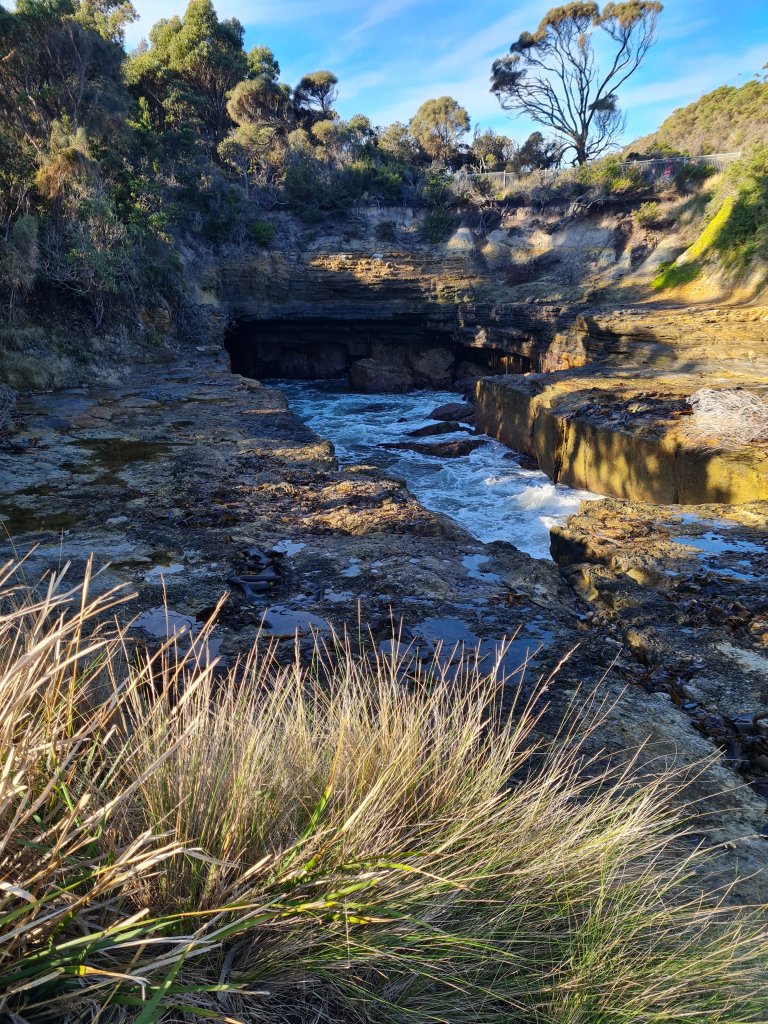
This is a blow hole, where the sea meets a rocking shoreline, and when there’s a big enough swell, crashes through to the other side.

On a quiet day, there’s nothing to see.

On a stormy day, when the waves are crashing into the base of the cliffs, water comes crashing through, and leaves the swirling, foamy water that can be seen above.

An interesting oddity, but nothing to fuel the imagination.

But…

What if, aside from the blowhole, there are caves, or there’s an underwater opening, and a channel leading up to it?

What if those caves were supposedly used by pirates to store treasure.

What if there is an underwater channel, and it is being used by small submarines to get to a base that has been hewn our of the rock?

What if no one knew until one night, a photographer, looking for caves to photograph and explore is investigating when people suddenly appear from nowhere?

The cinema of my dreams – Was it just another surveillance job – Episode 62

This story is now on the list to be finished so over the new few weeks, expect a new episode every few days.

The reason why new episodes have been sporadic, there are also other stories to write, and I’m not very good at prioritizing.

But, here we are, a few minutes opened up and it didn’t take long to get back into the groove.

Things are about to get complicated…


I was straight back to the scenario where O’Connell was expendable after performing his role, and that Anna was cleaning up before leaving, or she had already gone.

O’Connell had no doubt told her about the Peasdale address, and the fact he’d told me, and she might have assumed that there would be a window of opportunity to get some belongings at her flat.

Would she be there?

I switched off the light, backtracked to the door, and then went back outside into the passage.  Jennifer appeared beside me.

“O’Connell’s in there, dead.  Shot in the head.”

“Your friend?”

I’m not sure how she came up with the designation, ‘Your Friend’, but after the shortened version of my time with Josephine, and the fact we had a hotel room together, could have inspired such a thought.

I went to her flat and listened at the door.

Nothing.  There was no light showing under the door, so this could be a fruitless exercise.  The same operation as before, Jennifer waited outside, and I would go in.  It didn’t take as long to pick her lock.  Practise.

I opened the door, the gun in hand, and went slowly into the room.

There was a glow from what might be a night light coming from the end of the passage where the bedroom was.

She was in, or she forgot to turn off the light.

It was also not so dark in this flat, with several pilot lights casting red, blue or green hues over the furniture and floor.  It took a few seconds for my eyes to adjust.

“Drop the gun, Sam.”

Josephine, now just discernible across the room, a gun of her own aimed at me.

I shot her.  Without hesitation.

She was taken utterly by surprise, dropping her own weapon and spinning sideways into the arm of the chair, lost balance and crashed down to the floor.

Jennifer was in the door and had it closed behind her, and switched on the light.  We were both blinded for a second, enough time for Josephine to reach for her weapon which hadn’t fallen very far from her and for Jennifer to shoot her gun hand.

I remembered in that instant, that Jennifer scored the highest in gun training.  She would be ‘deadly’ Maury had said.

“OK, enough, what the hell was that for?” Jo said, stretching out on the floor and holding the hand that Jennifer shot.

“You played me, Anna.”

“Operation necessity.  I had to know what you were up to.  O’Connell said you were going to be a problem.”

“Did you kill him?”

“Me?  No.  He was dead when I got here.  We were here just to get our away bags.  How did you guess?”

“Lucky.  I was going to the other flat, but I figured it was too new for O’Connell to probably tell you.  He may have been planning to double-cross you too.  It seems the way of things in this op.  Where are the USBs?”

“What makes you think I have them?”

“The fact you just said them, when all we knew for sure was there was only one. I assume you have one each for safety’s sake, and coming back here, one or other of you was going to pull a double cross.”

“Until someone else got another idea.  Right now, you have a window of opportunity, Sam.  A big payday, for the two of you.”

“Tempting, but no.  I’m not in this for the money.”

“Then you’re a fool.  No one does anything except line their own pockets.  If you give the USBs to your chief, what do you think they’re going to do?  O’Connell got five million, the person who gave him the money will get ten at the very least.  They’re not interested in saving the world, Sam.”

She was probably right.

I looked at Jennifer.  “Are you in this for the money, Jennifer?”

“I just want my old life back.”

“Then keep an eye on the door, we’ll be having visitors very soon.  Anyone who comes through it using a key, disarm them.  Don’t hesitate.”

Back to Anna.  “Where are they?  Bear in mind I have no qualms about shooting you until you do tell me, so make it easy on yourself, because the next thing I shoot at is your knees.”

A moment’s thought, and a shot into the wall that just missed her head, decided the matter.

“In the backpack pocket.”

She nodded her head in the direction of the backpack sitting on the kitchen bench.

I went over and in the third pocket I opened there were two USBs in a plastic bag.

“What are you going to do with them?”

“Destroy them.  The world doesn’t need any more pandemics any time soon.”  I went over to the microwave oven and put them in and set it running.

“You’re only delaying the inevitable.”

“We’ve got company,” Jennifer said.

“You know what to do.”

© Charles Heath 2020-2023

365 Days of writing, 2026 – 57

Day 57 – Can your interests as a writer interest others

Does Writing About What You Think and Feel Capture Readers’ Attention?


Introduction: The Age‑Old Paradox

We live in an era of endless content—tweets, TikToks, newsletters, podcasts, and blog posts flood every corner of the internet. Yet, despite the sheer volume, the pieces that rise to the top often share a surprising commonality: they are personal.

But does baring your thoughts and emotions really interest others, or are we just indulging in a form of digital diary? In this post, I’ll dig into the psychology behind vulnerability, explore data from the world of content marketing, and give you concrete strategies to turn your inner monologue into magnetic copy that resonates with readers.


1. The Science of “Self‑Disclosure”

Psychological InsightWhat It Means for Writers
The Social Mirror Effect – People are wired to assess themselves against others’ experiences.Readers automatically compare your feelings to their own, creating instant relevance.
Neurochemical Reward – Sharing personal stories releases oxytocin, the “bonding hormone,” in both speaker and listener.Your authenticity can literally make readers feel more connected and trust you.
Reciprocity Principle – When someone reveals something personal, we feel compelled to respond in kind.A genuine confession can spark comments, shares, and even user‑generated content.

Bottom line: Human brains are primed to gravitate toward authentic, emotionally‑charged narratives. When you write about what you think or feel, you’re tapping into a built‑in neurological shortcut that draws people in.


2. When Vulnerability Becomes a Strategic Asset

2️⃣️⃣ Case Study: The “Storytelling” Blog that Grew 400% in Six Months

The Situation: A lifestyle blog that traditionally stuck to listicles (“10 Ways to Save Money”) saw stagnant traffic.

The Pivot: The editor started a weekly column called “My Messy Monday” where she wrote openly about procrastination, imposter syndrome, and even a failed attempt at a vegan diet.

The Results

MetricBeforeAfter (6 mo)
Avg. Time on Page1:453:20
Social Shares150/mo1,200/mo
Email Sign‑Ups200/mo1,050/mo
Comments per Post1278

Why it worked: Readers saw a real person behind the brand, felt validated in their own struggles, and were motivated to engage.

3️⃣ Data Point: The “Emotions‑Driven Content” Study (HubSpot, 2023)

  • 70% of consumers say they would purchase from a brand that “shares personal stories.”
  • 56% of B2B decision‑makers say they prefer vendors who “show their human side.”
  • 45% of top‑performing blog posts contain at least one personal anecdote.

These numbers confirm that authenticity isn’t just a feel‑good add‑on; it’s a measurable driver of engagement.


3. The Risks: Oversharing vs. Insightful Sharing

RiskWarning SignsMitigation
Oversharing – Dumping raw diary entries without context.Lengthy, rambling posts; limited take‑away.Keep a clear purpose: What should the reader learn or feel?
Self‑Centricity – Making the post only about you, no relevance to the audience.No mention of the reader’s problem or desire.Use the “you‑first” formula: I felt X → which means you might experience Y → here’s how to handle it.
Emotional Exhaustion – Constantly mining personal trauma can be draining.Writer feels drained, readers notice lack of enthusiasm.Schedule “self‑care” posts (e.g., reflections) vs. “value‑add” posts (e.g., actionable tips).

4. How to Turn Your Thoughts & Feelings into Reader‑Magnet Content

✅ Step 1 – Identify the Universal Core
Every personal story contains a universal thread (fear, ambition, love, failure). Ask yourself: What human need does this illustrate?

Example: “I’m terrified of public speaking.” → Universal core = fear of judgment.

✅ Step 2 – Add a Tangible Takeaway

Readers value both the emotional connection and a concrete benefit. Pair the feeling with a lesson, tip, or resource.

Format: “I felt ___ → Here’s the three‑step method that helped me ___.”

✅ Step 3 – Use the “Show, Don’t Tell” Technique

Instead of saying “I was anxious,” describe the physical sensations, the inner dialogue, or the environment.

Bad: “I was anxious.”
Good: “My heart raced, my palms slick, and the cursor blinked on an empty email draft.”

✅ Step 4 – Invite Interaction

End with a call‑to‑action that encourages readers to share their own experiences.

“What’s one moment you turned a fear into a win? Drop a comment below—I’ll reply to every story!”

✅ Step 5 – Edit for Balance

After the first draft, trim any sections that don’t serve the reader’s journey. Aim for a 70/30 split: 70% value, 30% personal narrative.


5. Sample Outline: A Mini‑Blog Post on “Why I Write About My Failures”

SectionPurpose
Hook – A vivid anecdote (e.g., “The night I missed my deadline and watched my inbox explode…”)Grab attention instantly
Feelings – Raw emotions (panic, embarrassment)Humanize the author
Universal Insight – “Everyone fears making a mistake that’s public.”Connect with reader
Lesson – 3 strategies you used to recover (communication, time‑boxing, post‑mortem)Provide actionable value
Reflection – How the failure reshaped your approach to workShow growth
CTA – “What’s the biggest professional mishap you’ve turned into a lesson?”Prompt engagement

6. Frequently Asked Questions

QuestionShort Answer
Will sharing personal opinions alienate readers?Only if the opinion is presented without empathy. Frame it as your perspective, invite dialogue, and respect differing views.
Can I write about feelings without being “emotional”?Absolutely. Pair emotional honesty with clear logic—explain why the feeling matters and how it influences actions.
Is it okay to disclose sensitive topics (e.g., mental health)?Yes, if you’re comfortable and it serves a purpose. Add a disclaimer and, when appropriate, provide resources for readers who might be triggered.

7. The Bottom Line

Writing about what you think and feel **does interest others—**but only when you turn that raw material into meaningful content. Authenticity is the magnet; relevance, structure, and actionable insight are the steel that holds it in place.

Your next post should be a two‑part equation:

(Personal Thought + Universal Feeling) × (Clear Takeaway + Invitation to Share) = Reader Engagement

Give it a try today. Write that honest paragraph you’ve been holding onto, shape it with the framework above, and watch the comments roll in.


Ready to Test the Theory?

If you’ve ever wondered whether your own musings could spark conversation, hit the Publish button now and share a snippet in the comments below. I’ll read each one and reply with a quick “read‑ability” score—just for fun!

Happy writing, and remember: your voice is the bridge that connects you to the world.

Searching for locations: Port Macquarie – Day 1 – Part 1

In keeping with the new travel plan, we are picking places in Australia, where we can exchange our timeshare week.

Some people consider timeshares as a waste of time and money, and the process of getting one is very painful, which it can be. 

Certainly, in some of the places we have gone, they tried hard to sell you another which can be a downside to staying, but the fact we get to stay in a three-bedroom fully kitted apartment of bungalow for $200 for the week far outweighs the small inconveniences.

Previously, we stayed at Coffs Harbour, but this time, we decided to stay at Port Macquarie.

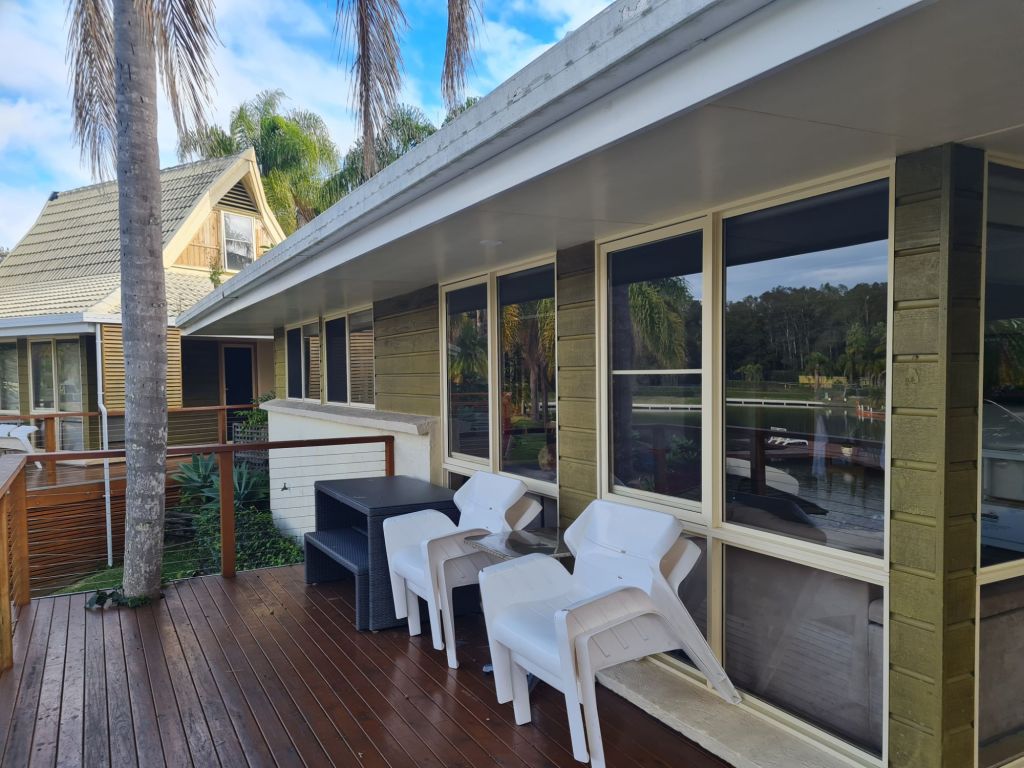
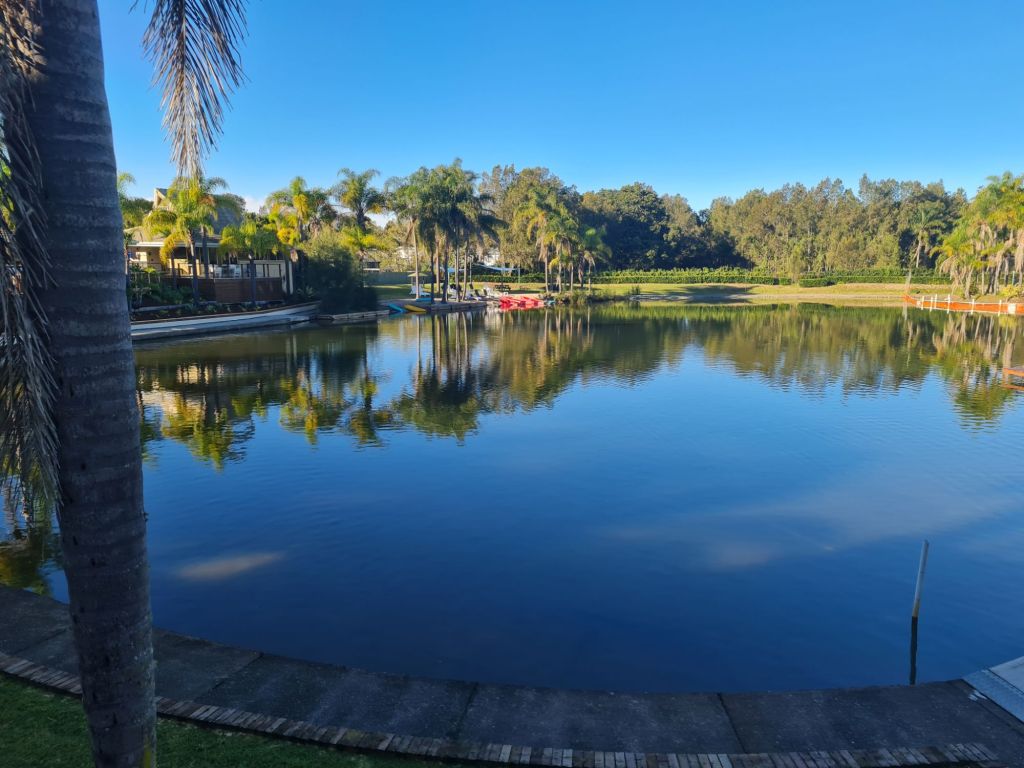
Our bungalow, as they are called, is on the edge of the lagoon, which has an island and has been stocked with fish, though I doubt we would be allowed to go fishing in it.

For the more adventurous, there are canoes.  I think I would prefer the BBQ, and watch the planes taking off and landing at the airport just on the other side of the tree line on the other side of the lagoon.

At least they are only smaller planes like the De Havilland Dash 8.

And, knowing the airport was only minutes away, we dropped in for a quick photo op and got the following