The cinema of my dreams – I never wanted to go to Africa – Episode 41

Our hero knows he’s in serious trouble.

The problem is, there are familiar faces and a question of who is a friend and who is foe made all the more difficult because of the enemy, if it was the enemy, simply because it didn’t look or sound or act like the enemy.

Now, it appears, his problems stem from another operation he participated in, and because of it, he has now been roped into what might be called a suicide mission.


“That was far to bloody easy.”  I heard Monroe’s voice come over the radio, not long after we left the camp.

“It was a bit easier than I thought.  But I did make it quite clear if we didn’t all leave in one piece we’d reduce his camp to rubble with everyone in it.”

“He knows the territory.  Something’s waiting for us out here.”

Something indeed.

Back at the camp, not only had the commander’s men search for the hidden weapons, and, when everyone checked, were still there, they had also taken off the crates with the film equipment.  I was not sure what the commander was intending to do with the equipment, but what disappointed me was the fact we hadn’t taken the time to rescue the rocket launcher.

Now the commander had it.

If he bothered to search the crates properly.  I suspect he was yet to do so.  What we had rescued and successfully hidden were the C4 explosives and detonators.  They might come in useful at the airstrip.

Just before we reached the fork in the road, where we would be turning left to head towards the airfield, and surprisingly had not run into any of the commander’s men, we stopped and let Monroe and Shurl out to make a sweep towards the airstrip, not too far away.

I also called up Mobley to see how he was.

The Colonel answered.  “Everything is under control now.”

I didn’t like the sound of that.  “What happened?”

“The kidnappers send out a team to intercept us on the way to the airstrip.  It wasn’t a stretch to imagine they would know what we were planning because they’d know we would not be retracing out steps to Uganda.  Got them before they got a shot off.  I suspect there are Government troops at the airstrip, it’s too important to let anything happen to rich foreigners coming to see their wildlife reserve.  There are several troop carriers, and we’ve seen a few men on the outskirts patrolling.  There’s several at the gate if you could call it that.”

“Is there a plane there?”

“As it happens there is.  A grand old DC3.  It’s not a charter plane, so I’m guessing it belongs to an overentitled American big game hunter or the photographic variety.  At least I’m hoping that’s the case.”

“What do you recommend?”

“Not to storm the field.  You’re going to have to find another means of getting here, preferably without any fanfare.”

My first choice was to go in and get out, with as little firefight as possible, particularly in case they started shooting at the plane.  If I was reading between the lines properly, the Colonel was telling me there were more troops there than we could handle quickly and quietly.

“Very good.  Can you get sight on just how many troops are there, and if you can see who’s in charge?”

“Will try.”

Monroe had been standing next to me during the exchange.

“Three in place, two more on the perimeter, if we can cover as many as possible, you might be able to take the rest from the inside.”

Secreting the weapons again, maybe.  It was a possibility, but going in with hidden weapons, and then found by the guards at the gate, who would be more efficient and careful searchers than the kidnappers, it would create hostility and itchy trigger fingers.

“No.  We have to find some way of letting them feel as though they have complete control of the situation.  They know we’re coming; the commander would have told them.”  The only reason why he was still the cat who ate the canary.  He might even have told them he had some men waiting as the first line of defense.

The airstrip commander would then know we were armed and relatively dangerous.

It was time for yet another dangerous gambit.

I picked up the radio.  “Colonel?”

A second later, “Sergeant?”

“Whatever happens in the next twenty minutes or so, just ignore it.  It’s not much of a plan, but it will get us onto the field.”

“And then?”

“Hopefully some divine intervention.”

Monroe looked skeptical.  “You’re going to just drive up to the gate and surrender?”

“Not exactly.  It won’t be fait accompli until we reach the terminal, or hanger, or whatever the commander has set up as headquarters.  They’ll have most of our weapons, yes.  But they won’t have all of us.”

“No.  But they’ll know we have a sniper, so one of you are going to have to allow yourself to be captured, just to ease their minds.”

“Leaving one of us and Mobley and the Ugandans.  Can we trust them?”

“I hope so, otherwise this could go badly.  But, today, I’m an optimist.  We’ve got this far.”

Trying to show more confidence in the plan that I had.  It was always a worry when you had to trust people you didn’t know.  That had been the problem the last time.  At least this time we had managed to get the hostages.  It was always going to be a problem getting them out.

Monroe gave me one of her special, you’re a fool, looks.  “I hope you know what you’re doing.”  She then nodded in Shurl’s direction and they disappeared into the bush again.

I gestured to Davies to come over.

“Did you find out what sort of plane it is?”

“Hopefully.  The Colonel tells men there’s a DC3 off the airstrip.  I assume you can fly one.”

She smiled, the first time since this operation had started.  “Sure can.  I spent three summers putting one back together.  My dad has a sort of airplane museum.  A DC3, a DC4, and a Lancaster, a very sorry looking Lancaster at that.  Shouldn’t be a problem.”

“Then try to not get shot.”

“Do my very best not to.”

Once again, it was time to go.  Going into the unknown was getting to be the norm, but hopefully, this would be the last time.  I didn’t consider it wise to advise the hostages, they had their own problems to worry about.


© Charles Heath 2020

“What Sets Us Apart”, a mystery with a twist

David is a man troubled by a past he is trying to forget.

Susan is rebelling against a life of privilege and an exasperated mother who holds a secret that will determine her daughter’s destiny.

They are two people brought together by chance. Or was it?

When Susan discovers her mother’s secret, she goes in search of the truth that has been hidden from her since the day she was born.

When David realizes her absence is more than the usual cooling off after another heated argument, he finds himself being slowly drawn back into his former world of deceit and lies.

Then, back with his former employers, David quickly discovers nothing is what it seems as he embarks on a dangerous mission to find Susan before he loses her forever.

Find the Kindle version on Amazon here:  http://amzn.to/2Eryfth

whatsetscover

The Cinema of My Dreams – It ended in Sorrento – Episode 63

Time to find a missing person

…

I turned slowly, wondering just what the hell her game was, when I realised it was not her, but another man holding a shotgun and looking very aggravated.

“What do you think you’re doing?”  At least that’s what I translated his Italian version into.

And I put my hands out where he could see them, noting at the same time that not only was Juliet missing, so was my gun.

“No Italian, I’m sorry.  Should you be brandishing that gun?”

As I turned, he moved back.  He correctly interpreted that I was going to disarm him, if /I could distract him with my not understanding Italian.  He was smarter than that.

“Move.”

He had a word of English.  The motioning of the gun in the direction of the back door was all he needed.  It was not the first time he’d approached an intruder.

I moved slowly towards the door, opened it, and went in.

The grisly scene of the woman on the floor with blood everywhere was confronting.  The man with the gun swore.

“What the hell have you done?”  Not an exact translation but near enough.  He was shocked.

And distracted.

But I think there was no threat from either of them.  Dicostini was almost in shock, kneeling beside the woman, trying to shake her awake.

The other man put down the gun and went over to check for any sign of life.  First a finger at her neck, then her writ, then hear if she was still breathing.

The gunman looked at Dicostini, “How did this happen?”

Dicostini shrugged.

“He hit her,” I said.  “I saw it happen through the window.  They were arguing.”

That’s when Dicostini saw me.  “Who are you?”

“A private investigator hired to find the real countess.  The thing is, I’m not overly worried about her, it’s the woman you took with her that’s your biggest problem?”

“What woman?”

“The countess’s sister.  You snatched the two of them if you didn’t, the clowns you employed to do the job did.  Her sister is the wife of the Chief of British Intelligence, and he’s about to unleash the wrath of the Gods on you.  I came here to do you a favour.  Tell me where they are, and I’ll walk away.  No questions asked, no interest in what happened here.  This is a one-time offer, and it’s about to expire.”

“What are you talking about?  This is the countess’s sister.”

It was certainly not Mrs Robdy, but now in the pale light shining on that lifeless face, I could see the resemblance to the countess.  It was definitely the woman I’d gone to the opera with, and later taken back to the hotel.

I could see how easily it would be to mistake the fake for the real countess … they must be twins.  The thing was, no one had picked up on it, and I thought our researchers were supposed to be the best.

“How is that possible?” I had to ask. 

“They were twins, separated at birth, and the mother was never told.  Angelina was sent north to stay with a distant aunt who treated her as her own child, and she was never told of her true mother.  I would not have known either unless my own mother told me of the deception on her deathbed.”

“So, what was this charade supposed to prove?”

“That she gets some recognition, and some of the Von Burkehardt spoils.  That cow that is the countess, she has no interest in anyone but herself.  Not for the traditions of this country, the people, the area, the vineyards, the wine, anything.”

“Where is she?”

“Dead, I hope. I told them I didn’t want to see her again.  They did not tell me they had taken anyone else with her.  It is done, over.  I have no idea where they were being held.  Now go.  I have enough to deal with.”

I had to agree with him.  How was he going to explain any of this?

I waited until I was some distance from the house, then pulled out my phone and dialled Anthony’s number.

He answered after the seventh ring.  I was worried he might not.

“Two urgent matters.  Tell Rodby to take the woman who’s with him into custody.  Don’t ask why, just do it, now.  Second, how quickly can you flood the Italian media with a missing person poster?”

“Quickly.  Why?”

“Get a wanted poster together with Mrs Rodby’s face on it and a finder’s fee of a million Euros, more if you like.  And put my phone number on it.  Mrs Rody still carries Rodby’s VC in her handbag for good luck still?”

“How do you know that?”

“I’m good at my job.  Do both those requests, then call me back in an hour or so.  It’s imperative you get the missing persons poster out as soon as possible but only to two people.  The lawyer fellow in Rome, I’ll send you his details if you don’t already have them, and to the Burkehardt’.  All of them.”

“Only those people?”

“Yes.  If I’m wrong, you’re going to find me a hiding spot somewhere in the middle of the north pole, preferably a mile or more under the ice.”

© Charles Heath 2023

The 2am Rant: Betwixt metaphorical houses

It’s like working in two offices, one uptown, and one downtown.

I have two blogs, this one, and another which is purely for writing, and generally, a lot of starts and not a lot of finishes. I get ideas, and it’s a place to store them, and give a few people some amusement at my, sometimes, improbable situations and far-fetched stories.

Here I try to be more serious.

I have the ceiling, the cinema of my dreams. Here anything is possible, like jumping from a helicopter about to explode, and survive, and get out of a sinking ship, like Houdini. Of course, there is always one time when it doesn’t work, and Houdini knows that all too well.

Over there, I have a series which I started here, long ago, where I take a photograph and write a story inspired by it. The interesting thing about that is I could probably use the same photograph over and over, and it would inspire a different tale.

I know, if I was running a writing class, everyone would see that photograph differently.

But what amazes me sometimes is the fact the story is not directly related to the theme. It got me thinking about how we view our experiences, and what triggers memories. I’ve discovered that it doesn’t necessarily happen by correlation, say, for instance, a memory of being in New York might be triggered by a visit to a cafe in Cloncurry.

I try to do one of these every day, but sometimes it’s hard work. Writing itself can be some days, particularly when the words are lurking there, behind that invisible, impenetrable, rock wall.

OK, so I’m stuck in the middle of writing a piece over there, and I’ve come over here to whinge.

But, enough. I’ll let you know what the cinema of my dreams is showing, later.

What I learned about writing – Using another author’s style

The Echo Chamber vs. The Trailblazer: Finding Your Authorial Voice

The blank page stares back, a vast expanse of possibility. As writers, we stand at a familiar crossroads, a debate as old as storytelling itself: should we meticulously study and emulate the voices of those who have come before us, or forge a path entirely our own? Should we lean into the comfortable and the familiar, or strive to create a new artistic vogue?

This isn’t just an abstract literary question; it’s a fundamental one that shapes our creative journey and ultimately, the impact of our words.

The Allure of the Echo: Why Copying Feels Right (Sometimes)

Let’s be honest, there’s a powerful temptation to mimic. When we encounter an author whose prose sings, whose characters leap off the page, or whose plot twists leave us breathless, it’s natural to want to bottle that magic.

  • Learning the Craft: Studying established authors is an invaluable apprenticeship. By dissecting their sentence structures, their pacing, and their use of metaphor, we learn the mechanics of compelling storytelling. It’s like a musician learning scales before composing symphonies.
  • Finding Your Feet: Especially when starting out, adopting a style that resonates can provide a scaffolding. It offers a sense of direction and a model to follow, reducing the paralysing fear of the unknown.
  • Connecting with an Audience: Sometimes, a familiar style taps into a pre-existing reader base. If you write in a genre with established conventions, a comfortable and predictable style can be a draw for those seeking that specific experience.

However, a life spent solely in the echo chamber risks becoming a pale imitation. The danger lies in mistaking appreciation for appropriation, and in becoming so enamoured with another’s voice that we silence our own.

The Audacity of the Original: Charting Your Own Course

Conversely, the call to create something new, to be the trailblazer, is equally potent. It’s the spirit of innovation, of pushing boundaries, of leaving an indelible mark that is uniquely yours.

  • Authenticity and Connection: A truly original voice resonates deeply because it’s born from genuine experience, observation, and perspective. Readers connect with authenticity; they feel a genuine spark when they encounter something that feels fresh and true to the author.
  • Innovation and Evolution: Literature, like any art form, needs to evolve. New voices bring new ideas, new ways of seeing the world, and new techniques that can invigorate the literary landscape. Think of the authors who fundamentally changed how we tell stories – they weren’t afraid to deviate from the norm.
  • Finding Your Unique Power: Your life experiences, your quirks, your individual way of processing the world – these are the raw materials of your unique voice. To suppress them in favour of someone else’s is to dim your own light.

The Sweet Spot: Where Familiarity Meets the New

So, where does this leave us? Is it an either/or proposition? Not necessarily. The most compelling authors often strike a delicate balance.

  • Influence, Not Imitation: We are all influenced by what we read. The key is to absorb those influences, to understand why they work, and then to filter them through your own unique lens. Your voice is not built in a vacuum; it’s a tapestry woven with the threads of your experiences and the inspiration you’ve drawn from others.
  • Mastering the Familiar to Subvert It: Sometimes, the most groundbreaking work arises from a deep understanding of existing conventions. By mastering the familiar, you gain the power to play with it, to bend it, and ultimately, to subvert it in exciting and unexpected ways.
  • Seeking Your “Why”: Before you choose your path, ask yourself: Why am I writing this? What is the core message or feeling I want to convey? Your “why” will often guide you towards the most authentic and impactful voice, whether it’s a whisper of the familiar or a roar of the new.

The Verdict: Cultivate Your Own Garden

Ultimately, the pursuit of a unique authorial voice is not about rejecting all external influence. It’s about engaging with those influences critically, learning from them, and then, crucially, integrating them into your own distinct expression.

Don’t be afraid to experiment. Don’t be afraid to stumble. Don’t be afraid to sound a little like yourself, even if that self is still under construction. The world of literature is rich because of its diversity. It needs your echoes, yes, but more importantly, it thirsts for your original song. So, embrace the challenge, cultivate your own garden of words, and let your unique voice bloom.

365 Days of writing, 2026 – 149

Day 149 – What really is writer’s block

…

The Myth of the Blank Page: Why “Writer’s Block” Is More Than Just a Stuck Pen

Every writer knows the sensation: you stare at the cursor, blinking rhythmically against a stark white screen, and your brain feels like a locked door. You can’t find the key. You call it “writer’s block.” You blame it on the caffeine crash, the deadline pressure, or a lack of inspiration.

But have you ever stopped to wonder if the term itself is actually to blame?

If you trace the history of those two words back to their source, you’ll find that “writer’s block” isn’t a medical condition or an inevitable creative cycle. It’s a diagnosis—and one that carries a heavy, somewhat dark, psychological weight.

The Invention of a Diagnosis

For most of literary history, writers simply struggled. They had “dry spells,” they “hit a wall,” or they were “out of ideas.” Then, in 1947, a psychoanalyst named Edmund Bergler coined the term “writer’s block.”

To understand Bergler, you have to understand the era. He was working in the shadow of Sigmund Freud, and he viewed the creative process through a very specific, psychoanalytic lens. Bergler didn’t think you were stuck because you were tired or uninspired. He believed that the “block” was actually an unconscious act of self-sabotage.

According to Bergler, writers were suffering from a deep-seated, masochistic drive. He argued that the writer unconsciously sabotaged their own work to enjoy the “self-constructed defeat” of failing to write. In his view, the agony of not being able to finish a manuscript wasn’t a struggle against a narrative problem; it was a psychological compulsion to suffer.

Is This Really About Word Counts?

If we accept Bergler’s definition, then “writer’s block” stops being a productivity issue and starts being an internal conflict.

This is where things get interesting. If you’re struggling to reach your daily word count, you usually look for practical solutions: try the Pomodoro technique, change your environment, or outline your chapters more clearly. But if the problem is actually a subconscious desire to sabotage yourself, those practical fixes will never work.

By framing our struggles as “writer’s block,” we’ve inherited a diagnosis that suggests the problem lies deep within our psyche, rather than on the page. It turns a professional hurdle into a personal failing.

Moving Beyond the “Block”

Maybe it’s time we retire the phrasing. When we tell ourselves we have “writer’s block,” we are giving ourselves permission to stop. We are turning a temporary lapse in flow into an identity—a “blocked” writer.

Perhaps the next time you feel stuck, you shouldn’t ask, “Why am I sabotaging myself?” or “How do I overcome this block?” Instead, try asking:

  • Is this section actually necessary for the story? (Maybe you’re stuck because the narrative is heading in the wrong direction.)
  • Am I exhausted or burnt out? (Sometimes, the tank is just empty.)
  • Is my goal too big? (Breaking a chapter into 100-word segments is far less daunting than “finishing the book.”)

Writer’s block might be a useful shorthand for the frustration of the craft, but it’s worth remembering that it was invented by a man who looked for internal demons behind every closed door. You don’t have to be a masochist to struggle with a sentence. Sometimes, a hard day of writing is just a hard day of writing—no analysis required.

Next time the words won’t come, don’t blame your subconscious. Just close the laptop, take a walk, and remember: you aren’t “blocked.” You’re just in the middle of the work.

…

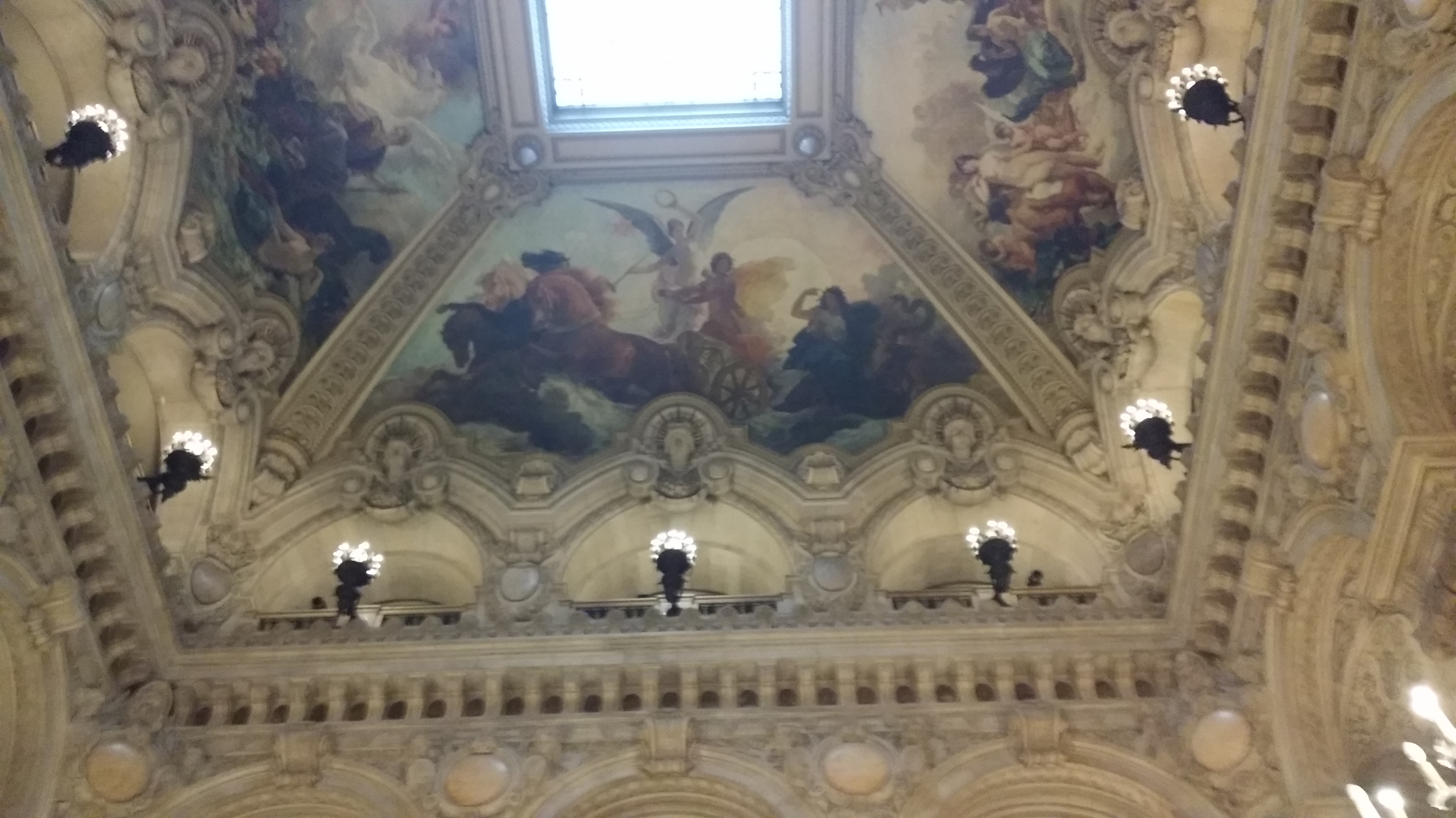
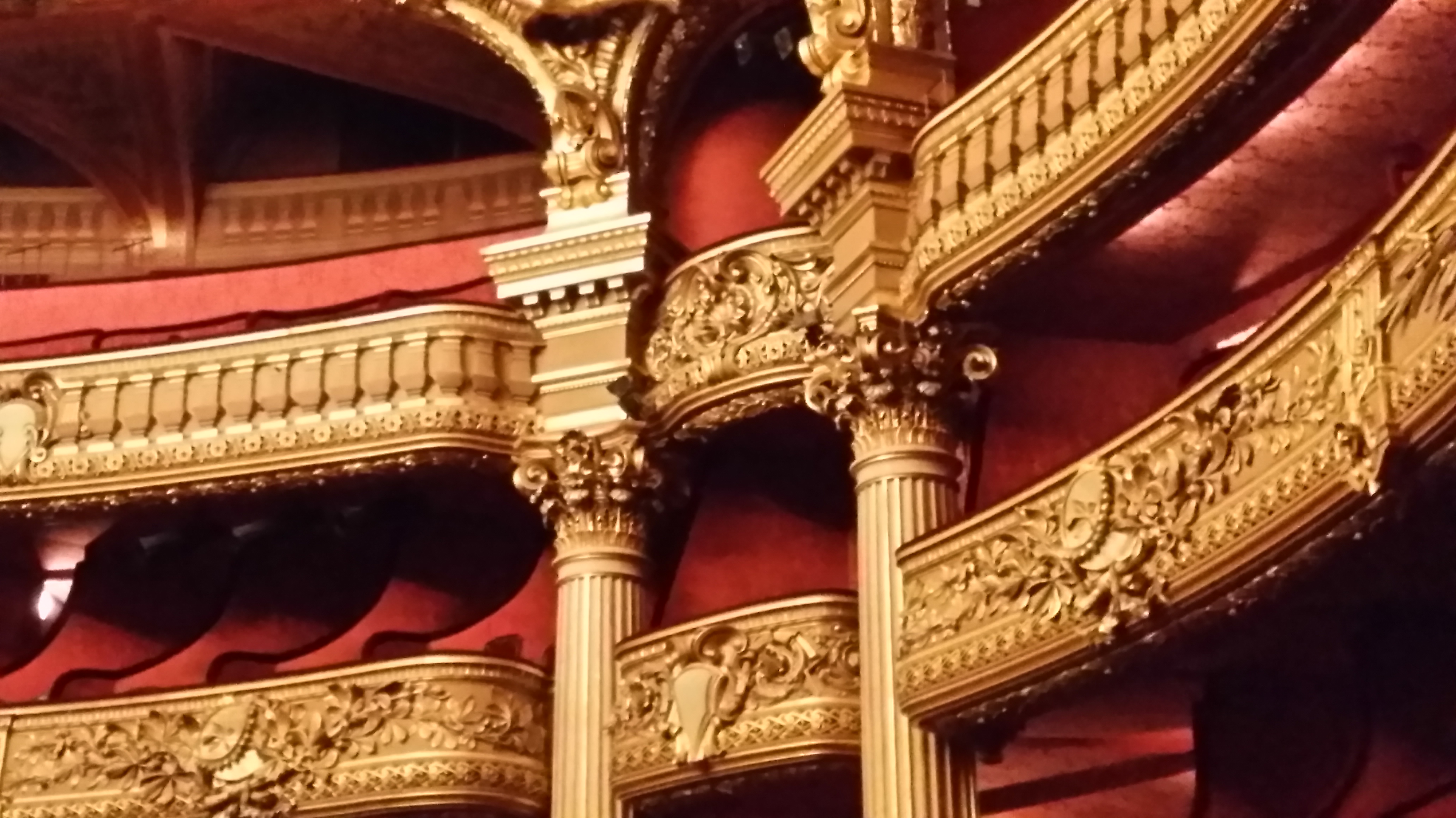
Searching for locations: The Opera House, Paris, France

This was one of the more interesting experiences for the grandchildren as they were, as all young girls are, interested in ballet.

We thoroughly enjoyed our visit which included some time watching ballet practice.

I could not convince anyone to take the elevator back down to the ground floor as it was suspected we might be ‘attacked’ by the ‘phantom’.  Certainly, the elevator was very old and I think at the time it was being repaired.

20140108_124100

Part of the Grand Staircase in Palais Garnier Opera de Paris

20140108_125843

The ceiling above the main staircase.  The ceiling above the staircase was painted by Isidore Pils to depict The Triumph of Apollo, The Enchantment of Music Deploying its Charms, Minerva Fighting Brutality Watched by the Gods of Olympus, and The City of Paris Receiving the Plan of the New Opéra.

20140108_123338


The ceiling of Chagall at the Palais Garnier

On 23 September 1964, the new ceiling of the Opéra Garnier was inaugurated with great pomp.  It was painted by Marc Chagall at the request of André Malraux

20140108_125807

Amphitheatre and Orchestra Pit entrance

20140108_122243

Interior, and doorways to boxes

20140108_123500

Box seats in the auditorium

20140108_123512

Ornate ceilings and columns

20140108_123332

Seating inside the auditorium

20140108_125603

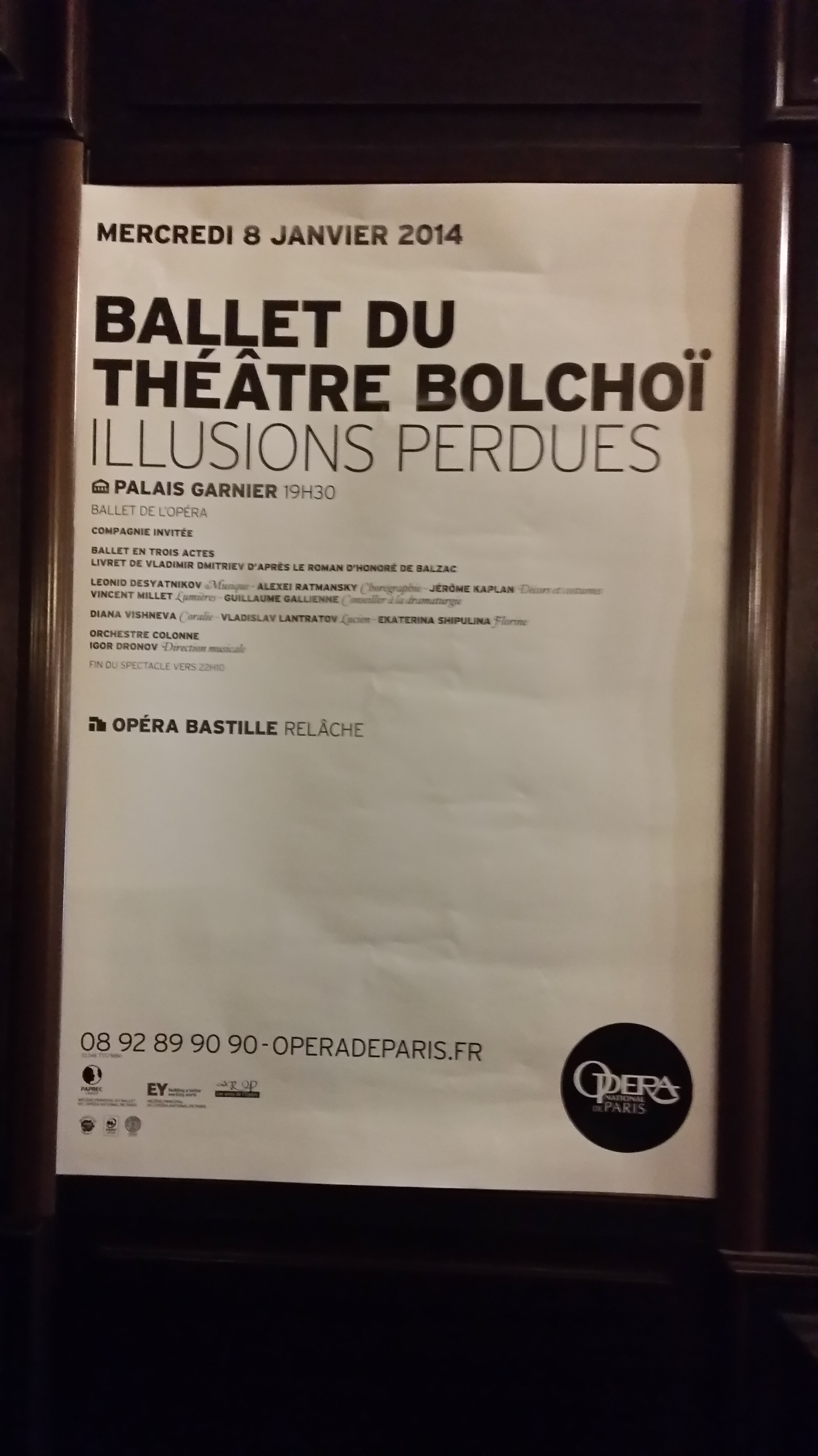
The day we were leaving Paris, was the first night of the Bolshoi Ballet.  My two granddaughters were greatly disappointed at missing out on the opportunity of a lifetime, to see the Bolshoi Ballet at the Paris Opera House.

20140108_123359

But we did get to see the principals practicing.

In a word: Order

I gave the order to my assistant to order the supplies we needed in order to maintain stock levels.

Oh, yes, the word order is one of my favourites, because it can confuse the hell out of many people in its simplicity and yet complexity.

I gave the order, it’s what happens in the armed forces, and a lot of other places, but mostly we would associate it with organisations that have hierarchical authority.

The military, for one, cut orders, the means of sending one of its minions to another place, or to do a specific job.

Order supplies, well, just about anyone can order something from somewhere, usually on the internet, and sometimes require or are given an order number so it can be tracked.

In order to maintain, in order to get what I want, in order to get elected, this is just another way of using the word, with the aim of achieving something, though I’m sure there’s probably a better way of expressing these sentiments.

Law and order, well, doesn’t everyone want this, and doesn’t it always turn up in an election campaign, and seems to be the first thing sacrificed after the election.  The thing is, no one can guarantee law and order.

There is the law and there is administering it.  There is no order that comes with it, we just hope that order is maintained, and deplore the situation when it isn’t.

Perhaps in order to maintain law and order, we might need more police.

Then, of course, there is alphabetical order, and numerical order, where things can be designated from A to Z, like this challenge, or from 1 to 10, or more.  We can sort words alphabetically, numbers numerically and data items by keys or an index.

This is naturally called a sort order.

Then there is my car, or bike, or washing machine, or mixmaster.  They are currently in good working order, though that might not last.

And lastly, in deference to all those out there who are thinking of becoming dictators, it’s always possible, one day, there will be a new world order.  They might actually be in their own particular order, whose intellect might be (?) of the highest order.

Surely that is one order too many.

The story behind the story: A Case of Working With the Jones Brothers

To write a private detective serial has always been one of the items at the top of my to-do list, though trying to write novels and a serial, as well as a blog, and maintain a social media presence, well, you get the idea.

But I made it happen, from a bunch of episodes I wrote a long, long time ago, used these to start it, and then continued on, then as now, never having much of an idea where it was going to end up, or how long it would take to tell the story.

That, I think, is the joy of ad hoc writing, even you, as the author, have as much of an idea of where it’s going as the reader does.

It’s basically been in the mill since 1990, and although I finished it last year, it looks like the beginning to end will have taken exactly 30 years.  Had you asked me 30 years ago if I’d ever get it finished, the answer would be maybe?

My private detective, Harry Walthenson

I’d like to say he’s from that great literary mould of Sam Spade, or Mickey Spillane, or Philip Marlowe, but he’s not.

But I’ve watched Humphrey Bogart play Sam Spade with much interest, and modelled Harry and his office on it.  Similarly, I’ve watched Robert Micham play Phillip Marlow with great panache, if not detachment, and added a bit of him to the mix.

Other characters come into play, and all of them, no matter what period they’re from, always seem larger than life.  I’m not above stealing a little of Mary Astor, Peter Lorre or Sidney Greenstreet, to breathe life into beguiling women and dangerous men alike.

Then there’s the title, like

The Case of the Unintentional Mummy – this has so many meanings in so many contexts, though I imagine that back in Hollywood in the ’30s and ’40s, this would be excellent fodder for Abbott and Costello

The Case of the Three-Legged Dog – Yes, I suspect there may be a few real-life dogs with three legs, but this plot would involve something more sinister.  And if made out of plaster, yes, they’re always something else inside.

But for mine, to begin with, it was “The Case of the …”, because I had no idea what the case was going to be about, well, I did, but not specifically.

Then I liked the idea of calling it “The Case of the Brothers’ Revenge” because I began to have a notion there was a brother no one knew about, but that’s stuff for other stories, not mine, so then it went the way of the others.

Now it’s called ‘A Case of Working With the Jones Brothers’, finished the first three drafts, and I am at the editor for the last reading.

I have high hopes of publishing it in mid-2026.  It even has a cover.

PIWalthJones1

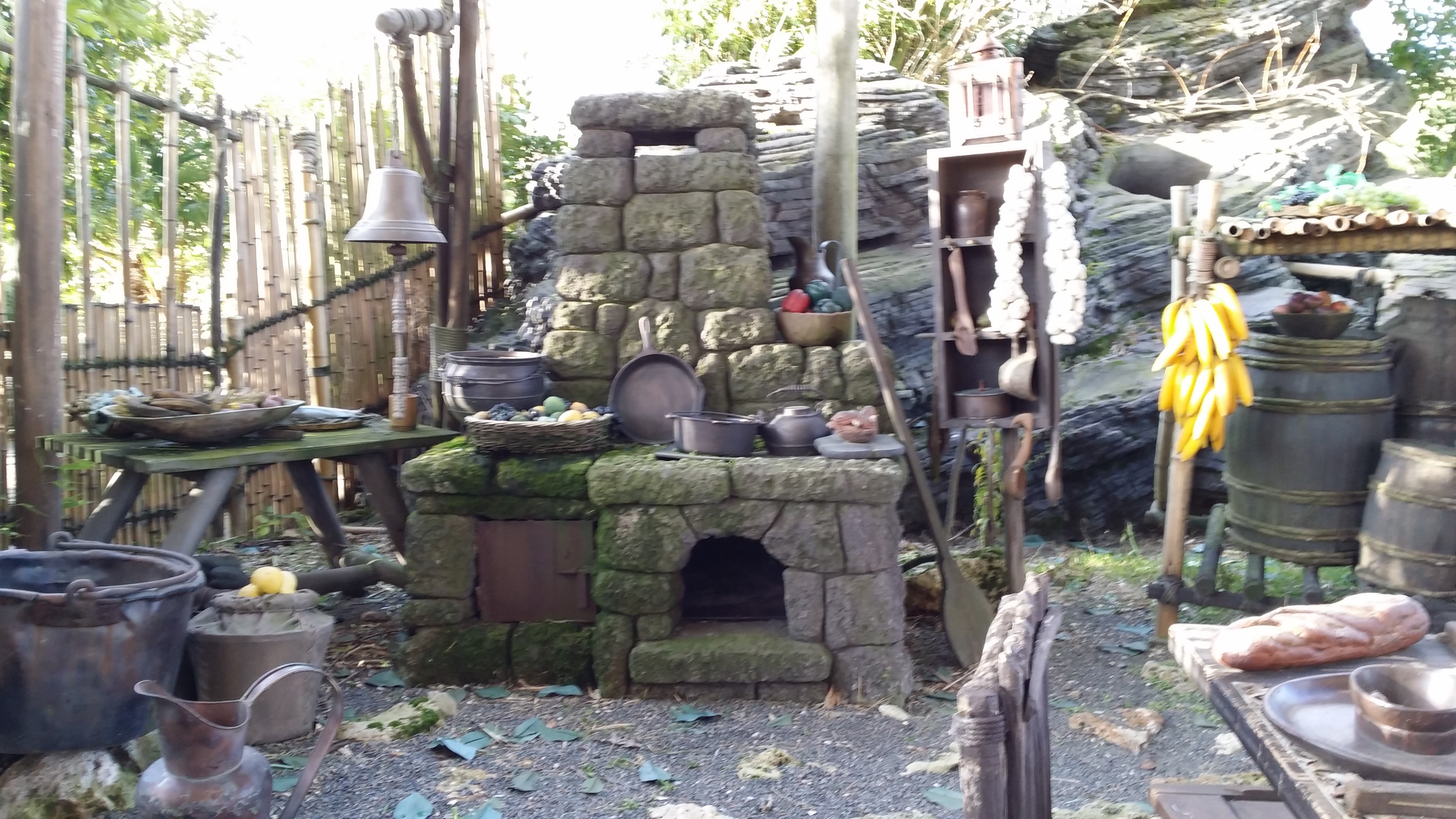
Searching For Locations: Disneyland, Paris, France

Whilst I found this tree house to be interesting, it seems to be far from practical because there was little to keep the wind and rain out, though I suppose, in the book, that might not be such a problem.

Be that as it may, and if it was relatively waterproof, then the furnishings would probably survive, and one had to also assume that much of the furnishings, such as the writing desk below, would have washed up as debris from the shipwreck.

20140104_141622 (1)

The stove and oven would have to be built by hand, and it is ‘remarkable’ such well-fitting stones were available.  It doesn’t look like it’s been used for a while judging by the amount of gree on it.  Perhaps it is not in a waterproof area.

20140104_141556 (2)

The dining table and the shelf in the background have that rough-hewn look about them

20140104_141553

A bit of man-made equipment here for drawing water from the stream

20140104_141703 (1)

And though not made in the era of electricity, there is an opportunity to use the water wheel to do more than it appears to be doing

20140104_141539 (2)

And tucked away in a corner the all-important study where one can read, or play a little music on the organ.  One could say, for the period, one had all the comforts of home.

20140104_141800 (2)