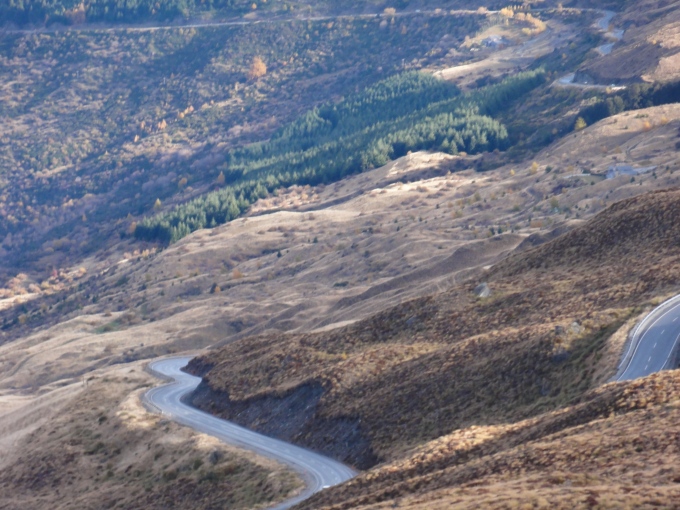
50 photographs, 50 stories, of which there is one of the 50 below.
They all start with –
A picture paints … well, as many words as you like. For instance:
And the story:
…
It was once said that a desperate man has everything to lose.
The man I was chasing was desperate, but I, on the other hand, was more desperate to catch him.
He’d left a trail of dead people from one end of the island to the other.
The team had put in a lot of effort to locate him, and now his capture was imminent. We were following the car he was in, from a discreet distance, and, at the appropriate time, we would catch up, pull him over, and make the arrest.
There was nowhere for him to go.
The road led to a dead-end, and the only way off the mountain was back down the road we were now on. Which was why I was somewhat surprised when we discovered where he was.
Where was he going?
“Damn,” I heard Alan mutter. He was driving, being careful not to get too close, but not far enough away to lose sight of him.
“What?”
“I think he’s made us.”
“How?”
“Dumb bad luck, I’m guessing. Or he expected we’d follow him up the mountain. He’s just sped up.”
“How far away?”
“A half-mile. We should see him higher up when we turn the next corner.”
It took an eternity to get there, and when we did, Alan was right, only he was further on than we thought.”
“Step on it. Let’s catch him up before he gets to the top.”
Easy to say, not so easy to do. The road was treacherous, and in places, just gravel, and there were no guard rails to stop a three-thousand-foot fall down the mountainside.
Good thing then, I had the foresight to have three agents on the hill for just such a scenario.
Ten minutes later, we were in sight of the car, still moving quickly, but we were going slightly faster. We’d catch up just short of the summit car park.
Or so we thought.
Coming quickly around another corner, we almost slammed into the car we’d been chasing.
“What the hell…” Aland muttered.
I was out of the car and over to see if he was in it, but I knew that it was only a slender possibility. The car was empty, and no indication of where he had gone.
Certainly not up the road. It was relatively straightforward for the next mile, at which we would have reached the summit. Up the mountainside from here, or down.
I looked up. Nothing.
Alan yelled out, “He’s not going down, not that I can see, but if he did, there’s hardly a foothold and that’s a long fall.”
Then where did he go?
Then a man looking very much like our quarry came out from behind a rock embedded just a short distance up the hill.
“Sorry,” he said quite calmly. “Had to go if you know what I mean.”
I’d lost him.
It was as simple as that.
I had been led a merry chase up the hill, and all the time he was getting away in a different direction.
I’d fallen for the oldest trick in the book, letting my desperation blind me to the disguise that anyone else would see through in an instant.
It was a lonely sight, looking down that road, knowing that I had to go all that way down again, only this time, without having to throw caution to the wind.
This story is now on the list to be finished so over the new few weeks, expect a new episode every few days.
The reason why new episodes have been sporadic, there are also other stories to write, and I’m not very good at prioritizing.
But, here we are, a few minutes opened up and it didn’t take long to get back into the groove.
Things are about to get complicated…
Once out of the elevator I could see another security desk halfway up the corridor. There were no doors before the desk, only after, so my destination was past the desk.
I pulled out my card in readiness, and as I approached, a woman came out of a door behind the desk and joined the security guard.
She spoke to the guard, then looked at me. “My name is Joanne, I have been assigned to help you, and in accordance with security measures in place on the floor, I will be accompanying you. One of the conditions of access is to not be anywhere on your own.”
“Except in the restroom, I hope.”
A momentary frown, “Common sense applies, you know.”
OK, try not to be flippant.
She handed me a form, I read it, ticked several boxes, and signed it. I gave the guard my card and he scanned it. Logging my movements, was not unexpected. Having a shadow was.
But, there was nothing I was going to look at, that I didn’t want anyone not to know about.
“Good,”: she said when I handed the form back. She in turn passed it to the guard, then said, “Follow me.”
A gate opened to let me through, then jolted shit behind me. Either the mechanism was broken, or the thud was just to remind people going through it, it was not a toy.
We went three doors up the corridor where she stopped, opened the door, and ushered me in.
It was a reasonable-sized room with a desk, a computer with three screens, and two chairs, one I guess for me, and one for her.
We sat.
I thought I’d ask a couple of questions first. “Do you always look after incoming researchers?”
“Yes.”
“And when there is none?”
“I work in with the research team, creating or updating breeding papers for agents in the field.”
“Do agents normally come in to look stuff up?”
“No. Generally, they request it through secure channels.”
“Secure channels?”
“Usually, one of our consulates or embassies scattered all over the world.”
Good to remember.
“You’re just going to sit there?”
“Yes.”
I shrugged. So be it.
I logged in and typed in Severin’s original name David Westcott.
The search engine brought back over a million hits, the first dozen relating to a violinist who seemed to be having a relationship and drug problems.
To narrow that search down, I added ‘Military service” in the hope that he may have been in the military before joining the intelligence services.
He was. I did the same for Bernie Salvin and found the two of them had served roughly at the same time, in the same places, and were among the last people out in 2014.
When I added “Intelligence” to the search, the computer sent me on a side mission, bringing up documents relating to both men’s service in various branches of the intelligence services, for 5 years, after which it seemed they had just up and left, their service sheet marked ‘retired’, which could have meant anything, but I think it was a euphemism for ‘dead’.
I thought about asking my shadow, but that would lead to too many other questions that I didn’t want to answer. As it was, I could see she was very interested in the two names I’d just searched on.
It explained how both men were so knowledgeable about the operations and facilities. A quick search on the training facility we had used showed it had been closed, and abandoned, 6 years before. I’d always thought it had that abandoned feel about it, and we were using it for the atmosphere value.
Then came searches on Severin and Maury and Arche Laboratories, and that too brought up the Security profiles of both men, but their prior history had been manufactured, though no doubt based on their real experience, being in the military in Afghanistan, and in a branch of the intelligence services, though not mentioning the specifics.
There was information on several security breaches and the computer systems being hacked reportedly by a foreign country, but nothing had been taken, a story perhaps to allay the fears of people who might think dangerous material might have fallen into the wrong hands.
At the very least, it was reported the facility would be shut down, due to its age and everyone being reassigned to a new more secure facility. The fact Severin and Maury didn’t transfer told me they had either been caught, or they ad jumped before the fingers of accusation were pointed at them. Either way, both had disappeared off the face of the earth.
Until I and others have become their unwitting recruits.
Everything O’Connell said was true, and it was all there, so Dobbin was as well versed on the pair as I now was. And, now I had some background before I met Severin later in the day.
When Joanne finally plucked up the courage to ask me about my searches, I told her I had been reading up on a lot of old laboratories that used to contract government research and had narrowed the place where the information came from to several candidates and struck it luck the first search. Arche Laboratories.
Previously I had got a list of the security staff from half a dozen labs that had closed unexpectedly, looking for possible matches to Severin and Maury, because I thought they would have a military and intelligence background, but the two I’d used, didn’t seem to fir the profile. Their photographs, those that were posted for Arche Laboratories looked nothing like the Severin and Maury today, but I’d expected that.
She didn’t need to know that and looked satisfied with my answers.
Revenge is a dish best served cold – or preferably so when everything goes right
Of course, it rarely does, as Alistair, Zoe’s handler, discovers to his peril. Enter a wildcard, John, and whatever Alistair’s plan for dealing with Zoe was dies with him.
It leaves Zoe in completely unfamiliar territory.
…
John’s idyllic romance with a woman who is utterly out of his comfort zone is on borrowed time. She is still trying to reconcile her ambivalence after being so indifferent for so long.
They agree to take a break, during which she disappears. John, thinking she has left without saying goodbye, refuses to accept the inevitable and calls on an old friend for help in finding her.
After the mayhem and being briefly reunited, she recognises an inevitable truth: there is a price to pay for taking out Alistair; she must leave and find them first, and he would be wise to keep a low profile.
But keeping a low profile just isn’t possible, and enlisting another friend, a private detective and his sister, a deft computer hacker, they track her to the border between Austria and Hungary.
What John doesn’t realise is that another enemy is tracking him to find her too. It could have been a grand tour of Europe. Instead, it becomes a race against time before enemies old and new converge for what will be an inevitable showdown.
In just about every book about how to be a good writer, there seems to be a pile of problems that at some time in a writer’s life will need to be overcome.
Writer’s block
Don’t have it. The ideas pour out of my head like water over a waterfall
Don’t use abstract descriptions in your writing
Damn, I do that all the time
But, back to writer’s block, is that where you write 37 chapters and there the story stops?
Oops.
Plan your book and have an outline so you can write it from start to finish
Plan? What Plan?
That only happens when I’ve written the book and prior to the first edit, I make a precise of each chapter to make sure of continuity.
Plan your characters and give them a timeline
Oh God is that why characters’ names are often changing as the story progresses.
Believe it or not, I’m working on this issue.
Manage your time.
Still can’t get it right.
Write at least a thousand words a day, no matter if it’s rubbish or not.
Does that include writing for social media?
Apparently not.
At least this is one of the requirements I follow religiously. Sometimes it’s a lot more words but a least some writing finished up either on paper in on the word processor.
Now it’s time to write those thousand words.
Look, there, I’ve at least got one part of time management under control.
The End… Or Just the Beginning? Why “The End” of Your Novel Is Never Truly the End
You’ve done it. Stared down the endless white expanse of the page, wrestled with characters who refused to cooperate, and battled plot holes that threatened to swallow your narrative whole. After months, maybe even years, of dedication, you finally type those two glorious words: “The End.”
For a fleeting moment, there’s a sense of triumphant finality. The story is complete. The world you’ve meticulously crafted is now bound between covers, waiting to be discovered. You might even allow yourself a daydream or two – the bestseller lists, the glowing reviews, the Hollywood deal for that blockbuster movie you’ve always envisioned.
But if you’re an author, you know deep down that “The End”… is never quite the end, is it?
This isn’t about the gruelling process of revisions, the agonising search for an agent, or the nail-biting wait for a publisher’s acceptance. Those are the necessary hurdles after you’ve reached that initial conclusion. This is about something more profound, a shift in perspective that redefines what “finished” truly means.
“The End” is a Birth Certificate, Not a Tombstone.
When you type those final words, you’re not burying your story. You’re giving it life. You’ve breathed it into existence, and now it has the potential to live, to breathe, to impact lives beyond your own.
Think about it:
The Reader’s Journey Begins: Your “End” is the starting point for countless readers. They will embark on their own journey through your words, interpreting your characters, feeling your emotions, and drawing their own conclusions. The story truly comes alive in their minds, a unique experience for each individual.
The Sequel Whispers: Even if you had no intention of writing a sequel, the characters you’ve created, the world you’ve built, can linger. They might start whispering ideas for new adventures, new conflicts, new possibilities. The “End” of one chapter often feels like the fertile ground for another.
The Adaptations Unfold: As you so accurately predicted, that blockbuster movie deal might be on the horizon. This new phase of your story, translated into a visual medium, brings a whole new set of challenges and triumphs. The characters you envisioned will be embodied, your dialogue spoken aloud, your settings brought to life on screen. It’s the same story, yet utterly new.
The Author’s Evolution: “The End” also marks a significant point in your own evolution as a writer. You’ve learned, you’ve grown, you’ve conquered. The skills honed during this project will inevitably inform your next. The very act of finishing has changed you, making you a more capable storyteller.
The Legacy Takes Root: A completed novel, especially one with potential, becomes a part of a larger legacy. It can spark conversations, influence other artists, become a touchstone for readers. That “End” begins a quiet, yet powerful, ripple effect in the world.
So, the next time you type “The End,” take a moment. Bask in the satisfaction, yes. Dream of those bestseller lists and movie deals. But also understand that you haven’t closed a door; you’ve opened a universe. Your novel’s journey is just beginning, and the true “end” is a concept that perhaps, as storytellers, we’ll never truly reach.
What does “The End” mean to you as a writer? Share your thoughts in the comments below!
Writing a compelling book or television series requires a complex infrastructure to keep audiences engaged over multiple installments. Beyond generational lineages, world-building locations, historical integration, and timelines, several critical structural elements are essential for crafting a successful series:
1. The Overarching Narrative Arc (The Macro-Plot)
While individual books or episodes have their own self-contained conflicts, a series requires a macro-plot that spans the entire run.
The “Uber-Conflict”: This is the ultimate threat, mystery, or goal that won’t be resolved until the final installment (e.g., defeating a Dark Lord, solving a multi-year conspiracy, or reaching a distant destination).
The Breadcrumb Trail: Each installment must advance this macro-plot slightly, offering clues, minor victories, or shifts in power so the audience feels a continuous sense of momentum.
2. Series-Length Character Arcs
Characters in a standalone story change over 300 pages; characters in a series must evolve sustainably over thousands of pages.
Slower Burn Development: Flaws, trauma, and growth must be rationed. A character shouldn’t overcome their core emotional wound in book one, or they will have nowhere to go in book two.
The Cost of Consistency: Writers must balance keeping characters recognizable (their core traits, humor, or skills) with allowing them to be permanently altered by the events of each previous installment.
3. Structural Formula & Narrative Pacing
A series needs a reliable structural blueprint so the audience knows what kind of experience to expect.
Procedural vs. Serialised: You must decide if your series is episodic (a “monster-of-the-week” or “case-of-the-book” format where status quo is largely maintained) or serialised (one continuous, unfolding story where you cannot skip an instalment).
The 70/30 Rule: A common pacing strategy where roughly 70% of an individual book focuses on resolving the immediate, self-contained plot, while 30% dedicatedly services the ongoing series-wide arcs and subplots.
4. The Integration of Subplots (A-Plot, B-Plot, C-Plot)
To keep a long-form story from feeling stagnant, a series relies heavily on a rotating matrix of subplots.
The A-Plot: The immediate conflict of the current book (e.g., catching this killer).
The B-Plot: Ongoing character relationships, personal dramas, or professional rivalries that evolve slowly across multiple books.
The C-Plot: Subtle seeds planted for future books—an unexplained magical anomaly, a background political shift, or a minor character who will become the main antagonist three books later.
5. Managing Information Architecture
In a series, how you ration and recall information is just as important as the plot itself.
The Exposition Balance: Every subsequent installment must gracefully remind returning readers of past events without alienating or boring them, while simultaneously catching up new readers.
Payoff Trajectory: You must master the art of the setup and payoff across vast distances. A passing comment in book one might be the twist ending of book four.
6. Theme and Motifs
A series is often unified by a central thematic question that is explored from multiple angles through different characters and situations across the installments.
Thematic Evolution: If book one explores the corrupting nature of absolute power, book two might explore the burden of rebuilding after power falls, and book three might look at the compromises required to maintain peace. The setting and characters stay the same, but the thematic lens shifts.
One‑Day Stopover in Oslo? Make It Unforgettable With a Visit to the Oslo Opera House
If you’ve only got 24 hours in Norway’s capital, there’s one spot that captures the city’s spirit, history, and modern vibe in a single, unforgettable experience – the Oslo Opera House.
Why the Opera House Is the Perfect One‑Stop Choice
What you’ll love
How it ties into Oslo’s identity
Iconic Architecture – A marble‑white “iceberg” rising from the fjord, designed by Snøhetta.
It’s a bold statement of Norway’s design excellence and its close relationship with the sea.
Free Roof Walk – Climb to the roof for panoramic views of the fjord and city skyline.
Offers a bird’s‑eye glimpse of Oslo’s blend of urban life and natural beauty.
Cultural Hub – Home to opera, ballet, concerts, and cutting‑edge performances.
Shows Oslo’s vibrant arts scene, from classic works to avant‑garde Norwegian productions.
Central Location – Just a 10‑minute walk from the bustling waterfront Aker Brygge and the historic Gamla Oslo.
Lets you easily combine the visit with a quick bite, a coffee, or a stroll through the old town.
In short, the Oslo Opera House packs art, architecture, history, and stunning scenery into a compact, easily reachable venue—exactly what a one‑day traveller needs.
How to Make the Most of Your Visit (Even If You’re On a Tight Schedule)
1. Get There in 5 Minutes
From Oslo Central Station (Oslo S): Hop on the Tram 12 (direction Kongens gate). It drops you off right at the Opera House after a single stop—about 3 minutes.
From the Airport (Gardermoen): The Flytoget high‑speed train to Oslo S, then the same tram. Total travel ≈ 25 minutes.
2. Time‑Smart Itinerary (≈ 4 Hours)
Time
Activity
0:00 – 0:20
Enter & Explore the Lobby – Admire the sweeping marble staircases and the giant “Seahorse” sculpture. Grab a quick coffee at the on‑site café (the “Operabutikken” serves great espresso).
0:20 – 1:30
Roof Walk – Follow the sloping ramps to the top. Walk the entire 500‑meter “runway” for three distinct viewpoints: the Oslofjord, the city’s rooftops, and the surrounding islands. Snap photos at sunrise or golden hour for epic lighting.
1:30 – 2:00
Quick Cultural Bite – Pop into the Kunstner restaurant on the ground floor for a light Norwegian snack (smoked salmon on rye, or a mini “lefse”).
2:00 – 3:30
Mini‑Performance or Guided Tour – Check the day‑of schedule; many days feature a free lunchtime concert in the main hall. If you prefer a deeper dive, book a 30‑minute backstage tour (available on the official website).
3:30 – 4:00
Souvenir Stop – The Opera House gift shop offers beautifully designed Norwegian design items—think wool scarves, minimalist jewelry, and limited‑edition prints of the building’s blueprint.
Pro tip: If you’re traveling with kids, the roof walk is a “playground” in disguise—no tickets, no lines, just endless imagination.
3. Practical Details at a Glance
Item
Details
Opening Hours
Public areas (roof, lobby) open 7 am – 11 pm daily. Performances and tours follow separate schedules; check operaen.no.
Admission
Free for roof access and lobby. Concerts, operas, and tours have ticket fees (often discounted for students and seniors).
Accessibility
Wheelchair‑friendly ramps all the way to the roof; elevators inside the building.
Nearby Food
Aker Brygge (15‑minute walk) offers a vibrant waterfront dining scene—think fresh seafood, craft beer, and Nordic pastries.
What to Wear
Comfortable shoes for the roof walk; a light windbreaker (the fjord can be breezy).
The “Secret Sauce” – Making It Memorable
Capture the Moment – The roof’s glass‑backed edges reflect the sky, turning every photo into a living postcard. Use the golden hour (just after sunrise or before sunset) for the most dramatic contrast.
Listen to the Fjord – While perched on the roof, close your eyes and listen to the gentle lapping of the Oslofjord against the pier below. It’s a surprisingly meditative pause amid a busy travel schedule.
Blend Past & Future – Inside, the modern interiors sit beside a historic marble staircase that once served as a gathering place for Oslo’s elite. Feel the continuum of Norwegian culture in one space.
Bonus: If You Still Have an Hour to Spare…
A short 15‑minute stroll northwards brings you to Karl Johans gate, Oslo’s main boulevard. Pop into a bakery for a kanelsnurr (cinnamon roll) and watch locals hustle between the Parliament and the royal palace. It’s the perfect “after‑opera” slice of everyday Oslo life.
Wrap‑Up: One Day, One Icon, Endless Memories
A stopover in Oslo can feel fleeting, but the Opera House transforms those 24 hours into a vivid, multi‑sensory story—architecture that you can walk on, sea views that you can breathe in, and cultural moments you can hear.
Next time your itinerary says “just a layover,” make it a standing‑ovation layover at the Oslo Opera House.
Ready to book your runway walk? Check the official schedule, grab a last‑minute ticket for a lunchtime concert, and let Oslo’s “iceberg” welcome you home—if only for a day.
Feel free to share your Oslo Opera House experience in the comments! Happy travels.
Is it possible to mix the two up? I don’t think so.
Great usually means: everything is great, or good, or excellent, whatever degree of goodness you want to put to it.
It could also mean something else, like: Well, you were a great help! when in fact you want to say how useless they were.
Large or little.
Like all creatures great and small, Why not say big or small. Big doesn’t quite have the same effect.
Of course, you could be a great person, well, what I really mean is distinguished. Besides, great could mean way above average, too. Or grand, or impressive, the list goes on.
And haven’t we all, at some time had a great-aunt. No not the good one, the ‘great’ one, denoting her seniority, not necessarily how nice she is.
As for the other grate, we can build a fire in it.
Or add an ‘un’ in front and ‘ful’ at the end, to denote what parents sometimes think of their children
Or get a block of cheese and ‘grate’ it into small shreds.
Or speak in a voice that grates on your nerves, possibly by that great-aunt.
It was in darkness. I was sure I had left several lights on, especially over the door, so I could see to unlock it.
I looked up and saw that the globe was broken.
Instant alert.
I went to the first hiding spot for the gun, and it wasn’t there. I went to the backup, and it wasn’t there either. Someone had found my carefully hidden stash of weapons and removed them.
Who?
There were four hiding spots, and all were empty. Someone had removed the weapons. That could only mean one possibility.
I had a visitor, not necessarily here for a social call.
But, of course, being the well-trained agent I’d once been and not one to be caught unawares, I crossed over to my neighbour and relieved him of a weapon that, if found, would require a lot of explaining.
Suitably armed, it was time to return the surprise.
There were three entrances to the villa: the front door, the back door, and a rather strange escape hatch. One of the more interesting attractions of the villa I’d rented was its heritage. It was built in the late 1700s by a man who was, by all accounts, a thief. It had a hidden underground room, which had been in the past a vault but was now a wine cellar, and it had an escape hatch by which the man could come and go undetected, particularly if there was a mob outside the door baying for his blood.
It now gave me the means to enter the villa without my visitors being alerted, unless, of course, they were in the vicinity of the doorway inside the villa, but that possibility was unlikely. It was not where anyone could anticipate or expect a doorway to be.
The secret entrance was at the rear of the villa, behind a large copse, two camouflaged wooden doors built into the ground. I moved aside some of the branches that covered them and lifted one side. After I’d discovered the doors and rusty hinges, I’d oiled and cleaned them, and cleared the passageway of cobwebs and fallen rocks. It had a mildew smell, but nothing would get rid of that. I’d left torches at either end so I could see.
I closed the door after me and went quietly down the steps, enveloped in darkness till I switched on the torch. I traversed the short passage, which turned ninety degrees about halfway to the door at the other end. I carried the key to this door on the keyring, found it and opened the door. It too had been oiled and swung open soundlessly.
I stepped into the darkness and closed the door.
I was on the lower level under the kitchen, now the wine cellar, the ‘door’ doubling as a set of shelves which had very little on them, less to fall and alert anyone in the villa.
Silence, an eerie silence.
I took the steps up to the kitchen, stopping when my head was level with the floor, checking to see if anyone was waiting. There wasn’t. It seemed to me to be an unlikely spot for an ambush.
I’d already considered the possibility of someone coming after me, especially because it had been Bespalov I’d killed, and I was sure he had friends, all equally as mad as he was. Equally, I’d also considered it nigh on impossible for anyone to find out it was me who killed him because the only people who knew that were Prendergast, Alisha, a few others in the Department, and Susan.
That raised the question of who told them where I was.
If I were the man I used to be, my first suspect would be Susan. The departure this morning, and now this was too coincidental. But I was not that man.
Or was I?
I reached the start of the passageway that led from the kitchen to the front door and peered into the semi-darkness. My eyes had got used to the dark, and it was no longer an inky void. Fragments of light leaked in around the door from outside and through the edge of the window curtains where they didn’t fit properly. A bone of contention upstairs in the morning, when first light shone and invariably woke me up hours before I wanted to.
Still nothing.
I took a moment to consider how I would approach the visitor’s job. I would get a plan of the villa in my head, all entrances, where a target could be led to or attacked, and where there would be no escape.
Coming in the front door. If I were not expecting anything, I’d just open the door and walk in. One shot would be all that was required.
Contract complete.
I sidled quietly up the passage, staying close to the wall, edging closer to the front door. There was an alcove where the shooter could be waiting. It was an ideal spot to wait.
Crunch.
I stepped on some nutshells.
Not my nutshells.
I felt it before I heard it. The bullet with my name on it.
And how the shooter missed, from point-blank range, and hit me in the arm, I had no idea. I fired off two shots before a second shot from the shooter went wide and hit the door with a loud thwack.
I saw a red dot wavering as it honed in on me, and I fell to the floor, stretching out, looking up where the origin of the light was coming and pulled the trigger three times, evenly spaced, and a second later I heard the sound of a body falling down the stairs and stopping at the bottom, not very far from me.
Two assassins.
I’d not expected that.
The assassin by the door was dead, a lucky shot on my part. The second was still breathing.
I checked the body for any weapons and found a second gun and two knives. Armed to the teeth!
I pulled off the balaclava; a man, early thirties, definitely Italian. I was expecting a Russian.
I slapped his face, waking him up. Blood was leaking from several slashes on his face when his head had hit the stairs on the way down. The awkward angle of his arms and legs told me there were broken bones, probably a lot worse internally. He was not long for this earth.
“Who employed you?”
He looked at me with dead eyes, a pursed mouth, perhaps a smile. “Not today, my friend. You have made a very bad enemy.” He coughed, and blood poured out of his mouth. “There will be more …”
Friends of Bespalov, no doubt.
I would have to leave. Two unexplainable bodies, I’d have a hard time explaining my way out of this mess. I dragged the two bodies into the lounge, clearing the passageway just in case someone had heard anything.
Just in case anyone was outside at the time, I sat in the dark, at the foot of the stairs, and tried to breathe normally. I was trying not to connect the dots that led back to Susan, but the coincidence was worrying me.
A half-hour passed, and I hadn’t moved. Deep in thought, I’d forgotten about being shot, unaware that blood was running down my arm and dripping onto the floor.
Until I heard a knock on my front door.
Two thoughts: it was either the police, alerted by the neighbours, or it was the second wave, though why would they be knocking on the door?
I stood and immediately felt a stabbing pain in my arm. I took out a handkerchief and turned it into a makeshift tourniquet, then wrapped a kitchen towel around the wound.
If it were the police, this was going to be a difficult situation. Holding the gun behind my back, I opened the door a fraction and looked out.
No police, just Maria. I hoped she was not part of the next ‘wave’.
“You left your phone behind on the table. I thought you might be looking for it.” She held it out in front of her.
When I didn’t open the door any further, she looked at me quizzically and then asked, “Is anything wrong?”
I was going to thank her for returning the phone, but I heard her breathe in sharply and add, breathlessly, “You’re bleeding.”
I looked at my arm and realised it was visible through the door, and not only that, the towel was soaked in blood.
“You need to go away now.”
Should I tell her the truth? It was probably too late, and if she were any sort of law-abiding citizen, she would go straight to the police.
She showed no signs of leaving, just an unnerving curiosity. “What happened?”
I ran through several explanations, but none seemed plausible. I went with the truth. “My past caught up with me.”
“You need someone to fix that before you pass out from blood loss. It doesn’t look good.”
“I can fix it. You need to leave. It is not safe to be here with me.”
The pain in my arm was not getting any better, and the blood was starting to run down my arm again as the tourniquet loosened. She was right, I needed it fixed sooner rather than later.
I opened the door and let her in. It was a mistake, a huge mistake, and I would have to deal with the consequences. Once inside, she turned on the light and saw the pool of blood just inside the door and the trail leading to the lounge. She followed the trail and turned into the lounge, turned on the light, and no doubt saw the two dead men.
I expected her to scream. She didn’t.
She gave me a good, hard look, perhaps trying to see if I was dangerous. Killing people wasn’t something you looked the other way about. She would have to go to the police.
“What happened here?”
“I came home from the cafe and two men were waiting for me. I used to work for the Government, but no longer. I suspect these men were here to repay a debt. I was lucky.”
“Not so much, looking at your arm.”
She came closer and inspected it.
“Sit down.”
She found another towel and wrapped it around the wound, retightening the tourniquet to stem the bleeding.
“Do you have medical supplies?”
I nodded. “Upstairs.” I had a medical kit, and on the road, I usually made my own running repairs. Another old habit I hadn’t quite shaken off yet.
She went upstairs, rummaged, and then came back. I wondered briefly what she would think of the unmade bed, though I was not sure why it might interest her.
She helped me remove my shirt and then cleaned the wound. Fortunately, she didn’t have to remove a bullet. It was a clean wound but it would require stitches.
When she’d finished, she said, “Your friend said one day this might happen.”
No prizes for guessing who that friend was, and it didn’t please me that she had involved Maria.
“Alisha?”
“She didn’t tell me her name, but I think she cares a lot about you. She said trouble has a way of finding you, gave me a phone and said to call her if something like this happened.”
“That was wrong of her to do that.”
“Perhaps, perhaps not. Will you call her?”
“Yes. I can’t stay here now. You should go now. Hopefully, by the time I leave in the morning, no one will ever know what happened here, especially you.”
One Day in Dublin? There’s Only One Place to Start.
You have a single day. A fleeting stopover in a city with a thousand stories. You want it to be memorable, not a whirlwind of checklist tourism. You want to feel Dublin, not just see it.
Forget the rush. Forget trying to cram in ten sights. There is one anchor point that will give you the essence of the city—its history, its soul, its stunning beauty—and set the perfect tone for everything else you might discover.
That place is Trinity College Dublin. And more specifically, the Old Library and the Book of Kells.
Why This? It’s Not Just a Library.
Standing in the heart of the 16th-century college, you’re stepping into the very womb of Dublin’s intellectual and cultural identity. This is where Jonathan Swift, Oscar Wilde, and Samuel Beckett walked. But the true magic is the Long Room.
You walk through a hushed, majestic corridor. Two levels of dark oak bookshelves stretch 65 meters before you, holding over 200,000 of the library’s oldest volumes. The vaulted ceiling, the marble busts of philosophers, the scent of aged paper—it’s a scene of profound, cinematic beauty that feels both ancient and alive. It’s one of the most breathtaking rooms in the world, and it’s right here in the middle of a bustling city.
And at the very heart of it, the centrepiece: the Book of Kells. This isn’t just an old book. It’s a 9th-century masterpiece of insular art, a luminous gospel where every page is an explosion of intricate symbols, mythic beasts, and dazzling swirls of colour. Seeing it in person—the sheer artistry and devotion it represents—connects you to an Ireland of monks and scholars, a profound creative spirit that has endured through centuries.
How to Make That Day Unforgettable:
Go First Thing (Book Online!): Get your timed ticket for the Book of Kells exhibition and the Old Library for as soon as it opens (usually 9:30/10 AM). This is non-negotiable for a one-day visit. Do not wait in line. Book in advance on the Trinity College website.
Take Your Time (90 Minutes): Don’t rush. Read the panels explaining the Book of Kells’ history. Stand in the middle of the Long Room and just breathe. Find the oldest book in Ireland (the Book of Durrow). Let the awe sink in.
Wander the Grounds: After your library visit, stroll through the beautiful, tranquil Trinity College grounds. See the beautiful Campanile bell tower, the quieter Parliament Square, and the serene Fellows’ Square. It’s a peaceful, green oasis that feels worlds away from the city outside.
Let It Anchor Your Day: From here, you are perfectly positioned. The college borders Grafton Street (for shopping and buskers) and the Temple Bar area (for cobblestones, galleries, and a true taste of the city’s vibrant energy). Have your classic Irish coffee or a pint in a pub nearby, but you’ll do it with the weight and wonder of Irish history fresh in your mind.
The Real Secret:
This experience gives you context. Yes, you’ll see the Guinness Storehouse or the Guinness Storehouse, but you’ll understand the why. Dublin’s famously literary pub culture, its love of debate and storytelling, its resilience—it all grows from roots like those found in the Old Library. You’ll step out onto the street not just having seen a famous attraction, but having connected with the founding story of the city itself.
So, for your one precious day: Do not miss the Old Library. See the Book of Kells. Stand in the Long Room.
It’s the one place that turns a stopover into a story you’ll carry home. It’s the key that unlocks the rest of your day, and the real meaning of Dublin.
P.S. – Afterward, find a traditional pub with a roaring fire (like The Palace Bar on Fleet Street, a Trinity favourite). Order a simple half-pint of Guinness, sit quietly, and listen to the murmur of conversation. You’ll hear echoes of every writer, scholar, and ordinary Dubliner who ever walked out of those library doors. That’s your memorable day, complete.