That word: Home – in sayings

I’m always on the lookout for inspiration for stories, especially the short stories I attach to photographs in my Being Inspired series, and one of the topics that has been suggested is along the lines of the following.

There is certainly a lot of scope with these.

Home is where the heart is

One’s home is the preferred place to all others, the one you are most emotionally attached, i.e. you have the deepest affection for. It may not necessarily be a physical place though.

I must say I tend to agree with this because every time I go away, I’m always looking forward to coming home.

Even when I’ve had to stay away for a few months, it’s not possible to call that home; it’s just another place to stay.

On the other hand…

It’s the name of a song by Elvis Presley.

And it has been the title of several films.

The Hallmark channel presses this point home time and time again.

Pliny the Elder is credited with coming up with the saying.

Home is what you make it

This is a similar saying, but to me, it means something completely different

Though many will say this means that it’s where family and friends can come to, a place where memories can be made, I don’t believe it’s the same as the first saying.

What you make of it depends on your circumstances; you can hate it because it might be because you’re stuck with one parent, with perhaps a step-parent. Or you might love it because you’ve escaped a bad situation.

But it’s not necessarily where your heart is.

Wherever I hang my hat, I call home

Barbra Streisand made this song famous, and probably means that no matter where you are, it is home to you. It would be more fitting for someone who doesn’t necessarily see their true home very often, i.e., you work in the diplomatic service or in the military, and you move around a lot.

Home away from home

This is a place that is as good as your real home.

365 Days of writing, 2026 – 78

Day 78 – Writers are outlaws

“I Became a Writer Because Writers Were Outlaws.”

Why the Rebel‑Heart Still Drives Literature – and Why It Matters Today

“I became a writer because writers were outlaws.” – Paul Theroux

When Paul Theroux drops this line in an interview, it feels like a secret handshake among anyone who has ever felt more at home in the margins than in the mainstream. It’s a declaration of allegiance to a lineage of “outlaw” writers—people who have deliberately stepped outside the accepted rules of language, politics, and morality to expose hidden truths, provoke discomfort, and, above all, keep the imagination untamed.

In this post, we’ll unpack what Theroux meant, trace the outlaw tradition from ancient epics to the digital age, and ask: Why does the rebel spirit of the writer still matter in a world that seems both more censored and more free than ever before?


1. The Outlaw Archetype: From Homer to the Underground Press

Era“Outlaw” WriterWhat Made Them a Rebel
Ancient GreeceHomer (if we accept the legendary status)Oral poets who travelled, challenging the city‑state’s rigid mythic canon.
RenaissanceGiordano Brunelleschi’s “Il Principe” (although a political treatise, it was a seditious “how‑to” for power)Directly confronted the Church’s monopoly on moral authority.
19th c.Charles Dickens (early serials)Exposed the underbelly of industrial London while keeping a popular voice.
Early 20th c.James Joyce – UlyssesBanned in the U.S. for “obscenity,” he turned narrative form itself into a crime.
Mid‑20c.Jack Kerouac – On the RoadCelebrated a nomadic, drug‑tinged lifestyle that “damaged” the post‑war American ideal.
Late‑c.Mikhail Bulgakov – The Master & MargaritaWrote magical realism under Stalin’s watchful eye; the manuscript survived only because he hid it.
1990s‑2000sWilliam S. Burroughs – Naked LunchBanned, confiscated, and deemed “pornographic”; he embraced the “read‑it‑if‑you‑dare” culture.
Digital AgeAnonymous/Online Activist Writers (e.g., WikiLeaks, whistle‑blowers)Disseminate classified information, turning the act of publishing into a legal risk.

The pattern is clear: outlaw writers are those who refuse to let the powers that be dictate what stories can be told, how they can be told, or who is allowed to hear them. They often operate at the intersection of art and activism, using narrative as a weapon.


2. Why Did Theroux Call Writers Outlaws?

Theroux’s own career is a perfect case study:

  1. Travel as Subversion – He turned the travel memoir into a critique of colonialism, capitalism, and tourism. The Great Railway Bazaar (1975) does not simply catalogue stations; it reveals the hidden economies of displacement and the veneer of “exotic” hospitality.
  2. Political Confrontation – In The Old Patagonian Express and later works, Theroux went into places under authoritarian regimes (Chile under Pinochet, Soviet‑occupied Afghanistan) and wrote about what the local press dared not say.
  3. Narrative Style – He stripped away the sentimental travelogue, opting for a dry, observational prose that makes the reader feel the unease of being a foreigner. That “detached” voice is a form of rebellion against the romanticised wanderer myth.

When Theroux says, “I became a writer because writers were outlaws,” he’s acknowledging that the act of choosing the writer’s path is itself an act of rebellion—a deliberate sidestepping of conventional careers, societal expectations, and, often, personal safety.


3. The Mechanics of Literary Outlawry

What actually makes a writer an outlaw? It isn’t merely the content, but the method and the consequence.

ElementHow It Turns a Writer Into an Outlaw
Form‑BreakingExperimental structures (stream‑of‑consciousness, non‑linear narratives) that disregard “commercial” readability.
Forbidden TopicsSex, drug use, political dissent, religion—subjects censored by governments or cultural gatekeepers.
Subversive LanguageSlang, profanity, or invented dialects that erode the hegemony of “standard” language.
Risk of ReprisalArrest, exile, bans, or even death. The stakes give the work a visceral urgency.
Community BuildingUnderground presses, samizdat, zines, and now encrypted digital platforms that bypass mainstream distribution.

These mechanisms overlap. James Joyce’s Ulysses combined form‑breaking (the famous “stream of consciousness”) with taboo topics (sexuality, bodily functions). The novel’s ban in the United States turned it into a literal criminal case (the 1933 United States v. One Book Called Ulysses trial). The legal battle itself amplified the book’s status as a cultural outlaw.


4. Outlaw Writers in the Digital Era: New Frontiers, Same Spirit

You might think the internet has democratized publishing, erasing the “outlaw” label. Yet digital platforms have spawned a fresh breed of literary rebels:

  • Encrypted Journals – Writers in authoritarian states now post on Tor sites, using code words and self‑censorship to dodge surveillance.
  • Crowd‑Funded Zines – Platforms like Kickstarter let dissident poets launch limited‑run anthologies without a publisher’s gatekeeping.
  • AI‑Generated Satire – Projects that manipulate deep‑fake text to satirise political figures—legal grey areas that test the limits of free speech.
  • Social‑Media Manifestos – Threads that blur the line between short‑form poetry and protest; a 280‑character haiku can trigger a wave of real‑world action.

The outlaw’s toolbox has simply been upgraded. The risk—whether state censorship, doxxing, or platform bans—remains the same, but the reach is now global. A single tweet can ignite a movement in three continents the same way a pamphlet did in 1917.


5. Why We Still Need Literary Outlaws

  1. Guardians of the Uncomfortable Truth
    History remembers the outlaw for exposing what the majority prefers to ignore. From The Gulag Archipelago (Solzhenitsyn) to the modern whistle‑blower blogs, these works force societies to confront systemic violence.
  2. Catalysts for Language Evolution
    When writers defy linguistic norms, they expand the expressive capacity of language itself. Think of how Ulysses introduced new verb forms that later entered everyday English.
  3. Counter‑Power to Market Homogenization
    The publishing industry, driven by profit, often pushes formulaic best‑sellers. Outlaw writers serve as antidotes, reminding us that art can be messy, ambiguous, and even unprofitable.
  4. Inspiration for Civic Engagement
    A reader who discovers that a novelist risked imprisonment for a paragraph about police brutality is more likely to question authority and perhaps join a protest.

6. The Moral Ambiguity of “Outlaw” Status

Being an outlaw is not automatically virtuous. Some writers have used the rebel label to glorify violence, propagate hate, or romanticise criminality (e.g., extremist propaganda disguised as “literature”). The modern reader must therefore ask:

Who decides which outlaw narrative serves the public good?

The answer, paradoxically, often comes from collective critical discourse—reviews, academic analysis, and, increasingly, community moderation on digital platforms. The outlaw’s power lies not just in the act of publishing, but in the dialogue that follows.


7. How to Channel Your Inner Literary Outlaw

If Theroux’s quote resonates, you might be wondering how to embrace the outlaw spirit without getting locked up (unless you’re a spy novelist—then, go ahead). Here are practical steps:

  1. Read Widely, Then Dig Deeper – Study classic outlaw writers. Note the techniques they used to circumvent censorship.
  2. Experiment with Form – Try a story told entirely through footnotes, or a poem that uses only emojis.
  3. Choose a Taboo Topic – Write about something you suspect your family or workplace avoids discussing.
  4. Publish Outside the Box – Submit to literary journals that focus on experimental or political work, or use a self‑publishing platform with a Creative Commons license.
  5. Build a Community – Join or start a writing circle that values risk‑taking. Online forums like r/experimentalwriting can be a good incubator.
  6. Accept Consequences – Be prepared for criticism, rejection, or even legal pushback. The outlaw’s path is rarely comfortable.

8. Closing Thoughts: The Outlaw as a Mirror

Paul Theroux’s simple confession—“I became a writer because writers were outlaws”—does more than romanticise rebellion. It positions the writer as a mirror that reflects society’s cracks, a torch that lights hidden corridors, and a weapon that can dismantle oppressive narratives.

In a time when algorithms decide what we read, when governments label “fake news” as a crime, and when the very act of questioning can trigger deplatforming, the outlaw writer becomes even more essential. Not every writer will go to jail, but every writer can choose a moment to step outside the comfortable script, to ask the question that “outlaws” have always asked:

“What if we told a different story?”

If that question makes you a little uneasy, you might just be on the right track. And that, dear reader, is the true legacy of the literary outlaw.

If you enjoyed this exploration, let me know in the comments which outlaw writer has most inspired you, and feel free to share your own “outlaw” experiment. The rebellion, after all, thrives on conversation.

“I was minding my own business when…”, a short story

What do you say, when everything that could be had been said, and then some.

What did marriage counselors know, other than they are right, and you are wrong?

I don’t think either of us, with the same belief, could be wrong.  The marriage was over, and there was no use prolonging the agony.

Except we had to try to at least put some of the pieces back together, if only for the sake of walking away with a sense of closure and peace.

But, peace was the last thing in the atmosphere inside the car, and it had been like that since leaving Vancouver.

There had been a momentary truce in Kamloops where we had to stay, in separate rooms, and polite conversation over breakfast, until I put my foot in my mouth.

Again.

I’m not sure if I knew what to say to her anymore.  To her, everything I said was laced with an agenda or a subliminal plot.  I got it, I’d lied to her once too often, and once she proved one right, and, from there, it didn’t take long for the whole charade to unravel.

I’d been advised against marrying her, that I would not be able to do my job and have some sort of life with Eloise, but I wanted it.

And, fifteen months down the track, my employers had been proved right.
Eloise was driving.  Her parents lived in Banff, and we had made the trip in all of the four seasons, and now winter, she was more used to the icy conditions than I.

It gave me a chance to look at her from my side of the mid-sized SUV.  We were going to take her car, a rather small sedan, but it had broken down, so I hired a Ford Flex.

If you’re going to take on the elements, I wanted a car that could handle the conditions.

In that, I think I’d managed to surprise her, and not in a bad way.

For the first time in a long time.

Then, of course, she had to look sideways, and that ruined it.  The frown followed by the pursed lips.  Something caustic was about to come my way.

Except a very loud bang took us both by surprise, and skewing the car sideways, catching the edge of the ice on the road, and we started spinning.

As good as she was, there would be no containing this calamity.

I looked behind to see what the hell had hit us.

An F350 or RAM 2500, definitely larger than us, definitely deliberate, and definitely with intent to hurt us.

Or me.

My work had finally come home.

There was a scream just on the edge of her terror as the car had spun sideways and the car behind us slammed into it us again, arresting the spin and pushing us towards the edge of the road.

I could see what the pursuer’s intent was.  Down the side, a roll if possible, then pick off the survivors as they scrambled from the wreckage.

Or not have to worry, the roll may do the job for them.
We hit the edge as the other car braked, and we continued on, that stifled scream from Eloise now erupting.

She could see what was going to happen, just as our car tipped.

Six seconds.

Seat belt or not, totally unprepared for what was about to happen, she was not going to walk away from this.

Unless I did something about it.

Seatbelt unhitched I dragged her to me and protected her as best I could.  She didn’t resist, but the look in her eyes, terror laced with something else, no time to think about it now, told me she would do whatever I wanted.

Over on the roof, upside down, I prayed it stayed there, and slide,  The ice, snow, and slush was going to help.

Seconds passed, taking what seemed forever, till we reached the bottom of the hill and hit a rock, arresting the movement with a loud bang and a crunch of bending metal.

Stopped.

Engine still running.

No movement from her.  Yet.

And relief.  No bones were broken, or none that I noticed.

Under me, she stirred.

Just as a bullet smashed the rear passenger window, and the shattered glass splattered the interior.  A moment later, the side window, above my head did the same.
I lifted myself, whispering in her ear, “Slide towards the front window.”  It was buried in the snow and dirt kicked up in the final run to the bottom.  The shooter would not be able to see it, or her.

Above me, I reached up to feel under the seat and found the package.

A gun.  Always be prepared.

Ten seconds since the last shot.  From up top, the shooter would not be able to see us, or any movement.  He was going to have to come down and finish the job.

And hope we were would not be able to fight back.

That was the purpose of running us off the road.

Pity then that he had not been given my file.  If he had he would have driven off and tried again later.

That he was halfway down the hill when I saw him told me this operation had been cobbled together quickly, with no time to find a professional.

And now I knew why Barnes had told me to be careful.

A lone wolf looking to make a name for himself.

And failing.
Ten minutes, the police arrived.

Long enough to bury the body and the weapons under a lot of snow, in a ravine that no one would discover until the thaw.

The car that rammed us had gone.  Soon as he saw his partner go down, he left.  A wise man, he had stayed at the top of the hill, having more sense than his friend.

Live to fight another day,

The policeman asked the questions, and Eloise answered.  Not one mention of being rammed, run off the road, being shot at, or that there was anyone else involved.

As cool as a cucumber.

It took her a minute after I shot our attacker to ask the questions I’d expected a week ago when she finally discovered my other life, prefaced by, “No more lies, just tell me the truth.  What the hell is it you do for a living?”

“Make the world safe for people like you, and in my case right now, for you in particular.  Sorry, I was sworn to secrecy.”

“Even from your wife?”

“Especially from you.  You now know why.”

“Bit late for that now, do you think?”

“Just a little.”

And then I saw the look, the one I had fallen in love with 15 months ago.  The one that made my heart miss a few beats.

“You do realize you are the biggest idiot on the planet, don’t you?”

“Does this mean I can stay?”

She punched me on the arm.,  OK, no broken bones, but there was going to be bruising, major bruising.

“If you promise to tell me only the truth from now on.”

What harm could it do?  She knew enough.

“Good.  We should probably do something with that man out there.  I’m assuming the police do not take too kindly to you working in their jurisdiction.”

Too many thrillers, too much TV, or an educated guess, she was right.  This would be impossible to explain, and Barnes was already angry at me.

I held out my hand and she took it as I helped her out of the wreckage.  Out in the fresh, cold air, she took in a huge breath and let out a slow sigh.

“Is it always this exciting?”

“This is the Sunday in the park stroll.  Wait till you have a hand held rocket boring down on you.”


© Charles Heath 2019-2020

Inspiration, Maybe – Volume 2

50 photographs, 50 stories, of which there is one of the 50 below.

They all start with –

A picture paints … well, as many words as you like.  For instance:

And, the story:

Have you ever watched your hopes and dreams simply fly away?

Everything I thought I wanted and needed had just left in an aeroplane, and although I said I was not going to, I came to the airport to see the plane leave.  Not the person on it, that would have been far too difficult and emotional, but perhaps it was symbolic, the end of one life and the start of another.

But no matter what I thought or felt, we had both come to the right decision.  She needed the opportunity to spread her wings.  It was probably not the best idea for her to apply for the job without telling me, but I understood her reasons.

She was in a rut.  Though her job was a very good one, it was not as demanding as she had expected, particularly after the last promotion, but with it came resentment from others on her level that she, the youngest of the group, would get the position.

It was something that had been weighing her down for the last three months, and if she noticed it, the late nights, the moodiness, sometimes a flash of temper.  I knew she had one; no one could have such red hair and not, but she had always kept it in check.

And then there was us, together, and after seven years, it felt like we were going nowhere.  Perhaps that was down to my lack of ambition, and though she never said it, lack of sophistication.  It hadn’t been an issue, well, not until her last promotion, and the fact that she had to entertain more, and frankly, I felt like an embarrassment to her.

So, there it was, three days ago, the beginning of the weekend, and we had planned to go away for a few days and take stock.  We both acknowledged we needed to talk, but it never seemed the right time.

It was then that she said she had quit her job and found a new one.  Starting the following Monday.

Ok, that took me by surprise, not so much that it was something I sort of guessed might happen, but that she would just blurt it out.

I think that right then, at that moment, I could feel her frustration with everything around her.

What surprised her was my reaction.  None.

I simply asked who, where, and when.

A world-class newspaper in New York, and she had to be there in a week.

A week.

It was all the time I had left with her.

I remember just shrugging and asking if the planned weekend away was off.

She stood on the other side of the kitchen counter, hands around a cup of coffee she had just poured, and that one thing I remembered was the lone tear that ran down her cheek.

Is that all you want to know?

I did, yes, but we had lost the intimacy we used to have, where she would have told me what was happening, and we would have brainstormed solutions. I might be a cabinet maker, but I still had a brain, was what I overheard her tell a friend once.

There’s not much to ask, I said.  You’ve been desperately unhappy and haven’t been able to hide it all that well, you have been under a lot of pressure trying to deal with a group of troglodytes, and you’ve been leaning on Bentley’s shoulder instead of mine, and I get it, he’s got more experience in that place,  and the politics that go with it, and is still an ally.

Her immediate superior was instrumental in her getting the position, but unlike some men in his position, he had not taken advantage of the situation like some might.  And even if she had made a move, which I doubted, that was not the sort of woman she was, he would have politely declined.

One of the very few happily married men in that organisation, so I heard.

So, she said, you’re not just a pretty face.

Par for the course for a cabinet maker whose university degree is in psychology.  It doesn’t take rocket science to see what was happening to you.  I just didn’t think it was my place to jump in unless you asked me, and when you didn’t, well, that told me everything I needed to know.

Yes, our relationship had a use-by date, and it was in the next few days.

I was thinking, she said, that you might come with me; you can make cabinets anywhere.

I could, but I think the real problem wasn’t just the job.  It was everything around her and going with her that would just be a constant reminder of what had been holding her back. I didn’t want that for her and said so.

Then the only question left was, what do we do now?

Go shopping for suitcases.  Bags to pack, and places to go.

Getting on the roller coaster is easy.  At the beginning, it’s a slow, easy ride, followed by the slow climb to the top.  It’s much like some relationships; they start out easy, they require a little work to get to the next level, followed by the adrenaline rush when it all comes together.

What most people forget is that what comes down must go back up, and life is pretty much a roller coaster with highs and lows.

Our roller coaster had just come out of the final turn, and we were braking so that it would stop at the station.

There was no question of going with her to New York.  Yes, I promised I’d come over and visit her, but that was a promise with crossed fingers behind my back.  After a few months in the new job, the last thing she’d want was a reminder of what she left behind.  New friends, new life.

We packed her bags, threw out everything she didn’t want, a free trip to the op shop with stuff she knew others would like to have, and basically, by the time she was ready to go, there was nothing left of her in the apartment, or anywhere.

Her friends would be seeing her off at the airport, and that’s when I told her I was not coming; that moment, the taxi arrived to take her away forever.  I remember standing there, watching the taxi go.  It was going to be, and was, as hard as it was to watch the plane leave.

So, there I was, finally staring at the blank sky, around me a dozen other plane spotters, a rather motley crew of plane enthusiasts.

Already that morning, there had been 6 different types of planes departing, and I could hear another winding up its engines for take-off.

People coming, people going.

Maybe I would go to New York in a couple of months, not to see her, but just to see what the attraction was.  Or maybe I would drop in, just to see how she was.

As one of my friends told me when I gave him the news, the future is never written in stone, and it’s about time you broadened your horizons.

Perhaps it was.


© Charles Heath 2020-2026

Coming soon.  Find the above story and 49 others like it in:

That word: Line – in sayings

There’s more to that word ‘line’, a lot more, making it more confusing, especially for those learning English as a second language.

I keep thinking how I could explain some of the sayings, but the fact is, it’s only my interpretation, which could possibly have nothing to do with its real meaning if it has one.

Such as,

Hook, line, and sinker

We would like to think that this is only used in a fishing depot, but while it is generally, there are other meanings, one of which is, a con artist has taken in a victim completely, or as the saying goes, hook, line, and sinker.

At the end of the line

Exactly what it says, though the connotations of this expression vary.

For me, the most common use is when you’re waiting, like for a table in a restaurant with a time-specific reservation, and you see people who arrive after you getting a table before you, it’s like being continually sent to the end of the line.

Line ball decision

This is a little more obscure, but for me, it means the result could go either way, and it’s a matter of making a call. The problem is that both decisions are right, and unfortunately, you’re the poor sod who has to decide.

It, of course, partners very well with ‘you can’t please everyone all of the time’.

These are the most difficult because one side is going to be aggrieved at the decision, especially when it is supposed to be impartial and sometimes isn’t.

Get it over the line

This, of course, has many connotations in sport, particularly rugby, when the aim is to get the ball over the try line.

But another, more vicarious meaning might be from a senior salesman to a junior, get [the sale] over the line, i.e. get it signed, sealed and delivered by any means possible by the close of business.

Line of credit

A more straightforward use of the word, meaning the bank will extend credit up to a certain limit, but it’s generally quite large and can feel like its neverending.

Until you have to pay it back.

There’s more, but it can wait till another day.

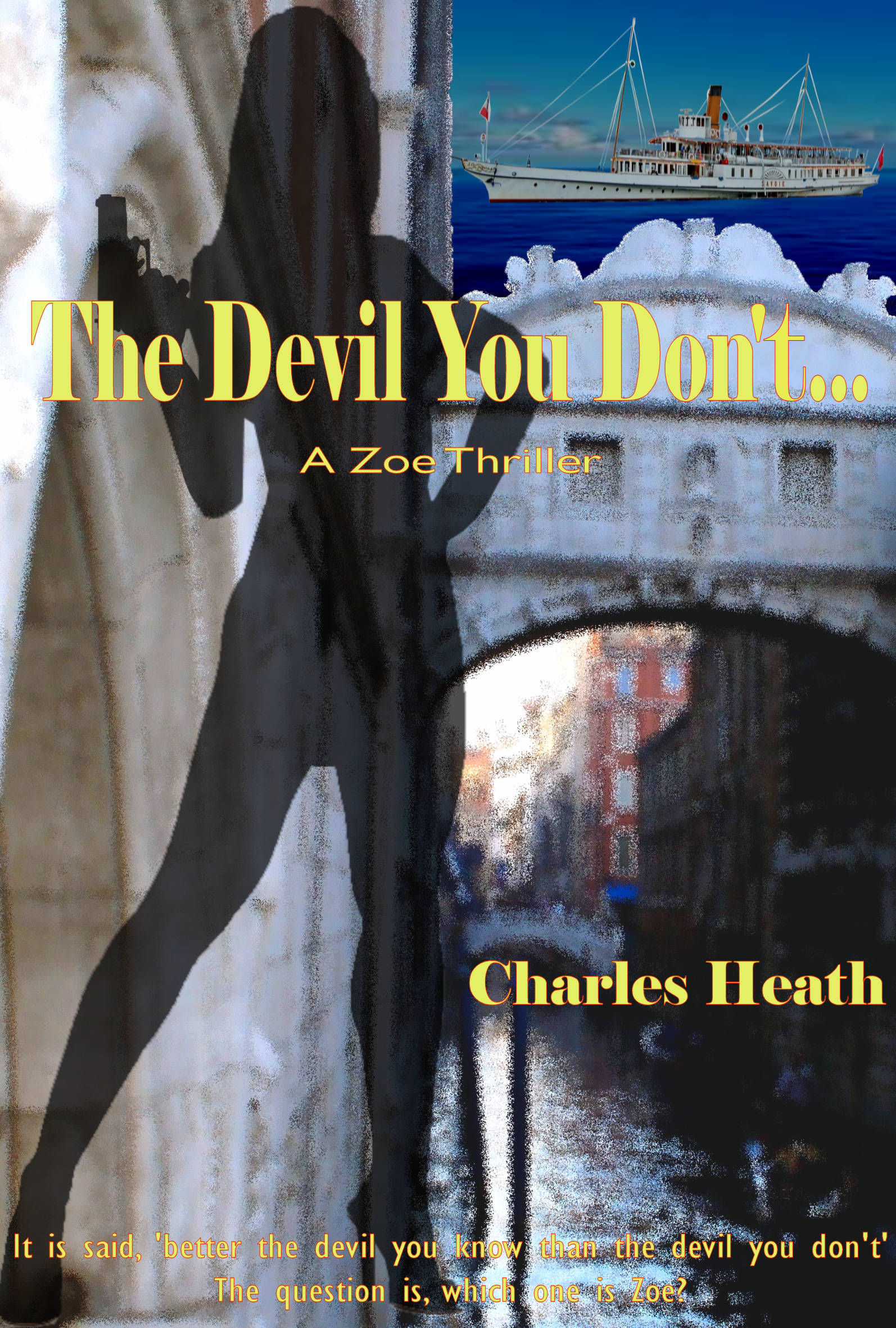
‘The Devil You Don’t’ – A beta reader’s view

It could be said that of all the women one could meet, whether contrived or by sheer luck, what are the odds it would turn out to be the woman who was being paid a very large sum to kill you?

John Pennington is a man who may be lucky in business, but not so lucky in love. He has just broken up with Phillipa Sternhaven, the woman he thought was the one, but relatives and circumstances, and perhaps because she was a ‘princess’, may also have contributed to the end result.

So, what do you do when you are heartbroken?

That is a story that slowly unfolds, from the first meeting with his nemesis on Lake Geneva, all the way to a hotel room in Sorrento, where he learns the shattering truth.

What should have been solace after disappointment turns out to be something else entirely, and from that point, everything goes to hell in a handbasket.

He suddenly realises his so-called friend Sebastian has not exactly told him the truth about a small job he asked him to do, the woman he is falling in love with is not quite who she says she is, and he is caught in the middle of a war between two men who consider people becoming collateral damage as part of their business.

The story paints the characters, cleverly displaying all their flaws and weaknesses. The locations add to the story at times, taking me back down memory lane, especially to Venice, where, in those back streets, I confess it’s not all that hard to get lost.

All in all, a thoroughly entertaining story with, for once, a satisfying end.

Available on Amazon here: https://amzn.to/2Xyh1ow

365 Days of writing, 2026 – 78

Day 78 – Writers are outlaws

“I Became a Writer Because Writers Were Outlaws.”

Why the Rebel‑Heart Still Drives Literature – and Why It Matters Today

“I became a writer because writers were outlaws.” – Paul Theroux

When Paul Theroux drops this line in an interview, it feels like a secret handshake among anyone who has ever felt more at home in the margins than in the mainstream. It’s a declaration of allegiance to a lineage of “outlaw” writers—people who have deliberately stepped outside the accepted rules of language, politics, and morality to expose hidden truths, provoke discomfort, and, above all, keep the imagination untamed.

In this post, we’ll unpack what Theroux meant, trace the outlaw tradition from ancient epics to the digital age, and ask: Why does the rebel spirit of the writer still matter in a world that seems both more censored and more free than ever before?


1. The Outlaw Archetype: From Homer to the Underground Press

Era“Outlaw” WriterWhat Made Them a Rebel
Ancient GreeceHomer (if we accept the legendary status)Oral poets who travelled, challenging the city‑state’s rigid mythic canon.
RenaissanceGiordano Brunelleschi’s “Il Principe” (although a political treatise, it was a seditious “how‑to” for power)Directly confronted the Church’s monopoly on moral authority.
19th c.Charles Dickens (early serials)Exposed the underbelly of industrial London while keeping a popular voice.
Early 20th c.James Joyce – UlyssesBanned in the U.S. for “obscenity,” he turned narrative form itself into a crime.
Mid‑20c.Jack Kerouac – On the RoadCelebrated a nomadic, drug‑tinged lifestyle that “damaged” the post‑war American ideal.
Late‑c.Mikhail Bulgakov – The Master & MargaritaWrote magical realism under Stalin’s watchful eye; the manuscript survived only because he hid it.
1990s‑2000sWilliam S. Burroughs – Naked LunchBanned, confiscated, and deemed “pornographic”; he embraced the “read‑it‑if‑you‑dare” culture.
Digital AgeAnonymous/Online Activist Writers (e.g., WikiLeaks, whistle‑blowers)Disseminate classified information, turning the act of publishing into a legal risk.

The pattern is clear: outlaw writers are those who refuse to let the powers that be dictate what stories can be told, how they can be told, or who is allowed to hear them. They often operate at the intersection of art and activism, using narrative as a weapon.


2. Why Did Theroux Call Writers Outlaws?

Theroux’s own career is a perfect case study:

  1. Travel as Subversion – He turned the travel memoir into a critique of colonialism, capitalism, and tourism. The Great Railway Bazaar (1975) does not simply catalogue stations; it reveals the hidden economies of displacement and the veneer of “exotic” hospitality.
  2. Political Confrontation – In The Old Patagonian Express and later works, Theroux went into places under authoritarian regimes (Chile under Pinochet, Soviet‑occupied Afghanistan) and wrote about what the local press dared not say.
  3. Narrative Style – He stripped away the sentimental travelogue, opting for a dry, observational prose that makes the reader feel the unease of being a foreigner. That “detached” voice is a form of rebellion against the romanticised wanderer myth.

When Theroux says, “I became a writer because writers were outlaws,” he’s acknowledging that the act of choosing the writer’s path is itself an act of rebellion—a deliberate sidestepping of conventional careers, societal expectations, and, often, personal safety.


3. The Mechanics of Literary Outlawry

What actually makes a writer an outlaw? It isn’t merely the content, but the method and the consequence.

ElementHow It Turns a Writer Into an Outlaw
Form‑BreakingExperimental structures (stream‑of‑consciousness, non‑linear narratives) that disregard “commercial” readability.
Forbidden TopicsSex, drug use, political dissent, religion—subjects censored by governments or cultural gatekeepers.
Subversive LanguageSlang, profanity, or invented dialects that erode the hegemony of “standard” language.
Risk of ReprisalArrest, exile, bans, or even death. The stakes give the work a visceral urgency.
Community BuildingUnderground presses, samizdat, zines, and now encrypted digital platforms that bypass mainstream distribution.

These mechanisms overlap. James Joyce’s Ulysses combined form‑breaking (the famous “stream of consciousness”) with taboo topics (sexuality, bodily functions). The novel’s ban in the United States turned it into a literal criminal case (the 1933 United States v. One Book Called Ulysses trial). The legal battle itself amplified the book’s status as a cultural outlaw.


4. Outlaw Writers in the Digital Era: New Frontiers, Same Spirit

You might think the internet has democratized publishing, erasing the “outlaw” label. Yet digital platforms have spawned a fresh breed of literary rebels:

  • Encrypted Journals – Writers in authoritarian states now post on Tor sites, using code words and self‑censorship to dodge surveillance.
  • Crowd‑Funded Zines – Platforms like Kickstarter let dissident poets launch limited‑run anthologies without a publisher’s gatekeeping.
  • AI‑Generated Satire – Projects that manipulate deep‑fake text to satirise political figures—legal grey areas that test the limits of free speech.
  • Social‑Media Manifestos – Threads that blur the line between short‑form poetry and protest; a 280‑character haiku can trigger a wave of real‑world action.

The outlaw’s toolbox has simply been upgraded. The risk—whether state censorship, doxxing, or platform bans—remains the same, but the reach is now global. A single tweet can ignite a movement in three continents the same way a pamphlet did in 1917.


5. Why We Still Need Literary Outlaws

  1. Guardians of the Uncomfortable Truth
    History remembers the outlaw for exposing what the majority prefers to ignore. From The Gulag Archipelago (Solzhenitsyn) to the modern whistle‑blower blogs, these works force societies to confront systemic violence.
  2. Catalysts for Language Evolution
    When writers defy linguistic norms, they expand the expressive capacity of language itself. Think of how Ulysses introduced new verb forms that later entered everyday English.
  3. Counter‑Power to Market Homogenization
    The publishing industry, driven by profit, often pushes formulaic best‑sellers. Outlaw writers serve as antidotes, reminding us that art can be messy, ambiguous, and even unprofitable.
  4. Inspiration for Civic Engagement
    A reader who discovers that a novelist risked imprisonment for a paragraph about police brutality is more likely to question authority and perhaps join a protest.

6. The Moral Ambiguity of “Outlaw” Status

Being an outlaw is not automatically virtuous. Some writers have used the rebel label to glorify violence, propagate hate, or romanticise criminality (e.g., extremist propaganda disguised as “literature”). The modern reader must therefore ask:

Who decides which outlaw narrative serves the public good?

The answer, paradoxically, often comes from collective critical discourse—reviews, academic analysis, and, increasingly, community moderation on digital platforms. The outlaw’s power lies not just in the act of publishing, but in the dialogue that follows.


7. How to Channel Your Inner Literary Outlaw

If Theroux’s quote resonates, you might be wondering how to embrace the outlaw spirit without getting locked up (unless you’re a spy novelist—then, go ahead). Here are practical steps:

  1. Read Widely, Then Dig Deeper – Study classic outlaw writers. Note the techniques they used to circumvent censorship.
  2. Experiment with Form – Try a story told entirely through footnotes, or a poem that uses only emojis.
  3. Choose a Taboo Topic – Write about something you suspect your family or workplace avoids discussing.
  4. Publish Outside the Box – Submit to literary journals that focus on experimental or political work, or use a self‑publishing platform with a Creative Commons license.
  5. Build a Community – Join or start a writing circle that values risk‑taking. Online forums like r/experimentalwriting can be a good incubator.
  6. Accept Consequences – Be prepared for criticism, rejection, or even legal pushback. The outlaw’s path is rarely comfortable.

8. Closing Thoughts: The Outlaw as a Mirror

Paul Theroux’s simple confession—“I became a writer because writers were outlaws”—does more than romanticise rebellion. It positions the writer as a mirror that reflects society’s cracks, a torch that lights hidden corridors, and a weapon that can dismantle oppressive narratives.

In a time when algorithms decide what we read, when governments label “fake news” as a crime, and when the very act of questioning can trigger deplatforming, the outlaw writer becomes even more essential. Not every writer will go to jail, but every writer can choose a moment to step outside the comfortable script, to ask the question that “outlaws” have always asked:

“What if we told a different story?”

If that question makes you a little uneasy, you might just be on the right track. And that, dear reader, is the true legacy of the literary outlaw.

If you enjoyed this exploration, let me know in the comments which outlaw writer has most inspired you, and feel free to share your own “outlaw” experiment. The rebellion, after all, thrives on conversation.

NaNoWriMo – April – 2026 – Day 5

Although the main reason for its existence is to follow Friday, in some cases, it is the first day of the weekend.

Once upon a time, Saturday used to be a working day, you know, those days when we worked a 48-hour week.  Then it became a 44-hour week, and we only worked in the morning.

As time progressed, we started working 40 hour weeks and had both Saturday and Sunday off.  Sunday, of course, was always a non-starter.  The church made sure you were able to go to church on Sunday.

As time progressed, weekends started to begin on a Friday, with the day in question being granted by employers as a Rostered Day Off, provided you made up the time during the preceding two-week period.

Now it seems the standing joke is we should work weekends and have the week off.  Odd, it hasn’t quite caught on yet.

But, as usual, I digress…

After a week that got out of control, Saturday was supposed to pull it back into some sort of shape.  In a sense, it happened.  I looked at that list of things I had to do, picked one and got on with it.

PI Walthenson is now about to get a second case, as intimated at the end of his first, involving not only the search for his missing father, but also the search for those who kidnapped him.

That done, I moved onto the helicopter story, otherwise titled ‘What happens after writing an action-packed start’, and I have been researching and making notes for the third section of this story, starting at episode 31, and it looks like we’re going back to Africa, and the remoter part of the Democratic Republic of Congo to rescue the two agents he failed to the first time.

And it is NaNoWriMo time, and I have to keep the writing project going, a story that has now been tentatively renamed to Betrayal. Very spy-ish, isn’t it?

With that, there is the upkeep of the blog.  I never thought maintaining material for a blog would be so hard.

But…

Now I can say last week wasn’t a total disaster.

And, tomorrow the Maple Leafs are playing.  Can’t wait.

“The Things we do for Love”, the story behind the story

This story has been ongoing since I was seventeen, and just to let you know, I’m 72 this year.

Yes, it’s taken a long time to get it done.

Why, you might ask.

Well, I never gave it much interest because I started writing it after a small incident when I was 17, and working as a book packer for a book distributor in Melbourne

At the end of my first year, at Christmas, the employer had a Christmas party, and that year, it was at a venue in St Kilda.

I wasn’t going to go because at that age, I was an ordinary boy who was very introverted and basically scared of his own shadow and terrified by girls.

Back then, I would cross the street to avoid them

Also, other members of the staff in the shipping department were rough and ready types who were not backwards in telling me what happened, and being naive, perhaps they knew I’d be either shocked or intrigued.

I was both adamant I wasn’t coming and then got roped in on a dare.

Damn!

So, back then, in the early 70s, people looked the other way when it came to drinking, and of course, Dutch courage always takes away the concerns, especially when normally you wouldn’t do half the stuff you wouldn’t in a million years

I made it to the end, not as drunk and stupid as I thought I might be, and St Kilda being a salacious place if you knew where to look, my new friends decided to give me a surprise.

It didn’t take long to realise these men were ‘men about town’ as they kept saying, and we went on an odyssey.  Yes, those backstreet brothels where one could, I was told, have anything they could imagine.

Let me tell you, large quantities of alcohol and imagination were a very bad mix.

So, the odyssey in ‘The things we do’ was based on that, and then the encounter with Diana. Well, let’s just say I learned a great deal about girls that night.

Firstly, not all girls are nasty and spiteful, which seemed to be the case whenever I met one. There was a way to approach, greet, talk to, and behave.

It was also true that I could have had anything I wanted, but I decided what was in my imagination could stay there.  She was amused that all I wanted was to talk, but it was my money, and I could spend it how I liked.

And like any 17-year-old naive fool, I fell in love with her and had all these foolish notions.  Months later, I went back, but she had moved on, to where no one was saying or knew.

Needless to say, I was heartbroken and had to get over that first loss, which, like any 17-year-old, was like the end of the world.

But it was the best hour I’d ever spent in my life and would remain so until I met the woman I have been married to for the last 48 years.

As Henry, he was in part based on a rebel, the son of rich parents who despised them and their wealth, and he used to regale anyone who would listen about how they had messed up his life

If only I’d come from such a background!

And yes, I was only a run away from climbing up the stairs to get on board a ship, acting as a purser.

I worked for a shipping company and they gave their junior staff members an opportunity to spend a year at sea working as a purser on a cargo ship that sailed between Melbourne, Sydney and Hobart in Australia.

One of the other junior staff members’ turn came, and I would visit him on board when he would tell me stories about life on board, the officers, the crew, and other events. These stories, which sounded incredible to someone so impressionable, were a delight to hear.

Alas, by that time, I had tired of office work and moved on to be a tradesman at the place where my father worked.

It proved to be the right move, as that is where I met my wife.  Diana had been right; love would find me when I least expected it.

lovecoverfinal1

The cinema of my dreams – I always wanted to see the planets – Episode 47

The four members of the high council – maybe

There was a man in a red suit, a man in a blue suit, a woman in a green suit and another woman in a grey suit.

Grey suit spoke first, “Are all you people from the earth as tiresome as you are Captain?”

She was either the lowest rank or the highest.

“We are an interesting bunch when you get to know us, which, despite this turn of events, I hope we do.  We have a predilection for interfering in matters where we see injustices.”

“Be that as it may, I would like to remind you, that what might pass as acceptable behaviour on your planet, might not be on ours.  You should be aware that in your travels, everyone you may or may not meet has their own specific rules, customs, and regulations which can and will be a lot different to yours.”

“I accept that, and in fact, in the briefing we had before leaving earth, it was impressed upon us that very premise.  And I understand that we may be seen to be interfering in matters that are not our concern.  But, and there’s always a but, that’s how we humans think and rationalise the many situations we often find ourselves in, we don’t like injustices.”

“Does what might appear an injustice to one, not be one to another?  There is ample evidence in your history that points to those overlooking so-called injustices for the greater good?”

“That may be true in the past, but we like to think we have evolved into a better civilization.  But we are not perfect, as you point out.  However, this instance does not qualify as an instance for the greater good, it is simply the selfish whim of a single person.  We have people who are supposed to set an example too and don’t, because they don’t believe the rules apply to them, and I would like to believe that you, too, would not tolerate this sort of behaviour in your leaders.  Your people have been living on our planet for some time, I gather, so you should know that.”

Blue suit had been looking rather severely at me.  “It was a mistake to let you people develop space travel capability.  Our efforts to delay it haven’t been as successful as we had anticipated.  You are not ready.”

That someone or something had been manipulating our progress would probably not come as a surprise to some back home.  My knowledge of the steps we took to get where I was now pointed to several disasters that set the whole program back nearly twenty years, if not more.

I wonder how the Admiral would react when I told him.  If I told him.

“It was inevitable, like everything we do.  Unfortunately for you, we thrive on adversity.”

“You are not the only warlike race in the galaxy you know.  You may want to hold off meeting them for as long as you can, but they know where you are, so there’s more than one inevitability.”

“By uttering those words, does that make you look more like the aggressors than us?  The thing is, we’re out her for better or for worse, and I think you know what has transpired here is an injustice, but the ramifications are unpalatable.  We have an expression; absolute power corrupts absolutely.”

Blue suit looked as though he was going to explode.  “It is no use talking to these primitives.”

Grey suit glared at him.  “It is your house that is not in order, and we have tolerated it for long enough.”  She looked at her fellow members and received nods.  Blue suit disappeared, most likely transported back to the planet.

Grey suit:  “You are, using another of your sayings on earth, “treading on very thin ice.”

Green suit took up the narrative.  “We believe you would not adhere to a request to turn around and go back home, so, before you alert the galaxy that you are now participants in intergalactic exploration, take heed of this warning.  Not all species are friendly.  Most are bound by customs and rules which are nothing like yours, and it is possible you will commit the most heinous of crimes by just acting normally.

In this instance, you may have uncovered a problem that we were not aware of, and lucky for you, is a minor transgression in accordance with our customs.  We are no longer those people and will rectify the issue.  The prisoner in question will be allowed to remain on your vessel to do with as you wish.  If you are to continue your travels, I suggest you do so with caution.”

Grey suit again, “We acknowledge you are not going to go away.  So, as the first gesture of friendship between our worlds, we would like you to return the Princess to her home world, and before you do, we will provide you with an advisor to help you navigate the protocols of her world.  We will also grant two members of your crew an audience with our scribes who will give you knowledge of our worlds and people, and that of others in this galaxy.  The other ship does not get this privilege and must leave immediately.  If they do not, they will be destroyed.  There will be no negotiation on this matter.  Do you agree?”

It was probably the best we could hope for under the circumstances.

“Yes.”

Grey suit to their captain.  “I’ll leave you to work on the details.”

With that, the remaining three were gone.

© Charles Heath 2021-2022