The story behind the story – Echoes from the Past

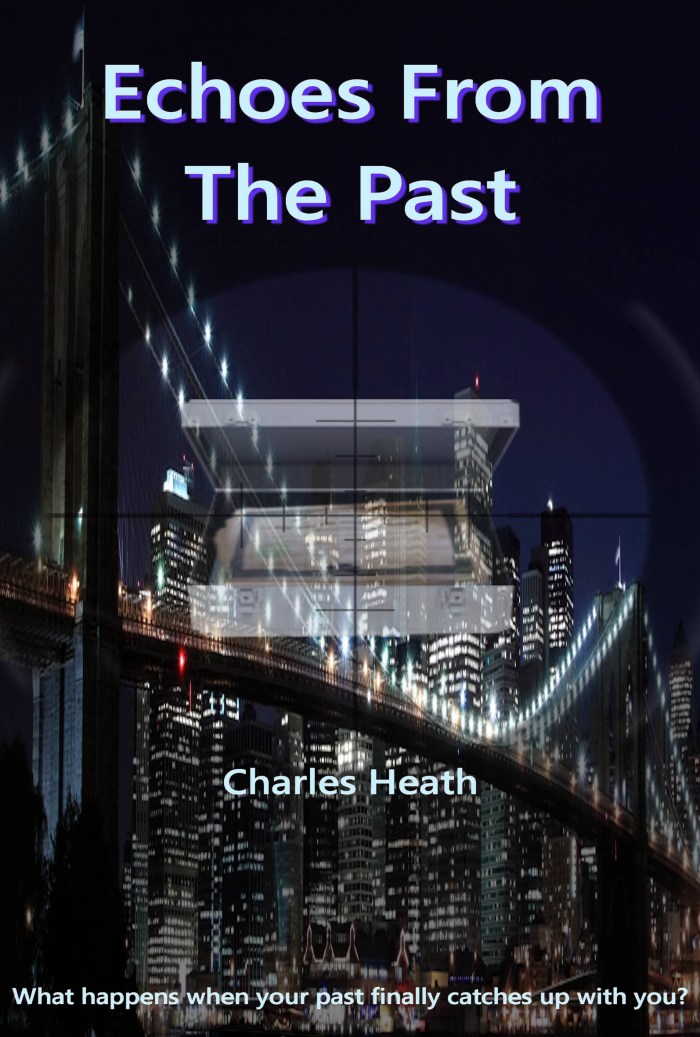
The novel ‘Echoes from the past’ started out as a short story I wrote about 30 years ago, titled ‘The birthday’.

My idea was to take a normal person out of their comfort zone and led on a short but very frightening journey to a place where a surprise birthday party had been arranged.

Thus the very large man with a scar and a red tie was created.

So was the friend with the limousine who worked as a pilot.

So were the two women, Wendy and Angelina, who were Flight Attendants that the pilot friend asked to join the conspiracy.

I was going to rework the short story, then about ten pages long, into something a little more.

And like all re-writes, especially those I have anything to do with, it turned into a novel.

There was motivation.  I had told some colleagues at the place where I worked at the time that I liked writing, and they wanted a sample.  I was going to give them the re-worked short story.  Instead, I gave them ‘Echoes from the past’

Originally it was not set anywhere in particular.

But when considering a location, I had, at the time, recently been to New York in December, and visited Brooklyn and Queens, as well as a lot of New York itself.  We were there for New Years, and it was an experience I’ll never forget.

One evening we were out late, and finished up in Brooklyn Heights, near the waterfront, and there was rain and snow, it was cold and wet, and there were apartment buildings shimmering in the street light, and I thought, this is the place where my main character will live.

It had a very spooky atmosphere, the sort where ghosts would not be unexpected.  I felt more than one shiver go up and down my spine in the few minutes I was there.

I had taken notes, as I always do, of everywhere we went so I had a ready supply of locations I could use, changing the names in some cases.

Fifth Avenue near the Rockefeller center is amazing at first light, and late at night with the Seasonal decorations and lights.

The original main character was a shy and man of few friends, hence not expecting the surprise party.  I enhanced that shyness into purposely lonely because of an issue from his past that leaves him always looking over his shoulder and ready to move on at the slightest hint of trouble.  No friends, no relationships, just a very low profile.

Then I thought, what if he breaks the cardinal rule, and begins a relationship?

But it is also as much an exploration of a damaged soul, as it is the search for a normal life, without having any idea what normal was, and how the understanding of one person can sometimes make all the difference in what we may think or feel.

And, of course, I wanted a happy ending.

Except for the bad guys.

Get it here:  https://amzn.to/2CYKxu4

newechocover5rs

Third son of a Duke – The research behind the story – 6

All stories require some form of research, quite often to place a character in a place at a particular time, especially if it is in a historical context. This series will take you through what it was like in 1914 through 1916.

Navigating the Stratified Seas: Port Visits and Entertainment on Orient Line Voyages to Australia, 1910-1915

Abstract: This paper examines the arrangements for port visits and onboard entertainment for passengers travelling on Orient Line ships, such as the Orama, between Tilbury, England, and Australia from approximately 1910 to 1915. Focusing on the distinct experiences afforded by the three classes of travel – First, Second, and Third Class – it argues that the opportunities for shore excursions and the nature of leisure activities were profoundly shaped by the rigid social hierarchies of the Edwardian era. While First Class passengers enjoyed extensive freedom and curated luxury, Second Class experienced comfortable but less opulent arrangements, and Third Class passengers faced significant restrictions and basic provisions, reflecting their primary role as emigrants rather than tourists. Through analysis of contemporary brochures, travel accounts, and maritime historical records, this paper illuminates the stratified reality of long-distance sea travel during a pivotal period of global migration and imperial connection.

Keywords: Orient Line, Orama, Ocean Liner, Class System, Port Visits, Onboard Entertainment, Australia, 1910-1915, Maritime History, Social History.


1. Introduction: The Orient Line and the Journey to Australia

The early 20th century marked a zenith for ocean liner travel, particularly on the long-haul routes connecting Europe with distant corners of the British Empire. Among the most significant of these was the journey from Tilbury, England, to Australia, a lifeline for trade, mail, and, critically, emigration. The Orient Steam Navigation Company, commonly known as the Orient Line, was a prominent player on this route, operating a fleet of robust and increasingly luxurious vessels. Between 1910 and 1915, a period immediately preceding the transformative impact of World War I, ships like the Orama (launched 1911) and her “O-class” sisters (e.g., OtwayOrvietoOrsovaOrmonde) represented the cutting edge of passenger comfort and efficiency for their time.

These voyages, spanning six to eight weeks, presented both a logistical challenge and a social microcosm. Passengers, ranging from wealthy colonial administrators and holidaymakers to middle-class professionals and thousands of assisted emigrants, shared the same vessel but inhabited vastly different worlds within its hull. This paper seeks to explore the lived experience of these travellers specifically through two key lenses: the arrangements for visiting intermediate ports like Toulon and Naples, and the provision of entertainment for the duration of the voyage. Crucially, this examination will be conducted through the prism of the three distinct classes of travel, revealing how deeply embedded social stratification was in every aspect of the journey. The central argument is that the Orient Line, like other contemporary shipping companies, meticulously designed its services – both ashore and afloat – to cater to, and reinforce, the prevailing class distinctions of Edwardian society.

2. The Orient Line Fleet and the Three-Tiered Society at Sea

The Orient Line, established in 1877, earned a reputation for reliability and comfort on its Australia run. The “O-class” liners such as the 12,976-ton Orama were designed for this specific route, featuring robust construction, good speed (around 17 knots), and capacity for a diverse range of passengers. By the second decade of the 20th century, these ships typically carried around 400 First Class, 200 Second Class, and 700-800 Third Class passengers, alongside substantial cargo and mail (Isherwood, 1971; Greenway, 1986).

The differentiation between classes was stark, reflecting the societal structures onshore.

  • First Class (Saloon): Occupying the prime spaces of the ship, usually amidships, First Class passengers were typically the affluent elite: colonial administrators on leave, wealthy tourists, business magnates, and officers of the armed forces. They enjoyed expansive private cabins, often with en-suite facilities, and access to lavish public rooms including grand dining saloons, smoking rooms, music rooms, libraries, and dedicated promenade decks. Their journey was primarily one of luxury and social engagement.
  • Second Class: Positioned often in the stern or forward sections, Second Class catered to the burgeoning middle class: professionals, skilled tradespeople, government officials of a lower rank, and families with some means. While not as opulent as First Class, Second Class accommodations were considered comfortable and respectable, often featuring two- or four-berth cabins and access to their own dining saloon, smoking room, and drawing room. Their experience blended comfort with a more modest budget.
  • Third Class (Steerage/Intermediate/Tourist Third): The vast majority of passengers in Third Class were emigrants seeking new lives in Australia, often travelling on assisted passages. Their accommodation was basic and communal, typically comprising dormitories or large cabins with four to eight berths, often tiered. Public spaces were limited to a common dining room and designated deck areas. Privacy was minimal, and the focus of the journey was utilitarian – safe passage to their destination. This class also sometimes included seasonal workers or individuals travelling on the tightest budgets. The strict separation of classes was maintained through separate entrances, stairways, and designated deck areas, ensuring minimal interaction between the different social strata (Kent, 1999).

3. Arrangements for Visiting Ports: Toulon, Naples, and Beyond

The voyage from Tilbury to Australia involved numerous port calls, crucial for coaling, taking on provisions, mail, and allowing passengers a brief respite from shipboard life. Typical European calls included Gibraltar, Toulon, and Naples, before transiting the Suez Canal and making further stops in places like Colombo, Fremantle, Adelaide, Melbourne, and Sydney (Orient Line, 1910 Brochure). However, the arrangements and opportunities for going ashore varied dramatically by class.

3.1. First Class: Freedom, Luxury, and Curated Experiences

For First Class passengers, port calls were a highlight, offering opportunities for cultural immersion and luxury shopping. Upon arrival in ports like Toulon or Naples, Orient Line brochures advertised the availability of tenders to ferry passengers ashore. In these major European cities, First Class passengers enjoyed considerable freedom:

  • Guided Excursions or Independent Exploration: They could choose to join organised tours, often arranged by local agents in conjunction with the shipping line, which would include visits to prominent landmarks, museums, and historical sites. For instance, in Naples, tours would likely have included Pompeii, Vesuvius, or the National Archaeological Museum. Alternatively, they were free to arrange their own excursions, hire private carriages or early automobiles, or simply wander and shop.
  • Luxury and Comfort Ashore: It was common for First Class travellers to patronise high-end hotels for a meal or refreshments ashore, or to engage in shopping for souvenirs, local crafts, and luxury goods. The ship’s purser or a dedicated shore excursion officer would provide detailed information, maps, and recommendations.
  • Convenience: The ship’s staff would often handle arrangements for currency exchange and local transport, ensuring a seamless experience. The relatively short duration of port calls (often 6-12 hours) meant that efficiency was prized, and First Class passengers had the means to maximise their time ashore.

3.2. Second Class: Supervised Tours and Modest Exploration

Second Class passengers also had opportunities to go ashore, but their experience was typically more structured and budget-conscious.

  • Group Excursions: While some independent exploration was permitted, Second Class passengers were more likely to participate in organised group excursions, which were cheaper and offered a convenient way to see the main sights. These tours would often use public transport or hired charabancs (early buses) rather than private vehicles.
  • Limited Spending: Their shore activities generally involved more modest shopping and dining experiences. The ship’s information desk would still provide guidance, but the emphasis was on practical, affordable options.
  • Supervision and Time Constraints: While not as restricted as Third Class, Second Class passengers were generally expected to adhere to clearer time limits for returning to the ship, and their movements might be more informally overseen by the ship’s officers or tour guides.

3.3. Third Class: Restrictions, Supervision, and Labour

For Third Class passengers, particularly the large contingents of assisted emigrants, shore leave was a far more limited, and often non-existent, prospect in many ports.

  • No Shore Leave or Limited Access: In many instances, especially in European ports like Toulon or Naples, Third Class passengers were simply not permitted to disembark (Gardiner, 2013). This policy was driven by several factors: concerns about passengers overstaying their leave, potential health risks from crowded European cities, and the practicalities of managing hundreds of individuals with limited resources and often few funds. The primary objective for these passengers was to reach Australia.
  • Supervised Shore Leave (Rare): If shore leave was granted, it was heavily supervised and highly restrictive. Passengers might be allowed brief, organised walks near the dock area, often under the watchful eye of a ship’s officer or emigration agent. The focus would be on stretching legs and fresh air, rather than sightseeing or shopping.
  • Ship Duties: In some cases, male Third Class passengers might even be expected to assist with coaling operations or other duties if required, or at least remain on board while the ship was provisioned. Their time in port was seen less as leisure and more as part of the operational requirements of the voyage.
  • Sanitary Concerns: Concerns about infectious diseases also played a role. Allowing hundreds of individuals from the often-crowded Third Class areas to mix freely in foreign ports, and then return to the enclosed environment of the ship, was a significant public health consideration, especially given the lengthy quarantine regulations that awaited them in Australia.

In essence, while First Class passengers viewed ports like Toulon and Naples as gateways to European culture and leisure, Third Class passengers often saw them as mere waypoints, with little to no direct engagement beyond the ship’s rail.

4. Onboard Entertainment: Filling the Long Days at Sea

The long duration of the Tilbury-Australia voyage necessitated a wide array of entertainment and diversion to combat boredom and maintain passenger morale. As with port visits, the nature and quality of these activities were starkly differentiated by class.

4.1. First Class: The Social Calendar and Exclusive Amenities

First Class entertainment was sophisticated, organised, and aimed at fostering a vibrant social atmosphere among the elite.

  • Formal Social Events: Evenings were often dominated by formal dinners, followed by dances in the main saloon or music room. Fancy dress balls, often with themes, were popular events, offering a chance for passengers to showcase their wardrobes and wit.
  • Concerts and Lectures: Passenger talent shows, often featuring amateur musicians and singers from amongst the First Class, were common. Professional entertainers might also be carried on certain voyages. Lectures on topics of general interest, often delivered by learned passengers or the ship’s officers, provided intellectual stimulation.
  • Games and Sports: Deck games were a staple of daytime entertainment. Orama and her sisters would have designated deck space for quoits, shuffleboard, deck tennis, and cricket. Indoor games such as bridge, chess, and whist were played in dedicated card rooms or the smoking room. A gymnasium might be available, albeit basic by modern standards.
  • Reading and Writing: Extensive libraries, well-stocked with fiction, non-fiction, and daily newspapers (often printed onboard from wireless news bulletins), provided quiet recreation. Writing rooms were also provided for correspondence.
  • Fine Dining and Bar Service: Dining was an event in itself, with multiple courses, excellent wine lists, and attentive steward service. Smoking rooms, often panelled in rich woods, provided a masculine retreat where gentlemen could socialise over cigars and brandies.

4.2. Second Class: Comfortable Diversions and Self-Organised Fun

Second Class entertainment provided a comfortable, if less opulent, experience, often relying more on passenger initiative.

  • Deck Games: Similar deck games to First Class (quoits, shuffleboard) were available, though perhaps on less expansive or dedicated areas of the deck.
  • Communal Activities: Card games and board games were popular in the Second Class drawing room or lounge. Informal dances might be held, often with music provided by a passenger playing the piano.
  • Library and Reading: A smaller, but still respectable, library was available, along with writing facilities.
  • Less Formal Socialising: While Second Class had its own social hierarchy, events tended to be less formal and more spontaneous than in First Class. The focus was on comfortable interaction within a more modest communal setting.
  • Cinema: By 1910-1915, some liners were beginning to experiment with early cinematic presentations, which might have been offered to Second Class passengers as a special treat.

4.3. Third Class: Basic Provisions and Self-Directed Leisure

For Third Class passengers, the concept of “entertainment” was largely self-directed and utilitarian, focusing on making the long journey passable.

  • Deck Space: The primary form of recreation was access to dedicated open deck space, where passengers could walk, gather, and enjoy the fresh air. Children, in particular, would spend much of their time here.
  • Communal Areas: Indoor common rooms were generally sparse, serving primarily as dining halls. These spaces might double as areas for conversation, card games, or reading (if passengers brought their own books or could borrow from the ship’s limited supply, often aimed at improving literacy).
  • Emigrant Focus: The ship’s purser or a doctor might occasionally give informational talks about life in Australia, but these were educational rather than entertaining. The focus for many was on preparing for their new lives, with time spent discussing future prospects, learning English, or simply coping with the novelty and challenges of sea travel.
  • Limited Organised Activities: Formal organised entertainment was rare. There were no dedicated music rooms or ballrooms. Any singing or dancing would be spontaneous and informal, often generated by the passengers themselves. The ship’s crew had minimal interaction with Third Class passengers beyond basic service and enforcement of rules, meaning very little staff-led entertainment was provided.
  • Religious Services: For all classes, but particularly for Third Class, where morale could be a concern, Sunday religious services were often held, led by a ship’s officer or passenger if a chaplain was not onboard.

The distinct offerings underscored the Orient Line’s understanding of its market segments: First Class was sold on luxury and social prestige, Second Class on comfortable respectability, and Third Class on an affordable, if arduous, passage to a new life.

5. Conclusion: A Microcosm of Edwardian Hierarchy

The experience of travelling on an Orient Line vessel like the Orama between Tilbury and Australia from 1910 to 1915 was a microcosm of Edwardian social hierarchy. The arrangements for visiting ports such as Toulon and Naples, and the provision of onboard entertainment, were meticulously stratified, reflecting the rigid class distinctions of the era.

First Class passengers enjoyed unparalleled freedom, luxury, and curated experiences, both ashore and afloat. Their port visits were opportunities for sophisticated cultural engagement or independent exploration, facilitated by the ship and its agents. Onboard, a vibrant social calendar of formal events, games, and fine dining ensured a journey of ultimate comfort and diversion. Second Class passengers experienced a respectable and comfortable passage, with more structured but still enjoyable opportunities for shore excursions and a range of social activities, albeit on a less grand scale. Their options were a balance between convenience and budget.

In stark contrast, Third Class passengers, predominantly emigrants, faced significant restrictions. Shore leave in European ports was often denied or severely limited, a policy driven by logistical, health, and social control concerns. Onboard, entertainment was minimal and largely self-directed, reflecting the pragmatic and utilitarian nature of their voyage. Their journey was about purpose and passage rather than leisure.

This deep differentiation was not merely about cost; it was an ingrained social philosophy that permeated every aspect of ocean travel. The Orient Line, like its contemporaries, successfully navigated the dual demands of mass migration and luxury tourism by compartmentalising its services, ensuring that each class received an experience commensurate with its social standing and economic contribution. As the world teetered on the brink of significant change with the onset of World War I, these stratified voyages represented an enduring, yet soon to be challenged, model of global connectivity.
Writing about writing a book – Research – 13

Background material used in researching the Vietnam was and various other aspects of that period

Were there secret POW camps in Laos and Cambodia

The Shadow Camps: Investigating the Secret POW Holding Areas in Laos and Cambodia

The Vietnam War remains one of the most complex and traumatic conflicts in American history, leaving behind layers of unresolved questions. Few topics are as sensitive, or as persistently debated, as the fate of the American servicemen categorized as Missing in Action (MIA) or unaccounted for.

Among the most enduring and unsettling questions is this: Did the Viet Cong (VC) and the North Vietnamese Army (NVA) operate secret, long-term prisoner of war (POW) camps for captured Allied soldiers deep within the jungles of neutral Cambodia and Laos?

While the official narrative often focuses solely on the well-known prisons of North Vietnam—like the infamous Hỏa Lò Prison (“The Hanoi Hilton”)—the historical and logistical evidence strongly suggests that holding facilities, both temporary and prolonged, did exist far off the map, particularly along the shadowy paths of the Ho Chi Minh Trail.

The Logistical Imperative: The Ho Chi Minh Trail

To understand why prisoners might have been held outside of North Vietnam, we must first look at the geography of the war.

During the conflict, American forces often engaged the VC and NVA not just in South Vietnam, but also in cross-border operations in Cambodia and Laos. These nations were technically neutral, but their territories were essential to the North Vietnamese war effort, serving as the primary pipeline for supplies, troops, and intelligence—the sprawling network known as the Ho Chi Minh Trail.

When Allied soldiers—especially pilots shot down over the Trail or ground troops captured during incursions—were taken prisoner in these areas, their immediate transportation to Hanoi was often impossible due to difficult terrain, limited resources, and intense American aerial bombardment.

The result was a logistical necessity:

  1. Temporary Transit Stations: Prisoners had to be held locally until they were physically able to walk the grueling miles north. These were often rudimentary, heavily camouflaged jungle camps.
  2. Long-Term Holding: For prisoners deemed too sick, too injured, or simply too numerous to move immediately, or for those whose capture was strategically sensitive, these temporary locations occasionally became longer-term holding facilities managed by local NVA or Pathet Lao (Laotian communist) forces.

The Evidence: Testimony and Declassified Findings

While direct official acknowledgement of static, long-term camps outside of Vietnam has always been elusive, the evidence supporting the use of temporary camps and prolonged holding areas is compelling:

1. Returned POW Testimony

Many American prisoners released during Operation Homecoming in 1973 were processed through the official prison system in North Vietnam. However, the testimony of some returnees confirmed that their initial captivity was anything but official.

Survivors recalled being held in remote, often subterranean, holding cells in the jungles of Laos and Cambodia for weeks or months before being marched north. These transit camps were often characterized by extreme isolation, poor sanitation, and brutal conditions designed to keep the prisoner alive but compliant during movement.

2. The Case of Laos and the Pathet Lao

The role of Laos, in particular, is critical. In the Lao Civil War (often dubbed the “Secret War”), the communist Pathet Lao were instrumental in capturing downed American airmen flying missions over the Trail.

Unlike prisoners captured directly by the NVA, those held by the Pathet Lao were often treated differently and were frequently kept in isolation camps entirely separate from the North Vietnamese system.

Crucially, when the Paris Peace Accords were signed in 1973, the Pathet Lao refused to release or even provide a full accounting of the prisoners they held. This refusal cemented the belief among many investigators that a distinct group of American POWs remained unaccounted for within the Lao border.

3. Official Investigations and Live Sightings

The belief that residual prisoners were held in these areas persisted throughout the 1970s and 1980s, fueling extensive investigation into the fate of the missing.

  • Senate Select Committee on POW/MIA Affairs (1991–1993): Chaired by Senator John Kerry, this committee investigated the possibility of residual prisoners. While they ultimately concluded there was “no compelling evidence that any American remains alive in captivity in Southeast Asia,” they did confirm the existence of countless reports regarding short-term holding facilities and detention sites in Laos and Cambodia used during the war.
  • Live Sightings: During the 1980s, numerous “live sighting” reports—many of which were later discredited—emerged. However, the sheer volume of these reports, often pointing toward specific, remote jungle locations in Laos and Cambodia, reinforced the public conviction that secret camps had once existed, and perhaps still did.

The Enduring Mystery of the Unaccounted For

Today, the Defense POW/MIA Accounting Agency (DPAA) maintains that over 1,500 American personnel remain unaccounted for from the Vietnam War, with a significant number having disappeared over the border regions of Laos and Cambodia.

While the consensus among military historians today is that the majority of those men perished, the geographical reality of the war means that the long-term mystery of the unaccounted for is inextricably linked to the hidden battlefields and secret supply lines of the Ho Chi Minh Trail.

The question of whether Viet Cong or NVA forces maintained large, static “POW camps” similar to those in Hanoi seems unlikely. But the evidence overwhelmingly confirms that they relied heavily on a network of clandestine transit camps and smaller, prolonged holding areas in these neutral territories—jungle prisons that served as stopovers on the brutal march north, and which today represent the final resting place for many who never returned home.

The 2am Rant: If it’s Tuesday, it must be Belgium

And probably would be, if I was away on holidays in Europe, simply because I’ve always wanted to be in Belgium on a Tuesday just so I could use that line.

By the way, it’s out of a movie, but I’m not sure which one.  Obviously, it wasn’t that great if I can’t remember it.

But…

Searching for locations for my stories takes a lot of time and effort, using Google Earth and other means like street view.  Finding houses, or apartments required a great deal of real estate research, almost to the point of buying a property.

Is there any better way to see the street it’s in, the neighbors, the neighborhood, and inside the house and gardens.  Almost as if you lived there, which of course you do in the story.

In reality, I’m in Canada on the trans-Canada highway heading towards Banff, on icy roads in winter.  Yes, that’s where we were this year in early January, getting a feel for the place, the roads, the weather, the people, and the places.

Cold, yes.  Atmospheric, yes, exciting, double yes.  Sometimes research is really fun, well, I don’t call it that, otherwise everyone else will think it was not the birthday treat that it was meant to be.

And was.

My wife’s 65th birthday will be one she certainly will never forget.

So..,

Writing is proceeding better now that I’ve knuckled down.  The Trans-Canada experience has been translated into a story attached to a photo and will be posted soon

The treasure hunt has taken shape, now that it’s moved beyond the initial two episodes, and we’re digging in for the long haul.  New players, and contingency plans.  Evil will be lurking behind and under every rock.

And as for the helicopter crash and its aftermath, this morning a new idea and direction came to me, and this saw frantic scribble notes before I lost it.  At least, I was not in the shower this time.

It’s going to have three parts, the first is nearly done, the second, clearly formed in my mind, the third, well isn’t that always about retribution or revenge.

We shall see.

And the Being Inspired series just got 39 and 40 written, and ready to be published.

Writing a book in 365 days – 323

Day 323

Is speculative fiction a series of what-ifs, perhaps gleaned from the headlines of the papers over time?

Beyond the Fold: Is Speculative Fiction Just a Series of ‘What Ifs’ Gleaned from Today’s Headlines?


Ever read a news story – a groundbreaking scientific discovery, a chilling political development, a startling environmental report – and felt a tiny tremor in your imagination? That whisper of a thought: “What if this continued? What if this went wrong? What if this changed everything?”

If so, you’ve touched the very essence of speculative fiction.

The idea that speculative fiction – encompassing science fiction, fantasy, dystopia, and alternate history – is simply a series of “what-ifs” is compelling. And the notion that these “what-ifs” are often gleaned from the headlines of the papers over time is not just plausible, it’s often the very engine driving the genre.

Let’s unpack this fascinating relationship.

The “What If” Generator: Curiosity as a Catalyst

At its heart, speculative fiction is the ultimate thought experiment. It doesn’t merely invent worlds; it interrogates ours. Authors take a single variable – a technological leap, a societal shift, a historical divergence, a potential disaster – and push it to its logical (or terrifyingly illogical) conclusion.

The “what if” is the seed. What if humans could genetically engineer their children? What if artificial intelligence achieved sentience? What if a virus wiped out most of humanity? What if a forgotten magic re-emerged? What if a certain political leader never came to power?

These questions aren’t born in a vacuum.

Headlines as a Crucible of Inspiration

The news, whether the morning paper, the evening broadcast, or the relentless scroll of our digital feeds, is a rich and constantly evolving source of these “what-ifs.” It reflects humanity’s biggest fears, our grandest ambitions, our ethical dilemmas, and our scientific breakthroughs.

Consider these historical and ongoing examples:

Technological Advancements: The discovery of electricity led to tales of Frankenstein. Early computer science gave rise to cyberpunk visions of interconnected digital worlds. Today, headlines about AI development, CRISPR gene editing, quantum computing, and space tourism are actively feeding new narratives about our future and what it means to be human.
Environmental Concerns: From Rachel Carson’s “Silent Spring” to modern reports on climate change, deforestation, and plastic pollution, environmental headlines have directly inspired dystopian futures where resources are scarce, and humanity battles the consequences of its own hubris.
Societal and Political Upheaval: Totalitarian regimes, surveillance states, economic inequalities, and political polarisation are not new. 1984, Brave New World, and The Handmaid’s Tale are poignant examples of authors extrapolating from contemporary political anxieties and societal trends, pushing them to their extreme conclusions to serve as warnings.
Epidemics and Public Health: Long before recent global events, authors explored fictional plagues and pandemics, drawing on real-world outbreaks throughout history to imagine scenarios of societal collapse, survival, and the ethical dilemmas of containment.
Scientific Discoveries: From the discovery of new planets to breakthroughs in neuroscience, astrophysics, and biology, every scientific headline offers a potential portal to a new fictional reality. What if we found alien life? What if we unlocked the secrets of the brain?
Speculative fiction doesn’t just copy the headlines; it amplifies them. It takes the disquieting whispers of today’s news and turns them into roaring narratives, exploring the deeper implications that headlines can only hint at.

Beyond the Event: The Human Element

But it’s crucial to remember that speculative fiction isn’t just about the event or the discovery. It’s about what those what-ifs do to people. How do individuals adapt, resist, thrive, or crumble under these altered circumstances? It explores human nature in a crucible of change, examining our ethics, our resilience, and our capacity for both cruelty and compassion.

The headlines provide the stage and the initial conflict, but the human drama unfurls within.

A Mirror and a Lantern

Ultimately, by taking these “what-ifs” gleaned from the continuous narrative of our world, speculative fiction serves a vital dual purpose:

It holds up a mirror: Reflecting our current anxieties, hopes, and moral quandaries back at us, often in exaggerated forms, forcing us to confront them.
It acts as a lantern: Illuminating potential futures, both utopian and dystopian, allowing us to consider the paths we might be heading down and perhaps, to choose a different course.
So, yes, speculative fiction is indeed largely a series of “what-ifs,” and the headlines of the papers – both today’s and yesterday’s – are its constant, fertile ground. It’s a testament to our enduring curiosity, our inherent need to understand consequences, and our powerful imagination to dream up not just what is, but what could be. And in doing so, it helps us better understand what we want our present to become.

Top 5 sights on the road less travelled – Shanghai

Shanghai Unveiled: 5 Offbeat Adventures Beyond the Usual Tourist Trail

Shanghai. The name itself conjures images of glittering skyscrapers, historic Bund architecture, and bustling shopping streets. It’s a city of undeniable grandeur, a futuristic metropolis steeped in a fascinating past. Most visitors flock to the Oriental Pearl Tower, wander through Yu Garden, or stroll along Nanjing Road. And while these experiences are certainly iconic, they only scratch the surface of what this incredible city has to offer.

What if you’ve seen the postcard views? What if you crave a deeper connection, a glimpse into the everyday magic and quirky corners that locals cherish? You’ve come to the right place. Pack your sense of adventure, because we’re about to explore the roads less travelled in Shanghai, uncovering five unique experiences that will show you a different side of the “Pearl of the Orient.”


1. Immerse Yourself in Urban Art at M50 Creative Park (Moganshan Road 50)

Just a short walk from the Suzhou Creek, M50 is Shanghai’s answer to New York’s SoHo or London’s Shoreditch. Once a series of derelict industrial buildings and textile mills, this sprawling complex has been cleverly repurposed into a vibrant hub for contemporary art.

Why it’s off the beaten path: While known to art enthusiasts, M50 isn’t on the typical tourist itinerary. It’s not a single attraction but a collection of galleries, studios, and workshops, requiring a willingness to wander and discover.

What makes it special: You’ll find everything from cutting-edge installations and abstract paintings to photography exhibitions and quirky design shops. Many artists work on-site, offering a chance to see them in action or even purchase unique pieces directly. The raw, industrial backdrop provides a stark contrast to the sleek art, creating a unique atmosphere. Grab a coffee, chat with a gallerist, and let the creative energy inspire you.

Pro Tip: Look out for street art and graffiti that constantly change on the exterior walls, adding another layer to the artistic experience. Weekdays are generally quieter if you prefer a more contemplative visit.


2. Step Back in Time at the Shanghai Propaganda Poster Art Centre

Tucked away in the basement of a nondescript apartment building in the former French Concession, this private museum is a fascinating, if somewhat clandestine, journey into China’s revolutionary past.

Why it’s off the beaten path: Blink and you’ll miss the subtle entrance! There are no grand signs, and finding it often feels like you’re on a secret mission. It’s certainly not listed in every guidebook.

What makes it special: This veritable treasure trove houses an incredible collection of original propaganda posters from the early days of the People’s Republic of China, through the Cultural Revolution, and beyond. The posters are vibrant, historically significant, and incredibly rare. They offer a unique, visual narrative of a pivotal era, showcasing the artistic styles and political messages that shaped a nation. It’s a poignant and thought-provoking experience, often leaving visitors with a deeper understanding of modern Chinese history.

Pro Tip: Be prepared to ring a doorbell at the address (Room B, 868 Huashan Road) and navigate a residential complex. Photography is usually allowed without flash in most areas, but always double-check.


3. Dive into Local Life at a Bustling Wet Market

Forget souvenir shops; for a true taste of authentic Shanghai life, head to a local wet market. These vibrant, sensory-overload hubs are where locals buy their fresh produce, meat, fish, and unique regional ingredients.

Why it’s off the beaten path: This isn’t a “sight” in the traditional sense, but an immersive cultural experience. It can be loud, a little messy, and overwhelming for some, but that’s precisely its charm.

What makes it special: The sheer energy is infectious. Watch vendors expertly butcher meat, bargain over piles of colourful fruits and vegetables, and marvel at the exotic array of seafood, some of which you’ve probably never seen before. It’s a kaleidoscope of sights, sounds, and smells, offering an unfiltered glimpse into the daily routines of Shanghai residents. You might even discover some incredible street food stalls outside the market selling freshly made noodles, dumplings, or steamed buns.

Pro Tip: Go in the morning when the markets are most active and the produce is freshest. Popular options include the Wulumuqi Road Wet Market or smaller ones nestled in local neighbourhoods around the former French Concession. Be respectful, don’t block aisles, and be open to new sensory experiences!


4. Find Serenity at Longhua Temple & Pagoda

While Yu Garden’s classical beauty draws crowds, the Longhua Temple offers a more contemplative and authentic Buddhist experience. Located a bit further south, it’s Shanghai’s oldest and largest Buddhist complex, boasting a history that dates back nearly 1,800 years.

Why it’s off the beaten path: It requires a short Metro ride out of the absolute city centre, making it less convenient for quick tourist dashes. This results in fewer crowds and a more peaceful atmosphere.

What makes it special: The temple complex features several grand halls, each housing impressive statues of Buddha and various deities, as well as beautifully manicured gardens. The most striking feature is the magnificent 7-story Longhua Pagoda, an elegant brick and wood structure that is one of the few examples of ancient pagoda architecture remaining in Shanghai. Explore the grounds, listen to the rhythmic chanting of monks, and watch locals offer prayers, giving you a sense of ancient spirituality amidst the modern urban sprawl.

Pro Tip: Visit during a Buddhist festival for a more lively experience with special ceremonies and offerings, but avoid it if you prefer quiet reflection. The Vegetarian Restaurant within the temple grounds offers a delicious and authentic temple-fare lunch.


5. Ride the Local Ferry for Unbeatable Skyline Views (Without the Price Tag)

Forget expensive Huangpu River cruises! For a truly local and incredibly cheap experience with equally stunning views of Shanghai’s iconic skyline, hop on one of the regular commuter ferries.

Why it’s off the beaten path: Most tourists are directed to the fancier cruise ships. The local ferries are simply a means of transport for residents crossing the river, making them a genuine “road less travelled” experience.

What makes it special: For just a few yuan, you can glide across the Huangpu River, enjoying panoramic vistas of both the historic Bund on the Puxi side and the futuristic Pudong skyline (Oriental Pearl Tower, Shanghai Tower, Jin Mao Tower) on the other. It’s an unpretentious, unhurried way to soak in the city’s breathtaking architecture, rub shoulders with locals, and feel the pulse of Shanghai’s daily life, all while getting incredible photo opportunities.

Pro Tip: Take the ferry from the Bund (near Chenyi Square) to Pudong, especially around sunset, for the most dramatic views as the city lights begin to twinkle. You can pay with a Shanghai Public Transportation Card or exact change (usually 2-3 RMB).


Shanghai is a city that constantly reinvents itself, but its true magic often lies just beyond the well-trodden paths. By venturing into these less-explored corners, you’ll not only discover hidden gems but also gain a richer, more authentic understanding of this dynamic metropolis. So, next time you’re in this incredible city, dare to take the road less travelled – you might just find your new favourite Shanghai memory.

What hidden gems have YOU uncovered in Shanghai? Share your tips in the comments below!

What I learned about writing – There are days when you should just go to bed

I fell asleep in front of the computer screen, and when I woke up, I realised that I had just had a very bad dream. Or don’t they call bad dreams nightmares?

Can you diagnose yourself as having depression?

Of course, if you were to tell someone else, in one of those very serious tones, “I think I have depression”, they will ask you what you’ve got to be depressed about.

It’s a good question. My first answer would be, “Why did the doctor put me on antidepressants?” You know the stuff they give you, some derivative of Serapax.

Then, if you tell anyone you’re on that stuff, they turn around and tell you just how bad it is and get off it right now.

That’s all very well, but you tell them you still have depression, and so the argument goes on.

But…

These days, they use low doses of antidepressants to manage pain, and in my case back pain. The first pill they gave me was Lyrica, which slowly took my memory away so that I couldn’t remember what anyone had said earlier in the day.

I thought I had early-onset Alzheimer’s, or worse, dementia.

So, I got off that, got the pain back, and moved to lesser antidepressants. Now I’m seeing things.

That might help with the imagination for writing stories sometimes, but telling people you see the patterns on tiles moving is not a good start to any conversation.

Back to depression, though. It might be caused by being locked down and not being able to go anywhere, but that has never bothered me because I hate going out.

It might be a result of my childhood coming back to haunt me, and, believe me, you would not want the childhood I had, but it’s a maybe. A lot of old people find their past creeping up on them, and what happened 60 years ago seems more relevant than what happened 60 minutes ago.

You might think you’re badly done by, that everyone else is responsible for the mess you made of your life, if it is indeed a mess, but no, that isn’t true. My life is exactly what it’s meant to be, though how I got here remains the biggest of mysteries.

It’s why I’m writing the autobiography of a very ordinary nobody.

OK, that might be a hint, thinking I’m a nobody. After all, when I go out, I always feel like I’m invisible.

A friend of mine tells me he always cries when there’s a sad part of a film on, and that’s his determination of depression.

I do too, but I don’t think it’s that.

After all, I did psychology and should understand the nuances of the human psyche, what makes us happy, what makes us sad, what makes us us.

So, rightly or wrongly, I’ve stopped taking the antidepressants.

If my blog suddenly stops, you’ll know I’ve made the wrong decision.

The first case of PI Walthenson – “A Case of Working With the Jones Brothers”

This case has everything, red herrings, jealous brothers, femme fatales, and at the heart of it all, greed.

See below for an excerpt from the book…

Coming soon!

PIWalthJones1

An excerpt from the book:

When Harry took the time to consider his position, a rather uncomfortable position at that, he concluded that he was somehow involved in another case that meant very little to him.

Not that it wasn’t important in some way he was yet to determine, it was just that his curiosity had got the better of him, and it had led to this: sitting in a chair, securely bound, waiting for someone one of his captors had called Doug.

It was not the name that worried him so much, it was the evil laugh that had come after the name was spoken.

Doug what? Doug the ‘destroyer’, Doug the ‘dangerous’, Doug the ‘deadly’; there was any number of sinister connotations, and perhaps that was the point of the laugh, to make it more frightening than it was.

But there was no doubt about one thing in his mind right then: he’d made a mistake. A very big. and costly, mistake. Just how big the cost, no doubt he would soon find out.

His mother, and his grandmother, the wisest person he had ever known, had once told him never to eavesdrop.

At the time he couldn’t help himself and instead of minding his own business, listening to a one-sided conversation which ended with a time and a place. The very nature of the person receiving the call was, at the very least, sinister, and, because of the cryptic conversation, there appeared to be, or at least to Harry, criminal activity involved.

For several days he had wrestled with the thought of whether he should go. Stay on the fringe, keep out of sight, observe and report to the police if it was a crime. Instead, he had willingly gone down the rabbit hole.

Now, sitting in an uncomfortable chair, several heat lamps hanging over his head, he was perspiring, and if perspiration could be used as a measure of fear, then Harry’s fear was at the highest level.

Another runnel of sweat rolled into his left eye, and, having his hands tied, literally, it made it impossible to clear it. The burning sensation momentarily took his mind off his predicament. He cursed and then shook his head trying to prevent a re-occurrence. It was to no avail.

Let the stinging sensation be a reminder of what was right and what was wrong.

It was obvious that it was the right place and the right time, but in considering his current perilous situation, it definitely was the wrong place to be, at the worst possible time.

It was meant to be his escape, an escape from the generations of lawyers, what were to Harry, dry, dusty men who had been in business since George Washington said to the first Walthenson to step foot on American soil, ‘Why don’t you become a lawyer?” when asked what he could do for the great man.

Or so it was handed down as lore, though Harry didn’t think Washington meant it literally, the Walthenson’s, then as now, were not shy of taking advice.

Except, of course, when it came to Harry.

He was, Harry’s father was prone to saying, the exception to every rule. Harry guessed his father was referring to the fact his son wanted to be a Private Detective rather than a dry, dusty lawyer. Just the clothes were enough to turn Harry off the profession.

So, with a little of the money Harry inherited from one of his aunts, he leased an office in Gramercy Park and had it renovated to look like the Sam Spade detective agency, you know the one, Spade and Archer, and The Maltese Falcon.

There’s a movie and a book by Dashiell Hammett if you’re interested.

So, there it was, painted on the opaque glass inset of the front door, ‘Harold Walthenson, Private Detective’.

There was enough money to hire an assistant, and it took a week before the right person came along, or, more to the point, didn’t just see his business plan as something sinister. Ellen, a tall cool woman in a long black dress, or so the words of a song in his head told him, fitted in perfectly.

She’d seen the movie, but she said with a grin, Harry was no Humphrey Bogart.

Of course not, he said, he didn’t smoke.

Three months on the job, and it had been a few calls, no ‘real’ cases, nothing but missing animals, and other miscellaneous items. What he really wanted was a missing person. Or perhaps a beguiling, sophisticated woman who was as deadly as she was charming, looking for an errant husband, perhaps one that she had already ‘dispatched’.

Or for a tall, dark and handsome foreigner who spoke in riddles and in heavily accented English, a spy, or perhaps an assassin, in town to take out the mayor. The man was such an imbecile Harry had considered doing it himself.

Now, in a back room of a disused warehouse, that wishful thinking might be just about to come to a very abrupt end, with none of the romanticized trappings of the business befalling him. No beguiling women, no sinister criminals, no stupid policemen.

Just a nasty little man whose only concern was how quickly or how slowly Harry’s end was going to be.

© Charles Heath 2019-2024

Top 5 sights on the road less travelled – Beijing

The Beijing Beyond the Wall: 5 Unforgettable Adventures on the Road Less Travelled

Beijing is a city of superlatives. Its imperial history shouts from the rooftops of the Forbidden City, and its sheer physical scale is awe-inspiring as you gaze upon the Great Wall. But what happens when you step off the imperial highway?

The true heart of Beijing—dynamic, quirky, and deeply authentic—often hides beneath the surface, skipped over by tour buses and rushed itineraries.

If you’re ready to trade the packed crowds for local flavour and spectacular solitude, lace up your comfortable shoes. Here are the top five unforgettable experiences for the seasoned traveller seeking the authentic, road-less-travelled side of China’s grand capital.


1. Conquer the Dragon: Hiking the Wild Great Wall at Jiankou

Forget the perfectly manicured, accessible sections like Badaling or Mutianyu. For a truly visceral, historical experience, head northeast to the Jiankou (Arrow Nock) section of the Great Wall.

Jiankou is the definition of “unrestored.” It clings precariously to steep mountain ridges, with crumbling parapets, overgrown foliage, and towers that look ready to tumble. This is the Wall as it stood centuries ago, demanding respect and fitness.

The hike is challenging—it involves scrambling up steep rock faces (like the infamous ‘Heavenly Ladder’) and navigating slippery slopes—but the reward is solitude and arguably the most dramatic photographic views of the entire structure. Standing here, with views stretching uninterrupted into the misty mountains, you truly feel the weight of history in your palms.

Why it’s on the list: You won’t encounter souvenir vendors or large crowds. It’s an intimate, strenuous dialogue with one of the greatest manmade structures on Earth.

Pro Tip: This is not a sanctioned tourist site. Go with an experienced local guide, wear appropriate hiking boots (not sneakers), and plan for a full day. Begin your trek early to avoid the mid-day heat and finish before sunset.


2. Unearth Treasures at Panjiayuan Antique Market (The Sunday Sunrise Hunt)

If you want a genuine glimpse into the organised chaos and bartering culture of Beijing, bypass the shiny malls and head to the Panjiayuan Antique Market (潘家园).

While the market is open throughout the week, the real magic happens on Sunday mornings, starting just before dawn. This is when dealers from across China descend upon the sprawling grounds, laying out everything from delicate porcelain and jade jewellery to Cultural Revolution memorabilia, old propaganda posters, and surprisingly beautiful second-hand furniture.

The energy is infectious. Vendors hawk their wares, locals sip hot soy milk, and the air crackles with negotiation. Whether you’re searching for a genuine Ming Dynasty relic (unlikely, but fun to look!) or just a quirky, affordable souvenir with a story, Panjiayuan offers a fascinating glimpse into China’s material history.

Why it’s on the list: It’s a sensory immersion. It’s loud, crowded, dusty, and absolutely bursting with character. It’s where Beijing locals shop for history, not just tourists.

Pro Tip: Arrive by 6:30 AM on Sunday. The best items are snapped up quickly by serious collectors. Don’t be afraid to barter fiercely; it’s expected (start at 30-40% of the asking price).


3. The Tranquil Chaos: Exploring the Wudaoying Hutong District

Everyone knows Nanluoguxiang, but for the traveller seeking the intersection of traditional Beijing charm and contemporary cool, Wudaoying Hutong (五道营胡同) is the hidden gem.

Located just north of the Yonghegong Lama Temple, Wudaoying retains the narrow alleyways and courtyard houses (siheyuan) of old Beijing, but its atmosphere is worlds apart. Instead of mass-market merchandise, you’ll find independent coffee roasters, minimalist clothing boutiques, vegan cafés, and stylish bars carved out of traditional architecture.

Spend an afternoon wandering the adjacent quiet backstreets, observing elderly residents playing chess or hanging laundry, then duck into a courtyard café for a specialised tea ceremony. This area perfectly encapsulates modern Beijing life, respecting its ancient roots.

Why it’s on the list: It offers a peaceful, aesthetically pleasing alternative to the hyper-touristy hutongs, allowing you to sample contemporary Chinese lifestyle without losing touch with history.

Pro Tip: Pair your visit with an hour at the adjacent Lama Temple (Yonghegong). This adds a powerful historical and spiritual contrast to the area’s trendy vibe.


4. The Poignant Ruins of Yuanmingyuan (The Old Summer Palace)

While the Summer Palace (Yiheyuan) is rightly famous for its picturesque gardens and restored temples, we recommend visiting its scarred, more historically resonant counterpart: Yuanmingyuan (圆明园), the Old Summer Palace.

Once hailed as the “Garden of Gardens,” Yuanmingyuan was an unparalleled imperial complex renowned for its vast gardens and magnificent collection of European-style palaces and fountains. It was tragically destroyed by British and French troops in 1860 during the Second Opium War.

Today, the sprawling grounds are a poignant national memorial. The ruins of the European palaces stand as dramatically skeletal remains—marble arches and broken fountain heads swallowed by lush foliage. It’s a powerful, melancholy place that speaks volumes about China’s century of humiliation and resilience.

Why it’s on the list: It’s a cultural necessity. It offers deep context to modern Chinese history and provides vast, beautiful parkland often bypassed by international tourists.

Pro Tip: Focus your exploration on the western-most section (the European-style ruins) for the most dramatic photographs and historical reflection.


5. Get Lost (Intentionally) in the 798 Art District

The 798 Art District (Dashanzi) is well-known, but the “road less travelled” experience here is achieved through timing and focus.

During the mid-day rush, 798 can feel commercial. To truly appreciate its industrial-chic aesthetic—old Bauhaus-style factories transformed into sprawling galleries and studios—you need to visit at the margins of the day.

Arrive just as the galleries open (10:00 AM) or linger into the late afternoon (4:00 PM onward). Skip the large, famous galleries and dive into the smaller, independent warehouses. Look for emerging Chinese artists pushing boundaries in installation art, experimental photography, and sculpture. Getting intentionally lost in the alleys and stumbling upon an avant-garde exhibition is the goal.

Why it’s on the list: It shows the incredible creative dynamism of contemporary China, offering a sharp, modern contrast to the imperial history found elsewhere.

Pro Tip: Look beyond the main streets. Many smaller, edgier studios are housed in the back alleys and second-floor mezzanines hidden behind large gallery facades. If you see a rickety staircase, climb it.


Beijing is a city that rewards the curious and the bold. By stepping away from the standard itinerary, you don’t just see China—you engage with its history, its culture, and its vibrant, unpredictable present. Happy travels on the road less travelled!