In a word: Flight

There is a saying, if God wanted us to fly then he would have given us wings.

Unfortunately, he didn’t, so we do not get to know what it’s like to be in flight,

Unless…

We take an aeroplane, which usually has a flight number such as QF607, or in conversation, ‘I’ll be taking the 6 o’clock flight’.

If someone runs away, then we say they have taken flight.

If we roll back a few years, say about 80, to World War 2, flight tales on a whole new meaning.

It refers to a group of planes, in one case a number of spitfires, or,

The man in charge, a flight lieutenant, also colloquially known as ‘flight’.

This is not be confused with the word flite which has several very obscure meanings,

First, it means to quarrel or argue, or engage in a debate, and

Second, to make a complaint.

But one that sticks in my my mind is Flyte, from Brideshead Revisited.  they were a very interesting family.

Top 5 sights on the road less travelled – Dar es Salaam

Hidden Gems of Dar es Salaam: 5 Uncrowded Tourist Attractions with Distinctive Charms

When travellers think of Dar es Salaam, Tanzania’s bustling coastal metropolis, images of busy markets, vibrant street life, and oceanfront promenades often come to mind. While landmarks like the National Museum and Kariakoo Market draw large crowds, the city holds a treasure trove of lesser-known attractions that remain delightfully uncrowded. These hidden gems offer authentic cultural experiences, historical depth, and natural beauty—without the usual tourist rush.

If you’re looking to explore Dar es Salaam beyond the well-trodden path, here are five unique, low-traffic tourist attractions that deserve a spot on your itinerary.


1. Msasani Slipway & The Village Museum

Nestled along the tranquil Msasani Peninsula, the Msasani Slipway is a redeveloped shipyard turned lifestyle and cultural hub. Unlike the packed beaches of Oyster Bay, this waterfront area retains a relaxed charm. By day, you can admire traditional dhows being built using age-old techniques—an ode to Dar’s maritime heritage. By evening, local artisans sell crafts, and live Afro-jazz music floats through the air.

Attached to this area is the often-overlooked Village Museum, which offers a beautifully curated journey through Tanzania’s diverse ethnic cultures. Life-sized replicas of traditional homesteads from the Maasai, Chagga, Sukuma, and other communities provide an intimate, educational glimpse into the nation’s heritage. Best of all, the museum rarely sees long lines, making it perfect for a peaceful, reflective visit.

Why it’s special: A rare blend of urban revival, cultural education, and scenic harbour views.


2. Azania Front Lutheran Church (AFLC)

Tucked between colonial-era buildings and modern storefronts in the city centre, the Azania Front Lutheran Church, often called the “Cathedral of Dar,” is an architectural marvel with deep historical roots. Built in the early 20th century during the German colonial period, its red-brick Gothic Revival design stands out amidst the bustling streets.

While not a major tourist hotspot, this Anglican-turned-Lutheran church is a serene sanctuary of stained glass, carved wood, and peaceful acoustics. Visitors are often welcomed by friendly parishioners and may even attend a Sunday service to experience uplifting Swahili gospel hymns.

Why it’s special: A peaceful urban oasis with colonial-era architecture and living spiritual significance—often missed by tour groups.


3. Pugu Hills Forest Reserve

Just a 30-minute drive from downtown Dar es Salaam lies the Pugu Hills Forest Reserve, one of the oldest protected forests in Africa. Designated in 1890, this lush green expanse is home to rare bird species, medicinal plants, and ancient rock art sites believed to be centuries old.

Unlike Tanzania’s more famous national parks, Pugu Hills is rarely visited by tourists. Guided walks with local community rangers offer insights into conservation efforts and indigenous knowledge. The trails wind through misty woodlands and open fields, offering solitude and a breath of fresh air away from city noise.

Why it’s special: A quiet, eco-friendly escape with historical, ecological, and cultural layers—perfect for nature lovers and hikers seeking serenity.


4. Kunduchi Wet ‘n’ Wild (Off-Peak Visits)

While Kunduchi Wet ‘n’ Wild is known as a popular water park, visiting during weekday mornings or outside school holidays reveals a surprisingly uncrowded, family-friendly retreat. This expansive recreational complex features thrilling water slides, relaxing pools, and picnic spaces within a shady coastal forest.

Beyond the rides, the park occasionally hosts cultural performances and seafood barbecues using local recipes. Go early, and you’ll enjoy the amenities with room to breathe—plus, friendly staff often share stories about the park’s evolution from a coconut plantation.

Why it’s special: A dynamic space that transforms from bustling to tranquil, offering fun and cultural flavour when visited off-peak.


5. The Slipway Art Galleries & Pop-Ups

Scattered around The Slipway complex in Msasani, several independent art galleries and pop-up exhibitions showcase works by emerging Tanzanian artists. Spaces like Nafasi Art Space (just a short walk inland) and rotating pop-ups at cafés and studios spotlight contemporary Swahili themes, political commentary, and abstract expressions using local materials.

These galleries are rarely packed, allowing intimate viewing and the chance to chat directly with artists. Many pieces reflect Tanzania’s social fabric, from coastal life to urban youth culture.

Why it’s special: A vibrant, quiet corner of Dar’s creative scene where art meets authenticity.


Final Thoughts: Discover the Dar Less Travelled

Dar es Salaam is more than traffic, skyscrapers, and busy ports. Beneath its fast-paced surface lies a city rich in quiet beauty, cultural depth, and resilient traditions. These five uncrowded attractions exemplify Dar’s hidden heart—accessible, memorable, and refreshingly free from the tourist throngs.

So, the next time you’re in Tanzania’s largest city, step off the beaten path. Whether you’re sipping chai at The Slipway while watching fishermen mend their nets, or tracing ancient rock etchings in Pugu Hills, you’ll discover that Dar es Salaam’s most meaningful moments often happen in silence, solitude, and surprise.


Travel Tip: For the best experience, visit these sites early in the morning or during weekdays. Many locals also recommend hiring a community guide for deeper context and meaningful interactions.

Have you visited any of these hidden spots? Share your quiet adventures in the comments below!

An excerpt from “Echoes from the Past”

Available on Amazon Kindle here:  https://amzn.to/2CYKxu4

…

With my attention elsewhere, I walked into a man who was hurrying in the opposite direction.  He was a big man with a scar running down the left side of his face from the eye socket to the mouth, and he was wearing a black shirt with a red tie.

That was all I remembered as my heart almost stopped.

He apologised as he stepped to one side, the same way I stepped, as I also muttered an apology.

I kept my eyes down.  He was not the sort of man I wanted to recognise later in a lineup.  I stepped to the other side, and so did he.  It was one of those situations.  Finally getting out of sync, he kept going in his direction, and I went towards the bus, which was now pulling away from the curb.

Getting my breath back, I just stood riveted to the spot watching it join the traffic.  I looked back over my shoulder, but the man I’d run into had gone.  I shrugged and looked at my watch.  It would be a few minutes before the next bus arrived.

Wait, or walk?  I could also go by subway, but it was a long walk to the station.  What the hell, I needed the exercise.

At the first intersection, the ‘Walk’ sign had just flashed to ‘Don’t Walk’.  I thought I’d save a few minutes by not waiting for the next green light.  As I stepped onto the road, I heard the screeching of tyres.

A yellow car stopped inches from me.

It was a high-powered sports car, perhaps a Lamborghini.  I knew what they looked like because Marcus Bartleby owned one, as did every other junior executive in the city with a rich father.

Everyone stopped to look at me, then the car.  It was that sort of car.  I could see the driver through the windscreen shaking his fist, and I could see he was yelling too, but I couldn’t hear him.  I stepped back onto the sidewalk, and he drove on.  The moment had passed, and everyone went back to their business.

My heart rate hadn’t come down from the last encounter.   Now it was approaching cardiac arrest, so I took a few minutes and several sets of lights to regain composure.

At the next intersection, I waited for the green light, and then a few seconds more, just to be sure.  I was no longer in a hurry.

Next, I heard what sounded like a gunshot.  A few people looked around, worried expressions on their faces, but when it happened again, I saw it was an old car backfiring.  I also saw another yellow car, much the same as the one before, stopped on the side of the road.  I thought nothing of it, other than it was the second yellow car I’d seen.

At the next intersection, I realised I was subconsciously heading towards Harry’s new bar.   It was somewhere on 6th Avenue, so I continued walking in what I thought was the right direction.

I don’t know why I looked behind me at the next intersection, but I did.  There was another yellow car on the side of the road, not far from me.  It, too, looked the same as the original Lamborghini, and I was starting to think it was not a coincidence.

Moments after crossing the road, I heard the roar of a sports car engine and saw the yellow car accelerate past me.  As it passed by, I saw there were two people in it, and the blurry image of the passenger was a large man with a red tie.

Now my imagination was playing tricks.

It could not be the same man.  He was going in a different direction.

In the few minutes I’d been standing on the pavement, it had started to snow; early for this time of year, and marking the start of what could be a long, cold winter.  I shuddered, and it was not necessarily because of the temperature.

I looked up and saw a neon light advertising a bar, coincidentally the one Harry had ‘found’ and, looking once in the direction of the departing yellow car, I decided to go in.  I would have a few drinks and then leave through the back door if there were one.

Just in case.

…

© Charles Heath 2015-2020

newechocover5rs

365 Days of Writing, 2026 – 229

Day 229 – Write a little every day

…

Write a Little Every Day, Without Hope and Without Despair: The Ultimate Mantra for Creative Resilience

“Write a little every day, without hope and without despair.”

Attributed to the brilliant Danish author Isak Dinesen (pen name of Karen Blixen, author of Out of Africa), this single sentence is perhaps the most liberating piece of writing advice ever committed to paper.

In a modern creator economy obsessed with viral hits, massive word counts, and relentless hustle culture, Dinesen’s words feel like a cool breeze on a fevered brow. They strip away the performance, the anxiety, and the delusion, leaving behind the pure, quiet act of creation.

Let’s unpack this profound philosophy and explore how it can completely transform your relationship with your craft—whether you’re writing a novel, building a blog, or working on any long-term creative project.


The Anatomy of the Mantra

To truly understand Dinesen’s advice, we need to break it down into its three core components: consistency, the surrender of false hope, and the banishment of despair.

1. “Write a little every day…”

The first rule of Dinesen’s philosophy is deceptively simple: consistency over intensity.

Many aspiring writers fall into the trap of the “binge and burn” cycle. You wait for the muse to strike. You clear an entire weekend, chug espresso, write 5,000 words in a manic haze, and then—exhausted and drained—don’t write another word for three weeks.

Dinesen advocates for the compound interest of creativity. Writing 200 or 300 words a day might not feel like much, but over the course of a year, you will have a draft of a book. More importantly, showing up daily builds a creative identity. You stop identifying as someone who wants to write and start identifying as someone who writes.

2. “…without hope…”

This is usually the part that makes people double-take. Without hope? Isn’t hope what keeps writers going?

Dinesen isn’t telling you to be a pessimist; rather, she is warning you against the toxicity of conditional motivation.

  • Hope that this sentence will be a masterpiece.
  • Hope that this chapter will go viral.
  • Hope that this book will get a six-figure book deal and land you on the bestseller list.

When you write with hope (in this specific, transactional sense), your self-worth becomes tethered to the outcome. If the writing is hard today, you feel hopeless. If the external validation doesn’t come, you want to quit. Dinesen urges us to detach from the result. Write because it is what you do, not because you are hoping the universe will grant you a reward for doing it.

3. “…and without despair.”

Just as we must let go of frantic hope, we must also release despair.

Every writer knows the voice of despair. It whispers: This is garbage. You have nothing to say. Everyone else is better than you. Why bother?

Despair paralyzes. It turns a blank page into a terrifying monolith. Dinesen’s antidote to despair is radical acceptance. Some days your writing will be brilliant; other days it will be clunky and mediocre. Both are a normal part of the process. By refusing to despair over a bad writing session, you keep the door open for tomorrow’s session. You remove the emotional drama from the craft.


Why Modern Creators Need This Philosophy More Than Ever

We live in an era of metrics. Every tweet, blog post, and video comes with a dashboard tracking views, likes, and shares. It is easier than ever to fall into the trap of writing for the algorithm rather than writing from the soul.

When you apply Dinesen’s “without hope and without despair” rule to the digital age, it acts as a powerful shield:

  • Algorithm changes? Without hope, without despair. You keep writing.
  • A piece bombs and gets zero engagement? Without hope, without despair. You keep writing.
  • A piece goes viral and your inbox is flooded? Without hope, without despair. You keep writing.

This mindset keeps you grounded. It reminds you that the work is the reward, and the validation (or lack thereof) is just noise.


How to Apply Isak Dinesen’s Wisdom Today

If you want to integrate this legendary writing advice into your daily routine, here are three practical steps to take right now:

  1. Lower the Bar: Commit to a ridiculously small daily goal—say, 150 words or 15 minutes. Make it so easy that you can do it even on your worst days.
  2. Separate Creating from Editing: When you sit down to write your daily quota, turn off your inner critic. Do not judge the quality. Just get the words on the page. You can fix bad writing; you cannot fix a blank page.
  3. Audit Your Motivations: Notice when you are writing for applause versus writing for the joy of expression. Gently steer your focus back to the simple act of putting pen to paper (or fingers to keys).

Final Thoughts

Writing is a marathon through a fog. You rarely know where you are going, and the destination is always changing. But if you can learn to put one foot in front of the other—to write a little every day, without hope and without despair—you will not only survive the journey; you might just find joy in the mist.

What did you write today? Let’s keep moving forward, one small word at a time.

…

Inspiration, maybe – Volume 1

50 photographs, 50 stories, of which there is one of the 50 below.

They all start with –

A picture paints … well, as many words as you like.  For instance:

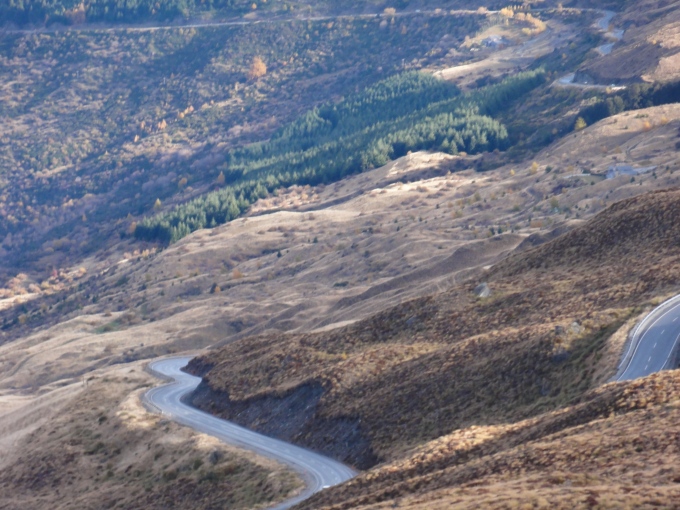
lookingdownfromcoronetpeak

And the story:

…

It was once said that a desperate man has everything to lose.

The man I was chasing was desperate, but I, on the other hand, was more desperate to catch him.

He’d left a trail of dead people from one end of the island to the other.

The team had put in a lot of effort to locate him, and now his capture was imminent.  We were following the car he was in, from a discreet distance, and, at the appropriate time, we would catch up, pull him over, and make the arrest.

There was nowhere for him to go.

The road led to a dead-end, and the only way off the mountain was back down the road we were now on.  Which was why I was somewhat surprised when we discovered where he was.

Where was he going?

“Damn,” I heard Alan mutter.  He was driving, being careful not to get too close, but not far enough away to lose sight of him.

“What?”

“I think he’s made us.”

“How?”

“Dumb bad luck, I’m guessing.  Or he expected we’d follow him up the mountain.  He’s just sped up.”

“How far away?”

“A half-mile.  We should see him higher up when we turn the next corner.”

It took an eternity to get there, and when we did, Alan was right, only he was further on than we thought.”

“Step on it.  Let’s catch him up before he gets to the top.”

Easy to say, not so easy to do.  The road was treacherous, and in places, just gravel, and there were no guard rails to stop a three-thousand-foot fall down the mountainside.

Good thing then, I had the foresight to have three agents on the hill for just such a scenario.

Ten minutes later, we were in sight of the car, still moving quickly, but we were going slightly faster.  We’d catch up just short of the summit car park.

Or so we thought.

Coming quickly around another corner, we almost slammed into the car we’d been chasing.

“What the hell…” Aland muttered.

I was out of the car and over to see if he was in it, but I knew that it was only a slender possibility.  The car was empty, and no indication of where he had gone.

Certainly not up the road.  It was relatively straightforward for the next mile, at which we would have reached the summit.  Up the mountainside from here, or down.

I looked up.  Nothing.

Alan yelled out, “He’s not going down, not that I can see, but if he did, there’s hardly a foothold and that’s a long fall.”

Then where did he go?

Then a man looking very much like our quarry came out from behind a rock embedded just a short distance up the hill.

“Sorry,” he said quite calmly.  “Had to go if you know what I mean.”

I’d lost him.

It was as simple as that.

I had been led a merry chase up the hill, and all the time he was getting away in a different direction.

I’d fallen for the oldest trick in the book, letting my desperation blind me to the disguise that anyone else would see through in an instant.

It was a lonely sight, looking down that road, knowing that I had to go all that way down again, only this time, without having to throw caution to the wind.

“Maybe next time,” Alan said.

“We’ll get him.  It’s just a matter of time.”

…

© Charles Heath 2019-2026

…

Find this and other stories in “Inspiration, maybe”, available soon.

InspirationMaybe1v1

The cinema of my dreams – Was it just another surveillance job – Episode 18

As we all know, writing by the seat of your pants is almost the same as flying by the seat of your pants, a hazardous occupation.

As it happens, I like writing this way because like the reader, I don’t know what to expect next.

And equally, at times, you can write your self into a corner, much like painting, and then have to go back, make a few changes and//or repairs and then move forward.

It’s part of the writing process, only in this case, the changes occur before you’ve finished the novel, if you finish.  Quite often a lot of writers get only so far, then the manuscript hits the bottom drawer, to be brought out on a distant rainy day.

Or your cat has mocked your writing ability one too many times.

Therefore, we’re winding back to Episode 16, and moving forward once again, from there.  This is episode 18 revised…

…

Ever had the heart-stopping feeling when you’re in the wrong place, and someone has interrupted you?  Especially if you shouldn’t be there, or that you have no right to be there.

I stood quietly on the inside of the door and hoped whoever the visitor was would go away.  No answer meant no one was home, didn’t it?

Unless…

I heard a key in the door, and it turn in the lock.

I moved quickly to the other side of the door so I would be shielded when the person came into the room.  Too late to get out, I was of two minds what to do.  Hit the visitor over the head and flee, or ask them what they were doing, before they asked me that same question.

Then nothing.

Until a few seconds later I heard a voice, a man, say, “Jan, you’re back.  How was the visit to Philadelphia?”

I heard the slight rattle of Jan taking her hand off the handle and moving away from the door.  “Sad, as all funerals are.  Now, we are left with the house, and my father’s stuff; a huge collection of mostly junk over a long period of time.  Seems he never threw anything out.”

Jan?  Did she live here, with O’Connell?

“Yes, “I’m a bit like that.”

Another tenant, or the building super?

“I made sure Herman was looked after while you were away.  I don’t think he missed you at all?”

She laughed.  “He’s a cat, Fred.  We belong to them, not the other way around.”

“True.  Your friend has not been in for a week or so.”

“I know.  The last message I got from him, he was in Prague, lucky bastard.  He was going to take me with him, but at the last moment, they changed his itinerary.  Perhaps next time.  I was just going to make sure everything was OK, before going home myself.”

“I could look in if you want?”

“No.  Thanks anyway, but last time I was here I left a jacket behind.  Thanks, Fred.”

A moment later I could hear his footsteps heading away, and Jan moved back to the door, and opened it.

I heard the light switch, and then, suddenly, the room was filled with bright light.

The girl was unassuming, stepped into the room, and closed the door behind her.  Before she could take a step, I put a hand over her mouth and an arm around her neck and started squeezing.

Instinctively she started to struggle and call out for help.

I whispered in her ear, “I mean you no harm, but if you struggle, or yell out, it could turn out very bad for you.”

We had been taught how to subdue people without killing them, but that always didn’t go to plan.  There was that instinct to fight back in everyone, and it was sometimes hard not to apply excessive pressure which could, depending on the severity of resistance, see the target asphyxiated, or end up with a broken neck.

She was still struggling, which mean I had to exert more force.

“Stop fighting me or you will harm yourself,” I said, this time in a more forceful whisper.

It had an immediate effect, but I don’t think it was her obedience that caused it.  I gently lowered her to the floor and felt for a pulse.  Unconscious, not dead.  I sighed in relief.  I took a good long look at her so that I would remember what she looked like.  At some point, I was going to have to talk to her.

Then footsteps outside the door.  What else could go wrong?

Then knocking on the door.  Short and sharp.  Followed by, “Jan, are you in there?”

Fred, whoever he was.  What did he want?”

Another knock on the door, this time more urgent.  Damn.  O’Connell’s flat was like a busy store.

I looked around for an escape now there would be no going out the front door.  Not unless I had to disable another person, and assuming if he was the building super, he would not be a small man, so it would take a greater, and noisier, effort to subdue him.

A fire escape, all buildings usually had one down the side of the building, in case of fire.  I went over and checked the windows and found it.  The window needed a little force to open it, but the sound of a key in the door motivated me.

Out the window, close the window again, I made it down the stairs far enough that when I looked up, no one was following me.

That was close.  Too close.

© Charles Heath 2019-2022

First Dig Two Graves

A sequel to “The Devil You Don’t”

…

Revenge is a dish best served cold – or preferably so when everything goes right

Of course, it rarely does, as Alistair, Zoe’s handler, discovers to his peril. Enter a wildcard, John, and whatever Alistair’s plan for dealing with Zoe was dies with him.

It leaves Zoe in completely unfamiliar territory.

…

John’s idyllic romance with a woman who is utterly out of his comfort zone is on borrowed time. She is still trying to reconcile her ambivalence after being so indifferent for so long.

They agree to take a break, during which she disappears. John, thinking she has left without saying goodbye, refuses to accept the inevitable and calls on an old friend for help in finding her.

After the mayhem and being briefly reunited, she recognises an inevitable truth: there is a price to pay for taking out Alistair; she must leave and find them first, and he would be wise to keep a low profile.

But keeping a low profile just isn’t possible, and enlisting another friend, a private detective and his sister, a deft computer hacker, they track her to the border between Austria and Hungary.

What John doesn’t realise is that another enemy is tracking him to find her too. It could have been a grand tour of Europe. Instead, it becomes a race against time before enemies old and new converge for what will be an inevitable showdown.

The cinema of my dreams – I always wanted to go on a treasure hunt – Episode 74

Here’s the thing…

Every time I close my eyes, I see something different.

I’d like to think the cinema of my dreams is playing a double feature but it’s a bit like a comedy cartoon night on Fox.

But these dreams are nothing to laugh about.

Once again there’s a new installment of an old feature, and we’re back on the treasure hunt.

…

Charlene after talking to Boggs

…

Charlene was standing in the elevator lobby, with the look of a person who was waiting.

Perhaps she was expecting Boggs to make a run for it, but that was hardly likely since there was a deputy outside the door to his room, a new addition after Charlene had been asked to leave.

“Have you got a few minutes?”  It was a question where the only answer was yes, or else.

I was not going to push the ‘or else’ button.

“Of course.”

She led the way to a room that looked to me like a consulting room for doctors, ushered me through then closed the door.  She sat behind the desk and left me to sit in an uncomfortable patient’s chair.

While she consulted her notebook, I took the time to think back to school days and the motley group that had been in my graduation year, of which Charlene was one.  She too had chosen to stay, despite the lack of post-graduation opportunities, and it was no surprise she ended up in the police, having once had the ambition of becoming an investigative journalist.  It was no surprise then she was now a detective in training.

She left the notebook open on a blank page and gave me her attention.  “So, what have you been doing with yourself since school?”

An odd question to ask, but in her mind, I suspect it was an opening gambit to set the interviewee’s mind at rest, a veritable calm before the storm. 

Odd also because she knew what happened as well as anyone, her father, the Sherriff, Being an occasional visitor at my mother’s house, an obligation he felt after my father passed.

Other than that, we had run into each other from time to time since leaving school but she had never shown any interest on any of those occasions. 

“Relevance?”

“Just curious.”

“I’m sure your father may have mentioned our family circumstances, so if you’re looking for information on Boggs, come out and say so, don’t try to feign interest in my welfare.”

Perhaps that was a little harsh, and certainly not how I wanted it to sound, but she had written an op-ed in the town newspaper reviling her contemporary’s lack of enthusiasm to get a job, and rather become the problem, not the solution to the counties economic woes.

She looked taken aback, not expecting such a response.  Her expression changed, more resolute.  “Boggs is looking at an array of charges.  What was he doing there?  You’re his friend, I’m sure he confides in you.”

“Hoe little you know what bring a friend means, but for the record, we were once, but like he said, my cavorting with Nadia put an end to that.”

“Before that, then.”

“You know as well as I do what the Boggs’s are about, father and son alike.”

“He was looking for fabled treasure.”

“Scaling a rock face?  I hardly think so.  He does rock climbing, caving, and a variety of things I have no interest in.  The Grove shoreline has some of the best rock climbing in the state.  The question you should be asking is how did such an experienced climber finish up half-dead on the beach.”

I wasn’t going to make it easy for her.

“What were you doing on the beach when you discovered him?”

“Cavorting with Nadia.”

It sounded salacious, and I wished on that moment it had been.  It provided the distraction I needed and made me consider her next gambit because I think I knew why we were in that room.

After a moment or two of silence, I added, “No chance of pinning a trespass charge on me then.”

She took a deep breath, a sigh from a person who knew she was not making any headway, or however she thought this conversation was going to go, it had been blown off course.

“Look, I’m not the enemy here.  I’m just trying to do my job and find out what happened.  We have no problem with Boggs’s conducting a treasure hunt, so long as he doesn’t break the law.  Old man Cossatino said Boggs was trespassing, which technically, he was.  Do you know why Boggs would think the treasure is located on The Grove?”

“It’s not.”

Time to diffuse this line of questioning.

“You know this or you’re just guessing?”

“There is no treasure, just the Cossatino’s promoting a myth.  Pirates may have sailed by, but I’m sure this wasn’t the place to leave their booty.  There’s plenty of once uninhabited islands in the Caribbean they could have used.”

“In other words, you really have no idea?”

“I’m a realist, and I’ve told Boggs he should be one too.”

“I hope that will include telling him that trespass is a crime, and if he keeps doing it, we will be forced to arrest and charge him.”

“I’ll tell him anything you want me to.”

“Just that.”

A thought popped into my head, one I probably should have thought of earlier, or perhaps it was because an opportunity presented itself.

The mall, and Alex.

“I have a tip for you, one that might help the case of the dead professor on Rico’s boat.  First of all, Rico didn’t do it.”

“He has form and he’s done something similar before.”

“Kill a professor?”

“Shakedown a mark with violence.  Only this time he went too far.”

I shook my head.  “He didn’t do it.  No, that more in Alex Benderby’s department.”

“Alex.  You must be kidding.  He just acts tough.”

I shrugged.  “Being naive about Alex will get you into trouble.  Alex is anything but harmless, and I can attest to that, school days and beyond. But, here’s some advice you might want to act on before the evidence is destroyed.  There’s a room in the mall on the second level where the mall cops hung out.  Back of the second one along there’s a safe.  At the back of the top desk drawers, there is a post-it note with the combination.  I think that’s where you will find a diary that the professor had before it was taken off him.”

“How do you know about this.”

“I overhead a conversation, remember I work for the Benderby’s and in Alex’s domain, the warehouse.”

“You know what they say about eavesdroppers…”

I shook my head again.  “Did the professor’s autopsy and the analysis of the boat show he was killed there?”

That question was met with a furrowed brow, but there was enough expression change to tell me he wasn’t killed on the boat. 

“You know I can’t comment on an ongoing investigation.”

“Don’t have to.  You’re going to need to work on your poker face.  I think that Alex lured the professor down here with the pirate’s diary perhaps offering a large sum of money as an incentive to share, and when he wouldn’t play nice, they encouraged him to change his mind.  I suspect they tried too hard, and the old professor had a heart attack.  Alex never was the patient type.”

“It makes a good story.” 

“Well, you can’t say I didn’t try.  I’ll have a go at trying to dissuade Boggs from anything illegal, but you know what the lure of fabulous riches can do.  Is the case of Boggs’s father still open?”

“If you mean, is it a cold case, yes, but there’s very little to go on.  The evening before he disappeared, he proclaimed he’d found the final resting place of the treasure trove, though he didn’t exactly say where.  At the time he was working for Cossatino, making treasure maps for the gullible.  Later, outside the hotel in the car park, he was confronted by one of those gullible people, who demanded his money back, a scuffle then fight broke out.  By the time the fight was broken up by a passing patrol, we believe that Boggs had sustained severe injuries, serious enough that it’s possible he died of them after blacking out or falling to his death.   They dredged the river from the hotel to the sea, but it may have been too late, and he’d been swept of to sea on the tide.  The other guy was charged, held in connection with Boggs’s disappearance, but ultimately released through lack of evidence or a body.  There may never be a resolution, nor Boggs ever being found, a sad state of affairs for the family.”

It was a sad tale, but one with some information I’d not heard before, and I didn’t think Boggs knew, or I’d he did, had failed to tell me.  The fight in the car park, and the fact it could have led to his death.  I guess that didn’t fit well with the treasure hunter myth that Boggs junior had built up about his father.

Being killed by a disgruntled punter was not exactly fit the Boggs ethos.

“Not exactly a fitting end, was it?”

“Defrauding people is not exactly going to make you friends, especially when the maps are fake, and they’re all different, purportedly made by the same pirate.  He knew what he was doing, and ultimately paid for it.”

Cold, but true.

“Then let’s hope Boggs doesn’t follow in his father’s footsteps.  I hope you consider investigating the mall room because I think you’re going to find something there, even if it doesn’t directly point the finger at Alex.”

“I’ll tell the sheriff, it’s ultimately his decision, not mine.”

“Good.  Now, if you have finished, I have a job to go to.”

…

© Charles Heath 2020-2022

The 2am Rant: My grandchildren are now working in their first job

It’s hard to believe that both the 20-year-old and the 17-year-old have joined the workforce and started on their path of working for the next 50 to 60 years. The 14-year-old is about to start in the next few weeks. How quickly they grow up.

They seem quite amused at the thought, and not without reason, and are not really considering the idea. Not yet, anyway.

The novelty is still quite new, and it has a sense of excitement, but this will no doubt wear off in the coming months. After all, as new workers, they only have to do between 3 and 5-hour shifts.

I guess the fact they decided to work at such a young age reminded me of my experience, way back when I was the same age.

Unlike them, who will be afforded to opportunity to remain in school to the end, Year 12, and possibly the chance to go to University, in my case we did not have the money to continue education beyond Year 10, and there was no question of ever going to University. Only the rich could afford that, and we were anything but rich.

Instead, I guess hating school helped facilitate my departure, and the notion that I would have to pay my own way forced me into working.

Of course, it helped to live in a small country town, and my father had a job that brought him in contact with everyone who was anyone and thus got offers to work in whatever profession I chose.

I ended up in the Post Office, what I considered the easiest of jobs, originally employed as a telegram delivery boy, and mail collector from the post boxes scatted about the town. As you can imagine, there were not many telegrams to deliver, so other duties included sorting mail, and then mail delivery. Yes, I became a postman!

Then, after a few months, I became the night switchboard operator, and with a host of other operators, had some of the most interesting and varied conversations imaginable.

It was a bit of a wrench when we finally moved from the country town back to the city.

When we did, my father bought a small business, and for a year or so, I became a shop assistant.

That lasted for a year or two until I was 17. Realising that a lack of education was going to make it difficult to ever get a good-paying job, I took the opportunity to go back to night school while I had the chance, and it necessitated finding another job to help pay for it.

That was packing books for a wholesale bookseller, part of a small team hidden away in the basement of a very old building. It might not be the best-paying job or the best working conditions, but I suspect it was the universe telling me something.

That job, and being surrounded by books started me off on a journey of reading and eventually writing.

What I learned about writing: Writers must read

If there is one thing I cannot resist is walking into a book store wherever it might be.

It usually elicits a groan from everyone I’m with because for them, watching grass grow is a more fascinating exercise.

But…

The best bookshops are the pop-up ones that appear in various shopping centres where there are empty spaces, and these have a wide variety of books for just $7 each.

And there are lots of bargains…

As you can see, I have been on a few bargain hunts lately and like any writer’s room, tucked away with the boxes of drinks, gardening equipment and everything else that just doesn’t fit in the house, are the piles of books awaiting being put into the shelves

As you can see, the shelves are almost full so it’s going to be an uphill battle to find spaces for them.

By the way, there are eight such book cases on the surrounding walls, as well as a new one, recently discarded from the lounge room, to house the reference books

Along with a few stuffed bears.

The job of putting books on shelves falls to the grandchildren, whom I am trying to convince that when they get older, they should too embrace the idea of having a reading room, which my writing room will also be when I eventually get to throw out the accumulation of years of discarded homewares.

Perhaps one day next year…