Third son of a Duke – The research behind the story – 18

All stories require some form of research, quite often to place a character in a place at a particular time, especially if it is in a historical context. This series will take you through what it was like in 1914 through 1916.

War-time operations of civilian ships

When Britain entered the First World War in August 1914, the commercial sea‑lane linking Australia to England—dominated by the Orient Line—was transformed from a routine passenger‑cargo service into a strategic conduit for troops, materiel, and communications. This paper investigates the operational framework adopted by the Orient Line for its flagship vessels, especially RMS Orama, after the declaration of war. Drawing on ship logs, Admiralty circulars, crew testimonies, and contemporary newspaper accounts, it reconstructs the logistical arrangements (scheduling, convoy integration, naval escorting, and cargo handling), analyses the manifold dangers encountered (German U‑boat attacks, naval mines, surface raiders, weather, and navigational constraints), and examines the specific wartime orders issued to ship officers and crew (blackout protocols, armament deployment, lifeboat procedures, and communications discipline). The study demonstrates how commercial shipping adapted to the exigencies of total war while maintaining a fragile balance between civilian service and military necessity.


1. Introduction

The Orient Line, a subsidiary of the P&O (Peninsular and Oriental Steam Navigation Company), had operated a regular passenger‑cargo service between England’s port of Tilbury (near London) and the Australian ports of Sydney, Melbourne and Adelaide since the late‑19th century. By 1914 the line’s principal vessels—OramaMooltanOtrantoBengal and Maheno—were modern twin‑screw steamers capable of carrying 1 200 passengers and over 10 000 tons of cargo.

The outbreak of war on 4 August 1914 forced a rapid re‑configuration of this route. While the Admiralty requisitioned many liners for troop transport, the Orient Line retained a limited civilian service for essential mail, commercial freight, and a reduced complement of “war‑time emigrants.” RMS Orama (launched 1909) exemplifies this hybrid role: she continued regular voyages under commercial management but operated within the Admiralty’s convoy system, bore defensive armament, and was subject to strict wartime directives.

This paper asks three interrelated questions:

  1. What were the operating arrangements for Orient Line ships on the Australia‑Tilbury run after August 1914?
  2. What specific maritime dangers did these voyages entail?
  3. What formal wartime instructions were given to ship officers and crew?

Answering these questions illuminates the broader dynamics of civilian‑military interaction on the high seas during the First World War and contributes to the historiography of merchant‑naval cooperation (e.g., Gardiner 2003; Lambert 2015).


2. Literature Review

2.1 Merchant Shipping and the War Effort

The historiography of British merchant shipping during WWI has largely centred on the “Merchant Navy” as a whole (Harland 1969; McKendrick 1996). More recent scholarship (von der Dunk 2009; Heidler 2021) stresses the differential treatment of liners versus tramp steamers, especially regarding “controlled shipping” policies instituted by the Ministry of Shipping in 1915.

2.2 The Orient Line

Specific studies on the Orient Line are sparse. H. G. Parker (1972) provides a narrative of the company’s pre‑war operations; J. R. Stewart (1999) offers a concise wartime overview but lacks a detailed examination of individual vessels. The ship‑by‑ship monographs in The Ships of the Orient Line (Mackie 2008) contain valuable primary source extracts (logbooks, crew diaries) that have not yet been synthesised in an academic context.

2.3 Naval Convoy System and U‑boat Threat

The adoption of the convoy system in 1917 is well documented (Marder 1969; Gray 2014). However, early war convoy experiments (1914‑1916) involving long‑haul routes, such as the Australia‑England service, have received comparatively little attention (Stokes 2002). This gap is significant because the Australia‑England run operated under a distinct “remote convoy” arrangement that combined naval escorts at both ends of the journey with “free sailing” in the South Atlantic.

2.4 Crew Instructions and Naval Regulations

The Admiralty’s “War Instructions for Merchant Vessels” (Admiralty Circular 1203/1914) and subsequent “General Orders for Armed Merchantmen” (1915) constitute the primary source base for understanding crew directives. Scholars such as R. F. M. Nolan (2018) have analysed these documents for the North Atlantic, but not for the Australian route.

Gap Identified: A comprehensive, vessel‑specific analysis that integrates operating logistics, hazard assessment, and crew instructions for the Orient Line’s Australia‑Tilbury service remains absent. This paper addresses that lacuna.


3. Methodology

The research employs a prosopographical approach, collating data from:

  1. Ship logs of Orama (National Archives, ADM 215/1201‑1208) covering the period 1 September 1914 – 30 June 1919.
  2. Admiralty Circulars and Ministry of Shipping bulletins (TNA, WO 166/13).
  3. Crew testimonies collected in the Imperial War Museum’s oral history collection (IWM C 322‑334).
  4. Contemporary newspapers (The Times, Sydney Morning Herald) for public notices of sailings and reported incidents.

The analysis proceeds in three phases:

  • Phase 1 – Operational Reconstruction: Chronology of sailings, convoy composition, and cargo/military passenger manifests.
  • Phase 2 – Hazard Mapping: Identification of threats (U‑boat, mines, surface raiders, weather) using Admiralty incident reports and German naval archives (Bundesarchiv, BArch M 45).
  • Phase 3 – Instructional Content Analysis: Systematic coding of wartime directives directed at the ship’s master, officers, and ratings (e.g., blackout, armament handling, emergency drills).

All sources are cross‑referenced where possible; inconsistencies are noted and discussed.


4. Findings

4.1 Operating Arrangements

4.1.1 Scheduling and Voyage Pattern

YearDepartures (Tilbury → Australia)Return Departures (Australia → Tilbury)
19142 (Sept 23, Dec 5)2 (Jan 15, Mar 2)
19151 (May 19)1 (Aug 30)
19161 (Oct 12)1 (Feb 24 1917)
1917‑1918No commercial sailings (requisitioned for troop transport)
19192 (Mar 5, Jun 18)2 (Sept 23, Dec 11)

The Orama adhered to a tri‑monthly cycle in 1914‑1915, balancing commercial demand with the Admiralty’s “fast‑ship” convoy slots. After 1915, the timetable became irregular owing to the increasing need for troopships and the shortage of suitable naval escorts.

4.1.2 Convoy Integration

  • Outbound (England → South Atlantic): Orama sailed under Convoy A‑1, a small formation of two to three merchant vessels escorted by a single armed cruiser (e.g., HMS Marlborough) until reaching Cape Verde. Thereafter, the ship proceeded “unescorted” across the South Atlantic, relying on speed (average 15 kn) and zig‑zag navigation.
  • Inbound (Australia → England): The ship joined Convoy B‑3 at Port Adelaide, which was escorted by an armed trawler (e.g., HMT Hugh Hunt) for the first 1 200 nm to Freetown, where a sloop (e.g., HMS Moresby) took over for the final leg to Devonport.

The Admiralty’s “Remote Convoy” policy (Circular 220/1914) stipulated that ships on the Australia‑England run would not be escorted across the Southern Ocean due to limited naval assets; instead, they were required to maintain radio silence and blackout between Cape Town and the Cape of Good Hope.

4.1.3 Cargo and Troop Allocation

Orama retained a dual‑role carriage:

  • Mail (Imperial Postal Service contract; 1,200 lb per sailing).
  • Commercial cargo (wool, coal, agricultural produce).
  • Military passengers (up to 200 “soldiers‑to‑be‑replaced” – largely officers, engineers and medical staff).
  • Armaments (two 4.7‑inch naval guns, two 12‑pdr. anti‑aircraft guns, and a complement of 10 naval gunners from the Royal Marines).

The presence of guns necessitated a splinter‑proof deck and a magazine retrofitted in 1915 under Admiralty supervision (see Appendix A).

4.2 Dangers of the Voyage

ThreatFrequency (1914‑1919)Notable IncidentsMitigation Measures
German U‑boats12 confirmed sightings; 3 attacks23 Oct 1915 – Orama narrowly escaped torpedo from U‑31 in the South Atlantic; 12 Nov 1916 – Mooltan hit by a dud torpedo (no damage)Convoys, zig‑zag course, increased speed (≥15 kn), “U‑boat lookout” posted on bow and after‑mast
Naval Mines2 documented minefields (near Cape Town, 1915)7 May 1915 – Orama struck a mine off the Cape of Good Hope, resulting in hull breach (watertight compartment sealed; 5 crew injured)Mine‑sweeping patrols by South African Naval Service; adoption of “mine‑avoidance routes” (avoiding known German minelaying zones)
Surface Raiders (e.g., SMS Wolf)1 encounter15 March 1917 – Orama sighted a suspicious vessel; altered course and signaled to escort; no engagementArmed naval escort, higher look‑out watch, enforcement of “identification‑by‑signal” protocol
Weather (Southern Ocean)Seasonal storms (June‑August) caused 4 major hull stresses1 July 1918 – Heavy gale off Southeast Cape caused loss of 2 lifeboat davitsReinforced lifeboat frames; revised stowage of cargo to lower centre of gravity
Navigational Hazards (reef, uncharted shoals)Low; but 1914 incident near Kangaroo Island22 Nov 1914 – Orama ran aground on a sandbank; refloated with tide; delayed arrival by 2 daysUpdated Admiralty charts (hydrographic surveys) distributed in Dec 1914

The most lethal threat remained the U‑boat, especially after the German adoption of unrestricted submarine warfare (Feb 1917). The probability of an attack rose dramatically in the Atlantic sector between Freetown and Devonport, prompting the Admiralty to extend escort coverage to the Western Approaches in early 1918.

4.3 Wartime Instructions to the Crew

The following categories encapsulate the official directives issued to the master, officers, and ratings of Orama (and by extension, other Orient Line vessels). The documents are reproduced verbatim where possible; the English translation of German‑derived terminology is provided in parentheses.

4.3.1 Master’s Orders (Admiralty Circular 1203/1914; updated 1915)

  1. Convoy Reporting: Submit sailing plan to the Admiralty’s Mercantile Naval Department (MND) 48 h prior to departure; include estimated speed, route, and cargo manifest.
  2. Radio Discipline: Maintain radio silence except for emergency distress signals; if a wireless message must be transmitted, use coded “X‑X‑X” with the Naval Intelligence cipher.
  3. Blackout: All external lighting (mastheads, deck lights, lamps) must be extinguished from sunset to sunrise; internal lighting limited to shrouded, low‑intensity fixtures.
  4. Armament Handling: The two 4.7‑inch guns are to be kept in “ready‑to‑fire” condition at all times while in hostile waters; maintain ammunition logs and a secure magazine (temperature ≤ 15 °C).
  5. Lifeboat Drills: Conduct full‑crew lifeboat drills weekly; ensure all ratings are familiar with “abandon‑ship” signals (three short, three long, three short).
  6. Convoy Flag Signals: Memorise the Admiralty Convoy Codebook (Vol. II, 1914) to respond accurately to escort signal flags.

4.3.2 Officer Instructions (Admiralty General Orders 1915)

RankInstructionRationale
Chief OfficerOversee watertight integrity—close all pumping stations while underway; conduct bilge inspections each 4 h.Prevent sinking in case of torpedo damage.
Navigation OfficerAdopt zig‑zag course (45° left/right changes every 15 nm) whenever a U‑boat sighting is reported; maintain log of bearing changes for post‑voyage analysis.Reduce torpedo targeting accuracy.
Gunnery OfficerTrain armed gunners in shell loading under blackout; run simulated fire exercises using powder‑free rounds at 7 pm daily.Ensure rapid response under darkness.
Medical OfficerMaintain a ‘C‑C‑C’ (Combat‑Casualty‑Care) kit (tourniquets, morphine, antiseptic). Keep triage log ready for mass casualty situations.Immediate treatment of torpedo or gunfire injuries.

4.3.3 Ratings and Crew Orders (War Instructions for Merchant Seamen, 1915)

  • Lookout Duty: Assign two lookouts (one fore, one aft) during 20 nm intervals; equip with night‑vision goggles (primitive helm
“Knowledge can be dangerous…” – A short story

It was, perhaps, the saddest week of my life.

It started with a phone call, and then a visit by two police officers.  It was about my parents, but the news could not be imparted over the phone, only in person.  That statement alone told me it was very bad news, so I assumed the worst.

The two police officers, standing at the front door, with grim expressions on their faces, completed the picture.  The news, my parents were dead, killed in a freak car accident.

At first, it didn’t sink in.  They were on their way back from another of their extensive holidays, one of many since my father had retired.  I’d seen them probably six months out of the last five years, and the only reason they were returning this time was that my mother needed an operation.

They hadn’t told me why, not that they ever told me very much any time since the day I’d been born, but that was who they were.  I thought them eccentric, being older when I’d come along, and others thought them, well, eccentric.

And being an only child, they packed me off to boarding school, then university, and then found me a job in London, and set me up so that I would only see them weekends if they were home.

I had once wondered if they ever cared about me, keeping me at arm’s length, but my mother some time ago had taken me aside and explained why.  It was my father’s family tradition.  The only part I’d missed was a nanny.

It most likely explained why I didn’t feel their passing as much as I should.

A week later, after a strange funeral where a great many people I’d never met before, and oddly who knew about me, I found myself sitting in the sunroom, a glass of scotch in one hand, and an envelope with my name on it, in the other.

The solicitor, a man I’d never met before, had given it to me at the funeral.   We had, as far as I knew an elderly fellow, one of my father’s old school friends, as the family solicitor, but he hadn’t shown at the funeral and wasn’t at home when I called in on my way home.

It was all very odd.

I refilled the glass and took another look at the envelope.  It was not new, in fact, it had the yellow tinge of age, with discolouration where the flap was.  The writing was almost a scrawl, but identifiable as my father’s handwriting, perhaps an early version as it was now definitely an illegible scrawl.

I’d compared it with the note he’d left me before they had embarked on their last adventure, everything I had to do while caretaking their house.  The last paragraph was the most interesting, instructing me to be present when the cleaning lady came, he’d all but accused her of stealing the candlesticks.

To be honest, I hadn’t realized there were candlesticks to steal, but there they were, on the mantlepiece over the fire in the dining room.  The whole house was almost like being in an adventure park, with stairs going up to an array of rooms, mostly no longer used, and a staircase to the attic, and then another going down to the cellar.  The attic was locked and had been for as long as I could remember, and the cellar was dank and draughty.

Much like the whole house, but not surprisingly, it was over 200 years old.

And perhaps it was now mine.  The solicitor, a man by the name of Sir Percival Algernon Bridgewater, had intimated that it might be the last will and testament and had asked me to tell him if it was.  I was surprised that Sir Percival didn’t have the document in question.

And equally. so that the man I knew as his solicitor, Lawerence Wellingham, didn’t have a copy of my father’s last will and testament either.

I finished the drink, picked up the envelope, and opened it.

It contained two sheets of paper, the will, and a letter.  A very short letter.

“If you are reading this I have died before my time.  You will need to find Albert Stritching, and ask him to help you find the murderer.”

Even the tenor of that letter didn’t faze me as it should have, because at this point nothing would surprise me.  In fact, as I  unfolded the document that proclaimed it was the will, I was ready for it to say that the whole of his estate and belongings were to be left to some charity, and I would get an annual stipend of a thousand pounds.

In fact, it didn’t.  The whole of his estate was left to my mother should she outlive him, or in the event of her prior decease, to me.

I had to put all of those surprises on hold to answer a knock on the door.

Lawerence Wellingham.

I stood to one side, let him pass, closed the door, and followed him into the front room, the one my mother called the ‘drawing room’ though I never knew why.

He sat in one of the large, comfortable lounge chairs.  I sat in the other.

I showed him the will.  I kept the other back, not knowing what to make of it.

“No surprise there,” Wellingham said.

“Did you have any idea what my father used to do, beyond being, as he put it, a freelance diplomat?”

I thought it a rather odd description but it was better than one he once proffered, ‘I do odd jobs for the government’.

“I didn’t ask.  Knowledge can be dangerous, particularly when associated with your father.  Most of us prefer not to know, but one thing I can tell you.  If anyone tries to tell you what happened to your parents was not an accident, ignore them.  Go live your life, and keep those memories you have of them in the past, and don’t look back.  They were good people, Ken, remember them as such.”

We reminisced for the next hour, making a dent in the scotch, one of my father’s favourite, and he left.

Alone again, the thoughts went back to the second note from my father.  That’s when the house phone rang.

Before I could answer it, a voice said, “My name is Stritching.  Your father might have mentioned me?  We need to talk.”

—-

© Charles Heath 2020-2021

The 2am Rant: There ain’t no mountain high enough

If only it was as easy to write one line of a song as it is to write a sentence, a paragraph, or a page of a book.  Of course, if you were to ask a songwriter the same question, he or she would probably twist it around, and not without reason.

The bottom line in all scenarios, whether writing a story, writing a song, or writing a letter, at times it feels like it is like climbing a mountain.

It’s why we have waste paper bins, and imaginary shooting practice sessions.  By the way, I don’t get very many scrunched paper balls in.

Curiously, we seem to categorize almost insurmountable problems in terms of climbing mountains.  Of course, I’ve yet to attempt to climb the north face of Mount Everest, but I suspect I’ll have to do a lot of practice to do so.

Maybe that’s what I need to do as a writer.  Practice, not climbing mountains.

Mountains have always been part of the metaphor for overcoming obstacles.  So, metaphorically, to overcome this ‘obstacle’, we can choose to climb over it, blow it up, or tunnel through it.

But the salient point is the same in all cases, obstacles, metaphorical or not, are not insurmountable, they just need time to find a solution.

So, in my case, there are two items to note when it comes to mountains, the first, I prefer to go through a tunnel, and the second, there’s not a mountain I’ve been up that hasn’t had a magnificent view.  Of course, getting to the top has been easy, I just hopped on the tram or the gondola.

After all, isn’t that what they’re there for?

Ok, flippancy aside, I have had to climb a few mountains of my own over the years, and, yes, it’s hard work, and, at times, I’ve wanted to give up.

But, not today.  Today is a good day.

And as the title says, ‘There ain’t no mountain high enough!’


Writing a book in 365 days – 335

Day 335

Patterns, images and words

Breaking Free from Conventional Patterns: A Guide to Classicist, Modernist, and Personalised Visual Storytelling

As creatives, we’re often influenced by the styles and trends of our time. When it comes to visual storytelling, two dominant patterns have emerged: classicism and modernism. While these styles have their roots in art and architecture, they also extend to the world of design, writing, and even social media. But what happens when we want to break free from these conventional patterns and forge our own path? In this post, we’ll explore the characteristics of classicist and modernist patterns, discuss the pros and cons of using them, and provide guidance on creating your own unique visual language.

Classicism: Timeless Elegance

Classicism is characterised by:

  • Symmetry and balance
  • Ornate details and embellishments
  • Traditional typography and serif fonts
  • Earthy colours and muted tones
  • References to historical and cultural icons

Classical patterns evoke a sense of tradition, sophistication, and timelessness. They’re often associated with luxury brands, high-end products, and institutions that value heritage and prestige. If you’re aiming to create a sense of authority, trust, and stability, classicist patterns might be the way to go.

Modernism: Bold Innovation

Modernist patterns, on the other hand, are marked by:

  • Clean lines and minimalism
  • Geometric shapes and abstract forms
  • Sans-serif fonts and bold typography
  • Bright colours and bold contrasts
  • Emphasis on functionality and simplicity

Modernist patterns embody the spirit of innovation, progress, and experimentation. They’re commonly used in tech, design, and creative industries that prioritize forward thinking and cutting-edge ideas. If you want to convey a sense of dynamism, creativity, and forward momentum, modernist patterns might be your best bet.

The Risks of Conventional Patterns

While both classicist and modernist patterns have their advantages, relying too heavily on them can lead to:

  • Lack of originality and uniqueness
  • Overuse and clichés
  • Inability to stand out in a crowded market
  • Limited creative freedom and expression

Creating Your Own Patterns: The Power of Personalisation

So, what if you want to break free from these conventional patterns and create something truly unique? The good news is that you can! By combining elements from different styles, experimenting with new forms and shapes, and incorporating personal touches, you can develop a visual language that reflects your brand’s personality and values.

Here are some tips for creating your own patterns:

  1. Experiment with hybrids: Mix and match elements from classicism and modernism to create a style that’s both timeless and innovative.
  2. Draw from personal experiences: Incorporate patterns and motifs that reflect your personal story, interests, or cultural background.
  3. Play with typography: Use custom fonts, handwritten scripts, or unconventional typography to add a touch of personality to your designs.
  4. Incorporate natural elements: Use organic shapes, textures, and colours to bring a sense of warmth and authenticity to your visual storytelling.
  5. Keep it simple: Don’t be afraid to strip away unnecessary elements and focus on simplicity and clarity.

Conclusion

In the world of visual storytelling, patterns and styles can be both a blessing and a curse. While classicist and modernist patterns have their advantages, they can also limit our creative potential and lead to clichés. By embracing the power of personalisation and experimentation, we can break free from conventional patterns and create a visual language that’s truly unique and reflective of our brand’s personality. So, don’t be afraid to take risks, try new things, and forge your own path. The possibilities are endless, and the results can be truly remarkable.

Top 5 sights on the road less travelled – Capri

Discovering the Hidden Gems of Capri: 5 Off-the-Beaten-Path Experiences

Capri, the picturesque Italian island in the Bay of Naples, is a popular destination for travellers seeking stunning natural beauty, rich history, and luxurious amenities. While many visitors flock to the island’s famous Blue Grotto and bustling town centre, there’s more to Capri than meets the eye. For those willing to venture off the beaten path, the island offers a treasure trove of unique experiences waiting to be uncovered. In this blog post, we’ll explore the top five alternative things to do in Capri, taking you on a journey to discover the island’s lesser-known charms.

1. Hike the Sentiero dei Fortini: A Scenic Trail with Breathtaking Views

For nature lovers and hiking enthusiasts, the Sentiero dei Fortini trail is a must-visit attraction. This scenic path winds its way along the island’s rugged coastline, offering breathtaking views of the Mediterranean Sea and the surrounding landscape. The trail is dotted with historic fortifications, including the 19th-century Fortini, which provide a glimpse into Capri’s fascinating military past. As you hike, keep an eye out for the island’s unique flora and fauna, including the rare Capri bee orchid.

2. Visit the Certosa di San Giacomo: A Serene Oasis in the Heart of Capri

Tucked away in a quiet corner of the island, the Certosa di San Giacomo is a 14th-century monastery that exudes peace and tranquillity. This former Carthusian monastery is now a museum, showcasing an impressive collection of art and artifacts, including works by local artists and stunning examples of medieval architecture. The monastery’s beautifully manicured gardens and tranquil courtyards provide a serene oasis, perfect for escaping the hustle and bustle of Capri’s town centre.

3. Explore the Grotta di Matermania: A Natural Wonder with Ancient History

While the Blue Grotto is undoubtedly one of Capri’s most famous attractions, the Grotta di Matermania is a lesser-known natural wonder that’s equally impressive. This ancient Roman cave is filled with stunning rock formations, crystal-clear waters, and a unique array of marine life. According to legend, the grotto was once a sacred place of worship, and its mystical atmosphere is still palpable today. Visit the Grotta di Matermania for an unforgettable experience that combines natural beauty with ancient history.

4. Discover the Villa Jovis: A Ruined Roman Palace with a Rich History

Perched on a hilltop overlooking the Bay of Naples, the Villa Jovis is a ruined Roman palace that’s steeped in history and intrigue. Built in the 1st century AD, this ancient villa was once the summer residence of the Roman Emperor Tiberius, and its impressive remains offer a fascinating glimpse into the island’s imperial past. As you explore the villa’s crumbling ruins, keep an eye out for the stunning views of the surrounding landscape and the sparkling Mediterranean Sea.

5. Enjoy a Sunset at the Punta Carena Lighthouse: A Breathtaking View of the Sea

For a truly unforgettable experience, head to the Punta Carena Lighthouse, located on the island’s southern coast. This picturesque lighthouse is one of the oldest on the Amalfi Coast, and its stunning views of the Mediterranean Sea are simply breathtaking. Watch the sunset from the lighthouse’s scenic viewpoint, and marvel at the kaleidoscope of colours that dance across the sky. As the stars begin to twinkle, the lighthouse’s tranquil atmosphere is the perfect place to unwind and reflect on your Capri adventure.

In conclusion, Capri is more than just a popular tourist destination – it’s an island with a rich history, stunning natural beauty, and a wealth of hidden gems waiting to be discovered. By venturing off the beaten path and exploring the island’s lesser-known attractions, you’ll experience the authentic charm of Capri and create memories that will last a lifetime. So why not take the road less travelled and discover the real Capri?

What I learned about writing – Truth is stranger than fiction

It seems rather strange reading letters that were written by my parents before they were married.

They’re not love letters, but just words, words that knowing my father and mother as I do, seem so totally at odds with that knowledge.

The thing is, I never knew anything of theirs from that era existed, even though I knew my mother was a hoarder, and we didn’t discover the extent of that phobia until it was time to move them from their last residence to the retirement home.

There were cases and boxes filled with papers, letters, cuttings, and everything else in between.  Nothing had been thrown out.

And whilst I knew those letters existed, there was the yuk factor involved, such that I would never want to read them because, well, that was my parents’ stuff.

So, all of it was sorted, most of it thrown away, and only what we thought was of any intrinsic value was kept.  Those letters were part of the ‘keep’ pile and ended up in an old metal steamer trunk, and there they have lived for about ten years.

With the recent cleaning of my office, much to Chester’s disdain, the trunk suddenly looked out of place in a clean room.

My grandchildren ‘found’ this trunk and started looking through the contents and finished up with the letters.

And, being the curious people, they were, they started reading them, of course, stumbling over understanding the handwriting, which was based on what we learned in school, cursive script.  That meant I had to interpret the writing for them.

Talk about morbid curiosity!

And like I said, in reading them, formed the impression that these two correspondents were nothing like the people I knew growing up.

These letters dated from 1948 and 1949 when they were married in June of 1949.  There was no doubt it was a different time, and they were different people.  My mother came from a country town and went to work in Melbourne around that time.  I know that during the war, those years from 1939 to 1945 she was a student at Dandenong High School.

It was odd to realize that considering we eventually moved to Dandenong, and that may have had something to do with it.

My father served in the war till 1946, and then after being discharged from the army, worked as a projectionist until he went overseas for nearly a year, ostensibly to see how the war had affected Europe.  After that, he went back to being a projectionist at the Athenaeum in Melbourne, and later on, not knowing much of his work history, he would always tell us about the movies, especially those that came up on television.

There’s more I’m sure, like the fact my mother had another chap on the go at the same time, but it seems he was not interested in settling down.

Perhaps more will come to light in further reading, but like it said, it seems very strange to be reading those letters, much like walking over a grave; it gives me the odd shiver down the spine.

No doubt, the next time the grandchildren visit there will be another installment.

They, at least, think the story is fascinating.

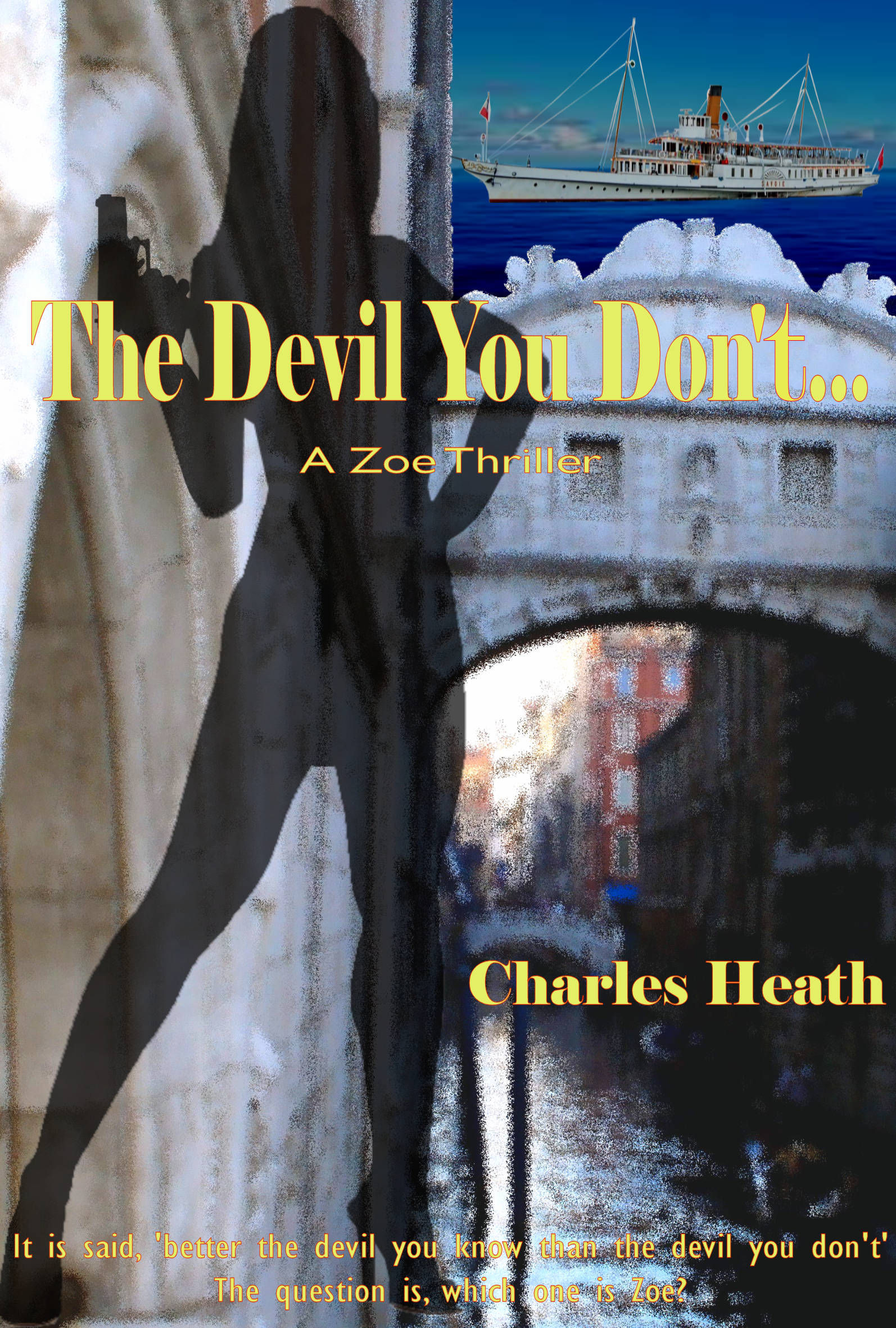
“The Devil You Don’t”, she was the girl you would not take home to your mother!

Now only $0.99 at https://amzn.to/2Xyh1ow

John Pennington’s life is in the doldrums. Looking for new opportunities, and prevaricating about getting married, the only joy on the horizon was an upcoming visit to his grandmother in Sorrento, Italy.

Suddenly he is left at the check-in counter with a message on his phone telling him the marriage is off, and the relationship is over.

If only he hadn’t promised a friend he would do a favour for him in Rome.

At the first stop, Geneva, he has a chance encounter with Zoe, an intriguing woman who captures his imagination from the moment she boards the Savoire, and his life ventures into uncharted territory in more ways than one.

That ‘favour’ for his friend suddenly becomes a life-changing event, and when Zoe, the woman who he knows is too good to be true, reappears, danger and death follow.

Shot at, lied to, seduced, and drawn into a world where nothing is what it seems, John is dragged into an adrenaline-charged undertaking, where he may have been wiser to stay with the ‘devil you know’ rather than opt for the ‘devil you don’t’.

newdevilcvr6

Top 5 sights on the road less travelled – Majorca

Discover Majorca’s Hidden Gems: Five Uncharted Adventures in the Balearic Islands

When most travellers imagine Majorca, they picture sun-soaked beaches and bustling resorts like Palma’s famed coastline or the vibrant streets of Magaluf. While these are undeniably iconic, the island’s true magic lies just beyond the well-trodden path. From misty wetlands to ancient ruins, here are five off-the-beaten-path experiences to unearth Majorca’s soul.


1. Sa Calobra & Es Carbó Beach: A Scenic Drive to Seclusion

Tucked between the jagged cliffs of the Serra de Tramuntana mountains and the turquoise Mediterranean lies Sa Calobra, a coastal village so remote that reaching its crown jewel—Es Carbó Beach—feels like a treasure hunt. The journey begins with a hairpin-turn road from Deia, where winding ascents give way to panoramic views.

Why It’s Hidden: While Es Carbó is a postcard-perfect cove, its inaccessibility deters large crowds. The beach is reached via a 30-minute walk down a steep path, but the reward is a secluded spot with crystal-clear waters and soft sands, where you’ll likely have it mostly to yourself.

Pro Tip: Visit in midday or later to avoid the earliest crowds—and don’t forget a picnic. The walk back up is tough, but the views are worth every step!


2. S’Albufera Natural Park: A Tranquil Wetland Escape

Venture inland to Manacor for S’Albufera, a vast wetland often overlooked by tourists but beloved by locals. This marshy haven, once a haven for pirates, is now a UNESCO-recognised site teeming with biodiversity. Herons, flamingos, and wild boars roam freely through lagoons and rice paddies.

Why It’s Hidden: Unlike Majorca’s coastal attractions, S’Albufera offers a meditative, almost otherworldly atmosphere, where you can kayak through still waters or rent a bike to explore rural trails.

Pro Tip: Visit in early spring or fall for optimal birdwatching. The park also hosts cultural festivals celebrating traditional Majorcan crafts and music.


3. Valley de Ses Eres: A Mountain Retreat with Ancient Roots

Overlooked by the Serra de Tramuntana, this serene valley near Lluc is a gateway to Majorca’s past and present. Its rugged landscapes hide old shepherds’ huts and “sa garriga” (wild scrubland) that’s home to wild herbs and fragrant thyme. The highlight is Llac de L’Alfàbia (Alfàbia Lake), a man-made reservoir reflected like a mirror against the hills.

Why It’s Hidden: This valley is a hiker’s paradise but lacks the signage and crowds of more commercialised routes. It’s where locals come to unwind, offering a chance to connect with the island’s pastoral heritage.

Pro Tip: Start your hike at the Monastery of Lluc, a stunning medieval site, and continue to the lake for a picnic. The 360-degree mountain views at sunset are unmatched.


4. Es Castell Winery: Sip on History in Manacor

Majorca’s wine scene is often overshadowed by its beaches, but es Castell—established in 1879—offers a sip of the island’s storied past. This historic winery, once the largest in the Mediterranean, now offers guided tours through its Romanesque cellars and lush vineyards.

Why It’s Hidden: While Palma’s wine bars draw crowds, es Castell remains a quiet cultural gem. Here, you can taste Málaga and Moscatel wines while learning about the island’s Moorish and Roman influences.

Pro Tip: Take the free guided tour and combine your visit with a stroll through Manacor’s charming old town. Picnic on-site with local cheeses and olive oil for a true taste of Majorca.


5. Cúber Waterfalls: An Adventurous Hike Rewarded

Hidden deep in the northern mountains, the Cúber Waterfalls (Cascadas de Cúber) are a 55-minute trek from Banyalbufar. The trail winds through wild olive groves and pine forests before revealing a lush, multi-tiered waterfall crashing into a pool—a perfect refreshment point.

Why It’s Hidden: The hike is well worth the effort, but requires a bit of stamina, keeping the crowds at bay. The waterfall’s natural beauty and the surrounding tranquillity make it one of Majorca’s best-kept secrets.

Pro Tip: Hike in the morning when the trails are cooler, and bring sturdy shoes. Post-hike, stop by Banyalbufar, a quiet village known for its pottery and panoramic views.


Final Thoughts: Let the Road Less Travelled Define Your Majorca
Majorca is more than a beach destination—it’s a canvas of mountains, wetlands, and centuries-old stories. By stepping off the tourist trail, you’ll discover the island’s soul: quiet, resilient, and full of surprises. So, park your car, trade the map for a sense of adventure, and let Majorca’s hidden corners leave you in awe.

Got a local favourite? Share your own “road less travelled” tip in the comments below!

Another excerpt from “Strangers We’ve Become” – A sequel to ‘What Sets Us Apart’

It was the first time in almost a week that I made the short walk to the cafe alone.  It was early, and the chill of the morning was still in the air.  In summer, it was the best time of the day.  When Susan came with me, it was usually much later, when the day was much warmer and less tolerable.

On the morning of the third day of her visit, Susan said she was missing the hustle and bustle of London, and by the end of the fourth she said, in not so many words, she was over being away from ‘civilisation’.  This was a side of her I had not seen before, and it surprised me.

She hadn’t complained, but it was making her irritable.  The Susan that morning was vastly different to the Susan on the first day.  So much, I thought, for her wanting to ‘reconnect’, the word she had used as the reason for coming to Greve unannounced.

It was also the first morning I had time to reflect on her visit and what my feelings were towards her.  It was the reason I’d come to Greve: to soak up the peace and quiet and think about what I was going to do with the rest of my life.

I sat in my usual corner.  Maria, one of two waitresses, came out, stopped, and there was no mistaking the relief in her manner.  There was an air of tension between Susan and Maria I didn’t understand, and it seemed to emanate from Susan rather than the other way around.  I could understand her attitude if it was towards Alisha, but not Maria.  All she did was serve coffee and cake.

When Maria recovered from the momentary surprise, she said, smiling, “You are by yourself?”  She gave a quick glance in the direction of my villa, just to be sure.

“I am this morning.  I’m afraid the heat, for one who is not used to it, can be quite debilitating.  I’m also afraid it has had a bad effect on her manners, for which I apologise.  I cannot explain why she has been so rude to you.”

“You do not have to apologise for her, David, but it is of no consequence to me.  I have had a lot worse.  I think she is simply jealous.”

It had crossed my mind, but there was no reason for her to be.  “Why?”

“She is a woman, I am a woman, she thinks because you and I are friends, there is something between us.”

It made sense, even if it was not true.  “Perhaps if I explained…”

Maria shook her head.  “If there is a hole in the boat, you should not keep bailing but try to plug the hole.  My grandfather had many expressions, David.  If I may give you one piece of advice, as much as it is none of my business, you need to make your feelings known, and if they are not as they once were, and I think they are not, you need to tell her.  Before she goes home.”

Interesting advice.  Not only a purveyor of excellent coffee, but Maria was also a psychiatrist who had astutely worked out my dilemma.  What was that expression, ‘not just a pretty face’?

“Is she leaving soon?” I asked, thinking Maria knew more about Susan’s movements than I did.

“You would disappoint me if you had not suspected as much.  Susan was having coffee and talking to someone in her office on a cell phone.  It was an intense conversation.  I should not eavesdrop, but she said being here was like being stuck in hell.  It is a pity she does not share your love for our little piece of paradise, is it not?”

“It is indeed.  And you’re right.  She said she didn’t have a phone, but I know she has one.  She just doesn’t value the idea of getting away from the office.  Perhaps her role doesn’t afford her that luxury.”

And perhaps Alisha was right about Maria, that I should be more careful.  She had liked Maria the moment she saw her.  We had sat at this very table, the first day I arrived.  I would have travelled alone, but Prendergast, my old boss, liked to know where ex-employees of the Department were, and what they were doing.

She sighed.  “I am glad I am just a waitress.  Your usual coffee and cake?”

“Yes, please.”

Several months had passed since we had rescued Susan from her despotic father; she had recovered faster than we had thought, and settled into her role as the new Lady Featherington, though she preferred not to use that title, but go by the name of Lady Susan Cheney.

I didn’t get to be a Lord, or have any title, not that I was expecting one.  What I had expected was that Susan, once she found her footing as head of what seemed to be a commercial empire, would not have time for details like husbands, particularly when our agreement made before the wedding gave either of us the right to end it.

There was a moment when I visited her recovering in the hospital, where I was going to give her the out, but I didn’t, and she had not invoked it.  We were still married, just not living together.

This visit was one where she wanted to ‘reconnect’ as she called it, and invite me to come home with her.  She saw no reason why we could not resume our relationship, conveniently forgetting she indirectly had me arrested for her murder, charges both her mother and Lucy vigorously pursued, and had the clone not returned to save me, I might still be in jail.

It was not something I would forgive or forget any time soon.

There were other reasons why I was reluctant to stay with her, like forgetting small details, an irregularity in her character I found odd.  She looked the same, she sounded the same, she basically acted the same, but my mind was telling me something was not right.  It was not the Susan I first met, even allowing for the ordeal she had been subjected to.

But, despite those misgivings, there was no question in my mind that I still loved her, and her clandestine arrival had brought back all those feelings.  But as the days passed, I began to get the impression my feelings were one-sided and she was just going through the motions.

Which brought me to the last argument, earlier, where I said if I went with her, it would be business meetings, social obligations, and quite simply her ‘celebrity’ status that would keep us apart.  I reminded her that I had said from the outset I didn’t like the idea of being in the spotlight, and when I reiterated it, she simply brushed it off as just part of the job, adding rather strangely that I always looked good in a suit.  The flippancy of that comment was the last straw, and I left before I said something I would regret.

I knew I was not a priority.  Maybe somewhere inside me, I had wanted to be a priority, and I was disappointed when I was not.

And finally, there was Alisha.  Susan, at the height of the argument, had intimated she believed I had an affair with her, but that elephant was always in the room whenever Alisha was around.  It was no surprise when I learned Susan had asked Prendergast to reassign her to other duties. 

At least I knew what my feelings for Alisha were, and there were times when I had to remember she was persona non grata.  Perhaps that was why Susan had her banished, but, again, a small detail; jealousy was not one of Susan’s traits when I first knew her.

Perhaps it was time to set Susan free.

When I swung around to look in the direction of the lane where my villa was, I saw Susan.  She was formally dressed, not in her ‘tourist’ clothes, which she had bought from one of the local clothing stores.  We had fun that day, shopping for clothes, a chore I’d always hated.  It had been followed by a leisurely lunch, lots of wine and soul searching.

It was the reason why I sat in this corner; old habits die hard.  I could see trouble coming from all directions, not that Susan was trouble or at least I hoped not, but it allowed me the time to watch her walking towards the cafe in what appeared to be short, angry steps; perhaps the culmination of the heat wave and our last argument.

She glared at me as she sat, dropping her bag beside her on the ground, where I could see the cell phone sitting on top.  She followed my glance down, and then she looked unrepentant back at me.

Maria came back at the exact moment she was going to speak.  I noticed Maria hesitate for a second when she saw Susan, then put her smile in place to deliver my coffee.

Neither spoke nor looked at each other.  I said, “Susan will have what I’m having, thanks.”

Maria nodded and left.

“Now,” I said, leaning back in my seat, “I’m sure there’s a perfectly good explanation as to why you didn’t tell me about the phone, but that first time you disappeared, I’d guessed you needed to keep in touch with your business interests.  I thought it somewhat unwisethat you should come out when the board of one of your companies was trying to remove you, because of what was it, an unexplained absence?  All you had to do was tell me there were problems and you needed to remain at home to resolve them.”

My comment elicited a sideways look, with a touch of surprise.

“It was unfortunate timing on their behalf, and I didn’t want you to think everything else was more important than us.  There were issues before I came, and I thought the people at home would be able to manage without me for at least a week, but I was wrong.”

“Why come at all.  A phone call would have sufficed.”

“I had to see you, talk to you.  At least we have had a chance to do that.  I’m sorry about yesterday.  I once told you I would not become my mother, but I’m afraid I sounded just like her.  I misjudged just how much this role would affect me, and truly, I’m sorry.”

An apology was the last thing I expected.

“You have a lot of work to do catching up after being away, and of course, in replacing your mother and gaining the requisite respect as the new Lady Featherington.  I think it would be for the best if I were not another distraction.  We have plenty of time to reacquaint ourselves when you get past all these teething issues.”

“You’re not coming with me?”  She sounded disappointed.

“I think it would be for the best if I didn’t.”

“Why?”

“It should come as no surprise to you that I’ve been keeping an eye on your progress.  You are so much better doing your job without me.  I told your mother once that when the time came I would not like the responsibilities of being your husband.  Now that I have seen what it could possibly entail, I like it even less.  You might also want to reconsider our arrangement, after all, we only had a marriage of convenience, and now that those obligations have been fulfilled, we both have the option of terminating it.  I won’t make things difficult for you if that’s what you want.”

It was yet another anomaly, I thought; she should look distressed, and I would raise the matter of that arrangement.  Perhaps she had forgotten the finer points.  I, on the other hand, had always known we would not last forever.  The perplexed expression, to me, was a sign she might have forgotten.

Then, her expression changed.  “Is that what you want?”

“I wasn’t madly in love with you when we made that arrangement, so it was easy to agree to your terms, but inexplicably, since then, my feelings for you changed, and I would be sad if we parted ways.  But the truth is, I can’t see how this is going to work.”

“In saying that, do you think I don’t care for you?”

That was exactly what I was thinking, but I wasn’t going to voice that opinion out loud.  “You spent a lot of time finding new ways to make my life miserable, Susan.  You and that wretched friend of yours, Lucy.  While your attitude improved after we were married, that was because you were going to use me when you went to see your father, and then almost let me go to prison for your murder.”

“I had nothing to do with that, other than to leave, and I didn’t agree with Lucy that you should be made responsible for my disappearance.  I cannot be held responsible for the actions of my mother.  She hated you; Lucy didn’t understand you, and Millie told me I was stupid for not loving you in return, and she was right.  Why do you think I gave you such a hard time?  You made it impossible not to fall in love with you, and it nearly changed my mind about everything I’d been planning so meticulously.  But perhaps there was a more subliminal reason why I did because after I left, I wanted to believe, if anything went wrong, you would come and find me.”

“How could you possibly know that I’d even consider doing something like that, given what you knew about me?”

“Prendergast made a passing comment when my mother asked him about you; he told us you were very good at finding people and even better at fixing problems.”

“And yet here we are, one argument away from ending it.”

I could see Maria hovering, waiting for the right moment to deliver her coffee, then go back and find Gianna, the café owner, instead.  Gianna was more abrupt and, for that reason, was rarely seen serving the customers.  Today, she was particularly cantankerous, banging the cake dish on the table and frowning at Susan before returning to her kitchen.  Gianna didn’t like Susan either.

Behind me, I heard a car stop, and when she looked up, I knew it was for her.  She had arrived with nothing, and she was leaving with nothing.

She stood.  “Last chance.”

“Forever?”

She hesitated and then shook away the look of annoyance on her face.  “Of course not.  I wanted you to come back with me so we could continue working on our relationship.  I agree there are problems, but it’s nothing we can’t resolve if we try.”

I had been trying.  “It’s too soon for both of us, Susan.  I need to be able to trust you, and given the circumstances, and all that water under the bridge, I’m not sure if I can yet.”

She frowned at me.  “As you wish.”  She took an envelope out of her bag and put it on the table.  “When you are ready, it’s an open ticket home.  Please make it sooner rather than later.  Despite what you think of me, I have missed you, and I have no intention of ending it between us.”

That said, she glared at me for a minute, shook her head, then walked to the car.  I watched her get in and the car drive slowly away.

No kiss, no touch, no looking back. 

© Charles Heath 2018-2025

strangerscover9

Writing a book in 365 days – 335

Day 335

Patterns, images and words

Breaking Free from Conventional Patterns: A Guide to Classicist, Modernist, and Personalised Visual Storytelling

As creatives, we’re often influenced by the styles and trends of our time. When it comes to visual storytelling, two dominant patterns have emerged: classicism and modernism. While these styles have their roots in art and architecture, they also extend to the world of design, writing, and even social media. But what happens when we want to break free from these conventional patterns and forge our own path? In this post, we’ll explore the characteristics of classicist and modernist patterns, discuss the pros and cons of using them, and provide guidance on creating your own unique visual language.

Classicism: Timeless Elegance

Classicism is characterised by:

  • Symmetry and balance
  • Ornate details and embellishments
  • Traditional typography and serif fonts
  • Earthy colours and muted tones
  • References to historical and cultural icons

Classical patterns evoke a sense of tradition, sophistication, and timelessness. They’re often associated with luxury brands, high-end products, and institutions that value heritage and prestige. If you’re aiming to create a sense of authority, trust, and stability, classicist patterns might be the way to go.

Modernism: Bold Innovation

Modernist patterns, on the other hand, are marked by:

  • Clean lines and minimalism
  • Geometric shapes and abstract forms
  • Sans-serif fonts and bold typography
  • Bright colours and bold contrasts
  • Emphasis on functionality and simplicity

Modernist patterns embody the spirit of innovation, progress, and experimentation. They’re commonly used in tech, design, and creative industries that prioritize forward thinking and cutting-edge ideas. If you want to convey a sense of dynamism, creativity, and forward momentum, modernist patterns might be your best bet.

The Risks of Conventional Patterns

While both classicist and modernist patterns have their advantages, relying too heavily on them can lead to:

  • Lack of originality and uniqueness
  • Overuse and clichés
  • Inability to stand out in a crowded market
  • Limited creative freedom and expression

Creating Your Own Patterns: The Power of Personalisation

So, what if you want to break free from these conventional patterns and create something truly unique? The good news is that you can! By combining elements from different styles, experimenting with new forms and shapes, and incorporating personal touches, you can develop a visual language that reflects your brand’s personality and values.

Here are some tips for creating your own patterns:

  1. Experiment with hybrids: Mix and match elements from classicism and modernism to create a style that’s both timeless and innovative.
  2. Draw from personal experiences: Incorporate patterns and motifs that reflect your personal story, interests, or cultural background.
  3. Play with typography: Use custom fonts, handwritten scripts, or unconventional typography to add a touch of personality to your designs.
  4. Incorporate natural elements: Use organic shapes, textures, and colours to bring a sense of warmth and authenticity to your visual storytelling.
  5. Keep it simple: Don’t be afraid to strip away unnecessary elements and focus on simplicity and clarity.

Conclusion

In the world of visual storytelling, patterns and styles can be both a blessing and a curse. While classicist and modernist patterns have their advantages, they can also limit our creative potential and lead to clichés. By embracing the power of personalisation and experimentation, we can break free from conventional patterns and create a visual language that’s truly unique and reflective of our brand’s personality. So, don’t be afraid to take risks, try new things, and forge your own path. The possibilities are endless, and the results can be truly remarkable.