The cinema of my dreams – I always wanted to see the planets – Episode 39

Talk fast, and hope like hell!

…

Oh, to be back on a cargo ship with three other crew members and a robot that wasn’t trying to destroy ships and murder crew members.

On the cargo ship, the captain could hide in his or her cabin behind the bridge and never come out except to tell the robot he or she was doing a good job.

Sometimes you’d see the crew in the mess hall.

No major life-changing decisions.  It was point A to point B without drama, hold-ups, or anything really.

Not like being the captain of a brand-new class of explorer’s vessels with over 2,000 crewmen on the outer edges of our galaxy, on the verge of being destroyed.

“So, for the benefit of a human without the resources of countless generations of knowledge, and experience of countless alien entities, who or what are you that can make such a life-changing decision?  Especially after you said that we would be safe.”

“If you are inferring that I am a robot programmed to not look rationally at the pros and cons of any case you put to me, or that I am devoid of any empathy, you’re wrong.  That I should make such a threat, in our experience, you humans tend to do one of two possible actions, you retaliate with violence, or you make a rational argument. As for who I am, I have a living body that requires nourishment and ages not unlike your own, hosting a fully cognisant member of our race.  The only difference is that I do not appear in my true form, in deference to making your interaction simpler.  I could take any one of a hundred different forms, depending on whom we hold discussions.”

That cleared several questions that had formed in my mind.  This race was very advanced, being able to put their consciousness into another, or any, body.  Did that mean they never died?  Not the time to ask.  The fact they had found a way to assess human reaction to stress, or life or death situations so simply showed they had been observing us a long time.

“We chose not to shoot first.  You will see we might be at a battle state, but that’s only for our protection.  You cannot hold us responsible for the actions of that other ship because as far as the whole of our planet is concerned, we were the first to come here, and as the first, our mission is not to shoot first and ask questions later, as much as it is to explore, and learn.  The keyword is learning.”

“These are words, and our experiences with humans have taught us that what you say and what you do are quite often two entirely different things.”

My experience too, and it was an all too familiar scenario.  I suspect that the motives of my masters might equally be received with some skeptics, because not everyone in the alliance was on the same page, and decisions were sometimes based on possible shifting alliances.

Space travel still had a gloss on it, and everyone was looking to get a seat at the table.  I had no doubt my new friend, I’d I could call him that, would be equally aware of the situation, as it appeared he did, and it spoke volumes about the levels of their penetration in our world.

“I think, then, our best course of action is to prove we mean what we say.  You were chasing that other vessel, the one you say the occupants committed crimes upon people in your galaxy.”

“They did.  We were, but there was a measured reluctance on the part of the other crew members to pursue them beyond the limits of our galaxy.  Exploration is one thing, an offense that might cause conflict is something else.”

So, they had problems with being the instigators of actions that might be misinterpreted.

“Then let us apprehend them, and we will render the justice together.  I have no trouble bringing people who have criminal intentions to justice.  I would prefer it to be ours, but for the sake of creating at least an initial relationship between our worlds, I will accept the responsibility.”

I could see Nancy looking at me with a look that would kill mortal men and understood her concern.  This was going to be a tough sell all round

“It would be acceptable as a preliminary basis for discussions.  My people would consider your input if or when any or all of those responsible for crimes were arraigned.”

Good enough, for the moment.

“Excellent.  Now, could you lift the block you have on our communications so I can get the first officer on to finding where their ship is “

“You may have a hard job catching them.  Their ship is, as far as we are aware, the fastest your galaxy has.”

“Not quite, but that’s a discussion for another day.”

The green bar on my communicator returned.

“Number one.”

A moment later he came back with, Sir, you are OK?”

“Fine.  Have you been monitoring that Russian vessel?”

“Yes, sir.  It’s about a half-hour from here.”

“Good.  Ready the ship for pursuit.  We have a few questions that need answering.  I’ll explain more when I get back.”

“You can come with us, on our ship, or in yours.  I will communicate your existence with my superiors, just not the fact you’ve infiltrated us in deference to your people if you want to get them out, or declare their presence, a situation we can control if you agree to sit down and talk about it.  I suspect that they’ve been helping more than hindering, other than just keeping you informed of our progress.”

I didn’t get a smile, but that invisible change in expression was an interesting indicator.

“I’ll stay, we’ll follow discreetly.  Your actions will be judged, Captain.”

“No pressure then.  Could you send the names, or if not, photos, of the offenders?  How many are there?”

“Six.  We shall.  Good luck.”

The next instant I was back on the deck of my own ship.

…

© Charles Heath 2021-2022

A photograph from the inspirational bin – 21

Looking for something to suit my mood.

I’ve been reading the headlines and it seems that nothing else is going on except Trump, so a plane crash, and residual fallout from the explosion in Beirut, if there was one, would be good.

All bad news unfortunately, so I need to find something uplifting.

There’s nothing like a walk in the park on a bright sunny day.

Is there?

What could possibly happen?

What I learned about writing – The Marketing monster

There’s the cover, and, of course, the description.

Probably one of the hardest things for a first-time author is not so much the writing but what is needed after the book is written.

You need a good description.  Short, sharp, incisive!

There’s a ream of advice out there, and I have read it all.

And, still, I got it wrong.

Then there is the cover.

I wanted simplistic, a short description to give the reader a taste of what’s in store, and let the story speak for itself.

No.

Apparently, a good cover will attract the reader to the book.

When I tendered my books on various sites to advertise them, sites such as Goodreads, and ThirdScribe, all was well with what I had done.

Then I submitted my books to a third site and they rejected the covers as too simplistic and the descriptions mundane, and wouldn’t post them.

Wow.

There’s a huge blow to the ego.  And just the sort of advice that would make a writer think twice about even bothering to continue.

But…

Perhaps the person who wrote that critique was being cruel to be kind.

At any rate, I am changing the covers, and rewording the descriptions.

Will it be a case of ‘what a difference a cover makes’?

This, in one case, is the old cover,

And this is the new.

365 Days of Writing, 2026 – 285

Day 285 – A story is more than just stringing words together

…

The Art of Brand Storytelling: Why Facts Tell, But Stories Sell

“Tell me a story! Because without a story, you are merely using words to prove you can string them together in logical sentences.” — Anne McCaffrey


If you’ve ever sat through a presentation that felt like an endless parade of spreadsheets, bullet points, and corporate jargon, you know the exact pain Anne McCaffrey is talking about.

Grammatically, the sentences were correct. Logically, the data checked out. But emotionally? You were checking your watch, wondering how soon you could slip out the back.

As legendary science fiction author Anne McCaffrey so brilliantly noted, stringing logical sentences together is not enough. Whether you are writing a sci-fi epic, drafting a high-converting landing page, or building a brand from scratch, human beings do not connect with data points; we connect with narrative.

Let’s dive into why storytelling is the ultimate superpower in writing, content creation, and marketing—and how you can use it to transform dry text into unforgettable experiences.


The Science of Story: Why Our Brains Crave Narrative

Why do we remember the fables we heard as children, but forget the textbook definitions we studied just last week?

Neuroscience gives us the answer. When we read a dry list of facts, only the language processing parts of our brains (Broca’s and Wernicke’s areas) light up. We are simply decoding information.

However, when we read a story, everything changes.

Functional MRI scans show that when we hear a compelling narrative, our brains light up in empathetic synchronicity. If a character is running, our motor cortex activates. If they are tasting something bitter, our sensory cortex lights up. We don’t just read a story—we experience it.

Furthermore, the brain releases oxytocin—the neurochemical of empathy, trust, and connection—when we are drawn into a well-crafted narrative. In the world of business and copywriting, trust is the currency that precedes the sale. If you aren’t telling a story, you are missing out on the biological mechanism that builds that trust.


Moving Beyond the “Logic Trap”

In digital marketing and professional writing, creators often fall into the Logic Trap.

The Logic Trap is the false belief that if you just give your audience enough features, figures, and logical arguments, they will inevitably buy your product or agree with your point of view.

  • “Our software has 99.9% uptime, 256-bit encryption, and an automated CRM workflow.” (Logical, correct, and utterly boring.)
  • “Sarah was losing three hours every day to messy spreadsheets, missing crucial follow-ups with clients. Then, she found a way to automate her workflow in minutes—giving her time back to focus on what she loves.” (A story.)

Which one makes you feel something? Which one makes you lean in?

As McCaffrey implies, the first example is just someone proving they can use correct grammar. The second example creates a protagonist, a conflict, and a resolution. It mirrors the human experience.


3 Ways to Inject Storytelling Into Your Writing

You don’t have to write fantasy novels to be a storyteller. Whether you are writing a blog post, an “About Us” page, or a social media caption, you can weave narrative elements into your work using these three steps:

1. Give Your Reader a Hero (And Make It About Them)

In every good story, there is a protagonist facing a challenge. In content marketing, your customer is the hero, not your brand.

  • Instead of talking about how great your company is, talk about the struggle your customer is facing.
  • Acknowledge their frustrations, their desires, and the “dragon” they are trying to slay.

2. Introduce Tension and Stakes

A story without conflict is just a statement. What happens if your reader doesn’t solve their problem? What is at stake? By introducing tension—the gap between where your audience is now and where they want to be—you create momentum that pulls the reader through your text.

3. Provide the Resolution (Your Solution)

Once the tension is established, introduce the guide (your brand, product, or idea) that provides the tool to overcome the challenge. Show the transformation. Paint a picture of what life looks like on the other side of the mountain.


Stop Stringing Sentences. Start Weaving Worlds.

Words are the raw materials of communication, but stories are the architecture.

The next time you sit down to write a piece of content, take a step back and ask yourself: Am I just proving I can string logical sentences together, or am I taking my reader on a journey?

Ditch the data-dumps. Stop hiding behind jargon. Step into the narrative, embrace the human element, and let your words do what they were truly meant to do: tell a story.


What is your favourite brand story, or how do you use storytelling in your writing? Let us know in the comments below!

…

Top 5 sights on the road less travelled – Sorrento, Italy

Beyond the Limoncello & Lira: 5 Unforgettable Adventures on Sorrento’s Road Less Travelled

Sorrento. Just the name conjures images of sun-drenched cliffs, fragrant lemon groves, and the sparkling azure waters of the Bay of Naples. It’s a town of undeniable charm, a perfect blend of natural beauty and vibrant Italian life, and a beloved gateway to the Amalfi Coast and Pompeii.

But what if you’ve already strolled through Piazza Tasso, admired the views from Villa Comunale, and perhaps even sampled a limoncello (or three)? What if you yearn for experiences that delve a little deeper, moving beyond the main tourist thoroughfare to uncover the authentic soul of Sorrento?

You’re in luck! While Sorrento certainly holds its own as a popular destination, there’s a wealth of hidden gems and less-trodden paths waiting to be discovered. So, dust off your sense of adventure, because we’re about to explore five unforgettable things to do in Sorrento that go a little something like this: “the road less travelled.”


1. Dive into Local Cuisine with an Authentic Cooking Class (Beyond the Tourist Trap)

Sure, you can eat incredible food everywhere in Sorrento, but why not learn to make it? While many hotels offer classes, seek out a more intimate, local experience. Look for classes held in a family home, a small agriturismo on the outskirts, or even a local nonna (grandmother) offering private lessons.

Why it’s “road less traveled”: This isn’t just about cooking; it’s about cultural immersion. You’ll learn family secrets, understand local ingredients (perhaps even picking them from a garden), and participate in a timeless Italian ritual. Often, these experiences involve a market visit, too, truly connecting you to the source of your meal. Imagine kneading pasta dough by hand, concocting a perfectly balanced tiramisu, or mastering gnocchi with a view of the Bay – now that’s a souvenir!

Tip: Ask your B&B host for recommendations for private classes or small, family-run operations. Websites like Airbnb Experiences can also be a good starting point for finding unique local hosts.


2. Discover the Hidden Gem of Marina di Puolo

While Marina Grande and Marina Piccola are bustling hubs, venture slightly west along the coast, and you’ll stumble upon the charming, much quieter fishing village of Marina di Puolo. It feels like stepping back in time.

Why it’s “the road less travelled”: This isn’t a place most bus tours stop. It’s a genuine working fishing village with a small, pebbly beach, crystal-clear water perfect for a swim, and a handful of delightful, unpretentious seafood trattorias right on the shore. Here, you’ll find locals enjoying their afternoon, children playing, and the freshest catch imaginable gracing your plate. The vibe is relaxed, authentic, and utterly charming.

Tip: You can reach Marina di Puolo by a pleasant walk from Sorrento (about 30-40 minutes), or a short, scenic bus ride. Stay for sunset – it’s magical as the lights twinkle across the water.


3. Hike to the Pristine Bay of Ieranto (Punta Campanella Nature Reserve)

For nature lovers and intrepid explorers, the hike to Ieranto Bay offers breathtaking rewards far from the crowds. Located at the very tip of the Sorrentine Peninsula, within the Punta Campanella Marine Protected Area, this stunning bay is accessible only by foot or kayak.

Why it’s “road less travelled”: It requires effort! The moderate 6km (round trip) trail starts from Nerano (a short bus ride from Sorrento) and descends through olive groves and Mediterranean scrub, offering panoramic views of Capri and the Faraglioni rocks. The destination is a secluded, pebbly beach with unbelievably clear turquoise waters, perfect for swimming and snorkelling. It’s a veritable sanctuary, managed by the FAI (Italian National Trust).

Tip: Wear sturdy shoes, bring plenty of water, and pack a picnic. There are no facilities once you reach the bay. Check the FAI website for opening times and any potential entry requirements (though usually free). The views alone are worth every step!


4. Explore the Authentic Hilltop Village of Sant’Agata sui Due Golfi

Escape the coastal hustle and bustle by heading inland to Sant’Agata sui Due Golfi, a charming village perched high on the hills of the Sorrentine Peninsula. Its name, “on the two gulfs,” perfectly describes its unique selling point: incredible panoramic views of both the Bay of Naples (with Vesuvius) and the Bay of Salerno (with the Amalfi Coast).

Why it’s “road less travelled”: Many tourists zoom past Sant’Agata on their way to more famous destinations. But taking the time to explore its quiet streets, browse local shops, and enjoy a meal here offers a glimpse into authentic Sorrentine life away from the souvenir stands. It even boasts a couple of Michelin-starred restaurants if you’re looking for a special culinary splurge, alongside fantastic traditional trattorias.

Tip: A local SITA bus from Sorrento will get you there easily. Dedicate an afternoon to wander, enjoying an aperitivo in the piazza, and soaking in the incredible vistas. Don’t forget your camera!


5. Swim in the Natural Pool of Bagni della Regina Giovanna

While not entirely “secret,” many visitors simply snap a picture from above and move on. To truly experience the Magic of Bagni della Regina Giovanna (Queen Joanna’s Bath), you need to descend and take a dip!

Why it’s “the road less travelled”: It requires a bit of effort to reach the actual swimming spot, involving a walk down a rocky path. Most tourists stick to the top viewpoint. This dramatic natural archway, formed by the sea carving through the cliffs, encloses a hidden, emerald-green natural swimming pool. Overlooking it are the fascinating ruins of a Roman villa, believed to be where Queen Joanna II of Naples met her lovers.

Tip: Wear sturdy shoes for the walk down and water shoes for entering the water, as it can be rocky. It’s a fantastic spot for a refreshing swim and a picnic amidst ancient history and stunning nature. You can reach it by foot (about 30-40 minutes from Sorrento center) or by local bus to the Capo di Sorrento stop.


Sorrento is undeniably captivating, but by venturing off the well-trodden path, you unlock a deeper, richer experience. These “road less traveled” adventures offer not just sights, but genuine connections to the local culture, breathtaking natural beauty, and memories that will truly set your trip apart. So, next time you’re in this Italian paradise, dare to explore beyond the postcard – your Sorrento story will be richer, deeper, and uniquely yours.

Have you discovered a hidden gem in Sorrento? Share your tips in the comments below!

In a word: Hide

Hide and seek

As children, we all played hide and seek, where one person counted to a hundred and all the others hid themselves and you had to find them.

I was the spoilsport; I gave up looking very quickly because the kids I played with were very good at hiding.

You have some hide

Well, this means someone you know and probably hate has insulted you, or you’d you something you really did want to know

It’s an old expression often used by my mother on her sister, mostly because her sister was wiser and more sensible and sometimes sailed too close to the wind telling her the painful truth

Sailing too close to the wind?  Yes, quite an interesting analogy – saying what is true without heed to the consequences or taking unnecessary risks.

We spent the morning in the hide

Ah, to be a birdwatcher.  These are in my experience a very strange bunch.  I prefer to be a trainspotter, but then we have been described as a very strange bunch.

However, not to be distracted, birdwatchers hand out in hides and camouflaged buildings where they can observe birds in their natural habitat without disturbing them.

And the camera some of these watchers have a very expensive.

Then, of course, there are the hunters, who lie in wait for say duck season to start, then shoot them.

It’s not my idea of fun, nor does it seem sporting.

We use cowhide to make shoes

After sending it to the tannery.  Animal hides have Bern used over the centuries for many purposes such as clothes, shoes and bags.

Sheep hides make excellent fluffy mats beside the bed.

Mink hides were once used in fur coats, but now it’s frowned upon.

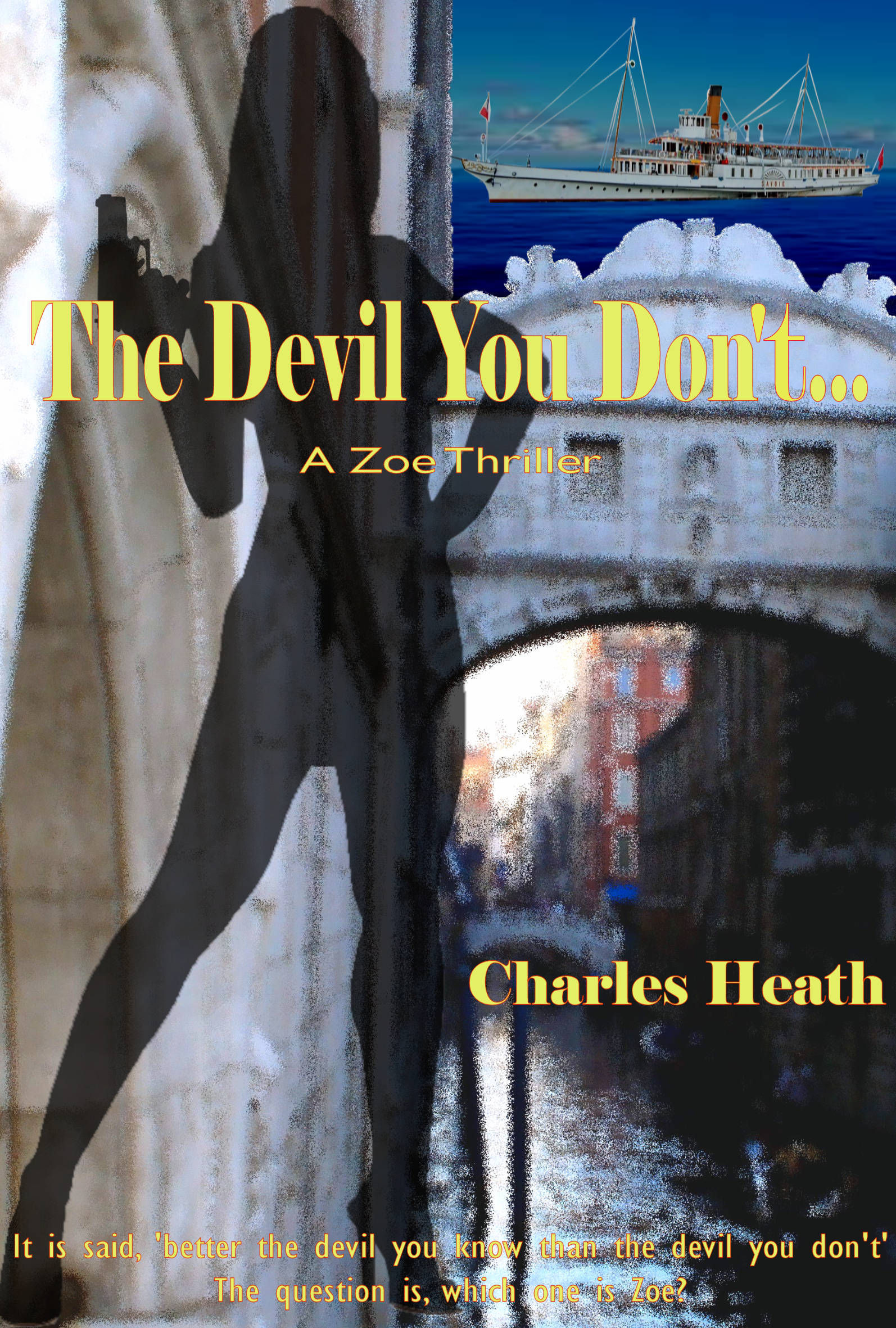
‘The Devil You Don’t’ – A beta reader’s view

It could be said that of all the women one could meet, whether contrived or by sheer luck, what are the odds it would turn out to be the woman who was being paid a very large sum to kill you?

John Pennington is a man who may be lucky in business, but not so lucky in love. He has just broken up with Phillipa Sternhaven, the woman he thought was the one, but relatives and circumstances, and perhaps because she was a ‘princess’, may also have contributed to the end result.

So, what do you do when you are heartbroken?

That is a story that slowly unfolds, from the first meeting with his nemesis on Lake Geneva, all the way to a hotel room in Sorrento, where he learns the shattering truth.

What should have been solace after disappointment turns out to be something else entirely, and from that point, everything goes to hell in a handbasket.

He suddenly realises his so-called friend Sebastian has not exactly told him the truth about a small job he asked him to do, the woman he is falling in love with is not quite who she says she is, and he is caught in the middle of a war between two men who consider people becoming collateral damage as part of their business.

The story paints the characters, cleverly displaying all their flaws and weaknesses. The locations add to the story at times, taking me back down memory lane, especially to Venice, where, in those back streets, I confess it’s not all that hard to get lost.

All in all, a thoroughly entertaining story with, for once, a satisfying end.

…

Available on Amazon here: https://amzn.to/2Xyh1ow

…

Top 5 sights on the road less travelled – Budapest

Budapest Beyond the Guidebook: 5 Adventures on the Road Less Travelled

Budapest. The Pearl of the Danube. A city of majestic architecture, thermal waters, ruin bars, and a history that echoes through every cobblestone street. It’s a city that rightfully earns its place on countless travel bucket lists, beckoning with the grandeur of the Parliament, the panoramic views from Buda Castle, and the vibrant pulse of Szimpla Kert.

But what if you’ve already seen the iconic sights, or perhaps you’re simply tired of following the well-worn path? What if you crave a deeper connection, a more authentic encounter with this incredible city?

If your adventurous spirit whispers for something different, something just off the main tourist radar, then pack your curiosity. We’re about to explore five truly unique experiences in Budapest that promise a new perspective and memories distinct from the typical postcard shots.


1. Descend into Budapest’s Hidden Labyrinth: The Pál-völgyi or Szemlő-hegyi Caves

Forget the surface for a moment and journey into Budapest’s fascinating underworld. Beneath the city, an extensive network of limestone caves riddles the earth, formed by ancient thermal waters. While few tourists venture here, these natural wonders offer a thrilling escape.

Why it’s unique: Unlike most cave systems, these are right beneath a bustling capital city! You’ll trade city noise for geological silence, marvelling at incredible stalactite and stalagmite formations, crystal growths, and narrow passages. The Pál-völgyi Cave offers a more adventurous, helmet-and-headlamp caving experience (guided, of course), while the Szemlő-hegyi Cave is more accessible, known as the “underground flower garden” for its stunning mineral formations.

Road Less Travelled Bonus: You’ll be one of the few experiencing an ancient, geological side of Budapest often overlooked. It’s an active, immersive adventure that feels a world away from the city above.


2. Bathe Like a Local: Rudas Thermal Bath (and its Rooftop Pool!)

Everyone knows Széchenyi and Gellért. They’re stunning, no doubt. But for a truly authentic, less-crowded thermal experience steeped in history, head to Rudas Thermal Bath. Dating back to the Ottoman occupation, Rudas offers a glimpse into centuries-old bathing traditions.

Why it’s unique: Rudas maintains designated gender-specific days in its beautiful 16th-century octagonal main pool (check their schedule!), offering a more traditional and serene experience. But the real hidden gem? It’s a contemporary rooftop panoramic hot tub. Imagine soaking in warm thermal waters, overlooking the magnificent Chain Bridge and the Danube, especially as the city lights up at dusk.

Road Less Travelled Bonus: While not entirely undiscovered, Rudas offers a far less ‘tourist factory’ feel than its more famous counterparts, allowing for a more reflective and local bathing ritual, especially on single-sex days. The rooftop pool is pure magic.


3. Ride the Whimsical Hungarian Children’s Railway (Gyermekvasút)

Step back in time and into a truly charming piece of Hungarian history. The Children’s Railway is no theme park ride; it’s a fully operational, narrow-gauge railway line winding through the picturesque Buda Hills, and almost every role – from ticket inspector to signalman – is performed by children (aged 10-14), under adult supervision.

Why it’s unique: It’s a fascinating relic of the socialist era, designed to teach children responsibility and discipline. The kids take their roles very seriously, making for a delightful and slightly surreal experience. The journey itself offers beautiful views of the surrounding forests and hills, a welcome green escape from the city’s concrete.

Road Less Travelled Bonus: Far from the city centre, this is a heartwarming, quirky, and surprisingly educational experience. It’s perfect for families, history buffs, or anyone seeking a genuinely unique interaction with Hungarian culture and its past.


4. Dive into Pinball Heaven at the Flippermúzeum (Pinball Museum)

If you’re looking for something purely fun, nostalgic, and utterly unexpected, the Budapest Pinball Museum is your answer. Tucked away in a basement close to Margaret Bridge, this vibrant museum houses over 160 playable pinball machines and arcade games, from the 1940s to the latest models.

Why it’s unique: It’s not just a museum; it’s an interactive arcade where your entrance fee grants you unlimited play for the entire day! You can spend hours immersed in the delightful clangs, flings, and flashing lights of pinball history, challenging friends or simply reliving childhood memories.

Road Less Travelled Bonus: This isn’t on any standard itinerary, making it a fantastic discovery for those craving entertainment beyond traditional sightseeing. It’s a quirky, joyful experience that appeals to all ages and offers a lively break from historical tours.


5. Explore the Ancient Charms of Óbuda

While everyone flocks to Buda Castle or Pest’s vibrant districts, take a tram or bus to Óbuda, the oldest part of Budapest. This tranquil district, effectively Budapest’s “Old Town,” predates the unification of Buda and Pest and offers a distinctly different atmosphere.

Why it’s unique: Here, you’ll find charming Baroque squares like Fő tér (Main Square), dotted with sculptures, quaint cafes, and local shops. Explore the ruins of Aquincum, an ancient Roman city that once thrived here, complete with an amphitheatre. Óbuda feels like a separate, sleepy village, with its own pace and unique history.

Road Less Travelled Bonus: You’ll experience a quieter, more residential side of Budapest, encountering fewer tourists and more locals going about their daily lives. It’s a chance to savour genuine Hungarian village charm within a major metropolis, and to walk among Roman ruins without the usual crowds.


Budapest is a city that keeps on giving, especially when you step away from the well-trodden path. These five adventures offer a glimpse into the city’s diverse soul, inviting you to connect with its history, nature, quirks, and local life in truly memorable ways. So, next time you’re planning a trip to the Hungarian capital, dare to take the road less travelled. You might just discover your own personal pearl.

What are your favourite Budapest hidden gems? Share them in the comments below!

365 Days of Writing, 2026 – 285

Day 285 – A story is more than just stringing words together

…

The Art of Brand Storytelling: Why Facts Tell, But Stories Sell

“Tell me a story! Because without a story, you are merely using words to prove you can string them together in logical sentences.” — Anne McCaffrey


If you’ve ever sat through a presentation that felt like an endless parade of spreadsheets, bullet points, and corporate jargon, you know the exact pain Anne McCaffrey is talking about.

Grammatically, the sentences were correct. Logically, the data checked out. But emotionally? You were checking your watch, wondering how soon you could slip out the back.

As legendary science fiction author Anne McCaffrey so brilliantly noted, stringing logical sentences together is not enough. Whether you are writing a sci-fi epic, drafting a high-converting landing page, or building a brand from scratch, human beings do not connect with data points; we connect with narrative.

Let’s dive into why storytelling is the ultimate superpower in writing, content creation, and marketing—and how you can use it to transform dry text into unforgettable experiences.


The Science of Story: Why Our Brains Crave Narrative

Why do we remember the fables we heard as children, but forget the textbook definitions we studied just last week?

Neuroscience gives us the answer. When we read a dry list of facts, only the language processing parts of our brains (Broca’s and Wernicke’s areas) light up. We are simply decoding information.

However, when we read a story, everything changes.

Functional MRI scans show that when we hear a compelling narrative, our brains light up in empathetic synchronicity. If a character is running, our motor cortex activates. If they are tasting something bitter, our sensory cortex lights up. We don’t just read a story—we experience it.

Furthermore, the brain releases oxytocin—the neurochemical of empathy, trust, and connection—when we are drawn into a well-crafted narrative. In the world of business and copywriting, trust is the currency that precedes the sale. If you aren’t telling a story, you are missing out on the biological mechanism that builds that trust.


Moving Beyond the “Logic Trap”

In digital marketing and professional writing, creators often fall into the Logic Trap.

The Logic Trap is the false belief that if you just give your audience enough features, figures, and logical arguments, they will inevitably buy your product or agree with your point of view.

  • “Our software has 99.9% uptime, 256-bit encryption, and an automated CRM workflow.” (Logical, correct, and utterly boring.)
  • “Sarah was losing three hours every day to messy spreadsheets, missing crucial follow-ups with clients. Then, she found a way to automate her workflow in minutes—giving her time back to focus on what she loves.” (A story.)

Which one makes you feel something? Which one makes you lean in?

As McCaffrey implies, the first example is just someone proving they can use correct grammar. The second example creates a protagonist, a conflict, and a resolution. It mirrors the human experience.


3 Ways to Inject Storytelling Into Your Writing

You don’t have to write fantasy novels to be a storyteller. Whether you are writing a blog post, an “About Us” page, or a social media caption, you can weave narrative elements into your work using these three steps:

1. Give Your Reader a Hero (And Make It About Them)

In every good story, there is a protagonist facing a challenge. In content marketing, your customer is the hero, not your brand.

  • Instead of talking about how great your company is, talk about the struggle your customer is facing.
  • Acknowledge their frustrations, their desires, and the “dragon” they are trying to slay.

2. Introduce Tension and Stakes

A story without conflict is just a statement. What happens if your reader doesn’t solve their problem? What is at stake? By introducing tension—the gap between where your audience is now and where they want to be—you create momentum that pulls the reader through your text.

3. Provide the Resolution (Your Solution)

Once the tension is established, introduce the guide (your brand, product, or idea) that provides the tool to overcome the challenge. Show the transformation. Paint a picture of what life looks like on the other side of the mountain.


Stop Stringing Sentences. Start Weaving Worlds.

Words are the raw materials of communication, but stories are the architecture.

The next time you sit down to write a piece of content, take a step back and ask yourself: Am I just proving I can string logical sentences together, or am I taking my reader on a journey?

Ditch the data-dumps. Stop hiding behind jargon. Step into the narrative, embrace the human element, and let your words do what they were truly meant to do: tell a story.


What is your favourite brand story, or how do you use storytelling in your writing? Let us know in the comments below!

…

“The Things we do for Love”, the story behind the story

This story has been ongoing since I was seventeen, and just to let you know, I’m 72 this year.

Yes, it’s taken a long time to get it done.

Why, you might ask.

Well, I never gave it much interest because I started writing it after a small incident when I was 17, and working as a book packer for a book distributor in Melbourne

At the end of my first year, at Christmas, the employer had a Christmas party, and that year, it was at a venue in St Kilda.

I wasn’t going to go because at that age, I was an ordinary boy who was very introverted and basically scared of his own shadow and terrified by girls.

Back then, I would cross the street to avoid them

Also, other members of the staff in the shipping department were rough and ready types who were not backwards in telling me what happened, and being naive, perhaps they knew I’d be either shocked or intrigued.

I was both adamant I wasn’t coming and then got roped in on a dare.

Damn!

So, back then, in the early 70s, people looked the other way when it came to drinking, and of course, Dutch courage always takes away the concerns, especially when normally you wouldn’t do half the stuff you wouldn’t in a million years

I made it to the end, not as drunk and stupid as I thought I might be, and St Kilda being a salacious place if you knew where to look, my new friends decided to give me a surprise.

It didn’t take long to realise these men were ‘men about town’ as they kept saying, and we went on an odyssey.  Yes, those backstreet brothels where one could, I was told, have anything they could imagine.

Let me tell you, large quantities of alcohol and imagination were a very bad mix.

So, the odyssey in ‘The things we do’ was based on that, and then the encounter with Diana. Well, let’s just say I learned a great deal about girls that night.

Firstly, not all girls are nasty and spiteful, which seemed to be the case whenever I met one. There was a way to approach, greet, talk to, and behave.

It was also true that I could have had anything I wanted, but I decided what was in my imagination could stay there.  She was amused that all I wanted was to talk, but it was my money, and I could spend it how I liked.

And like any 17-year-old naive fool, I fell in love with her and had all these foolish notions.  Months later, I went back, but she had moved on, to where no one was saying or knew.

Needless to say, I was heartbroken and had to get over that first loss, which, like any 17-year-old, was like the end of the world.

But it was the best hour I’d ever spent in my life and would remain so until I met the woman I have been married to for the last 48 years.

As Henry, he was in part based on a rebel, the son of rich parents who despised them and their wealth, and he used to regale anyone who would listen about how they had messed up his life

If only I’d come from such a background!

And yes, I was only a run away from climbing up the stairs to get on board a ship, acting as a purser.

I worked for a shipping company and they gave their junior staff members an opportunity to spend a year at sea working as a purser on a cargo ship that sailed between Melbourne, Sydney and Hobart in Australia.

One of the other junior staff members’ turn came, and I would visit him on board when he would tell me stories about life on board, the officers, the crew, and other events. These stories, which sounded incredible to someone so impressionable, were a delight to hear.

Alas, by that time, I had tired of office work and moved on to be a tradesman at the place where my father worked.

It proved to be the right move, as that is where I met my wife.  Diana had been right; love would find me when I least expected it.

…

lovecoverfinal1