Inspiration, Maybe – Volume 2

50 photographs, 50 stories, of which there is one of the 50 below.

They all start with –

A picture paints … well, as many words as you like.  For instance:

And, the story:

Have you ever watched your hopes and dreams simply just fly away?

Everything I thought I wanted and needed had just left in an aeroplane, and although I said I was not going to, i came to the airport to see the plane leave.  Not the person on it, that would have been far too difficult and emotional, but perhaps it was symbolic, the end of one life and the start of another.

But no matter what I thought or felt, we had both come to the right decision.  She needed the opportunity to spread her wings.  It was probably not the best idea for her to apply for the job without telling me, but I understood her reasons.

She was in a rut.  Though her job was a very good one, it was not as demanding as she had expected, particularly after the last promotion, but with it came resentment from others on her level, that she, the youngest of the group would get the position.

It was something that had been weighing down of her for the last three months, and if noticed it, the late nights, the moodiness, sometimes a flash of temper.  I knew she had one, no one could have such red hair and not, but she had always kept it in check.

And, then there was us, together, and after seven years, it felt like we were going nowhere.  Perhaps that was down to my lack of ambition, and though she never said it, lack of sophistication.  It hadn’t been an issue, well, not until her last promotion, and the fact she had to entertain more, and frankly I felt like an embarrassment to her.

So, there it was, three days ago, the beginning of the weekend, and we had planned to go away for a few days and take stock.  We both acknowledged we needed to talk, but it never seemed the right time.

It was then she said she had quit her job and found a new one.  Starting the following Monday.

Ok, that took me by surprise, not so much that it something I sort of guessed might happen, but that she would just blurt it out.

I think that right then, at that moment, I could feel her frustration with everything around her.

What surprised her was my reaction.  None.

I simply asked where who, and when.

A world-class newspaper, in New York, and she had to be there in a week.

A week.

It was all the time I had left with her.

I remember I just shrugged and asked if the planned weekend away was off.

She stood on the other side of the kitchen counter, hands around a cup of coffee she had just poured, and that one thing I remembered was the lone tear that ran down her cheek.

Is that all you want to know?

I did, yes, but we had lost that intimacy we used to have when she would have told me what was happening, and we would have brainstormed solutions. I might be a cabinet maker but I still had a brain, was what I overheard her tell a friend once.

There’s not much to ask, I said.  You’ve been desperately unhappy and haven’t been able to hide it all that well, you have been under a lot of pressure trying to deal with a group of troglodytes, and you’ve been leaning on Bentley’s shoulder instead of mine, and I get it, he’s got more experience in that place,  and the politics that go with it, and is still an ally.

Her immediate superior and instrumental in her getting the position, but unlike some men in his position he had not taken advantage of a situation like some men would.  And even if she had made a move, which I doubted, that was not the sort of woman she was, he would have politely declined.

One of the very few happily married men in that organisation, so I heard.

So, she said, you’re not just a pretty face.

Par for the course for a cabinet maker whose university degree is in psychology.  It doesn’t take rocket science to see what was happening to you.  I just didn’t think it was my place to jump in unless you asked me, and when you didn’t, well, that told me everything I needed to know.

Yes, our relationship had a use by date, and it was in the next few days.

I was thinking, she said, that you might come with me,  you can make cabinets anywhere.

I could, but I think the real problem wasn’t just the job.  It was everything around her and going with her, that would just be a constant reminder of what had been holding her back. I didn’t want that for her and said so.

Then the only question left was, what do we do now?

Go shopping for suitcases.  Bags to pack, and places to go.

Getting on the roller coaster is easy.  On the beginning, it’s a slow easy ride, followed by the slow climb to the top.  It’s much like some relationships, they start out easy, they require a little work to get to the next level, follows by the adrenaline rush when it all comes together.

What most people forget is that what comes down must go back up, and life is pretty much a roller coaster with highs and lows.

Our roller coaster had just come or of the final turn and we were braking so that it stops at the station.

There was no question of going with her to New York.  Yes, I promised I’d come over and visit her, but that was a promise with crossed fingers behind my back.  After a few months in t the new job the last thing shed want was a reminder of what she left behind.  New friends new life.

We packed her bags, three out everything she didn’t want, a free trips to the op shop with stiff she knew others would like to have, and basically, by the time she was ready to go, there was nothing left of her in the apartment, or anywhere.

Her friends would be seeing her off at the airport, and that’s when I told her I was not coming, that moment the taxi arrived to take her away forever.  I remember standing there, watching the taxi go.  It was going to be, and was, as hard as it was to watch the plane leave.

So, there I was, finally staring at the blank sky, around me a dozen other plane spotters, a rather motley crew of plane enthusiasts.

Already that morning there’s been 6 different types of plane depart, and I could hear another winding up its engines for take-off.

People coming, people going.

Maybe I would go to New York in a couple of months, not to see her, but just see what the attraction was.  Or maybe I would drop in, just to see how she was.

As one of my friends told me when I gave him the news, the future is never written in stone, and it’s about time you broadened your horizons.

Perhaps it was.


© Charles Heath 2020-2021

Coming soon.  Find the above story and 49 others like it in:

In a word: Dog

Yes, it’s that little or big furry thing that’s also known as man’s best friend, a dog.

But the word has a number of other meanings, like a lot of three-letter words.

It can also mean to follow someone closely.

If you are going to the greyhound racing, you could say you’re going to the dogs, or it could mean something entirely different, like deteriorating in manner and ethics.

Then there are those employers who make their workers work very hard, and therefore could be described as making them work like a dog.

Some might even say that it is a dog of a thing, i.e. of poor quality.

There’s a dogleg, which could aptly name some of those monstrous golf course holes that sometimes present the challenge of going through the wood rather than around it.

Tried that and failed many times!

A dog man used to ride the crane load from the ground to the top, an occupation that would not stand the test of occupational health and safety anymore.

And of course, in a battle to the death, it’s really dog eat dog, isn’t it?

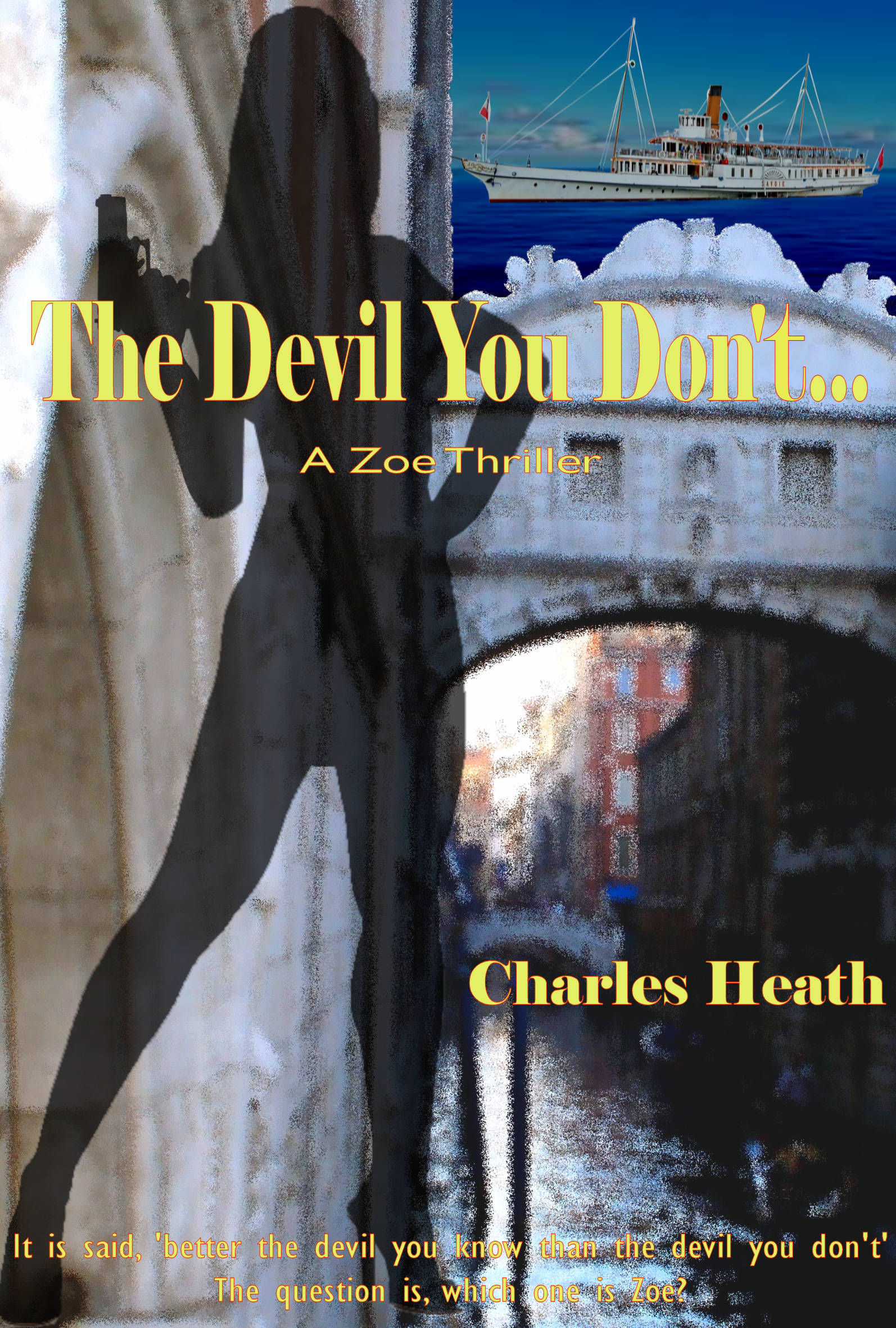
‘The Devil You Don’t’ – A beta reader’s view

It could be said that of all the women one could meet, whether contrived or by sheer luck, what are the odds it would turn out to be the woman who was being paid a very large sum to kill you.

John Pennington is a man who may be lucky in business, but not so lucky in love. He has just broken up with Phillipa Sternhaven, the woman he thought was the one, but relatives and circumstances, and perhaps because she was a ‘princess’, may also have contributed to the end result.

So, what do you do when you are heartbroken?

That is a story that slowly unfolds, from the first meeting with his nemesis on Lake Geneva, all the way to a hotel room in Sorrento, where he learns the shattering truth.

What should have been solace after disappointment, turns out to be something else entirely, and from that point, everything goes to hell in a handbasket.

He suddenly realizes his so-called friend Sebastian has not exactly told him the truth about a small job he asked him to do, the woman he is falling in love with is not quite who she says she is, and he is caught in the middle of a war between two men who consider people becoming collateral damage as part of their business.

The story paints the characters cleverly displaying all their flaws and weaknesses. The locations add to the story at times taking me back down memory lane, especially to Venice where, in those back streets I confess it’s not all that hard to get lost.

All in all a thoroughly entertaining story with, for once, a satisfying end.

Available on Amazon here: https://amzn.to/2Xyh1ow

NANOWRIMO – November 2025 – Day 8

The Third Son of a Duke

We have characters by the bucketful on this ship, after all, there are 1400 of them plus the crew.  In second class, knowing the classes don’t mix, there are 235, yes I have the name and age of everyone travelling, and it was a lot of single people, at least 67 young ladies between 18 and 30. 

And no, it was not like a modern-day cruise with people getting drunk, acting stupid or cabin hopping.  This was 1914, and there was a modicum of decorum observed.  This didn’t mean that people didn’t meet and talk, dine or do rounds of the promenade or shelter deck together.

There were families, there were people travelling to Australia and back, the forerunning of what might have been cruising, but that was mostly those travelling in first class.  There were about 360 of them, and they had the best of everything.

Still second class had its own lounge, dining room, music room, and smoking room.

Of course, the protagonist and my grandmother meet, talk, she is reserved and cautious, he is not the usual aristocratic arse that behaves like he is entitled, it’s more he’s travelling second class to keep a low profile and not have anyone guess who he is, and cause a fuss, or derision.

That lasts until he is boarding when the captain of the ship, and friend of his fathers, sends the second mate down to get him squared away and ship shape.  Damn, there goes his anonymity.

And it had to happen in front of the girl in the blue hat, and another, the other protagonist, only he doesn’t know it yet.

The girl in the blue hat is my grandmother.

The second protagonist, well, she’s going to shake the trees and see what falls out.

1930 words, for a total of 13665 words.

Writing about writing a book – Day 21 continues

I’m still working on Bill’s backstory, and how he got mixed up in the war, and as a general background to his situation, and life before Davenport.

This is still in his own words:

But whether we were stupid or naive, or completely mad, we were all eager to get into battle, filled with the sort of hate only Army propaganda films could fill you with.  They were our enemy, and they deserved to concede or die.

A fresh face in a hardened platoon, I was eager to get on with it.  They looked knowingly, having seen it all before.  No idea of the reality, and no time to tell us.  Have a few beers to celebrate, and then, the next morning, go out on patrol.  No problem.

There was camaraderie, but it was subdued.  We walked single file, the seasoned campaigners in front and at the rear, treading carefully, demanding quiet, and a general cautiousness.  In the middle of nowhere, where only the sound of rain, or the animals and birds for company, we were naive enough to think this was going to be a doddle.

Then it happened, six hours out, and just before we reached a small clearing.  I thought to myself it was odd there should be such a clear space with jungle all around it.  There must be a reason.

There was.

We had walked into an ambush, and everyone hit the ground.  I was bringing up the rear with another soldier, a veteran not much older than myself whose name was Scotty, a little farther back from the main group.  Bullets sprayed the undergrowth, pinging off trees and leaves.  I buried my face in the dirt, praying I would not die on my first patrol.

We became separated from the others, lying in a hollow, with no idea how far away help was.  He was muttering to himself.  “God, I hate this.  You can never see the bastards.  They’re out there, but you can never bloody well see them.”  Then he crawled up the embankment, gun first.

He let off a few rounds, causing a return of machine-gun fire, spattering the dirt at the top.  Next thing I knew he was sliding down the hill with half his face shot away.  Dead.  I threw up there and then.  What an initiation.

Then one of the enemy soldiers came over the hill to check on his ‘kill’.  I saw him at the same time he saw me and aimed my gun and shot.  It was instinct more than anything else, and I hadn’t stopped to think of the consequences.  He fell down, finishing up next to me, staring at me from black, lifeless eyes. 

Dead. 

I’ll never forget those lifeless eyes.  I just got up and ran, making it back to the rest of the group without getting hit.  No one could explain how I made it safely through the hail of gunfire, from our side and theirs.

Back in the camp later, the veterans remarked on how unlucky Scotty was and how lucky I was to shoot one of the enemies, and not be killed myself.  They all thought it was worth a celebration.

Before we went out the next day to do it all again.

I spent the night vomiting, unable to sleep, haunted look on his face, one I finally realized that reflected complete astonishment.

There will be more, as the story develops.

© Charles Heath 2016-2024

The cinema of my dreams – I never wanted to go to Africa – Episode 31

Our hero knows he’s in serious trouble.

The problem is, there are familiar faces and a question of who is a friend and who is foe made all the more difficult because of the enemy, if it was the enemy, simply because it didn’t look or sound or act like the enemy.

Now, it appears, his problems stem from another operation he participated in, and because of it, he has now been roped into what might be called a suicide mission.

The folder had half a dozen single-page sheets with a photo attached to each with a standard-issue army paper clip.  There was no top secret in pale red ink diagonally scribed across any of the pages which somehow diminished the exercise.

I guessed this was the hand-picked team selected for me to take on our suicide mission.  It didn’t have the officer overseeing the mission, or the go-between Jacobi.  Not exactly a useful man to have along in a firefight, because he would be too busy working out who would pay the most if or when he survived.

It still astonished me that we hired people like Jacobi, fully knowing that they would sell out their own mother if the price was right.  I was going to reserve one bullet in my gun to execute him the moment he even looked the wrong way.

Trust him, I did not.

Nor any 0f the six members of that hand-picked team.

Sergeant Barnes.  Tall, wide, deadly, that last attribute courtesy of a line in his resume that said he killed three soldiers of the army we were supposed to be training and supporting.  No meaningful reason was given as to why he did, only that he’d just finished serving a five-year sentence, cut short by a month so he could join this force.  Hand to hand combat, and a handy man to have if you’ve got a handheld rocket launcher handy.

Private Williamson.  Had been a Corporal, but considered that too much of a burden, having men look up to him, and having to give orders.  He decided to go AWOL instead.  Used to be a butcher before signing on to see the world, and as described very handy with a knife.  Refused to use a gun, and refused orders too, which was the reason why he was in the stockade, with his friend, the next man on the list.

Private Shurl.  If we needed a man who excelled at sword fighting, he was our man.  A very accomplished swordsman, but I doubt we were going to need a man of his talents because enemy swordsmen seemed only to exist in the old movies.  I guess Lallo was expecting the three musketeers or something.  Other than that, he was a useful radioman and would be handling the communications once we were on the ground in enemy territory.

Corporal Stark.  His claim to fame was reading maps.  He was also an expert on the ground in the country whose borders we were about to violate.  He lived in the country for several years with his wife, who came from there, and who’d been killed by the dictator in a case of mistaken identity.  Stark would have to be carefully managed.

Staff Sergeant Mobley.  A man who had been up and down in ranks for a long time, suggesting a bad attitude, his latest bout leaving him fresh from a stint in the stockade.  He had no valid reason to be in on this disaster and yet had volunteered.  That took courage, to apply for a suicide mission with little hope of return.  I suspect he had an agenda that no one else knew about.

And, lastly

Lieutenant Lesley Davies.  A woman marine, no longer a lieutenant but just another soldier who obviously didn’t understand the concept of taking one step back when everyone else steps in another direction.  It didn’t say what it was she did wrong, but my guess there were a few men out there frightened of meeting her on a dark night.  Some women are dainty, some women are large, and then there’s Davies, a powerhouse that could be dangerous if out of control.

Out of all of that team, she was the one who interested me the most.

There was a knock on the door, interrupting my thoughts.  I called out, “Enter”, surprised the person outside hadn’t just shoved their way into the room.

The door opened, Monroe walked in and closed the door behind her.

“Let me guess,” I said.  “You’re running point.”

“And save your sorry ass from those recruits.  Not a brain between the lot of them, and we need people who can think, given the nature of the forthcoming exercise.  The brains trust has decided the rescue team reports to us.  I didn’t ask for it by the way.  This is one of Lallo’s sick jokes.”

Maybe he had a problem with her too and was hoping she wasn’t coming back.

“You and me both,” I said.

She threw another folder on the table.  “Operational orders, wheels up at 0600 tomorrow.  Make sure you get a hearty meal before we leave, it might be your last for a while.”

I shrugged. 

“Suit yourself.”  She went back to the door, gave me a curious look, and left.

I opened the file and looked at the one piece of paper in it.  It was marked Top Secret in red diagonally across the page, probably specially done by Lallo to make me feel important.  It had departure time, the weather, the flight time, how long the stopover would be before going on to the target.

Tightly planned, no room for missing connections, though this was the army, not an airline taking us, no room for errors.  New intel said that we had five days before the prisoners were to be executed.

No pressure then.

© Charles Heath 2019-2021

Writing a book in 365 days – 295

Day 295

A story can go in many different directions

The Story’s Fork in the Road: Navigating Multiple Paths (or How Many Roads Should You Pave?)

Ah, the delicious agony of the writer’s mind! You’re deep into a scene, a character’s decision point, or a pivotal plot twist, and suddenly—BAM!—five equally compelling, utterly captivating directions unfurl before you. Each one a glittering promise, a potential masterpiece.

Do you freeze, overwhelmed by the narrative labyrinth? Do you toss a coin? Or do you bravely (or foolishly) attempt to build five different narrative highways? This, my friends, is the quintessential writer’s dilemma, and one we’ve all grappled with.

Let’s break it down.

The Agony of Choice: Why It’s So Hard

First, let’s acknowledge why this is such a powerful struggle. It’s not a sign of weakness; it’s a testament to your boundless creativity. Each of those five paths represents a fully formed world, a different emotional journey, a distinct thematic exploration. Choosing one feels like abandoning four perfectly good children at the orphanage of your imagination. You fear:

  • Missing the “Best” Story: What if the path you don’t take was the one that would have won the Pulitzer?
  • Wasting Potential: All that rich imagery, those intriguing character possibilities… gone?
  • Regret: The lingering “what if” can haunt future drafts.

So, how do we navigate this creative crossroads?

Part 1: How Do We Know We’ve Chosen the “Right” One?

The short, honest answer? You don’t. Not with 100% certainty, at least not at first. But you can make the most informed, intentional choice for this particular story. Here’s how to approach it:

  1. Revisit Your Core Vision & Theme:
    • What is the absolute heart of your story? What are you really trying to say?
    • What is the central question or conflict you’re exploring?
    • Which of the five paths most profoundly serves this core message or theme? Which one amplifies it, complicates it, or brings it into sharper relief?
  2. Follow the Character’s Deepest Arc:
    • Where does your protagonist need to go to achieve their most meaningful growth or transformation?
    • Which path forces them to confront their greatest fears, make their hardest choices, or truly earn their redemption (or downfall)?
    • Sometimes, the “right” path isn’t the easiest or most obvious, but the one that most rigorously tests your characters.
  3. Consider the Emotional Impact:
    • Which path elicits the strongest emotional response in you?
    • Which one feels most compelling, most resonant, most likely to move a reader?
    • Don’t underestimate your gut feeling. Your intuition, honed by countless hours of reading and writing, often knows best.
  4. Outline Each Path (Briefly):
    • You don’t need to write five full drafts. Take an hour or two and jot down a very brief outline for each of the five directions.
    • Where does each path start? What are its key turning points? Where does it logically end?
    • Seeing them laid out, even in skeletal form, often reveals which one has the most inherent dramatic tension, sustained conflict, or satisfying resolution.
  5. Listen to the Story’s Whisper:
    • Sometimes, one path just feels alive. The dialogue sparkles, the imagery flows effortlessly, the next scene already plays out in your head. That’s often the story telling you which way it wants to go. Trust that energy.

Ultimately, the “right” path is often the one you commit to with confidence and conviction, knowing it serves your story’s deepest purpose.

Part 2: Should We Write Five Different Versions of the Same Story?

This is where the practicalities of writing meet the boundless nature of imagination.

The Temptation: “Wouldn’t it be amazing to see how each version played out? What if they could be a series? Or alternate universe novels?”

The Reality (for most): Writing five different versions of the same story simultaneously is a monumental undertaking that can lead to burnout, analysis paralysis, and ultimately, five unfinished manuscripts.

However, there’s a nuanced approach:

  1. The “What If” File:
    • Don’t discard those other brilliant ideas! Create a “What If” document or a story bible where you meticulously log these alternate paths.
    • Note down the potential plot points, character developments, thematic explorations, and even snippets of dialogue.
    • This frees up your current WIP while preserving those ideas for future projects. Many successful series or spin-offs are born from these discarded “what ifs.”
  2. Experiment in Short Bursts:
    • If you’re truly torn, write a single scene or a very short chapter (500-1000 words) for the top two or three contenders.
    • See which one “sings.” Which one feels most natural to write? This micro-experimentation can often clarify your choice without committing to full drafts.
  3. Future Projects, Not Current:
    • Recognize that those other four paths aren’t failures; they’re fertile ground for future stories.
    • Perhaps one becomes a standalone novel set in the same world, exploring a different character. Maybe another becomes a prequel or a sequel.
    • View them as seeds, not fully grown trees you have to nurture all at once.
  4. The Luxury of Revision:
    • Remember, you’re not carving your story in stone with your first draft. Write a version. See it through.
    • During revision, you might realize an earlier “what if” path actually does serve your story better, and you can pivot. But it’s much easier to pivot from a complete (even flawed) draft than from five fragments.

The “Right” Path is Often the One You Finish (and Polish)

Ultimately, the most important decision isn’t which path is objectively “best,” but which path you will commit to finishing, refining, and sharing with the world. A perfectly chosen, but incomplete, story has no impact. A story chosen with conviction, even one that had four other contenders, can move mountains.

So, trust your instincts, revisit your story’s core, outline your options, and then, pick a road. Pave it with your words, your sweat, and your heart. And know that those other roads? They’ll be there, waiting for another journey, another story, another day.


What’s your strategy when your story branches into multiple paths? Share your tips in the comments below!

Top 5 sights on the road less travelled – Paris

Escape the Crowds: Paris’s Top 5 Hidden Gems (That Deserve Your Visit)

Paris. The City of Lights, romance, and… endless queues? While the Eiffel Tower and the Louvre are undoubtedly must-sees, experiencing the best of Paris doesn’t have to mean battling shoulder-to-shoulder with thousands of fellow tourists.

If you’re looking to explore distinctive Parisian culture and history without the notorious bottlenecks, we’ve uncovered five incredible visitor attractions. These spots boast unique charm, fascinating features, and best of all: relative tranquility.

Pack your walking shoes, grab your camera, and prepare to discover a side of Paris few tourists ever see.


1. Musée Rodin (The Gardens)

While the Musée Rodin itself—home to iconic works like The Thinker and The Kiss—is popular, the vast, sculpted gardens surrounding the mansion are often overlooked as a place to linger, making them a true, peaceful escape.

Distinctive Features:

  • Sculpture Meets Serenity: The three-hectare garden is an open-air gallery, where Rodin’s profound bronze figures are set against lush lawns, rose bushes, and towering hedges. It creates one of the most sublime atmospheres in Paris.
  • The Reflection Pool: A large, tranquil pool reflects the 18th-century Hôtel Biron (the main museum building), providing stunning photographic opportunities and a space for quiet contemplation.
  • The Workshop: You can catch glimpses of the former studio spaces, helping you connect directly with the creative process of one of history’s greatest sculptors.

Why It’s Worth the Trip: You get world-class art without the crush of a major museum, allowing the beauty of the artwork and the landscape to truly sink in.

2. Butte-aux-Cailles

Forget the tourist trap boutiques of Montmartre; head instead to the Butte-aux-Cailles in the 13th arrondissement. This small, elevated neighborhood feels like a secret village preserved within the modern city, rarely appearing on mainstream tourist itineraries.

Distinctive Features:

  • Village Atmosphere: The area escaped the sweeping renovations of Baron Haussmann in the 19th century, leaving behind narrow, cobbled streets (like Rue des Cinq Diamants) lined with low, charming houses and hidden courtyards.
  • Art Nouveau Architecture: Look out for beautiful examples of brick and stone façades and original lampposts.
  • Street Art Hub: While peaceful, the Butte-aux-Cailles is also a discreet, vibrant center for Parisian street art, featuring colorful, high-quality murals and stencils often tucked away on small side streets.
  • The Artesian Wells: The area is famous for its natural hot springs, and you can still find the historic communal swimming pool—Piscine de la Butte-aux-Cailles—fed by underground water.

Why It’s Worth the Trip: It offers an authentic glimpse into local Parisian life, complete with wonderful traditional bistros and quiet cafés, far removed from the noise of the center.

3. Parc des Buttes-Chaumont

When most visitors think of Parisian parks, they picture the Tuileries or the Luxembourg Gardens. But for truly dramatic landscapes and peaceful seclusion, the Parc des Buttes-Chaumont in the 19th arrondissement is unbeatable.

Distinctive Features:

  • Dramatic Topography: Built on a former gypsum quarry and landfill, the park features steep cliffs, grottoes, artificial waterfalls, and a large central lake.
  • The Temple de la Sibylle: Perched atop a sheer, 50-meter-high cliff (known as the Belvédère Island) is a miniature Roman-style temple offering one of the most spectacular, yet uncrowded, panoramic views of Paris, including Sacré-Cœur in the distance.
  • Rustic Charm: Unlike the manicured symmetry of other parks, Buttes-Chaumont embraces a rugged, romantic English garden style, complete with a charming suspension bridge designed by Gustave Eiffel’s company.

Why It’s Worth the Trip: It is a breathtaking feat of landscape architecture, providing dramatic views and quiet walking paths that make you forget you are in a major European capital.

4. The Archives Nationales (Hôtel de Soubise)

Tucked away in the historic Marais district, the Archives Nationales houses France’s national historical archives. While the documents themselves are fascinating, the primary draw is the opportunity to wander through one of the most beautiful and best-preserved 18th-century aristocratic residences in Paris, the Hôtel de Soubise.

Distinctive Features:

  • Rococo Masterpieces: The most stunning features are the magnificent state rooms, particularly the oval salons, which are considered peerless examples of French Rococo interior design. The intricate gilded woodwork, ceiling frescoes, and elaborate ornamentation are breathtaking.
  • Courtyard Grandeur: The cour d’honneur (main courtyard) immediately transports you back to the age of Louis XV, showcasing the sheer scale and opulence of Parisian high society.
  • Historical Significance: Visitors can tour selected exhibits showcasing pivotal documents from French history, offering a deep dive into the nation’s past within a spectacular setting.

Why It’s Worth the Trip: You get to explore hidden architectural gems that rival the palace interiors of Versailles, but without the mandatory entry lines and huge tour groups.

5. Musée de la Vie Romantique (Museum of Romantic Life)

The name truly says it all. Located in the residential Nouvelle Athènes neighborhood (near Pigalle), this delightful museum occupies two charming small buildings and a lush garden courtyard that celebrate the artistic and literary life of the 19th-century Romantic era.

Distinctive Features:

  • Intimate Scale: Housed in the former home of painter Ary Scheffer, the museum is dedicated to the works of George Sand, Ernest Renan, and other Romantic figures. It feels more like visiting a well-preserved family home than a traditional museum.
  • Literary History: Artifacts include portraits, jewelry, and personal items associated with the writer George Sand, offering a deeply personal look at her life and times.
  • The Best Tearoom in Paris: The garden courtyard transforms into a glorious, ivy-covered tearoom (operated by Café Renoir) during the warmer months. It is hands-down one of the most idyllic spots in Paris for a restorative coffee or lunch.

Why It’s Worth the Trip: It offers a deeply atmospheric and gentle cultural experience. It is the perfect antidote to the high-intensity visit of a major museum, wrapped up in Parisian charm and elegance.


The magic of Paris extends far beyond the well-trodden paths. By seeking out these distinctive, less-crowded attractions, you can enjoy the city’s profound history, stunning architecture, and unparalleled beauty at your own pace. Happy exploring!

What I learned about writing – When to draw a line in the sand!

Just when you think that the story is done, and you’re on the third re-read, just to make sure…

Damn!

I don’t like the way that chapter reads, and what’s worse, it’s about the tenth time I’ve looked at it.

It doesn’t matter the last three times you read it, it was just fine, or, the editor has read it and the chapter passed without any major comment.

I think the main problem I have is letting go.  For some odd reason, certain parts of a story sometimes seem to me as though they are not complete, or can be missing a vital clue or connection for the continuity of the story.

That, of course, happens when you rewrite a section that is earlier on in the story, and then have to make ongoing changes.

Yes, I hear the stern warnings, that I should have made a comprehensive outline at the beginning, but the trouble is, I can change the ending, as I’m writing it and then have to go back and add the hooks earlier on.  Not the best method, but isn’t that what an editor is for, to pick up the missed connections, and out of the blue events that happen for no reason?

I find that often after leaving a finished story for a month before the next reading, the whole picture must formulate itself in my head, so when I re-read, there was always a problem, one I didn’t want to think about until the re-read.

Even then it might survive a second pass.

I know the scene is in trouble when I get to it and alarm bells are going off.  I find anything else to do but look at it.

So, here I am, making major changes.

But, at least now I am satisfied with where it’s going.

Only 325 pages to go!

Top 5 sights on the road less travelled – London

London’s Secret Charms: 5 Uncrowded Gems with Unforgettable Features

London. The very name conjures images of iconic landmarks, bustling streets, and a vibrant energy that pulses through its historic veins. But let’s be honest, that energy often translates into crowds – a beautiful, diverse, fascinating crowd, but a crowd nonetheless.

What if you yearn for a different rhythm? A London where you can connect with history, art, and nature without constantly jostling for a view? A London where distinctive features truly shine, allowing you to savour every unique detail?

Fear not, intrepid explorer! I’ve curated a list of five phenomenal London attractions that deliver on distinctive character without the typical tourist throngs. These are the places where you can breathe, ponder, and truly absorb the magic of this incredible city.


1. Sir John Soane’s Museum: A Collector’s Labyrinth of Wonders

What makes it distinctive? Imagine stepping into the mind of an eccentric 19th-century architect, where every surface, every nook, and every cranny is crammed with art, antiquities, and architectural fragments. Sir John Soane’s Museum is not a typical museum; it’s a meticulously preserved house that he designed to display his vast and eclectic collection exactly as he wanted it. Expect a fascinating, almost overwhelming, visual feast. Highlights include an Egyptian sarcophagus, a room of hidden paintings on hinged panels, and ceilings adorned with fragments of Roman sculpture.

Why it’s uncrowded: Its very nature – a house packed to the rafters – means visitor numbers are carefully controlled. It’s a small, intimate space, encouraging quiet contemplation rather than rapid sightseeing. You’ll often find yourself with plenty of room to explore.

Insider Tip: Look out for the “picture rooms” where walls literally open up to reveal more art behind them. It’s a delightful, theatrical surprise!


2. The Wallace Collection: Opulence and Masterpieces in a Grand Mansion

What makes it distinctive? Housed in Hertford House, a magnificent stately home in Marylebone, The Wallace Collection offers a truly unique experience: a peerless collection of 18th-century French art, furniture, porcelain, and old master paintings, all displayed in the sumptuous setting of a historic private residence. It feels less like a public gallery and more like you’ve been invited into a wealthy collector’s home. From rococo masterpieces like Fragonard’s “The Swing” to an impressive armoury, the sheer quality and variety are astonishing.

Why it’s uncrowded: While well-known, it often gets overlooked in favour of the larger, more public museums. Its location, slightly off the main tourist drag, also helps keep numbers manageable. Plus, it’s completely free to enter!

Insider Tip: Don’t miss the stunning central courtyard, which has been beautifully enclosed to create a light-filled restaurant – perfect for a refined coffee or lunch break.


3. Chelsea Physic Garden: London’s Oldest Botanic Oasis

What makes it distinctive? Tucked away behind high walls near the Thames, the Chelsea Physic Garden is a living museum of plants with a fascinating history. Established in 1673 by the Worshipful Society of Apothecaries, it was created specifically for the study of medicinal plants. Today, it’s a tranquil four-acre oasis showcasing around 5,000 different species, including the largest fruiting olive tree in Britain and the world’s most northerly grapefruit tree. It’s a place where history, science, and nature intertwine beautifully.

Why it’s uncrowded: It charges a modest entrance fee and isn’t on the primary tourist routes, ensuring a peaceful atmosphere. It’s a favourite among locals seeking serenity, rather than a must-see for first-time visitors ticking off landmarks.

Insider Tip: Check their website for workshops, talks, and guided tours which offer deeper insights into the garden’s extensive collections and history.


4. St. Dunstan in the East Church Garden: A Ruined Beauty Reclaimed by Nature

What makes it distinctive? This is perhaps one of London’s most visually stunning “hidden” gems. What once was a grand medieval church, later rebuilt by Sir Christopher Wren, was largely destroyed during the Blitz in 1941. Instead of rebuilding, the ruins were transformed into a public garden. Ivy-clad walls, elegant Gothic arches, and a Wren tower now frame a vibrant collection of trees and plants. It’s an ethereal, almost magical space that perfectly blends history with nature’s resilience.

Why it’s uncrowded: Despite its proximity to the Tower of London and Monument, it’s tucked away down a side street, making it easy to miss if you don’t know it’s there. It’s a favourite spot for city workers on their lunch break and photographers, but rarely overwhelmed by tourists.

Insider Tip: Visit on a sunny day when the light filters through the archways and foliage, creating a truly enchanting atmosphere. Find a bench and simply soak in the tranquility.


5. Leighton House: An Artist’s Victorian Fantasy

What makes it distinctive? Step into the fantastical home and studio of Victorian artist Frederic, Lord Leighton, and prepare to be mesmerised. The crowning glory is the “Arab Hall,” a breathtaking space inspired by Leighton’s travels to the Middle East. Adorned with over 1,000 iridescent Islamic tiles, a golden dome, and a tranquil fountain, it’s like stepping into a dream. Beyond this, the house offers beautiful period rooms, Leighton’s grand studio, and a collection of his and his contemporaries’ art. It’s a truly unique architectural and artistic vision.

Why it’s uncrowded: Located in Holland Park, West London, it’s a little further out than central attractions, which naturally reduces footfall. It also requires a timed ticket, ensuring a pleasant visitor experience.

Insider Tip: Look closely at the tiles in the Arab Hall – many are original 16th and 17th-century pieces, carefully acquired by Leighton himself.


So, the next time you find yourself in the magnificent city of London, consider taking a detour from the main thoroughfares. These five distinctive, uncrowded attractions offer a chance to connect with a different side of the capital – one that’s rich in history, beauty, and quiet wonder. Happy exploring!

Have you discovered any other uncrowded London treasures? Share them in the comments below!