“Trouble in Store” – Short stories my way: Adding more to the second part

The story fleshed out for the second section, discussed in Point of View


Annalisa looked at the two men facing her, a shopkeeper who, despite his protestations, was a dealer, and the other man, a customer scared shitless.

The poor bastard was not the only one scared. 

It was meant to be simple, arrive at the shop just before closing, force the shopkeeper to hand over the shit, and leave.

What had happened?

The shopkeeper laughed at them and  told them to get out.  Simmo started ranting and waving the gun around, then all of a sudden collapsed. 

There was a race for the gun which spilled out of Simmo’s hand, and she won.  No more arguments, the shopkeeper was getting the stuff when the customer burst into the shop.

This was worse than any bad hair day, or getting out of the wrong side of bed day, this was, she was convinced, the last day of her life.

Her mother said she would never amount to anything, and here she was with a drug addict coming apart because she had been cut off from her money and could no longer pay for his supply, which had led them to this inevitable ending.

She heard a strange sound come from beside her and looked down.  Simmo was getting worse, like he had a fever, and was moaning.


If Alphonse had thought his day was going to get any better after the delivery disaster earlier that day, he was wrong.

If he thought he could maintain his real business and his under the counter business with no one finding out, in that he was wrong too.  He’s know, inevitably, some useless punk would come and do exactly what Simmo was doing.

It might have been salvageable before the customer came in the door, but now it was not.  The customer had heard the words, and given him ‘the look’.  A drug addict telling the cops he was a dealer, it was his word against an  unreliable addict, but this local chap, he had that air of respectability the cops would listen too.

Damn.

But he had to try and salvage the situation, there was a lot of money involved, and other people depending on him.  He looked at the boy, on the floor, then  the girl.

“Listen to me, young lady, I have no idea what you are talking about.  Please, put the gun down before someone gets hurt.  Your friend needs medical help and I can call an ambulance.”

The girl switched her attention back to him.  “Shut up, let me think.  Shit.”

The storekeeper glanced over at the customer.  He’s been in once or twice, probably lived in the neighborhood, but looked the sort who’d  prefer to be anywhere but in his shop.  More so now.  If only he hadn’t burst in when he did.  He would have the gun, called the police, and brazened his way out of trouble.  Now, that remedy was off the table.

Now he had to deal with the fallout, especially if the girl started talking.


© Charles Heath 2016-2020

Memories of the conversations with my cat – 95

As some may be aware, but many are not, Chester, my faithful writing assistant, mice catcher, and general pain in the neck, passed away some years ago.

Recently, I was running a series based on his adventures, under the title of Past Conversations with my cat.

For those who have not had the chance to read about all of his exploits, I will run the series again from Episode 1

These are the memories of our time together…

20160909_062838-2

This is Chester.

He realizes we are now part of a different world driven by the events surrounding the COVID 19 virus.

The grandchildren are here while their parents are working, and they are going to school remotely, that is one is in the kitchen and one is in the dining room, remotely linked to their school, teachers, and classmates.

Chester finds this interesting because they are not trying to find him, so, he’s come out to see what they’re doing.

First, he jumps up on the dining table and sits next to the 13-year-old. She is hard at work. I hear him ask if there is anything he can help with given his vast knowledge of everything.

There’s a universal greeting from 30 others, and he tries to find where all the other people are. No, it’s not hide and seek, they’re all online she tries to tell him.

No, doesn’t get it. They must be in the room somewhere. And he’s suddenly miffed that he can’t find them, and then that his assistance is not required.

All too much to cope with, he comes out to join the 10-year-old sitting at the kitchen table. She had headphones on and doesn’t hear him.

This time he sits on the floor and looks up thinking, if they can’t see him, he’s not there. She ignores him. I don’t think mathematics is his strong point.

So, he wanders into the office, planning to annoy me.

I find some headphones and put them on. He gets the message, no interruptions today, everyone is hard at work.

A sigh, then he goes to his corner and lies down on his bed, yawns and closes his eyes.

I know he’s not asleep. He’s waiting for something to happen, ready to spring into action.

Unless, of course, it’s a mouse.

The Cinema of my dreams – Was it just another surveillance job – Episode 61

This story is now on the list to be finished so over the new few weeks, expect a new episode every few days.

The reason why new episodes have been sporadic, there are also other stories to write, and I’m not very good at prioritizing.

But, here we are, a few minutes opened up and it didn’t take long to get back into the groove.

Things are about to get complicated…


The Detective Inspector came back twenty minutes later.

“Latest news that I can tell you, is both the bodies belong to older people, we think the owner and one other.  They were not in the fire, but some distance from the house.”

“Murdered?”

“People don’t shoot themselves in the back.  They were trying to escape.”

The mother and a friend perhaps.  Anna or someone else cleaning up?  Was she getting ready to leave or gone already?

“No other body?”

“You think someone else was here?”

“Our agent, male, mid-thirties.  He was here the last time I saw him.”

“Not so far, but I’ll tell them to widen the search.”

Had O’Connell escaped, or was he with her, and he was not simply a means to an end?  The facts, as I knew them, didn’t seem to fit that scenario.

What worried me was that Dobbin hadn’t shown up yet.  Could it be he was finally one step behind?  I could only hope so.  I didn’t want to run into him if and when I found Anna.

If Anna and O’Connell were about to leave, it would be reasonable to assume they’d go home, pack then leave.  O’Connell’s flat at the same block where Josephine lived.

When we arrived at the front entrance to the block I had that sensation of being watched.  It was possible Dobbin had the place under surveillance and I cursed myself for not checking to see if there was a back entrance.

I tried to see where the surveillance would be, places I would hide, if not in plain sight, but nothing was readily apparent.  Of course, it could be the paranoia setting in.

If this was what the spy’s life was like, I was beginning to like it less and less.  There were so many lies told by so many people it was impossible to tell what the truth was any more.

But it beat being a clerk in an office any day of the week.

And I didn’t get to work alongside people like Jennifer either.

“You sure we can get into this place.  I’m starting to feel exposed out here.”  She was shivering, because of the cold.

The temperature had dropped considerably in the last half hour.

I entered the code and the door opened.  “Yes.”

I ushered her in and followed, taking a last look outside.  Yes.  Just caught a glimpse of a man on the corner almost out of sight.  He was on his phone, so that would mean we would have minutes rather than enough time to do anything before someone arrived.

Would it be Dobbin, Jan, Monica or Joanne?

The list of interested parties was getting longer.

We almost jogged up the three flights of stairs, then on the landing, I went first, and Jennifer stayed back, gun in hand, ready for anything.

At least I hoped she was.

We were taught how to pick almost any lock in the shortest [possible time.  Of course, in practice, when not under pressure, you could do it in seconds.

Now, because of the cold, my hands were slightly numb, and the pressure was mounting so things didn’t quite work the way they should, it took longer.  A minute whereas in practice, seconds.

I drew my gun and opened the door carefully.

Nothing but darkness.

We had prearranged that Jennifer would wait outside until I gave her an all-clear, or if I didn’t come back in two minutes she should come in after me.

I went in but left the door ajar.  Closed, fumbling to open it in a panic would get me killed.  Little details.

Silence.

There didn’t appear to be anyone in the flat.  Remembering the layout, I headed towards the passage leading to the bedroom, and about half way across the room, I kicked my foot into something.

A body?

I went back and switched on the light.

A body indeed.

O’Connell.

Dead, a bullet to the head.

© Charles Heath 2020-2023

Writing a book in 365 days – 258

Day 258

The use of real people as characters.

The Muse Next Door: Weaving Real Life into Your Fiction (Pros & Cons)

As writers, we’re constantly searching for inspiration. Sometimes it strikes like lightning, a fully formed idea bursting forth. More often, though, our wellspring of creativity is much closer than we think: it’s the rich, messy, beautiful tapestry of real life itself.

The question then becomes: how much of that life – the people we know, the experiences we’ve had – should we actually weave into our stories? It’s a powerful tool, but like any powerful tool, it comes with a user manual that highlights both its immense benefits and its potential pitfalls.

Let’s explore the pros and cons of drawing directly from real people and personal experiences for your characters and plots.

The Allure of Authenticity: The Pros

There’s a reason so many authors look to their own lives and the people around them. The benefits are substantial:

  1. Authenticity and Relatability: Real life has a texture that’s hard to invent. When you base a character on someone you know, or a plot on an event you’ve lived through, you bring an immediate sense of truth and lived experience to the page. Readers are incredibly astute; they can often feel when a character or situation rings true, and this fosters a deeper connection.
  2. Rich Detail and Nuance: Ever tried to describe a facial twitch or an odd habit from scratch? It’s tough. But if you’re picturing your eccentric Aunt Carol, those details come naturally. Real people are complex, contradictory, and full of fascinating quirks that can make your fictional characters leap off the page in a way pure invention sometimes struggles to achieve.
  3. Emotional Resonance: When you write about an experience you’ve had, or channel the emotions you’ve witnessed in someone else, that raw feeling seeps into your words. This can create powerful, moving scenes that deeply affect your readers because the emotion is rooted in a genuine place.
  4. Overcoming Writer’s Block: Stuck on character motivation? Can’t figure out how a scene should unfold? Sometimes, recalling how a real person reacted in a similar situation, or remembering the actual sequence of events, can provide the perfect springboard to get your story moving again.
  5. A Wellspring of Conflict: Life is full of conflict – big and small. The annoying neighbor, the family squabble, the quiet tension in a relationship. These everyday conflicts, when amplified or subtly altered, can form the backbone of incredibly compelling plots.

The Treacherous Territory: The Cons

While the well of reality is deep, it’s also fraught with potential dangers.

  1. Ethical & Privacy Concerns: This is the biggest hurdle. When you base characters on real people, you risk:
    • Hurting Feelings: Friends, family, or even acquaintances might recognize themselves – or parts of themselves – and feel exposed, misrepresented, or betrayed.
    • Legal Repercussions: While less common for fiction, if you depict someone in a negative, identifiable way that could be proven false and damaging, you could face libel or defamation charges. (Though usually, fiction is protected if it’s not directly claiming to be fact).
    • Breaching Trust: Once you start writing about people you know, they might become wary of sharing personal details with you in the future.
  2. Creative Constraints: Sticking too close to reality can actually limit your creativity.
    • Lack of Arc: Real people don’t always have satisfying story arcs. Their lives are often meandering, and if you simply copy, your character might feel directionless or flat in a fictional context.
    • Predictability: If you’re too faithful to a real person, your character might act exactly as that person would, making their choices and the plot predictable for both you and your readers.
  3. Personal Bias and Emotional Baggage: You can’t write about people you know or experiences you’ve had with true objectivity.
    • Vengeful Writing: It’s tempting to use fiction to “settle scores” or air grievances, but this usually results in one-dimensional characters and a preachy, unengaging narrative.
    • Emotional Overwhelm: Writing about highly personal or traumatic experiences can be emotionally draining and difficult, sometimes re-traumatizing the writer.
  4. Lack of Transformation: The goal of fiction isn’t to create a perfect mirror of reality, but to transform it into something meaningful. Simply transplanting a person or an event often misses the opportunity for deeper exploration, metaphor, or thematic development.
  5. “Who’s That?” Dilemma: For those close to you, reading your work can become a game of “spot the real person,” detracting from their immersion in the story you’re trying to tell.

The Art of Transformation: Making it Work

So, how do you harness the power of real life without falling into its traps? The key is transformation, not transcription.

  1. Mix and Match: Don’t base a character on just one person. Take the biting wit of your colleague, the fashion sense of your cousin, and the deep-seated insecurity of your old high school teacher, and blend them into a completely new entity.
  2. Exaggerate and Subvert: Take a real trait and dial it up to eleven, or flip it on its head. Did your uncle always tell tall tales? What if your character is pathologically honest to a fault?
  3. Change Circumstances: Put familiar people in unfamiliar situations. What would your overly cautious friend do if suddenly faced with an impossible life-or-death choice?
  4. Shift Perspectives: If you’re drawing from a personal experience, try writing it from the perspective of another person involved, or even an outside observer. This creates distance and allows for more objective storytelling.
  5. Focus on the Universal: Instead of replicating a specific argument you had, identify the universal themes within it: miscommunication, pride, fear. Then, build a fictional scenario around those themes.
  6. Ask “What If?”: This is your greatest tool. “What if that person I know, with that specific trait, found themselves in this completely different, fictional situation?”

Conclusion

Our lives are the richest source material we possess. The people we meet, the places we go, and the emotions we feel are the raw ingredients of compelling stories. But like a skilled chef, a writer must know how to select, prepare, and transform those ingredients into something entirely new – a dish that nourishes the reader, stands on its own merits, and respects the origins without being bound by them.

So, open your eyes to the muse next door, but always wield your pen with thought, creativity, and a healthy dose of ethical consideration.

Searching for locations: A bus tour of Philadelphia, USA

The Philadelphia Bus Tour, what we did see

To start with, we first joined this tour at stop number 6.

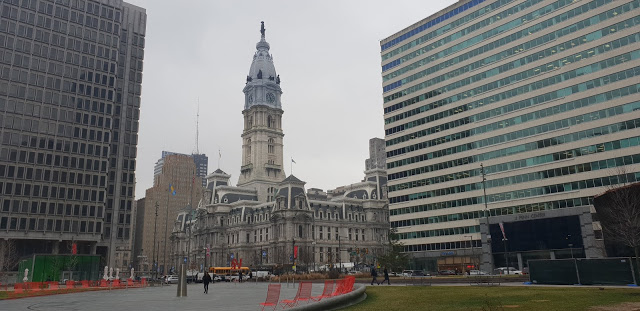
We had to find it first and that meant some pedestrian navigation, which took us first to the City Hall, a rather imposing structure, which we found later had a profound effect on Philadelphia sports teams.

According to the map, stop number 6 is Reading Terminal Market, Convention Centre, on 12th street on Filbert.  This was where we bought the tickets and boarded the bus that had a rather interesting guide aboard.

His favorite says was “And we’re good to go.”

Soon we would discover that his commentary was more orientated towards a younger audience, not that it bothered us.

Given the time restraints, we had, this was always going to be about looking and learning.

Stop number 7

City hall, Love Park.

This we had seen on our walk from where we left the car at the Free Library, near the Swann Memorial Fountain in Logan Park, the landmark that Rebecca had remembered from her last visit to Philadelphia.  Of course, then, it was not quite so frozen.

Love park, of course, was only notable to us in that it had a sculpture in place with the word Love rather stylized.  Apart from that, you’d hardly know it as a park

The city hall, well, that was something else, and when we looked at it, before going on the tour, it was a rather magnificent stone edifice.

After, well the guide filled us in, tallest building, highest and largest monument on William Penn, you get the gist.  37 feet tall, when eclipsed, the Philly sports teams all suffered slumps of one kind or another, until the problem was rectified.  Interesting story.

Stop number 8

18th Street and the Benjamin Franklin Parkway, or Logan Circle

This is the location of the Cathedral Basilica of Saints Peter and Paul.  A place where the Pope decided to give an audience and sent the city into a spin.

The same church has very high windows for the reason in the early days there was a problem with people wanting to throw Molotov cocktails through the windows.  A bit hard when they’re so high up.

Benjamin Franklin Parkway, of course, is interesting in itself as an avenue, not only for all of the flags of many nations of those who chose to live in Philadelphia.  We found ours, the one for Australia

This was also the stop where we needed to get off once the tour was finished, and time to head to the car, and go home, but that’s another story.

Stop number 10

Is that the stature of the Thinker, made famous, at least for me, from the old Dobie Gillis episodes, of God knows how many years ago?

Or, maybe it’s just the Rodin Museum on Benjamin Franklin Parkway.

There’s a whole story to go with that Statue and the fact it is one of many all over the world.

This one was made in France, cast in 1919 in Bronze, and is approximately 200cm x 130 cm by 140cm.

Stop number 11

Eastern State Penitentiary.  NW corner of 22nd Street and Fairmont Avenue.

This had a rather interesting story attached to it and had something to do with ghosts, but I wasn’t listening properly to the guide’s monologue.

But, later research shows, the fact it was once the most famous and expensive prison in the world.  Many also think it is haunted and is a favorite for visiting paranormal visitors.

Built around 1829, it was the first prison to have separate cells for prisoners.  It held, at various times, the likes of Al Capone and Willie Sutt

Stop number 18

The Philadelphia Museum of art, where we stop for a few minutes and look at the steps which were immortalized in the movie Rocky, yes he ran god knows how far to end up on the top of these steps.

Sorry, but I’m not that fit that I would attempt walking up them.  The view is just fine from inside the bus.  Of course, they might consider cleaning the windows a little so the view was clearer, but because it’s basically Perspex and scratched so that might not be possible.

Stop number 17

Back at Logan Circle, or Square if you prefer, but on the other side, closer to the Franklin Institute.  Benjamin Franklin’s name is used a lot in this city.

After that, it’s a blur, the Academy of Music, the University of the Arts, Pennsylvania Hospital, South Street, Vietnam Veterans Memorial, the USS Olympia, Penn’s Landing, and past the National Liberty Museum.  I’m sure somewhere in that blur was the intention of seeing the Liberty Bell, but I think I heard that it was not on show, and only a replica could be seen.

So much for the getting as an opportunity to see the real liberty bell, crack and all..

We get off and stop number 27, or Number 1, I was not quite sure.

What were we after?  The definitive Philly Cheese Steak.

Harry Walthenson, Private Detective – the second case – A case of finding the “Flying Dutchman”

What starts as a search for a missing husband soon develops into an unbelievable story of treachery, lies, and incredible riches.

It was meant to remain buried long enough for the dust to settle on what was once an unpalatable truth, when enough time had passed, and those who had been willing to wait could reap the rewards.

The problem was, no one knew where that treasure was hidden or the location of the logbook that held the secret.

At stake, billions of dollars’ worth of stolen Nazi loot brought to the United States in an anonymous tramp steamer and hidden in a specially constructed vault under a specifically owned plot of land on the once docklands of New York.

It may have remained hidden and unknown to only a few, if it had not been for a mere obscure detail being overheard …

… by our intrepid, newly minted private detective, Harry Walthenson …

… and it would have remained buried.

Now, through a series of unrelated events, or are they, that well-kept secret is out there, and Harry will not stop until the whole truth is uncovered.

Even if it almost costs him his life.  Again.

Searching for locations: Washington DC, USA

Washington is a city with bright shiny buildings and endless monuments, each separated by a long walk or a taxi ride if you can find one.

We might have picked the wrong day, shortly after New Year’s Day when the crowds were missing along with everything else.  Or, conversely, it was probably the right time to go, when we didn’t have to battle the crowds.

Sunny but very cold, the walking warmed us up.

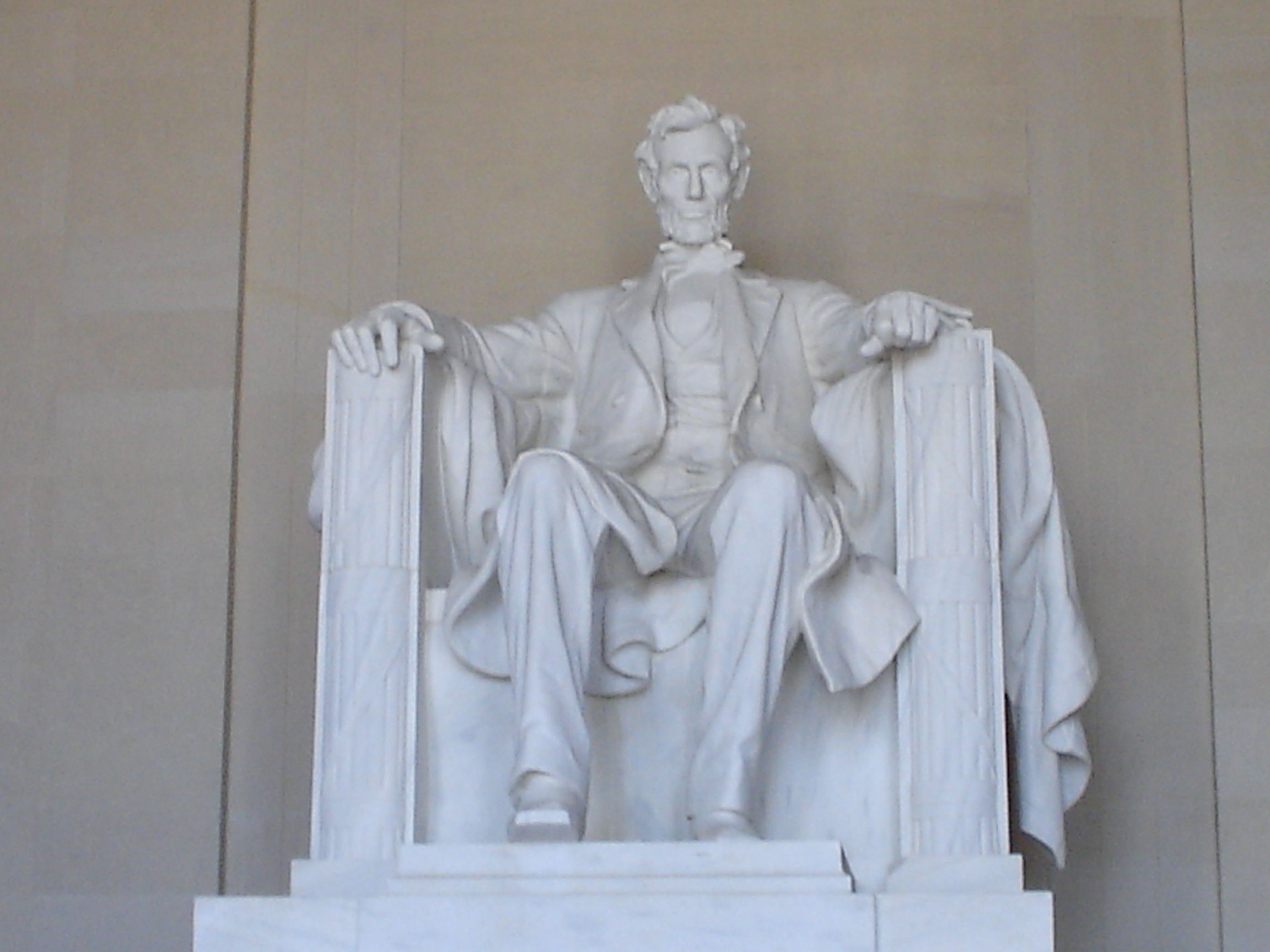
First stop was the Lincoln Memorial

DSC00833

It was built to honor the 16th President of the United States, Abraham Lincoln.

It is located on the western end of the National Mall in Washington, D.C., across from the Washington Monument.

DSC00834

The building is in the form of a Greek Doric temple and contains a large seated sculpture of Abraham Lincoln and inscriptions of two well-known speeches by Lincoln.

The next stop was the Washington Monument

DSC00840

The Washington Monument is an obelisk on the National Mall in Washington, D.C., built to commemorate George Washington. Construction of the monument began in 1848 and not completed until 1888.  It was officially opened October 9, 1888.


We then took a taxi ride to the Jefferson Memorial

DSC00851

This monument is dedicated to Thomas Jefferson (1743–1826), one of the most important of the American Founding Fathers as the main drafter and writer of the Declaration of Independence.

Construction of the building began in 1939 and was completed in 1943.

The bronze statue of Jefferson was added in 1947.

An excerpt from “Mistaken Identity” – a work in progress

The odds of any one of us having a doppelganger are quite high. Whether or not you got to meet him or her, or be confronted by them was significantly lower. Except of course, unless you are a celebrity.

It was a phenomenon remarkable only for the fact, at times, certain high-profile people, notorious or not, had doubles if only to put off enemies or the general public. Sometimes we see people in the street, people who look like someone we knew, and made the mistake of approaching them like a long lost friend, only to discover an embarrassed individual desperately trying to get away for what they perceive is a stalker or worse.

And then sometimes it is a picture that looms up on a TV screen, an almost exact likeness of you. At first, you are fascinated, and then according to the circumstances, and narrative that is attached to that picture, either flattered or horrified.

For me one turned to the other when I saw an almost likeness of me flash up on the screen when I turned the TV on in my room. What looked to be my photo, with only minor differences, was in the corner of the screen, the newsreader speaking in rapid Italian, so fast I could only translate every second or third word.

But the one word I did recognize was murder. The photo of the man up on the screen was the subject of an extensive manhunt. The crime, the murder of a woman in the very same hotel I was staying, and it was being played out live several floors above me. The gist of the story, the woman had been seen with, and staying with the man who was my double, and, less than an hour ago, the body had been discovered by a chambermaid.

The killer, the announcer said, was believed to be still in the hotel because the woman had died shortly before she had been discovered.

I watched, at first fascinated at what I was seeing. I guess I should have been horrified, but at that moment it didn’t register that I might be mistaken for that man.

Not until another five minutes had passed, and I was watching the police in full riot gear, with a camera crew following behind, coming up a passage towards a room. Live action of the arrest of the suspected killer the breathless commentator said.

Then, suddenly, there was a pounding on the door. On the TV screen, plain to see, was the number of my room.
I looked through the peephole and saw an army of police officers. It didn’t take much to realize what had happened. The hotel staff identified me as the man in the photograph on the TV and called the police.

Horrified wasn’t what I was feeling right then.

It was fear.

My last memory was the door crashing open, the wood splintering, and men rushing into the room, screaming at me, waving guns, and when I put my hands up to defend myself, I heard a gunshot.

And in one very confused and probably near-death experience, I thought I saw my mother and thought what was she doing in Rome?

I was the archetypal nobody.

I lived in a small flat, I drove a nondescript car, had an average job in a low profile travel agency, was single, and currently not involved in a relationship, no children, and according to my workmates, no life.

They were wrong. I was one of those people who preferred their own company, I had a cat, and travelled whenever I could. And I did have a ‘thing’ for Rosalie, one of the reasons why I stayed at the travel agency. I didn’t expect anything to come of it, but one could always hope.

I was both pleased and excited to be going to the conference. It was my first, and the glimpse I had seen of it had whetted my appetite for more information about the nuances of my profession.

Some would say that a travel agent wasn’t much of a job, but to me, it was every bit as demanding as being an accountant or a lawyer. You were providing a customer with a service, and arguably more people needed a travel agent than a lawyer. At least that was what I told myself, as I watched more and more people start using the internet, and our relevance slowly dissipating.

This conference was about countering that trend.

The trip over had been uneventful. I was met at the airport and taken to the hotel where the conference was being held with a number of other delegates who had arrived on the same plane. I had mingled with a number of other delegates at the pre conference get together, including one whose name was Maryanne.

She was an unusual young woman, not the sort that I usually met, because she was the one who was usually surrounded by all the boys, the life of the party. In normal circumstances, I would not have introduced myself to her, but she had approached me. Why did I think that may have been significant? All of this ran through my mind, culminating in the last event on the highlight reel, the door bursting open, men rushing into my room, and then one of the policemen opened fire.

I replayed that last scene again, trying to see the face of my assailant, but it was just a sea of men in battle dress, bullet proof vests and helmets, accompanied by screaming and yelling, some of which I identified as “Get on the floor”.

Then came the shot.

Why ask me to get on the floor if all they were going to do was shoot me. I was putting my hands up at the time, in surrender, not reaching for a weapon.

Then I saw the face again, hovering in the background like a ghost. My mother. Only the hair was different, and her clothes, and then the image was going, perhaps a figment of my imagination brought on by pain killing drugs. I tried to imagine the scene again, but this time it played out, without the image of my mother.

I opened my eyes took stock of my surroundings. What I felt in that exact moment couldn’t be described. I should most likely be dead, the result of a gunshot wound. I guess I should be thankful the shooter hadn’t aimed at anything vital, but that was the only item on the plus side.

I was in a hospital room with a policeman by the door. He was reading a newspaper, and sitting uncomfortably on a small chair. He gave me a quick glance when he heard me move slightly, but didn’t acknowledge me with either a nod, or a greeting, just went back to the paper.

If I still had a police guard, then I was still considered a suspect. What was interesting was that I was not handcuffed to the bed. Perhaps that only happened in TV shows. Or maybe they knew I couldn’t run because my injuries were too serious. Or the guard would shoot me long before my feet hit the floor. I knew the police well enough now to know they would shoot first and ask questions later.

On the physical side, I had a large bandage over the top left corner of my chest, extending over my shoulder. A little poking and prodding determined the bullet had hit somewhere between the top of my rib cage and my shoulder. Nothing vital there, but my arm might be somewhat useless for a while, depending on what the bullet hit on the way in, or through.

It didn’t feel like there were any broken or damaged bones.

That was the good news.

On the other side of the ledger, my mental state, there was only one word that could describe it. Terrified. I was looking at a murder charge and jail time, a lot of it. Murder usually had a long time in jail attached to it.

Whatever had happened, I didn’t do it. I know I didn’t do it, but I had to try and explain this to people who had already made up their minds. I searched my mind for evidence. It was there, but in the confused state brought on by the medication, all I could think about was jail, and the sort of company I was going to have.

I think death would have been preferable.

Half an hour later, maybe longer, I was drifting in an out of consciousness, a nurse, or what I thought was a nurse, came into the room. The guard stood, checked her ID card, and then stood by the door.

She came over and stood beside the bed. “How are you?” she asked, first in Italian, and when I pretended I didn’t understand, she asked the same question in accented English.

“Alive, I guess,” I said. “No one has come and told what my condition is yet. You are my first visitor. Can you tell me?”

“Of course. You are very lucky to be alive. You will be fine and make a full recovery. The doctors here are excellent at their work.”

“What happens now?”

“I check you, and then you have a another visitor. He is from the British Embassy I think. But he will have to wait until I have finished my examination.”

I realized then she was a doctor, not a nurse.

My second visitor was a man, dressed in a suit the sort of which I associated with the British Civil Service.  He was not very old which told me he was probably a recent graduate on his first posting, the junior officer who drew the short straw.

The guard checked his ID but again did not leave the room, sitting back down and going back to his newspaper.

My visitor introduced himself as Alex Jordan from the British Embassy in Rome and that he had been asked by the Ambassador to sort out what he labelled a tricky mess.

For starters, it was good to see that someone cared about what happened to me.  But, equally, I knew the mantra, get into trouble overseas, and there is not much we can do to help you.  So, after that lengthy introduction, I had to wonder why he was here.

I said, “They think I am an international criminal by the name of Jacob Westerbury, whose picture looks just like me, and apparently for them it is an open and shut case.”  I could still hear the fragments of the yelling as the police burst through the door, at the same time telling me to get on the floor with my hands over my head.

“It’s not.  They know they’ve got the wrong man, which is why I’m here.  There is the issue of what had been described as excessive force, and the fact you were shot had made it an all-round embarrassment for them.”

“Then why are you here?  Shouldn’t they be here apologizing?”

“That is why you have another visitor.  I only took precedence because I insisted I speak with you first.  I have come, basically to ask you for a favour.  This situation has afforded us with an opportunity.  We would like you to sign the official document which basically indemnifies them against any legal proceedings.”

Curious.  What sort of opportunity was he talking about?  Was this a matter than could get difficult and I could be charged by the Italian Government, even if I wasn’t guilty, or was it one of those hush hush type deals, you do this for us, we’ll help you out with that.  “What sort of opportunity?”

“We want to get our hands on Jacob Westerbury as much as they do.  They’ve made a mistake, and we’d like to use that to get custody of him if or when he is arrested in this country.  I’m sure you would also like this man brought into custody as soon as possible so you will stop being confused with him.  I can only imagine what it was like to be arrested in the manner you were.  And I would not blame you if you wanted to get some compensation for what they’ve done.  But.  There are bigger issues in play here, and you would be doing this for your country.”

I wondered what would happen if I didn’t agree to his proposal.  I had to ask, “What if I don’t?”

His expression didn’t change.  “I’m sure you are a sensible man Mr Pargeter, who is more than willing to help his country whenever he can.  They have agreed to take care of all your hospital expenses, and refund the cost of the Conference, and travel.  I’m sure I could also get them to pay for a few days at Capri, or Sorrento if you like, before you go home.  What do you say?”

There was only one thing I could say.  Wasn’t it treason if you went against your country’s wishes?

“I’m not an unreasonable man, Alex.  Go do your deal, and I’ll sign the papers.”

“Good man.”

After Alex left, the doctor came back to announce the arrival of a woman, by the way she had announced herself, the publicity officer from the Italian police. When she came into the room, she was not dressed in a uniform.

The doctor left after giving a brief report to the civilian at the door. I understood the gist of it, “The patient has recovered excellently and the wounds are healing as expected. There is no cause for concern.”

That was a relief.

While the doctor was speaking to the civilian, I speculated on who she might be. She was young, not more than thirty, conservatively dressed so an official of some kind, but not necessarily with the police. Did they have prosecutors? I was unfamiliar with the Italian legal system.

She had long wavy black hair and the sort of sultry looks of an Italian movie star, and her presence made me more curious than fearful though I couldn’t say why.

The woman then spoke to the guard, and he reluctantly got up and left the room, closing the door behind him.
She checked the door, and then came back towards me, standing at the end of the bed. Now alone, she said, “A few questions before we begin.” Her English was only slightly accented. “Your name is Jack Pargeter?”

I nodded. “Yes.”

“You are in Rome to attend the Travel Agents Conference at the Hilton Hotel?”

“Yes.”

“You attended a preconference introduction on the evening of the 25th, after arriving from London at approximately 4:25 pm.”

“About that time, yes. I know it was about five when the bus came to collect me, and several others, to take us to the hotel.”

She smiled. It was then I noticed she was reading from a small notepad.

“It was ten past five to be precise. The driver had been held up in traffic. We have a number of witnesses who saw you on the plane, on the bus, at the hotel, and with the aid of closed circuit TV we have established you are not the criminal Jacob Westerbury.”

She put her note book back in her bag and then said, “My name is Vicenza Andretti and I am with the prosecutor’s office. I am here to formally apologize for the situation that can only be described as a case of mistaken identity. I assure you it is not the habit of our police officers to shoot people unless they have a very strong reason for doing so. I understand that in the confusion of the arrest one of our officers accidentally discharged his weapon. We are undergoing a very thorough investigation into the circumstances of this event.”

I was not sure why, but between the time I had spoken to the embassy official and now, something about letting them off so easily was bugging me. I could see why they had sent her. It would be difficult to be angry or annoyed with her.

But I was annoyed.

“Do you often send a whole squad of trigger happy riot police to arrest a single man?” It came out harsher than I intended.

“My men believed they were dealing with a dangerous criminal.”

“Do I look like a dangerous criminal?” And then I realized if it was mistaken identity, the answer would be yes.

She saw the look on my face, and said quietly, “I think you know the answer to that question, Mr. Pargeter.”

“Well, it was overkill.”

“As I said, we are very sorry for the circumstances you now find yourself in. You must understand that we honestly believed we were dealing with an armed and dangerous murderer, and we were acting within our mandate. My department will cover your medical expenses, and any other amounts for the inconvenience this has caused you. I believe you were attending a conference at your hotel. I am very sorry but given the medical circumstances you have, you will have to remain here for a few more days.”

“I guess, then, I should thank you for not killing me.”

Her expression told me that was not the best thing I could have said in the circumstances.

“I mean, I should thank you for the hospital and the care. But a question or two of my own. May I?”

She nodded.

“Did you catch this Jacob Westerbury character?”

“No. In the confusion created by your arrest he escaped. Once we realized we had made a mistake and reviewed the close circuit TV, we tracked him leaving by a rear exit.”

“Are you sure it was one of your men who shot me?”

I watched as her expression changed, to one of surprise.

“You don’t think it was one of my men?”

“Oddly enough no. But don’t ask me why.”

“It is very interesting that you should say that, because in our initial investigation, it appeared none of our officer’s weapons had been discharged. A forensic investigation into the bullet tells us it was one that is used in our weapons, but…”

I could see their dilemma.

“Have you any enemies that would want to shoot you Mr Pargeter?”

That was absurd because I had no enemies, at least none that I knew of, much less anyone who would want me dead.

“Not that I’m aware of.”

“Then it is strange, and will perhaps remain a mystery. I will let you know if anything more is revealed in our investigation.”

She took an envelope out of her briefcase and opened it, pulling out several sheets of paper.

I knew what it was. A verbal apology was one thing, but a signed waiver would cover them legally. They had sent a pretty girl to charm me. Perhaps using anyone else it would not have worked. There was potential for a huge litigation payout here, and someone more ruthless would jump at the chance of making a few million out of the Italian Government.

“We need a signature on this document,” she said.

“Absolving you of any wrong doing?”

“I have apologized. We will take whatever measures are required for your comfort after this event. We are accepting responsibility for our actions, and are being reasonable.”

They were. I took the pen from her and signed the documents.

“You couldn’t add dinner with you on that list of benefits?” No harm in asking.

“I am unfortunately unavailable.”

I smiled. “It wasn’t a request for a date, just dinner. You can tell me about Rome, as only a resident can. Please.”

She looked me up and down, searching for the ulterior motive. When she couldn’t find one, she said, “We shall see once the hospital discharges you in a few days.”

“Then I’ll pencil you in?”

She looked at me quizzically. “What is this pencil me in?”

“It’s an English colloquialism. It means maybe. As when you write something in pencil, it is easy to erase it.”

A momentary frown, then recognition and a smile. “I shall remember that. Thank-you for your time and co-operation Mr. Pargeter. Good morning.”

© Charles Heath 2015-2021

Writing a book in 365 days – 258

Day 258

The use of real people as characters.

The Muse Next Door: Weaving Real Life into Your Fiction (Pros & Cons)

As writers, we’re constantly searching for inspiration. Sometimes it strikes like lightning, a fully formed idea bursting forth. More often, though, our wellspring of creativity is much closer than we think: it’s the rich, messy, beautiful tapestry of real life itself.

The question then becomes: how much of that life – the people we know, the experiences we’ve had – should we actually weave into our stories? It’s a powerful tool, but like any powerful tool, it comes with a user manual that highlights both its immense benefits and its potential pitfalls.

Let’s explore the pros and cons of drawing directly from real people and personal experiences for your characters and plots.

The Allure of Authenticity: The Pros

There’s a reason so many authors look to their own lives and the people around them. The benefits are substantial:

  1. Authenticity and Relatability: Real life has a texture that’s hard to invent. When you base a character on someone you know, or a plot on an event you’ve lived through, you bring an immediate sense of truth and lived experience to the page. Readers are incredibly astute; they can often feel when a character or situation rings true, and this fosters a deeper connection.
  2. Rich Detail and Nuance: Ever tried to describe a facial twitch or an odd habit from scratch? It’s tough. But if you’re picturing your eccentric Aunt Carol, those details come naturally. Real people are complex, contradictory, and full of fascinating quirks that can make your fictional characters leap off the page in a way pure invention sometimes struggles to achieve.
  3. Emotional Resonance: When you write about an experience you’ve had, or channel the emotions you’ve witnessed in someone else, that raw feeling seeps into your words. This can create powerful, moving scenes that deeply affect your readers because the emotion is rooted in a genuine place.
  4. Overcoming Writer’s Block: Stuck on character motivation? Can’t figure out how a scene should unfold? Sometimes, recalling how a real person reacted in a similar situation, or remembering the actual sequence of events, can provide the perfect springboard to get your story moving again.
  5. A Wellspring of Conflict: Life is full of conflict – big and small. The annoying neighbor, the family squabble, the quiet tension in a relationship. These everyday conflicts, when amplified or subtly altered, can form the backbone of incredibly compelling plots.

The Treacherous Territory: The Cons

While the well of reality is deep, it’s also fraught with potential dangers.

  1. Ethical & Privacy Concerns: This is the biggest hurdle. When you base characters on real people, you risk:
    • Hurting Feelings: Friends, family, or even acquaintances might recognize themselves – or parts of themselves – and feel exposed, misrepresented, or betrayed.
    • Legal Repercussions: While less common for fiction, if you depict someone in a negative, identifiable way that could be proven false and damaging, you could face libel or defamation charges. (Though usually, fiction is protected if it’s not directly claiming to be fact).
    • Breaching Trust: Once you start writing about people you know, they might become wary of sharing personal details with you in the future.
  2. Creative Constraints: Sticking too close to reality can actually limit your creativity.
    • Lack of Arc: Real people don’t always have satisfying story arcs. Their lives are often meandering, and if you simply copy, your character might feel directionless or flat in a fictional context.
    • Predictability: If you’re too faithful to a real person, your character might act exactly as that person would, making their choices and the plot predictable for both you and your readers.
  3. Personal Bias and Emotional Baggage: You can’t write about people you know or experiences you’ve had with true objectivity.
    • Vengeful Writing: It’s tempting to use fiction to “settle scores” or air grievances, but this usually results in one-dimensional characters and a preachy, unengaging narrative.
    • Emotional Overwhelm: Writing about highly personal or traumatic experiences can be emotionally draining and difficult, sometimes re-traumatizing the writer.
  4. Lack of Transformation: The goal of fiction isn’t to create a perfect mirror of reality, but to transform it into something meaningful. Simply transplanting a person or an event often misses the opportunity for deeper exploration, metaphor, or thematic development.
  5. “Who’s That?” Dilemma: For those close to you, reading your work can become a game of “spot the real person,” detracting from their immersion in the story you’re trying to tell.

The Art of Transformation: Making it Work

So, how do you harness the power of real life without falling into its traps? The key is transformation, not transcription.

  1. Mix and Match: Don’t base a character on just one person. Take the biting wit of your colleague, the fashion sense of your cousin, and the deep-seated insecurity of your old high school teacher, and blend them into a completely new entity.
  2. Exaggerate and Subvert: Take a real trait and dial it up to eleven, or flip it on its head. Did your uncle always tell tall tales? What if your character is pathologically honest to a fault?
  3. Change Circumstances: Put familiar people in unfamiliar situations. What would your overly cautious friend do if suddenly faced with an impossible life-or-death choice?
  4. Shift Perspectives: If you’re drawing from a personal experience, try writing it from the perspective of another person involved, or even an outside observer. This creates distance and allows for more objective storytelling.
  5. Focus on the Universal: Instead of replicating a specific argument you had, identify the universal themes within it: miscommunication, pride, fear. Then, build a fictional scenario around those themes.
  6. Ask “What If?”: This is your greatest tool. “What if that person I know, with that specific trait, found themselves in this completely different, fictional situation?”

Conclusion

Our lives are the richest source material we possess. The people we meet, the places we go, and the emotions we feel are the raw ingredients of compelling stories. But like a skilled chef, a writer must know how to select, prepare, and transform those ingredients into something entirely new – a dish that nourishes the reader, stands on its own merits, and respects the origins without being bound by them.

So, open your eyes to the muse next door, but always wield your pen with thought, creativity, and a healthy dose of ethical consideration.

In a word: High or is it hie

When the boss says jump, the question is usually ‘how high’.

Not that it’s possible for many of us with a challenging centre of gravity to get much elevation.

High generally means height, how far something rises above ground level, is above our heads.

That plane flies very high in the sky.

Then there’s another meaning, increased intensity, such as a high temperature, a high fever, but my favourite is, a high dudgeon.

I’m still to get a definition on what a dudgeon is.

We have secondary schools here that we call high schools. Make of that what you will

And in the idiomatic world, flying high means we are very happy, and when were left high and dry then not so much. Unless it related to a ship, in which case a lot of people would be unhappy.

We can use high just about everywhere, high hopes, high ceilings, feelings that run high, a high chair for toddlers of course, high speed which may cause s crash and land you in a high security prison.

This is not to be confused with just plain hi which is a universal greeting.

But there is another, hie, which has a more obscure meaning, to hasten or go quickly.