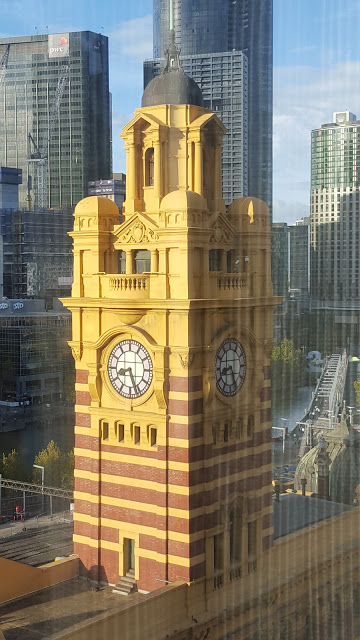
Looking for something to suit my mood.
I’ve been reading the headlines and it seems that nothing else is going on except Trump, so a plane crash, and residual fallout from the explosion in Beirut, if there was one, would be good.
All bad news unfortunately, so I need to find something uplifting.
There’s nothing like a walk in the park on a bright sunny day.
Is there?
What could possible happen?
Category: Writer
The cinema of my dreams – Was it just another surveillance job – Episode 40
I’m back home and this story has been sitting on a back burner for a few months, waiting for some more to be written.
The trouble is, there are also other stories to write, and I’m not very good at prioritizing.
But, here we are, a few minutes opened up and it didn’t take long to get back into the groove.
Chasing leads, maybe
…
Darkness fell in a noticeably short time, and we left the pub at about six. In the hour so we have been there I’d been keeping a close eye on the comings and goings, and in particular, if O’Connell came in, or someone else that might look like him.
He hadn’t, nor had any mythical family members. Well, it had been a long shot.
Jennifer hadn’t volunteered anything more to the conversation and sat working her way through a piece of fried fish and a bowl of chips. Neither had looked appetizing. I would have bet she’d have the chicken, but I was wrong, and probably it wasn’t going to be the first time.
“Do you have a gun?”
It was after ten minutes of silence. It worried me that she didn’t ask how far it was or how long it would take. And then, out of nowhere, the gun question.
“No. Why would I have a gun.?”
“We were issued with weapons. I still have mine.”
“Did you bring it with you?”
“No. Like I told you, I didn’t think I was still working for the Department. They didn’t ask for it back, so I didn’t give it to them.”
“Or the identities?”
“No. It was odd though; they didn’t ask about them either.”
“Maybe they were going to wait a while and then ask you back.”
This was a weird conversation to be having. By this time we were in Peaslake Lane, and not far from the house I pulled over to the side of the road, under a tree.
The houses were set back in a rural setting. Between the darkness and the undergrowth, the chances were we could get to the house without being seen. From where I was sitting, no windows or doors were visible.
I made sure the car’s internal light didn’t go on the moment the door was open.
“Are you bringing your cell phone?”
“Why. I’m not envisaging having to call anyone, nor am I expecting a call.”
I shrugged, and slipped mine into a pocket where I could easily reach it I needed to.
I got out of the car, and she followed. She left he bag in the car. The first sign of training kicking in; eave all un-necessary baggage behind. Perhaps having a gun might have been a good option if we ran into trouble.
Oddly enough, now that I thought about it, Monica hadn’t asked for mine back either, but it was sitting at home in a safe, along with the five other identities Severin had issued each of us with.
I locked the car, equally as silent and invisible as she joined me.
“Which house?”
“Three along. Follow me and keep your eyes and ears peeled.”
I didn’t have to tell her, but it didn’t hurt to emphasize the importance of stealth. There were people home in other houses, lights in windows just discernible through the trees, one house a window without a curtain, a view into the dining room, but there was no one at the table.
If we were visiting them, perhaps we’d be in time for dinner.
The house we were looking for was in darkness from our approach.
“You keep an eye open this side, and I’ll go around the other, then come back. I’ll see if there’s an easy entry point.”
“What if someone is home?”
“Doesn’t look like it from here, and I’ll be surprised if there is.”
A moment later she had disappeared into the shrub line and I was heading across the front of the house, heading for the other side. I kept well away from the front door, just in case there was a motion light, or worse, a motion detector that might set off a silent alarm.
But, that might already have happened, and if it had, no one had made a move inside.
Down the side was walls and windows, no doors or French doors leading out into the garden. None of the windows were at a decent height for us to clamber through, and if we had to, it was going to be difficult.
I continued on, around the back, where there was more success. French doors leading onto a patio, and then the lawn. In the corner was a greenhouse, and next to that a rose garden. Or at least that was what both looked like in the dark.
The moon, for the moment, was hidden by dark clouds.
Perhaps it would rain, though it had not been in the forecast, but, this was England, and it could rain at any time, especially when you didn’t want or need it. There was no light, or motion sensor over the French doors, so I crossed the patio and looked through the doors.
I had expected curtains, but these hadn’t been completely drawn. No large light or lamp on, but there were indicator lights, several red and one a particularly bright blue, casting a rather long shadow over furniture and what looked to be a carpet square.
Out of curiosity, I tried the door.
It was open.
Then I had the blind panic moment of thinking it might be alarmed.
I shut it again and waited.
…
© Charles Heath 2020
365 Days of writing, 2026 – 34
Day 34 – Writing exercise – The day she left me was the day I found myself.
…
Josephine was one of those people who could appear in your life and make it feel like you had known them forever.
Not that many appeared in my life because I was one of those kids who had that background created by bad experiences practically from the day I was born.
My mother was a reasonable person, herself scarred by the suicide of her father, leaving a gaping hole in her suddenly shattered world.
My father was, before the war, an odd but likeable chap who suffered from the war with undiagnosed 5 and slowly went mad with paranoia and battle scars.
How they met, how they got along, and what eventually happened was always going to happen. I just wish that I wasn’t the one to find them, not when I was 12, battling middle school and everything entailed with pre-teens.
Two things happened when I moved the high school. My grandmother took over my care after a battle with the authorities and the child welfare system. Josephine McAndrews arrived without fanfare and suddenly became the focal point of teachers and students alike.
Especially the boys, which I thought was odd because the previous year all the boys universally agreed girls were ‘yuck’.
I didn’t have time to notice. Or more to the point, I didn’t care. I spent the time between schools, not trying to figure out what I was going to do, but helping my grandfather on his small farm.
Then I had to switch from herding cows, getting the milking done, tending the chickens, and maintaining the fruit trees and vegetable patch.
Then go to school.
It took a month before I realised that Josephine MacAndrews had arrived, and that she was in the same grade. Even if I had known she was there, she would not have been a priority to welcome her or even talk to her.
There were plenty of other boys throwing themselves at her feet.
…
Lunch time was my quiet time, a seat in the back of the cafeteria. Because of the farm’s physical tasks, I was not one of the weaker kids; the ones the sport types made life hell. They tried, but my grandfather taught me self-defence, and I only had to use it once.
I also declined the invitation to play football, which some believed was stupid, but I didn’t see the point of it. It didn’t mean the coach would stop asking, so I was learning quickly how to dodge him.
That was the back of the cafeteria, behind a row of plants acting as a divider.
That didn’t deter the intermediate Miss McAndrews, recently self appointed reporters for the school newspaper.
Looking for a place to sit, ignoring a half dozen clear invitations, she decided to sit opposite me. I knew who she was; everyone seemed to know her life story, and then some.
I tried to ignore her, but when I looked up, hoping she was gone, she was still there.
“You seem preoccupied,” she said.
“I was minding my own business.” I tried not to make it sound like she was annoying me.
My grandmother had told me at the start of the school year that it was time for me to be more sociable, and that girls did exist and I could talk to them. It wasn’t, she said, going to kill me.
I begged to differ.
“Do you know who I am?”
It wasn’t spoken haughtily, but it wasn’t a good line to use. Not on me anyway.
“That’s a line I’d expect from a self-entitled brat trying to sound like they’re better than me. You might be, but you could try breaking it differently.”
“Is that as a self-entitled brat, or that I am better than you, though I’m not sure in what way.”
If I was expecting her to get up and leave in disgust, it didn’t work. It in fact caused her to smile, not the fake smile most of the girls had suddenly acquired, moving from fifteen to sixteen, but something that resembled amiable.
“You’ll make a good lawyer.”
“Is that a compliment?”
“It is what it is.”
She looked me up and down. “You’re not like the rest of them here, are you?”
“I am. Same age, same insecurities, same daft behaviour that everyone else gets up to. I just choose not to play the games involved with being friends at the expense of others. I hate everyone equally.”
She gave me another measured look, then said, “I hate to say it, but I’m beginning to like you. You’re not going to lie to my face because you want something.”
Yes, that was another lesson my grandfather taught me. Everyone wants something, and every little piece of you you give away is one less piece of yourself you have in your armoury.
I didn’t understand what it meant until recently. People could be nice or horrible. It was a choice. Most people choose not to embrace nice.
“You have nothing I want.”
“Good to know. Now, if you have a specific and compelling reason why I can’t sit here, I’ll be happy to leave. If you don’t…”
“I don’t own this table, nor do I have the right to tell you what or what not to do. If you like peace and quiet, this will be the place.”
“Then I shall stay. Peace and quiet will be a change.”
…
I did have acquaintances, as distinct from friends. Friends were people who ended up betraying you; acquaintances could be discarded when necessary.
Jack was borderline between the two because his company was tolerable, and his philosophy was the same as mine. Get through school and work on his parents’ farm. He was not a scholar, not that I was much better, but I helped him where I could.
Josephine didn’t turn up at my table every day, just now and then, and when Jack thought I had her on a string, he’d join us. He developed an affection for her, but it was clear she was not interested.
As the weeks and months passed, I could see she was not sure how to survive such a provincial school, considering the implied prestige of the last school she attended. She was not bitter about the change in circumstances, but it was a thing.
I wasn’t interested in her romantically, but there was a nagging interest in what her story was. I wasn’t buying the cover story, the one everyone quoted, that economic circumstances had caused her father’s company to collapse and they were left with nothing but a mountain of debt and a bad reputation.
It was also believed her mother came from our patch and had a piece of land and a house bequeathed to her, and it would have to do until her father could turn things around.
It was a plausible story, but though the basics might be true, that they had no money and they had a house and land out this way, the question was why they were here, when all people who lived here wanted to do was get out and go somewhere, anywhere else.
Or it was just my imagination.
We were back after Christmas, and the snow was feet thick, and the cold was intense enough to keep us at home for a few days.
It was clearly not what she was used to.
I asked a question, and for once she answered truthfully. How did I know? She had tells, and one was what happened to her expression just before she told a lie, or perhaps a white lie. Often, she would think before she answered. That told me she was working on an answer that most people would accept.
She had said she came from New York. I could tell that she had come from California because of her attitude towards and experience with snow and freezing temperatures.
Her last name wasn’t McAndrews either, another little hesitation in a moment when her mind was somewhere else. Liars needed to have good memories.
That little gem I learned from my mother, who was, of course, referring to my father. He could never get his story straight.
My best guess? Witness protection. The only negative is why draw attention to yourself, because clearly, they had been quite wealthy.
Or again, too much television and a wild imagination. Whatever the truth, I would keep it to myself.
…
Lunch was quiet, with some of the students still unable to get out of their properties, so the cafeteria was not its usual hubbub of activity.
Jack was hovering, speaking to other members of the athletic squad, having just joined it to widen his circle of acquaintances. The fact that he could throw a discus a long way helped. He took the crown for the longest throw ever at the school, and that was with very little training.
Josephine came in with a group of girls known as the pom poms, the cheerleaders. It was elitist, and getting in was to survive a ritual of humiliations. Josephine so far had declined to join them.
It was odd, though, because girls had to beg them to join; it was exactly the opposite for Josephine; they were chasing her.
A few minutes later, she’d abandoned them and wandered over to annoy me. Well, not exactly annoy me, but I preferred to eat alone.
I looked up as she sat down. “Their latest offer not tempting you?”
She looked puzzled for a moment. “Oh, the try-hards? Why would anyone want to put themselves through that?”
“First dibs on the good-looking guys?”
She smiled, a curious expression. “Do you think I’m that shallow?”
“You’re sixteen going on twenty-five, a teenager, and a girl.”
“And the boy equivalent is sixteen going on five and a one-track mind. It’s the same everywhere, I guess. Growing up is just horrible.”
“Pretty much. Bit different here to there?”
“Not really. Less snooty bitches, perhaps more attitude. I’ll survive. What’s it like at your place? We have been shovelling snow just to get out the front door.”
“It wasn’t like that in New York?”
There it was, the hesitation, that moment where she was running scenarios, what would I believe?
“Not exactly. There was snow, just not as much. And not as cold.”
Hovering Jack had taken a little longer to wind up his conversation, then come over. She had been watching him out of the corner of her eye, and her demeanour changed.
He sat next to me
I saw a look pass between them, and it made me shiver, and not in a good way. I gathered up my things and stood.
“I have a school thing I want to ask you, can you walk with me?” I said to her.
She waited for just the right amount of time before saying, “Of course, anything I can do to help.” She took a few seconds longer to organise and put things in her bag, then stood, not wanting to look like she was in a hurry.
She smiled at Jack, then joined me, walking slowly out of the room.
Neither of us spoke until we were some distance from the block.
“Is he annoying you?” I finally asked. It was not my business, but there was something not right.
“Not exactly, but it’s a vibe I get when he’s around. I don’t feel safe.”
It was not the first time I’d heard it, but I thought nothing of it. Jack was just being Jack
“He and I are much alike.”
“No. I feel safe with you, the big brother I never had.”
“Even through the disdain you perceived that?”
“Disdain. I thought it was a self-protection thing in case you got to like me.”
Interesting assessment. With a grain of truth. Perhaps it’s why I did it with everyone, just to keep them at arm’s length.
“You’re not going to be around long enough for that to happen. Falling in love is a process that takes time, getting to know each other.”
“How do you know?”
“The thing about someone like me is that I’m not distracted by all the chatter around me. I listen. I analyse. I wonder, and sometimes jump to conclusions. Living in a violent situation where most of the time it was just the expectation rather than the beatings, I retreated into many different imaginary worlds. This one, here, with my grandparents is the best so far.”
“Am I in any one of those imaginary worlds?”
“Rapunzel some days, Guinevere others.”
“Rescuing a damsel in distress, or partaking in forbidden love. Interesting.”
It wasn’t quite how I saw it. She had long plaited blonde hair, though it was not her natural colour, and she acted like she was the queen of everything.
“I needed rescuing, thanks. And you’re right. My parents hate this place.”
“And you?”
“I don’t belong here. You know that, as I suspect you know more about me than anyone in this place. If you have been listening, as you say, then you will have noticed the little slips. I can’t be on my guard the whole time, and I can’t relax.”
She wasn’t going to say any more, but it was an admission, one no one else would ever hear. But even so, it didn’t make me feel special.
“Then perhaps for the rest of your sojourn we shall just be acquaintances. I’m surprised by the number of kids who seem to want more at this age. My grandmother said back in her time, girls and boys had to be chaperoned, but there wasn’t social media or cable television back then, throwing morality to the wind. I guess not all progress is good.”
“For the record, I don’t have social media at all. I have a burner phone with two numbers in it. I can’t give it to you, so no late-night phone calls.”
We reached the block where the next class was. “Thanks again for the rescue. I appreciate it more than you can know.”
“Do you want me to deal with him?”
“No. I have to fight my own battles. But thanks for the offer.”
…
It was something I was thinking about, some months later, as we were rolling into summer, and for the first time, thinking about a girl.
Just one. And ironically, the one I would never get a chance with. She had said as much, and I heard her. She was leaving.
She told me over lunch. Matter of fact. Except for one catch in her voice at the end. Had she practised it so many times, only to be brought undone in the final delivery?
My imagination again, I thought.
And staring at the roof, I was surprised that anyone could have penetrated the walls that I had carefully built around me.
It hurt, like that first love should.
I was just dropping off when my cell phone buzzed. An unknown number. Normally, I wouldn’t answer, but a sixth sense told me it was trouble.
I pressed the green answer button, and a voice exploded, “Come and get me, please, now, hurry.” Two gunshots, then nothing.
Josephine.
I knew where she lived. Not everyone did. Anderson’s Lane, about 800 years across the paddocks. Half a mile, two and a half minutes, less if I could run like the wind.
But I had to stop for the rifle in the barn. A full minute; fumbles included, and hoped like hell it didn’t cost her her life.
I loaded it on the run, just like I was trained. I didn’t think I’d ever need to.
Three minutes. I could see headlights way off in the distance; someone had rung the sheriff’s office, and it would take time for the deputy to get organised.
I approached carefully and could see a man in the doorway, gun in hand, aimed and ready to shoot. I shot his gun hand and then his leg. He would be too busy stemming the bleeding.
I ran past him, looking blankly at me.
“A fucking kid,” I heard him mutter, then put loud, “incoming.”
I felt the presence at the top of the stairs before I saw the shadow and shot twice, and then watched the body fall down the stairs.
Then, “behind you,” and I turned, saw the man going for his gun, and shot him just as he got it into his hand.
Josephine had literally come out of the wall and then collapsed into my arms, sobbing. “They’re dead, they’re dead.”
I put the gun on the sideboard just as the deputy’s car slid to a stop across the gravel and the door opened.
A glance into the living room showed her two parents shot dead in their chairs, the television on a John Wayne western.
The rest was a blur.
…
The sheriff arrived at the same time as my grandparents. Despite her testimony, I spent about an hour in handcuffs, the deputy perhaps rightly or wrongly believing I was the assassin, but it was all cleared up in an instant when the forensic team, who arrived by helicopter, cleared me of any wrongdoing.
Josephine refused to leave me the whole time, on that very fine line between sanity and hysteria. Had I not got there, she swore she would have died. I wasn’t going to tell her she should have remained hidden.
We were lucky.
She was taken to a secret location, and I was sent home. No one told us anything, except that we were never to talk about what just happened. Ever.
I didn’t think I’d see her again.
Two days later, having been told to stay home, the sheriff came. He gave us the official story that her father had a mental breakdown, killed his wife, daughter and then himself. There was no mention of the two assassins.
It was a tragedy that could not have been prevented.
Then the sheriff took me to see Josephine. She had not wanted to leave without seeing me. I was surprised.
It was at another house, closer to town, which I presumed to be an FBI safe house. The guys there looked like agents, the suits, the dark glasses, the serious demeanour. So much for anonymity.
She was in a room out the back, a clear view to the river, a mile of pristine snow, with a light fall adding to the pile. She came over as soon as the door shut and hugged me very tightly, and I could feel her tears as she cried. Tears of relief, tears of loss.
I knew what that felt like.
All I could do was hold her tightly like I needed to when it happened to me, and I never got the chance. At least she would not end up in the welfare system. For her, at my age, it would have been horrific.
It took a while for her recover. The whole process would take a lot longer.
“Thank you.”
“No need. Anyone would do the same.”
“But they didn’t. You did. It was brave. I owe you my life.”
“Is this going to be a thing?”
She glared at me. “I’m trying to be serious.”
“You need to take a breath, revel in the fact you are alive, and believe me, old enough not to finish up in hell.”
“Your parents?”
“The story they are putting about you. It happened. I found them. I may have despised them, but it was still a very profound shock. You will feel it for a long time.”
“I’m sorry.”
“Don’t be. Time for you to concentrate on the new you, again.”
“I’ll miss you.”
“A distant memory in a few weeks, like the town, the school and the try-hards.”
“I won’t forget you.”
“I hope not. For someone I tried very hard not to like, you have a way of getting under people’s skin.”
“So you did like me?”
“A little, maybe. But it was always going to be a trap shoot in the end. I was right about you. Witness protection.”
“Without the protection, but yes. Now I get to disappear. But I have your cell number, and one day, when you least expect it, I will call. Maybe not quite so dramatically, but I will call. We have a bond that will never be broken.”
She reached up and kissed me on my cheek, and then looked into my eyes. I should have averted mine, but I didn’t.
They say you always remember that first kiss.
A few minutes later, I watched her leave. Knowing her had changed my life. Falling in love with her, that was the day I found myself.
…
© Charles Heath 2026
If I only had one day to stop over in – Helsinki – what would I do?
One Day in Helsinki: The One Place You Must Visit for an Unforgettable Stopover
Picture this: You’ve just landed in Helsinki, Finland, with only one day to explore before catching your next flight. The city beckons with its sleek design, vibrant culture, and Nordic charm—but time is limited. So, where do you go to capture the true spirit of Helsinki in just a few hours?
While the city offers countless gems—from the striking Helsinki Cathedral to the bustling Market Square—there’s one spot that perfectly encapsulates Helsinki’s soul and ensures your short visit is nothing short of memorable.
That place is Suomenlinna Sea Fortress.
Why Suomenlinna?
A UNESCO World Heritage site since 1991, Suomenlinna is not just a fortress—it’s an island adventure, a historical journey, and a scenic retreat all rolled into one. Built in the 18th century, this maritime fortress sprawls across six interconnected islands and tells stories of Swedish, Russian, and Finnish history. But more than that, it offers an immersive experience you can savor even in a single day.
How to Make the Most of Your Visit
Getting There:
From the heart of Helsinki, it’s just a 15–20-minute ferry ride from Kauppatori (Market Square). Ferries run regularly year-round, and the journey itself offers stunning views of the Baltic Sea and Helsinki’s coastline.
What to Do on the Island:
- Step Back in Time:
Wander through tunnels, cannons, and historic barracks. Visit the Suomenlinna Museum for a compact overview of the fortress’s 270-year history. - Embrace Nature and Views:
Walk along the rugged coastal paths for breathtaking panoramas of the sea and the city skyline. In summer, the islands are lush and green; in winter, they transform into a serene, snow-dusted wonderland. - Taste Finnish Flavors:
Stop by Café Vanille or the brewery restaurant, Suomenlinnan Panimo, for a warm drink, local pastry, or even a craft beer brewed on the island. - Capture the Moment:
From the iconic King’s Gate to the tranquil shoreline, every corner is photogenic. This is a place where memories are made—and Instagram-worthy shots are guaranteed.
Why It’s Perfect for a Stopover
- Compact Yet Complete: You can explore the highlights in 3–4 hours, leaving you plenty of time to return to the city, enjoy a meal, or even visit another quick attraction.
- Authentic Helsinki Vibe: Suomenlinna blends history, nature, and local life in a way that feels uniquely Finnish.
- Escape the Hustle: Despite being so close to the city, the islands offer a peaceful retreat away from urban noise—a refreshing pause during a travel day.
Before You Go
- Check Ferry Schedules: Plan your trip around ferry times to maximize your stay.
- Dress for the Weather: Helsinki can be breezy, even in summer. Wear comfortable shoes for walking.
- Pack Light Snacks: While there are cafes, having a water bottle and a snack ensures you can explore uninterrupted.
One Day, One Unforgettable Experience
Your stopover in Helsinki is a gift—a chance to taste a new culture, even briefly. And Suomenlinna is the perfect bite-sized piece of Finland to savor. It’s more than a tourist attraction; it’s an experience that stays with you: the sea breeze, the whisper of history, and the serene beauty of the archipelago.
So, when you find yourself with one day in Helsinki, skip the stress of trying to see it all. Take the ferry, step onto the island, and let Suomenlinna turn your stopover into a story worth telling.
Safe travels—and may your day in Helsinki be unforgettable!
Have you visited Suomenlinna or have another Helsinki favourite? Share your experiences in the comments below!
What I learned about writing – Idioms and hackneyed phrases
There are many opinions on writing, for instance:
Never begin a sentence with a conjunction
Dispense with Literary elegance, erudition and sophistication
and the big one, banish jargon, hackneyed phrases and needless Latin.
WTF – needless Latin? I never went to a posh English Grammar school, so I wouldn’t know Latin from a Haggis.
I have to say, when I was at school reading books like Billy Bunter’s Adventures, I wanted to go to a boarding school, have a half-day holiday on Wednesday, and sneak off to the nearby village to stuff my face with all manner of cakes.
Can’t say I liked to play ‘Rugger’ though. Sport is not my thing.
But…
It’s not always a good idea to use one, especially if the readers are not familiar with them. It might work with a local readership, but when you’re striving for an international audience, don’t confuse them.
Black as the ace of spades might work, but a bird in the hand is worth two in the bush is completely indecipherable.
As for my writing, there is always a possibility one might sneak in, and if it does, you can always find what it means by Googling it.
An excerpt from “One Last Look”: Charlotte is no ordinary girl
This is currently available at Amazon here: http://amzn.to/2CqUBcz
…
I’d read about out-of-body experiences, and like everyone else, thought it was nonsense. Some people claimed to see themselves in the operating theatre, medical staff frantically trying to revive them, and being surrounded by white light.
I was definitely looking down, but it wasn’t me I was looking at.
It was two children, a boy and a girl, with their parents, in a park.
The boy was Alan. He was about six or seven. The girl was Louise, and she was five years old. She had long red hair and looked the image of her mother.
I remember it now, it was Louise’s birthday and we went down to Bournemouth to visit our Grandmother, and it was the last time we were all together as a family.
We were flying homemade kites our father had made for us, and after we lay there looking up at the sky, making animals out of the clouds. I saw an elephant, Louise saw a giraffe.
We were so happy then.
Before the tragedy.
When I looked again ten years had passed and we were living in hell. Louise and I had become very adept at survival in a world we really didn’t understand, surrounded by people who wanted to crush our souls.
It was not a life a normal child had, our foster parents never quite the sort of people who were adequately equipped for two broken-hearted children. They tried their best, but their best was not good enough.
Every day it was a battle, to avoid the Bannister’s and Archie in particular, every day he made advances towards Louise and every day she fended him off.
Until one day she couldn’t.
Now I was sitting in the hospital, holding Louise’s hand. She was in a coma, and the doctors didn’t think she would wake from it. The damage done to her was too severe.
The doctors were wrong.
She woke, briefly, to name her five assailants. It was enough to have them arrested. It was not enough to have them convicted.
Justice would have to be served by other means.
I was outside the Bannister’s home.
I’d made my way there without really thinking, after watching Louise die. It was like being on autopilot, and I had no control over what I was doing. I had murder in mind. It was why I was holding an iron bar.
Skulking in the shadows. It was not very different from the way the Bannister’s operated.
I waited till Archie came out. I knew he eventually would. The police had taken him to the station for questioning, and then let him go. I didn’t understand why, nor did I care.
I followed him up the towpath, waiting till he stopped to light a cigarette, then came out of the shadows.
“Wotcha got there Alan?” he asked when he saw me. He knew what it was, and what it was for.
It was the first time I’d seen the fear in his eyes. He was alone.
“Justice.”
“For that slut of a sister of yours. I had nuffing to do with it.”
“She said otherwise, Archie.”
“She never said nuffing, you just made it up.” An attempt at bluster, but there was no confidence in his voice.
I held up the pipe. It had blood on it. Willy’s blood. “She may or may not have Archie, but Willy didn’t make it up. He sang like a bird. That’s his blood, probably brains on the pipe too, Archie, and yours will be there soon enough.”
“He dunnit, not me. Lyin’ bastard would say anything to save his own skin.” Definitely scared now, he was looking to run away.
“No, Archie. He didn’t. I’m coming for you. All of you Bannisters. And everyone who touched my sister.”
It was the recurring nightmare I had for years afterwards.
I closed my eyes and tried to shut out the thoughts, the images of Louise, the phone call, the visit to the hospital and being there when she succumbed to her injuries. Those were the very worst few hours of my life.
She had asked me to come to the railway station and walk home with her, and I was running late. If I had left when I was supposed to, it would never have happened and for years afterwards, I blamed myself for her death.
If only I’d not been late…
When the police finally caught the rapists, I’d known all along who they’d be; antagonists from school, the ring leader, Archie Bannister, a spurned boyfriend, a boy whose parents, ubiquitously known to all as ‘the Bannister’s, dealt in violence and crime and who owned the neighbourhood. The sins of the father had been very definitely passed onto the son.
At school, I used to be the whipping boy, Archie, a few grades ahead of me, made a point of belting me and a few of the other boys, to make sure the rest did as they were told. He liked Louise, but she had no time for a bully like him, even when he promised he would ‘protect’ me.
I knew the gang members, the boys who tow-kowed to save getting beaten up, and after the police couldn’t get enough information to prosecute them because everyone was too afraid to speak out, I went after Willy. There was always a weak link in a group, and he was it.
He worked in a factory, did long hours on a Wednesday and came home after dark alone. It was a half mile walk, through a park. The night I approached him, I smashed the lights and left it in darkness. He nearly changed his mind and went the long way home.
He didn’t.
It took an hour and a half to get the names. At first, when he saw me, he laughed. He said I would be next, and that was four words more than he knew he should have said.
When I found him alone the next morning I showed him the iron bar and told him he was on the list. I didn’t kill him then, he could wait his turn, and worry about what was going to happen to him.
When the police came to visit me shortly after that encounter, no doubt at the behest of the Bannister’s, the neighbourhood closed ranks and gave me an ironclad alibi. The Bannister’s then came to visit me and threatened me. I told them their days were numbered and showed them the door.
At the trial, he and his friends got off on a technicality. The police had failed to do their job properly, but it was not the police, but a single policeman, corrupted by the Bannisters.
Archie could help but rub it in my face. He was invincible.
Joe Collins took 12 bullets and six hours to bleed out. He apologized, he pleaded, he cried, he begged. I didn’t care.
Barry Mills, a strong lad with a mind to hurting people, Archie’s enforcer, almost got the better of me. I had to hit him more times than I wanted to, and in the end, I had to be satisfied that he died a short but agonizing death.
I revisited Willy in the hospital. He’d recovered enough to recognize me, and why I’d come. Suffocation was too good for him.
David Williams, second in command of the gang, was as tough and nasty as the Bannisters. His family were forging a partnership with the Bannister’s to make them even more powerful. Outwardly David was a pleasant sort of chap, affable, polite, and well mannered. A lot of people didn’t believe he could be like, or working with, the Bannisters.
He and I met in the pub. We got along like old friends. He said Willy had just named anyone he could think of, and that he was innocent of any charges. We shook hands and parted as friends.
Three hours later he was sitting in a chair in the middle of a disused factory, blindfolded and scared. I sat and watched him, listened to him, first threatening me, and then finally pleading with me. He’d guessed who it was that had kidnapped him.
When it was dark, I took the blindfold off and shone a very bright light in his eyes. I asked him if the violence he had visited upon my sister was worth it. He told me he was just a spectator.
I’d read the coroner’s report. They all had a turn. He was a liar.
He took nineteen bullets to die.
Then came Archie.
The same factory only this time there were four seats. Anna Bannister, brothel owner, Spike Bannister, head of the family, Emily Bannister, sister, and who had nothing to do with their criminal activities. She just had the misfortune of sharing their name.
Archie’s father told me how he was going to destroy me, and everyone I knew.
A well-placed bullet between the eyes shut him up.
Archie’s mother cursed me. I let her suffer for an hour before I put her out of her misery.
Archie remained stony-faced until I came to Emily. The death of his parents meant he would become head of the family. I guess their deaths meant as little to him as they did me.
He was a little more worried about his sister.
I told him it was confession time.
He told her it was little more than a forced confession and he had done nothing to deserve my retribution.
I shrugged and shot her, and we both watched her fall to the ground screaming in agony. I told him if he wanted her to live, he had to genuinely confess to his crimes. This time he did, it all poured out of him.
I went over to Emily. He watched in horror as I untied her bindings and pulled her up off the floor, suffering only from a small wound in her arm. Without saying a word she took the gun and walked over to stand behind him.
“Louise was my friend, Archie. My friend.”
Then she shot him. Six times.
To me, after saying what looked like a prayer, she said, “Killing them all will not bring her back, Alan, and I doubt she would approve of any of this. May God have mercy on your soul.”
Now I was in jail. I’d spent three hours detailing the deaths of the five boys, everything I’d done; a full confession. Without my sister, my life was nothing. I didn’t want to go back to the foster parents; I doubt they’d take back a murderer.
They were not allowed to.
For a month I lived in a small cell, in solitary, no visitors. I believed I was in the queue to be executed, and I had mentally prepared myself for the end.
Then I was told I had a visitor, and I was expecting a priest.
Instead, it was a man called McTavish. Short, wiry, and with an accent that I could barely understand.
“You’ve been a bad boy, Alan.”
When I saw it was not the priest I told the jailers not to let him in, I didn’t want to speak to anyone. They ignored me. I’d expected he was a psychiatrist, come to see whether I should be shipped off to the asylum.
I was beginning to think I was going mad.
I ignored him.
“I am the difference between you living or dying Alan, it’s as simple as that. You’d be a wise man to listen to what I have to offer.”
Death sounded good. I told him to go away.
He didn’t. Persistent bugger.
I was handcuffed to the table. The prison officers thought I was dangerous. Five, plus two, murders, I guess they had a right to think that. McTavish sat opposite me, ignoring my request to leave.
“Why’d you do it?”
“You know why.” Maybe if I spoke he’d go away.
“Your sister. By all accounts, the scum that did for her deserved what they got.”
“It was murder just the same. No difference between scum and proper people.”
“You like killing?”
“No-one does.”
“No, I dare say you’re right. But you’re different, Alan. As clean and merciless killing I’ve ever seen. We can use a man like you.”
“We?”
“A group of individuals who clean up the scum.”
I looked up to see his expression, one of benevolence, totally out of character for a man like him. It looked like I didn’t have a choice.
Trained, cleared, and ready to go.
I hadn’t realized there were so many people who were, for all intents and purposes, invisible. People that came and went, in malls, in hotels, trains, buses, airports, everywhere, people no one gave a second glance.
People like me.
In a mall, I became a shopper.
In a hotel, I was just another guest heading to his room.
On a bus or a train, I was just another commuter.
At the airport, I became a pilot. I didn’t need to know how to fly; everyone just accepted a pilot in a pilot suit was just what he looked like.
I had a passkey.
I had the correct documents to get me onto the plane.
That walk down the air bridge was the longest of my life. Waiting for the call from the gate, waiting for one of the air bridge staff to challenge me, stepping onto the plane.
Two pilots and a steward. A team. On the plane early before the rest of the crew. A group that was committing a crime, had committed a number of crimes and thought they’d got away with it.
Until the judge, the jury and their executioner arrived.
Me.
Quick, clean, merciless. Done.
I was now an operational field agent.
I was older now, and I could see in the mirror I was starting to go grey at the sides. It was far too early in my life for this, but I expect it had something to do with my employment.
I didn’t recognize the man who looked back at me.
It was certainly not Alan McKenzie, nor was there any part of that fifteen-year-old who had made the decision to exact revenge.
Given a choice; I would not have gone down this path.
Or so I kept telling myself each time a little more of my soul was sold to the devil.
I was Barry Gamble.
I was Lenny Buckman.
I was Jimmy Hosen.
I was anyone but the person I wanted to be.
That’s what I told Louise, standing in front of her grave, and trying to apologize for all the harm, all the people I’d killed for that one rash decision. If she was still alive she would be horrified, and ashamed.
Head bowed, tears streamed down my face.
God had gone on holiday and wasn’t there to hand out any forgiveness. Not that day. Not any day.
New York, New Years Eve.
I was at the end of a long tour, dragged out of a holiday and back into the fray, chasing down another scumbag. They were scumbags, and I’d become an automaton hunting them down and dispatching them to what McTavish called a better place.
This time I failed.
A few drinks to blot out the failure, a blonde woman who pushed my buttons, a room in a hotel, any hotel, it was like being on the merry-go-round, round and round and round…
Her name was Silvia or Sandra, or someone I’d met before, but couldn’t quite place her. It could be an enemy agent for all I knew or all I cared right then.
I was done.
I’d had enough.
I gave her the gun.
I begged her to kill me.
She didn’t.
Instead, I simply cried, letting the pent up emotion loose after being suppressed for so long, and she stayed with me, holding me close, and saying I was safe, that she knew exactly how I felt.
How could she? No one could know what I’d been through.
I remembered her name after she had gone.
Amanda.
I remembered she had an imperfection in her right eye.
Someone else had the same imperfection.
I couldn’t remember who that was.
Not then.
I had a dingy flat in Kensington, a place that I rarely stayed in if I could help it. After five-star hotel rooms, it made me feel shabby.
The end of another mission, I was on my way home, the underground, a bus, and then a walk.
It was late.
People were spilling out of the pub after the last drinks. Most in good spirits, others slightly more boisterous.
A loud-mouthed chap bumped into me, the sort who had one too many, and was ready to take on all comers.
He turned on me, “Watch where you’re going, you fool.”
Two of his friends dragged him away. He shrugged them off, squared up.
I punched him hard, in the stomach, and he fell backwards onto the ground. I looked at his two friends. “Take him home before someone makes mincemeat out of him.”
They grabbed his arms, lifted him off the ground and took him away.
Out of the corner of my eye, I could see a woman, early thirties, quite attractive, but very, very drunk. She staggered from the bar, bumped into me, and finished up sitting on the side of the road.
I looked around to see where her friends were. The exodus from the pub was over and the few nearby were leaving to go home.
She was alone, drunk, and by the look of her, unable to move.
I sat beside her. “Where are your friends?”
“Dunno.”
“You need help?”
She looked up, and sideways at me. She didn’t look the sort who would get in this state. Or maybe she was, I was a terrible judge of women.
“Who are you?” she asked.
“Nobody.” I was exactly how I felt.
“Well Mr Nobody, I’m drunk, and I don’t care. Just leave me here to rot.”
She put her head back between her knees, and it looked to me she was trying to stop the spinning sensation in her head.
Been there before, and it’s not a good feeling.
“Where are your friends?” I asked again.
“Got none.”
“Perhaps I should take you home.”
“I have no home.”
“You don’t look like a homeless person. If I’m not mistaken, those shoes are worth more than my weekly salary.” I’d seen them advertised, in the airline magazine, don’t ask me why the ad caught my attention.
She lifted her head and looked at me again. “You a smart fucking arse are you?”
“I have my moments.”
“Have them somewhere else.”
She rested her head against my shoulder. We were the only two left in the street, and suddenly in darkness when the proprietor turned off the outside lights.
“Take me home,” she said suddenly.
“Where is your place?”
“Don’t have one. Take me to your place.”
“You won’t like it.”
“I’m drunk. What’s not to like until tomorrow.”
I helped her to her feet. “You have a name?”
“Charlotte.”
The wedding was in a small church. We had been away for a weekend in the country, somewhere in the Cotswolds, and found this idyllic spot. Graves going back to the dawn of time, a beautiful garden tended by the vicar and his wife, an astonishing vista over hills and down dales.
On a spring afternoon with the sun, the flowers, and the peacefulness of the country.
I had two people at the wedding, the best man, Bradley, and my boss, Watkins.
Charlotte had her sisters Melissa and Isobel, and Isobel’s husband Giovanni, and their daughter Felicity.
And one more person who was as mysterious as she was attractive, a rather interesting combination as she was well over retirement age. She arrived late and left early.
Aunt Agatha.
She looked me up and down with what I’d call a withering look. “There’s more to you than meets the eye,” she said enigmatically.
“Likewise I’m sure,” I said. It earned me an elbow in the ribs from Charlotte. It was clear she feared this woman.
“Why did you come,” Charlotte asked.
“You know why.”
Agatha looked at me. “I like you. Take care of my granddaughter. You do not want me for an enemy.”
OK, now she officially scared me.
She thrust a cheque into my hand, smiled, and left.
“Who is she,” I asked after we watched her depart.
“Certainly not my fairy godmother.”
Charlotte never mentioned her again.
Zurich in summer, not exactly my favourite place.
Instead of going to visit her sister Isobel, we stayed at a hotel in Beethovenstrasse and Isobel and Felicity came to us. Her husband was not with her this time.
Felicity was three or four and looked very much like her mother. She also looked very much like Charlotte, and I’d remarked on it once before and it received a sharp rebuke.
We’d been twice before, and rather than talk to her sister, Charlotte spent her time with Felicity, and they were, together, like old friends. For so few visits they had a remarkable rapport.
I had not broached the subject of children with Charlotte, not after one such discussion where she had said she had no desire to be a mother. It had not been a subject before and wasn’t once since.
Perhaps like all Aunts, she liked the idea of playing with a child for a while and then give it back.
Felicity was curious as to who I was, but never ventured too close. I believed a child could sense the evil in adults and had seen through my facade of friendliness. We were never close.
But…
This time, when observing the two together, something quite out of left field popped into my head. It was not possible, not by any stretch of the imagination, but I thought she looked like my mother.
And Charlotte had seen me looking in their direction. “You seem distracted,” she said.
“I was just remembering my mother. Odd moment, haven’t done so for a very long time.”
“Why now?” I think she had a look of concern on her face.
“Her birthday, I guess,” I said, the first excuse I could think of.
Another look and I was wrong. She looked like Isobel or Charlotte, or if I wanted to believe it possible, Melissa too.
I was crying, tears streaming down my face.
I was in pain, searing pain from my lower back stretching down into my legs, and I was barely able to breathe.
It was like coming up for air.
It was like Snow White bringing Prince Charming back to life. I could feel what I thought was a gentle kiss and tears dropping on my cheeks, and when I opened my eyes, I saw Charlotte slowly lifting her head, a hand gently stroking the hair off my forehead.
And in a very soft voice, she said, “Hi.”
I could not speak, but I think I smiled. It was the girl with the imperfection in her right eye. Everything fell into place, and I knew, in that instant that we were irrevocably meant to be together.
“Welcome back.”
© Charles Heath 2016-2019

If I only had one day to stop over in – Berlin – what would I do?
The One Place to Make Your Berlin Stopover Unforgettable
So, you’ve got just one day in Berlin. One whirlwind, jet-lagged, adventure-packed day in a city that could easily fill a month. Between the Brandenburg Gate, the remnants of the Wall, and the endless museums, how do you choose where to spend your precious hours? Skip the stress of trying to see it all. Instead, focus on one unforgettable experience. And for that, there’s only one place that truly captures Berlin’s soul: the East Side Gallery.
Why the East Side Gallery?
Berlin is a city painted in layers of history, resilience, and reinvention. Nowhere tells that story more powerfully—or more colourfully—than the East Side Gallery. It’s not just a sight to see; it’s an emotion to feel.
Stretching 1.3 kilometres along the banks of the Spree River, this open-air gallery is the longest remaining section of the Berlin Wall. But instead of the grim, grey barrier that once divided a city, it now stands as the largest outdoor gallery in the world. After the Wall fell in 1989, over 100 artists from around the globe transformed this symbol of separation into a monumental canvas of hope, freedom, and protest.
What Makes It So Memorable?
1. Art That Speaks Volumes
You’ll walk alongside iconic murals that have become symbols of Berlin itself. The most famous, Dmitri Vrubel’s “My God, Help Me to Survive This Deadly Love” (often called the “Fraternal Kiss”), depicts the embrace between Soviet leader Leonid Brezhnev and East German leader Erich Honecker. It’s surreal, ironic, and deeply human—a perfect snapshot of Berlin’s complex history.
Other pieces, like Birgit Kinder’s “Test the Rest” (a Trabi car breaking through the Wall), capture the explosive joy and defiance of a city set free. Every mural has a story, and together they form a powerful narrative of pain, hope, and rebirth.
2. A Walk Through History
As you stroll, you’re literally tracing the former “death strip.” Stand with one hand on the concrete, look toward the river, and imagine the city split in two. Then look again at the vibrant art covering that same concrete. That contrast—between what was and what is—is Berlin in a nutshell. It’s a visceral, moving experience no museum can replicate.
3. The Vibe of Berlin Today
The East Side Gallery isn’t frozen in time. It’s alive. Street musicians play nearby, locals bike past, and the adjacent Spree buzzes with riverboats and afternoon drinkers. Grab a coffee or a Currywurst from a nearby stand, sit by the water, and just absorb the energy. This is where Berliners remember, reflect, and celebrate—and you’re right there with them.
How to Make the Most of Your Visit
- Go Early or Late: Midday can get crowded. For a more contemplative experience, visit in the early morning or late afternoon when the light is golden and the crowds are thin.
- Take Your Time: Don’t rush. Let yourself read the plaques, sit on a bench, and really look at the art. The magic is in the details.
- Extend the Moment: Afterwards, cross the Oberbaum Bridge—a gorgeous brick double-decker bridge linking Friedrichshain and Kreuzberg. The view of the Spree with the Gallery in the background is unforgettable.
- Refuel in Style: Head into nearby Friedrichshain for a cozy café or a Berlin-style craft beer. Try Schneeeule for a local brew, or visit Simon-Dach-Straße for a lively meal.
One Place, a Lifetime of Meaning
Your one day in Berlin could be spent ticking off famous landmarks. But at the East Side Gallery, you don’t just see Berlin—you feel it. You touch its history, witness its creativity, and join its ongoing story of transformation. In a city defined by change, this place reminds us that even the darkest divisions can become canvases for light.
So, when your plane lands and you step into Berlin with just hours to spare, go straight to the East Side Gallery. Let the art, the history, and the spirit of this city leave its mark on you. Because some places don’t just fill your camera—they fill your soul.
Have you visited the East Side Gallery or have another Berlin favourite for a short stopover? Share your stories in the comments below!
Safe travels, and enjoy every moment of your Berlin day.
“What Sets Us Apart”, a mystery with a twist
David is a man troubled by a past he is trying to forget.
Susan is rebelling against a life of privilege and an exasperated mother who holds a secret that will determine her daughter’s destiny.
They are two people brought together by chance. Or was it?
When Susan discovers her mother’s secret, she goes in search of the truth that has been hidden from her since the day she was born.
When David realizes her absence is more than the usual cooling off after another heated argument, he finds himself being slowly drawn back into his former world of deceit and lies.
Then, back with his former employers, David quickly discovers nothing is what it seems as he embarks on a dangerous mission to find Susan before he loses her forever.
Find the kindle version on Amazon here: http://amzn.to/2Eryfth

365 Days of writing, 2026 – 34
Day 34 – Writing exercise – The day she left me was the day I found myself.
…
Josephine was one of those people who could appear in your life and make it feel like you had known them forever.
Not that many appeared in my life because I was one of those kids who had that background created by bad experiences practically from the day I was born.
My mother was a reasonable person, herself scarred by the suicide of her father, leaving a gaping hole in her suddenly shattered world.
My father was, before the war, an odd but likeable chap who suffered from the war with undiagnosed 5 and slowly went mad with paranoia and battle scars.
How they met, how they got along, and what eventually happened was always going to happen. I just wish that I wasn’t the one to find them, not when I was 12, battling middle school and everything entailed with pre-teens.
Two things happened when I moved the high school. My grandmother took over my care after a battle with the authorities and the child welfare system. Josephine McAndrews arrived without fanfare and suddenly became the focal point of teachers and students alike.
Especially the boys, which I thought was odd because the previous year all the boys universally agreed girls were ‘yuck’.
I didn’t have time to notice. Or more to the point, I didn’t care. I spent the time between schools, not trying to figure out what I was going to do, but helping my grandfather on his small farm.
Then I had to switch from herding cows, getting the milking done, tending the chickens, and maintaining the fruit trees and vegetable patch.
Then go to school.
It took a month before I realised that Josephine MacAndrews had arrived, and that she was in the same grade. Even if I had known she was there, she would not have been a priority to welcome her or even talk to her.
There were plenty of other boys throwing themselves at her feet.
…
Lunch time was my quiet time, a seat in the back of the cafeteria. Because of the farm’s physical tasks, I was not one of the weaker kids; the ones the sport types made life hell. They tried, but my grandfather taught me self-defence, and I only had to use it once.
I also declined the invitation to play football, which some believed was stupid, but I didn’t see the point of it. It didn’t mean the coach would stop asking, so I was learning quickly how to dodge him.
That was the back of the cafeteria, behind a row of plants acting as a divider.
That didn’t deter the intermediate Miss McAndrews, recently self appointed reporters for the school newspaper.
Looking for a place to sit, ignoring a half dozen clear invitations, she decided to sit opposite me. I knew who she was; everyone seemed to know her life story, and then some.
I tried to ignore her, but when I looked up, hoping she was gone, she was still there.
“You seem preoccupied,” she said.
“I was minding my own business.” I tried not to make it sound like she was annoying me.
My grandmother had told me at the start of the school year that it was time for me to be more sociable, and that girls did exist and I could talk to them. It wasn’t, she said, going to kill me.
I begged to differ.
“Do you know who I am?”
It wasn’t spoken haughtily, but it wasn’t a good line to use. Not on me anyway.
“That’s a line I’d expect from a self-entitled brat trying to sound like they’re better than me. You might be, but you could try breaking it differently.”
“Is that as a self-entitled brat, or that I am better than you, though I’m not sure in what way.”
If I was expecting her to get up and leave in disgust, it didn’t work. It in fact caused her to smile, not the fake smile most of the girls had suddenly acquired, moving from fifteen to sixteen, but something that resembled amiable.
“You’ll make a good lawyer.”
“Is that a compliment?”
“It is what it is.”
She looked me up and down. “You’re not like the rest of them here, are you?”
“I am. Same age, same insecurities, same daft behaviour that everyone else gets up to. I just choose not to play the games involved with being friends at the expense of others. I hate everyone equally.”
She gave me another measured look, then said, “I hate to say it, but I’m beginning to like you. You’re not going to lie to my face because you want something.”
Yes, that was another lesson my grandfather taught me. Everyone wants something, and every little piece of you you give away is one less piece of yourself you have in your armoury.
I didn’t understand what it meant until recently. People could be nice or horrible. It was a choice. Most people choose not to embrace nice.
“You have nothing I want.”
“Good to know. Now, if you have a specific and compelling reason why I can’t sit here, I’ll be happy to leave. If you don’t…”
“I don’t own this table, nor do I have the right to tell you what or what not to do. If you like peace and quiet, this will be the place.”
“Then I shall stay. Peace and quiet will be a change.”
…
I did have acquaintances, as distinct from friends. Friends were people who ended up betraying you; acquaintances could be discarded when necessary.
Jack was borderline between the two because his company was tolerable, and his philosophy was the same as mine. Get through school and work on his parents’ farm. He was not a scholar, not that I was much better, but I helped him where I could.
Josephine didn’t turn up at my table every day, just now and then, and when Jack thought I had her on a string, he’d join us. He developed an affection for her, but it was clear she was not interested.
As the weeks and months passed, I could see she was not sure how to survive such a provincial school, considering the implied prestige of the last school she attended. She was not bitter about the change in circumstances, but it was a thing.
I wasn’t interested in her romantically, but there was a nagging interest in what her story was. I wasn’t buying the cover story, the one everyone quoted, that economic circumstances had caused her father’s company to collapse and they were left with nothing but a mountain of debt and a bad reputation.
It was also believed her mother came from our patch and had a piece of land and a house bequeathed to her, and it would have to do until her father could turn things around.
It was a plausible story, but though the basics might be true, that they had no money and they had a house and land out this way, the question was why they were here, when all people who lived here wanted to do was get out and go somewhere, anywhere else.
Or it was just my imagination.
We were back after Christmas, and the snow was feet thick, and the cold was intense enough to keep us at home for a few days.
It was clearly not what she was used to.
I asked a question, and for once she answered truthfully. How did I know? She had tells, and one was what happened to her expression just before she told a lie, or perhaps a white lie. Often, she would think before she answered. That told me she was working on an answer that most people would accept.
She had said she came from New York. I could tell that she had come from California because of her attitude towards and experience with snow and freezing temperatures.
Her last name wasn’t McAndrews either, another little hesitation in a moment when her mind was somewhere else. Liars needed to have good memories.
That little gem I learned from my mother, who was, of course, referring to my father. He could never get his story straight.
My best guess? Witness protection. The only negative is why draw attention to yourself, because clearly, they had been quite wealthy.
Or again, too much television and a wild imagination. Whatever the truth, I would keep it to myself.
…
Lunch was quiet, with some of the students still unable to get out of their properties, so the cafeteria was not its usual hubbub of activity.
Jack was hovering, speaking to other members of the athletic squad, having just joined it to widen his circle of acquaintances. The fact that he could throw a discus a long way helped. He took the crown for the longest throw ever at the school, and that was with very little training.
Josephine came in with a group of girls known as the pom poms, the cheerleaders. It was elitist, and getting in was to survive a ritual of humiliations. Josephine so far had declined to join them.
It was odd, though, because girls had to beg them to join; it was exactly the opposite for Josephine; they were chasing her.
A few minutes later, she’d abandoned them and wandered over to annoy me. Well, not exactly annoy me, but I preferred to eat alone.
I looked up as she sat down. “Their latest offer not tempting you?”
She looked puzzled for a moment. “Oh, the try-hards? Why would anyone want to put themselves through that?”
“First dibs on the good-looking guys?”
She smiled, a curious expression. “Do you think I’m that shallow?”
“You’re sixteen going on twenty-five, a teenager, and a girl.”
“And the boy equivalent is sixteen going on five and a one-track mind. It’s the same everywhere, I guess. Growing up is just horrible.”
“Pretty much. Bit different here to there?”
“Not really. Less snooty bitches, perhaps more attitude. I’ll survive. What’s it like at your place? We have been shovelling snow just to get out the front door.”
“It wasn’t like that in New York?”
There it was, the hesitation, that moment where she was running scenarios, what would I believe?
“Not exactly. There was snow, just not as much. And not as cold.”
Hovering Jack had taken a little longer to wind up his conversation, then come over. She had been watching him out of the corner of her eye, and her demeanour changed.
He sat next to me
I saw a look pass between them, and it made me shiver, and not in a good way. I gathered up my things and stood.
“I have a school thing I want to ask you, can you walk with me?” I said to her.
She waited for just the right amount of time before saying, “Of course, anything I can do to help.” She took a few seconds longer to organise and put things in her bag, then stood, not wanting to look like she was in a hurry.
She smiled at Jack, then joined me, walking slowly out of the room.
Neither of us spoke until we were some distance from the block.
“Is he annoying you?” I finally asked. It was not my business, but there was something not right.
“Not exactly, but it’s a vibe I get when he’s around. I don’t feel safe.”
It was not the first time I’d heard it, but I thought nothing of it. Jack was just being Jack
“He and I are much alike.”
“No. I feel safe with you, the big brother I never had.”
“Even through the disdain you perceived that?”
“Disdain. I thought it was a self-protection thing in case you got to like me.”
Interesting assessment. With a grain of truth. Perhaps it’s why I did it with everyone, just to keep them at arm’s length.
“You’re not going to be around long enough for that to happen. Falling in love is a process that takes time, getting to know each other.”
“How do you know?”
“The thing about someone like me is that I’m not distracted by all the chatter around me. I listen. I analyse. I wonder, and sometimes jump to conclusions. Living in a violent situation where most of the time it was just the expectation rather than the beatings, I retreated into many different imaginary worlds. This one, here, with my grandparents is the best so far.”
“Am I in any one of those imaginary worlds?”
“Rapunzel some days, Guinevere others.”
“Rescuing a damsel in distress, or partaking in forbidden love. Interesting.”
It wasn’t quite how I saw it. She had long plaited blonde hair, though it was not her natural colour, and she acted like she was the queen of everything.
“I needed rescuing, thanks. And you’re right. My parents hate this place.”
“And you?”
“I don’t belong here. You know that, as I suspect you know more about me than anyone in this place. If you have been listening, as you say, then you will have noticed the little slips. I can’t be on my guard the whole time, and I can’t relax.”
She wasn’t going to say any more, but it was an admission, one no one else would ever hear. But even so, it didn’t make me feel special.
“Then perhaps for the rest of your sojourn we shall just be acquaintances. I’m surprised by the number of kids who seem to want more at this age. My grandmother said back in her time, girls and boys had to be chaperoned, but there wasn’t social media or cable television back then, throwing morality to the wind. I guess not all progress is good.”
“For the record, I don’t have social media at all. I have a burner phone with two numbers in it. I can’t give it to you, so no late-night phone calls.”
We reached the block where the next class was. “Thanks again for the rescue. I appreciate it more than you can know.”
“Do you want me to deal with him?”
“No. I have to fight my own battles. But thanks for the offer.”
…
It was something I was thinking about, some months later, as we were rolling into summer, and for the first time, thinking about a girl.
Just one. And ironically, the one I would never get a chance with. She had said as much, and I heard her. She was leaving.
She told me over lunch. Matter of fact. Except for one catch in her voice at the end. Had she practised it so many times, only to be brought undone in the final delivery?
My imagination again, I thought.
And staring at the roof, I was surprised that anyone could have penetrated the walls that I had carefully built around me.
It hurt, like that first love should.
I was just dropping off when my cell phone buzzed. An unknown number. Normally, I wouldn’t answer, but a sixth sense told me it was trouble.
I pressed the green answer button, and a voice exploded, “Come and get me, please, now, hurry.” Two gunshots, then nothing.
Josephine.
I knew where she lived. Not everyone did. Anderson’s Lane, about 800 years across the paddocks. Half a mile, two and a half minutes, less if I could run like the wind.
But I had to stop for the rifle in the barn. A full minute; fumbles included, and hoped like hell it didn’t cost her her life.
I loaded it on the run, just like I was trained. I didn’t think I’d ever need to.
Three minutes. I could see headlights way off in the distance; someone had rung the sheriff’s office, and it would take time for the deputy to get organised.
I approached carefully and could see a man in the doorway, gun in hand, aimed and ready to shoot. I shot his gun hand and then his leg. He would be too busy stemming the bleeding.
I ran past him, looking blankly at me.
“A fucking kid,” I heard him mutter, then put loud, “incoming.”
I felt the presence at the top of the stairs before I saw the shadow and shot twice, and then watched the body fall down the stairs.
Then, “behind you,” and I turned, saw the man going for his gun, and shot him just as he got it into his hand.
Josephine had literally come out of the wall and then collapsed into my arms, sobbing. “They’re dead, they’re dead.”
I put the gun on the sideboard just as the deputy’s car slid to a stop across the gravel and the door opened.
A glance into the living room showed her two parents shot dead in their chairs, the television on a John Wayne western.
The rest was a blur.
…
The sheriff arrived at the same time as my grandparents. Despite her testimony, I spent about an hour in handcuffs, the deputy perhaps rightly or wrongly believing I was the assassin, but it was all cleared up in an instant when the forensic team, who arrived by helicopter, cleared me of any wrongdoing.
Josephine refused to leave me the whole time, on that very fine line between sanity and hysteria. Had I not got there, she swore she would have died. I wasn’t going to tell her she should have remained hidden.
We were lucky.
She was taken to a secret location, and I was sent home. No one told us anything, except that we were never to talk about what just happened. Ever.
I didn’t think I’d see her again.
Two days later, having been told to stay home, the sheriff came. He gave us the official story that her father had a mental breakdown, killed his wife, daughter and then himself. There was no mention of the two assassins.
It was a tragedy that could not have been prevented.
Then the sheriff took me to see Josephine. She had not wanted to leave without seeing me. I was surprised.
It was at another house, closer to town, which I presumed to be an FBI safe house. The guys there looked like agents, the suits, the dark glasses, the serious demeanour. So much for anonymity.
She was in a room out the back, a clear view to the river, a mile of pristine snow, with a light fall adding to the pile. She came over as soon as the door shut and hugged me very tightly, and I could feel her tears as she cried. Tears of relief, tears of loss.
I knew what that felt like.
All I could do was hold her tightly like I needed to when it happened to me, and I never got the chance. At least she would not end up in the welfare system. For her, at my age, it would have been horrific.
It took a while for her recover. The whole process would take a lot longer.
“Thank you.”
“No need. Anyone would do the same.”
“But they didn’t. You did. It was brave. I owe you my life.”
“Is this going to be a thing?”
She glared at me. “I’m trying to be serious.”
“You need to take a breath, revel in the fact you are alive, and believe me, old enough not to finish up in hell.”
“Your parents?”
“The story they are putting about you. It happened. I found them. I may have despised them, but it was still a very profound shock. You will feel it for a long time.”
“I’m sorry.”
“Don’t be. Time for you to concentrate on the new you, again.”
“I’ll miss you.”
“A distant memory in a few weeks, like the town, the school and the try-hards.”
“I won’t forget you.”
“I hope not. For someone I tried very hard not to like, you have a way of getting under people’s skin.”
“So you did like me?”
“A little, maybe. But it was always going to be a trap shoot in the end. I was right about you. Witness protection.”
“Without the protection, but yes. Now I get to disappear. But I have your cell number, and one day, when you least expect it, I will call. Maybe not quite so dramatically, but I will call. We have a bond that will never be broken.”
She reached up and kissed me on my cheek, and then looked into my eyes. I should have averted mine, but I didn’t.
They say you always remember that first kiss.
A few minutes later, I watched her leave. Knowing her had changed my life. Falling in love with her, that was the day I found myself.
…
© Charles Heath 2026
The story behind the story: A Case of Working With the Jones Brothers
To write a private detective serial has always been one of the items at the top of my to-do list, though trying to write novels and a serial, as well as a blog, and maintain a social media presence, well, you get the idea.
But I made it happen, from a bunch of episodes I wrote a long, long time ago, used these to start it, and then continue on, then as now, never having much of an idea where it was going to end up, or how long it would take to tell the story.
That, I think is the joy of ad hoc writing, even you, as the author, have as much idea of where it’s going as the reader does.
It’s basically been in the mill since 1990, and although I finished it last year, it looks like the beginning to end will have taken exactly 30 years. Had you asked me 30 years ago if I’d ever get it finished, the answer would be maybe?
My private detective, Harry Walthenson
I’d like to say he’s from that great literary mold of Sam Spade, or Mickey Spillane, or Phillip Marlow, but he’s not.
But, I’ve watched Humphrey Bogart play Sam Spade with much interest, and modelled Harry and his office on it. Similarly, I’ve watched Robert Micham play Phillip Marlow with great panache, if not detachment, and added a bit of him to the mix.
Other characters come into play, and all of them, no matter what period they’re from, always seem larger than life. I’m not above stealing a little of Mary Astor, Peter Lorre or Sidney Greenstreet, to breathe life into beguiling women and dangerous men alike.
Then there’s the title, like
The Case of the Unintentional Mummy – this has so many meanings in so many contexts, though I imagine that back in Hollywood in the ’30s and ’40s, this would be excellent fodder for Abbott and Costello
The Case of the Three-Legged Dog – Yes, I suspect there may be a few real-life dogs with three legs, but this plot would involve something more sinister. And if made out of plaster, yes, they’re always something else inside.
But for mine, to begin with, it was “The Case of the …”, because I had no idea what the case was going to be about, well, I did, but not specifically.
Then I liked the idea of calling it “The Case of the Brother’s Revenge” because I began to have a notion there was a brother no one knew about, but that’s stuff for other stories, not mine, so then went the way of the others.
Now it’s called ‘A Case of Working With the Jones Brothers’, finished the first three drafts, and at the editor for the last.
I have high hopes of publishing it in early 2021. It even has a cover.