A relatively unassuming lane leads to what could be described as a grand hotel, called Waitomo Caves Hotel.
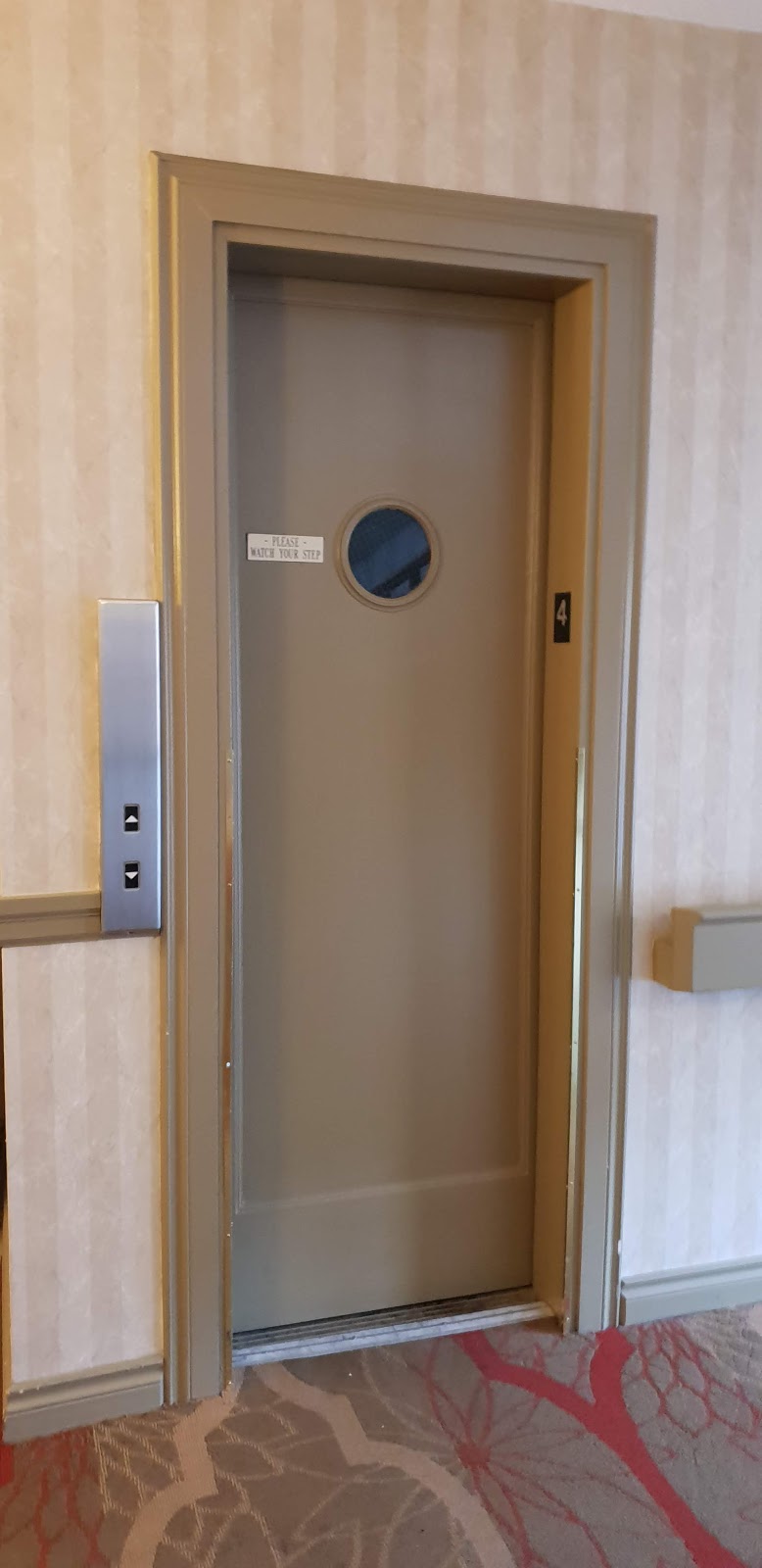
The original hotel was built in 1908, and it was later extended in 1928. Part of it is ‘Victorian’, based on an eastern Europe mountain chalet, and part of it is ‘Art Deco’, the concrete wing, and a feature, if it could be called that, is none of the four corners are the same.
Views from the balcony show part of the surrounding gardens
and the town of Waitomo in the distance.
In gloomy weather, it does look rather spooky, and I suspect there may be a ghost or two lurking somewhere in the buildings.
But…
This a a very interesting, and the words of one of my younger grand daughters, a very creepy place. It would make an excellent base for paranormal activity, and there could very well be ghosts walking the corridors of this hotel.
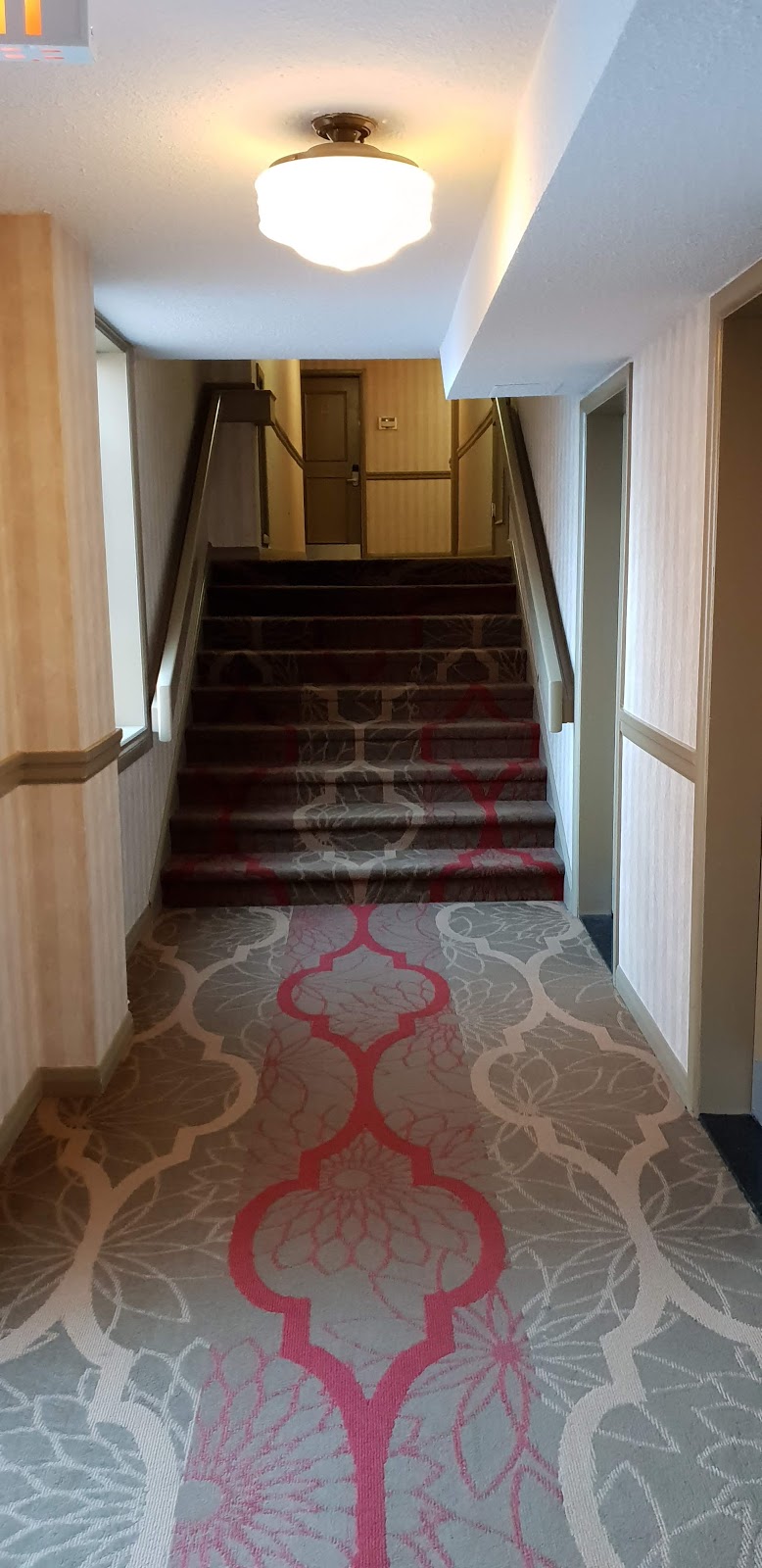
It has the long darkish passageways that lead in all directions and to almost hidden rooms, a creepy nighttime aspect, and the creaky woodwork.
I know when we were exploring, it was easy to lose your bearings, if not get lost, trying to find certain places, and once found, hard to find your way back.
All in all, it was one of the best stays in a very old place going through the throes of modernisation.
And looking at it from the outside at night, I’ll leave you with that thought…
A relatively unassuming lane leads to what could be described as a grand hotel, called Waitomo Caves Hotel.
The original hotel was built in 1908, and it was later extended in 1928. Part of it is ‘Victorian’, based on an eastern Europe mountain chalet, and part of it is ‘Art Deco’, the concrete wing, and a feature, if it could be called that, is none of the four corners are the same.
Views from the balcony show part of the surrounding gardens
and the town of Waitomo in the distance.
In gloomy weather, it does look rather spooky, and I suspect there may be a ghost or two lurking somewhere in the buildings.
But…
This a a very interesting, and the words of one of my younger grand daughters, a very creepy place. It would make an excellent base for paranormal activity, and there could very well be ghosts walking the corridors of this hotel.
It has the long darkish passageways that lead in all directions and to almost hidden rooms, a creepy nighttime aspect, and the creaky woodwork.
I know when we were exploring, it was easy to lose your bearings, if not get lost, trying to find certain places, and once found, hard to find your way back.
All in all, it was one of the best stays in a very old place going through the throes of modernisation.
And looking at it from the outside at night, I’ll leave you with that thought…
I’m sure a lot of people have considered the prospect of whale watching. I’m not sure how the subject came up on one of our visits to New Zealand, but I suspect it was one one of those tourist activity leaflets you find in the foyer of motels, hotels, and guesthouses.
Needless to say, it was only a short detour to go to Kaikoura and check out the prospect.
Yes, the ocean at the time seemed manageable. My wife has a bad time with sea sickness, but she was prepared to make the trip, after some necessary preparations. Seasickness tablets and special bands to wear on her wrist were recommended and used.
The boat was large and had two decks, and mostly enclosed. There were a lot of people on board, and we sat inside for the beginning of the voyage. The sea wasn’t rough, but there was about a meter and a half swell, easily managed by the boat while it was moving.
It took about a half hour or so to reach the spot where the boat stopped and a member of the crew used a listening device to see if there were any whales.
That led to the first wave of sickness.
We stopped for about ten minutes, and the boat moved up and down on the waves. It was enough to start the queasy stomachs of a number of passengers. Myself, it was a matter of going out on deck and taking in the sea air. Fortunately, I don’t get seasick.
Another longish journey to the next prospective site settled a number of the queasy stomachs, but when we stopped again, the swell had increased, along with the boat’s motion. Seasick bags were made available for the few that had succumbed.
By the time we reached the site where there was a whale, over half the passengers had been sick, and I was hoping they had enough seasick bags, and then enough bin space for them.
The whale, of course, put on a show for us, and those that could went out on deck to get their photos.
By the end of the voyage, nearly everyone on board was sick, and I was helping to hand out seasick bags.
Despite the anti sickness preparations, my wife had also succumbed. When we returned and she was asked if the device had worked, she said no.
But perhaps it had because within half an hour we were at a cafe eating lunch, fish and chips of course.
This activity has been crossed off the bucket list, and there’s no more whale watching in our traveling future. Nor, it seems, will we be going of ocean liners.
Perhaps a cruise down the Rhine might be on the cards. I don’t think that river, wide as it is in places, will ever have any sort of swell.
I’m sure a lot of people have considered the prospect of whale watching. I’m not sure how the subject came up on one of our visits to New Zealand, but I suspect it was one one of those tourist activity leaflets you find in the foyer of motels, hotels, and guesthouses.
Needless to say, it was only a short detour to go to Kaikoura and check out the prospect.
Yes, the ocean at the time seemed manageable. My wife has a bad time with sea sickness, but she was prepared to make the trip, after some necessary preparations. Seasickness tablets and special bands to wear on her wrist were recommended and used.
The boat was large and had two decks, and mostly enclosed. There were a lot of people on board, and we sat inside for the beginning of the voyage. The sea wasn’t rough, but there was about a meter and a half swell, easily managed by the boat while it was moving.
It took about a half hour or so to reach the spot where the boat stopped and a member of the crew used a listening device to see if there were any whales.
That led to the first wave of sickness.
We stopped for about ten minutes, and the boat moved up and down on the waves. It was enough to start the queasy stomachs of a number of passengers. Myself, it was a matter of going out on deck and taking in the sea air. Fortunately, I don’t get seasick.
Another longish journey to the next prospective site settled a number of the queasy stomachs, but when we stopped again, the swell had increased, along with the boat’s motion. Seasick bags were made available for the few that had succumbed.
By the time we reached the site where there was a whale, over half the passengers had been sick, and I was hoping they had enough seasick bags, and then enough bin space for them.
The whale, of course, put on a show for us, and those that could went out on deck to get their photos.
By the end of the voyage, nearly everyone on board was sick, and I was helping to hand out seasick bags.
Despite the anti sickness preparations, my wife had also succumbed. When we returned and she was asked if the device had worked, she said no.
But perhaps it had because within half an hour we were at a cafe eating lunch, fish and chips of course.
This activity has been crossed off the bucket list, and there’s no more whale watching in our traveling future. Nor, it seems, will we be going of ocean liners.
Perhaps a cruise down the Rhine might be on the cards. I don’t think that river, wide as it is in places, will ever have any sort of swell.
We live in a country which has a unique sport, which is something a lot of countries can’t boast.
England has soccer and cricket, America has baseball and basketball, Canada has ice hockey, all sports that are played all over the world.
Australia has this strange game called Australian Rules Football, and it be true to say that ask anyone anywhere else in the world about they would only look at you strangely and say “What?”
It would be true to say that this form of football is a religion, such is the fans devotion. It’s not unusual to hear of wating to be buried in your favourite player’s guernsey. You pick a team, or generally a team is picked for you, and it’s your team for life. You don’t desert them, and stick with them through the highs and lows, and sometimes the lows can be for a long time.
And like religion, there are such things as mixed marriages, each spouse will support a different team, and when these teams play each other, well, it’s best to be someone else after the final siren.
But, be that as it may…
We will soon reach the pinnacle of our season, the playing of the Grand Final in the home of AFL, the MCG, one of the largest stadiums in the country, holding over 100,000 fans, an ideal venue for this game. Or perhaps COVID will play a role, and it will be moved to Perth.
And, although the game may not the expected exciting and close spectacle we are hoping to see, at least all of the supporters of the winners will be deliriously happy. For the losers and their fans, there is no describing the depths of despair.
I know how that feels because I’ve been on both sides of the emotional spectrum.
Our team wasn’t playing this year so we were spared the emotional roller coaster, but we still watched the game, and no, we’ve never been to a grand final in person, and it’s unlikely we ever will.
But it’s a great way to spend an afternoon watching our team play on TV, have a pie, traditional fast food, chips, and a few bottles of beer.
And, now the football season is nearly over, we will switch to ice hockey and our adopted team, the Toronto Maple Leafs. Fortunately their season starts when ours ends and vice versa.
There was something about this one that resonated with me.
This is a novel about a world generally ruled by perception, and how people perceive what they see, what they are told, and what they want to believe.
I’ve been guilty of it myself as I’m sure we all gave one time or another.
For the the main characters Harry and Alison there is others issues driving their relationship.
For Alison, it is a loss of self worth through losing her job and from losing her mother and, in a sense, her sister.
For Harry it is the fact he has a beautiful and desirable wife, and his belief she is the object of other men’s desires, and one in particular, his immediate superior.
Between observation, the less than honest motives of his friends, a lot of jumping to conclusions based on very little fact, and you have the basis of one very interesting story.
When it all come to a head, Alison finds herself in a desperate situation, she realises only the truth will save their marriage.
But is it all the truth?
What would we do in similar circumstances?
Rarely does a book have me so enthralled that I could not put it down until I knew the result. They might be considered two people who should have known better, but as is often the case, they had to get past what they both thought was the truth.
And the moral of this story, if it could be said there is one, nothing is ever what it seems.
Mount Ngauruhoe is apparently still an active volcano, has been for 2,500 years or so, and last erupted on 19th February 1975, and reportedly has erupted around 70 times since 1839.
The mountain is usually climbed from the western side, from the Mangatepopo track.
This photo was taken in summer from the Chateau Tongariro carpark.
In late autumn, on one of our many visits to the area, the mountain was covered with a light sprinkling of snow and ice.
On our most recent visit, this year, in winter, it was fully covered in snow.
It seems rather fortuitous that we have a holiday at the end of the year.
I mean, who sat around a table however many years ago and decided that holidays like Christmas should be at the end of the year. And who decided one half of the world could freeze to death on their holidays, and the other half burn?
At the end of a long year at that, you know, 52 weeks, 12 months, 365 days, where even when some of us get a weekend off once in a blue moon, it still seems like we’re working 7 days a week, 52 weeks a year.
So, who decided a week would have seven days, a year would have 12 months, and while we’re at it, who decided to give each month a different name? And who named names?
Was it Father Time. As children, we all learn about father time, or has political correctness stepped in and we now call ‘father time’, ‘person time’.
Anyway…
Who do we blame for this mess, we have to blame someone. It’s not our fault. If it were up to me I’d have Christmas in September when there’s more temperate weather in both halves of the world.
And who decided that Christmas should be attached to Winter and not Summer?
It’s like the whole mess was designed by a group of academics majoring in philosophy sitting in a back room and fed Coca Cola and Pizzas until they came up with an answer, which was probably to send it all to a parliamentary committee made up from candidates from Bellevue Asylum.
The same people, by the way, who are responsible for coordinating traffic lights.
And then there’s that other mystery I’ve never quite understood.
If you work for the FBI your first name suddenly becomes ‘Agent’. Everyone gets that name change whether you like it or not.
Which is much the same as all Russians once upon a time calling each other ‘comrade’. Beats the hell, I suppose, out of remembering peoples first names, especially in Russia where, to us, they’re unpronounceable.
Mount Ngauruhoe is apparently still an active volcano, has been for 2,500 years or so, and last erupted on 19th February 1975, and reportedly has erupted around 70 times since 1839.
The mountain is usually climbed from the western side, from the Mangatepopo track.
This photo was taken in summer from the Chateau Tongariro carpark.
In late autumn, on one of our many visits to the area, the mountain was covered with a light sprinkling of snow and ice.
On our most recent visit, this year, in winter, it was fully covered in snow.
It seems rather fortuitous that we have a holiday at the end of the year.
I mean, who sat around a table however many years ago and decided that holidays like Christmas should be at the end of the year. And who decided one half of the world could freeze to death on their holidays, and the other half burn?
At the end of a long year at that, you know, 52 weeks, 12 months, 365 days, where even when some of us get a weekend off once in a blue moon, it still seems like we’re working 7 days a week, 52 weeks a year.
So, who decided a week would have seven days, a year would have 12 months, and while we’re at it, who decided to give each month a different name? And who named names?
Was it Father Time. As children, we all learn about father time, or has political correctness stepped in and we now call ‘father time’, ‘person time’.
Anyway…
Who do we blame for this mess, we have to blame someone. It’s not our fault. If it were up to me I’d have Christmas in September when there’s more temperate weather in both halves of the world.
And who decided that Christmas should be attached to Winter and not Summer?
It’s like the whole mess was designed by a group of academics majoring in philosophy sitting in a back room and fed Coca Cola and Pizzas until they came up with an answer, which was probably to send it all to a parliamentary committee made up from candidates from Bellevue Asylum.
The same people, by the way, who are responsible for coordinating traffic lights.
And then there’s that other mystery I’ve never quite understood.
If you work for the FBI your first name suddenly becomes ‘Agent’. Everyone gets that name change whether you like it or not.
Which is much the same as all Russians once upon a time calling each other ‘comrade’. Beats the hell, I suppose, out of remembering peoples first names, especially in Russia where, to us, they’re unpronounceable.