What I learned about writing – Perfection is not possible

I was told a long time ago I wasn’t perfect, and it didn’t bother me. Then.

But it’s true. I don’t always get it right, sometimes I get annoyed and say things in the heat of the moment that perhaps shouldn’t be said, and sometimes I can be ‘difficult’.

I’ll be the first in line to say my blog isn’t perfect, in fact sometimes it bothers me some of the bits and pieces that go up because I doubt if they’re interesting, at the time, to anyone but me.

Perhaps it’s because I chose to be a writer.

It’s a hard slog at the best of times. Getting ideas, carving out time to write, having to live a normal life as distinct from that of living in a garret, on your own, writing that next great Nobel prize for literature, or is it a Pulitzer?

I don’t get that, I don’t have that, and I don’t want that.

For those of us living on that ‘edge’ of finding time to write, maintain a blog, keep up with social media, do the daily chores and watch some television, something has to give.

So, I’m not getting any writing done if I’m working on the blog, or I’m on social media. If I’m doing the blog, something else has to be sacrificed.

Mostly it’s my blog. My blog is about writing stuff, visiting places that have been or will be used in stories, and once, a recalcitrant cat who sadly has passed on. It also has running episodic stories, usually four different at a time.

It also had about 2,000 past posts. When I don’t get the time to do my blog, which has been mostly for the last three months off and on, I sometimes repackage or repeat past posts, just to keep it ticking over, much like a scoreboard.

It is also a tool for advertising my books and stories, and what’s coming (if only I stopped using social media) and these are repeated every four or five days. It’d the equivalent of advertising because I can’t afford other advertising. If this is an annoyance, I’m sorry.

And just so everyone knows, I will always keep writing, not because I want to become the next James Patterson, though it would be nice, I write because I want to, and it pleases me when someone reads something I write, and they like it. It is the greatest compliment of all, and I believe in encouragement. It’s why I spend a lot of that social media time highlighting other writers so they can build a following.

After all, we are all in the same boat, it would just be nice if we were all rowing in the same direction.

Inspiration, Maybe – Volume 2

50 photographs, 50 stories, of which there is one of the 50 below.

They all start with –

A picture paints … well, as many words as you like.  For instance:

And, the story:

Have you ever watched your hopes and dreams simply just fly away?

Everything I thought I wanted and needed had just left in an aeroplane, and although I said I was not going to, i came to the airport to see the plane leave.  Not the person on it, that would have been far too difficult and emotional, but perhaps it was symbolic, the end of one life and the start of another.

But no matter what I thought or felt, we had both come to the right decision.  She needed the opportunity to spread her wings.  It was probably not the best idea for her to apply for the job without telling me, but I understood her reasons.

She was in a rut.  Though her job was a very good one, it was not as demanding as she had expected, particularly after the last promotion, but with it came resentment from others on her level, that she, the youngest of the group would get the position.

It was something that had been weighing down of her for the last three months, and if noticed it, the late nights, the moodiness, sometimes a flash of temper.  I knew she had one, no one could have such red hair and not, but she had always kept it in check.

And, then there was us, together, and after seven years, it felt like we were going nowhere.  Perhaps that was down to my lack of ambition, and though she never said it, lack of sophistication.  It hadn’t been an issue, well, not until her last promotion, and the fact she had to entertain more, and frankly I felt like an embarrassment to her.

So, there it was, three days ago, the beginning of the weekend, and we had planned to go away for a few days and take stock.  We both acknowledged we needed to talk, but it never seemed the right time.

It was then she said she had quit her job and found a new one.  Starting the following Monday.

Ok, that took me by surprise, not so much that it something I sort of guessed might happen, but that she would just blurt it out.

I think that right then, at that moment, I could feel her frustration with everything around her.

What surprised her was my reaction.  None.

I simply asked where who, and when.

A world-class newspaper, in New York, and she had to be there in a week.

A week.

It was all the time I had left with her.

I remember I just shrugged and asked if the planned weekend away was off.

She stood on the other side of the kitchen counter, hands around a cup of coffee she had just poured, and that one thing I remembered was the lone tear that ran down her cheek.

Is that all you want to know?

I did, yes, but we had lost that intimacy we used to have when she would have told me what was happening, and we would have brainstormed solutions. I might be a cabinet maker but I still had a brain, was what I overheard her tell a friend once.

There’s not much to ask, I said.  You’ve been desperately unhappy and haven’t been able to hide it all that well, you have been under a lot of pressure trying to deal with a group of troglodytes, and you’ve been leaning on Bentley’s shoulder instead of mine, and I get it, he’s got more experience in that place,  and the politics that go with it, and is still an ally.

Her immediate superior and instrumental in her getting the position, but unlike some men in his position he had not taken advantage of a situation like some men would.  And even if she had made a move, which I doubted, that was not the sort of woman she was, he would have politely declined.

One of the very few happily married men in that organisation, so I heard.

So, she said, you’re not just a pretty face.

Par for the course for a cabinet maker whose university degree is in psychology.  It doesn’t take rocket science to see what was happening to you.  I just didn’t think it was my place to jump in unless you asked me, and when you didn’t, well, that told me everything I needed to know.

Yes, our relationship had a use by date, and it was in the next few days.

I was thinking, she said, that you might come with me,  you can make cabinets anywhere.

I could, but I think the real problem wasn’t just the job.  It was everything around her and going with her, that would just be a constant reminder of what had been holding her back. I didn’t want that for her and said so.

Then the only question left was, what do we do now?

Go shopping for suitcases.  Bags to pack, and places to go.

Getting on the roller coaster is easy.  On the beginning, it’s a slow easy ride, followed by the slow climb to the top.  It’s much like some relationships, they start out easy, they require a little work to get to the next level, follows by the adrenaline rush when it all comes together.

What most people forget is that what comes down must go back up, and life is pretty much a roller coaster with highs and lows.

Our roller coaster had just come or of the final turn and we were braking so that it stops at the station.

There was no question of going with her to New York.  Yes, I promised I’d come over and visit her, but that was a promise with crossed fingers behind my back.  After a few months in t the new job the last thing shed want was a reminder of what she left behind.  New friends new life.

We packed her bags, three out everything she didn’t want, a free trips to the op shop with stiff she knew others would like to have, and basically, by the time she was ready to go, there was nothing left of her in the apartment, or anywhere.

Her friends would be seeing her off at the airport, and that’s when I told her I was not coming, that moment the taxi arrived to take her away forever.  I remember standing there, watching the taxi go.  It was going to be, and was, as hard as it was to watch the plane leave.

So, there I was, finally staring at the blank sky, around me a dozen other plane spotters, a rather motley crew of plane enthusiasts.

Already that morning there’s been 6 different types of plane depart, and I could hear another winding up its engines for take-off.

People coming, people going.

Maybe I would go to New York in a couple of months, not to see her, but just see what the attraction was.  Or maybe I would drop in, just to see how she was.

As one of my friends told me when I gave him the news, the future is never written in stone, and it’s about time you broadened your horizons.

Perhaps it was.


© Charles Heath 2020-2021

Coming soon.  Find the above story and 49 others like it in:

Top 5 sights on the road less travelled – Scopje

5 Off-the-Beaten-Path Things to Do in Scopje: Discover the Hidden Soul of North Macedonia

When you think of Scopje, North Macedonia’s capital, you might picture the iconic Stone Bridge, the towering statue of Alexander the Great, or the eclectic mix of neoclassical and Ottoman architecture. But beyond the postcard-perfect landmarks lies a lesser-known side of Scopje—quiet alleyways, artistic havens, and authentic local experiences that most tourists miss. If you’re craving something deeper than the typical itinerary, lace up your walking shoes and step off the beaten path. Here are five unique and local-favourite things to do in Scopje that will give you a genuine taste of the city’s soul.


1. Roam the Artist’s Quarter in Čair’s Hidden Courtyards

Tucked away in the bustling Čair neighbourhood—a mosaic of cultures and communities—you’ll find Scopje’s underground art scene thriving in unexpected places. Move past the main streets and into the quiet, ivy-covered courtyards where local artists convert old Ottoman-era houses into studios, galleries, and impromptu exhibition spaces.

Visit during the Čair Fest (if your trip aligns in summer) or simply wander during daylight hours. Knock gently—many artists welcome curious visitors with a warm Zdravo and a cup of Turkish coffee. These intimate encounters offer a refreshing contrast to commercial galleries and reveal the creative heartbeat of the city.

Pro Tip: Bring cash—many artworks are for sale at surprisingly reasonable prices.


2. Hike to Kale Fortress at Sunrise (and Skip the Crowds)

While the medieval Kale Fortress is a popular attraction, most tourists visit midday when the heat and crowds peak. Instead, set your alarm and hike up from the Old Bazaar at sunrise. The path is steep but short, and as you climb through dew-kissed cobblestones, you’ll likely have the ancient ramparts all to yourself.

Watching the city slowly awaken from this vantage point—mist rising off the Vardar River, minarets silhouetted against a peach-colored sky—is pure magic. Plus, you’ll spot resident cats napping in sunlit nooks and hear only birdsong and the occasional call to prayer.

Bonus: Bring a thermos of strong Macedonian coffee and enjoy a quiet moment in history.


3. Discover the Forgotten Macedonian Railway Museum

Tucked behind the main train station and often overlooked, this modest museum is a goldmine for history buffs and train enthusiasts. Inside a converted 1920s depot, vintage locomotives, archival photographs, and meticulously restored railcars tell the story of Balkan railway development.

Curator Ljubčo, a retired engineer with decades of experience, often volunteers his time—and his stories. He’ll regale you with tales of cross-border journeys during Yugoslavia, smuggled contraband, and the secret role trains played during political upheavals.

Why it’s special: It’s personal, unpolished, and deeply nostalgic—no admission fee, just gratitude.


4. Sip Mint Tea in a Hidden Hammam Garden

Tucked behind a plain doorway near the Old Bazaar, Čarši Hamam—once a bustling Ottoman bath—now hosts a tranquil tea garden few know about. While the structure remains unrestored, locals and expats have claimed the inner courtyard as a peaceful retreat.

Pull up a wooden stool, order a glass of warm mint tea or rakija infused with quince, and listen to live acoustic music on weekend evenings. The crumbling tile walls, dappled sunlight, and scent of rosewater create an atmosphere that feels centuries old and refreshingly current.

Insider detail: The entrance is easy to miss—look for a faded green archway between two spice stalls.


5. Take a Ferry to the “Island” (Gazi Baba’s Secret Retreat)

Just a short bus ride from the city centre, the Vardar River widens into a calm stretch dotted with a little-known artificial island known locally as “Ostrvo” (The Island). Locals flock here on weekends to escape the urban buzz, lounging on grassy banks, grilling pljeskavica, or swimming cautiously in calmer eddies.

For a unique experience, hop on a hand-rowed wooden ferry operated by a retired fisherman named Tome. For just 50 denars (less than $1), he’ll ferry you across, offering a quick history lesson en route. Once there, enjoy fresh kiselo mleko (yogurt drink) from a pop-up stand and watch local fishermen mend their nets.

Best time to go: Late afternoon on a weekday—fewer people, golden light, unforgettable views.


Final Thoughts: Scopje Rewritten

Scopje is often misunderstood—a city caught between epochs, aesthetics, and identities. But for those willing to wander beyond the curated city centre, it reveals itself in murmurs: a poet reading in a courtyard, a whiff of rose oil from an open window, the rhythmic clang of a blacksmith’s hammer.

These five experiences aren’t just “things to do”—they’re invitations to connect. To slow down. To listen. To become part of Scopje’s quiet, unfolding story.

So next time you’re in town, skip the statue selfies (at least for a morning) and let the city surprise you. The road less travelled in Scopje isn’t just scenic—it’s soul-stirring.


Have you discovered your own hidden gem in Scopje? Share your offbeat adventures in the comments below!

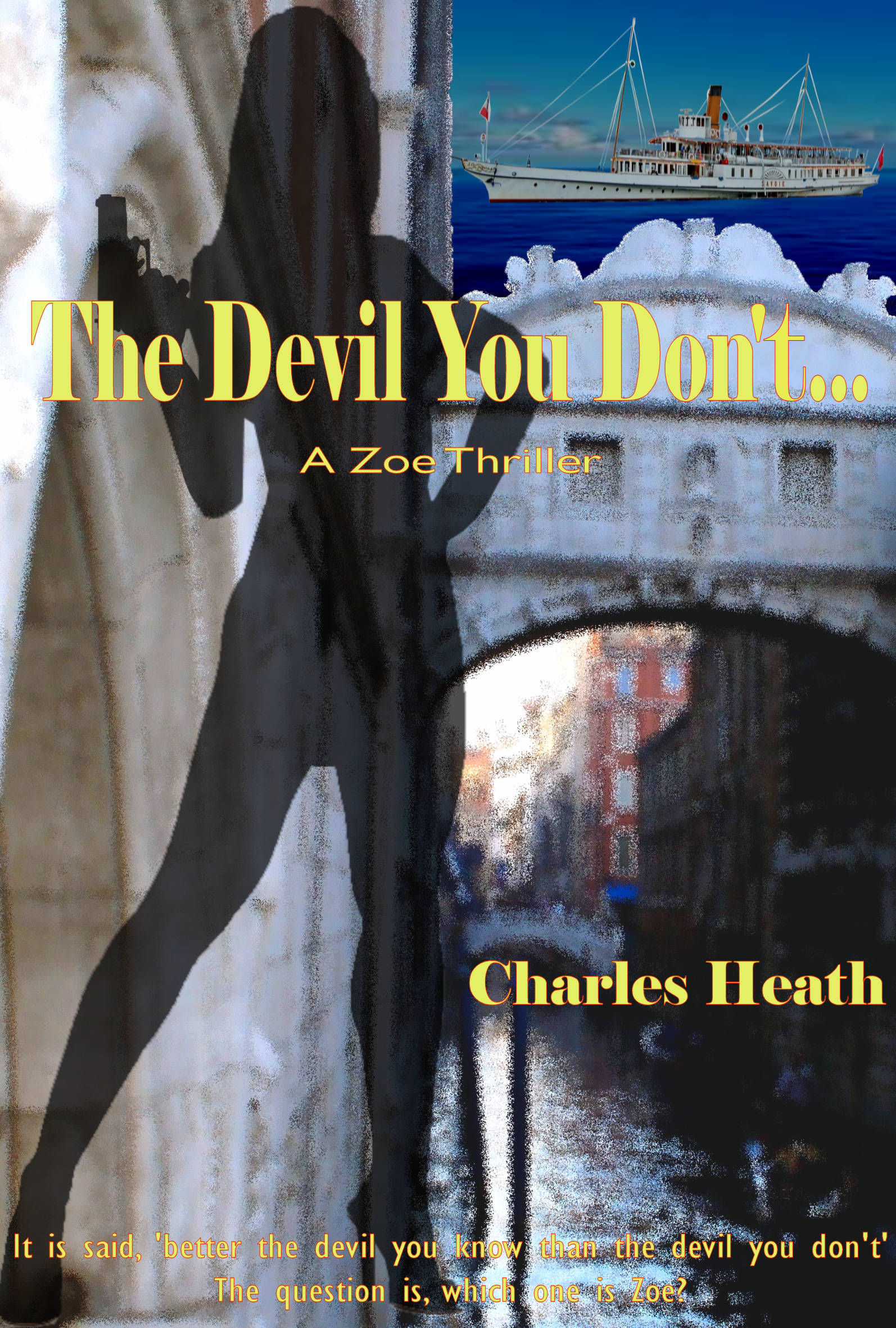
‘The Devil You Don’t’ – A beta reader’s view

It could be said that of all the women one could meet, whether contrived or by sheer luck, what are the odds it would turn out to be the woman who was being paid a very large sum to kill you.

John Pennington is a man who may be lucky in business, but not so lucky in love. He has just broken up with Phillipa Sternhaven, the woman he thought was the one, but relatives and circumstances, and perhaps because she was a ‘princess’, may also have contributed to the end result.

So, what do you do when you are heartbroken?

That is a story that slowly unfolds, from the first meeting with his nemesis on Lake Geneva, all the way to a hotel room in Sorrento, where he learns the shattering truth.

What should have been solace after disappointment, turns out to be something else entirely, and from that point, everything goes to hell in a handbasket.

He suddenly realizes his so-called friend Sebastian has not exactly told him the truth about a small job he asked him to do, the woman he is falling in love with is not quite who she says she is, and he is caught in the middle of a war between two men who consider people becoming collateral damage as part of their business.

The story paints the characters cleverly displaying all their flaws and weaknesses. The locations add to the story at times taking me back down memory lane, especially to Venice where, in those back streets I confess it’s not all that hard to get lost.

All in all a thoroughly entertaining story with, for once, a satisfying end.

Available on Amazon here: https://amzn.to/2Xyh1ow

Writing a book in 365 days – 345

Day 345

From Unsung to Unforgettable: Turning Quiet Heroes Into Celebrated Characters

In every office, neighbourhood, classroom, and family, there exists a quiet force—a person whose actions speak louder than words. These are the unsung heroes: the colleague who picks up the slack without a word, the parent who works two jobs behind closed doors, the volunteer who shows up week after week, rain or shine. They rarely seek the spotlight, and that’s exactly why their stories deserve to be amplified.

But how do we take someone whose humility is their hallmark and transform them into a memorable character—one that inspires and resonates with others? The answer lies not in grand exaggeration, but in thoughtful storytelling that honours authenticity, reveals depth, and celebrates quiet strength.

Here’s how to turn the unsung hero into a character others can truly celebrate.


1. Discover the Quiet Moment That Speaks Volumes

Memorable characters are born not from dramatic acts, but from meaningful details. Instead of focusing on monumental achievements, look for the small, everyday choices that reveal character.

Maybe it’s the teacher who stayed late three days in a row to help a struggling student. Or the janitor who remembers every student’s name and greets them with a smile—even on the toughest days. These moments may go unnoticed, but they form the emotional core of a powerful story.

Tip: Ask, “What would this person do when no one is watching?” The answer often holds the essence of their character.


2. Humanise Through Vulnerability

Audiences connect not with perfection, but with authenticity. Even the most selfless individuals have fears, doubts, and dreams. Sharing a moment of vulnerability doesn’t diminish a hero—it humanises them.

Perhaps your unsung hero once failed spectacularly before finding their stride. Or maybe they help others because they once needed help themselves. These layers of complexity make their journey relatable, and their perseverance even more inspiring.

Tip: Include a moment of doubt or personal struggle. It makes the triumph—however quiet—feel earned.


3. Show, Don’t Just Tell

There’s a difference between saying “she’s kind” and showing her quietly slipping a care package under a coworker’s door after hearing about their illness. Great storytelling doesn’t announce virtues—it reveals them through action.

Use scenes, dialogue, and sensory details. Let readers see the calloused hands of the farmer who rises before dawn. Hear the voice of the mentor who patiently explains the same concept over and over. Feel the tension in the room when someone steps in to defuse a conflict with empathy.

Tip: Write as if you’re filming a movie—what would the camera capture?


4. Anchor Their Story in Purpose

Unsung heroes often act not for recognition, but because they believe in something bigger. What drives them? Is it a personal value? A painful memory? A vision for a better community?

When you reveal their why, you transform them from a background figure into a person with conviction. Purpose gives their actions weight and direction. It’s what makes their consistency remarkable.

Tip: Ask, “What would this person fight for, even if they lost?” That’s the heart of their story.


5. Invite Others to Celebrate

A memorable character doesn’t just exist in isolation—they impact others. Show how their actions create ripples. Maybe a student finally believed in themselves because of a mentor’s quiet encouragement. Maybe a community rallied because someone took the first step.

When others reflect on what the hero has done, it validates their impact. Testimonials, memories, and small acknowledgments from people they’ve helped turn individual actions into a legacy.

Tip: End with a moment of recognition—not for fame, but for appreciation. Let someone say, “I wouldn’t be here without you.”


6. Respect Their Humility

Celebrating an unsung hero doesn’t mean turning them into a caricature of selflessness. Avoid melodrama or exaggeration. Honour their quiet nature by keeping the tone grounded and respectful.

Sometimes the most powerful tribute is understated—a simple portrait, a heartfelt letter, a candid photo essay. Let their actions speak for themselves.

Tip: When in doubt, ask: “Would this person feel seen, not exposed?”


The Power of Recognition

We don’t need more superheroes in capes—we need more stories that illuminate the extraordinary within ordinary lives. When we elevate the quiet, compassionate, consistent people among us, we do more than celebrate individuals. We redefine what it means to be a hero.

By turning unsung heroes into memorable characters, we give others permission to see the value in service, in patience, in showing up—even when no one’s watching.

And perhaps, in doing so, we inspire the next generation of quiet heroes to rise.


Who’s your unsung hero? Share their story—not for applause, but for impact.

An excerpt from “Betrayal” – a work in progress

It could have been anywhere in the world, she thought, but it wasn’t.  It was in a city where if anything were to go wrong…

She sighed and came away from the window and looked around the room.  It was quite large and expensively furnished.  It was one of several she had been visiting in the last three months.

Quite elegant too, as the hotel had its origins dating back to before the revolution in 1917.  At least, currently, there would not be a team of KGB agents somewhere in the basement monitoring everything that happened in the room.

There was no such thing as the KGB anymore, though there was an FSB, but such organisations were of no interest to her.

She was here to meet with Vladimir.

She smiled to herself when she thought of him, such an interesting man whose command of English was as good as her command of Russian, though she had not told him of that ability.

All he knew of her was that she was American, worked in the Embassy as a clerk, nothing important, whose life both at work and at home was boring.  Not that she had blurted that out the first they met, or even the second.

That first time, at a function in the Embassy, was a chance meeting, a catching of his eye as he looked around the room, looking, as he had told her later, for someone who might not be as boring as the function itself.

It was a celebration, honouring one of the Embassy officials on his service in Moscow, and the fact he was returning home after 10 years.  She had been there once, and still hadn’t met all the staff.

They had talked, Vladimir knew a great deal about England, having been stationed there for a year or two, and had politely asked questions about where she lived, her family, and of course what her role was, all questions she fended off with an air of disinterested interest.

It fascinated him, as she knew it would, a sort of mental sparring as one would do with swords if this was a fencing match.

They had said they might or might not meet again when the party was over, but she suspected there would be another opportunity.  She knew the signs of a man who was interested in her, and Vladimir was interested.

The second time came in the form of an invitation to an art gallery, and a viewing of the works of a prominent Russian artist, an invitation she politely declined.  After all, invitations issued to Embassy staff held all sorts of connotations, or so she was told by the Security officer when she told him.

Then, it went quiet for a month.  There was a party at the American embassy and along with several other staff members, she was invited.  She had not expected to meet Vladimir, but it was a pleasant surprise when she saw him, on the other side of the room, talking to several military men.

A pleasant afternoon ensued.

And it was no surprise that they kept running into each other at the various events on the diplomatic schedule.

By the fifth meeting, they were like old friends.  She had broached the subject of being involved in a plutonic relationship with him with the head of security at the embassy.  Normally for a member of her rank, it would not be allowed, but in this instance it was.

She did not work in any sensitive areas, and, as the security officer had said, she might just happen upon something that might be useful.  In that regard, she was to keep her eyes and ears open and file a report each time she met him.

After that discussion, she got the impression her superiors considered Vladimir more than just a casual visitor on the diplomatic circuit.  She also formed the impression that he might consider her an ‘asset’, a word that had been used at the meeting with security and the ambassador.

It was where the word ‘spy’ popped into her head and sent a tingle down her spine.  She was not a spy, but the thought of it, well, it would be fascinating to see what happened.

A Russian friend.  That’s what she would call him.

And over time, that relationship blossomed, until, after a visit to the ballet, late and snowing, he invited her to his apartment not far from the ballet venue.  It was like treading on thin ice, but after champagne and an introduction to caviar, she felt like a giddy schoolgirl.

Even so, she had made him promise that he remain on his best behaviour.  It could have been very easy to fall under the spell of a perfect evening, but he promised, showed her to a separate bedroom, and after a brief kiss, their first, she did not see him until the next morning.

So, it began.

It was an interesting report she filed after that encounter, one where she had expected to be reprimanded.

She wasn’t.

It wasn’t until six weeks had passed when he asked her if she would like to take a trip to the country.  It would involve staying in a hotel, that they would have separate rooms.  When she reported the invitation, no objection was raised, only a caution; keep her wits about her.

Perhaps, she had thought, they were looking forward to a more extensive report.  After all, her reports on the places, and the people, and the conversations she overheard, were no doubt entertaining reading for some.

But this visit was where the nature of the relationship changed, and it was one that she did not immediately report.  She had realised at some point before the weekend away, that she had feelings for him, and it was not that he was pushing her in that direction or manipulating her in any way.

It was just one of those moments where, after a grand dinner, a lot of champagne, and delightful company, things happen.  Standing at the door to her room, a lingering kiss, not intentional on her part, and it just happened.

And for not one moment did she believe she had been compromised, but for some reason she had not reported that subtle change in the relationship to the powers that be, and so far, no one had any inkling.

She took off her coat and placed it carefully of the back of one of the ornate chairs in the room.  She stopped for a moment to look at a framed photograph on the wall, one representing Red Square.

Then, after a minute or two, she went to the mini bar and took out the bottle of champagne that had been left there for them, a treat arranged by Vladimir for each encounter.

There were two champagne flutes set aside on the bar, next to a bowl of fruit.  She picked up the apple and thought how Eve must have felt in the garden of Eden, and the temptation.

Later perhaps, after…

She smiled at the thought and put the apple back.

A glance at her watch told her it was time for his arrival.  It was if anything, the one trait she didn’t like, and that was his punctuality.  A glance at the clock on the room wall was a minute slow.

The doorbell to the room rang, right on the appointed time.

She put the bottle down and walked over to the door.

A smile on her face, she opened the door.

It was not Vladimir.  It was her worst nightmare.

© Charles Heath 2020

In a word: Blue

Of course, we all know this word is a colour, or colour depending on where you live.  You know, blue sky, deep blue sea, blonde hair blue eyes.
Very descriptive.
But it can also mean you are down in the dumps, a rather strange, for some, an expression that means you are sad or unhappy.

For others to have a blue means to have a fight with someone

And oddly, and I know this from first-hand experience, a red-haired person will be called bluey, or less pleasing either carrot top or blood nut.  I used to ignore those people who used those expressions, except for my father-in-law.

You can do something until you are blue in the face, which means do it without result until exhaustion, another way of saying you’re wasting your time.

And if something comes out of the blue, it usually means it’s entirely unexpected.  For me, that’s always a bill I wasn’t expecting, for someone else an inheritance.

And in some parts of the world, blue is used as a synonym for a conservative political party, for insistence, the Liberal party in Australia, and the Democrats in the United States

Blue should not be confused with the word blew, which is the past tense of the blow, which is wind causing an air current or blowing air through pursed lips.

That doesn’t mean that if something blew up it was just a giant air mass exploding because it can’t.  If a bomb blew up it means it detonated.

And if that sounds complicated:

What if something blew my mind?  Does that mean my head exploded?  No, it just means it’s incomprehensible, whether good or bad.

Or

What if I blew a fortune on a three-legged horse?  We all throw good money after bad, but you can quickly lose a fortune, or blew it.

It’s the same thing with opportunities, for instance, he had a chance and blew it.  Yes, obviously something better came along, not, or he just ignored a sterling opportunity.

“The Things we do for Love”, the story behind the story

This story has been ongoing since I was seventeen, and just to let you know, I’m 72 this year.

Yes, it’s taken a long time to get it done.

Why, you might ask.

Well, I never gave it much interest because I started writing it after a small incident when I was 17, and working as a book packer for a book distributor in Melbourne

At the end of my first year, at Christmas, the employer had a Christmas party, and that year, it was at a venue in St Kilda.

I wasn’t going to go because at that age, I was an ordinary boy who was very introverted and basically scared of his own shadow and terrified by girls.

Back then, I would cross the street to avoid them

Also, other members of the staff in the shipping department were rough and ready types who were not backwards in telling me what happened, and being naive, perhaps they knew I’d be either shocked or intrigued.

I was both adamant I wasn’t coming and then got roped in on a dare.

Damn!

So, back then, in the early 70s, people looked the other way when it came to drinking, and of course, Dutch courage always takes away the concerns, especially when normally you wouldn’t do half the stuff you wouldn’t in a million years

I made it to the end, not as drunk and stupid as I thought I might be, and St Kilda being a salacious place if you knew where to look, my new friends decided to give me a surprise.

It didn’t take long to realise these men were ‘men about town’ as they kept saying, and we went on an odyssey.  Yes, those backstreet brothels where one could, I was told, have anything they could imagine.

Let me tell you, large quantities of alcohol and imagination were a very bad mix.

So, the odyssey in ‘The things we do’ was based on that, and then the encounter with Diana. Well, let’s just say I learned a great deal about girls that night.

Firstly, not all girls are nasty and spiteful, which seemed to be the case whenever I met one. There was a way to approach, greet, talk to, and behave.

It was also true that I could have had anything I wanted, but I decided what was in my imagination could stay there.  She was amused that all I wanted was to talk, but it was my money, and I could spend it how I liked.

And like any 17-year-old naive fool, I fell in love with her and had all these foolish notions.  Months later, I went back, but she had moved on, to where no one was saying or knew.

Needless to say, I was heartbroken and had to get over that first loss, which, like any 17-year-old, was like the end of the world.

But it was the best hour I’d ever spent in my life and would remain so until I met the woman I have been married to for the last 48 years.

As Henry, he was in part based on a rebel, the son of rich parents who despised them and their wealth, and he used to regale anyone who would listen about how they had messed up his life

If only I’d come from such a background!

And yes, I was only a run away from climbing up the stairs to get on board a ship, acting as a purser.

I worked for a shipping company and they gave their junior staff members an opportunity to spend a year at sea working as a purser on a cargo ship that sailed between Melbourne, Sydney and Hobart in Australia.

One of the other junior staff members’ turn came, and I would visit him on board when he would tell me stories about life on board, the officers, the crew, and other events. These stories, which sounded incredible to someone so impressionable, were a delight to hear.

Alas, by that time, I had tired of office work and moved on to be a tradesman at the place where my father worked.

It proved to be the right move, as that is where I met my wife.  Diana had been right; love would find me when I least expected it.

lovecoverfinal1

The cinema of my dreams – I always wanted to write a war story – Episode 1

It’s the story that was inspired by the Castello di Briolio, which had small aspirations when first conceived, but now it’s reached a point where we need to fill in a few blanks at the start.

Thus, a revised Episode One


“You have got the guards set up on the back wall,” I asked Jackerby, the officer in charge of the rearguards.

“Can you see them?” he said in a tone that dripped sarcasm.

I didn’t like Jackerby, he seemed far too sure of himself and his men, and so far, we hadn’t had to rely on them.

But I expected that time was coming, and sooner than both of us wanted to believe.

“No.”

“Then no one else will either.  Trust me; no one will be coming over the back wall.”

That was a matter of opinion, and, in my assessment of the fortifications, and the security precautions, about the only way the enemy could attack us, was from the sky.

And that was, given the current situation the enemy were in, practically impossible.  But, as my old commander used to say, ‘This is war, anything is possible, and when you least expect it.’

I’d survived four years of it, and didn’t want to be one of those who didn’t make it to the end.  For that reason, I trusted no one, and particularly people who said ‘trust me’.

I glanced along the back wall again, just to make sure, but it didn’t make me feel any safer.

“I’ll be in the command post if you need me, and it has a clear view of anything coming.”

“Excellent,” I said, trying to sound more confident that I felt.


We were in an old castle, though not strictly speaking a real castle, built only a few hundred years ago.  It was an enemy stronghold up until a month ago when, acting on advice from the local resistance that the enemy strength had dropped as they had begun to retreat, a strike force came and liberated it.

And, given its strategic position between the front line and the sea it became a gateway for anyone who wanted to escape the Germans and what was left of the Italians.

That also included departing boffins from the Reich, looking to bargain their way to a new home in England or the US.

To oversee that operation was a Colonel called Johansson, along with a dozen or so specialist soldiers, and the operation had been running smoothly.

Then came an attempted incursion, where a group of enemy soldiers who were fighting to the end, made a brave attempt to take the castle back.,  They failed, because of a twelfth-hour arrival of a Major called Jackerby, and a small motley crew of men.

When I read the report after the battle, it seemed odd.

As a result of his help, Jackerby was recruited by Johansson, in circumstances that seemed a little too coincidental for my liking.  Johansson was too easy going for me, and although he had not made a mistake, yet, I felt sure one was going to happen on my watch.

I came later, sent by Command to ‘lend assistance where possible’ to the operation, assistance the good Colonel took no pains to tell command he didn’t need.  But they didn’t give him a choice.

Except…

On my way there, my driver and I had almost reached the castle when we were caught in a roadside bomb.  The driver was killed, and I’d been saved by a dog, one we had found on the side of the road, badly in need of water, and food.

I had brought him with me.  The thought of doing so, at the time, had been on the end of a single idea, a dog could not betray me, men and women could.  And the fact its name was Jack seemed to me to be rather poetic, if not somewhat ironic in the circumstances.


There was a communication in my pocket, one I’d received earlier in the afternoon, sent in a onetime code no one but I could decode.

A warning of a second attempt on the castle by the enemy, but for reasons unknown.

Tonight.


Jack and I were in the guard tower at the south-western corner of the castle.  It overlooked the valley and gave a clear view of anyone or anything coming from that quadrant.  If I was going to retake the castle, that’s where I’d launch an attack from.

Of course, if it came by air, you’d expect to hear it.

I didn’t, but Jack did.  He suddenly stood and made a small moaning noise, as if he knew quiet communication was needed.  The stiffness in his body told me it was danger.

Then I saw it, just as I came out of the guardhouse onto the gravel path, the moonlight shining of very large wings, and for a moment it didn’t make sense until I realized it was a glider.

Silent.  It passed, and behind I could see parachutes, then the sound of boots on the gravel walkways just down from the tower.  A precision flight and precision landing of a dozen stormtroopers.

And Jackerby’s guards were nowhere to be seen.


© Charles Heath 2018-2019

“Anyone can have a bad day” – a short story

It had been one of those days, you know, the sort where you hoped when you woke up again, it would be a distant memory if not gone altogether. Everything had gone wrong: the handover from my shift to the next was longer than usual, I got home late to find the building’s security system malfunctioning, and after everything that could have gone wrong had, I was late getting to bed, which meant I was going to be tired and cranky even before my shift started.

But what topped it all off was that the alarm didn’t go off. It was not as if I hadn’t set it; I remembered doing it. There was something else in play.

I rolled over and instantly noticed how dark it was. It was never this dark. It was why I chose an apartment as high up as I could; there would always be light coming from the advertising sign on the roof of the building over the road at night, or direct sunlight not blotted out by surrounding buildings.

I also left the curtains open, deliberately. I liked the notion of being able to see out, sometimes looking at the stars, other times watching the rain, but mostly to see that I was not in a dark place.

Not like now.

I got out of bed and went over to the window. Yes, there were lights, but they were all the way down on the street level. Everywhere else, nothing. It had to be a power blackout. Our first in a long time. I should have noticed the air conditioning was not on, and it was almost silent inside the room.

The apartment had windows that opened, not very far, but enough to allow some airflow, and the room felt stuffy, so I opened one in the bedroom. Instantly, sounds drifted up from street level, and looking down, I could see the flashing lights of police cars and fire trucks, as well as the sounds of sirens.

The cold air was refreshing.

It took a few minutes before I realised the elevators would not be working, and I remembered the only pitfall of having a high-up apartment, it was a long way down by the stairs, and even longer going back up.

In the distance, I could see other buildings, about ten blocks away, with their lights on. It had to be a localised blackout, or perhaps a brownout. We had been having problems across the city with the power supply caused by an unexplained explosion at several power stations on the grid.

Some were saying it was a terrorist attack, others were saying the antiquated infrastructure had finally given out.

My attention was diverted from the activity below by the vibration of my cell phone on the bedside table. I looked over at the clock and saw it was 3:10 in the morning, not a time I usually got a phone call.

I crossed the room and looked at the screen, just as the vibrating stopped. Louis Bernard. Who was Louis Bernard? It was not a name I was familiar with, so I ignored it. It wasn’t the first wrong number to call me, though I was beginning to think I had been given a recycled phone number when I bought the phone. Perhaps the fact that it was a burner may have had something to do with it.

About to go back to the window, the phone started ringing again. The same caller, Louis Bernard.

Curiosity got the better of me.

“Yes?” I wasn’t going to answer with my name.

“Get out of that room now.”

“Who….” It was as far as I got before the phone went dead.

The phone displayed the logo as it powered off, a sign that the battery was depleted. I noticed then, although I’d plugged the phone in to recharge, I’d forgotten to turn the power on.

Damn.

Get out of that room now? Who could possibly know firstly who I was, and where I was living, to the point they could know I was in any sort of danger?

It took another minute of internal debate before I threw on some clothes and headed for the door.

Just in case.

As I went to open the door, someone started pounding on it, and my heart almost stopped.

“Who is it?” I yelled out. First thought: don’t open it.

“Floor warden, you need to evacuate. There’s a small fire on one of the floors below.”

“OK. Give me a minute or so, and I’ll be right out.”

“Don’t take too long. Take the rear stairs on the left.”

A few seconds later, I heard him pounding on the door next to mine. I waited until he’d moved on and went out into the passage.

It was almost dark, the security lighting just above floor level giving off a strange and eerie orange glow. I thought there was a hint of smoke in the air, but that might have been the power of suggestion taking over my mind.

There were two sets of stairs down, both at the rear, one on the left and one on the right, designed to aid quick evacuation in the event of a calamity like a fire. He had told me to take the left. I deliberately ignored that and went to the right side, passing several other tenants who were going towards where they’d been told. I didn’t recognise them, but then, I didn’t try to find out who my fellow tenants were.

A quick look back up the passage, noting everyone heading to the left side stairs, I ducked into the right stairwell and stopped for a moment. Was that smoke I could smell? From above, I could hear a door slam shut and voices. Above me, people had entered the stairwell and were coming down.

I started heading down by myself.

I was on the 39th floor, and it was going to be a long way down. In a recent fire drill, the building had been evacuated from the top floor down, and it proceeded in an orderly manner. The idea was that starting at the top, there would not be a logjam if the lower floors were spilling into the stairwell and creating a bottleneck. Were those above stragglers?

I descended ten floors and still hadn’t run into anyone, but the smell of smoke was stronger. I stopped for a moment and listened for those who had been above me. Nothing. Not a sound. Surely there had to be someone above me, coming down.

A door slammed, but I couldn’t tell if it was above or below.

Once again, I descended, one floor, two, three, five, all the way down to ten. The smoke was thicker here, and I could see a cloud on the other side of the door leading out of the stairwell into the passage. The door was slightly ajar, odd, I thought, for what was supposed to be a fire door. I could see smoke being sucked into the fire escape through the door opening.

Then I saw several firemen running past, axes in hand. Was the fire on the tenth floor?

Another door slammed shut, and then above me, I could hear voices. Or were they below? I couldn’t tell. My eyes were starting to tear up from the smoke, and it was getting thicker.

I headed down.

I reached the ground floor and tried to open the door leading out of the fire escape. It wouldn’t open. A dozen other people came down the stairs and stopped when they saw me.

One asked, “Can we get out of here?”

I tried the door again with the same result. “No. It seems to be jammed.”

Several of the people rushed past me, going down further, yelling out, “There should be a fire door leading out into the underground garage.”

Then, after another door slammed shut, silence. Another person said, “They must have found a way out,” and started running down the stairs, the others following. For some odd reason I couldn’t explain, I didn’t follow. A mental note popped up in my head telling me that there was only an exit into the carport from the other stairs; on this side, the exit led out onto an alley at the back of the building.

If the door would open. It should push outwards, and there should also be a bar on it, so when pushed, it allows the door to open.

The smoke was worse now, and I could barely see or breathe, overcome with a coughing fit. I banged on the door, yelling out that I was stuck in the stairwell, but there was no reply, nor could I hear movement on the other side of the door.

Just as I started to lose consciousness, I thought I could hear a banging sound on the door, then a minute later, what seemed like wood splintering. A few seconds after that, I saw a large black object hovering over me, then nothing.

It was the culmination of a bad night, a bad day, and another bad night. Was it karma trying to tell me something?

When I woke, I was in a hospital, a room to myself, which seemed strange since my insurance didn’t really cover such luxuries. I looked around the room and stopped when I reached the window and the person who was standing in front of it, looking out.

“Who are you?” I asked and realised the moment the words came out, they made me sound angry.

“No one of particular importance. I came to see if you were alright. You were very lucky, by the way. Had you not stayed by that door, you would have died like all the rest.”

Good to know, but not so good for the others. Did he know that the fire door was jammed? I told him what happened.

“Someone suspected that might be the case, which is why you were told to take the other stairs. Why did you not do as you were told?”

“Why did the others also ignore the advice?” It was not a question I would deign to answer.

“They didn’t know any better, but you did, and it begs the question, why did you take those stairs?”

Persistent and beginning to bother me. He sounded like someone else I once knew in another lifetime, one who never asked a question unless he knew the answer.

The man still hadn’t turned around to show me his face, and it was not likely I’d be getting out of bed very soon.

“You tell me?”

He turned slightly, and I could see his reflection in the window. I thought, for a moment, that it was a familiar face. But I couldn’t remember where it was from.

“The simple truth is you suspected the fire was lit to flush you out of the building, and you thought taking those stairs would keep you away from trouble. We both know you’ve been hiding there.”

Then he did turn. Hiding, yes. A spot of trouble a year or so before had made leaving Florida a necessity, and I’d only just begun to believe I was finally safe.

I was not.

They had found me.

And it only took a few seconds to pull the silenced gun out of his coat pocket, point it directly at me, and pull the trigger.

Two stabbing pains in the chest, and for a moment, it was as if nothing had happened, and then, all of a sudden, I couldn’t breathe.

The last thing I saw and heard was several rounds from at least two guns, voices yelling out in the passage, and people running.

As I lay dying, my last thought was that it had been a good run, but no one can run forever.


© Charles Heath 2021-2025