Writing a book in 365 days – 337

Day 337

Authors to study from the past

…

Mastering the Craft: Must-Read Authors from the 1940s and Beyond to Elevate Your Writing

When it comes to mastering the art of writing—whether it’s crafting intricate plots, developing multidimensional characters, or diving into profound themes—there are countless literary giants whose works serve as masterclasses in storytelling. Starting from the 1940s and moving backwards in time, these authors offer timeless lessons in style, structure, and substance. Here’s a curated list of authors and their works that can transform your approach to writing.


1. William Golding (1954) – Lord of the Flies

Lesson: Human Nature and Allegory
Golding’s Lord of the Flies is a masterclass in allegorical storytelling and psychological depth. By placing a group of boys on a deserted island, he peels back the veneer of civilisation to reveal primal instincts. For writers, Golding teaches how to use a microcosmic setting to explore universal themes like power, fear, and morality. His sparse yet brutal prose shows how simplicity can amplify tension and symbolism.


2. Evelyn Waugh (1945) – Brideshead Revisited

Lesson: Structure and Societal Critique
Waugh’s semi-autobiographical novel combines lush prose with a fragmented, reflective narrative. Brideshead Revisited is a lesson in balancing character development with thematic depth. Writers can learn how to weave personal introspection with societal critique (e.g., the decline of British aristocracy) and how to structure a narrative around memory and emotional resonance.


3. Graham Greene (1940s–1950s) – The Power and the Glory (1940), The Quiet American (1955)

Lesson: Moral Ambiguity and Pacing
Greene’s novels, set against politically turbulent backdrops, explore moral ambiguity with razor-sharp precision. In The Power and the Glory, he uses a flawed priest to ask, “What makes a man good?” Writers can study Greene’s lean, taut prose, his ability to build tension through understatement, and how to embed philosophical questions into action-driven plots.


4. John Steinbeck (1939–1952) – The Grapes of Wrath, East of Eden

Lesson: Social Justice and Emotional Resonance
Steinbeck’s unflinching portrayal of the human condition, from the Joad family’s plight in The Grapes of Wrath to the complex family dynamics in East of Eden, teaches the power of empathy in storytelling. His ability to balance epic scope with intimate moments is a guide to creating narratives that are both socially relevant and emotionally gripping.


5. F. Scott Fitzgerald (1925) – The Great Gatsby

Lesson: Symbolism and Narrative Voice
Though published in the 1920s, Fitzgerald’s The Great Gatsby remains a touchstone for writers. Nick Carraway’s reflective narration and Gatsby’s glittering, tragic world showcase how symbolism (e.g., the green light, the Valley of Ashes) can anchor themes of aspiration and decay. His lyrical prose reminds us that language itself can be a character in the story.


6. Ernest Hemingway (1940s–1950s) – Across the River and into the Trees (1950)

Lesson: The Iceberg Theory
Hemingway’s famous “theory of omission” (hide the deeper meaning beneath the surface) is best learned by studying his sparse, understated prose. His 1950s works, while less celebrated, demonstrate how much can be said with minimal words. A lesson in restraint: show, don’t tell.


7. George Orwell (1949) – 1984

Lesson: Dystopian Storytelling and Warning Narratives
Orwell’s 1984 endures as a chilling exploration of authoritarianism and language manipulation. For writers, it’s a blueprint for constructing cautionary tales: how to create a world that feels grounded in reality, yet pushes the boundaries of imagination to provoke thought.


8. Virginia Woolf (1920s–1930s) – To the Lighthouse, Mrs. Dalloway

Lesson: Stream of Consciousness and Subjective Time
Woolf’s modernist experiments with time and perspective teach writers how to capture the inner lives of characters. Her fluid narratives, like the fragmented days of Mrs. Dalloway, show how to blur the lines between external action and internal emotion.


9. Truman Capote (1960) – In Cold Blood

Lesson: Narrative Non-Fiction
Though published in the 1960s, Capote’s blend of journalism and novelistic technique in In Cold Blood redefined true crime. It’s a masterclass in pacing, interview-driven storytelling, and how to humanise even the most heinous characters.


10. Harper Lee (1960) – To Kill a Mockingbird

Lesson: Moral Courage in Character Development
Lee’s iconic novel, published in the early 1960s, is a case study in using a child’s perspective to critique systemic racism. Atticus Finch’s quiet moral authority and Scout’s growth illustrate how to embed ethical dilemmas into character arcs without sermonizing.


Conclusion: The Timeless Classroom of Literature

From Golding’s haunting allegories to Hemingway’s clipped prose, these authors offer a rich tapestry of techniques to inspire modern writers. Whether you’re drawn to the moral complexity of Greene, the symbolic depth of Fitzgerald, or the socio-political acuity of Orwell, reading backward from the 1940s is a journey into the heart of what makes storytelling enduring. So, dive in—your next story’s secret might be hidden in the pages of their masterpieces.


Final Tip: As you explore these works, don’t just read—annotate, imitate, and experiment. The best writing lessons come when you let these authors’ voices influence your own unique style. Happy writing!

Top 5 sights on the road less travelled – Belgrade

Uncovering the Hidden Gems of Belgrade: 5 Off-the-Beaten-Path Experiences

Belgrade, the vibrant capital of Serbia, is a city that seamlessly blends Eastern and Western cultures, offering a unique and exciting travel experience. While most tourists flock to the famous Kalemegdan Fortress and Saint Sava Temple, there’s more to Belgrade than meets the eye. As a seasoned traveller, I’m excited to share with you the top five other things to do in Belgrade that will take you off the beaten path and into the heart of this fascinating city.

1. Explore the Street Art Scene in Savamala

Tucked away in the Savamala neighbourhood, Belgrade’s street art scene is a treasure trove of creativity and self-expression. This former industrial area has been transformed into a vibrant arts district, featuring stunning murals, graffiti, and quirky installations. Take a self-guided walking tour to discover the works of local and international artists, and experience the city’s edgy, avant-garde side. Be sure to check out the famous “Savamala” mural, which has become a symbol of the neighbourhood’s revitalisation.

2. Visit the Nikola Tesla Museum

While many visitors to Belgrade are familiar with the famous scientist’s name, few know about the fascinating museum dedicated to his life and work. The Nikola Tesla Museum is a must-visit for anyone interested in science, technology, and innovation. Located in a beautiful villa, the museum showcases an impressive collection of Tesla’s personal belongings, experiments, and inventions, including his famous Tesla coil. The museum’s interactive exhibits and guided tours offer a unique glimpse into the mind of a genius.

3. Take a Stroll through the Botanical Garden

Escape the hustle and bustle of the city and find serenity in the beautiful Botanical Garden, also known as the Jevremovac Botanical Garden. This peaceful oasis is home to over 1,000 plant species, including some rare and endangered ones. As you wander through the gardens, you’ll discover a variety of flora, from roses and lavender to cacti and succulents. The garden’s tranquil atmosphere and stunning natural beauty make it an ideal spot for relaxation and contemplation.

4. Discover the Vinča Culture at the Vinča Archaeological Site

Located just outside Belgrade, the Vinča Archaeological Site is a fascinating glimpse into the city’s ancient past. This Neolithic settlement, dating back over 7,000 years, is one of the oldest and most important archaeological sites in Europe. Explore the excavated ruins, which feature remnants of ancient homes, pottery, and tools, and learn about the daily lives of the Vinča people. The site’s museum offers a wealth of information and artifacts, providing a unique insight into the region’s rich cultural heritage.

5. Enjoy a Night Out in the Cvetni Trg Neighbourhood

For a truly authentic Belgrade experience, head to the Cvetni Trg (Flower Square) neighbourhood, known for its lively atmosphere, charming cafes, and eclectic nightlife. This trendy area is home to a variety of bars, clubs, and live music venues, offering everything from jazz and rock to traditional Serbian folk music. As you explore the neighbourhood, you’ll discover a mix of old and new, with historic buildings, street performers, and modern art installations adding to the area’s vibrant energy. Be sure to try some of the local cuisine, including delicious ćevapi and pljeskavica, at one of the many restaurants and food stalls.

In conclusion, Belgrade is a city that offers so much more than its famous landmarks. By venturing off the beaten path, you’ll discover a wealth of hidden gems, from street art and science museums to ancient archaeological sites and vibrant nightlife. Whether you’re a culture vulture, a foodie, or an adventure-seeker, Belgrade has something for everyone. So come and explore the real Belgrade, and experience the city’s unique blend of tradition, innovation, and warmth.

What I learned about writing – You can write anywhere

It’s amazing how quickly you discover the imperfections of road makers.

As odd as that sounds, a recent trip on a bus, actually earlier today, in fact, got me thinking about just how bad some of our roads really are.

As any writer will tell you, that half an hour or so on the trip to work or home, is just waiting for a few lines to be written, on your phone, or on your tablet.  I venture to suggest a laptop computer just might be a little difficult, and prone to stray eyes from the people sitting or standing near you.

And the tightness of the space available to you.  I know, I’ve tried.

But, if you’re not in the mood to research, I did a little of that too, by the way, the desire to write is tempered by the movement of the bus and your ability to type coherent words on a small keyboard in a very large, rocking, metal thing.

I have to say I have a large streak of jealousy for those people who can hammer out large texts to their friends while riding the bus, and in the most awkward of conditions, using both thumbs, and carrying 26 bags of groceries and dry cleaning, as well as having a full on political discussion with the person sitting/standing next to them.

Even when the bus hits a pothole, does a sudden lurch that sents the unsuspecting sprawling.

With my interactive word completer turned on, it is astonishing what words finish up in my small attempt at writing as my fingers fail to find the right letters, and creates what only could be described as the ramblings of a madman.

Perhaps I might have better luck tomorrow.


PI Walthenson’s second case – A case of finding the ‘Flying Dutchman’.

Known only to a few, there is a legend that a ship named the ‘Flying Dutchman’ left Nazi Germany in the last weeks of the war and set sail for America, escorted by U-boats, under a different name. Aboard was a trove of treasure and gold worth a ‘king’s ransom’.

It was said that it had been sent to a group of American Nazis to create the Fourth Reich at an appropriate time. Over the years since many expeditions off the coast had searched, but found no trace of the vessel or the treasure.

In other words, it was just a legend created to boost tourism.

…

Fast forward to 2024. Our intrepid private detective, Harry Walthenson, overhears a conversation at Grand Central Station. It was the oddness of the message that caught his attention. An investigation turned up nothing out of the ordinary, and he thinks no more about it.

Then Harry is kidnapped, interrogated, and asked questions over and over about a date and a place, why he went there, and when he could not give satisfactory answers, he was beaten half to death and left for dead on a rubbish heap. He was lucky that it was a living space for homeless men; otherwise, he would have died.

In the aftermath, he once again gives it no more thought.

…

After resolving his first case successfully, there’s no rest. Harry’s angry mother comes to his office and demands that he find out where his father has gone. She believes he has run off with a mistress, not for the first time.

Perhaps it was not the wisest decision she has made, because Harry promises to investigate, and adds that she might not like what he finds.

He soon discovered he does not like what he finds, that his father’s friends, a cabal formed at University, have two who are his mother’s current lovers, and another, a criminal blackmailing his father.

Felicity, now his partner, working on a different case, and trying to get answers, uncovers a crime family involved in guarding a disused warehouse on the docks, where she believes Harry had been taken for interrogation, and subsequently dumped nearby to die.

Why are they up to? What is so important that the empty warehouse needs guarding? Who is employing them?

Harry, following up on the death of the blackmailer, traces his death back to an enforcer employed by his grandfather. His mother’s grandfather was a pre-war industrialist who made his fortune in war munitions and shipbuilding.

He was also a member of the American Nazi party.

When Harry also discovers a logbook belonging to a so-called wartime Liberty ship the “Paul Revere” in brackets ‘Freiheitskämpfer’, hidden by his father, and written in a code that is not readily identifiable.

It is no longer a matter of a father who has run off with his mistress; it is a very frightened man in fear of his life, running from a group who will stop at nothing to get the logbook back. And when Harry discovers a family connection to the group, it becomes a race against time to decode the log and find his father before his grandfather does.

…

Coming soon: Harry Walthenson’s new adventure – A case of finding the ‘Flying Dutchman’

Top 5 sights on the road less travelled – Helsinki

Discover Helsinki Beyond the Usual: 5 Hidden Gems to Explore

Helsinki, the vibrant capital of Finland, is renowned for its architectural splendour, vibrant art scene, and serene access to the archipelago. Yet, beyond the iconic Senate Square and the UNESCO-listed Suomenlinna, there’s a trove of offbeat experiences waiting to be uncovered. If you’re eager to venture off the well-trodden path, here are five lesser-known treasures to add to your Helsinki itinerary.


1. Stroll Through the Helsinki Botanical Garden (Kaisaniemi)

Tucked near the parliament building in Kaisaniemi, this haven of greenery offers a tranquil escape from the city’s hustle. Established in 1855, the garden spans 5.6 hectares and features a glasshouse housing over 12,000 plant species from around the world. In summer, the lush herb garden and seasonal flowerbeds are a riot of colour, while autumn brings fiery foliage. A peaceful walk here is the perfect way to appreciate Helsinki’s natural beauty without the crowds.

Pro Tip: Combine your visit with a constitutional at the adjacent Parliament Square (Kanssakuntori) for a slice of Helsinki’s political and ecological charm.


2. Unwind on Ulvila Cathedral Island

Just a short bus and ferry ride from central Helsinki lies Ulvila, a quiet island known for its historic cathedral and serene atmosphere. Once the favoured retreat of Finnish presidents, this hidden gem is accessible via a scenic 40-minute ferry ride. Explore the 17th-century Ulvila Church, stroll through its secluded cemetery, or simply soak in the views of the surrounding archipelago. With no restaurants or shops, it’s a spot to disconnect and reconnect with nature.

Pro Tip: Pack a picnic to enjoy on the island’s rocky shoreline, where the Baltic Sea shimmers under the midnight sun in summer.


3. Shop for Local Crafts at the Kadu Market

Nestled in Helsinki’s Design District (Kadu), the Kadu Market is a weekly pop-up paradise for design lovers. Held every Saturday in the summer and on weekends during winter, this market showcases handmade crafts, vintage finds, and locally sourced Nordic products. From organic skincare to handcrafted jewellery, it’s a vibrant window into Helsinki’s creative community.

Pro Tip: Stay afterwards to explore Kadu’s boutique shops and cafés, like the cozy Apartment 42 café, known for its Instagram-worthy sundaes.


4. Get Lost in the Kiasma Museum of Contemporary Art

Helsinki’s modern art scene is on full display at Kiasma, a striking building designed by American architect Steven Holl. The museum’s ever-changing exhibits blend international and Finnish art, often pushing boundaries with avant-garde installations. Its unique, glass-clad structure and spiral layout make it a visual treat, while the free guided tours (in multiple languages) offer deeper insights into the works.

Pro Tip: Visit during the museum’s opening hours (weekends often have extended hours) to fully absorb the atmosphere without the weekday rush.


5. Picnic in Rastila Park, Helsinki’s Oldest Public Park

Founded in 1838, Rastila Park is a green oasis nestled between the Baltic Sea and Helsinki’s city centre. This lesser-known park is ideal for solo walks, family outings, or a quiet picnic on its grassy lawns. The park’s modest charm lies in its simplicity—think ancient trees, children playing on the playground, and the distant hum of the city. It’s a rare spot where Helsinki’s past and present coexist harmoniously.

Pro Tip: Pair your visit with a stop at Kahvila Rastila, a nearby café serving excellent Nordic-inspired dishes.


Final Thoughts

While Helsinki’s landmarks are undeniably captivating, these hidden spots offer a more intimate and personal experience of the city. Whether you’re wandering through a historic island, discovering modern art, or simply relaxing in nature, these destinations showcase Helsinki’s diversity and depth. Pack your curiosity, embrace the unexpected, and let the road less travelled reveal itself.

Ready to explore Helsinki beyond the usual? These five spots are waiting to become your favourite stories.

Inspiration, Maybe – Volume 2

50 photographs, 50 stories, of which there is one of the 50 below.

They all start with –

A picture paints … well, as many words as you like.  For instance:

And, the story:

Have you ever watched your hopes and dreams simply just fly away?

Everything I thought I wanted and needed had just left in an aeroplane, and although I said I was not going to, i came to the airport to see the plane leave.  Not the person on it, that would have been far too difficult and emotional, but perhaps it was symbolic, the end of one life and the start of another.

But no matter what I thought or felt, we had both come to the right decision.  She needed the opportunity to spread her wings.  It was probably not the best idea for her to apply for the job without telling me, but I understood her reasons.

She was in a rut.  Though her job was a very good one, it was not as demanding as she had expected, particularly after the last promotion, but with it came resentment from others on her level, that she, the youngest of the group would get the position.

It was something that had been weighing down of her for the last three months, and if noticed it, the late nights, the moodiness, sometimes a flash of temper.  I knew she had one, no one could have such red hair and not, but she had always kept it in check.

And, then there was us, together, and after seven years, it felt like we were going nowhere.  Perhaps that was down to my lack of ambition, and though she never said it, lack of sophistication.  It hadn’t been an issue, well, not until her last promotion, and the fact she had to entertain more, and frankly I felt like an embarrassment to her.

So, there it was, three days ago, the beginning of the weekend, and we had planned to go away for a few days and take stock.  We both acknowledged we needed to talk, but it never seemed the right time.

It was then she said she had quit her job and found a new one.  Starting the following Monday.

Ok, that took me by surprise, not so much that it something I sort of guessed might happen, but that she would just blurt it out.

I think that right then, at that moment, I could feel her frustration with everything around her.

What surprised her was my reaction.  None.

I simply asked where who, and when.

A world-class newspaper, in New York, and she had to be there in a week.

A week.

It was all the time I had left with her.

I remember I just shrugged and asked if the planned weekend away was off.

She stood on the other side of the kitchen counter, hands around a cup of coffee she had just poured, and that one thing I remembered was the lone tear that ran down her cheek.

Is that all you want to know?

I did, yes, but we had lost that intimacy we used to have when she would have told me what was happening, and we would have brainstormed solutions. I might be a cabinet maker but I still had a brain, was what I overheard her tell a friend once.

There’s not much to ask, I said.  You’ve been desperately unhappy and haven’t been able to hide it all that well, you have been under a lot of pressure trying to deal with a group of troglodytes, and you’ve been leaning on Bentley’s shoulder instead of mine, and I get it, he’s got more experience in that place,  and the politics that go with it, and is still an ally.

Her immediate superior and instrumental in her getting the position, but unlike some men in his position he had not taken advantage of a situation like some men would.  And even if she had made a move, which I doubted, that was not the sort of woman she was, he would have politely declined.

One of the very few happily married men in that organisation, so I heard.

So, she said, you’re not just a pretty face.

Par for the course for a cabinet maker whose university degree is in psychology.  It doesn’t take rocket science to see what was happening to you.  I just didn’t think it was my place to jump in unless you asked me, and when you didn’t, well, that told me everything I needed to know.

Yes, our relationship had a use by date, and it was in the next few days.

I was thinking, she said, that you might come with me,  you can make cabinets anywhere.

I could, but I think the real problem wasn’t just the job.  It was everything around her and going with her, that would just be a constant reminder of what had been holding her back. I didn’t want that for her and said so.

Then the only question left was, what do we do now?

Go shopping for suitcases.  Bags to pack, and places to go.

Getting on the roller coaster is easy.  On the beginning, it’s a slow easy ride, followed by the slow climb to the top.  It’s much like some relationships, they start out easy, they require a little work to get to the next level, follows by the adrenaline rush when it all comes together.

What most people forget is that what comes down must go back up, and life is pretty much a roller coaster with highs and lows.

Our roller coaster had just come or of the final turn and we were braking so that it stops at the station.

There was no question of going with her to New York.  Yes, I promised I’d come over and visit her, but that was a promise with crossed fingers behind my back.  After a few months in t the new job the last thing shed want was a reminder of what she left behind.  New friends new life.

We packed her bags, three out everything she didn’t want, a free trips to the op shop with stiff she knew others would like to have, and basically, by the time she was ready to go, there was nothing left of her in the apartment, or anywhere.

Her friends would be seeing her off at the airport, and that’s when I told her I was not coming, that moment the taxi arrived to take her away forever.  I remember standing there, watching the taxi go.  It was going to be, and was, as hard as it was to watch the plane leave.

So, there I was, finally staring at the blank sky, around me a dozen other plane spotters, a rather motley crew of plane enthusiasts.

Already that morning there’s been 6 different types of plane depart, and I could hear another winding up its engines for take-off.

People coming, people going.

Maybe I would go to New York in a couple of months, not to see her, but just see what the attraction was.  Or maybe I would drop in, just to see how she was.

As one of my friends told me when I gave him the news, the future is never written in stone, and it’s about time you broadened your horizons.

Perhaps it was.


© Charles Heath 2020-2021

Coming soon.  Find the above story and 49 others like it in:

Writing a book in 365 days – 337

Day 337

Authors to study from the past

…

Mastering the Craft: Must-Read Authors from the 1940s and Beyond to Elevate Your Writing

When it comes to mastering the art of writing—whether it’s crafting intricate plots, developing multidimensional characters, or diving into profound themes—there are countless literary giants whose works serve as masterclasses in storytelling. Starting from the 1940s and moving backwards in time, these authors offer timeless lessons in style, structure, and substance. Here’s a curated list of authors and their works that can transform your approach to writing.


1. William Golding (1954) – Lord of the Flies

Lesson: Human Nature and Allegory
Golding’s Lord of the Flies is a masterclass in allegorical storytelling and psychological depth. By placing a group of boys on a deserted island, he peels back the veneer of civilisation to reveal primal instincts. For writers, Golding teaches how to use a microcosmic setting to explore universal themes like power, fear, and morality. His sparse yet brutal prose shows how simplicity can amplify tension and symbolism.


2. Evelyn Waugh (1945) – Brideshead Revisited

Lesson: Structure and Societal Critique
Waugh’s semi-autobiographical novel combines lush prose with a fragmented, reflective narrative. Brideshead Revisited is a lesson in balancing character development with thematic depth. Writers can learn how to weave personal introspection with societal critique (e.g., the decline of British aristocracy) and how to structure a narrative around memory and emotional resonance.


3. Graham Greene (1940s–1950s) – The Power and the Glory (1940), The Quiet American (1955)

Lesson: Moral Ambiguity and Pacing
Greene’s novels, set against politically turbulent backdrops, explore moral ambiguity with razor-sharp precision. In The Power and the Glory, he uses a flawed priest to ask, “What makes a man good?” Writers can study Greene’s lean, taut prose, his ability to build tension through understatement, and how to embed philosophical questions into action-driven plots.


4. John Steinbeck (1939–1952) – The Grapes of Wrath, East of Eden

Lesson: Social Justice and Emotional Resonance
Steinbeck’s unflinching portrayal of the human condition, from the Joad family’s plight in The Grapes of Wrath to the complex family dynamics in East of Eden, teaches the power of empathy in storytelling. His ability to balance epic scope with intimate moments is a guide to creating narratives that are both socially relevant and emotionally gripping.


5. F. Scott Fitzgerald (1925) – The Great Gatsby

Lesson: Symbolism and Narrative Voice
Though published in the 1920s, Fitzgerald’s The Great Gatsby remains a touchstone for writers. Nick Carraway’s reflective narration and Gatsby’s glittering, tragic world showcase how symbolism (e.g., the green light, the Valley of Ashes) can anchor themes of aspiration and decay. His lyrical prose reminds us that language itself can be a character in the story.


6. Ernest Hemingway (1940s–1950s) – Across the River and into the Trees (1950)

Lesson: The Iceberg Theory
Hemingway’s famous “theory of omission” (hide the deeper meaning beneath the surface) is best learned by studying his sparse, understated prose. His 1950s works, while less celebrated, demonstrate how much can be said with minimal words. A lesson in restraint: show, don’t tell.


7. George Orwell (1949) – 1984

Lesson: Dystopian Storytelling and Warning Narratives
Orwell’s 1984 endures as a chilling exploration of authoritarianism and language manipulation. For writers, it’s a blueprint for constructing cautionary tales: how to create a world that feels grounded in reality, yet pushes the boundaries of imagination to provoke thought.


8. Virginia Woolf (1920s–1930s) – To the Lighthouse, Mrs. Dalloway

Lesson: Stream of Consciousness and Subjective Time
Woolf’s modernist experiments with time and perspective teach writers how to capture the inner lives of characters. Her fluid narratives, like the fragmented days of Mrs. Dalloway, show how to blur the lines between external action and internal emotion.


9. Truman Capote (1960) – In Cold Blood

Lesson: Narrative Non-Fiction
Though published in the 1960s, Capote’s blend of journalism and novelistic technique in In Cold Blood redefined true crime. It’s a masterclass in pacing, interview-driven storytelling, and how to humanise even the most heinous characters.


10. Harper Lee (1960) – To Kill a Mockingbird

Lesson: Moral Courage in Character Development
Lee’s iconic novel, published in the early 1960s, is a case study in using a child’s perspective to critique systemic racism. Atticus Finch’s quiet moral authority and Scout’s growth illustrate how to embed ethical dilemmas into character arcs without sermonizing.


Conclusion: The Timeless Classroom of Literature

From Golding’s haunting allegories to Hemingway’s clipped prose, these authors offer a rich tapestry of techniques to inspire modern writers. Whether you’re drawn to the moral complexity of Greene, the symbolic depth of Fitzgerald, or the socio-political acuity of Orwell, reading backward from the 1940s is a journey into the heart of what makes storytelling enduring. So, dive in—your next story’s secret might be hidden in the pages of their masterpieces.


Final Tip: As you explore these works, don’t just read—annotate, imitate, and experiment. The best writing lessons come when you let these authors’ voices influence your own unique style. Happy writing!
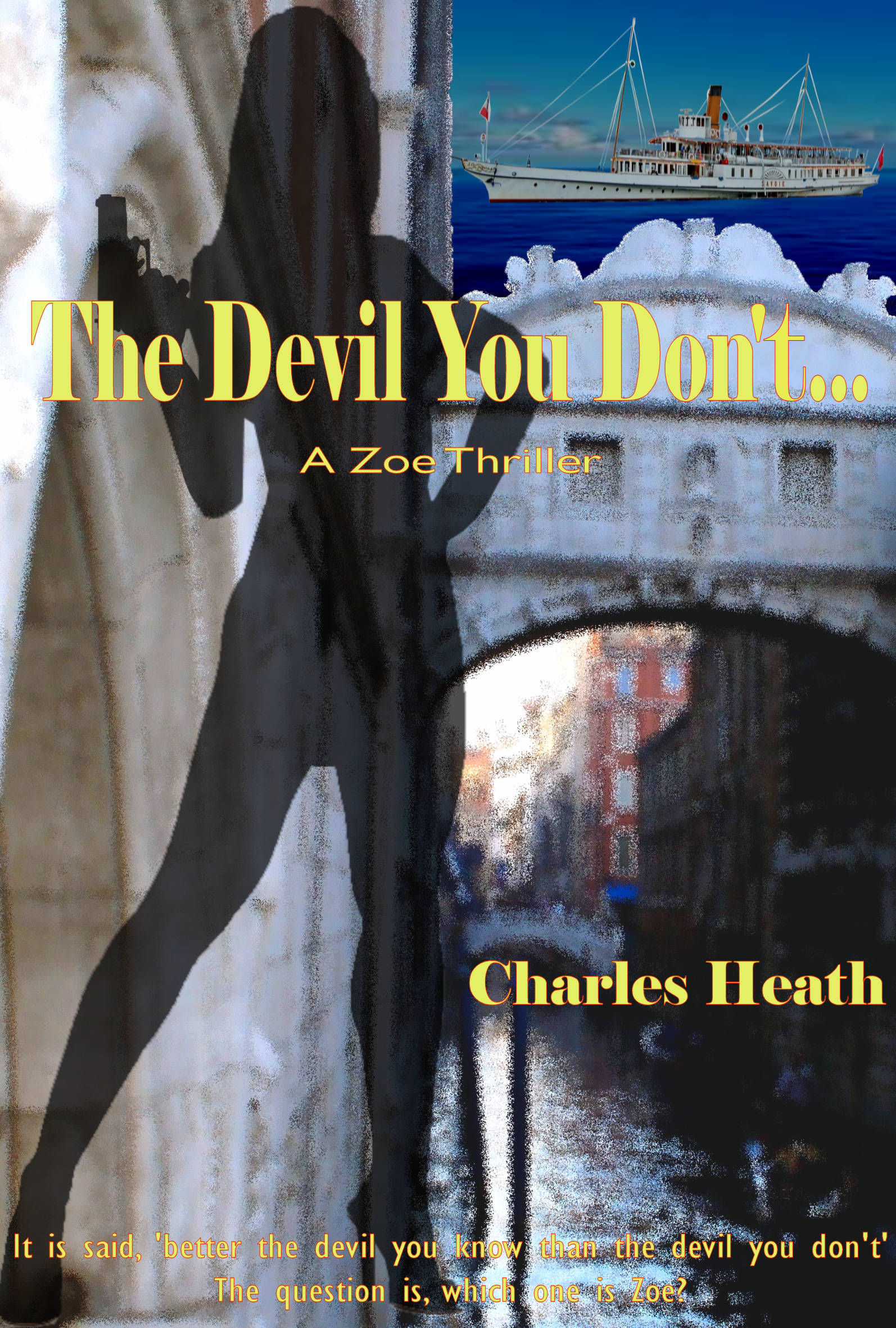
‘The Devil You Don’t’ – A beta reader’s view

It could be said that of all the women one could meet, whether contrived or by sheer luck, what are the odds it would turn out to be the woman who was being paid a very large sum to kill you.

John Pennington is a man who may be lucky in business, but not so lucky in love. He has just broken up with Phillipa Sternhaven, the woman he thought was the one, but relatives and circumstances, and perhaps because she was a ‘princess’, may also have contributed to the end result.

So, what do you do when you are heartbroken?

That is a story that slowly unfolds, from the first meeting with his nemesis on Lake Geneva, all the way to a hotel room in Sorrento, where he learns the shattering truth.

What should have been solace after disappointment, turns out to be something else entirely, and from that point, everything goes to hell in a handbasket.

He suddenly realizes his so-called friend Sebastian has not exactly told him the truth about a small job he asked him to do, the woman he is falling in love with is not quite who she says she is, and he is caught in the middle of a war between two men who consider people becoming collateral damage as part of their business.

The story paints the characters cleverly displaying all their flaws and weaknesses. The locations add to the story at times taking me back down memory lane, especially to Venice where, in those back streets I confess it’s not all that hard to get lost.

All in all a thoroughly entertaining story with, for once, a satisfying end.

…

Available on Amazon here: https://amzn.to/2Xyh1ow

…

In a word: Might

We might have to use some might to beat the mite.  Confused?

Might is force, so expending might be much the same as what Thor does with his hammer.

We might expend some force; this might be a maybe.  You’re never quite sure when someone uses the word might, whether or not they will actually do it.

I might do a lot of things, but somehow, I never seem to get around to actually doing them,

Of and just for the record, it’s the past tense of the word may.  You know, you may do something, or you might not.

You might also use the word might when being polite, which seems to be a rarity these days because everyone is terse, tense, and in a hurry.

So might I go to the movie will always get a resounding no if it means you get home late at night.   And you’re only 10 years old.

I might be interested, but I don’t think so.  Let me think about it.  Which also means no.

Of course, if you’re slack in doing homework, you might want to try a little harder next time.

What might have been if only you tried harder?

Then there’s that little pest called a mite, though it goes by a lot of other names, one of which is everywhere, a termite.

Or a dust mite.

It also could be used slangily for a child in distress, that is, look at that poor little mite, he looks so tired.

Or another word for slightly, for example, the girl seemed a mite embarrassed.

An excerpt from “Betrayal” – a work in progress

It could have been anywhere in the world, she thought, but it wasn’t.  It was in a city where if anything were to go wrong…

She sighed and came away from the window and looked around the room.  It was quite large and expensively furnished.  It was one of several she had been visiting in the last three months.

Quite elegant too, as the hotel had its origins dating back to before the revolution in 1917.  At least, currently, there would not be a team of KGB agents somewhere in the basement monitoring everything that happened in the room.

There was no such thing as the KGB anymore, though there was an FSB, but such organisations were of no interest to her.

She was here to meet with Vladimir.

She smiled to herself when she thought of him, such an interesting man whose command of English was as good as her command of Russian, though she had not told him of that ability.

All he knew of her was that she was American, worked in the Embassy as a clerk, nothing important, whose life both at work and at home was boring.  Not that she had blurted that out the first they met, or even the second.

That first time, at a function in the Embassy, was a chance meeting, a catching of his eye as he looked around the room, looking, as he had told her later, for someone who might not be as boring as the function itself.

It was a celebration, honouring one of the Embassy officials on his service in Moscow, and the fact he was returning home after 10 years.  She had been there once, and still hadn’t met all the staff.

They had talked, Vladimir knew a great deal about England, having been stationed there for a year or two, and had politely asked questions about where she lived, her family, and of course what her role was, all questions she fended off with an air of disinterested interest.

It fascinated him, as she knew it would, a sort of mental sparring as one would do with swords if this was a fencing match.

They had said they might or might not meet again when the party was over, but she suspected there would be another opportunity.  She knew the signs of a man who was interested in her, and Vladimir was interested.

The second time came in the form of an invitation to an art gallery, and a viewing of the works of a prominent Russian artist, an invitation she politely declined.  After all, invitations issued to Embassy staff held all sorts of connotations, or so she was told by the Security officer when she told him.

Then, it went quiet for a month.  There was a party at the American embassy and along with several other staff members, she was invited.  She had not expected to meet Vladimir, but it was a pleasant surprise when she saw him, on the other side of the room, talking to several military men.

A pleasant afternoon ensued.

And it was no surprise that they kept running into each other at the various events on the diplomatic schedule.

By the fifth meeting, they were like old friends.  She had broached the subject of being involved in a plutonic relationship with him with the head of security at the embassy.  Normally for a member of her rank, it would not be allowed, but in this instance it was.

She did not work in any sensitive areas, and, as the security officer had said, she might just happen upon something that might be useful.  In that regard, she was to keep her eyes and ears open and file a report each time she met him.

After that discussion, she got the impression her superiors considered Vladimir more than just a casual visitor on the diplomatic circuit.  She also formed the impression that he might consider her an ‘asset’, a word that had been used at the meeting with security and the ambassador.

It was where the word ‘spy’ popped into her head and sent a tingle down her spine.  She was not a spy, but the thought of it, well, it would be fascinating to see what happened.

A Russian friend.  That’s what she would call him.

And over time, that relationship blossomed, until, after a visit to the ballet, late and snowing, he invited her to his apartment not far from the ballet venue.  It was like treading on thin ice, but after champagne and an introduction to caviar, she felt like a giddy schoolgirl.

Even so, she had made him promise that he remain on his best behaviour.  It could have been very easy to fall under the spell of a perfect evening, but he promised, showed her to a separate bedroom, and after a brief kiss, their first, she did not see him until the next morning.

So, it began.

It was an interesting report she filed after that encounter, one where she had expected to be reprimanded.

She wasn’t.

It wasn’t until six weeks had passed when he asked her if she would like to take a trip to the country.  It would involve staying in a hotel, that they would have separate rooms.  When she reported the invitation, no objection was raised, only a caution; keep her wits about her.

Perhaps, she had thought, they were looking forward to a more extensive report.  After all, her reports on the places, and the people, and the conversations she overheard, were no doubt entertaining reading for some.

But this visit was where the nature of the relationship changed, and it was one that she did not immediately report.  She had realised at some point before the weekend away, that she had feelings for him, and it was not that he was pushing her in that direction or manipulating her in any way.

It was just one of those moments where, after a grand dinner, a lot of champagne, and delightful company, things happen.  Standing at the door to her room, a lingering kiss, not intentional on her part, and it just happened.

And for not one moment did she believe she had been compromised, but for some reason she had not reported that subtle change in the relationship to the powers that be, and so far, no one had any inkling.

She took off her coat and placed it carefully of the back of one of the ornate chairs in the room.  She stopped for a moment to look at a framed photograph on the wall, one representing Red Square.

Then, after a minute or two, she went to the mini bar and took out the bottle of champagne that had been left there for them, a treat arranged by Vladimir for each encounter.

There were two champagne flutes set aside on the bar, next to a bowl of fruit.  She picked up the apple and thought how Eve must have felt in the garden of Eden, and the temptation.

Later perhaps, after…

She smiled at the thought and put the apple back.

A glance at her watch told her it was time for his arrival.  It was if anything, the one trait she didn’t like, and that was his punctuality.  A glance at the clock on the room wall was a minute slow.

The doorbell to the room rang, right on the appointed time.

She put the bottle down and walked over to the door.

A smile on her face, she opened the door.

It was not Vladimir.  It was her worst nightmare.

…

© Charles Heath 2020