Writing a book in 365 days – 353

Day 353

Introduction: Why Your Choice of Software Matters

Writing isn’t just about putting words on a page; it’s a craft that demands focus, organisation, and the right set of tools to bring ideas to life. The software you choose can:

  • Boost productivity – by cutting down on manual formatting and navigation.
  • Protect your creative flow – by offering distraction‑free modes and version control.
  • Scale with your project – from a single‑page article to a 500‑page novel or a multi‑chapter research thesis.

With a flood of options on the market, two camps dominate the conversation:

  1. Dedicated writing software (think Scrivener, Ulysses, yWriter).
  2. Run‑of‑the‑mill word processors (Microsoft Word, Google Docs, Apple Pages).

Let’s dive deep into the strengths, weaknesses, and ideal use‑cases for each, so you can make an informed decision that aligns with your workflow.


1. Dedicated Writing Software – The Specialist’s Toolkit

1.1 What Makes a “Dedicated” App Different?

Dedicated writing apps are built from the ground up for long‑form, project‑based writing. They go beyond the classic “type‑and‑print” paradigm and provide:

FeatureWhy It Matters
Project‑level organization (folders, corkboards, outline view)Keeps chapters, scenes, research, and notes in one place without endless scrolling.
Distraction‑free modesFull‑screen or “typewriter” view clears the screen of UI clutter, helping you stay in the zone.
Version control & snapshotsCapture a “snapshot” of a chapter at any point and revert without losing later edits.
Export versatilityExport to ePub, Kindle, PDF, Word, plain text, and even manuscript‑ready formats with a single click.
Metadata & taggingAttach custom fields (e.g., POV, status, word count) for advanced sorting and filtering.

1.2 Scrivener – The Industry Standard

“If you write a novel, a screenplay, or a dissertation, Scrivener is the Swiss Army knife you never knew you needed.” — John H., bestselling author

Pros

✔️Scrivener Highlights
Robust BinderDrag‑and‑drop chapters, scenes, and research PDFs into a hierarchical tree.
Corkboard & OutlinerVisualize story arcs with index cards; rearrange with a mouse swipe.
Split‑Screen EditingView two documents side‑by‑side (e.g., manuscript + notes).
Built‑in TemplatesPre‑made templates for novels, scripts, non‑fiction, and academic papers.
Cross‑PlatformmacOS, Windows, iOS (sync via Dropbox).

Cons

❌Potential Drawbacks
Learning CurveThe sheer number of features can overwhelm newcomers.
Price$49 (Mac/Windows) + $29 (iOS) – a one‑time purchase, but higher than a free Google account.
CollaborationNot designed for real‑time co‑authoring (though you can share exported files).

1.3 Other Notable Dedicated Apps

AppIdeal ForStandout Feature
Ulysses (macOS/iOS)Bloggers, journalists, Apple‑centric writersSeamless iCloud sync + Markdown simplicity
yWriter (Windows)Screenwriters & novelists on a budgetFree, robust scene‑based organization
Storyist (macOS/iOS)Fiction & script writersIntegrated storyboard & script formatting

2. Run‑of‑the‑Mill Word Processors – The Everyday Workhorse

2.1 Microsoft Word – The Classic Giant

Word has been the default for decades, and its capabilities have expanded far beyond a simple text editor.

Pros

✔️Word Strengths
Universal CompatibilityAlmost every publisher, editor, and academic institution expects a .docx file.
Advanced FormattingStyles, footnotes, cross‑references, tables of contents – all built‑in.
Track Changes & CommentsIdeal for collaborative editing with editors or co‑authors.
Add‑ins & MacrosCustomize with VBA scripts for repetitive tasks.
Desktop & Online VersionsUse the full‑featured desktop app or the cloud‑based Word Online.

Cons

❌Word Weaknesses
Project Management LacksNo native folder‑like binder; you’ll need to open multiple files or use a master document (which can be unstable).
Distraction‑Heavy UIRibbon, sidebars, and toolbars can pull focus away from writing.
Limited Export OptionsNot as straightforward to output to ePub or Kindle format without third‑party plugins.

2.2 Google Docs – The Cloud‑Centric Contender

Google Docs is the go‑to for real‑time collaboration, especially in remote teams or classrooms.

Pros

✔️Google Docs Benefits
Real‑Time CollaborationMultiple users can edit simultaneously with live cursors.
Automatic Cloud SavesNo risk of losing work due to hardware failure.
Add‑Ons MarketplaceExtend functionality (e.g., citation managers, grammar checkers).
Access AnywhereBrowser‑based; works on any OS with internet.
Free TierGenerous storage via Google Drive.

Cons

❌Google Docs Limitations
Limited Formatting & StylesComplex manuscript formatting (e.g., long TOCs) can be clunky.
No Built‑In Project ViewYou’ll need to manage individual files manually in Drive.
Offline ModeWorks, but requires setup; performance can be slower offline.
Export FormatsPrimarily PDF, Word, plain text; no native ePub/KDP export.

2.3 When Word Processors Shine

ScenarioRecommended Tool
Academic Papers (APA/MLA/Chicago)Word (styles, citations, footnotes)
Team Reports or Shared DocsGoogle Docs (real‑time editing)
Short‑Form Content (blog posts, newsletters)Either – choose based on collaboration needs
Final Manuscript Formatting for PublishersWord (industry standard)

3. Decision Matrix – Matching Tool to Writer Type

Writer ProfilePrimary NeedsBest Fit
Novelist (300‑500+ pages, heavy outlining)Project organization, scene tracking, flexible exportScrivener (or Ulysses for Mac/iOS)
ScreenwriterScript formatting, beat boards, quick revisionsFinal Draft (industry) or Scrivener (script template)
Academic ResearcherCitation management, footnotes, large reference libraryWord (with EndNote/Zotero) or Google Docs + add‑on
Freelance BloggerFast drafting, SEO collaboration, easy publishingGoogle Docs (collab) or Word (if you prefer offline)
Non‑fiction Author (multiple chapters, interviews, PDFs)Mixed media integration, flexible export, version snapshotsScrivener
Team of EditorsReal‑time comments, change tracking, simultaneous editingGoogle Docs (or Word Online)

4. Practical Tips to Get the Most Out of Your Chosen Software

  1. Start with a Template – Most dedicated apps ship with ready‑made templates that handle margins, headers, and chapter styles. Save time by customising once and reusing.
  2. Leverage Cloud Sync – Even if you love Scrivener, store your project folder in Dropbox or OneDrive to protect against hardware loss.
  3. Combine Tools – Write first drafts in a distraction‑free environment (Scrivener, Ulysses, or even a plain‑text editor), then import into Word for final formatting and submission.
  4. Use Keyboard Shortcuts – Learn the top 10 shortcuts for your platform; they shave seconds off every page.
  5. Backup Regularly – Set up an automatic backup schedule (e.g., weekly zip of your project folder) regardless of cloud storage.

5. Bottom Line: There Is No One‑Size‑Fits‑All Answer

  • If your writing is project‑heavy, non‑linear, and you need robust organisation, dedicated software like Scrivener (or its Mac‑centric cousins) is the clear winner.
  • If you work primarily in teams, need instant collaboration, or are delivering polished documents to publishers or academia, Microsoft Word or Google Docs will serve you better.

My personal recommendation? Use a hybrid workflow: draft and outline in Scrivener for its unrivalled project management, then export your manuscript to Word for final polishing, formatting, and sharing. For collaborative pieces, switch to Google Docs during the editing phase, then bring the clean version back into Word.


Bonus: Quick Comparison Chart

FeatureScrivenerUlyssesMicrosoft WordGoogle Docs
Project Binder✅✅❌❌
Distraction‑Free Mode✅✅❌❌
Real‑Time Collaboration❌❌✅ (online)✅
Advanced Export (ePub, Kindle)✅✅❌ (needs add‑on)❌
Citation ManagementLimitedLimited✅ (via add‑ins)✅ (via add‑ons)
Price (as of 2026)$49 (one‑time)$49.99/yr$149.99 (Microsoft 365)Free (Google Workspace)
Learning CurveModerateLowLowLow

Take Action Today

  1. Identify your primary writing goal (novel, article, thesis, team report).
  2. Match the goal to the software using the matrix above.
  3. Download a free trial (Scrivener offers a 30‑day trial; Word has a 60‑day Microsoft 365 trial).
  4. Test a small project—write a single chapter or a 1,000‑word article. Observe how the tool fits your workflow.
  5. Commit to the software that feels like an extension of your creative mind, not a barrier.

Happy writing! 🚀

Top 5 sights on the road less travelled – Washington State

Discover Washington’s Hidden Treasures: A Road Less Travelled Adventure

Washington State is often synonymous with bustling cities, iconic peaks like Mount Rainier, and the majestic Olympic Peninsula. But for those who crave a deeper, more authentic connection with the Pacific Northwest, a quieter side of Washington awaits—off the crowded highways and beyond the usual tourist map. If you’re ready to trade the familiar for the extraordinary, here are five must-experience adventures on Washington’s road less travelled.


1. Stehekin: The Remote Gateway to North Cascades Wilderness

Tucked deep within North Cascades National Park, Stehekin is a place only accessible by boat or floatplane. This secluded 360-square-mile paradise feels like stepping into a living canvas of alpine peaks, glacial lakes, and ancient forests.

Why It’s Special: With no cars allowed, the only way to reach this hidden gem is via a 2.5-hour boat ride from Wenatchee. Once there, the hiking is legendary—trails like the Skyline and Cascade Loop offer jaw-dropping views, while Lake Chelan’s turquoise waters invite kayaking or picnics. Stay at the cozy Stehekin Resort, where lodging includes meals prepared from local ingredients.

Tip: Best visited May–October. Pack layers; the mountain climate can shift quickly.


2. Methow Valley: Wild Beauty and Cultural Gems

Nestled in the North Cascades, the Methow Valley is a playground for nature lovers and culture seekers alike. Often dubbed “One of America’s Last Frontiers,” this region blends dramatic scenery with a quirky, artsy vibe.

Why It’s Special: Drive Highway 2 through wildflower meadows and pine forests to towns like Winthrop and Twisp. Hike the iconic Hidden Lake Trail in North Cascades National Park, or horseback ride along the Methow River. Don’t miss the Methow Arts Trail, which connects galleries, studios, and local markets in towns like Trout Lake and Pateros.

Tip: Visit in late spring for wildflower blooms and in the fall for incredible fall foliage.


3. Palouse Region: A Sea of Scrolling Gold and Green

The Palouse—a region spanning southeast Washington and Idaho—is a surreal blend of rolling hills, historic prairie landscapes, and vibrant college towns. Known for its wheat fields and kaleidoscopic sunsets, this area feels like a step into a different world.

Why It’s Special: Follow the Palouse to Cascades Trail for scenic drives with panoramic views of the bluffs. Hunt for quirky “Cereal Box Art” dotting the hillsides, and explore the charming college town of Pullman, home to Washington State University. Don’t miss the Palouse High Prairie—a UNESCO Biosphere Reserve—and the nearby Tumwater Falls Park in Cle Elum.

Tip: Visit in the spring or fall for the most colourful landscapes.


4. Cispus Falls: A Secret Waterfall Oasis

For a true off-grid adventure, head to Cispus Road in the Gifford Pinchot National Forest. This 26-mile gravel road is a haven for those seeking seclusion, with lush evergreen forests, cascading waterfalls, and natural springs.

Why It’s Special: Park at the trailhead and walk to Cispus Falls, where icy water plunges into a perfect-pool swimming hole. Further down the road, discover Pine Creek Falls and hidden swimming spots. The area is a favourite among locals but remains largely undiscovered by tourists.

Tip: Prepare for rough terrain—four-wheel drive is recommended. Visit in summer for warmer water and hiking conditions.


5. San Juan Islands: Slow Life on Lopez Island

While the San Juan Islands are a popular stop for ferry rides, Lopez Island offers a serene alternative to the bustling Friday Harbour. This car-free island (except for a few local vehicles) invites you to slow down and savour the pace of island life.

Why It’s Special: Rent a bike or hike to Gold Beach, where you can kayak, birdwatch, or simply relax. Visit the American Museum of Wine in the quaint village of Lopezport, or join a farm-to-table tour at Lopez Island Creamery. Night owls will love stargazing—light pollution here is so low that the Milky Way seems to touch the ground.

Tip: Take the Washington State Ferries from Anacortes or Clinton.


Conclusion: Embrace the Road Less Travelled

Washington’s lesser-known corners offer more than just stunning landscapes—they tell stories of the state’s rich history, thriving ecosystems, and resilient communities. Whether you’re hiking through Stehekin’s alpine silence, biking the Palouse’s golden hills, or floating above Cispus Falls, these adventures promise moments of serenity and discovery. So, next time you’re planning a road trip, veer off the map and let the unexpected lead the way. The road less travelled is waiting to surprise you.

Final Tip: Always check local regulations and trail conditions before heading out. Share the trail, pack out trash, and respect the land—because these hidden gems are worth protecting for future travellers.

Where will your next detour take you?

What I learned about writing – Keep a journal, write down everything

Travelling is always a good source of material to add to the writing store.

Writers collect anecdotes, descriptions of their fellow travellers, more the idiosyncrasies than an actual physical description, and of the experience, though it is all the better if it turns out to be really, really bad than good.

This equally applies to experiences in hotels, with hire cars, tourist spots and especially fellow travellers.

Start with the airline. This can make or break the start of a holiday and could be the difference between a great start or a horrid one.

We can usually accept the sardine arrangements, the lack of legroom, being within earshot of a screaming baby, or put up with the constant kicking in the back of the seat by the wretched uncontrollable child sitting behind you.

It’s having the person in front fully reclining their seat in your face that gets your goat. For an hour and a half or eight hours, it is still the biggest bone of contention when flying.

We are taking one airline down to Melbourne the one that makes a big deal out of the full service it provides, and another airline back, formerly a low-cost airline but now trying to match its so-called full-service rival.

The flight down is smooth, and the food reasonably good. The landing, even though the pilot was battling sharp crosswinds, was very heavy and left us in no doubt we had reached terra firma again. I’ve been on worse.

Hire cars are a rich field to pick over and I’ve read some interesting experiences involving even the best. So far I’ve not had a problem. I pre-booked as far in advance as possible to get a small fuel-efficient vehicle. Sometimes we are upgraded and while they think they are doing you a favour it is not necessarily the case, especially when you finish up with a large car that barely fits small provincial French roads one lane wide. It does happen.

There is also the waiting time at the car rental desk, particularly when it’s the rental company you picked, while other company desks are empty. You also quickly discover that most of the people in the queue didn’t think of pre-booking a car, which to my mind is expecting trouble with it being the peak holiday period.

We had to wait in a long queue after taking a chance it would be less crowded at the pick-up point than the desk in the airport terminal. It was no surprise to discover that a lot of other travellers had the same thought.

Hotels can also be one of the major letdowns of a holiday. If you are going to use a travel agent to pick a hotel for you, make sure you check as much as you can because no matter how it is described, seeing it, in reality, is always completely different than the pictures in a brochure and sometimes on the Internet. It requires research and a good look at TripAdvisor. Or word of mouth by someone you know and trust who has stayed there.

Take, for instance, staying in a five-star hotel the usual stomping ground of the rich and famous, it is always interesting to see how the less privileged fare. Where hotel staff are supposed to treat each guess equally it is not always the case. Certainly, if you’re flashing money around, the staff will be happy to take it though you may not necessarily get what you’re expecting.

We are lucky to be in the highest loyalty level and this accords us a number of privileges; this time working in our favour but it is not always the case. Privilege can sometimes count for nothing. It often depends on the humour of the front desk clerk and woe betide you if you get the receptionist from hell. Been there, done that, more than once.

Then there is the room. There is such a wide variety of rooms available even if the hotel site or brochure had representative pictures the odds are you can still get a room that is nothing like you’re expecting or were promised.

Believe me, there are rooms with a view, overlooking pigeon coops or air-conditioning vents.

A bone of contention often can be the location of the hotel and sometimes parking facilities not the least of which is the cost.  Valet parking; forget it.

We are reasonably near transport if we could walk, the km to the nearest bus or tram stop is a long long way when you can’t walk and that’s when the hotel starts to feel like a prison. Taxis may be cheap but when you have to use them three or four times a day it all adds up.

Be wary when a hotel says it is close to public transport. While that may be true in London, anywhere else especially in Europe you could find yourself in the middle of nowhere. Its when you discover your travel agent didn’t exactly lie but it is why that weekly rate was so cheap. In the end, the sum of the taxi fares and the accommodation turns out to be dearer than if you stayed at the Savoy.

So airline, hire car and hotel aside those front line experiences are fodder for the travel blogger, these people who are also known as road warriors.

I wondered why until we started travelling and discovered the incredible highs and lows, of flying, yes there are good and bad airlines and the bad are not confined to the low cost, of rental cars and of hotels. There is a very large gulf between five stars and three and sometimes three can be very generous. And of course, l now have a list of hotels l would never stay in again, the names of which might surprise you.

Unfortunately, my travel exploits are sometimes as boring as the day is long, but even then, there’s at least one calamity to deal with.

Our airport experiences are all without incident, although from time to time the sight of police or soldiers patrolling with guns can be disconcerting.

We have also experienced the odd problem in London at Heathrow firstly trying to get hep from the designated help staff and then to find the check-in desk of an airline apparently no one available knew existed.

That was momentarily exciting after phone calls were not answered and internet contact was not possible. Not until a little footwork found the agents desk and the misunderstanding was sorted out.

By the way, the airline itself was a pleasure to fly on, the staff pleasant and most of all we arrived just before the airport closed.

On the way home, only a flight stands between us and getting home. After days sometimes weeks it is that moment we all look forward to sleeping on our own beds making our own food and getting to the gym to work off those extra kilos put on by delicious hotel food or local fare where calorie counting is not part of the dining experience.

Of course, getting to the airport from the hotel can be an experience in itself whether by taxi perhaps the taxi driver from hell who knows only two speeds fast and stop and is also, unfortunately, colour blind.

Or whether you have arranged for a transfer only to discover it’s not coming because the company went out of business or you changed hotels and someone forgot to tell them.

Or the travel agent made a mistake or forgot to confirm the booking.

Oh yes, it happens.

We have a hire car and will be returning it t the same place. Let’s hope the signage at the airport makes it easy to find the rental place. In London we had a hell of a time trying to find it; good thing we were hours earlier than we should be.

And just because the sign says rental returns for the lane you’re in it doesn’t necessarily follow it’s the right lane. Then as you miss the exit, and get stuck on the one-way road system, all of a sudden you have left the airport and you’re heading back to the city.

If you’re running late …

But if everything goes to plan you get to the airport with time to spare.

We manage to arrive early at the airport. Rather than wait three hours for our flight we decide to try and get on an earlier departure. This will depend on our ticket type and whether there are seats available, preferably together.

We line up in the service queue, which by its very description means you have a long wait as service is mostly between difficult to impossible depending on the request.

We wait for twenty minutes. There’s a long queue behind us. Our request is taken care of quickly and efficiently making it almost seamless, certainly painless. I’m sure our request was one of the very few easy ones the staff will get.

Today it seems it is our lucky day. The transfer to an earlier flight is free and there are two seats available together. All we have to do is alert the pick-up driver at our destination we are going to be an hour earlier. Done.

Checking in bags is usually the bane of the traveller’s existence.

No matter which airport in whatever country you are departing from the only difference is the length of the queue; from incredibly long with a half-hour wait to the head of the line to up to an hour. Our queue is 15 to 20 minutes.

One assumes this is why intending passengers are asked to go to the airport two hours ahead of their fight. There are times of the day where the queues are horrendous, and that not only applies to Heathrow.

And if you are late, just panic.

And if your bags are overweight be prepared to have your credit card hammered.

Especially if you’re flying Air France from Venice to Paris. Domestically in Australia, it’s not so bad.

Now its time to relax. There is an hour before we have to be at the gate so just enough time to get coffee and a doughnut.

And be horrified at what shops charge for simple items like sandwiches. I think $10 is very expensive. But if you’re hungry and forgot to eat before getting to the airport then be prepared to pay more than you usually would for the same fare.

It’s also time to observe our fellow passengers, and there is always the one who has a last-minute dash for a plane that is just about to leave, passengers with panic-stricken looks.

We all know what happens if you miss the flight even as you’re downing that last cocktail in the airline lounge while thinking, yes they’ll hold the flight for me!

Apparently not because airlines want to keep their ‘on-time’ record.

Even so, there’s still three more calls for the missing passengers and then nothing. If they missed the plane there their problems are just beginning. It’s the same feeling you have when your name is called out before the flight starts loading.

Only once have we been called up and given an upgrade, and once in the US to be told we could take another flight because our flight was overbooked. Business-class was greatly appreciated and was worth the extra hour we had to wait.

The next bottleneck is the scanners and sometimes the queue here is very long and moving slowly because the scanners are set to pick up belts and shoes so people are scattered everywhere getting redressed and putting shoes on. Today being a weekday the queue is not so bad.

Loading is painless and reasonably organized except when the passengers in high numbered rows try to board by the front door instead of the rear door and clash midway in the plane. After they untangle themselves and get to their seats we’re ready to go.

This flight still has a manual safety demonstration which most people ignored but is slightly better than the video demonstration. Let’s hope we don’t go down over the water.

I’ve charted my path to the emergency exit and l have quite a few people before me. I guess there’s more than one way to be last off the plane.

Sometimes you get to pick who you get to sit next to, especially if you are travelling with your partner which this time l am, but in a three-seat arrangement, you have no control over who takes that third seat.

We are lucky this time because it will not become a tight squeeze but unfortunately, our fellow traveller has a cold and in a confined space for several hours it could turn out to be a problem.

The flight is smooth, the snacks edible, but there is no liquor service like the full-service rival but that might be a good thing.

No air rage on this flight.

Time flies, pardon the pun, and we have arrived. Even though it took forever for the baggage to be delivered we still got home early.

Until the next time, we fly.


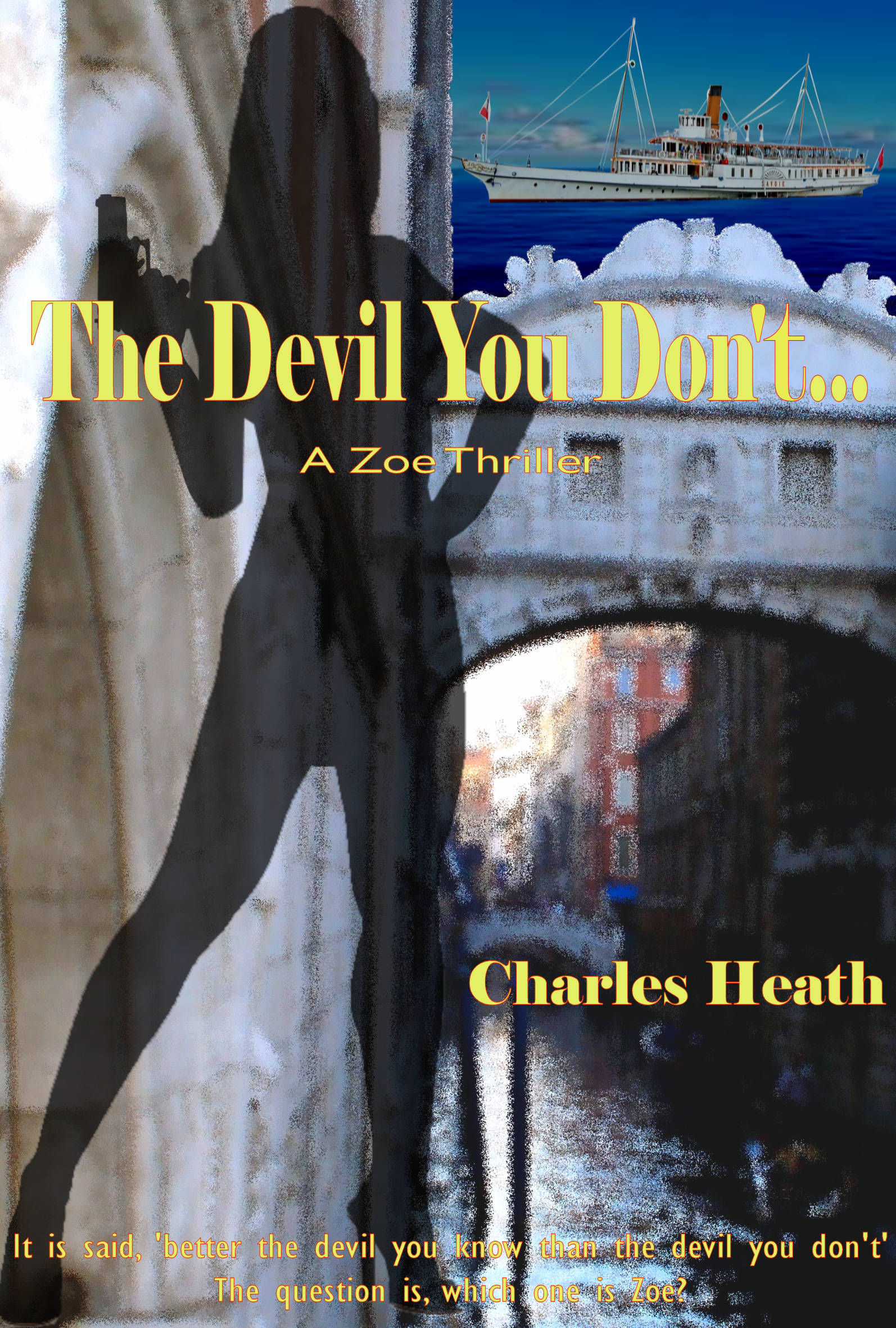
‘The Devil You Don’t’ – A beta reader’s view

It could be said that of all the women one could meet, whether contrived or by sheer luck, what are the odds it would turn out to be the woman who was being paid a very large sum to kill you.

John Pennington is a man who may be lucky in business, but not so lucky in love. He has just broken up with Phillipa Sternhaven, the woman he thought was the one, but relatives and circumstances, and perhaps because she was a ‘princess’, may also have contributed to the end result.

So, what do you do when you are heartbroken?

That is a story that slowly unfolds, from the first meeting with his nemesis on Lake Geneva, all the way to a hotel room in Sorrento, where he learns the shattering truth.

What should have been solace after disappointment, turns out to be something else entirely, and from that point, everything goes to hell in a handbasket.

He suddenly realizes his so-called friend Sebastian has not exactly told him the truth about a small job he asked him to do, the woman he is falling in love with is not quite who she says she is, and he is caught in the middle of a war between two men who consider people becoming collateral damage as part of their business.

The story paints the characters cleverly displaying all their flaws and weaknesses. The locations add to the story at times taking me back down memory lane, especially to Venice where, in those back streets I confess it’s not all that hard to get lost.

All in all a thoroughly entertaining story with, for once, a satisfying end.

Available on Amazon here: https://amzn.to/2Xyh1ow

Top 5 sights on the road less travelled – New York

Beyond the Skyline: 5 Off‑the‑Beaten‑Path Experiences in New York City

You’ve checked off Times Square, the Statue of Liberty, and the Met. Now it’s time to slip into the city’s quieter corners, where locals and seasoned explorers discover a side of New York that most tourists never see. Below are five unforgettable, low‑key adventures that let you experience the “real” New York—without the selfie‑stick crowds.


1. Wander the Forgotten Tunnels of the Elevated Acre

What it is: A hidden 2‑acre rooftop garden perched atop a 19th‑century freight elevator shaft at 55 Water Street, overlooking the East River. The space is a lush, industrial‑chic oasis complete with a waterfall, pine forest, and a panoramic view of the Brooklyn Bridge.

Why it feels off‑beat: The Elevated Acre is tucked behind a nondescript metal door that looks like a service entrance. Only the occasional office worker or curious local stumbles upon it, making it an ideal spot for quiet contemplation or a low‑key picnic.

Insider tip: Arrive just after sunrise (the garden opens at 6 a.m.) to watch the city wake up. Bring a reusable coffee cup—there’s a small café kiosk that serves locally roasted brews and pastries.

Cost & Logistics: Free entry. The nearest subway stop is Wall Street (4/5) or Broad Street (J/Z); a short walk east across the waterfront will bring you to the entrance on Water Street.


2. Catch a Silent Disco in the Underground Tunnels of the Grymes Hill Tunnel (Brooklyn)

What it is: A pop‑up, headphone‑only dance party held inside the historic, brick‑lined railway tunnel beneath the Brooklyn Heights Promenade. DJs spin everything from deep house to vintage funk, while participants groove to their own private soundtrack.

Why it feels off‑beat: The tunnel is usually off‑limits to the public and used only for maintenance. The secretive nature of these events draws a small, eclectic crowd—often artists, students, and New York’s indie music scene.

Insider tip: Follow the whisper campaign on the neighbourhood’s Facebook “Brooklyn Secret Events” group for the next date. Arrive early to snag a spot near the tunnel’s natural “light well,” where shafts of sunlight pierce the ceiling—perfect for Instagram stories that look like a scene from Inception.

Cost & Logistics: Tickets range $15‑$25, which include the headphones. The entrance is at Pier 6, Brooklyn Bridge Park; take the 4/5 to Fulton St then walk south along the waterfront.


3. Explore the Vegan Artisanal Market at The Gowanus Canal’s “Greenhouse”

What it is: A seasonal, open‑air market set on a reclaimed warehouse rooftop overlooking the industrial‑chic Gowanus Canal. Local vendors showcase vegan cheeses, fermented kombuchas, hand‑crafted soy candles, and artwork inspired by the city’s waterways.

Why it feels off‑beat: While the Gowanus Canal is often associated with gritty urban renewal, this market celebrates sustainability and community creativity, drawing in a crowd of eco‑conscious locals who prefer farmers’ markets in the Bronx or Queens.

Insider tip: Bring a reusable tote and a curiosity for “wild” flavours. Try the cashew‑based mozzarella paired with locally grown heirloom tomatoes, then stroll across the canal’s footbridge to watch kayakers glide by at sunset.

Cost & Logistics: Entry is free; items for purchase range $3‑$20. The market runs on the first Saturday of each month from 11 a.m.–4 p.m. Nearest subway: F to York St, then a 10‑minute walk west on 9th St.


4. Attend a Midnight Screening at The Film Forum’s “Cinematic Night Shift”

What it is: A series of late‑night showings of obscure foreign films, cult classics, and experimental works, held in the intimate 224‑seat theatre on the Lower East Side. Each session includes a brief Q&A with the director or a film scholar.

Why it feels off‑beat: While most visitors flock to the big multiplexes in Times Square, Film Forum’s midnight series draws cinephiles who value conversation over popcorn. The dimly lit lobby, vintage posters, and the smell of old leather seats create an atmosphere that feels like stepping into a secret society of film lovers.

Insider tip: Arrive early for the complimentary “screening cocktail”—a rotating concoction inspired by the evening’s film (think a “Bong Joon‑ho” mocktail for a Korean thriller). Seats fill fast, so reserve online at least a week in advance.

Cost & Logistics: $12 per ticket, plus a small “donation” for the Q&A. The theatre is located at 209 West Houston St; accessible via B/D at Grand St or L at 1st Ave.


5. While officially called the Ellis Island Hard Hat Tour, the experience is described by visitors as “eerie” and “haunting,” and includes access to areas like the former morgue and contagious disease wards.

This 90-minute guided tour offers a fascinating look into the abandoned hospital complex, which has been closed to the public since 1954. 

Tour Details

Age Restriction: All participants must be at least 10 years old

Focus: The tour focuses on the history of the hospital and the experience of the over one million immigrants who passed through its doors. It’s not a ghost tour with actors or jump scares, but the abandoned atmosphere provides a naturally eerie environment.

Key Sights: Visitors walk through the contagious disease wards, laundry rooms, kitchen, staff quarters, and the autopsy room, which features an eight-cadaver refrigerator. The tour also features an art installation by JR, with life-sized historical photographs placed within the decaying buildings.

Tour Operator: These exclusive tours are offered only by Save Ellis Island, the non-profit partner of the National Park Service dedicated to the preservation of the hospital complex. Tour fees support these conservation efforts.

Booking: Tours run daily, year-round, but must be booked in advance as they often sell out. You can purchase tour tickets through the Save Ellis Island website or the ferry operator, Statue City Cruises.

Tickets & Pricing: The Hard Hat Tour costs approximately $50 extra per adult, in addition to the ferry ticket required to reach the island.


How to Weave These Hidden Gems Into Your Itinerary

  1. Map Your “Off‑The‑Beaten‑Path” Day: Start early at the Elevated Acre for sunrise, then head downtown for the Ghost Walk in the evening.
  2. Balance the Unusual with the Classic: Pair a quiet morning with a traditional brunch in the West Village, then cap the night with the silent disco.
  3. Travel Light, Travel Curious: Pack a small backpack with reusable items (water bottle, tote, portable charger) so you’re ready for any spontaneous discovery.

Final Thoughts

New York’s allure isn’t limited to its glittering skyscrapers and iconic museums. Its true soul lives in the nooks and crannies that only the curious dare to explore—whether it’s a rooftop garden hidden above the financial district, a clandestine tunnel humming with music, or a silent hallway echoing with ghost stories.

Next time you book a trip to the city that never sleeps, give yourself permission to wander off the well‑trodden path. You might find that the best memories are made in places you never expected to see.

Happy exploring, fellow wanderer!


An excerpt from “Betrayal” – a work in progress

It could have been anywhere in the world, she thought, but it wasn’t.  It was in a city where if anything were to go wrong…

She sighed and came away from the window and looked around the room.  It was quite large and expensively furnished.  It was one of several she had been visiting in the last three months.

Quite elegant too, as the hotel had its origins dating back to before the revolution in 1917.  At least, currently, there would not be a team of KGB agents somewhere in the basement monitoring everything that happened in the room.

There was no such thing as the KGB anymore, though there was an FSB, but such organisations were of no interest to her.

She was here to meet with Vladimir.

She smiled to herself when she thought of him, such an interesting man whose command of English was as good as her command of Russian, though she had not told him of that ability.

All he knew of her was that she was American, worked in the Embassy as a clerk, nothing important, whose life both at work and at home was boring.  Not that she had blurted that out the first they met, or even the second.

That first time, at a function in the Embassy, was a chance meeting, a catching of his eye as he looked around the room, looking, as he had told her later, for someone who might not be as boring as the function itself.

It was a celebration, honouring one of the Embassy officials on his service in Moscow, and the fact he was returning home after 10 years.  She had been there once, and still hadn’t met all the staff.

They had talked, Vladimir knew a great deal about England, having been stationed there for a year or two, and had politely asked questions about where she lived, her family, and of course what her role was, all questions she fended off with an air of disinterested interest.

It fascinated him, as she knew it would, a sort of mental sparring as one would do with swords if this was a fencing match.

They had said they might or might not meet again when the party was over, but she suspected there would be another opportunity.  She knew the signs of a man who was interested in her, and Vladimir was interested.

The second time came in the form of an invitation to an art gallery, and a viewing of the works of a prominent Russian artist, an invitation she politely declined.  After all, invitations issued to Embassy staff held all sorts of connotations, or so she was told by the Security officer when she told him.

Then, it went quiet for a month.  There was a party at the American embassy and along with several other staff members, she was invited.  She had not expected to meet Vladimir, but it was a pleasant surprise when she saw him, on the other side of the room, talking to several military men.

A pleasant afternoon ensued.

And it was no surprise that they kept running into each other at the various events on the diplomatic schedule.

By the fifth meeting, they were like old friends.  She had broached the subject of being involved in a plutonic relationship with him with the head of security at the embassy.  Normally for a member of her rank, it would not be allowed, but in this instance it was.

She did not work in any sensitive areas, and, as the security officer had said, she might just happen upon something that might be useful.  In that regard, she was to keep her eyes and ears open and file a report each time she met him.

After that discussion, she got the impression her superiors considered Vladimir more than just a casual visitor on the diplomatic circuit.  She also formed the impression that he might consider her an ‘asset’, a word that had been used at the meeting with security and the ambassador.

It was where the word ‘spy’ popped into her head and sent a tingle down her spine.  She was not a spy, but the thought of it, well, it would be fascinating to see what happened.

A Russian friend.  That’s what she would call him.

And over time, that relationship blossomed, until, after a visit to the ballet, late and snowing, he invited her to his apartment not far from the ballet venue.  It was like treading on thin ice, but after champagne and an introduction to caviar, she felt like a giddy schoolgirl.

Even so, she had made him promise that he remain on his best behaviour.  It could have been very easy to fall under the spell of a perfect evening, but he promised, showed her to a separate bedroom, and after a brief kiss, their first, she did not see him until the next morning.

So, it began.

It was an interesting report she filed after that encounter, one where she had expected to be reprimanded.

She wasn’t.

It wasn’t until six weeks had passed when he asked her if she would like to take a trip to the country.  It would involve staying in a hotel, that they would have separate rooms.  When she reported the invitation, no objection was raised, only a caution; keep her wits about her.

Perhaps, she had thought, they were looking forward to a more extensive report.  After all, her reports on the places, and the people, and the conversations she overheard, were no doubt entertaining reading for some.

But this visit was where the nature of the relationship changed, and it was one that she did not immediately report.  She had realised at some point before the weekend away, that she had feelings for him, and it was not that he was pushing her in that direction or manipulating her in any way.

It was just one of those moments where, after a grand dinner, a lot of champagne, and delightful company, things happen.  Standing at the door to her room, a lingering kiss, not intentional on her part, and it just happened.

And for not one moment did she believe she had been compromised, but for some reason she had not reported that subtle change in the relationship to the powers that be, and so far, no one had any inkling.

She took off her coat and placed it carefully of the back of one of the ornate chairs in the room.  She stopped for a moment to look at a framed photograph on the wall, one representing Red Square.

Then, after a minute or two, she went to the mini bar and took out the bottle of champagne that had been left there for them, a treat arranged by Vladimir for each encounter.

There were two champagne flutes set aside on the bar, next to a bowl of fruit.  She picked up the apple and thought how Eve must have felt in the garden of Eden, and the temptation.

Later perhaps, after…

She smiled at the thought and put the apple back.

A glance at her watch told her it was time for his arrival.  It was if anything, the one trait she didn’t like, and that was his punctuality.  A glance at the clock on the room wall was a minute slow.

The doorbell to the room rang, right on the appointed time.

She put the bottle down and walked over to the door.

A smile on her face, she opened the door.

It was not Vladimir.  It was her worst nightmare.

© Charles Heath 2020

Writing a book in 365 days – 353

Day 353

Introduction: Why Your Choice of Software Matters

Writing isn’t just about putting words on a page; it’s a craft that demands focus, organisation, and the right set of tools to bring ideas to life. The software you choose can:

  • Boost productivity – by cutting down on manual formatting and navigation.
  • Protect your creative flow – by offering distraction‑free modes and version control.
  • Scale with your project – from a single‑page article to a 500‑page novel or a multi‑chapter research thesis.

With a flood of options on the market, two camps dominate the conversation:

  1. Dedicated writing software (think Scrivener, Ulysses, yWriter).
  2. Run‑of‑the‑mill word processors (Microsoft Word, Google Docs, Apple Pages).

Let’s dive deep into the strengths, weaknesses, and ideal use‑cases for each, so you can make an informed decision that aligns with your workflow.


1. Dedicated Writing Software – The Specialist’s Toolkit

1.1 What Makes a “Dedicated” App Different?

Dedicated writing apps are built from the ground up for long‑form, project‑based writing. They go beyond the classic “type‑and‑print” paradigm and provide:

FeatureWhy It Matters
Project‑level organization (folders, corkboards, outline view)Keeps chapters, scenes, research, and notes in one place without endless scrolling.
Distraction‑free modesFull‑screen or “typewriter” view clears the screen of UI clutter, helping you stay in the zone.
Version control & snapshotsCapture a “snapshot” of a chapter at any point and revert without losing later edits.
Export versatilityExport to ePub, Kindle, PDF, Word, plain text, and even manuscript‑ready formats with a single click.
Metadata & taggingAttach custom fields (e.g., POV, status, word count) for advanced sorting and filtering.

1.2 Scrivener – The Industry Standard

“If you write a novel, a screenplay, or a dissertation, Scrivener is the Swiss Army knife you never knew you needed.” — John H., bestselling author

Pros

✔️Scrivener Highlights
Robust BinderDrag‑and‑drop chapters, scenes, and research PDFs into a hierarchical tree.
Corkboard & OutlinerVisualize story arcs with index cards; rearrange with a mouse swipe.
Split‑Screen EditingView two documents side‑by‑side (e.g., manuscript + notes).
Built‑in TemplatesPre‑made templates for novels, scripts, non‑fiction, and academic papers.
Cross‑PlatformmacOS, Windows, iOS (sync via Dropbox).

Cons

❌Potential Drawbacks
Learning CurveThe sheer number of features can overwhelm newcomers.
Price$49 (Mac/Windows) + $29 (iOS) – a one‑time purchase, but higher than a free Google account.
CollaborationNot designed for real‑time co‑authoring (though you can share exported files).

1.3 Other Notable Dedicated Apps

AppIdeal ForStandout Feature
Ulysses (macOS/iOS)Bloggers, journalists, Apple‑centric writersSeamless iCloud sync + Markdown simplicity
yWriter (Windows)Screenwriters & novelists on a budgetFree, robust scene‑based organization
Storyist (macOS/iOS)Fiction & script writersIntegrated storyboard & script formatting

2. Run‑of‑the‑Mill Word Processors – The Everyday Workhorse

2.1 Microsoft Word – The Classic Giant

Word has been the default for decades, and its capabilities have expanded far beyond a simple text editor.

Pros

✔️Word Strengths
Universal CompatibilityAlmost every publisher, editor, and academic institution expects a .docx file.
Advanced FormattingStyles, footnotes, cross‑references, tables of contents – all built‑in.
Track Changes & CommentsIdeal for collaborative editing with editors or co‑authors.
Add‑ins & MacrosCustomize with VBA scripts for repetitive tasks.
Desktop & Online VersionsUse the full‑featured desktop app or the cloud‑based Word Online.

Cons

❌Word Weaknesses
Project Management LacksNo native folder‑like binder; you’ll need to open multiple files or use a master document (which can be unstable).
Distraction‑Heavy UIRibbon, sidebars, and toolbars can pull focus away from writing.
Limited Export OptionsNot as straightforward to output to ePub or Kindle format without third‑party plugins.

2.2 Google Docs – The Cloud‑Centric Contender

Google Docs is the go‑to for real‑time collaboration, especially in remote teams or classrooms.

Pros

✔️Google Docs Benefits
Real‑Time CollaborationMultiple users can edit simultaneously with live cursors.
Automatic Cloud SavesNo risk of losing work due to hardware failure.
Add‑Ons MarketplaceExtend functionality (e.g., citation managers, grammar checkers).
Access AnywhereBrowser‑based; works on any OS with internet.
Free TierGenerous storage via Google Drive.

Cons

❌Google Docs Limitations
Limited Formatting & StylesComplex manuscript formatting (e.g., long TOCs) can be clunky.
No Built‑In Project ViewYou’ll need to manage individual files manually in Drive.
Offline ModeWorks, but requires setup; performance can be slower offline.
Export FormatsPrimarily PDF, Word, plain text; no native ePub/KDP export.

2.3 When Word Processors Shine

ScenarioRecommended Tool
Academic Papers (APA/MLA/Chicago)Word (styles, citations, footnotes)
Team Reports or Shared DocsGoogle Docs (real‑time editing)
Short‑Form Content (blog posts, newsletters)Either – choose based on collaboration needs
Final Manuscript Formatting for PublishersWord (industry standard)

3. Decision Matrix – Matching Tool to Writer Type

Writer ProfilePrimary NeedsBest Fit
Novelist (300‑500+ pages, heavy outlining)Project organization, scene tracking, flexible exportScrivener (or Ulysses for Mac/iOS)
ScreenwriterScript formatting, beat boards, quick revisionsFinal Draft (industry) or Scrivener (script template)
Academic ResearcherCitation management, footnotes, large reference libraryWord (with EndNote/Zotero) or Google Docs + add‑on
Freelance BloggerFast drafting, SEO collaboration, easy publishingGoogle Docs (collab) or Word (if you prefer offline)
Non‑fiction Author (multiple chapters, interviews, PDFs)Mixed media integration, flexible export, version snapshotsScrivener
Team of EditorsReal‑time comments, change tracking, simultaneous editingGoogle Docs (or Word Online)

4. Practical Tips to Get the Most Out of Your Chosen Software

  1. Start with a Template – Most dedicated apps ship with ready‑made templates that handle margins, headers, and chapter styles. Save time by customising once and reusing.
  2. Leverage Cloud Sync – Even if you love Scrivener, store your project folder in Dropbox or OneDrive to protect against hardware loss.
  3. Combine Tools – Write first drafts in a distraction‑free environment (Scrivener, Ulysses, or even a plain‑text editor), then import into Word for final formatting and submission.
  4. Use Keyboard Shortcuts – Learn the top 10 shortcuts for your platform; they shave seconds off every page.
  5. Backup Regularly – Set up an automatic backup schedule (e.g., weekly zip of your project folder) regardless of cloud storage.

5. Bottom Line: There Is No One‑Size‑Fits‑All Answer

  • If your writing is project‑heavy, non‑linear, and you need robust organisation, dedicated software like Scrivener (or its Mac‑centric cousins) is the clear winner.
  • If you work primarily in teams, need instant collaboration, or are delivering polished documents to publishers or academia, Microsoft Word or Google Docs will serve you better.

My personal recommendation? Use a hybrid workflow: draft and outline in Scrivener for its unrivalled project management, then export your manuscript to Word for final polishing, formatting, and sharing. For collaborative pieces, switch to Google Docs during the editing phase, then bring the clean version back into Word.


Bonus: Quick Comparison Chart

FeatureScrivenerUlyssesMicrosoft WordGoogle Docs
Project Binder✅✅❌❌
Distraction‑Free Mode✅✅❌❌
Real‑Time Collaboration❌❌✅ (online)✅
Advanced Export (ePub, Kindle)✅✅❌ (needs add‑on)❌
Citation ManagementLimitedLimited✅ (via add‑ins)✅ (via add‑ons)
Price (as of 2026)$49 (one‑time)$49.99/yr$149.99 (Microsoft 365)Free (Google Workspace)
Learning CurveModerateLowLowLow

Take Action Today

  1. Identify your primary writing goal (novel, article, thesis, team report).
  2. Match the goal to the software using the matrix above.
  3. Download a free trial (Scrivener offers a 30‑day trial; Word has a 60‑day Microsoft 365 trial).
  4. Test a small project—write a single chapter or a 1,000‑word article. Observe how the tool fits your workflow.
  5. Commit to the software that feels like an extension of your creative mind, not a barrier.

Happy writing! 🚀

“The Things we do for Love”, the story behind the story

This story has been ongoing since I was seventeen, and just to let you know, I’m 72 this year.

Yes, it’s taken a long time to get it done.

Why, you might ask.

Well, I never gave it much interest because I started writing it after a small incident when I was 17, and working as a book packer for a book distributor in Melbourne

At the end of my first year, at Christmas, the employer had a Christmas party, and that year, it was at a venue in St Kilda.

I wasn’t going to go because at that age, I was an ordinary boy who was very introverted and basically scared of his own shadow and terrified by girls.

Back then, I would cross the street to avoid them

Also, other members of the staff in the shipping department were rough and ready types who were not backwards in telling me what happened, and being naive, perhaps they knew I’d be either shocked or intrigued.

I was both adamant I wasn’t coming and then got roped in on a dare.

Damn!

So, back then, in the early 70s, people looked the other way when it came to drinking, and of course, Dutch courage always takes away the concerns, especially when normally you wouldn’t do half the stuff you wouldn’t in a million years

I made it to the end, not as drunk and stupid as I thought I might be, and St Kilda being a salacious place if you knew where to look, my new friends decided to give me a surprise.

It didn’t take long to realise these men were ‘men about town’ as they kept saying, and we went on an odyssey.  Yes, those backstreet brothels where one could, I was told, have anything they could imagine.

Let me tell you, large quantities of alcohol and imagination were a very bad mix.

So, the odyssey in ‘The things we do’ was based on that, and then the encounter with Diana. Well, let’s just say I learned a great deal about girls that night.

Firstly, not all girls are nasty and spiteful, which seemed to be the case whenever I met one. There was a way to approach, greet, talk to, and behave.

It was also true that I could have had anything I wanted, but I decided what was in my imagination could stay there.  She was amused that all I wanted was to talk, but it was my money, and I could spend it how I liked.

And like any 17-year-old naive fool, I fell in love with her and had all these foolish notions.  Months later, I went back, but she had moved on, to where no one was saying or knew.

Needless to say, I was heartbroken and had to get over that first loss, which, like any 17-year-old, was like the end of the world.

But it was the best hour I’d ever spent in my life and would remain so until I met the woman I have been married to for the last 48 years.

As Henry, he was in part based on a rebel, the son of rich parents who despised them and their wealth, and he used to regale anyone who would listen about how they had messed up his life

If only I’d come from such a background!

And yes, I was only a run away from climbing up the stairs to get on board a ship, acting as a purser.

I worked for a shipping company and they gave their junior staff members an opportunity to spend a year at sea working as a purser on a cargo ship that sailed between Melbourne, Sydney and Hobart in Australia.

One of the other junior staff members’ turn came, and I would visit him on board when he would tell me stories about life on board, the officers, the crew, and other events. These stories, which sounded incredible to someone so impressionable, were a delight to hear.

Alas, by that time, I had tired of office work and moved on to be a tradesman at the place where my father worked.

It proved to be the right move, as that is where I met my wife.  Diana had been right; love would find me when I least expected it.

lovecoverfinal1

In a word: Cell

For those who break the law, they will be very familiar with the meaning of the word cell.  It’s a room a jail, not very big, with an uncomfortable bed, and no sharp edges.

And I’m sure the prisoners are not supplied with knives so they can dig through the mortar and remove bricks on their way to the great escape.  That, I’m sure only happens at the movies.

A cell can also be a building block in the creation of humans, animals, fish, and plants.  No doubt there are a million other things that require cells.

Perhaps the most interesting aspect of this cellular activity is whether or not there is life, and therefore cells, on Mars.  I’m guessing we’ll have to wait a little longer to find out.

We can have a cell phone, which in some parts of the world is also the name of a mobile phone.

Don’t get me started on what I think of cell phones, or how intrusive they are on our everyday lives, the number of people who seem to be continually glued to the screen, or how many near misses there are in the street and crossing the road.

On the other hand cell phones in the hands of a writer are very useful because when we get flashes of story or plotlines in one of those once awkward moments, we can now jot it down on a cell phone scribbling pad.

A cell can also be used to describe a smaller unit within a larger organisation, or, if you are a thriller writer who dabbles in espionage, you will be very familiar with the concept of a sleeper cell.

Who knows, in reality, there might be some living next door to us and we would never know.  Oops, been watching too much television again.

Digging deeper into the more obscure definitions of the word cell, we come up with a single transparent sheet that has a single drawing on it, one of many that make up an animated film, or film.  If a film runs at 32 frames per second, that means there are 32 cells.

There are fuel cells

There are dry cell batteries

And as a general warning, don’t go too near cell towers or you will be a victim of radiation that might be extremely harmful to your health.

An excerpt from “Sunday in New York”

Now available on Amazon at:  https://amzn.to/2H7ALs8

Williams’ Restaurant, East 65th Street, New York, Saturday, 8:00 p.m.

We met the Blaine’s at Williams’, a rather upmarket restaurant that the Blaine’s frequently visited, and had recommended.

Of course, during the taxi ride there, Alison reminded me that with my new job, we would be able to go to many more places like Williams’.  It was, at worst, more emotional blackmail, because as far as Alison was concerned, we were well on our way to posh restaurants, the Trump Tower Apartments, and the trappings of the ‘executive set’.

It would be a miracle if I didn’t strangle Elaine before the night was over.  It was she who had filled Alison’s head with all this stuff and nonsense.

Aside from the half frown half-smile, Alison was looking stunning.  It was months since she had last dressed up, and she was especially wearing the dress I’d bought her for our 5th anniversary that cost a month’s salary.  On her, it was worth it, and I would have paid more if I had to.  She had adored it, and me, for a week or so after.

For tonight, I think I was close to getting back on that pedestal.

She had the looks and figure to draw attention, the sort movie stars got on the red carpet, and when we walked into the restaurant, I swear there were at least five seconds silence, and many more gasps.

Even I had a sudden loss of breath earlier in the evening when she came out of the dressing room.  Once more I was reminded of how lucky I was that she had agreed to marry me.  Amid all those self-doubts, I couldn’t believe she had loved me when there were so many others ‘out there’ who were more appealing.

Elaine was out of her seat and came over just as the Head Waiter hovered into sight.  She personally escorted Alison to the table, allowing me to follow like the Queen’s consort, while she and Alison basked in the admiring glances of the other patrons.

More than once I heard the muted question, “Who is she?”

Jimmy stood, we shook hands, and then we sat together.  It was not the usual boy, girl, boy, girl seating arrangement.  Jimmy and I on one side and Elaine and Alison on the other.

The battle lines were drawn.

Jimmy was looking fashionable, with the permanent blade one beard, unkempt hair, and designer dinner suit that looked like he’d slept in it.  Alison insisted I wear a tuxedo, and I looked like the proverbial penguin or just a thinner version of Alfred Hitchcock.

The bow tie had been slightly crooked, but just before we stepped out she had straightened it.  And took the moment to look deeply into my soul.  It was one of those moments when words were not necessary.

Then it was gone.

I relived it briefly as I sat and she looked at me.  A penetrating look that told me to ‘behave’.

When we were settled, Elaine said, in that breathless, enthusiastic manner of hers when she was excited, “So, Harry, you are finally moving up.”  It was not a question, but a statement.

I was not sure what she meant by ‘finally’ but I accepted it with good grace.  Sometimes Elaine was prone to using figures of speech I didn’t understand.  I guessed she was talking about the new job.  “It was supposed to be a secret.”

She smiled widely.  “There are no secrets between Al and I, are there Al?”

I looked at ‘Al’ and saw a brief look of consternation.

I was not sure Alison liked the idea of being called Al.  I tried it once and was admonished.  But it was interesting her ‘best friend forever’ was allowed that distinction when I was not.  It was, perhaps, another indicator of how far I’d slipped in her estimation.

Perhaps, I thought, it was a necessary evil.  As I understood it, the Blaine’s were our mentors at the Trump Tower, because they didn’t just let ‘anyone’ in.  I didn’t ask if the Blaine’s thought we were just ‘anyone’ before I got the job offer.

And then there was that look between Alison and Elaine, quickly stolen before Alison realized I was looking at both of them.  I was out of my depth, in a place I didn’t belong, with people I didn’t understand.  And yet, apparently, Alison did.  I must have missed the memo.

“No,” Alison said softly, stealing a glance in my direction, “No secrets between friends.”

No secrets.  Her look conveyed something else entirely.

The waiter brought champagne, Krug, and poured glasses for each of us.  It was not the cheap stuff, and I was glad I brought a couple of thousand dollars with me.  We were going to need it.

Then, a toast.

To a new job and a new life.

“When did you decide?”  Elaine was effusive at the best of times, but with the champagne, it was worse.

Alison had a strange expression on her face.  It was obvious she had told Elaine it was a done deal, even before I’d made up my mind.  Perhaps she’d assumed I might be ‘refreshingly honest’ in front of Elaine, but it could also mean she didn’t really care what I might say or do.

Instead of consternation, she looked happy, and I realized it would be churlish, even silly if I made a scene.  I knew what I wanted to say.  I also knew that it would serve little purpose provoking Elaine, or upsetting Alison.  This was not the time or the place.  Alison had been looking forward to coming here, and I was not going to spoil it.

Instead, I said, smiling, “When I woke up this morning and found Alison missing.  If she had been there, I would not have noticed the water stain on the roof above our bed, and decide there and then how much I hated the place.” I used my reassuring smile, the one I used with the customers when all hell was breaking loose, and the forest fire was out of control.  “It’s the little things.  They all add up until one day …”  I shrugged.  “I guess that one day was today.”

I saw an incredulous look pass between Elaine and Alison, a non-verbal question; perhaps, is he for real?  Or; I told you he’d come around.

I had no idea the two were so close.

“How quaint,” Elaine said, which just about summed up her feelings towards me.  I think, at that moment, I lost some brownie points.  It was all I could come up with at short notice.

“Yes,” I added, with a little more emphasis than I wanted.  “Alison was off to get some study in with one of her friends.”

“Weren’t the two of you off to the Hamptons, a weekend with some friends?” Jimmy piped up, and immediately got the ‘shut up you fool’ look, that cut that line of conversation dead.  Someone forgot to feed Jimmy his lines.

It was followed by the condescending smile from Elaine, and “I need to powder my nose.  Care to join me, Al?”

A frown, then a forced smile for her new best friend.  “Yes.”

I watched them leave the table and head in the direction of the restroom, looking like they were in earnest conversation.  I thought ‘Al’ looked annoyed, but I could be wrong.

I had to say Jimmy looked more surprised than I did.

There was that odd moment of silence between us, Jimmy still smarting from his death stare, and for me, the Alison and Elaine show.  I was quite literally gob-smacked.

I drained my champagne glass gathering some courage and turned to him.  “By the way, we were going to have a weekend away, but this legal tutorial thing came up.  You know Alison is doing her law degree.”

He looked startled when he realized I had spoken.  He was looking intently at a woman several tables over from us, one who’d obviously forgotten some basic garments when getting dressed.  Or perhaps it was deliberate.  She’d definitely had some enhancements done.

He dragged his eyes back to me.  “Yes.  Elaine said something or other about it.  But I thought she said the tutor was out of town and it had been postponed until next week.  Perhaps I got it wrong.  I usually do.”

“Perhaps I’ve got it wrong.”  I shrugged, as the dark thoughts started swirling in my head again.  “This week or next, what does it matter?”

Of course, it mattered to me, and I digested what he said with a sinking heart.  It showed there was another problem between Alison and me; it was possible she was now telling me lies.  If what he said was true and I had no reason to doubt him, where was she going tomorrow morning, and had she really been with a friend studying today?

We poured some more champagne, had a drink, then he asked, “This promotion thing, what’s it worth?”

“Trouble, I suspect.  Definitely more money, but less time at home.”

“Oh,” raised eyebrows.  Obviously, the women had not talked about the job in front of him, or, at least, not all the details.  “You sure you want to do that?”

At last the voice of reason.  “Me?  No.”

“Yet you accepted the job.”

I sucked in a breath or two while I considered whether I could trust him.  Even if I couldn’t, I could see my ship was sinking, so it wouldn’t matter what I told him, or what Elaine might find out from him.  “Jimmy, between you and me I haven’t as yet decided one way or another.  To be honest, I won’t know until I go up to Barclay’s office and he asks me the question.”

“Barclay?”

“My boss.”

“Elaine’s doing a job for a Barclay that recently moved in the tower a block down from us.  I thought I recognized the name.”

“How did Elaine get the job?”

“Oh, Alison put him onto her.”

“When?”

“A couple of months ago.  Why?”

I shrugged and tried to keep a straight face, while my insides were churning up like the wake of a supertanker.  I felt sick, faint, and wanting to die all at the same moment.  “Perhaps she said something about it, but it didn’t connect at the time.  Too busy with work I expect.  I think I seriously need to get away for a while.”

I could hardly breathe, my throat was constricted and I knew I had to keep it together.  I could see Elaine and Alison coming back, so I had to calm down.  I sucked in some deep breaths, and put my ‘manage a complete and utter disaster’ look on my face.

And I had to change the subject, quickly, so I said, “Jimmy, Elaine told Alison, who told me, you were something of a guru of the cause and effects of the global economic meltdown.  Now, I have a couple of friends who have been expounding this theory …”

Like flicking a switch, I launched into the well-worn practice of ‘running a distraction’, like at work when we needed to keep the customer from discovering the truth.  It was one of the things I was good at, taking over a conversation and pushing it in a different direction.  It was salvaging a good result from an utter disaster, and if ever there was a time that it was required, it was right here, right now.

When Alison sat down and looked at me, she knew something had happened between Jimmy and I.  I might have looked pale or red-faced, or angry or disappointed, it didn’t matter.  If that didn’t seal the deal for her, the fact I took over the dining engagement did.  She knew well enough the only time I did that was when everything was about to go to hell in a handbasket.  She’d seen me in action before and had been suitably astonished.

But I got into gear, kept the champagne flowing and steered the conversation, as much as one could from a seasoned professional like Elaine, and, I think, in Jimmy’s eyes, he saw the battle lines and knew who took the crown on points.  Neither Elaine nor Jimmy suspected anything, and if the truth be told, I had improved my stocks with Elaine.  She was at times both surprised and interested, even willing to take a back seat.

Alison, on the other hand, tried poking around the edges, and, once when Elaine and Jimmy had got up to have a cigarette outside, questioned me directly.  I chose to ignore her, and pretend nothing had happened, instead of telling her how much I was enjoying the evening.

She had her ‘secrets’.  I had mine.

At the end of the evening, when I got up to go to the bathroom, I was physically sick from the pent up tension and the implications of what Jimmy had told me.  It took a while for me to pull myself together; so long, in fact, Jimmy came looking for me.  I told him I’d drunk too much champagne, and he seemed satisfied with that excuse.  When I returned, both Alison and Elaine noticed how pale I was but neither made any comment.

It was a sad way to end what was supposed to be a delightful evening, which to a large degree it was for the other three.  But I had achieved what I set out to do, and that was to play them at their own game, watching the deception, once I knew there was a deception, as warily as a cat watches its prey.

I had also discovered Jimmy’s real calling; a professor of economics at the same University Alison was doing her law degree.  It was no surprise in the end, on a night where surprises abounded, that the world could really be that small.

We parted in the early hours of the morning, a taxi whisking us back to the Lower East Side, another taking the Blaine’s back to the Upper West Side.  But, in our case, as Alison reminded me, it would not be for much longer.  She showed concern for my health, asked me what was wrong.  It took all the courage I could muster to tell her it was most likely something I ate and the champagne, and that I would be fine in the morning.

She could see quite plainly it was anything other than what I told her, but she didn’t pursue it.  Perhaps she just didn’t care what I was playing at.

And yet, after everything that had happened, once inside our ‘palace’, the events of the evening were discarded, like her clothing, and she again reminded me of what we had together in the early years before the problems had set in.

It left me confused and lost.

I couldn’t sleep because my mind had now gone down that irreversible path that told me I was losing her, that she had found someone else, and that our marriage was in its last death throes.

And now I knew it had something to do with Barclay.

© Charles Heath 2015-2020

Sunday In New York