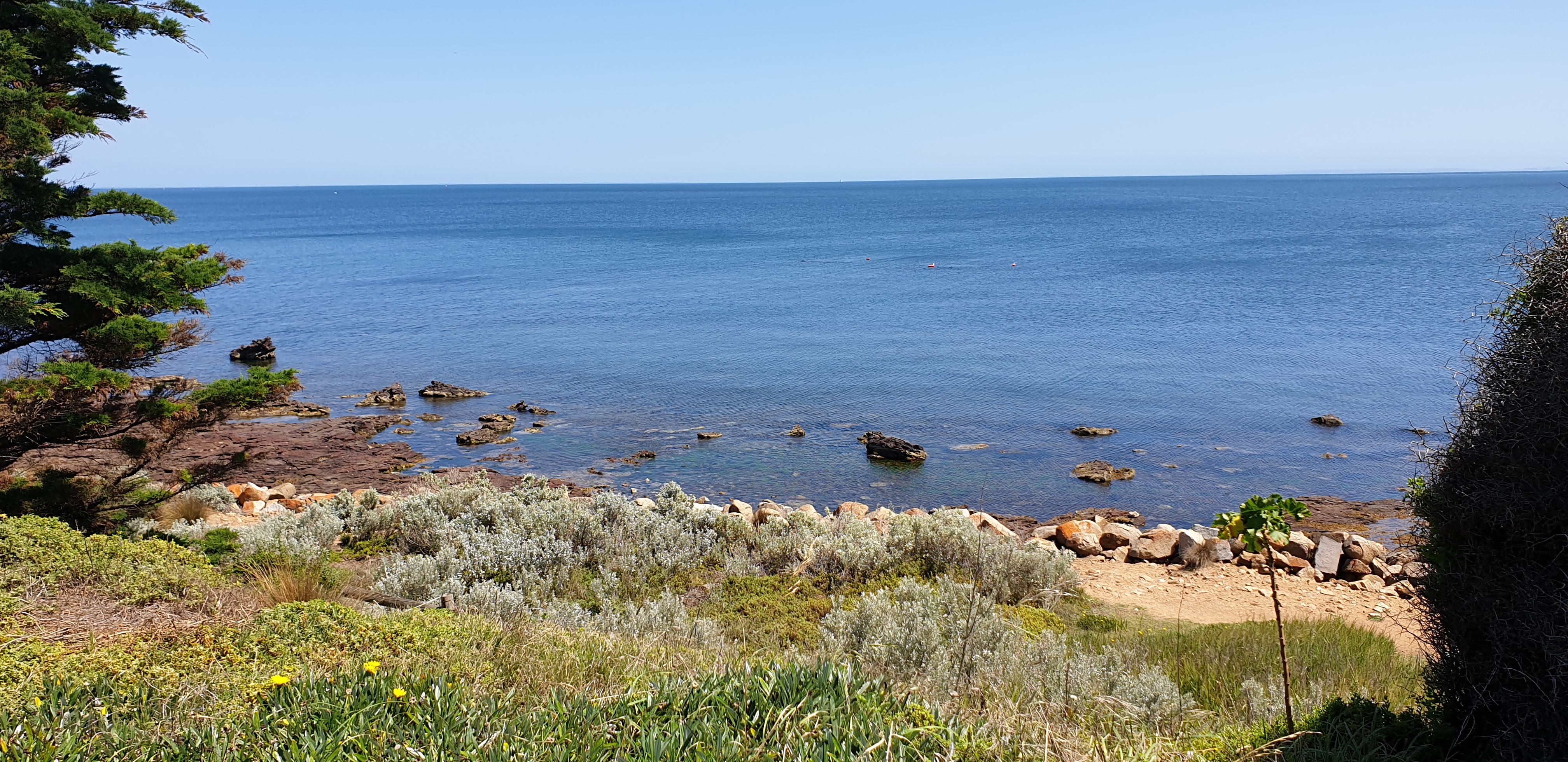
NaNoWriMo – April – 2026 – Day 34

It’s been nearly a week since I’ve put a word to paper, but that doesn’t mean I haven’t been thinking about it.

And today, I set aside some time to complete the last chapter of section 2, and in the process, make some amendments to the penultimate chapter of that section.

It changed the word count for that chapter to 1,031, up from 919, and added 2,155 words for the last chapter.

I’ve also tidied up the plan for the last four chapters of section 3, one of which had been done, leaving three.

Then it will be a matter of writing the epilogue, or section 4, which was going to have four chapters, but it now seems like it might be two or three, depending on how events work out.

Also, I had all the chapters in their relevant files and formatting, ready to be combined into the first draft of the book.

So far, the total words written are 82,690, far more than I expected.

An excerpt from “Mistaken Identity” – a work in progress

The odds of any one of us having a doppelganger are quite high. Whether or not you got to meet them or be confronted by them was significantly lower. Except, of course, unless you are a celebrity.

It was a phenomenon remarkable only for the fact that, at times, certain high-profile people, notorious or not, had doubles if only to put off enemies or the general public. Sometimes we see people in the street who look like someone we knew and make the mistake of approaching them like a long-lost friend, only to discover an embarrassed individual desperately trying to get away from what they perceive as a stalker, or worse.

And then sometimes it is a picture that looms up on a TV screen, an almost exact likeness of you. At first, you are fascinated, and then, according to the circumstances and narrative that is attached to that picture, either flattered or horrified.

For me, one turned to the other when I saw an almost likeness of me flash up on the screen when I turned the TV on in my room. What looked to be my photo, with only minor differences, was in the corner of the screen, the newsreader speaking in rapid Italian, so fast I could only translate every second or third word.

But the one word I did recognise was murder. The photo of the man on the screen was the subject of an extensive manhunt. The crime, the murder of a woman in the very same hotel I was staying, and it was being played out live several floors above me. The gist of the story, the woman had been seen with and staying with the man who was my double, and, less than an hour ago, the body had been discovered by a chambermaid.

The killer, the announcer said, was believed to be still in the hotel because the woman had died shortly before she had been discovered.

I watched, at first fascinated by what I was seeing. I guess I should have been horrified, but at that moment it didn’t register that I might be mistaken for that man.

Not until another five minutes had passed, and I was watching the police in full riot gear, with a camera crew following behind, coming up a passage towards a room. Live action of the arrest of the suspected killer, the breathless commentator said.

Then, suddenly, there was a pounding on the door. On the TV screen, plain to see, was the number of my room. I looked through the peephole and saw an army of police officers. It didn’t take much to realise what had happened. The hotel staff identified me as the man in the photograph on the TV and called the police.

Horrified wasn’t what I was feeling right then.

It was fear.

My last memory was the door crashing open, the wood splintering, and men rushing into the room, screaming at me, waving guns, and when I put my hands up to defend myself, I heard a gunshot.

And in one very confused and probably near-death experience, I thought I saw my mother and thought what was she doing in Rome?

I was the archetypal nobody.

I lived in a small flat, I drove a nondescript car, had an average job in a low-profile travel agency, was single, and currently not involved in a relationship, had no children, and, according to my workmates, no life.

They were wrong. I was one of those people who preferred their own company; I had a cat, and travelled whenever I could. And I did have a ‘thing’ for Rosalie, one of the reasons why I stayed at the travel agency. I didn’t expect anything to come of it, but one could always hope.

I was both pleased and excited to be going to the conference. It was my first, and the glimpse I had seen of it had whetted my appetite for more information about the nuances of my profession.

Some would say that a travel agent wasn’t much of a job, but to me, it was every bit as demanding as being an accountant or a lawyer. You were providing a customer with a service, and arguably, more people needed a travel agent than a lawyer. At least that was what I told myself as I watched more and more people start using the internet, and our relevance slowly dissipating.

This conference was about countering that trend.

The trip over had been uneventful. I was met at the airport and taken to the hotel where the conference was being held with several other delegates who had arrived on the same plane. I had mingled with several other delegates at the pre-conference get-together, including one whose name was Maryanne.

She was an unusual young woman, not the sort that I usually met, because she was the one who was usually surrounded by all the boys, the life of the party. In normal circumstances, I would not have introduced myself to her, but she had approached me. Why did I think that may have been significant? All of this ran through my mind, culminating in the last event on the highlight reel, the door bursting open, men rushing into my room, and then one of the policemen opened fire.

I replayed that last scene again, trying to see the face of my assailant, but it was just a sea of men in battle dress, bulletproof vests and helmets, accompanied by screaming and yelling, some of which I identified as “Get on the floor”.

Then came the shot.

Why ask me to get on the floor if all they were going to do was shoot me? I was putting my hands up at the time, in surrender, not reaching for a weapon.

Then I saw the face again, hovering in the background like a ghost. My mother. Only the hair was different, and her clothes, and then the image was going, perhaps a figment of my imagination brought on by pain-killing drugs. I tried to imagine the scene again, but this time it played out without the image of my mother.

I opened my eyes and took stock of my surroundings. What I felt in that exact moment couldn’t be described. I should most likely be dead, the result of a gunshot wound. I guess I should be thankful the shooter hadn’t aimed at anything vital, but that was the only item on the plus side.

I was in a hospital room with a policeman by the door. He was reading a newspaper and sitting uncomfortably on a small chair. He gave me a quick glance when he heard me move slightly, but didn’t acknowledge me with either a nod or a greeting, just went back to the paper.

If I still had a police guard, then I would still be considered a suspect. What was interesting was that I was not handcuffed to the bed. Perhaps that only happened in TV shows. Or maybe they knew I couldn’t run because my injuries were too serious. Or the guard would shoot me long before my feet hit the floor. I knew the police well enough now to know they would shoot first and ask questions later.

On the physical side, I had a large bandage over the top left corner of my chest, extending over my shoulder. A little poking and prodding determined the bullet had hit somewhere between the top of my rib cage and my shoulder. Nothing vital there, but my arm might be somewhat useless for a while, depending on what the bullet hit on the way in or through.

It didn’t feel like there were any broken or damaged bones.

That was the good news.

On the other side of the ledger, my mental state, there was only one word that could describe it. Terrified. I was looking at a murder charge and jail time, a lot of it. Murder usually had a long time in jail attached to it.

Whatever had happened, I didn’t do it. I know I didn’t do it, but I had to try to explain this to people who had already made up their minds. I searched my mind for evidence. It was there, but in the confused state brought on by the medication, all I could think about was jail, and the sort of company I was going to have.

I think death would have been preferable.

Half an hour later, maybe longer, I was drifting in and out of consciousness. A nurse, or what I thought was a nurse, came into the room. The guard stood, checked her ID card, and then stood by the door.

She came over and stood beside the bed. “How are you?” she asked, first in Italian, and when I pretended I didn’t understand, she asked the same question in accented English.

“Alive, I guess,” I said. “No one has come and told me what my condition is yet. You are my first visitor. Can you tell me?”

“Of course. You are very lucky to be alive. You will be fine and make a full recovery. The doctors here are excellent at their work.”

“What happens now?”

“I check you, and then you have another visitor. He is from the British Embassy, I think. But he will have to wait until I have finished my examination.”

I realised then she was a doctor, not a nurse.

My second visitor was a man, dressed in a suit, the sort of which I associated with the British Civil Service.  He was not very old, which told me he was probably a recent graduate on his first posting, the junior officer who drew the short straw.

The guard checked his ID but again did not leave the room, sitting back down and going back to his newspaper.

My visitor introduced himself as Alex Jordan from the British Embassy in Rome, and he had been asked by the Ambassador to sort out what he labelled a tricky mess.

For starters, it was good to see that someone cared about what happened to me.  But, equally, I knew the mantra, get into trouble overseas, and there is not much we can do to help you.  So, after that lengthy introduction, I had to wonder why he was here.

I said, “They think I am an international criminal by the name of Jacob Westerbury, whose picture looks just like me, and apparently, for them, it is an open and shut case.”  I could still hear the fragments of the yelling as the police burst through the door, at the same time telling me to get on the floor with my hands over my head.

“It’s not.  They know they’ve got the wrong man, which is why I’m here.  There is the issue of what had been described as excessive force, and the fact that you were shot had made it an all-around embarrassment for them.”

“Then why are you here?  Shouldn’t they be here apologising?”

“That is why you have another visitor.  I only took precedence because I insisted on speaking with you first.  I have come, basically, to ask you for a favour.  This situation has afforded us an opportunity.  We would like you to sign the official document, which basically indemnifies them against any legal proceedings.”

Curious.  What sort of opportunity was he talking about?  Was this a matter that could get difficult and I could be charged by the Italian Government, even if I wasn’t guilty, or was it one of those hush-hush type deals, you do this for us, we’ll help you out with that?  “What sort of opportunity?”

“We want to get our hands on Jacob Westerbury as much as they do.  They’ve made a mistake, and we’d like to use that to get custody of him if or when he is arrested in this country.  I’m sure you would also like this man brought into custody as soon as possible, so you will stop being confused with him.  I can only imagine what it was like to be arrested in the manner you were.  And I would not blame you if you wanted to get some compensation for what they’ve done.  But.  There are bigger issues in play here, and you would be doing this for your country.”

I wondered what would happen if I didn’t agree to his proposal.  I had to ask, “What if I don’t?”

His expression didn’t change.  “I’m sure you are a sensible man, Mr Pargeter, who is more than willing to help his country whenever he can.  They have agreed to take care of all your hospital expenses, refund the cost of the Conference, and travel.  I’m sure I could also get them to pay for a few days at Capri or Sorrento, if you like, before you go home.  What do you say?”

There was only one thing I could say.  Wasn’t it treason if you went against your country’s wishes?

“I’m not an unreasonable man, Alex.  Go do your deal, and I’ll sign the papers.”

“Good man.”

After Alex left, the doctor came back to announce the arrival of a woman, who had announced herself as the publicity officer from the Italian police. When she came into the room, she was not dressed in a uniform.

The doctor left after giving a brief report to the civilian at the door. I understood the gist of it: “The patient has recovered excellently, and the wounds are healing as expected. There is no cause for concern.”

That was a relief.

While the doctor was speaking to the civilian, I speculated on who she might be. She was young, not more than thirty, conservatively dressed, so an official of some kind, but not necessarily with the police. Did they have prosecutors? I was unfamiliar with the Italian legal system.

She had long, wavy black hair and the sort of sultry looks of an Italian movie star, and her presence made me more curious than fearful, though I couldn’t say why.

The woman then spoke to the guard, and he reluctantly got up and left the room, closing the door behind him. She checked the door and then came back towards me, standing at the end of the bed. Now alone, she said, “A few questions before we begin.” Her English was only slightly accented. “Your name is Jack Pargeter?”

I nodded. “Yes.”

“You are in Rome to attend the Travel Agents Conference at the Hilton Hotel?”

“Yes.”

“You attended a preconference introduction on the evening of the 25th, after arriving from London at approximately 4:25 pm.”

“About that time, yes. I know it was about five when the bus came to collect me, and several others, to take us to the hotel.”

She smiled. It was then that I noticed she was reading from a small notepad.

“It was ten past five to be precise. The driver had been held up in traffic. We have several witnesses who saw you on the plane, on the bus, at the hotel, and with the aid of closed-circuit TV, we have established you are not the criminal Jacob Westerbury.”

She put her notebook back in her bag and then said, “My name is Vicenza Andretti, and I am with the prosecutor’s office. I am here to formally apologise for the situation that can only be described as a case of mistaken identity. I assure you, it is not the habit of our police officers to shoot people unless they have a very strong reason for doing so. I understand that in the confusion of the arrest, one of our officers accidentally discharged his weapon. We are undergoing a very thorough investigation into the circumstances of this event.”

I was not sure why, but between the time I had spoken to the embassy official and now, something about letting them off so easily was bugging me. I could see why they had sent her. It would be difficult to be angry or annoyed with her.

But I was annoyed.

“Do you often send a whole squad of trigger-happy riot police to arrest a single man?” It came out harsher than I intended.

“My men believed they were dealing with a dangerous criminal.”

“Do I look like a dangerous criminal?” And then I realised if it was mistaken identity, the answer would be yes.

She saw the look on my face and said quietly, “I think you know the answer to that question, Mr Pargeter.”

“Well, it was overkill.”

“As I said, we are very sorry for the circumstances you now find yourself in. You must understand that we honestly believed we were dealing with an armed and dangerous murderer, and we were acting within our mandate. My department will cover your medical expenses and any other amounts for the inconvenience this has caused you. I believe you were attending a conference at your hotel. I am very sorry, but given the medical circumstances you have, you will have to remain here for a few more days.”

“I guess, then, I should thank you for not killing me.”

Her expression told me that was not the best thing I could have said in the circumstances.

“I mean, I should thank you for the hospital and the care. But a question or two of my own. May I?”

She nodded.

“Did you catch this Jacob Westerbury character?”

“No. In the confusion created by your arrest, he escaped. Once we realised we had made a mistake and reviewed the closed-circuit TV, we tracked him leaving by a rear exit.”

“Are you sure it was one of your men who shot me?”

I watched as her expression changed to one of surprise.

“You don’t think it was one of my men?”

“Oddly enough, no. But don’t ask me why.”

“It is very interesting that you should say that, because in our initial investigation, it appeared none of our officers’ weapons had been discharged. A forensic investigation into the bullet tells us it was one that is used in our weapons, but…”

I could see their dilemma.

“Have you any enemies that would want to shoot you, Mr Pargeter?”

That was absurd because I had no enemies, at least none that I knew of, much less anyone who would want me dead.

“Not that I’m aware of.”

“Then it is strange, and will perhaps remain a mystery. I will let you know if anything more is revealed in our investigation.”

She took an envelope out of her briefcase and opened it, pulling out several sheets of paper.

I knew what it was. A verbal apology was one thing, but a signed waiver would cover them legally. They had sent a pretty girl to charm me. Perhaps using anyone else would not have worked. There was potential for a huge litigation payout here, and someone more ruthless would jump at the chance of making a few million out of the Italian Government.

“We need a signature on this document,” she said.

“Absolving you of any wrongdoing?”

“I have apologised. We will take whatever measures are required for your comfort after this event. We are accepting responsibility for our actions and are being reasonable.”

They were. I took the pen from her and signed the documents.

“You couldn’t add dinner with you on that list of benefits?” No harm in asking.

“I am unfortunately unavailable.”

I smiled. “It wasn’t a request for a date, just dinner. You can tell me about Rome, as only a resident can. Please.”

She looked me up and down, searching for the ulterior motive. When she couldn’t find one, she said, “We shall see once the hospital discharges you in a few days.”

“Then I’ll pencil you in?”

She looked at me quizzically. “What is this pencil me in?”

“It’s an English colloquialism. It means maybe. As when you write something in pencil, it is easy to erase it.”

A momentary frown, then recognition and a smile. “I shall remember that. Thank you for your time and cooperation, Mr Pargeter. Good morning.”

© Charles Heath 2015-2021

The cinema of my dreams – It all started in Venice – Episode 20

More Plans

Rodby’s generosity did not extend to the Citation taking me back to Venice, but he did fund a business class seat on a commercial flight the next morning.

I was in no hurry to go back, the overnight sojourn giving me time to make a plan of sorts.  A few hours after I left the police, I received a message from Alfie with an attached sound file.

A recording of a phone call between Jaime and Larry.

“Your enemy just arranged for me to be dragged off to a police station and interrogated.”

An interesting start to a conversation.

“Which enemy?”

Good to know he had more than one.

“You know who.  He was supposed to be in Venice, not London, and he’s not supposed to be working with anyone, yet it seems he is.”

“On what pretext did they take you in?”

“That C4 you left in your crates in my warehouse.  They think it’s mine “

“Did you tell them about me?”

“Didn’t have to, you left your name all over the crates.  They’ll be looking for you.”

“Let them look.  What did he have to say?”

“Annoyed that you’re going after him.”

“How does he know that?”

“How does he know anything, Larry.  He does.  He says his ex-boss is the one who wants you, not him, and that story you told me about him killing your brother, it’s not true.”

“He’s lied to you, just like I said he would.”

“Then that means your mother is lying too, because I called her, and she had a different version of events.  I can’t trust you, and you are now very hot property, and I can’t afford to be involved with you.  The police have taken the crates away, so as far as I’m concerned, it’s the last I want to see of them, and you.  Don’t try to contact me again.”

The phone went dead.

Good.  She did the right thing, though it was as expected.  She could also quite easily contact him another way, but for the time being, I’d give her the benefit of the doubt.

Next, I called Larry’s mother.

Same background noise, it seemed she didn’t want to go home.  Larry must be ingratiating himself.

“I spoke to Jaime, the woman Larry is purported to be romancing.  He is not, or not as far as I can tell.”

“She has since then.”

“She does now.  What would Larry want with C4?”

“What’s C4?”

“Explosive.”

“Vaults. His father used to specialise in blowing safes and tried to teach the son, but Larry nearly blew both of them to the afterlife.”

“It’d have to be a very big safe.”

“You could always ask him yourself.  He’s going to be around for dinner tomorrow night.  Just be wary of the bodyguards.  There are three of them.”

“Things might get a little rough. Do you really want that in your house?”

“Someone needs to teach the bastard a lesson.  By the way, a good call from that Jaime woman, asking me about your role with my sons.  She seemed surprised.”

“I wasn’t very nice to her.”

“She’s a criminal,  not a thoroughly bad one like Larry, but one nonetheless.  You don’t have to be nice to them.  Let’s hope she doesn’t have to worry about her sons like I had to.”

That was the problem with that sort of family business.  The children really have nowhere to go but join or disappear.  Then it became a battle for survival, especially if you had a parent running the organisation.  Then there were always expectations, and then that first kill.

Larry’s brother had never wanted that life; he wanted to live on his terms, but neither the father nor the eldest son and successor saw it that way.

“I thought I could escape all of this cloak-and-dagger stuff, but Larry seems to have put that on hold.  Perhaps if we have a little chat, he might change his mind.”

“I think it would be better than what you had in mind.  He increased their guards too when he was not here, and it’s unsettling for her, and especially me.  I’ll see you tomorrow.”

It couldn’t be easy for her with a son like him, especially now that the police were looking for him.  He was not going to get back into the country because his name would be on an alert list, so it would be interesting to see how he got back home.

He had the means, simply because he had turned up in Sorrento using none of the known methods of transportation.  And he didn’t own a private jet, or at least, one that I knew of.  Something else to investigate.

I called Alfie.

“Got the message.  Interesting call.”

“Do you believe her?”

“Not really.  But we’ll know soon enough.  I’m having dinner at his mother’s tomorrow night and he will be there.”

“Then plan C is off the table for the moment?”

Plan C was to take his wife and child to use as leverage.  It might still be needed, depending on the upcoming meeting.

“Backburner.  Where’s Cecilia?”

“I moved her to your place.  Seemed the best option.”

“She will need a sniper rifle and get herself to Sorrento tomorrow morning.  Give the address.  She’ll need a site that gives a good view of the dining room.  And needless to say, no advertising her presence.”

“Have you got a plan?”

“Not really.  He’s not going to do a lot with his wife and daughter there, but, again, it’s Larry, and he is unpredictable.”

“I hope you know what you’re doing “

“Never.  Now, it seems the C4 was to crack a safe or create a diversion.  You need to get the team to find out what he’s planning.  You might want to go through ex-partners and associates in case he’s on a revenge kick.”

“Rodby said he wouldn’t be unhappy if you just shot him.”

“We’re not allowed to.”

“There are ways and means.”

“Then we’re no better than they are.  We’ve had this conversation a few times.”

“We’re not winning the war, and people are getting restless.  There’s talk that Rodby will be replaced by a more aggressive department head.”

That was all the department needed, someone to hasten its demise.  It was already vastly limited in what it could do, and in recent years reduced to little more than intelligence gathering and a few side missions. After I left, it had lost its sting in the tail.  I thought Rodby was marking time for his retirement.

Now it seemed that it might come earlier than expected.  Was this why he was pushing the Larry project, one last hurrah?

“It won’t happen, they can’t possibly get rid of institutions like him.”

“I hope you’re right.”

© Charles Heath 2022

365 Days of writing, 2026 – 106

Day 106 – Writing to please yourself

Writing for an Audience of One: The Radical Liberation of Margaret Cavendish

In the 17th century, a woman’s writing was typically expected to be a pursuit of piety, domestic instruction, or perhaps a modest contribution to poetry. Margaret Cavendish, the Duchess of Newcastle, cared little for such boundaries. Surrounded by the rigid social expectations of the Restoration era, she penned a mantra that remains one of the most liberating declarations in literary history: “I write to please myself.”

While this might sound like a simple statement of personal preference, in the context of Cavendish’s time—and perhaps even in our own era of algorithm-driven content—it is a profoundly radical act.

The Rebellion Against Approval

When we write today, it is rarely “for ourselves.” We write for engagement, for likes, for professional advancement, or to satisfy the perceived expectations of a target demographic. We curate our voices to fit into boxes that make us palatable to publishers, platforms, and peers.

Margaret Cavendish understood something that many modern creatives have forgotten: as soon as you write to please an audience, you are no longer the author of your own work; you are merely a performer of their desires.

By declaring that her primary audience was her own intellect and imagination, Cavendish reclaimed the authority of the artist. She did not seek the validation of the male-dominated literary circles of the 1600s; instead, she explored science fiction, philosophy, and poetry with a wild, unbridled curiosity. She didn’t seek to be “correct”—she sought to be honest to her own fascinations.

When “Pleasing Yourself” Becomes Art

There is a common misconception that writing for oneself is synonymous with vanity or poor quality. Critics of Cavendish often labelled her as eccentric or “mad.” However, history has revealed that her refusal to bend to contemporary tastes allowed her to write The Blazing World—one of the earliest examples of science fiction.

She was free to experiment because she wasn’t tethered to the fear of being misunderstood.

When you write to please yourself, you strip away the filters of “what will people think?” and “is this marketable?” The result is a voice that is sharper, more distinct, and more authentic. Even if the work never reaches a wide audience, the process of documenting one’s own mind is an act of self-discovery that no amount of external praise can replicate.

How to Adopt the Cavendish Mindset

How can we reclaim this philosophy in a world that demands we be “content creators” rather than artists?

  1. Lower the Stakes: Write something that you never intend to publish. Let it be messy, odd, or purely indulgent. If no one else is reading it, you are free to explore your most “unmarketable” ideas.
  2. Define Your Curiosity: What do you actually want to write about, regardless of trends? Whether it’s 17th-century philosophy or a niche hobby, lean into the subjects that make your own brain light up.
  3. Detach from the Metric: Focus on the satisfaction of the prose, the clarity of the thought, or the joy of the narrative. If the writing process itself brings you pleasure, the goal has been achieved.

Final Thoughts

Margaret Cavendish was an outcast in her time because she refused to perform modesty. Today, we can see her for what she truly was: a visionary who realized that the only person you are guaranteed to be writing for for the rest of your life is yourself.

The next time you sit down to write, don’t ask, “Will this resonate?” Ask, “Does this thrill me?” Because when you write to please yourself, you create something that is authentic—and that is the only kind of writing that truly stands the test of time.

NaNoWriMo – April – 2026 – Day 33

I have been working on the final chapters, and these are proceeding slowly.

The plot has been veering off course because new possibilities come to mind that will give me an ending that I didn’t think was possible.

But now, with a little tweaking over the previous five chapters, and going back to the start of the third section, a whole new scenario has come to life.

And no one will see it coming.

I certainly didn’t, because, in the original storyline, it was meant to have a happy-ever-after ending, each with a different person.

So, it doesn’t finish in quite the same manner for either of the two main characters.

In the meantime, I have to flesh out the major, major plot development!

What I learned about writing – A writer sometimes has to be a hustler.

If you want to eat, or more to the point, if you want to make a living out of it, you will have to put yourself out there.

But, first, a sobering statistic: very few writers make an adequate living off their writing.

We all can be like James Patterson, and those who are always on the top 50 best-selling list.

I’ll admit I want to have that New York Times Number One bestselling author title, but realistic enough to know that there’s a lot of hard work between then and now.

Now I’m just content to write.

But, seriously, writing is as much about marketing as it is writing, and unless you have a publishing contract, you are in charge of your book’s marketing campaign.

And it isn’t easy.

A lot of so-called helpful people are only too willing to tell you how easy it is, for a price.  The thing is, what worked for them, if it worked for them, doesn’t necessarily work for you.

Quite often, it’s different genres, so their success was in cosy mysteries, and if you write true crime, you’re facing a completely different market.

Then, if you were to analyse the success of that particular advice offerer, which I did in one case, you might find they have no presence or sales, except for the material they are selling.

It’s a rarity indeed that a person who isn’t in the same type of market can offer any meaningful advice.

I have tried paid for and free advice, not that much of the free advice was very helpful, and a lot of it didn’t work

Even trying to give your books away for free, the sites that might see you move a dozen, perhaps twenty copies, don’t equate to the large sum of money these ‘promotion by giving away free copies’ sites demand is hardly worth the effort.

Is there a perfect plan?

No.

Is there a way to find out how to market successfully?

I like to think there is.  The thing is, I haven’t quite stumbled on the formula, but when I do, I will be happy to give it away for free.

Searching for locations: Murano, Italy

The first time we visited Venice, there was not enough time left to visit the glass-blowing factories on Murano.  We saved this for the next visit, and now more comfortable with taking the Vaporetto, boarded at San Marco for the short journey.

The view looking towards the cemetery:

The view looking down what I think was the equivalent to the main street, or where several of the glass-blowing factories and display shops were located:

Looking towards a workshop, this one costs us each a Euro to go in and observe a demonstration of glass blowing, and it still surprises me that some people would not pay

The oven where the glass is heated

And the finished product, the retail version of the horse that the glassblower created during the demonstration:

Then we bought some other glassware from the retail storefront, a candle holder

and a turtle.

Just one of many reading lists – part 1

**Please don’t assume that you have to, nor would I ever expect you to, read any or all of these books.  You don’t.**

Everyone, it seems, will publish what they call the top 100 books that you should read.  Some are voted on, some belong to the opinion of the editor of the book review section of a newspaper, and, as you know, there are a lot of newspapers, a lot of editors, and a lot of opinions.

I’m not a newspaper, I’m not an editor, but I have a list, based on personal experience, and many, many years of reading.

It’s in no particular order.

  1.  The Life and Opinions of Tristram Shandy, Gentleman by Laurence Sterne.  Don’t ask me why but I found this an interesting slice of life in England in the 1700s
  2. Vanity Fair by William Thackeray.  I met a direct descendant of him in England on a research visit which fuelled an interest in the book.  Another large tome recently brought to life by the mini-series on television.
  3. The Moonstone by Wilkie Collins.  Arguably the first detective novel, it was fuel for the imagination of any budding detective novel author.  He also wrote The Woman in White.
  4. Middlemarch by George Eliot, a remarkable novel, and famous for the fact it was written by a woman who thought it was best to use a male name in order to get recognition.
  5. Any of the Sherlock Holmes stories by Arthur Conan Doyle
  6. New Grub Street by George Gissing, very, very gritty
  7. The Thirty-Nine Steps by John Buchan, another of those incredibly well-written spy stories
  8. A Passage to India by E.M. Forster, a novel that brings up the subject of the British Empire
  9. The Great Gatsby by F. Scott Fitgerald, a story from the jazz age and the mysterious Jay Gatsby whom no one could figure out
  10. The Maltese Falcon by Dashiell Hammett, one of the few books that opened up the world of the Private Detective, and fostered a brilliant movie with Humprey Bogart as Sam Spade.
  11. The Big Sleep by Raymond Chandler, the author who introduced us to Philip Marlowe, with two definitive characterizations by Humprey Bogart and Robert Mitchum
  12. The Grapes of Wrath by John Steinbeck, the classic about a family in the Great Depression, and my first introduction to Henry Fonda in the movie version of the book
  13. To Kill a Mockingbird by Harper Lee.  I had to read this when I was at school and probably a time when I didn’t understand it’s importance.  Seeing the film with Gregory Peck much later helped.
  14. Catch 22 by Joseph Heller.  A friend recommended this and after I read it, I wondered what the hell it was about.  Only now do I understand it’s anti-war undertones
  15. Far from the Madding Crowd by Thomas Hardy was the novel that introduced me to Hardy
  16. Rural Rides by William Cobbett is a slice of life in the southern English countryside in the 1800s
  17. Pride and Prejudice by Jane Austen, the first book of hers I read and found it fascinating.  Of course, when Mr. Darcy was brought to life in the television series, it found a whole new generation of readers
  18. Great Expectations by Charles Dickens, the remarkable story of Pip, Miss Havisham, and the mysterious benefactor
  19. Fahrenheit 451 by Ray Bradbury, apparently the temperature that paper burns, but this is more about Guy Montag and the saving of books rather than burning them
  20. Madame Bovary by Gustave Flaubert, probably the most depressing novel I’ve ever read, about a woman married to a mediocre doctor and seeks to escape to a fantasy world that leads to disappointment and devastating consequences

The list continues …

Coming soon – “Strangers We’ve Become”, the sequel to “What Sets Us Apart”

Stranger’s We’ve Become, a sequel to What Sets Us Apart.

The blurb:

Is she or isn’t she, that is the question!

Susan has returned to David, but he is having difficulty dealing with the changes. Her time in captivity has changed her markedly, so much so that David decides to give her some time and space to re-adjust back into normal life.

But doubts about whether he chose the real Susan remain.

In the meantime, David has to deal with Susan’s new security chief, the discovery of her rebuilding a palace in Russia, evidence of an affair, and several attempts on his life. And, once again, David is drawn into another of Predergast’s games, one that could ultimately prove fatal.

From being reunited with the enigmatic Alisha, a strange visit to Susan’s country estate, to Russia and back, to a rescue mission in Nigeria, David soon discovers those whom he thought he could trust each has their own agenda, one that apparently doesn’t include him.

The Cover:

strangerscover9

Coming soon


Searching for locations: Venice, Italy (Again)

We have visited Venice twice, in 2006 and not so long ago.

Not much had changed from visit to visit.

Instead of staying in a hotel selected by a travel agent, the Savoia and Jolanda on the waterfront of Riva Degli Schiavoni, because I’m a Hilton Honors member, more recently we stayed at the Hilton Molino Stucky.  It was located on an island, Giudecca, and had its own transport from the hotel to St Mark’s Square for a very reasonable one-off charge for the stay.

hiltonmolinostuckey2

On our first visit, we traveled from Florence to Venice.  We were advised to take a water taxi to the hotel, not only the most direct route but to see some of Venice from the water.  The only drawback, you have to negotiate a price with the driver.

We were not very good negotiators, and it cost 60 Euros.

But, despite the cost, it was worth every Euro because the taxi driver took us by the scenic route, directly from the Station to the doorstep of our hotel.  For a first time in Venice, and you want to see it from the water, a water taxi is the best option.

2013-06-25 17.09.16

The first time we stayed at the Savoia and Jolanda Hotel, which was at the time quite old, and the room we had, on the ground floor, was comfortable enough, but being November, they had just stopped using the air conditioning, it was still quite warm and at times uncomfortable.

There were better rooms, but this was beyond the knowledge of the travel agent, and one of the reasons we stopped using agents to book hotels.

The most recent visit we had driven down from Salzburg to Venice airport where we had to return the hire car.  From there we were intending to take a private water taxi from the airport to the hotel, for an estimated 120 Euros.

We saved our money and took the ACTV public waterbus, from the airport to the hotel, with one stop.  It took a little over an hour and was equally as scenic.

venicecanals1

Our room in the Hilton was on one of the upper levels, floor four, and had a view of the canal, the large passenger ships coming and going, as well as a remarkable view of Venice itself as far up the canal to St Marks Square in one direction, and the port for the passenger ships in the other.

20130627_081601

We got to see three or four very large passenger ships come and go, along with a lot of other craft.  I hadn’t realized how busy the waterways, and the Grand Canal, were.

20130627_174408

Each evening after a day’s exploring we would end up in the Executive Lounge, and then one of the many restaurants, usually Il Molino for breakfast, and the Rialto Lobby Bar and Lounge for dinner.  After that, it was a stroll down the waterfront taking in the night air, and perhaps to walk off the delicious dinner.