“Trouble in Store” – Short stories my way: The shopkeeper

It’s now time to look at the shopkeeper’s involvement, and there’s more to him and his activities than meets the eye.

With this event, it appears his luck is about to run out.


This wasn’t the shopkeeper’s first hold up.  In fact, over the years there had been a dozen.  But only one got reported to the police, and that was only because the robber was shot and killed.

He’d taken a bullet that night, too, which, from the police point of view, made him a concerned citizen simply defending himself.

The rest had been scared off by the double-barrel shotgun he kept under the counter for just such emergencies.

The young punk who came into the shop with his girlfriend had pulled out the pistol and told him if he reached for the shotgun he’d shoot him.  The kid looked unstable and he’d backed away.

When the kid collapsed, he should have gone for the shotgun, but instead, he thought he could get to the gun before the girl realized what was happened.  She wasn’t an addict and clearly looked like she was only along for the ride.  Her look when the kid pulled out the gun told him she’d known nothing about her partner’s true intentions.

But, he wasn’t fast enough, and she had the gun pointing at him before he’d got past the counter.

From one pair of unpredictable hands to another.

Like the girl, he was just as surprised when the customer burst in the door, just before closing time.

The situation might have been salvageable before the customer came in the door, getting the girl to go along with the robbery being about money, but there was no denying what the kid on the floor’s problem was.

Damn.

He had to try and salvage the situation simply because there was a lot of money involved, and other people depending on him.  He looked at the boy, on the floor, then the girl.

“Listen to me, young lady, you would be well advised to let this man go as he suggests.  And, please put the gun down before someone gets hurt.  Your friend needs medical help and I can call an ambulance.”

The girl switched her attention back to him.  “No one’s going anywhere, so just shut the hell up and let me think.”

The storekeeper glanced over at the customer. 

He’d seen him come into the shop once or twice, probably lived in the neighborhood, the sort who’d make a reliable witness, either a lawyer or an accountant.  Not like most of the residents just beyond the fringe of respectability.

If only he hadn’t burst into the shop when he did.


© Charles Heath 2018-2020

Getting the lie of the land

A lot of locations for stories are based on places that I’ve visited. So, any time I’m on holiday, I’m also discreetly observing, and noting, the places with an ulterior motive.

At some point in time, they’ll finish up in a story.

Places like Florence, London, Paris, New York and Venice have all been used in recent stories.

Of course places change, and there are some that I can’t get to, so it’s useful having Google Maps and Street View. These can either make up for lack of memory and a be a refresher.

Especially if you need to visit Africa. Parts of several stories are set in Nigeria, not exactly a place I would go, no matter how much I wanted to get the lie of the land, nor would I go to the Democratic Republic of Congo.

Rwanda, maybe, but in investigating locations, it is interesting to discover that places like Kenya and Rwanda are reasonbly safe. Uganda is more or less the same, but whether I’d visit, as inviting as it might be to see the wildlife (animals that is) I’m thinking Google Maps will do for now.

And, of course, at the moment there is another reason why I can’t get a practical look at overseas locations. Covid-19.

I have always had a fascination for other places, from way back when I was in school and we did a subject called geography. Back then, nearly 60 years ago, we had school atlases that had all of the British colonies, even if they had become independent, coloured red on the maps, and there was a lot of them.

Places like London, of which we also studied in history, always held a fascination for me, and, in particular, the royal family. Oddly enough, I knew all of the kings and queens from 1066 onwards, and yet had no idea who our Prime Ministers in Australia were.

It wasn’t until much later we learned about Australian history.

But seeing places foreign are only part of the story. I have had time during the pandemic when we were not allowed to leave home, to delve into the historical side of Australia, and it has created a fascination for writing a story that has basis in fact.

This was unwittingly pushed along when my grand daughter came home from school with the assignment of writing a story about a character that was affected by a historical event. Thus Eliza at the Eureka Stockade was created.

I remember back in university days when working on the narrative part of my literature stream we were set an assignment based on pictures from a certain period, and a series of written documents to put together a story. Mine was about a passenger on a ship from Melbourne to Geelong in the days before rail around the time of the gold rush.

I’m guessing that’s what is called historical fiction.

Well, it’s time to get back to the mists of time…


The cinema of my dreams – I always wanted to go on a treasure hunt – Episode 57

Here’s the thing…

Every time I close my eyes, I see something different.

I’d like to think the cinema of my dreams is playing a double feature but it’s a bit like a comedy cartoon night on Fox.

But these dreams are nothing to laugh about.

Once again there’s a new installment of an old feature, and we’re back on the treasure hunt.

…

Nadia dropped me off outside the office of the newspaper, without any firm plan for our next meeting.  I had told her I had to spend some time with Boggs’s in the light of this new information, and after some research at the newspaper.  

I was hoping there would be back copies of the paper going back a long, long time.

But, a few years back there had been a fire with extensively damaged almost half of the building, and I couldn’t remember if it included the paper archive.  Lenny, the recently appointed editor after his father passed on, had often extolled his plans for the paper, including recording the papers on film to preserve what he called a rich history of the area.

I went in to find Lenny sitting behind the main desk, feet up and reading a book, what looked to be a text on handguns.

He looked up when the door closed with a sharp bang.

“Sam Johnson, as I live and breathe.  Thought you had equally grandiose plans of leaving town?”

“My father died, and it seemed a bad idea to leave my mother, being the only kid and all.  You know how it is?”

Lenny had just gotten over a recent bereavement and had to move his mother to an old folk’s home because of worsening health.  I’d seen him around town from time to time, but time had taken its toll, and he was never the healthiest of kids.

He was never interested in school, perhaps knowing he was always going to end up a newspaperman.

“Indeed I do?  Need a job?  I need a good reporter, and if I remember correctly, you were a hell of a reporter at school.  How many scandals did you uncover?”

“One, and it was by chance.”

“Seemed like more than that.”  He shrugged.  “I’m sure, like five thousand others, you’re looking for work?”

“Was.  I’m working down at the warehouse.”

“Benderby’s.  Thought you hated them.”

Everyone hated them, and most of the people I knew because we were always on the end of his cruelty.  His father’s pre-eminence and his own football prowess ensured he would always be better off than any of us, and able to get away with his ‘boyish pranks’.

“I did, and I do, but you know how it is.  Pride has to be swallowed in these economic times.  But, if you need help, maybe I could write a few articles, but without credit.”

“When can you start?”

“After a little research.  I’ve come to look at the papers going back to the beginning of time.  Please tell me they weren’t burnt in the fire?”

“They were.  Sadly.  But with did get them filmed so instead of the archive taking up half the building, it now occupies one small room.  What’s the subject?”

“The Ormiston’s.”

“Ah, the treasure hunt that Boggs says he’s not on, and you’re the secret partner in crime.”

“Hardly.”

“It doesn’t exist, you know.  All those maps, the legends, the lies, and then there’s the Cossatino’s.  It’s an invention of theirs to drum up money from unsuspecting fools.  Always has been.  Oh, and was that Nadia I saw drop you off out the front.  There’s a dangerous piece of work.”

“Maybe she’s changed.”

“A leopard doesn’t change its spots, you know that.  She’s just trying to find out what you know, and probably feeding you false information.  The girl’s a snake, always was and always will be.”

And, if I was to admit the truth, that was probably the case, another of the Cossatino’s having fun at someone else’s expense.  She seemed sincere, but then I knew very well the wiles of the woman, and the troubles she had caused many a boy, and, later, many a man.

“It’s a two-way street, Lenny.  You know the saying, keep friends close, and enemies closer.”  It was a lame retort, but it made me feel better.

“Just don’t get caught playing on both sides of the fence.  The files are that-a-way.”  He pointed in the direction of a door off to the side, then went back to the book.

…

© Charles Heath 2019-2022

The Things We Do For Love – The final editor’s draft – Day 3

…

Michelle, to Henry, was the proverbial black widow, having arrived with every stitch of clothing black or near enough.

They settle into an uneasy co-existence, by the fire, waiting out the rain and weather, not avoiding meals because it would require explanation, but stumbling over the conversation, mainly because of Henry’s shyness and reserve.

The arrangements come to a head when she goes out and comes back soaked.  She stands by the fire to get warm; Mrs Mac brings a towel for her to dry her face and hair, and here Henry discovers her injuries make it difficult.

He helps but makes a mess of it through inexperience and fear of, yes, making a mess of a moment, which, word-wise, he does.

At this point, we discover a lot more about who she is and why she is there, and why she can never have a relationship, friendship or anything with that enigmatic, shy, boy.

Then the weather breaks.

Alone, Henry goes out to explore the coast, finds a way down to the beach, goes for a walk to be alone with his thoughts, and remembers where he had seen her before.

In magazines, ads.  Not only a model but a lot more.  A woman he realizes he is way out of his depth when with her.

She ventures to the beach, and they talk, he discovers small talk is not something that comes easy and is left in despair at his ineptitude.

I know this feeling from experience, and it makes this story easy.

…

Travelling after a pandemic: Destination Hobart – 3

Hobart in June – Winter – Day 3 – Monday

…

Day 3 – Monday

We agreed not to plan what we were going to do today, but I had this idea we should go north or the opposite direction to yesterday.

That meant our destination, following the hop on hop off bus route was to head towards the Botanic Gardens.

Bur first, Rosemary had expressed a desire to go down to the water’s edge to have a look, giving an excellent view of the coastline at what was called Battery Point.

I tried to get there, but there were no roads that specifically went down to the water’s edge, but we did eventually drive-up Salamanca place, where we had walked a few days before.

It was not the same, but it did give us time to look at the line of sandstone buildings that had been there a long time and had been repurposed as Sn arts precinct.

Of course, there was only one flaw in the plan, Rosemary was not able to walk any great distance, so we were limited to what could be seen from the car.

But…

There was really nothing to see, just cars parked haphazardly on the side of the road near an entrance that led down some steps, or a few cars in a proper car park too far away from the entrance.

I was not sure what to make of it other than it was an exercise-intensive effort just to get from the car park to the gate, and then you had to walk around the gardens.

It was all too much.

Government House was on the same road, but it was not open to the public, nor was it in sight of the road, do no photographic moment there, so we were doubly disappointed.

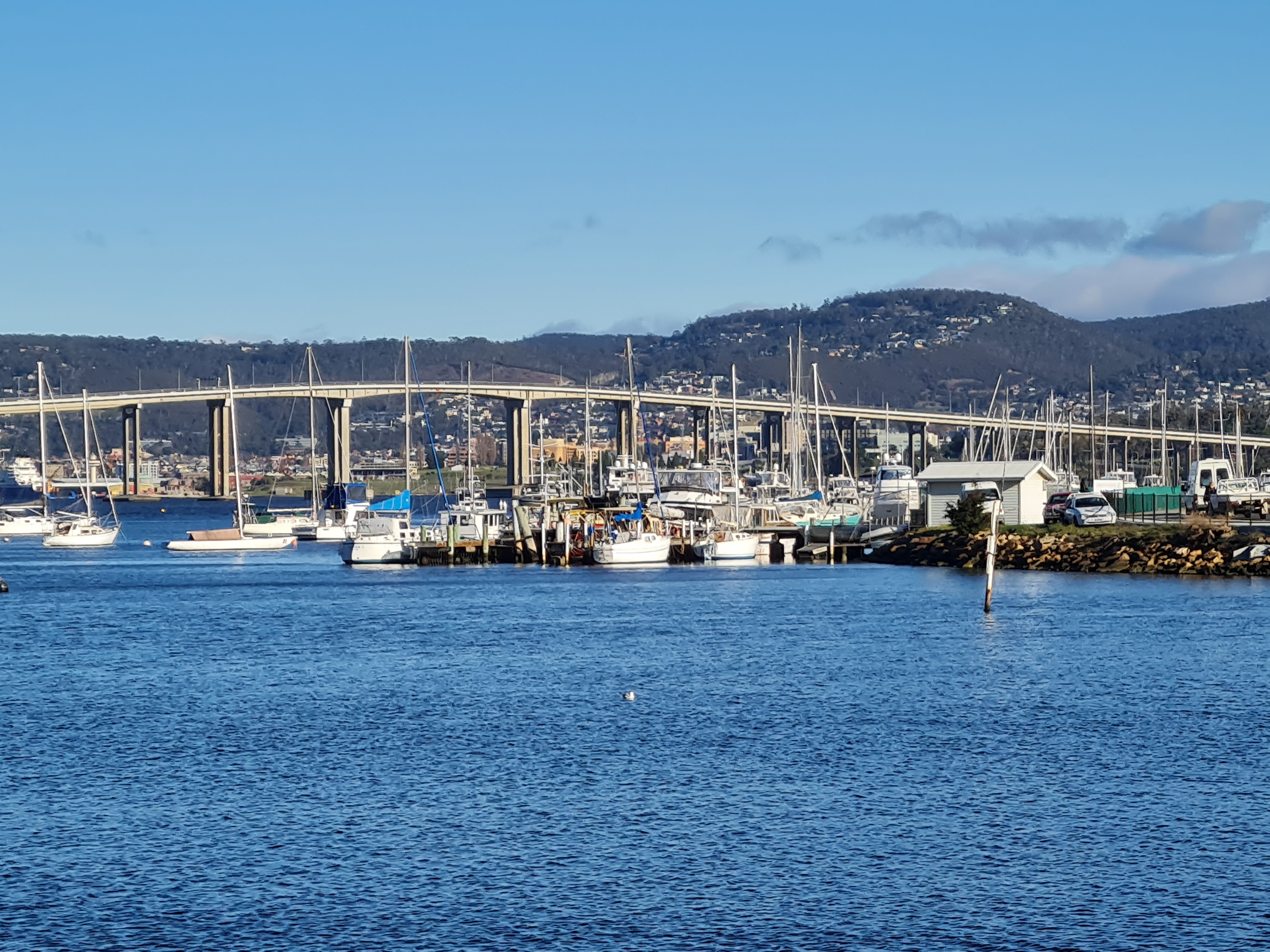
The next phase of our unplanned tour was to go over the Tasman Bridge, perhaps to see the other side of the bay that we could see from our apartment.

Except…

When we got over the other side we veered left to follow the Derwent towards Lindisfarne where there was a yacht basin and several yacht clubs, one of which promised a view while you drank coffee.

Only problem, no parking spaces.

A good idea, unable to be acted on.

Instead, we drove around the esplanade, and continued on our way to Glenorchy, after not being able to get that coffee with a view.

Back on the main road, we take the Glenorchy exit and doesn’t take long to get there, though, by the time we’ve driven through the suburban area, we’re back on the main Hobart Road.

It was a case of don’t blink or you’ll miss it.  We missed Glenorchy.

Change of plans, looking for that elusive coffee, we head for the center of Hobart shopping, Centrepoint, hoping in that center there will be a coffee shop.  Of course, it’s Queen’s Birthday holiday so it’s possible nothing is open.

In the end, we found a parking space nearby. And a Hudson’s.  Coffee and a toasted sandwich went down very well. 

So, once again, we didn’t get to the places we were hoping to get to.  This is what tomorrow, we’re not going to state a place to visit.

“Anyone can have a bad day” – a short story

It had been one of those days, you know, the sort where you hoped when you woke up again, it would be a distant memory if not gone altogether. Everything had gone wrong, the handover from my shift to the next was longer than usual, I got home late to find the building’s security system malfunctioning, and after everything that could have gone wrong had, I was late getting to bed, which meant I was going to be tired and cranky even before my shift started.

But what topped it all off was that the alarm didn’t go off. It was not as if I hadn’t set it, I remembered doing it. There was something else in play.

I rolled over and instantly noticed how dark it was. It was never this dark. It was why I chose an apartment as high up as I could, there would always be light coming from the advertising sign on the roof of the building over the road at night, or direct sunlight not blotted out by surrounding buildings.

I also left the curtains open, deliberately. I liked the notion of being able to see out, sometimes looking at the stars, other times watching the rain, but mostly to see that I was not in a dark place.

Not like now.

I got out of bed and went over to the window. Yes, there were lights, but they were all the way down on the street level. Everywhere else, nothing. It had to be a power blackout. Our first in a long time. I should have noticed the air conditioning was not on, and it was almost silent inside the room.

The apartment had windows that opened, not very far, but enough to allow some airflow, and the room feeling stuffy, I opened one in the bedroom. Instantly, sounds drifted up from street level, and looking down I could see the flashing lights of police cars and fire trucks, as well as the sounds of sirens.

The cold air was refreshing.

It took a few minutes before I realized the elevators would not be working, and I remembered the only pitfall of having a high-up apartment, it was a long way down by the stairs, and even longer going back up.

In the distance, I could see other buildings, about ten blocks away, with their lights on. It had to be a localized blackout, or perhaps a brownout. We had been having problems across the city with the power supply caused by an unexplained explosion at several power stations on the grid.

Some were saying it was a terrorist attack, others were saying the antiquated infrastructure had finally given out.

My attention was diverted from the activity below by the vibration of my cell phone on the bedside table. I looked over at the clock and saw it was 3:10 in the morning, not a time I usually got a phone call.

I crossed the room and looked at the screen, just as the vibrating stopped. Louis Bernard. Who was Louis Bernard? It was not a name I was familiar with, so I ignored it. It wasn’t the first wrong number to call me, though I was beginning to think I had been given a recycled phone number when I bought the phone. Perhaps the fact it was a burner may have had something to do with it.

About the go back to the window, the phone started ringing again. The same caller, Louis Bernard.

Curiosity got the better of me.

“Yes?” I wasn’t going to answer with my name.

“Get out of that room now.”

“Who….” It was as far as I got before the phone went dead.

The phone displayed the logo as it powered off, a sign the battery was depleted. I noticed then although I’d plugged the phone in to recharge, I’d forgotten to turn the power on.

Damn.

Get out of that room now? Who could possibly know firstly who I was, and where I was living, to the point they could know I was in any sort of danger?

It took another minute of internal debate before I threw on some clothes and headed for the door.

Just in case.

As I went to open the door, someone started pounding on it, and my heart almost stopped.

“Who is it?” I yelled out. First thought; don’t open it.

“Floor warden, you need to evacuate. There’s a small fire on one of the floors below.”

“OK. Give me a minute or so and I’ll be right out.”

“Don’t take too long. Take the rear stairs on the left.”

A few seconds later I heard him pounding on the door next to mine. I waited until he’d moved on and went out into the passage.

It was almost dark, the security lighting just above floor level giving off a strange and eerie orange glow. I thought there was a hint of smoke in the air, but that might have been the power of suggestion taking over my mind.

There were two sets of stairs down, both at the rear, one on the left and one on the right, designed to aid quick evacuation in the event of a calamity like a fire. He had told me to take the left. I deliberately ignored that and went to the right side, passing several other tenants who were going towards where they’d been told. I didn’t recognize them, but then, I didn’t try to find out who my fellow tenants were.

A quick look back up the passage, noting everyone heading to the left side stairs, I ducked into the right stairwell and stopped for a moment. Was that smoke I could smell. From above I could hear a door slam shut, and voices. Above me, people had entered the stairwell and were coming down.

I started heading down myself.

I was on the 39th floor, and it was going to be a long way down. In a recent fire drill, the building had been evacuated from the top floor down, and it proceeded in an orderly manner. The idea was that starting at the top, there would not be a logjam if the lower floors were spilling into the stairwell and creating a bottleneck. Were those above stragglers?

I descended ten floors and still hadn’t run into anyone, but the smell of smoke was stronger. I stopped for a moment and listened for those who had been above me. Nothing. Not a sound. Surely there had to be someone above me, coming down.

A door slammed, but I couldn’t tell if it was above or below.

Once again, I descended, one floor, two, three, five, all the way down to ten. The smoke was thicker here, and I could see a cloud on the other side of the door leading out of the stairwell into the passage. The door was slightly ajar, odd, I thought, for what was supposed to be a fire door. I could see smoke being sucked into the fire escape through the door opening.

Then I saw several firemen running past, axes in hand. Was the fire on the tenth floor?

Another door slammed shut, and then above me, I could hear voices. Or were they below? I couldn’t tell. My eyes were starting to tear up from the smoke, and it was getting thicker.

I headed down.

I reached the ground floor and tried to open the door leading out of the fire escape. It wouldn’t open. A dozen other people came down the stairs and stopped when they saw me.

One asked, “Can we get out here?”

I tried the door again with the same result. “No. It seems to be jammed.”

Several of the people rushed past me, going down further, yelling out, “there should be a fire door leading out into the underground garage.”

Then, after another door slammed shut, silence. Another person said, “They must have found a way out,” and started running down the stairs, the others following. For some odd reason I couldn’t explain, I didn’t follow, a mental note popping up in my head telling me that there was only an exit into the carport from the other stairs, on this side, the exit led out onto an alley at the back of the building.

If the door would open. It should push outwards, and there should also be a bar on it, so when pushed, it allows the door to open.

The smoke was worse now, and I could barely see, or breathe, overcome with a coughing fit. I banged on the door, yelling out that I was stuck in the stairwell, but there was no reply, nor could I hear movement on the other side of the door.

Just as I started to lose consciousness, I thought I could hear a banging sound on the door, then a minute later what seemed like wood splintering. A few seconds after that I saw a large black object hovering over me, then nothing.

It was the culmination of a bad night, a bad day, and another bad night. Was it karma trying to tell me something?

When I woke, I was in a hospital, a room to myself which seemed strange since my insurance didn’t really cover such luxuries. I looked around the room and stopped when I reached the window and the person who was standing in front of it, looking out.

“Who are you?” I asked and realized the moment the words came out, they made me sound angry.

“No one of particular importance. I came to see if you were alright. You were very lucky by the way. Had you not stayed by that door you would have died like all the rest.”

Good to know, but not so good for the others. Did he know that the fire door was jammed? I told him what happened.

“Someone suspected that might be the case which is why you were told to take the other stairs. Why did you not do as you were told?”

“Why did the others also ignore the advice.” It was not a question I would deign to answer.

“They didn’t know any better, but you did, and it begs the question, why did you take those stairs.”

Persistent, and beginning to bother me. He sounded like someone else I once knew in another lifetime, one who never asked a question unless he knew the answer.

The man still hadn’t turned around to show me his face, and it was not likely I’d be getting out of bed very soon.

“You tell me?”

He turned slightly and I could see his reflection in the window. I thought, for a moment, that was a familiar face. But I couldn’t remember it from where.

“The simple truth is you suspected the fire was lit to flush you out of the building and you thought taking those stairs would keep you away from trouble. We both know you’ve been hiding here.”

Then he did turn. Hiding, yes. A spot of trouble a year or so before had made leaving Florida a necessity, and I’d only just begun to believe I was finally safe.

I was not.

They had found me.

And it only took a few seconds, to pull the silenced gun out of his coat pocket, point it directly at me, and pull the trigger.

Two stabbing pains in the chest, and for a moment it was as if nothing happened, and then, all of a sudden, I couldn’t breathe.

The last thing I saw and heard, was several rounds from at least two guns, voices yelling out on the passage, and people running.

As I lay dying, my last thought was, that it had been a good run, but no one can run forever.


© Charles Heath 2021-2022
A moment to slip back into the past

Television is a great recorder of the past, and most channels, and especially cable tv have great libraries of films that go back more than a hundred years.

And, whilst it’s possible that modern-day films and television series can try to recapture the past, the English as an exception being very good at it, often it is impossible to capture it correctly.

But, if you have a film shot in the moment, then you have a visual record of what life, and what was once part of our world before you in all its dated glory. The pity of it is that, then, we never appreciated it.

After all, in those particular times, who had the time to figuratively stop and smell the roses. Back then as life was going on, we were all tied up with just trying to get through each day.

Years later, often on reflection, we try to remember the old days, and, maybe, remember some of what it was like, but the chances are that change came far too rapidly, and often too radical, that it erases what we thought we knew existed before.

My grandmother’s house is a case in point. In its place is a multi-lane superhighway, and there’s nothing left to remind us, or anyone of it, just some old sepia photographs.

I was reminded of how volatile history really is when watching an old documentary, in black and white, and how the city I grew up in used to look.

Then, even though it seemed large to me then, it was a smaller city, with suburbs that stretched about ten or so miles in every direction, and the outer suburbs were where people moved to get a larger block, and countrified atmosphere.

Now, those outer suburbs are no longer spacious properties, the acreage subdivided and the old owners now much richer for a decision made with profit not being the motivator, and the current suburban sprawl is now out to forty or fifty miles.

The reason for the distance is no longer the thought of open spaces and cleaner air, the reason for moving now is that land further out is cheaper, and can make buying that first house more affordable.

This is where I tip my hat to the writers of historical fiction. I myself am writing a story based in the 1970s, and it’s difficult to find what is and isn’t time-specific.

If only I had a dollar for every time I went to write the character pulling out his or her mobile phone.

What I’ve found is the necessity to research, and this has amounted to finding old films, documentaries of the day, and a more fascinating source of information, the newspapers of the day.

The latter especially has provoked a lot of memories and a lot of stuff I thought I’d forgotten, some of it by choice, but others that were poignant.

Yes, and don’t get me started on the distractions.

If only I’d started this project earlier…

“The Things We Do For Love”

Would you give up everything to be with the one you love?

…

Is love the metaphorical equivalent to ‘walking the plank’; a dive into uncharted waters?

For Henry, the only romance he was interested in was a life at sea, and when away from it, he strived to find sanctuary from his family and perhaps life itself.  It takes him to a small village by the sea, a place he never expected to find another just like him, Michelle, whom he soon discovers is as mysterious as she is beautiful.

Henry had long since given up the notion of finding romance, and Michelle couldn’t get involved for reasons she could never explain, but in the end, both acknowledge that something happened the moment they first met.  

Plans were made, plans were revised, and hopes were shattered.

A chance encounter causes Michelle’s past to catch up with her, and whatever hope she had of having a normal life with Henry, or anyone else, is gone.  To keep him alive she has to destroy her blossoming relationship, an act that breaks her heart and shatters his.

But can love conquer all?

It takes a few words of encouragement from an unlikely source to send Henry and his friend Radly on an odyssey into the darkest corners of the red-light district in a race against time to find and rescue the woman he finally realizes is the love of his life.

The cover, at the moment, looks like this:

lovecoverfinal1

Is love the metaphorical equivalent to ‘walking the plank’; a dive into uncharted waters?

For Henry the only romance he was interested in was a life at sea, and when away from it, he strived to find sanctuary from his family and perhaps life itself.  It takes him to a small village by the sea, s place he never expected to find another just like him, Michelle, whom he soon discovers is as mysterious as she is beautiful.

Henry had long since given up the notion of finding romance, and Michelle couldn’t get involved for reasons she could never explain, but in the end both acknowledge that something happened the moment they first met.  

Plans were made, plans were revised, and hopes were shattered.

A chance encounter causes Michelle’s past to catch up with her, and whatever hope she had of having a normal life with Henry, or anyone else, is gone.  To keep him alive she has to destroy her blossoming relationship, an act that breaks her heart and shatters his.

But can love conquer all?

It takes a few words of encouragement from an unlikely source to send Henry and his friend Radly on an odyssey into the darkest corners of the red light district in a race against time to find and rescue the woman he finally realizes is the love of his life.

The cover, at the moment, looks like this:

lovecoverfinal1

Travelling after a pandemic: Destination Hobart – 1

Hobart in June – Winter – Day 1 – Saturday

…

Overnight the rain began and hasn’t stopped.  It is cold, and the heater in the room is not quite adequate for the space it has to heat up.  Fortunately, the bed has electric blankets, and it was warm, lying wake listening to the raindrops.  That warmth makes it difficult to get out of bed, but this is a holiday, and we have to get motivated.

We have a balcony, and from there the bleakness of the early morning is stark, but at least the rain is light if not a fine mist.

Worse, it alternates between this fine mist and a short downpour, which means the umbrella goes up and down until you give up.  Later, the rain is not heavy, and just tolerable.

We head off to the Salamanca markets, happening only on Saturday morning.  Unable to walk long distances, we drive, about four minutes from our apartment, but miss a turn, it takes 10, then and 5 to assess the parking situation which, in the end, was the easiest part of this expedition.

The hardest part, walking among the very large crowd of people defying the rain and cold.  I can tolerate large crowds but today, they seem to want to stop suddenly, and just stand and talk in the middle of the walkways making it difficult to impossible to maintain any sort of continuity.

There were hundreds of stalls, the most predominant, micro distillers for some odd reason, selling expensive spirits for about $90 a 700ml bottle, which I regard as overly expensive.  My son has made Bourbon some years ago and it cost him about $10 for 4.5 liters, so it must be a lucrative sideline, even after you’ve added the excise.

There were a great many food stands, and choices, one of which was a curly potato skewer, which was interesting to say the least.  On a meat pie quest, we found a stand that sold pies, but they were warming a new batch, and the waiting line was about 50 or 60 people long.

I went back a half-hour later and they had sold out.  They must be one of the highlights of the market to be so in demand, and that people would stand in the cold and rain just to get one.

Having been defeated by aches and pains, the cold and rain, as well as the large crowd, and the absence of anything we wanted, it was fortunate that time had expired on our parking space.

We had contemplated finding a restaurant to have lunch, deciding it was time to have a proper meal rather than a snack, there didn’t seem to be any places open, and the cafes were packed.

This sparked off an odyssey to find a decent restaurant.

After leaving the markets, we find a road that follows the coastline.  Aside from houses either side, and at one point a marina and the Wrest Point casino, which was not a place we intended to visit, the further we went, the less chance it seemed of finding what we were looking for.

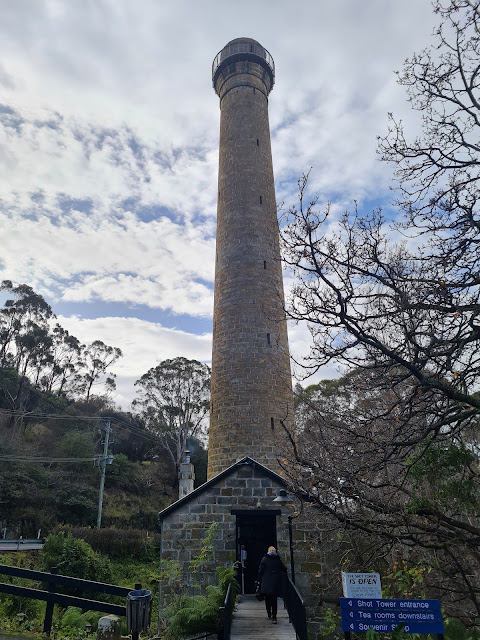
But we did find a tourist attraction, a shot tower, and a museum.

And a tea room that had afternoon tea.  Not exactly what we were looking for.  That said, and feeling like going any further would not fix the search parameters, I go to Google maps and search for restaurants near us.

There’s a Vietnamese restaurant, 6.1 km back the way we came, and being the best choice out of five or six others, we go.

And here’s the thing, it’s just around the corner from where we’re staying.  Go figure.

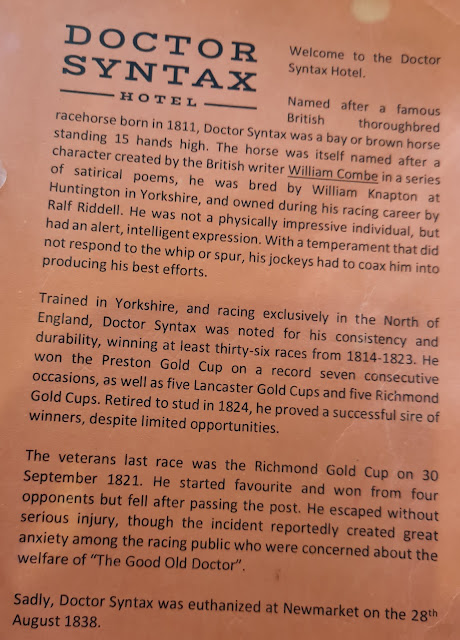
 But, there is a twist, we drive past one of the hotels that were recommended to us back at the apartments, so we go there, the Hotel Doctor Syntax.  We figure we’re more likely to get the vegetable component there than the other place.

It turns out to be a master stroke, getting steak, pork belly, roast potatoes, gravy, asparagus, and seafood on the side.  All having generous servings as one would expect from a hotel bistro.

The food must be great because they were full and had to turn people away.  We were very lucky to get the last table but one, and that one didn’t last very long.

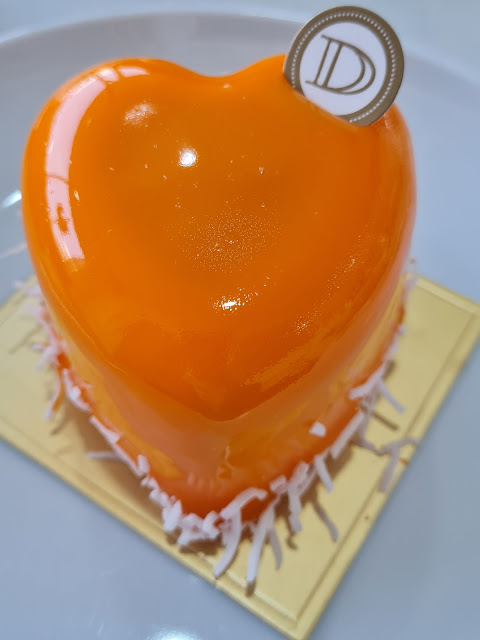
After a long, leisurely lunch surrounded by warmth and atmosphere, we had one more stop.  Coffee and cake at Daci and Daci, a café recommended to us.

It was worth the experience, although it took some fortitude to fit it in after such a large lunch.  I suspect before we go back for a second visit, yes, it was that good, we will make sure we are less full of lunch first.  The cake I had was delicious but very filling.  The coffee?  Excellent.

An excerpt from “If Only” – a work in progress

Investigation of crimes doesn’t always go according to plan, nor does the perpetrator get either found or punished.

That was particularly true in my case.  The murderer was incredibly careful in not leaving any evidence behind, to the extent that the police could not rule out whether it was a male or a female.

At one stage the police thought I had murdered my own wife though how I could be on a train at the time of the murder was beyond me.  I had witnesses and a cast-iron alibi.

The officer in charge was Detective First Grade Gabrielle Walters.  She came to me on the day after the murder seeking answers to the usual questions like, when was the last time you saw your wife, did you argue, the neighbors reckon there were heated discussions the day before.

Routine was the word she used.

Her fellow detective was a surly piece of work whose intention was to get answers or, more likely, a confession by any or all means possible.  I could sense the raging violence within him.  Fortunately, common sense prevailed.

Over the course of the next few weeks, once I’d been cleared of committing the crime, Gabrielle made a point of keeping me informed of the progress.

After three months the updates were more sporadic, and when, for lack of progress, it became a cold case, communication ceased.

But it was not the last I saw of Gabrielle.

The shock of finding Vanessa was more devastating than the fact she was now gone, and those images lived on in the same nightmare that came to visit me every night when I closed my eyes.

For months I was barely functioning, to the extent I had all but lost my job, and quite a few friends, particularly those who were more attached to Vanessa rather than me.

They didn’t understand how it could affect me so much, and since it had not happened to them, my tart replies of ‘you wouldn’t understand’ were met with equally short retorts.  Some questioned my sanity, even, for a time, so did I.

No one, it seemed, could understand what it was like, no one except Gabrielle.

She was by her own admission, damaged goods, having been the victim of a similar incident, a boyfriend who turned out to be an awfully bad boy.  Her story varied only in she had been made to witness his execution.  Her nightmare, in reliving that moment in time, was how she was still alive and, to this day, had no idea why she’d been spared.

It was a story she told me one night, some months after the investigation had been scaled down.  I was still looking for the bottom of a bottle and an emotional mess.  Perhaps it struck a resonance with her; she’d been there and managed to come out the other side.

What happened become our secret, a once-only night together that meant a great deal to me, and by mutual agreement, it was not spoken of again.  It was as if she knew exactly what was required to set me on the path to recovery.

And it had.

Since then, we saw each about once a month in a cafe.   I had been surprised to hear from her again shortly after that eventful night when she called to set it up, ostensibly for her to provide me with any updates on the case, but perhaps we had, after that unspoken night, formed a closer bond than either of us wanted to admit.

We generally talked for hours over wine, then dinner and coffee.  It took a while for me to realize that all she had was her work, personal relationships were nigh on impossible in a job that left little or no spare time for anything else.

She’d always said that if I had any questions or problems about the case, or if there was anything that might come to me that might be relevant, even after all this time, all I had to do was call her.

I wondered if this text message was in that category.  I was certain it would interest the police and I had no doubt they could trace the message’s origin, but there was that tiny degree of doubt, about whether or not I could trust her to tell me what the message meant.

I reached for the phone then put it back down again.  I’d think about it and decide tomorrow.

© Charles Heath 2018-2020