Searching for locations: Central Park, New York

It’s a place to go and spot the movie stars, or perhaps their dogs.

It’s a place to go for long walks on idyllic spring or autumn days

It’s a place to go to look at a zoo, though I didn’t realize there was one until I made a wrong turn.

It’s a place to go for a horse and carriage ride, although it does not last that long

It’s a place to go to look at statues, fountains, architecture, and in winter, an ice skating rink

I’m sure there’s a whole lot more there that I don’t know about.

I have to say I’ve only visited in winter, and the first time there was snow, the second, none.

Both times it was cold, but this didn’t seem to deter people.

But…
We decided to go visit another part of the park, this time walking to West 67th Street before crossing Central Park West and into the park where Sheep Meadow is.

Once upon a time sheep did graze on the meadow, but these days it is designated a quiet area inspiring calm and refreshing thoughts, except for a period in the 1960s where there was more than one counter-culture protest, or love in, going on.

And, there’s the sign to say it was Sheep Meadow,
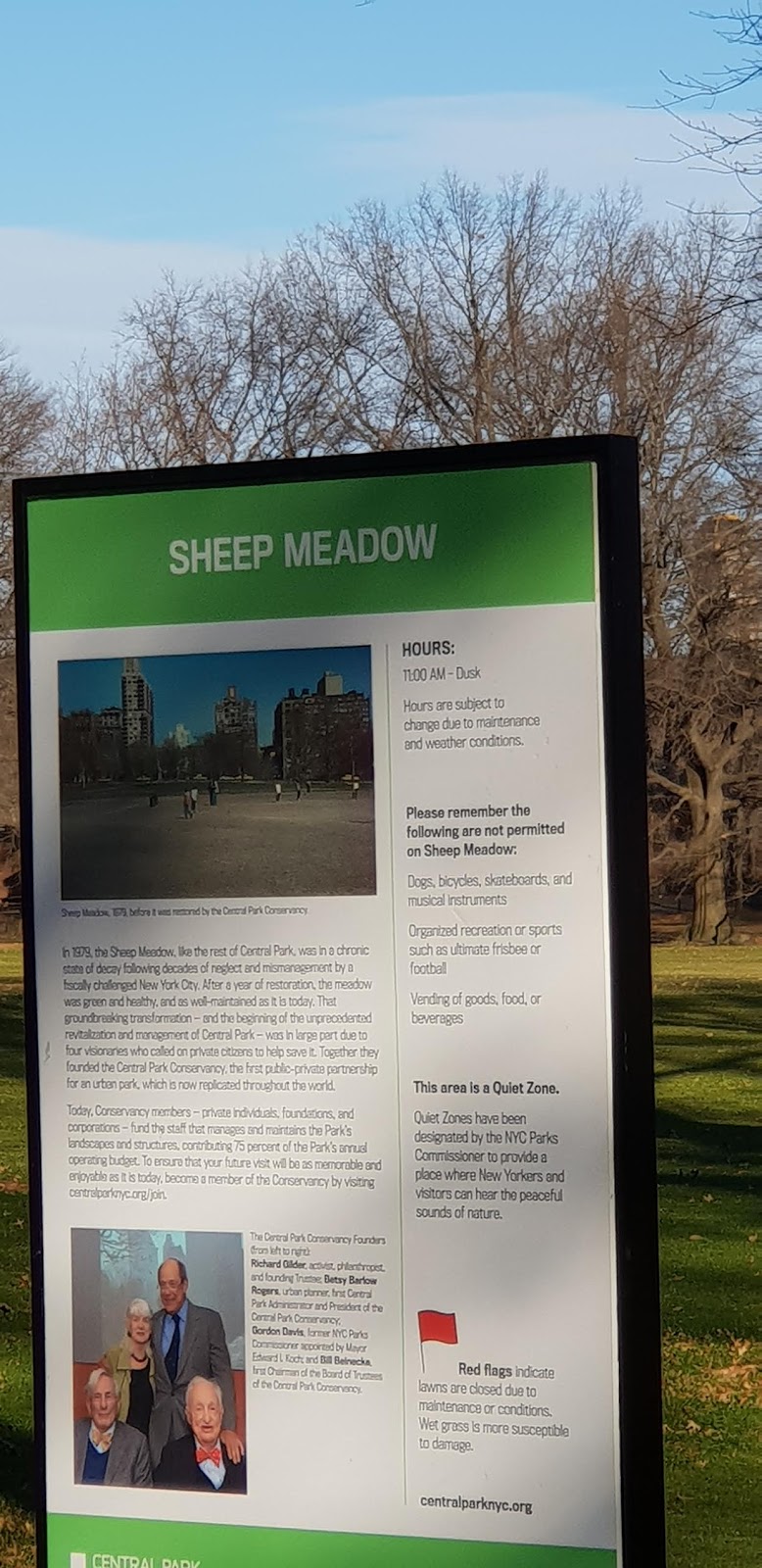
and that’s the meadow behind the sign,

Well, I don’t see any sheep, but of course, that’s not why the meadow is named or should there be any sheep on it.  That greenery that can be seen, restoring for the spring, was a very expensive addition to the park.

As a matter of fact, there is nothing was on it, because signs were up to say the meadow was closed for the winter, a new and interesting variation on the ‘Don’t Walk On The Grass’ signs.

I’m sure I could climb the fence, or, maybe not.  I’m a bit old to be climbing fences.

So, unable to walk on the grass, we tossed an imaginary coin, should we go towards West 110th Street, or back to West 59th Street.

West 59th Street won.

and, just in case we had any strange ideas about walking on the grass, the fence was there to deter us.  Perhaps if we had more determination…

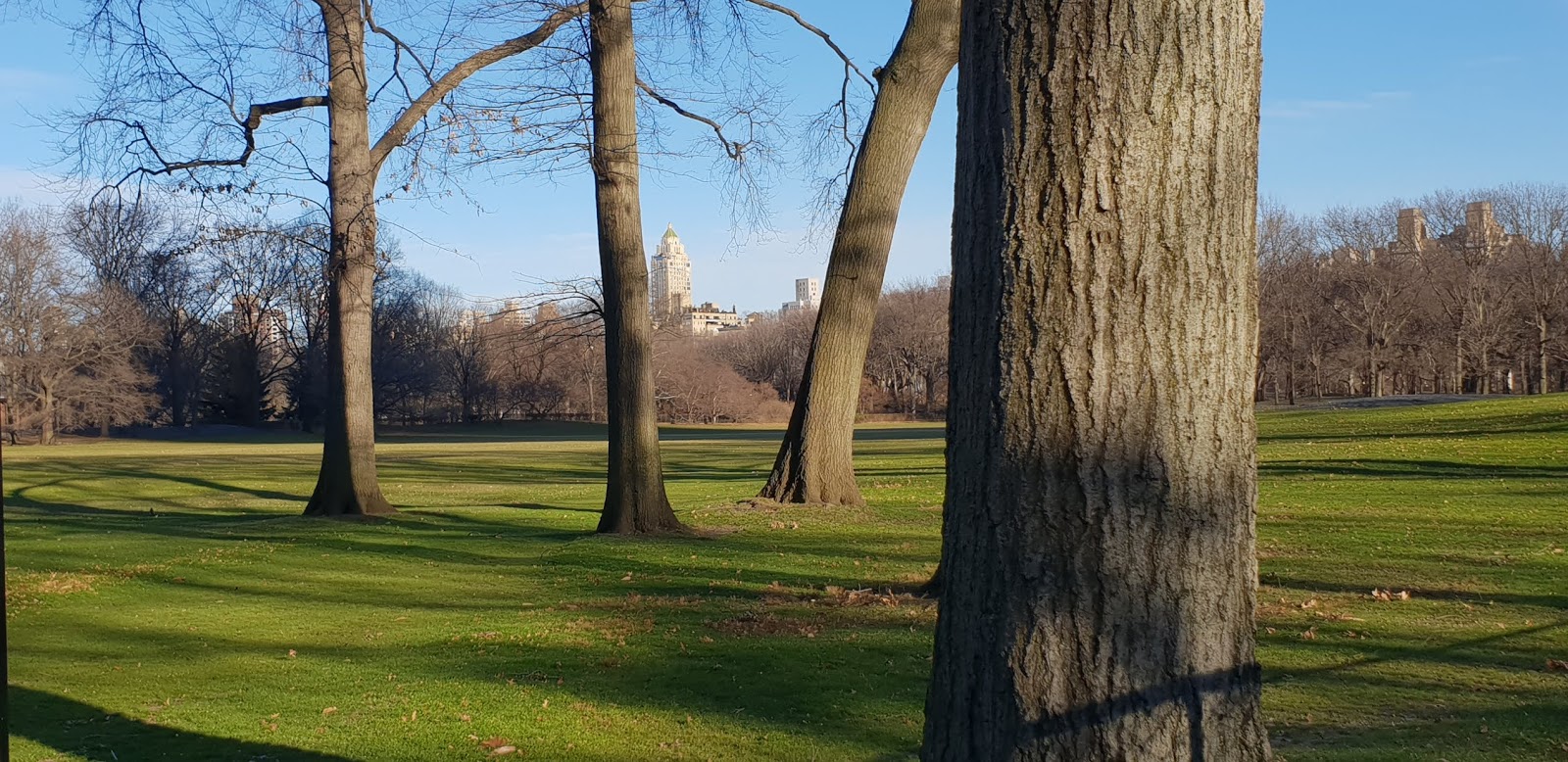
One positive aspect of the park is that you could never get lost, and the tall buildings surrounding the park are nearly always visible through the trees, more so in winter because there is no foliage, maybe less so later in the year.

There is also a lot of very large rocky type hills, or outcrops where people seem to stand on, king of the mountain style, or sit to have a picnic lunch, quickly before it freezes.

Yes, it is cold outside and seems more so in the park.

I wondered briefly if it ever got foggy, then this place would be very spooky, particularly after the sun goes down.

Searching for locations: Florence, Italy

Florence is littered with endless statues, and we managed to see quite a few,

If those statues came to life I wonder what they might tell us?

Like castles on the shores of the Rhine, there are only so many statues you can take photos of.  Below are some of those I thought significant

2013-06-17 09.16.14

Michelangelo’s David directs his warning gaze at someone else.

2013-06-17 09.16.24

The impressive muscles of Baccio Bandinelli’s Hercules from 1533. The worked-out demi-god is pulling the hair of Cacus, who will be clubbed and strangled.

2013-06-17 09.17.13

Achilles with Polyxena in arm, stepping over her brother’s body

2013-06-17 09.18.08

Menelaus supporting the body of Patroclus, in the Loggia dei Lan

2013-06-17 09.18.28

Statue of Hercules killing the Centaur by Giambologna in Loggia dei Lanzi. Piazza della Signoria.

On the back of the Loggia there are six marble female statues, probably coming from the Trajan’s Foro in Rome, discovered in 1541 and brought to Florence in 1789

Searching for locations: Greve-in-Chianti, Tuscany, Italy

When we first planned to stay in Tuscany for a few days, we wanted to be in a central area.  We had thought of staying in Florence and making daily treks, but the tour operator we selected told us it would be better if we stayed closer to Arezzo.

We picked Greve in Chianti, and a place called Antico Pastificio, we booked a standard apartment with two bedrooms, and it was about as authentic Italian you could get.  The building we stayed in was the yellow pasta factory, and the apartment named ‘Iris’.

It was only steps away from the main square, shops, restaurants, and at the opposite end, the quaint ringing of church bells at various times during the day.

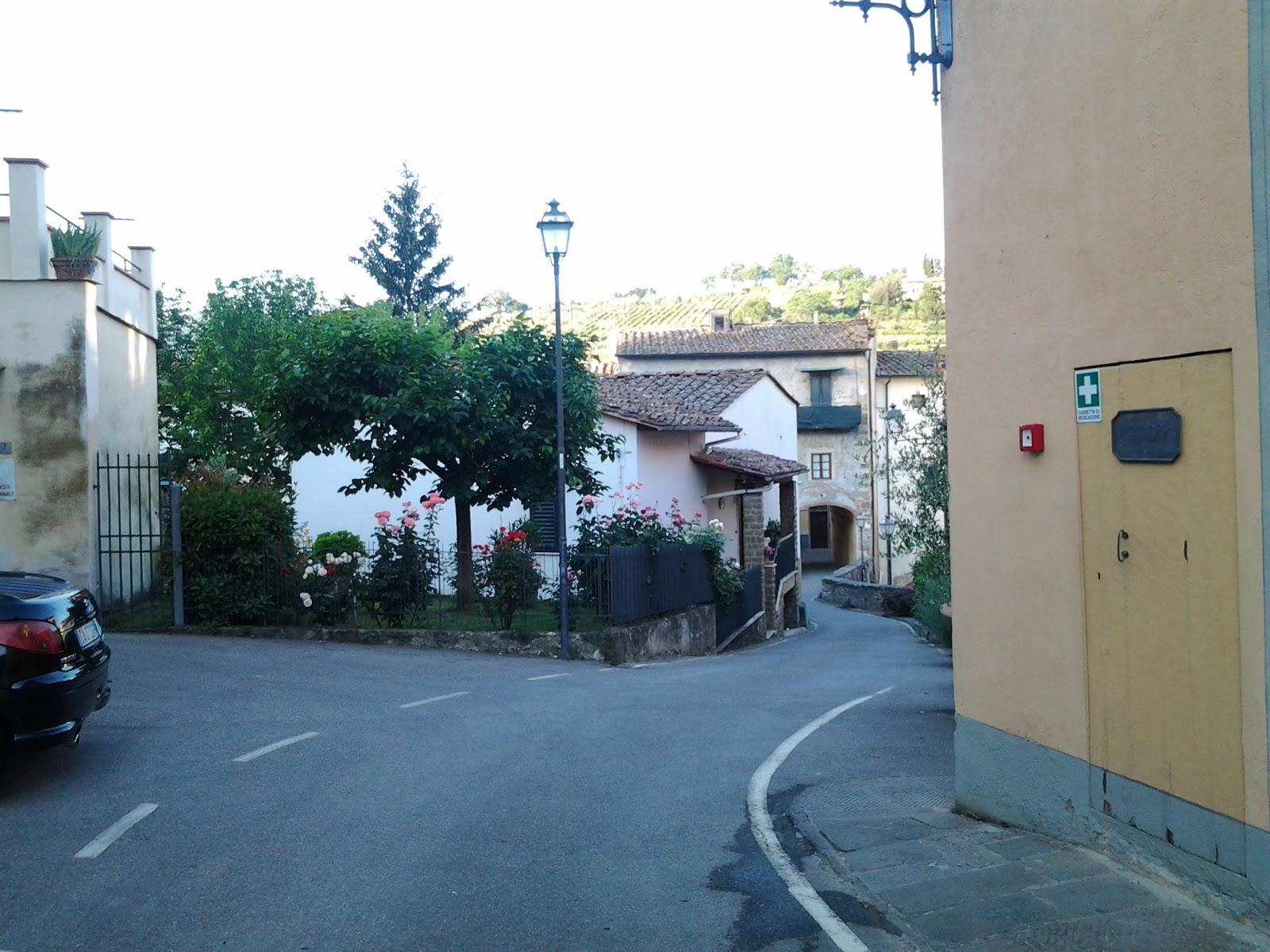
Gaining access was through a very narrow arch which required some deft driving and then up the road.  There were villas and two large apartment blocks.

You can just see the archway at the end of the road.

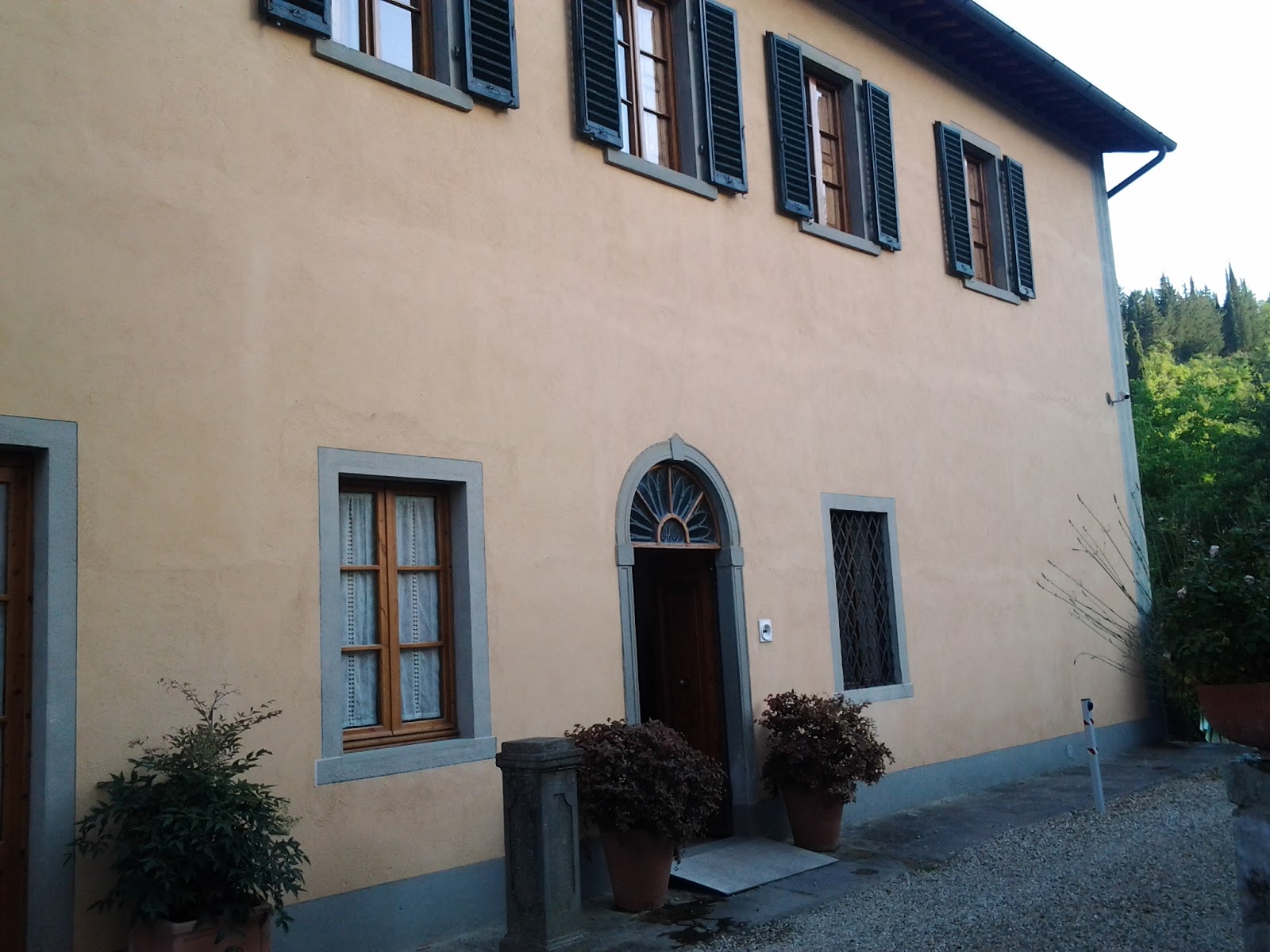
This was the entrance to our room,

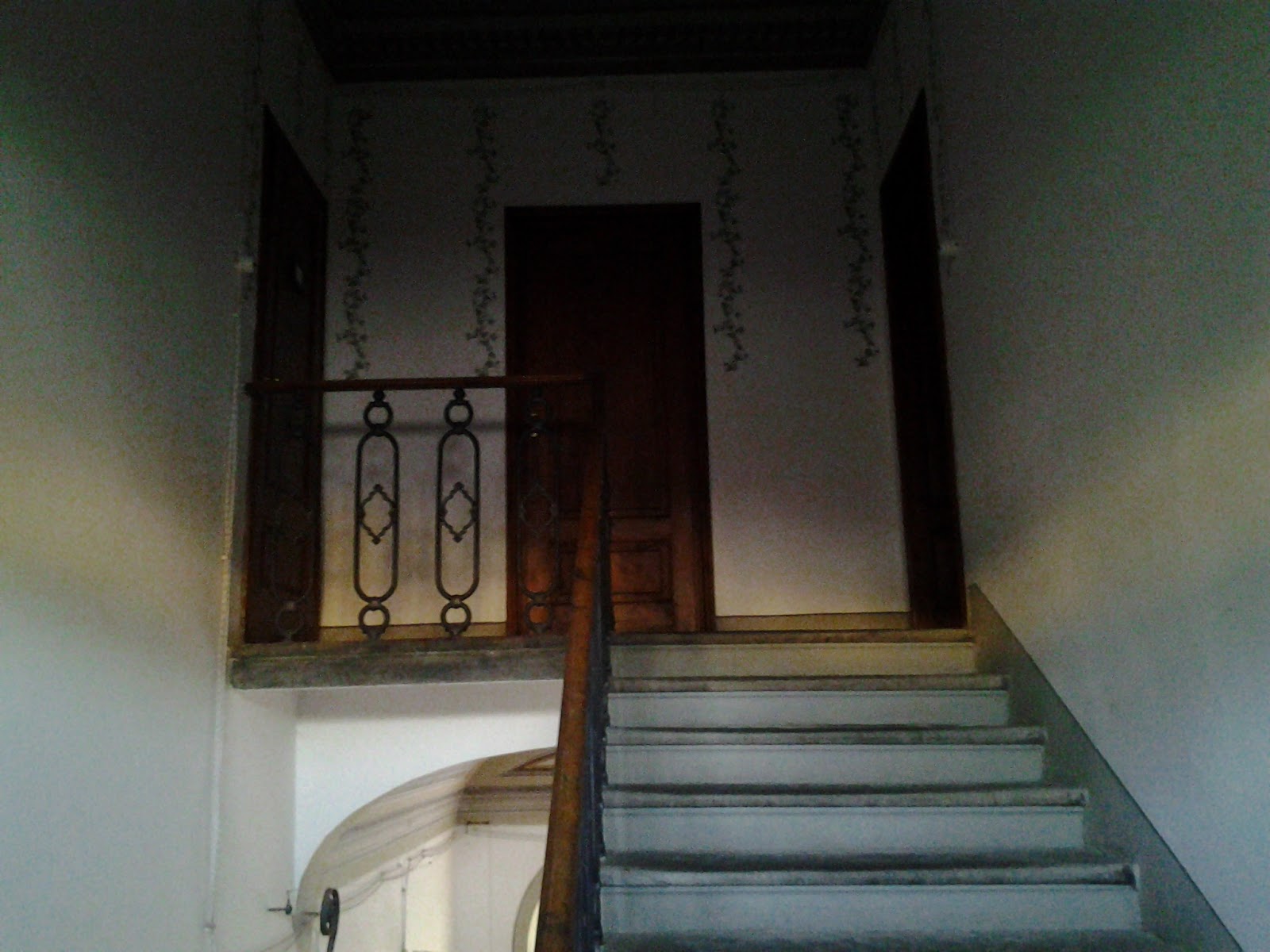
along a passage and up the stairs, turning left at the top.

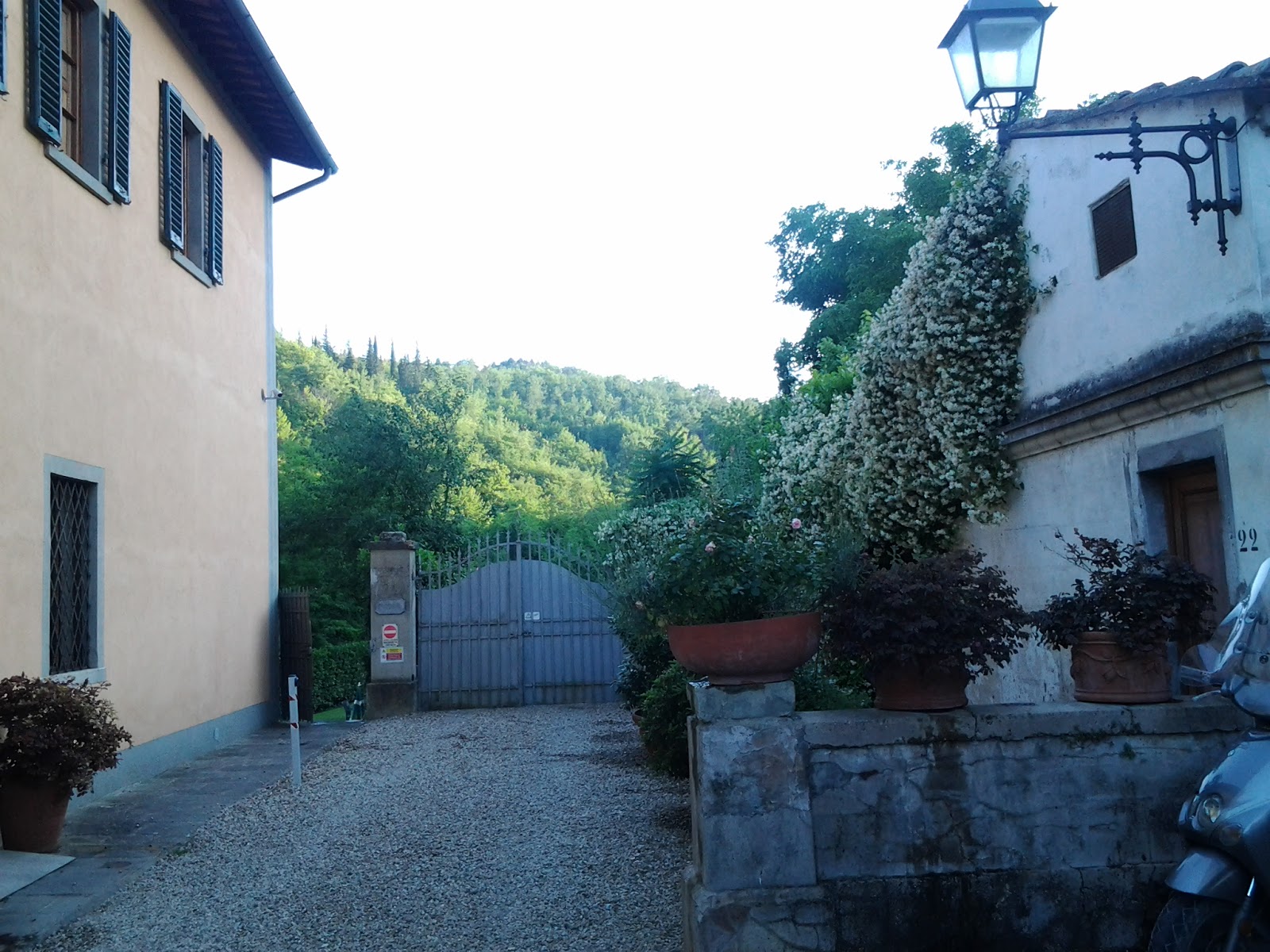
Going straight ahead through the gate to the car park,

and access to the grounds behind the buildings.

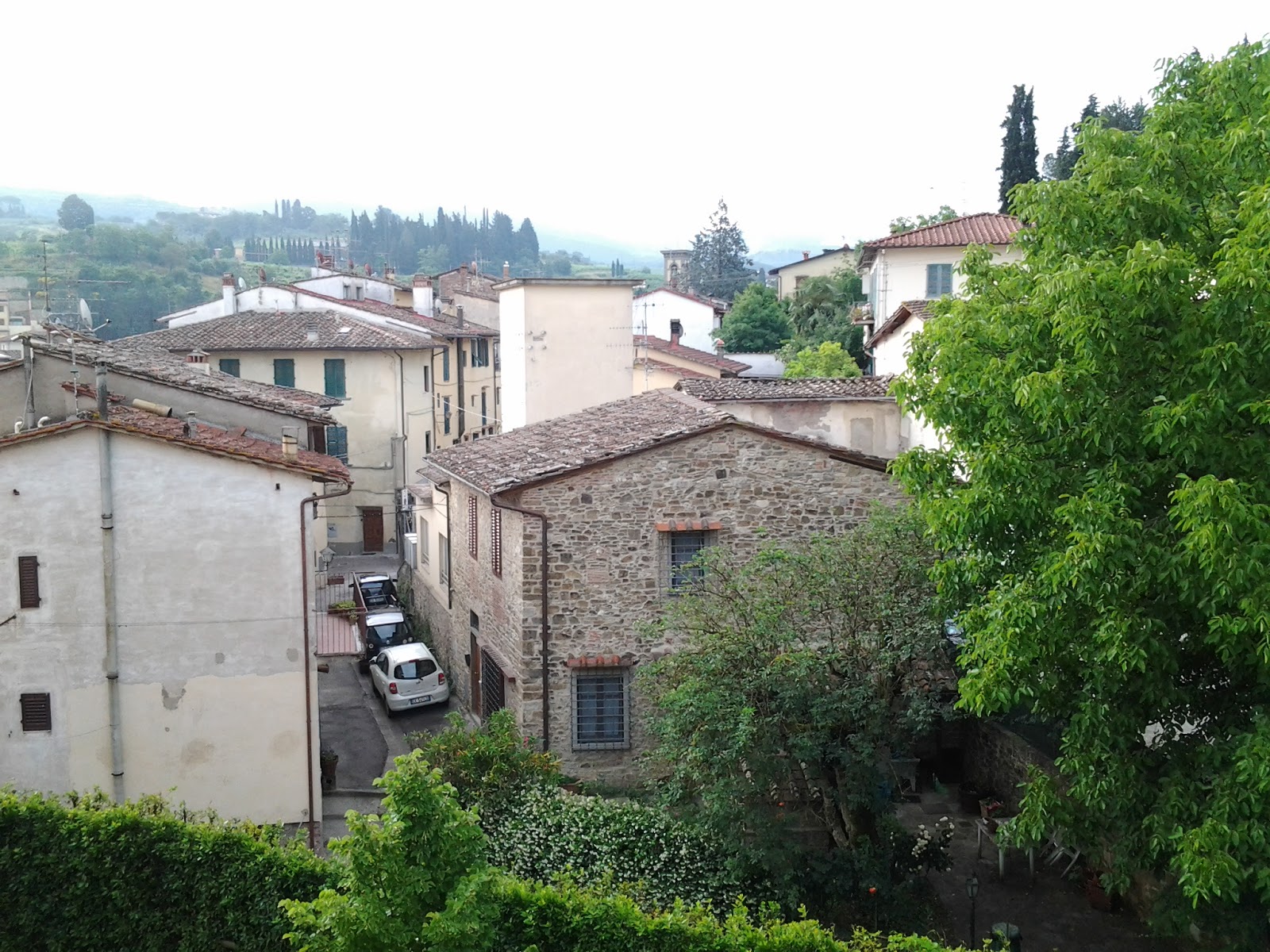
This was the view from the lounge/living room.  The days were hot, and on several evenings it rained, breaking the heat and making the evenings sitting by the window cool and refreshing.

And the last view is looking towards the town piazza and the church


© All photographs Charles Heath 2015-2020


Searching for locations: Arezzo, Italy

There’s nothing like being a few days early or a few days late for a major festival.

We have the dubious honor of being able to both without thinking. I guess this is why you should try to plan your holiday around events, if possible.

We love Italy.

We’ve been a number of times, but the last visit was the best. Of course, it was not without a lot of hiccups just getting there, but in the end, later than we expected, actually about five minutes before they closed Florence airport, we made it.

So, little did we know there was such a thing as Calcio Fiorentino an early form of football and rugby that originated in 16th-century Italy and thought to have started in the Piazza Santa Croce in Florence. But we were in Florence, at the right time, and even got to see the procession through the streets of Florence.

You can read more about the game and rules at https://en.wikipedia.org/wiki/Calcio_Fiorentino

We were not so lucky in Siena where we were about a week early for the Palio di Siena which was to take place on 2nd July.

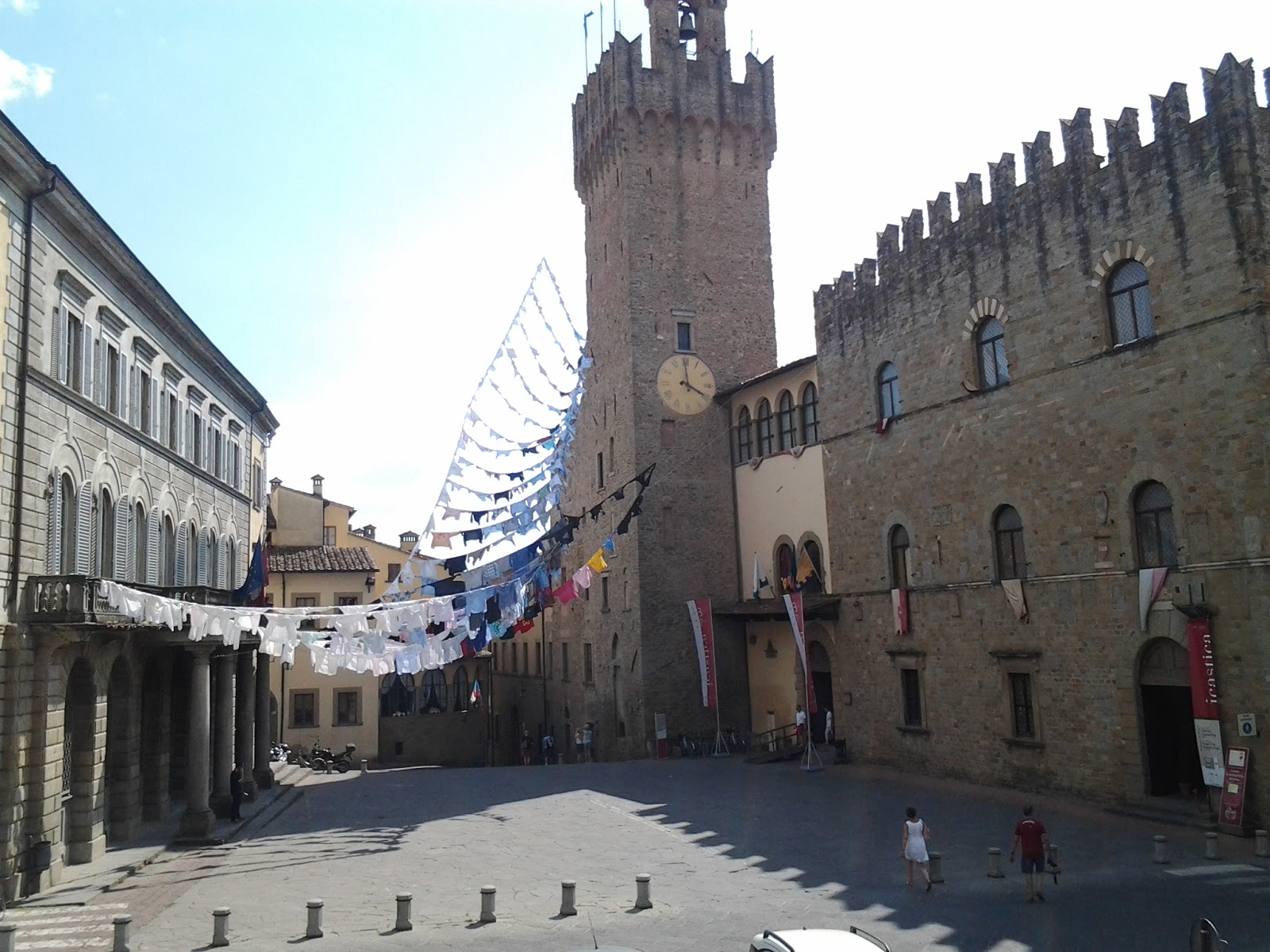
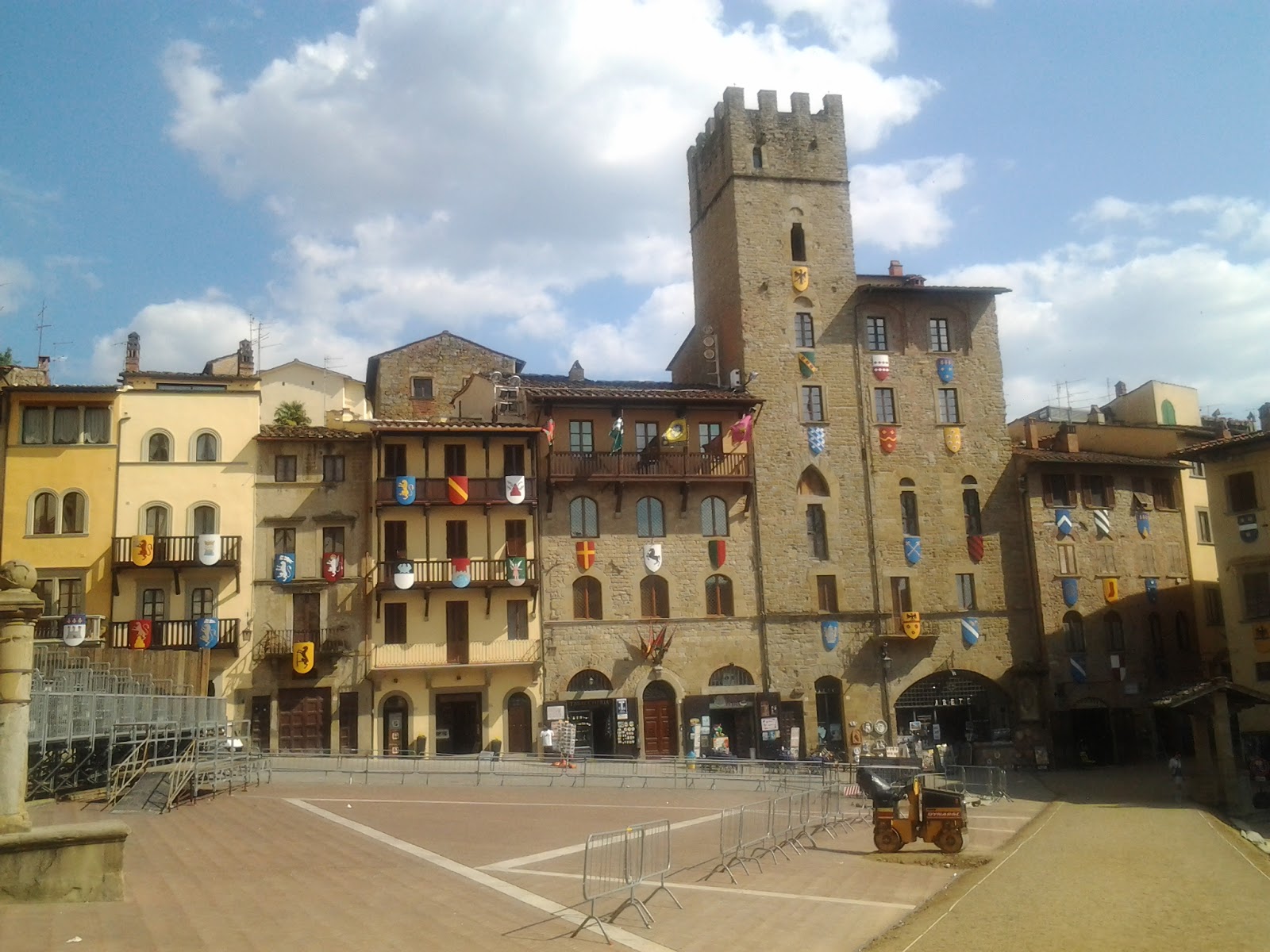
Nor were we in Arezzo at the right time for the Saracen Joust which was held on the penultimate Saturday in June. It is held at the Piazza Grande in the heart of Arezzo and is one of the most beautiful piazzas in Tuscany.

The Piazza Della Liberta and the Town Hall tower

The Piazza Grande, also known as Piazza Vasari, is said to be situated on the site of the ancient Roman Forum.  Here, it is being set up for the coming Joust.

A different view of Arezzo Cathedral | Cattedrale dei Santi Pietro e Donato

Searching for Locations: Venice, Italy

Venice is definitely a city to explore.  It has an incredible number of canals and walkways, and each time we would start our exploration at St Marks square when it’s not underwater

Everyone I have spoken to about exploring Venice has told me how easy it is to get lost.  It has not happened to me, but with the infinite number of ways you can go, I guess it is possible.

We started our exploration of Venice in St Marks square, where, on one side there was the Museo di Palazzo Ducale and, next door, the Basilica di San Marco.  Early morning and/or at high tide, water can be seen bubbling up from under the square, partially flooding it.  I have seen this happen several times.  Each morning as we walked from the hotel (the time we stayed in the Savoia and Jolanda) we passed the Bridge of Sighs.

Around the other three sides of the square are archways and shops.  We have bought both confectionary and souvenirs from some of these stores, albeit relatively expensive.  Prices are cheaper in stores that are away from the square and we found some of these when we walked from St Marks square to the Railway station, through many walkways, and crossing many bridges, and passing through a number of small piazzas.

That day, after the trek, we caught the waterbus back to San Marco, and then went on the tour of the Museo di Palazzo Du which included the dungeons and the Bridge of Sighs from the inside.  It took a few hours, longer than I’d anticipated because there was so much to see.

The next day, we caught the waterbus from San Marco to the Ponte di Rialto bridge.  Just upstream from the wharf there was a very large passenger ship, and I noticed there were a number of passengers from the ship on the waterbus, one of whom spoke to us about visiting Venice.  I didn’t realize we looked like professional tourists who knew where we were going.

After a pleasant conversation, and taking in the views up and down the Grand Canal, we disembarked and headed for the bridge, looking at the shops, mostly selling upmarket and expensive gifts, and eventually crossing to the other side where there was a lot of small market type stalls selling souvenirs as well as clothes, and most importantly, it being a hot day, cold Limonata.  This was my first taste of Limonata and I was hooked.

Continuing on from there was a wide street at the end and a number of restaurants where we had lunch.  We had a map of Venice and I was going to plot a course back to the hotel, taking what would be a large circular route that would come out at the Accademia Bridge, and further on to the Terminal Fusina Venezia where there was another church to explore, the Santa Maria del Rosario.

This is a photo of the Hilton Hotel from the other side of the canal.

It was useful knowledge for the second time we visited Venice because the waterbus from the Hilton hotel made its first stop, before San Marco, there.  We also discovered on that second visit a number of restaurants on the way from the terminal and church to the Accademia Bridge.

This is looking back towards San Marco from the Accademia Bridge:

And this, looking towards the docks:

Items to note:

Restaurants off the beaten track were much cheaper and the food a lot different to that in the middle of the tourist areas.

There are a lot of churches, big and small, tucked away in interesting spots where there are small piazza’s.  You can look in all of them, though some asked for a small fee.

Souvenirs, coffee, and confectionary are very expensive in St Marks square.

Searching for locations: Siena, Italy

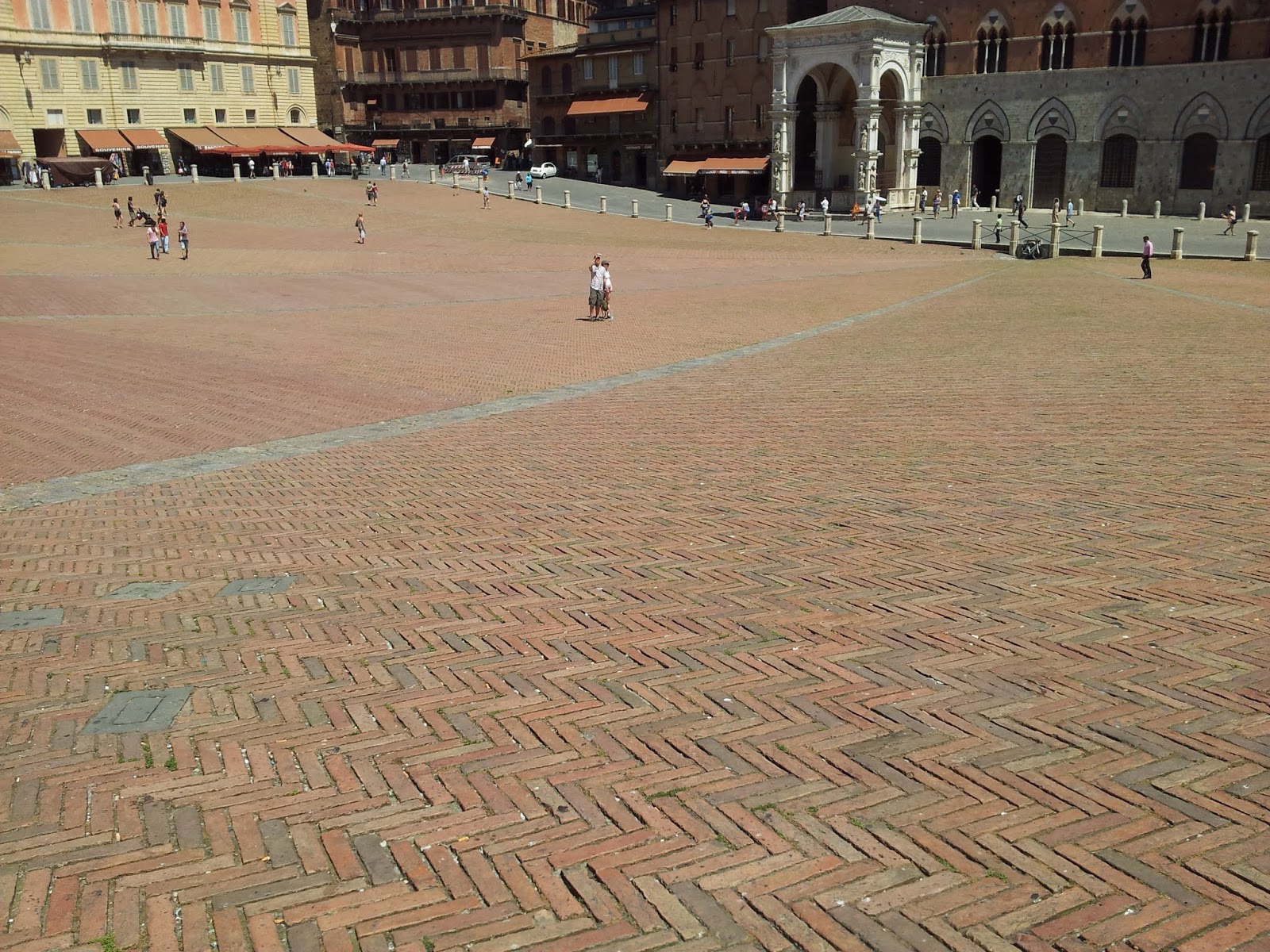
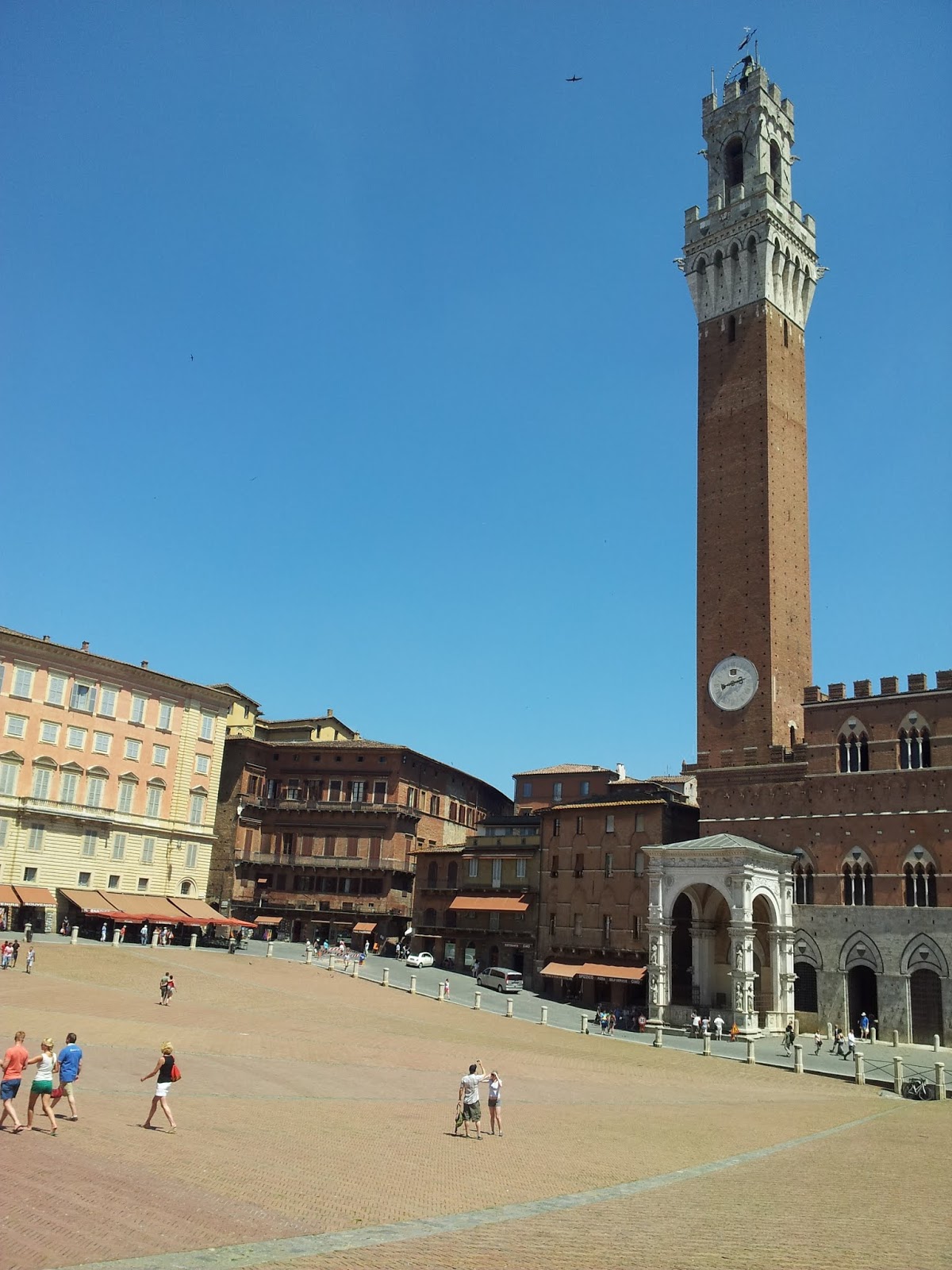
The Piazza del Campo is one of the greatest medieval squares in Europe.

It is shaped like a shell.

This is where the Palazzo Publico and the Torre del Mangia are.

At 102 meters (334 feet), the bell tower is the city’s second tallest structure.

When it was built in 1848 it was the exact same height of the Duomo to show that the state and church had equal amounts of power.

Around the edges of the Piazza are a lot of restaurants, where you can sit in the shade, have a plate of pasta and sip on a cold limonata.

Searching for locations: San Gimignano, Italy

We have visited this town on a hill, famous for its fourteen towers, twice.  The first time we stayed in a hotel overlooking the main piazza, and the second time, for a day visit, and return to a little restaurant tucked away off the main piazza for its home cooking.

No cars are allowed inside the town and parking is provided outside the town walls.  You can drive up to the hotel to deliver your baggage, but the car must return to the carpark overnight.

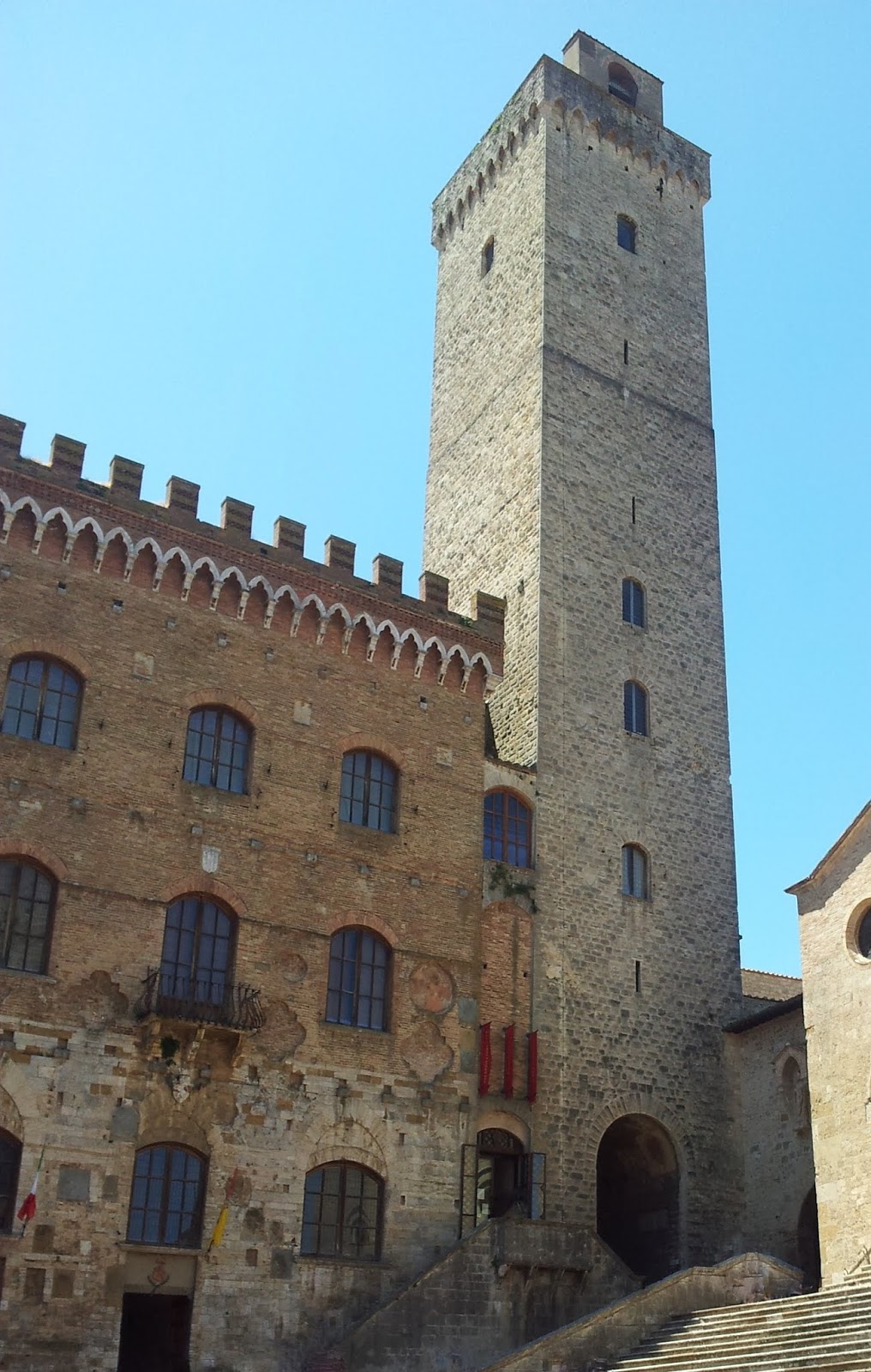
This is one of the fourteen towers

I didn’t attempt to climb to the tower, which you can do in some of them, just getting up the church steps was enough for me.  Inside the building was, if I remember correctly, a museum.

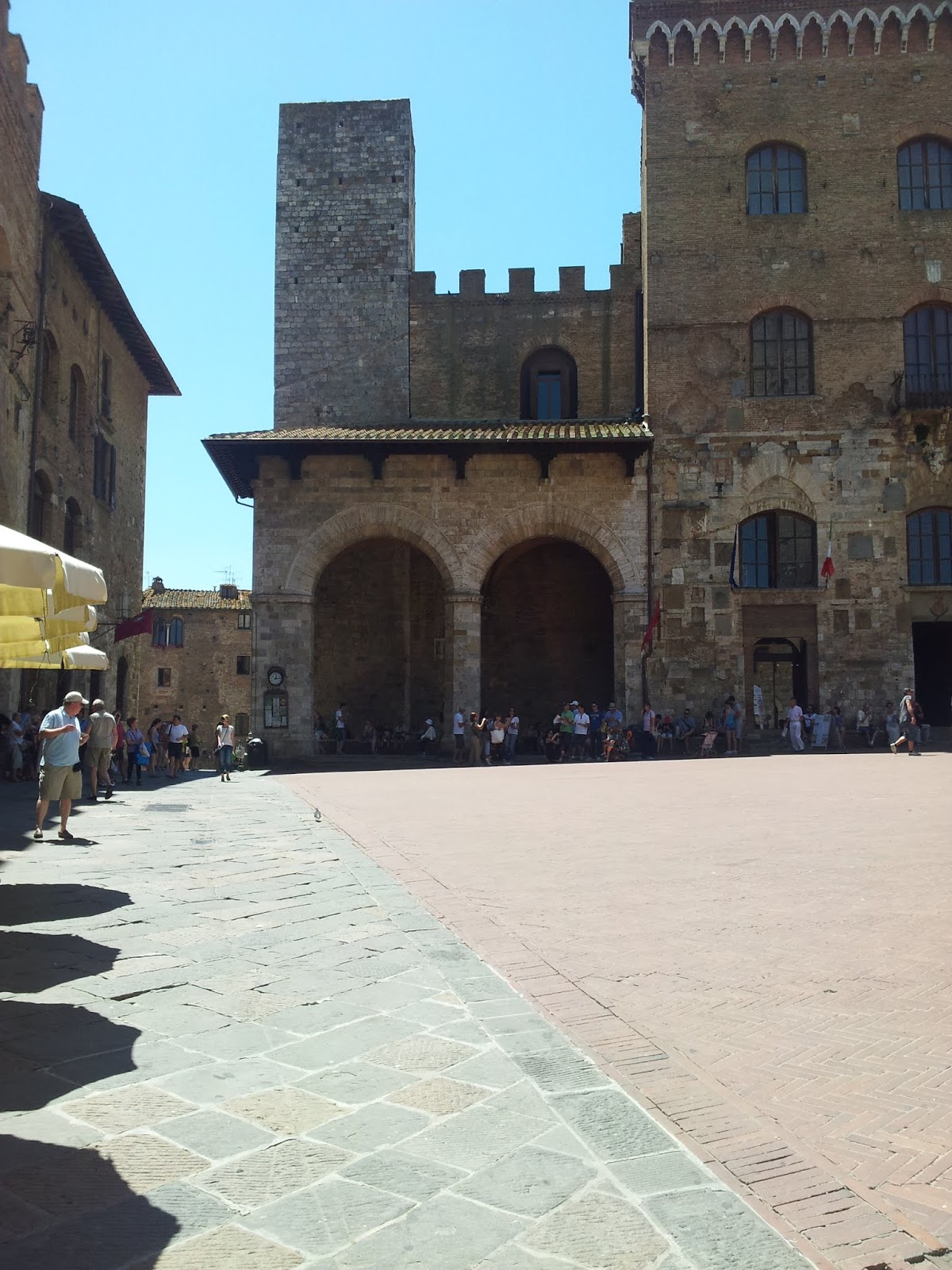
Looking up the piazza towards some battlements, and when you reach the top and turn left, there is a small restaurant on the right-hand side of the laneway that had the best wild boar pasta.

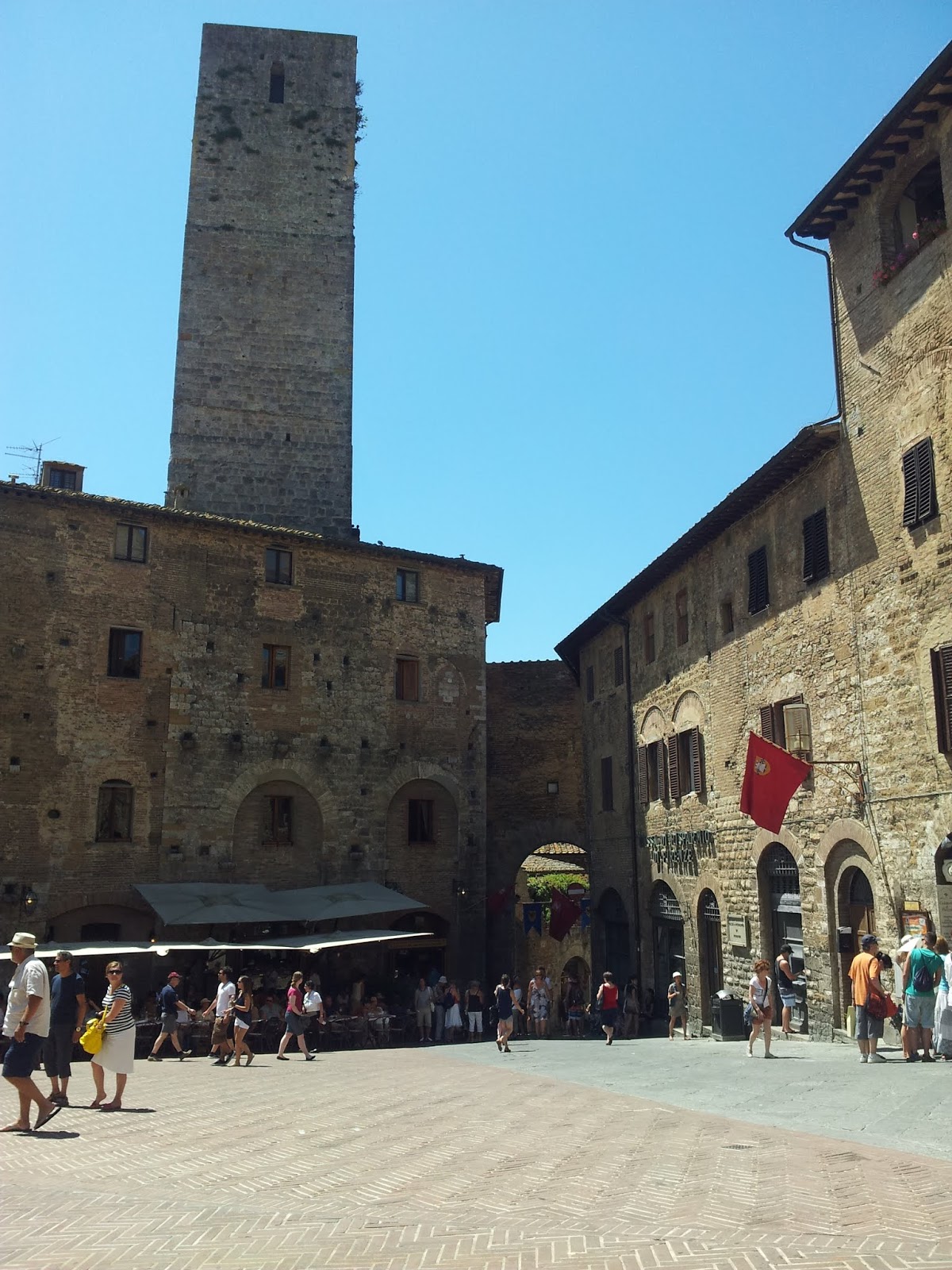
Another of the fourteen towers, and through the arch, down a lane to the gated fence that surrounds the town.  The fortifications are quite formidable and there are several places along the fence where you can stand and look down the hill at the oncoming enemy (if there was one).

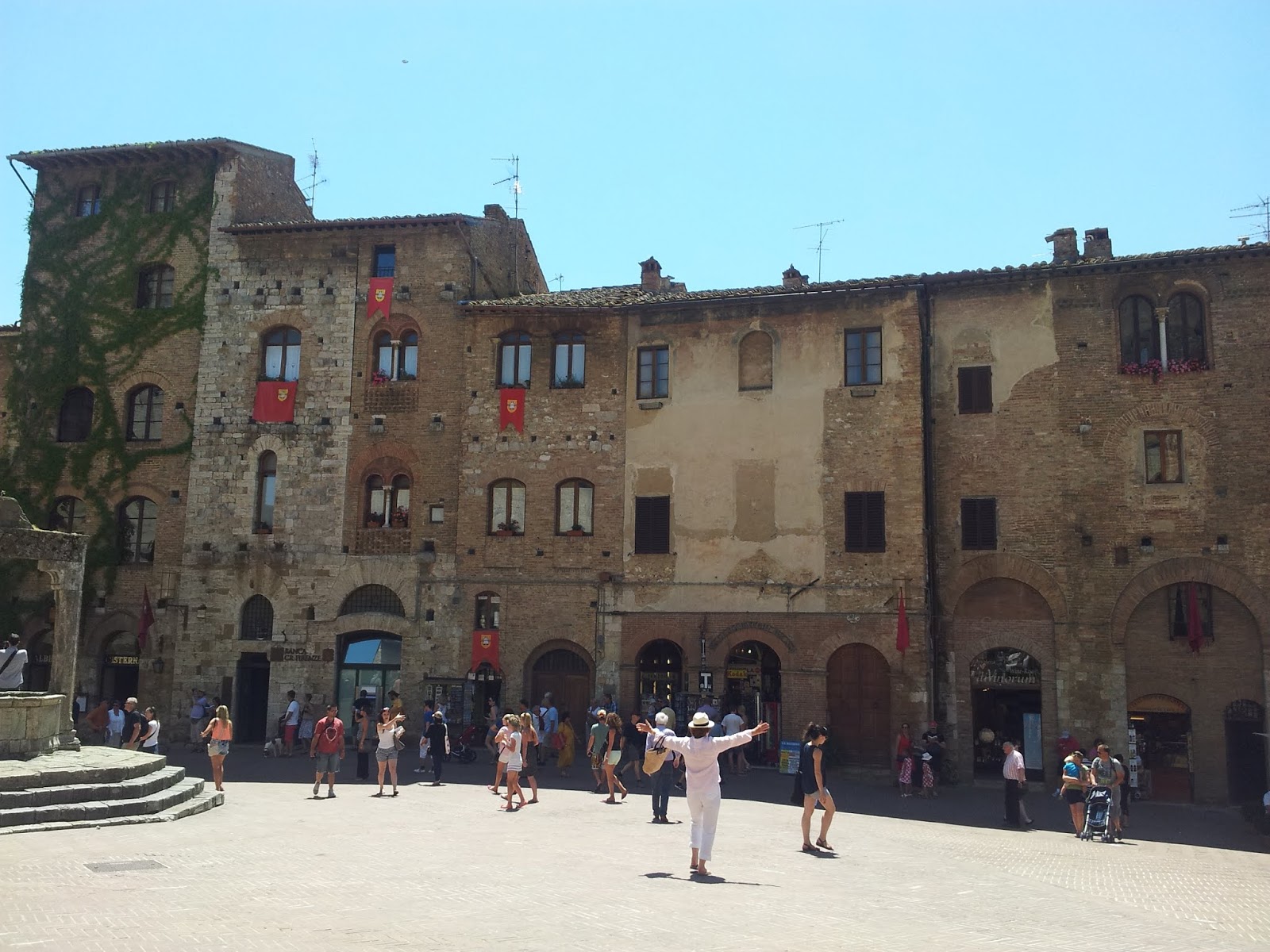
Part of the main piazza which is quite large, and on the right, the wishing well where my wish for a cooler day was not granted.

Officially, the Piazza della Cisterna is the most beautiful square of the town, San Gimignano.  The well was built in 1273 and enlarged in 1346 by Podestà Guccio dei Malavolti.

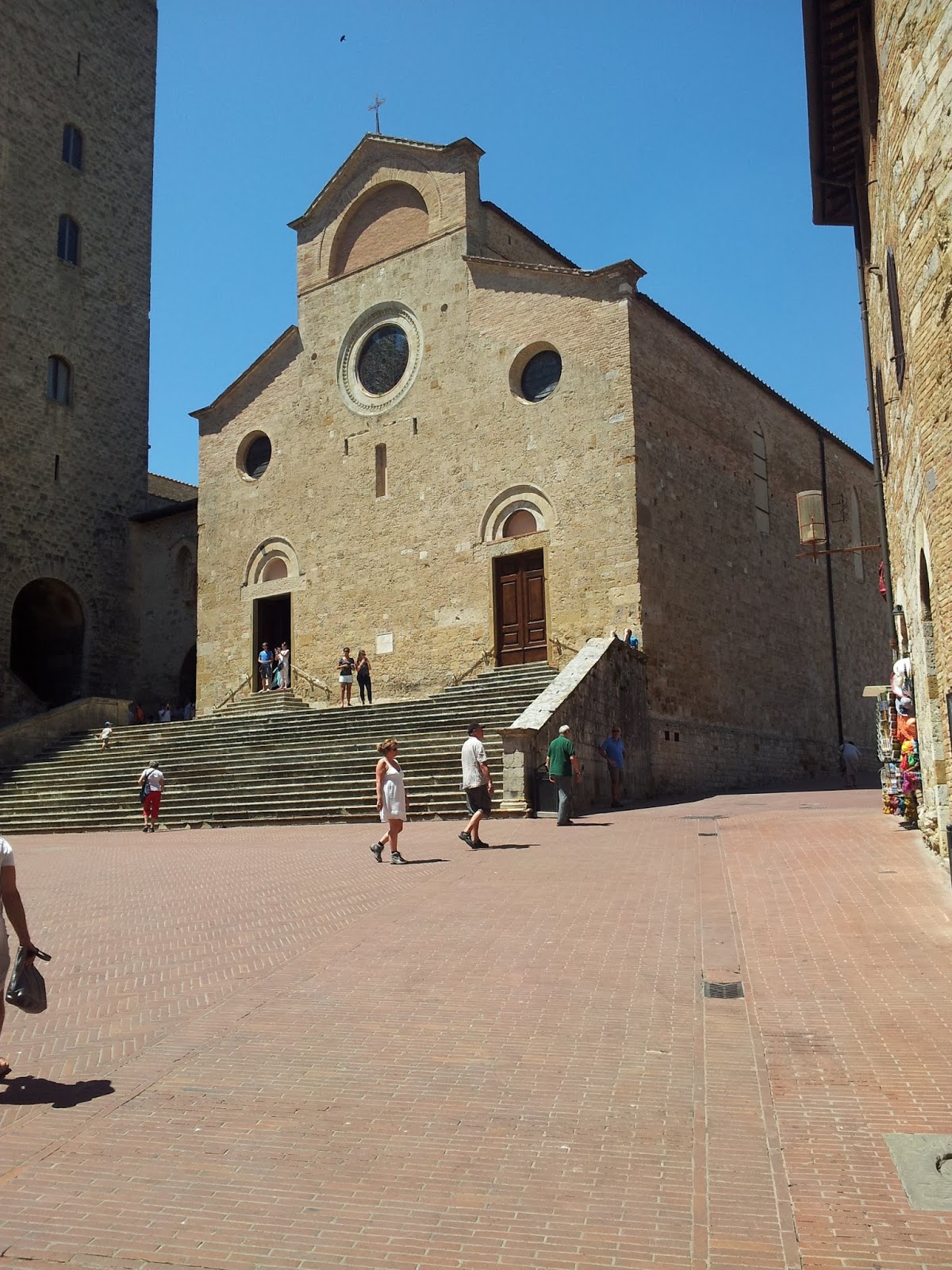
And not to be outdone by any other the other old towns, there is an old church, one of several.  It is the Collegiate Church or the Duomo di San Gimignano, a monument of Romanesque architecture built around 1000 and enlarged over time.

Next door is the Museum of Sacred Art.

And I guess it’s rather odd to see television aerials on top of houses that are quite literally about a thousand years old.  I wonder what they did back then for entertainment?

Business as usual?

It would seem that with all the time we have on our hands because of the recommendation to self-isolate, or at the very least, stay at home, I should have no trouble finding time to write.

To a certain extent, this has been the case.

April is another NaNoWriMo month, and I have been using this exercise revising a novel that I wrote a few years back and haven’t had a chance to get back to.  This April thing has been the perfect chance to bring it all together, find out what’s missing, and fill in the gaps.

At this stage of the month, I’ve covered most of the written and partially written chapters and worked out what’s needed to finish the story.  It may not get finished in the time that I have left.  The last word count was about 68,000 of approximately 80,000.

I’m not sure how I originally intended to get this done in 50,000 or so words.

However, in a day or so I will get to the interesting bit, but I can’t tell you what that is.  You need some mystery remaining so you’ll eventually buy the book.

The other exercise that has been far more time consuming, and perhaps a little more satisfying is the A to Z Challenge where a piece is written based on a letter of the alphabet, and I decided to come up with a specific phrase and write a story around it.  Yes, 26 stories in 30 days.  That’s quite a job.

It began well with stories that were one and a half to two pages long, but over the days, they got longer, three, four, and the most recent was six and a half.  I didn’t mean to, but it sort of flowed out.

April the 26th, a Sunday, it is quite literally a day of rest.  And the time to try and get a story ahead.

Or not.  Today I get to work on some blog posts.

This month I have also been following world affairs in relation to the coronavirus, and it is very interesting how different countries approach the problem  Fortunately we live on an island and have been able to keep the damage to a minimum.  Also fortunate for us, we have a federal government that is bending over backward to help the state governments, and there’s no political point-scoring.

The situation is far too dire for that sort of nonsense, and the opposition parties at all levels know that to make waves will immediately and all but permanently alienate the electorate.  Instead, they are providing constructive advice, and assistance wherever possible.

Of course, like everyone else, we have social distancing, unessential services closed down, and a large number of unemployed.

Proportionately, I would have to say we are as badly off as everyone else, and it’s going to be hard to get back to where we were.  Certainly, none of us will be traveling anywhere any time soon, nor will we have any overseas visitors for a very long time, so any tourism will come from within.

I guess it’s time we all got to see our own country.  In the past, the pity of it was that it was cheaper to go overseas than to travel anywhere at home.  Perhaps that might be one of the lessons we learn from this crisis to reasonably price plane tickets and hotel rooms.

If they do, I’ll be the first on the plane.

Searching for locations: The Castello di Brolio, Gaiole in Chianti, Tuscany – The New Castle

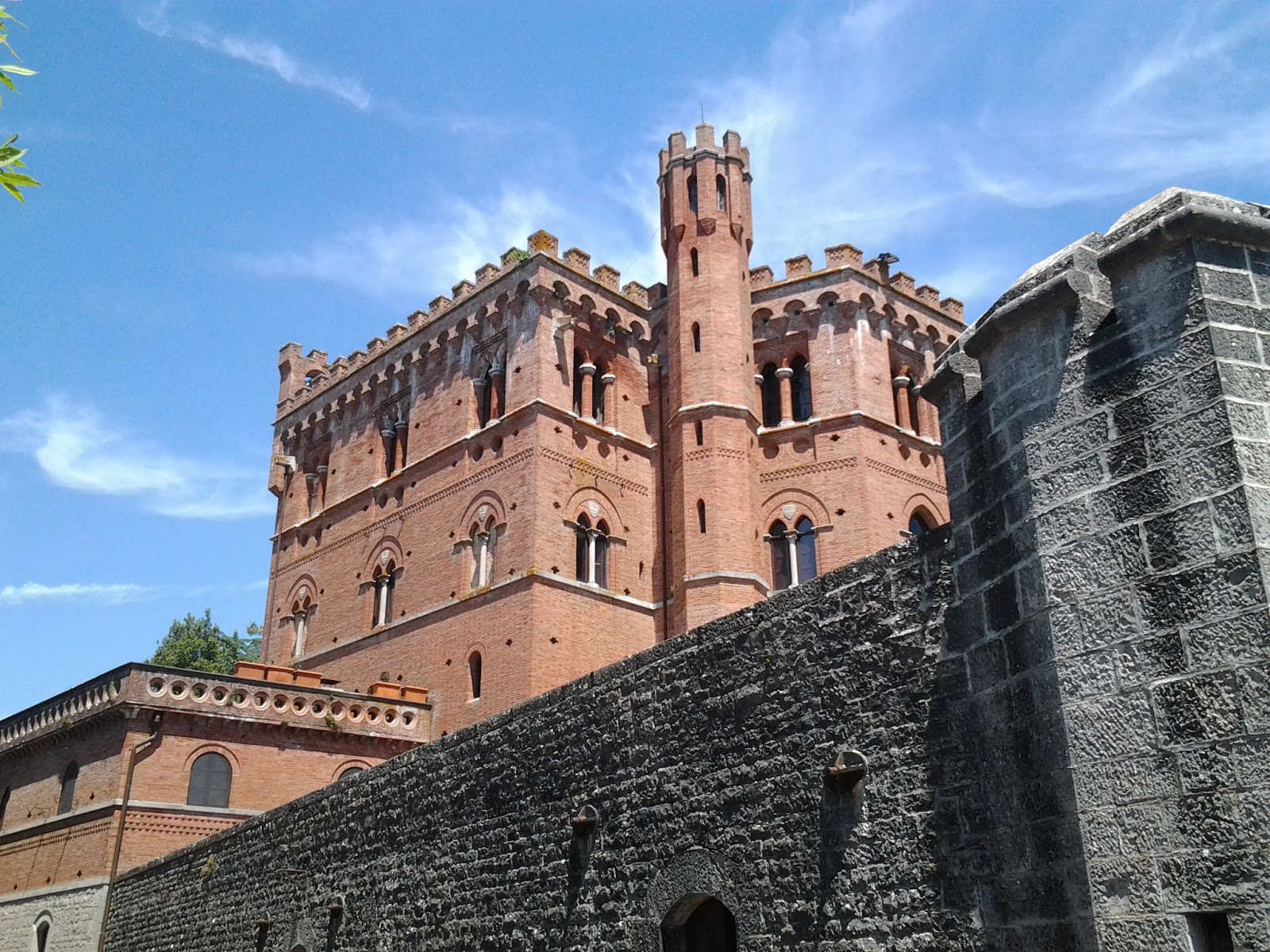
The castle is located in the southern Chianti Classico countryside and has been there for over ten centuries, and owned by the Ricasoli family since 1141.

The newer part of the castle dates from the 1800s.  The larger brick palace was built in the Gothic revival-style.

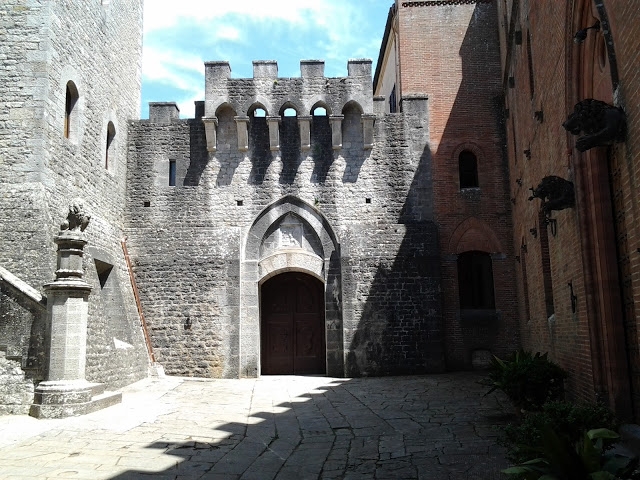
The new castle was built on top of the old castle’s ramparts

The walkway leads to the guard’s tower, and views over the countryside, and in particular, the styled gardens of English origin

And beyond these gardens, the vineyards

Searching for locations: The Castello di Brolio, Gaiole in Chianti, Tuscany – The Old Castle

The castle is located in the southern Chianti Classico countryside and has been there for over ten centuries, and owned by the Ricasoli family since 1141.

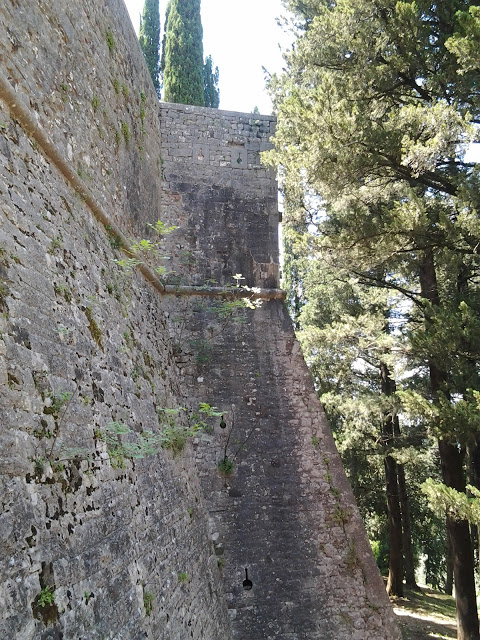
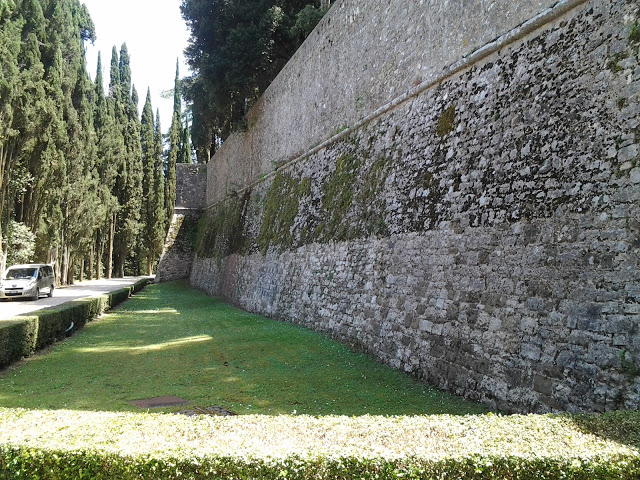
Like any good castle, it has strong defences, and I was looking for a moat and drawbridge, but it looks like the moat has become a lawn.


The very high walls in places no doubt were built to keep the enemy out

The castle has been destroyed and rebuilt many times over the last 900 years.  It was part of the Florentine defenses, and withstood, and succumbed to many battles with Siena, which is only 20 km away.  More recently, it still bears the scars of artillery fire and bombing in WW2.
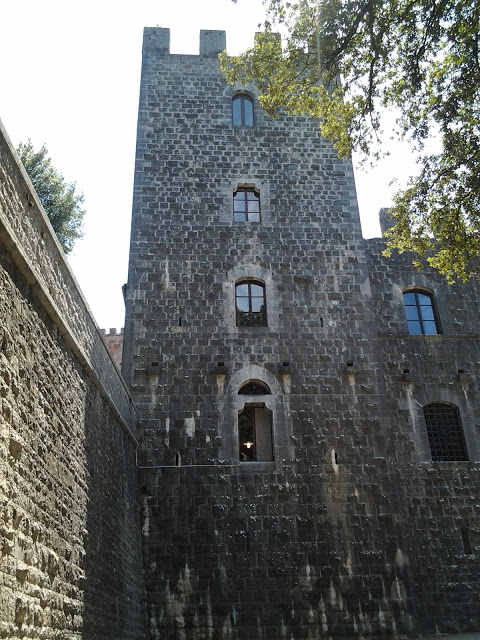
The room at the top of this tower would have an excellent view of the countryside.

Here you can see the old and the new, the red brick part of the rebuilding in the 1800’s in the style of an English Manor

We did not get to see where that archway led.

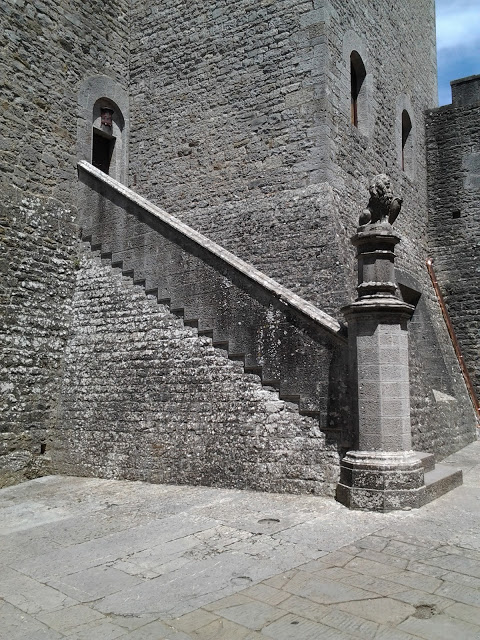
Nor what was behind door number one at the top of these stairs.  Rest assured, many, many years ago someone wearing armor would have made the climb.   It would not pass current occupational health and safety these days with a number of stairs before a landing.

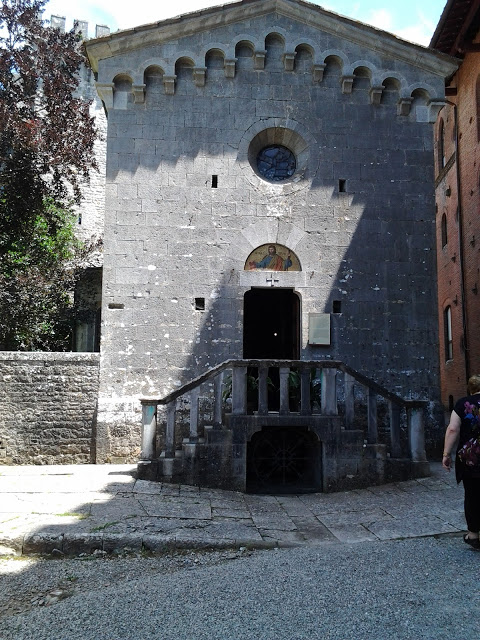
Cappella di San Jacopo.  Its foundations were laid in 1348.

Renovated in 1867-1869, it has a gabled façade preceded by a double stone staircase.  The interior, with a crypt where the members of the Ricasoli family are buried, has a nave divided into three spans with cross vaults.

The 1,200 hectares of the property include 240 hectares of vineyards and 26 of olive groves, in the commune of Gaiole.