Searching for locations: We’ve just arrived in Beijing International Airport, China

Instead of making a grand entrance, arriving in style and being greeted by important dignitaries, we are slinking in via an airplane, late at night. It’s hardly the entrance I’d envisaged. At 9:56 the plane touches down on the runway.  Outside the plane, it is dark and gloomy and from what I could see, it had been raining.  That could, of course, simply be condensation.

Once on the ground, everyone was frantically gathering together everything from seat pockets and sending pillows and blankets to the floor.  A few were turning their mobile phones back on, and checking for a signal, and, perhaps, looking for messages sent to them during the last 12 hours. Or perhaps they were just suffering from mobile phone deprivation.

It took 10 minutes for the plane to arrive at the gate. That’s when everyone moves into overdrive, unbuckling belts, some before the seatbelt sign goes off, and are first out of their seats and into the overhead lockers.  Most are not taking care that their luggage may have moved, but fortunately, no bags fall out onto someone’s head. The flight had been relatively turbulent free.

When as many people and bags have squeezed into that impossibly small aisle space, we wait for the door to open, and then the privileged few business and first-class passengers to depart before we can begin to leave. As we are somewhere near the middle of the plane, our wait will not be as long as it usually is.  This time we avoided being at the back of the plane.  Perhaps that privilege awaits us on the return trip.

Once off the plane, it is a matter of following the signs, some of which are not as clear as they could be.  It’s why it took another 30 odd minutes to get through immigration, but that was not necessarily without a few hiccups along the way. We got sidetracked at the fingerprint machines, which seemed to have a problem if your fingers were not straight, not in the center of the glass, and then if it was generally cranky, which ours were, continue to tell you to try again, and again, and again, and again…That took 10 to 15 minutes before we joined an incredibly long queue of other arrivals,

A glance at the time, and suddenly it’s nearly an hour from the moment we left the plane.

And…

That’s when we got to the immigration officer, and it became apparent we were going to have to do the fingerprints yet again.  Fortunately this time, it didn’t take as long.  Once that done, we collected our bags, cleared customs by putting our bags through a huge x-ray machine, and it was off to find our tour guide.


We found several tour guides with their trip-a-deal flags waiting for us to come out of the arrivals hall.  It wasn’t a difficult process in the end.  We were in the blue group.  Other people we had met on the plane were in the red group or the yellow group.  The tour guide found, or as it turned out she found us, it was simply a matter of waiting for the rest of the group, of which there were eventually 28.Gathered together we were told we would be taking the bags to one place and then ourselves to the bus in another.  A glance in the direction of the bus park, there were a lot of busses.

Here’s a thought, imagine being told your bus is the white one with blue writing on the side.

Yes, yours is, and 25 others because all of the tourist coaches are the same.  An early reminder, so that you do not get lost, or, God forbid, get on the wrong bus, for the three days in Beijing, is to get the last five numbers of the bus registration plate and commit them to memory.  It’s important.  Failing that, the guide’s name is in the front passenger window.

Also, don’t be alarmed if your baggage goes in one direction, and you go in another. In a rather peculiar set up the bags are taken to the hotel by what the guide called the baggage porter.  It is an opportunity to see how baggage handlers treat your luggage; much better than the airlines it appears.


That said, if you’re staying at the Beijing Friendship Hotel, be prepared for a long drive from the airport.  It took us nearly an hour, and bear in mind that it was very late on a Sunday night.

Climbing out of the bus after what seemed a convoluted drive through a park with buildings, we arrive at the building that will be our hotel for the next three days.  From the outside, it looks quite good, and once inside the foyer, that first impression is good.  Lots of space, marble, and glass.  If you are not already exhausted by the time you arrive, the next task is to get your room key, find your bags, get to your room, and try to get to be ready the next morning at a reasonable hour.

Sorry, that boat has sailed.

We were lucky, we were told, that our plane arrived on time, and we still arrived at the hotel at 12:52.  Imagine if the incoming plane is late.

This was taken the following morning.  It didn’t look half as bland late at night.
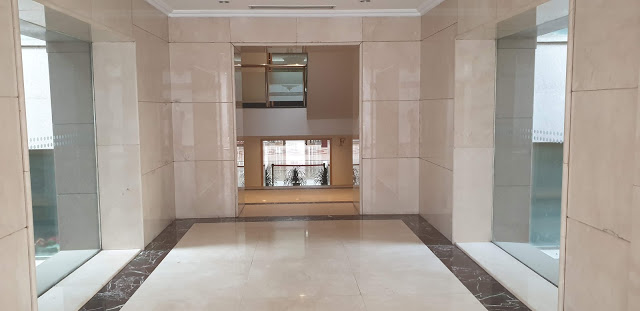
This is the back entrance to Building No 4 but is quite representative of the whole foyer, made completely of marble and glass.  It all looked very impressive under the artificial lights, but not so much in the cold hard light of early morning.

This the foyer of the floor our room was on.  Marble with interesting carpet designs.  Those first impressions of it being a plush hotel were slowly dissipating as we got nearer and nearer to the room.  From the elevator, it was a long, long walk.

So…Did I tell you about the bathroom in our room?

The shower and the toilet both share the same space with no divide and the shower curtain doesn’t reach to the floor.  Water pressure is phenomenal.  Having a shower floods the whole shower plus toilet area so when you go to the toilet you’re basically underwater.

Don’t leave your book or magazine on the floor or it will end up a watery mess.

And the water pressure is so hard that it could cut you in half.  Only a small turn of the tap is required to get that tingling sensation going.

It’s after 1:30 before we finally get to sleep.

As for the bed, well, that’s a whole other story.

What do we know about life?

Our view of life, love, relationships, and marriage come from our own experiences. This is basically the same for all of us for everything that happens to us through life, as young children, at school, at work, at leisure, and, as we grow as a person.

Our ideas about life will come from the experiences of having our children, watching over our children as they grow up, from our relatives, both our own and those acquired by marriage or relationships, and from our friends.

No two life experiences will be exactly the same. There will be similarities but differences which may or may not give us a different perspective, whether that might be for the better or for the worse. Not everything that will happen to us will be good, or bad, but just an experience that we will remember or forget, take notice of or ignore, helps us grow, or cause us pain.

There will be the experiences we have when interaction with others that are outside our family sphere but haling an influence on us directly or indirectly, like politicians, doctors, government officials, and police. There will also be experiences involving those at work that we interact with in a professional manner, and others, who have influence in ways that sometimes can be unimaginable.

These interactions will influence our feelings, thoughts, and how we react and behave, the highs and lows of having children and grandchildren, interactions with aunts, uncles, our parents. Equally there will be moments of despair, of losing a job or missing out on a promotion, of dealing with people in the workplace that make life difficult, dealing with relatives who are not very nice, in short all of those interactions with all these people around you, and more.

Yes, your life is steered by all of these influences, and your views are often coloured by any or all of these people. They make up the sum of who you are, who you will be, and what you want to be. Those dreams will seem, sometimes, within your grasp, but quite often they will seem as far from your grasp as touching the moon.

But all of this, while it makes up who you are, will also make up who your characters are in a story.

They will be people you know, people you’ve met, people you’ve interacted with, people you’ve seen.

Over a series of posts I’ll try to describe some of my influences, and then refine them into the characters and locations of my stories.

Searching for locations: Morning in Hangzhou

This morning starts off with a bang.

Yes, the question on everybody’s lips, how do you fit 200 plus people into a room clearly designed to fit 50 comfortably?

The answer; pure mayhem, and a lot of people missing out on breakfast, or at the very least trying to eat in the awkwardest of positions, by balancing on edges of chairs or just standing at the bar.
This is a zero out of ten for the tour company.

Seven plus tours all leaving at the same time and no possible way of fitting them in.  Good for the hotel if they charged you for breakfast, because at various times there was nothing to eat, and definitely no milk for coffee if you could get coffee.

Still, as we keep saying, it is what it is.

It’s rather hit and miss with breakfast, sometimes there’s adequate catering, a large enough room, and enough food set out for a very large group all turning up at the same time.

So, after the lucky few who did manage to get a seat and equally something to eat, we all pile into the bus, after having to get our suitcases onto the bus because we’re moving on to Shanghai after the day’s activities…

…and then have to wait for the other seven to move off.  In the end, we reverse into the traffic and get underway.  I’m not sure what the other buses were going to do.

But, getting out of the hotel car park was only the first part of the morning’s adventure, the next part was not exactly going to be any easier.  8:00 in the morning means peak hour traffic, and here peak hour traffic takes on a whole new meaning.

Four or five lanes completely full and at a standstill, and the odd daredevil, including our bus driver, thinking he can change lanes.

Having a window seat can be fraught with danger; you get to see some of the most incredible maneuvers Chinese driver’s attempt and amazingly often succeed.

Oh, my mistake, changing lanes can be done.

It just takes a lot of nerve and a death wish.

In a word: Dear

Yes, it’s that simple word that we use to call someone affectionately.

Or sometimes, with a little accent on the word; yes, dear and no, dear.

In other words, it’s a person regarded with deep affection.

It can also mean expensive, by saying, that’s a bit dear, isn’t it, when we’re really saying it’s way overpriced.

I can’t remember how many times I’ve said something is ‘too dear’ to the children.

Grannies tend to use the expression, ‘be a dear and…’, to get you do do something for them.

Friends, sometimes tongue in cheek, will say, ‘oh dear, I’ve upset you’, when that was exactly what they meant to do.  Friends you say?  Yes, friends indeed.

And then we always start a letter (always?  Who writes letters any more?) with

Dear John (oops, not one of THOSE letters)

Dear Sir/Madam

Of course, instead of swearing, you could simply say ‘Oh dear, you’ve let us down again!’.

And when you lose your job, which is happening a lot at the moment, it is said it would cost you dear, though sometimes it would be more appropriate to use the adverb, dearly.

It is not to be confused with the word deer which is an animal, the males of which have antlers.

There are a number of different types of deer, such as reindeer and elk.  In Canada, they are called caribou.

In Robin Hood’s day, killing deer brought you very harsh punishment.

And one of my favourite meats is venison, meat from a deer, which are farmed in New Zealand along with sheep.

Searching for locations: From X’ian to Zhengzhou dong by bullet train, China

Lunch and then off on another high-speed train

We walked another umpteen miles from the exhibition to a Chinese restaurant that is going to serve us Chinese food again with a beer and a rather potent pomegranate wine that has a real kick.  It was definitely value for money at 60 yuan per person.

But perhaps the biggest thrill, if it could be called that, was discovering downstairs, the man who discovered the original pieces of a terracotta soldier when digging a well.  He was signing books bought in the souvenir store, but not those that had been bought elsewhere.

Some of is even got photographed with him.  Fifteen minutes of fame moment?  Maybe.

After lunch, it was off to the station for another high-speed train ride, this time for about two and a half hours, from X’ian to Zhangzhou dong.

It’s the standard high-speed train ride and the usual seat switching because of weird allocation issues, so a little confusion reigns until the train departs at 5:59.

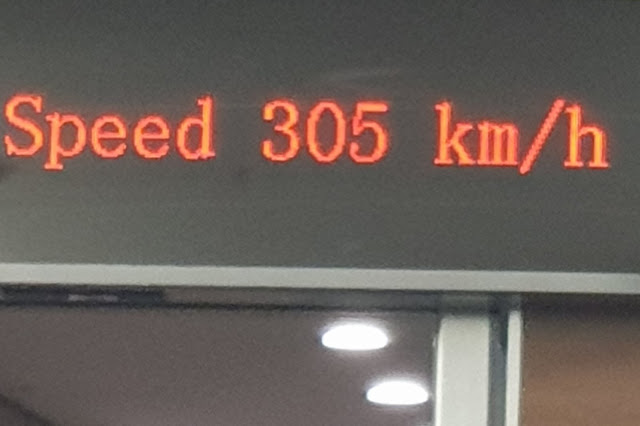
Once we were underway it didn’t take long before we hit the maximum speed

Twenty minutes before arrival, and knowing we only have three minutes to get off everyone is heading for the exit clogging up the passageway.  It wasn’t panic but with the three-minute limit, perhaps organized panic would be a better description.

As it turned out, with all the cases near the door, the moment to door opened one of our group got off, and the other just started putting cases on the platform, and in doing so we were all off in 42 seconds with time to spare.

And this was despite the fact there were about twenty passengers just about up against the door trying to get in.  I don’t think they expected to have cases flying off the train in their direction.

We find our way to the exit and our tour guide Dannie.  It was another long walk to the bus, somewhat shabbier from the previous day, no leg room, no pocket, no USB charging point like the day before.  Disappointing.

On the way from the station to the hotel, the tour guide usually gives us a short spiel on the next day’s activities, but instead, I think we got her life history and a song, delivered in high pitched and rapid Chinglish that was hard to understand.

Not at this hour of the night to an almost exhausted busload of people who’d had enough from the train.  Oh, did I forgot the singing, no, it was an interesting rendition of ‘you are my sunshine’.

The drive was interesting in that it mostly in the dark.  There was no street lighting and in comparison to X’ian which was very bright and cheerful, this was dark and gloomy.

Then close to the hotel our guide said that if we had any problems with the room, she would be in the lobby for half an hour.

That spoke volumes about the hotel they put us in.

Searching for locations: The Lingering Gardens, Suzhou, China

The Lingering Garden

These gardens are very tightly put together and are interspersed with buildings that you can go in and look at as distinct from just looking in from the outside.

There are lots of paths that wind around interspersed with rocks which may or may not be sculpted, and equally interspersed with trees, bushes, and small plants.  In the middle is a lake which usually has lotus plants in bloom, but they are not in season.

The gardens were built around a small lake that was filled with fish of all sizes and colours

The buildings were also a contrast for those built for the men

and those for the women

In the middle of the garden was a significant rock pillar

surrounded by certain areas of the garden that had smaller rock formations


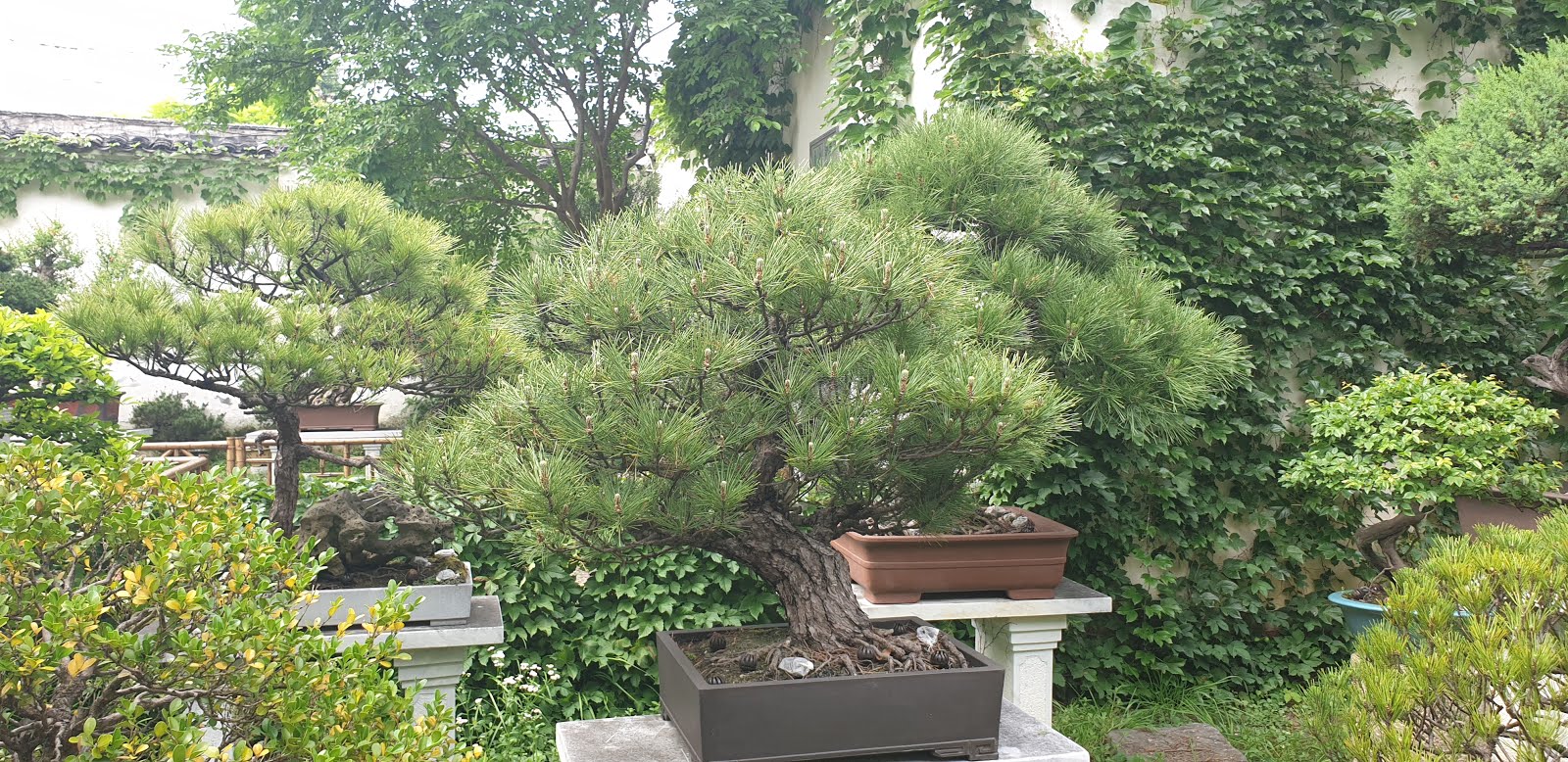
At the end of the garden is a large collection of bonsai trees, some of which are quite exquisite.

Searching for locations: The Pagoda Forest, near Zhengzhou City, Henan Province, China

The pagoda forest

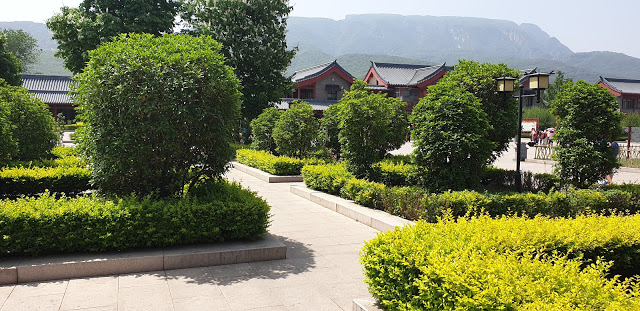
After another exhausting walk, by now the heat was beginning to take its toll on everyone, we arrived at the pagoda forest.

A little history first:

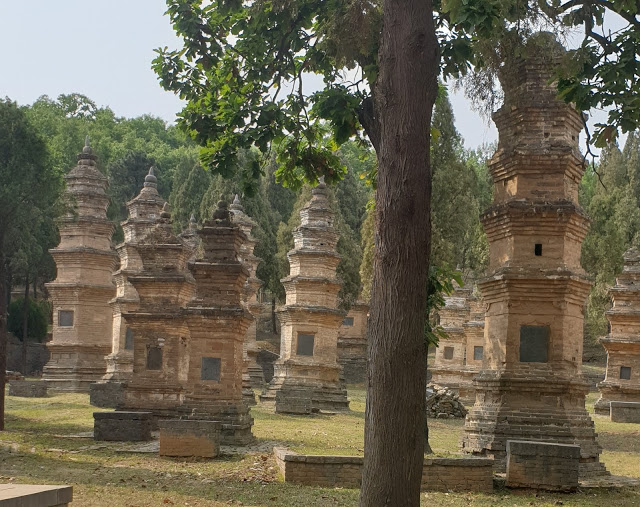
The pagoda forest is located west of the Shaolin Temple and the foot of a hill.  As the largest pagoda forest in China, it covers approximately 20,000 square meters and has about 230 pagodas build from the Tang Dynasty (618-907) to the Qing Dynasty (1644-1911).

Each pagoda is the tomb of an eminent monk from the Shaolin Temple.  Graceful and exquisite, they belong to different eras and constructed in different styles.  The first pagoda was thought to be built in 791.

It is now a world heritage site.

No, it’s not a forest with trees it’s a collection of over 200 pagodas, each a tribute to a head monk at the temple and it goes back a long time.  The tribute can have one, three, five, or a maximum of seven layers.  The ashes of the individual are buried under the base of the pagoda.

The size, height, and story of the pagoda indicate its accomplishments, prestige, merits, and virtues. Each pagoda was carved with the exact date of construction and brief inscriptions and has its own style with various shapes such as a polygonal, cylindrical, vase, conical and monolithic.

This is one of the more recently constructed pagodas

There are pagodas for eminent foreign monks also in the forest.

From there we get a ride back on the back of a large electric wagon

to the front entrance courtyard where drinks and ice creams can be bought, and a visit to the all-important happy place.

Then it’s back to the hotel.

Wishful thinking will not get us there any faster!

My phone, being smart and all, has been creating a notification that tells me I have some memories stored on it for this day a year ago, or two years, or many years.

The pictures it is showing are of our trip to China last year.

Not much chance of going back, and, back then, neither of us could imagine that everything that has happened in the last six months could happen.

But, it did.

And one of the effects of those events is no more overseas travel

No more travel of any sort at the moment with the travel restrictions in place.  We can’t even fly to another state.  Come to that, we might not have an airline to fly on.

Travel, of course, is the main escape, where we can get away from our daily lives, and go somewhere quite different from where we live and experience a different world.  The people, the food, the sights.

What is probably more significant is that we might not be able to go away again, if there is no cure for the virus.  No one will want to risk catching it in another country, simply because of the medical expenses, the chances are that travel insurance will not cover you for the Coronavirus.

And no cover, no travel, even if you are able to.

So, it means that any travel we will be doing, when we can, will be in our own country.  We can do this without a vaccine because we have so few active cases, and the measures we have is stopping it in its tracks.

So too for New Zealand, and we may be able to travel there.

One day.

Until then, my smartphone is going to keep sending me gentle reminders of what it was like in another lifetime.

Searching for Locations: Waitomo caves house, North Island, New Zealand

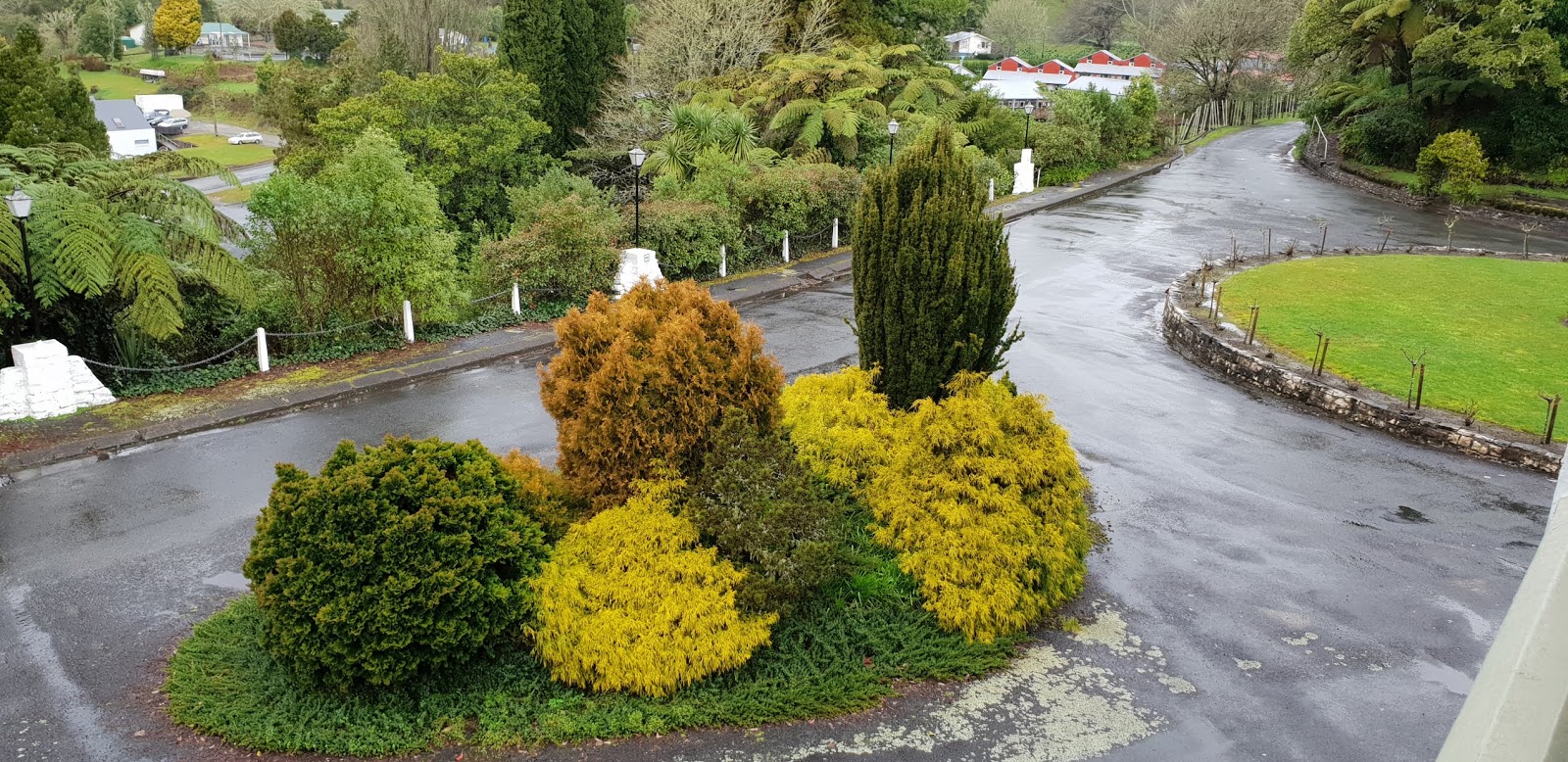
A relatively unassuming lane leads to what could be described as a grand hotel, called Waitomo Caves Hotel.

The original hotel was built in 1908, and it was later extended in 1928.  Part of it is ‘Victorian’, based on an eastern Europe mountain chalet, and part of it is ‘Art Deco’, the concrete wing, and a feature, if it could be called that, is none of the four corners are the same.

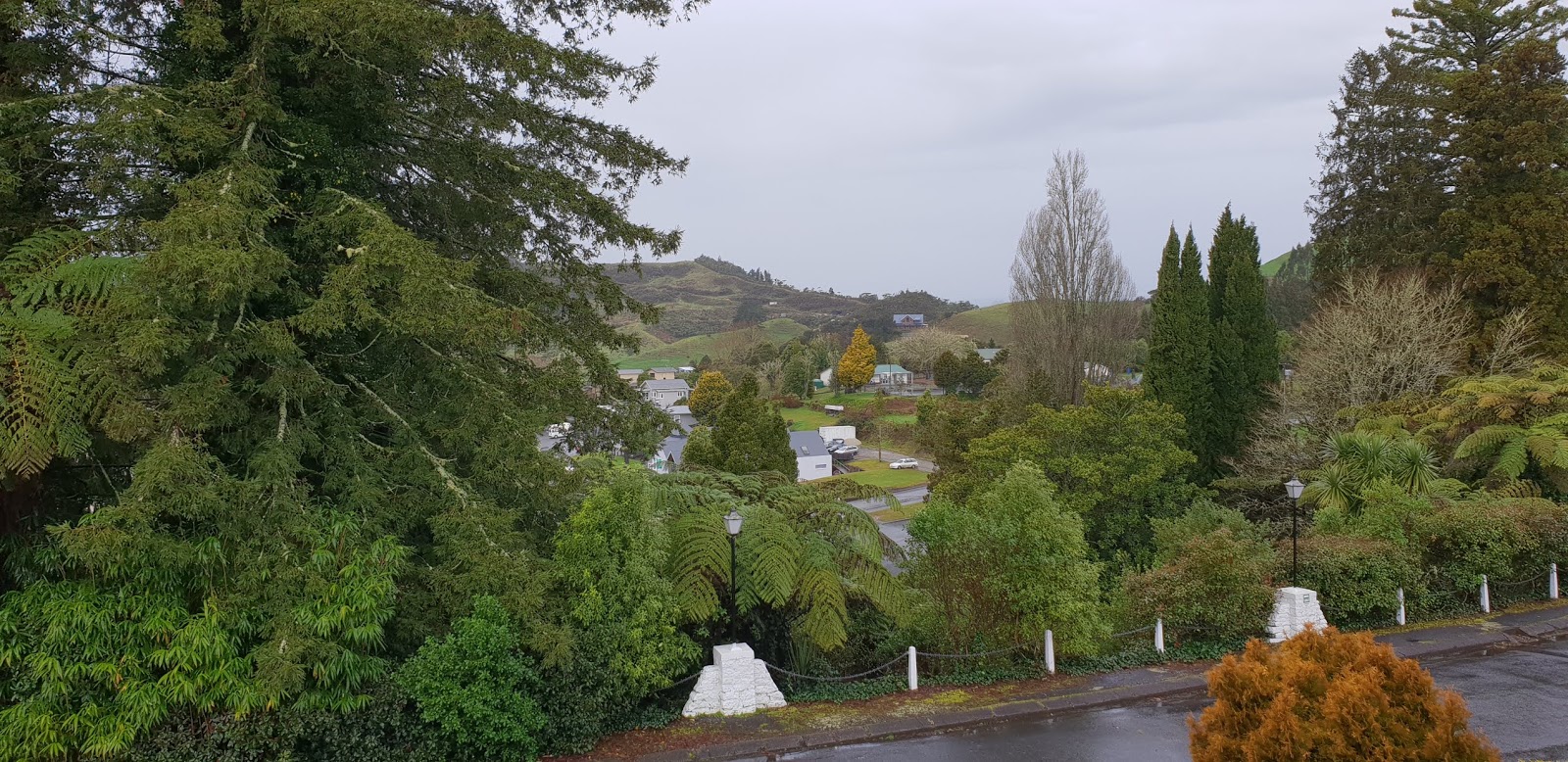
Views from the balcony show part of the surrounding gardens

and the town of Waitomo in the distance.

In gloomy weather, it does look rather spooky, and I suspect there may be a ghost or two lurking somewhere in the buildings.

Where to go in winter to finish that damn book!

All in all, this is just the place I was looking for to write into a story.  A perfect blend of fact and fiction could make this into something else, or just plain hiding in plain sight.

If you are not skiing, not hiking, not horseriding, and have come for the fishing, this is the place to be.

Except…

There is something about a summer resort town in the middle of winter.

Or maybe it’s like this all the time.  After all, I have been here in Spring and Autumn and it was just as deserted on the main street.

And not just deserted it is almost like a ghost town, and I suspect the few people that are here are the few hapless tourists wandering about wondering where everyone else is.

It’s about 2 pm and we are heading for the local Coffee club for lunch and coffee.  It might be past lunch but I don’t think that’s the reason why there are so few customers

There is just no one here.

Perhaps it’s probably a different story on weekends when the city people come down for the snow and are passing through.

But, essentially, Taupo is a holiday town, and if you take a closer look, all you will see is cafe’s, dining establishments and motels.  A quick tour of the shopping center shows more shops are closed or vacant than there are open.

It’s not surprising that a lot of businesses cannot survive, because to stay in business, you need a steady stream of customers all year round, not just in Summer.

Unlike their winter counterparts, the ski resorts who seem to have a different working model, take as much as you can while you can, they only have to operate a few months of the year, use non-permanent seasonal workers, and can adjust if there’s no snow.

An indication of just how much custom there is in Taupo in winter is trying to organize horse riding.  Admittedly it is rather cold for both humans and horses, but not every day is a loss.  We sought out the local Taupo horse riding establishment and found it closed for Winter.  Understandable perhaps, but the more telling point was the fact it had a big sign up “Business for Sale”

I don’t fish, and aside from water sports, a summery thing to do, there is precious little to do there in winter, which could have it’s benefits.

Hmm.

Hang on, if I really want to disappear and can’t be bothered doing anything else except a walk to the nearest cafe for a cup of coffee to be away from all the distractions long enough to finish a book, this is the place to go.

It’s just a pity with the COVID restrictions, we can’t go anywhere, even New Zealand.

I guess I’ll have to find something closer to home.