Searching for locations: The Beijing Zoo, and Pandas, China

Beijing Zoo

Founded in 1906 during the late Qing dynasty, it is the oldest Zoo in China.  It also has an aquarium and has 450 land-based species, some of which are rare and endemic to China like the Giant Panda, and 500 marine-based species.  Other rare animals to be seen are the Red Panda, the Golden Snub-nosed Monkey, the South China Tiger, the White Lipped deer, the Chinese alligator, the Yak,, and the Snow Leopard.
Most of the original animals were bought in 1908 from Germany by the viceroy of Liangjiang Duanfang.  The Zoo first opened on June 16th, 1908.
Currently, the Zoo grounds resemble classical Chinese gardens, and among the attractions are a number of Qing dynasty buildings to view, as well as an Elephant hall, a Lion and tiger hall, a Monkey hall, and a Panda hall.  In all, there are 30 halls.
The Zoo is located at 137 Xizhimen WaiDajie in Xicheng district, near the 2nd ring road.

We are primarily at the Zoo to see the Pandas, and there is a specific hall devoted to them, and by the way, it costs extra to see them.  Everyone in our group is particularly interested in seeing them because it’s rare that any can be found anywhere else in the world.
Perhaps if there had been more time, another hour, maybe, it might have made all the difference, but I think that extra time might have clashed with the pearl factory, and that, for obvious reasons, was deemed to be more important.

Our first stop is in the Panda hall.
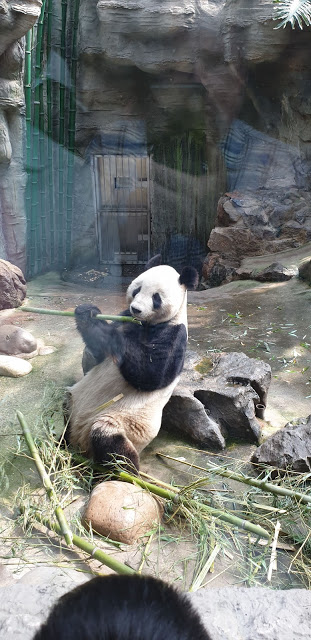
There are two pandas that we can see, one of whom is a little camera shy, and the other, above, who is demonstrating how pandas eat bamboo.  They are behind a large glass wall, and you have to wait for the opportunity to get a good photo, and, sometimes only enough to include the top of the head of the person in front of you.  Unfortunately, the Chinese visitors don’t understand the polite excuse me in English, and, can at times, be rude enough to shove their way to the front.

What is also a problem is the uncooperativeness of the pandas to pose for photos.  I guess there’s no surprise there given the thousands of visitors every day with only one purpose in mind.  We counted ourselves lucky to get the photos we did.

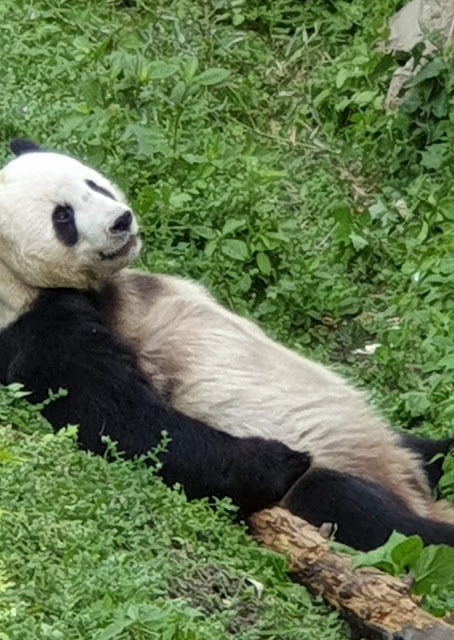
The hall itself is built on to the external enclosure where there are a number of giant pandas some of whom that were on show were relatively lethargic, as though they had a big weekend, and we’re sleeping it off, like this panda below:

Then, remarkably, we came across one that decided to be a little more energetic and did a walk in front of hundreds of Chinese who had undoubtedly come to show their children the animals.

This Panda was also easier to photograph whereas the other panda, one chewing on a morning feast of bamboo, saw a lot of pushing and shoving by the spectators to get the best spot to take his photograph.  Having manners just doesn’t cut it here, so do what you have to to get that photograph.
We also saw a couple of monkeys that were also in the panda enclosure, but they were not much of a side benefit.  They may have been there to use the Panda’s exercise equipment, though it was not quite like what we use.There was no time really to wander off to see much else, but apparently, there were also red pandas, and surprisingly, a category call Australian animals.  But, who goes to another country to view your own animals?The cutest animals were the stuffed pandas, and they were quite reasonably priced.
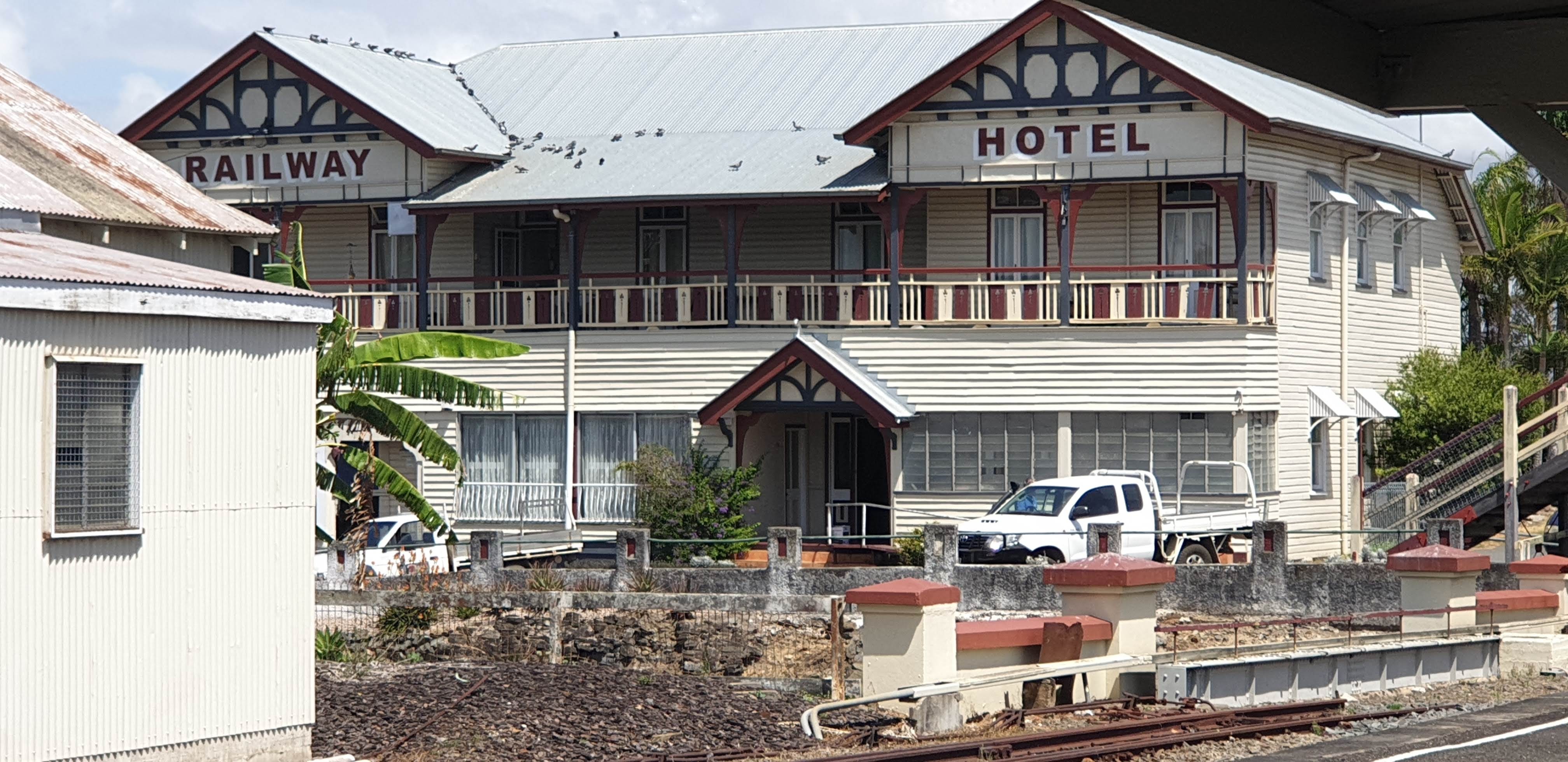
In every town, in every country…

The Railway Hotel

20191002_122507

It seems to me that in a lot of towns where the railway passes through, and there’s a station, there is a ubiquitous Railway Hotel.

And, for some reason, they are all very old, as if they were built when the railway first went through, and it was the nearest hotel to the station.

In some railway towns, there’s more than one hotel, because I’m sure the Railway Hotel did actually fill up, and people had to stay somewhere else.

I’ve stayed in one or two over the years, and they are monuments to the past, a glimpse into how the notion of grand hotels was, a hundred years ago.

Now, they’re just tired.
Peeling or fading wallpaper, threadbare and stained carpets, creaking floorboards, staircases that were once grand, but now don’t quite feel as solid as they used to be.

There’d be no sneaking upstairs because there’s always two or three stairs that creak.

And what’s that interesting aroma that seems to permeate everywhere?  Brass polish.  Wood polish.  Or just the remnants of the last meal; was that cabbage?

There’s always a lounge with a huge fire burning in winter, and there’s nothing like the warmth and smell of burning wood.  All the better to toast marshmallows!

The dining room had the wooden walls, the wooden floors and the wooden tables with crisply starched tablecloths and silverware that’s been polished every day for a hundred years.  Here you are served from a limited menu that has the basics and plenty of it,  Roast beef, lamb, or chicken, potatoes, carrots, mash potatoes, and beans and peas, and gravy that’s to die for.
Dining in that room is still an experience, and perhaps more so than the new hotel’s soulless restaurants with cordon bleu meals, sometimes scraps on a very large plate.

Give me a Railway Hotel any day.

Searching for locations: The remnants of the wall that surrounded Beijing, China

The fortification walls, both an inner wall and an outer wall, surrounding Beijing city were built from the early 1400s to 1553.

The dimensions of the Inner city wall are:
          Length: 24 kilometers or 15 miles
          Height: 25 meters or 49 feet high
          Thickness, at ground level: 20 meters or 66 feet
                            at the top: 12 meters or 29 feet

It had nine gates.  The fortifications included gate towers, archways, watchtowers, barbicans, barbican towers, sluice gates, sluice gate towers, enemy sighting towers, corner guard towers, and a moat system.

The outer city wall had a length of 28 kilometers or 17 miles.

From 1911, after the collapse of the Qing Dynasty, the dismantling of the fortifications began.

In 1965, major deconstruction of the fortifications was commenced to allow for the construction of the 2nd wrong road, and Line 2 or the Beijing underground railway.

 In 1979, the government called off the demolition of the remaining city walls and named them cultural heritage sites. By this time, the only intact sections were the gate tower and watchtower at Zhengyangmen, the watchtower at Deshengmen, the guard tower at the southeast corner, the northern moats of the Inner city, the section of the Inner city wall south of the Beijing railway station, and a small section of Inner-city wall near Xibianmen.

For more reading, go to: https://en.wikipedia.org/wiki/Beijing_city_fortifications

As for our guide’s explanation of the fortifications: Leaving the Square to go to the Golden Mask Dynasty Show, we pass remnants of the wall that used to surround Beijing.

This wall was built in the early 15th century and was about 24 km long, up to 15 meters high and about 20 meters thick, and had nine gates, one of which still exists today.  In 1965 most of it was removed so that the second ring road and an underground railway line could be built.

Searching for locations: The Paris Opera House, Paris, France

This was one of the more interesting experiences for the grandchildren as they were, as all young girls are, interested in ballet.

We thoroughly enjoyed our visit which included some time watching ballet practice.

I could not convince anyone to take the elevator back down to the ground floor as it was suspected we might be ‘attacked’ by the ‘phantom’.  Certainly, the elevator was very old and I think at the time it was being repaired.

20140108_124100

Part of the Grand Staircase in Palais Garnier Opera de Paris

20140108_125843

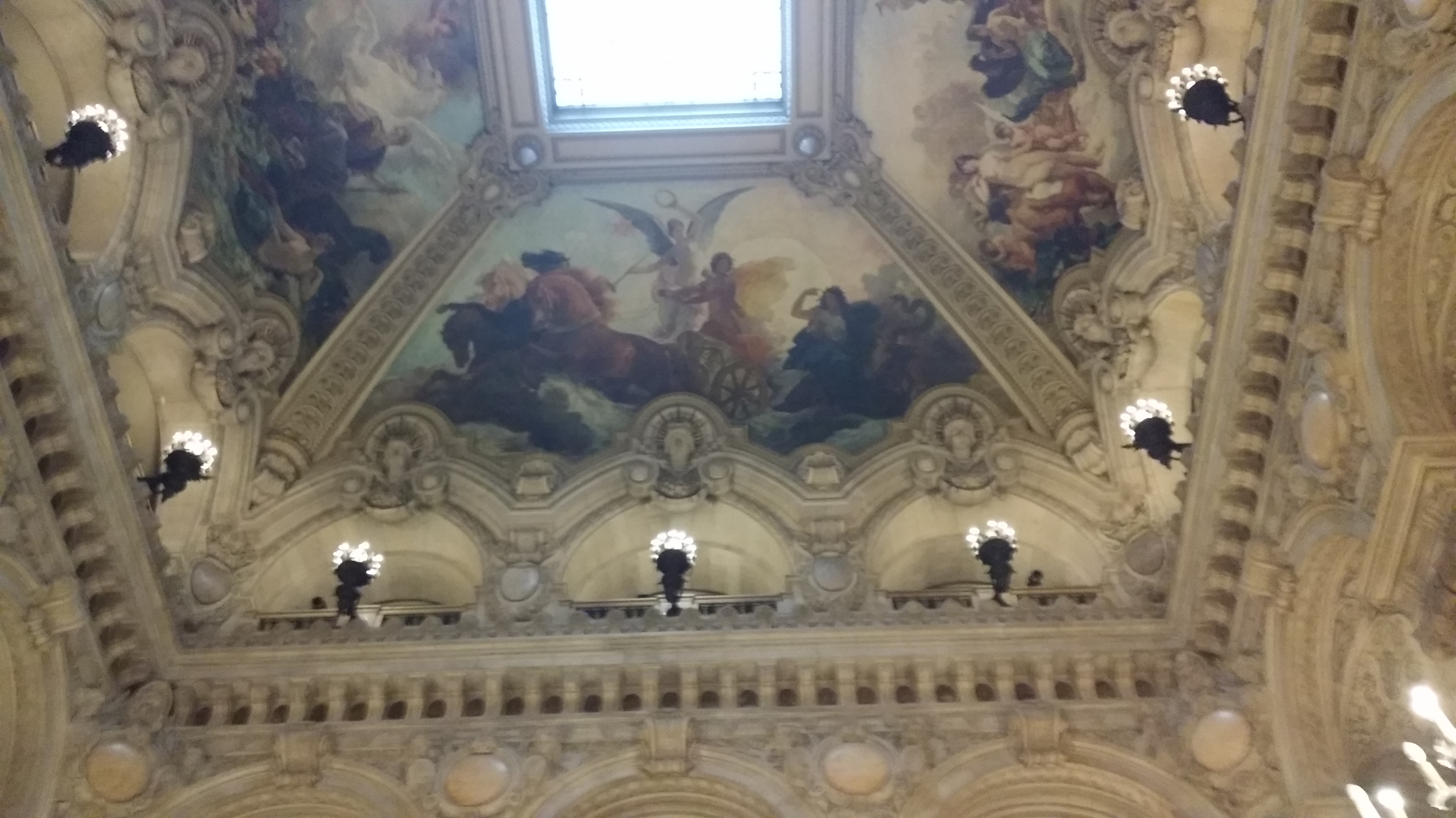
The ceiling above the main staircase.  The ceiling above the staircase was painted by Isidore Pils to depict The Triumph of Apollo, The Enchantment of Music Deploying its Charms, Minerva Fighting Brutality Watched by the Gods of Olympus, and The City of Paris Receiving the Plan of the New Opéra.

20140108_123338

The ceiling of Chagall at the Palais Garnier

On 23 September 1964, the new ceiling of the Opéra Garnier was inaugurated with great pomp.  It was painted by Marc Chagall at the request of André Malraux

20140108_125807

Amphitheatre and Orchestra Pit entrance

20140108_122243

Interior, and doorways to boxes

20140108_123500

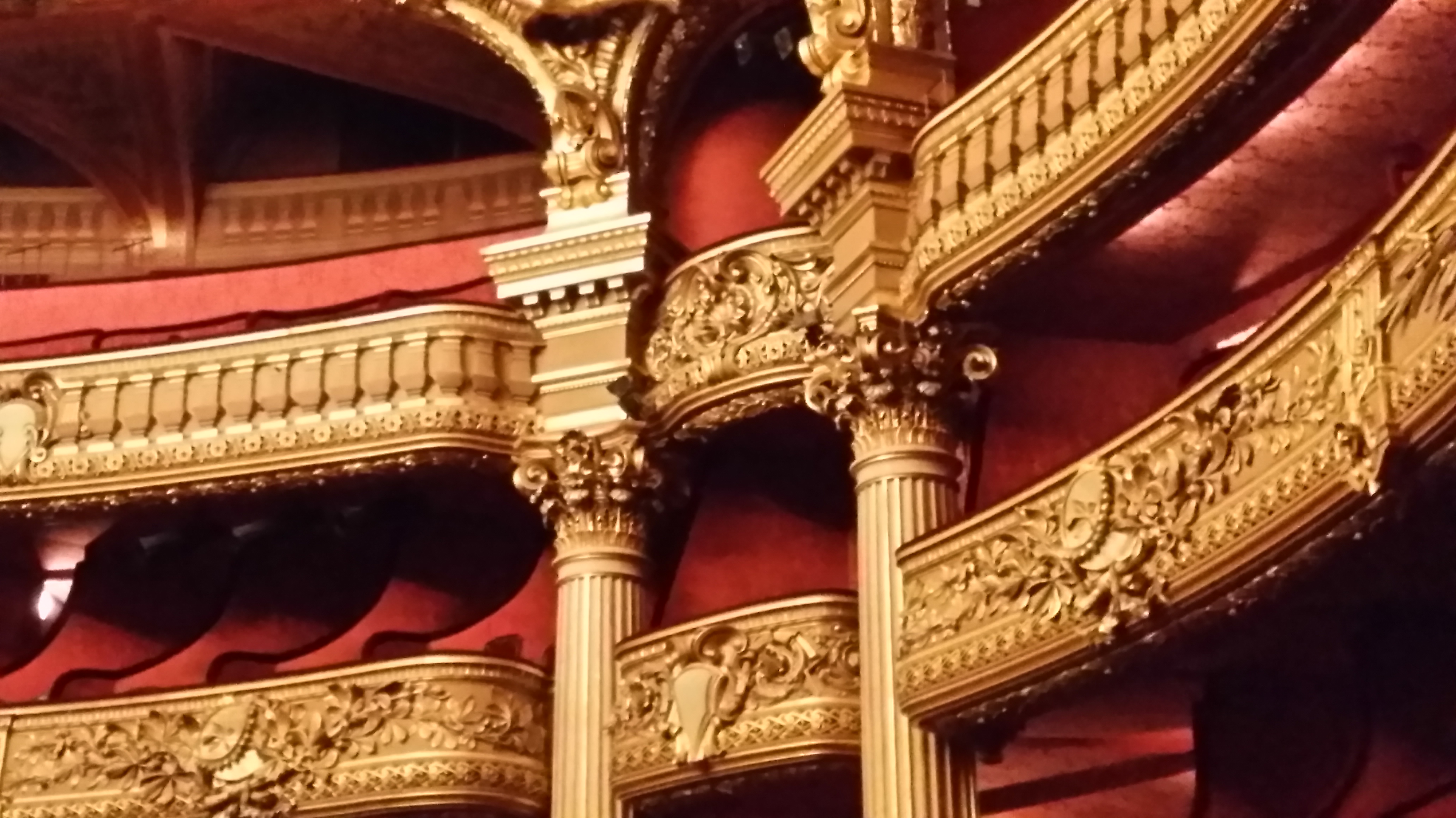
Box seats in the auditorium

20140108_123512

Ornate ceilings and columns

20140108_123332

Seating inside the auditorium

20140108_125603

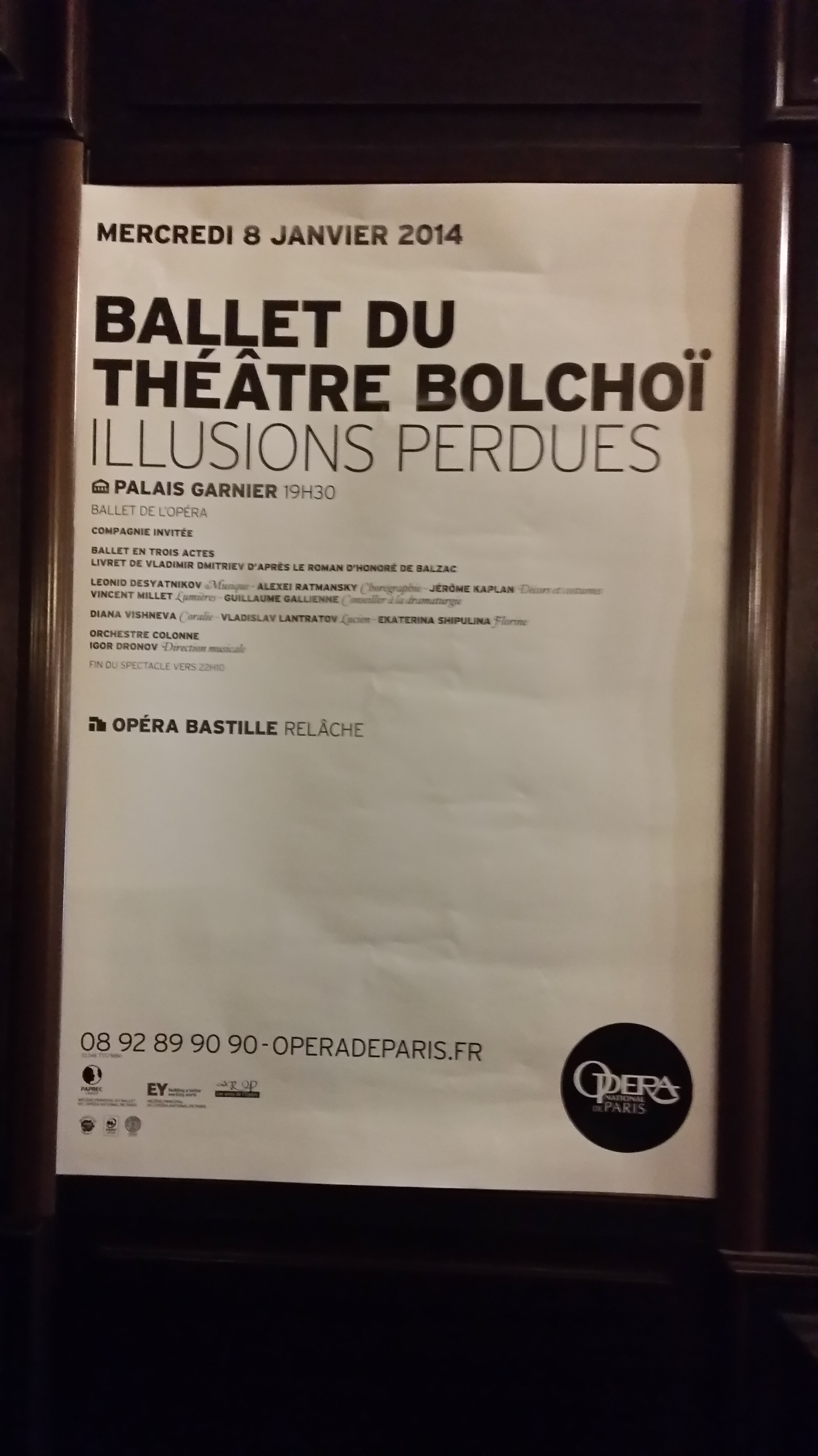
The day we were leaving Paris, was the first night of the Bolshoi Ballet.  My two granddaughters were greatly disappointed at missing out on the opportunity of a lifetime, to see the Bolshoi Ballet at the Paris Opera House.

20140108_123359

But we did get to see the principals practicing.

The Perils of Travelling: The last plane out on Friday night

Everyone knows that if you are on the last flight out on a Friday night the chances of you getting away on time are remote.

Yep.

We’re on the last flight out.

Yep.

There’s no way in hell we’re leaving on time.

But, here’s the thing.

Our incoming plane arrives 6 minutes late, so there’s every hope of getting away on time.

We are, of course, delusional.

Planes can’t fly without a crew, and part of our crew on another incoming plane, which is, yep,
delayed.

In fact, the whole arrivals board is lit up with the word “delayed” for every flight but our incoming plane and one other from Sydney.

And, no, our missing crew members are not on either.

So, it becomes a waiting game and placating messages from the gate crew first to tell us we’re waiting for crew and two more times to tell us we will be boarding soon.

The look on some faces says they’ve been through all this before.

Then, one of the gate staff, communicator in hand goes out to see if the errant crew members are coming. She waits a few minutes but it probably takes longer than that for them to finalize their duties on the incoming plane and get to our gate.

She returns to the gate counter just as an electric car comes towards us from one of the satellites.

Crew found.

Boarding starts.

We leave 35 minutes late. About the average time all the delayed planes were, well, delayed.

Ah, the joys of travelling on a Friday night

Searching for locations: From the Presidential Suite to almost walking the plank, Auckland, New Zealand

This is something you don’t see every day of the week, or once in a lifetime, perhaps.

We arrived at the Hilton Auckland hotel somewhere between one and two in the morning after arriving from Australia by plane around midnight.

Sometimes there is a benefit in arriving late, and, of course, being a very high tier HHonors guest, where the room you book is upgraded.

This stay we got one hell of a surprise.

We got to spend the night in the Presidential Suite.

The lounge and extra bathroom.

Looking towards the private bathroom.

A bathroom fit for a King and a Queen

And the royal bed

There was a note to say that we should keep the blinds closed for privacy and that a ship would be arriving in the port, but I did not expect it to be literally fifty feet from our balcony.

aucklandhotelandship

Searching for locations: Hong Kong Park, Hong Kong

After arriving in Hong Kong early in the morning, we were taken to the Hong Kong Conrad Hotel where we were staying for several days.  We had a short sleep, then I took the grandchildren for a walk and we found Hong Kong park, with a Fountain Plaza, waterways, a waterfall, and turtles.

2013-12-28 11.24.02

Part of the fountain area.

2013-12-28 11.31.57

Turtles resting on a rock

2013-12-28 11.31.36

A turtle about to go in the water

2013-12-28 11.35.26

The waterfall.

It was a pleasant surprise to find this park in such a highly built-up area.

Nearby was a multi-story underground shopping center that was huge, and very conveniently accessible from our hotel.

Searching for locations: Just how hard can it be to see some snow?

You would think it is a relatively simple thing to get to the snow.

Of course, there are a few necessities like skis, boots, poles, and warm dry clothing, but that can all be bought or rented when you get there, or if you are an enthusiast, you already have the gear.

So, you get in the car, set the navigator, and off you go.  Till you get within 20 k of the ski field, it’s all plain sailing, everyone is excited, and mentally preparing.

Then it all starts to go sideways.

Those last few kilometers to the top are going to be arduous particularly if it’s been snowing and the roads are icy, but the weather is fine with blue skies and no recent snow falls.  Were expecting a slow drive and a parking spot.

The road is open.

But…

So late in the morning, a sign at the bottom of the mountain warns all the car parks at the ski field are full, but we venture on anyway.

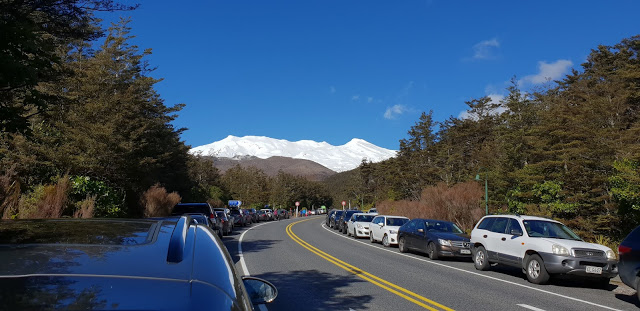
As you can see, the cars are parked so far away from the ski fields, the prospective skiers have to almost run a marathon before they get there!

And for some odd reason, we picked the very day everyone in New Zealand also wanted to go up to the ski fields so parking, even near the Chateau Tongariro was gone and there were endless cars looking for parking spots and traffic wardens had their hands full trying to keep traffic moving
So, for us and everyone else, everything stops at Chateau Tongariro, and from there the only vehicles allowed up are buses.

It’s about 10:30 and we are advised the only way we were getting to see snow was to take a bus

Now, there are two types of busses.  You can go up on a local bus, from Whakapapa Village that costs $20 a person which in the context of the cost of skiing not very much, but if you’re not, it’s quite expensive.

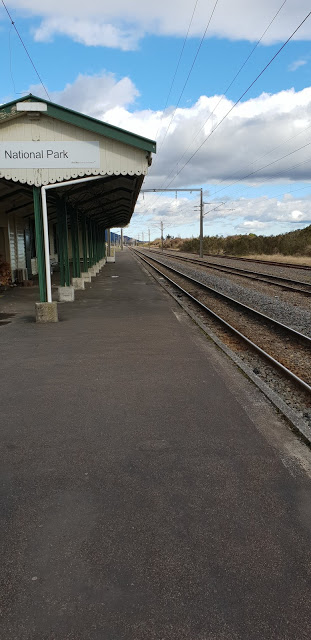
The second, one we were advised to use, operates from a place called National Park, about 9 km away, a snow shuttle that costs $6 each.  The trouble is by the time we were ready to go there, to catch a shuttle, there were no more shuttles.

We did not know what to expect when we got to ‘National Park’, but being a railway station makes sense.  It’s the only place with a very large carpark!

Oh, well, there’s always tomorrow.

Searching for locations: The apartments at Greve in Chianti, Tuscany, Italy

When we first planned to stay in Tuscany for a few days, we wanted to be in a central area.  We had thought of staying in Florence and making daily treks, but the tour operator we selected told us it would be better if we stayed closer to Arezzo.

We picked Greve in Chianti, and a place called Antico Pastificio, we booked a standard apartment with two bedrooms, and it was about as authentic Italian you could get.  The building we stayed in was the yellow pasta factory, and the apartment named ‘Iris’.

It was only steps away from the main square, shops, restaurants, and at the opposite end, the quaint ringing of church bells at various times during the day.

Gaining access was through a very narrow arch which required some deft driving and then up the road.  There were villas and two large apartment blocks.

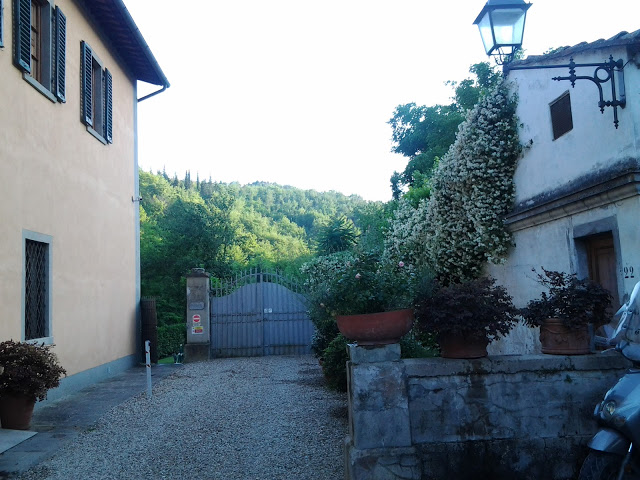
You can just see the archway at the end of the road. 
This was the entrance to our room,

 along a passage and up the stairs, turning left at the top.

 Going straight ahead through the gate to the car park, 

and access to the grounds behind the buildings.

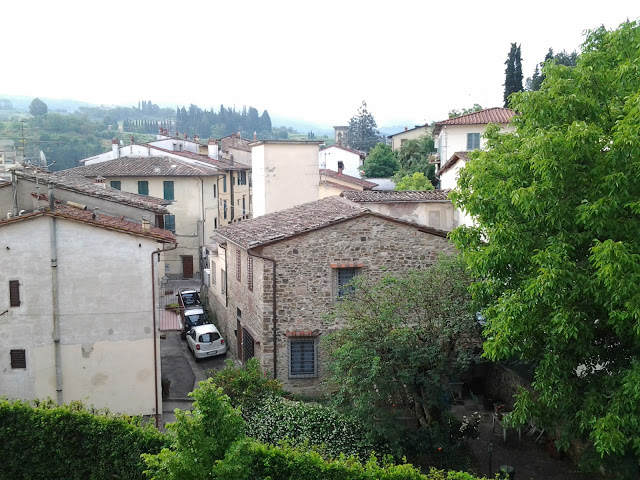
This was the view from the lounge/living room.  The days were hot, and on several evenings it rained, breaking the heat and making the evenings sitting by the window cool and refreshing.

 And the last view is looking towards the town piazza and the church

Searching for locations: Venice, Murano, and glass blowing

The first time we visited Venice, there was not enough time left to visit the glass blowing factories on Murano.  We saved this for the next visit, and now more comfortable with taking the vaporetto, boarded at San Marco for the short journey.

The view looking towards the cemetery:

The view looking down what I think was the equivalent to the main street, or where several of the glass blowing factories and display shops were located:

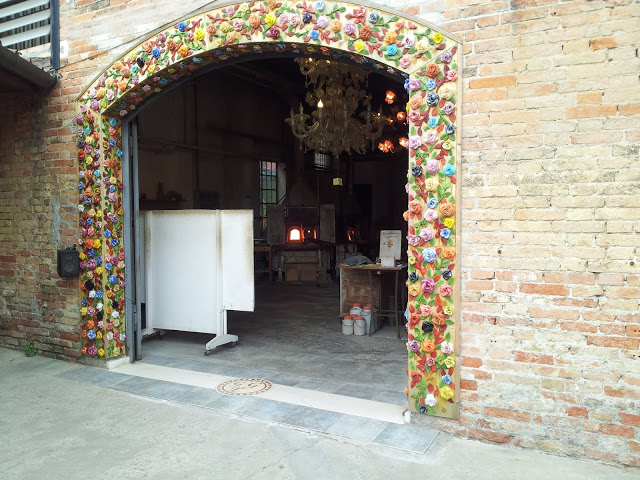
Looking towards a workshop, this one costs us each a Euro to go in and observe a demonstration of glass blowing, and it still surprises me that some people would not pay

The oven where the glass is heated

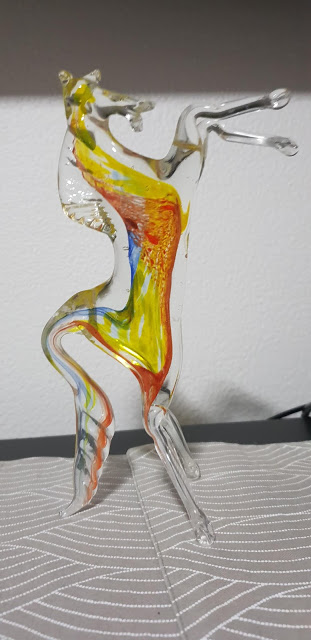
And the finished product, the retail version of the horse that the glass blower created during the demonstration:

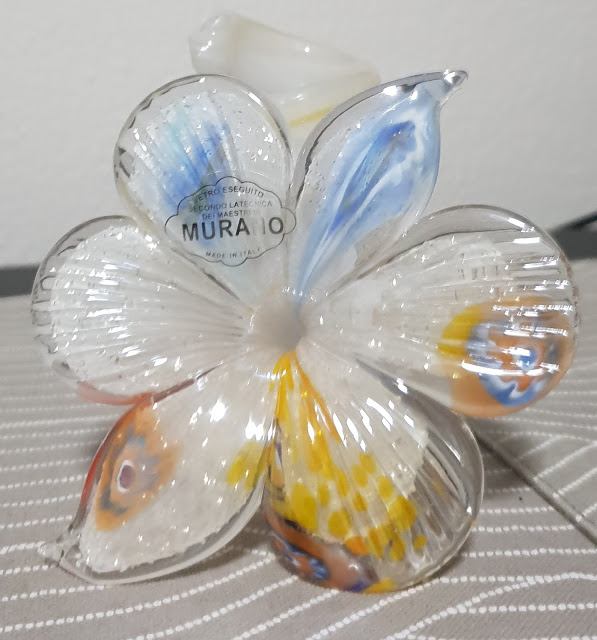
Then we bought some other glassware from the retail storefront, a candle holder

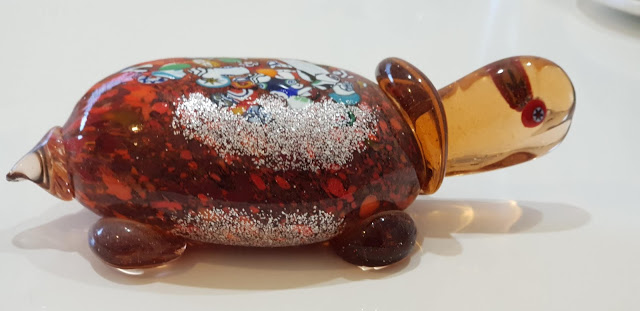
and a turtle.