A photograph from the inspirational bin – 9

…

I remeber once being told that if you shoot for the moon, you’ll land in the clouds, if you shoot for the tree tops, you’ll finish up back where you started from.

It was a silly analogy, but I always remembered it when I looked up at the sky and saw clouds.

That was back in those hazy carefree days just after you were finished with school and you had your whole life in front of you. Your parents were there as the safety net, and were still proud of your scholastic achievements, and were not in too much of a hurry to hustle you out of the house.

But what happened when there’s a recession that came upon everyone without any warning.

Stocks plummeted, people lost their life’s savings, those with mortgages and loans suddenly finding that along with unemployment came no income, no ability to pay the bills, and therefore lost everything.

Although I never said it, I was thinking what good was an education when the whole world had gone to hell in a handbasket.

Two things I remember from back then, which in the context of disaster, wasn’t all that long ago. Firstly, my father making us children go camping from before we could walk, and with it, to survive with nothing but the clothes on our backs, and our wits.

It had happened to him, as a member of am expedition in Africa in his younger days, thinking that he might become the next great explorer, or archeologist, and finishing up getting lost, even though he asserted the other members had deliberately left him behind.

And secondly, that it was essential that we forge working relationships with any and all those who were like minded, such as those who wanted to be saved, not those who expected everyone else to so the work. It was obvious he had met a lot of those type of people too.

It served us well.

When nations began turning on each other, when essential resources like electricity and fuel stopped being distributed and rationed, when food suddenly became scarce, that’s when the real trouble started. My father said, at the outset, what would happen, and was glad our mother was not there to see it.

Then, when neighbours attacked neighbours once food became scarce, it was time to leave. The pity of it was, he died defending us, even after offering up some of the food we had stored away, but that had not appeased a hungry or angry mob.

His last words, “Go to where we said we would go, and remember everything I’ve taught you” were etched in my brain, and my brother and I did as he asked.

But, even knowing where we had to go, and how to get there, a plan of action made many years before, and trialled in recent years with success, nothing in the past could have prepared us for the journey.

It was, literally, time to shoot for the moon.

—

© Charles Heath 2021
In a word: Dear

Yes, it’s that simple word that we use to call someone affectionately.

Or sometimes, with a little accent on the word; yes, dear and no, dear.

In other words, it’s a person regarded with deep affection.

It can also mean expensive, by saying, that’s a bit dear, isn’t it, when we’re really saying it’s way overpriced.

I can’t remember how many times I’ve said something is ‘too dear’ to the children.

Grannies tend to use the expression, ‘be a dear and…’, to get you do do something for them.

Friends, sometimes tongue in cheek, will say, ‘oh dear, I’ve upset you’, when that was exactly what they meant to do.  Friends you say?  Yes, friends indeed.

And then we always start a letter (always?  Who writes letters any more?) with

Dear John (oops, not one of THOSE letters)

Dear Sir/Madam

Of course, instead of swearing, you could simply say ‘Oh dear, you’ve let us down again!’.

And when you lose your job, which is happening a lot at the moment, it is said it would cost you dear, though sometimes it would be more appropriate to use the adverb, dearly.

It is not to be confused with the word deer which is an animal, the males of which have antlers.

There are a number of different types of deer, such as reindeer and elk.  In Canada, they are called caribou.

In Robin Hood’s day, killing deer brought you very harsh punishment.

And one of my favourite meats is venison, meat from a deer, which are farmed in New Zealand along with sheep.

Searching for locations: The Kingston Flyer, Kingston, New Zealand

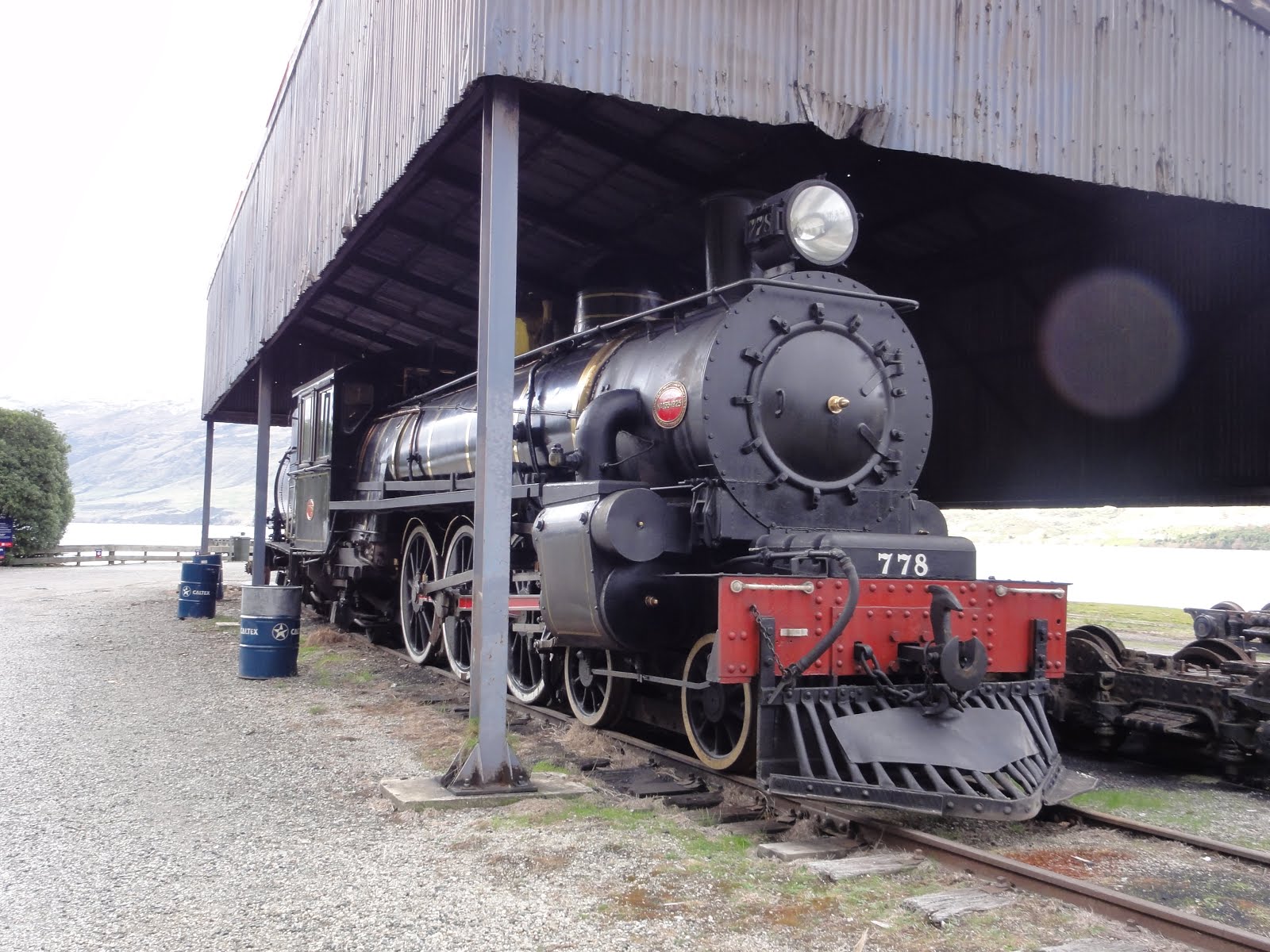
The Kingston Flyer was a vintage train that ran about 14km to Fairlight from Kingston, at the southern end of Lake Wakatipu, and back.

This tourist service was suspended in December 2012 because of locomotive issues.

However, before that, we managed to go on one of the tours, and it was a memorable trip.  Trying to drink a cup of tea from the restaurant car was very difficult, given how much the carriages moved around on the tracks.

The original Kingston Flyer ran between Kingston, Gore, Invercargill, and sometimes Dunedin, from the 1890s through to 1957.

There are two steam locomotives used for the Kingston Flyer service, the AB778 starting service in 1925, and the AB795 which started service in 1927.

The AB class locomotive was a 4-6-2 Pacific steam locomotive with a Vanderbilt tender, of which 141 were built between 1915 and 1927 some of which by New Zealand Railways Addington Workshops.

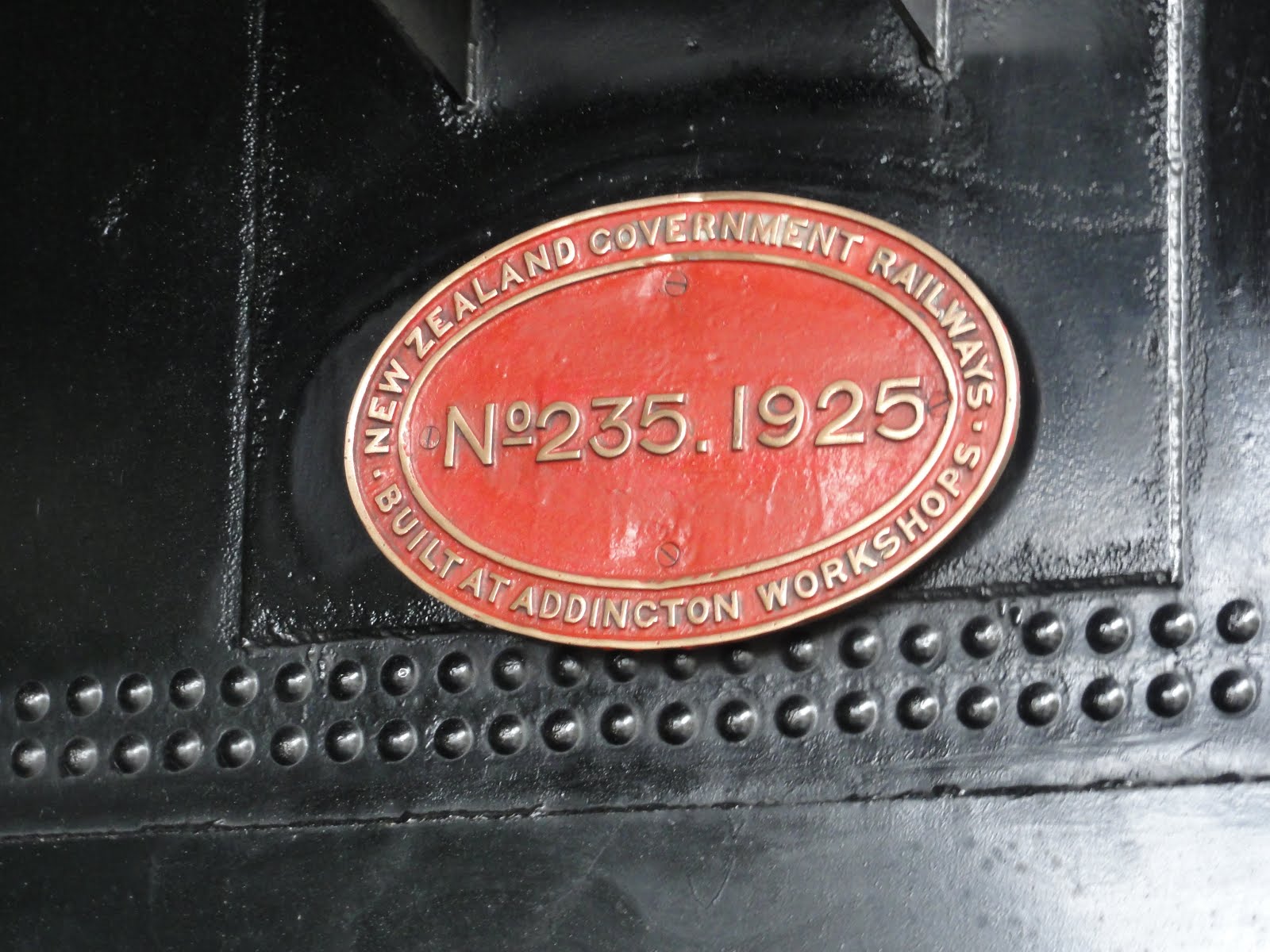
No 235 is the builder’s number for the AB778

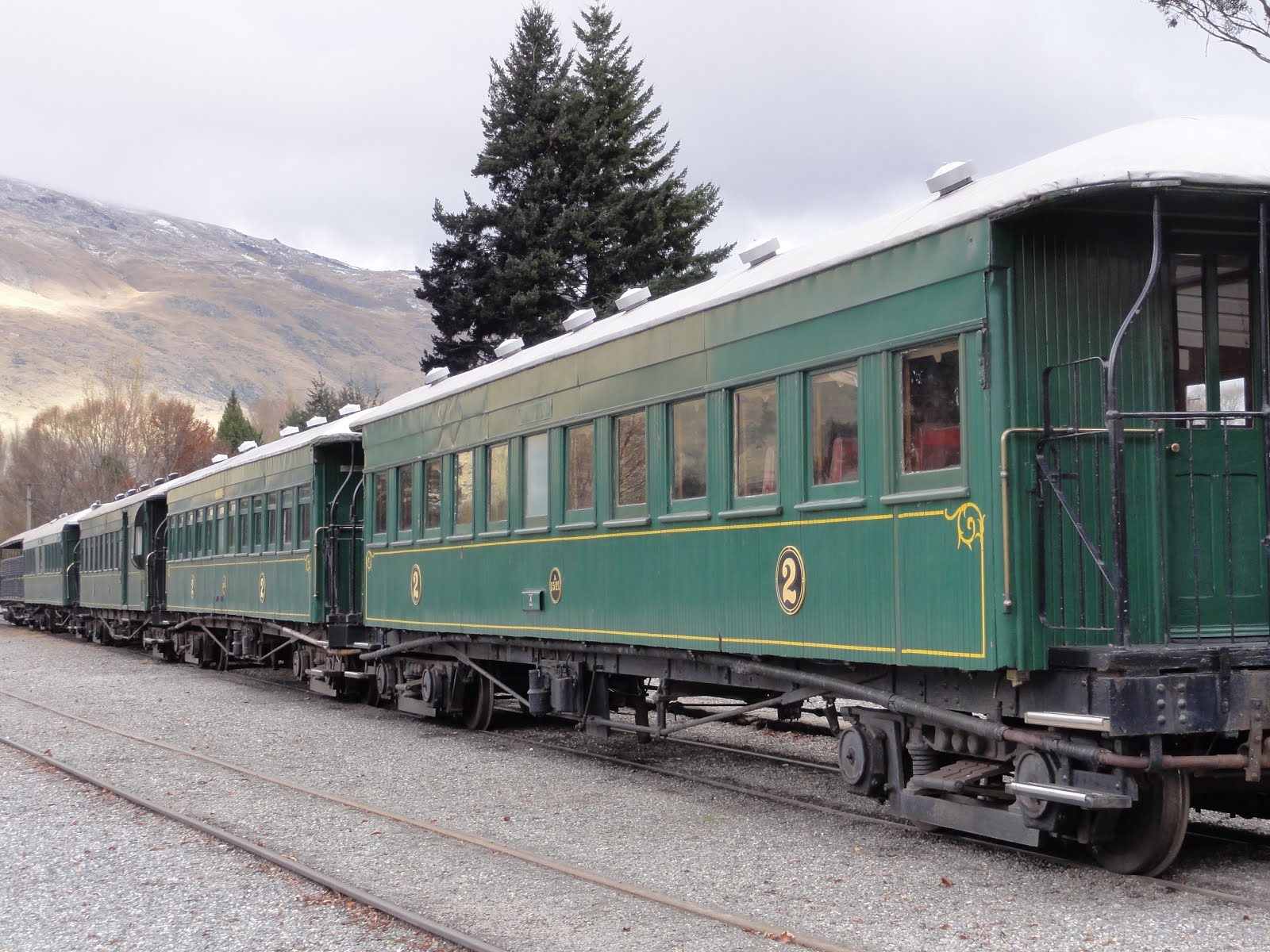
There were seven wooden bodied passenger carriages, three passenger coaches, one passenger/refreshments carriage and two car/vans.  The is also a Birdcage gallery coach.  Each of the rolling stock was built between 1900 and 1923.  They were built at either of Addington, Petone, or Hillside.

I suspect the 2 on the side means second class

The passenger coach we traveled in was very comfortable.

This is one of the guard’s vans, and for transporting cargo.

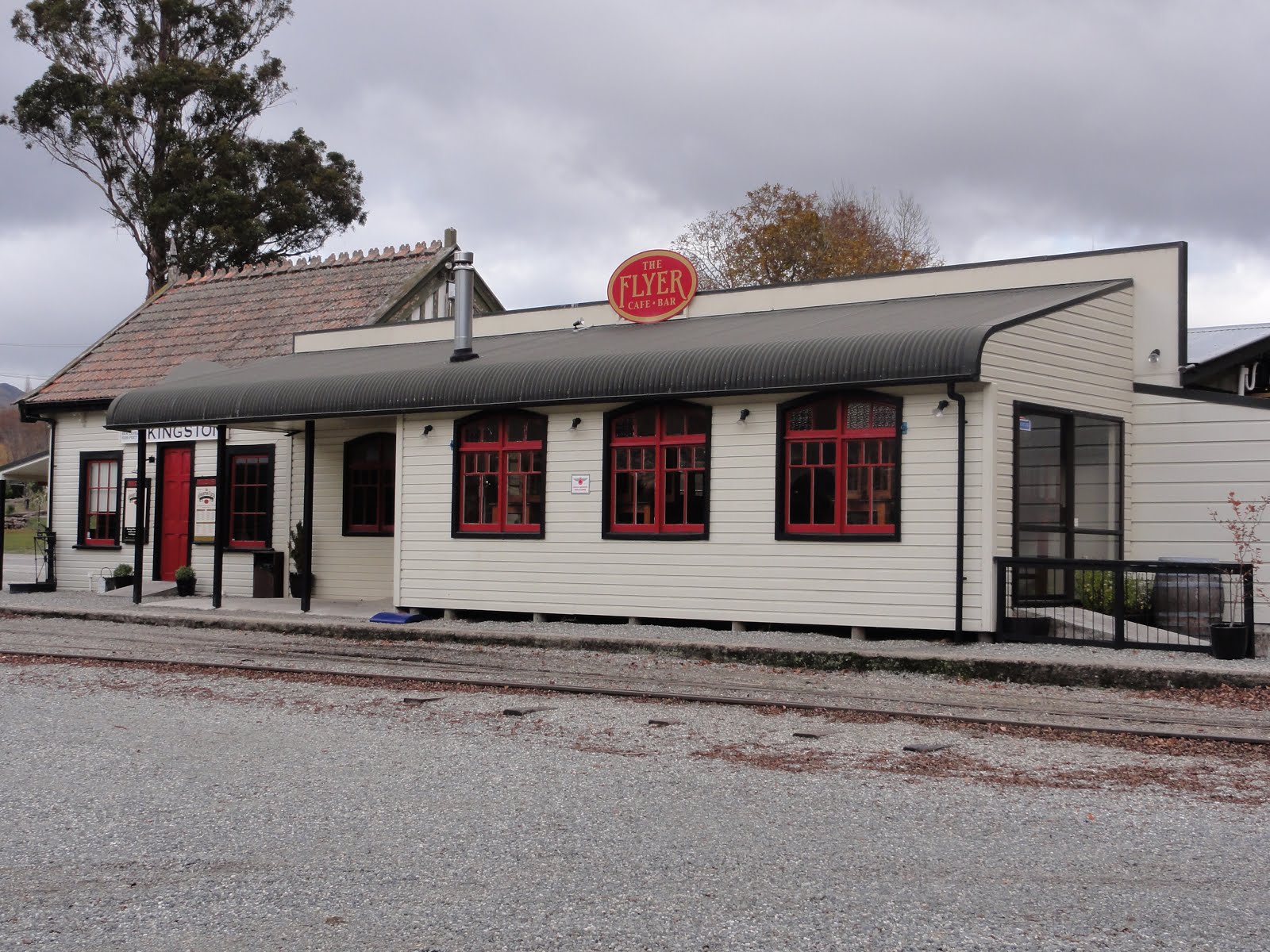
The Kingston Railway Station

and cafe.

A poster sign advertising the Kingston Flyer

The running times for the tourist services, when it was running.

It’s hot outside, time for a moment of nostalgia before the doom and gloom

Whilst I can’t be where I would like to be, it’s not that bad inside thanks to the air conditioning.

And I’m studying up on how far I would need to wind down the air conditioner in order for it to snow inside the house.

A foolish notion maybe, but oddly enough living in a country where most of the inhabitants rarely see snow, if at all, Hollywood has a lot to answer for my expectations of a white Christmas.

But, venturing outside for no reason, in particular, the heat hits you as bad as if you walked into a brick wall.

It reminds me of the first time we visited Singapore, the plane arrived around midnight, and we were heading to an overnight hotel before picking up the next leg into London.

Yes, another trip to the cold side of the world.

We thought, late at night, how hot could it be. We soon found out. The short walk from the terminal to the waiting limousine was like wading through head-high water.

What does all this waffle have to do with anything?

Nothing.

Just wallowing in nostalgia.

I was once hoping with our impeccable COVID record, that places like New Zealand and Singapore might allow us to travel there again, but no. The government decided to open the borders to everyone and COVID came marching in.

I’ve lost count of the number of waves we’ve had, but now, unlike every other time, people are dying in larger numbers, and case numbers are heading for 7 figures, and for a country with only 28 million or so, that’s nearly one twenty-fifth of everyone.

Now we have so many people in isolation with Omicron, there’s no one left to work, so, no staff for cafes or supermarkets or essential services like hospitals and ambulances, no one to deliver the fuel (or anything else for that matter), no one to harvest and process the crops, in which case, it means we’ll be roughly in the equivalent of dire straits.

How long before the lights go out because there’s no one to tend the generators.

We were, and are, not prepared and never have been.

No one saw this coming? I think people just closed their eyes and made a wish that it would just go away because we had so many vaccinated. Sorry, doesn’t work that way. The vaccine doesn’t stop you from getting it, just helps not to let it kill you.

Now the Israelis are saying a fourth booster is useless against Omicron.

And, of course, Omicron is not the last of the variants. I’m sure there’s something nastier waiting in the wings. Sorry if I’m sounding despondent, but there’s isn’t any good news. None. Zip. Zero. Even our chief health officer, a person who should be trying to calm the population, is telling us everyone is going to get Omicron, and there are going to be deaths.

Wow!

I’ve locked myself away, trying to keep COVID at bay because of a compromised immune system, but my children, their partners, and partners’ families have all got it, and it’s far too close to home.

I can’t see how I’m going to dodge the bullet, and if I get it, then my chances of survival are small, even being triple vaccinated because all the studies prove the vaccine is useless against Omicron.

I was looking for a doomsday scenario for a book. The problem is, it’s here, right now, and I may not get to finish it.

Time to stop this, and get on with it.

Searching for locations: The Kingston Flyer, Kingston, New Zealand

The Kingston Flyer was a vintage train that ran about 14km to Fairlight from Kingston, at the southern end of Lake Wakatipu, and back.

This tourist service was suspended in December 2012 because of locomotive issues.

However, before that, we managed to go on one of the tours, and it was a memorable trip.  Trying to drink a cup of tea from the restaurant car was very difficult, given how much the carriages moved around on the tracks.

The original Kingston Flyer ran between Kingston, Gore, Invercargill, and sometimes Dunedin, from the 1890s through to 1957.

There are two steam locomotives used for the Kingston Flyer service, the AB778 starting service in 1925, and the AB795 which started service in 1927.

The AB class locomotive was a 4-6-2 Pacific steam locomotive with a Vanderbilt tender, of which 141 were built between 1915 and 1927 some of which by New Zealand Railways Addington Workshops.

No 235 is the builder’s number for the AB778

There were seven wooden bodied passenger carriages, three passenger coaches, one passenger/refreshments carriage and two car/vans.  The is also a Birdcage gallery coach.  Each of the rolling stock was built between 1900 and 1923.  They were built at either of Addington, Petone, or Hillside.

I suspect the 2 on the side means second class

The passenger coach we traveled in was very comfortable.

This is one of the guard’s vans, and for transporting cargo.

The Kingston Railway Station

and cafe.

A poster sign advertising the Kingston Flyer

The running times for the tourist services, when it was running.

Getting the lie of the land

A lot of locations for stories are based on places that I’ve visited. So, any time I’m on holiday, I’m also discreetly observing, and noting, the places with an ulterior motive.

At some point in time they’ll finish up in a story.

Places like Florence, London, Paris, New York and Venice have all been used in recent stories.

Of course places change, and there are some that I can’t get to, so it’s useful having Google Maps and Street View. These can either make up for lack of memory and a be a refresher.

Especially if you need to visit Africa. Parts of several stories are set in Nigeria, not exactly a place I would go, no matter how much I wanted to get the lie of the land, nor would I go to the Democratic Republic of Congo.

Rwanda, maybe, but in investigating locations, it is interesting to discover that places like Kenya and Rwanda are reasonbly safe. Uganda is more or less the same, but whether I’d visit, as inviting as it might be to see the wildlife (animals that is) I’m thinking Google Maps will do for now.

And, of course, at the moment there is another reason why I can’t get a practical look at overseas locations. Covid-19.

I have always had a fascination for other places, from way back when I was in school and we did a subject called geography. Back then, nearly 60 years ago, we had school atlases that had all of the British colonies, even if they had become independent, coloured red on the maps, and there was a lot of them.

Places like London, of which we also studied in history, always held a fascination for me, and, in particular, the royal family. Oddly enough, I knew all of the kings and queens from 1066 onwards, and yet had no idea who our Prime Ministers in Australia were.

It wasn’t until much later we learned about Australian history.

But seeing places foreign are only part of the story. I have had time during the pandemic when we were not allowed to leave home, to delve into the historical side of Australia, and it has created a fascination for writing a story that has basis in fact.

This was unwittingly pushed along when my grand daughter came home from school with the assignment of writing a story about a character that was affected by a historical event. Thus Eliza at the Eureka Stockade was created.

I remember back in university days when working on the narrative part of my literature stream we were set an assignment based on pictures from a certain period, and a series of written documents to put together a story. Mine was about a passenger on a ship from Melbourne to Geelong in the days before rail around the time of the gold rush.

I’m guessing that’s what is called historical fiction.

Well, it’s time to get back to the mists of time…


Searching for locations: Aratiatia Dam, Taupo, New Zealand

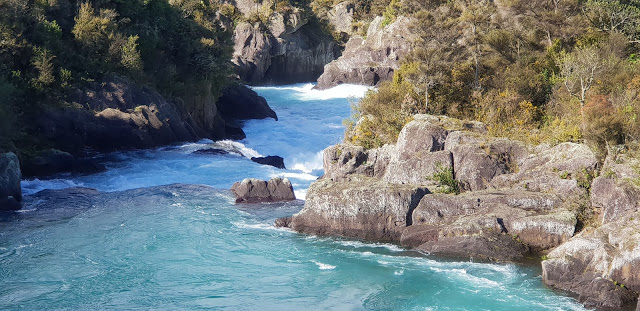
Aratiatia Dam water release, Taupo

The Aratiatia Dam, rapids, and hydroelectric power station are located on the Waikato River, New Zealand’s longest river.  It is about 16km from Taupo, and 6km from Huka falls, and there is a walking track, for the fit, of course, between the two water attractions.

This happens three or four times every day, depending on the season, and lasts about 15 minutes.  Water is released at the rate of about 80,000 liters a second, so it is quite a lot of water being sent through the rapids.

There are a number of viewing points, the most popular being from the bridge, where I took these photos, and 5 minutes down the walking track to the ridgeline where you can get an overview of the river.

This is looking towards the rapids, as the catchment leading to the rapids starts to fill

The pool is almost full and the excess is starting its journey towards the rapids

Now full, the rapids are at capacity as up to 80,000 liters a second are heading down a 28-meter drop heading towards the hydroelectric power station.

And once full at the bottom, there is a jet boat ride available for a closer view of the water, and a few thrills to go with it.

A photograph from the inspirational bin – 6

For those who are wondering what this is a photograph of, it is a tree bordered stream that runs along a long valley that runs from outside Canungra, in Queensland, to the Lamington National Park.

It’s near a place we like to stay for a few days when we want to get away from everything, and I mean everything. There is no television, and cell phone reception is awful if not non existent.

So, you can see the benefits.

Sitting at the table on the veranda overlooking the fields, and this stream, you have time to just think, or not, about what it might have been like before the settlers came.

What is was like when the explorers we seeking new places to live, and they chanced upon this valley. It it was me back then, I would have followed the stream.

But, as for a story…

I have read a great many stories for the explorers of this country, and the hazardous nature of their treks.

What seemed to be the most common theme was crossing from south to north, that is from Melbourne to the Northern most tip of Queensland, or from Adelaide to the Northern Territory. In both cases they would have to traverse a very dry, very hot outback where the sight of a stream, or river, like above, would have been very welcome.

For some, it became an impossible quest, and stuck in the desert, they eventually perished. That in itself, the trials and tribulations of an early explorer would make a great story.

Australia is a very fertile country around the coastal regions, but one you start venturing inland, it is dry, dusty and almost uninhabitable. Unless there’s water from rivers, streams, or underground, or mining settlements, there is very little else to see.

The exceptions to this are Uluru and Kakadu National Park, in the Northern Territory, Shark Bay and The Pinnacles in Western Australia, MacKenzie Falls in Victoria, The Simpson Desert, the Boodjamulla (Lawn Hill) National Park, and the Carnarvon Gorge in Queensland, to name a few.

One day I might get to see them.

Searching for locations: Aratiatia Dam, Taupo, New Zealand

Aratiatia Dam water release, Taupo

The Aratiatia Dam, rapids, and hydroelectric power station are located on the Waikato River, New Zealand’s longest river.  It is about 16km from Taupo, and 6km from Huka falls, and there is a walking track, for the fit, of course, between the two water attractions.

This happens three or four times every day, depending on the season, and lasts about 15 minutes.  Water is released at the rate of about 80,000 liters a second, so it is quite a lot of water being sent through the rapids.

There are a number of viewing points, the most popular being from the bridge, where I took these photos, and 5 minutes down the walking track to the ridgeline where you can get an overview of the river.

This is looking towards the rapids, as the catchment leading to the rapids starts to fill

The pool is almost full and the excess is starting its journey towards the rapids

Now full, the rapids are at capacity as up to 80,000 liters a second are heading down a 28-meter drop heading towards the hydroelectric power station.

And once full at the bottom, there is a jet boat ride available for a closer view of the water, and a few thrills to go with it.

It’s hot outside, time for a moment of nostalgia before the doom and gloom

Whilst I can’t be where I would like to be, it’s not that bad inside thanks to the air conditioning.

And I’m studying up on how far I would need to wind down the air conditioner in order for it to snow inside the house.

A foolish notion maybe, but oddly enough living in a country where most of the inhabitants rarely see snow, if at all, Hollywood has a lot to answer for my expectations of a white Christmas.

But, venturing outside for no reason, in particular, the heat hits you as bad as if you walked into a brick wall.

It reminds me of the first time we visited Singapore, the plane arrived around midnight, and we were heading to an overnight hotel before picking up the next leg into London.

Yes, another trip to the cold side of the world.

We thought, late at night, how hot could it be. We soon found out. The short walk from the terminal to the waiting limousine was like wading through head-high water.

What does all this waffle have to do with anything?

Nothing.

Just wallowing in nostalgia.

I was once hoping with our impeccable COVID record, that places like New Zealand and Singapore might allow us to travel there again, but no. The government decided to open the borders to everyone and COVID came marching in.

I’ve lost count of the number of waves we’ve had, but now, unlike every other time, people are dying in larger numbers, and case numbers are heading for 7 figures, and for a country with only 28 million or so, that’s nearly one twenty-fifth of everyone.

Now we have so many people in isolation with Omicron, there’s no one left to work, so, no staff for cafes or supermarkets or essential services like hospitals and ambulances, no one to deliver the fuel (or anything else for that matter), no one to harvest and process the crops, in which case, it means we’ll be roughly in the equivalent of dire straits.

How long before the lights go out because there’s no one to tend the generators.

We were, and are, not prepared and never have been.

No one saw this coming? I think people just closed their eyes and made a wish that it would just go away because we had so many vaccinated. Sorry, doesn’t work that way. The vaccine doesn’t stop you from getting it, just helps not to let it kill you.

Now the Israelis are saying a fourth booster is useless against Omicron.

And, of course, Omicron is not the last of the variants. I’m sure there’s something nastier waiting in the wings. Sorry if I’m sounding despondent, but there’s isn’t any good news. None. Zip. Zero. Even our chief health officer, a person who should be trying to calm the population, is telling us everyone is going to get Omicron, and there are going to be deaths.

Wow!

I’ve locked myself away, trying to keep COVID at bay because of a compromised immune system, but my children, their partners, and partners’ families have all got it, and it’s far too close to home.

I can’t see how I’m going to dodge the bullet, and if I get it, then my chances of survival are small, even being triple vaccinated because all the studies prove the vaccine is useless against Omicron.

I was looking for a doomsday scenario for a book. The problem is, it’s here, right now, and I may not get to finish it.

Time to stop this, and get on with it.