The castle is located in the southern Chianti Classico countryside and has been there for over ten centuries, and owned by the Ricasoli family since 1141.
Like any good castle, it has strong defences, and I was looking for a moat and drawbridge, but it looks like the moat has become a lawn.
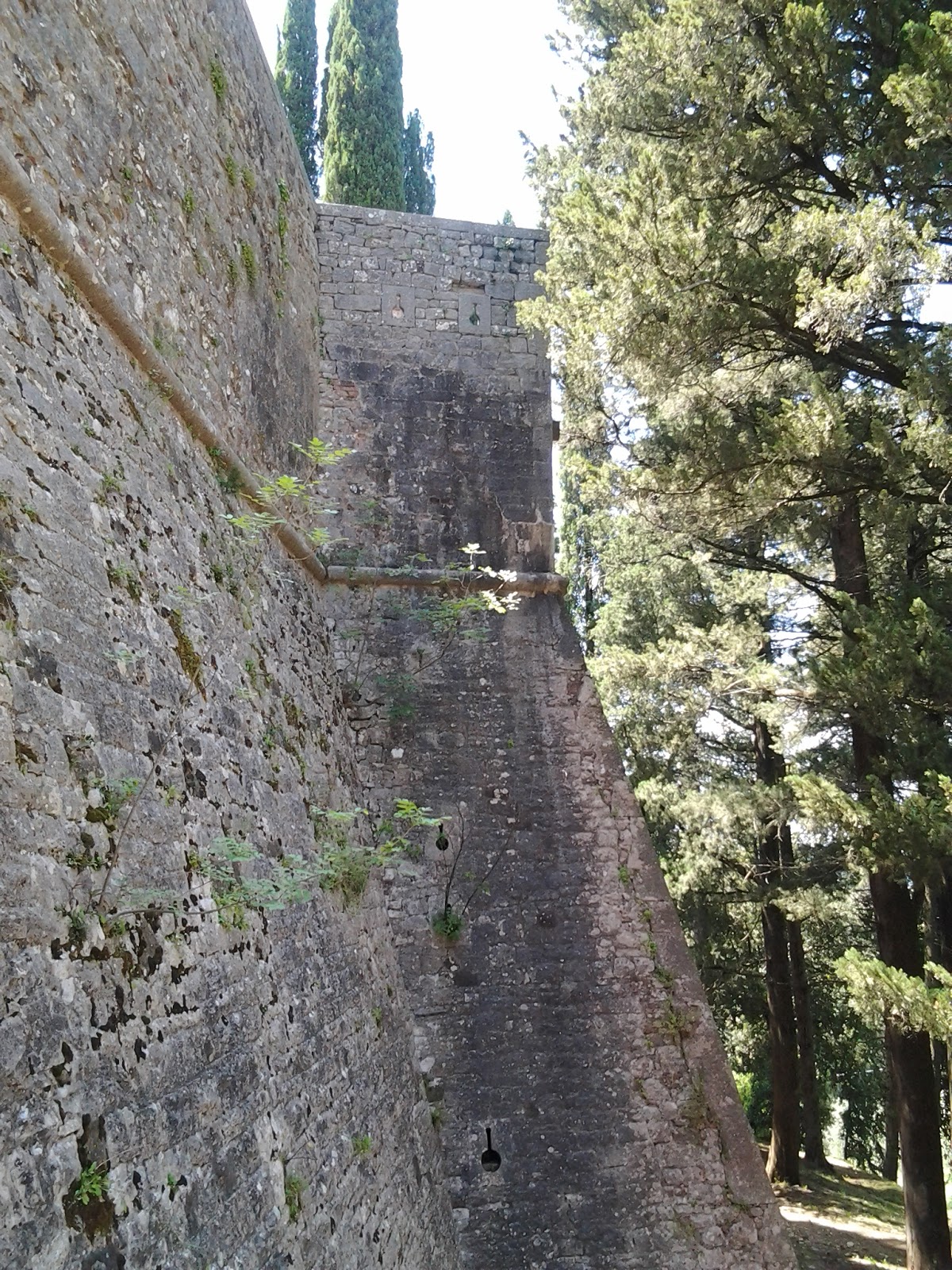
The very high walls in places no doubt were built to keep the enemy out
The castle has been destroyed and rebuilt many times over the last 900 years. It was part of the Florentine defences, and withstood, and succumbed to many battles with Siena, which is only 20 km away. More recently, it still bears the scars of artillery fire and bombing in WW2.
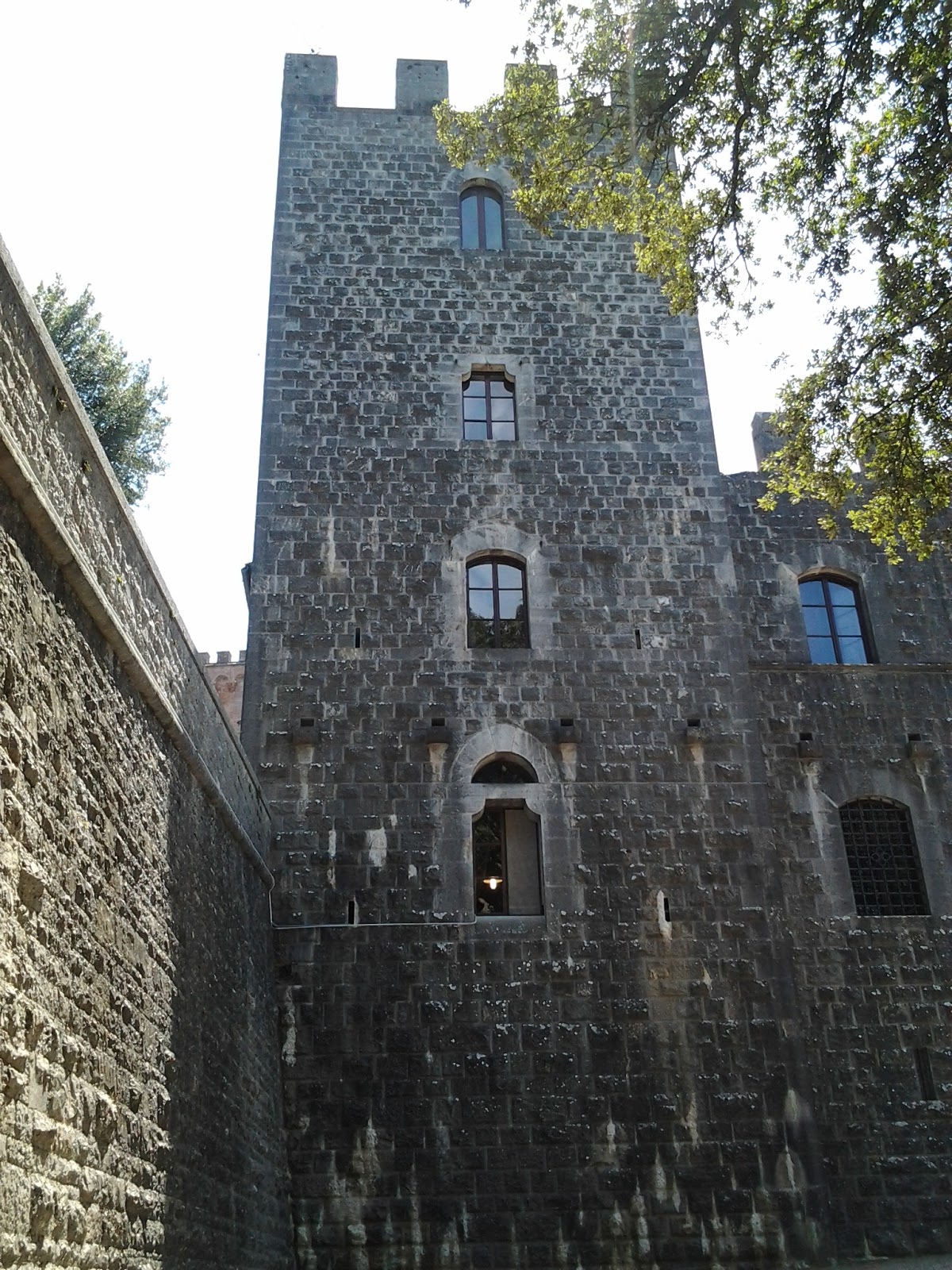
The room at the top of this tower would have an excellent view of the countryside.
Here you can see the old and the new, the red brick part of the rebuilding in the 1800’s in the style of an English Manor
We did not get to see where that archway led.
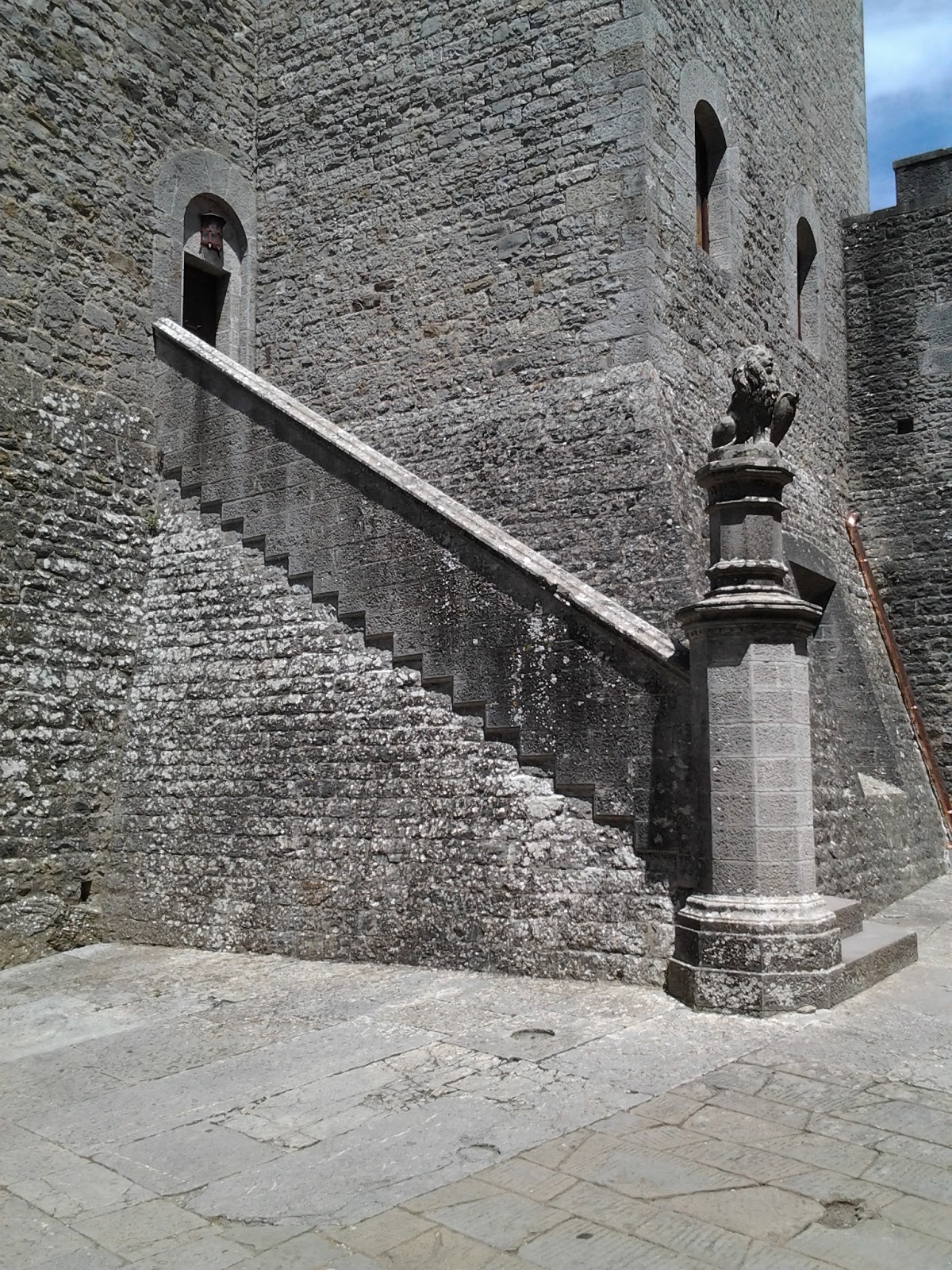
Nor what was behind door number one at the top of these stairs. Rest assured, many, many years ago someone wearing armour would have made the climb. It would not pass current occupational health and safety these days with a number of stairs before a landing.
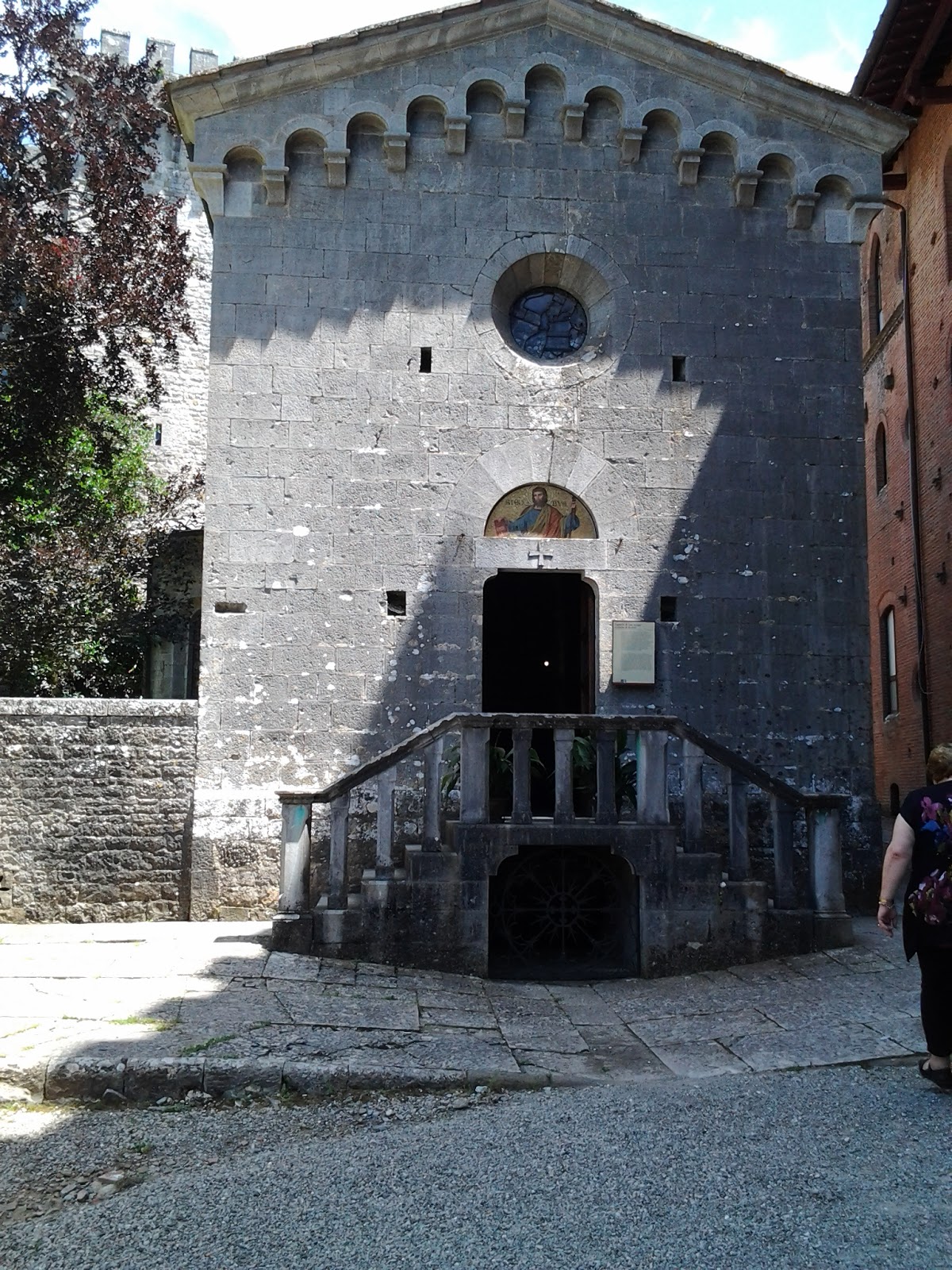
Cappella di San Jacopo. Its foundations were laid in 1348.
Renovated in 1867-1869, it has a gabled façade preceded by a double stone staircase. The interior, with a crypt where the members of the Ricasoli family are buried, has a nave divided into three spans with cross vaults.
The 1,200 hectares of the property include 240 hectares of vineyards and 26 of olive groves, in the commune of Gaiole.
How many of us have skeletons in the closet that we know nothing about? The skeletons we know about generally stay there, but those we do not, well, they have a habit of coming out of left field when we least expect it.
In this case, when you see your photo on a TV screen with the accompanying text that says you are wanted by every law enforcement agency in Europe, you’re in a state of shock, only to be compounded by those same police, armed and menacing, kicking the door down.
I’d been thinking about this premise for a while after I discovered my mother had a boyfriend before she married my father, a boyfriend who was, by all accounts, the man who was the love of her life.
Then, in terms of coming up with an idea for a story, what if she had a child by him that we didn’t know about, which might mean I had a half brother or sister I knew nothing about. It’s not an uncommon occurrence from what I’ve been researching.
There are many ways of putting a spin on this story.
Then, in the back of my mind, I remembered a story an acquaintance at work was once telling us over morning tea, that a friend of a friend had a mother who had a twin sister and that each of the sisters had a son by the same father, without each knowing of the father’s actions, both growing up without the other having any knowledge of their half brother, only to meet by accident on the other side of the world.
It was an encounter that in the scheme of things might never have happened, and each would have remained oblivious of the other.
For one sister, the relationship was over before she discovered she was pregnant, and therefore had not told the man he was a father. It was no surprise the relationship foundered when she discovered he was also having a relationship with her sister, a discovery that caused her to cut all ties with both of them and never speak to either from that day.
It’s a story with more twists and turns than a country lane!
We have visited this town on a hill, famous for its fourteen towers, twice. The first time we stayed in a hotel overlooking the main piazza, and the second time, for a day visit, and return to a little restaurant tucked away off the main piazza for its home cooking.
No cars are allowed inside the town and parking is provided outside the town walls. You can drive up to the hotel to deliver your baggage, but the car must return to the carpark overnight.
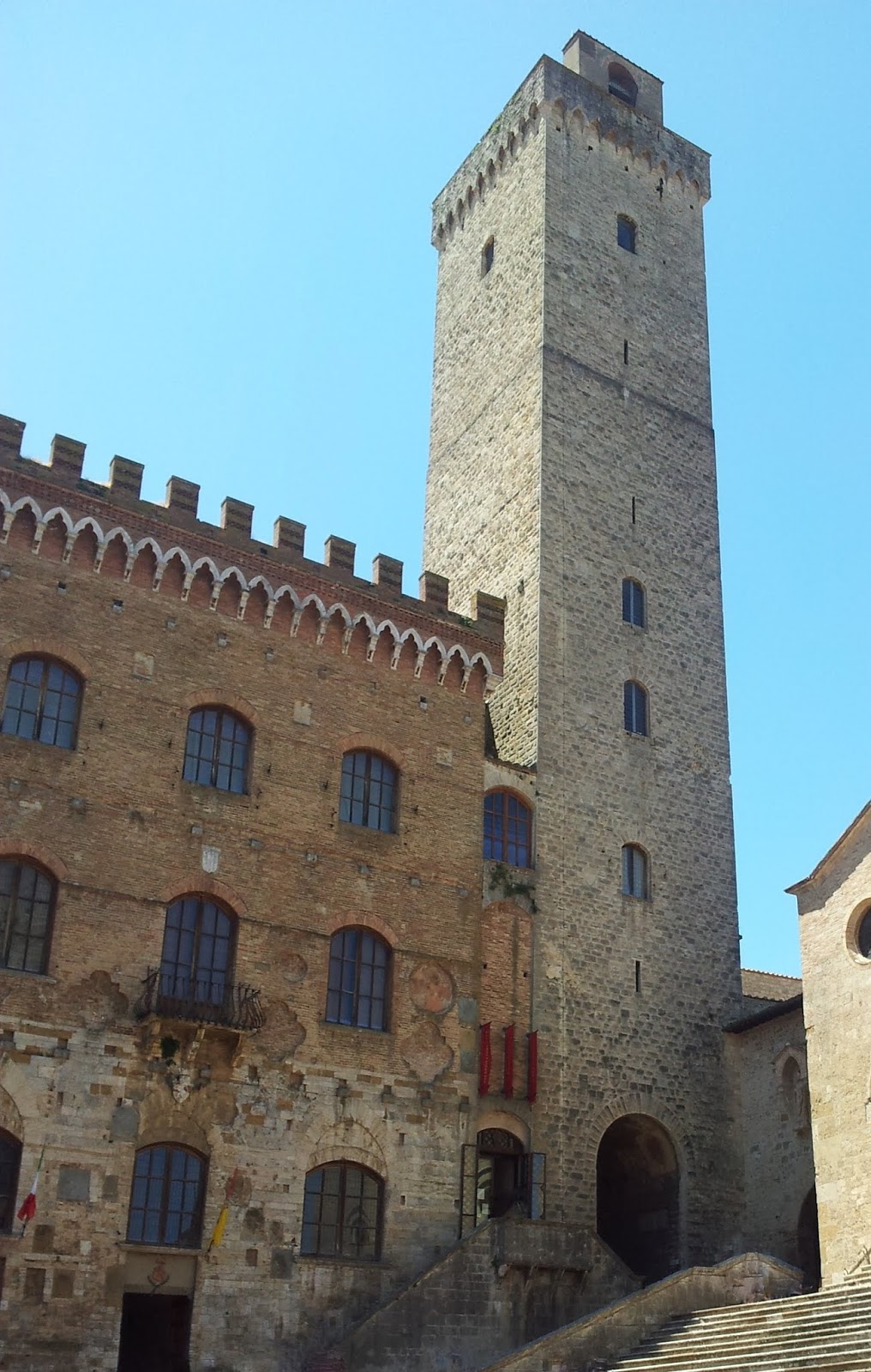
This is one of the fourteen towers
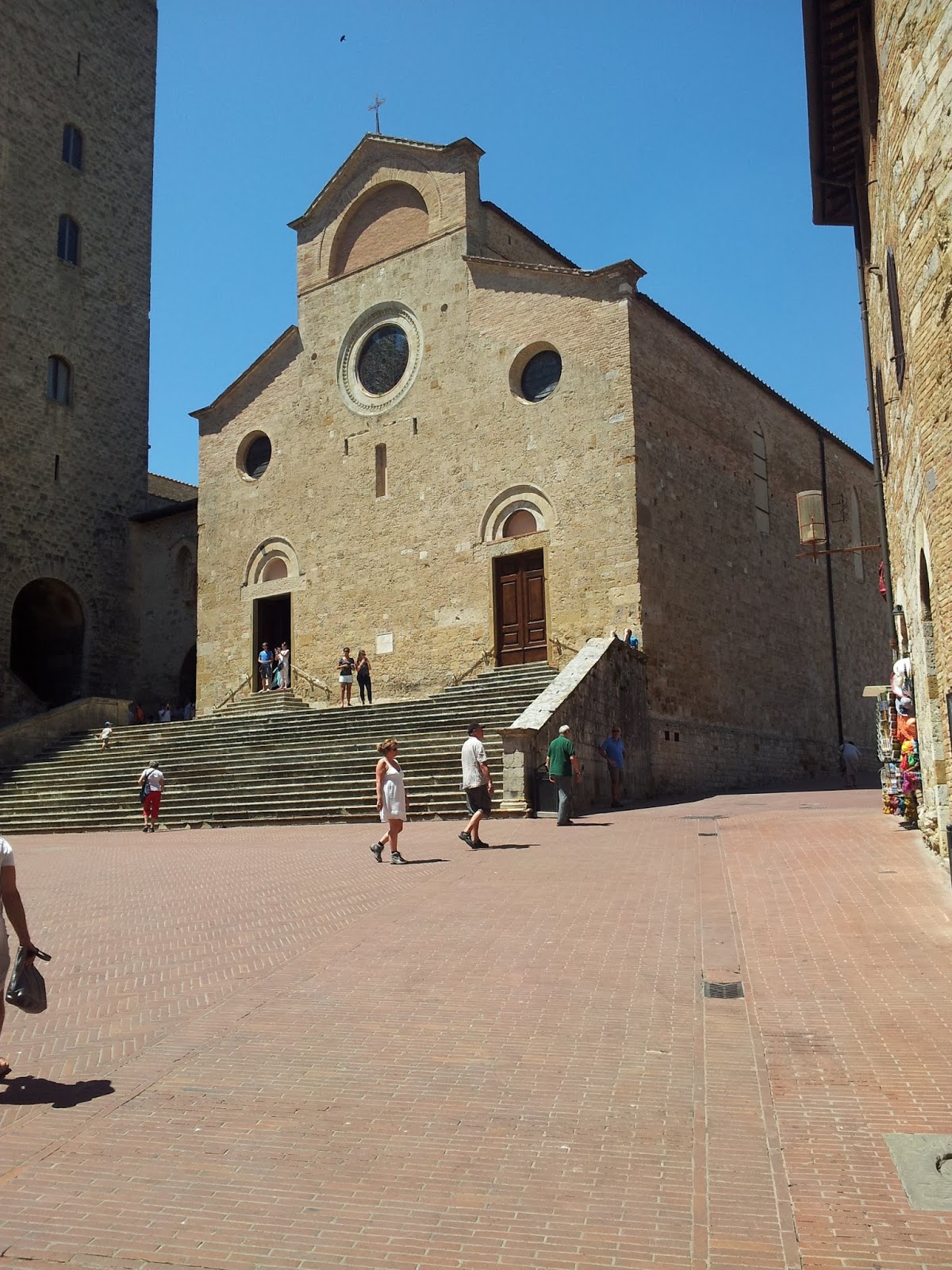
I didn’t attempt to climb to the tower, which you can do in some of them, just getting up the church steps was enough for me. Inside the building was, if I remember correctly, a museum.
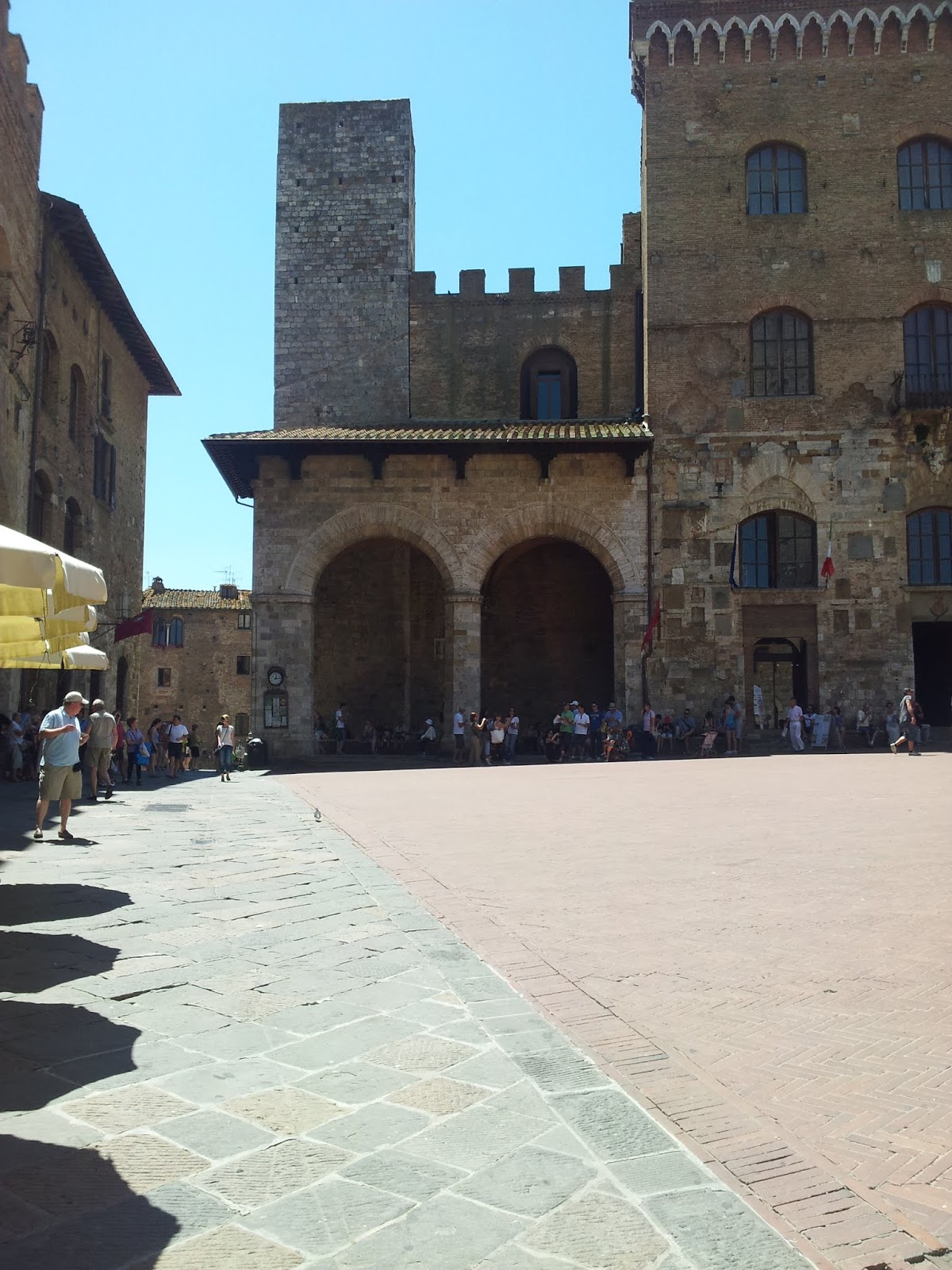
Looking up the piazza towards some battlements, and when you reach the top and turn left, there is a small restaurant on the right-hand side of the laneway that had the best wild boar pasta.
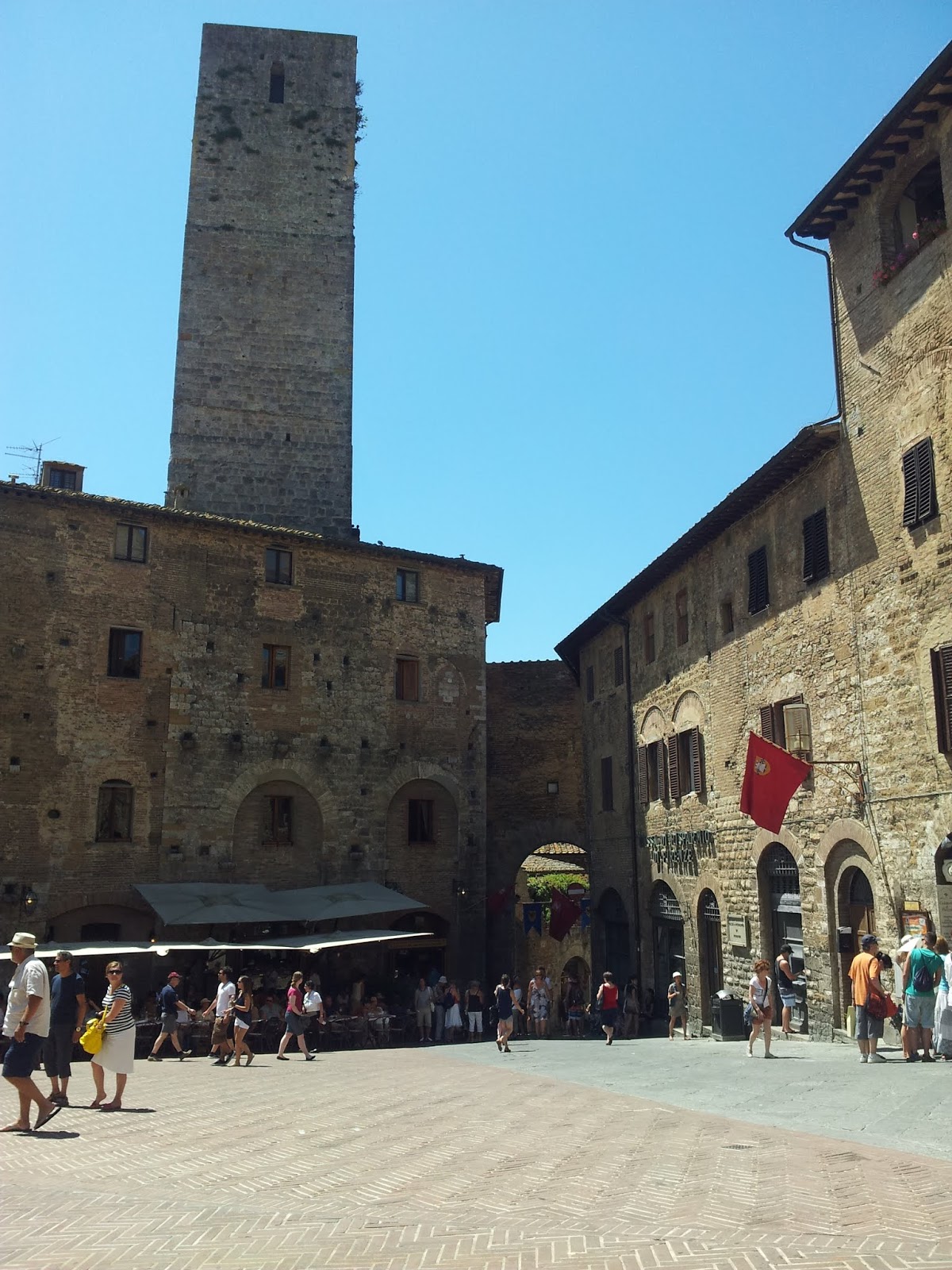
Another of the fourteen towers, and through the arch, down a lane to the gated fence that surrounds the town. The fortifications are quite formidable and there are several places along the fence where you can stand and look down the hill at the oncoming enemy (if there was one).
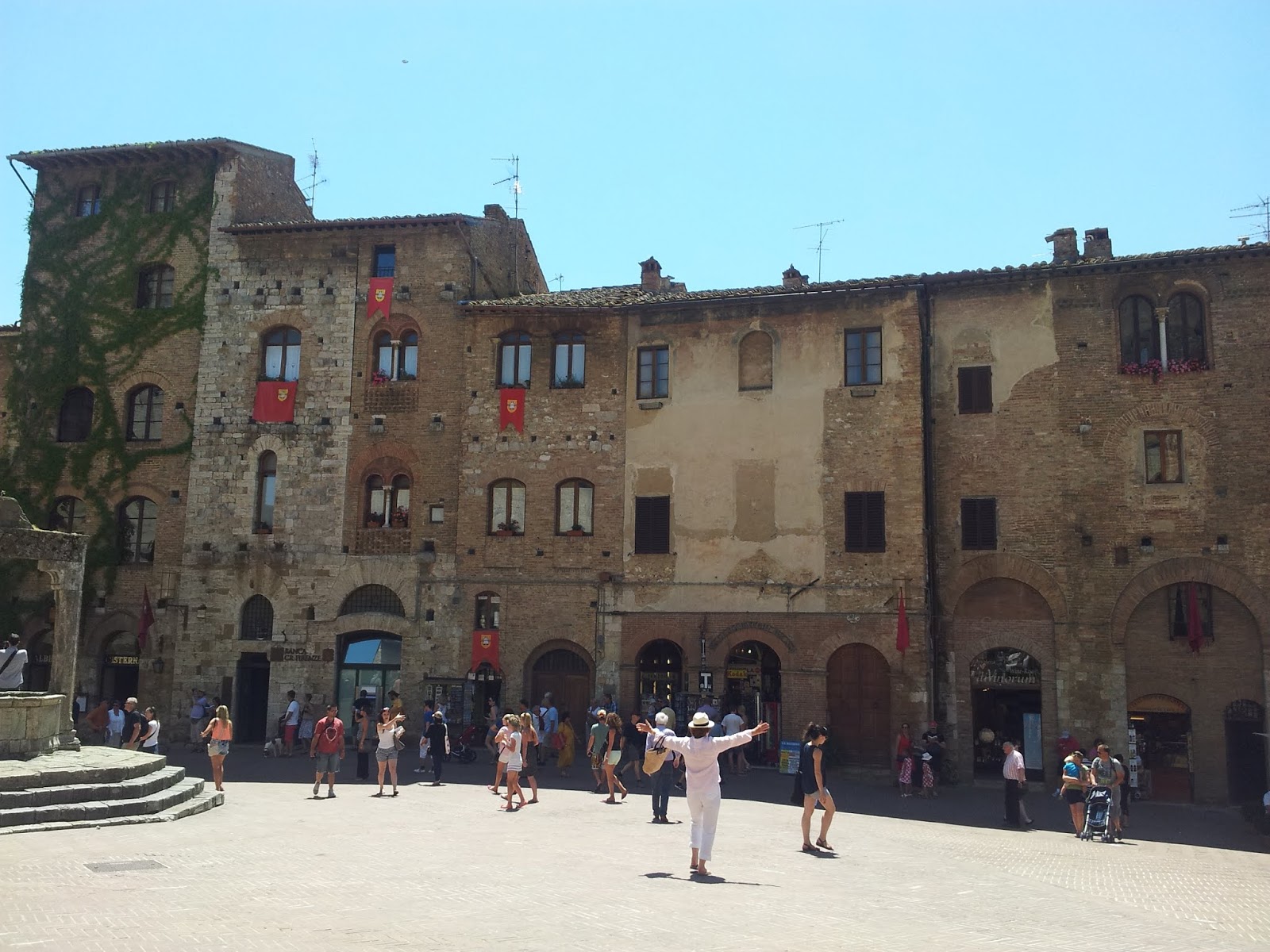
Part of the main piazza which is quite large, and on the right, the wishing well where my wish for a cooler day was not granted.
Officially, the Piazza della Cisterna is the most beautiful square of the town, San Gimignano. The well was built in 1273 and enlarged in 1346 by Podestà Guccio dei Malavolti.
And not to be outdone by any other the other old towns, there is an old church, one of several. It is the Collegiate Church or the Duomo di San Gimignano, a monument of Romanesque architecture built around 1000 and enlarged over time.
Next door is the Museum of Sacred Art.
And I guess it’s rather odd to see television aerials on top of houses that are quite literally about a thousand years old. I wonder what they did back then for entertainment?
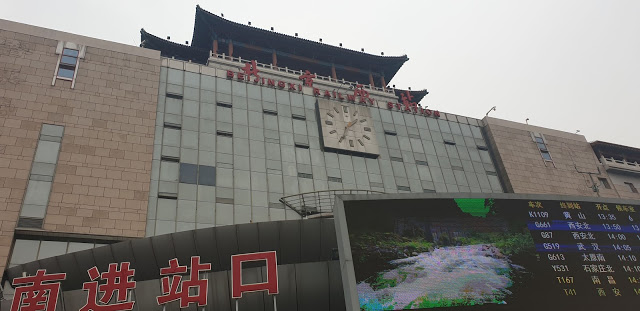
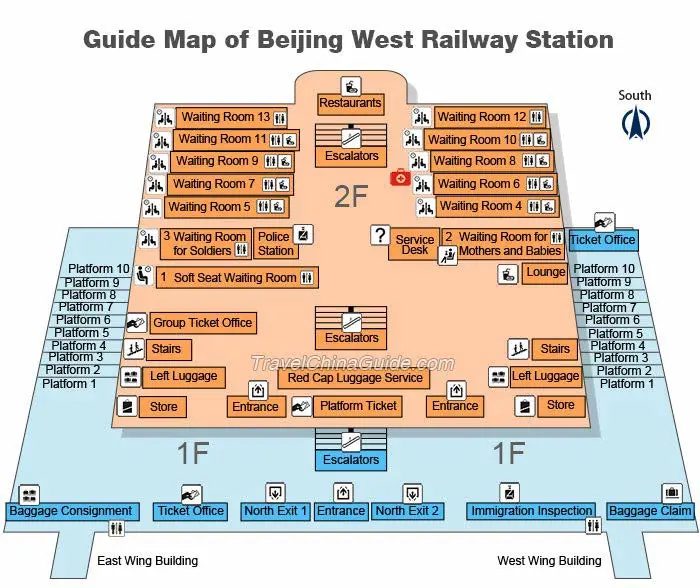
Beijing west railway station is about eight kilometers from the Forbidden City, located at East Lianhuachi Road, Fengtai District. Most trains traveling between south central, southwest, northwest, and south China are boarded here.
This place is huge and there are so many people here, perhaps the other half of Beijing’s population that wasn’t in the forbidden city.
Getting into the station looked like it was going to be fraught with danger but the tour guide got us into the right queue and then arranged for a separate scanner for the group to help keep us all together
Then we decided to take the VIP service and got to waiting room no 13, the VIP service waiting room which was full to overflowing. Everyone today was a VIP. We got the red hat guy to lead us to a special area away from the crowd.
Actually, it was on the other side of the gate, away from the hoards sitting or standing patiently in the waiting room. It gave us a chance to get something to eat before the long train ride.
The departure is at 4 pm, the train number was G655, and we were told the trains leave on time. As it is a high-speed train, stops are far and few between, but we’re lucky, this time, in that we don’t have to count stations to know where to get off.
We’re going to the end of the line.
However, it was interesting to note the stops which, in each case, were brief, and you had to be ready to get off in a hurry.
These stops were Shijiazhuang, Zhengzhou East, Luoyang Longmen, Huashan North, and Weinan North. At night, you could see the lights of these cities from a distance and were like oases in the middle of a desert. During the day, the most prominent features were high rise apartment blocks and power stations.
A train ride with a difference
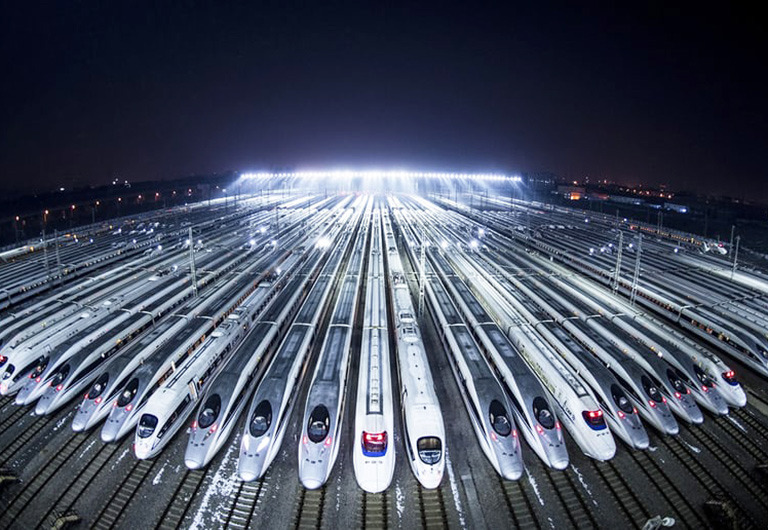
China’s high-speed trains, also known as bullet or fast trains, can reach a top speed of 350 km/h (217 mph).
Over 2,800 pairs of bullet trains numbered by G, D or C run daily connecting over 550 cities in China and covering 33 of the country’s 34 provinces. Beijing-Shanghai high-speed train link the two megacities 1,318 km (819 mi) away in just 4.5 hours.
By 2019, China keeps the world’s largest high-speed rail (HSR) network with a length totaling over 35,000 km (21,750 mi).
To make the five and a half hours go quicker we keep an eye on the speed which hovers between 290 and 305 kph, and sitting there with our camera waiting for the speed to hit 305 which is a rare occurrence, and then, for 306 and then for 307, which happened when we all took a stroll up to the restaurant car to find there had nothing to eat.
I got a strange flavored drink for 20 yuan.
There was a lady manning a trolley that had some food, and fresh, maybe, fruit on it, and she had a sense of humor if not much English.
We didn’t but anything but the barrel of caramel popcorn looked good.
The good thing was, after hovering around 298, and 299 kph, it finally hit 300.
We get to the end of the line, and there is an announcement in Chinese that we don’t understand and attempts to find out if it is the last station fall on deaf ears, probably more to do with the language barrier than anything else.
Then, suddenly the train conductor, the lady with the red hat, comes and tells us it is, and we have fifteen minutes, so we’re now hurrying to get off.
As the group was are scattered up and down the platform, we all come together and we go down the escalator, and, at the bottom, we see the trip-a-deal flags.
X’ian,and the Xi’an North Railway Station
Xi’an North Railway Station is one of the most important transportation hubs of the Chinese high-speed rail network. It is about 8.7 miles (14 km) from Bell Tower (city center) and is located at the intersection of the Weiyang Road and Wenjing Road in Weiyang District.
This time we have a male guide, Sam, who meets us at the end of the platform after we have disembarked. We have a few hiccups before we head to the bus. Some of our travelers are not on his list, but with the other group. Apparently a trip-a-deal mix-up or miscommunication perhaps.
Then it’s another long walk with bags to the bus. Good thing its a nicely air-conditioned newish bus, and there’s water, and beer for 10 yuan. How could you pass up a tsing tao for that price?
Xi’an is a very brightly lit up city at night with wide roads. It is very welcoming, and a surprise for a city of 10 million out in the middle of China.
As with all hotels, it’s about a 50-minute drive from the railway station and we are all tired by the time we get there.
Tomorrow’s program will be up at 6, on the bus 8.40 and off to the soldiers, 2.00 late lunch, then train station to catch the 4.00 train, that will arrive 2 hours later at the next stop. A not so late night this time.
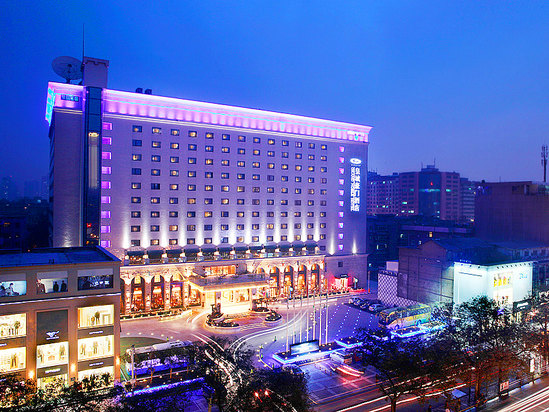
The Grand Noble Hotel
Grand Noble Hotel Xi’an is located in the most prosperous business district within the ancient city wall in the center of Xi’an.
The Grand Noble Hotel, like the Friendship Hotel, had a very flash foyer with tons of polished marble. It sent out warning signals, but when we got to our room, we found it to be absolutely stunning. More room, a large bathroom, air conditioning the works.
Only one small problem, as in Beijing the lighting is inadequate. Other than that it’s what I would call a five-star hotel. This one is definitely better than the Friendship Hotel.
In the center of the city, very close to the bell tower, one of the few ancient buildings left in Xi’an. It is also in the middle of a larger roundabout and had a guard with a machine gun.
Sadly there was no time for city center sightseeing.
The castle is located in the southern Chianti Classico countryside and has been there for over ten centuries, and owned by the Ricasoli family since 1141.
Like any good castle, it has strong defences, and I was looking for a moat and drawbridge, but it looks like the moat has become a lawn.
The very high walls in places no doubt were built to keep the enemy out
The castle has been destroyed and rebuilt many times over the last 900 years. It was part of the Florentine defences, and withstood, and succumbed to many battles with Siena, which is only 20 km away. More recently, it still bears the scars of artillery fire and bombing in WW2.
The room at the top of this tower would have an excellent view of the countryside.
Here you can see the old and the new, the red brick part of the rebuilding in the 1800’s in the style of an English Manor
We did not get to see where that archway led.
Nor what was behind door number one at the top of these stairs. Rest assured, many, many years ago someone wearing armour would have made the climb. It would not pass current occupational health and safety these days with a number of stairs before a landing.
Cappella di San Jacopo. Its foundations were laid in 1348.
Renovated in 1867-1869, it has a gabled façade preceded by a double stone staircase. The interior, with a crypt where the members of the Ricasoli family are buried, has a nave divided into three spans with cross vaults.
The 1,200 hectares of the property include 240 hectares of vineyards and 26 of olive groves, in the commune of Gaiole.
We have been to Paris a number of times over the years.
The last time we visited Paris we brought the two eldest grandchildren. We took the Eurostar train from St Pancras station direct to Disneyland, then took the free bus from the station to the hotel. The train station was directly outside Disneyland.
We stayed at the Dream Castle Hotel, rather than Disneyland itself as it was a cheaper option and we had a family room that was quite large and breakfast was included every morning. Then it was a matter of getting the free bus to Disneyland.
We spent three days, time which seem to pass far too quickly, and we didn’t get to see everything. They did, however, find the time to buy two princess dresses, and then spent the rest of the time playing dress-ups whenever they could.
In Paris, we stayed at the Crown Plaza at Republique Square.
We took the children to the Eiffel Tower where the fries, and the carousel at the bottom of the tower, seemed to be more memorable than the tower itself. The day we visited, the third level was closed. The day was cold and windy so that probably accounted for the less than memorable visit. To give you some idea of conditions, it was the shortest queue to get in I’ve ever seen.
We traveled on the Metro where it was pointed out to me that the trains actually ran on rubber tires, something I had not noticed before. It was a first for both children to travel on a double-decker train.
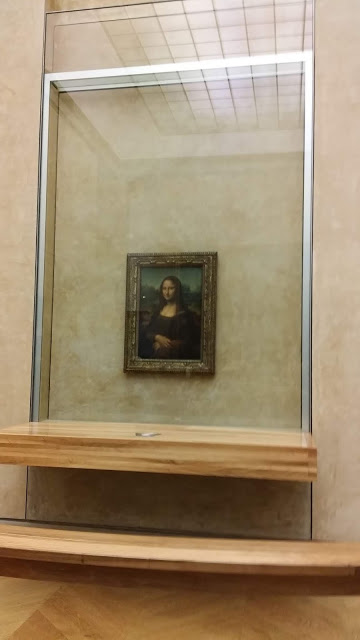
The same day, we went to the Louvre.
Here, it was cold, wet and windy while we waited, Once inside we took the girls to the Mona Lisa, and after a walk up and down a considerable numkber of stairs, one said, “and we walked all this way to see this small painting”.
It quickly became obvious their idea of paintings were the much larger ones hanging in other galleries.
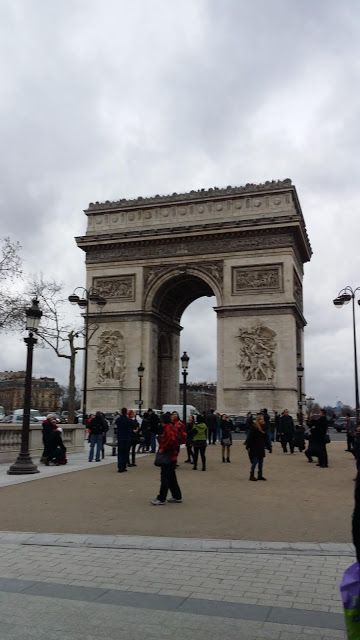
We also took them to the Arc de Triomphe.
We passed, and for some reason had to go into, the Disney shop, which I’m still wondering why after spending a small fortune at Disneyland itself.
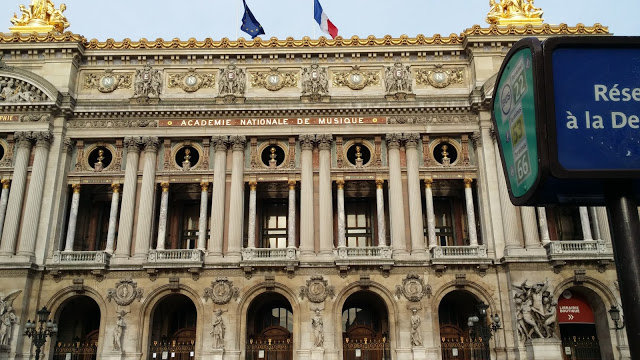
Next on the tour list was the Opera House.
where one of the children thought she saw the ghost and refused to travel in one of the elevators. At least it was quite amazing inside with the marble, staircases, and paintings on the roof.
Sadly, I don’t think they were all that interested in architecture, but at the Opera House, they did actually get to see some ballet stars from the Russian Bolshoi ballet company practicing. As we were leaving the next day we could not go and see a performance.
Last but not least was Notre Dame with its gargoyles and imp[osing architecture.
All in all, traveling with children and experiencing Paris through their eyes made it a more memorable experience.
The first we visited Paris was at the end of a whirlwind bus tour, seven countries in seven days or something like that. It was a relief to get to Paris and stay two nights if only to catch our breath.
I remember three events from that tour, the visit to the Eiffel Tower, the tour of the night lights, not that we were able to take much in from the inside of the bus, and the farewell dinner in one of the tour guides specially selected restaurants. The food and atmosphere were incredible. It was also notable for introducing us to a crepe restaurant in Montmartre, another of the tour guide’s favorite places.
On that trip to Paris, we also spent an afternoon exploring the Palace of Versailles.
The next time we visited Paris we flew in from London. OK, it was a short flight, but it took all day. From the hotel to the airport, the wait at the airport, departure, flying through time zones, arrival at Charles De Gaulle airport, now there’s an experience, and waiting for a transfer that never arrived, but that’s another story.
I can’t remember where we stayed the first time, it was somewhere out in the suburbs, but the second time we stayed at the Hilton near both the Eiffel Tower and the Australian Embassy, notable only because the concierge was dating an Australian girl working in the Embassy. That was our ticket for special treatment, which at times you need to get around in Paris.
It was the year before 2000 and the Eiffel Tower was covered in lights, and every hour or so it looked like a bubbling bottle of champagne. It was the first time we went to Level 3 of the Tower, and it was well worth it. The previous tour only included Level 2. This time we were acquainted with the fries available on the second level, and down below under the tower.
This time we acquainted ourselves with the Metro, the underground railway system, to navigate our way around to the various tourist spots, such as Notre Dame de Paris, The Louvre, Sacre-Coeur Basilica, and Les Invalides, and, of course, the trip to the crepe restaurant.
We also went to the Louvre for the express purpose of seeing the Mona Lisa, and I came away slightly disappointed. I had thought it to be a much larger painting. We then went to see the statue of Venus de Milo and spent some time trying to get a photo of it without stray visitors walking in front of us. Aside from that, we spent the rest of the day looking at the vast number of paintings, and Egyptian artifacts in the Museum.
We also visited the Opera House which was architecturally magnificent.
The third time we visited Paris we took our daughter, who was on her first international holiday. This time we stayed in a quaint Parisian hotel called Hotel Claude Bernard Saint Germain, (43 Rue Des Ecoles, Paris, 75005, France), recommended to us by a relation who’d stayed there the year before. It was small, and the elevator could only fit two people or one person and a suitcase. Our rooms were on the 4th floor, so climbing the stairs with luggage was out of the question.
It included breakfast and wifi, and it was quite reasonable for the four days we stayed there.
It was close to everything you could want, down the hill to the railway station, and a square where on some days there was a market, and for those days when we were hungry after a day’s exploring, a baguette shop where rolls and salad were very inexpensive and very delicious.
To our daughter we appeared to be experienced travelers, going on the Metro, visiting the Louvre, going, yes once again, to the crepe restaurant and the Basilica at Montmartre, Notre Dame, and this time by boat to the Eiffel Tower. We were going to do a boat rode on the Seine the last time but ran out of time.
We have some magnificent photos of the Tower from the boat.
Lunch on one of the days was at a restaurant not far from the Arc de Triomphe, where our daughter had a bucket of mussels. I was not as daring and had a hamburger and fries. Then we went to the center of the Arch and watched the traffic.
Our first time in Paris the bus driver got into the roundabout just to show us the dangers of driving in an unpredictable situation where drivers seem to take huge risks to get out at their exit. Needless to say, we survived that experience, though we did make a number of circuits.
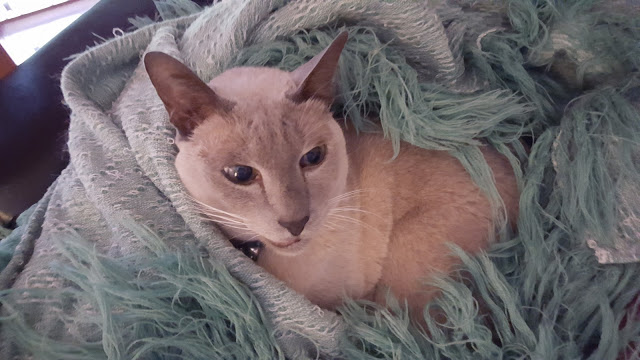
As some may be aware, but many not, Chester, my faithful writing assistant, mice catcher, and general pain in the neck, passed away some months ago.
Recently I was running a series based on his adventures, under the title of Past Conversations with my cat.
For those who have not had the chance to read about all of his exploits I will run the series again from Episode 1
These are the memories of our time together…
This is Chester. Our discussion about me going away is not finished.
Not by any stretch of the imagination.
I’ve been trying to make the bed, fully away of the icy stares I’m being given. THew old age issue is still very raw, and I found him back in his bed, frumping.
You do realize, comes the plaintiff cry, that no one ever remembers to come and refresh the water and food.
News to me. Every time we go away, he had a constant stream of people coming to see him.
Old age, I say, is making you forgetful.
And when you sent me away to your brothers, I could barely tolerate that cat of his. Common alley cat if there ever was one.
Class distinction, I didn’t see that coming.
We’re not all just cats, you know.
Perhaps not, but over the years we’ve had a variety of different cats, but not a purebred like Chester. I’m not sure how that came to pass, but I think I preferred the non-fussy, undisdainful, and easily pleased ‘alley cats’.
Would you like me to send you to my brother’s then?
No, I didn’t think so. Bed made, the discussion is over.
The castle is located in the southern Chianti Classico countryside and has been there for over ten centuries, and owned by the Ricasoli family since 1141.
Like any good castle, it has strong defences, and I was looking for a moat and drawbridge, but it looks like the moat has become a lawn.
The very high walls in places no doubt were built to keep the enemy out
The castle has been destroyed and rebuilt many times over the last 900 years. It was part of the Florentine defences, and withstood, and succumbed to many battles with Siena, which is only 20 km away. More recently, it still bears the scars of artillery fire and bombing in WW2.
The room at the top of this tower would have an excellent view of the countryside.
Here you can see the old and the new, the red brick part of the rebuilding in the 1800’s in the style of an English Manor
We did not get to see where that archway led.
Nor what was behind door number one at the top of these stairs. Rest assured, many, many years ago someone wearing armour would have made the climb. It would not pass current occupational health and safety these days with a number of stairs before a landing.
Cappella di San Jacopo. Its foundations were laid in 1348.
Renovated in 1867-1869, it has a gabled façade preceded by a double stone staircase. The interior, with a crypt where the members of the Ricasoli family are buried, has a nave divided into three spans with cross vaults.
The 1,200 hectares of the property include 240 hectares of vineyards and 26 of olive groves, in the commune of Gaiole.
How many of us have skeletons in the closet that we know nothing about? The skeletons we know about generally stay there, but those we do not, well, they have a habit of coming out of left field when we least expect it.
In this case, when you see your photo on a TV screen with the accompanying text that says you are wanted by every law enforcement agency in Europe, you’re in a state of shock, only to be compounded by those same police, armed and menacing, kicking the door down.
I’d been thinking about this premise for a while after I discovered my mother had a boyfriend before she married my father, a boyfriend who was, by all accounts, the man who was the love of her life.
Then, in terms of coming up with an idea for a story, what if she had a child by him that we didn’t know about, which might mean I had a half brother or sister I knew nothing about. It’s not an uncommon occurrence from what I’ve been researching.
There are many ways of putting a spin on this story.
Then, in the back of my mind, I remembered a story an acquaintance at work was once telling us over morning tea, that a friend of a friend had a mother who had a twin sister and that each of the sisters had a son by the same father, without each knowing of the father’s actions, both growing up without the other having any knowledge of their half brother, only to meet by accident on the other side of the world.
It was an encounter that in the scheme of things might never have happened, and each would have remained oblivious of the other.
For one sister, the relationship was over before she discovered she was pregnant, and therefore had not told the man he was a father. It was no surprise the relationship foundered when she discovered he was also having a relationship with her sister, a discovery that caused her to cut all ties with both of them and never speak to either from that day.
It’s a story with more twists and turns than a country lane!
We have visited this town on a hill, famous for its fourteen towers, twice. The first time we stayed in a hotel overlooking the main piazza, and the second time, for a day visit, and return to a little restaurant tucked away off the main piazza for its home cooking.
No cars are allowed inside the town and parking is provided outside the town walls. You can drive up to the hotel to deliver your baggage, but the car must return to the carpark overnight.
This is one of the fourteen towers
I didn’t attempt to climb to the tower, which you can do in some of them, just getting up the church steps was enough for me. Inside the building was, if I remember correctly, a museum.
Looking up the piazza towards some battlements, and when you reach the top and turn left, there is a small restaurant on the right-hand side of the laneway that had the best wild boar pasta.
Another of the fourteen towers, and through the arch, down a lane to the gated fence that surrounds the town. The fortifications are quite formidable and there are several places along the fence where you can stand and look down the hill at the oncoming enemy (if there was one).
Part of the main piazza which is quite large, and on the right, the wishing well where my wish for a cooler day was not granted.
Officially, the Piazza della Cisterna is the most beautiful square of the town, San Gimignano. The well was built in 1273 and enlarged in 1346 by Podestà Guccio dei Malavolti.
And not to be outdone by any other the other old towns, there is an old church, one of several. It is the Collegiate Church or the Duomo di San Gimignano, a monument of Romanesque architecture built around 1000 and enlarged over time.
Next door is the Museum of Sacred Art.
And I guess it’s rather odd to see television aerials on top of houses that are quite literally about a thousand years old. I wonder what they did back then for entertainment?