What I learned about writing: The murky art of plotting (2)

Truth is stranger than fiction

The Unseen Shadows: When “Not Suspicious” Hides a Deadly Truth

In the quiet hum of suburban life, where hedges are trimmed and routines are sacred, sometimes the most chilling stories unfold not with a bang, but with a whisper. A seemingly ordinary day, an ordinary house, and a tragedy that, on the surface, appears tragically straightforward.

This week, a news blurb, easily missed, caught my eye. It spoke of a man and a woman, new in their courtship, found deceased in an ordinary suburban home following a welfare call. Their bodies lay side-by-side on the floor. The initial report was stark, almost dismissive: police were not treating the deaths as suspicious.

And that, my friends, is exactly where our story truly begins.

Because what if “not suspicious” is merely the first layer of a far more intricate, and sinister, narrative? What if that seemingly benign conclusion is precisely the moment when a seasoned investigator should lean a little closer, peer beyond the immediate, and ask: “But what if…?”

In our hypothetical deep dive, the scene, initially dismissed as a tragic dual overdose, starts to sing a different tune – one of carefully orchestrated deception.

The Discordant Notes Begin to Play

For a keen eye, particularly one belonging to someone like Detective Chief Inspector Barnes, the “simple case” quickly unravels:

  1. The Implausible Overdose: The immediate assumption was drugs. Yet, friends of the deceased knew them as anything but recreational users. And even if they were, “lying on the floor at home” didn’t align with their known habits. Most tellingly? No drugs were found in the house, save for residual traces on the bodies themselves. Sniffer dogs confirmed this, finding nothing else. This isn’t just unusual; it suggests a planting of evidence, a narrative carefully constructed.
  2. The Selective Theft: In an upstairs office, a laptop was missing – not the charger or the mouse, just the computer itself. Both their cell phones were also gone. Yet, amidst this targeted disappearance, a significant sum of cash, around £500, was left untouched. If this was a robbery, it was remarkably selective, focusing not on valuables, but on information. A thief with a very particular agenda.
  3. The Silent Bruise: A preliminary examination of the woman’s body revealed bruising on her neck. A subtle mark, easily overlooked, but one that strongly suggested a struggle, a chokehold perhaps. This detail alone pushes the needle firmly away from “natural causes” or “accidental overdose” and towards something far more violent. The coroner’s report would confirm, but the suspicion was planted.
  4. The Ghost in the System: And then, the final, chilling piece of the puzzle. A routine check on the male victim’s name returned an “access denied” flag. In our interconnected world, such a block isn’t accidental. It screams of a hidden identity, a past carefully shielded, perhaps even a life lived undercover.

From Misadventure to Murder

For Detective Chief Inspector Barnes, these four seemingly disparate points converged into a single, inescapable truth. What began as a welfare check, initially deemed tragic but benign, was rapidly transforming into something far more sinister: a potential double murder. The scene, far from being straightforward, was a meticulously staged tableau designed to mislead, to funnel investigators down a path of false assumptions.

This fictional scenario, drawn from the briefest of news items and a “what if” musing, serves as a powerful reminder: appearances can be deceiving. The most unassuming details often hold the key, and sometimes, the loudest silence speaks volumes. It’s a testament to the fact that true investigation isn’t about accepting the obvious, but about questioning everything, about looking for the unseen shadows lurking just beneath the surface of the “not suspicious.”

“Echoes From The Past”, the past doesn’t necessarily stay there


What happens when your past finally catches up with you?

Christmas is just around the corner, a time to be with family. For Will Mason, an orphan since he was fourteen, it is a time for reflection on what his life could have been, and what it could be.

Until a chance encounter brings back to life the reasons for his twenty years of self-imposed exile from a life only normal people could have. From that moment Will’s life slowly starts to unravel and it’s obvious to him it’s time to move on.

This time, however, there is more at stake.

Will has broken his number one rule, don’t get involved.

With his nemesis, Eddie Jamieson, suddenly within reach, and a blossoming relationship with an office colleague, Maria, about to change everything, Will has to make a choice. Quietly leave, or finally, make a stand.

But as Will soon discovers, when other people are involved there is going to be terrible consequences no matter what choice he makes.

https://amzn.to/2CYKxu4

newechocover5rs

An excerpt from “What Sets Us Apart”, a mystery with a twist

See the excerpt from the story below, just a taste of what’s in store…

http://amzn.to/2Eryfth

whatsetscover

McCallister was old school, a man who would most likely fit in perfectly campaigning on the battlefields of Europe during the Second World War. He’d been like a fish out of water in the army, post-Falklands, and while he retired a hero, he still felt he’d more to give.

He’d applied and was accepted as head of a SWAT team, and, watching him now as he and his men disembarked from the truck in almost military precision, a look passed between Annette, the police liaison officer, and I that said she’d seen it all before. I know I had.

There was a one in four chance his team would be selected for this operation, and she had been hoping it would be one of the other three. While waiting for them to arrive she filled me in on the various teams. His was the least co-operative, and the more likely to make ad-hoc decisions rather than adhere to the plan, or any orders that may come from the officer in charge.

This, she said quite bluntly, was going to end badly.

I still had no idea why Prendergast instructed me to attend the scene of what looked to be a normal domestic operation, but as the nominated expert in the field in these types of situations, it was fairly clear he wasn’t taking any chances. It was always a matter of opinion between us, and generally I lost.

In this case, it was an anonymous report identifying what the authorities believed were explosives in one of the dockside sheds where explosives were not supposed to be.

The only reason why the report was given any credence was the man, while not identifying himself by name, said he’d been an explosive expert once and recognized the boxes. That could mean anything, but the Chief Constable was a cautious man.

With his men settled and preparing their weapons, McCallister came over to the command post, not much more than the SUV my liaison and I arrived in, with weapons, bulletproof vests, and rolls of tape to cordon off the area afterward. We both had coffee, steaming in the cold early morning air. Dawn was slowly approaching and although rain had been forecast it had yet to arrive.

A man by the name of Benson was in charge. He too had groaned when he saw McCallister.

“A fine morning for it.” McCallister was the only enthusiastic one here.

He didn’t say what ‘it’ was, but I thought it might eventually be mayhem.

“Let’s hope the rain stays away. It’s going to be difficult enough without it,” Benson said, rubbing his hands together. We had been waiting for the SWAT team to arrive, and another team to take up their position under the wharf, and who was in the final stages of securing their position.

While we were waiting we drew up the plan. I’d go in first to check on what we were dealing with, and what type of explosives. The SWAT team, in the meantime, were to ensure all the exits to the shed were covered. When I gave the signal, they were to enter and secure the building. We were not expecting anyone inside or out, and no movement had been detected in the last hour since our arrival and deployment.

“What’s the current situation?”

“I’ve got eyes on the building, and a team coming in from the waterside, underneath. Its slow progress, but they’re nearly there. Once they’re in place, we’re sending McKenzie in.”

He looked in my direction.

“With due respect sir, shouldn’t it be one of us?” McCallister glared at me with the contempt that only a decorated military officer could.

“No. I have orders from above, much higher than I care to argue with, so, McCallister, no gung-ho heroics for the moment. Just be ready to move on my command, and make sure you have three teams at the exit points, ready to secure the building.”

McCallister opened his mouth, no doubt to question those orders, but instead closed it again. “Yes sir,” he muttered and turned away heading back to his men.

“You’re not going to have much time before he storms the battlements,” Benson quietly said to me, a hint of exasperation in his tone. “I’m dreading the paperwork.”

It was exactly what my liaison officer said when she saw McCallister arriving.

The water team sent their ‘in position’ signal, and we were ready to go.

In the hour or so we’d been on site nothing had stirred, no arrivals, no departures, and no sign anyone was inside, but that didn’t mean we were alone. Nor did it mean I was going to walk in and see immediately what was going on. If it was a cache of explosives then it was possible the building was booby-trapped in any number of ways, there could be sentries or guards, and they had eyes on us, or it might be a false alarm.

I was hoping for the latter.

I put on the bulletproof vest, thinking it was a poor substitute for full battle armor against an exploding bomb, but we were still treating this as a ‘suspected’ case. I noticed my liaison officer was pulling on her bulletproof vest too.

“You don’t have to go. This is my party, not yours,” I said.

“The Chief Constable told me to stick to you like glue, sir.”

I looked at Benson. “Talk some sense into her please, this is not a kindergarten outing.”

He shrugged. Seeing McCallister had taken all the fight out of him. “Orders are orders. If that’s what the Chief Constable requested …”

Madness. I glared at her, and she gave me a wan smile. “Stay behind me then, and don’t do anything stupid.”

“Believe me, I won’t be.” She pulled out and checked her weapon, chambering the first round. It made a reassuring sound.

Suited up, weapons readied, a last sip of the coffee in a stomach that was already churning from nerves and tension, I looked at the target, one hundred yards distant and thought it was going to be the longest hundred yards I’d ever traversed. At least for this week.

A swirling mist rolled in and caused a slight change in plans.

Because the front of the buildings was constantly illuminated by large overhead arc lamps, my intention had been to approach the building from the rear where there was less light and more cover. Despite the lack of movement, if there were explosives in that building, there’d be ‘enemy’ surveillance somewhere, and, after making that assumption, I believed it was going to be easier and less noticeable to use the darkness as a cover.

It was a result of the consultation, and studying the plans of the warehouse, plans that showed three entrances, the main front hangar type doors, a side entrance for truck entry and exit and a small door in the rear, at the end of an internal passage leading to several offices. I also assumed it was the exit used when smokers needed a break. Our entry would be by the rear door or failing that, the side entrance where a door was built into the larger sliding doors. In both cases, the locks would not present a problem.

The change in the weather made the approach shorter, and given the density of the mist now turning into a fog, we were able to approach by the front, hugging the walls, and moving quickly while there was cover. I could feel the dampness of the mist and shivered more than once.

It was nerves more than the cold.

I could also feel rather than see the presence of Annette behind me, and once felt her breath on my neck when we stopped for a quick reconnaissance.

It was the same for McCallister’s men. I could feel them following us, quickly and quietly, and expected, if I turned around, to see him breathing down my neck too.

It added to the tension.

My plan was still to enter by the back door.

We slipped up the alley between the two sheds to the rear corner and stopped. I heard a noise coming from the rear of the building, and the light tap on the shoulder told me Annette had heard it too. I put my hand up to signal her to wait, and as a swirl of mist rolled in, I slipped around the corner heading towards where I’d last seen the glow of a cigarette.

The mist cleared, and we saw each other at the same time. He was a bearded man in battle fatigues, not the average dockside security guard.

He was quick, but my slight element of surprise was his undoing, and he was down and unconscious in less than a few seconds with barely a sound beyond the body hitting the ground. Zip ties secured his hands and legs, and tape his mouth. Annette joined me a minute after securing him.

A glance at the body then me, “I can see why they, whoever they are, sent you.”

She’d asked who I worked for, and I didn’t answer. It was best she didn’t know.

“Stay behind me,” I said, more urgency in my tone. If there was one, there’d be another.

Luck was with us so far. A man outside smoking meant no booby traps on the back door, and quite possibly there’d be none inside. But it indicated there were more men inside, and if so, it appeared they were very well trained. If that were the case, they would be formidable opponents.

The fear factor increased exponentially.

I slowly opened the door and looked in. A pale light shone from within the warehouse itself, one that was not bright enough to be detected from outside. None of the offices had lights on, so it was possible they were vacant. I realized then they had blacked out the windows. Why hadn’t someone checked this?

Once inside, the door closed behind us, progress was slow and careful. She remained directly behind me, gun ready to shoot anything that moved. I had a momentary thought for McCallister and his men, securing the perimeter.

At the end of the corridor, the extent of the warehouse stretched before us. The pale lighting made it seem like a vast empty cavern, except for a long trestle table along one side, and, behind it, stacks of wooden crates, some opened. It looked like a production line.

To get to the table from where we were was a ten-yard walk in the open. There was no cover. If we stuck to the walls, there was equally no cover and a longer walk.

We needed a distraction.

As if on cue, the two main entrances disintegrated into flying shrapnel accompanied by a deafening explosion that momentarily disoriented both Annette and I. Through the smoke and dust kicked up I saw three men appear from behind the wooden crates, each with what looked like machine guns, spraying bullets in the direction of the incoming SWAT members.

They never had a chance, cut down before they made ten steps into the building.

By the time I’d recovered, my head heavy, eyes watering and ears still ringing, I took several steps towards them, managing to take down two of the gunmen but not the third.

I heard a voice, Annette’s I think, yell out, “Oh, God, he’s got a trigger,” just before another explosion, though all I remember in that split second was a bright flash, the intense heat, something very heavy smashing into my chest knocking the wind out of me, and then the sensation of flying, just before I hit the wall.

I spent four weeks in an induced coma, three months being stitched back together and another six learning to do all those basic actions everyone took for granted. It was twelve months almost to the day when I was released from the hospital, physically, except for a few alterations required after being hit by shrapnel, looking the same as I always had.

But mentally? The document I’d signed on release said it all, ‘not fit for active duty; discharged’.

It was in the name of David Cheney. For all intents and purposes, Alistair McKenzie was killed in that warehouse, and for the first time ever, an agent left the Department, the first to retire alive.

I was not sure I liked the idea of making history.

© Charles Heath 2016-2020

“Trouble in Store” – Short stories my way: Adding a catalyst

Just when there’s enough complication in the story, we could leave it there with the current three protagonists and see what happens.

But I like mayhem.

So rather than another customer, it’s time to add a complication; an off-duty policeman, or more to the point, policewoman.  A beat cop, if they still exist.

Her back story in a sentence or so:

It had been another long day at the office for Officer Margaret O’Donnell, or, out in the streets, coping with people who either didn’t know or didn’t care about the law.

People who couldn’t cross the road where there were crossings and lights to protect them, silly girls shoplifting on a dare, and boys who thought they were men and could walk on water.

The one they scraped off the road would never get to grow up, and his mother, well, she was not doing another call on a family to give them the bad news.

That was her day.  So far.

What is she doing near the shop?  She lives around the corner.  Perhaps she knows the reputation of the shopkeeper or perhaps not.  It’s not relevant, then, as it is a place she avoids.

Now, she may not have the option.  She sees the shop is still open, past the usual closing time.

Let’s continue:

She came around the corner into the street where she lived and saw the lights were on in the corner store.

She looked at her watch and saw it was ten minutes to midnight.  Long past closing time.  She looked through the window but from the other side of the road and could only see three heads and little else.

Damn, she thought, I’m going to have to check it out.  There were rumours, and she hoped they were not true.

Meanwhile, back in the shop how are the others faring?

The shopkeeper is in an invidious position, he can’t supply the kids with the drugs and get them out, not in front of the customer.

The fact the girl has a gun makes the situation almost impossible.  What would happen if he suggests the customer leave?  Without him, the situation would be simpler.

Alphonse had only a few moments to sum up the situation, and the sum of those deliberations was the remove the only problem, the customer.

He could still salvage this:

The shopkeeper changed his expression to one more placatory, and said quietly to the girl, ‘Look, this is not this chap’s problem.’  He nodded in the direction of the customer.  ‘I’m sure he’d rather not be here, and you would be glad of one less distraction.’

He could see she was wavering, she was not holding the gun so steadily, and the longer this dragged on, the more nervous and unpredictable she would become.

And in the longer game, the customer would sing his praises no matter what happened after he left.

The girl looked at Jack.  The shopkeeper was right.  If he wasn’t here this could be over.  But there was another problem.  It didn’t look like Simmo was in any shape to get away.  In fact, this was looking more like a suicide mission.

She waved the gun in his direction.  ‘Get out now, before I change my mind.’

As the gun turned to the shopkeeper, Jack wasn’t going to wait to be asked twice and started sidling towards the door.

What happens next?

And the story for this section, with a few minor changes:

It had been another long day at the office for Officer Margaret O’Donnell, or, out in the streets, coping with people who either didn’t know or didn’t care about the law.

People who couldn’t cross the road where there were crossings and lights to protect them, silly girls shoplifting on a dare, and boys who thought they were men and could walk on water.

The one they scraped of the road would never get to grow up, and his mother, well, she was not doing another call on a family to give them the bad news.

That was her day.  So far.  For now, she was glad to be getting home, putting her feet up, and forgetting about everything until the next morning when it would start all over again.

Coming around that last corner, the home stretch she called it, she was directly opposite the corner shop, usually closed at this hour of the night.  It was not.  The lights were still on.

She looked at her watch and saw it was ten minutes to midnight, and long past closing time.  She looked through the window but from the other side of the road and could only see three heads and little else.

Damn, she thought, I’m going to have to check it out.  There were rumours, and she hoped they were not true.

The shopkeeper changed his expression to one more placatory, and said quietly to the girl, ‘Look, this is not this chap’s problem.’  He nodded in the direction of the customer.  ‘I’m sure he’d rather not be here, and you would be glad of one less distraction.’

He could see she was wavering, she was not holding the gun so steadily, and the longer this dragged on, the more nervous and unpredictable she would become.

And in the longer game, the customer would sing his praises no matter what happened after he left.

The girl looked at Jack.  The shopkeeper was right.  If he wasn’t here this could be over.  But there was another problem.  It didn’t look like Simmo was in any shape to get away.  In fact, this was looking more like a suicide mission.

She waved the gun in his direction.  ‘Get out now, before I change my mind.’

As the gun turned to the shopkeeper, Jack wasn’t going to wait to be asked twice and started sidling towards the door.

Next:  Actions have consequences

© Charles Heath 2016-2023

The cinema of my dreams – Was it just another surveillance job – Episode 57

This story is now on the list to be finished so over the new few weeks, expect a new episode every few days.

The reason why new episodes have been sporadic, there are also other stories to write, and I’m not very good at prioritizing.

But, here we are, a few minutes opened up and it didn’t take long to get back into the groove.

Things are about to get complicated…


I hadn’t realised until I said it out loud to someone who would not understand the significance of it, just how far-fetched the reason was.

But in my newly adopted world, it made perfect sense.

 Spies dealt with many things, mostly the notion of a threat, and the removal of it, whether it is an object like a USB or a person, or persons, who could make the threat become a reality.

This threat started with a laboratory working for the military to produce biological weapons.  Then the funding stopped, for whatever reason, and the laboratory had to cover its losses.

What better way than to hawk the formula on the dark web?

Someone perceived that the laboratory would become a threat and dispatched operatives to monitor the situation.

The worst-case scenario occurs, but from a different standpoint, the outrage of a community-conscious scientist who didn’t like the idea of people creating monstrous weapons and steals the formula to leak to the media.

The laboratory is shut down by the government before the formula could be sold, but there is a copy in play via the scientist.

The scientist, and therefore the threat, neutralised.

The threat then moves to his wife, who contacts someone in the Department, likely but not necessarily Dobbin, who then assigns O’Connell to find the wife and offer a lot of cash for the formula.

She agrees.

Somehow, the planted operatives, Severin and Maury discover the wife and O’Connell’s arrangement.

They create a surveillance group with the intention of monitoring the handover and then try to remove both O’Connell and the wife.

For what reason.  The threat would have been removed unless O’Connell and Dobbin had another agenda.  Why then when Dobbin rescued O’Connell, did O’Connell then turn on him?

A relationship with the wife?

Or was it simply the thought of making a huge sum of money, one both O’Connell and the wife could retire on.  He would not be the first spy to sell his soul for twenty pieces of silver.

But the good news, was we had Severin’s assassin.

The plan from there was to hand her over to the Detective Inspector, who didn’t have an agenda other than getting to the truth and keeping Jan away from Dobbin, or anyone who could set her free.

That plan was quashed the moment I saw Dobbin turn up at the scene.  He knew where Severin would be, he must know Severin was meeting with me, and he had sent Jan.

The fact I was still alive meant he wanted something from me.

The question was whether he knew if Jan had been taken off the playing field.

“What the hell is he doing here?”

It was the exact question in my head, though I was closer to answer than she was.

“Run interference, or worse, take over this case too.”

“I thought that was left in the hands of MI5.”

“He turned up after you left.”

She shrugged.  “Above my pay grade, to be honest.  He can have it.  I prefer to deal with the mundane, common thieves or murderers.  None of this cloak-and-dagger stuff.   I’ll tell my Super about the biological stuff, but you have to admit it is a bit farfetched.  There’s a more rational explanation for these deaths, you just have to look harder.  Now, if there’s nothing else?”

Too late to escape, Dobbin had circled around and reached us before I could disappear.

“You seem to turn up to department crime scenes with alarming regularity, Sam.  Any particular reason you’re here?”

The Detective Inspector had expected him to talk to her, not me.

“He’s just another possible witness on the periphery of a crime.  You’re here because?

“It’s one of our people.  I’m afraid…”

“…you’re going to have to take over?  Be my guest.  Your friend here is altogether far too uncooperative, like the rest of you.  I am going to file a formal complaint.”

.“And I’m sure it will be seen by the relevant people.”

She just shrugged and walked away, waving her hand at no one in particular

I waited until she was out of hearing range and asked, “So, why didn’t Jan shoot me too?”

© Charles Heath 2020-2023

What I learned about writing: The murky art of plotting! (1)

Truth is stranger than fiction

Google Maps: More Than Just Directions – A Portal to Phantom Mysteries?

We all use Google Maps. It’s our trusty co-pilot, guiding us through unfamiliar streets, helping us find the nearest coffee shop, and even letting us snoop on our old childhood homes (admit it, you’ve done it!). But what if I told you that sometimes, beneath the familiar satellite imagery, Google Maps offers a glimpse into something far stranger than your aunt’s meticulously manicured lawn?

Lately, chatter has been building around peculiar anomalies popping up on the platform – digital specters appearing where they absolutely shouldn’t. Imagine panning over a dense, untouched forest, far from any airport, only to find a colossal Airbus A320 or Boeing 737 perfectly intact, sitting in a clearing. No missing plane reports, no emergency landings, just a commercial jetliner chilling amongst the trees. How did it get there? And more importantly, why?

This isn’t an isolated incident. There are numerous reports of cars, sometimes multiple vehicles, resting eerily at the bottom of lakes, visible from above. While many of these are indeed phantom images, some chillingly prove to be real. You might recall the story of the car discovered in a lake in Florida, which, upon investigation, contained the remains of a man who had been missing for over two decades. The digital anomaly led to a very real, very tragic discovery.

So, before we reach for our tinfoil hats, there’s a rational explanation for most of these ghostly appearances. The phenomenon is often an instance of image overlay or “ghosting.” Google Maps stitches together countless satellite and aerial photographs taken at different times. When an object, like a low-flying aircraft, is captured in one image over a particular spot, and a later, object-free image of the same spot is layered on top, a faint “ghost” of the original object can remain visible. The plane in the forest? It’s highly probable it was just flying incredibly low when the initial photograph was taken, leaving its digital imprint on the landscape.

Mystery solved, right? Well, mostly.

But what if, just what if, these digital echoes aren’t always mere glitches? What if, sometimes, they are whispers of something more, waiting to be heard?


Mick knew all about those lonely leisure hours when there was nothing else to do. He wasn’t one for idly scrolling social media; Mick was a tramper, a genuine trailblazer. His idea of relaxation was poring over topographical maps, looking for untouched corners of the world, sketching out potential new paths through forests, and dreaming of odd discoveries. Years ago, one such expedition had led him to uncover a lost village of significant archaeological value. He had a knack for finding things.

One drizzly afternoon, with the rain drumming against his window, Mick found himself drifting through Google Maps, exploring remote stretches of a national forest known for its dense, ancient foliage. He zoomed in, panned around, his cursor tracing imaginary trails. He wasn’t looking for glitches, but for inspiration, for the subtle hints of untamed beauty.

Then he saw it.

Not a ghost, not a blur, but what seemed to be distinct wreckage dispersed in a clearing. Glimpses of what looked like metal fragments, incongruous against the deep green canopy. It wasn’t the clean, whole plane of famous internet anomalies, but a scattering, undeniably man-made and out of place. He noted the date of the photograph – nearly a year prior.

A chill ran down his spine. He immediately checked local news archives, aviation reports, anything about missing small planes or crashes in the area. Nothing. Not a single mention. It was too remote for a simple crash to go unnoticed, yet too significant to be naturally occurring.

He kept the location saved, revisiting it over the next few days. It gnawed at him. Was it a trick of the light? A bizarre anomaly of the photo processing? He called a friend, an equally seasoned bushwalker, and explained his digital discovery, asking him to verify it on his own map.

“Right, mate, I’m looking,” came his friend’s voice over the phone a few minutes later. “Where exactly did you say?”

Mick guided him, pixel by pixel. “See it? Right there, by that cluster of three oaks…”

There was a pause. “Uh, Mick? There’s just… trees.”

Mick’s stomach dropped. He clicked back to his own map. The wreckage was gone. The clearing was pristine, just an unbroken expanse of forest. He felt a wave of self-doubt. Had his mind been playing tricks, wanting to find something remarkable, perhaps fabricating the whole thing?

But then he noticed it. The date of the photograph displayed on his screen had updated. It was no longer the nearly-a-year-old image. It was a new one, taken just a few weeks ago.

The digital ghost had vanished, but the seed of a real-world mystery had been planted. With the rain still falling and nothing better to do, Mick knew exactly what his next walking holiday would entail. He wasn’t just going to look at maps anymore. He was going to see what was really there.

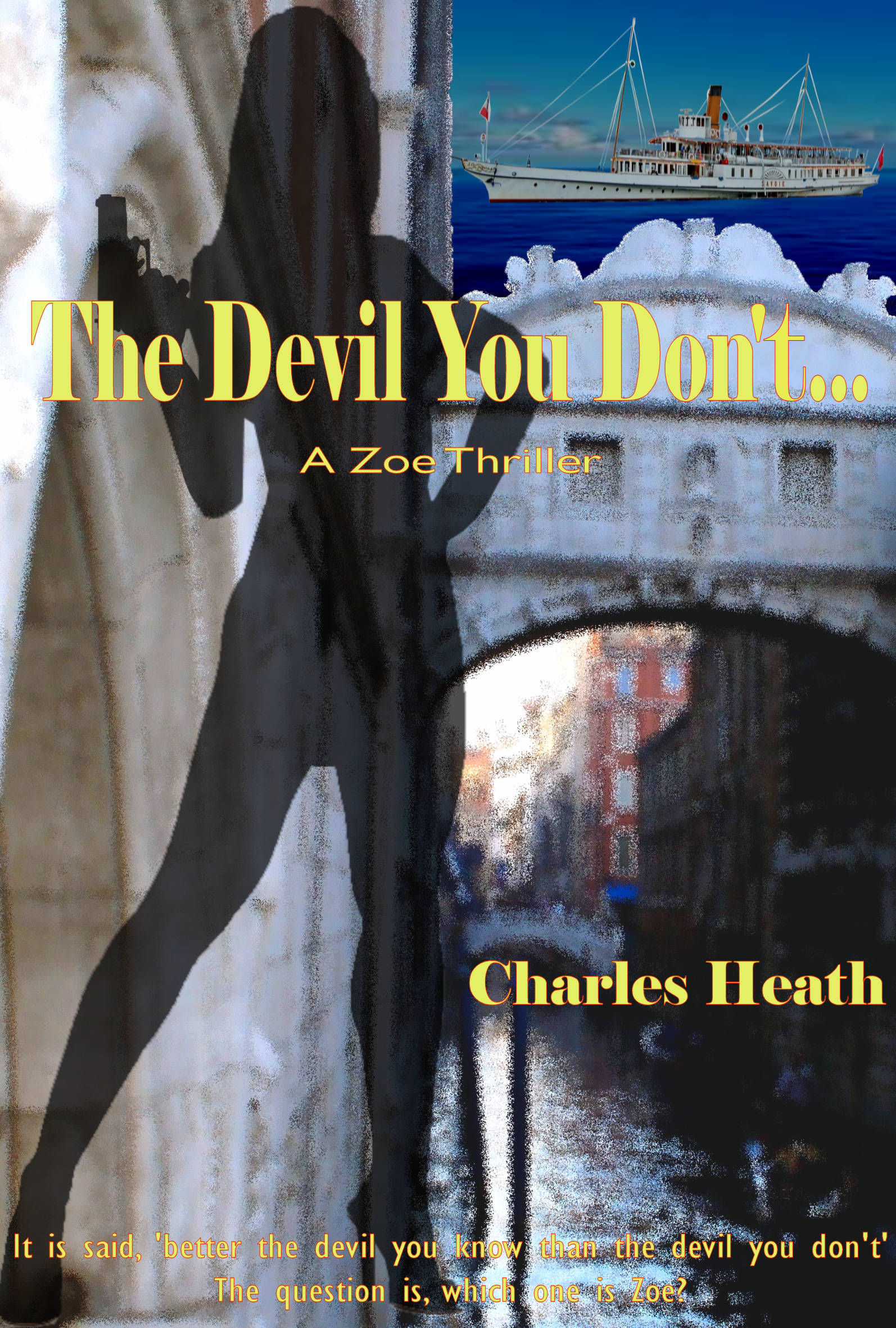
‘The Devil You Don’t’ – A beta reader’s view

It could be said that of all the women one could meet, whether contrived or by sheer luck, what are the odds it would turn out to be the woman who was being paid a very large sum to kill you.

John Pennington is a man who may be lucky in business, but not so lucky in love. He has just broken up with Phillipa Sternhaven, the woman he thought was the one, but relatives and circumstances, and perhaps because she was a ‘princess’, may also have contributed to the end result.

So, what do you do when you are heartbroken?

That is a story that slowly unfolds, from the first meeting with his nemesis on Lake Geneva, all the way to a hotel room in Sorrento, where he learns the shattering truth.

What should have been solace after disappointment, turns out to be something else entirely, and from that point, everything goes to hell in a handbasket.

He suddenly realizes his so-called friend Sebastian has not exactly told him the truth about a small job he asked him to do, the woman he is falling in love with is not quite who she says she is, and he is caught in the middle of a war between two men who consider people becoming collateral damage as part of their business.

The story paints the characters cleverly displaying all their flaws and weaknesses. The locations add to the story at times taking me back down memory lane, especially to Venice where, in those back streets I confess it’s not all that hard to get lost.

All in all a thoroughly entertaining story with, for once, a satisfying end.

Available on Amazon here: https://amzn.to/2Xyh1ow

“The Things we do for Love”, the story behind the story

This story has been ongoing since I was seventeen, and just to let you know, I’m 71 this year.

Yes, it’s taken a long time to get it done.

Why, you might ask.

Well, I never gave it much interest because I started writing it after a small incident when I was 17, and working as a book packer for a book distributor in Melbourne

At the end of my first year, at Christmas, the employer had a Christmas party, and that year, it was at a venue in St Kilda.

I wasn’t going to go because at that age, I was an ordinary boy who was very introverted and basically scared of his own shadow and terrified by girls.

Back then, I would cross the street to avoid them

Also, other members of the staff in the shipping department were rough and ready types who were not backwards in telling me what happened, and being naive, perhaps they knew I’d be either shocked or intrigued.

I was both adamant I wasn’t coming and then got roped in on a dare.

Damn!

So, back then, in the early 70s, people looked the other way when it came to drinking, and of course, Dutch courage always takes away the concerns, especially when normally you wouldn’t do half the stuff you wouldn’t in a million years

I made it to the end, not as drunk and stupid as I thought I might be, and St Kilda being a salacious place if you knew where to look, my new friends decided to give me a surprise.

It didn’t take long to realise these men were ‘men about town’ as they kept saying, and we went on an odyssey.  Yes, those backstreet brothels where one could, I was told, have anything they could imagine.

Let me tell you, large quantities of alcohol and imagination were a very bad mix.

So, the odyssey in ‘The things we do’ was based on that, and then the encounter with Diana. Well, let’s just say I learned a great deal about girls that night.

Firstly, not all girls are nasty and spiteful, which seemed to be the case whenever I met one. There was a way to approach, greet, talk to, and behave.

It was also true that I could have had anything I wanted, but I decided what was in my imagination could stay there.  She was amused that all I wanted was to talk, but it was my money, and I could spend it how I liked.

And like any 17-year-old naive fool, I fell in love with her and had all these foolish notions.  Months later, I went back, but she had moved on, to where no one was saying or knew.

Needless to say, I was heartbroken and had to get over that first loss, which, like any 17-year-old, was like the end of the world.

But it was the best hour I’d ever spent in my life and would remain so until I met the woman I have been married to for the last 48 years.

As Henry, he was in part based on a rebel, the son of rich parents who despised them and their wealth, and he used to regale anyone who would listen about how they had messed up his life

If only I’d come from such a background!

And yes, I was only a run away from climbing up the stairs to get on board a ship, acting as a purser.

I worked for a shipping company and they gave their junior staff members an opportunity to spend a year at sea working as a purser on a cargo ship that sailed between Melbourne, Sydney and Hobart in Australia.

One of the other junior staff members’ turn came, and I would visit him on board when he would tell me stories about life on board, the officers, the crew, and other events. These stories, which sounded incredible to someone so impressionable, were a delight to hear.

Alas, by that time, I had tired of office work and moved on to be a tradesman at the place where my father worked.

It proved to be the right move, as that is where I met my wife.  Diana had been right; love would find me when I least expected it.

“Trouble in Store” – Short stories my way: Point of view

If this story were being written in the first person, the only perspective or point of view would be that of the narrator.

Since we need to have several perspectives, it is better done in the third person so we can change between characters and try to understand their motivation.

We might look at the first-person perspective for each of the characters later.

The second of the protagonists is the girl with the gun.  How did she get it?  How did the situation deteriorate so quickly?   What is she going to do?

This is a short story, and we need to know something about her, so we must get to the heat of the matter quickly, let’s start with:

Her mother said she would never amount to anything, and here she was, with a broken drug addict coming apart because she had been cut off from her money, dragged into coming to this shop to leverage drugs from his dealer at the end of a gun.  It was her fault, Jerry said and made her feel responsible, much the same as her parents and everyone else in her life.

One of life’s losers or just a victim?  This theme can go in any direction.

Then a moment to reflect on why she was here:

Why had she agreed to go with Jerry?  At that moment when she picked up the gun off the floor, she realized it was not out of responsibility or fault, it was out of fear.

That gives us the why; he had obviously tried to make her feel responsible and when that failed, he threatened her.  But now there’s a bigger issue, the gun and a situation spiralling out of control.  The thing is, she has the gun and the power to walk away or make matters worse.

The problem was that she had outed the shopkeeper as a dealer in front of someone who had not known.  That now made him a victim as much as she was.

She looked at the two men facing her, a shopkeeper who was a dealer and a customer scared shitless.  As much as she was.  Her gun hand was shaking.

The scene is set, and something has to give.

Time for the shopkeeper to weigh in.

“I have no idea what you are talking about.  Please, put the gun down before someone gets hurt.”

It’s a typical response from a man who realizes he’s in trouble and is trying to make time while he thinks of how to rescue himself from a potentially dangerous situation.

Time to change the perspective again and explore the shopkeeper.

If only Jack hadn’t come in when he did.  He would have the gun, call the police, and brazened his way out of trouble.  Who would the police believe a pair of addicts or a respectable shopkeeper?

Now he had to deal with the fallout, especially if the girl started talking.

Next, actions have consequences, building the tension.

This section was rewritten, moving from Jack as the narrator to the girl, and then to the shopkeeper:

Annalisa looked at the two men facing her, a shopkeeper who, despite his protestations, was a dealer and a customer scared shitless.

The poor bastard was not the only one.  This was meant to be simple, arrive at the shop just before closing, force the shopkeeper to hand over the shit, and leave.  Simple.

Except …

The shopkeeper told them to get out.  Simmo started ranting waving the gun around, then collapsed.  A race for the gun which spilled out of his hand, she won.

He was getting the stuff when the customer burst into the shop.

Shit, shit, shit, shit, she thought.

Why had she agreed to go with Jerry?  It was her fault, Jerry had said, and he made her feel responsible for his problems, much the same as her parents and everyone else in her life.

Her mother said she would never amount to anything, and here she was, with a drug addict coming apart because she had been cut off from her money, dragged into coming to this shop to pick up his score from his dealer at the end of a gun.

She heard a strange sound come from beside her and looked down.  Simmo was getting worse, like he had a fever, and was moaning.

The shopkeeper saw an opportunity.  “Listen to me, young lady, I have no idea what you are talking about.  Please, put the gun down before someone gets hurt.  Your friend needs medical help and I can call an ambulance.”

The girl switched her attention back to him.  “Shut up, let me think.  Shit.”

The storekeeper glanced over at the customer.  He’s been in once or twice, probably lived in the neighbourhood, but looked the sort who’d prefer to be anywhere but in his shop.  More so now.  If only he hadn’t burst in when he did.  He would have the gun, call the police, and brazen his way out of trouble.  Who would the police believe a pair of addicts or a respectable shopkeeper?

Now he had to deal with the fallout, especially if the girl started talking.

© Charles Heath 2016 – 2024

The cinema of my dreams – Was it just another surveillance job – Episode 56

This story is now on the list to be finished so over the new few weeks, expect a new episode every few days.

The reason why new episodes have been sporadic, there are also other stories to write, and I’m not very good at prioritizing.

But, here we are, a few minutes opened up and it didn’t take long to get back into the groove.

Things are about to get complicated…


“Turn around and head towards the trees, we’re not very far from you,” the voice in my head said.

I turned, saw the trees and moved towards them.

“Straight ahead.”

Then I could just see her, beside one of the tree trunks, under the cover of the canopy.

For the moment we would not be seen, but if someone was looking intently, we would be seen.

Jennifer was kneeling, her knees and weight keeping the assailant on the ground.  She handed me the gun, a silenced Baretta, with the distinct aroma of a discharged bullet.

Jennifer had pulled off the balaclava.  Jan.

Not working for Severin, but Dobbin.  Or someone else?

“Who ordered the hit?”

“Go fuck yourself.”

Not entirely unexpected.

I pulled out my phone and dialled the number for the Detective Inspector that had been at Maury’s crime scene.  I knew there was going to be a need to call her in the not-too-distant future.  And Jan needed to be in a safe place where she couldn’t be got at.

“Who is this?”

My number would have come up as a ‘private number’.

“We met at the hotel where Maury died.”

“The spy?”

“Of sorts.  I’m sorry to say that his companion, Severin, is also now very dead in the rotunda at the Italian Gardens at Hyde Park.  I’d get someone down here before the body is removed or found by a member of the public.”

I heard a scream and deduced it came from the rotunda.

“Too late.  Hurry before the crime scene is contaminated.”

“Where are you?”

“Nearby.  And if you’re especially quick, we have a surprise for you.”

Two constables arrived in four minutes, most likely nearby for another reason.  The Detective Inspector and her Sergeant arrived within 20 minutes, but by that time Jennifer and Jan had retreated to the car, parked away from the gardens.

Anyone seeing us heading away would have picked us for three drunken fools escorting a friend who had passed out.  Jan had struggled to get free, and it had been necessary to subdue her.

I had wanted to ask further questions, but circumstances didn’t allow it.  Not yet.

Leaving Jennifer with Jan, securely tied up, but looking like she was sleeping of a long drinking session, I went back to the crime scene just as the Detective Inspector was coming out of the rotunda.

She recognised me and called me over to the tape that separated the public from the scene.  The forensic team had just arrived and was setting up.  I doubted she would let me into the crime scene area, but I had seen enough when I’d been there with Severin.

“Why are you here, and give me a good reason not to take you into custody.”

“He called me earlier and wanted to talk.  I think he found out Maury was dead, and he was next.  I didn’t kill him, but I know who did, but I’m not sure we’re going to be able to prove it.”

“That weedy little man that saved your ass the last time?”

“Richards or Dobbin?  Either or together or one of their henchmen.  Not sure, to be honest.  All I knop is it’s possible Maury was killed during an intense interrogation.  I suspect Severin was killed to silence him.”

“Because of what?”

“I believe it is about the existence of a formula for a biological weapon.”

© Charles Heath 2020-2023