The cinema of my dreams – I always wanted to go on a treasure hunt – Episode 65

Here’s the thing…

Every time I close my eyes, I see something different.

I’d like to think the cinema of my dreams is playing a double feature but it’s a bit like a comedy cartoon night on Fox.

But these dreams are nothing to laugh about.

Once again there’s a new installment of an old feature, and we’re back on the treasure hunt.

…

The Ormiston’s from the papers

…

It was a question of what was I looking for.  It would be easy to say I wanted a piece of paper that definitively said where the treasure was or finding a map that led straight to it.

Instead, there was, in one box, a dozen journals filled with the ramblings of a madman.

Searching for treasure had sent Ormiston senior mad.  For an hour, perhaps longer, I tried to decipher the spidery writing, and then gave up when it switched to German.

I assembled the journals in order of his expeditions and found the first easy to follow because it was a time of excitement and expectation, that he would find the treasure.  There were pages on exactly what he thought the treasure was worth, the sort of pieces they would find, and what he would do with the proceeds.

There were drawings of items off the map and his interpretation of what they represented.  It was a rather good description of the coastline and its anomalies as they related to map landmarks.  They were, almost all, the same as the Boggs interpretations.

When the discovery didn’t happen, when the first euphoria wore off and the search became bogged down in acrimony and arguments, and the realization the map they were using was not as clear as first believed, that was where it all began to fall apart.

Reading the words, feeling the disappointment seeping off the page, it must have been quite a blow.

The second expedition didn’t start off with the same fanfare, but almost as if they were expected to fail.  Too little time had been spent analyzing what went wrong and reidentifying the coastal landmarks.

And, when it did fail, the last comment in the diary was fairly succinct.  “What if there is no treasure?”

In another, scrawled heavily on several pages at the back, “look for the big A” was repeated several times, and much underlined.

There were five other boxes with papers, charts, notebooks, and books that belonged on a shelf but instead were neatly stacked.  They’d been in the boxes for some time, and had that aroma books got when left in the damp too long, and, in fact, when I tried to open some, the pages had stuck together.

A lot of the books were about pirates, reference texts, and fiction.  Part of one box was set aside for our particular pirate, and, reading through what could be read, a lot of the information was contradictory.  One book postulated that the said pirate wasn’t a pirate at all, casting doubt on whether he ever existed at all.

The maps were a different story, and, yes, they were all similar except for small details an observation I had made before.  None had what I would have called ‘new’ features, just a rehash of all the others.  Some were old, but most had the appearance of being made to look old.

Then, at the bottom of a box of books, were copies of newspaper articles, aged, stained, and some in various stages of disintegration.  The Bahama Argus, The Barbadian, The Antigua Herald and Gazette, The Bermuda Colonist, and the Dominica Chronicle.  All had references to Captain Johannsson, and his vessel, the Sea Serpent.

There was such a Captain, and there was such a ship, and there were reports of a vessel roving the seas, looking for prey.  And those reports covered a great deal of plunder, definitely the sort that would find its way into a number of sea chests.

But, was this the treasure that Ormiston believed was hidden somewhere in The Grove?

Something caught my attention on the first diary, the way it sat and the light reflected off it, and picking it up and looking at it showed no anomaly in the surface, not until it sat on a certain angle and in the sunlight.

A slight ripple down one edge of the spine, and with careful probing, there was a split in the material of the cover pasted back down, but in the time since it had been glued back, the glue had dissolved and the simple act of picking the book up and parted the split.

Lifting it gently, I could see a piece of paper tucked in and gently coaxed it out.

It was very thin and fragile, but the writing was clear.  Entries from what might have been a logbook.  I knew this only because I had been out of a sailing boat once when at school, and had seen the boat’s logbook, noting where the boat had been.

This page had only a few entries, the location of its departure, in latitude and longitude, a number of the daily distances traveled, and conditions, and the last, another latitude and longitude.

When I put the first coordinates into my GPS, it was near the island of Antigua, and then the destination, just up the coast near the old mall.  The name of the vessel, in almost illegible writing, the Sea Serpent.

So, there was a logbook, although it might not exist now, it did at some point in the past, and Ormiston had either found it or seen it.  The writing on the piece of paper was his. It proved, if it was authentic, there was a ship, and it did come to this coast.

I carefully folded it and hid it in my wallet, then replaced everything where I found it.  Enough research for today.  I tried not to look guilty when I left.

…

© Charles Heath 2020-2022

Skeletons in the closet, and doppelgangers

A story called “Mistaken Identity”

…

How many of us have skeletons in the closet that we know nothing about? The skeletons we know about generally stay there, but those we do not, well, they have a habit of coming out of left field when we least expect it.

In this case, when you see your photo on a TV screen with the accompanying text that says you are wanted by every law enforcement agency in Europe, you’re in a state of shock, only to be compounded by those same police, armed and menacing, kicking the door down.

I’d been thinking about this premise for a while after I discovered my mother had a boyfriend before she married my father, a boyfriend who was, by all accounts, the man who was the love of her life.

Then, in terms of coming up with an idea for a story, what if she had a child by him that we didn’t know about, which might mean I had a half brother or sister I knew nothing about. It’s not an uncommon occurrence from what I’ve been researching.

There are many ways of putting a spin on this story.

Then, in the back of my mind, I remembered a story an acquaintance at work was once telling us over morning tea, that a friend of a friend had a mother who had a twin sister and that each of the sisters had a son by the same father, without each knowing of the father’s actions, both growing up without the other having any knowledge of their half brother, only to meet by accident on the other side of the world.

It was an encounter that in the scheme of things might never have happened, and each would have remained oblivious of the other.

For one sister, the relationship was over before she discovered she was pregnant, and therefore had not told the man he was a father. It was no surprise the relationship foundered when she discovered he was also having a relationship with her sister, a discovery that caused her to cut all ties with both of them and never speak to either from that day.

It’s a story with more twists and turns than a country lane!

And a great idea for a story.

That story is called ‘Mistaken Identity’.

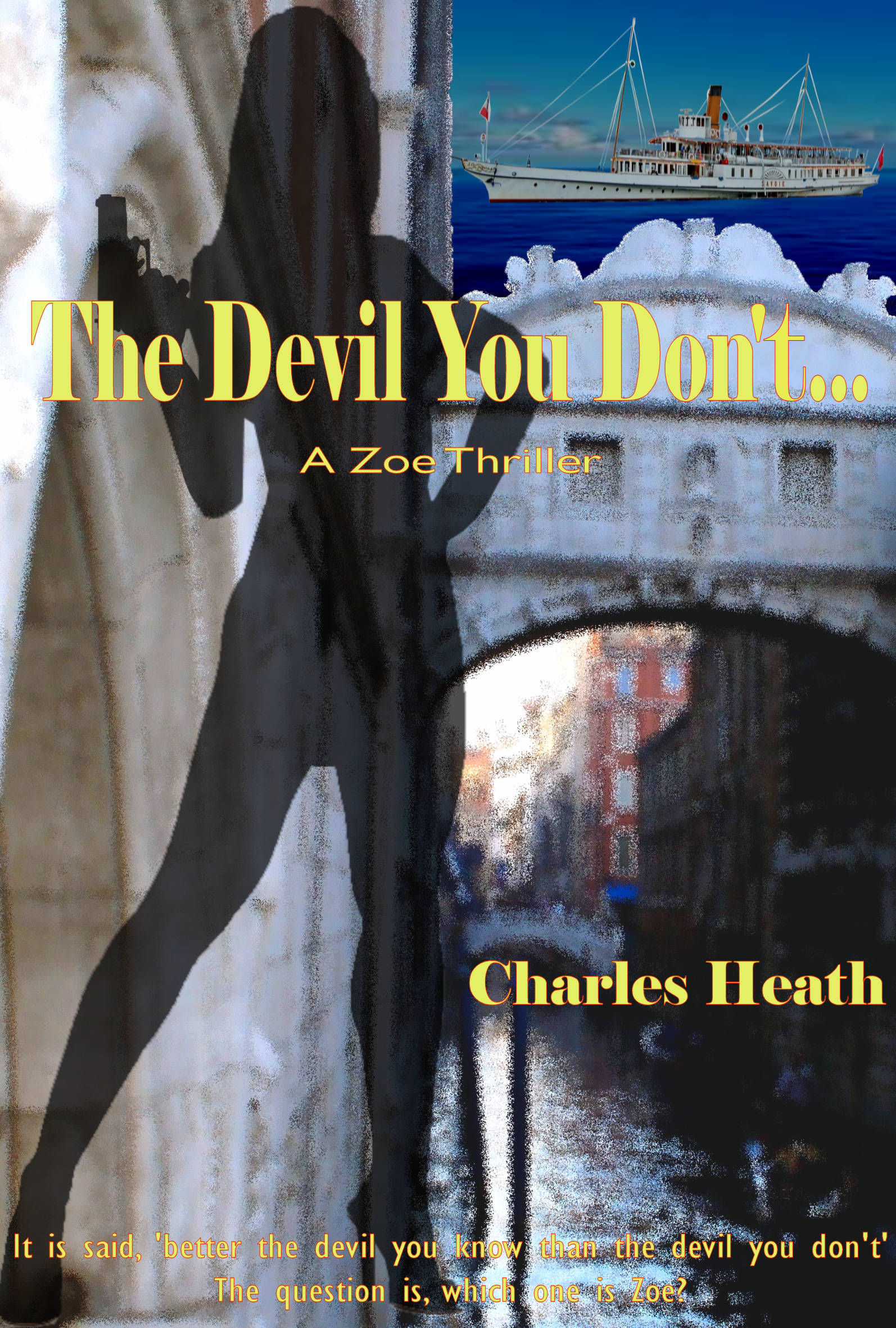
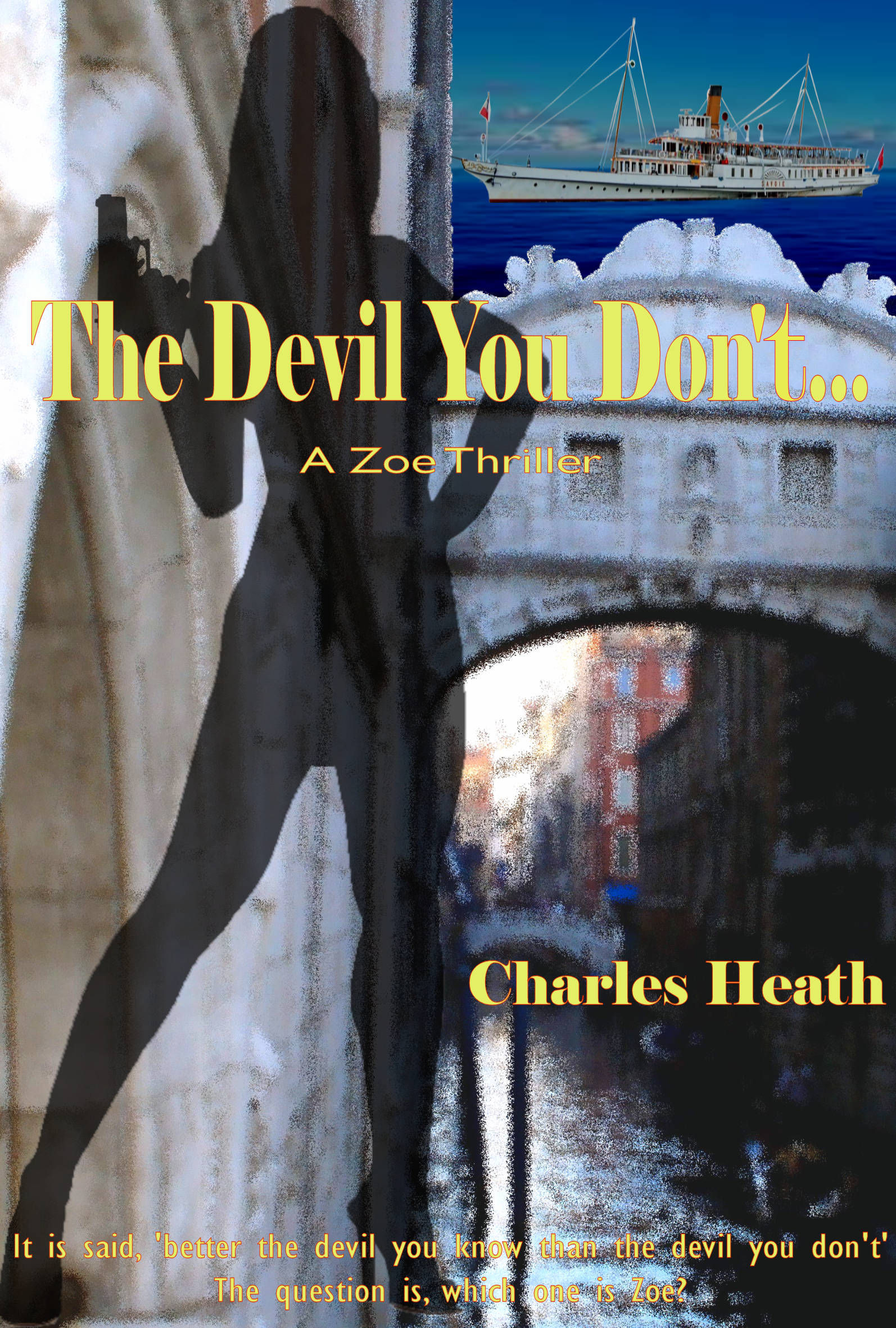
“The Devil You Don’t”, she was the girl you would not take home to your mother!

Now only $0.99 at https://amzn.to/2Xyh1ow

…

John Pennington’s life is in the doldrums. Looking for new opportunities, and prevaricating about getting married, the only joy on the horizon was an upcoming visit to his grandmother in Sorrento, Italy.

Suddenly he is left at the check-in counter with a message on his phone telling him the marriage is off, and the relationship is over.

If only he hadn’t promised a friend he would do a favour for him in Rome.

At the first stop, Geneva, he has a chance encounter with Zoe, an intriguing woman who captures his imagination from the moment she boards the Savoire, and his life ventures into uncharted territory in more ways than one.

That ‘favour’ for his friend suddenly becomes a life-changing event, and when Zoe, the woman who he knows is too good to be true, reappears, danger and death follow.

Shot at, lied to, seduced, and drawn into a world where nothing is what it seems, John is dragged into an adrenaline-charged undertaking, where he may have been wiser to stay with the ‘devil you know’ rather than opt for the ‘devil you don’t’.

newdevilcvr6

Writing about writing a book – Day 2

Hang about.  Didn’t I read somewhere you need to plan your novel, create an outline setting the plot points, and flesh out the characters?

I’m sure it didn’t say, sit down and start writing!

Time to find a writing pad, and put my thinking cap on.

I make a list, what’s the story going to be about? Who’s going to be in it, at least at the start?

Like a newspaper story, I need a who, what, when, where, and how.

Right now.


I pick up the pen.


Character number one:

Computer nerd, ok, that’s a little close to the bone, a computer manager who is trying to be everything at once, and failing.  Still me, but with a twist.  Now, add a little mystery to him, and give him a secret, one that will only be revealed after a specific set of circumstance.  Yes, I like that.

We’ll call him Bill, ex-regular army, a badly injured and repatriated soldier who was sent to fight a war in Vietnam, the result of which had made him, at times, unfit to live with.

He had a wife, which brings us to,

Character number two:

Ellen, Bill’s ex-wife, an army brat and a General’s daughter, and the result of one of those romances that met disapproval for so many reasons.  It worked until Bill came back from the war, and from there it slowly disintegrated.  There are two daughters, both by the time the novel begins, old enough to understand the ramifications of a divorce.

Character number three:

The man who is Bill’s immediate superior, the Services Department manager, a rather officious man who blindly follows orders, a man who takes pleasure in making others feel small and insignificant, and worst of all, takes the credit where none is due.

Oops, too much, that is my old boss.  He’ll know immediately I’m parodying him.  Tone it down, just a little, but more or less that’s him.  Last name Benton.  He will play a small role in the story.

Character number four:

Jennifer, the IT Department’s assistant manager, a woman who arrives in a shroud of mystery, and then, in time, to provide Bill with a shoulder to cry on when he and Ellen finally split, and perhaps something else later on.

More on her later as the story unfolds.

So far so good.

What’s the plot?

Huge corporation plotting to take over the world using computers?  No, that’s been done to death.

Huge corporation, OK, let’s stop blaming the corporate world for everything wrong in the world.  Corporations are not bad people, people are the bad people.  That’s a rip off cliché, from guns don’t kill people, people kill people!  There will be guns, and there will be dead people.

There will be people hiding behind a huge corporation, using a part of their computer network to move billions of illegally gained money around.  That’s better.

Now, having got that, our ‘hero’ has to ‘discover’ this network, and the people behind it.

All we need now is to set the ball rolling, a single event that ‘throws a cat among the pigeons’.

Yes, Bill is on holidays, a welcome relief from the problems of work.  He dreams of what he’s going to do for the next two weeks.  The phone rings.  Benton calling, the world is coming to an end, the network is down.  He’s needed.  A few terse words, but he relents.

Pen in hand I begin to write.


© Charles Heath 2016-2019

Mistaken Identity – The Third Editor’s Draft – Day 7

I have been working on the story, the editor is asking for a second draft after making suggested changes – and I’m now working on it

…

What’s the best way to recover from being shot by the police? Go on an all-expenses paid holiday.

Within reason, of course.

Of course, he was on holiday, not quite all expenses paid, but for the duration of the conference. Getting shot and having a prolonged stay in hospital put paid to that, but there is an upside.

The police, in exchange for silence and an indemnity, are happy to send our intrepid conference goer on a tour of Italy. There are benefits on either side, the police don’t get a lawsuit, and he gets to spend a few days touring.

Of course, Maryanne decided to tag along. She had been filling in for him at the conference, unbeknownst to him, and lined up a couple of free venues. In exchange for favourable reviews.

But what is the real reason Maryanne is along for the ride, or she might put it, ‘carry the bags’?

That saying ‘if it’s too good to be true, it probably is’ sticks in the back of his mind, but he doesn’t discourage her from coming with him.

Is he lucky, or is he cursed?

More tomorrow.

The cinema of my dreams – I always wanted to go on a treasure hunt – Episode 65

Here’s the thing…

Every time I close my eyes, I see something different.

I’d like to think the cinema of my dreams is playing a double feature but it’s a bit like a comedy cartoon night on Fox.

But these dreams are nothing to laugh about.

Once again there’s a new installment of an old feature, and we’re back on the treasure hunt.

…

The Ormiston’s from the papers

…

It was a question of what was I looking for.  It would be easy to say I wanted a piece of paper that definitively said where the treasure was or finding a map that led straight to it.

Instead, there was, in one box, a dozen journals filled with the ramblings of a madman.

Searching for treasure had sent Ormiston senior mad.  For an hour, perhaps longer, I tried to decipher the spidery writing, and then gave up when it switched to German.

I assembled the journals in order of his expeditions and found the first easy to follow because it was a time of excitement and expectation, that he would find the treasure.  There were pages on exactly what he thought the treasure was worth, the sort of pieces they would find, and what he would do with the proceeds.

There were drawings of items off the map and his interpretation of what they represented.  It was a rather good description of the coastline and its anomalies as they related to map landmarks.  They were, almost all, the same as the Boggs interpretations.

When the discovery didn’t happen, when the first euphoria wore off and the search became bogged down in acrimony and arguments, and the realization the map they were using was not as clear as first believed, that was where it all began to fall apart.

Reading the words, feeling the disappointment seeping off the page, it must have been quite a blow.

The second expedition didn’t start off with the same fanfare, but almost as if they were expected to fail.  Too little time had been spent analyzing what went wrong and reidentifying the coastal landmarks.

And, when it did fail, the last comment in the diary was fairly succinct.  “What if there is no treasure?”

In another, scrawled heavily on several pages at the back, “look for the big A” was repeated several times, and much underlined.

There were five other boxes with papers, charts, notebooks, and books that belonged on a shelf but instead were neatly stacked.  They’d been in the boxes for some time, and had that aroma books got when left in the damp too long, and, in fact, when I tried to open some, the pages had stuck together.

A lot of the books were about pirates, reference texts, and fiction.  Part of one box was set aside for our particular pirate, and, reading through what could be read, a lot of the information was contradictory.  One book postulated that the said pirate wasn’t a pirate at all, casting doubt on whether he ever existed at all.

The maps were a different story, and, yes, they were all similar except for small details an observation I had made before.  None had what I would have called ‘new’ features, just a rehash of all the others.  Some were old, but most had the appearance of being made to look old.

Then, at the bottom of a box of books, were copies of newspaper articles, aged, stained, and some in various stages of disintegration.  The Bahama Argus, The Barbadian, The Antigua Herald and Gazette, The Bermuda Colonist, and the Dominica Chronicle.  All had references to Captain Johannsson, and his vessel, the Sea Serpent.

There was such a Captain, and there was such a ship, and there were reports of a vessel roving the seas, looking for prey.  And those reports covered a great deal of plunder, definitely the sort that would find its way into a number of sea chests.

But, was this the treasure that Ormiston believed was hidden somewhere in The Grove?

Something caught my attention on the first diary, the way it sat and the light reflected off it, and picking it up and looking at it showed no anomaly in the surface, not until it sat on a certain angle and in the sunlight.

A slight ripple down one edge of the spine, and with careful probing, there was a split in the material of the cover pasted back down, but in the time since it had been glued back, the glue had dissolved and the simple act of picking the book up and parted the split.

Lifting it gently, I could see a piece of paper tucked in and gently coaxed it out.

It was very thin and fragile, but the writing was clear.  Entries from what might have been a logbook.  I knew this only because I had been out of a sailing boat once when at school, and had seen the boat’s logbook, noting where the boat had been.

This page had only a few entries, the location of its departure, in latitude and longitude, a number of the daily distances traveled, and conditions, and the last, another latitude and longitude.

When I put the first coordinates into my GPS, it was near the island of Antigua, and then the destination, just up the coast near the old mall.  The name of the vessel, in almost illegible writing, the Sea Serpent.

So, there was a logbook, although it might not exist now, it did at some point in the past, and Ormiston had either found it or seen it.  The writing on the piece of paper was his. It proved, if it was authentic, there was a ship, and it did come to this coast.

I carefully folded it and hid it in my wallet, then replaced everything where I found it.  Enough research for today.  I tried not to look guilty when I left.

…

© Charles Heath 2020-2022

An excerpt from “What Sets Us Apart”, a mystery with a twist

See the excerpt from the story below, just a taste of what’s in store…

http://amzn.to/2Eryfth

whatsetscover

McCallister was old school, a man who would most likely fit in perfectly campaigning on the battlefields of Europe during the Second World War. He’d been like a fish out of water in the army, post-Falklands, and while he retired a hero, he still felt he’d more to give.

He’d applied and was accepted as head of a SWAT team, and, watching him now as he and his men disembarked from the truck in almost military precision, a look passed between Annette, the police liaison officer, and I that said she’d seen it all before. I know I had.

There was a one in four chance his team would be selected for this operation, and she had been hoping it would be one of the other three. While waiting for them to arrive she filled me in on the various teams. His was the least co-operative, and the more likely to make ad-hoc decisions rather than adhere to the plan, or any orders that may come from the officer in charge.

This, she said quite bluntly, was going to end badly.

I still had no idea why Prendergast instructed me to attend the scene of what looked to be a normal domestic operation, but as the nominated expert in the field in these types of situations, it was fairly clear he wasn’t taking any chances. It was always a matter of opinion between us, and generally I lost.

In this case, it was an anonymous report identifying what the authorities believed were explosives in one of the dockside sheds where explosives were not supposed to be.

The only reason why the report was given any credence was the man, while not identifying himself by name, said he’d been an explosive expert once and recognized the boxes. That could mean anything, but the Chief Constable was a cautious man.

With his men settled and preparing their weapons, McCallister came over to the command post, not much more than the SUV my liaison and I arrived in, with weapons, bulletproof vests, and rolls of tape to cordon off the area afterward. We both had coffee, steaming in the cold early morning air. Dawn was slowly approaching and although rain had been forecast it had yet to arrive.

A man by the name of Benson was in charge. He too had groaned when he saw McCallister.

“A fine morning for it.” McCallister was the only enthusiastic one here.

He didn’t say what ‘it’ was, but I thought it might eventually be mayhem.

“Let’s hope the rain stays away. It’s going to be difficult enough without it,” Benson said, rubbing his hands together. We had been waiting for the SWAT team to arrive, and another team to take up their position under the wharf, and who was in the final stages of securing their position.

While we were waiting we drew up the plan. I’d go in first to check on what we were dealing with, and what type of explosives. The SWAT team, in the meantime, were to ensure all the exits to the shed were covered. When I gave the signal, they were to enter and secure the building. We were not expecting anyone inside or out, and no movement had been detected in the last hour since our arrival and deployment.

“What’s the current situation?”

“I’ve got eyes on the building, and a team coming in from the waterside, underneath. Its slow progress, but they’re nearly there. Once they’re in place, we’re sending McKenzie in.”

He looked in my direction.

“With due respect sir, shouldn’t it be one of us?” McCallister glared at me with the contempt that only a decorated military officer could.

“No. I have orders from above, much higher than I care to argue with, so, McCallister, no gung-ho heroics for the moment. Just be ready to move on my command, and make sure you have three teams at the exit points, ready to secure the building.”

McCallister opened his mouth, no doubt to question those orders, but instead closed it again. “Yes sir,” he muttered and turned away heading back to his men.

“You’re not going to have much time before he storms the battlements,” Benson quietly said to me, a hint of exasperation in his tone. “I’m dreading the paperwork.”

It was exactly what my liaison officer said when she saw McCallister arriving.

The water team sent their ‘in position’ signal, and we were ready to go.

In the hour or so we’d been on site nothing had stirred, no arrivals, no departures, and no sign anyone was inside, but that didn’t mean we were alone. Nor did it mean I was going to walk in and see immediately what was going on. If it was a cache of explosives then it was possible the building was booby-trapped in any number of ways, there could be sentries or guards, and they had eyes on us, or it might be a false alarm.

I was hoping for the latter.

I put on the bulletproof vest, thinking it was a poor substitute for full battle armor against an exploding bomb, but we were still treating this as a ‘suspected’ case. I noticed my liaison officer was pulling on her bulletproof vest too.

“You don’t have to go. This is my party, not yours,” I said.

“The Chief Constable told me to stick to you like glue, sir.”

I looked at Benson. “Talk some sense into her please, this is not a kindergarten outing.”

He shrugged. Seeing McCallister had taken all the fight out of him. “Orders are orders. If that’s what the Chief Constable requested …”

Madness. I glared at her, and she gave me a wan smile. “Stay behind me then, and don’t do anything stupid.”

“Believe me, I won’t be.” She pulled out and checked her weapon, chambering the first round. It made a reassuring sound.

Suited up, weapons readied, a last sip of the coffee in a stomach that was already churning from nerves and tension, I looked at the target, one hundred yards distant and thought it was going to be the longest hundred yards I’d ever traversed. At least for this week.

A swirling mist rolled in and caused a slight change in plans.

Because the front of the buildings was constantly illuminated by large overhead arc lamps, my intention had been to approach the building from the rear where there was less light and more cover. Despite the lack of movement, if there were explosives in that building, there’d be ‘enemy’ surveillance somewhere, and, after making that assumption, I believed it was going to be easier and less noticeable to use the darkness as a cover.

It was a result of the consultation, and studying the plans of the warehouse, plans that showed three entrances, the main front hangar type doors, a side entrance for truck entry and exit and a small door in the rear, at the end of an internal passage leading to several offices. I also assumed it was the exit used when smokers needed a break. Our entry would be by the rear door or failing that, the side entrance where a door was built into the larger sliding doors. In both cases, the locks would not present a problem.

The change in the weather made the approach shorter, and given the density of the mist now turning into a fog, we were able to approach by the front, hugging the walls, and moving quickly while there was cover. I could feel the dampness of the mist and shivered more than once.

It was nerves more than the cold.

I could also feel rather than see the presence of Annette behind me, and once felt her breath on my neck when we stopped for a quick reconnaissance.

It was the same for McCallister’s men. I could feel them following us, quickly and quietly, and expected, if I turned around, to see him breathing down my neck too.

It added to the tension.

My plan was still to enter by the back door.

We slipped up the alley between the two sheds to the rear corner and stopped. I heard a noise coming from the rear of the building, and the light tap on the shoulder told me Annette had heard it too. I put my hand up to signal her to wait, and as a swirl of mist rolled in, I slipped around the corner heading towards where I’d last seen the glow of a cigarette.

The mist cleared, and we saw each other at the same time. He was a bearded man in battle fatigues, not the average dockside security guard.

He was quick, but my slight element of surprise was his undoing, and he was down and unconscious in less than a few seconds with barely a sound beyond the body hitting the ground. Zip ties secured his hands and legs, and tape his mouth. Annette joined me a minute after securing him.

A glance at the body then me, “I can see why they, whoever they are, sent you.”

She’d asked who I worked for, and I didn’t answer. It was best she didn’t know.

“Stay behind me,” I said, more urgency in my tone. If there was one, there’d be another.

Luck was with us so far. A man outside smoking meant no booby traps on the back door, and quite possibly there’d be none inside. But it indicated there were more men inside, and if so, it appeared they were very well trained. If that were the case, they would be formidable opponents.

The fear factor increased exponentially.

I slowly opened the door and looked in. A pale light shone from within the warehouse itself, one that was not bright enough to be detected from outside. None of the offices had lights on, so it was possible they were vacant. I realized then they had blacked out the windows. Why hadn’t someone checked this?

Once inside, the door closed behind us, progress was slow and careful. She remained directly behind me, gun ready to shoot anything that moved. I had a momentary thought for McCallister and his men, securing the perimeter.

At the end of the corridor, the extent of the warehouse stretched before us. The pale lighting made it seem like a vast empty cavern, except for a long trestle table along one side, and, behind it, stacks of wooden crates, some opened. It looked like a production line.

To get to the table from where we were was a ten-yard walk in the open. There was no cover. If we stuck to the walls, there was equally no cover and a longer walk.

We needed a distraction.

As if on cue, the two main entrances disintegrated into flying shrapnel accompanied by a deafening explosion that momentarily disoriented both Annette and I. Through the smoke and dust kicked up I saw three men appear from behind the wooden crates, each with what looked like machine guns, spraying bullets in the direction of the incoming SWAT members.

They never had a chance, cut down before they made ten steps into the building.

By the time I’d recovered, my head heavy, eyes watering and ears still ringing, I took several steps towards them, managing to take down two of the gunmen but not the third.

I heard a voice, Annette’s I think, yell out, “Oh, God, he’s got a trigger,” just before another explosion, though all I remember in that split second was a bright flash, the intense heat, something very heavy smashing into my chest knocking the wind out of me, and then the sensation of flying, just before I hit the wall.

I spent four weeks in an induced coma, three months being stitched back together and another six learning to do all those basic actions everyone took for granted. It was twelve months almost to the day when I was released from the hospital, physically, except for a few alterations required after being hit by shrapnel, looking the same as I always had.

But mentally? The document I’d signed on release said it all, ‘not fit for active duty; discharged’.

It was in the name of David Cheney. For all intents and purposes, Alistair McKenzie was killed in that warehouse, and for the first time ever, an agent left the Department, the first to retire alive.

I was not sure I liked the idea of making history.

© Charles Heath 2016-2020
‘The Devil You Don’t’ – A beta reader’s view

It could be said that of all the women one could meet, whether contrived or by sheer luck, what are the odds it would turn out to be the woman who was being paid a very large sum to kill you.

John Pennington is a man who may be lucky in business, but not so lucky in love. He has just broken up with Phillipa Sternhaven, the woman he thought was the one, but relatives and circumstances, and perhaps because she was a ‘princess’, may also have contributed to the end result.

So, what do you do when you are heartbroken?

That is a story that slowly unfolds, from the first meeting with his nemesis on Lake Geneva, all the way to a hotel room in Sorrento, where he learns the shattering truth.

What should have been solace after disappointment, turns out to be something else entirely, and from that point, everything goes to hell in a handbasket.

He suddenly realizes his so-called friend Sebastian has not exactly told him the truth about a small job he asked him to do, the woman he is falling in love with is not quite who she says she is, and he is caught in the middle of a war between two men who consider people becoming collateral damage as part of their business.

The story paints the characters cleverly displaying all their flaws and weaknesses. The locations add to the story at times taking me back down memory lane, especially to Venice where, in those back streets I confess it’s not all that hard to get lost.

All in all a thoroughly entertaining story with, for once, a satisfying end.

…

Available on Amazon here: https://amzn.to/2Xyh1ow

…

An excerpt from “Betrayal” – a work in progress

It could have been anywhere in the world, she thought, but it wasn’t.  It was in a city where if anything were to go wrong…

She sighed and came away from the window and looked around the room.  It was quite large and expensively furnished.  It was one of several she had been visiting in the last three months.

Quite elegant too, as the hotel had its origins dating back to before the revolution in 1917.  At least, currently, there would not be a team of KGB agents somewhere in the basement monitoring everything that happened in the room.

There was no such thing as the KGB anymore, though there was an FSB, but such organisations were of no interest to her.

She was here to meet with Vladimir.

She smiled to herself when she thought of him, such an interesting man whose command of English was as good as her command of Russian, though she had not told him of that ability.

All he knew of her was that she was American, worked in the Embassy as a clerk, nothing important, whose life both at work and at home was boring.  Not that she had blurted that out the first they met, or even the second.

That first time, at a function in the Embassy, was a chance meeting, a catching of his eye as he looked around the room, looking, as he had told her later, for someone who might not be as boring as the function itself.

It was a celebration, honouring one of the Embassy officials on his service in Moscow, and the fact he was returning home after 10 years.  She had been there once, and still hadn’t met all the staff.

They had talked, Vladimir knew a great deal about England, having been stationed there for a year or two, and had politely asked questions about where she lived, her family, and of course what her role was, all questions she fended off with an air of disinterested interest.

It fascinated him, as she knew it would, a sort of mental sparring as one would do with swords if this was a fencing match.

They had said they might or might not meet again when the party was over, but she suspected there would be another opportunity.  She knew the signs of a man who was interested in her, and Vladimir was interested.

The second time came in the form of an invitation to an art gallery, and a viewing of the works of a prominent Russian artist, an invitation she politely declined.  After all, invitations issued to Embassy staff held all sorts of connotations, or so she was told by the Security officer when she told him.

Then, it went quiet for a month.  There was a party at the American embassy and along with several other staff members, she was invited.  She had not expected to meet Vladimir, but it was a pleasant surprise when she saw him, on the other side of the room, talking to several military men.

A pleasant afternoon ensued.

And it was no surprise that they kept running into each other at the various events on the diplomatic schedule.

By the fifth meeting, they were like old friends.  She had broached the subject of being involved in a plutonic relationship with him with the head of security at the embassy.  Normally for a member of her rank, it would not be allowed, but in this instance it was.

She did not work in any sensitive areas, and, as the security officer had said, she might just happen upon something that might be useful.  In that regard, she was to keep her eyes and ears open and file a report each time she met him.

After that discussion, she got the impression her superiors considered Vladimir more than just a casual visitor on the diplomatic circuit.  She also formed the impression that he might consider her an ‘asset’, a word that had been used at the meeting with security and the ambassador.

It was where the word ‘spy’ popped into her head and sent a tingle down her spine.  She was not a spy, but the thought of it, well, it would be fascinating to see what happened.

A Russian friend.  That’s what she would call him.

And over time, that relationship blossomed, until, after a visit to the ballet, late and snowing, he invited her to his apartment not far from the ballet venue.  It was like treading on thin ice, but after champagne and an introduction to caviar, she felt like a giddy schoolgirl.

Even so, she had made him promise that he remain on his best behaviour.  It could have been very easy to fall under the spell of a perfect evening, but he promised, showed her to a separate bedroom, and after a brief kiss, their first, she did not see him until the next morning.

So, it began.

It was an interesting report she filed after that encounter, one where she had expected to be reprimanded.

She wasn’t.

It wasn’t until six weeks had passed when he asked her if she would like to take a trip to the country.  It would involve staying in a hotel, that they would have separate rooms.  When she reported the invitation, no objection was raised, only a caution; keep her wits about her.

Perhaps, she had thought, they were looking forward to a more extensive report.  After all, her reports on the places, and the people, and the conversations she overheard, were no doubt entertaining reading for some.

But this visit was where the nature of the relationship changed, and it was one that she did not immediately report.  She had realised at some point before the weekend away, that she had feelings for him, and it was not that he was pushing her in that direction or manipulating her in any way.

It was just one of those moments where, after a grand dinner, a lot of champagne, and delightful company, things happen.  Standing at the door to her room, a lingering kiss, not intentional on her part, and it just happened.

And for not one moment did she believe she had been compromised, but for some reason she had not reported that subtle change in the relationship to the powers that be, and so far, no one had any inkling.

She took off her coat and placed it carefully of the back of one of the ornate chairs in the room.  She stopped for a moment to look at a framed photograph on the wall, one representing Red Square.

Then, after a minute or two, she went to the mini bar and took out the bottle of champagne that had been left there for them, a treat arranged by Vladimir for each encounter.

There were two champagne flutes set aside on the bar, next to a bowl of fruit.  She picked up the apple and thought how Eve must have felt in the garden of Eden, and the temptation.

Later perhaps, after…

She smiled at the thought and put the apple back.

A glance at her watch told her it was time for his arrival.  It was if anything, the one trait she didn’t like, and that was his punctuality.  A glance at the clock on the room wall was a minute slow.

The doorbell to the room rang, right on the appointed time.

She put the bottle down and walked over to the door.

A smile on her face, she opened the door.

It was not Vladimir.  It was her worst nightmare.

…

© Charles Heath 2020

Writing about writing a book – Day 3

Yep, in changing characters and timelines and thinking about the plotline between Bill and Ellen, a lot has changed, well, perhaps not a lot, but some fundamentals in the relationship.

Whilst I am determined, for some unknown reason, to write the first draft by hand, it leads to using a lot of paper and wearing out several self-leading pencils.  I have a bin with screwed up paper, and yes, if I get it in, it’s three points.  A lot don’t make it and lie forlornly beside and in front of the bin.

If only I had a cleaner to clean up.  When I’ve become a best selling author.

I look at the pages I kept.  God, I didn’t know I was that messy.

Coffee first.

I start typing the first draft on the computer using my trusty old version of Microsoft Word, only because I know how to use it.

I have Scrivener but haven’t yet worked out all the bells and whistles.  That will come, no doubt, with book number two.

But, as you might think, I am getting ahead of myself.  I have yet to finish the first.

—

A cool breeze blew briskly across meadows of tall grass, giving the impression of the ocean in a storm.  High above, clouds scudded across the sky, occasionally allowing the sun to shine through to bathe the ground in sunshine, intensifying the richness the greens and browns.

It was spring.  Trees were displaying new growth, and flowers were starting to show the promise of summery delight.  An occasional light shower of rain added to the delightful aromas, particularly where the grass had recently been mown.

I was there, too, with my grandmother, the woman who had, for the most part, brought me up at her country residence.  But, as I got older, the dream changed and sometimes there were storm clouds on the horizon, or I was caught in the rain, alone and frightened, or lost in the woods in the dark.

There were other visions like these from my childhood, now a million years away somewhere in a distant past that was hard to remember or say where and when they belonged.  It was a pity some were now based on images stolen from the start of a movie seen on TV late at night as I was trying to get to sleep.  Or that the psychiatrist had said there was some trauma from my early childhood, trying to work its way out.

Like every other morning, these images came to me as I was hovering somewhere between conscious and unconscious, just before the alarm went off.  Then it did, filling the room with a shrill noise that would have woken the dead.

I cursed, and then dragged myself over to the other side of the bed where I’d put the alarm clock, and hit it, killing the shrill sound.  I’d put it there so I would have to wake up to turn it off.  And, worse, I’d forgotten to turn it off the night before because it was, technically, the first day of my holiday.

Not that I really wanted one because since Ellen left, my life consisted of work, work, and more work.  It kept my mind off being alone, and in an empty apartment except for the books, a bed, a table and two chairs, a desk, and well-worn lounge chair.  I’d been there for a while and still hadn’t bought any new furniture or anything else for that matter.

And the last holiday I’d gone on had been organized by Ellen only a few years ago in Italy after our two daughters had finished school and graduated almost top of their class.  We’d both thought it might help mend the damage, and for a while we were happy, but happiness was too fleeting for me, and soon after the rot had set in, and it was the beginning of the end.

I remembered it only too clearly, coming home, opening a letter addressed to her, and finding proof of what I think I’d known all along.  She was having an affair, had been for quite some time.

It should not have been a surprise given what I had put her through over the years, since my discharge from the Army and later the nightmares active service had fuelled, but it was what it was and sent me spiralling to a new low.

But that was two years ago.  I came out of the fog a year after that.  Ellen was away most of the time with a new partner she never told me about, and the girls, who shared a unit not far from mine came to see me from time to time

But for all of that, all I now had left were memories.

I rolled over and tried to go back to sleep.  I was on holidays.  No work, no pressure, nothing. 

I thought about going back to my grandmother’s house and visit, but my grandmother was no longer there, and my mother, who was, was too judgemental, and I didn’t need to be told, yet again, how I had let the only woman for me slip through my fingers.

I could do almost anything.

I’d almost managed to doze off again when the phone rang.

I jumped to its equally shrill sound cutting through the silence.  It had to be a wrong number because no one at work would call me and I didn’t have many friends, at least none who would call me at this hour.

I let it ring out.

Blissful silence.  For five minutes.


Then it rang again.

Ignore it, I thought.  It had to be someone from the office.  I’d told them all not to call me, not unless the building was burning down and they were all trapped in it.

And even then, I’d I said I would have to think about it.

Burying my head under the pillow didn’t shut out the insistent ringing. 

Almost reluctantly I rolled back, pulled the telephone out from under the bed, and lifted the receiver to my ear.

“Bill?”

It was Carl Benton, my immediate superior; an insipid, loathsome, irritating little man, the last person I would want to speak to.  He’d insisted I take this leave, that the office could survive without me, adding in his most condescending manner that I needed the break.

I slammed the receiver down in anger.  It was a forlorn gesture.  Seconds later, it rang again.

“I seem to remember you were the one to tell me to go on holiday, that I needed a holiday.  I’m off the roster.  It can’t be that important.  Call someone else.”  I wasn’t going to give him the opportunity to speak.  Not this morning.  I was not in the mood to listen to that squeaky, falsetto voice of his, one that always turned into a whine when he didn’t get his way.

And hung up again.

Not that it would do any good.  I knew that even if I was in Tibet, he would still call.  Then I realized it was too early for him to be in the office, and if he was, he would have been dragged out of bed and put in a position where if he didn’t produce results, they might realize just how incompetent he was.

At last, my holiday had some meaning and smiled to myself.  I’d make the bastard sweat.

A good days work if I say so myself.

I only wished I was better at typing, but it was a self-correcting ribbon and would suffice.

Tonight it would be the sleep of the just.

Tomorrow, more plotting, more characters.  I need a friendly head of a department, one that suffers Benton, a name for the assistant, and what are the circumstances that drag him back into work?

Death, murder, police, or security?

And all I thought I had to do is write!

—

© Charles Heath 2016-2023