A score to settle – The Second Editor’s draft – Day 17

The time has come to work on the second draft for the editor, taking into account all of the suggested changes, and there are quite a few. So much for thinking I could put in an almost flawless manuscript.

…

We’re now coming up to the start of the revolution and although the first parries by the rebels, so-called by the ruling junta because it sounds better than revolutionaries, or dissidents, will fail, it’s not because of bad management, but events they could not have foreseen.

That lethargy and periods of self-doubt have lifted like a fog, and the story is now taking shape.

Perhaps I had to get to the interesting part. Sometimes the setting of the scene and providing an introduction to the characters can be energy-draining because as the reader, it can take almost too long to get going.

Perhaps I should make a mental note of that so that in the second draft, I can remove the boring bits and get to the real story sooner.

I cannot wait for tomorrow and almost had to resist the temptation of not stopping for sleep, just in case the words stopped flowing. There are times, I have discovered, that in taking that break, the idea and word flow stops, and conjures up something like writer’s block.

Let’s hope tomorrow is the same as today.

“Echoes From The Past”, the past doesn’t necessarily stay there


What happens when your past finally catches up with you?

…

Christmas is just around the corner, a time to be with family. For Will Mason, an orphan since he was fourteen, it is a time for reflection on what his life could have been, and what it could be.

Until a chance encounter brings back to life the reasons for his twenty years of self-imposed exile from a life only normal people could have. From that moment Will’s life slowly starts to unravel and it’s obvious to him it’s time to move on.

This time, however, there is more at stake.

Will has broken his number one rule, don’t get involved.

With his nemesis, Eddie Jamieson, suddenly within reach, and a blossoming relationship with an office colleague, Maria, about to change everything, Will has to make a choice. Quietly leave, or finally, make a stand.

But as Will soon discovers, when other people are involved there is going to be terrible consequences no matter what choice he makes.

https://amzn.to/2CYKxu4

newechocover5rs

An excerpt from “What Sets Us Apart”, a mystery with a twist

See the excerpt from the story below, just a taste of what’s in store…

http://amzn.to/2Eryfth

whatsetscover

McCallister was old school, a man who would most likely fit in perfectly campaigning on the battlefields of Europe during the Second World War. He’d been like a fish out of water in the army, post-Falklands, and while he retired a hero, he still felt he’d more to give.

He’d applied and was accepted as head of a SWAT team, and, watching him now as he and his men disembarked from the truck in almost military precision, a look passed between Annette, the police liaison officer, and I that said she’d seen it all before. I know I had.

There was a one in four chance his team would be selected for this operation, and she had been hoping it would be one of the other three. While waiting for them to arrive she filled me in on the various teams. His was the least co-operative, and the more likely to make ad-hoc decisions rather than adhere to the plan, or any orders that may come from the officer in charge.

This, she said quite bluntly, was going to end badly.

I still had no idea why Prendergast instructed me to attend the scene of what looked to be a normal domestic operation, but as the nominated expert in the field in these types of situations, it was fairly clear he wasn’t taking any chances. It was always a matter of opinion between us, and generally I lost.

In this case, it was an anonymous report identifying what the authorities believed were explosives in one of the dockside sheds where explosives were not supposed to be.

The only reason why the report was given any credence was the man, while not identifying himself by name, said he’d been an explosive expert once and recognized the boxes. That could mean anything, but the Chief Constable was a cautious man.

With his men settled and preparing their weapons, McCallister came over to the command post, not much more than the SUV my liaison and I arrived in, with weapons, bulletproof vests, and rolls of tape to cordon off the area afterward. We both had coffee, steaming in the cold early morning air. Dawn was slowly approaching and although rain had been forecast it had yet to arrive.

A man by the name of Benson was in charge. He too had groaned when he saw McCallister.

“A fine morning for it.” McCallister was the only enthusiastic one here.

He didn’t say what ‘it’ was, but I thought it might eventually be mayhem.

“Let’s hope the rain stays away. It’s going to be difficult enough without it,” Benson said, rubbing his hands together. We had been waiting for the SWAT team to arrive, and another team to take up their position under the wharf, and who was in the final stages of securing their position.

While we were waiting we drew up the plan. I’d go in first to check on what we were dealing with, and what type of explosives. The SWAT team, in the meantime, were to ensure all the exits to the shed were covered. When I gave the signal, they were to enter and secure the building. We were not expecting anyone inside or out, and no movement had been detected in the last hour since our arrival and deployment.

“What’s the current situation?”

“I’ve got eyes on the building, and a team coming in from the waterside, underneath. Its slow progress, but they’re nearly there. Once they’re in place, we’re sending McKenzie in.”

He looked in my direction.

“With due respect sir, shouldn’t it be one of us?” McCallister glared at me with the contempt that only a decorated military officer could.

“No. I have orders from above, much higher than I care to argue with, so, McCallister, no gung-ho heroics for the moment. Just be ready to move on my command, and make sure you have three teams at the exit points, ready to secure the building.”

McCallister opened his mouth, no doubt to question those orders, but instead closed it again. “Yes sir,” he muttered and turned away heading back to his men.

“You’re not going to have much time before he storms the battlements,” Benson quietly said to me, a hint of exasperation in his tone. “I’m dreading the paperwork.”

It was exactly what my liaison officer said when she saw McCallister arriving.

The water team sent their ‘in position’ signal, and we were ready to go.

In the hour or so we’d been on site nothing had stirred, no arrivals, no departures, and no sign anyone was inside, but that didn’t mean we were alone. Nor did it mean I was going to walk in and see immediately what was going on. If it was a cache of explosives then it was possible the building was booby-trapped in any number of ways, there could be sentries or guards, and they had eyes on us, or it might be a false alarm.

I was hoping for the latter.

I put on the bulletproof vest, thinking it was a poor substitute for full battle armor against an exploding bomb, but we were still treating this as a ‘suspected’ case. I noticed my liaison officer was pulling on her bulletproof vest too.

“You don’t have to go. This is my party, not yours,” I said.

“The Chief Constable told me to stick to you like glue, sir.”

I looked at Benson. “Talk some sense into her please, this is not a kindergarten outing.”

He shrugged. Seeing McCallister had taken all the fight out of him. “Orders are orders. If that’s what the Chief Constable requested …”

Madness. I glared at her, and she gave me a wan smile. “Stay behind me then, and don’t do anything stupid.”

“Believe me, I won’t be.” She pulled out and checked her weapon, chambering the first round. It made a reassuring sound.

Suited up, weapons readied, a last sip of the coffee in a stomach that was already churning from nerves and tension, I looked at the target, one hundred yards distant and thought it was going to be the longest hundred yards I’d ever traversed. At least for this week.

A swirling mist rolled in and caused a slight change in plans.

Because the front of the buildings was constantly illuminated by large overhead arc lamps, my intention had been to approach the building from the rear where there was less light and more cover. Despite the lack of movement, if there were explosives in that building, there’d be ‘enemy’ surveillance somewhere, and, after making that assumption, I believed it was going to be easier and less noticeable to use the darkness as a cover.

It was a result of the consultation, and studying the plans of the warehouse, plans that showed three entrances, the main front hangar type doors, a side entrance for truck entry and exit and a small door in the rear, at the end of an internal passage leading to several offices. I also assumed it was the exit used when smokers needed a break. Our entry would be by the rear door or failing that, the side entrance where a door was built into the larger sliding doors. In both cases, the locks would not present a problem.

The change in the weather made the approach shorter, and given the density of the mist now turning into a fog, we were able to approach by the front, hugging the walls, and moving quickly while there was cover. I could feel the dampness of the mist and shivered more than once.

It was nerves more than the cold.

I could also feel rather than see the presence of Annette behind me, and once felt her breath on my neck when we stopped for a quick reconnaissance.

It was the same for McCallister’s men. I could feel them following us, quickly and quietly, and expected, if I turned around, to see him breathing down my neck too.

It added to the tension.

My plan was still to enter by the back door.

We slipped up the alley between the two sheds to the rear corner and stopped. I heard a noise coming from the rear of the building, and the light tap on the shoulder told me Annette had heard it too. I put my hand up to signal her to wait, and as a swirl of mist rolled in, I slipped around the corner heading towards where I’d last seen the glow of a cigarette.

The mist cleared, and we saw each other at the same time. He was a bearded man in battle fatigues, not the average dockside security guard.

He was quick, but my slight element of surprise was his undoing, and he was down and unconscious in less than a few seconds with barely a sound beyond the body hitting the ground. Zip ties secured his hands and legs, and tape his mouth. Annette joined me a minute after securing him.

A glance at the body then me, “I can see why they, whoever they are, sent you.”

She’d asked who I worked for, and I didn’t answer. It was best she didn’t know.

“Stay behind me,” I said, more urgency in my tone. If there was one, there’d be another.

Luck was with us so far. A man outside smoking meant no booby traps on the back door, and quite possibly there’d be none inside. But it indicated there were more men inside, and if so, it appeared they were very well trained. If that were the case, they would be formidable opponents.

The fear factor increased exponentially.

I slowly opened the door and looked in. A pale light shone from within the warehouse itself, one that was not bright enough to be detected from outside. None of the offices had lights on, so it was possible they were vacant. I realized then they had blacked out the windows. Why hadn’t someone checked this?

Once inside, the door closed behind us, progress was slow and careful. She remained directly behind me, gun ready to shoot anything that moved. I had a momentary thought for McCallister and his men, securing the perimeter.

At the end of the corridor, the extent of the warehouse stretched before us. The pale lighting made it seem like a vast empty cavern, except for a long trestle table along one side, and, behind it, stacks of wooden crates, some opened. It looked like a production line.

To get to the table from where we were was a ten-yard walk in the open. There was no cover. If we stuck to the walls, there was equally no cover and a longer walk.

We needed a distraction.

As if on cue, the two main entrances disintegrated into flying shrapnel accompanied by a deafening explosion that momentarily disoriented both Annette and I. Through the smoke and dust kicked up I saw three men appear from behind the wooden crates, each with what looked like machine guns, spraying bullets in the direction of the incoming SWAT members.

They never had a chance, cut down before they made ten steps into the building.

By the time I’d recovered, my head heavy, eyes watering and ears still ringing, I took several steps towards them, managing to take down two of the gunmen but not the third.

I heard a voice, Annette’s I think, yell out, “Oh, God, he’s got a trigger,” just before another explosion, though all I remember in that split second was a bright flash, the intense heat, something very heavy smashing into my chest knocking the wind out of me, and then the sensation of flying, just before I hit the wall.

I spent four weeks in an induced coma, three months being stitched back together and another six learning to do all those basic actions everyone took for granted. It was twelve months almost to the day when I was released from the hospital, physically, except for a few alterations required after being hit by shrapnel, looking the same as I always had.

But mentally? The document I’d signed on release said it all, ‘not fit for active duty; discharged’.

It was in the name of David Cheney. For all intents and purposes, Alistair McKenzie was killed in that warehouse, and for the first time ever, an agent left the Department, the first to retire alive.

I was not sure I liked the idea of making history.

© Charles Heath 2016-2020

“Anyone can have a bad day” – a short story

It had been one of those days, you know, the sort where you hoped, when you woke up again, it would be a distant memory if not gone altogether. Everything had gone wrong, the handover from my shift to the next, longer than usual, I got home late to find the building’s security system malfunctioning, and after everything that could go wrong had, I was late getting to bed, which meant I was going to be tired and cranky even before my shift started.

But what topped it all off was that the alarm didn’t go off. It was not as if I hadn’t set it, I remembered doing it. There was something else in play.

I rolled over and instantly noticed how dark it was. It was never this dark. It was why I chose an apartment as high up as I could, there would always be light coming from the advertising sign on the roof of the building over the road at night, or direct sunlight not blotted out by surrounding buildings.

I also left the curtains open, deliberately. I liked the notion of being able to see out, sometimes looking at the stars, other times watching the rain, but mostly to see that I was not in a dark place.

Not like now.

I got out of bed and went over to the window. Yes, there were lights, but they were all the way down on the street level. Everywhere else, nothing. It had to be a power blackout. Our first in a long time. I should have noticed the air conditioning was not on, and it was almost silent inside the room.

The apartment had windows that opened, not very far, but enough to allow some airflow, and the room feeling stuffy, I opened one in the bedroom. Instantly, sounds drifted up from street level, and looking down I could see the flashing lights of police cars and fire trucks, as well as the sounds of sirens.

The cold air was refreshing.

It took a few minutes before I realized the elevators would not be working, and I remembered the only pitfall of having a high-up apartment, it was a long way down by the stairs, and even longer going back up.

In the distance, I could see other buildings, about ten blocks away, with their lights on. It had to be a localized blackout, or perhaps a brownout. We had been having problems across the city with power supply caused by an unexplained explosion at several power stations on the grid.

Some were saying it was a terrorist attack, others were saying the antiquated infrastructure had finally given out.

My attention was diverted from the activity below by the vibration of my cell phone on the bedside table. I looked over at the clock and saw it was 3:10 in the morning, not a time I usually got a phone call.

I crossed the room and looked at the screen, just as the vibrating stopped. Louis Bernard. Who was Louis Bernard? It was not a name I was familiar with, so I ignored it. It wasn’t the first wrong number to call me, though I was beginning to think I had been given a recycled phone number when I bought the phone. Perhaps the fact it was a burner may have had something to do with it.

About the go back to the window, the phone started ringing again. The same caller, Louis Bernard.

Curiosity got the better of me.

“Yes?” I wasn’t going to answer with my name.

“Get out of that room now.”

“Who….” It was as far as I got before the phone went dead.

The phone displayed the logo as it powered off, a sign the battery was depleted. I noticed then though I’d plugged the phone in to recharge, I’d forgotten to turn the power on.

Damn.

Get out of that room now? Who could possibly know firstly who I was, and where I was living, to the point they could know I was in any sort of danger?

It took another minute of internal debate before I threw on some clothes and headed for the door.

Just in case.

As I went to open the door, someone started pounding on it, and my heart almost stopped.

“Who is it?” I yelled out. First thought; don’t open it.

“Floor warden, you need to evacuate. There’s a small fire on one of the floors below.”

“OK. Give me a minute or so and I’ll be right out.”

“Don’t take too long. Take the rear stairs on the left.”

A few seconds later I heard him pounding on the door next to mine. I waited until he’d moved on, and went out into the passage.

It was almost dark, the security lighting just above floor level giving off a strange and eerie orange glow. I thought there was a hint of smoke in the air, but that might have been the power of suggestion taking over my mind.

There were two sets of stairs down, both at the rear, one on the left and one on the right, designed to aid quick evacuation in the event of a calamity like a fire. He had told me to take the left. I deliberately ignored that and went to the right side, passing several other tenants who were going towards where they’d been told. I didn’t recognize them, but, then, I didn’t try to find out who my fellow tenants were.

A quick look back up the passage, noting everyone heading to the left side stairs, I ducked into the right stairwell and stopped for a moment. Was that smoke I could smell. From above I could hear a door slam shut, and voices. Above me, people had entered the stairwell and were coming down.

I started heading down myself.

I was on the 39th floor, and it was going to be a long way down. In a recent fire drill, the building had been evacuated from the top floor down, and it proceeded in an orderly manner. The idea was that starting at the top, there would not be a logjam if the lower floors were spilling into the stairwell and creating a bottleneck. Were those above stragglers?

I descended ten floors and still hadn’t run into anyone, but the smell of smoke was stronger. I stopped for a moment and listened for those who had been above me. Nothing. Not a sound. Surely there had to be someone above me, coming down.

A door slammed, but I couldn’t tell if it was above or below.

Once again, I descended, one floor, two, three, five, all the way down to ten. The smoke was thicker here, and I could see a cloud on the other side of the door leading out of the stairwell into the passage. The door was slightly ajar, odd, I thought, for what was supposed to be a fire door. I could see smoke being sucked into the fire escape through the door opening.

Then I saw several firemen running past, axes in hand. Was the fire on the tenth floor?

Another door slammed shut, and then above me, I could hear voices. Or were they below? I couldn’t tell. My eyes were starting to tear up from the smoke, and it was getting thicker.

I headed down.

I reached the ground floor and tried to open the door leading out of the fire escape. It wouldn’t open. A dozen other people came down the stairs and stopped when they saw me.

One asked, “Can we get out here?”

I tried the door again with the same result. “No. It seems to be jammed.”

Several of the people rushed past me, going down further, yelling out, “there should be a fire door leading out into the underground garage.”

Then, after another door slamming shut, silence. Another person said, “they must have found a way out,” and started running down the stairs, the others following. For some odd reason I couldn’t explain, I didn’t follow, a mental note popping up in my head telling me that there was only an exit into the carport from the other stairs, on this side, the exit led out onto an alley at the back of the building.

If the door would open. It should push outwards, and there should also be a bar on it, so when pushed, it allowed the door to open.

The smoke was worse now, and I could barely see, or breathe, overcome with a coughing fit. I banged on the door, yelling out that I was stuck in the stairwell, but there was no reply, nor could I hear movement on the other side of the door.

Just as I started to lose consciousness, I thought I could hear a banging sound on the door, then a minute later what seemed like wood splintering. A few seconds after that I saw a large black object hovering over me, then nothing.

It was the culmination of a bad night, a bad day, and another bad night. Was it karma trying to tell me something?

When I woke, I was in a hospital, a room to myself which seemed strange since my insurance didn’t really cover such luxuries. I looked around the room and stopped when I reached the window and the person who was standing in front of it, looking out.

“Who are you?” I asked, and realized the moment the words came out, they made me sound angry.

“No one of particular importance. I came to see if you were alright. You were very lucky by the way. Had you not stayed by that door you would have died like all the rest.”

Good to know, but not so good for the others. Did he know that the fire door was jammed? I told him what happened.

“Someone suspected that might be the case which is why you were told to take the other stairs. Why did you not do as you were told?”

“Why did the others also ignore the advice.” It was not a question I would deign to answer.

They didn’t know any better, but you did, and it begs the question, why did you take those stairs.”

Persistent, and beginning to bother me. He sounded like someone else I once knew in another lifetime, one who never asked a question unless he knew the answer.

The man still hadn’t turned around to show me his face, and it was not likely I’d be getting out of bed very soon.

“You tell me?”

He turned slightly and I could see his reflection in the window. I thought, for a moment, that was a familiar face. But I couldn’t remember it from where.

“The simple truth, you suspected the fire was lit to flush you out of the building and you thought taking those stairs would keep you away from trouble. We both know you’ve been hiding here.”

Then he did turn. Hiding, yes. A spot of trouble a year or so before had made leaving Florida a necessity, and I’d only just begun to believe I was finally safe.

I was not.

They had found me.

And it only took a few seconds, to pull the silenced gun out of his coat pocket, point it directly at me, and pull the trigger.

Two stabbing pains in the chest, and for a moment it was as if nothing happened, and then, all of a sudden, I couldn’t breathe.

The last thing I saw and heard, several rounds from at least two guns, voices yelling out on the passage, and people running.

As I lay dying, my last thought was, it had been a good run, but no one can run forever.


© Charles Heath 2021

A score to settle – The Second Editor’s draft – Day 18

The time has come to work on the second draft for the editor, taking into account all of the suggested changes, and there are quite a few. So much for thinking I could put in an almost flawless manuscript.

…

There’s only so long you can keep the real world out.

That notion that you can write for as long as you want is a myth. Aside from the fact you have to stop for coffee breaks, meals, and sleep, all entirely optional, there are other factors that come into play.

Family.

Just to name one, there is still my usual job of picking up my granddaughter from school as and when required.

And this impinging on the world that you have created for yourself, in that writing bubble that is November, it doesn’t take much to crack it, even just a little.

So, here I am, sitting in the queue waiting with the hundreds of others who have decided public transport is way too unsafe, health-wise in this world of COVID scares, that we should pick them up and deliver them safely to their homes.

My phone then becomes the principal instrument in my office, the equivalent of a computer with writing software and a cloud directory where I can work on any part of the manuscript, in the office or anywhere in the world, but today, from my car.

Toll back 40 years, and this wasn’t possible, except if you had a writing pad and a pen or pencil. Such a messy and time-consuming way of writing, but it was all we had back then, other than a typewriter that could not be used in a car.

How times have changed, and for the better.

The first case of PI Walthenson – “A Case of Working With the Jones Brothers”

This case has everything, red herrings, jealous brothers, femme fatales, and at the heart of it all, greed.

See below for an excerpt from the book…

Coming soon!

PIWalthJones1

An excerpt from the book:

When Harry took the time to consider his position, a rather uncomfortable position at that, he concluded that he was somehow involved in another case that meant very little to him.

Not that it wasn’t important in some way he was yet to determine, it was just that his curiosity had got the better of him, and it had led to this: sitting in a chair, securely bound, waiting for someone one of his captors had called Doug.

It was not the name that worried him so much, it was the evil laugh that had come after the name was spoken.

Doug what? Doug the ‘destroyer’, Doug the ‘dangerous’, Doug the ‘deadly’; there was any number of sinister connotations, and perhaps that was the point of the laugh, to make it more frightening than it was.

But there was no doubt about one thing in his mind right then: he’d made a mistake. A very big. and costly, mistake. Just how big the cost, no doubt he would soon find out.

His mother, and his grandmother, the wisest person he had ever known, had once told him never to eavesdrop.

At the time he couldn’t help himself and instead of minding his own business, listening to a one-sided conversation which ended with a time and a place. The very nature of the person receiving the call was, at the very least, sinister, and, because of the cryptic conversation, there appeared to be, or at least to Harry, criminal activity involved.

For several days he had wrestled with the thought of whether he should go. Stay on the fringe, keep out of sight, observe and report to the police if it was a crime. Instead, he had willingly gone down the rabbit hole.

Now, sitting in an uncomfortable chair, several heat lamps hanging over his head, he was perspiring, and if perspiration could be used as a measure of fear, then Harry’s fear was at the highest level.

Another runnel of sweat rolled into his left eye, and, having his hands tied, literally, it made it impossible to clear it. The burning sensation momentarily took his mind off his predicament. He cursed and then shook his head trying to prevent a re-occurrence. It was to no avail.

Let the stinging sensation be a reminder of what was right and what was wrong.

It was obvious that it was the right place and the right time, but in considering his current perilous situation, it definitely was the wrong place to be, at the worst possible time.

It was meant to be his escape, an escape from the generations of lawyers, what were to Harry, dry, dusty men who had been in business since George Washington said to the first Walthenson to step foot on American soil, ‘Why don’t you become a lawyer?” when asked what he could do for the great man.

Or so it was handed down as lore, though Harry didn’t think Washington meant it literally, the Walthenson’s, then as now, were not shy of taking advice.

Except, of course, when it came to Harry.

He was, Harry’s father was prone to saying, the exception to every rule. Harry guessed his father was referring to the fact his son wanted to be a Private Detective rather than a dry, dusty lawyer. Just the clothes were enough to turn Harry off the profession.

So, with a little of the money Harry inherited from one of his aunts, he leased an office in Gramercy Park and had it renovated to look like the Sam Spade detective agency, you know the one, Spade and Archer, and The Maltese Falcon.

There’s a movie and a book by Dashiell Hammett if you’re interested.

So, there it was, painted on the opaque glass inset of the front door, ‘Harold Walthenson, Private Detective’.

There was enough money to hire an assistant, and it took a week before the right person came along, or, more to the point, didn’t just see his business plan as something sinister. Ellen, a tall cool woman in a long black dress, or so the words of a song in his head told him, fitted in perfectly.

She’d seen the movie, but she said with a grin, Harry was no Humphrey Bogart.

Of course not, he said, he didn’t smoke.

Three months on the job, and it had been a few calls, no ‘real’ cases, nothing but missing animals, and other miscellaneous items. What he really wanted was a missing person. Or perhaps a beguiling, sophisticated woman who was as deadly as she was charming, looking for an errant husband, perhaps one that she had already ‘dispatched’.

Or for a tall, dark and handsome foreigner who spoke in riddles and in heavily accented English, a spy, or perhaps an assassin, in town to take out the mayor. The man was such an imbecile Harry had considered doing it himself.

Now, in a back room of a disused warehouse, that wishful thinking might be just about to come to a very abrupt end, with none of the romanticized trappings of the business befalling him. No beguiling women, no sinister criminals, no stupid policemen.

Just a nasty little man whose only concern was how quickly or how slowly Harry’s end was going to be.

© Charles Heath 2019

A score to settle – The Second Editor’s draft – Day 18

The time has come to work on the second draft for the editor, taking into account all of the suggested changes, and there are quite a few. So much for thinking I could put in an almost flawless manuscript.

…

There’s only so long you can keep the real world out.

That notion that you can write for as long as you want is a myth. Aside from the fact you have to stop for coffee breaks, meals, and sleep, all entirely optional, there are other factors that come into play.

Family.

Just to name one, there is still my usual job of picking up my granddaughter from school as and when required.

And this impinging on the world that you have created for yourself, in that writing bubble that is November, it doesn’t take much to crack it, even just a little.

So, here I am, sitting in the queue waiting with the hundreds of others who have decided public transport is way too unsafe, health-wise in this world of COVID scares, that we should pick them up and deliver them safely to their homes.

My phone then becomes the principal instrument in my office, the equivalent of a computer with writing software and a cloud directory where I can work on any part of the manuscript, in the office or anywhere in the world, but today, from my car.

Toll back 40 years, and this wasn’t possible, except if you had a writing pad and a pen or pencil. Such a messy and time-consuming way of writing, but it was all we had back then, other than a typewriter that could not be used in a car.

How times have changed, and for the better.

An excerpt from “Echoes from the Past”

Available on Amazon Kindle here:  https://amzn.to/2CYKxu4

…

With my attention elsewhere, I walked into a man who was hurrying in the opposite direction.  He was a big man with a scar running down the left side of his face from eye socket to mouth, and who was also wearing a black shirt with a red tie.

That was all I remembered as my heart almost stopped.

He apologized as he stepped to one side, the same way I stepped, as I also muttered an apology.

I kept my eyes down.  He was not the sort of man I wanted to recognize later in a lineup.  I stepped to the other side and so did he.  It was one of those situations.  Finally getting out of sync, he kept going in his direction, and I towards the bus, which was now pulling away from the curb.

Getting my breath back, I just stood riveted to the spot watching it join the traffic.  I looked back over my shoulder, but the man I’d run into had gone.  I shrugged and looked at my watch.  It would be a few minutes before the next bus arrived.

Wait, or walk?  I could also go by subway, but it was a long walk to the station.  What the hell, I needed the exercise.

At the first intersection, the ‘Walk’ sign had just flashed to ‘Don’t Walk’.  I thought I’d save a few minutes by not waiting for the next green light.  As I stepped onto the road, I heard the screeching of tires.

A yellow car stopped inches from me.

It was a high powered sports car, perhaps a Lamborghini.  I knew what they looked like because Marcus Bartleby owned one, as did every other junior executive in the city with a rich father.

Everyone stopped to look at me, then the car.  It was that sort of car.  I could see the driver through the windscreen shaking his fist, and I could see he was yelling too, but I couldn’t hear him.  I stepped back onto the sidewalk, and he drove on.  The moment had passed and everyone went back to their business.

My heart rate hadn’t come down from the last encounter.   Now it was approaching cardiac arrest, so I took a few minutes and several sets of lights to regain composure.

At the next intersection, I waited for the green light, and then a few seconds more, just to be sure.  I was no longer in a hurry.

At the next, I heard what sounded like a gunshot.  A few people looked around, worried expressions on their faces, but when it happened again, I saw it was an old car backfiring.  I also saw another yellow car, much the same as the one before, stopped on the side of the road.  I thought nothing of it, other than it was the second yellow car I’d seen.

At the next intersection, I realized I was subconsciously heading towards Harry’s new bar.   It was somewhere on 6th Avenue, so I continued walking in what I thought was the right direction.

I don’t know why I looked behind me at the next intersection, but I did.  There was another yellow car on the side of the road, not far from me.  It, too, looked the same as the original Lamborghini, and I was starting to think it was not a coincidence.

Moments after crossing the road, I heard the roar of a sports car engine and saw the yellow car accelerate past me.  As it passed by, I saw there were two people in it, and the blurry image of the passenger; a large man with a red tie.

Now my imagination was playing tricks.

It could not be the same man.  He was going in a different direction.

In the few minutes I’d been standing on the pavement, it had started to snow; early for this time of year, and marking the start of what could be a long cold winter.  I shuddered, and it was not necessarily because of the temperature.

I looked up and saw a neon light advertising a bar, coincidentally the one Harry had ‘found’ and, looking once in the direction of the departing yellow car, I decided to go in.  I would have a few drinks and then leave by the back door if it had one.

Just in case.

© Charles Heath 2015-2020

newechocover5rs

Inspiration, maybe – Volume 1

50 photographs, 50 stories, of which there is one of the 50 below.

They all start with –

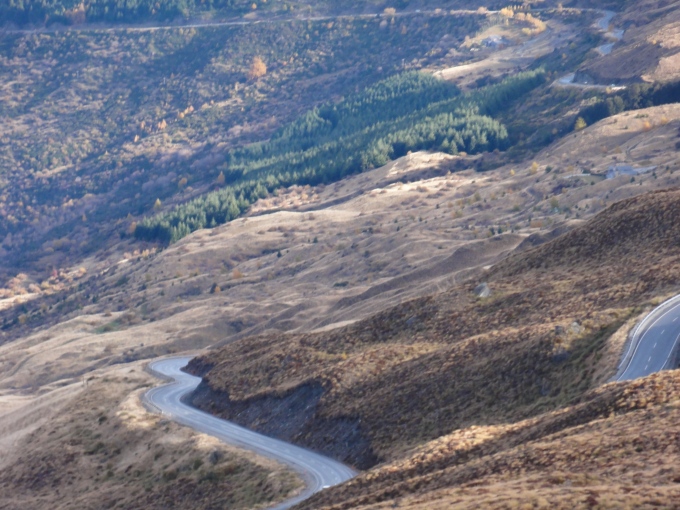
A picture paints … well, as many words as you like.  For instance:

lookingdownfromcoronetpeak

And the story:

It was once said that a desperate man has everything to lose.

The man I was chasing was desperate, but I, on the other hand, was more desperate to catch him.

He’d left a trail of dead people from one end of the island to the other.

The team had put in a lot of effort to locate him, and now his capture was imminent.  We were following the car he was in, from a discrete distance, and, at the appropriate time, we would catch up, pull him over, and make the arrest.

There was nowhere for him to go.

The road led to a dead-end, and the only way off the mountain was back down the road were now on.  Which was why I was somewhat surprised when we discovered where he was.

Where was he going?

“Damn,” I heard Alan mutter.  He was driving, being careful not to get too close, but not far enough away to lose sight of him.

“What?”

“I think he’s made us.”

“How?”

“Dumb bad luck, I’m guessing.  Or he expected we’d follow him up the mountain.  He’s just sped up.”

“How far away?”

“A half-mile.  We should see him higher up when we turn the next corner.”

It took an eternity to get there, and when we did, Alan was right, only he was further on than we thought.”

“Step on it.  Let’s catch him up before he gets to the top.”

Easy to say, not so easy to do.  The road was treacherous, and in places just gravel, and there were no guard rails to stop a three thousand footfall down the mountainside.

Good thing then I had the foresight to have three agents on the hill for just such a scenario.

Ten minutes later, we were in sight of the car, still moving quickly, but we were going slightly faster.  We’d catch up just short of the summit car park.

Or so we thought.

Coming quickly around another corner we almost slammed into the car we’d been chasing.

“What the hell…” Aland muttered.

I was out of the car, and over to see if he was in it, but I knew that it was only a slender possibility.  The car was empty, and no indication where he went.

Certainly not up the road.  It was relatively straightforward for the next mile, at which we would have reached the summit.  Up the mountainside from here, or down.

I looked up.  Nothing.

Alan yelled out, “He’s not going down, not that I can see, but if he did, there’s hardly a foothold and that’s a long fall.”

Then where did he go?

Then a man looking very much like our quarry came out from behind a rock embedded just a short distance up the hill.

“Sorry,” he said quite calmly.  “Had to go if you know what I mean.”

I’d lost him.

It was as simple as that.

I had been led a merry chase up the hill, and all the time he was getting away in a different direction.

I’d fallen for the oldest trick in the book, letting my desperation blind me to the disguise that anyone else would see through in an instant.

It was a lonely sight, looking down that road, knowing that I had to go all that way down again, only this time, without having to throw caution to the wind.

“Maybe next time,” Alan said.

“We’ll get him.  It’s just a matter of time.”

© Charles Heath 2019-2021

Find this and other stories in “Inspiration, maybe”  available soon.

InspirationMaybe1v1

The fourth attempt, other factors, and people

There are two other characters that will be used in this rewrite, the second an addition to give the main character a means of letting the reader get to know a bit about him.

His name is Milt, an African American that’s always been on the fringe.  Another who is a victim of his circumstances but not letting it get the better of him, the sort of man who makes the best of a bad situation.

He’s seen active service in the army, honourably discharged, but still affected though not as bad as some of those he served with.  He is in fact the ideal man for the job, with combat experience, so he’s not likely to get flustered in a shit storm.

And probably not the man you want on this site.  Being in desperate circumstances doesn’t mean you do desperate things.

He is one of a team of four and our main character drew the straw to partner him.  There are two others, based on the other side of the park, neither of whom are trustworthy, Smithy, the overall leader, to whom they all report at shift start and end, and Carruthers, an Englishman reputed to be ex SAS, but no one is inclined to believe him. 

The scars on his neck tell a story, but it was left to the other’s imagination, as he doesn’t talk about it.  Milt was of the opinion he was captured in Afghanistan and tortured, but that could be just be canteen scuttlebutt.

Whatever the circumstances, Graham kept away from him as much as possible, and was glad when he didn’t have to partner him for the shift.

The other character. Penelope has featured in the earlier versions of the story.  Over the changes her background has changed, but I’ve settled on a medical surgeon career, renown for doing tricky procedures with a high success rate, and in doing so gained a reputation, some not always good.

Wealth and ego don’t always make a good pair, and marrying wealth brings its own rewards and pitfalls, particularly when you discover the man you married isn’t exactly whom you thought he was.

It is of course a typical scenario, but I’m going to try and weave it differently.  There will be no more teasers until the story starts.

But she will be introduced earlier than in the previous iterations because she needs some backstory too, otherwise just arriving at Graham’s work and getting shot, while provoking a volatile situation that drags the reader in, out of left field is not exactly the best start.

So, let’s begin.

© Charles Heath 2022