The cinema of my dreams – It all started in Venice – Episode 13

Cecilia changes the subject

Being an up-and-coming movie star was not all beer and skittles, as the saying goes.

Juliet gave her a look that I thought was her death stare, annoyed by her arrival at what might have been a critical point in the conversation.

Cecilia saw her and shook her head.  “Oops, I’m intruding.  Sorry.”  She stood

“You’re not,” I said, which earned me a harsh look too, “We’re just having coffee, but you might want something stronger.”

“No, I’d better go.”  She was looking directly at Juliet, putting the onus directly on her.

“Stay.  We’re just having coffee.”

Cecilia waved to a waitress and sat down again.  “Great, I wasn’t looking forward to going back to an empty room.”

For effect, she touched me on my arm, her seat being closer, and I could see what she was doing. 

We opted for more coffee, Cecilia ordered a bottle of champagne, and three glasses, an attempt to smooth the rocky waters.

Juliet was definitely annoyed.  Another death stare in Cecilia’s direction, then, “would I have seen anything you’ve starred in?”

“Me?  I’m not a star, not a big name, just bit parts in series like Midsommer Murders, and Silent Witness.  I get to play dead bodies and murder victims.  My last role was a little better, I got a half dozen lines.  But I’m just one of the hundreds of hopefuls out there.”

“Do you have a day job, then, if parts are so few and far apart?”

Interesting question, Juliet was thinking on her feet.

If she was trying to catch Cecilia out, but she was ahead of Juliet.  “I do.  I’d like to say that it’s being a high-class escort, but they make more money than I’d know what to do with, so I toil away as a supermarket checkout girl.  Gives me the most flexibility regarding time off, and I get to meet so many different people, who become part of my repertoire of characters.  What do you do?”

“Pathology.”

“A doctor.”

“A disgraced doctor that can’t practice medicine.  Perhaps that might be material enough for another of your characters.”

Cecilia had one glass of champagne the moment it came, and then refilled for a second.  She offered it to us, and I nodded, taking half a glass.  Juliet declined.

“Played a hospital patient, a bomb victim, swathed in bloody bandages, been a doctor in the background once, got to spill coffee over another doctor.”

“What is the best part you’ve had?”

 “A fallen nun.”

The best said about that the better, but not before my mind went to places it shouldn’t.  I changed the subject.  “What will you be doing after the festival is over?”

“Going home.  I have an audition for a part in a film about mercenaries, they want me to be a mercenary would you believe?”

Apparently Juliet didn’t think so.

“But I have a spare few days if you want to show me more of Italy.  I’d like to see a little of Tuscany, try some wine.”

Another touch and a smile.

“I thought you were going to Sorrento.”  Not unexpected from Juliet.

“It can wait.  I’ve been thinking of going home, and can take Cecilia to Tuscany, send her on her way, and go visit Larry’s mother at Sorrento “

“And if I take up your tour offer to come with you?”

Cecilia gave me a Juliet look.

“Then I’ll send you a text saying where and when I’ll meet you.”

Change bottle empty, Cecilia gave me one last look, one that would no doubt get a reaction from Juliet, and sauntered away.

Juliet watched her leave, and after she disappeared out of sight, said, “it seems to me she’s more than just a friend.”

“That’s just her, no doubt playing a role.  She asked me if you were a girlfriend, and I said, once maybe, but not now.  Seems she didn’t quite believe me.”

“I think we both know where that ship is headed.”

The rocks, perhaps.  “It’s too soon after Violetta to contemplate anything like that.  But, that doesn’t mean I can’t be friends for now, and see what the future brings.”

“Not much if what you say about this Larry character is true.”

“That said, you might also want to be careful.  Larry’s not averse to using or killing close contacts of only to send a message.  So, if feel unsafe, or he makes an overture, tell me and I’ll pass it on to my minders.”

“If he does, I’ll definitely let you know.”

“Good.  It’s getting later.  We should get back to the hotel.”

© Charles Heath 2022

The cinema of my dreams – Was it just another surveillance job – Episode 15

I’m back home and this story has been sitting on a back burner for a few months, waiting for some more to be written.

The trouble is, there are also other stories to write, and I’m not very good at prioritising.

But, here we are, a few minutes opened up and it didn’t take long to get back into the groove.

Was I working for a ghost?


The question that was foremost in my mind was whether I should call Nobbin, and let him know that I’d met Severin and that his ‘information’ was on a USB.

When I’d mentioned the fact O’Connor said the evidence was somewhere, I knew this evidence was on a USB and could be in one of the hiding places O’Connor had set up with Nobbin.  If not, then it had to be somewhere else, somewhere only O’Connor would know about.

Somehow, I got the impression O’Connor had not trusted either side.  Yes, he was about to tell me where the evidence was, but if that was the case, it meant it was not anywhere where anyone else would know about.

Severin should have curbed his desire for execution a little, and taken O’Connor into custody, and then interrogated him.  It made me wonder, briefly, why Severin would want him dead.  In cases like that, it was because Severin didn’t want O’Connor to talk to me, or anyone else.

Still, he could have tranquilized O’Connor.  I would not have known the difference.

That meant I had to find out more information on O’Connor.

Of course, in just saying that out loud, over a half-full glass of scotch, just to steady the nerves after seeing Severin again, made it sound almost like a running joke.

As if I would be able to find someone who was, for all intents and purposes, a ghost.  That was how we were supposed to be, ghosts, to everyone we knew, including family.  We could no longer talk to anyone because they might become a target used as leverage against us.

That part of my training had been the scariest.  I didn’t have any friends, not real friends anyway, and no family, other than a half-brother who hated me.  I had toyed with the idea of meeting him, after I’d completed the training, just to see if anyone would try to use him as leverage, and then tell them he meant nothing to me.

It was an idea, I doubt if I could do it in reality.  But the thought of it gave me some measure of revenge for all the bullying he had inflicted on me when I was young.  Perhaps that was why I took this job, to prove I was nothing like the person he considered me to be.

Enough of the delving into the shadowy past.

I had a problem that needed solving.  How to find O’Connor.

After a long night of fitful sleep, I woke the next morning with the shreds of a plan.  I’d go into the office and use their computer system to look for him.  Of course, I didn’t expect that there would be any information available to an agent with my security clearance, which was basically to get in and out of the front door and log on to the computer to fill out reports and a timesheet.

It was a surprise, after what Nobbin had said about my employment, that my pass got me in the door.  It did, but I had no doubt somewhere it had register my name in a log somewhere.  I figured I had about half an hour before someone came checking up on me.

The same went for the computer system.  There was a bank of about a dozen computers in a room where the agents could do information searches, and private work, such as reports.  Three others were occupied, and none of those using them looked up when I entered the room.

Not a surprise.  We were taught to keep to ourselves and say nothing about the missions we were attached to anyone else.  In our line of work, secrets were paramount.  We were to become consummate liars because we could never tell anyone the truth about what we did.  If we wanted a cover story, we were to say we were international confidential couriers of documents for legal institutions.

It sounded interesting, but it was quite boring, or at least that was how I described it if anyone asked.

So, ignoring the others, I logged in and found I was still on the employee list.  And, I still had the same level of access I had before.

I ran a search on the name O’Connor.

It came back with five documents, the first of which was his personnel record.  First name, Donald.  A date of birth that made him 27 years old, and an address, in Putney.  I wrote it down.  Marital status, single.  Status, deceased.  Section worked for:  Eight.

There were supposedly eight sections, and the one I worked for was Seven.  Out of interest, I brought up my records.  It was how Severin had found me because my address was on file.  But more interesting was my status, transferred, and my section, three.  Was Nobbin’s section three?

I would ask if I got an opportunity to.

The other four documents were reports, most of which were redacted, or marked restricted.  Or above my pay grade, whatever that was.

But, at least one thing was clear, I had not been fired, just transferred.  I guess I would have to call Nobbin after all.  After I visited O’Connor’s last known residence.

I wasn’t holding my breath expecting to find anything.


© Charles Heath 2019

Writing about writing a book – Day 34

So it seems that Aitchison, the latest addition to the story, has reservations about what’s is or isn’t going on.  Aitchison is in charge of the security, not only the computer systems, but for everyone, and, of course, the first person the police would go and see.

It’s also time to bring in the CEO, a rather elusive character, but one who will have a great deal to do with our main character for a lot of different reasons.  But, for now, all the reader needs to know is that he exists,  and is very elusive for one particular reason.

Halligan is just another incidental character, significant only because he is also dead, and where there are multiple deaths, there had to be a conspiracy.  Aitchison, of course, is not what he seems, not that we know that yet, but for now, is a man with a problem.

I looked Aitchison directly in the eye, so he would not think I was lying. “Since the last debacle, I rarely see Halligan, and, when I do, I can assure you the last thing he wants to do is ask for favors. My last visit was to set up a laptop on his desk, not connected to the network. Does the CEO know anything about this?”

The CEO was almost the equivalent of the invisible man. No one could remember seeing him in the office, or when he visited the last time and was rumored to be at his Nevada ranch most of the time where he had an office. I remember setting up video conferencing for him a year or so ago, but I don’t think it had even been used.
But Aitchison was one of a few who had met him personally.

“I put a call in. He’s at a retreat with the American management team, going through some team-building exercises. I’m waiting for his call, but I think I can safely say he will deny everything, and plead innocence.”

“Has the staff members been questioned?”

“Yes. No one had anything constructive to add. But one other interesting bit of information that did come out of that briefing with the Chief Inspector was that Halligan also attempted to log onto this other network. That’s why I asked you about Halligan.”

Something was not right. Halligan was dumb when it came to computers, and only wanted a computer, not connected to the network. Of course, he needed a networked desktop for email, and sourcing documents, and perhaps the peek at a porn site through the internet, but that was the extent of his involvement. His knowledge of networking was solely based on the background papers I wrote for him when he needed information for meetings and conferences. He even had trouble logging into the network at times, because he kept forgetting his password.

I kept that to myself. Aitchison was probably not interested in anything that would refute his belief of what the situation entailed. He was partially wrong, but that was driven by fear.

“What had Halligan have to say about all of this?”

It was an innocent question, but it drew the sharpest reaction and given a sudden ashen look on his face, the catalyst of his fear. The mere mention of questioning Halligan had caused him to turn white.

“He’s dead too, and conveniently cannot answer any questions. The doctor said it was a heart attack.”

“Dead? Where, when?”

“Early this morning, at home. Apparently, his wife is away, overseas visiting relatives, and neither we nor the police have been able to contact her. I only found out when I tried to call him this morning after the news about Richardson broke, and the police answered the phone.”

He poured a splash of whiskey into the glass and drank it down. If it was to settle his nerves it wasn’t working.

“And you don’t think it was a heart attack?”

“Too convenient, far too convenient, especially so soon after the Richardson thing, and in the light of this other network logon episode. The very two people who allegedly knew about this network both dying of innocent causes? Something is going on here, and we have to get to the bottom of it, before the police, Interpol or any forensic experts, if that’s what they are.”

He poured himself another liberal drink from the bottle and offered me one. I declined. Too early, and my nerves were not yet getting the better of me.

A shiver ran down my spine. I was beginning to buy into his paranoia. It was beginning to look like anyone associated with this secret network found themselves on some sort of hit list. No wonder Aitchison was jumpy. He’d obviously come to the same conclusion I did. He’d been making inquiries, and it might be enough to have his name added to the list.

Telling me about it might just be enough to add my name to that same list. I looked at the whiskey bottle and the glass. It might be time for a nerve-steadying drink.

Aitchison was still talking, and I just caught what he was saying, “… it’s your network. People will be asking questions.”

If he was trying to scare me, it was working.

He continued, “The police were rather sceptical when I said we didn’t know the network was in place. I’m to be interviewed next. You shouldn’t be far behind. Forewarned is forearmed.”

He turned to look out at the city. The view was magnificent, despite the wintry weather.
After a minute, he said, “At least there is one irrefutable fact. Richardson was in the wrong place at the wrong time. It’s the only explanation. I don’t believe he was trying to log into anything, but he was the victim of a random key combination or a glitch in the power supply to the system. You’ve seen it happen yourself when the power goes down momentarily and just enough time elapses to trick the computer into thinking it has to log in again. There was a brief power outage last night, during the storm. It might be worth investigating that event, and the effect on our systems.”

That was not a bad assessment, and one I hadn’t thought of.

“Then, there is something else, the Chief Inspector mentioned in passing, and that was one of the employees claims his building pass card had been stolen. Again, convenient, but the police are questioning him, but according to building security, that pass was used last night.”

“The person who killed Richardson?”

“If you put two and two together and get four. The police aren’t saying much, but that’s the inference I’d draw?”

“And the person with the missing card?”

“A janitor, or maintenance worker, not one of our people. He probably has a police record as long as his arm. You should go. And just a thought. If it was a desktop system connected to the in-house network, then one of our servers had to be used as a gateway. Tell me you installed those special log files when I asked you to last week?”

I had been in two minds about implementing that particular request because in part it when against the privacy regulations we had to adhere to.  After reading the relevant legislation and taking to a consulting security company who had advised we were well within our rights to do so, in the end, I did. And it had given several positive results immediately after its implementation, proving beneficial in tracking down people using the network incorrectly. I’m glad he remembered it. In the panic, it slipped my mind.
“Of course! How do you think I tracked down the troublemaker in Distribution?”

“Good. Start the investigation as soon as you bet back to the floor, but be careful to make sure no one knows about it, or what you are doing. People connected with this seem to be suffering from terminal health problems.”

I stood. I was not sure if I felt suitably inspired.

“I’ll let you know what I find.”

© Charles Heath 2015-2025

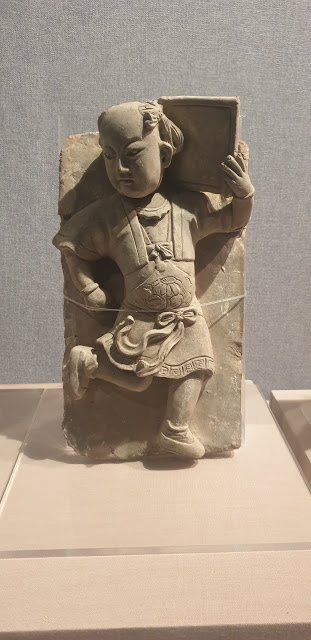
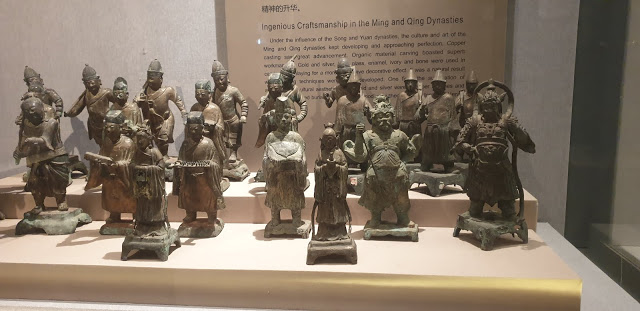
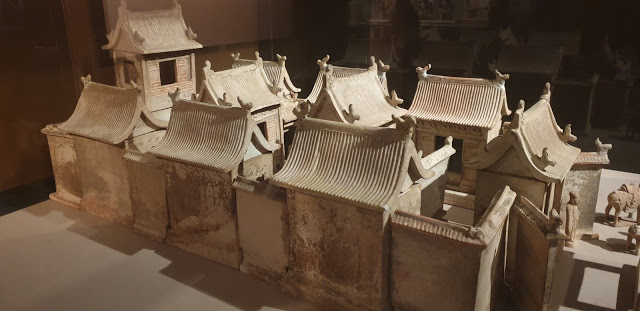
Searching for locations: The Henan Museum, Zhengzhou, Henan Province, China

The Henan Museum is one of the oldest museums in China.  In June 1927, General Feng Yuxiang proposed that a museum be built, and it was completed the next year.  In 1961, along with the move of the provincial capital, Henan Museum moved from Kaifeng to Zhengzhou.

It currently holds about 130,000 individual pieces, more of which are mostly cultural relics, bronze vessels of the Shang and Zhou Dynasties, and pottery and porcelain wares of the various dynasties.

Eventually, we arrive at the museum and get off the bus adjacent to a scooter track and despite the efforts of the guide, there’s no stopping them from nearly running us over.

We arrive to find the museum has been moved to a different and somewhat smaller building nearby as the existing, and rather distinctively designed, building is being renovated.

While we are waiting for the tickets to enter, we are given another view of industrial life in that there is nothing that resembles proper health and safety on worksites in this country, and the workers are basically standing on what looks to be a flimsy bamboo ladder with nothing to stop them from falling off.

The museum itself has exhibits dating back a few thousand years and consist of bronze and ceramic items.  One of the highlights was a tortoiseshell with reportedly the oldest know writing ever found.

Other than that it was a series of cooking utensils, a table, and ceramic pots, some in very good condition considering their age.


There were also small sculptures

an array of small figures

and a model of a settlement

20 minutes was long enough.

An excerpt from “Mistaken Identity” – a work in progress

The odds of any one of us having a doppelganger are quite high. Whether or not you got to meet him or her, or be confronted by them was significantly lower. Except of course, unless you are a celebrity.

It was a phenomenon remarkable only for the fact, at times, certain high-profile people, notorious or not, had doubles if only to put off enemies or the general public. Sometimes we see people in the street, people who look like someone we knew, and made the mistake of approaching them like a long lost friend, only to discover an embarrassed individual desperately trying to get away for what they perceive is a stalker or worse.

And then sometimes it is a picture that looms up on a TV screen, an almost exact likeness of you. At first, you are fascinated, and then according to the circumstances, and narrative that is attached to that picture, either flattered or horrified.

For me one turned to the other when I saw an almost likeness of me flash up on the screen when I turned the TV on in my room. What looked to be my photo, with only minor differences, was in the corner of the screen, the newsreader speaking in rapid Italian, so fast I could only translate every second or third word.

But the one word I did recognize was murder. The photo of the man up on the screen was the subject of an extensive manhunt. The crime, the murder of a woman in the very same hotel I was staying, and it was being played out live several floors above me. The gist of the story, the woman had been seen with, and staying with the man who was my double, and, less than an hour ago, the body had been discovered by a chambermaid.

The killer, the announcer said, was believed to be still in the hotel because the woman had died shortly before she had been discovered.

I watched, at first fascinated at what I was seeing. I guess I should have been horrified, but at that moment it didn’t register that I might be mistaken for that man.

Not until another five minutes had passed, and I was watching the police in full riot gear, with a camera crew following behind, coming up a passage towards a room. Live action of the arrest of the suspected killer the breathless commentator said.

Then, suddenly, there was a pounding on the door. On the TV screen, plain to see, was the number of my room.
I looked through the peephole and saw an army of police officers. It didn’t take much to realize what had happened. The hotel staff identified me as the man in the photograph on the TV and called the police.

Horrified wasn’t what I was feeling right then.

It was fear.

My last memory was the door crashing open, the wood splintering, and men rushing into the room, screaming at me, waving guns, and when I put my hands up to defend myself, I heard a gunshot.

And in one very confused and probably near-death experience, I thought I saw my mother and thought what was she doing in Rome?

I was the archetypal nobody.

I lived in a small flat, I drove a nondescript car, had an average job in a low profile travel agency, was single, and currently not involved in a relationship, no children, and according to my workmates, no life.

They were wrong. I was one of those people who preferred their own company, I had a cat, and travelled whenever I could. And I did have a ‘thing’ for Rosalie, one of the reasons why I stayed at the travel agency. I didn’t expect anything to come of it, but one could always hope.

I was both pleased and excited to be going to the conference. It was my first, and the glimpse I had seen of it had whetted my appetite for more information about the nuances of my profession.

Some would say that a travel agent wasn’t much of a job, but to me, it was every bit as demanding as being an accountant or a lawyer. You were providing a customer with a service, and arguably more people needed a travel agent than a lawyer. At least that was what I told myself, as I watched more and more people start using the internet, and our relevance slowly dissipating.

This conference was about countering that trend.

The trip over had been uneventful. I was met at the airport and taken to the hotel where the conference was being held with a number of other delegates who had arrived on the same plane. I had mingled with a number of other delegates at the pre conference get together, including one whose name was Maryanne.

She was an unusual young woman, not the sort that I usually met, because she was the one who was usually surrounded by all the boys, the life of the party. In normal circumstances, I would not have introduced myself to her, but she had approached me. Why did I think that may have been significant? All of this ran through my mind, culminating in the last event on the highlight reel, the door bursting open, men rushing into my room, and then one of the policemen opened fire.

I replayed that last scene again, trying to see the face of my assailant, but it was just a sea of men in battle dress, bullet proof vests and helmets, accompanied by screaming and yelling, some of which I identified as “Get on the floor”.

Then came the shot.

Why ask me to get on the floor if all they were going to do was shoot me. I was putting my hands up at the time, in surrender, not reaching for a weapon.

Then I saw the face again, hovering in the background like a ghost. My mother. Only the hair was different, and her clothes, and then the image was going, perhaps a figment of my imagination brought on by pain killing drugs. I tried to imagine the scene again, but this time it played out, without the image of my mother.

I opened my eyes took stock of my surroundings. What I felt in that exact moment couldn’t be described. I should most likely be dead, the result of a gunshot wound. I guess I should be thankful the shooter hadn’t aimed at anything vital, but that was the only item on the plus side.

I was in a hospital room with a policeman by the door. He was reading a newspaper, and sitting uncomfortably on a small chair. He gave me a quick glance when he heard me move slightly, but didn’t acknowledge me with either a nod, or a greeting, just went back to the paper.

If I still had a police guard, then I was still considered a suspect. What was interesting was that I was not handcuffed to the bed. Perhaps that only happened in TV shows. Or maybe they knew I couldn’t run because my injuries were too serious. Or the guard would shoot me long before my feet hit the floor. I knew the police well enough now to know they would shoot first and ask questions later.

On the physical side, I had a large bandage over the top left corner of my chest, extending over my shoulder. A little poking and prodding determined the bullet had hit somewhere between the top of my rib cage and my shoulder. Nothing vital there, but my arm might be somewhat useless for a while, depending on what the bullet hit on the way in, or through.

It didn’t feel like there were any broken or damaged bones.

That was the good news.

On the other side of the ledger, my mental state, there was only one word that could describe it. Terrified. I was looking at a murder charge and jail time, a lot of it. Murder usually had a long time in jail attached to it.

Whatever had happened, I didn’t do it. I know I didn’t do it, but I had to try and explain this to people who had already made up their minds. I searched my mind for evidence. It was there, but in the confused state brought on by the medication, all I could think about was jail, and the sort of company I was going to have.

I think death would have been preferable.

Half an hour later, maybe longer, I was drifting in an out of consciousness, a nurse, or what I thought was a nurse, came into the room. The guard stood, checked her ID card, and then stood by the door.

She came over and stood beside the bed. “How are you?” she asked, first in Italian, and when I pretended I didn’t understand, she asked the same question in accented English.

“Alive, I guess,” I said. “No one has come and told what my condition is yet. You are my first visitor. Can you tell me?”

“Of course. You are very lucky to be alive. You will be fine and make a full recovery. The doctors here are excellent at their work.”

“What happens now?”

“I check you, and then you have a another visitor. He is from the British Embassy I think. But he will have to wait until I have finished my examination.”

I realized then she was a doctor, not a nurse.

My second visitor was a man, dressed in a suit the sort of which I associated with the British Civil Service.  He was not very old which told me he was probably a recent graduate on his first posting, the junior officer who drew the short straw.

The guard checked his ID but again did not leave the room, sitting back down and going back to his newspaper.

My visitor introduced himself as Alex Jordan from the British Embassy in Rome and that he had been asked by the Ambassador to sort out what he labelled a tricky mess.

For starters, it was good to see that someone cared about what happened to me.  But, equally, I knew the mantra, get into trouble overseas, and there is not much we can do to help you.  So, after that lengthy introduction, I had to wonder why he was here.

I said, “They think I am an international criminal by the name of Jacob Westerbury, whose picture looks just like me, and apparently for them it is an open and shut case.”  I could still hear the fragments of the yelling as the police burst through the door, at the same time telling me to get on the floor with my hands over my head.

“It’s not.  They know they’ve got the wrong man, which is why I’m here.  There is the issue of what had been described as excessive force, and the fact you were shot had made it an all-round embarrassment for them.”

“Then why are you here?  Shouldn’t they be here apologizing?”

“That is why you have another visitor.  I only took precedence because I insisted I speak with you first.  I have come, basically to ask you for a favour.  This situation has afforded us with an opportunity.  We would like you to sign the official document which basically indemnifies them against any legal proceedings.”

Curious.  What sort of opportunity was he talking about?  Was this a matter than could get difficult and I could be charged by the Italian Government, even if I wasn’t guilty, or was it one of those hush hush type deals, you do this for us, we’ll help you out with that.  “What sort of opportunity?”

“We want to get our hands on Jacob Westerbury as much as they do.  They’ve made a mistake, and we’d like to use that to get custody of him if or when he is arrested in this country.  I’m sure you would also like this man brought into custody as soon as possible so you will stop being confused with him.  I can only imagine what it was like to be arrested in the manner you were.  And I would not blame you if you wanted to get some compensation for what they’ve done.  But.  There are bigger issues in play here, and you would be doing this for your country.”

I wondered what would happen if I didn’t agree to his proposal.  I had to ask, “What if I don’t?”

His expression didn’t change.  “I’m sure you are a sensible man Mr Pargeter, who is more than willing to help his country whenever he can.  They have agreed to take care of all your hospital expenses, and refund the cost of the Conference, and travel.  I’m sure I could also get them to pay for a few days at Capri, or Sorrento if you like, before you go home.  What do you say?”

There was only one thing I could say.  Wasn’t it treason if you went against your country’s wishes?

“I’m not an unreasonable man, Alex.  Go do your deal, and I’ll sign the papers.”

“Good man.”

After Alex left, the doctor came back to announce the arrival of a woman, by the way she had announced herself, the publicity officer from the Italian police. When she came into the room, she was not dressed in a uniform.

The doctor left after giving a brief report to the civilian at the door. I understood the gist of it, “The patient has recovered excellently and the wounds are healing as expected. There is no cause for concern.”

That was a relief.

While the doctor was speaking to the civilian, I speculated on who she might be. She was young, not more than thirty, conservatively dressed so an official of some kind, but not necessarily with the police. Did they have prosecutors? I was unfamiliar with the Italian legal system.

She had long wavy black hair and the sort of sultry looks of an Italian movie star, and her presence made me more curious than fearful though I couldn’t say why.

The woman then spoke to the guard, and he reluctantly got up and left the room, closing the door behind him.
She checked the door, and then came back towards me, standing at the end of the bed. Now alone, she said, “A few questions before we begin.” Her English was only slightly accented. “Your name is Jack Pargeter?”

I nodded. “Yes.”

“You are in Rome to attend the Travel Agents Conference at the Hilton Hotel?”

“Yes.”

“You attended a preconference introduction on the evening of the 25th, after arriving from London at approximately 4:25 pm.”

“About that time, yes. I know it was about five when the bus came to collect me, and several others, to take us to the hotel.”

She smiled. It was then I noticed she was reading from a small notepad.

“It was ten past five to be precise. The driver had been held up in traffic. We have a number of witnesses who saw you on the plane, on the bus, at the hotel, and with the aid of closed circuit TV we have established you are not the criminal Jacob Westerbury.”

She put her note book back in her bag and then said, “My name is Vicenza Andretti and I am with the prosecutor’s office. I am here to formally apologize for the situation that can only be described as a case of mistaken identity. I assure you it is not the habit of our police officers to shoot people unless they have a very strong reason for doing so. I understand that in the confusion of the arrest one of our officers accidentally discharged his weapon. We are undergoing a very thorough investigation into the circumstances of this event.”

I was not sure why, but between the time I had spoken to the embassy official and now, something about letting them off so easily was bugging me. I could see why they had sent her. It would be difficult to be angry or annoyed with her.

But I was annoyed.

“Do you often send a whole squad of trigger happy riot police to arrest a single man?” It came out harsher than I intended.

“My men believed they were dealing with a dangerous criminal.”

“Do I look like a dangerous criminal?” And then I realized if it was mistaken identity, the answer would be yes.

She saw the look on my face, and said quietly, “I think you know the answer to that question, Mr. Pargeter.”

“Well, it was overkill.”

“As I said, we are very sorry for the circumstances you now find yourself in. You must understand that we honestly believed we were dealing with an armed and dangerous murderer, and we were acting within our mandate. My department will cover your medical expenses, and any other amounts for the inconvenience this has caused you. I believe you were attending a conference at your hotel. I am very sorry but given the medical circumstances you have, you will have to remain here for a few more days.”

“I guess, then, I should thank you for not killing me.”

Her expression told me that was not the best thing I could have said in the circumstances.

“I mean, I should thank you for the hospital and the care. But a question or two of my own. May I?”

She nodded.

“Did you catch this Jacob Westerbury character?”

“No. In the confusion created by your arrest he escaped. Once we realized we had made a mistake and reviewed the close circuit TV, we tracked him leaving by a rear exit.”

“Are you sure it was one of your men who shot me?”

I watched as her expression changed, to one of surprise.

“You don’t think it was one of my men?”

“Oddly enough no. But don’t ask me why.”

“It is very interesting that you should say that, because in our initial investigation, it appeared none of our officer’s weapons had been discharged. A forensic investigation into the bullet tells us it was one that is used in our weapons, but…”

I could see their dilemma.

“Have you any enemies that would want to shoot you Mr Pargeter?”

That was absurd because I had no enemies, at least none that I knew of, much less anyone who would want me dead.

“Not that I’m aware of.”

“Then it is strange, and will perhaps remain a mystery. I will let you know if anything more is revealed in our investigation.”

She took an envelope out of her briefcase and opened it, pulling out several sheets of paper.

I knew what it was. A verbal apology was one thing, but a signed waiver would cover them legally. They had sent a pretty girl to charm me. Perhaps using anyone else it would not have worked. There was potential for a huge litigation payout here, and someone more ruthless would jump at the chance of making a few million out of the Italian Government.

“We need a signature on this document,” she said.

“Absolving you of any wrong doing?”

“I have apologized. We will take whatever measures are required for your comfort after this event. We are accepting responsibility for our actions, and are being reasonable.”

They were. I took the pen from her and signed the documents.

“You couldn’t add dinner with you on that list of benefits?” No harm in asking.

“I am unfortunately unavailable.”

I smiled. “It wasn’t a request for a date, just dinner. You can tell me about Rome, as only a resident can. Please.”

She looked me up and down, searching for the ulterior motive. When she couldn’t find one, she said, “We shall see once the hospital discharges you in a few days.”

“Then I’ll pencil you in?”

She looked at me quizzically. “What is this pencil me in?”

“It’s an English colloquialism. It means maybe. As when you write something in pencil, it is easy to erase it.”

A momentary frown, then recognition and a smile. “I shall remember that. Thank-you for your time and co-operation Mr. Pargeter. Good morning.”

© Charles Heath 2015-2021

Writing about writing a book – Day 34

So it seems that Aitchison, the latest addition to the story, has reservations about what’s is or isn’t going on.  Aitchison is in charge of the security, not only the computer systems, but for everyone, and, of course, the first person the police would go and see.

It’s also time to bring in the CEO, a rather elusive character, but one who will have a great deal to do with our main character for a lot of different reasons.  But, for now, all the reader needs to know is that he exists,  and is very elusive for one particular reason.

Halligan is just another incidental character, significant only because he is also dead, and where there are multiple deaths, there had to be a conspiracy.  Aitchison, of course, is not what he seems, not that we know that yet, but for now, is a man with a problem.

I looked Aitchison directly in the eye, so he would not think I was lying. “Since the last debacle, I rarely see Halligan, and, when I do, I can assure you the last thing he wants to do is ask for favors. My last visit was to set up a laptop on his desk, not connected to the network. Does the CEO know anything about this?”

The CEO was almost the equivalent of the invisible man. No one could remember seeing him in the office, or when he visited the last time and was rumored to be at his Nevada ranch most of the time where he had an office. I remember setting up video conferencing for him a year or so ago, but I don’t think it had even been used.
But Aitchison was one of a few who had met him personally.

“I put a call in. He’s at a retreat with the American management team, going through some team-building exercises. I’m waiting for his call, but I think I can safely say he will deny everything, and plead innocence.”

“Has the staff members been questioned?”

“Yes. No one had anything constructive to add. But one other interesting bit of information that did come out of that briefing with the Chief Inspector was that Halligan also attempted to log onto this other network. That’s why I asked you about Halligan.”

Something was not right. Halligan was dumb when it came to computers, and only wanted a computer, not connected to the network. Of course, he needed a networked desktop for email, and sourcing documents, and perhaps the peek at a porn site through the internet, but that was the extent of his involvement. His knowledge of networking was solely based on the background papers I wrote for him when he needed information for meetings and conferences. He even had trouble logging into the network at times, because he kept forgetting his password.

I kept that to myself. Aitchison was probably not interested in anything that would refute his belief of what the situation entailed. He was partially wrong, but that was driven by fear.

“What had Halligan have to say about all of this?”

It was an innocent question, but it drew the sharpest reaction and given a sudden ashen look on his face, the catalyst of his fear. The mere mention of questioning Halligan had caused him to turn white.

“He’s dead too, and conveniently cannot answer any questions. The doctor said it was a heart attack.”

“Dead? Where, when?”

“Early this morning, at home. Apparently, his wife is away, overseas visiting relatives, and neither we nor the police have been able to contact her. I only found out when I tried to call him this morning after the news about Richardson broke, and the police answered the phone.”

He poured a splash of whiskey into the glass and drank it down. If it was to settle his nerves it wasn’t working.

“And you don’t think it was a heart attack?”

“Too convenient, far too convenient, especially so soon after the Richardson thing, and in the light of this other network logon episode. The very two people who allegedly knew about this network both dying of innocent causes? Something is going on here, and we have to get to the bottom of it, before the police, Interpol or any forensic experts, if that’s what they are.”

He poured himself another liberal drink from the bottle and offered me one. I declined. Too early, and my nerves were not yet getting the better of me.

A shiver ran down my spine. I was beginning to buy into his paranoia. It was beginning to look like anyone associated with this secret network found themselves on some sort of hit list. No wonder Aitchison was jumpy. He’d obviously come to the same conclusion I did. He’d been making inquiries, and it might be enough to have his name added to the list.

Telling me about it might just be enough to add my name to that same list. I looked at the whiskey bottle and the glass. It might be time for a nerve-steadying drink.

Aitchison was still talking, and I just caught what he was saying, “… it’s your network. People will be asking questions.”

If he was trying to scare me, it was working.

He continued, “The police were rather sceptical when I said we didn’t know the network was in place. I’m to be interviewed next. You shouldn’t be far behind. Forewarned is forearmed.”

He turned to look out at the city. The view was magnificent, despite the wintry weather.
After a minute, he said, “At least there is one irrefutable fact. Richardson was in the wrong place at the wrong time. It’s the only explanation. I don’t believe he was trying to log into anything, but he was the victim of a random key combination or a glitch in the power supply to the system. You’ve seen it happen yourself when the power goes down momentarily and just enough time elapses to trick the computer into thinking it has to log in again. There was a brief power outage last night, during the storm. It might be worth investigating that event, and the effect on our systems.”

That was not a bad assessment, and one I hadn’t thought of.

“Then, there is something else, the Chief Inspector mentioned in passing, and that was one of the employees claims his building pass card had been stolen. Again, convenient, but the police are questioning him, but according to building security, that pass was used last night.”

“The person who killed Richardson?”

“If you put two and two together and get four. The police aren’t saying much, but that’s the inference I’d draw?”

“And the person with the missing card?”

“A janitor, or maintenance worker, not one of our people. He probably has a police record as long as his arm. You should go. And just a thought. If it was a desktop system connected to the in-house network, then one of our servers had to be used as a gateway. Tell me you installed those special log files when I asked you to last week?”

I had been in two minds about implementing that particular request because in part it when against the privacy regulations we had to adhere to.  After reading the relevant legislation and taking to a consulting security company who had advised we were well within our rights to do so, in the end, I did. And it had given several positive results immediately after its implementation, proving beneficial in tracking down people using the network incorrectly. I’m glad he remembered it. In the panic, it slipped my mind.
“Of course! How do you think I tracked down the troublemaker in Distribution?”

“Good. Start the investigation as soon as you bet back to the floor, but be careful to make sure no one knows about it, or what you are doing. People connected with this seem to be suffering from terminal health problems.”

I stood. I was not sure if I felt suitably inspired.

“I’ll let you know what I find.”

© Charles Heath 2015-2025

The story behind the story – Echoes from the Past

The novel ‘Echoes from the past’ started out as a short story I wrote about 30 years ago, titled ‘The birthday’.

My idea was to take a normal person out of their comfort zone and led on a short but very frightening journey to a place where a surprise birthday party had been arranged.

Thus the very large man with a scar and a red tie was created.

So was the friend with the limousine who worked as a pilot.

So were the two women, Wendy and Angelina, who were Flight Attendants that the pilot friend asked to join the conspiracy.

I was going to rework the short story, then about ten pages long, into something a little more.

And like all re-writes, especially those I have anything to do with, it turned into a novel.

There was motivation.  I had told some colleagues at the place where I worked at the time that I liked writing, and they wanted a sample.  I was going to give them the re-worked short story.  Instead, I gave them ‘Echoes from the past’

Originally it was not set anywhere in particular.

But when considering a location, I had, at the time, recently been to New York in December, and visited Brooklyn and Queens, as well as a lot of New York itself.  We were there for New Years, and it was an experience I’ll never forget.

One evening we were out late, and finished up in Brooklyn Heights, near the waterfront, and there was rain and snow, it was cold and wet, and there were apartment buildings shimmering in the street light, and I thought, this is the place where my main character will live.

It had a very spooky atmosphere, the sort where ghosts would not be unexpected.  I felt more than one shiver go up and down my spine in the few minutes I was there.

I had taken notes, as I always do, of everywhere we went so I had a ready supply of locations I could use, changing the names in some cases.

Fifth Avenue near the Rockefeller center is amazing at first light, and late at night with the Seasonal decorations and lights.

The original main character was a shy and man of few friends, hence not expecting the surprise party.  I enhanced that shyness into purposely lonely because of an issue from his past that leaves him always looking over his shoulder and ready to move on at the slightest hint of trouble.  No friends, no relationships, just a very low profile.

Then I thought, what if he breaks the cardinal rule, and begins a relationship?

But it is also as much an exploration of a damaged soul, as it is the search for a normal life, without having any idea what normal was, and how the understanding of one person can sometimes make all the difference in what we may think or feel.

And, of course, I wanted a happy ending.

Except for the bad guys.

Get it here:  https://amzn.to/2CYKxu4

newechocover5rs

The first case of PI Walthenson – “A Case of Working With the Jones Brothers”

This case has everything, red herrings, jealous brothers, femme fatales, and at the heart of it all, greed.

See below for an excerpt from the book…

Coming soon!

PIWalthJones1

An excerpt from the book:

When Harry took the time to consider his position, a rather uncomfortable position at that, he concluded that he was somehow involved in another case that meant very little to him.

Not that it wasn’t important in some way he was yet to determine, it was just that his curiosity had got the better of him, and it had led to this: sitting in a chair, securely bound, waiting for someone one of his captors had called Doug.

It was not the name that worried him so much, it was the evil laugh that had come after the name was spoken.

Doug what? Doug the ‘destroyer’, Doug the ‘dangerous’, Doug the ‘deadly’; there was any number of sinister connotations, and perhaps that was the point of the laugh, to make it more frightening than it was.

But there was no doubt about one thing in his mind right then: he’d made a mistake. A very big. and costly, mistake. Just how big the cost, no doubt he would soon find out.

His mother, and his grandmother, the wisest person he had ever known, had once told him never to eavesdrop.

At the time he couldn’t help himself and instead of minding his own business, listening to a one-sided conversation which ended with a time and a place. The very nature of the person receiving the call was, at the very least, sinister, and, because of the cryptic conversation, there appeared to be, or at least to Harry, criminal activity involved.

For several days he had wrestled with the thought of whether he should go. Stay on the fringe, keep out of sight, observe and report to the police if it was a crime. Instead, he had willingly gone down the rabbit hole.

Now, sitting in an uncomfortable chair, several heat lamps hanging over his head, he was perspiring, and if perspiration could be used as a measure of fear, then Harry’s fear was at the highest level.

Another runnel of sweat rolled into his left eye, and, having his hands tied, literally, it made it impossible to clear it. The burning sensation momentarily took his mind off his predicament. He cursed and then shook his head trying to prevent a re-occurrence. It was to no avail.

Let the stinging sensation be a reminder of what was right and what was wrong.

It was obvious that it was the right place and the right time, but in considering his current perilous situation, it definitely was the wrong place to be, at the worst possible time.

It was meant to be his escape, an escape from the generations of lawyers, what were to Harry, dry, dusty men who had been in business since George Washington said to the first Walthenson to step foot on American soil, ‘Why don’t you become a lawyer?” when asked what he could do for the great man.

Or so it was handed down as lore, though Harry didn’t think Washington meant it literally, the Walthenson’s, then as now, were not shy of taking advice.

Except, of course, when it came to Harry.

He was, Harry’s father was prone to saying, the exception to every rule. Harry guessed his father was referring to the fact his son wanted to be a Private Detective rather than a dry, dusty lawyer. Just the clothes were enough to turn Harry off the profession.

So, with a little of the money Harry inherited from one of his aunts, he leased an office in Gramercy Park and had it renovated to look like the Sam Spade detective agency, you know the one, Spade and Archer, and The Maltese Falcon.

There’s a movie and a book by Dashiell Hammett if you’re interested.

So, there it was, painted on the opaque glass inset of the front door, ‘Harold Walthenson, Private Detective’.

There was enough money to hire an assistant, and it took a week before the right person came along, or, more to the point, didn’t just see his business plan as something sinister. Ellen, a tall cool woman in a long black dress, or so the words of a song in his head told him, fitted in perfectly.

She’d seen the movie, but she said with a grin, Harry was no Humphrey Bogart.

Of course not, he said, he didn’t smoke.

Three months on the job, and it had been a few calls, no ‘real’ cases, nothing but missing animals, and other miscellaneous items. What he really wanted was a missing person. Or perhaps a beguiling, sophisticated woman who was as deadly as she was charming, looking for an errant husband, perhaps one that she had already ‘dispatched’.

Or for a tall, dark and handsome foreigner who spoke in riddles and in heavily accented English, a spy, or perhaps an assassin, in town to take out the mayor. The man was such an imbecile Harry had considered doing it himself.

Now, in a back room of a disused warehouse, that wishful thinking might be just about to come to a very abrupt end, with none of the romanticized trappings of the business befalling him. No beguiling women, no sinister criminals, no stupid policemen.

Just a nasty little man whose only concern was how quickly or how slowly Harry’s end was going to be.

© Charles Heath 2019-2024

The cinema of my dreams – It all started in Venice – Episode 12

Let’s talk about Larry.

Over the main, and desert, I told her about Siena and the Palio, painting a vivid picture of horsemanship and rivalry over the course of several hundred years, making it sound so much better than it was.

It the heat, the tight confines of the square, and the large number of people crammed in, it could be quite oppressive.

It wasn’t until after coffee arrived I decided to take a different tack and surprise her.

“You know, back in the old days, when I was working a desk, I used to do research on criminals for task forces.  I longed to get out in the field, but back then you had to be a particular sort of bastard to get those jobs.  I just didn’t have that mean streak.”

“Any I might know of?”

“One that springs to mind, Larry Pomisor, head of the so-called Waterville gang, though as an organization, is went downhill quickly after Larry’s father died and he took over.”

I’d been watching her carefully, and, yes, no matter how hard people tried to mask their surprise, it never works.  I got the hit I was looking for.

“You’re saying he’s not a crime boss?”

“Exactly.  He’s little better than a complete moron.  Blames me for the death of his brother, failing to understand that he is ultimately responsible.  If he hadn’t dragged him into the business, he’d still be alive today.”

“Why would he blame you?”

“He thinks I was at the scene of his brother’s death but whoever told him got their dates mixed up.  But Larry is nothing if not pathological in his beliefs no matter how wrong they are.”

I could see she was processing how to deal with this turn of events.  Being handed to her on a plate, exactly what Larry wanted me to talk about, I could see she was mid-way between confused and surprised.  In other words, off guard.

She now had to come up with questions that were not obvious.

“Not exactly the sort of enemy you want, then.”

“No more than any of the others I’m sure are waiting in line.  I was there, yes, but not when his brother was killed, he was alive when I left.  It was a meeting his brother called, and we believe he was going to inform on Larry, and Larry had him killed, then pinning the blame on us, and me in particular.  His brother never wanted anything to do with Waterville, but Larry never gave him the option.”

“I can’t believe that he would do that, not to his brother.  No one would do that to family.”

“Like I said, everything I learned about Larry pointed to the fact he was a moron.  His father hated him, and his mother moved to be as far from him as possible.  She lives in Sorrento you know.  His father was a piece of work, and I first met him on a domestic call-out when their neighbors reported gunshots.  She had taken a beating, not the first, and not the last, and I had to say, I’d never seen anyone more relieved when the old man died.”

I wondered what Larry was making of this if he was listening in.  He had once told me, in passing, in one of many visits to the parent’s house to intervene, that he would kill his father if he didn’t stop.

But, Larry was all talk and no action and did nothing to stop it.  In the end, it was his wife Gabrielle, who finally ended the violence. 

When it happened she called me, the most familiar face, and told me what happened.  I then told her what to do, and it eventually kept her out of jail.  Over the years since our paths rarely crossed, but significantly I was on her Christmas card list.

She had, when she learned I was living in Venice incited Violetta and I over for tea, and we went a few times, but the last was a long time ago.

“He doesn’t blame you for that too foes he?”

“Probably, but Gabrielle can put him straight on that.  I should go and see her, it’s been a while.”

 “What do you mean?  Go see Larry’s mother?”

“Why not?  The chances of Larry being there are remote.  It’ll have to be after Cecilia goes back home.  You want to come, see a bit more of Italy?”

“What?”

The shock of the conversation direction had finally caught up with her.  I’d seen her glancing more than one at her phone, and equally wondering what Larry was making of it.

“Go see Larry’s mother.  We’re old friends.  I’m sure she’d give him a stern talking-to if she knew he wanted me dead, don’t you?”

“I don’t know.  I’ll have to see.”

“Of course.  Too short notice.”

I gave her one of my winning smiles, just as Cecilia loomed out of the darkness and came over, dropping heavily into the seat next to me, and complaining, “Well, that was a spectacular waste of time and effort.”

© Charles Heath 2022

The cinema of my dreams – Was it just another surveillance job – Episode 14

I’m back home and this story has been sitting on a back burner for a few months, waiting for some more to be written.

The trouble is, there are also other stories to write, and I’m not very good at prioritising.

But, here we are, a few minutes opened up and it didn’t take long to get back into the groove.

Was I working for a ghost?


Training sometimes was one of those things that went in one ear and came out the other.  That accounted for the boring bits, but our instructors called it tradecraft. 

I guess I should have taken more notice at the time.

Home was a bedsit in Bloomsbury, Not far from the Russell Square underground station, on the ground floor overlooking the small park.  Sometimes, in summer I would sit there and watch the world go by, thinking there had to be more to life than waiting for an opportunity.

To do what, at the time, I didn’t know.  But, when this opportunity presented itself, oddly as a rather strange ad in the help wanted pages of the newspaper, I guess the people who put it there were looking for the curious sort, with a sense of adventure.

My first impression of the job was that of a courier who would be required to travel a lot.  It said, in part, “must be prepared to travel to different locations worldwide, understand the requirement of confidentiality, and must be able to respond to emergencies that might occur in the carrying out of your duties.”

To me, it spelled courier, though I rather hoped it wasn’t the briefcase handcuffed to a wrist sort and no guns.

After the first interview, I think I had guessed correctly, though, in subsequent training, the word tradecraft put a slightly different slant to the job.  That, and the surveillance module, sold to us as “you need to know if you are being followed, recognise hostiles, and be able to deal with them.”

But, it was the notion that we should get out of any habits we had, those that made us predictable to an enemy, yes, they actually used the word, enemy.  Like for instance, if we caught the same train, or bus, into the city.  If we went to the same cafe for coffee, restaurant for lunch or dinner, met people in a pub on the same day, same time, each week.

Before all this, I found comfort in a regular schedule.  I hated being late, except when the transport system let me down.  I had a regular stop off on the way to the office for coffee, and usually went to the same cafe for lunch at the same time.

Inevitably I would leave home at the same time and quite often return home at the same time.  OK, I was boring and predictable.  Now it was a little different, with some variation in departure and arrival times, as well as the places I stopped for coffee, and lunch or dinner.

This day I was very late, after dark in fact, getting back to the flat.

I went in after checking for mail, not that anyone ever sent letters these days, unlocked my door, went in and switched on the light.

The whole of the living space had been trashed.  Well, more to the point, someone had checked everywhere it was possible to hide anything, which I didn’t, and hadn’t bothered cleaning up after them.

Had they been interrupted?

If that had happened the landlady would be down in a flash the moment I walked in the door, not to commiserate on my bad luck, but to issue me with an eviction notice.  Very little was tolerated in her establishment.

That she hadn’t told me that whoever did this had done it very quietly, and without anyone knowing.  We had been taught the same procedures which is why I recognised the signs.  This had to be done by my previous employers.  The only question I had was why?

I had nothing they could possibly want.

I took a few minutes to clean up the mess so that instead of a thorough trashing, it just looked like the aftermath of a wild party, then went out to get a coffee and think about why this had happened.

Not far up the road was a cafe I went to for dinner if I wasn’t doing something else, and, lo and behold, the minute I walked in the door, there was Severin, sitting at the back half disguised by the evening newspaper.

Obviously, he’d been waiting for me.

Yes, now I understood the implications of being someone who did the same thing over and over.

There was no mistaking the invitation, and, after briefly considering ignoring him, realised that was not going to work.  After seeing what happened to O’Connor at their hand, I didn’t want to join him.

I sat down.  “I have to say this is an unexpected surprise.”

He put the paper down.  “For both of us, I can assure you.  I’ll get straight to the point.  I want the USB.”

“What USB?”

“That your target was carrying, it wasn’t on him, so by elimination, not being anywhere at the crime scene, you must have it.  He either gave it to you, or you took it from him.  Where is it?”

I took a minute to process what he was saying.  I had not seen a USB, not had he given me one, not was there one nearby.  I would have seen it.  No need to pretend to be surprised.  I was.

“I haven’t got it.”

“He didn’t give you anything?”

“How could he, you were there just about the same time as I was.  And after you shot him, he had nothing on him.  Whatever you’re looking for, it must still be in the alley, or he hid it somewhere else.  And since you shot him, I doubt whether you’ll ever find out.”

He shook his head and folded his paper.  “If you’ve got it we’ll find out. and it will not bode well for you.  And if you accidentally find it, here’s my card.  Call me.”

He dropped a card on the table as he got up.

I picked it up just as he stopped and turned to give me a last look before walking out the door.  There was no mistaking the intent, if they thought I had it, I’d be dead now.”

And it meant that the evidence O’Conner was referring to was on a USB.  All I had to do was find it.  Or Nobbin did.


© Charles Heath 2019