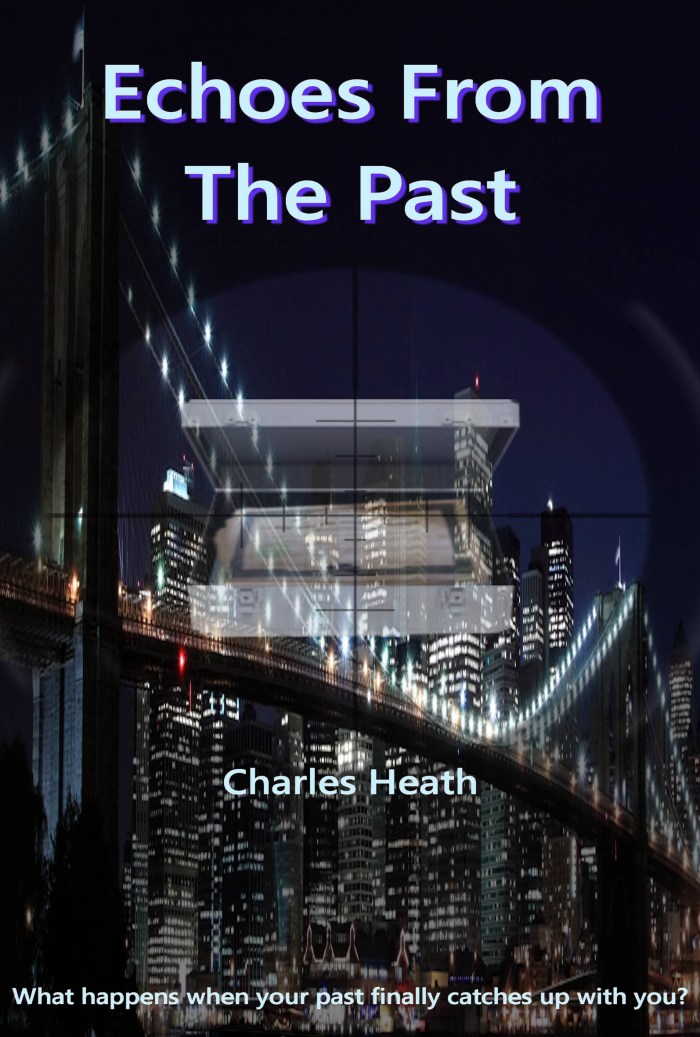
An excerpt from “What Sets Us Apart”, a mystery with a twist

See the excerpt from the story below, just a taste of what’s in store…

http://amzn.to/2Eryfth

whatsetscover

McCallister was old school, a man who would most likely fit in perfectly campaigning on the battlefields of Europe during the Second World War. He’d been like a fish out of water in the army, post-Falklands, and while he retired a hero, he still felt he’d more to give.

He’d applied and was accepted as head of a SWAT team, and, watching him now as he and his men disembarked from the truck in almost military precision, a look passed between Annette, the police liaison officer, and I that said she’d seen it all before. I know I had.

There was a one in four chance his team would be selected for this operation, and she had been hoping it would be one of the other three. While waiting for them to arrive she filled me in on the various teams. His was the least co-operative, and the more likely to make ad-hoc decisions rather than adhere to the plan, or any orders that may come from the officer in charge.

This, she said quite bluntly, was going to end badly.

I still had no idea why Prendergast instructed me to attend the scene of what looked to be a normal domestic operation, but as the nominated expert in the field in these types of situations, it was fairly clear he wasn’t taking any chances. It was always a matter of opinion between us, and generally I lost.

In this case, it was an anonymous report identifying what the authorities believed were explosives in one of the dockside sheds where explosives were not supposed to be.

The only reason why the report was given any credence was the man, while not identifying himself by name, said he’d been an explosive expert once and recognized the boxes. That could mean anything, but the Chief Constable was a cautious man.

With his men settled and preparing their weapons, McCallister came over to the command post, not much more than the SUV my liaison and I arrived in, with weapons, bulletproof vests, and rolls of tape to cordon off the area afterward. We both had coffee, steaming in the cold early morning air. Dawn was slowly approaching and although rain had been forecast it had yet to arrive.

A man by the name of Benson was in charge. He too had groaned when he saw McCallister.

“A fine morning for it.” McCallister was the only enthusiastic one here.

He didn’t say what ‘it’ was, but I thought it might eventually be mayhem.

“Let’s hope the rain stays away. It’s going to be difficult enough without it,” Benson said, rubbing his hands together. We had been waiting for the SWAT team to arrive, and another team to take up their position under the wharf, and who was in the final stages of securing their position.

While we were waiting we drew up the plan. I’d go in first to check on what we were dealing with, and what type of explosives. The SWAT team, in the meantime, were to ensure all the exits to the shed were covered. When I gave the signal, they were to enter and secure the building. We were not expecting anyone inside or out, and no movement had been detected in the last hour since our arrival and deployment.

“What’s the current situation?”

“I’ve got eyes on the building, and a team coming in from the waterside, underneath. Its slow progress, but they’re nearly there. Once they’re in place, we’re sending McKenzie in.”

He looked in my direction.

“With due respect sir, shouldn’t it be one of us?” McCallister glared at me with the contempt that only a decorated military officer could.

“No. I have orders from above, much higher than I care to argue with, so, McCallister, no gung-ho heroics for the moment. Just be ready to move on my command, and make sure you have three teams at the exit points, ready to secure the building.”

McCallister opened his mouth, no doubt to question those orders, but instead closed it again. “Yes sir,” he muttered and turned away heading back to his men.

“You’re not going to have much time before he storms the battlements,” Benson quietly said to me, a hint of exasperation in his tone. “I’m dreading the paperwork.”

It was exactly what my liaison officer said when she saw McCallister arriving.

The water team sent their ‘in position’ signal, and we were ready to go.

In the hour or so we’d been on site nothing had stirred, no arrivals, no departures, and no sign anyone was inside, but that didn’t mean we were alone. Nor did it mean I was going to walk in and see immediately what was going on. If it was a cache of explosives then it was possible the building was booby-trapped in any number of ways, there could be sentries or guards, and they had eyes on us, or it might be a false alarm.

I was hoping for the latter.

I put on the bulletproof vest, thinking it was a poor substitute for full battle armor against an exploding bomb, but we were still treating this as a ‘suspected’ case. I noticed my liaison officer was pulling on her bulletproof vest too.

“You don’t have to go. This is my party, not yours,” I said.

“The Chief Constable told me to stick to you like glue, sir.”

I looked at Benson. “Talk some sense into her please, this is not a kindergarten outing.”

He shrugged. Seeing McCallister had taken all the fight out of him. “Orders are orders. If that’s what the Chief Constable requested …”

Madness. I glared at her, and she gave me a wan smile. “Stay behind me then, and don’t do anything stupid.”

“Believe me, I won’t be.” She pulled out and checked her weapon, chambering the first round. It made a reassuring sound.

Suited up, weapons readied, a last sip of the coffee in a stomach that was already churning from nerves and tension, I looked at the target, one hundred yards distant and thought it was going to be the longest hundred yards I’d ever traversed. At least for this week.

A swirling mist rolled in and caused a slight change in plans.

Because the front of the buildings was constantly illuminated by large overhead arc lamps, my intention had been to approach the building from the rear where there was less light and more cover. Despite the lack of movement, if there were explosives in that building, there’d be ‘enemy’ surveillance somewhere, and, after making that assumption, I believed it was going to be easier and less noticeable to use the darkness as a cover.

It was a result of the consultation, and studying the plans of the warehouse, plans that showed three entrances, the main front hangar type doors, a side entrance for truck entry and exit and a small door in the rear, at the end of an internal passage leading to several offices. I also assumed it was the exit used when smokers needed a break. Our entry would be by the rear door or failing that, the side entrance where a door was built into the larger sliding doors. In both cases, the locks would not present a problem.

The change in the weather made the approach shorter, and given the density of the mist now turning into a fog, we were able to approach by the front, hugging the walls, and moving quickly while there was cover. I could feel the dampness of the mist and shivered more than once.

It was nerves more than the cold.

I could also feel rather than see the presence of Annette behind me, and once felt her breath on my neck when we stopped for a quick reconnaissance.

It was the same for McCallister’s men. I could feel them following us, quickly and quietly, and expected, if I turned around, to see him breathing down my neck too.

It added to the tension.

My plan was still to enter by the back door.

We slipped up the alley between the two sheds to the rear corner and stopped. I heard a noise coming from the rear of the building, and the light tap on the shoulder told me Annette had heard it too. I put my hand up to signal her to wait, and as a swirl of mist rolled in, I slipped around the corner heading towards where I’d last seen the glow of a cigarette.

The mist cleared, and we saw each other at the same time. He was a bearded man in battle fatigues, not the average dockside security guard.

He was quick, but my slight element of surprise was his undoing, and he was down and unconscious in less than a few seconds with barely a sound beyond the body hitting the ground. Zip ties secured his hands and legs, and tape his mouth. Annette joined me a minute after securing him.

A glance at the body then me, “I can see why they, whoever they are, sent you.”

She’d asked who I worked for, and I didn’t answer. It was best she didn’t know.

“Stay behind me,” I said, more urgency in my tone. If there was one, there’d be another.

Luck was with us so far. A man outside smoking meant no booby traps on the back door, and quite possibly there’d be none inside. But it indicated there were more men inside, and if so, it appeared they were very well trained. If that were the case, they would be formidable opponents.

The fear factor increased exponentially.

I slowly opened the door and looked in. A pale light shone from within the warehouse itself, one that was not bright enough to be detected from outside. None of the offices had lights on, so it was possible they were vacant. I realized then they had blacked out the windows. Why hadn’t someone checked this?

Once inside, the door closed behind us, progress was slow and careful. She remained directly behind me, gun ready to shoot anything that moved. I had a momentary thought for McCallister and his men, securing the perimeter.

At the end of the corridor, the extent of the warehouse stretched before us. The pale lighting made it seem like a vast empty cavern, except for a long trestle table along one side, and, behind it, stacks of wooden crates, some opened. It looked like a production line.

To get to the table from where we were was a ten-yard walk in the open. There was no cover. If we stuck to the walls, there was equally no cover and a longer walk.

We needed a distraction.

As if on cue, the two main entrances disintegrated into flying shrapnel accompanied by a deafening explosion that momentarily disoriented both Annette and I. Through the smoke and dust kicked up I saw three men appear from behind the wooden crates, each with what looked like machine guns, spraying bullets in the direction of the incoming SWAT members.

They never had a chance, cut down before they made ten steps into the building.

By the time I’d recovered, my head heavy, eyes watering and ears still ringing, I took several steps towards them, managing to take down two of the gunmen but not the third.

I heard a voice, Annette’s I think, yell out, “Oh, God, he’s got a trigger,” just before another explosion, though all I remember in that split second was a bright flash, the intense heat, something very heavy smashing into my chest knocking the wind out of me, and then the sensation of flying, just before I hit the wall.

I spent four weeks in an induced coma, three months being stitched back together and another six learning to do all those basic actions everyone took for granted. It was twelve months almost to the day when I was released from the hospital, physically, except for a few alterations required after being hit by shrapnel, looking the same as I always had.

But mentally? The document I’d signed on release said it all, ‘not fit for active duty; discharged’.

It was in the name of David Cheney. For all intents and purposes, Alistair McKenzie was killed in that warehouse, and for the first time ever, an agent left the Department, the first to retire alive.

I was not sure I liked the idea of making history.

© Charles Heath 2016-2020
The cinema of my dreams – It continued in London – Episode 37

A talk with Juliet

If I had the time over again, I might have chosen a different path in advising her of the possible connection to the Burkhardt’s, but that cat was now out of the bag.  I had to play that card when the police started asking difficult questions.  It’s a bit hard to give a plausible reason for people shooting at you.

“It’s possible but unlikely, but it seems someone thinks you might be, hence the assassination attempt.”

“Do you think my father was the Count, and my mother one of the servants?”  There was a curious inflection in her tone like she was mentally calculating the billions she might be worth.

“What did your adoptive mother tell you about your father, other than he was important?

“Nothing.”

“Then the description ‘important person’ could be the butler or the head gardener to a lowly servant girl, so I wouldn’t be getting too many ideas.  The count has never admitted to having any children outside of marriage, and, in fact, had only one surviving family member, the countess.  Have you ever met her?”

“Seen her only in papers, and once from afar when I was watching the house in Sorrento.  Head gardener or butler, you do know how to dash a girl’s dreams.”

“Better to understand the reality before the family lawyers shred you in court if you try to press any sort of a claim.  And if they do know about you, and they believed you were an heir, then you could be in trouble.”

“You seem to know a lot about the family.  Are you working for them?”

An astute observation.  “The answer to that question is no.  My only interest in this was to escort the countess to the Opera as a favour to the man whom I used to work for, yes, I’m still retired, or getting there.  So, I’ve met the countess, but she never mentioned anything about children, only the count dying on her, and now, from my boss, the fact she is missing.  The truth of the matter, I’m only here to find the countess, then I’m back to Venice, or Paris, or anywhere other than here.”

“But there’s more to it than that.  I know you, there’s wheels within wheels.”

There might be, but I wasn’t going to humour her.  “Well, if she’s missing and doesn’t sign the inheritance papers, the estate goes to the next brother, Alessandro.  If he was aware there was a possibly more direct heir, if the count was your father, his situation would demand that you were eliminated from the list.  If he was that way inclined.”

“Then he’s your man.”

“He’s not.  I’ve spoken to him already.  But I have another more viable candidate, your birth mother, who could tell us if the count was your father, though, as a servant girl, and later criminal, I doubt the courts would believe her.”

“You know who my birth mother is then?”  it was spoken with a little more curiosity than she should, which told me she already knew and was covering it.  I wondered if Ceceila had any success.  I would sneak away and send her a text soon.  And ask her to drop in if she could.

“We think we do.”  After analysing everything Juliet said, and the physical evidence we had, like the photograph, it was possible that Vittoria was not.  All the evidence we had was circumstantial.

The waiter chose to arrive at our table with the pizza, and I decided we had to eat first, leaving her with a look of annoyance.  It could wait another few minutes, time taken to look at her and for any resemblance to Vittoria and the Count.  It seemed to me there was none, but Cecilia would know.  Time to send her a text to meet us at the restaurant, and what I wanted her to do.  I excused myself and went to the restrooms.

Just before I went in the door I glanced back and saw she was on the phone.  Who could she be calling?

When I came back, I decided to keep going down the direct route.  “Do you know a woman by the name of Vittoria Romano?”

I watched her carefully as I asked the question.  Everyone had a tell, and I think I knew hers.

“Should I?”

The curious thing about that reply was another of those inflections in her tone, one that told me she did.

That just added a whole new layer to the game.  It also told me why she was not so shaken up by the turn of events.  It might have been a surprise to see me, but not getting shot at.

“I have reason to believe she is your mother.  She has been trying to get closer to Alessandro, but the countess had warned him of her intentions.  We understand this Vittoria was getting a payment to look after you, whether by blackmail or otherwise, and when that stopped, she started making trouble.    She is, by the way, in London at the moment though we don’t know where.”

“And you think I might?”

“If I accompanied you to your apartment, would she be there?”

“I said I didn’t know her.”  She tried to put on an aggrieved tome that I would think that she was lying.

“You’ve said a lot of things in the past, especially to me, that are not true.  We know each other fairly well, Juliet.”

That tone was now accompanied by a pained expression that was mean to convey annoyance.  “I should get up and walk out, but as you say, we know each other fairly well, and I’m guessing you’d construe that as guilt.  I am disappointed.”

I saw Cecilia arrive outside, and now that the restaurant was quite full, she was easily able to get to our table without Juliet seeing her, not until she dropped into the third seat, and sigh, “Do you have any idea what it’s like getting across this city in the rush hour?”

The look on Juliet’s face was priceless.

© Charles Heath 2023

The cinema of my dreams – Was it just another surveillance job – Episode 39

I’m back home and this story has been sitting on a back burner for a few months, waiting for some more to be written.

The trouble is, there are also other stories to write, and I’m not very good at prioritizing.

But, here we are, a few minutes opened up and it didn’t take long to get back into the groove.

Chasing leads, maybe

Sometimes the best-laid plans worked out, but today it was as if the Gods were trying to ruin my day.  Earlier days this week had been getting darkish between three and four, but today it was a little later.

It meant we had to spend a little more quality time together before we embarked on some breaking and entering.

Of course, it might have helped if I’d told her what I was intending to do before I brought her along for the ride, but it was exactly for that reason I did because if she didn’t like the idea, there would be little option to change he mind.

But the initial displeasure was expected.

“Breaking and entering is not exactly how I envisioned my first few days on the job market.”

“You learned all of the requisite skills in training.  I know, I was your partner in crime more than once.”

And that was a question I had once told myself I’d ask her if I ever ran into her again outside of work.

Which I did now.  “Why was that?”

At a guess, it had to be because I knew what I was doing whereas the other men were more like blunt instruments.  They’d taught us the finesse in breaking into a wide variety of entrances, but they seemed to like and use bashing the door in.

“I knew I had a better chance of success if I stuck with you.”

“What about Yolanda?”

She was another woman I had put into the same category as Jennifer, she was possessed of a calm demeanor in a crisis, and actually took the time to lean the subtitles of her tradecraft.  I had been disappointed when she didn’t make the final cut, though I suspect there was more to her ‘failing’ than met the eye.

And, I never got to find out the real reason.

I had liked her and had thought the feelings were mutual, but after she left, I’d not heard from her again.  I guess I could have tried to reach out, and might still do if this ever came to an end where I didn’t finish up dead.

“She was never going to stick the distance.  I got the impression she wasn’t happy about one of the others making life uncomfortable for her.”

“Student or instructor?”

Interesting she should say that because I had thought there was something going on between her and Maury, and when I asked her she didn’t deign to answer.

“Both.  She considered it was best just to leave.”

Which apparently, she did.

But, back to our current problem.  “All I need you to do is have my back.  I’ll go in, see if he is there, or anyone else, and if the coast is clear, we’ll search the place and leave.  No need to be there one second longer than we have to be.”

But I will; be disappointed if the USB is not there.

“That means we have about an hour to kill,” she said.

Which is why I decided to stop off at a traditional English pub and have an early dinner of bangers and mash.  I was not sure why it just appealed to me.  I’d feel so much better breaking in with a full stomach.

And a mobile phone with the sound turned off.

© Charles Heath 2020

A photograph from the inspirational bin – 34

This is the moon, unexpectedly observable in the late afternoon.

For me, the moon provided inspiration for an episodic story I have entitled, for now, ‘I always wanted to see the planets’.

It’s about a freighter captain who gets a gig as First Officer on an exploratory starship, who by a series of inexplicable events gets promoted to captain, and has to navigate not only the outer reaches of space, but new species.

But in the back of my mind there is that expression ‘shoot for the moon’, which could mean almost anything.

It could mean going for the unobtainable, whether it be a job, or the partner of your dreams. Failing can be heartbreak. Success might mean you’d be ‘over the moon’.

Them there’s travelling to moon, perhaps the next logical step for regular people, heading off the spend a week on a moon base hotel. I’m not sure what we would see out there in space; Perhaps a UFO?

Fictionalised, a moon base might just be the meeting place for various species, and being the mystery writer I am, what if there was a murder?

As always, the possibilities are endless.

Using Hollywood as a source of inspiration

I’m not one for writing Western, I’ll leave the honours for that to Louis L’Amour, whose acquaintance I made when I saw How the West Was Won on the big screen and then read the book.

That led to reading a few more by Zane Grey, but the stories’ reading, not the visual splendour of the West depicted in these films, made the actors almost secondary.

But my interest in watching Westerns had been fuelled by the fact my parents watched them on TV, though back in those days, they were in black and white, and starred John Wayne, Gary Cooper, Alan Ladd and, later on, Clint Eastwood among a great many others.

But the mainstay of my interest in the archetypal Western centred on John Wayne whose movies may have almost the same plot line, just a substitution of actors and locations.

Often, it was not so much that John Wayne was in it as the actors he surrounded himself with, like Dean Martin, Ricky Nelson, Walter Brennan, and Robert Mitcham, who made the experience all the better.

Films like The Sons of Katie Elder, True Grit, Rio Bravo, and El Dorado.

Who can forget the vast open spaces, the dry dusty streets lined with wooden buildings and the endless walkways that substituted for footpaths?  Bars in hotels, rooms overlooking the street, havens for sharpshooters, when bad guys outnumber the good guys, and typically the Sherrif who always faced insurmountable odds.

Or the attacks staged by Indians who were routinely killed, in fact, there was not one film I saw where they ended up winning any battle. Only in recent years did they get a more sympathetic role, one film that comes to mind is Soldier Blue, which may have painted them as savages, but a possible reason why they ended up so.

But for those without Indians, there were plenty of others whose intentions were anything but for the good of the settlers.

A lot of films ended in a classic gunfight.  High Noon, 3:10 to Yuma are two, where the story led to gun fights between good and bad in unlikely places like El Dorado or Rio Bravo.

There are countless others I could name, like Shane, or became to be called, the spaghetti Westerns with Clint Eastwood, or finally, The Magnificent Seven, or Once Upon a Time in the West.

All have contributed to a picture in my mind of how the American West was, fearsome men, beleaguered sheriffs, people with good intentions, and those driven by greed and power. All of this plays out in the harshest of conditions where life and death could be determined by a wrong word or a stray bullet.

And let’s not forget the role of the guns, Colt, Winchester, and Remington.  And Smith and Wesson, and the gunslingers of the day. Some were good, but most according to the film world were bad.

So, against the lifelong interest of watching and reading about the archetypal view of the old West, shall I attempt to put pen to paper. Thank God it will be a work of fiction because I don’t think there are many who knew what it was really like.

‘The Devil You Don’t’ – A beta reader’s view

It could be said that of all the women one could meet, whether contrived or by sheer luck, what are the odds it would turn out to be the woman who was being paid a very large sum to kill you.

John Pennington is a man who may be lucky in business, but not so lucky in love. He has just broken up with Phillipa Sternhaven, the woman he thought was the one, but relatives and circumstances, and perhaps because she was a ‘princess’, may also have contributed to the end result.

So, what do you do when you are heartbroken?

That is a story that slowly unfolds, from the first meeting with his nemesis on Lake Geneva, all the way to a hotel room in Sorrento, where he learns the shattering truth.

What should have been solace after disappointment, turns out to be something else entirely, and from that point, everything goes to hell in a handbasket.

He suddenly realizes his so-called friend Sebastian has not exactly told him the truth about a small job he asked him to do, the woman he is falling in love with is not quite who she says she is, and he is caught in the middle of a war between two men who consider people becoming collateral damage as part of their business.

The story paints the characters cleverly displaying all their flaws and weaknesses. The locations add to the story at times taking me back down memory lane, especially to Venice where, in those back streets I confess it’s not all that hard to get lost.

All in all a thoroughly entertaining story with, for once, a satisfying end.

Available on Amazon here: https://amzn.to/2Xyh1ow

Skeletons in the closet, and doppelgangers

A story called “Mistaken Identity”

How many of us have skeletons in the closet that we know nothing about? The skeletons we know about generally stay there, but those we do not, well, they have a habit of coming out of left field when we least expect it.

In this case, when you see your photo on a TV screen with the accompanying text that says you are wanted by every law enforcement agency in Europe, you’re in a state of shock, only to be compounded by those same police, armed and menacing, kicking the door down.

I’d been thinking about this premise for a while after I discovered my mother had a boyfriend before she married my father, a boyfriend who was, by all accounts, the man who was the love of her life.

Then, in terms of coming up with an idea for a story, what if she had a child by him that we didn’t know about, which might mean I had a half brother or sister I knew nothing about. It’s not an uncommon occurrence from what I’ve been researching.

There are many ways of putting a spin on this story.

Then, in the back of my mind, I remembered a story an acquaintance at work was once telling us over morning tea, that a friend of a friend had a mother who had a twin sister and that each of the sisters had a son by the same father, without each knowing of the father’s actions, both growing up without the other having any knowledge of their half brother, only to meet by accident on the other side of the world.

It was an encounter that in the scheme of things might never have happened, and each would have remained oblivious of the other.

For one sister, the relationship was over before she discovered she was pregnant, and therefore had not told the man he was a father. It was no surprise the relationship foundered when she discovered he was also having a relationship with her sister, a discovery that caused her to cut all ties with both of them and never speak to either from that day.

It’s a story with more twists and turns than a country lane!

And a great idea for a story.

That story is called ‘Mistaken Identity’.

The cinema of my dreams – It continued in London – Episode 36

Juliet has a secret identity

It bothered me that Juliet was not quite as fazed about being shot at as she should be.  Ordinarily, being shot at would bring on a bout of hysterics at the very least, but she was unmoved.

Was that because, after being coerced into criminal activity by the likes of Larry, and possibly others, she had been expecting something to happen, just not when.  Or did she know that it was quite possibly her mother that was gunning for her?

To me, I would take a less active approach and try to come to some arrangement with the possible heir to a very large estate.  There was no possible way her mother could get it, other than to marry and then kill, Alessandro, after taking care of the countess.  Or gain favour with her daughter and split the proceeds, after killing the other parties.

It seemed a lot of work, to me, and with no guarantees she could remain anonymous.  After all, we knew about her, how many others did?  I was still thinking about how quickly she had recovered from the attack.  I know my heart was still beating quite fast.

“After what happened back at the conference centre, do you think it’s possible we might be gunned down in the street?”

I had been thinking that exact same thought, not moments before, and it would be so easy, without the possibility of being caught.  I had been looking around to make sure there was no one, or anything, suspicious.

We had almost reached the underground station to take us to Russell Square, near where her apartment was.  I was hoping there would be a nearby restaurant where we could get dinner.

“Do you want to be a victim of a possible drive-by shooting?”

“No, but it is possible.  It’s the sort of thing that happens to other people, isn’t it, like real criminals.”

“That only happens to people who double cross or snitch on their bosses or fellow gang members.  Unless you are part of a gang, or thinking of ratting someone out, I’d say that was a result of reading too many crime novels.  I doubt you could classify yourself as a real criminal.”

“Perhaps not anymore, but you know that I was caught up in something I had no control over, at least not the last time.  I can promise you I don’t do stuff like that anymore.  I have a legitimate job, and a lot of respect from my fellow coroners.”

“Then why are you sounding concerned?  What is more concerning is why this isn’t bothering you?”

“Perhaps it’s because as much as I don’t want it to be, it seems that stuff like this happens to me.”

OK, what did she mean by that?  “Has it happened before?”

“Three times in the last month, if I let my imagination run wild.  Two weeks ago, a car came up on the footpath and I thought it was because the driver was trying to avoid a dog.  Very nearly ran me over.  Last week, another car didn’t stop at a pedestrian crossing, an old man, I thought it might be a medical incident.  Today just put those incidents into another perspective.  I’m sure you’ll tell me why eventually.”

I chose not to speak any more about the subject and got her to tell me about the presentation at the conference if only to take her mind off working on a barrage of difficult questions.

That consumed the train trip and the walk to an Italian Restaurant a block from her apartment.  It was reasonably empty before the later dinner rush which suited me; we could sit where I could keep an eye on everything.  I didn’t expect trouble in the restaurant, but maybe later when we left.

If they, whoever they were, knew where she lived.  I still hadn’t seen anyone following us, but it was London, and there were a lot of people about.  And I was still a little rusty.

After we ordered I could see she had been patient enough.  “So, tell me, why are you here?”

I shrugged.  There was no simple way around asking.  “What can you tell me about your mother?”

“My birth mother or my adoptive mother?”

If she was trying to surprise me, it didn’t work.  That she decided to be truthful did.  Given that I had seen the photo of her with Vittoria when she was about thirteen at Sorrento, how did that fit into the two-mother thing?  I guess it was just another question among many.

“Birth mother to begin with.”

“Not as much as I would like.”

“As in you’ve never known, no one told you, or you didn’t want to know?”

“As in I was never told her name, just that she lived in a large house in Italy, and that my father had been someone very important.  It was a condition that I should not be told because she didn’t want me to know.”

“A condition imposed on your adoptive mother?”

“Yes.  She was an Englishwoman who had been a servant in that large house in Italy, a friend of my mother.  My adoptive mother had found me in her room one morning, with a letter, telling her that I would be better off in her care.”

“Did you see your real mother again?”

“Yes.  Once.  When I was a teenager, we were holidaying in Italy.  We went to the large castle or chateau near Sorrento, and I met her and no one else, though my adoptive mother didn’t tell me it was her until after we left.  I have a photograph, the only thing I have of her.”

“Have you ever wanted to find out who she is?”

“Of course, I’ve been to Italy many times, even staked out the house, but I never saw her again.  You said it was possible I could inherit a lot of money.  It is from those people in that house?”

“Do you know who they are?”

“A family called Burkehardt I think.  Are you telling me I’m one of them?”

© Charles Heath 2023

The cinema of my dreams – Was it just another surveillance job – Episode 38

I’m back home and this story has been sitting on a back burner for a few months, waiting for some more to be written.

The trouble is, there are also other stories to write, and I’m not very good at prioritizing.

But, here we are, a few minutes opened up and it didn’t take long to get back into the groove.

Chasing leads, maybe

I’d expected more questions from her, but the ride in the train to Wimbledon, and then to the car, she had very little to say.  There was no doubt she was intrigued by the offer, but there was some trepidation too.

But it didn’t auger well for her longevity if she trusted people this easily.  I had expected a lot more questions if only to find out what the job was.  

Then, by the time we reached my car, it seemed she had time enough to think about everything.

“How do I know you’re not going to kill me too?”

She was standing on the other side of the car, yet to open the door.  I was about to get in.

I looked at her across the roof.

“I could have done that ages Ago if that was my intention.”

“Not in a public space unless absolutely necessary.”

She was quoting the manual.

“So, I’m about to take you to a quiet spot in the country and shoot you?”

“Unlikely.  You don’t have a gun with you.”

“A knife then?”

“I’m sure you don’t have one of those either.  Besides, there’s a few other ways that don’t require weapons.”

I was astonished this was the conversation.

“I asked for your help, and that wasn’t to practice my killing skills.  But, where we’re going that might happen to either of us.”

“Where are we going?”

“To a residence in Peaslake.  Do you know of it?  It’s about an hour away, southwest, I think.  I’m not expecting to find anyone, but I am looking for a USB drive.”

“This O’Connell character’s?”

“Yes.”

A few seconds passed as she took that in, then, “If you are not expecting anyone to be there, why do you need me?”

“Rule whatever number it was, expect the unexpected.  And get back up if it’s available.  And there are other people looking for these documents, and the USB.  Not friendly people I might add.  I have no idea if they have the same information I have, so I’m expecting the unexpected.  We have worked together and you know me.”

We had performed several assignments together for training purposes, as each of us had with the other four.  She hadn’t been the best, but she hadn’t been the worst.

I saw her shrug.  Acceptance?

She opened the door and got in.

It took me 15 minutes to get to the A3 and head towards Guildford.

A few minutes later she asked, “What the hell did we sign up for?”

“What do you mean?  I thought it was pretty straight forward.  Something other than a dull as ditchwater 9 to 5 job behind a desk.”

“I mean, don’t you think it’s odd we do all of this stuff for 6 months, almost to the day, then get an assignment, and it all goes wrong.”

“That our instructors were frauds?”

“We didn’t know that, and apparently they didn’t either.  Do you know if any of it was real?”

“Seemed to me it was.  And we only have this Monica’s word that Severin and Maury are frauds.  I mean, I was surprised to learn they allegedly didn’t exist, but you and I both know that in organizations like the security services have wheels within wheels, departments unknown to other departments, event MI5 or the police, so who’s to say what really happened.”

“And you say you now work for this character Dobbin, whose another department head.  As is this Monica.”

Put like that, it seemed very confusing.

“There are others that I’ve run into, working for both Dobbin and for Severin.”

“You mean Severin is still out there?”

“Yes.  He tracked me down.”

And when I said it out loud, it crossed my mind why he hadn’t come after her, but the answer to that was he might have thought I was the only one that O’Connell hadn’t killed.

“And he thinks you are still working for him?”

“It’s complicated.  I’m kind of doing a soft shoe shuffle around all of them and trying to find out what the hell is going on while keeping them at arm’s length.  That might go horribly wrong which is also a good reason why I need help.  We really should find out what we got into.”

“I’d prefer not to.  He hasn’t come after me.”

“He will.  It’s only a matter of time.  You’re in the system, and I have no doubt he has access to that system.  You’ve just been lucky so far.  And you equally know as I do, there’s no such thing as luck in our line of work.”

Another minute or so passed.

Then she said, “If you’re trying to scare the hell out of me, it’s working.”

© Charles Heath 2020

A photograph from the Inspirational bin – 33

This is countryside somewhere inside the Lamington National Park in Queensland. It was one of those days where the rain come and went…

We were spending a week there, in the middle of nowhere on a working macadamia farm in a cottage, one of four, recuperating from a long exhausting lockdown.

It was not cold, and we were able to sit out of the verandah for most of the day, watching the rain come and pass over on its way up the valley, listing to the gentle pitter-patter of the rain on the roof and nearby leaves.

But as for inspiration:

This would be the ideal setting for a story about life, failed romance, or a couple looking to find what it was they lost.

It could be a story about recovering from a breakdown, or a tragic loss, to be anywhere else but in the middle of dealing with the constant reminders of what they had.

It could be a safe house, and as we all know, safe houses in stories are rarely safe houses, where it is given away by someone inside the program, or the person who it’s assigned to give it away because they can’t do as they’re supposed to; lay low.

Then there’s camping, the great outdoors, for someone who absolutely hates being outdoors, or those who go hunting, and sometimes become the hunted.

Oh, and watch out for the bears!