An excerpt from “The Things We Do For Love”; In love, Henry was all at sea!

In the distance, he could hear the dinner bell ringing and roused himself.  Feeling the dampness of the pillow, and fearing the ravages of pent-up emotion, he considered not going down but thought it best not to upset Mrs. Mac, especially after he said he would be dining.

In the event, he wished he had reneged, especially when he discovered he was not the only guest staying at the hotel.

Whilst he’d been reminiscing, another guest, a young lady, had arrived.  He’d heard her and Mrs. Mac coming up the stairs and then shown to a room on the same floor, perhaps at the other end of the passage.

Henry caught his first glimpse of her when she appeared at the door to the dining room, waiting for Mrs. Mac to show her to a table.

She was in her mid-twenties, slim, with long brown hair, and the grace and elegance of a woman associated with countless fashion magazines.  She was, he thought, stunningly beautiful with not a hair out of place, and make-up flawlessly applied.  Her clothes were black, simple, elegant, and expensive, the sort an heiress or wife of a millionaire might condescend to wear to a lesser occasion than dinner.

Then there was her expression; cold, forbidding, almost frightening in its intensity.  And her eyes, piercingly blue and yet laced with pain.  Dracula’s daughter was his immediate description of her.

All in all, he considered, the only thing they had in common was, like him, she seemed totally out of place.

Mrs. Mac came out of the kitchen, wiping her hands on her apron.  She was, she informed him earlier, chef, waitress, hotelier, barmaid, and cleaner all rolled into one.  Coming up to the new arrival she said, “Ah, Miss Andrews, I’m glad you decided to have dinner.  Would you like to sit with Mr. Henshaw, or would you like to have a table of your own?”

Henry could feel her icy stare as she sized up his appeal as a dining companion, making the hair on the back of his neck stand up.  He purposely didn’t look back.  In his estimation, his appeal rating was minus six.  Out of a thousand!

“If Mr. Henshaw doesn’t mind….”  She looked at him, leaving the query in mid-air.

He didn’t mind and said so.  Perhaps he’d underestimated his rating.

“Good.”  Mrs. Mac promptly ushered her over.  Henry stood, made sure she was seated properly and sat.

“Thank you.  You are most kind.”  The way she said it suggested snobbish overtones.

“I try to be when I can.”  It was supposed to nullify her sarcastic tone but made him sound a little silly, and when she gave him another of her icy glares, he regretted it.

Mrs. Mac quickly intervened, asking, “Would you care for the soup?”

They did, and, after writing the order on her pad, she gave them each a look, imperceptibly shook her head, and returned to the kitchen.

Before Michelle spoke to him again, she had another quick look at him, trying to fathom who and what he might be.  There was something about him.

His eyes, they mirrored the same sadness she felt, and, yes, there was something else, that it looked like he had been crying?  There was a tinge of redness.

Perhaps, she thought, he was here for the same reason she was.

No.  That wasn’t possible.

Then she said, without thinking, “Do you have any particular reason for coming here?”  Seconds later she realized she’d spoken it out loud, had hadn’t meant to actually ask, it just came out.

It took him by surprise, obviously not the first question he was expecting her to ask of him.

“No, other than it is as far from civilization, and home, as I could get.”

At least we agree on that, she thought.

It was obvious he was running away from something as well.

Given the isolation of the village and lack of geographic hospitality, it was, from her point of view, ideal.  All she had to do was avoid him, and that wouldn’t be difficult.

After getting through this evening first.

“Yes,” she agreed.  “It is that.”

A few seconds passed, and she thought she could feel his eyes on her and wasn’t going to look up.

Until he asked, “What’s your reason?”

Slightly abrupt in manner, perhaps, because of her question and how she asked it.

She looked up.  “Rest.  And have some time to myself.”

She hoped he would notice the emphasis she had placed on the word ‘herself’ and take due note.  No doubt, she thought, she had completely different ideas of what constituted a holiday than he, not that she had said she was here for a holiday.

Mrs. Mac arrived at a fortuitous moment to save them from further conversation.

Over the entree, she wondered if she had made a mistake coming to the hotel.  Of course, there had been no conceivable way she could know that anyone else might have booked the same hotel, but realized it was foolish to think she might end up in it by herself.

Was that what she was expecting?

Not a mistake then, but an unfortunate set of circumstances, which could be overcome by being sensible.

Yet, there he was, and it made her curious, not that he was a man, by himself, in the middle of nowhere, hiding like she was, but for quite varied reasons.

On discreet observance, whilst they ate, she gained the impression his air of light-heartedness was forced, and he had no sense of humour.

This feeling was engendered by his looks, unruly dark hair, and permanent frown.  And then there was his abysmal taste in clothes on a tall, lanky frame.  They were quality but totally unsuited to the wearer.

Rebellion was written all over him.

The only other thought crossing her mind, and incongruously, was he could do with a decent feed.  In that respect, she knew now from the mountain of food in front of her, he had come to the right place.

“Mr. Henshaw?”

He looked up.  “Henshaw is too formal.  Henry sounds much better,” he said, with a slight hint of gruffness.

“Then my name is Michelle.”

Mrs. Mac came in to take their order for the only main course, gather up the entree dishes, and then return to the kitchen.

“Staying long?” she asked.

“About three weeks.  Yourself?”

“About the same.”

The conversation dried up.

Neither looked at the other, rather at the walls, out the window, towards the kitchen, anywhere.  It was, she thought, unbearably awkward.

Mrs. Mac returned with a large tray with dishes on it, setting it down on the table next to theirs.

“Not as good as the usual cook,” she said, serving up the dinner expertly, “but it comes a good second, even if I do say so myself.  Care for some wine?”

Henry looked at Michelle.  “What do you think?”

“I’m used to my dining companions making the decision.”

You would, he thought.  He couldn’t help but notice the cutting edge of her tone.  Then, to Mrs. Mac, he named a particular White Burgundy he liked, and she bustled off.

“I hope you like it,” he said, acknowledging her previous comment with a smile that had nothing to do with humour.

“Yes, so do I.”

Both made a start on the main course, a concoction of chicken and vegetables that were delicious, Henry thought when compared to the bland food he received at home and sometimes aboard my ship.

It was five minutes before Mrs Mac returned with the bottle and two glasses.  After opening it and pouring the drinks, she left them alone again.

Henry resumed the conversation.  “How did you arrive?  I came by train.”

“By car.”

“Did you drive yourself?”

And he thought, a few seconds later, that was a silly question, otherwise she would not be alone, and certainly not sitting at this table. With him.

“After a fashion.”

He could see that she was formulating a retort in her mind, then changed it, instead, smiling for the first time, and it served to lighten the atmosphere.

And in doing so, it showed him she had another more pleasant side despite the fact she was trying not to look happy.

“My father reckons I’m just another of ‘those’ women drivers,” she added.

“Whatever for?”

“The first and only time he came with me I had an accident.  I ran up the back of another car.  Of course, it didn’t matter to him the other driver was driving like a startled rabbit.”

“It doesn’t help,” he agreed.

“Do you drive?”

“Mostly people up the wall.”  His attempt at humour failed.  “Actually,” he added quickly, “I’ve got a very old Morris that manages to get me where I’m going.”

The apple pie and cream for dessert came and went and the rapport between them improved as the wine disappeared and the coffee came.  Both had found, after getting to know each other better, their first impressions were not necessarily correct.

“Enjoy the food?” Mrs. Mac asked, suddenly reappearing.

“Beautifully cooked and delicious to eat,” Michelle said, and Henry endorsed her remarks.

“Ah, it does my heart good to hear such genuine compliments,” she said, smiling.  She collected the last of the dishes and disappeared yet again.

“What do you do for a living,” Michelle asked in an off-hand manner.

He had a feeling she was not particularly interested, and it was just making conversation.

“I’m a purser.”

“A what?”

“A purser.  I work on a ship doing the paperwork, that sort of thing.”

“I see.”

“And you?”

“I was a model.”

“Was?”

“Until I had an accident, a rather bad one.”

“Oh, I’m sorry.”

So that explained the odd feeling he had about her.

As the evening wore on, he began to think there might be something wrong, seriously wrong with her because she didn’t look too well.  Even the carefully applied makeup, from close, didn’t hide the very pale, and tired look, or the sunken, dark-ringed eyes.

“I try not to think about it, but it doesn’t necessarily work.  I’ve come here for peace and quiet, away from doctors and parents.”

“Then you will not have to worry about me annoying you.  I’m one of those fall-asleep-reading-a-book types.”

Perhaps it would be like ships passing in the night and then smiled to himself about the analogy.

Dinner over, they separated.

Henry went back to the lounge to read a few pages of his book before going to bed, and Michelle went up to her room to retire for the night.

But try as he might, he was unable to read, his mind dwelling on the unusual, yet compellingly mysterious person he would be sharing the hotel with.

Overlaying that original blurred image of her standing in the doorway was another of her haunting expressions that had, he finally conceded, taken his breath away, and a look that had sent more than one tingle down his spine.

She may not have thought much of him, but she had certainly made an impression on him.

© Charles Heath 2015-2024

lovecoverfinal1

Searching for locations: Shaolin Kung Fu, near Zhengzhou City, Henan Province, China

After leaving the hotel in Zhengzhou, which was once one of the eight ancient capitals of China, we are going to Dengfeng city, the home of China’s most famous martial art – Shaolin Kung Fu.

The Shaolin Temple nearby is the origin of Chinese Zen Buddhism, and the Songyang Academy, called “the Centre of Heaven and Earth” is located 87 Km from Zhengzhou, or, as we were advised, a 2-hour drive.  It will be scenic because we are heading towards the mountains.

As one of the four ancient Song Dynasty Academies, Songyang Academy is one of many schools in the province.  It is both on a large scale, is quite spectacular, and is a comprehensive Wushu training base where students are trained to spread the Shaolin Wushu Kung fu style at home and abroad.

There is a 500-seat demonstration hall where you are able to observe 30 minutes of various martial arts in shows starting on the hour.

Outside there is a specific area that generally has about 600 trainees learning kung fu elements during the day but can hold 5,000 people when outdoor performances are required.

The kung fu school

The thing you notice most about the kung fu school is its size and then the number of buses which tells you that it is a popular tourist stop.

And with that size comes long distances between the car park and the venues we need to go to, the first of which is about half a km, and that’s just to get to the ticket plaza.

But, it is pleasantly set out and is quite a large number of shops for both souvenirs and food

We pass by some of the students going through their paces

From there it’s another long, long walk to the show arena, where we’re supposed to see various kung fu elements on display.  We watched this for a few minutes, then headed off towards the hall for a more intense demonstration of kung fu, and because there is limited seating we have to start lining up at the head of the queue to get a seat.

But…

Everyone else has the same idea and we join the throng which then becomes a ride, and true to the Chinese they start finding ways to push in, even using the imaginary friend somewhere ahead in the queue.

The doors open and then it’s open slather, with the hoards pushing from behind and sliding up the side to get in first.  We go with the tide, and manage to get in and find a seat though we were separated from three of our group.

It was an interesting show even though not one word of English was spoken, which from our point of view was a disappointment because we had no idea what was going on.

However…

It wasn’t hard to follow

What the performers were doing was relatively self-explanatory, and quite fascinating, especially the guy who broke a sword over his head, and the guy who stopped two spears penetrating the neck, both examples of very disciplined men.

Boys gave a demonstration of kung fu moves, and intensity and age increased as this progressed to the end.

Next, we were taken in hand by an instructor in Tai chi or an equivalent, I was not quite sure what it was called, and went through the twelve or maybe more moves that constituted a morning or afternoon exercise session or it could be just for relaxation.  I lasted the first session but it was a little difficult to do with my sore limbs and a bad back.

Not that I could remember any of it now other than hands overhead, hands in front, bent knees, and a few gentle kung fu hand moves.

Perhaps when I get home I might seek out someone to show me the moves.

Whilst the others were following their training instructor, I wandered about, finding a large statue


And some smaller statues

Lunch in the Zen Restaurant

After all that exercise it was time to have lunch purportedly the same food as the king fu masters.
It’s in the Zen restaurant, aptly named, and the food when it came, came thick and fast, but some of it wasn’t very nice, meat with bones, tofu, a tasteless soup, but some good dishes like the vegetables and noodles with meat, without bones.

The only problem was nothing to drink except a pot of hot water.  No tea, no cold water, and if you wanted a cold drink you had to pay for it.  After paying 550 yuan why should we have to pay more for a drink when we have not had to so far.

But no cold water?  That was just not on, and when we brought this to the attention of the tour guide she just simply ignored us.  We just didn’t get anything.

That basically tainted the whole experience.

After lunch, there was the Shaolin Temple and the Pogoda Forest to visit.

An excerpt from “If Only” – a work in progress

Investigation of crimes doesn’t always go according to plan, nor does the perpetrator get either found or punished.

That was particularly true in my case.  The murderer was incredibly careful in not leaving any evidence behind, to the extent that the police could not rule out whether it was a male or a female.

At one stage the police thought I had murdered my own wife though how I could be on a train at the time of the murder was beyond me.  I had witnesses and a cast-iron alibi.

The officer in charge was Detective First Grade Gabrielle Walters.  She came to me on the day after the murder seeking answers to the usual questions like, when was the last time you saw your wife, did you argue, the neighbors reckon there were heated discussions the day before.

Routine was the word she used.

Her fellow detective was a surly piece of work whose intention was to get answers or, more likely, a confession by any or all means possible.  I could sense the raging violence within him.  Fortunately, common sense prevailed.

Over the course of the next few weeks, once I’d been cleared of committing the crime, Gabrielle made a point of keeping me informed of the progress.

After three months the updates were more sporadic, and when, for lack of progress, it became a cold case, communication ceased.

But it was not the last I saw of Gabrielle.

The shock of finding Vanessa was more devastating than the fact she was now gone, and those images lived on in the same nightmare that came to visit me every night when I closed my eyes.

For months I was barely functioning, to the extent I had all but lost my job, and quite a few friends, particularly those who were more attached to Vanessa rather than me.

They didn’t understand how it could affect me so much, and since it had not happened to them, my tart replies of ‘you wouldn’t understand’ were met with equally short retorts.  Some questioned my sanity, even, for a time, so did I.

No one, it seemed, could understand what it was like, no one except Gabrielle.

She was by her own admission, damaged goods, having been the victim of a similar incident, a boyfriend who turned out to be an awfully bad boy.  Her story varied only in she had been made to witness his execution.  Her nightmare, in reliving that moment in time, was how she was still alive and, to this day, had no idea why she’d been spared.

It was a story she told me one night, some months after the investigation had been scaled down.  I was still looking for the bottom of a bottle and an emotional mess.  Perhaps it struck a resonance with her; she’d been there and managed to come out the other side.

What happened become our secret, a once-only night together that meant a great deal to me, and by mutual agreement, it was not spoken of again.  It was as if she knew exactly what was required to set me on the path to recovery.

And it had.

Since then, we saw each about once a month in a cafe.   I had been surprised to hear from her again shortly after that eventful night when she called to set it up, ostensibly for her to provide me with any updates on the case, but perhaps we had, after that unspoken night, formed a closer bond than either of us wanted to admit.

We generally talked for hours over wine, then dinner and coffee.  It took a while for me to realize that all she had was her work, personal relationships were nigh on impossible in a job that left little or no spare time for anything else.

She’d always said that if I had any questions or problems about the case, or if there was anything that might come to me that might be relevant, even after all this time, all I had to do was call her.

I wondered if this text message was in that category.  I was certain it would interest the police and I had no doubt they could trace the message’s origin, but there was that tiny degree of doubt, about whether or not I could trust her to tell me what the message meant.

I reached for the phone then put it back down again.  I’d think about it and decide tomorrow.

© Charles Heath 2018-2020

‘What Sets Us Apart’ – A beta readers view

There’s something to be said for a story that starts like a James Bond movie, throwing you straight in the deep end, a perfect way of getting to know the main character, David, or is that Alistair?

A retired spy, well not so much a spy as a retired errand boy, David’s rather wry description of his talents, and a woman that most men would give their left arm for, not exactly the ideal couple, but there is a spark in a meeting that may or may not have been a setup.

But as the story progressed, the question I kept asking myself was why he’d bother.

And, page after unrelenting page, you find out.

Susan is exactly the sort of woman to pique his interest.  Then, inexplicably, she disappears.  That might have been the end to it, but Prendergast, that shadowy enigma, David’s ex-boss who loves playing games with real people, gives him an ultimatum, find her or come back to work.

Nothing like an offer that’s a double-edged sword!

A dragon for a mother, a sister he didn’t know about, Susan’s BFF who is not what she seems or a friend indeed, and Susan’s father who, up till David meets her, couldn’t be less interested, his nemesis proves to be the impossible dream, and he’s always just that one step behind.

When the rollercoaster finally came to a halt, and I could start breathing again, it was an ending that was completely unexpected.

I’ve been told there’s a sequel in the works.

Bring it on!

The book can be purchased here:  http://amzn.to/2Eryfth

The story behind the story: A Case of Working With the Jones Brothers

To write a private detective serial has always been one of the items at the top of my to-do list, though trying to write novels and a serial, as well as a blog, and maintain a social media presence, well, you get the idea.

But I made it happen, from a bunch of episodes I wrote a long, long time ago, used these to start it, and then continue on, then as now, never having much of an idea where it was going to end up, or how long it would take to tell the story.

That, I think is the joy of ad hoc writing, even you, as the author, have as much idea of where it’s going as the reader does.

It’s basically been in the mill since 1990, and although I finished it last year, it looks like the beginning to end will have taken exactly 30 years.  Had you asked me 30 years ago if I’d ever get it finished, the answer would be maybe?

My private detective, Harry Walthenson

I’d like to say he’s from that great literary mold of Sam Spade, or Mickey Spillane, or Phillip Marlow, but he’s not.

But, I’ve watched Humphrey Bogart play Sam Spade with much interest, and modelled Harry and his office on it.  Similarly, I’ve watched Robert Micham play Phillip Marlow with great panache, if not detachment, and added a bit of him to the mix.

Other characters come into play, and all of them, no matter what period they’re from, always seem larger than life.  I’m not above stealing a little of Mary Astor, Peter Lorre or Sidney Greenstreet, to breathe life into beguiling women and dangerous men alike.

Then there’s the title, like

The Case of the Unintentional Mummy – this has so many meanings in so many contexts, though I imagine that back in Hollywood in the ’30s and ’40s, this would be excellent fodder for Abbott and Costello

The Case of the Three-Legged Dog – Yes, I suspect there may be a few real-life dogs with three legs, but this plot would involve something more sinister.  And if made out of plaster, yes, they’re always something else inside.

But for mine, to begin with, it was “The Case of the …”, because I had no idea what the case was going to be about, well, I did, but not specifically.

Then I liked the idea of calling it “The Case of the Brother’s Revenge” because I began to have a notion there was a brother no one knew about, but that’s stuff for other stories, not mine, so then went the way of the others.

Now it’s called ‘A Case of Working With the Jones Brothers’, finished the first three drafts, and at the editor for the last.

I have high hopes of publishing it in early 2021.  It even has a cover.

PIWalthJones1

The cinema of my dreams – I never wanted to go to Africa – Episode 29

Our hero knows he’s in serious trouble.

The problem is, there are familiar faces and a question of who is a friend and who is foe made all the more difficult because of the enemy, if it was the enemy, simply because it didn’t look or sound or act like the enemy.

Now, it appears, his problems stem from another operation he participated in.


I had to wonder if Lallo had already called the number on the phone he had handed Jacobi, and then considered, if that was the case, there would be no need for Jacobi to call anyone.  Or Lallo had got an answer, just not the answer he was expecting.

Jacobi looked at the phone, and I got the impression he was weighing his options.  The first was how long Lallo would hold him in custody.  That I think we could both assumed to be forever if necessary.  There was, no doubt, a cell at a black site with his name on it already.  The second, if he did call his contact, would that contact co-operate, though it was hard what it was Lallo was expecting Jacobi’s co-operation for.

But there was no doubt Lallo had a plan.

Jacobi took a moment to consider any further options I hadn’t thought of, and then made the call.  We were only going to get one side of the call.

A raised eyebrow indicated Jacobi had an answer on the other end.

“It’s me.”

Why did everyone say it’s me when asked to identify themselves, or as in the case announce themselves?

“No.  An unfortunate set of circumstances, and a gross breach of our agreement.  I am supposed to have autonomy of operations at home.  These bumbling idiots may have blown my cover.”

Somehow, the fact he was sitting in a small room told me his cover was more than likely a myth.  If this was our supposed point man in the failed operation I’d been on, then I could see why it cost a lot of good men their lives.

He had been playing both sides of the fence and sold us out.

“You would have to ask them.”

A moment later he handed the phone to Lallo.  “Prepare to die,” was all Jacobi said.

It didn’t move Lallo in the slightest,

He took the phone and asked, “Whom am I speaking to?”

The expression change told me that it was most likely none of his business.

“This man is responsible for the deaths of a good many men.”  A minute’s silence, then, “I doubt that would be the case considering the number of phones and their credentials.  He had been playing you, and perhaps many others.”

The silence was a lot longer, but the expressions changing by the minute told me that Lallo was not going to get what he wanted.

“No, that is not going to happen, not in the circumstances you describe.  I will be sending him back, yes, but for another mission.  I think it’s time you realized he’s been feeding you false intel for some time.”  Silence again, then, “By the time you do, he will no longer be here, there.  I’m sorry.”

He disconnected the call and put the phone back in the plastic evidence bag.

Then he sat, and gave Jacobi a long, hard stare.

No effect.

“What is happening,” Jacobi finally asked.

“You’re going home.”

“Good.  I expect once I get back there you will leave me alone.”

“On the contrary, Mr Jacobi, you will not be going back alone.  In fact, I’m sending you back with my team, and we are going to extract the same people you were supposed to help us extract the last time.”

“I had nothing to do with that.  It was simply your incompetence.”

“Be that as it may, you will do as I ask.”

“You are a fool.  Why would I do anything for you, and especially since they are both probably dead now, or, if not, past the point of saving.”

“You will then want to hope that isn’t the case, simply because if they are, then three members of your family will be executed.  You can say goodbye to them before you leave, or tell them you will see them again, it’s your choice.”

Lallo, it seems, was no fool, and had ensured he had the necessary leverage.  There was no mistaking the shock on Jacobi’s face.

“You lie.”

Lallo got up from his seat and knocked on the door.  It opened and two men brought in a large screen connected to a computer on a trolley.  They moved it to the vacant wall and left.  Lallo pressed several keys and a picture came up on the screen.  A woman and two small children, and judging from the expression on Jacobi’s face, exactly who he was hoping he would not see.

There were two hooded soldiers either side with guns loosely pointing in their direction.

“One word from me, and they will be shot.  Considering the treachery you have perpetrated, it’s taking a great deal of restraint for me not to give the order to kill them.”

He took a few seconds to regain his composure.  “This serves no purpose,” Jacobi said in a rising pitch, “your people are most likely dead.  It has been a long time.”

“I don’t think so.  We have word from a different source, a more reliable source, that they are still alive.  Barely, but alive, serving a life sentence for treason.  And helping the General with information.  All you need to do is get a small team of mine in and assist them to effect an escape.  They come home alive and, well, your family lives.  They don’t come back alive, well, I don’t think that’s an option, is it?”

Jacobi was in an invidious position of being damned if he did help us, or damned if he didn’t.  Either way, it didn’t guarantee his co-operation or assistance.  Painted into a corner, sometimes people like Jacobi chose the easy road, sacrificing everything to stay alive.  No doubt, until this predicament, he was well in favour with Bahti, and from what I’d heard, Bahti was not a man to cross.  There was a graveyard in the prison that was full of the remains of his enemies.  And people who were once his friends.

I knew firsthand what it was like to be between the proverbial rock and a hard place, and unfortunately, there was no upside.  No doubt the team leader of this new folly would have orders to shoot Jacobi once his work was done.  Lallo would not be able to leave a man in his position alive because of what he knew.

And from my perspective, I felt sorry for the team Lallo had selected to go on what could quite possibly be another suicide mission.


© Charles Heath 2019

The cinema of my dreams – I always wanted to write a war story – Episode 29

For a story that was conceived during those long boring hours flying in a steel cocoon, striving to keep away the thoughts that the plane and everyone in it could just simply disappear as planes have in the past, it has come a long way.

Whilst I have always had a fascination with what happened during the second world war, not the battles or fighting, but in the more obscure events that took place, I decided to pen my own little sidebar to what was a long and bitter war.

And, so, it continues…


They reached a point a few kilometers from what was known as Brenner Pass at four in the morning, having navigated their way through patchy snow, icy roads, and bitter cold.

Progress at times was slow and the roads were difficult, the driver, at times, nearly losing control of the car.

The checkpoint appeared almost when they were on top of it, one that hadn’t been marked on the map, so they had not been prepared for it. Too late to turn back, they had to stop.

Once again the soldier that came out of the hut beside the boom was an army Unteroffizier who was more concerned about the cold than those in the car.

The Standartenfuhrer once again explained the nature of their business, and again the sentry went back to his hut and made a call.

While he was there the driver was checking the number of other soldiers were in attendance and had pulled his weapon out from under the seat and had it ready to use.

The Standartenfuhrer had done the same, also having checked the extent of the staffing of the post.

Then the driver said, “This looks like one of several. I think we may have walked into a hornet’s nest. The Brenner Pass is very important to the Germans for supplies from Germany to its soldiers in Italy.”

“You think our luck has finally run out?”

They had both seen the guard change expression, from the languid guard worrying more about the cold than a lone car at night, to a soldier who looked like he was about to attend a Nazi rally.

“I think they’ve finally discovered that our friend Mayer is missing.”

“Which means we’re about to get a small platoon of soldiers down on us. OK. You keep them off as long as you can so Mayer and I can get into the woods.”

The Standartenfuhrer turned to Mayer. “This is it, then end of the line for driving. We’re about to get a lot of unwanted visitors.”

He thrust the folder of plans into Mayer’s hands along with a coat.

“Let’s go.”

“Where?” Mayer was almost panic-stricken. The situation was deteriorating with each passing second. He, like the others, could see six men jogging towards them.

Their only advantage was the lack of illumination.

The driver said, “See you on the other side.”

The Standartenfuhrer leaned over, opened the door, and said, forcefully, “Get out, now.”

Mayer tumbled out almost slipping on the icy surface, and the sudden cold hitting him hard.

The Standartenfuher was right behind him, closing the door, and then literally dragging him off the side of the road and towards the tree line about 50 meters away, just barely visible again the dark sky. Thankfully there was no moon peeking through the clouds.
But light snow just began to fall, and it would hide them behind an artificial white wall.

They made it to the edge of the forest just as the soldiers reached the car.

Mayer turned to look and could see the sentry now with a torch, probably checking the car which was now barely visible to them. He had seen three people before, now there was only one.

No time to see the inevitable, the Standartenfuhrer dragged him away with, “We have to go before they bring out the dogs.”

Further into the trees, and moving as quickly as they could through the trees and undergrowth, and at times slipping and sliding on both snow and ice, it was five minutes before they heard six shots in rapid succession, followed by the sound of a machine gun.

“Let’s hope he killed at least six of them before he died.”

The problem was, Mayer thought, there was probably another hundred others waiting to take their place.


Mayer had come totally unprepared for the snow, and the cold. At least he had a coat.

Another problem was that he was hungry and that only added to his discomfort. And now they had no means of transport, it was going to take a lot longer to get to Florence, or anywhere for that matter.

An hour passed as they worked their way steadily through the trees, and cover. The dreaded dogs had not been unleashed on them, but they had to assume that someone at the border checkpoint would raise the alarm that there were fugitives in the area, and probably wait until morning before looking for them,

They could calculate how far they had walked and sent in search teams from there.

Or not.

Four hours after they’d left the car, they stumbled upon a cabin. It was not much, having been abandoned quite some time ago and left for the forest to reclaim, but it was shelter and a place to rest. It was not long before first light, and then they could assess their situation.

It was also time for the Standartenfuhrer to give Mayer all the information he needed once he got to Gaiole because at some point they were going to have to split up and Mayer would have to go alone.

Just when he thought it couldn’t get any worse.


© Charles Heath 2020

Searching for locations: Shaolin Kung Fu, near Zhengzhou City, Henan Province, China

After leaving the hotel in Zhengzhou, which was once one of the eight ancient capitals of China, we are going to Dengfeng city, the home of China’s most famous martial art – Shaolin Kung Fu.

The Shaolin Temple nearby is the origin of Chinese Zen Buddhism, and the Songyang Academy, called “the Centre of Heaven and Earth” is located 87 Km from Zhengzhou, or, as we were advised, a 2-hour drive.  It will be scenic because we are heading towards the mountains.

As one of the four ancient Song Dynasty Academies, Songyang Academy is one of many schools in the province.  It is both on a large scale, is quite spectacular, and is a comprehensive Wushu training base where students are trained to spread the Shaolin Wushu Kung fu style at home and abroad.

There is a 500-seat demonstration hall where you are able to observe 30 minutes of various martial arts in shows starting on the hour.

Outside there is a specific area that generally has about 600 trainees learning kung fu elements during the day but can hold 5,000 people when outdoor performances are required.

The kung fu school

The thing you notice most about the kung fu school is its size and then the number of buses which tells you that it is a popular tourist stop.

And with that size comes long distances between the car park and the venues we need to go to, the first of which is about half a km, and that’s just to get to the ticket plaza.

But, it is pleasantly set out and is quite a large number of shops for both souvenirs and food

We pass by some of the students going through their paces

From there it’s another long, long walk to the show arena, where we’re supposed to see various kung fu elements on display.  We watched this for a few minutes, then headed off towards the hall for a more intense demonstration of kung fu, and because there is limited seating we have to start lining up at the head of the queue to get a seat.

But…

Everyone else has the same idea and we join the throng which then becomes a ride, and true to the Chinese they start finding ways to push in, even using the imaginary friend somewhere ahead in the queue.

The doors open and then it’s open slather, with the hoards pushing from behind and sliding up the side to get in first.  We go with the tide, and manage to get in and find a seat though we were separated from three of our group.

It was an interesting show even though not one word of English was spoken, which from our point of view was a disappointment because we had no idea what was going on.

However…

It wasn’t hard to follow

What the performers were doing was relatively self-explanatory, and quite fascinating, especially the guy who broke a sword over his head, and the guy who stopped two spears penetrating the neck, both examples of very disciplined men.

Boys gave a demonstration of kung fu moves, and intensity and age increased as this progressed to the end.

Next, we were taken in hand by an instructor in Tai chi or an equivalent, I was not quite sure what it was called, and went through the twelve or maybe more moves that constituted a morning or afternoon exercise session or it could be just for relaxation.  I lasted the first session but it was a little difficult to do with my sore limbs and a bad back.

Not that I could remember any of it now other than hands overhead, hands in front, bent knees, and a few gentle kung fu hand moves.

Perhaps when I get home I might seek out someone to show me the moves.

Whilst the others were following their training instructor, I wandered about, finding a large statue


And some smaller statues

Lunch in the Zen Restaurant

After all that exercise it was time to have lunch purportedly the same food as the king fu masters.
It’s in the Zen restaurant, aptly named, and the food when it came, came thick and fast, but some of it wasn’t very nice, meat with bones, tofu, a tasteless soup, but some good dishes like the vegetables and noodles with meat, without bones.

The only problem was nothing to drink except a pot of hot water.  No tea, no cold water, and if you wanted a cold drink you had to pay for it.  After paying 550 yuan why should we have to pay more for a drink when we have not had to so far.

But no cold water?  That was just not on, and when we brought this to the attention of the tour guide she just simply ignored us.  We just didn’t get anything.

That basically tainted the whole experience.

After lunch, there was the Shaolin Temple and the Pogoda Forest to visit.

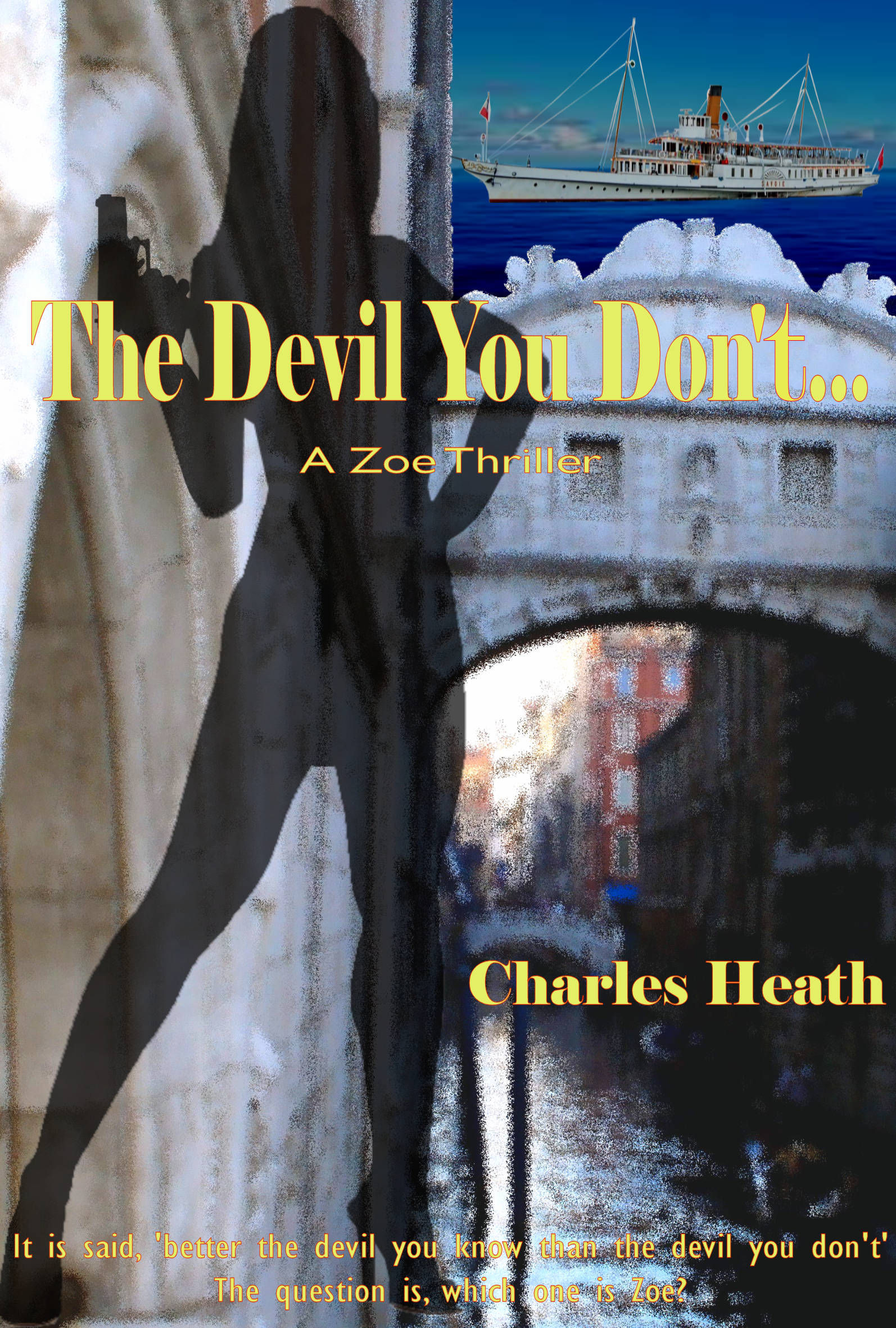
An excerpt from “The Devil You Don’t”

Available on Amazon Kindle here:  https://amzn.to/2Xyh1ow

By the time I returned to the Savoie, the rain had finally stopped, and there was a streak of blue sky to offer some hope the day would improve.

The ship was not crowded, the possibility of bad weather perhaps holding back potential passengers.  Of those I saw, a number of them would be aboard for the lunch by Phillippe Chevrier.  I thought about it, but the Concierge had told me about several restaurants in Yvoire and had given me a hand-drawn map of the village.  I think he came from the area because he spoke with the pride and knowledge of a resident.

I was looking down from the upper deck observing the last of the boarding passengers when I saw a woman, notable for her red coat and matching shoes, making a last-minute dash to get on board just before the gangway was removed.  In fact, her ungainly manner of boarding had also captured a few of the other passenger’s attention.  Now they would have something else to talk about, other than the possibility of further rain.

I saw her smile at the deckhand, but he did not smile back.  He was not impressed with her bravado, perhaps because of possible injury.  He looked at her ticket then nodded dismissively, and went back to his duties in getting the ship underway.  I was going to check the departure time, but I, like the other passengers, had my attention diverted to the woman in red.

From what I could see there was something about her.  It struck me when the light caught her as she turned to look down the deck, giving me a perfect profile.  I was going to say she looked foreign, but here, as in almost anywhere in Europe, that described just about everyone.  Perhaps I was just comparing her to Phillipa, so definitively British, whereas this woman was very definitely not.

She was perhaps in her 30’s, slim or perhaps the word I’d use was lissom, and had the look and manner of a model.  I say that because Phillipa had dragged me to most of the showings, whether in Milan, Rome, New York, London, or Paris.  The clothes were familiar, and in the back of my mind, I had a feeling I’d seen her before.

Or perhaps, to me, all models looked the same.

She looked up in my direction, and before I could divert my eyes, she locked on.  I could feel her gaze boring into me, and then it was gone as if she had been looking straight through me.  I remained out on deck as the ship got underway, watching her disappear inside the cabin.  My curiosity was piqued, so I decided to keep an eye out for her.

I could feel the coolness of the air as the ship picked up speed, not that it was going to be very fast.  With stops, the trip would take nearly two hours to get to my destination.  It would turn back almost immediately, but I was going to stay until the evening when it returned at about half eight.  It would give me enough time to sample the local fare, and take a tour of the medieval village.

Few other passengers ventured out on the deck, most staying inside or going to lunch.  After a short time, I came back down to the main deck and headed forward.  I wanted to clear my head by concentrating on the movement of the vessel through the water, breathing in the crisp, clean air, and let the peacefulness of the surroundings envelope me.

It didn’t work.

I knew it wouldn’t be long before I started thinking about why things hadn’t worked, and what part I played in it.  And the usual question that came to mind when something didn’t work out.  What was wrong with me?

I usually blamed it on my upbringing.

I had one of those so-called privileged lives, a nanny till I was old enough to go to boarding school, then sent to the best schools in the land.  There I learned everything I needed to be the son of a Duke, or, as my father called it in one of his lighter moments, nobility in waiting.

Had this been five or six hundred years ago, I would need to have sword and jousting skills, or if it had been a few hundred years later a keen military mind.  If nothing else I could ride a horse, and go on hunts, or did until they became not the thing to do.

I learned six languages, and everything I needed to become a diplomat in the far-flung British Empire, except the Empire had become the Commonwealth, and then, when no-one was looking, Britain’s influence in the world finally disappeared.  I was a man without a cause, without a vocation, and no place to go.

Computers were the new vogue and I had an aptitude for programming.  I guess that went hand in hand with mathematics, which although I hated the subject, I excelled in.  Both I and another noble outcast used to toss ideas around in school, but when it came to the end of our education, he chose to enter the public service, and I took a few of those ideas we had mulled over and turned them into a company.

About a year ago, I was made an offer I couldn’t refuse.  There were so many zeroes on the end of it I just said yes, put the money into a very grateful bank, and was still trying to come to terms with it.

Sadly, I still had no idea what I was going to do with the rest of my life.  My parents had asked me to come back home and help manage the estate, and I did for a few weeks.  It was as long as it took for my parents to drive me insane.

Back in the city, I spent a few months looking for a mundane job, but there were very few that suited the qualifications I had, and the rest, I think I intimidated the interviewer simply because of who I was.  In that time I’d also featured on the cover of the Economist, and through my well-meaning accountant, started involving myself with various charities, earning the title ‘philanthropist’.

And despite all of this exposure, even making one of those ubiquitous ‘eligible bachelor’ lists, I still could not find ‘the one’, the woman I wanted to spend the rest of my life with.  Phillipa seemed to fit the bill, but in time she proved to be a troubled soul with ‘Daddy’ issues.  I knew that in building a relationship compromise was necessary, but with her, in the end, everything was a compromise and what had happened was always going to be the end result.

It was perhaps a by-product of the whole nobility thing.  There was a certain expectation I had to fulfill, to my peers, contemporaries, parents and family, and those who either liked or hated what it represented.  The problem was, I didn’t feel like I belonged.  Not like my friend from schooldays, and now obscure acquaintance, Sebastian.  He had been elevated to his Dukedom early when his father died when he was in his twenties.  He had managed to fade from the limelight and was rarely mentioned either in the papers or the gossip columns.  He was one of the lucky ones.

I had managed to keep a similarly low profile until I met Phillipa.  From that moment, my obscurity disappeared.  It was, I could see now, part of a plan put in place by Phillipa’s father, a man who hogged the limelight with his daughter, to raise the profile of the family name and through it their businesses.  He was nothing if not the consummate self-advertisement.

Perhaps I was supposed to be the last piece of the puzzle, the attachment to the establishment, that link with a class of people he would not normally get in the front door.  There was nothing refined about him or his family, and more than once I’d noticed my contemporaries cringe at the mention of his name, or any reference of my association with him.

Yet could I truthfully say I really wanted to go back to the obscurity I had before Phillipa?  For all her faults, there were times when she had been fun to be with, particularly when I first met her when she had a certain air of unpredictability.  That had slowly disappeared as she became part of her father’s plan for the future.  She just failed to see how much he was using her.

Or perhaps, over time, I had become cynical.

I thought about calling her.  It was one of those moments of weakness when I felt alone, more alone than usual.

I diverted my attention back to my surroundings and the shoreline.  Out of the corner of my eye, I could see the woman in the red coat, making a move.  The red coat was like a beacon, a sort of fire engine red.  It was not the sort of coat most of the women I knew would wear, but on her, it looked terrific.  In fact, her sublime beauty was the one other attribute that was distinctly noticeable, along with the fact her hair was short, rather than long, and jet black.

I had to wrench my attention away from her.

A few minutes later several other passengers came out of the cabin for a walk around the deck, perhaps to get some exercise, perhaps checking up on me, or perhaps I was being paranoid.  I waited till they passed on their way forward, and I turned and headed aft.

I watched the wake sluicing out from under the stern for a few minutes, before retracing my steps to the front of the ship and there I stood against the railing, watching the bow carve its way through the water.  It was almost mesmerizing.  There, I emptied my mind of thoughts about Phillipa, and thoughts about the woman in the red coat.

Until a female voice behind me said, “Having a bad day?”

I started, caught by surprise, and slowly turned.  The woman in the red coat had somehow got very close me without my realizing it.  How did she do that?  I was so surprised I couldn’t answer immediately.

“I do hope you are not contemplating jumping.  I hear the water is very cold.”

Closer up, I could see what I’d missed when I saw her on the main deck.  There was a slight hint of Chinese, or Oriental, in her particularly around the eyes, and of her hair which was jet black.  An ancestor twice or more removed had left their mark, not in a dominant way, but more subtle, and easily missed except from a very short distance away, like now.

Other than that, she was quite possibly Eastern European, perhaps Russian, though that covered a lot of territory.  The incongruity of it was that she spoke with an American accent, and fluent enough for me to believe English was her first language.

Usually, I could ‘read’ people, but she was a clean slate.  Her expression was one of amusement, but with cold eyes.  My first thought, then, was to be careful.

“No.  Not yet.”  I coughed to clear my throat because I could hardly speak.  And blushed, because that was what I did when confronted by a woman, beautiful or otherwise.

The amusement gave way to a hint of a smile that brightened her demeanor as a little warmth reached her eyes.  “So that’s a maybe.  Should I change into my lifesaving gear, just in case?”

It conjured up a rather interesting image in my mind until I reluctantly dismissed it.

“Perhaps I should move away from the edge,” I said, moving sideways until I was back on the main deck, a few feet further away.  Her eyes had followed me, and when I stopped she turned to face me again.  She did not move closer.

I realized then she had removed her beret and it was in her left side coat pocket.  “Thanks for your concern …?”

“Zoe.”

“Thanks for your concern, Zoe.  By the way, my name is John.”

She smiled again, perhaps in an attempt to put me at ease.  “I saw you earlier, you looked so sad, I thought …”

“I might throw myself overboard?”

“An idiotic notion I admit, but it is better to be safe than sorry.”

Then she tilted her head to one side then the other, looking intently at me.  “You seem to be familiar.  Do I know you?”

I tried to think of where I may have seen her before, but all I could remember was what I’d thought earlier when I first saw her; she was a model and had been at one of the showings.  If she was, it would be more likely she would remember Phillipa, not me.  Phillipa always had to sit in the front row.

“Probably not.”  I also didn’t mention the fact she may have seen my picture in the society pages of several tabloid newspapers because she didn’t look the sort of woman who needed a daily dose of the comings and goings, and, more often than not, scandal associated with so-called celebrities.

She gave me a look, one that told me she had just realized who I was.  “Yes, I remember now.  You made the front cover of the Economist.  You sold your company for a small fortune.”

Of course.  She was not the first who had recognized me from that cover.  It had raised my profile considerably, but not the Sternhaven’s.  That article had not mentioned Phillipa or her family.  I suspect Grandmother had something to do with that, and it was, now I thought about it, another nail in the coffin that was my relationship with Phillipa.

“I wouldn’t say it was a fortune, small or otherwise, just fortunate.”  Each time, I found myself playing down the wealth aspect of the business deal.

“Perhaps then, as the journalist wrote, you were lucky.  It is not, I think, a good time for internet-based companies.”

The latter statement was an interesting fact, one she read in the Financial Times which had made that exact comment recently.

“But I am boring you.”  She smiled again.  “I should be minding my own business and leaving you to your thoughts.  I am sorry.”

She turned to leave and took a few steps towards the main cabin.

“You’re not boring me,” I said, thinking I was letting my paranoia get the better of me.  It had been Sebastian on learning of my good fortune, who had warned me against ‘a certain element here and abroad’ whose sole aim would be to separate me from my money.  He was not very subtle when he described their methods.

But I knew he was right.  I should have let her walk away.

She stopped and turned around.  “You seem nothing like the man I read about in the Economist.”

A sudden and awful thought popped into my head.  Those words were part of a very familiar opening gambit.  “Are you a reporter?”

I was not sure if she looked surprised, or amused.  “Do I look like one?”

I silently cursed myself for speaking before thinking, and then immediately ignored my own admonishment.  “People rarely look like what they are.”

I saw the subtle shake of the head and expected her to take her leave.  Instead she astonished me.

“I fear we have got off on the wrong foot.  To be honest, I’m not usually this forward, but you seemed like you needed cheering up when probably the opposite is true.  Aside from the fact this excursion was probably a bad idea.  And,” she added with a little shrug, “perhaps I talk too much.”

I was not sure what I thought of her after that extraordinary admission. It was not something I would do, but it was an interesting way to approach someone and have them ignoring their natural instinct.  I would let Sebastian whisper in my ear for a little longer and see where this was going.

“Oddly enough, I was thinking the same thing.  I was supposed to be traveling with my prospective bride.  I think you can imagine how that turned out.”

“She’s not here?”

“No.”

“She’s in the cabin?”  Her eyes strayed in that direction for a moment then came back to me.  She seemed surprised I might be traveling with someone.

“No.  She is back in England, and the wedding is off.  So is the relationship.  She dumped me by text.”

OK, why was I sharing this humiliating piece of information with her?  I still couldn’t be sure she was not a reporter.

She motioned to an empty seat, back from the edge.  No walking the plank today.  She moved towards it and sat down.  She showed no signs of being cold, nor interested in the breeze upsetting her hair.  Phillipa would be having a tantrum about now, being kept outside, and freaking out over what the breeze might be doing to her appearance.

I wondered, if only for a few seconds if she used this approach with anyone else.  I guess I was a little different, a seemingly rich businessman alone on a ferry on Lake Geneva, contemplating the way his life had gone so completely off track.

She watched as I sat at the other end of the bench, leaving about a yard between us.  After I leaned back and made myself as comfortable as I could, she said, “I have also experienced something similar, though not by text message.  It is difficult, the first few days.”

“I saw it coming.”

“I did not.”  She frowned, a sort of lifeless expression taking over, perhaps brought on by the memory of what had happened to her.  “But it is done, and I moved on.  Was she the love of your life?”

OK, that was unexpected.

When I didn’t answer, she said, “I am sorry.  Sometimes I ask personal questions without realizing what I’m doing.  It is none of my business.”  She shivered.  “Perhaps we should go back inside.”

She stood, and held out her hand.  Should I take it and be drawn into her web?  I thought of Sebastian.  What would he do in this situation?

I took her hand in mine and let her pull me gently to my feet.  “Wise choice,” she said, looking up at the sky.

It just started to rain.

© Charles Heath 2015-2023

newdevilcvr6

“What Sets Us Apart”, a mystery with a twist

David is a man troubled by a past he is trying to forget.

Susan is rebelling against a life of privilege and an exasperated mother who holds a secret that will determine her daughter’s destiny.

They are two people brought together by chance. Or was it?

When Susan discovers her mother’s secret, she goes in search of the truth that has been hidden from her since the day she was born.

When David realizes her absence is more than the usual cooling off after another heated argument, he finds himself being slowly drawn back into his former world of deceit and lies.

Then, back with his former employers, David quickly discovers nothing is what it seems as he embarks on a dangerous mission to find Susan before he loses her forever.

Find the kindle version on Amazon here:  http://amzn.to/2Eryfth

whatsetscover