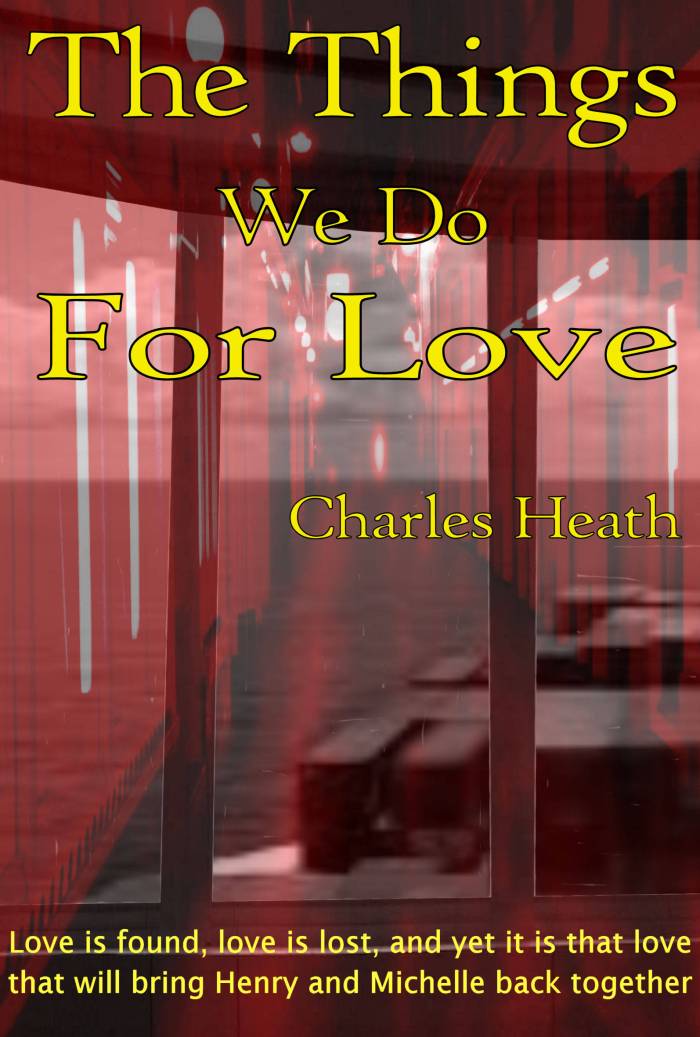
An excerpt from “The Things We Do for Love”; In love, Henry was all at sea!

In the distance, he could hear the dinner bell ringing and roused himself.  Feeling the dampness of the pillow, and fearing the ravages of pent-up emotion, he considered not going down but thought it best not to upset Mrs. Mac, especially after he said he would be dining.

In the event, he wished he had reneged, especially when he discovered he was not the only guest staying at the hotel.

Whilst he’d been reminiscing, another guest, a young lady, had arrived.  He’d heard her and Mrs. Mac coming up the stairs and then shown to a room on the same floor, perhaps at the other end of the passage.

Henry caught his first glimpse of her when she appeared at the door to the dining room, waiting for Mrs. Mac to show her to a table.

She was in her mid-twenties, slim, with long brown hair, and the grace and elegance of a woman associated with countless fashion magazines.  She was, he thought, stunningly beautiful with not a hair out of place, and make-up flawlessly applied.  Her clothes were black, simple, elegant, and expensive, the sort an heiress or wife of a millionaire might condescend to wear to a lesser occasion than dinner.

Then there was her expression; cold, forbidding, almost frightening in its intensity.  And her eyes, piercingly blue and yet laced with pain.  Dracula’s daughter was his immediate description of her.

All in all, he considered, the only thing they had in common was, like him, she seemed totally out of place.

Mrs. Mac came out of the kitchen, wiping her hands on her apron.  She was, she informed him earlier, chef, waitress, hotelier, barmaid, and cleaner all rolled into one.  Coming up to the new arrival she said, “Ah, Miss Andrews, I’m glad you decided to have dinner.  Would you like to sit with Mr. Henshaw, or would you like to have a table of your own?”

Henry could feel her icy stare as she sized up his appeal as a dining companion, making the hair on the back of his neck stand up.  He purposely didn’t look back.  In his estimation, his appeal rating was minus six.  Out of a thousand!

“If Mr. Henshaw doesn’t mind….”  She looked at him, leaving the query in mid-air.

He didn’t mind and said so.  Perhaps he’d underestimated his rating.

“Good.”  Mrs. Mac promptly ushered her over.  Henry stood, made sure she was seated properly and sat.

“Thank you.  You are most kind.”  The way she said it suggested snobbish overtones.

“I try to be when I can.”  It was supposed to nullify her sarcastic tone but made him sound a little silly, and when she gave him another of her icy glares, he regretted it.

Mrs. Mac quickly intervened, asking, “Would you care for the soup?”

They did, and, after writing the order on her pad, she gave them each a look, imperceptibly shook her head, and returned to the kitchen.

Before Michelle spoke to him again, she had another quick look at him, trying to fathom who and what he might be.  There was something about him.

His eyes, they mirrored the same sadness she felt, and, yes, there was something else, that it looked like he had been crying?  There was a tinge of redness.

Perhaps, she thought, he was here for the same reason she was.

No.  That wasn’t possible.

Then she said, without thinking, “Do you have any particular reason for coming here?”  Seconds later she realized she’d spoken it out loud, had hadn’t meant to actually ask, it just came out.

It took him by surprise, obviously not the first question he was expecting her to ask of him.

“No, other than it is as far from civilization, and home, as I could get.”

At least we agree on that, she thought.

It was obvious he was running away from something as well.

Given the isolation of the village and lack of geographic hospitality, it was, from her point of view, ideal.  All she had to do was avoid him, and that wouldn’t be difficult.

After getting through this evening first.

“Yes,” she agreed.  “It is that.”

A few seconds passed, and she thought she could feel his eyes on her and wasn’t going to look up.

Until he asked, “What’s your reason?”

Slightly abrupt in manner, perhaps, because of her question and how she asked it.

She looked up.  “Rest.  And have some time to myself.”

She hoped he would notice the emphasis she had placed on the word ‘herself’ and take due note.  No doubt, she thought, she had completely different ideas of what constituted a holiday than he, not that she had said she was here for a holiday.

Mrs. Mac arrived at a fortuitous moment to save them from further conversation.

Over the entree, she wondered if she had made a mistake coming to the hotel.  Of course, there had been no conceivable way she could know that anyone else might have booked the same hotel, but realized it was foolish to think she might end up in it by herself.

Was that what she was expecting?

Not a mistake then, but an unfortunate set of circumstances, which could be overcome by being sensible.

Yet, there he was, and it made her curious, not that he was a man, by himself, in the middle of nowhere, hiding like she was, but for quite varied reasons.

On discreet observance, whilst they ate, she gained the impression his air of light-heartedness was forced, and he had no sense of humour.

This feeling was engendered by his looks, unruly dark hair, and permanent frown.  And then there was his abysmal taste in clothes on a tall, lanky frame.  They were quality but totally unsuited to the wearer.

Rebellion was written all over him.

The only other thought crossing her mind, and incongruously, was he could do with a decent feed.  In that respect, she knew now from the mountain of food in front of her, he had come to the right place.

“Mr. Henshaw?”

He looked up.  “Henshaw is too formal.  Henry sounds much better,” he said, with a slight hint of gruffness.

“Then my name is Michelle.”

Mrs. Mac came in to take their order for the only main course, gather up the entree dishes, and then return to the kitchen.

“Staying long?” she asked.

“About three weeks.  Yourself?”

“About the same.”

The conversation dried up.

Neither looked at the other, rather at the walls, out the window, towards the kitchen, anywhere.  It was, she thought, unbearably awkward.

Mrs. Mac returned with a large tray with dishes on it, setting it down on the table next to theirs.

“Not as good as the usual cook,” she said, serving up the dinner expertly, “but it comes a good second, even if I do say so myself.  Care for some wine?”

Henry looked at Michelle.  “What do you think?”

“I’m used to my dining companions making the decision.”

You would, he thought.  He couldn’t help but notice the cutting edge of her tone.  Then, to Mrs. Mac, he named a particular White Burgundy he liked, and she bustled off.

“I hope you like it,” he said, acknowledging her previous comment with a smile that had nothing to do with humour.

“Yes, so do I.”

Both made a start on the main course, a concoction of chicken and vegetables that were delicious, Henry thought when compared to the bland food he received at home and sometimes aboard my ship.

It was five minutes before Mrs Mac returned with the bottle and two glasses.  After opening it and pouring the drinks, she left them alone again.

Henry resumed the conversation.  “How did you arrive?  I came by train.”

“By car.”

“Did you drive yourself?”

And he thought, a few seconds later, that was a silly question, otherwise she would not be alone, and certainly not sitting at this table. With him.

“After a fashion.”

He could see that she was formulating a retort in her mind, then changed it, instead, smiling for the first time, and it served to lighten the atmosphere.

And in doing so, it showed him she had another more pleasant side despite the fact she was trying not to look happy.

“My father reckons I’m just another of ‘those’ women drivers,” she added.

“Whatever for?”

“The first and only time he came with me I had an accident.  I ran up the back of another car.  Of course, it didn’t matter to him the other driver was driving like a startled rabbit.”

“It doesn’t help,” he agreed.

“Do you drive?”

“Mostly people up the wall.”  His attempt at humour failed.  “Actually,” he added quickly, “I’ve got a very old Morris that manages to get me where I’m going.”

The apple pie and cream for dessert came and went and the rapport between them improved as the wine disappeared and the coffee came.  Both had found, after getting to know each other better, their first impressions were not necessarily correct.

“Enjoy the food?” Mrs. Mac asked, suddenly reappearing.

“Beautifully cooked and delicious to eat,” Michelle said, and Henry endorsed her remarks.

“Ah, it does my heart good to hear such genuine compliments,” she said, smiling.  She collected the last of the dishes and disappeared yet again.

“What do you do for a living,” Michelle asked in an off-hand manner.

He had a feeling she was not particularly interested, and it was just making conversation.

“I’m a purser.”

“A what?”

“A purser.  I work on a ship doing the paperwork, that sort of thing.”

“I see.”

“And you?”

“I was a model.”

“Was?”

“Until I had an accident, a rather bad one.”

“Oh, I’m sorry.”

So that explained the odd feeling he had about her.

As the evening wore on, he began to think there might be something wrong, seriously wrong with her because she didn’t look too well.  Even the carefully applied makeup, from close, didn’t hide the very pale, and tired look, or the sunken, dark-ringed eyes.

“I try not to think about it, but it doesn’t necessarily work.  I’ve come here for peace and quiet, away from doctors and parents.”

“Then you will not have to worry about me annoying you.  I’m one of those fall-asleep-reading-a-book types.”

Perhaps it would be like ships passing in the night and then smiled to himself about the analogy.

Dinner over, they separated.

Henry went back to the lounge to read a few pages of his book before going to bed, and Michelle went up to her room to retire for the night.

But try as he might, he was unable to read, his mind dwelling on the unusual, yet compellingly mysterious person he would be sharing the hotel with.

Overlaying that original blurred image of her standing in the doorway was another of her haunting expressions that had, he finally conceded, taken his breath away, and a look that had sent more than one tingle down his spine.

She may not have thought much of him, but she had certainly made an impression on him.

© Charles Heath 2015-2024

lovecoverfinal1

Writing about writing a book – Day 13 supplemental

I was going to say ‘Captain’s log supplemental’ and add a stardate, but the analogy might get lost because not everyone is a Star Trekker.

Needless to say, there’s always more to say about an event, especially when the mind is casting about for ideas to add or enhance a story.

It comes down to, does art imitate life, or does life imitate art?  It’s an interesting question because, in this instance, art will be imitating, to a certain extent, life.

Perhaps what is lost in the telling is the inability of newly divorced people in working out where the boundaries are, whether or not they are entitled to know about the other person’s private life, and how that will make them feel.

I’m guessing when a marriage breaks down, there’s always a cause, and while the word amicable gets bandied around a lot, it’s said, but quite often not meant.

Does mummy have a boyfriend?

Does daddy have a girlfriend?

What generally happens is the children are the only ones who know what’s really happening to each of the parents, because they get transported between the two, as neither parent would want to be seen stopping the other from seeing them/

Of course, where the children are grown up and leading their own lives, the situation should be a lot easier.

But, where does this fit in with the story I hear you asking.


Marriages fall apart for many reasons.  In the story, Bill acknowledges that it is largely his fault, and one suspects it’s probably an undiagnosed case of PTSD that back in the sixties and seventies was not really understood.

It led to both he and Ellen leading individual but separate lives whilst keeping up appearances for the sake of their children.  There’s no doubting who brought them up, Ellen, and who had the greater influence over them, although, for the sake of this story, both couldn’t wait to leave home and live somewhere else.

They do, and together.  They are not married and do not have children.  They were not the cause of the breakup, and fortunately, neither of the girls blame one or the other parent.

But that doesn’t mean, over the years, that either parent hasn’t tried to use them to glean information about the other.  It is how Bill discovered, some time ago, that Ellen had ‘a special friend’.

Yet, neither of the daughters have seen him, and not surprisingly, he had made sure that Bill has never seen him.  It’s for a particular reason, one that will become obvious later in the story.  It is, I think, a rather clever twist.

Also, Ellen is not a bad person and certainly wasn’t bad to Bill, perhaps more long-suffering.  She did stay with him for a long time, mainly for the children, but also because she genuinely cared for Bill.

And Bill had not had another woman friend, not until he discovers his feelings towards Jennifer and even then, he keeps that to himself, even when he really doesn’t have to.

Sigh.

Time to return to my fictional world.

The cinema of my dreams – I never wanted to go to Africa – Episode 19

Our hero knows he’s in serious trouble.

The problem is, there are familiar faces and a question of who is a friend and who is foe made all the more difficult because of the enemy, if it was the enemy, simply because it didn’t look or sound or act like the enemy.

Now, it appears, his problems stem from another operation he participated in.

It didn’t take much effort to come to the only viable explanation of why a buried operation had been brought back to life.

Colonel Bamfield.

And it didn’t take much more effort to realise that operation had been one of his, not that any of us knew that at the time, but for whatever reason, it had gone badly and now he was looking for answers.

Answers to what though?

It was a simple extraction; two operatives had their cover blown and were in hiding.  A seven-man team in two choppers, get in, collect them, and get out.  Seven men were overkill, but they were important operatives with vital intelligence.

I was a last minute addition to the team, replacing one of the sergeants who had been injured in an accident.  It was a tight-knit team and I was not made to feel welcome.  It was the usual fate of outsiders and it didn’t bother me.

It was their leader that did.  Lieutenant Treen.  But that came later, all it was, at first, was a sense of unease with his informal manner of command, and somewhat edgy disposition.

When I landed at the airfield, I was met by the other Sergeant, Mason, and taken to the briefing, which had been delayed until my arrival.  Treen was there, pacing up and down like a caged tiger.  It was apparent there were still some details still being worked on.  Being so close to wheels up, I was not surprised at the tension among the group.

A Captain, a man named Worsefell, conducted the briefing, and it was patchy.  Not the worst I’d been to, but it appeared the situation on the ground had changed considerably in the last 12 hours, necessitating a change in plans.

 The operative had managed to get cover in an old abandoned building.  That was fine until a group of enemy soldiers arrived and set up camp in the field not 100 yards from their position.  Now, it was not possible to leave without being seen, day or night.

We now had to either distract or remove the enemy soldiers, an enemy we had no numbers or how heavily armed they were because our source on the ground had gone quiet.  To me, it was possible the source had been captured, and if that was the case, it was also possible the enemy knew we were coming.  But according to the Captain, this particular source had gone quiet before, in similar circumstances, so my suggestion was ignored.

Instead, the consensus was to go in and make an assessment on the ground.  It meant we had to land further away, and have a long journey by foot with all the problems that might involve, and then return.  That was the plan.  The Captain had left it in Treen’s hands.

And Treen was not one to back away from a fight, not even when it was clear to everyone in that room, with or without the necessary intelligence, that the odds were stacked against success.

I looked at Lallo who was waiting for an answer.  “I guess the brass didn’t know what to do with me, sir.”

My use of the word sir was noted.

“Be that as it may, I have a few questions about that operation.”

“I’m afraid it’s classified, and I’m under oath not to speak about it.”

Lallo took out a piece of folded paper from the inside pocket of his uniform jacket unfolded it and passed it to me.

From the very General who had ordered my silence.

© Charles Heath 2019-2022

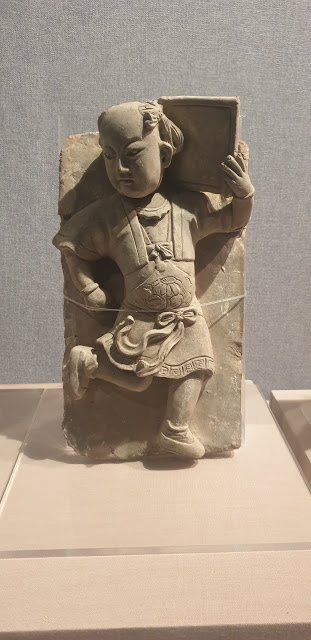
Searching for locations: The Henan Museum, Zhengzhou, Henan Province, China

The Henan Museum is one of the oldest museums in China.  In June 1927, General Feng Yuxiang proposed that a museum be built, and it was completed the next year.  In 1961, along with the move of the provincial capital, Henan Museum moved from Kaifeng to Zhengzhou.

It currently holds about 130,000 individual pieces, more of which are mostly cultural relics, bronze vessels of the Shang and Zhou Dynasties, and pottery and porcelain wares of the various dynasties.

Eventually, we arrive at the museum and get off the bus adjacent to a scooter track and despite the efforts of the guide, there’s no stopping them from nearly running us over.

We arrive to find the museum has been moved to a different and somewhat smaller building nearby as the existing, and rather distinctively designed, building is being renovated.

While we are waiting for the tickets to enter, we are given another view of industrial life in that there is nothing that resembles proper health and safety on worksites in this country, and the workers are basically standing on what looks to be a flimsy bamboo ladder with nothing to stop them from falling off.

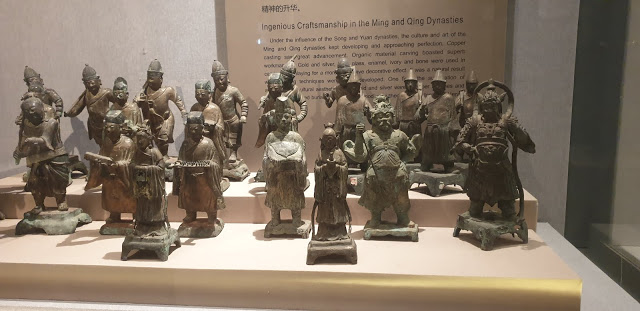
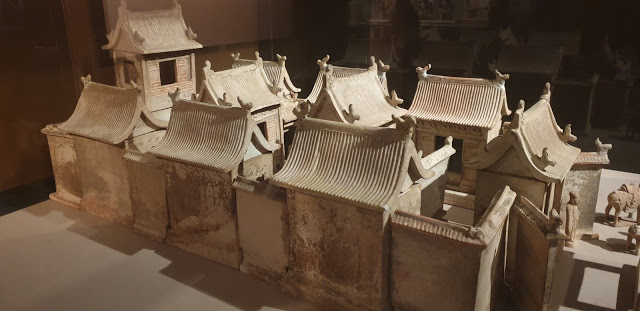
The museum itself has exhibits dating back a few thousand years and consist of bronze and ceramic items.  One of the highlights was a tortoiseshell with reportedly the oldest know writing ever found.

Other than that it was a series of cooking utensils, a table, and ceramic pots, some in very good condition considering their age.


There were also small sculptures

an array of small figures

and a model of a settlement

20 minutes was long enough.

“One Last Look”, nothing is what it seems

A single event can have enormous consequences.

A single event driven by fate, after Ben told his wife Charlotte he would be late home one night, he left early, and by chance discovers his wife having dinner in their favourite restaurant with another man.

A single event where it could be said Ben was in the wrong place at the wrong time.

Who was this man? Why was she having dinner with him?

A simple truth to explain the single event was all Ben required. Instead, Charlotte told him a lie.

A single event that forces Ben to question everything he thought he knew about his wife, and the people who are around her.

After a near-death experience and forced retirement into a world he is unfamiliar with, Ben finds himself once again drawn back into that life of lies, violence, and intrigue.

From London to a small village in Tuscany, little by little Ben discovers who the woman he married is, and the real reason why fate had brought them together.

It is available on Amazon here:  http://amzn.to/2CqUBcz

Harry Walthenson, Private Detective – the second case – A case of finding the “Flying Dutchman”

What starts as a search for a missing husband soon develops into an unbelievable story of treachery, lies, and incredible riches.

It was meant to remain buried long enough for the dust to settle on what was once an unpalatable truth, when enough time had passed, and those who had been willing to wait could reap the rewards.

The problem was, no one knew where that treasure was hidden or the location of the logbook that held the secret.

At stake, billions of dollars’ worth of stolen Nazi loot brought to the United States in an anonymous tramp steamer and hidden in a specially constructed vault under a specifically owned plot of land on the once docklands of New York.

It may have remained hidden and unknown to only a few, if it had not been for a mere obscure detail being overheard …

… by our intrepid, newly minted private detective, Harry Walthenson …

… and it would have remained buried.

Now, through a series of unrelated events, or are they, that well-kept secret is out there, and Harry will not stop until the whole truth is uncovered.

Even if it almost costs him his life.  Again.

An excerpt from “Mistaken Identity” – a work in progress

The odds of any one of us having a doppelganger are quite high. Whether or not you got to meet him or her, or be confronted by them was significantly lower. Except of course, unless you are a celebrity.

It was a phenomenon remarkable only for the fact, at times, certain high-profile people, notorious or not, had doubles if only to put off enemies or the general public. Sometimes we see people in the street, people who look like someone we knew, and made the mistake of approaching them like a long lost friend, only to discover an embarrassed individual desperately trying to get away for what they perceive is a stalker or worse.

And then sometimes it is a picture that looms up on a TV screen, an almost exact likeness of you. At first, you are fascinated, and then according to the circumstances, and narrative that is attached to that picture, either flattered or horrified.

For me one turned to the other when I saw an almost likeness of me flash up on the screen when I turned the TV on in my room. What looked to be my photo, with only minor differences, was in the corner of the screen, the newsreader speaking in rapid Italian, so fast I could only translate every second or third word.

But the one word I did recognize was murder. The photo of the man up on the screen was the subject of an extensive manhunt. The crime, the murder of a woman in the very same hotel I was staying, and it was being played out live several floors above me. The gist of the story, the woman had been seen with, and staying with the man who was my double, and, less than an hour ago, the body had been discovered by a chambermaid.

The killer, the announcer said, was believed to be still in the hotel because the woman had died shortly before she had been discovered.

I watched, at first fascinated at what I was seeing. I guess I should have been horrified, but at that moment it didn’t register that I might be mistaken for that man.

Not until another five minutes had passed, and I was watching the police in full riot gear, with a camera crew following behind, coming up a passage towards a room. Live action of the arrest of the suspected killer the breathless commentator said.

Then, suddenly, there was a pounding on the door. On the TV screen, plain to see, was the number of my room.
I looked through the peephole and saw an army of police officers. It didn’t take much to realize what had happened. The hotel staff identified me as the man in the photograph on the TV and called the police.

Horrified wasn’t what I was feeling right then.

It was fear.

My last memory was the door crashing open, the wood splintering, and men rushing into the room, screaming at me, waving guns, and when I put my hands up to defend myself, I heard a gunshot.

And in one very confused and probably near-death experience, I thought I saw my mother and thought what was she doing in Rome?

I was the archetypal nobody.

I lived in a small flat, I drove a nondescript car, had an average job in a low profile travel agency, was single, and currently not involved in a relationship, no children, and according to my workmates, no life.

They were wrong. I was one of those people who preferred their own company, I had a cat, and travelled whenever I could. And I did have a ‘thing’ for Rosalie, one of the reasons why I stayed at the travel agency. I didn’t expect anything to come of it, but one could always hope.

I was both pleased and excited to be going to the conference. It was my first, and the glimpse I had seen of it had whetted my appetite for more information about the nuances of my profession.

Some would say that a travel agent wasn’t much of a job, but to me, it was every bit as demanding as being an accountant or a lawyer. You were providing a customer with a service, and arguably more people needed a travel agent than a lawyer. At least that was what I told myself, as I watched more and more people start using the internet, and our relevance slowly dissipating.

This conference was about countering that trend.

The trip over had been uneventful. I was met at the airport and taken to the hotel where the conference was being held with a number of other delegates who had arrived on the same plane. I had mingled with a number of other delegates at the pre conference get together, including one whose name was Maryanne.

She was an unusual young woman, not the sort that I usually met, because she was the one who was usually surrounded by all the boys, the life of the party. In normal circumstances, I would not have introduced myself to her, but she had approached me. Why did I think that may have been significant? All of this ran through my mind, culminating in the last event on the highlight reel, the door bursting open, men rushing into my room, and then one of the policemen opened fire.

I replayed that last scene again, trying to see the face of my assailant, but it was just a sea of men in battle dress, bullet proof vests and helmets, accompanied by screaming and yelling, some of which I identified as “Get on the floor”.

Then came the shot.

Why ask me to get on the floor if all they were going to do was shoot me. I was putting my hands up at the time, in surrender, not reaching for a weapon.

Then I saw the face again, hovering in the background like a ghost. My mother. Only the hair was different, and her clothes, and then the image was going, perhaps a figment of my imagination brought on by pain killing drugs. I tried to imagine the scene again, but this time it played out, without the image of my mother.

I opened my eyes took stock of my surroundings. What I felt in that exact moment couldn’t be described. I should most likely be dead, the result of a gunshot wound. I guess I should be thankful the shooter hadn’t aimed at anything vital, but that was the only item on the plus side.

I was in a hospital room with a policeman by the door. He was reading a newspaper, and sitting uncomfortably on a small chair. He gave me a quick glance when he heard me move slightly, but didn’t acknowledge me with either a nod, or a greeting, just went back to the paper.

If I still had a police guard, then I was still considered a suspect. What was interesting was that I was not handcuffed to the bed. Perhaps that only happened in TV shows. Or maybe they knew I couldn’t run because my injuries were too serious. Or the guard would shoot me long before my feet hit the floor. I knew the police well enough now to know they would shoot first and ask questions later.

On the physical side, I had a large bandage over the top left corner of my chest, extending over my shoulder. A little poking and prodding determined the bullet had hit somewhere between the top of my rib cage and my shoulder. Nothing vital there, but my arm might be somewhat useless for a while, depending on what the bullet hit on the way in, or through.

It didn’t feel like there were any broken or damaged bones.

That was the good news.

On the other side of the ledger, my mental state, there was only one word that could describe it. Terrified. I was looking at a murder charge and jail time, a lot of it. Murder usually had a long time in jail attached to it.

Whatever had happened, I didn’t do it. I know I didn’t do it, but I had to try and explain this to people who had already made up their minds. I searched my mind for evidence. It was there, but in the confused state brought on by the medication, all I could think about was jail, and the sort of company I was going to have.

I think death would have been preferable.

Half an hour later, maybe longer, I was drifting in an out of consciousness, a nurse, or what I thought was a nurse, came into the room. The guard stood, checked her ID card, and then stood by the door.

She came over and stood beside the bed. “How are you?” she asked, first in Italian, and when I pretended I didn’t understand, she asked the same question in accented English.

“Alive, I guess,” I said. “No one has come and told what my condition is yet. You are my first visitor. Can you tell me?”

“Of course. You are very lucky to be alive. You will be fine and make a full recovery. The doctors here are excellent at their work.”

“What happens now?”

“I check you, and then you have a another visitor. He is from the British Embassy I think. But he will have to wait until I have finished my examination.”

I realized then she was a doctor, not a nurse.

My second visitor was a man, dressed in a suit the sort of which I associated with the British Civil Service.  He was not very old which told me he was probably a recent graduate on his first posting, the junior officer who drew the short straw.

The guard checked his ID but again did not leave the room, sitting back down and going back to his newspaper.

My visitor introduced himself as Alex Jordan from the British Embassy in Rome and that he had been asked by the Ambassador to sort out what he labelled a tricky mess.

For starters, it was good to see that someone cared about what happened to me.  But, equally, I knew the mantra, get into trouble overseas, and there is not much we can do to help you.  So, after that lengthy introduction, I had to wonder why he was here.

I said, “They think I am an international criminal by the name of Jacob Westerbury, whose picture looks just like me, and apparently for them it is an open and shut case.”  I could still hear the fragments of the yelling as the police burst through the door, at the same time telling me to get on the floor with my hands over my head.

“It’s not.  They know they’ve got the wrong man, which is why I’m here.  There is the issue of what had been described as excessive force, and the fact you were shot had made it an all-round embarrassment for them.”

“Then why are you here?  Shouldn’t they be here apologizing?”

“That is why you have another visitor.  I only took precedence because I insisted I speak with you first.  I have come, basically to ask you for a favour.  This situation has afforded us with an opportunity.  We would like you to sign the official document which basically indemnifies them against any legal proceedings.”

Curious.  What sort of opportunity was he talking about?  Was this a matter than could get difficult and I could be charged by the Italian Government, even if I wasn’t guilty, or was it one of those hush hush type deals, you do this for us, we’ll help you out with that.  “What sort of opportunity?”

“We want to get our hands on Jacob Westerbury as much as they do.  They’ve made a mistake, and we’d like to use that to get custody of him if or when he is arrested in this country.  I’m sure you would also like this man brought into custody as soon as possible so you will stop being confused with him.  I can only imagine what it was like to be arrested in the manner you were.  And I would not blame you if you wanted to get some compensation for what they’ve done.  But.  There are bigger issues in play here, and you would be doing this for your country.”

I wondered what would happen if I didn’t agree to his proposal.  I had to ask, “What if I don’t?”

His expression didn’t change.  “I’m sure you are a sensible man Mr Pargeter, who is more than willing to help his country whenever he can.  They have agreed to take care of all your hospital expenses, and refund the cost of the Conference, and travel.  I’m sure I could also get them to pay for a few days at Capri, or Sorrento if you like, before you go home.  What do you say?”

There was only one thing I could say.  Wasn’t it treason if you went against your country’s wishes?

“I’m not an unreasonable man, Alex.  Go do your deal, and I’ll sign the papers.”

“Good man.”

After Alex left, the doctor came back to announce the arrival of a woman, by the way she had announced herself, the publicity officer from the Italian police. When she came into the room, she was not dressed in a uniform.

The doctor left after giving a brief report to the civilian at the door. I understood the gist of it, “The patient has recovered excellently and the wounds are healing as expected. There is no cause for concern.”

That was a relief.

While the doctor was speaking to the civilian, I speculated on who she might be. She was young, not more than thirty, conservatively dressed so an official of some kind, but not necessarily with the police. Did they have prosecutors? I was unfamiliar with the Italian legal system.

She had long wavy black hair and the sort of sultry looks of an Italian movie star, and her presence made me more curious than fearful though I couldn’t say why.

The woman then spoke to the guard, and he reluctantly got up and left the room, closing the door behind him.
She checked the door, and then came back towards me, standing at the end of the bed. Now alone, she said, “A few questions before we begin.” Her English was only slightly accented. “Your name is Jack Pargeter?”

I nodded. “Yes.”

“You are in Rome to attend the Travel Agents Conference at the Hilton Hotel?”

“Yes.”

“You attended a preconference introduction on the evening of the 25th, after arriving from London at approximately 4:25 pm.”

“About that time, yes. I know it was about five when the bus came to collect me, and several others, to take us to the hotel.”

She smiled. It was then I noticed she was reading from a small notepad.

“It was ten past five to be precise. The driver had been held up in traffic. We have a number of witnesses who saw you on the plane, on the bus, at the hotel, and with the aid of closed circuit TV we have established you are not the criminal Jacob Westerbury.”

She put her note book back in her bag and then said, “My name is Vicenza Andretti and I am with the prosecutor’s office. I am here to formally apologize for the situation that can only be described as a case of mistaken identity. I assure you it is not the habit of our police officers to shoot people unless they have a very strong reason for doing so. I understand that in the confusion of the arrest one of our officers accidentally discharged his weapon. We are undergoing a very thorough investigation into the circumstances of this event.”

I was not sure why, but between the time I had spoken to the embassy official and now, something about letting them off so easily was bugging me. I could see why they had sent her. It would be difficult to be angry or annoyed with her.

But I was annoyed.

“Do you often send a whole squad of trigger happy riot police to arrest a single man?” It came out harsher than I intended.

“My men believed they were dealing with a dangerous criminal.”

“Do I look like a dangerous criminal?” And then I realized if it was mistaken identity, the answer would be yes.

She saw the look on my face, and said quietly, “I think you know the answer to that question, Mr. Pargeter.”

“Well, it was overkill.”

“As I said, we are very sorry for the circumstances you now find yourself in. You must understand that we honestly believed we were dealing with an armed and dangerous murderer, and we were acting within our mandate. My department will cover your medical expenses, and any other amounts for the inconvenience this has caused you. I believe you were attending a conference at your hotel. I am very sorry but given the medical circumstances you have, you will have to remain here for a few more days.”

“I guess, then, I should thank you for not killing me.”

Her expression told me that was not the best thing I could have said in the circumstances.

“I mean, I should thank you for the hospital and the care. But a question or two of my own. May I?”

She nodded.

“Did you catch this Jacob Westerbury character?”

“No. In the confusion created by your arrest he escaped. Once we realized we had made a mistake and reviewed the close circuit TV, we tracked him leaving by a rear exit.”

“Are you sure it was one of your men who shot me?”

I watched as her expression changed, to one of surprise.

“You don’t think it was one of my men?”

“Oddly enough no. But don’t ask me why.”

“It is very interesting that you should say that, because in our initial investigation, it appeared none of our officer’s weapons had been discharged. A forensic investigation into the bullet tells us it was one that is used in our weapons, but…”

I could see their dilemma.

“Have you any enemies that would want to shoot you Mr Pargeter?”

That was absurd because I had no enemies, at least none that I knew of, much less anyone who would want me dead.

“Not that I’m aware of.”

“Then it is strange, and will perhaps remain a mystery. I will let you know if anything more is revealed in our investigation.”

She took an envelope out of her briefcase and opened it, pulling out several sheets of paper.

I knew what it was. A verbal apology was one thing, but a signed waiver would cover them legally. They had sent a pretty girl to charm me. Perhaps using anyone else it would not have worked. There was potential for a huge litigation payout here, and someone more ruthless would jump at the chance of making a few million out of the Italian Government.

“We need a signature on this document,” she said.

“Absolving you of any wrong doing?”

“I have apologized. We will take whatever measures are required for your comfort after this event. We are accepting responsibility for our actions, and are being reasonable.”

They were. I took the pen from her and signed the documents.

“You couldn’t add dinner with you on that list of benefits?” No harm in asking.

“I am unfortunately unavailable.”

I smiled. “It wasn’t a request for a date, just dinner. You can tell me about Rome, as only a resident can. Please.”

She looked me up and down, searching for the ulterior motive. When she couldn’t find one, she said, “We shall see once the hospital discharges you in a few days.”

“Then I’ll pencil you in?”

She looked at me quizzically. “What is this pencil me in?”

“It’s an English colloquialism. It means maybe. As when you write something in pencil, it is easy to erase it.”

A momentary frown, then recognition and a smile. “I shall remember that. Thank-you for your time and co-operation Mr. Pargeter. Good morning.”

© Charles Heath 2015-2021

Writing about writing a book – Day 13

Life impinges on the idyllic

There’s the expectation and then there’s reality.

My idea of shutting myself away in my lonely garret and writing, coming out into the fresh air every now and then, just to make sure neither North Korea or the United States haven’t turned the world into a nuclear holocaust, was simply a pipe dream.

Being single again doesn’t abrogate you of the same responsibilities you have before you became single.  You still had children, and those children have children, and, yes, you can see where this is going.

The mobile phone, so silent for the past few days, makes the unusual sound it makes when a message arrives.

Thank heaven for tech-savvy granddaughters!

And before you say, quite casually, that I would be better off without technology, after all, all Hemingway had was a typewriter, I’m afraid to say there is no Luddite in me.

In fact, do Luddites still exist?

So, as I said, the phone dings, and as I’m not expecting anything, I try to ignore it.  Three minutes later it dings again, and it’s a warning.  The Gods are getting impatient.

It’s a message to pick up the grandchildren from school and deliver them home.  It’s something I haven’t done in a while, but it’s an opportunity to see them, and they always have words of wisdom as only a thirteen and ten-year-old can.

It’s a while since I have.  I suspect my involvement had been curtailed somewhat because their nanna had been available, and the more preferred option.

Or maybe they had just asked their mother to get me to pick them up so I could see them.  I had said, a while back, I was relatively reluctant to go around to see them because of how awkward it might be, and to give them time to adjust to the new arrangement the divorce had brought about.

And since I’ve been spending all my time recently immersed in conspiracies, was this one perpetrated by my daughter in law?

I’ll soon find out.

The cinema of my dreams – I never wanted to go to Africa – Episode 18

Our hero knows he’s in serious trouble.

The problem is, there are familiar faces and a question of who is a friend and who is foe made all the more difficult because of the enemy, if it was the enemy, simply because it didn’t look or sound or act like the enemy.

Now, it appears, his problems stem from another operation he participated in.


The debriefing team were not quite what I expected, a man and a woman, one a Major, the other a Lieutenant, and it was apparent they had just met before coming into the room.

He was Major Lallo, Army intelligence, and the woman, Lieutenant Jill Monroe, a familiar name as I’m sure I’d heard it before.

Lallo was not a fighting soldier, he was a paperwork man.  I suspect he was more at home with an order book, and filing communications though that didn’t explain the rank, which he would have to have front line experience to attain.

Monroe looked to me to be the sort of woman soldier that had to prove she was better than any man and had the muscular form to go with it.  Not the sort of a woman to get into a fight over or against.

She stood at the end of the bed, and I suspect by her posture that she was there to make sure I didn’t run, which, by the way, was physically impossible.

Lallo sat in the chair beside the bed, tried to make himself comfortable.  He was going to ask the questions.  He had a small notebook he took out of his pocket with a list of questions.  The small pencil that slotted into the binding was there to write down the answers if any.  I was not sure I was up to answer any questions.

Settled, he started with, “You don’t have to answer, but I suggest you do.  I think by now you are starting to realise that, no matter how strong you think you might be, you’re not.  If you decided to be unforthcoming, then you can be assured that we will be interrogating you with a lot more, shall we say, enthusiasm than in the past.”

By the way he said it, I got the impression he would be the one.  His tone had changed suddenly, to a man who enjoyed others discomfort, and he was looking forward to breaking me if it came to that.

“And if I don’t have the answers to your questions, or should I say, not the answers you are expecting, what then?”

“One step at a time.  We’ll start with the easy questions first.”

I’m not quite sure what he classified as easy.  I didn’t think there were any.

“How long have you been at this base?”

Maybe I was wrong.  “Two months, three days.”

“How did your transfer to this specific base come about?”

“I don’t know.  I was at a training base in Ohio one day, then being presented with orders to get the next transport out the next.”

“Did you, or someone else you know, request your transfer to a new base?”

I didn’t think that was possible.  Someone of my rank went where they were told to go.

“No.  I’m a Sergeant, not a General.”

But was it possible Colonel Bamfield arranged for me to be transferred.  Given the fact he was here, now, it was not beyond the realms of possibility.  But if so, why?

“What was your function at your last base?”

What had this to do with my current situation or anything else for that matter?

“Instructor.”

“In what?”

“Infiltration, covert operations.”

“And I’m assuming then you been involved in these, shall we say, covert operations?”

No use denying it.  It was obvious he had seen my file, which all of a sudden had some very disturbing possibilities.  Just how much information though.

“Yes, but they’re classified and I can’t tell you anything and that.”

“Normally that would be the case, but…”  He left the sentence hanging there for a few seconds before adding, “There was a problem with your last operation, the reason, it appears, you were transferred to the training base in Ohio.  Is that correct?”

A mission that I had been told never to mention, speak of to anyone, no matter how high their rank in the military or government, or even think about again.

A mission I was told had been buried so deep it would never see the light of day.

Until now.


© Charles Heath 2019

The story behind the story – Echoes from the Past

The novel ‘Echoes from the past’ started out as a short story I wrote about 30 years ago, titled ‘The birthday’.

My idea was to take a normal person out of their comfort zone and led on a short but very frightening journey to a place where a surprise birthday party had been arranged.

Thus the very large man with a scar and a red tie was created.

So was the friend with the limousine who worked as a pilot.

So were the two women, Wendy and Angelina, who were Flight Attendants that the pilot friend asked to join the conspiracy.

I was going to rework the short story, then about ten pages long, into something a little more.

And like all re-writes, especially those I have anything to do with, it turned into a novel.

There was motivation.  I had told some colleagues at the place where I worked at the time that I liked writing, and they wanted a sample.  I was going to give them the re-worked short story.  Instead, I gave them ‘Echoes from the past’

Originally it was not set anywhere in particular.

But when considering a location, I had, at the time, recently been to New York in December, and visited Brooklyn and Queens, as well as a lot of New York itself.  We were there for New Years, and it was an experience I’ll never forget.

One evening we were out late, and finished up in Brooklyn Heights, near the waterfront, and there was rain and snow, it was cold and wet, and there were apartment buildings shimmering in the street light, and I thought, this is the place where my main character will live.

It had a very spooky atmosphere, the sort where ghosts would not be unexpected.  I felt more than one shiver go up and down my spine in the few minutes I was there.

I had taken notes, as I always do, of everywhere we went so I had a ready supply of locations I could use, changing the names in some cases.

Fifth Avenue near the Rockefeller center is amazing at first light, and late at night with the Seasonal decorations and lights.

The original main character was a shy and man of few friends, hence not expecting the surprise party.  I enhanced that shyness into purposely lonely because of an issue from his past that leaves him always looking over his shoulder and ready to move on at the slightest hint of trouble.  No friends, no relationships, just a very low profile.

Then I thought, what if he breaks the cardinal rule, and begins a relationship?

But it is also as much an exploration of a damaged soul, as it is the search for a normal life, without having any idea what normal was, and how the understanding of one person can sometimes make all the difference in what we may think or feel.

And, of course, I wanted a happy ending.

Except for the bad guys.

Get it here:  https://amzn.to/2CYKxu4

newechocover5rs